
Gearóid Ó Loingsigh
Reprinted from author’s substack 26 July 2026 and reformatted for Rebel Breeze
(Reading time: 9 mins.)
The history of societies is the history of their ruling classes. So it comes as no surprise that we are told that Lord X built a palace, Lady Y built a garden and so forth.
The history of society is the history of great men (and the occasional woman, when she’s allowed) with those who actually do anything written out of history.
Take a tour of any stately home and you will be told that the Earl built the west wing in a given year, an incredible chippie, brickie and plumber all in one with some artistic flair to boot.
The workers who actually carried out the work are not mentioned and if it was slave labour, well let’s not go there at all.
It is the type of situation that led the great German poet and dramatist Bertolt Brecht to ask the question
Who built Thebes of the 7 gates?
In the books you will read the names of kings.
Did the kings haul up the lumps of rock ?
And Babylon, many times demolished,
Who raised it up so many times ?
In what houses of gold glittering Lima did its builders live ?
Where, the evening that the Great Wall of China was finished, did the masons go?
Great Rome is full of triumphal arches.
Who erected them ?
Over whom did the Caesars triumph ?
Had Byzantium, much praised in song, only palaces for its inhabitants ?
Of course it is not just the obvious contribution of workers to the construction of buildings no fat cat could ever build, their contribution to the world of literature and art is also deliberately ignored.
The aforementioned poem of Brecht is titled Questions From a Worker Who Reads. Brecht was well aware that in order to overthrow capitalism you have to be able to question it and reading is part of the process.
His famous quote from his poem In Praise of Learning is “Hungry man reach for the book, it is a weapon”.
It is indeed and the weapon is mightier if you think that people like you wrote it. It is partly why the history of literature is a bit like the history of stately homes, the Lords and the Ladies did everything.
No workers, no peasants, no one putting down the hammer for a minute wrote a poem or pausing the plough either.
Literature belongs to the rich, so working class writers or even just opposition writers are routinely written out of history and their literature is reserved for small literary circles and revolutionaries who have retired to the café.
Under no circumstances should it ever be read by other workers, lest the reader get the idea that they too can produce it. Of course there are lots of writers from a working class background, but they are a minority in comparison to the middle and upper classes.
Or least they are in terms of contracts with commercial publishers and libraries tend not to organise catalogues of their works, as they are not worthy of merit in the eyes of the middle class pedants who populate literary studies.
The working class writer Kit de Vaal asked where were all the working class authors and published an anthology of such authors.[1] There is no anthology of middle class or rich authors, as they are the norm, they are everywhere, ubiquitous, ever present.
Pick a book at random on a library shelf or in a book shop and you will invariably pick one written by someone who is not working class, even with non-fiction.
One thing is writing about the working class, which can be financially rewarding and lead to career advancement especially if you are already not of the working class.
But there have been many writers, written out of literary history, or relegated to specialist circles in some academic institute where increasingly the working class can be studied, but not study.
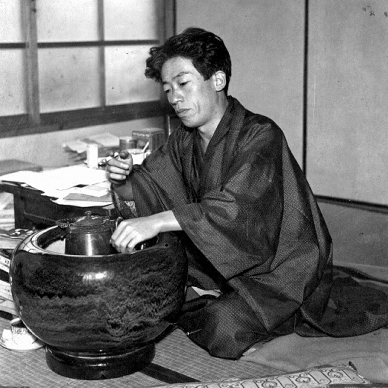
There is one Japanese author, Tajiki Kobayashi who had been on my must-read list for a long time before I eventually got around to him. His most famous novel is The Crab Cannery Ship (also translated as The Factory Ship) which is based on a real incident.
In Japan in the 1920s workers revolted on the ships where they were kept in almost slave like conditions harvesting crabs and then canning them on the ships themselves (hence the title).
The novel is a searing indictment of Japanese capitalism, nationalism and the emperor, who was in Japanese law a divinity.
We often think, in fact we are told that Japan is a land of hard working obedient workers who never question authority and this is the key to its success. Nothing could be further from the truth.
Japan experienced waves of social unrest as it industrialised along with brutal repression from the state and following the end of WWII trade union membership boomed reaching 5 million by 1947.
This movement was repressed with the US military occupation playing a key role in the Red Purge with thousands of workers hounded out of their jobs, the Communist Party was effectively banned and freedom of speech was suppressed.
The Japanese consensus is the result of oppression, not of some quaint cultural quirk.[2] But if you are to buy into this consensus myth then not only has history to be ignored, but so too must the literature that talks of it.
Kobayashi didn’t just write about the working class, he wrote for them as part of his political militancy. He paid dearly for his commitment. In 1933, at the age of thirty, the Japanese police tortured him to death, leaving two of his novels incomplete.
The Crab Cannery Ship had been serialised in a magazine, Senki, and was not available as a novel in Japan until 1948, though its English translation was available in the year of his murder.
It is a strange consensus that requires torturing poets and writers to death, but not so strange that we would be asked to forget them.
Not that Takiji’s novel had ever been entirely forgotten.
It occupied a secure position in Japan’s modern history as the best-known literary product of the proletarian movement, a major cultural and political current of the 1920s and early 1930s—a time when labor activism, socialism, feminism, and antimilitarism were briefly in the ascendant, while paintings, posters, prose narratives, poetry, and plays depicting the lives and struggles of the dispossessed enjoyed a considerable degree of popular interest and critical esteem.
By the mid-thirties, however, as the country’s elites led the nation ever closer to an all-out war on the Asian continent, this progressive groundswell had been largely obliterated through a combination of internal dissension, government propaganda, and intensified repression: arrests, beatings, imprisonment, and censorship.[3]
He was part of a movement of proletarian literature and president of the Proletarian Writer’s Guild of Japan.
Proletarian literature was not just written by working class authors (and also middle class authors who had turned their backs on their own class), nor was it just stories about the working class for middle class audiences.
It was for the working class with no middle class filters applied to make it suitable for chats over coffee, and it talked of socialism. His novels are political, in an overtly Marxist sense, class struggle is a key part of the plot.
The clandestine nature of political work in Japan is dealt with in the unfinished novel Life of a Party Member, and would be familiar to anyone who has lived under repressive regimes. Kobayashi himself engaged in clandestine work and was arrested numerous times and tortured.
The use of the term Proletarian rather than working class tells you all you need to know.
He was a fighter, he may well have liked coffee but his life was not that of the quaint coffee shop, arcane academic discussions where the middle class engage in their favourite pastime, talking and writing about the working class, earning royalties and accolades in the process.
His most famous novel The Crab Cannery Ship went through a huge revival in 2008, following the financial crash, selling hundreds of thousands of copies.
In 2008—the year Takiji’s novel skyrocketed to fame—over thirty thousand Japanese people killed themselves, tens of thousands were homeless, some three million were unemployed, twenty million were living in poverty, and more than a third of the active labor force comprised irregular workers who were poorly paid and could easily be fired.[4]
Reading it, it is easy to see why. I am neither Japanese nor a fisherman, yet much of what happens on the ship speaks to me, it speaks to everyone, abusive bosses, people trapped in low income, insecure work with little security, poor safety.
What Kobayashi describes is something that never went away in the third world and has made a comeback now everywhere due to the defeat of the trade union movement and, let’s be honest, the constant sell outs by the bureaucracy.
But that novel and his other writings are not about the plight of the working class or the proletariat to use the more accurate term that the middle class so loathe and despise. It is about the fight of the working class against those conditions.
He argues through his characters for a struggle for socialism, against the Japanese ruling class, nationalism, empire and also for the liberation of women.
In his novel Yasuko, two of the main protagonists are women who as the plot develops become independent forceful characters, through their participation in the class struggle and their fight against the repression of the state.
One of them, Yasuko lends her name to the title. It is obvious why the Japanese literati would not have promoted him so much. There are equivalents all around the world of proletarian writers or other oppositionists who have been relegated to a dusty corner.
The proletarian wave did not just happen in Japan, but throughout the East, Russia and also the United States.
There of course exceptions who became worldwide phenomena within their own lifetime.
One such author is Bertold Brecht who coincides in time with various proletarian literature movements around the world and then there is also the Italian artist Dario Fo, the author of many works such as Accidental Death of an Anarchist and Can’t Pay! Won’t Pay!
The title of this particular play became a catchphrase and slogan in the English speaking world.
Both were products of their time and achieved international fame, making them hard to relegate to dusty corners and though there are always attempts to relativise writers, soften the sharp edges of their plume it is not easy with either.
Brecht was unrepentant till his death and Dario Fo and his wife Franca Rame were lifelong activists and enemies of the Italian state, so much so that fascists under orders from the Italian police kidnapped tortured and raped her in an unsuccessful attempt to silence her.
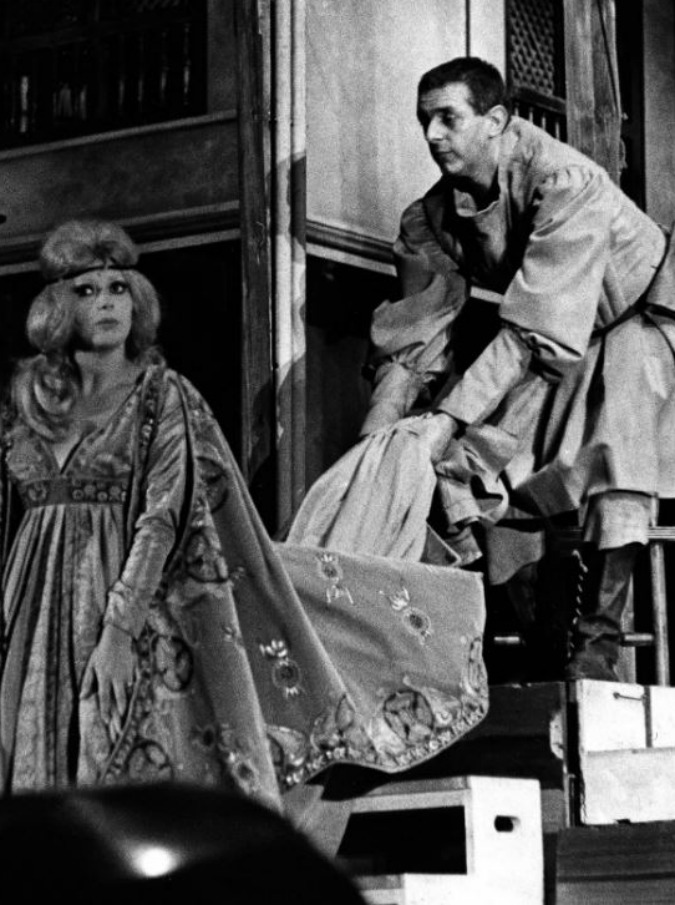
There was more at stake for her and her husband than artistic awards. Their work was political in all senses of the word and they were participants in the class struggle.[5]
In oppressed countries around the world various writers such as the El Salvadoran Roque Dalton, or the Palestinian Ghassem Kanafani are still remembered and celebrated amongst their people.
But they fought against foreign empires, Kobayashi was from the empire he fought against. It is harder to reinterpret him as anything other than what he was, a proletarian writer who gave his life not so much for a literature that was forgotten but for a revolution that never came.
What literature is remembered and celebrated is a question of power and politics. There is literature that must be remembered and there is that which must be forgotten or in rare exceptions begrudgingly acknowledged.
Kobayashi, however, is now acknowledged so much so that there are now Kobayashi tours, which is itself worrying, but there is no escaping who or what he was, though Sabu, the director of a remake of the film version did make an attempt at this depoliticising the novel.
There is also no escaping that the current Japanese inbred royal family murdered him. All of the post war institutions are the direct heirs of those who murdered him.
That his novel could speak to the Japanese working class 79 years after it was written, is testament to the lasting value of his writing.
Darkness never lasts and despite the best efforts of the media, the cultural gatekeepers in publishing, academia and galleries, it is as Brecht remarked in his poem Literature will be scrutinised.
But at that time will be praised
Those who sat on the bare ground to write
Those who sat among the lowly
Those who reported the deeds of the fighters
With art. In the noble words
Formerly reserved
For the adulation of kings…
Yes, a time will come when
These clever and friendly men
These angry and hopeful men
Who sat on the bare ground to write
Who were surrounded by the lowly and the fighters
Will be publicly praised.
And so literature once forgotten or relegated to a lowly category comes forth in all its glory and as Rosa Luxembourg put it, when talking about revolution, proclaims, I was, I am, I shall be.
End.
Note: You may wish to read other articles by Gearóid Ó Loingsigh on his substack https://gearoidloingsigh.substack.com/
Note: If you found this article of interest, why not register with Rebel Breeze for free, so that you will be notified by email of subsequent articles. You can de-register any time you wish.
NOTES:
[1] The Guardian (10/02/2018) Kit de Waal: ‘Make room for working class writers’. Kit de Waal. https://www.theguardian.com/books/2018/feb/10/kit-de-waal-where-are-all-the-working-class-writers-
[2] For an overview of class struggle in Japan in the post war period see Ichiyo, M (1987) Class Struggle and Technological Innovation in Japan since 1945. IIRE. Amsterdam. https://fileserver.iire.org/nsr/nsr5.pdf
[3] Translator’s Preface to Kobayashi, T. (2013) The Crab Cannery Ship and other novels of struggle. University of Hawai’i Press. Pp ix & x.
[4] Ibíd., p.x
[5] The Guardian (29/05/2013) Franca Rame obituary. John Francis Lane https://www.theguardian.com/stage/2013/may/29/franca-rame

