Diarmuid Breatnach
(Reading time: 5 mins.)
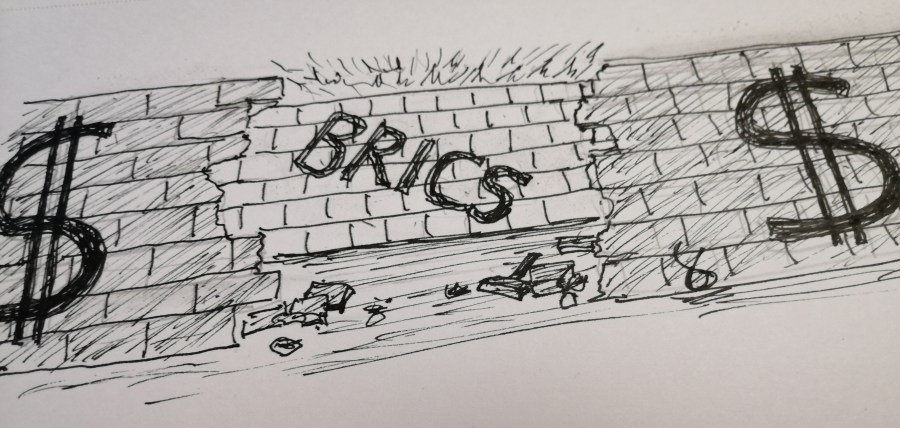
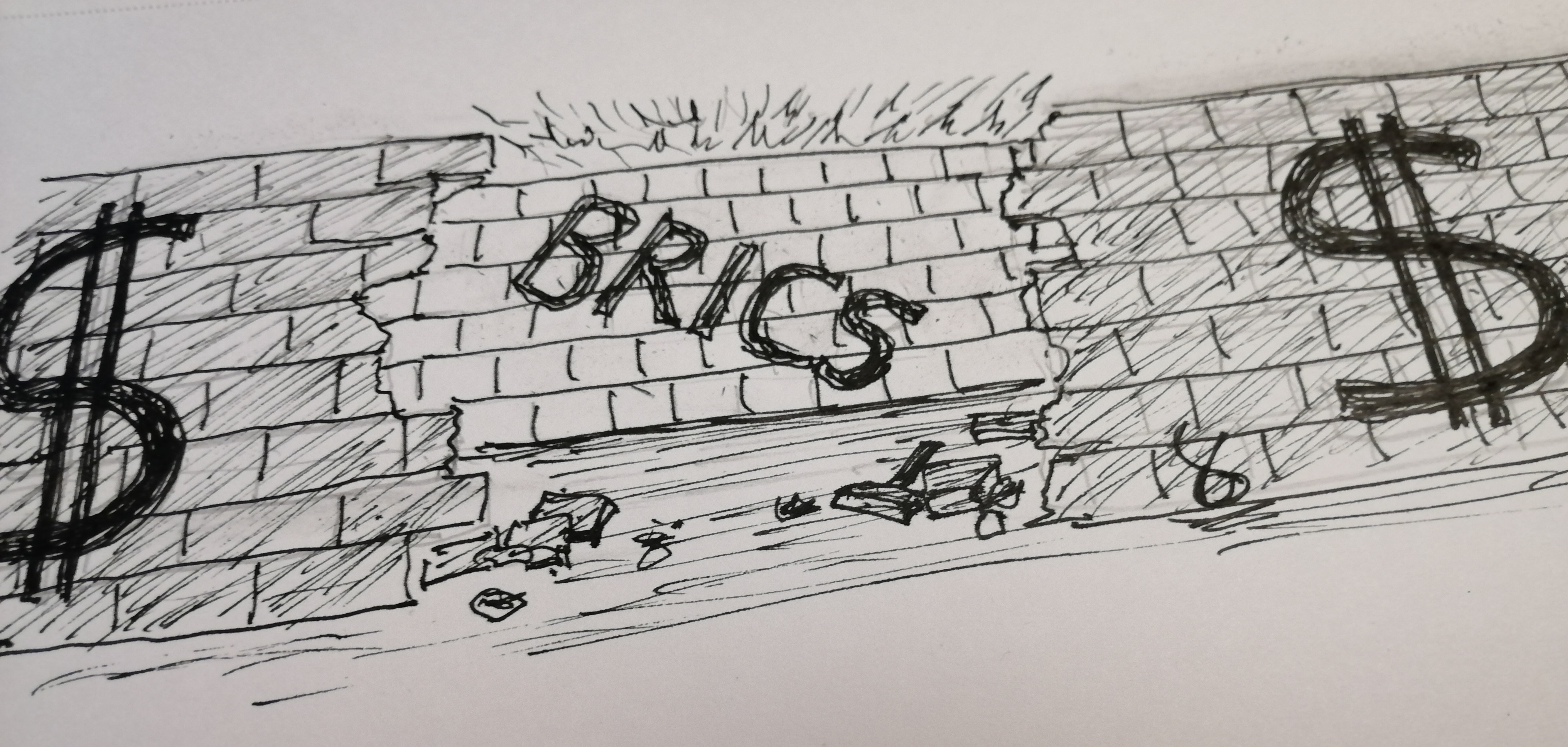
For decades the US Dollar has dominated financial transactions across the world – backed not only by the USA’s industrial and agricultural output but by its imperialist domination of many economies and its military power.
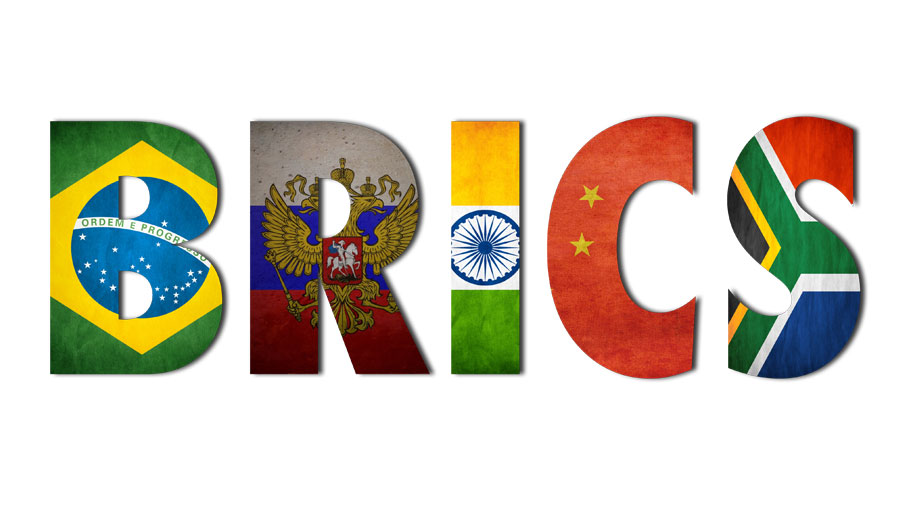
But perhaps no longer, for now there is a serious competitor in the field, one with the acronym BRICS, from the first letter of the states that created it (in order of no significance): Brazil, Russia, India, China, South Africa.
Apart from the backing of powerful economies with more applying to join, this currency standard is based on the price of precious and semi-precious metals. The UK’s Sterling (and the Irish state’s, for a while) was based on silver but the Dollar has for many years been backed by … debt.
A currency is based on the assumption that every unit will be payable and backed by a unit (e.g. gold) of the declared value. But if the value unit markers of the US Dollar, in coins, notes, cheques and credit transfers were to be presented to the US Treasury, it could never pay them.1
In fact, it could not even pay a significant percentage of them and has been running a national defaulting on debt currency for many years, this year once again deciding to continue doing so to the tune of $31.5 trillion.
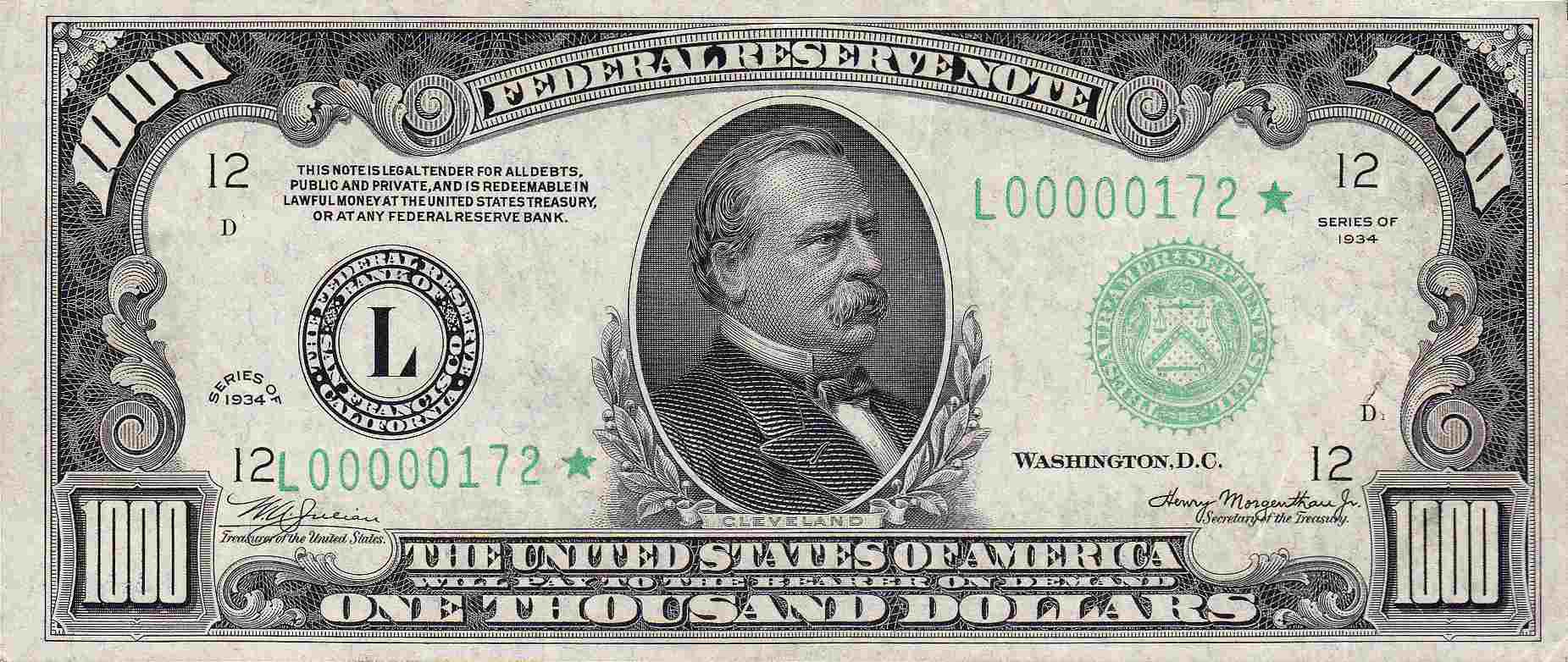
The USA has been able to continue doing this to date because so many of the world’s economies have been dominated by US Imperialism or in alliance with it; they fear that calling in the debt would lead to the collapse of the USA system and to their own interlinked financial structures.
BRICS consists of a financial alliance of economies of which their leaders for one reason or another feel in their interests to end the world dominance of the Dollar.
Previously, South Africa’s Foreign Minister Naledi Pandor said that there are 12 countries interested in joining the initiative.
Of the 12, she mentioned seven countries specifically, namely Saudi Arabia, United Arab Emirates, Egypt, Algeria, Argentina, Mexico and Nigeria. In March this year Russia announced its support for Algeria’s bid to join BRICS.
In April the expansion of that list interested in joining to 19 states was announced with formal applications from Algeria, Argentina, Bahrain, Egypt, Indonesia, Iran, Saudi Arabia and United Arab Emirates.
And with expressions of interest from Afghanistan, Bangladesh, Belarus, Kazakhstan, Mexico, Nicaragua, Nigeria, Pakistan, Senegal, Sudan, Syria, Thailand, Tunisia, Turkey, Uruguay, Venezuela and Zimbabwe.
COMMUNICATIONS, COMMON CURRENCY & LENDING BANK
Plans for an optical fibre submarine communications cable between BRIC members – partly motivated to avoid US National Security Agency spying on telecommunications in and out of the USA – have not advanced far since first discussed in 2012 but have not been abandoned.
Likewise, discussions of a common currency have not come to fruition yet either. However that may be more imminent.
As challengers to Western-led international currency, BRICS “in the order of the scale of GDP, now collectively outweigh not only the reigning hegemon, the United States, but the entire G-7 weight class put together” (former White House senior advisor Joseph W. Sullivan).2
The same commentator believes that such a common currency has a much greater chance of stability than the Eurozone, because of the geographic diversity of its members, which enables a broader range of goods and services.
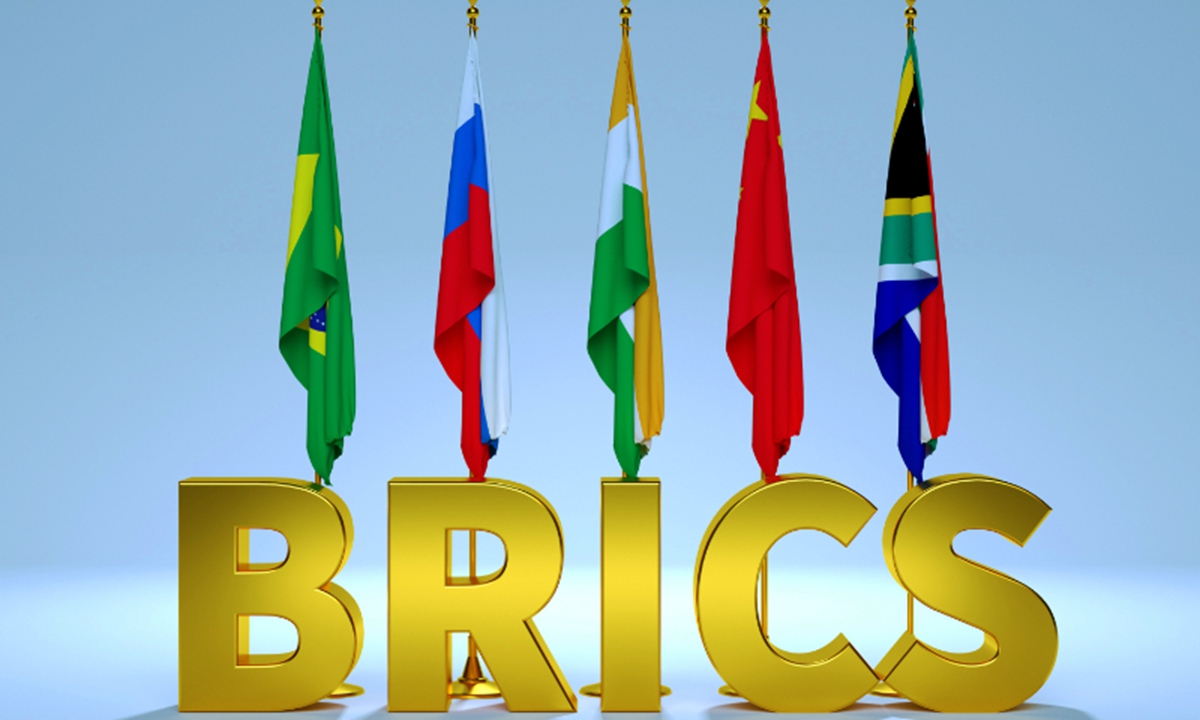
The biggest attraction for applicants to join is probably access to loans from the New Development Bank to members for infrastructure projects, which is the NDB’s main advertised purpose. Heretofore, the IMF and the World Bank have been the main external lenders.
Both the latter institutions have imposed harmful changes on borrowing economies, often driving them further and deeper into debt and into greater dependency on western imperialism. Those lending institutions have also supported corrupt and oppressive regimes.
The NDB has authorised lending up to $34 billion annually, with South Africa the HQ for the African continent with a starting capital of $50 billion ($10 billion from each of the five founders) and so far has 53 projects underway worth around $15 billion total.
Should the NDB prove its ability to issue loans to nationally-desired projects without the penurious and destructive conditions currently attached to IMF and World Bank funding, many, many regimes in the underdeveloped world are likely to apply to BRICS for membership.
And should client regimes currently dependent on western imperialism refuse to jump across to BRICS, they may well face coups from more nationally-ambitious sections of their elites or insurrections from below.
IS BRICS A GOOD OR A BAD THING?
Some anti-imperialists, including some socialists, have been celebrating the creation of BRICS, some even proclaiming it as the financial reflection of a new anti-imperialist order.
Of the five founding economies, only one claims to be socialist. Capitalist economies, we know, tend to develop into imperialist ones, sometimes but not always invading the countries of other economies but always exporting surplus capital there to exploit labour and natural resources.
So some or all of the capitalist economies in BRICS currently are likely to become imperialist also.
That apart, having much or even all of the world’s economies divided between two blocs may give weak economies opportunities they would not otherwise have or at least a choice and perhaps the opportunity to bargain for the conditions of their relationship to world finance.
In other words, a return in many fundamental ways to the division of the world before the collapse of the Soviet Union.
THREAT OF WAR?
But does this bring the threat of world war, arms race, etc, as seemed to be always present between the USA and the USSR?
Possibly but the threat of world war is already very much with us, as US/NATO uses the Ukrainian regime as a proxy in its decades-long threatening encirclement of Russia, and also in its posture (not unrelated) towards Iran and the USA’s world competitor China.
The working class in countries that are part of BRICS will still be exploited and will need to overthrow their respective national ruling classes if they are to end that exploitation and also save the environment from destruction.
Imperialism always means war whether direct or by proxy, small or large, against competing economies or people resisting domination and exploitation. Since the end of WW2 alone the USA has been involved in 201 military interventions in 51 regions.3
In the same period, the UK has carried out 28 military interventions in Asia, Africa, Middle East, Caribbean and Europe4 and France 32 in similar regions.5 Competition for world resources between Germany and the UK and with France led to WW1 and again to WW26.
BRICS has been created anyway, whatever our opinion and is set to grow significantly, causing some big changes in the world as a result. In the short term this development is likely to be to the advantage of the smaller economies and even nations struggling for independence.
End.
FOOTNOTES
2. Writing for American magazine Foreign Policy
3. https://tribune.com.pk/story/2345663/us-initiated-81-global-armed-conflicts-from-1945-to-2001
4. https://www.historyguy.com/british_wars_1945present.htm
5. https://www.historyguy.com/french_wars_1945-present.html
6. Other states were of course involved, including the imperial competition for the Pacific and Asia between the USA/ UK and Japan in WW2 with the SE Asian peoples, in particular communist-led Chinese fighting Japanese imperialism and of course in Europe the mighty contribution and sacrifice of the USSR against the fascist powers. But the initiation of both world wars was competition and contention between Germany, France and the UK.
SOURCES
https://en.wikipedia.org/wiki/BRICS
https://en.wikipedia.org/wiki/National_debt_of_the_United_States
https://www.bbc.com/news/world-africa-65784030
https://tribune.com.pk/story/2345663/us-initiated-81-global-armed-conflicts-from-1945-to-2001
 rebelbreeze
Reblogged this on Ramblings of a now 60+ Female.
grma!