Diarmuid Breatnach
(Reading time main text: 6 mins.)
Until very recently it was a widely-held belief that Hezbollah, the main Lebanese Islamic resistance organisation, was finished as a serious threat to western imperialism in Lebanon and to Israeli Zionism.
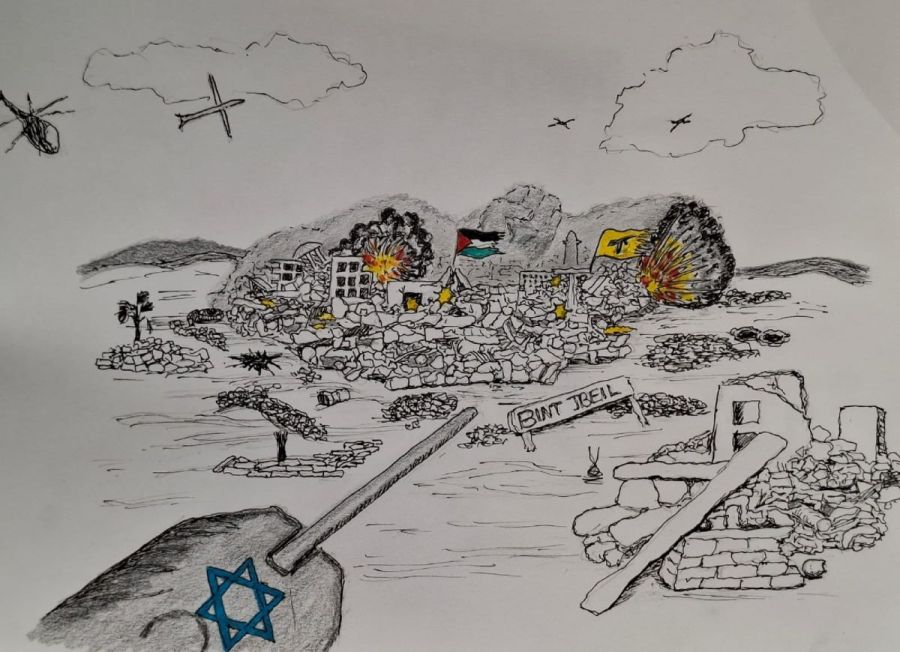
Such analyses ignored the fact that the organisation’s fighters for nine weeks held back the IOF from advancing into South Lebanon and made the Zionist army pay a very heavy price for even trying to advance – a heavy price in tanks and bulldozers destroyed and in personnel casualties.
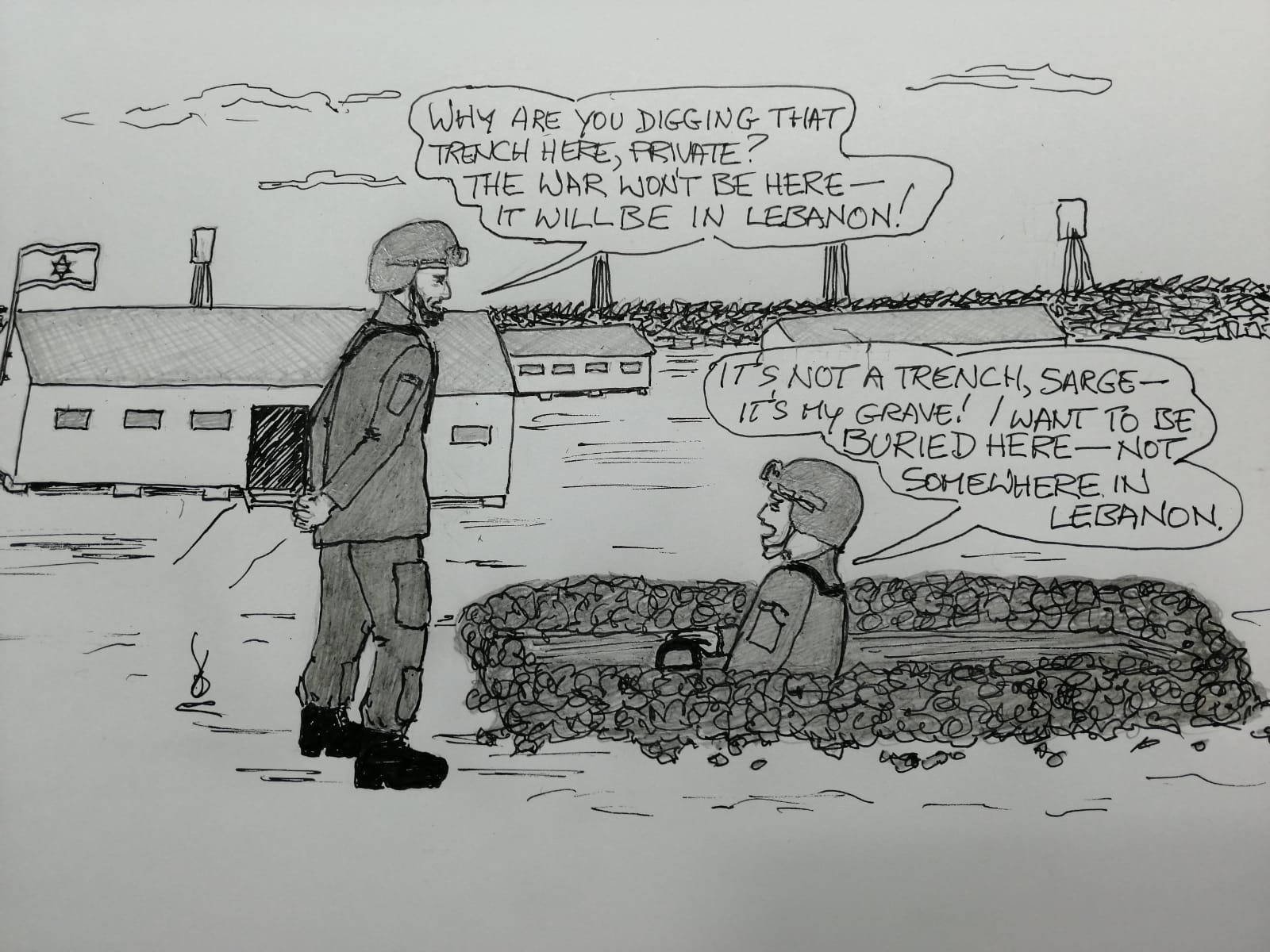
All the same, it seemed strange that after doing so and agreeing to the ‘Israeli’ request for ceasefire, they suffered daily violations by the IOF including regular assassinations of people in Lebanon, many or at least some of which were presumably Hezbollah personnel, without a return to war.1
Hezbollah’s statements during that period indicated that they wished to expose the weakness of Lebanon’s Government and their domination by US imperialism. Yes, we might have thought, but day after day, and your people being bombed and members assassinated?
It did look as though not so much their military capabilities but their political leadership had been weakened greatly. Of course, the loss of Hassan Nasrallah, assassinated by the IOF, was grievious, as had been the mayhem of the exploding pagers and cellphones.2
And since despite all that, Hezbollah nevertheless stopped the IOF at their border and made them weep for their losses, it seemed that it was the political leadership that had weakened, rather than their fighting ranks.
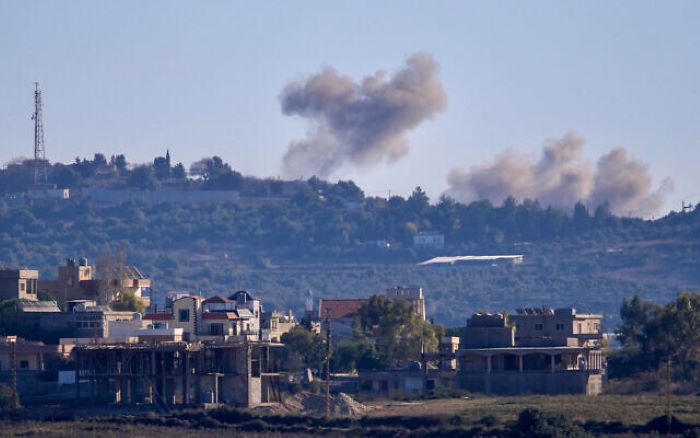
The United Nations Interim Force in Lebanon (UNIFIL) and the Lebanese government reported on 26 February more than 15,400 ceasefire violations by Israeli forces, while more than 370 people had been killed by Israeli fire in Lebanon since the ceasefire requested by ‘Israel’ began.3
Whatever Hezbollah were waiting for is hard to say for sure. Possibly they were waiting for a Zionist war with Iran, in order to open up a second front against their enemy but if so it is strange that they did not go on the offensive immediately but launched their attack on March 2nd.
Even then, the initial Hezbollah attack seemed performative and Hezbollah quoted the Israeli assassination of Ali Khamenei, Supreme Leader of Iran and leading Shia Cleric in West Asia as the reason for their offensive, in addition to daily deadly ceasefire truce violations by the IOF.
Hezbollah fired its initial barrage days after the US and ‘Israel’ had attacked Iran. It did seem as though their leadership were hesitant to return to war and perhaps initiated their attack in response to intelligence that the IOF were planning a war against them (which they referenced later).
The official plan of the Zionist is to occupy southern Lebanon to the Litani river as a “buffer zone”. However, this occupation can also be a part of the “Greater Israel” plan, which Netanyahu and a number of Israeli Zionist leaders4 and US Ambassador Mike Huckabee have publicly espoused.5
Hezbollah is fighting two kinds of war with ‘Israel’, one in which they bomb the state as part of the ‘axis of resistance’, against the state’s genocide against Palestinians and its attack on Iran, the other in which they defend Lebanon against ‘Israeli’ invasion and occupation.
In the first, they have clearly coordinated bombardment barrages with Iran6 and, more recently with Yemen.7 Hezbollah fires at targets in northern occupied Palestine, while Iran and Yemen concentrate on southern occupied Palestine.
Hezbollah was at first only firing at the IOF in the north but recently targeted what might be seen as civilian sites, since the IOF are using them, many of which are deserted, as staging and rest areas. However, Hezbollah issued public warnings before they began that stage of bombardment.
The IOF, on the other hand, in keeping with its traditions, has been bombing Lebanese civilians, housing, paramedics, hospitals and civilian infrastructure. And carrying out targeted assassinations.
Hezbollah employs its intelligence, mostly compiled from observation, to bomb areas where IOF personnel and vehicles are gathering, after which it bombs that area (or houses, in the case of these occupied by the IOF), all of which makes it very difficult for the Zionists to organise an invasion.
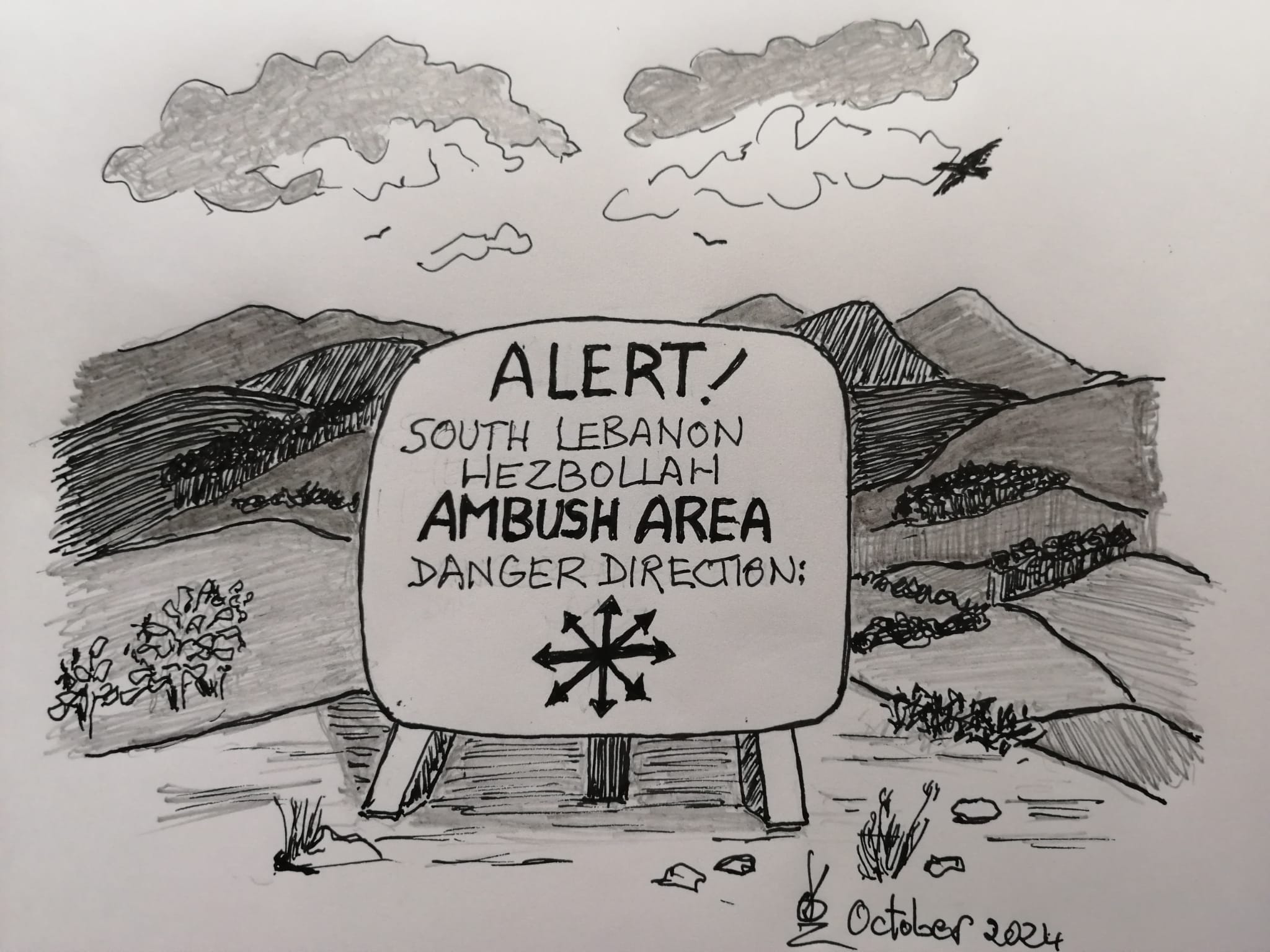
With the Zionist state currently having dominance in the air, the Resistance cannot hold static positions at the border and therefore has to allow the IOF to advance into Lebanon to ambush them there, either with missiles and artillery or at close quarters with light and medium weapons.
The latter can also be dangerous for the fighters for as their positions are revealed, they can then be bombed by the IOF. Even the fighters’ close proximity to the invaders may not restrain the IOF, as the orders of the latter are to kill their own personnel if they are in serious risk of capture.8
That said, it is reported that some of the missiles fired into occupied Palestine, i.e ‘Israel’, have been launched from north of the Litani river. Meanwhile the IOF take propaganda and morale-boosting photos of themselves in Lebanese villages in which they cannot remain.
A feature of the ambushes and battles in Lebanon which differs significantly from Gaza Resistance operations is that Hezbollah target the IOF rescue forces and medical evacuation transports. Considering the targeting of ambulances by the IOF the restraint of the Gaza resistance is strange.
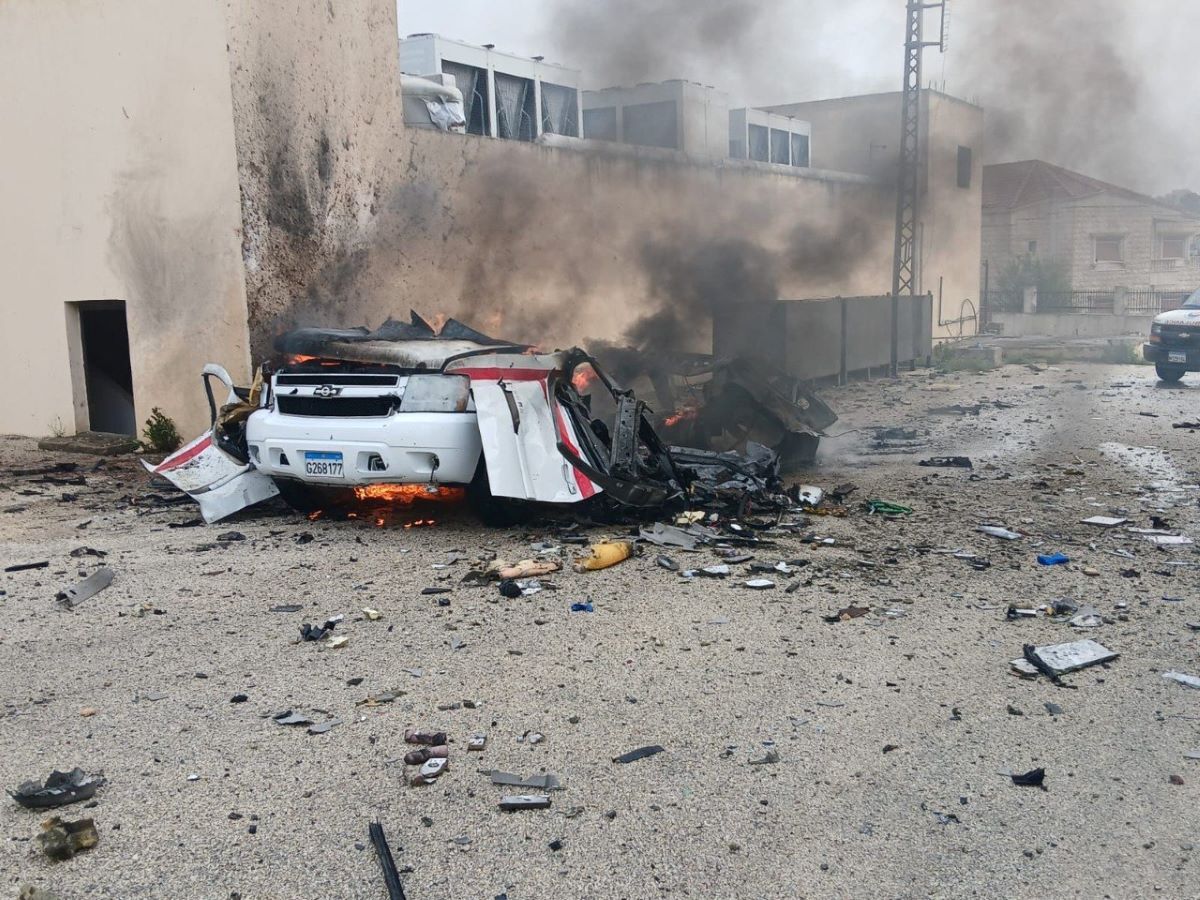
Sources report nearly 100 Merkava tanks of the IOF hit by Hezbollah missiles, rockets or IEDs and many videos have been posted on social media by Hezbollah. In addition, fortified positions, radar units, artillery batteries, troop transporters and bulldozers have been partially or fully destroyed.
The skies are also gradually getting cleared of Zionist drones too. The number of daily operations by Hezbollah is high, having risen from around 20 per day previously to 30 on 5th April9 and to between 80-90 recently.
According to the northern correspondent of the Hebrew newspaper Yedioth Ahronoth, Hezbollah has carried out 779 attack waves against Israel between 2 March and 21 March, a tempo that could surpass the number of attack waves recorded in October 2024.10
The figures refer to the number of observed “attack waves,” not the total number of munitions launched.11
TRYING FOR CIVIL WAR AND SUBVERSION
The imperialists tried, through their clients in Lebanese society and armed forces to get the Lebanese national army to disarm Hezbollah. That was never going to happen since Hezbollah is more the real national army and the official armed forces just a poor imitation.
But a civil war, with outside involvement, like the one from 1975 to 1990 with Israeli intervention12 was a possibility. However, now the Lebanese people have seen their government neglect to defend them and the official army retreat from invading IOF, while Hezbollah stopped them hard instead.
As the US leadership and the rest of western imperialism (and their proxies in Western Asia) felt Iran’s restrictions in the Strait of Hormuz bite into their profits, Trump indicated a wish to return to negotiations – to which Iran has responded positively but with caution.
Recalling assassinations of negotiators twice during negotiations, Iran’s caution is more justified than normal. But there is also the issue of dragging the confrontation on by insincere peace talks while the Zionist genocide continues in Palestine and is being exported to Lebanon.
Iran’s 10-point basis for negotiation, including an end to the aggression against Lebanon was accepted by the US and publicised by Pakistan, the intermediaries. But soon was refuted by ‘Israel’ and then by the US; the talks then foundered as the US tried to impose its own terms.
Once again, Iran reiterated that an end to US and ‘Israeli’ aggression in West Asia has to be part of any agreement. Jumping opportunistically on this, Lebanon’s quisling government sought talks on a ceasefire with ‘Israel’ through the offices of US imperialism.13
Though the craven Lebanese regime had no cards to play, a ceasefire in Lebanon seemed to have been agreed,14 which the IOF celebrated with a massive bombing attack on Lebanon, killing 300 people in the hours before the deadline and also another attack after.
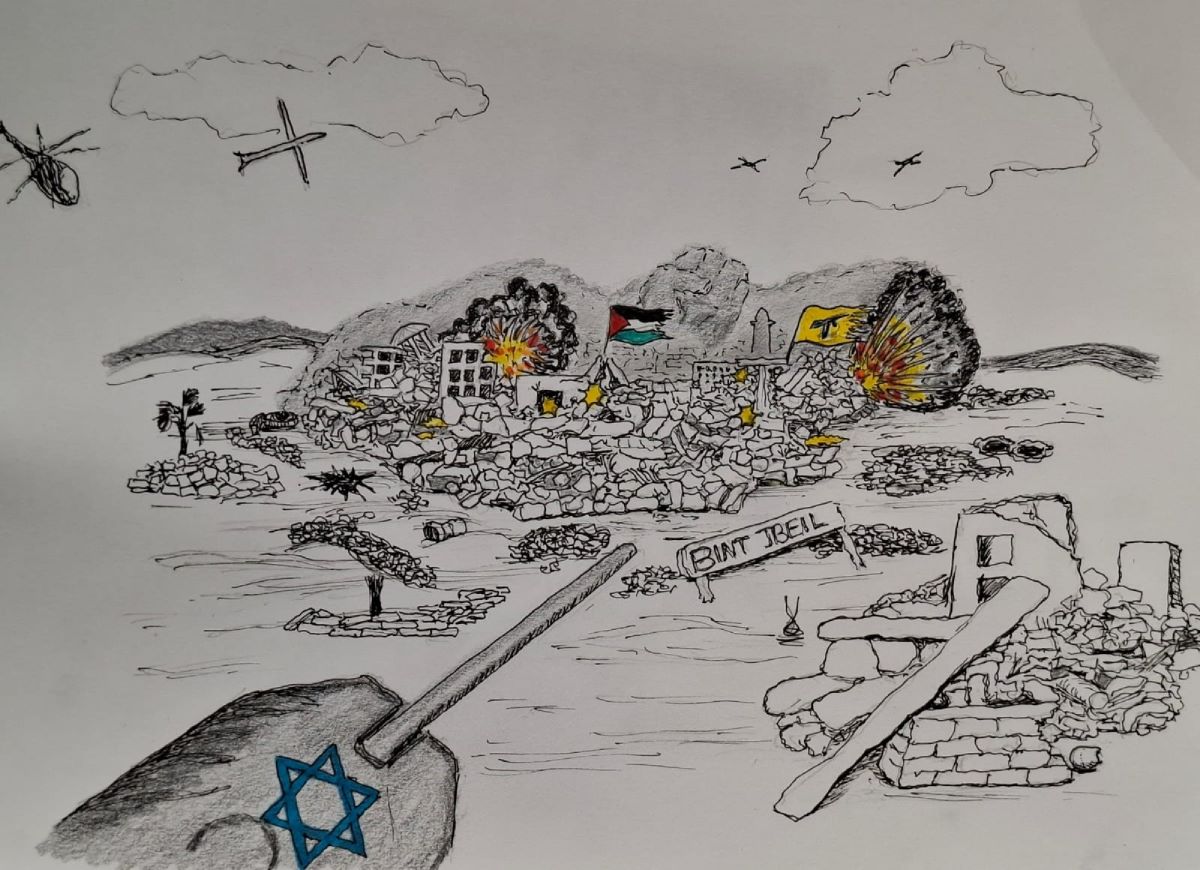
If the US leadership is not convinced they have lost this war and cannot replay it to win – and if they allow the ‘Israeli’ Zionist leadership to undermine any agreement, then the war will resume, whether including Iran or focused on Hezbollah in Lebanon.
If Hezbollah can hold their ground and prevent a successful IOF invasion into South Lebanon while continuing to respond to Zionist entity attacks and if Iran sticks to its conditions on an end to aggression in West Asia, then the future seems bright for the people of Lebanon.
There will be ongoing internal struggle of course between the mass of people and the neo-colonial clients of imperialism, also with a fascist rump of French ‘Christian’ colonials in Lebanon but, without outside interference, the people can resolve these with positive results.
End.
Note: If you found this article of interest, why not register with Rebel Breeze for free, so that you will be notified by email of subsequent articles. You can de-register any time you wish.
APPENDIX
South Lebanon field report from Al-Manar correspondent Samer Haj Ali (17 April 2026):
•Eastern villages axis: From Blida to Mays al-Jabal, the situation remains unchanged.
Enemy forces are refraining from showing themselves west of these towns, as they would be exposed to direct fire from the resistance.
•Al-Hujair axis:
The enemy is mainly positioned in the Taybeh project area.
The situation remains unchanged in Deir Siryan, which the enemy has withdrawn from. The occupation forces attempted to advance from their positions between Al-Qantara and Taybeh toward the town of Al-Qantara once again.
They established an outflanking route reaching the Al-Khazzan area in Al-Qantara. They were met with resistance fire, which destroyed four Merkava tanks and two armored personnel carriers. They failed to reach the Litani River from the direction of Taybeh or Wadi al-Hujair.
•Khiam axis:
The resistance maintains its capability to prevent the enemy from advancing toward the northern neighborhood. The enemy circulated reports claiming progress toward Debbin, but these reports are denied by field sources.
The road from Debbin to Marjayoun and Ebl al-Saqi remains open for civilian movement.
• Arqoub axis:
The enemy has expanded its attacks in recent days, without any change in its ground deployment. Airstrikes targeted some of its villages such as Shebaa, Hebarieh, and Halta, accompanied by simultaneous artillery shelling.
Hezbollah announced 74 operations on 14–15 April against Israeli forces, sites, settlements, and military infrastructure
Border clashes
Heavy fighting intensified across Bint Jbeil, Khiam, Bayyada, Naqoura, Kfar Kila, Mays al-Jabal, Aitaroun, Shamaa, and surrounding axes, with repeated close-range engagements and sustained confrontations against advancing Israeli forces.
A major ambush targeted a paratrooper unit (Battalion 101) near Maroun al-Ras as it advanced toward Bint Jbeil, resulting in casualties and forced evacuation under heavy fire.
Israeli forces were repeatedly struck in troop concentrations, homes used for positioning, and along movement routes, while engineering vehicles, including a D9 bulldozer, were directly hit. Merkava tanks were also targeted by attack drones, with confirmed hits during ongoing clashes.
Drone and air defense operations
Attack drones were extensively deployed against artillery positions, command nodes, troop concentrations, and armored units, including direct strikes on Shraga base (Golani Brigade HQ), Meron air control base, and multiple frontline positions.
Air defense activity was notable, with multiple Hermes 450 drones intercepted over southern Lebanon and along the coast, alongside engagements against Israeli fighter jets and an Apache helicopter forced to withdraw.
Drone strikes also targeted artillery batteries in the Golan and northern front positions, as well as Israeli troop gatherings in Bint Jbeil, Khiam, and Naqoura.
Rocket and missile strikes
Sustained and high-intensity rocket barrages targeted Israeli troop concentrations, military sites, and settlements across the northern front, including Kiryat Shmona, Metula, Misgav Am, Nahariya, Shlomi, Avivim, Yir’on, Dovev, Kfar Giladi, and Manara.
Large-scale, synchronized barrages hit multiple settlements simultaneously, while repeated strikes targeted positions in Bint Jbeil, Khiam, Bayyada, and surrounding areas.
Fire was maintained throughout both days, with dozens of salvos launched in waves, including heavy bombardment of troop concentrations and staging areas.
Strategic military targets
Strikes hit key Israeli military infrastructure, including Shraga base (Golani command), Meron base for air surveillance and operations, Filon base near Rosh Pinna, Liman barracks, and artillery positions across the Golan.
Additional targets included communications infrastructure, newly established artillery sites, and logistics nodes in Karmiel, Maalot-Tarshiha, and other northern areas, alongside continued targeting of command, control, and fire management positions.
Footnotes
Sources
Al Mayadeen English: https://english.almayadeen.net/
Electronic Intifada: https://electronicintifada.net/ (also on a number of platforms)
The Cradle: https://thecradle.co/ (and its News Updates on Telegram)
and others quoted in Footnotes.
1https://reliefweb.int/report/lebanon/msf-update-southern-lebanon-where-ceasefire
2https://www.ohchr.org/en/press-releases/2024/09/exploding-pagers-and-radios-terrifying-violation-international-law-say-un
3https://reliefweb.int/report/lebanon/msf-update-southern-lebanon-where-ceasefire
4Speaking on an Israeli radio program, Israeli Finance Minister Bezalel Smotrich said that the war on Lebanon “needs to end with a different reality entirely, both with the Hezbollah decision but also with the change of Israel’s borders.” “I say here definitively … in every room and in every discussion, too: the new Israeli border must be the Litani,” he added
5https://www.aljazeera.com/news/2026/2/26/what-is-greater-israel-and-how-popular-is-it-among-israelis
6https://www.ynetnews.com/article/hy711hihfwx
7https://www.aa.com.tr/en/middle-east/houthis-claim-joint-missile-attack-with-iran-hezbollah-on-israel/3887706
8See the ‘Hanibal Doctrine’, resuscitated during 7 October 2023 and continued as ‘Israeli’ policy since.
9See Appendix
10 Which was the most intense month of the previous confrontation.
11Source: The Cradle news updates on Telegram
12With an estimated 150,000 fatalities, the externally-instigated civil war and ‘Israeli’ occupation gave rise to the creation of Hezbollah in 1982 and it was they who led the expulsion of the Zionist invaders and the collapse of their local fascist collaborators, the South Lebanese Army (sic).
13The Lebanese Government withdrew its army in the face of IOF advances and went against its own laws in recognising ‘Israel’ while seeking a ceasefire from it.
14The US Imperialists and their Zionist proxy want the Government and Army to disarm Hezbollah. While they also know that this is not possible, due to both the superior strength of Hezbollah and reluctance of many, including some senior officers in the Lebanese Army, a civil war would do instead.

