

Diarmuid Breatnach
(Reading time: 5 mins.)
A number of great leaders of Arab resistance to imperialism and zionism have fallen in the last few days. “Those who live by the sword …”, the wise will comment. But they did not die by the sword but rather by long-range missile assassination.
Still, we can take the comment as a metaphor, that those who live by violence die by violence. But do they? Has Genocide Joe Biden died by violence? Sunak? Von der Leyen? Scholz and Merkel? Macron? Netanyahu, Gallant, Smotrich? No, it is clearly not a general rule.
But revolutionary fighters, commanders and leaders – they are killed, again and again. Fighters who become commanders are particularly targeted and, in the Middle East for sure, so are their spouses, their children, their parents … This is the way of Mossad and the IOF but also of the US and UK.
The SAS and MRF units of the British Army did that in the 30 Years’ War in the occupied Six Counties too. Assassinations of leaders are intended to disrupt the revolutionary organisation and demoralise the Resistance.
Sometimes, the intention is to have a revolutionary leader replaced by a traitor or someone who is ideologically pliable but often too the fallen are replaced by others as dedicated and competent, if not more so.
The IOF are accomplished assassins of individuals, also killers of civilians, just not very good at combating armed resistance, particularly in the absence of air cover..
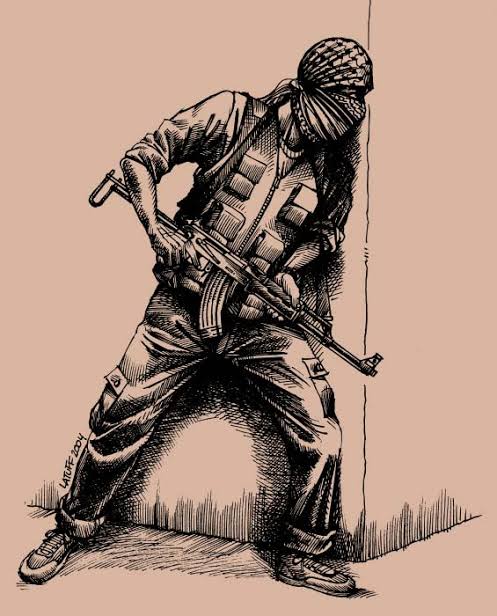
But why shouldn’t revolutionary leaders be felled – don’t they send others out to kill or be killed? Certainly they do and all Arab resistance movement commanders know that they risk assassination, many of the commanders and fighters writing their wills while in active service.
However, visit imperialist war memorials listing the names and ranks of the fallen in war and see how many names of their armies’ generals can be found there. Not many, that’s for sure.
Haniyeh was the chief Resistance representative in the Gaza ceasefire/ peace talks. Prime Minister Mohammed bin Abdulrahman al-Thani of Qatar, which is mediating the talks, tweeted: “How can mediation succeed when one party assassinates the negotiator on other side?”1
Two revolutionary leaders who fell to assassination so recently were Sayyed Fouad Shukr of Hezbollah in a suburb of Beirut and Ismail Haniye of Hamas in the Iranian capital, Tehran. Each organisation has issued statements that they will not be stopped and that they will claim revenge.
In another assassination strike on Tuesday in Iraq, admitted by the USA, Khateb Hezbollah suffered the loss of martyred leader Abu Hassan Al-Maliki and martyred fighters Ali Al-Moussawi, Hassan Al-Saadi and Hussein Karim Al-Daraji,2 bringing huge crowds out in protest there.
The Iraqi Islamic resistance had begun shelling US Army bases there recently, partly in frustration at the lack of any move to leave the country despite having indicated they would but partly also no doubt in frustration at not contributing to the united effort in solidarity with the Palestinians.
Iran declared furthermore that since the assassination of Ismail Haniyeh took place on their national territory that the obligation of response falls upon them. One imagines that another strike on somewhere in Israel will be considered necessary though the precise target is unknown.
Declarations of condolence, defiance and continuity were also issued by resistance factions in Palestine, Lebanon and Iraq, as well as by the leaderships of Yemen and Tunisia. A general strike was called in the West Bank and marches of defiance and solidarity held in a number of countries.
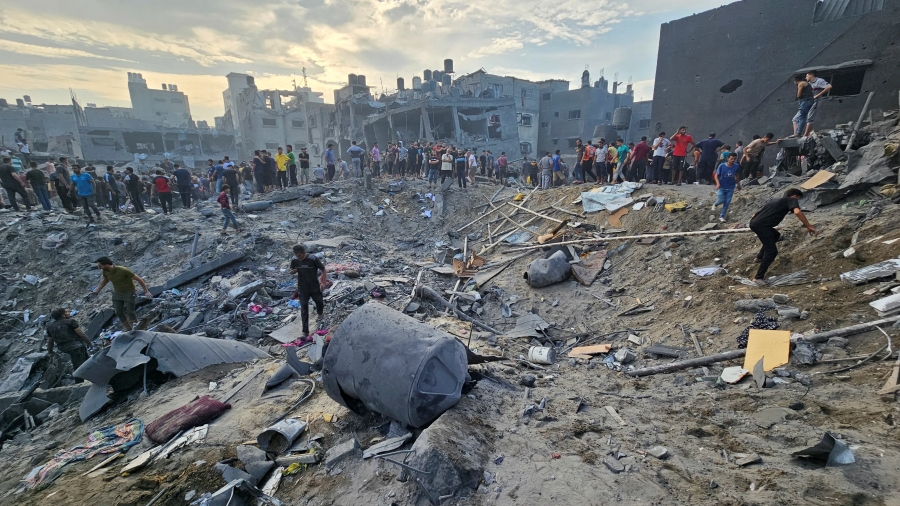
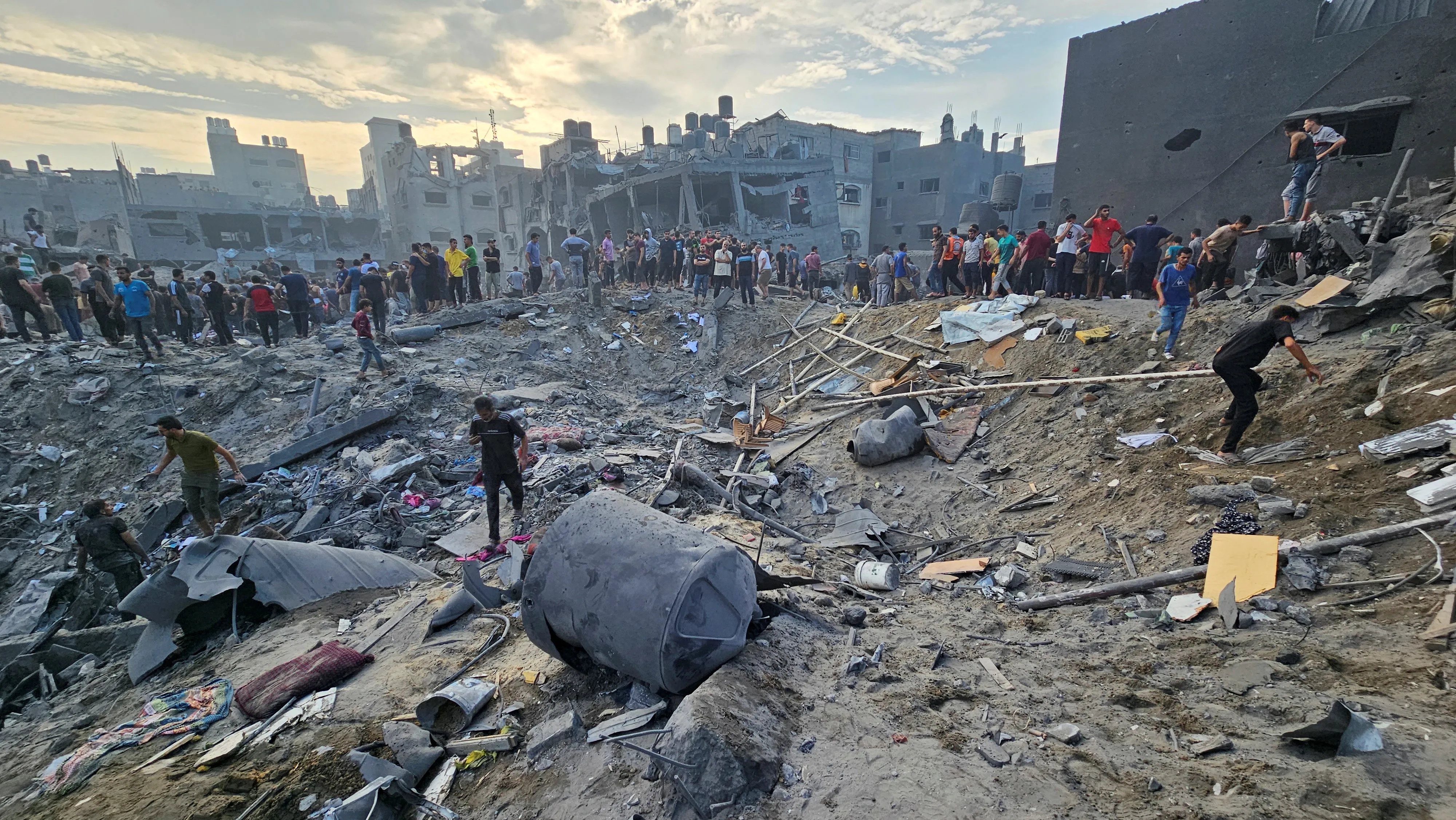
Confrontations with settlers and with the Occupation army have been taking place in towns across the West Bank and the war in Gaza continues, more or less as normal: daily massacres by the IOF, actions by the Resistance.
‘Collateral damage’
The strikes on the leaders also claimed other lives: six people including three women and two children, along with Iranian Revolutionary Guard Corps member Milad Bedi were killed in the Beirut assassination of Fuad Shukr and 78 injured in the collapsed building.3
Along with Haniyeh in Iran died his bodyguard and veteran Palestinian resistance fighter, Wassim Shabu, with no details of other ‘collateral damage’ from there or from Iraq so far.
According to the rules of war agreed among the imperialists, assassination of commanders, even civilian ones in times of war, is justified. ‘Collateral damage’ to a certain degree is also permitted by those rules but how can the bombing of journalists and killing two in Gaza be justified?
They were at the rubble site of Haniyeh’s former home, perhaps reporting on some kind of event marking the assassination, since they cannot attend the equivalent of a wake or a laying out of the body, the funeral to be held in Iran. How was their killing justifiable by any stretch of rules?
Ismail Al-Ghoul and Ramy Al-Reef were the two press men martyred there. Those two deaths bring the number of journalists killed in Palestine (always by the IOF), to 165, the highest number of journalists killed in any conflict since data began to be collected by the CPJ in 1992.4
Life of revolutionary leaders
The life stories of the martyred leaders are instructive in themselves. Ismail Haniyeh grew up in a refugee camp in Al-Shati in Gaza, son of a community driven out of their home in Jura in Askelan5 in 1948. He graduated with a degree in Arabic Literature from the Gaza University in 1981.
It was in university Haniyeh became politically active, joining the student section of Islamic Bloc (forerunner of Hamas), becoming arrested and detained three times, the final one for three years, after which he was deported to southern Lebanon with other leaders.
Ismail Haniye survived at least four assassination attempts, including in 2003 and in 2006.
Haniyeh led Hamas to victory in the 2006 elections for the legislature of the Palestinian Authority. The Fatah leadership refusing to hand over the administration in Gaza, Hamas removed them in a short struggle,6 then Abbas7 refused to recognise the election results there or in the West Bank.
The Zionist State followed, as did the Western powers and the siege of Gaza began.
Haniyeh’s granddaughter was killed last November in a bombing on a school. Three of his sons and three grandsons were assassinated in an IOF strike on their car in April and last month, 10 of his family, including his sister, were killed in an IOF bombing.
Sayeed Fuad Shukr 62, also known as Al-Hajj Mohsen, was born in the city of Nabatieh in Baalbek in eastern Lebanon, according to the US government’s Rewards for Justice website, which offered up to $5 million for information on Shukr.
He came to political struggle in the resistance to the IOF invasion and occupation of Lebanon which was the spur to the creation of Hezbollah. Fuad Shukr as a fighter rose through the political and military ranks to the Jihad Council fighting the IOF and its Lebanese proxy.
Sayeed also would have been party to the decision to send Hezbollah fighters to assist the Syrian state resist attacks by NATO forces and their proxies and probably also Turkish.
He was married with children; his daughter wrote pieces in particular about martyrs under a pseudonym but just published a piece about her father under her own name on Resistance News Network (on Telegram).

Great leaders
I commented that they were great leaders. By all accounts they were. They were Muslim revolutionaries and I am an atheist but more to the point their religious belief was an important part of their politico-social ideology, to which my own secular revolutionary ideology is opposed.
But they were revolutionaries non the less, courageously leading their people in struggle against their oppressors, who are very powerful enemies. They had emotion, which they let out in speech. In planning and in response to events however, they thought things through before acting.
Ismail Haniye probably underestimated the extent – in length of time and numbers of dead, in starvation and destruction of all infrastructure — of the ‘Israeli’ genocidal war after October 7th.8 That does not mean however that the breakout and attack was not necessary.
But the resistance was led, day after day, using the tunnels that had been dug through the years of preparation and the weapons researched, developed and produced over that time. In the truce/ ceasefire negotiations, the leadership stuck to the necessary minimum, which must’ve been hard.
Great fighters of the rank and file fall and are constantly being replaced and multiplied. Thousands of civilians have been killed, disabled and traumatised, yet the Palestinian population will recover and rebuild. Great leaders have fallen – let us hope their replacements will be great too.
End.
Footnotes
1https://www.axios.com/2024/07/31/hamas-ismail-haniyeh-killed-iran Just one more proof, in addition to going back on agreements, adding new requirements etc showing that Netanyahu never had any intention of negotiating a genuine ceasefire, exchange of prisoners and withdrawal from Gaza and the Rafah Gate to allow humanitarian aid to enter. Indeed he often said that his chief aim was wiping out Hamas and would not permit self-governance in Gaza – it was only a few of his officials and the US administration which kept pretending otherwise.
2 https://t.me/PalestineResist/50870
3https://www.reuters.com/world/middle-east/hamas-chief-ismail-haniyeh-killed-iran-hamas-says-statement-2024-07-31
4Committee to Protect Journalists https://cpj.org/
5Now Zionist settler district ‘Ashkelon’.
6This is the reality usually disguised in the western mass media by phrases like “Hamas seized power in Gaza” or “Hamas took control in Gaza”.
7Mahmoud, Fatah’s boss of the PA, widely known for personal corruption and nepotism and also for collusion with the Zionist Occupation.
8Even the most pessimistic could hardly have expected the extent of the genocide or the extent of the collusion or forbearance of the West and most of the Arab states.
Sources
Sayyed Fouad Shukr (but including rubbish about the explosion killing children in the Golan): https://www.aljazeera.com/news/2024/7/31/who-isfuad-shukr
Iraq assassinations: https://www.middleeastmonitor.com/20240731-us-air-strike-in-iraq-as-regional-tensions-worsen/
 rebelbreeze