
Clive Sulish
(Reading time: 6 mins.)
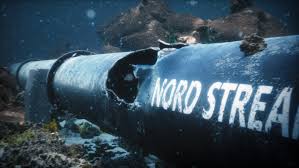
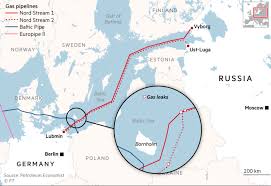
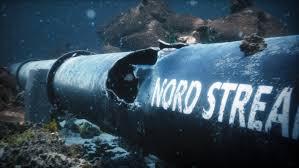
On 26 September 2022, an explosion blew a section of the Nord Stream 2 gas supply pipeline from Russia to Germany, incidentally causing an environmental disaster for sea-life in the area. Investigations confirmed that it was an act of sabotage.1
Amidst accusations and theories,2 no perpetrator was conclusively identified.
But two years later, in September 2024, an important item of previously-suppressed information came to light in a Danish newspaper. It was not however picked up by the mainstream western media, despite its potentially crucial contribution to solving the mystery.
Alternative sources however alighted on it and it is now coming into the public light.
In any investigation of culpability for a human action, one of the first established principles to investigate is – and targets of investigation should be — cui bono? (in Latin, who benefits?). Next, Qui habet potestatem? — Who has the means? Finally, Who had the opportunity?
Potentially, any in the anti-Russian coalition around NATO stood to benefit by harming not only a Russian installation but also a major source of financial benefit to Russia, i.e of sales of gas to Germany. Many eyes turned towards Russia’s opponent in the Ukraine, the Zelensky regime.
However, neither Russia nor any other serious commentators ever considered that NATO proxy to be the culprit. Russia and others stated that the operation required a major state, both in the depths concerned, in surface support needed and in the explosive type and detonation system.
A number of commentators pointed the finger at the USA, which denied any involvement. Well, the USA is a major state and certainly had the motive, as Russia was and remains its major target in the Ukraine war and it also had the potential technical and personnel means.
It would also of course, as an enemy of Russia, benefit from harm to its opponent. It would benefit the USA financially too, though that was yet to become clear.
From whom would Germany buy its power to warm its population and production through the winter as an alternative to Russian gas? That new source would turn out to be – yes, the USA.
OK, so suspicion should fall heavily on the USA, leader of NATO and chief among the enemies of Russia. But did it have the opportunity?
Since there was no record of a US naval presence in the area at the time of the explosion (even though they had been there previously in one of those major joint exercises they like to carry out to bring their allies closer and intimidate their opponents), the media investigation floundered.
Russia asked at the UN Security Council for an investigation, which was rejected. No decision of the Council can be made against a veto of even one of the five Permanent Members, of which three are part of the NATO coalition (USA, UK and France).
A number of alternative theories began to be put around, including mention of large yacht in the area and a Ukrainian oligarch financier. Official investigations were launched by two states in whose economic zone the operation must have taken place: Denmark and Sweden.3
Both regimes are part of the US/NATO/EU coalition and there may have been suspicions that their investigations might not be sufficiently thorough. In any case, in February this year both states closed their investigations without having identified the perpetrator.
Germany’s investigation is ongoing and it issued an arrest warrant for a Ukrainian oligarch who fled to NATO proxy Ukraine with assistance of NATO member Poland. However Russia and serious commentators have always said that a major state, something Ukraine is not, was culpable.
On 17 July 2024, the German government refused to publish the preliminary results of the investigation after the Alternative für Deutschland (AFD) party asked for it, or to comment about the possible involvement of American intelligence services or Ukraine in the pipeline attack.4
In October 2024, the Swiss newspaper Die Weltwoche wrote an article based on an interview given to Danish Politiken by John Anker Nielsen, the harbourmaster of Christianso in Denmark on the day of the two-year-anniversary of the Nord Stream pipelines sabotage.
Back in September 2023, the Christianso harbourmaster detected the presence of ships in the area with their transponders, equipment identifying the ship and its course, silent. Assuming some kind of accident, Nielsen sailed out to investigate, finding US Navy there.
With no evidence of disaster and a request that he leave, Nielsen turned for home. (Suppose that information had been included in the Danish investigation, would the fingers pointing at the USA not have multiplied?)
Nielsen says he was told to keep quiet about what he knew but decided to end his silence in September and his story was published in a local newspaper. Later alternative commentators such as Glen Greenwald and others on X picked up on it and now it’s finding its way into wider media.
The Swiss newspaper article went on to note that the USS Keararge three months earlier had participated in the BALTOPS 2022 exercise that included unmanned underwater vehicles suitable for demining and other underwater operations.5
Such vessels as those could transport explosive charges suitable for blowing the Nord Stream pipelines. The Swiss newspaper claimed this new information calls into question the assumption that a Ukrainian group was responsible for the sabotage and that investigations are continuing.6
OUTCOMES
The outcomes to date are that Russia has received heavy financial damage, both in the cost of the pipe and any repair costs but also through loss of a customer who might well have resumed its purchase of gas from Russia in preference to dearer fuel from elsewhere.

The USA has benefited financially because it is also an energy exporter, including to Germany, where Russia was its main competitor.
In 2022, Germany imported 44.65 million tonnes of hard coal. Its leading coal suppliers were Russia (29.2%), the United States (20.8%) and Colombia (16.3%).7 So in the event of any embargo on Russian hard coal, the US stands to benefit enormously.
But what about natural gas, formerly supplying 55% of Germany’s power supply, no longer possible from Russia through the Nord Stream 2 pipeline? About 45% …. comes from Norway through pipelines, 4% from the Netherlands, 5% domestic production … the rest from western neighbours.8
Norway and the United States were the top suppliers of gas to the EU in 2023. Norway provided almost 30% of all gas imports. But the actual origin of those supplies is not so easy to identify and reports even estimate that a small percentage of the EU’s supply is actually Russian.
Although additional suppliers include North African countries, the UK and Qatar, in 2023, the United States was the largest LNG supplier to the EU, representing almost 50% of total LNG imports. In 2023, comparing to 2021, imports from the US almost tripled.9
It seemed likely that some at least – and perhaps a lot – of Germany’s current LNG supply, though perhaps through another country, would actually be of US origin. And it turns out that the US has been the dominant LNG supplier to Germany since 2022 at 82% of total imports.10

IN CONCLUSION
While the USA has benefited significantly financially from the pipeline explosion and strategically through damaging an opponent, Germany has at the same time suffered a loss in having to buy more expensive fuel (from the USA).11 But Germany is an ally of the USA and a prominent one in NATO.
This episode demonstrates that 1) the USA, in advancing its own interests, is prepared to break the law and to see an ally suffer but also that 2) a major European capitalist power has surrendered a substantial portion of its own interests for the benefit of the USA, as a price of membership of the NATO club.
Germany, though an enthusiastic supporter of NATO, due to its dependence on natural Russian gas, had been reluctant to engage fully in the economic sanctions against Russia proposed by NATO. The blowing up of the Nord Stream 2 pipeline removed that dependence, transferring it to the USA.
The USA benefited, both politically/ militarily in hurting its opponent and in increasing the dependence of an ally. It also benefited subsequently financially, in gaining a major customer market share. The USA had more than enough Motive to carry out the sabotage.
It also had the Means (the capability) and now, as we know, the Opportunity also! Circumstantial? Sure but a mountain of evidence nevertheless.
End.
FOOTNOTES
MAIN SOURCES (see also Footnotes)
Unlikelihood of Ukraine culpability: https://ukraineworld.org/en/articles/analysis/wrong-allegations-against-ukraine
1https://en.wikipedia.org/wiki/Nord_Stream_pipelines_sabotage
2Including an unbelievable one that Russia had done it themselves in order to blame the USA.
3https://en.wikipedia.org/wiki/Nord_Stream_pipelines_sabotage
4Receiving the answer: “after careful consideration, the Federal Government has come to the conclusion that the question cannot be answered for reasons of public interest”.
5https://en.wikipedia.org/wiki/Nord_Stream_pipelines_sabotage
6Ibid.
7https://www.cleanenergywire.org/factsheets/germanys-dependence-imported-fossil-fuels
8https://www.cleanenergywire.org/news/germany-have-two-more-floating-lng-import-terminals-operation-winter-operator
9https://www.consilium.europa.eu/en/infographics/eu-gas-supply
10https://www.spglobal.com/commodityinsights/en/market-insights/latest-news/natural-gas/013024-german-gas-industry-group-slams-us-pause-on-new-lng-export-permits
11https://www.reuters.com/world/europe/nord-stream-insurers-say-policies-did-not-cover-war-risks-kommersant-reports-2024-04-18/


 rebelbreeze