Diarmuid Breatnach
(Reading time: 7 mins.)
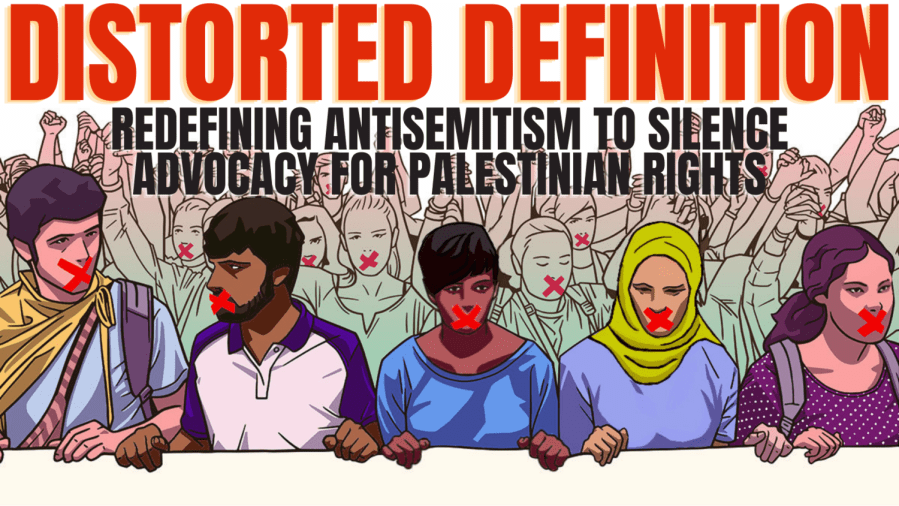
Meta, the company that runs the social media platform Facebook, is banning1 the use of the word Zionism by FB users, claiming the word is used interchangeably with ‘Israel’ and Jewry and is ‘anti-semitic’ and that their ban is in defence of Jews.
The word Zionism is often used in connection with Israel but it does not follow that its use is synonymous with Judaism or that it is therefore antisemitic, any more than to use the word “Nazism” in the 1930s and 1940s would have necessarily been anti-German.
The word ‘Zionism’ is associated with the state of ‘Israel’ for a very good reason – it was founded precisely as a Zionist project, a homeland for people of Judaic background. Palestine happened to be already occupied and so the initiative became also a European settler project in the Middle East.
Christians who support the project for religious – as distinct from political — reasons, mostly in the US, are also regularly described as “Zionist Christians” and form the majority of US Zionists.
But Zionism, rather than describing a religious movement, is essentially political. The Israeli State gives right of citizenship to those from anywhere who can prove being of Judaic background but does not require them to practice the religion or, in fact, to believe any Judaic tenet.
A Gallup survey in 2015 had 65% of Israelis self-identifying as being either “not religious” or “convinced atheists”, while 30% identified as being “religious”. More recently, polls found only 55% identifying as non-secular.
But its Jewish citizens being religious or not, the State is Jewish and the result of a Zionist movement with 19th -Century origins.
Of course, not all Israelis are Jewish either – there are also Muslims, Christians of various Eastern varieties and some western, Druze and others.
The Israeli State came into being on 14 May 1948 as a Zionist state, the culmination of decades of Zionist planning and search for a location, also a settlement project in Palestine promoted by British imperialism and a terrorist campaign against the indigenous Palestinians.
Origins of Zionism
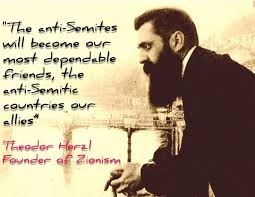
Zionism as an ideology and movement was founded “in the late 19th century by secular Jews, largely as a response by Ashkenazi Jews to rising antisemitism in Europe, exemplified by the Dreyfus affair in France and the anti-Jewish pogroms in the Russian Empire.
“The political movement was formally established by the Austro-Hungarian journalist Theodor Herzl in 1897 following the publication of his book Der Judenstaat (The Jewish State).
“At that time, Herzl believed that Jewish migration to Ottoman Palestine, particularly among poor Jewish communities, unassimilated and whose ‘floating’ presence caused disquiet, would be beneficial to assimilated European Jews and Christians.
“Political Zionism was in some respects a dramatic break from the two thousand years of Jewish and rabbinical tradition.
“Deriving inspiration from other European nationalist movements, Zionism drew in particular from a German version of European enlightenment thought, with German nationalistic principles becoming key features of Zionist nationalism.
“Although initially one of several Jewish political movements offering alternative responses to Jewish assimilation and antisemitism, Zionism expanded rapidly. In its early stages, supporters considered setting up a Jewish state in the historic territory of Palestine.
“After World War II and the destruction of Jewish life in Central and Eastern Europe where these alternative movements were rooted, it became dominant in the thinking about a Jewish national state.
“During this period, Zionism would develop a discourse in which the religious, non-Zionist Jews of the Old Yishuv who lived in mixed Arab-Jewish cities were viewed as backwards in comparison to the secular Zionist New Yishuv.”
Jewish use of the word
It was the Jewish Zionists who tried to equate Judaism with Zionism, an effort that was initially repudiated by many (probably most) Jews around the world prior to the Holocaust. After that and in particular with the creation of ‘Israel’, the majority seemed to identify with the Israeli state.
But there was always opposition to that among Jews, including famous ones. The Jewish historian of nationalism Hans Kohn argued that Zionism nationalism “had nothing to do with Jewish traditions; it was in many ways opposed to them”.2
Zionism had its critics from early on and the cultural Zionist Ahad Ha’am in the early 20th century wrote that there was no creativity in Herzl’s Zionist movement, and that its culture was European and specifically German.3
“He viewed the movement as depicting Jews as simple transmitters of imperialist European culture.”4
In recent decades the Zionists worked harder to demonise anti-Zionist Jews, calling them “self-hating Jews” and hounding those who spoke out against Zionism and the apartheid and genocide of the Israeli state, even destroying the employment prospects of such academics.
However, increasingly non-Israeli Jews around the world, including some commentators think the majority of their youth in the USA, are non-Zionist and even anti-Zionist. Many have been prominent in Palestine solidarity and anti-Israel actions.
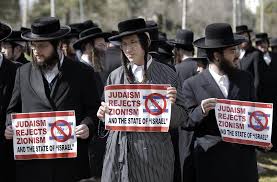
Jews using the term “Zionism” seem to be clear about its meaning and increasingly tend to identify themselves as either Zionist or Anti-Zionist. But most Jews in Israel might be considered ‘Zionist’ in the de facto sense of special ethnic entitlement status and occupation of Palestinian land.
Meta’s ban on use of the word on its social media platform therefore has nothing to do with defending Jews from anti-Semitism and in fact is aligning itself with the Zionist coercion of Jews from which a large section around the world are escaping.
By equating Judaism with Zionism, with the genocidal actions of the Israeli State, Meta is actually strengthening anti-Semitic thinking in many parts of the world.

Non-Jewish Use of the word
It may be that not everyone is clear on the difference between Jews and Zionists but the likelihood is that despite obfuscation by the Zionists themselves, most understand the difference.
It is also possible that some may disguise their anti-Semitism by denouncing Zionists when they mean “Jews”.
Even so, that cannot serve as an excuse for banning the use of an appropriately descriptive and historical word, one in addition based on a political movement created — and practice carried out — by Jewish Zionists themselves.
Effect of the ban
The immediate effect of the ban is to increase the one-sided censorship which is already prevalent in the West, sheltering the European Settler State in the Middle East from much criticism for its genocidal policy and actions against the Palestinians.
The effect of that “sheltering” (and in many cases its objective) is to assist that state to continue its genocide and also to facilitate the western states’ support for that genocide in politics, journalism, sport, culture, trade, finance and armament.
The longer-term effect will be to energise the search for other platforms that will not impose such bans on speech. Already Telegram is gaining many users on both Right and Left ends of the political spectrum. This does not mean however that the State cannot find the means to spy on them.
Those wishing to use terms that describe what the western imperialists do not wish described may abandon platforms owned by Meta in favour of others, at the same abandoning many mainstream Meta users to the dominant discourse and ideology.

Other pro-Israeli censorship
Meta previously banned the word Shaheed, meaning “martyr”, which it lifted after a period of a year. This is a term regularly used by the Palestinians to describe their dead, their fallen Resistance fighters but also the huge number of civilians killed by the Israeli Occupation Forces.
The term is also used in a similar way in relation to other other Arab resistance groups from the Lebanon to Yemen. Meta suspends accounts or closes them for promotion of resistance organisations (termed “terrorists” by Western states) across the globe, not only in the Middle East.
Ex-Minister for Home Affairs for the UK Suella Braverman attempted to ban the slogan “From the river to the sea” in Palestine solidarity context,5 claiming that because it encapsulated the desire for a Palestinian state, it was anti-Israeli and therefore anti-Semitic, a giant anti-logical leap.
A small group of anti-Zionist protesters in ‘Israel’ some weeks ago was suppressed by Israeli police and one of the latter was filmed loudly declaring that any placard or banner including the word “genocide” would be removed, an attitude mirrored by police in Germany.

Challenging Israeli atrocity hoaxes of the Palestinian resistance beheading babies or mass raping Israeli women has also drawn fire and accusations of “anti-Semitism”. Placard representations likening Israeli actions to those of the Nazis were often suppressed in the West.6
The issue of banning publication of certain words is not an easy one though liberal and social-democratic trends present it uncritically. We may object to the use of any of a huge number of racist epithets, for example and understand that these can be used to build up racist cultures.
However, when the State is asked to ban these and other kinds of speech, it is in effect being publicly empowered to ban what is in the interests of the elite to ban, i.e those words that convey unpleasant images of the ruling class, however valid.
“Property speculator”, “vulture capitalists”, “imperialists”, “colonialists”, “sectarian”, “collaborators”, “quisling” and “settlers” could be on a future list for banning under “hate speech”, along with combinations of words such as “police” with “brutality” or “politician” with “corrupt”.
Liberals and social-democrats tend to forget at times where the real power lies and what interests are served by the State.
Meta’s ban will be circumvented in many ways of course but it represents a major attack in social media on democratic freedom, all in the service of a genocidal colonial state which itself is in the service of imperialism.
End.
Footnotes:
1 https://www.theguardian.com/technology/article/2024/jul/09/meta-hate-speech-policy
2https://en.wikipedia.org/wiki/History_of_Zionism
3Ibid
4Ibid
5Though it has also been used as a slogan of Zionist expansion, including by Netanyahu.
6Including by mainstream Palestine solidarity organisations.
Sources:
Meta banning most use of the word: https://www.theguardian.com/technology/article/2024/jul/09/meta-hate-speech-policy
Zionism: https://www.collinsdictionary.com/dictionary/english/zionism
https://www.britannica.com/topic/Zionism
https://en.wikipedia.org/wiki/History_of_Zionism
https://www.aljazeera.com/opinions/2012/12/24/zionism-anti-semitism-and-colonialism
https://palestinelegal.org/distorted-definition
Religion in Israel: https://en.wikipedia.org/wiki/Religion_in_Israel
 rebelbreeze