These nights in March and early April you might hear and might have heard as far back as January, nearby or in the distance, a short sequence of barks: Bar! Bar! Bar! – something like that. Or rarely, a sequence of four. These are calls from a male fox, telling any vixen within hearing distance that he’s available – and any other males, to keep away.
I think I have only heard them after midnight but then at various times throughout the night.
While humans in our society are practicing social distancing due to the Coronovirus-19 pandemic, the foxes are seeking social closeness. Or some of them are.
The dog fox is not after casual sex – if he mates, he will stay with the female and, when she is lactating, feed her and the cubs. Of course, that is more easily done in the city than in many rural locations, with the amount of food that is discarded by human society. Also, foxes are generally not hunted in the city where, if humans carry guns, it’s usually in order to shoot other humans.
The fox has to advertise and so does the vixen, because she will only come into estrus for one three-week period in the year. If dog fox doesn’t come calling then, he won’t be welcome later. If you have heard her calling for a mate, you won’t forget it: an almost unearthly scream which, if you didn’t know about it, would have you believing in the bean sí (banshee) or possibly a woman being attacked.
Should she find a mate, she will prepare a den, usually an adapted or newly-dug burrow, where the cubs will be born around 50 days later. They need the mother’s warmth until three weeks old to avoid hypothermia, so she cannot leave the den. Her mate, the dog fox, will go out each night and bring her back food and, when the cubs are but a little older, bring them some too – in his stomach. Regurgitated semi-digested food might not sound salubrious but the cubs could not manage anything else along with their mother’s milk. Sometimes there might be another but unmated female in attendance too; unmated companion females can give the vixen a break a little later so that she can go out foraging and hunting for herself.
Humans wean their young off milk with finely-mashed or even partly-chewed solids which, before baby foods were widely available, had to be prepared by parent or child-minder (frequently an older sibling). But then the human child has many years to come to full adulthood whereas the fox has to accomplish that in a year or a little over. In the wild, adult foxes generally live only as long as five years, while in captivity they can reach three times that.
The European Red Fox (Photo sourced: Internet)
A PEST?
It is probably best not to feed foxes, which are after all wild animals that may become overly familiar, not only with their feeder and with their belongings – but with their neighbours’ things too. On an allotted piece of ground I rented from the local London authority years ago and where I cultivated vegetables and some fruit bushes, by day I often came across a chewed toy or a shoe, presumably taken from a nearby back garden and played with for awhile.
Finishing at dusk, I sometimes saw the ghostly shapes of adults and cubs, not fleeing but giving me a wide berth nevertheless.
Stories of them attacking and killing small dogs and cats are probably apocryphal for a number of reasons, chief among them being that they have no need to attack such animals since they have no shortage of food in the city. Also little dogs are not usually roaming around at night and, in a fox-watch documentary about urban foxes in I think Bristol city decades ago, every time a confrontation between a fox and a cat was filmed, it was the fox that backed down.
Unless one is keeping poultry or rabbits in pens or runs outside, it is hard to see how foxes can be classified as pests or seen as causing us problems. Even in rural areas, a ewe is quite capable of protecting a lamb from a fox, an animal which after all is not much bigger than a cat.
None of that information prevented Boris Johnston, when he was Mayor of London, from proposing a cull of the city’s foxes. Having observed this gentleman in action as the Prime Minister of the UK, most people will probably not be surprised that he had failed to learn from a comparatively recent history, because despite a large and expensive culling program in the 1970s, the fox population jumped right back.
PROTECTION?
In a previous article published on the Rebel Breeze blog (Scream on a December Night) I wrote the following:
“Some people have suggested that the red fox should be granted protected species status but it is difficult to see the rationale for this, since it is on the species of “least concern” list of the International Union for the Conservation of Nature. Pigeons receive no protection and, though often fed by people who consider them cute or pretty, do have a negative effect on our urban environment and, in the case of seagulls, who are protected, may be responsible for the disappearance of the many species of ducks that once were common in Stephens’ Green. Rats and mice are not deliberately fed or considered cute by most people (though I have kept both myself and found the individuals tame and harmless and, in the case of rats, quite intelligent) and humanity wages war upon them with traps and poison.
“Do urban foxes require management? Zoologist Dave Wall, who has studied Dublin’s urban foxes for some years, thinks not. In his opinion, the fox population in Dublin has remained constant since the 1980s. According to statistics regularly quoted but never referenced that I can find, Dublin fox families occupy on average 1.04 Km². Given a rough and probably low estimate of six individuals per fox family (a mated pair and two unmated females and two cubs) and a Dublin City area of 115km² would give us a fox population of 663 in the city. That might seem a lot, until one hears that London holds an estimated 10,000.”
This month the shamrock is blooming all around. The cluster flower is not very prominent individually but together can produce a yellow-green carpet effect, yellow for the flowers and green for the leaves.
The flowering shamrock in short grass in Dublin north city centre (Photo: D.Breatnach)
Who is to say that the shamrock has a yellow flower? Why not the white clover? Well, amateur botanist and zoologist Nathaniel Colgan (1851-1919) once asked people from around Ireland to send him specimens of what they believed to be an Irish shamrock and identified the five most common plant species, of which the two most common were the yellow (flowering) clover followed by the white.A hundred years later, Dr Charles Nelson repeated the experiment in 1988 and found that yellow clover was still the most commonly chosen. According to Wikipedia, yellow clover is also the species cultivated for sale in Ireland on Saint Patrick’s Day and is the one nominated by the Department of Agriculture as the “official” shamrock of Ireland.
But sometimes, the yellow-flowered speciesTrifolium dubium (Irish: Seamair bhuí) can be found growing next to the white-flowered Trifolium repens (White Clover; Irish: Seamair bhán), although they never really intermingle.
White Clover and flowering Shamrock growing near one another in Glasnevin, Dublin. (Photo: D.Breatnach)
The clover family belong to a group of plants that have the ability to fix nitrogen in nodes around their roots and, as a result, provide nutrition for plants that need nitrogen.The plant, like the rest of its family, produces pods but in the shamrock’s case, the pods are tiny and contain only a single seed. Pods protect the development of seeds until they are ready to shed (or in some cases, like the gorse or furze, to explode!).
In cropped or mown lawns, or in poor soil, the shamrock hugs the ground. However, given conditions for growth but having to compete with other plants for sunlight, it will grow long stems reaching upwards.
Once flowering is over, probably in August, one can dig up a small section and transplant to flower box or pot in order to harvest sprigs of it for St. Patrick’s day on March 17th (a tradition that is nothing as old as people might think).
Closeup view of the flowering shamrock, Glasnevin, Dublin. (Photo: D.Breatnach)
But nobody planted the shamrock in the lawn – it got there by its own natural methods, possibly by wind or in animal excreta. Unlike the lawn on which it has set up its colonies, which was seeded on raked earth or, more likely, laid in grass turf rolls, it is in fact a part of wildlife in the city.
Nobody can say with absolute certainty which specific plant is the “dear little shamrock” and perhaps it was a name given to several plants. The most widely accepted candidates are the species Trifolium dubium (Irish: Seamair bhuí), with yellow flowers or the white-flowered Trifolium repens (White Clover; Irish: Seamair bhán). The yellow-flowering one, a native plant to Ireland and the European mainland, goes by a number of common names in English: Lesser Trefoil, Suckling Clover, Little Hop Clover and Lesser Hop Trefoil.
Close-up yellow flowers of shamrock (Trefolium dubium). (Image sourced: Internet)
Right now, the yellow is flowering. Once established, this plant thrives on lawns that are regularly mowed and it has little competition for light or alimentation (though it may not grow as lushly as in damper places) and there it establishes colonies, shamrock patches among the mown grass. Now, in early June, the lawn is dotted with patches of yellow flowers, to be visited by insect pollinators, soon to produce seeds. The plant, like the rest of its family, produces pods but in this case, the pods are tiny and contain only a single seed. Pods protect the development of seeds until they are ready to shed (or in some cases, like the gorse or furze, to explode).
Colonies of shamrock among lawn grasses (Photo: D.Breatnach)
People who like their lawns smooth and well-tended may resent clover patches since they tend not to wear as well as the mixed grasses with which lawns are seeded. Nevertheless, the plant is benefiting the soil and indeed the nearby grasses. It belongs to the clovers, belonging in turn to a very large group of plants in as different in appearance from one another as peas and beans on the one hand and furze (also known as gorse) on the other (but many bearing fruit pods). They are the legume group, plants that concentrate nitrogen in nodules around their roots, making many of them good crops with which to precede plants that require a lot of nitrogen, such as the cabbage family or cereals.
Shamrock flowering in short grass. (Photo: D.Breatnach)
Amateur botanist and zoologist Nathaniel Colgan (1851-1919) once asked people from around Ireland to send him specimens of what they believed to be an Irish shamrock and identified the five most common plant species, of which the two most common were the yellow (flowering) clover followed by the white.A hundred years later, Dr Charles Nelson repeated the experiment in 1988 and found that yellow clover was still the most commonly chosen. According to Wikipedia, yellow clover is also the species cultivated for sale in Ireland on Saint Patrick’s Day and is the one nominated by the Department of Agriculture as the “official” shamrock of Ireland.
Once flowering is over, probably in August, one can dig up a small section and transplant to flower box or pot in order to harvest sprigs of it for St. Patrick’s day on March 17th (a tradition that is nothing as old as people might think).
But nobody planted the yellow in the lawn – it got there by its own natural methods, possibly by wind or in animal excreta. Unlike the lawn on which it has set up its colonies, which was seeded on raked earth or, more likely, laid in grass turf rolls, it is in fact a part of wildlife in the city.
As we have been shown this year, if we did not already know, Spring comes in its own time. Roughly around the calendar yes, but not exactly. It’s not like the clothing merchants, who withdrew the gloves in March and left people like me, who regularly lose them, with frozen hands unable to buy cheap replacements while the models stood in windows in shorts and bikinis.
But spring wild flowers are already out and have been for weeks, though the city is not a great place to see them. However in gardens, parks, canal banks and on empty sites, the dandelion, much disregarded as a decorative flower has been flaunting its bright yellow flower for weeks and will continue to do so for quite a while yet.
Some variety of Speedwell and Cat’s Ear (Photo D.Breatnach)Furze (Aiteann) in bloom (photo: D.Breatnach)
In early April I spent a few days in Wicklow by the Dartry river. In a very short walk to Ashford I encountered eight types of wild flowers in bloom, including furze (or gorse), daisies,
Fumitory maybe (pink), mystery white flower on stalk and Groundsel on a bit of waste ground. (photo: D.Breatnach)The humble daisy (Nóinín) looking splendid on some waste ground. (Photo: D.Breatnach)
groundsel, cat’s ear, speedwell, and of course dandelion. On a longer walk heading away from the river I came upon primrose, lesser celandine and wild or barren strawberry (not knowing how to tell the two apart at this time of year). And a mystery plant also (see photo). Swathes of wild garlic (creamh), grew both sides of the country road; I had long thought this plant a foreign import but it seems I was wrong. It certainly spreads when established however, as witnessed by this Wicklow road and wooded areas of Dalkey Hill where I have also seen large patches of it. My father transplanted some to our garden but rarely used it in cooking – or if he did, not often enough, for it soon took over large areas of the smallish garden.
Wild Garlic (Creamh). (Photo: D.Breatnach)Blue Tits even upside down on bird feeder (note that the tree is the Cherry Laurel, an invasive tree species). (Photo: D.Breatnach)
At a Wicklow hotel garden’s bird feeder, blue tit, chaffinch and some other species flicked in to take a snack and flicked out again, making it very difficult to photograph them but which of course did not bother them at all.
Returning through Ashford (Áth na Fuinseoige) I came across one of our
Chaffinch (Rí rua) picking up some of the spillage from the feeder on the ground. (Photo: D.Breatnach)
feathered anglers, the smaller grey heron. Patience personified, this species stands in the water waiting for the appropriate moment to strike, apparently not feeling the cold. But perhaps this one did feel it, for it stood on the bank.
Grey Heron (Corr réisc) on the Vartry riverbank. (Photo: D.Breatnach)
The Gael reckoned the start of Spring with the feast of St. Brigid (and probably the Goddess Brig before her), February 1st, when the ewes come into milk, with their expected birth of lambs. As Brigid/ Brig was associated with butter in some traditions it is possible that some early butter was made from sheep’s milk, though that is not recorded in records, as far as I know. The lambs and many other animals born in Spring had no choice regarding when to appear – that had been decided in the Autumn or Summer of the year before when their mothers mated. Birds, on the other hand, who are more vulnerable, mate in the Spring itself.
In Dublin city until perhaps a week ago, there was very little sign of Spring apart from the lengthening of the day. The blind wandering poet Antoine Ó Raifteirí (1779-1835), writing in the month of January, was already anticipating spring in one of his better-known poems:
Anois teacht an Earraigh beidh an lá dúl chun síneadh,
Is tar éis na féil’ Bríde ardóigh mé mo sheol;
Ó chur mé ‘mo cheann é, ní stopfaidh mé choíche
Go seasfaidh mé síos i lár Chondae Mhaigh Eo.
He’s thinking of heading home to County Mayo, he feels Spring coming but will wait until Bridget’s feast day to “hoist his sail” and since it’s in his head now won’t stop till he gets there. We might have been anticipating Spring ourselves in January this year and into February — though cold and wet enough — but if so we were in for a shock towards the end of the month and into March with “snow dumps”.
The birds have to set up their territory even so and in fact the robin (Spideog) was marking its territory in song sporadically through December and January, often enough even at night in the city and particularly near street or train station lighting. The polygamous wren (Dreoilín), if not already at it followed in February. The seagulls at their nesting sites on roofs were calling and mating in mid-March but may have been delayed a little by the snow; however they are hardy birds. Some blackbird males have been singing since March and now are all in full throaty song. In March also we heard the high-pitched “peeps” of those acrobats, the tits as they foraged for invertebrates through the branches of tree and bush and at the end of April, also the bursts of chaffinch song which remind us often of caged canaries — and why not, when the canaries are often taught that very bird’s song to sing.
The Lesser Celandine, I think (Grán arcáin) (Photo: D.Breatnach)
January was the time to hear adult foxes in the city, the somewhat frightening scream of the vixen and the two or three-times bark in quick succession of the dog fox. This month the cubs, born a month earlier, will venture out of their den and may be heard sometimes by night at play too, though this is more likely in the months to come.
The mystery plant with flower or hood bud (going by the leaves, not ‘Lords and Ladies’). (Photo: D.Breatnach)The Primrose (Sabhaircín) leaf, bud and flower.(Photo: D.Breatnach)Wild (or perhaps Barren) Strawberry (Sú talún or bréige) in blossom. (Photo: D.Breatnach)
The trees and ground plants apparently respond more to length and angle of sunlight to tell them it is time to grow from seed or to burst open into bud and some of them are doing so now in late April, for example the birch (Beith). Others delay and the ash trees (source of our camáin or hurley sticks and much else) are still in their black hard bud stage in late April and the oak waits along too. Trees that flower tend to do so first and put out leaf later, as the blackthorn (Draighneán donn) did in February with its little white blossoms which will develop into sloes (airne) later in the year. In March hawthorn (Sceach geal), willow (Sail, from which we get “The Sally Gardens”) and elder (Ceireachán), all of which may be seen in gardens or parks (and the elder growing even on empty sites) were already green-misting in tiny leaf and are now well advanced. The “candles” of the horse chestnut (Crann Cnó capaill), to be seen in parks and in some leafy suburb streets, are however forming alongside the tree’s large leaves right now at the end of April (Aibreán) and the rowan (Caorthann) and sycamore (Seiceamar) of the whirling seeds are also in stages of leaf.
Slender Speedwell perhaps (there are a number of different species). (Photo: D.Breatnach)
Spring is really coming for us but for many plants, mammals and birds, it is already here.
end
PS: When checking The Tree Council of Ireland for tree species names in Irish, I was shocked to find that they do not supply them. Nor reference the huge number of places across the land whose names in English are corruptions of the original Irish place names derived from the names of trees.
They are all around us; they live but they are not animals. Nor are they micro-organisms – we see them clearly all in many places. They can grow on organic and none-organic surfaces. We might think they are plants – algae, moss or fungus but they are none of those — they are lichens. There are about 20,000 known species1 and they cover an estimated 6% of the Earth’s surface, able to exist in environments as different as beneath Artic snow, on salt spray-showered seashores and windswept mountain rocks and in tropical rainforest. An estimated 6% of the Earth’s land surface is covered by lichen species.2 Some are long-lived and include the longest-living things on Earth. There are species that require nothing to cling to while others can live inside rock, in the spaces between grains.3In Ireland, 1,134 separate species of lichen have been recognised, according to the National Biodiversity Data Centre – i.e over 5% of Earth’s estimated total species right here on this little island.4
When we look at some growing on tree bark or rock, we are tempted to think of them as fungus, algae or even moss. Mosses are ancient enough life-forms and are plants, which algae are too and almost certainly much older. Fungi used to be considered plants but are so no longer and in their structure and digestion and also genes, are more akin and more closely related to animals. This will not be good news to vegetarians or vegans but the evidence is difficult to deny.5 Indeed there are some feoilséantóirí (word in Irish for a vegetarian and more apt in the context of this sentence) who already dislike eating many fungi because the texture reminds them of meat.
But lichens are neitherfungi nor plants.
White and Map Lichen on rock, Old Kenmare: Killarney Rd Kerry. (Photo source: WikiIreland)
Lobaria Pulmonoria lichen, a leafy type, Killarney National Park (photo sourced from Internet)
So if lichens are not plant or fungus, what are they? Another kind of life-form? Well yes … and no. They are a combination of both, fungus and plant. At some point in the evolution of life on earth, logically after plants and after fungi had evolved, somehow some species of fungi combined with some species of alga and/or cyanobacteria6 and produced a symbiont or biont: lichen. Scientists maintain that the 20,000 estimated species did not evolve from one common ancestor but that different species appeared separately at different times during the history of the Earth.
Teloschistes chrysophthalmus on branches (image sourced from Internet)Another map algae (Geographicus) on rock, a species that in a test has survived exposure to space vacuum and radiation, apparently unharmed. (Image sourced Internet)
Plants draw their nutrients from sun and elements in the soil (or in some cases, in the water). Fungi, like animals, cannot get their nutrients straight from sun or soil and need to break down their alimentation materials, whether flesh or plant, in order to feed on them. In doing so, fungi are important decomposing agents – in fact, the principal ones.
Vascular plants need roots not just to cling to soil but even more importantly, to draw up water and nutrients but algae don’t; when they have any kind of roots, it is to cling to a surface and that is exactly what the lichen needs too. Fungi extend and feed through root-like growths usually under the surface of what they are feeding upon, extending from the tips; they are not roots, however and break off easily.What we see of fungi is usually the spore-bearing parts above the surface, often much the smaller part of the organism.
Plants seem to grow above ground also by elongating their tips but in fact are extending from further back, adding cells to cells to lengthen the body. All plants need a constant supply of water (cacti and succulents store water but still need to draw on the supply to live). Fungi need damp conditions. But when combined into lichens, the new species can live without water for a considerable time. So, a marriage, as they say, “made in Heaven” … or perhaps in a Hell, an environment of very dry and hot conditions alternating with the very wet and cold , where the newly-wedded ancient algae and fungi set out to build their homes.
Some lichens contain not only algae combined with a fungus but also a cyanobacterium; this partner is capable of fixing nitrogen extracted from the air and is a valuable addition to the menage-a-trois.
It has been remarked by some that the marriage of plant and fungus is not an equal one, is not true symbiosis, since the fungal partner or symbiote benefits more than does the algal. The algal symbiote produces sugar through photosynthesis and the fungus only chitin, or ‘hard‘ structure, it is argued. However, if both partners (or three) are content with the arrangement, is that not a happy marriage? More seriously, the fungal partner may contribute other factors to the symbiosis of which scientists are only just becoming aware – for example, chemicals to repel organisms attempting to graze on them and protection from the sun.
And scientists do not treat them equally either, since the species of lichen is always determined and named by them according to the species of fungus, not of the alga or bacterium.
COLOURS IN THE RAIN
Xantheria parietina (image sourced on Internet)
So, if the claim is that we see them all around us, where are they? They may be seen on slate roof-tops, in patches of roughly circular white (not to be confused with pigeon or seagull excrement, which may also be in evidence). Yellow or orange patches are typically seen on stone, as is a black or dark brown one by the seaside. A bright yellow-green one may be seen on fallen twigs or on tree-bark, as may also a tufted-form green one growing on rock or tree.
Alga and lichen on plane tree during rain, Drumcondra, Dublin. (Photo: D.Breatnach)
The colours tend to be particularly vivid during or soon after rain when the cortex becomes translucent and, if there were no other reason to be grateful for the precipitation levels usual in Ireland, that would be reason enough, perhaps, should we take the time to admire the little things of beauty. Of course there are other reasons and as a Basque once said to me about the green of his native country and could perhaps even more accurately said about colour associated with the “Emerald Isle” — “It’s not green because we paint it.”
Some of the bright colours in lichens, produced by the fungus, are thought to be of use in protection from the rays of the sun and become more vivid after rain due to rapid absorption of water by the chlorophyl-holding part of the symbiont (or biont).
PIONEERS AND SURVIVORS
Lichina pygmaea – a black marine littoral species, this one photographed near the high-water mark. (Image sourced on Internet)
Lichens are considered “pioneer organisms” by botanists and geologists, i.e organisms that set out to colonise new territories. These maybe new territories in the sense that a geological change has exposed them to air, e.g from the seabed or from under ice, or from inside the earth by volcanic action or by tectonic plate collision.
Pioneer organisms need to be tough and adaptable and they often create footholds for other species, not quite so tough or adaptable, to follow after. However, given that logic dictates that algae and fungi existed before some of them combined to form lichens, the latter could not have been among the earliest colonisers of the Earth’s crust. On Earth then, they are later pioneers of newly-created inhospitable terrain.
May they be used to help create habitable environments elsewhere? It’s perhaps worth quoting these two paragraphs from Wikipedia in their entirety:
In tests, lichen survived and showed remarkable results on the adaptation capacity of photosynthetic activity with the simulation time of 34 days under Martian conditions in the Mars Simulation Laboratory (MSL) maintained by the German Aerospace Center (DLR).
The European Space Agency has discovered that lichens can survive unprotected in space. In an experiment led by Leopoldo Sancho from the Complutense University of Madrid, two species of lichen — Rhizocarpon geographicum7 and Xanthoria elegans — were sealed in a capsule and launched on a Russian Soyuz rocket 31 May 2005. Once in orbit, the capsules were opened and the lichens were directly exposed to the vacuum of space with its widely fluctuating temperatures and cosmic radiation. After 15 days, the lichens were brought back to earth and were found to be in full health with no discernible damage from their time in orbit.
Hieroglyphics lichen (Graphis scripta) on rock, Castle Coole, Enniskillen, County Fermanagh, Northern Ireland, OctoberCladonia coccifera and Cladonia diversa or Pyxidata on branch in Ireland (also known as Pixy Cup and Devi’s Matchstick but “Pixy” sounds unlikely for a name in Ireland, more likely from Cornwall or elsewhere in south-west Britain).
In some areas, soil lichens help to bind the sand-crust or soil-crust together but lichens have also been shown to chemically attack stone, thereby helping to create soil. Lichens can also help create little environments where soil may be retained and seeds of plants germinate. However, like all species, lichens are out to help themselves and some produce chemicals to restrict the march of mosses (another pioneer species but more water-reliant), with which lichens would have to compete in many areas).
When growing on tree bark, lichens do not parasitise on the tree nor harm it in any way, merely using it as a secure base. Older trees are often covered with lichen and dead trees or branches more so, associating in some people’s minds the ill-health in a tree with the growth of lichen upon it. Circumstantial evidence may suggest the guilt of the lichen but it is completely a case of coincidence: lichen is slow-growing and the older the tree, the more time lichen has had to grow and extend upon it; the tree dies because it grows old.
Green Beard lichen, Usnea species, Cornwall (photographer: Jonathan Billingsworth). Usnea is very vulnerable to polution, particularly sulphur dioxide and will only grow like this when well away from such pollutants.Lichen-covered apple tree (sourced: Irish Image Collection)
The lichen will survive the dead tree for a period but it is not the killer. Now come decomposers: insects, snails, slugs and especially, distant relatives of the lichens: fungi. Without concern for their relatives, the fungi, along with the other decomposers, will reduce the tree to soil ingredients and thereby deprive the lichens of their base but, in time, providing more soil for more trees to grow and for new generation of lichens to attach themselves to the bark.
The fungus is not too discriminating and a particular species may combine with different algae species; the resultant lichens may appear to be different species but (since 2014) will be classified as the same lichen species, i.e containing the samespecies of fungus.8
The alga can also exist independently in nature but the fungi cannot. Two species in two genera of green algae are found in over 35% of all lichens, but can only rarely be found living on their own outside of a lichen.9
A green frond-lichen, Evernia prunastri (Image sourced at Internet)
Sex and Reproduction
It is only the fungal part of the symbiote that reproduces sexually. When doing so, it produces spores (as do ferns and mosses) which must find a compatible alga in order to produce a new lichen, a symbiote of the fungus of the parent fungus and a new alga.
Some lichens reproduce or extend asexually, advancing across a surface and merging with another of the same species.
Uses of lichens:
When we discuss “the use” of some thing we generally mean its use for humans; lichens no doubt have many uses for other organisms, whether as food for reindeer during non-growing seasons or as micro-environments for tiny creatures. But for humans, the uses are mostly in the areas of
dyes
drugs
environmental indicators
geological age indicators
Dyes and Pigments:
Dyes were made from the orange Xanthoria Parietina and the grey-green branched Parmelia Saxitillis to dye wools used in traditional tweed (Harris) weaving in the Scottish Highlands10and I myself have had the second of the two pointed out to me by an Aran Islander woman as the source for the rarely-used green wool knitted into a geansaí (pullover or jumper). Material for other natural dyes exist for example in Ireland but the issues are how easily they are obtained, how true they dye and how long they remain the desired colour and shade.
“There are reports dating almost 2000 years old of lichens being used to make purple and red dyes. Of great historical and commercial significance are lichens belonging to the family Roccellaceae, commonly called “orchella weed” or “orchil”. Orcein and other lichen dyes have largely been replaced by synthetic versions.”11
We know that red and purple dyes were much sought after and in some medieval civilisations the wearing of those colours was restricted to certain social classes and even to one individual (e.g the purple for the Emperor). Once Europeans had gained familiarity with indigenous civilisations of Central and South America, the red dye obtained from the parasitic cochineal insect Dactylopius coccusbecame an important export product to Europe until the late 19th Century, when synthetic pigments and dyes were invented. Despite this development, traditional hand-made textile producers, for example in regions of Mexico, continued to use cochineal dyeing. However, health concerns associated with some or all of those synthetic colourings in food have once again created a demand for cochineal and cultivation of the insect is once again economically viable, with Peru being currently the main exporter.12
Drugs and Medicine:
There is reason to believe that metabolites produced by lichens may have antibiotic effects and usnic acid, the most commonly-studied metabolite produced by lichens, is being investigated as a possible bactericide, in particular against Staphylococcus and E.coli.13
Lichens were also used in European traditional medicine, in particular based on the theory that plants that resembled human organs would be efficacious in treatment of illness of those organs. Some American Indigenous people also used them in traditional medicine treatment.
Lichens as Indicators of Geological Age and of Pollution Levels:
The science of lichenometry is a relatively new one in which measuring the type and size of lichen is used to indicate the age of exposed rock. It takes the known slow growth-rate of different lichens to arrive at an estimate of how long the rock in question has been exposed. This can be used on rock formations, landslides, stone buildings and statuary.
The tolerance (or lack of tolerance) of different species of lichen to certain types of air and rain pollutant can be used as bio-indicators. In general the “frond” or “bushy” types are less resistant to some air pollutants and the flat or “crusty” types more so. Lichens take their water from the surfaces to which they are attached and from the air and are therefore quickly affected by the water quality in rain and air.
In Conclusion:
Readers may find it worthwhile to take some time to examine the lichens growing around us, to think about their unusual ‘domestic arrangements’ and their pioneering habits. Or to inventory them as indicators of the level and content of pollution in a specific area.
And in particular, to put on rainproof or resistant clothing and to view lichens during rainfall or at least very soon afterwards.
Cycling through Griffith Park off the Mobhi Road, after a walk in the nearby Botanic Gardens, a flurry of wings and a flash of colours attracted my attention. Three birds came down with a splash into the Tolka.
Rival males and female on a rock in the Tolka. (Photo: D.Breatnach)
You don’t need to be any kind of expert to identify the Mandarin Duck, especially the males and that’s what two of those birds were. The dowdier third one was the female.
I have often noted two male mallard ducks peacefully accompanying one female and wondered whether they had a menage-a-trois going or what the arrangement was. But there was nothing like that going on with the Mandarins as the males made clear quite quickly. After briefly circling around one another they were quickly into fisticuffs (or beak-and-wing-cuffs), scuffle-splashing, clucking insult or challenge, until the rival to the established male would take to the wing either for a break or to get next to the female. In the latter case, the male would take to the air also, in pursuit.
The female? She swam demurely apart waiting for the victor.
The female Mandarin Duck in the Tolka. (Photo: D.Breatnach)
There was clearly one established male who for the moment was the dominant one but the rival kept coming back while I was watching and they were still at it when I left. The established one has the psychological dominance factor on his side, which is a strong advantage but it is by no means a guarantee of success. The rival might wear him down. Or the established one might become injured. Being a male and keeping one’s bird is not easy.
Rivals circling briefly in mid-water prior to another scuffle on the river. (Photo: D.Breatnach)
According to Charles Darwin, genders of many species but many birds in particular have become colour-differentiated through part of the evolutionary process described as sexual selection (The Descent of Man and Selection in Relation to Sex, 1871). This has reached amazing and one might say even bizarre though beautiful extremes with such birds as the peacock and the bird of paradise.
Darwin’s ideas make more sense than other explanations being proposed but it is nevertheless hard to credit that a female’s appreciation of colour, shape and behaviour would so impress upon the male the need to flaunt gaudy colour and shape in direct contravention of the need to survive predators by NOT calling such attention to himself. Still, there is no other viable contender explanation around (as distinct from the Mandarin contender, who may still be biding his time or pressing his suit, which if the established male has anything to say about it, is all he is going to press).
Established male with female on rock and the rival that won’t give up. (Photo: D.Breatnach)
Aix galericulata is the Latin species name and the only other species in the Aix genus is the North American Wood duck. A chromosome in the Mandarin makes hybridisation between the two impossible.
Mandarin Ducks originate in East Asia but have been kept in Europe in aviaries and in ponds and lakes. Stephens Green used to have some, along with many other kinds of wildfowl, until the OPW allowed the Herring Gulls to take over to the extent that they have. I have not seen them do it but would not be in the least surprised if the gulls ate the chicks of many of the waterfowl species until they died out or took off somewhere else.
However, there have been feral Mandarin populations in Ireland for some time, notably in Co. Down and in Wexford and pairs may be establishing themselves in other places, including in the Glasnevin/ Drumcondra area, based around the Tolka (and perhaps the Royal Canal).
The Mandarin is a perching duck and this kind have feet capable of grasping a branch. They build their nests in hollows in trees which is good for the safety of the nesting female and the eggs. But what of the chicks or ducklings? As we know, ducklings take to the water long before they can fly. So what can these ducklings in tree hollows, many feet from the ground, do? They simply jump. A veritable leap into the unknown.
When they hit the ground, which at first sight seems to ensure they have broken practically every bone in their little bodies or a least concussed themselves and messed up their insides, they bounce a little, get up and waddle to their mother. Yes, she called them out, which is why they came.
One needs to see the process to believe and I have included some Youtube links. It would seem at first that they need soft leaf litter or water in which to land but one of the links I have posted shows Mandarin ducklings jumping from a nestbox on to bare stone — and getting up, apparently unhurt. It is difficult to understand, even with accounting for the relationship of weight to surviving a fall. We probably know that we can drop lots of insect species on to the ground and they don’t get hurt but the principle goes farther — apparently a mouse can survive a fall from a great height (unless a hawk gets it on the way down, or a cat is waiting below); conversely a fall of four foot on to its feet can kill an elephant (so it is said — I have not actually tried this with elephants but I have inadvertently confirmed the mouse theory).
Often invasive species should not be welcomed as they upset the natural ecological balance. The grey squirrel in the nearby Botanic Gardens, originally from the USA, may be cute but it is helping to wipe out the native red species. And that’s just one of the invasive species of animal and plant that are causing problems in Ireland (see https://rebelbreeze.wordpress.com/2014/07/01/the-scent-of-intruders/). On the other hand, the widely-distributed Red Valerian (also with white and pink varieties) does not seem to be causing any problems and it is difficult to see how the Mandarin can become a serious problem either. But of course, one does not know for sure. It can be stated that the populations so far established in Britain and in Ireland do not seem to have caused any ecological problems. And it is true that we don’t have many dense woods in Ireland anywhere (thanks to certain human invaders in our history), least of all close to slow-flowing water, although some species have shown remarkable adaptability, witness in these climes the rat, fox, pigeon, herring gull and, of course, homo sapiens.
One of the curious things about the Mandarin is the name we have for it. Apparently, it is a Portuguese word for the Chinese government bureaucrats in existence when the Portuguese first began to trade with them (before they and other Europeans decided to invade China and confiscate areas, in particular ports and islands). How they became associated with the duck was not revealed in my short internet search.
However, in China and in Korea the mandarin duck is associated with fertility, good fortune and constancy in monogamy, so that it is often presented as a wedding gift, either as living pairs or symbolically in an ornament. It is not currently considered an extermination-threatened species.
End.
Video links (second one is of merganser ducklings and is even more impressive):
I once knew a cat but, what is more to the point, the cat knew me.
A pair of European Magpies on branches
I knew the cat not well, but as a kind of nearby resident I had helped a little once and made friendly overtures to. He or she (I suspect she and will refer to it so from now on) first came into contact with me when a racket of magpies not far from my home attracted my attention. I found magpies harassing a marmalade (orange tabby) cat in a tree and the cat seemed trapped there.
Since there was no nest in the tree for the magpies to be protecting, I chased them off some distance with the aid of shouts and stones, then tried to persuade the cat to come down but she just looked at me – afraid of me too, I thought. Some days later, I came across a marmalade cat outside some nearby houses and called to her and, when she came, stroked her and then went on my way. She made as if to follow me but then gave up.
A few weeks later, I was coming up the road when I saw a marmalade cat about 50 yards away and wondered if it was her. She however looked up, saw me and hurried over, then began rubbing her body against my leg.
So how did she recognise me? Cats have very good hearing but I very much doubt she could identify my footsteps on a concrete footpath amidst all the traffic noise from so far away. Cats also have a good sense of smell but I don’t think it’s good over distance. They are not good at recognising human faces, according to tests. So, she probably recognised my shape and gait (like those recognition software programmes the secret services have developed and with which they monitor a lot of CCTV coverage — reassuring, huh? Not so much!).
(Photo source: Internet)
It is true I have a somewhat identifiable gait, so I am told – a swagger learned as protective colouring in my teens but about which I am nearly always unconscious and when I am, try to control. Once doing that in New Cross in SE London, a black youth I knew from my work in a local youth club shouted from across the street: “Walk like a white man!” Apparently my attempt to control the Dublin swagger was resulting in the kind of walk adopted by many Afro-Caribbean youth.
But, back to the cat. Anyway, it was an amazing feat of recognition of an individual of a different species and of minimal acquaintance and I think she would have recognised me no matter how subdued my usual type of walk. I wonder how many individuals considered friendly or otherwise a cat can identify by sight at a distance – just how big is their database?
Another time I came upon this cat, she was stretched out on a warm sunny pavement but being persecuted by a pair of magpies (probably the same ones as before). The cat saw me and so did the magpies but I stopped at a distance to observe what was happening.
One magpie distracted her attention by strutting up and down in front of her head, but out of reach of swipe or sudden rush, while the other waited its chance and pecked at the cat’s tail. She lay there suffering this persecution, only twitching her tail from time to time in a futile attempt to keep it away from the bird or perhaps out of tension.
“But why don’t you move, Cat?” I asked her, half in amusement and half in sympathy.
She looked at me and seemed to say:
“Why should I? This is MY pavement and I am harming no-one! I am not going to let two BIRDS chase me off!”
“Well, you could spring at them …”
“What’s the point? They keep just out of range and I’d miss, giving them a reason to mock me.”
The Magpies, in turn, might have been saying:
“This has nothing to do with you, Mister. This is a Cat, ancestral predator on birds and fair game for us at any time. Keep out of it!”
“Yeah, we remember you butting in before!”
And magpies probably can identify human faces – at least tests with their close relatives, crows and jackdaws, show that they can. And magpies are the only bird so far shown able to identify themselves in a mirror.
I did keep out of it. I had things to do and left them to it – the cat after all had the option to leave and even were I to chase them off, the birds would only fly a little distance and then come back. I’ve seen magpies do this “torment-the-cat” thing before. And cats will kill a magpie, if they can.
The cat’s refusal to move or to make a lunge she knew the birds would easily evade, the provocative tormenting by the magpies and the way they worked in unison, all seemed to me so very human, even allowing for anthropomorphism.
But thinking about it later, I came to a different conclusion: it is not the animal behaviour that is human-like – it is OUR behaviour that is animal-like! After all, are we not descended from a common ancestor, albeit nearly 300 million years ago?
In total, I saw that Marmalade Miss maybe four or five times and then no more. Perhaps her owner(s) moved – I hope so and that she was not killed by traffic.
I had nothing I could gain from the cat, other than a kind of feeling of kinship perhaps. Other than a stroke now and again, she had nothing to gain from me. It was an uncomplicated friendship and not, like with some dogs, a dependency by either of us. I know she is gone but years later, as I pass near that street, sometimes still look out for her.
(NB: This may be read on its own or following CONVERSATION WITH A SPIDER PART 1 https://rebelbreeze.wordpress.com/2016/12/20/conversation-with-a-spider/ to which it is related)
“Wasn’t me. Nope. Might’ve been my brother – looks a lot like me. Or my sister.
“It was definitely a male.
“You can tell, can you?
“Yes. I’ve done some reading about spiders.
“Well, I had lots of brothers.
“You’re building one of those crazy, haphazard webs all over my bathroom wall again.
“This is a beautiful web. Made of beautiful fine silk – but also very strong. It is a tribute to our ancestral goddess, Arachne.
“Arachne was an accomplished weaver of beautiful rugs.
“Exactly.
“This, however, is a haphazard mess.
“To your two human eyes. You have to see it through our eyes – all eight of them. You have to feel its vibrations …. the air currents flowing through it like music …. the vibrations of a trapped fly …. like …. like …
“Like a dinner gong.
“Crude …. but, well, yes.
“You remember catching a fly, do you?
“Of course.
“When?
“Recently. Quite recently. You don’t think I’m starving, do you?
“No but I know spiders can live a lonnnnng time without eating.
“And you know this how?
“ Reading. In particular, Compton’s The Life of the Spider.
“ A voyeur.
“ What did you call me?
“Not you – him. And it was John CRompton, not Compton.
“Oh, right. You told me that before.
“Not me – maybe one of my brothers. And it was just The Spider, without The Life of, which was the title of Jean Henri Fabre’s book.
“Ok. But why did you call Crompton a voyeur?
“He watched the mating of spiders …. watched the goings-on for HOURS.
“He was a naturalist – he watched it so he could write about it.
“A voyeur and a pornographer.
“Writing about animals mating isn’t pornography! David Attenborough did a whole series on animal mating.
“He’s another one! And he did it with hidden cameras!
“Pornographic filming or writing is depicting sexual acts with the intention of sexually arousing and titillating the watcher or reader.
“And?
“Humans are not going to get sexually aroused watching or reading about animals mating.
“Are you sure? Really? ‘Her heart beat faster … she could smell the stallion …. he looked so strong, his coat so shiny …. she couldn’t help herself, she was firing off pheromones ….. he moved powerfully, muscles rippling …. he was sniffing her right there! …. she could feel his breath there! …. Oh! right where she was aching …. she felt herself melting …. he was going to mount her … yes! Yes! …
“Ok, ok. You’ve made your point. Cough! But going back to the issue of your web …
“My beautiful, complex web.
“Your haphazard, wandering, dust-collecting web.
“My efficient, fly-catching web.
“You’re not catching any flies.
“Not yet … but I will. If you leave my web alone.
“No. You’re going out the window.
“You’re angry and you’re projecting again.
“What did you say?
“Er … I said ‘You’re projecting’. It means …..
“I know what it means, thanks. You said ‘again’.
“Did I?
“Yes, you did. You said ‘You’re projecting again’. As though we had this conversation before.
“You’re building a whole web from a thread.
“I knew it was you again. You’re going back out the window.
“I’ll bite you!
“Ooooh, I’m scared.
“You should be. Our species has the most potent venom of any spider in these islands and many abroad. That’s why we have a skull design on our back.
“Says who? The Web?
“No need to be sarcastic. It is a well-known fact. You can read about it in newspapers if you don’t trust the Internet.
“I have read about it and it says that your fangs are not long enough to penetrate human skin.
“Do you want to take that chance? DO you? MAKE MY DAY!
“I’ve thrown you and lots of your relations out the window and never been bitten. I think that story about powerful venom is one you and yours have been spreading yourselves. Probably on the Web, ha, ha, ha. Not one record of even a hospital admission for poisonous bite by the Short-Bodied Cellar Spider!
“The venom works so fast they don’t make it to hospital. And the deaths are put down to heart attack and other causes.
“It looks to me very much like you’re destroying my home and my livelihood.
“It looks to me like I’m destroying a dust-collecting web right beside my bathroom mirror. Which is why I’m destroying it. And I might just catch you and throw you out the window too.
“You are in a nasty mood, aren’t you? Anyway, I’d only come right back in again.
Short-Bodied Cellar Spider without web (Photo source: internet)
“If a bird didn’t gobble you up. Or a bigger spider ….
“Oooh, you ARE in a nasty mood!
“Not really – just mildly irritated. You had to build it right beside my mirror, didn’t you!
“Well, that’s where the light is.
“And you need the light …. what for? To read your paper? To thread your needle?
“No need to be sarcastic. I don’t need it for anything except to catch flies – they’re attracted by the light.
“Catch flies, is it? I haven’t seen you or any other spider here catch a fly in years.
“Well, if you keep destroying our webs …
“I’ve left some for months. Just how long does it take to catch a fly?
“It’s an art …. you can’t rush it.
“Yeah, right! I’ve killed hundreds of them in a month.
“Yes, well, with chemical warfare ….
“Not at all! I mean with my hands or a damp cloth. Swipe, bam! One less fruit fly, or house fly, or bluebottle.
“Well, aren’t you the matador!
“What I mean is, I’ve killed hundreds of flies in the same time that you have killed none – and it’s supposed to be your defining characteristic: killing flies!
“Who says?
“Everyone.
“Every human, is it?
“Yes.
“You’ve never asked the arachnids, have you though?
“I try not to get into conversations with them. I’m having this one with you because a) I’m shaving near you and b) you’re bending my ear.
“Bending your ear? I haven’t touched you!
“It’s an expression, a turn of phrase, for speaking a lot or complaining to me.
“What’s that got to do with your ear?
“That’s what I hear with!
“Really? You mean you don’t hear with your legs and body, like we do?
“Of course not!
“Wow! Peculiar!
“You’re trying to change the subject. Spiders are supposed to catch flies – isn’t that the purpose of the web? Or are you going to claim it’s a work of art?
“You don’t think my web’s artistic?
“Honestly? No. The orb-weavers’ webs now, they are artistic. But most others, including your species, the Short-Bodied Cellar Spider? No, not at all.”
“Well, we go more for function than artistic appeal.
“What function?
“Catching fli ….. er …
“Yes, you see the problem? Your webs are supposedly for catching flies but all yours are catching is dust. Which is why I’m destroying them.
“You’re projecting.
“What?
“Projecting. You have your failures, you feel angry about them so you project them on to me so you can express your anger more safely.
“Where did you get hold of that shit?
“On the Web.
“Oh, very, very funny! Projection or not, it happens to be the truth. Your webs are not catching flies but they are collecting dust, so destroyed they will be.
“Oh, what a tangled web we weave ….
“Funny! But that quote from Walter Scott is about deception. Since you are not an ant-mimicking spider, or a crab spider, or any other kind of deceiving spider, what are you talking about?
“I’m referring to your self-deception. Anyway, how do you know about those other kinds of spiders?
“I read Compton’s The Life of the Spider when I was a boy.
“It was John CRompton, not Compton.
“Oh, right.
“And it was just The Spider, without The Life of, which was the title of Jean Henri Fabre’s book.
“Whatever. I read other stuff about spiders from time to time .. and watch them. I’ve had Zebra Spiders jump from one finger to another in my hand.
“Humph! Zebra Spiders! They don’t even build webs.
“No, they don’t …. but here’s the thing ….
“What?
“They DO catch FLIES! And now, out the window you go.
A high-pitched but hoarse scream cuts through the night. Again and again it is heard, then is silent. A frightening sound, perhaps of a person being attacked …. But no, it is a vixen, a female red fox (Vulpes vulpes). Why is she screaming? Is she in pain? Not exactly — she is informing dog-foxes in the area that she is ready to mate and where they can find her.
Vixen screaming (sourced on Internet)
But this is December and, according to Internet site after site dealing with foxes in Britain and in Ireland, she is at least a month early1. Perhaps she is a rare exception, this vixen in the Drumcondra area but it seems to me more likely that the sites have it wrong: either urban foxes breed earlier or the breeding pattern of foxes is changing. Actually, a combination of both is likely.
A vixen breeding in January would give birth to her cubs just over 50 days later, when in rural areas the earth is warming up in the Spring and when lambs are born, hares are boxing, eggs are being laid, greens are growing and being eaten by rabbits – in other words, food is becoming available for the vixen. Obviously vixens breeding in February or March will have yet more food available in April or May but may also find greater competition, in food and for a mate.
Say this rural vixen conceived on 1st January, then she would give birth on or around 22nd February. She will need feeding just before that and probably up to24th March, a task falling to the dog fox and to unmated young females who may be part of the community. The cubs need the warmth of the mother’s body for up to three weeks after birth and she cannot leave the den. One month after giving birth the mother vixen may go hunting while the “aunts” look after the cubs, who are now venturing out of the den or “earth” (but staying very close to it).
The food brought to the young is carried inside the hunters’ bellies and regurgitated for the young to consume along with their mother’s milk which they will suckle until six weeks of age. After weaning, the cubs will eat solid food but cannot yet hunt for it themselves until perhaps mid-late Summer and, if males, will leave to establish their own territories in the Autumn.2Males become sexually mature at one year of age.
A vixen breeding in December in an Irish rural area might have difficulty receiving enough sustenance in January or even early February, especially in decades past when winters were usually harder. However, with changing seasonal weather patterns tending to warmer winters – and in urban areas where a lot of food tends to be available for scavenging all year round – these problems are substantially reduced and so breeding in December should present little difficulties. So the thinking goes among the vixens in Drumcondra, anyway and, I suspect, in many other Irish and British urban areas.
The male or ‘dog’ fox can be heard sometimes too in a staccato bark, normally three (but occasionally four) rapid barks: bak, bak, bak!
THE URBAN FOX
The urban fox is a relatively new phenomenon in Ireland3, as far as we know, although in Bristol, for example, they have been recorded since the 1930s. Up to fairly recently, a number of experts maintained that the fox populations of city and countryside had little contact with one another. But in January 2014 “it was reported that “Fleet”, a relatively tame urban fox tracked as part of a wider study by the University of Brighton in partnership with the BBC’s Winterwatch, had travelled 195 miles in 21 days from his neighbourhood in Hove, at the western edge of East Sussex, across rural countryside as far as Rye, at the eastern edge of the county. He was still continuing his journey when the GPS collar stopped transmitting, due to suspected water damage.”4
and the Country Foxes
Decades before I heard of this I often fancifully imagined a conversation between a fox, now settled in the “big city”, and his country relations when he returned on a visit. After the initial customary welcoming, sniffing, licking etc are over, the conversation might go like this:
“So, Darkie, tell us, what is life like in the big city?”
“Ah, it was scary at first, with cars and buses and lorries going all day. You wouldn’t believe the noise.”
(Sympathetic whine from the audience).
“But I’m used to it now, Redthree, I have to say. And the food! You could not imagine!”
“Good, is it?”
“Lovely, Whitepatch, absolutely delicious.”
(Sounds of salivating all around).
“Chicken, beef, lamb, fish, potatoes, bread, rice, vegetables, fruit – just left out there to be eaten!”
“Ah, you’re havin’ us on, Darkie. We might be “Culchies” but we’re not stupid! You expect us to believe the humans feed you like they do their dogs, do you?”
“No, of course not, Greymuzzle. Well, actually a few do leave out food on purpose for us but no, this is mostly food that humans are throwing away. We find it in plastic bags and metal containers.”
“They throw away food?”
“They do and huge amounts of it too. Then big lorries come and take away what we have not eaten ourselves.”
“Where do they take it?”
“I am not sure. I’ve never troubled to find out because, to be honest, I have all the food I need nearby.”
(Silence while country foxes imagine a huge mountain of food somewhere).
“Er …. Darkie, so you never hunt now?”
“Oh, yes, some – the city rats and mice eat the discarded food too and they grow plump and big. Yes, I catch and eat them too.”
“Well now, what about all the humans?”
“What about them, Lighteyes? They don’t bother us.”
“Don’t the humans have guns in the city?”
“Some of them do, Lighteyes. But they don’t shoot foxes with them.”
“Really? What do they shoot with their guns then?”
“Other humans, Lighteyes, just other humans.”
(Noises of amazement and disbelief)
THE INNER CITY FOX
The Internet sites all agree that foxes are more likely in suburbia than in the inner city but I think they ignore some important features of the inner city which foxes can frequent in relative safety and around which they are likely to find sufficient food: railroad lines and their banks, canal and river banks, parks, allotments, cemeteries and derelict sites. One can’t get much closer to Dublin’s inner city than Parnell Square, yet I have seen foxes in a laneway off there and also squeezing through the railings to enter the Garden of Remembrance. They have been photographed near the Irish Parliament, the Dáil (though some people might say that’s less surprising with the number of scavengers nearby :–). I’d be surprised if they are not to be found along the banks of the Dodder, the Liffey, the Tolka and both canals, also along the railway lines and in Glasnevin and other cemeteries.
Fox in Leinster House (Irish Parliament building) car park in the winter of 2013 (Source: Sasko Lazarov via Photocall Ireland, reproduced in Journal.ie)
According to one Internet site5, the urban fox population in Dublin may be growing too big for its own health, as the ready availability of food allows unhealthy individuals to exist, diseased and covered in mange infestation (mites that denude patches of fur). I would need to explore this argument before I could accept it.
I am familiar with the overpopulation argument in the case of grazing animals or rodents, where too many individuals consume the available resources and the whole population suffers – a fate usually occurring when natural predators are not present to thin out the weaker individuals and thereby unconsciously preserve the general population in a healthier state.
But how would this work with regard to Dublin foxes? It seems unlikely that the food available is being reduced yet and if and when it is, one presumes healthier foxes will outcompete their sicker species members. Also, sick and undernourished foxes are less likely to come into oestrous and should they do so and conceive, to be able to raise their young. It seems to me most likely that what is occurring is that foxes that would normally have been winnowed out in the struggle of survival are now able to sustain themselves, which might be distressing to see but which will not necessarily have any effect on the healthy population.6 And will healthy individuals necessarily succumb to mange infection from infested individuals? And if they do now, might they not in time learn to chase infected individuals away?
Theories of overpopulation and scare stories about foxes attacking babies, cats and so on seem prompted by the intention to cull foxes, as Boris Johnson, Mayor of London, proposed. Johnson seems unwilling to learn from history, as “there was a large and expensive effort to reduce the number of urban foxes across the UK in the 1970s, but the population subsequently bounced right back.”7The average litter now may be four cubs but vixens have been known to bear up to a dozen and with a low population-to-high-food-sources ratio, are likely to bear a greater number of cubs. And a recent National Health Service survey in the UK indicated that nearly 60% of all stings and bites admitted to emergency rooms were inflicted by dogs8but anyone suggesting a cull of urban dogs would probably find a gathering bearing pitchforks and burning torches outside their home.
Boris Johnson, Mayor of London, was proposing a cull of London foxes (source photo: Internet)
There have been claims that foxes kill and eat lambs, cats, other domestic pets and poultry. Most experts have concluded that if indeed a fox killed a lamb, such incidents are very rare. A ewe is capable of protecting a lamb from a fox, an animal not much larger than a cat. However, foxes have been found to eat the afterbirths of lambs and would of course eat a stillborn lamb or one that died soon after birth, after which its mother would leave and the opportunist would move in; such incidents may have convinced some people in rural areas that the fox was the cause of the lamb’s death.
The Foxwatch study program in Bristol city filmed a number of confrontations between urban foxes and cats and found that in all cases, it was the fox that backed down. This makes sense, for a predator does not usually take on another predator of similar size except in defence of its young, its own life or, at times, its kill.
Yes of course foxes will kill poultry if they can get at them and are often accused in such situations of going on a killing spree. Foxes do kill and gather more food than they need at times and, like many other animals, hide it for recovery later, marking the spot with their scent. But when a fox breaks into a poultry pen and kills its inhabitants, it usually has to leave with what it can carry and will not be permitted to return for the rest. The answer for humans is to build secure pens into which to bring the poultry at night – and that applies also to rabbits kept as pets or for the table, etc. — or keep a dog outside, unleashed.
Scare stories and unscientific suggestions to one side, wild animal populations living alongside humans frequently do need management. All species of bats are protected in Ireland and Britain and should you find them in your attic you are not permitted to remove them but must instead notify the appropriate authorities. Some people have suggested that the red fox should be granted protected species status but it is difficult to see the rationale for this, since it is on the species of “least concern” list of the International Union for the Conservation of Nature. Pigeons receive no protection and, though often fed by people who consider them cute or pretty, do have a negative effect on our urban environment and, in the case of seagulls, who are protected, may be responsible for the disappearance of the many species of ducks that once were common in Stephens’ Green. Rats and mice are not deliberately fed or considered cute by most people (though I have kept both myself and found the individuals tame and harmless and, in the case of rats, quite intelligent) and humanity wages war upon them with traps and poison.
Do urban foxes require management? Zoologist Dave Wall9, who has studied Dublin’s urban foxes for some years, thinks not. In his opinion, the fox population in Dublin has remained constant since the 1980s.According to statistics regularly quoted but never referenced that I can find, Dublin fox families occupy on average 1.04 Km². 10 Given a rough and probably low estimate of six individuals per fox family (a mated pair and two unmated females and two cubs) and a Dublin City area of 115 km² would give us a fox population of 663 in the city. That might seem a lot, until one hears that London holds an estimated 10,000.
Given statistics of that sort, and information that the average litter is of four cubs, one may wonder why most urban dwellers see them but rarely and also why urban foxes are not a massively growing population. There are a number of controlling influences, ranging from the need to establish territory and fight to hold it, which may cost in injuries or even death, to deaths by traffic, the most common cause of fox death according to Internet sites (although how often do we see a dead fox on the road?). A common non-captive life-span of from two to four years and a fertility “window” of only three days for a vixen would be population-controlling factors and yet the allegedly stable population is puzzling, to me at least.
The rural fox tends to inhabit, widening when necessary, burrows already excavated by rabbits and badgers. In urban areas, the fox may have to excavate its own – under buildings and sheds and into railroad banks, for example – but will also use and expand other holes and gaps.
Many urban human dwellers, probably most, never see urban foxes, although they are becoming increasingly visible. They are active mostly at dusk and shortly before dawn and are mostly likely to be seen by people who rise very early for work, or who work at night or who are returning from late night socialising on foot, by bicycle or on foot.
In the Lewisham area of South-East London where I lived for some decades, I regularly saw them on the roads while cycling home from a late music session or a friend’s house. Lewisham would be considered midway between being city and suburban in nature and contained parks, cemeteries, allotments, streams or rivers and railway lines, houses with gardens but also high-rise blocks of local authority housing and very busy roads. I once passed about three yards near to an adult fox on the housing estate I lived on for awhile between Grove Park and Eltham (also in SE London). On my allotment in Catford, if I worked until dusk (which I did often enough when I managed to find the time), they would come out and play and dig for food less than ten yards away from me. And I frequently found trainers (running shoes) and balls they had taken from outside local houses and gardens, discarded on my allotment.
A number of theories have been forwarded for the penetration of urban areas by the fox, including the shameful wiping out of rabbit populations by state-inflicted plagues of myxomatosis but the real reasons are probably the same as those of the pigeon, rat and mouse – availability of food and home provided by humans and the adaptability of the species themselves.
THE MOST WIDESPREAD CARNIVORE ON EARTH
Indeed, the red fox has proved an adaptable animal – much like ourselves. She is an omnivore, as are we and can take her prey from animals as large as a goose to those as small as beetles or earthworms, also frequently eating wild fruit, especially in the Autumn. Studies in the former Soviet Union found that up to 300 animal and a few dozen plant species were known to be consumed by her11. Mice and rats are frequently on her menu and her ancestors are thought to have developed as specialist rodent hunters in Eurasia five million years ago but her kind is now the most widespread carnivore on Earth, with 46 recognised subspecies.
The fox has binocular vision which is particularly effective at night, excellent hearing over distance, including the ability to detect the squeaking of mice at about 100 metres (330 ft) and capable of locating sounds to within one degree at 700–3,000 Hz, though less accurately at higher frequencies12, compensated for by an ability to hear at very low frequencies, including a rustle in grass or leaves and the burrowing of rodents underground. It has evolved many tactics for hunting, including tracking, ambush, stalking, leaping, pouncing and digging.
The fox can also run at a speed of 42 km/ hour, climb some trees, leap high and swim well. Considering the latter, its absence from many islands near to mainlands may come as a surprise but I think that is easy to explain through eradication by human agency.
The red fox is to be found everywhere in Europe (where she is thought to have reached 400,000 years ago) and in North America, Canada, China, Japan and Indochina. Sadly, in the mid-19th Century her species was introduced to Australia by European settlers (at first for sport and later perhaps to control the rabbit, also introduced there by Europeans), where a population of 7.2 million red foxes now is wreaking damage among rarer indigenous wildlife and is considered responsible for the extinction of a number of species. It is classified as the most harmful invasive species in Australia and eradication and population control measures are adopted against it there, as are also against feral domestic cats and dogs, also imported by Europeans.
The dingo is regarded as a controlling agent on red fox population growth in Australia though not totally effective due to the fox’s habit of burrowing; this is interesting for a number of reasons: firstly, the dingo (Canis lupus dingo) is itself a wild dog most likely imported from Asia by Aborigine settlers somewhere between 4,500 and 10,000 years ago and secondly, the red fox in Ireland and Britain does not tend to excavate its own burrows but rather to enlarge existing ones and then generally only for mating and rearing cubs. The Red Foxiscurrently absent from Iceland, Greenland, South America and sub-Saharan Africa.
The fox has been hunted by humans primarily for its fur, especially in winter when it is thicker and from foxes in the far north its silkiness is considered very valuable.
Reynard (one of the names traditionally given to the fox) has also been hunted for sport, usually by the aristocracy or country gentry, on horseback with hounds, an activity which gave rise to one of Oscar Wilde’s many memorable phrases: “The English country gentleman galloping after a fox – the unspeakable in pursuit of the inedible.” Of course, it was not only the English who did this but also the Anglo-Irish Ascendancy (from which Wilde’s father himself came) and the upwardly-climbing Irish who aped them, ag sodar i ndiaidh na nuaisle.13There have been numerous attempts to get fox-hunting banned and direct action such as protests and sabotage of hunts but it is still legal in Ireland and in Britain, though substantially reduced from a century ago.
Gamekeepers have also hunted the foxin order to keep it from killing ground-nesting birds such as wild pheasants, grouse and partridge, so that the landowner and his friends could shoot these birds down later14. Finally, the farmer has taken his toll, sending specially-bred dogs such as cairn terriers down earths to kill a hiding fox and in particular the cubs. The farmer wishes to protect his poultry but avoid the cost of building secure pens and so hunts foxes down; he could let his dogs roam his poultry area which would keep foxes away but dogs do often go chasing sheep too, which will also represent a loss to the farmer, either because the sheep are his or because his neighbours will claim compensation from him.
AN MAIDRÍN RUA and tradition
In Ireland, the fox was known as Sionnach, Madagh Rua (“red dog”) or Maidrín Rua (“little red dog”) and has given its name to a number of places, eg Cnoc an tSionnaigh (Fox Hill, Co. Mayo; another as a street name in Co. Laois); Oileán an tSionnaigh (Fox Island, Co. Galway); Carraig an tSionnaigh (Foxrock, Co. Dublin); possibly Léim an Mhadaigh, (Limavady, Co. Derry) and Lag an Mhadaigh (Legamaddy, Co. Down); possibly Ráth Sionnaigh (Rashenny, Co. Donegal), etc.15
Fox is also a family name and the Irish language version of it is Mac an tSionnaigh (literally “Fox’s son”). The Maidrín Rua or Sionnach features in a number of songs in Irish and in English and here is one from the Irish language tradition of song but in a non-traditional choral arrangement: https://www.youtube.com/watch?v=6bJyqbPxTwU.
Widely represented in folklore from China to Ireland, the fox is also mentioned in the Old Testament Bible and in Greek stories such as the fables of Aesop as well as among the Indigenous people of the Northern Americas. He is never stupid but his intelligence or cunning is also often portrayed as devious, tricky and even malicious. On the other hand, let us not forget that the anti-feudal Mexican hero created by USA writer Johnston McCulley(February 2, 1883 – November 23, 1958), who fights for the downtrodden and indigenous people and mocks the Mexican aristocracy and large landowners, always escaping them, used the nom-de-guerre of “El Zorro”, the fox.
There is a sexual connection too in the representation for the fox: for example in English a “foxy lady” is one with a high level of sexual attraction and in Castillian (Spanish) a “zorra” (vixen) isa pejorative term for a woman trading in sexual favours or “of low morals”16. Have we come around in a circle to where we began, to the vixen’s scream? I think so, but loaded now with a patriarchal outlook. Men can openly want and enjoy sex, of course, that is natural – but a woman? Surely not … or, if she does, she must be bad!
6Other feature which makes this claim suspect are a number of scare items in the article: a) the sensationalist reference to the alleged danger to a baby from a fox in a bedroom and a link to the article reporting this event. Such an event, supposing it occurred, must be on a level of likelihood way below the danger to babies from, for example, pet cats and dogs. Also b) the reference to the danger of contracting roundworm (Toxocara canis), which can cause toxocariasis in children, while not however mentioning how low that risk is and that infection for children is most likely to be encountered from dogs and cats.
9Dave Wall B.A. is a postgraduate researcher in zoology at UCD. He has studied otters, marine mammals and Alpine badgers as well as studying Dublin’s urban foxes for the past few years. He is a Director of the Irish Whale and Dolphin Group.
13“Trotting after the nobles”, a derogatory phrase in Irish.
14Gamekeepers in Ireland and Britain also shot, poisoned or trapped badgers, otters, pine martens, stoats, escaped mink, eagles, hawks, buzzards, crows and magpies and often hung their carcasses in near their lodges to display their diligence in their tasks


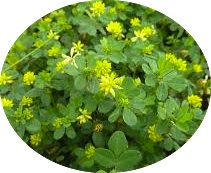
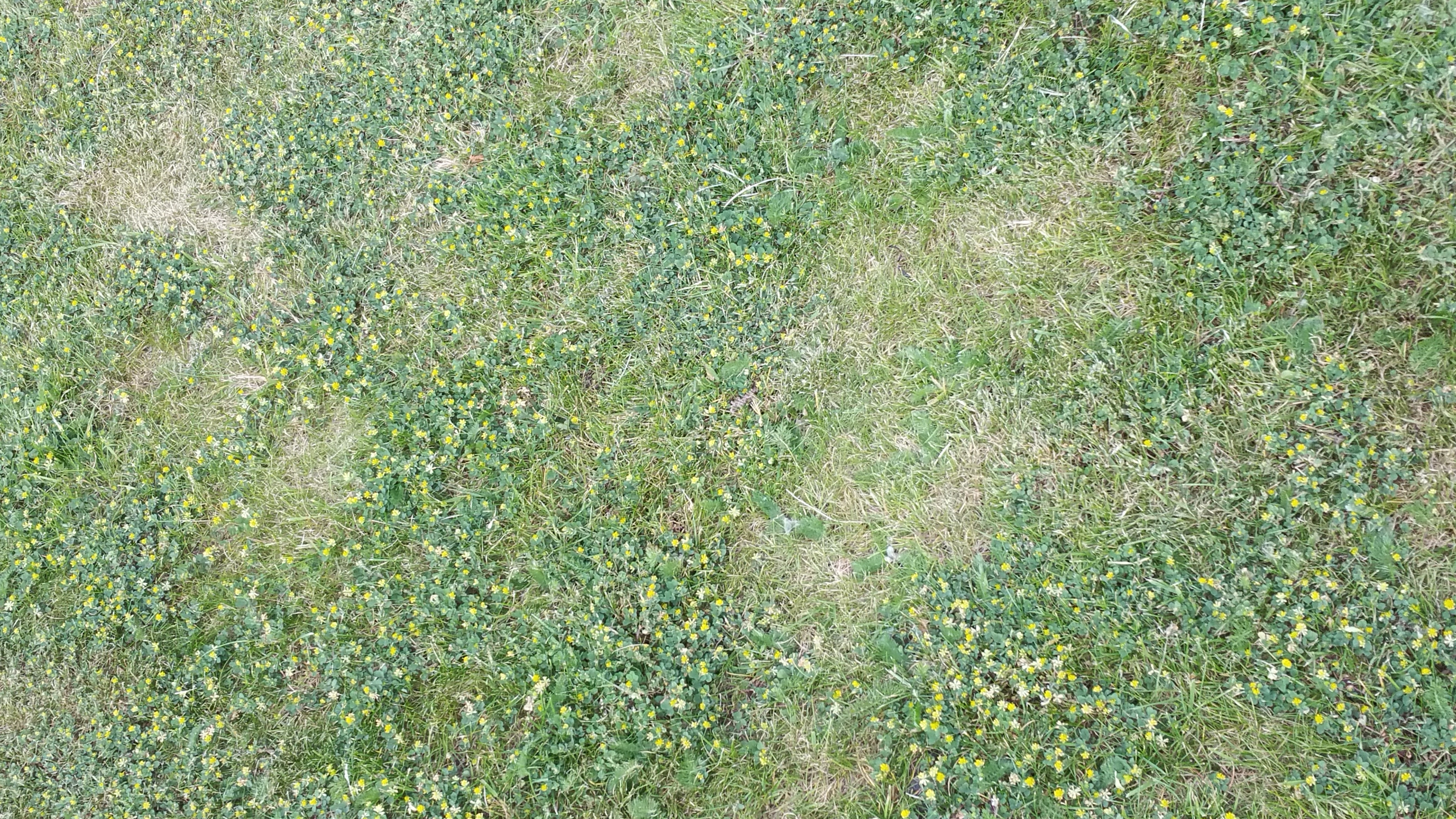
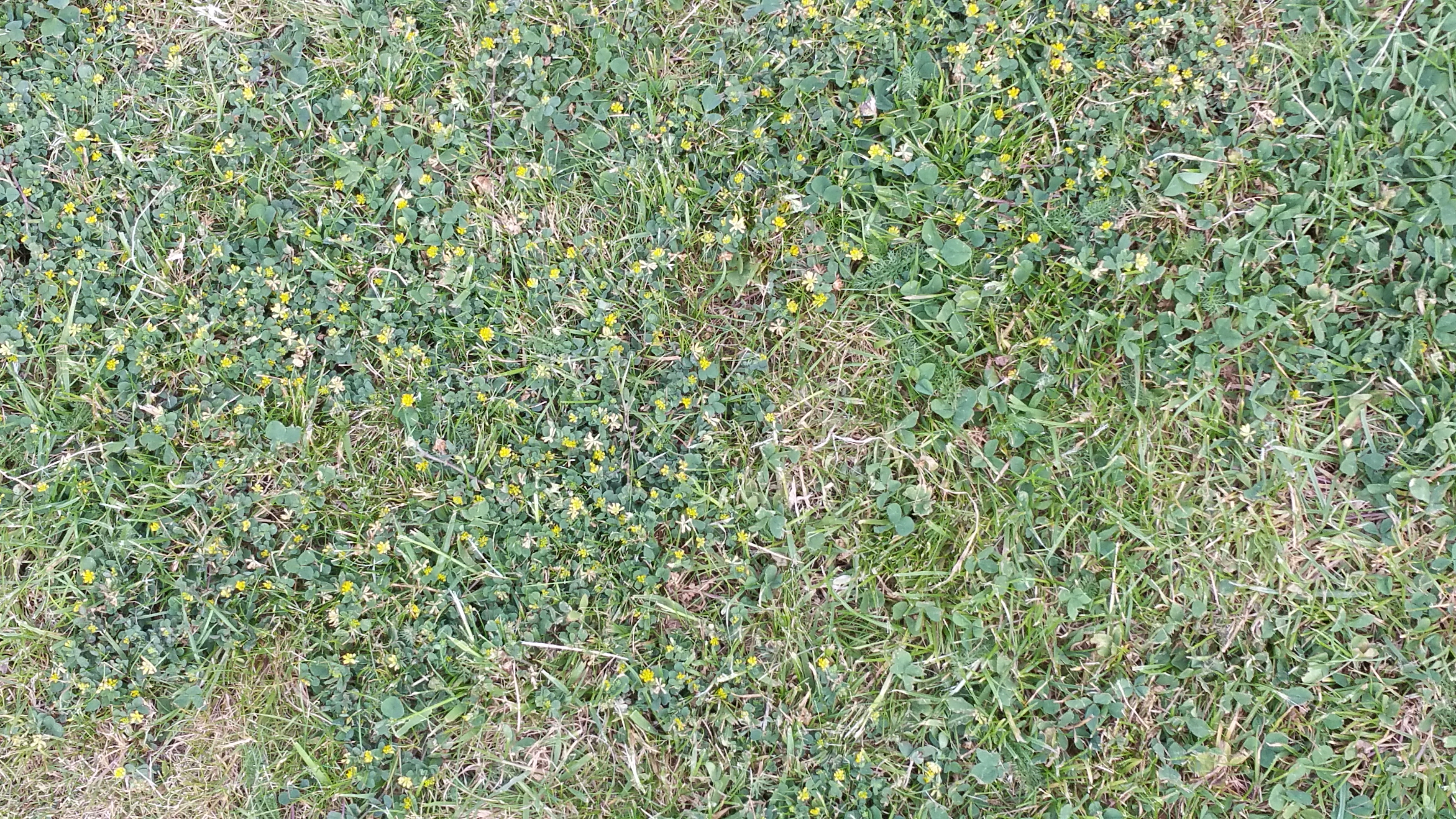


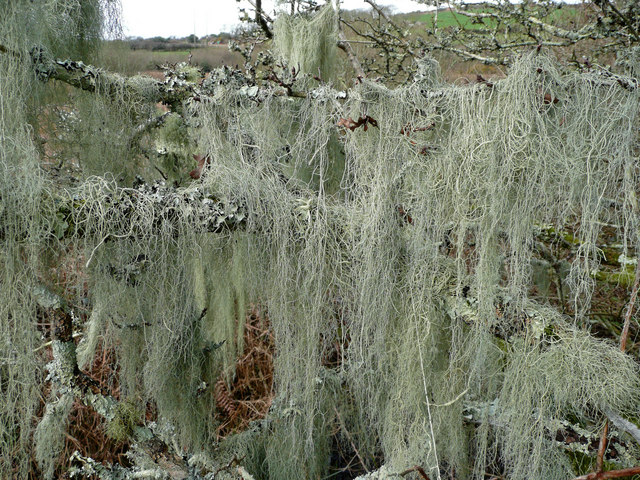


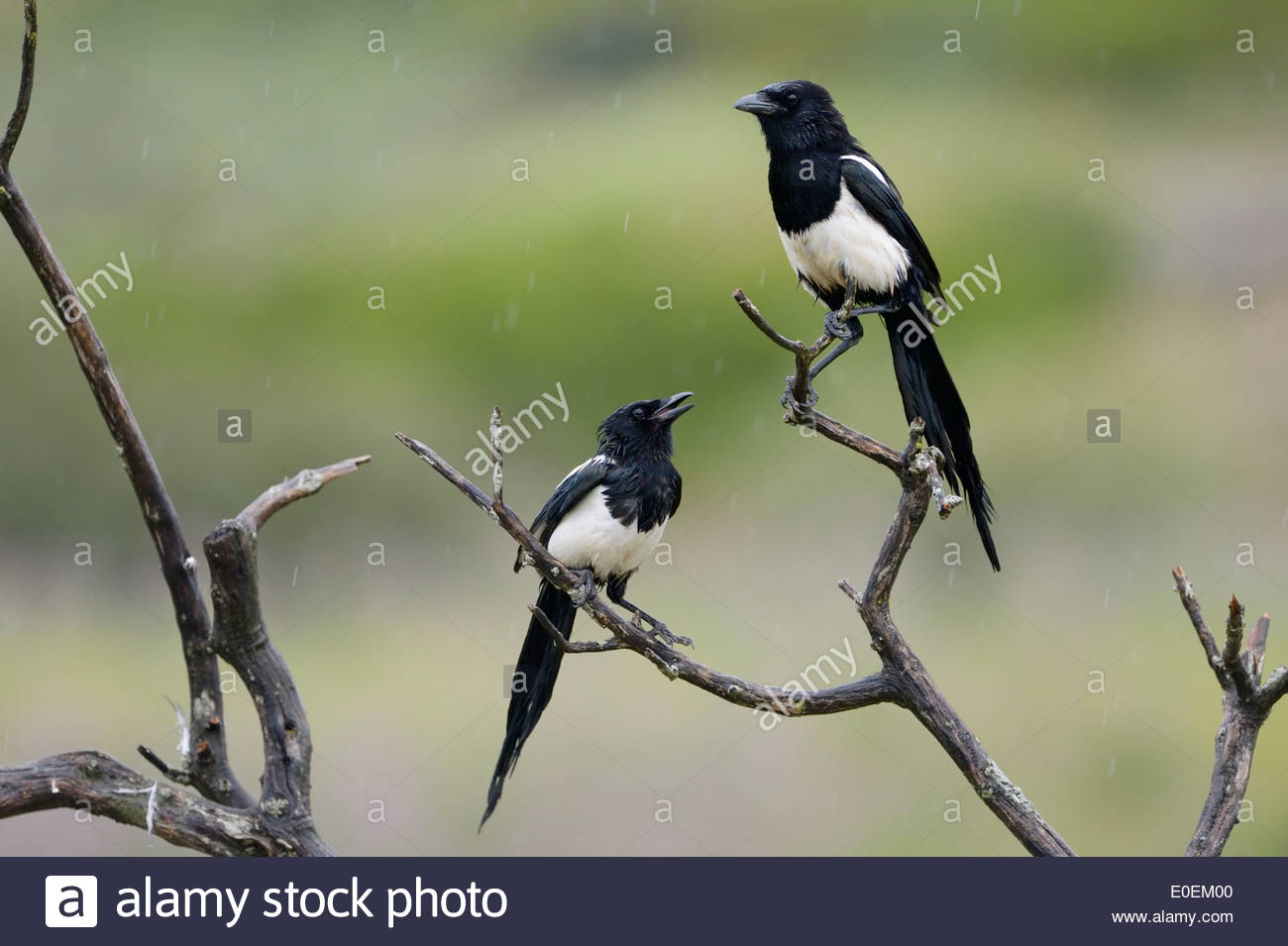




 rebelbreeze