Entering the bedroom, I noticed the window still open and closed it. As I turned from doing that I was startled to see her curled up cosily on my bed. How did she get in?
I stared at her, dumbfounded. She just looked back calmly, not a trace of guilt or worry in her eyes.
How did you get in? I enquired but she just continued to regard me calmly. Of course, the window, I realised. Bloody hell!
You can’t be doing that, sneaking in through people’s windows, I said. You’ll have to leave.
No response, just that calm look.
She wasn’t moving so I went to lift her up and though clearly not pleased, she didn’t fight me.
Opening the door to the common corridor, I put her down gently on her feet there. She looked at me reproachfully but I hardened my heart.
The fire retarding door was closed so I opened it but she made no move to go out. I tapped her on her bottom and she gave a little jump and started to move.
Closing the fire door behind her I went back inside my home and locked the door. Then checked all the windows.
Bloody opportunist! I muttered. Bloody opportunist neighbourhood cat!
The role of culture in revolution is of great importance – greater even than that of the armed struggle, certainly in the initial and later stages. We are created by evolution but we are born into and raised in culture.
The question of whether that culture is to be revolutionary or liberal is of crucial importance.
I have remarked on how Mandela, jailed for his revolutionary armed activities, was marketed as a peacemaker and later became a figurehead of pacification of the South African struggle. Bobby Sands, a revolutionary fighter to the last, has also been represented as a peaceful icon.1
And so also was Terence McSwiney who, like Bobby Sands, died on hunger strike.2
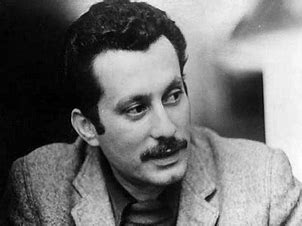
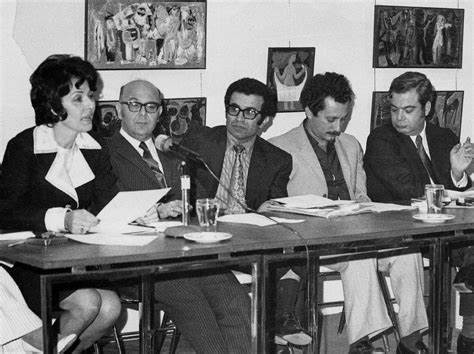
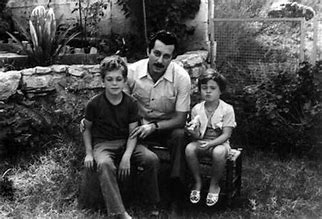
The following article from Resistance News Network, reflecting on the work of the revolutionary writer Ghassan Kanafani who was murdered by Israeli Zionism and his subsequent representation as an icon is I think of substantial interest. D.Breatnach
Ghassan the poet? Ghassan the Palestinian? No, Ghassan the revolutionary!
In colonial wars, the creation and dissemination of symbols to the public is a crucial battle in the war of consciousness building, even if its effects are not clearly visible in the present.
Perhaps the most prominent example of these battles was the image of Che Guevara in the wars of liberation in Latin America. Ernesto Guevara’s persona represented an individual model that encapsulated the revolutionary spirit of people fighting for their freedom from American hegemony.
As the American empire recognized its inability to destroy Guevara’s image, they transformed his image into a consumer commodity.
This was to divert his image from its original revolutionary meanings and repurpose it in the service of economic and cultural agendas that contradicted Guevara’s own principles and what he represents.
In the Arab context, the war to liberate Arab symbols from the captivity of history monopolists continues to intensify, as it involves obscuring forgotten heroes in favour of fabricating mythical legends designed to tamper with the boundaries of nationalism and betrayal in the Arab mind.
In this context, the fiftieth anniversary of the assassination of the martyr Ghassan Kanafani is being observed, with pages and websites filled with commemorations of Ghassan’s life, his quotes, and his most significant works.
It is no longer surprising that Ghassan Kanafani is celebrated on both normalization platforms as well as liberal ones, when voices are raised to commemorate Ghassan even as they are in the heart of the hostile project under the umbrella of its military bases.
Thus, the question arises: which Ghassan Kanafani are we commemorating today? And how do we protect the Ghassan we know?
Ghassan Kanafani’s life provided rich material for readers, followers, and analysts after his martyrdom.
However, the perception of Ghassan was not independent of the political contexts of the recipient interpreting his word, resulting in multiple “versions” of Ghassan Kanafani, some of which we review below.
Ghassan Kanafani: The Writer (only?)
The most widespread version of Ghassan Kanafani is that of a “writer” who wrote stories, plays, and depicted the Palestinian reality.
The spread of this version may be justified since Ghassan’s literary works are the most popular among people and have played a significant role in spreading his name.
However, confining Ghassan Kanafani to the realm of “literature” is not always innocent, and in some respects, it is a deliberate reduction of Ghassan Kanafani’s political work.
Ghassan was responsible for mobilization, media, and was a part of the political decision-making circle in the Popular Front for the Liberation of Palestine since it was part of the Arab Nationalist Movement. He remained in this role until his martyrdom.
Moreover, Ghassan’s literary output never compromised or was at the expense of his political positions or took precedence at any point in his career.
In terms of production, his political studies, research, articles, and editorial journalism are as abundant and important as his narrative and theatrical works.
Even the latter were never detached from the political context; instead, the narrative served as a framework through which Ghassan conveyed his political, social, and even philosophical ideas.
Consequently, the image of Ghassan as “the writer engaged in politics” falls away, replaced by the truth of Ghassan — the politician who harnessed literature in the service of a political cause.
The danger of this deliberate reduction lies in paving the way for a sanitized image of Ghassan Kanafani, presented to the public by liberal (and even normalization) pages and platforms to gain credibility in Ghassan’s name.
Kanafani tackles a fundamental dilemma that burdens our political reality to this day, which is the crisis of “the prioritization of internal change over liberation.”
Thus, reductionism turns into deliberate distortion, making Ghassan Kanafani’s name a “honey” slipped into the poison of isolationist, liberal, and anti-resistance ideas on our land under the guise of freedom and liberation.
Otherwise, how can we understand the celebration of Ghassan Kanafani by liberal platforms and influencers at Al-Udeid Air Base?
Ghassan Kanafani: the Palestinian (only?)
One of the unjust reductions of Ghassan Kanafani is the confining of his personality and his works to “Palestine,” as delineated by colonialism.
Again, one can find an excuse for this reduction because Palestine represents the primary aspect of Kanafani’s political and literary identity, and his experience is closely tied to the general Palestinian experience of war, forced displacement, diaspora, and the struggle for return.
Some people overly emphasize Ghassan’s Palestinian identity, overshadowing his Arab dimension, which he never concealed.
In reality, examining Ghassan Kanafani’s political studies unveils to us the truth of Ghassan as an Arab nationalist thinker who worked hard and struggled to develop practical frameworks for Arab revolutionary theory.
This is made clear in his in-depth study, “The Arab Cause in the Era of the United Arab Republic,” where he discusses the essence of the imposed war on our region, identifying enemy and friend camps, and ultimately defining the main goal of the war: liberation as a condition for unity and renaissance.
Ghassan further elaborates on this study’s conclusions in another study titled “The Revolutionary Applications of Arab Nationalism,” published in 1959, in which he masterfully details the concept of Arab unity and the tools for its practical implementation.
Ghassan Kanafani goes beyond this by considering the confrontation of isolationist (regionalist) thought a revolutionary necessity, describing “isolationism” as something that “contradicts the nature of the formation of societies.”
Isolationism or “regionalism” are anti-unity tendencies, based on defining society’s interests from colonial borders and treating each Arab state as “independent” in itself, as Sykes and Picot intended.
Kanafani tackles a fundamental dilemma that burdens our political reality to this day: the crisis of “the prioritization of internal change over liberation.”
No better formulation to this question can be found than Ghassan’s own words when he stated that “raising the concept [of focusing on internal development first] is a deliberate exclusion of the popular current directed towards unity with determination,
and diverting it to side and regional battles that are easily manipulated (as long as each Arab country is not -nationally- at a level of complete liberation worthy of proper social construction).”
Ghassan concludes his argument by asserting that “unity is a prerequisite of the renaissance… even its regional aspect.”
We mention these ideas as examples of Ghassan Kanafani’s Arab nationalist thought, which fundamentally opposed isolationism and the canned projections of Marxism and others, with strength and clarity.
Therefore, the celebration of Ghassan by the proponents of these ideas indicates their exploitation of Ghassan’s legacy (from their side) and a significant failure in protecting Ghassan (from the side of those who believe in his ideas).
How, then, do we protect Ghassan Kanafani?
The starting point lies in defining ourselves. Are we believers in Ghassan Kanafani’s approach and vision for the ongoing conflict on our land, which comes at the expense of our blood, lives, and destinies?
If so, our foremost duty is to reclaim Ghassan Kanafani from the chains of cheap consumerism and to present him to the public in his true and impeccable form: an Arab nationalist fighter who made among the most significant contributions to modern Arab revolutionary theory.
Additionally, our responsibilities also include reviving the spirit of party work, in which Ghassan was a pioneer, and correcting the Arab party frameworks to harness the wasted energies in the prisons of virtual activism,
within the halls of “non-governmental organizations” and the labyrinths of despair and discouragement.
Our obligation towards Ghassan Kanafani demands that we comprehend our reality and its conditions and that we clearly define our goals, grounded in a deep conviction in our civilizational role as a nation.
We must believe that the liberation of the land is a step towards unity, and that unity is a prerequisite for the renaissance that will elevate us to our rightful civilizational status among nations. Finally, here is a part from Ghassan Kanafani’s ongoing will:
“A human being who does not live the average of sixty years will not find enough space to live peacefully; instead, they will carry the crisis from the moment they are born… and pass it on to their children at the hour of their death.
“The results of this struggle will be for a generation we do not know when it will arrive, even though we are optimistic about witnessing its early days towards the end of our lives…
“Our only reward may be that the next generation, the happy generation that will enjoy our victories, will envy us for having earned the honour of living in the age of struggle for life. And that is enough for us temporarily.”
End.
Footnotes
1In particular by the constant reproduction of his statement that “our revenge will be the laughter of our children”, completely abstracted from his role as an armed freedom fighter and what he wrote in support of that.
2Similarly to Bobby Sands, his statement that is those who who endure, rather than inflict the most who will triumph. The statement taken in isolation seems to endorse passive resistance but McSwiney was an officer of the IRA in the War of Independence, a role skated over in the Wikipedia entry dedicated to him.
Whilst many of the Wokerati repeat uncritically any statement from the Western media or even NATO on Ukraine, wokeness itself was not to be found in Ukraine.
The rabid right wing homophobic sentiment expressed at gay rights marches before the war, was not a fertile ground for the Wokerati.
Homophobia abounds, as does racism, something we saw when black people were taken off or prevented from boarding trains leaving Ukraine at the start of the war.
Gay rights and racism are not woke issues per se, in fact the Wokerati in the West have abandoned gay rights, particularly Lesbian rights, in favour of male heterosexuals invading women’s spaces. But you get the general idea about Ukraine being a hostile terrain.
Not any more, wokeness and its methods have come to Ukraine. How it has done so, and on what issue, is illustrative of the reactionary nature of wokeness. When Russia invaded Ukraine, ridiculous calls were made to ban everything from Tchaikovsky to Tolstoy.
In doing so, they emulated woke calls for authors to be banned from the airwaves and also the rewriting of history with long dead authors being judged by current understandings of society on issues like race, but not class.
Class was still fair game, in fact it is the target of many woke comedians, whose middle-class audiences like to show their social sense of rightness by frowning on historical authors on issues, like race, women (to a degree only) and others.
So, we are only a few steps from Shakespeare, John Donne and others getting chopped, but they have no problem with working class people being the target of their jokes.
Now the Ukrainians have got in on the game with calls for the closure of a museum in Kiev dedicated to the writer Mikhail Bulgakov.1 Yes, I had to look him up too. I have to confess to the woke literati that he was never on my radar before this moment.
I mean, he is not Tolstoy, is he? And he is certainly not anything closer to home like Beckett, or even the English author Thomas Hardy, both of whom have survived the woke banning spree so far, but this might be because their stuff is a little dense and maybe they haven’t read them yet.
I know I haven’t, though as a child my Da would read them and sometimes out loud. So, I knew not to bother with them at an early age, unless you were going to get very serious.
Bulgakov’s crime was that he wasn’t enamoured with Ukrainian nationalism and so he must be expunged from the record.
Mikhail Bulkakov Museum Kiyv (Photo sourced: Internet)
Ukraine’s national writers’ union has called for the museum at number 13A Andriivskyi Descent – a historic cobbled street linking the upper town with the district of Podil, on the banks of the Dnipro River – to be closed down.2
Apparently, he even criticised some Ukrainian nationalists of his time and Stalin was fond of some of his plays, though he censored him at the same time. Bulgakov opposed the idea of an independent Ukraine.
And even The Guardian acknowledges that this was a common position at the time. He was not alone.
The museum’s director, Lyudmila Gubianuri, has also hit back against criticism, calling Bulgakov “a man of his time”.
“He was born and lived in the Russian empire. Bulgakov had an inherent imperial mindset, but neither he nor his family were ever Ukrainophobes,” she stressed. “Bulgakov did not believe in the reality of an independent Ukraine, like quite a lot of people at that time.”3
Mikhail Bolgakov (Photo sourced: Internet)
Were we to do this in Ireland, lots of people would come a cropper. Seán O’Casey would get it in the neck. Joyce would be frowned upon as well, not for the views that saw the Catholic Church come down upon him, but perhaps his general view of Ireland.
Brendan Behan was certainly in favour of Irish independence, but he joined the IRA and was arrested on bombing charges, so in the new climate of blessing the British government for taking up the White Man’s Burden in relation to us, he might also get it.
There is no end of writers who might be banned. Roddy Doyle, is no friend of Irish independence. His unpublished play My Granny Was A Hunger Striker, written shortly after the 1981 hunger strike which saw ten men die, gives you an idea of where he stands.
Maybe in the future someone might call for his works to be removed, no more The Van or Paddy Clarke Ha, Ha, Ha, or his work on violence against women in the home, The Woman Who Walked into Doors. I knew I should never have read him or even Behan, Joyce or Casey.
Yes, I actually read them, unlike Beckett.
The reactionary nature of wokeness can be seen in its arrival in Ukraine. It is about stifling dissent and debate and generally promoting reactionary ideas. It is something more at home in an authoritarian regime like the Ukrainian one.
Russia has been more straightforward in its censorship, though now a capitalist regime, its take on repression and censorship, has been borrowed straight out of the Soviet era book.
The Wokerati under the guise of liberalism also want to shape a view of society on the basis of authoritarian methods, such as social shaming and the banning of literature to the literary equivalent of Outer Mongolia and have had some success.
Liberals ban books and place authors in quarantine, Ukrainian nationalists adopt the same tactics. Tells you everything you need to know about both.
Though, that the Western Wokerati were streets ahead in the book burning club probably means they have the edge over the zealots of the East and this is also telling.
The carpet is a lush deep kind of green – not too deep a green though. We didn’t order it but I’m not complaining – I like it. Much better than that yellow one we had for a while a few months back.
Next to it is another kind of carpet – very different. The same green background but covered in big blobs of yellow, brown, orange and mixtures of all three. Even some reds. The blobs are large and small, some shaped like the spades suit in a deck of cards, others like a cat’s iris, some with many points, like a star … Didn’t order that carpet either but I like it too. It might not sound that great but you’d have to see it.
There was the wallpaper too, great stretches already unrolled, ready to look at. A blue-white background with puffs of white and, in the foreground, thin black shapes, some of them decorated with those blobs of colours, like those on that carpet. Great contrast with the thin black shapes.
The carpets and wallpaper were just delivered – no order was placed by phone or email. And no request for payment by cash or credit card. Not even an invoice. Totally free! Hard to believe, I know.
Then there was the perfume. No, not in bottles, in the air. I swear! (Yes, I know that rhymes but I didn’t plan it). It was heady but not in the way that rose is, or honeysuckle, or privet flower. Those aromas make you kind of want to sit down and drowse …. or even lie down and go to sleep. Then you remember the story of the artist who died inhaling in his sleep the aroma of flowers he had in a vase to paint – and you don’t linger too long. Did that really happen? Not sure – best not take the chance. Didn’t take a chance on the dandelion flowers when you were a kid either. Waking up in a wet bed is not a pleasant experience at any age but definitely gets worse, even if rarer, as one grows older.
Glade part-sunlit, Botanic Gardens November 2018 (Photo: D.Breatnach)
No, this perfume does not make you want to sit or lie down; it makes you want to jump, run (or at least stride purposefully). It is invigorating. That too was delivered free.
All of this – well, most of it – was donated by the trees. Not the green, surely? Not directly, no … but indirectly, yes. The grass grows in the earth which is fed by dead leaves and other material, broken down by insects and fungi and especially recycled through the digestive tracts of worms. May those gardeners who poison worms on their lawns be forever damned!
Autumn leaves on green grass, Botanic Gardens November 2018 (Photo: D.Breatnach)
Before Ireland was denuded of her mixed forests, what a site she must have been!
All this visual, olfactory and mood-enhancing stuff was delivered free to us but there is, you are right to suspect it, a hidden cost. The weather is getting colder and sitting nearly naked on a beach is definitely out, to say nothing of plunging into the freezing water (well, with some lunatic exceptions). Outdoor cafe-sitting is becoming more of an endurance test than a pleasure. There are days coming when lots of good arguments (convincing at the time anyway) will be found against getting up to go about once’s business.
Trees on banks of Tolka River, Botanic Gardens November 2018 (Photo: D.Breatnach)
But then there will be glittering jeweled grass, constellation of stars in the pavement, artwork fronds on glass, white star patterns in things floating from the sky, white blankets over everything or at least over the hilltops in the distance, the special joy of a hot soup, a warm fire and blankets (if you have them) ….
And not too long away, sprouting buds pushing through bark and soil, misty green branches, a different perfume, quickening the blood in a different way.
Most modern criminal detectives have sex – I know this from reading, thankfully not from personal experience.
The older set, Holmes, Inspector Maigret, Nero Wolfe, Miss Marple – they didn’t. Holmes was into a barely-concealed opium habit and Wolfe had an obsession with orchids; Poirot was obsessive-compulsive and probably fetish-obsessed with his patent-leather shoes. Miss Marple, who first appeared in a novel published in 1930, reflected her times even when the times passed her (Nemesis was published as late as 1971) and as to a suggestion of sex: “Good God! What kind of a degenerate are you? A woman detective having sex? And a pensioner?”
In modern times we might reflect that “of course there was her live-in maid … and that succession of young women she trained as maids ….”
Not only did they not have sex on paper, they were all single except for Maigret, so there was an absence of potential sexual activity to distract one. Maigret of course was French so like many middle-class men of his time would have had not only a wife but a mistress too but …. we don’t talk about that.
Yet sex is one of the most basic driving instincts – it governs procreation of species and, working in tandem with natural selection, rules on evolution of all species. How come it was left out?
The characters reflect their times and their class, of course, as well as what was expected of their class, sometimes with a little added taste of the unexpected – but not in sex. Yes, we know that DH Lawrence’s sexually-explicity (and trans-class) Lady Chatterly’s Lover was published two years before Agatha Christie Miss Marple’s first appearance in a novel, in Murder at the Vicarage (1930) – but Lawrence was published in Italy. Sniff! — those Continentals! A year later Chatterly was published again in France and – interestingly – in Australia. But all that publishing was done privately. In 1960, when an unexpurgated edition was finally published in the “United Kingdom”1, Penguin, the publishers, were subjected to a famous obscenity trial but, when they won, sold three million copies. It was still banned in the Irish State, of course but we weren’t alone – the USA, Canada, Australia, India and Japan all banned it too.
Romantic and gothic novels of the time didn’t have sex either, except in the mention of a child born out of wedlock, though the suggestion of or even history of rape was there at times. Sexual feelings of the heroine (and sometimes of the hero) were conveyed through descriptions of a blushing cheek, longing looks, palpitating heart and breast (but no mention of nipples!), feeling faint in the head …. all above-board and more importantly, all above the waist (though still allowing the reader’s imagination to eroticise, of course).
The most important point to grasp here I think is that something being published does not necessarily reflect the dominant social mores – it is its acceptance by society and its popularity that tells us most. There has always been material around that transgressed socially-dominant sexual standards but those standards were still dominant – and the material may even have worked as a pressure-release valve, as for example with the huge numbers of sex-workers, female and male, that walked the streets or entertained in special houses in sexually-repressed Victorian Britain, particularly in London.
The 1960s brought about a huge jump in tolerance of explicit sexuality, partly fueled by a decade of expanding consumerism and a push for more of the same and partly by the rise of the youth and student movement and its challenge to hierarchical values and control.
THE NEW DETECTIVES
But for decades already, the new criminal detectives had arrived – or at least their advance skirmishers. One of the most influential, beating the later pack of the 1960s by a good three decades, Dashiel Hammett was hugely influential with the creation of what became known as the “hard-boiled” genre of detective stories and also in the “talking detective” style, in which the central character is also the narrator.
Hammett, a left-wing activist who got blacklisted as well as a popular crime fiction writer, had been employed by the Pinkerton Detective Agency2 and wrote many published stories but only five novels, all between 1929 and 1934 (even though he lived to 1961): Red Harvest, The Dain Curse, The Maltese Falcon, The Glass Key and the The Thin Man3.
Paperback cover for a Dashiel Hammmett novel, Red Harvest (pub. 1952), this one showing the dangerous gun-toting males (detectives? gangsters?) but also typically the heterosexual male erotic object of the female, dressed in bodily-revealing attire. (Source: Internet)
Raymond Chandler, who acknowledged his debt to Hammett, had The Big Sleep published in 1939, based on a couple of short stories (he’d been writing those for decades). He banged them out pretty regularly after that: Farewell My Lovely (1940), The High Window (1941), The Lady in the Lake (1942); then a break until The Little Sister (1949), another gap until The Long Goodbye (1953) and Playback in 1958, a year before he died.4 at the age of 71.
Cover for Raymond Chandller’s paperback novel, The Big Sleep (pub. 1939), this one showing only part of the presumed detective, the ‘femme fatale’ prominently portrayed, holding a gun but dressed in bodily-revealing attire and ‘already’ in bed. (Source: Internet)
The gap in the 1940s is easily explained by the film scripts for Double Indemnity along with And Now Tomorrow (both 1944), The Unseen (1945), The Blue Dahlia (1946). Strangers On A Train was produced in 1951.
James M. Cain (1892-1977) published The Postman Always Rings Twice in 1934 and, as well as short stories, another fourteen novels during his lifetime. Among those was Double Indemnity which, like Postman etc, was made into a film.
Mickey Spillane published his first novel, I, the Jury in 1947 and went on to publish another twelve before he died in 20065.
Cover for a Mickey Spillane novel, Kiss Me Deadly (pub. 1952), this one showing the iconic ‘femme fatale’, holding a gun but dressed in bodily-revealing attire. (Source: Internet)
The new private detectives novels between the 1920s and the 1960s introduced detectives who had or were tempted by hetero sex but, however graphically the allure might be described, the sex was never described in detail. These novels also featured the femme fatale, the attractive and sexy woman who was also dangerous – capable of murder and treacherous. The detective was more likely to have the sex-interest woman jailed or even killed, or walk out on her, than claim her as the prize. And yes, the detectives in this genre were all male.
These novels featured violence – not just the violence to the homicide victim but regular knockouts with a pistol butt across the head, graphic physical fights with fists and feet (and even teeth!), shootouts … the detective characters not only suffered violence but engaged in it too (particularly Mickey Spillane’s Mike Hammer).
During the 1940s and ’50s the novels were paperbacks, low-priced, produced on cheap paper to a size that could fit into a man’s jacket or coat pocket (and some handbags or, in the USA, “purses”). This form of private detective and some other kind of publishing came to be called “pulp fiction”, from cheap magazines of short stories, i.e destined to be turned back into paper pulp soon after reading).6
The covers (or “jackets”) of “pulp fiction” novels were often lurid, portraying violence and heterosexual sex. Women dressed in revealing deshabille, often with seductive expression and posture, tended to share the cover with a “hunky” type of man, with a gun visible in the hand of either. Sometimes a dead body, male or female, lay on the ground too.
This kind of writing was baptised “Noir”, i.e “black”, mainly reflecting the dark sides of the detective’s character and especially of his clients and of surrounding society, cynical, corrupt, characters often morally-flawed, doomed, dogged by ill-luck and bad choices.7 Production in film of that writing came to be called “film noir”, the content reflected in low-light shots in black & white filming, which later transferred (with some difficulty) even to colour film. But still, the sex was never graphic in the writing and was more pruriently hinted at than witnessed by the reader.
Film ‘Noir’: Still photo from opening sequence of the film production (1941) of Chandler’s novel The Maltese Falcon. Typically, the ‘hard-boiled’ private detective is in his pokey office and the heterosexual male’s ‘sex interest’ has already arrived to ask for his help. (Image sourced: Internet)
The writing could be elegant in descriptions and it could also be tight; dialogue was very important, with the detective and his adversaries dueling in verbal repartee, which the detective usually won in the verbal category but for which he often paid physically.
Of course, some cities in the United States had seen a lot of violence in reality, in particular during the ill-fated years of alcohol Prohibition (1920-1933) and the attendant rise of crime syndicates seeded in the working class immigrant communities of Irish, Jews, Italians, Sicilians …. Reading about such events as arrests, trials and mobster shoot-outs in newspaper reports provided also an audience for the material in the form of short stories, novels and later films. That audience grew during the succeeding decades and is still a wide one today, with a diversification of sub-genres and detectives in countries other than the USA or Britain, usually also in translation from their native languages.
But … back to sex and the detective. As the years rolled on past the 1960s towards the end of that millennium, the sexual activity of the private detectives became not only implicit but often explicit (with the possible exception of the Nordic detective novels). And we now had some female protagonists too: police detectives, uniformed police officers, private detectives and forensic pathologists. And if none of the main characters were ever gay, lesbian, transgender or transvestite, such characters did appear, usually treated more gently than in the past and at times actual second-line “good guy” actors in the stories.
It appeared that all previous sexual taboos in the detective story – all legal ones at any rate – had been broken.
Well, not all. Not masturbation.
Not even modern private detectives masturbate. Which is truly remarkable, when one considers, according to all research, how common that activity is in the non-detective population.
End.
REFERENCES & SOURCES:
For dates of authors’ birth and deaths, also of bibliography, Wikipedia entries on the authors.
1I somehow doubt it would have got far in the Six Counties (“Northern Ireland”)
2 See Rebel frontier [electronic resource (video)] : organized labor vs. the Anaconda Copper Company / Network Ireland Television. New York, N.Y. : Films Media Group, [2006], c2004.1 streaming video file (66 min.) : Martin Sheen – impersonating the voice of author DashiellHammett – narrates this compelling docudrama on immigrant labor and anti-war politics in 1917. As a young employee of the Pinkerton Detective Agency, Hammett spied for the Anaconda Copper Mining Company in Butte, Montana, during the height of labour struggles there. AU STREAMING MEDIA http://digital.films.com/PortalViewVideo.aspx?xtid=35494.
3 The Maltese Falcon, The Glass Key and the The Thin Man were made into films.
4All based on earlier short stories, except the last, which was based on an unpublished screenplay.
5A number of others, based on previously-unpublished material or short stories, were published posthumously.
6Even after the pulp fiction heyday ended in the 1950s, paperback novels are still being produced in roughly the same size, albeit with somewhat better quality paper pages and covers.
7“Noir” also came to be a literary descriptive term and is often used to describe a certain kind of writing today.
I looked at her. Would you? I thought. Would you really?
Image sourced: Internet
And then my mind took off. Not perhaps where she had meant it to go.
Would I try anything, even just once?
Jump out of an airplane hundreds of metres above ground, even with a thrice-safety-checked parachute? No. Not even with TWO parachutes. Not unless the plane was on fire or going to crash – in which case, in a civil aircraft, there wouldn’t be any parachutes anyway.
Jump of a bridge on bungee cords? No. Not even off a high diving board! Yes, I know the water’s soft, serious bodily damage, even much pain extremely unlikely. But no.
Climb big windy, icy mountains? No. Scale cliffs? No.
OK, you’re seeing a connection with height here, right? But it doesn’t end there.
Go deep-sea diving? No. Not after that time on my third ever dive, when – despite a half-hour of air showing on my gauge, I suddenly ran out of it. Luckily I was not far down. Even getting me to dive at that shallow depth again would take some doing.
What else? OK, go against someone who is holding a knife? No. Yes, once in a drinker’s hostel I did take a knife off a guy but he wasn’t brandishing it at me. It certainly was not recommended procedure.
Demonstrate unarmed against soldiers who have proven, like the Israeli Occupation Force, that they don’t mind, even like shooting unarmed protesters? No. Almost certainly. But if I were a Palestinian, being ground down daily? Maybe, just maybe.
Be a cop? No. Be a cop’s tout? No. Take a job evicting people from their homes? Definitely not. Turn off water or electricity on families? No. Repossess cars? Only if I could choose according to circumstances, so that’s a No too.
Rob banks? Probably not. Yes, I know they’re robbing us – it has nothing to do with principle. In that career you end up having to use guns and then people tend to get shot. And they are hardly ever the bank-owners.
Be a surgeon? A bit late for that but probably no too.
Even in sexual categories, where perhaps (I could be flattering myself) I was intended to go …. No, in that tin of Quality Street sexual flavours, in the jar of Liquorice Allsorts, though there’s a lot to like, there are some things I wouldn’t try.
Looking at her, I wondered whether she really would ….
I wondered whether I’d been quiet too long. I’d probably missed my chance to suggest something.
Around 6am I awoke, still half in the script and trying to figure a way to win through. But not for long, as I was driven stumbling by the urea imperative – I had to go to the toilet. In the hallway I switched on the light, still thinking about the situation I had been in and, turning into what I thought was the open doorway, immediately stubbed my toe and nearly my nose on the door. After suitable curses, I stood in front of the enamel directing the hose while I thought about the damned situation.
I had debts. And there was a gang …. or gangs … and I was kind of in one of them and the big boss was putting the squeeze on me. Now, in my other life, the waking one, I’ve never really been in a gang, not even in my teens, although that’s not to say I didn’t have anything to do with them. I did – running from them, hiding from them, sometimes fighting and (of course) getting beaten up by them.
My social class set, the lower middle class, didn’t have gangs. The working class had them and curiously, the upper middle class had them too. The Geldoff types (he was from my home town). And since I didn’t usually have money to go to dances and discos, the dangerous times in my hometown were mostly daytime. The Geldoff types hung out in the Bamboo café across the road from Murray’s record shop, where us gangless lower middle class hung out. And the working class had no café or record shop, just their areas – the ‘Noggin, York Road ….
They weren’t anything like the legendary Ringsend or Dolphin’s Barn, but they were tough enough in my book. Ringsend lads came to the Top Hat Ballroom in my hometown once to settle a score and chased the locals all the way up to the ‘Noggin and the Farm, over a mile away. Local folklore had it that as they queued up in Ringsend earlier that evening to get into taxis for the foray, old dockers had handed each youth a docker’s hook.
There were times when walking down the main street in Dún Laoghaire had felt like something out of High Noon or some other western film, when the hero doesn’t want to go out in the street, he knows death is waiting there – but he has to. In his case, it was duty or some kind of fatalism sending him out there. In my case, it was fear of isolation. I didn’t want to end up cut off from my contemporaries – the boys and, yes, especially the girls. Where they hung out, I would have to go. Of course death wasn’t waiting for me, unless it were accidental …. only a beating.
Anyway, I deviate. Which doesn’t make me a deviant, by the way ….. Anyway, back to the script.
One of the things I was being pressured about had to do with promoting the gang leader’s mice. Yes, mice. Don’t ask me – I didn’t write the script.
For some reason the boss’ mice needed to be distributed, to take over everywhere. And one of the places Big Al wanted his mice installed was in a closed down fairground. It was in my area, so of course Big Al thought it was my responsibility to do it.
Big Al, photo taken during one of his philosophical debates
The thing is, that abandoned fairground already had mice, as I tried to tell Big Al. I’d hardly ever actually seen one but you could hear them, rustling, scratching and sometimes squeaking as they fought.
Big Al wasn’t interested. Were they HIS mice?
Well, no ….
Well, didn’t I see the problem?
I nodded. I could see I had a problem and I’d have a worse one if I didn’t do as he wanted.
Big Al’s mice arrived next day delivered by motorbike courier, in a plastic bag. Yeah, I know … but remember — I’m not the script writer.
I took some of the mice out. They were sleek, strong, well-fed, pinky-white mice. I carried the bag to the empty fair ground and let some of them out, to see how they got on. They scurried eagerly down lots of holes and there was suddenly a lot of squeaking underground. Then silence.
After a while, one came back, mauled and bloody. I waited but no others arrived. I put the rest of Al’s mice on the ground so they could avenge their mates. I had no choice, unless I wanted to tell Big Al I had disobeyed his instructions.
Those mice knew what was waiting for them and not a single one went down any hole. They milled around above ground. Then they found an unopened can of beer left by some inebriated street drinker, bit through into it …. and proceeded to get really, really drunk.
Some of Al’s mice before they discovered the beer can
They were still drunk when Big Al dropped by to see how his mouse colonising was progressing.
“What the fuck is going on?” Big Al and his bodyguard were looking in amazement at his carousing, stumbling mice.
I told him what had happened. He shook his head, muttered something, shook his head again, then went off grumbling to get some more mice – maybe Super-mice, or Ninja Mice, or something.
I knew the drunken mice would be history. If a cat or a kestrel didn’t get them …. well, Big Al had a low tolerance for failure. I should have felt sorry for them …. and I kind of did … but also a kind of contempt. The fairground mice had lived a hard life, braving flood and ice, finding what food they could, breeding, tunneling, avoiding alley cats, kestrels …
Big Al’s mice had been fed high-protein diets, reared in secure environments, built up muscle, each probably outweighed the biggest fairground mouse by a couple of ounces. But those scruffy, lean, dirty mice had finished off the advance guard of Al’s mice in minutes. And the rest? Didn’t even have the courage to make a fight of it but went and got drunk instead!
I left them to it. Al would be back and he’d probably want to supervise the operation against the Fairground Mice himself. That was fine with me. I didn’t like the job and I secretly wished the native mice well.
Anyway, I had other problems to deal with. I still had to organise my area for Big Al’s other operations – or else. I didn’t know exactly what the “else” might be and truth to tell, I didn’t even want to think about it.
In the end, I couldn’t do it. I could fool myself that I could manage the area for Al in a more decent way than somebody else working for him …. maybe. But I would still have to become too much like Al himself to do it. So, one alternative only – get out, go on the run and hope Big Al or his goons couldn’t find me. I didn’t even know where I was going to go – just out.
In my benighted life, I had one bit of success.
I ducked into a shop and got to use their phone. That’s right, no mobiles – maybe this script was set in the 1980s …. Not that I remember seeing big hair, shoulder pads or baggy trousers …
Anyway, I phoned up the electric phone company and got to speak to the Area Manager about my bill …. yes, the actual Area Manager! I told him I was going out of business and after a little haggling he agreed to accept 20% of the bill in payment and to wipe the slate clean.
Then I phoned my cousin, also my best friend and told him I was getting out. He was disappointed in me. Really, really disappointed. I could imagine him shaking his head.
“What about community organisation, man?” he asked.
“I can’t do it, Mort. Big Al is too much to go up against.”
“I can’t believe it – and you from a long line of trade union organisers.”
That got to me because, in the script, it was true. My Da had been a union organiser most of his life. My Ma too. And one of my Grandas as well. Strikes, union meetings, pickets, marches, police stations and courthouses had been a part of my childhood, almost as much as school throughout the year and the seaside in summer.
In real life, of course, my Da had been many things but never a trade union organiser. Active trade union member, yes – organiser, no. And my Ma – well, maybe if there had been a Housewife’s Union …. she would have probably been the General Secretary.
Anyway, in the script, Mort shamed me. And talked some more. And I argued. And he put forward a plan.
For some reason, this plan, which of course required community organising, needed a public appeal by television. Mort said I should do it. I told him I couldn’t – I’d freeze on camera and anyway I was too closely involved. I begged him to nominate someone else. He thought for a little while.
“Ok, but you have to go with whoever I choose – no backing out.”
“Sure! Thanks!” I gulped, relief flooding me.
His next words ejected that relief right out again.
“Ask your Ma.”
After I recovered from the shock and hung up, I went to see Ma. This was Ma in the script and nothing like the Ma I had in the real life, the one who was born in the Basque Country and spoke English with a German accent, because her Da had been a German.
And this script Ma was easy-going, unruffled …. Still, she took some persuading before she agreed. And while she was getting ready for her TV appearance – having her hair done, rehearsing her appeal, buying new shoes (who was going to see her shoes on TV?!!) — I was down on the street in my area, doing the rounds, talking to shopkeepers, community workers, youth, pensioners ….
Of course, Big Al was going to get to hear what I was doing. But the gamble was that my Ma’s appeal would be broadcast before he could make his move …. and after that, it would be much more difficult for Big Al to demonstrate the full meaning of that “else” with which he had threatened me. And hopefully the community would start to solidify and be able to resist. Doing nasty things to me wouldn’t be that productive any more. And whatever else Big Al was, he was a pragmatist.
Yes, of course, there’s always the unpredictable emotional element ….
I was pondering that when something pulled me half out of the script.
It was around 6am and I was still half in the script and trying to figure a way to win through. But not for long, as I was driven stumbling from my bed by the urea imperative – I had to go to the toilet.
In the hallway I switched on the light, still thinking about the script I had been in and, turning into what I thought was the open doorway, immediately stubbed my toe and nearly my nose on the door. After suitable curses, I did the business in the toilet and thought about the events in the script.
Then I wondered whether I could somehow get hold of the scriptwriter and how I could make him pay for what he put me through.
Had I met him? No, never. How did I know he was male? I don’t know, but for some reason I was sure he was. Which is strange, because nobody in my life had ever fucked with my head the way some women had. But yes, he is male – I’m sure of it. Now, where could he be hanging out ….?




 rebelbreeze