Diarmuid Breatnach
(Reading time: 2 mins.)
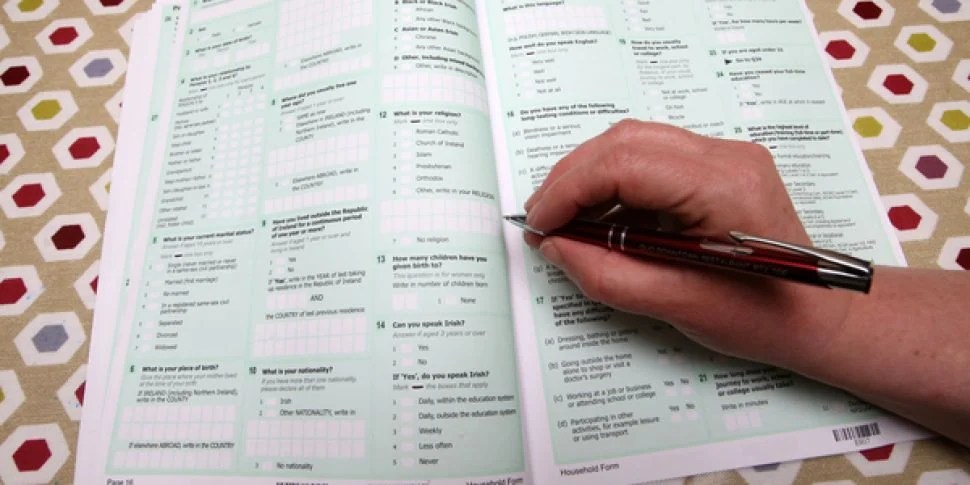
The media announces that “the population of Ireland has reached 5 million … for the first time in 170 years”. Interesting – and a barefaced lie! The population of Ireland passed 5 million some time ago and is actually around 6.5 million now.1
Ireland remained with negative population growth until near the end of the last century – mismanaged for most of the population first by the British occupiers of the whole of the island, then by a combination of the native neo-colonial bourgeoisie and of the settler colonial ruling class.
For more than a century the population of Ireland stood at around 5 million, static despite a high birth rate. This was mathematically possible only through continual massive emigration – mostly to English-speaking regimes: Britain, USA, Australia, New Zealand and Canada.
But it is true that 170 years ago it was more than 5 million – in fact it was around 8.5 million. And it is worth reflecting on how they were able to produce enough food domestically to feed that entire population while now, with a smaller population, we import as much as 80% from abroad.2
It was the Great Hunger that wiped out much of the earlier population, statistics somewhat hiding the pain and sorrow of millions of Irish in death, disease and emigration — and the great transfer of land for cultivation (and rent) to pasturage, with its dangerous environmental impact.
It provided an opportunity for growth of the Catholic Irish capitalist class, the Gombeens, huckstering money-lenders buying up the lands of afflicted neighbours.
The kind of class that the British could depend on in 1921 to manage the neo-colony and to murder and jail those of national liberation3.
Emigration kept population stats steady and, combined with unemployment, ensured a low internal home market for development. An educated workforce and natural resources could be developed but the Gombeen class opened it all to foreign multinationals rather than develop it themselves.
Even with foreign exploitation of the workforce at home, the education system turned out mostly emigration fodder: the Irish tax-payers funded an education system to provide a literate and numerate English-speaking workforces for capitalist exploitation abroad.
No wonder the Irish political class declined to give the Irish abroad a vote in the Irish state – unlike for decades any other state in the European Market. Yet during the 1930s through to the 1960s, money sent home by Irish migrants accounted for an estimated 30% of the Irish State’s economy.4
The Irish state remains a neo-colony with low taxation and other incentives for foreign companies to take over our few industries5 and local and foreign property speculators to rake in profits out of the despair of homelessness or of struggling to meet rent or mortgage payments.
A neo-colonial market for produce of foreign companies and to plunder not only our labour force, not only our natural resources on land, sea and wind and but even our infrastructures in transport and communication, energy, health service, water supply and even our city sanitation.
TRUNCATED
The announced statistics were truncated, appropriate perhaps for a truncated country, with the history behind those statistics not so much truncated as obliterated.
That is our present and our past but not how the future has to be – we can write our own future but we won’t do it by putting a mark on a ballot paper.
FOOTNOTES
1Worst of all the statistics were quoted from the State’s Central Statistics Office. The reality: https://worldpopulationreview.com/countries/ireland-population
2The highest estimates: https://www.export.gov/apex/article2?id=Ireland-Agricultural-Sectors#:~:text=Ireland%20imports%20around%2080%20percent,from%20its%20premier%20trading%20partner. And most of all, incredibly – potatoes!
3The Irish Civil War or Counterrevolution, 1922-1923.
4I have read this in the past but am unable now to find the reference; however I have posted some references on the figures of remittances from Irish emigrants.
5 For a few examples of foreign takeover: Irish stout, beer and lagers (Guinness, Smithwicks, Harp); Irish whiskey (Paddy, Jameson, Bushmills); cigarettes (Afton); preserved vegetables (Erin); aviation (Aer Lingus); public transport (Transport for Ireland; LUAS); sugar (Irish sugar beet replaced by subsidised cane sugar from the USA); woodlands (Coillte).
SOURCES
Population: https://www.breakingnews.ie/ireland/census-2022-shows-irelands-population-over-five-million-people-1482478.html
https://worldpopulationreview.com/countries/ireland-population
Ireland not feeding itself: https://www.export.gov/apex/article2?id=Ireland-Agricultural-Sectors#:~:text=Ireland%20imports%20around%2080%20percent,from%20its%20premier%20trading%20partner.
https://www.cso.ie/en/releasesandpublications/ep/p-ti/irelandstradeingoods2017/food2017/
https://www.irishtimes.com/business/agribusiness-and-food/why-does-ireland-import-44-000-tonnes-of-british-potatoes-each-year-1.3721341
Remittances from emigrants: https://www.theirishstory.com/2019/02/08/invisible-income-remittances-from-the-diaspora-sustained-ireland-for-over-a-century/#:~:text=to%20emigrate%20themselves.-,The%20money%20that%20emigrants%20sent%20back%20to%20Ireland%20ensured%20the,and%2020th%20century%20Ireland.
https://www.irishtimes.com/life-and-style/abroad/rural-ireland-would-not-have-survived-without-money-being-sent-home-by-emigrants-1.4081919
https://www.thejournal.ie/irish-emigrant-remittances-uk-1405087-Apr2014/
 rebelbreeze