
Clive Sulish
(Reading time: 3 mins.)
As two of the six hunger strikers awaiting trial on actions against the Israeli arms company Elbit approach 50 days fasting and concern for their survival rises, the Irish recall their own history and the 10 Republican deaths on hunger strike in 1981.
The 1981 hunger striker martyrs were jailed active service Volunteers of the Provisional IRA (7) and Irish National Liberation Army (3) demanding their treatment as political prisoners. On May 5th Bobby Sands died on hunger strike, followed in stages by another nine Irish Republicans.
The Palestine Action activists on hunger strike in jail face charges of criminal damage and alleged assault during actions targetting buildings belonging to Elbit Systems in Britain, involving destruction of manufacturing equipment and weapons and daubing with red paint.
The actions and charges predate the banning on 5 July of Palestine Action under the Terrorism Act 2000. That designation has since been protested across the UK1 with around 2,500 charged with “supporting terrorism” under the same Act (potential penalty 14 years prison or more).
The hunger-strikers have won strong support in Britain with solidarity pickets taking place now daily, along with demonstrations and marches. The protests have seen support from among the Irish diaspora, in particular in London led by the ad-hoc broad grouping of the Irish Brigade.2
Apart from humanitarian considerations, protests have also been directed at the UK’s mass media and its attempt to ignore the hunger-strikes and the solidarity actions.
MPs raised the issue too in the Westminster Parliament. Particularly shocking to many was not so much the video recording of the curt dismissal of Independent MP Jeremy Corbyn’s parliamentary question by a UK junior Minister but rather Labour MPs laughing at the put-down of Corbyn.3
On Thursday, more than 800 doctors, nurses, therapists and carers wrote to Justice Secretary David Lammy to warn that “without resolution, there is the real and increasingly likely potential that young British citizens will die in prison, having never even been convicted of an offence”.4
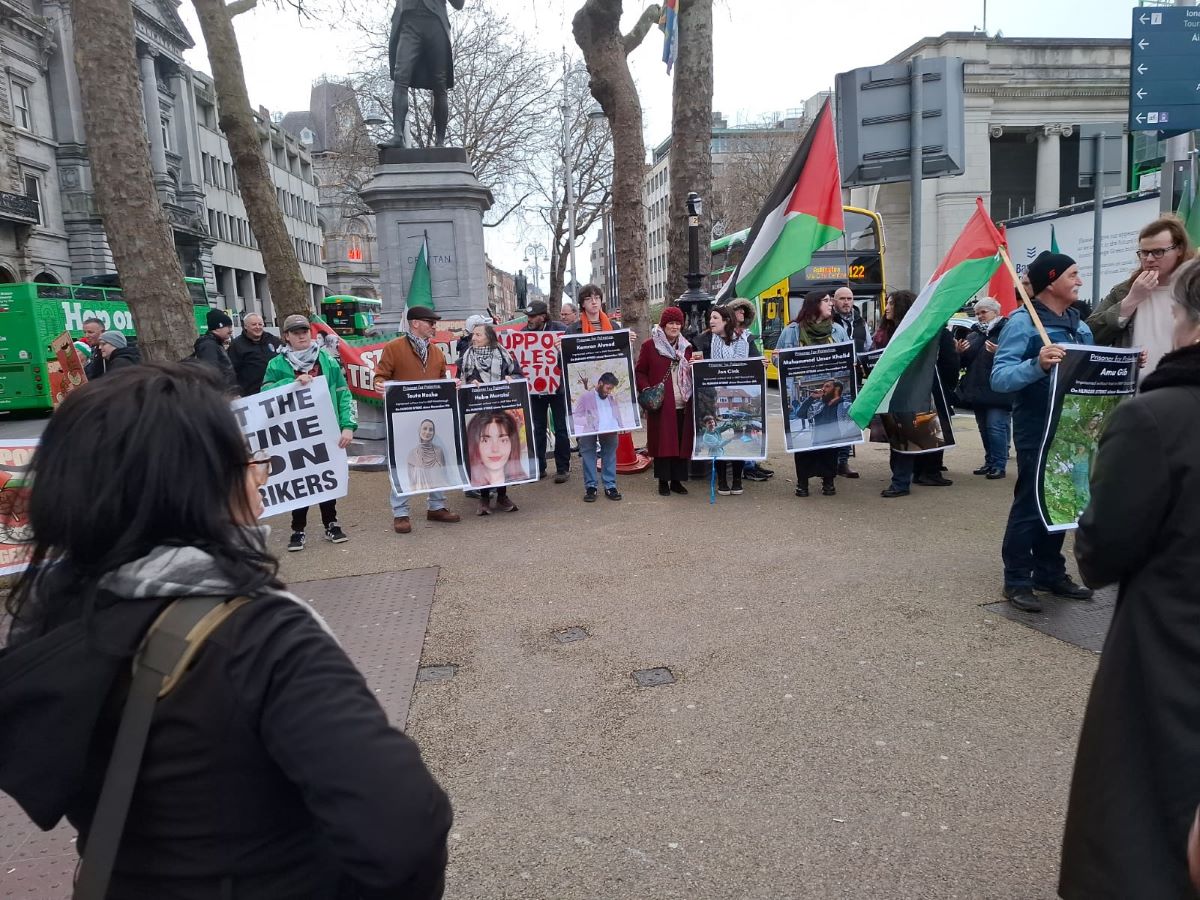
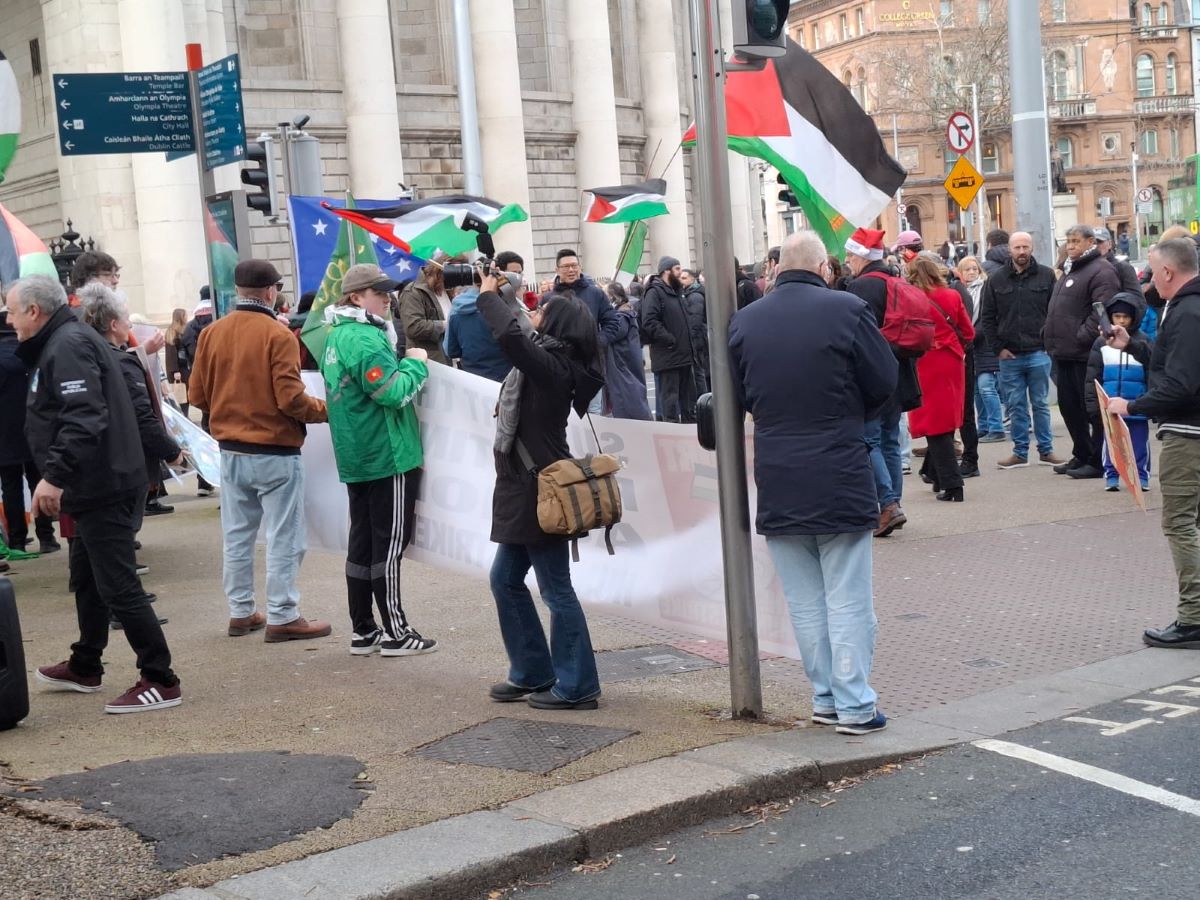
In Ireland itself, solidarity protests have taken place in Dublin city centre and at the British Embassy on the city’s outskirts, in addition to in Belfast and Derry within the British colony of the Six Counties. Again and again speakers referenced Irish history and in particular that of 1981.

In Dublin on Saturday 13 June, facing Trinity College, speakers at event organised by Communities for Palestine called for solidarity with the hunger strikers, denounced daily genocide in Palestine, the chairperson also leading the crowd in the now-famous chant led by the Bob Vylan band of “Death to the IDF!5”
Threatened Irish neutrality in the face of the growing threat of war by NATO was also raised by speakers, as was the continued British occupation of part of Ireland, the Irish State’s collusion with the Israeli genocide in Gaza and the US militarisation of Shannon Airport.
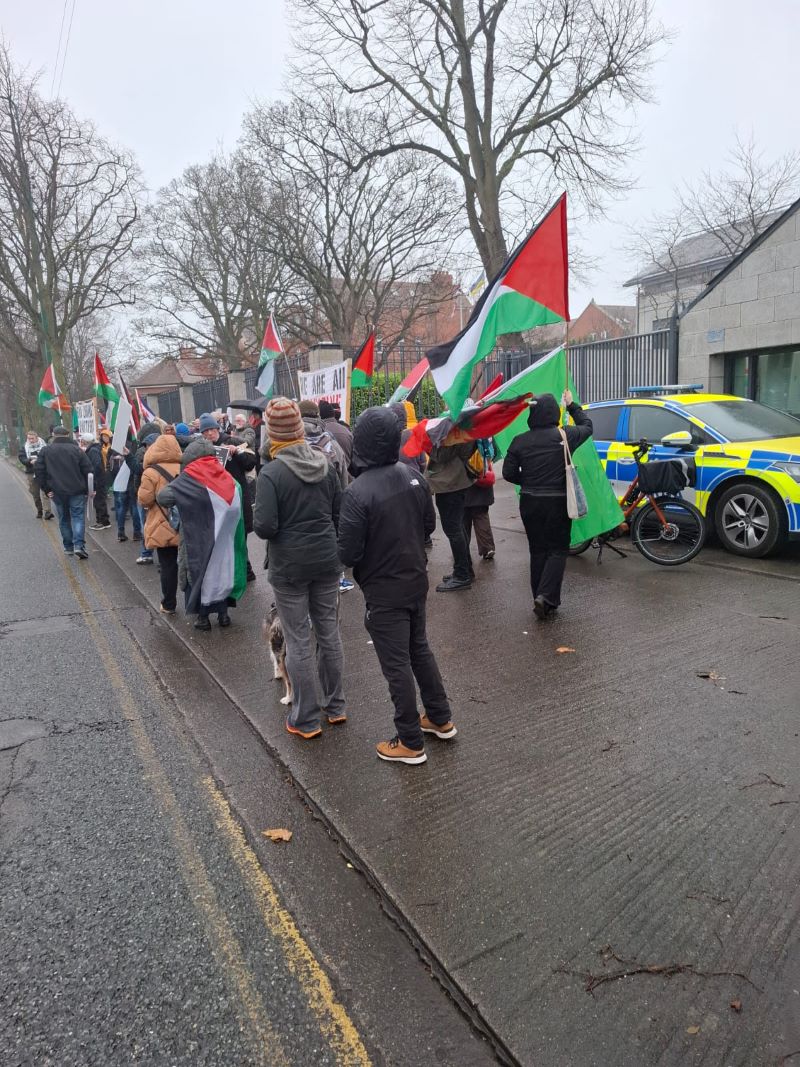
On Wednesday afternoon, in almost incessant rain, a large crowd protesting outside the British Embassy in Dublin heard calls from a variety of speakers (independent Palestine solidarity, Irish Republican, Socialist TD Paul Murphy) to save the hunger-strikers’ lives.
The chairperson of the rally repeatedly referred to the building as “the colonial British Embassy” and led chants in solidarity with the hunger strikers, with Palestinian prisoners of Israel and with Irish Republican prisoners in both administrations.

Referring to the Labour Party MPs laughing at Jeremy Corbyn’s pleas for the hunger strikers, she reminded participants of their cheering the 1916 execution of Connolly6 and dubbed the police “Lackeys of imperialism” as they tried to prevent demonstrators climbing up along the railings.
The slogans were not only of humanitarian concern but also of solidarity, of rage at the genocide in Palestine, of memory of Irish struggle and continuing British occupation. Among chants of hunger striker solidarity at least two speakers voiced the Republican slogan Tiocfaidh ár lá.7
The hunger-strikers’ demands are release on bail, a fair trial, deproscription of their organisation and closure of Elbit factories. The State would claim fair trials and as their period in detention has far exceeded the normal length even for those refused bail, could easily at least release them on bail.
The problem at issue for the British State is that conceding at all risks undermining their according terrorist status to the organisation (which postdates the arrests), a status already in serious danger.
And they need that to stamp out resistance to their genocide collusion, which they perceive as essential to their imperialist system. In that sense a concession in Britain now would have more impact than would have had to the hunger strikers in the colony in 1980 and 1981.
On the other hand, the State’s repression has brought more and more people into the struggle and has exposed the roles of the media, police, judiciary and the Labour Party. Now, the hunger-strikes are helping to draw Palestine solidarity feeling alongside Irish anti-colonial sentiment.

End.
Note: If you found this article of interest, why not register with Rebel Breeze for free, so that you will be notified by email of subsequent articles. You can de-register any time you wish.
FOOTNOTES
1Led by the Defend Our Juries civil rights organisation.
2A broad and growing section of the Palestine solidarity movement in London that has been leading the Kneecap court case music solidarity sessions and the hunger-strikers’ solidarity actions there.
3https://www.thenational.scot/news/25701679.mps-laugh-minister-rejects-call-meet-hunger-strikers/
4https://www.aljazeera.com/news/2025/12/18/palestine-action-hunger-strikers-are-dying-in-prison-uk-doctor-warns
5The famous occasion was in June at this year’s Glastonbury Festival with the irony that it was live-streamed by the BBC in order to avoid featuring the Kneecap band from Ireland and their unequivocal expressions of solidarity with the Palestinian struggle. ‘IDF’ is the acronym of the armed forces of the Israeli state, more often named “Israeli Occupation Forces” (IOF) by Palestinian supporters.
6It was actually worse than that: as has been pointed out on occasion in articles in Rebel Breeze, the Labour Party, being in the UK coalition war government, were part of actually agreeing the post-1916 death sentences.
7Irish language, meaning “Our day will come.”
SOURCES & USEFUL LINKS
https://www.independent.co.uk/news/uk/home-news/palestine-action-hunger-strike-prison-b2887068.html
New York protest includes Irish, Middle East Eye:
 rebelbreeze