
Diarmuid Breatnach
(Reading time main text: 5 mins.)
The international conflicts around the world are largely explained by imperialism versus liberation struggles or, occasionally, as in two world wars, struggles between the imperialists themselves, as entirely in WWI and very largely in WWII. But not all control is by invasion or occupation.
The idea of an imperial power invading other countries, occupying and dominating them is easy to grasp, it being similar to the behaviour of feudal empires. But even in ancient times, kingdoms could be controlled by a stronger power without occupying them – by intimidation and bribery.
That kind of collaboration is easier and cheaper for the dominant exploiting power to manage and certainly less risky. Conquered populations can remain resistant for generations and rebellions can break out again and again as has been the case par excellence in Ireland.
Also the taxes and rents extracted by feudal empires from subject kingdoms are largely replaced today by high profits on finance invested in the extraction of natural resources from client nations and often in exports to those very nations, often fabricated from their very plundered resources.
And that latter example is where from comes the word ‘comprador’, i.e ‘buyer’; the client economies exported raw resources, made little themselves but bought finished products from the dominant power. “Gombeens”1 is an Irish appellation for native foreign-dependent capitalists.
Of course, in a later stage, the dominant power exported not only finance to invest but whole factories, with resulting production declining within the former industrial powers.
Analysing the imperialist capitalist system internally, it becomes less and less productive, increasingly parasitical and dominated by finance capital, whereas the colonies and client states may even become more productive but only in such ways as are required by the imperialists.
Production of their own necessities, even their very food may decline in client states and colonies as they are driven to concentrating on export-orientated cash crops and minerals instead. The ruling classes in such countries are merely economic/political managers for the imperial powers.
They are comprador capitalists, neo-colonials, typically orientated culturally towards the imperial power, often venal, contemptuous of their own nation’s people and their history, contemptuous enough often to flaunt their ill-gotten wealth.2
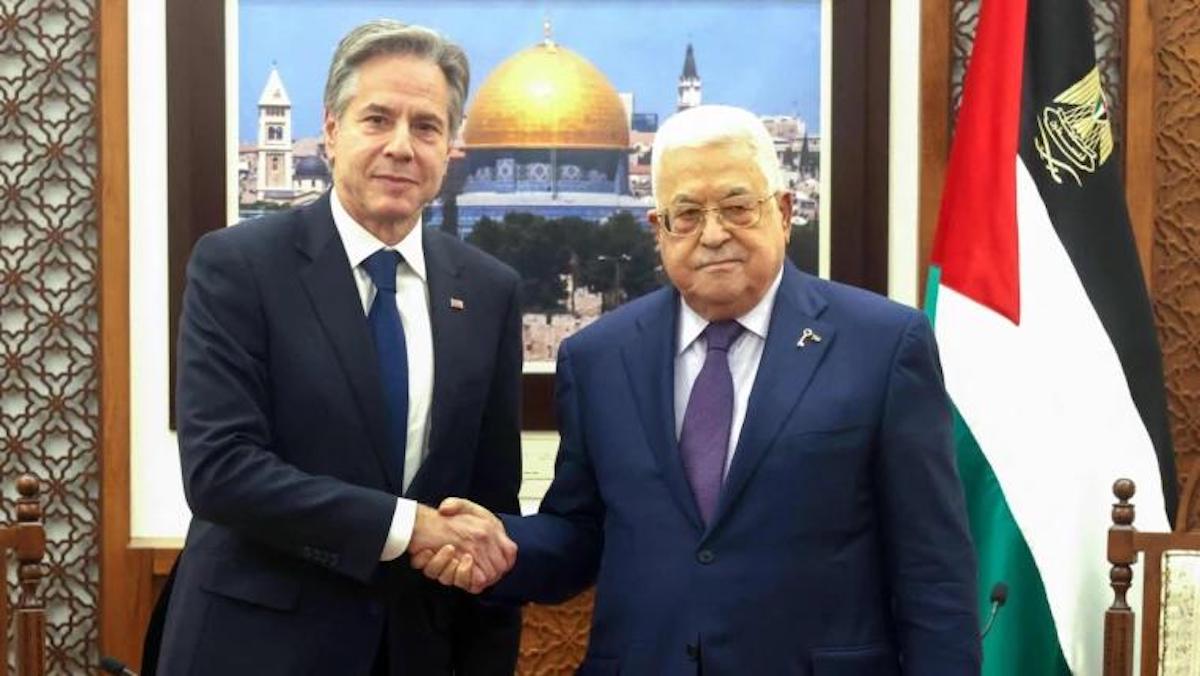
There are many examples of such people and behaviour around the world, some of the more famous being Lavalle (France), Vidkun Quisling (Norway), Mahmoud Abbas (Palestine), Daniel O’Connell and Michael Collins (Ireland); which last brings us nicely to the Gombeens ruling the Irish State.

The Irish State came into existence after centuries of English occupation and resistance after which the colonial power offered more autonomy but partition. The Resistance refused acceptance and the new State defeated the national liberation forces in the ensuing Civil War (see History Appendix).
Ireland is a partitioned nation: one-sixth of its territory (the Six Counties colony) is occupied by the UK, policed by a sectarian colonial police force and garrisoned by British armed forces and is part of the European imperialist military alliance of NATO.
Yet the invaders’ chiefs, including military and monarchy are welcomed by the leaders of the Irish State and the invader’s Royal Air Force patrols skies of the Irish state.3 The State’s police works in close cooperation with the sectarian police force of the colonial administration.4
The Irish economy is comprehensively penetrated by companies of foreign ownership: The State’s carrier Aer Lingus is owned by British Airways. The former state telecommunication networks is owned by Eircom, 64-65% owned by a French company and most of the rest by a US company.
Foreign-owned companies dominate the retail sector, accounting for roughly 30% of employment and over 50% of total turnover and retail gross value. It terms of food products retail the figures are the same with British and German monopolies dominating the rest.5
Most food consumed in Ireland is now imported, a country that two centuries ago could feed a larger population and yet still export some.
Retail banking is ‘highly internationalised’ i.e. dominated by foreign-owned institutions and has been so since the founding of the State, accounting for 24% of sector earnings. International financial services from Ireland is even more foreign-dominated, accounting for +90% of jobs.
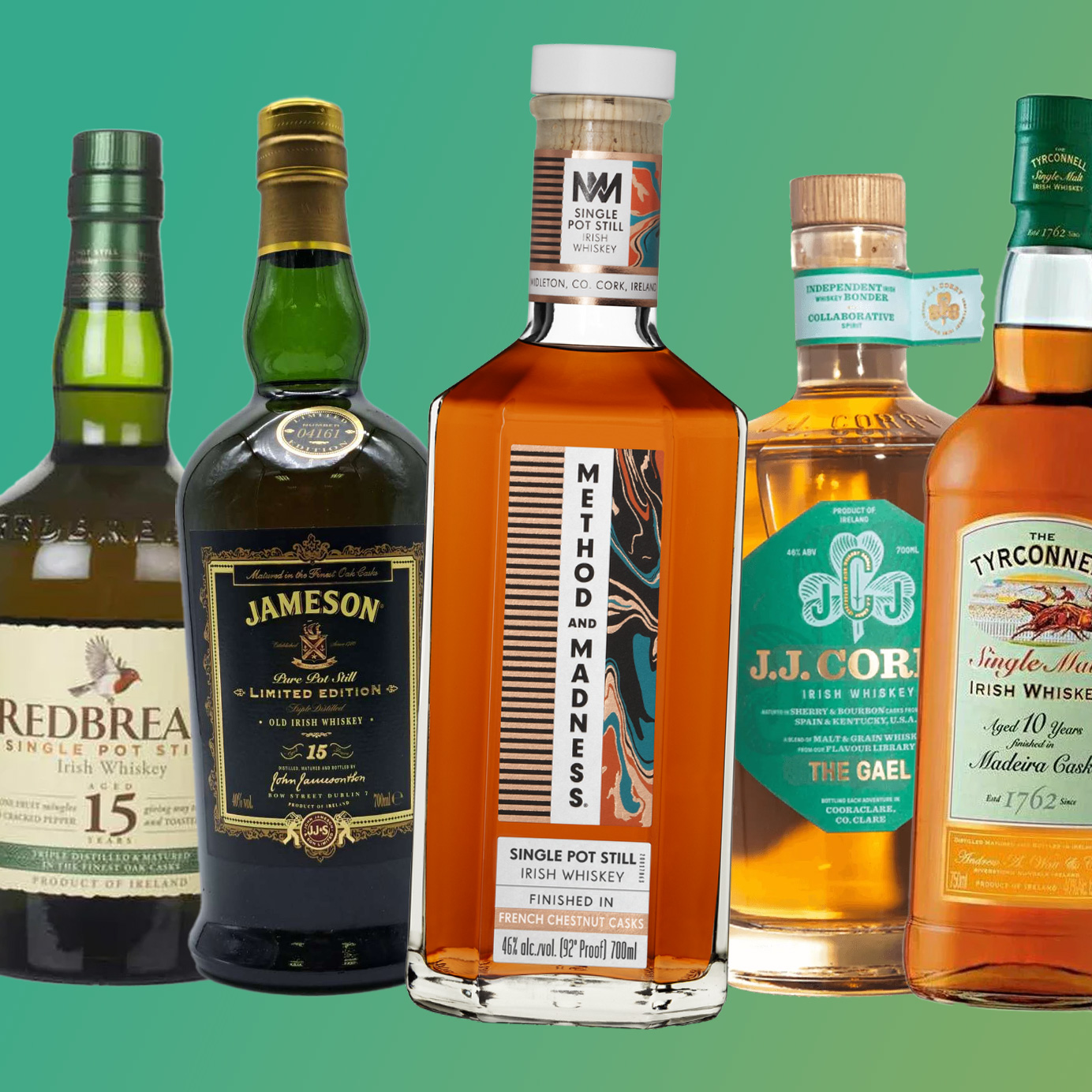
Irish whisky production is divided between a US-based and a French company (which also owns Cork Dry Gin), while Irish beer, stout (including Guinness) and lager are produced by the British company Diageo. In addition, beers and spirits are imported large-scale from abroad.
Some of the money from roads collecting tolls goes to foreign companies, eg. French and Spanish. While the Irish State owns the infrastructure and collects the revenue of Dublin’s LUAS, the day-to-day operation and maintenance are contracted out to German and French companies.
Roughly 21% of hospital beds are in the private (non-state) sector and a significant portion of that private market—alongside specialized diagnostic and sports clinics—is foreign-owned or backed by international private equity and multinational healthcare groups.
According to AI, non-resident institutional and foreign-backed real estate companies buy a significantly higher share (over 50%) of newly built multi-unit apartment developments in urban centres like Dublin and Cork. 6
Approximately 60% to 70% of total assets in the Irish banking and financial system are linked to foreign-owned institutions or cross-border non-resident claims. However, the domestic retail banking market is heavily concentrated among a small number of groups with Irish headquarters.7
Following the exit of major foreign retail players like Ulster Bank and KBC which were active in banking with the Irish state, Irish-headquartered groups like AIB, Bank of Ireland, and PTSB came to take a large share of retail banking in Ireland but these too have foreign connections.8
The colonial history of Ireland and neo-colonial evolution of the Irish State has been deepened by its suppression of forces of national resistance9 and by opening its internal markets, national resources and State networks to foreign penetration.
It is hardly surprising that the national bourgeoisie of Ireland is incapable of asserting sovereignty and independence not only in relation to the UK and the USA but also in the face of the western imperialist alliances of the EU and NATO.
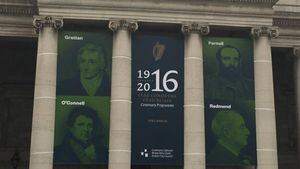
Contemporary examples of this lack of sovereignty is permitting US military flights through Shannon Airport and, despite overwhelming popular support for Palestine and against ‘Israel’, the Irish state continuing to be the second-largest importer of ‘Israeli’ exports.
Describing the problem is useful to an extent but mainly if we then direct ourselves to resolving the issue. A Gombeen class will never deliver independence or sovereignty – it is incapable of doing so. But it is not incapable of repressing those who actively seek independence and sovereignty.
Perforce, the struggle against imperialism most also strike at neo-colonialism and conversely, the Gombeens must be exposed and overthrown in order to be free of imperialism and colonialism.
End.
Note: If you found this article of interest, why not register with Rebel Breeze for free, so that you will be notified by email of subsequent articles. You can de-register any time you wish.
HISTORICAL APPENDIX (Reading time: 2 mins.)
The foreign occupation of Ireland10 promoted the use of the English language and culture and from the reign of Henry VIII onwards this included religion, a branch of Christianity of which the Monarch of the realm was also the Head of the Church.
That was resisted not only by the indigenous Irish and descendants of Vikings but by most of the Anglo-Norman lords’ descendants in Ireland too. Their English-based contemporaries excoriated them for having become the ‘degenerate English’ and ‘more Irish than the Irish themselves’.11
The cultural-political struggle continued with the Irish and Gaelicised Normans being dispossessed and suppressed until a section of the occupying settlers sought to unite people of all cultural backgrounds in Ireland in order to establish an independent Irish Republic.
Following defeat and suppression of the United Irishmen, the native Catholic bourgeoisie began to slowly rise, their main efforts at first being to legalise the Catholic Church as an institution and to abolish the discriminatory Penal Laws against Catholics (i.e. the majority of the indigenous).
While O’Connell and his followers also sought the return of an Irish Parliament,12 they did so as part of the British Empire. Their Repeal Movement leadership totally eschewed the use of force and this led to the ‘Young Irelanders,’ their most progressive component, splitting from them.
Subsequently the native Irish bourgeoisie participated in pressurising the Occupation and the landed aristocracy into giving greater security to the peasantry renting agricultural land. However this struggle too was presented in non-revolutionary terms, as a resolution within the British Empire.
The Parnellites and their political heirs evolved over time into the Redmonites of the Irish Nationalist Party,13 still very much for remaining within the Empire. After the 1916 Rising these were all but wiped out as an electoral force in the 1918 UK General Election.
The party that won the vast majority of Irish seats in that election was a coalition of revolutionary and radical non-revolutionary nationalists of various types, calling itself ‘Sinn Féin’ although it differed from the original party of that name in being avowedly Irish Republican.14
Many of the party’s representatives in the Dáil, the Irish Parliament, strongly endorsed the armed struggle of the newly-created Irish Republican Army.15 But not all, although eight months into the 2nd year of the War of Independence the Dáil formally claimed the IRA as its military wing.16
When the British, in order to stop the armed and political struggle against them offered the new Sinn Féin Government leadership a deal with partial autonomy as one of the British Dominions but with the country partitioned, it split the movement and one part of it attacked the dissenting part.
During the ensuing Civil War, the State forces were armed, supplied and even clothed by the British and executed more Irish Republicans than the British forces had done during the War of Independence. Activists were interned without trial and a number of organisations banned.
In addition, the State police and Army kidnapped, tortured and murdered opponents.17 Although the Sinn Féin party that opposed the Anglo-Irish Agreement split to form Fianna Fáil, the party longest in government, the Irish State that exists today is in an unbroken line of descent from that of 1922.
FOOTNOTES
SOURCES
1From the Irish language Gaimbín, a pejorative description of Irish individuals who took advantage of the poverty and debts of Irish people during and after the Great Starvation of the mid-19th Century to acquire land cheaply.
2Some specific examples are Imelda Marcos’ shoes and Charles Haughey’s purchase of an island. Imelda Marcos, the former First Lady of the Philippines, became globally infamous for owning around 3,000 pairs of shoes, which symbolized lavish wealth and extreme government corruption during her husband’s rule. When protesters and officials raided the presidential palace in 1986, they found her massive collection alongside thousands of other expensive gowns and designer items. Charles Haughey held a number of Government portfolios but was Prime Minister of the Irish state Dec 1979 – Jun 1981; Mar 1982 – Dec 1982; Mar 1987 – Jun 1989; Jun 1989 – Feb 1992.
3https://www.thejournal.ie/new-affidavit-lodged-in-high-court-claims-fresh-evidence-that-lays-out-raf-use-of-irish-airspace-7077898-Jun2026/
4Even without being on British payroll: Former Garda Assistant Commissioner Edmund (Ned) Garvey was named as a British intelligence “asset” by British whistleblower and former soldier Fred Holroyd, who claimed he met Garvey at Garda Headquarters in Dublin during the 1970s. Garvey denied being a spy, though official investigations like the Barron Report confirmed a meeting took place without Garvey reporting it to his superiors.
5https://en.wikipedia.org/wiki/Retail_in_the_Republic_of_Ireland
6https://findqo.ie/blogs/foreign-investment-in-irish-property-what-the-latest-numbers-show/
7AI, citing Central Bank of Ireland as source.
8Bank of Ireland
- The board features international leadership, including Chairman Akshaya Bhargava and non-executive directors like Pascal Boillat (who brings decades of global operational experience across institutions like Deutsche Bank and Citigroup), alongside international committee members.
- Operates extensively across the UK and international markets.
AIB (Allied Irish Banks)
- AIB operates subsidiary structures in the UK and maintains broad international institutional shareholding following full state exit.
- Board members and corporate teams frequently hold background experience across major global financial hubs in London, New York, and Europe.
PTSB (Permanent TSB)
- Following the €1.6 billion acquisition agreement by Austria’s BAWAG Group, continental European banking interests have direct representation and control over the institution’s trajectory.
- The board includes directors with heavy international banking backgrounds, such as prior executive experience spanning EMEA, the US, and the UK.
9The Civil War/Counter-revolution 1922-’23 and repression until 1939, Fianna Fáil Government 1939-1945, Irish State repression campaigns mid-1960s, Section 31 Broadcasting Act 1971, re-establishment of the non-jury ‘sentencing tribunal’ of the Special Criminal (sic) Court 1972, use of the ‘Heavy Gang’ 1980s.
10Usually dated from the Anglo-Norman invasion of 1169, although the British did not succeed in totally dominating all parts of Ireland until the beginning of 17th Century.
11https://en.wikipedia.org/wiki/Statutes_of_Kilkenny
12
The Irish Parliament under British colonial rule was a thoroughly sectarian one, open only to members of the small minority Anglican community and the failed attempt to enlarge it to all religions in Irish was what had convinced Irish Republicans to form the revolutionary United Irishmen organisation. After the suppression of the latter’s uprising in 1798 the English administration had organised the Parliament abolishing itself and Ireland becoming part of the British Union in 1801.
13Charles Stewart Parnell formed most of the MPs elected in Ireland into a party to participate in the UK Parliament.
14Griffith, founder of the original Sinn Féin had argued for a dual-British-Irish monarchy but agreed to the change.
15Newly-created from former members of the Irish Volunteers of 1916 and Irish Citizen Army and with new recruits.
16August 1919 – the following month the British occupation banned the Dáil.
17In particular in and from Oriel House, located at the corner of Westland Row and Fenian Street.

