Clive Sulish
(Reading time: 4 mins.)
The Save Moore Street from Demolition campaign group gratefully accepted an invitation to participate in the Comrade Corner on Sunday 3rd January in order to spread the word about the campaign and to make further contacts.
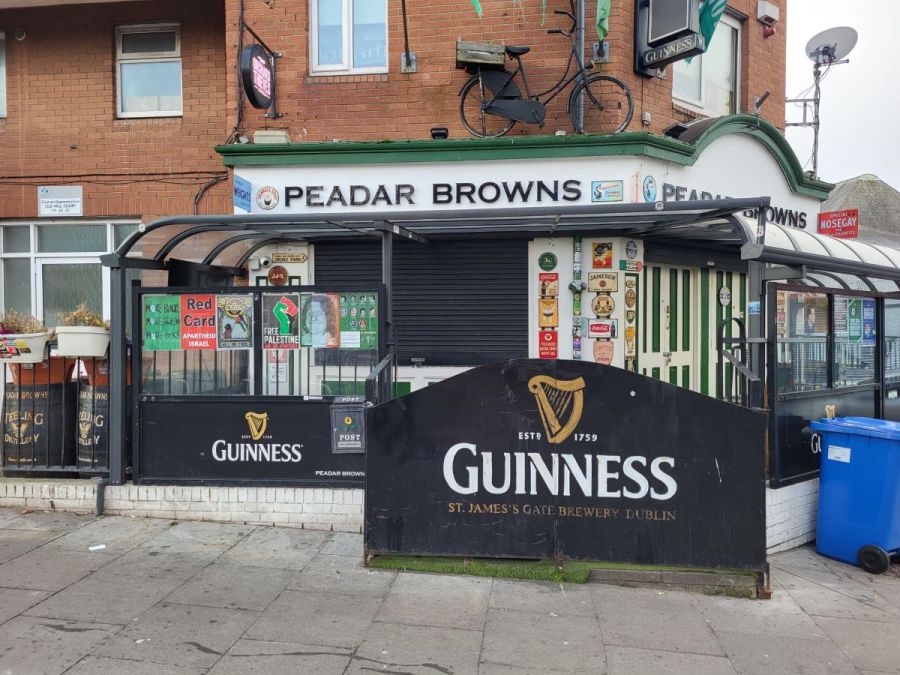
The Comrade Corner is part of the Libertine Market Crawl that takes place on the first Sunday of each month 12-5pm and is spread through a number of pubs, mostly in the Liberties area of north Dublin city: The 4th Corner, Dudley’s, Lucky’s, Molly’s Barand Peadar Brown’s.
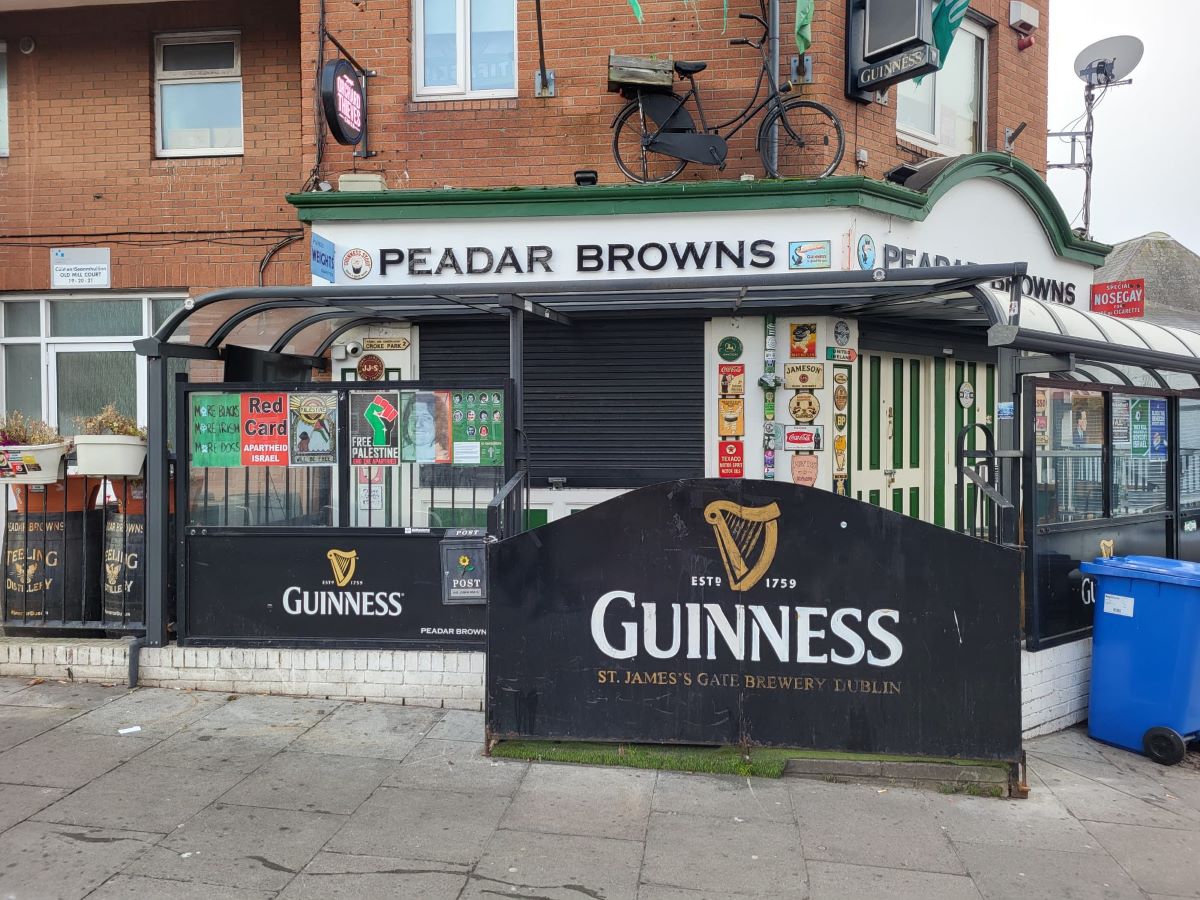
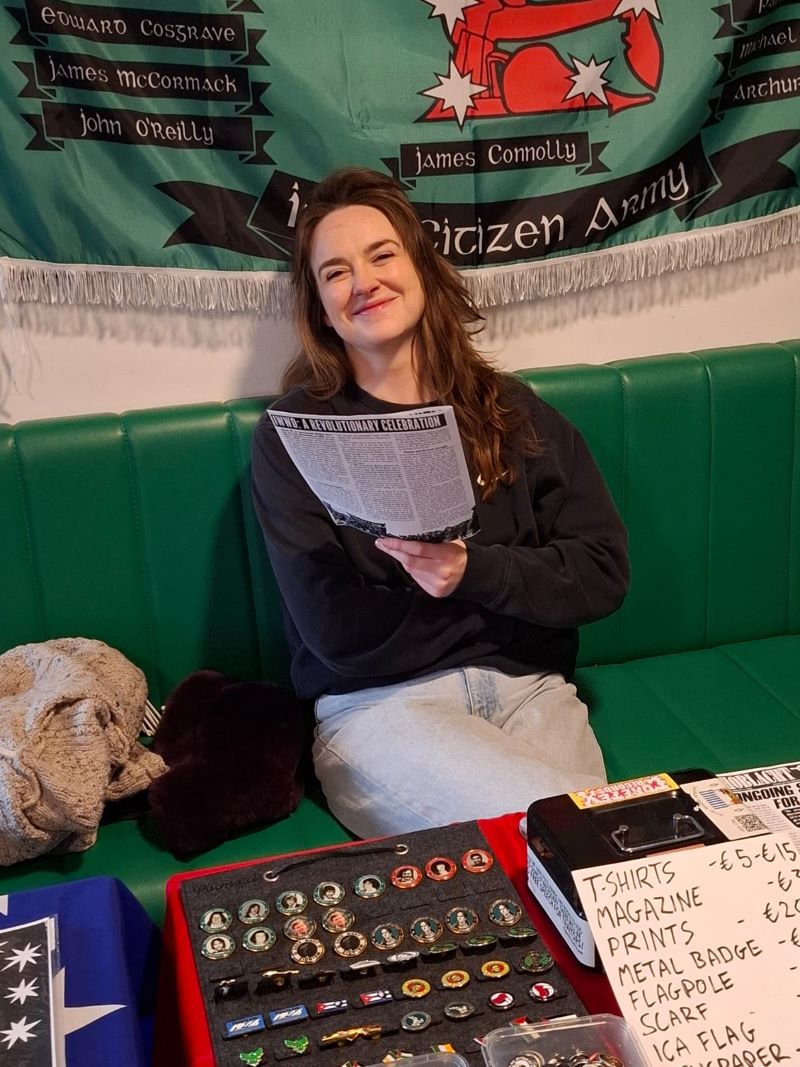
The Comrade Corner’s section of the monthly market take place upstairs in the Peadar Brown’s pub, open to campaigning and community groups to book a table to promote their campaign or group on which they had campaign leaflets, a QR to sign on line and campaign badges.
The latter represented a grotesque on the roof of No.55 Moore Street, missing wingtips shot off by a British bullet during the battle there in 1916.
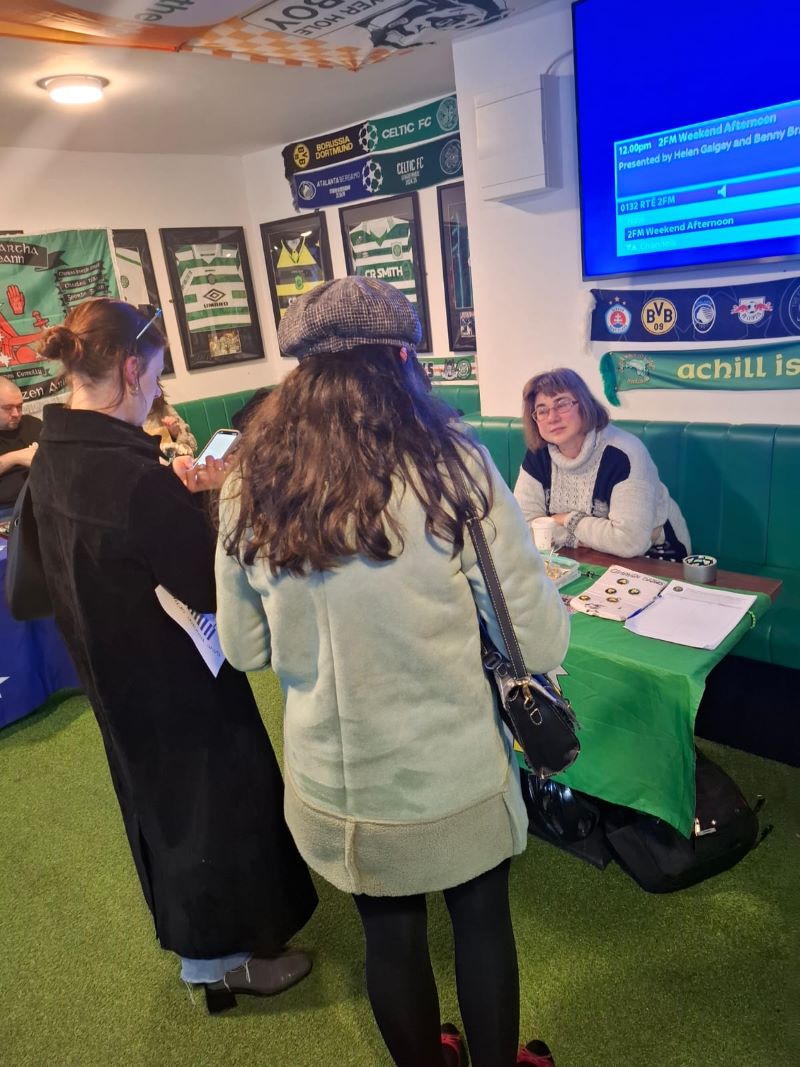
“Over the 12 years of our group’s existence campaigning on the street we have engaged in outreach work often enough,” said one of the two staffing their table in Peadar Brown’s, “including taking our banner to protest marches, giving talks, interviews and conducting history tours.”
The group has been campaigning with a weekly Saturday table for conservation and against demolition in Moore Street since September 2014. “We want to see a busy street market with small independent shops, not chain stores,” said Orla Dunne, also staffing their table in Peadar Brown’s.”
“And the history of the 1916 Battleground properly commemorated,” she went on to say, alluding to the fact that of the Seven Signatories of the Proclamation, no less than five spent their last hours of freedom in the Moore Street houses before taking the painful decision to surrender.
Those were Patrick Pearse, James Connolly, Tom Clarke, Seán Mac Diarmada and Joseph Plunkett, all shot by firing squad, along with Willie Pearse, also late of Moore Street as were another ten prominent figures, including Roger Casement, though hanged in Pentonville Jail somewhat later.
The GPO Garrison had left the burning building on the Friday of Easter Week and, heading to relocate at the Williams and Woods factory, got only as far as Moore Street before they came under intense machine-gun and rifle fire from the encircling British forces in Parnell Street.
Pausing to take a breath and plan their next moves, around 300 men and women occupied the whole central terrace (Nos.12-25), tunnelling through the walls, along with some other buildings. The leader of a failed charge on the British barricade died in a lane now named O’Rahilly Parade.
As he lay dying he wrote a farewell letter to his wife and children, the magnified script reproduced on an impressive monument in the lane-way.
The current Hammerson plan includes at least seven years of construction on the site (with no food stalls possible meanwhile), a new street cut through the 1916 Terrace to O’Connell Street, a hotel in Moore Lane and a Metro entrance in O’Rahilly Parade additional to the O’Connell Street one.
INSIDE PEADAR BROWN’S
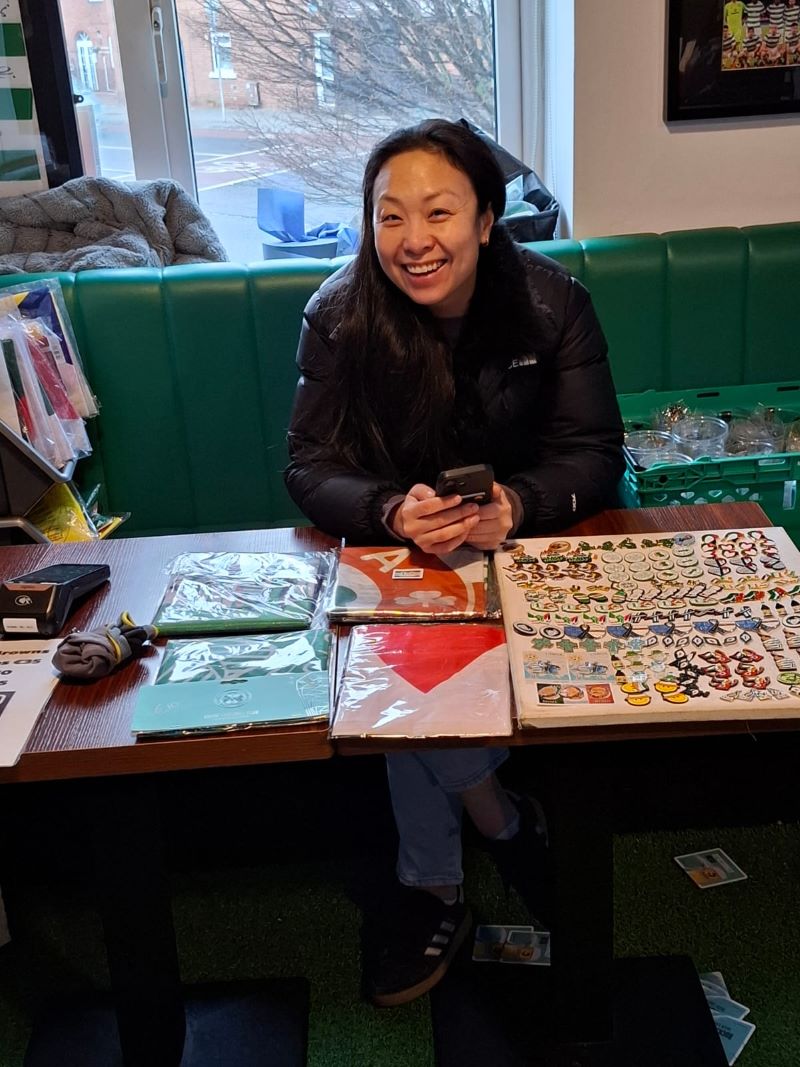
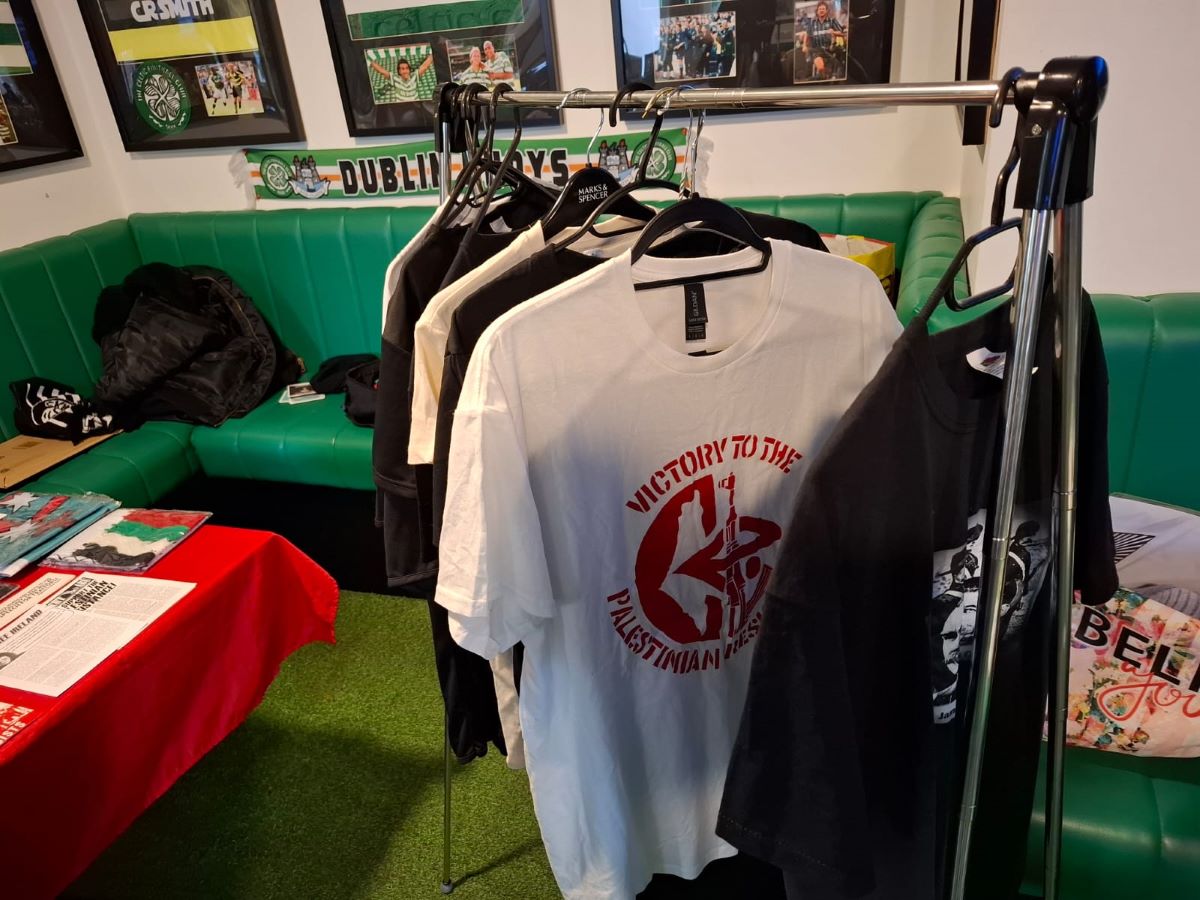
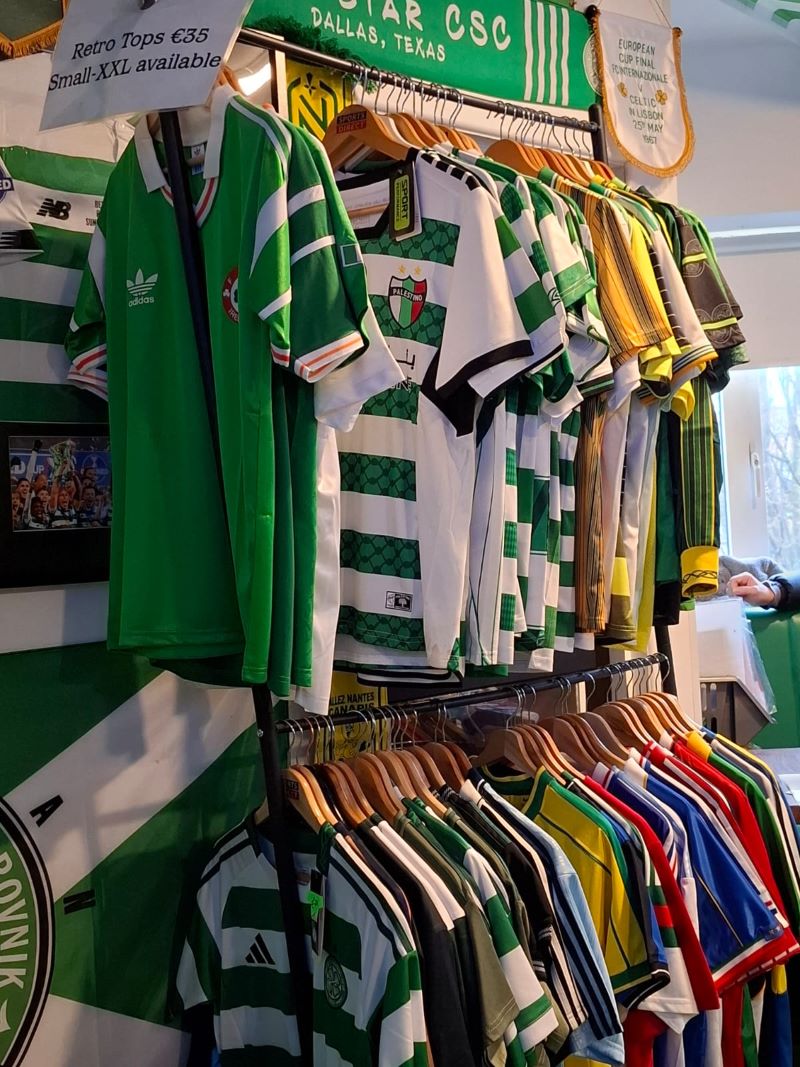
People drifted into the upstairs room in twos and threes, stopping at some or all of the stalls to examine the literature or merchandise on display and to chat to some of the groups. In addition to SMSFD’s, Peadar Brown’s had their own merchandise of badges and T-shirts.
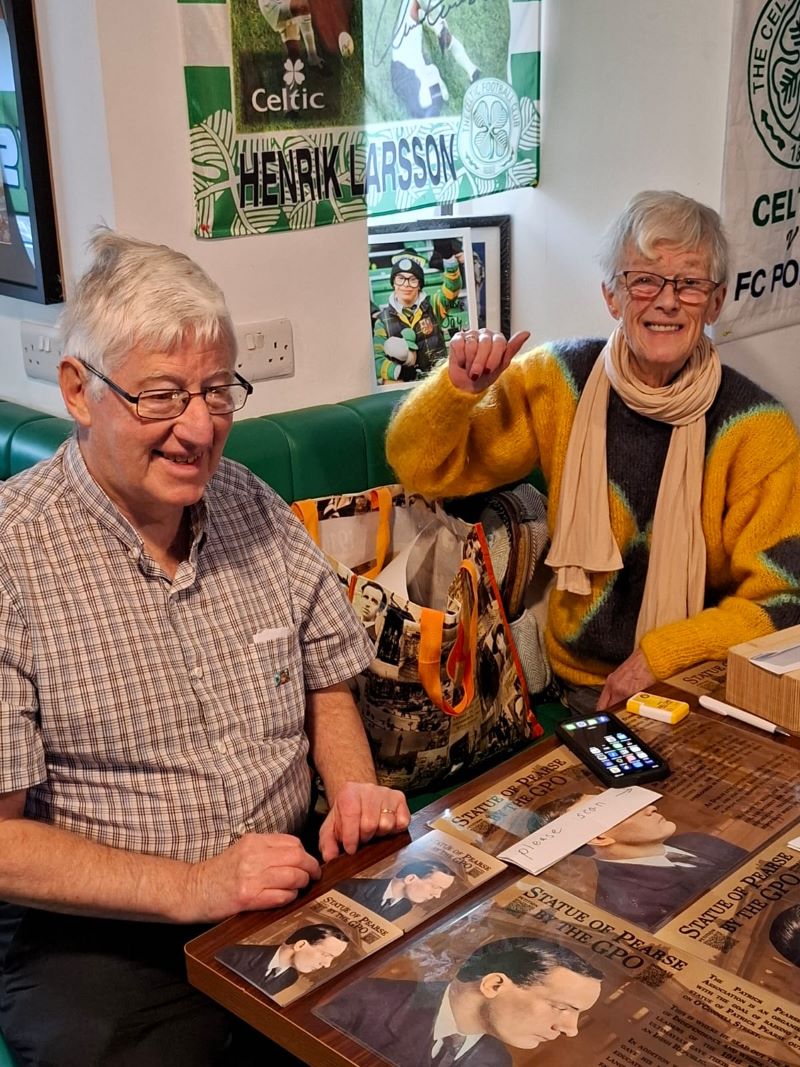
Also selling merchandise within that range was a revolutionary anti-fascist stall, while another table was held by a group campaigning for the erection of a monument to Patrick Pearse in O’Connell Street, near to the GPO where he was located in 1916 before evacuation to Moore Street.
It was notable that the latter group also directed people to the SMSFD group’s table. Many of the visitors had origins outside Ireland, a sector for which perhaps this kind of event would be more usual. How did the SMSFD team feel their table had done for their hours there?
“We did alright,” said Dunne, “though it wasn’t very busy today.” “If we had boosted our online petition signatures alone, which we did, it would have been worth it,” said Breatnach. “Besides, I always wanted to see the famous Pub,” added Dunne, smiling.
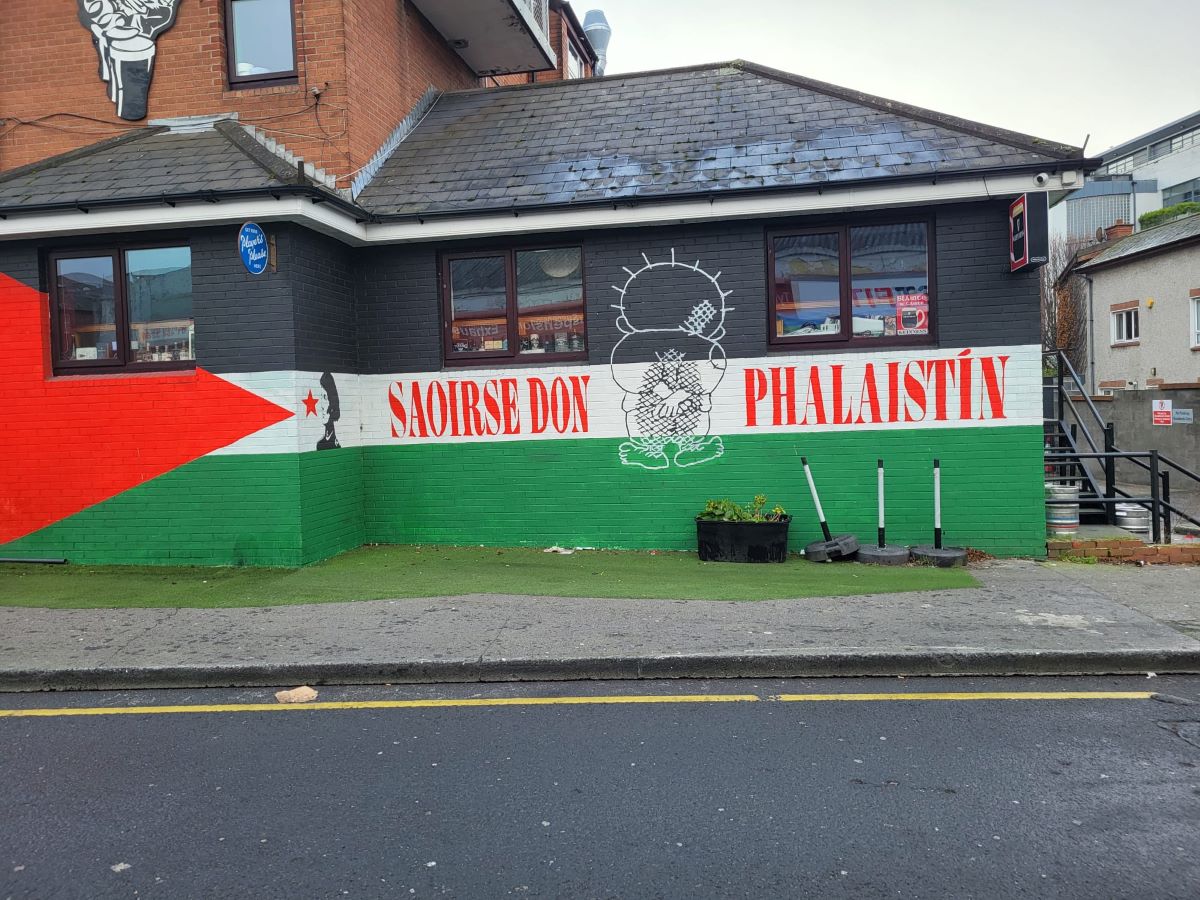
Much artwork of an Irish Republican nature decorates the inside of the pub downstairs, including a mural along the wall behind the small stage area. The Irish Tricolour, Starry Plough and ‘Irish Republic’ flags hang from the exterior along with anti-racist posters in the outside drinking area.
Last year officials in Dublin City Council sought unsuccessfully to have Peadar Dunne’s remove the large Palestine flag painted on the side of their building. It has a reputation not only as an Irish Republican pub but also of decidedly internationalist solidarity and antifascist character.
Also last year, some fascist and far-Right elements threatened the pub with a demonstration which failed to materialise, to counter which antifascists had packed the pub to overflowing. The far-Right’s anger was aroused by the banning of a musician for allegedly uttering racist comments.
End.
Note: If you found this article of interest, why not register with Rebel Breeze for free, so that you will be notified by email of subsequent articles. You can de-register any time you wish.
USEFUL LINKS
Peadar Brown’s pub: https://peadarbrowns.com/
Save Moore Street From Demolition
Facebook: https://www.facebook.com/save.moore.st.from.demolition; Instagram: https://www.instagram.com/moore.street_sos; Petition: https://my.uplift.ie/petitions/save-moore-street
Libertine Market: https://www.instagram.com/p/DS8p3ZtCLQP/?igsh=MWc0eWZnbDF2eDNpeQ==
 rebelbreeze