The last person of the 10 Republican prisoners to die in the 1981 Hunger strikes died on August 20th but hunger strikes continued for a while until relatives began instructing the doctors to give the strikers alimentation.
What can be said about those strikes? Clearly, a tremendous sacrifice requiring immense courage and determination in a non-violent protest by national liberation fighters in jail in a struggle against British colonialism.
Certainly we lost individuals of great worth in that struggle. It may be asked whether the gain was worth the sacrifice or whether the prison struggle might have been fought in some other way.
The medieval Irish society practice of fasting as a means of protest may or may not have been original but it was an important part of the people of India’s struggle against English colonial rule. Palestinian prisoners have used mass and individual hunger strikes on a number of occasions.
The effects of the Irish 1981 hunger strikes were many and wide, most probably far beyond the intentions or expectations of the prisoners. The news went around the world, bringing expressions of solidarity from many regions, including actions by parliaments of various states.
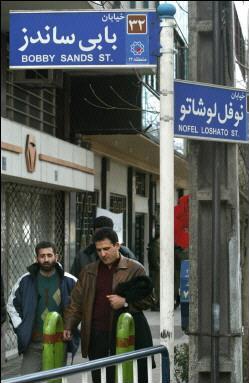
The Islamic Republic of Iran sent delegates to Bobby Sands’ funeral and renamed the street in which stood the British Embassy in Teheran ‘Bobby Sands Street’. The British Embassy to Iran had to give that as their address until they moved their main entrance around the corner.
Bobby Sands Street in Teheran, Islamic Republic of Iran (Photo sourced: Internet)
Hunger strikers stood in parliamentary elections in Ireland on both sides of the British Border, winning some seats and coming very close to winning some others. One result was that the British changed their electoral laws so that convicted prisoners could no longer stand in elections.
In the Irish state there has not been an outright majority government since that year – every single Irish government since then has been a coalition of one kind or another.
In Britain, the hunger strikes made a huge difference amongst the Irish community there. The 1974 Birmingham Pub Bombings massacre had been jumped on by the British Labour Government to pass the Prevention of Terrorism Act 1974 (now the Terrorism Act 2000).
Probably already drafted, it was brought before Parliament and passed within days, giving the police power to hold suspects for seven days without charge, wide-scale powers of stop and search and interrogation, usually without legal representation for the victim.
Within the year a score of people from the community had been framed on serious charges, convicted and jailed: Birmingham Six, Guildford Four, Maguire Seven, Judith Ward. Subsequently many Irish people stayed away from Irish solidarity marches and meetings – just in case.
The hunger strikes of 1981 blew away much of that fear and the Irish community came out in their thousands in an attempt to save the lives of the hunger-strikers — and have never been cowed down to the previous degree since.
The Irish in Britain Representation Group was formed in 1981 after the refusal of the Federation of Irish Societies to even pass a motion of sympathy for the family of Bobby Sands, who had died only days earlier; the IBRG provided radical and resolute leadership for the next 20 years.
One of a number of songs arising from the 1981 hunger strikes was the Ballad of Joe McDonnell, by Derek Warfield. It is a good song in general but what is most excellent is its chorus, where it turns the accusation of terrorism away from the Resistance and back to British Imperialism.
And you dare to call me a terrorist, While you look down your guns! When I think of all the things that you have done: You have plundered many nations, Divided many lands, You terrorised their people, Ruled with an iron hand … And you brought the stain of terror to my land.
And it could just as well apply to US Imperialism, EU imperialism and their NATO military alliance.
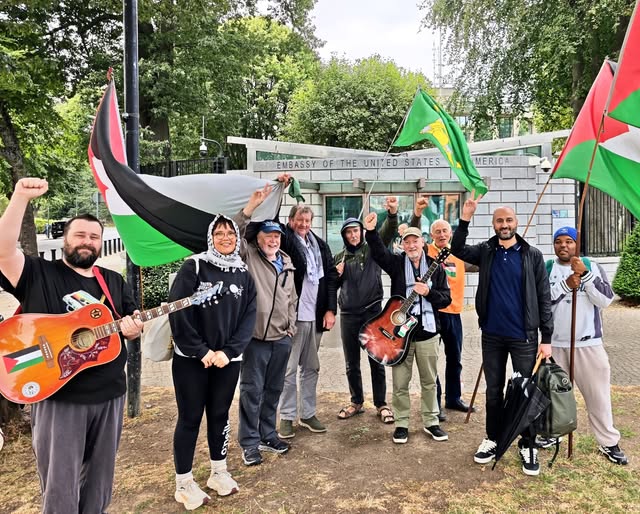
I have sung the song many times over the years and did so again recently at the weekly Dubs For Palestine gathering outside Leinster House. And more recently still outside the British Embassy. I changed only a couple of words to provide a more optimistic line at the end.
End.
Note: If you found this article of interest, why not register with Rebel Breeze for free, so that you will be notified by email of subsequent articles. You can de-register any time you wish.
An Irish Palestine solidarity activist momentarily blocked NATO ‘Supreme European Commander’ Alexus Grynkewich’s armed convoy as he left the Dublin US Embassy on Wednesday, escorted by his bodyguards.
The activist was bashed against a wall by Gardaí, arrested and taken to Irishtown Garda station, released on Garda bail to attend court 2nd September.
The protest action appears to have been unplanned and came at the end of a weekly event, an hour of displaying flags and singing songs of resistance in front of the US Embassy’s main entrance organised by singer-musician Jimi Cullen which moved from the Israeli Embassy over a year ago.
A recent one of the weekly Wednesday musical protests at the US Embassy organised by Jimi Cullen (on extreme left of photo), this one on 5th September 2025 (Wk 158)
The event began as usual with a handful of people gathering at their usual spot at the triangular junction of Pembroke Road and Elgin Road. It appears that an RTÉ (national broadcaster) team were noted entering the Embassy from the Elgin Road side which alerted the activists to some unusual Embassy activity.
The activists moved down to direct shouts at the Embassy staff and military, shouts such as “US military out of Shannon!”, “US military baby-killers!” and “Free Palestine!”. A car collecting a leaving official was momentarily blocked by an activist who was removed by Gardaí.
Some time later the event was coming to an end with the usual group singing of An Dord Féinne with the chorus “Óró sé do bheatha ‘bhaile” etc and some of the group dispersed. Those who had not yet left however noticed a convoy of Garda and unmarked vehicles arrive.
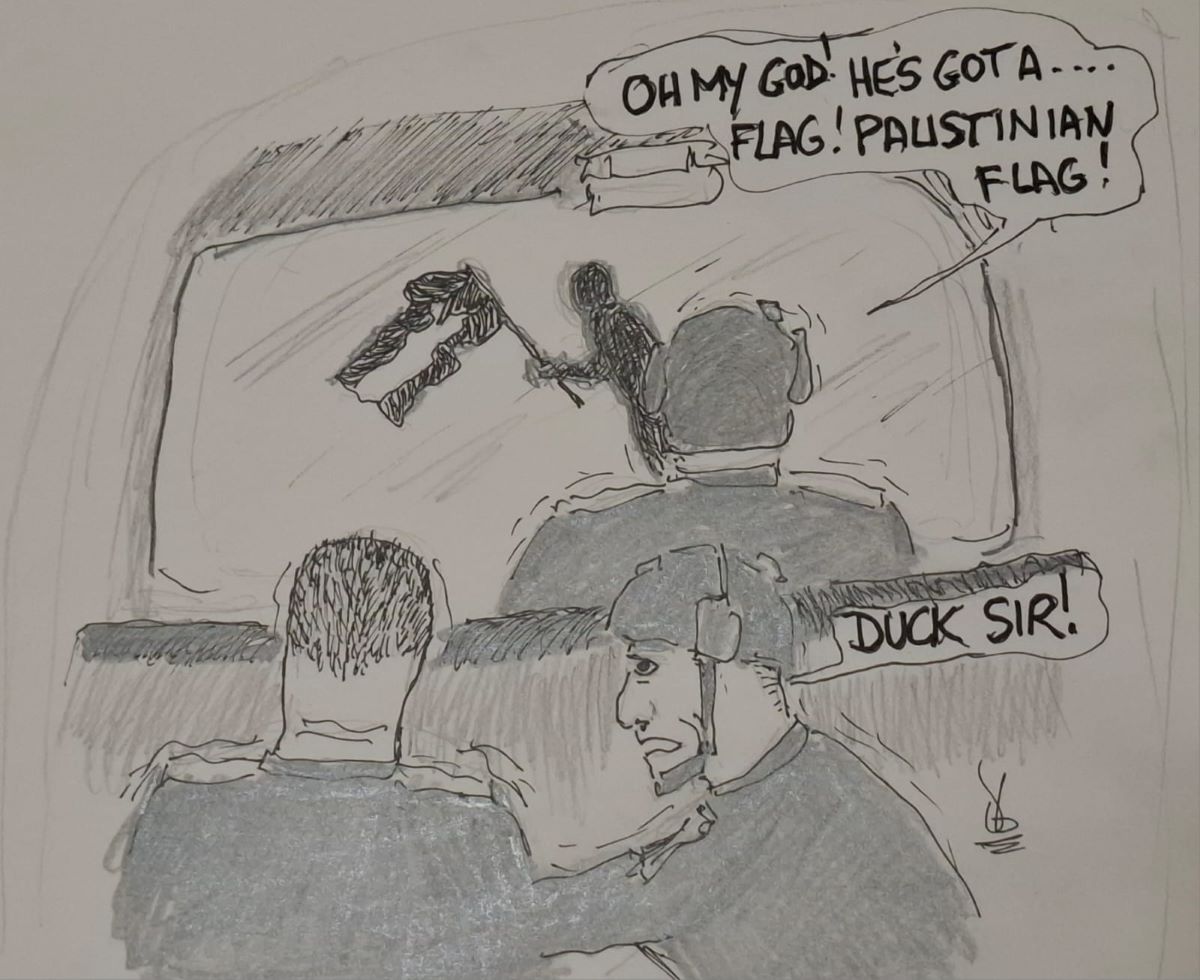
It was at that point that Alexus Grynkewich, the NATO supremo, emerged from the Embassy building, escorted by his bodyguards and entered one of the vehicles. Before the convoy could take off, the activist ran in front of it, waving a Palestine flag and was grabbed by Gardaí.
After the activist’s detention and removal to Irishtown Garda Station and other activists attended the station, the activist was charged and bailed in his own recognisance and another activist arrived to give him a lift back to where his car was parked near the US Embassy.
Cartoon on the incident by D.Breatnach
NATO & IRELAND
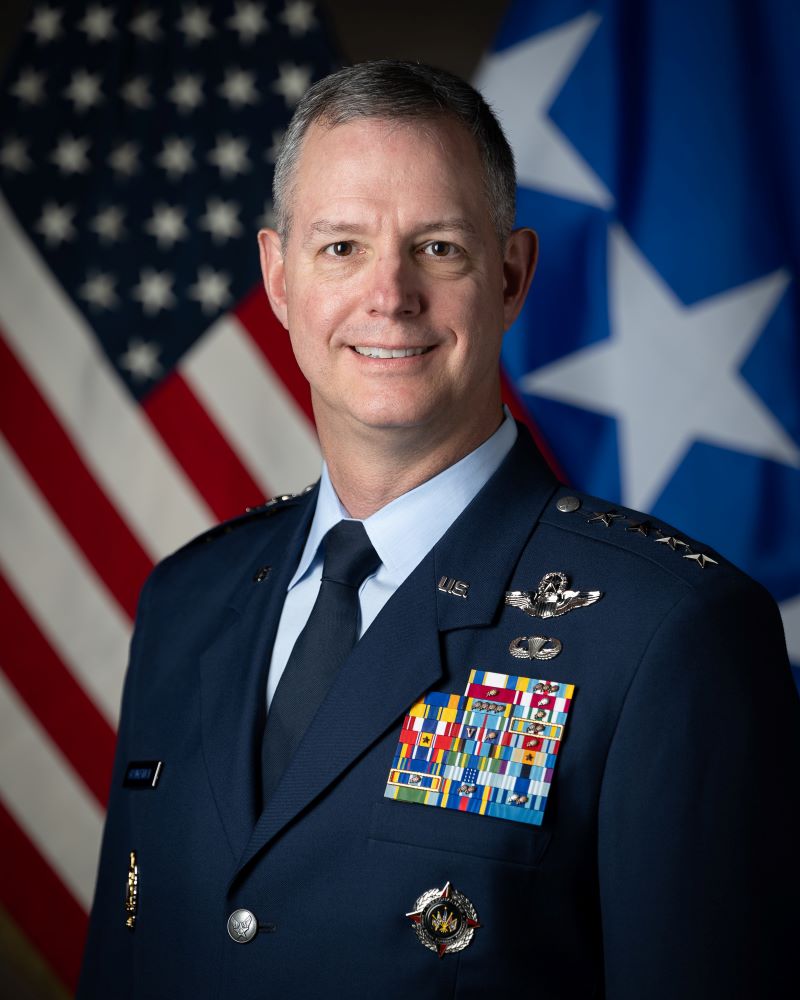
Alexus Grynkewich is no stranger to US Imperialism/ NATO’s wars in the Levant and in Ukraine and his role in Ireland is to push for Ireland to join NATO and continue facilitating US military flights through Shannon. As far as the Gombeen class is concerned he’s pushing an open door.
Not so with the general Irish population, however, who have made it clear on a number of occasions that they wish the Irish State not to be a part of any external military alliance. The campaign to retain the ‘Triple Lock’1to prevent the Government abandoning official neutrality is ongoing.
While the occupied colony of the Six Counties is part of NATO, the Irish State is not. However it was revealed not long ago that the State has given permission to the Royal Air Force to patrol Irish skies and for many years, US military plains have been observed refuelling at Shannon Airport.
General Alexis Grynkewich, Supreme European Commander NATO (US/EU imperialist military alliance). (Photo source: Wikipedia)
In addition, the Ditch online media has logged planes being permitted to fly towards ‘Israel’ through Irish airspace while carrying weapons-grade material. NATO warships dock at Irish harbours a number of times a year.
Ireland’s current Presidency of the EU seems to be accelerating the State’s slide towards foreign militarisation and has already seen restrictions on the right to protest, with Gardaí closing a part of Dame Street to protest one day and moving protesters from in front of Trinity on another day.
A number of organisations have stated an intention to increase their protests against NATO and US imperialism while some regular broad pro-Palestine groups have indicated they will move their regular protests to outside the US Embassy in solidarity with the arrested activist.
Resistance is often met with State repression but in turn that too often generates more resistance. Voices of broad support for the activist have called for assembly outside the US Embassy at 2pm Wednesday 19th proceeding thereafter to the British Embassy to at 3pm where Jimi Cullen has temporarily relocated.
End.
Note: If you found this article of interest, why not register with Rebel Breeze for free, so that you will be notified by email of subsequent articles. You can de-register any time you wish.
FOOTNOTES
1Before more than 12 Irish military may be sent on an external mission, it has to be 1) a formal Government Cabinet decision, 2) with Irish Parliamentary approval and 3) on a UN mission.
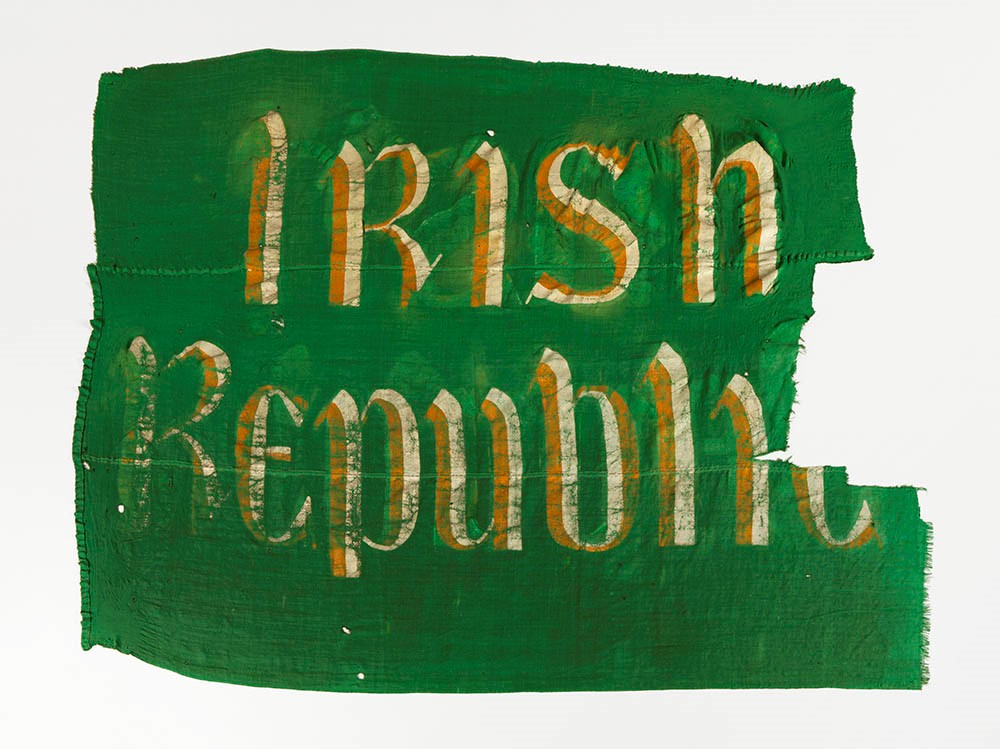
It was an Irish Argentinian who erected the “Irish Republic” flag over Dublin’s General Post Office during the 1916 Easter rising: Eamon Bulfin, born in Buenos Aires on 22 September 1892.
The flag in question was painted by Theobald Wolfe Tone Fitzgerald in the home of Constance Markievicz (1868-1927)1 with the words “Irish Republic” in gold or yellow, edged with white on material of a green curtain or bed-covering.
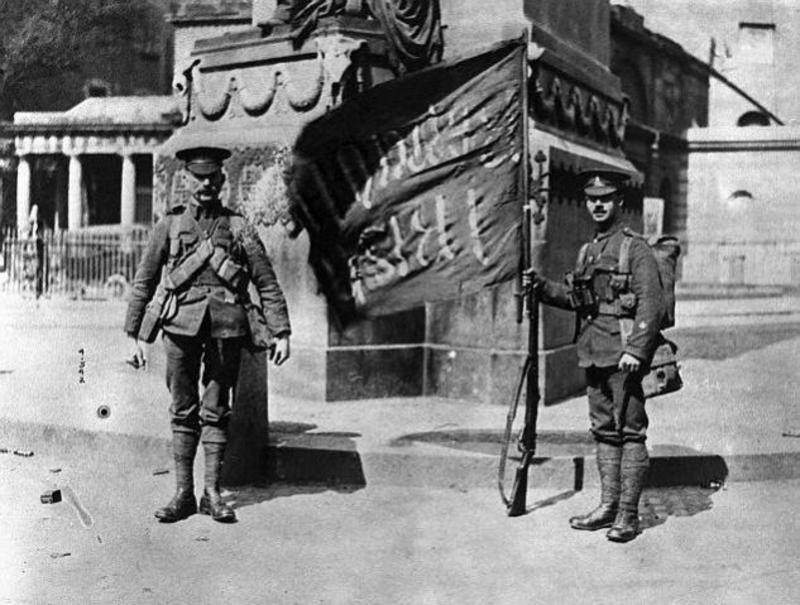
This was the flag later triumphantly displayed upside down by the British in front of the Parnell Monument (of which photographs may be found by search of the Internet).
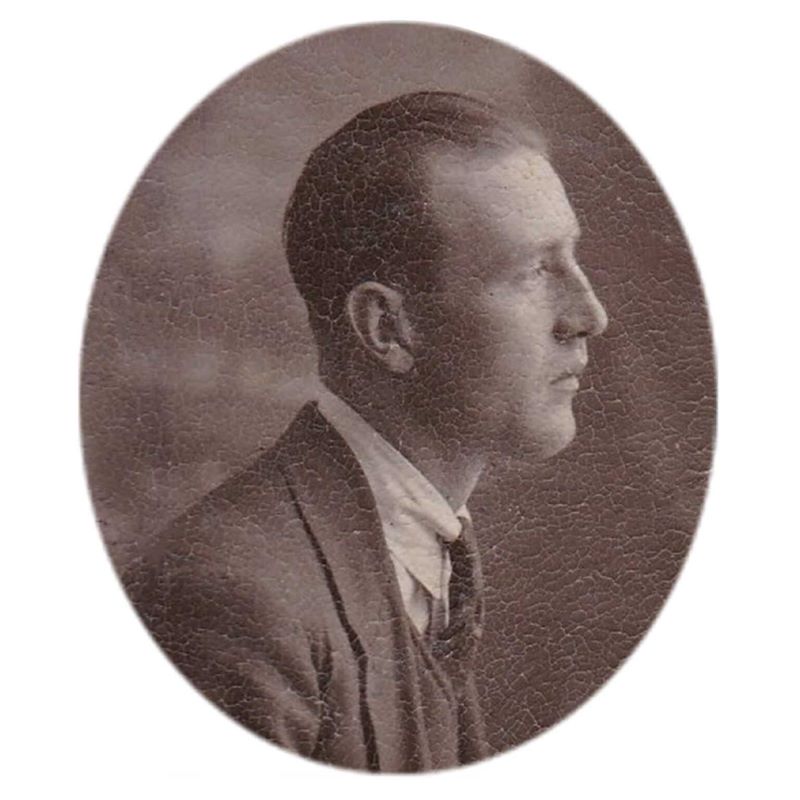
Eamon BulfinColourised photo of Constance Markievicz in Irish Citizen Army uniform. The ‘Irish Republic’ flag was painted on material in her house and delivered by her to the GPO. The words declared to the world that the national liberation forces were fighting for an independent Republic. (Photo sourced: Internet)
Eamon was the son of William Bulfin (1864-1910) from Birr, King’s County (now Co. Offaly), who emigrated to Argentina at the age of 20 and was a writer and journalist who became editor and proprietor of ‘The Southern Cross’ newspaper. William also helped finance Pádraig Pearse’s Scoil Éanna (St. Enda’s School) which opened in September, 1908.
Bulfin returned to Ireland in 1909 with his wife, Anne O’Rourke, and their children Eamon and Catalina. William’s death in 1910 was a blow to his friend Arthur Griffith and the efforts to launch a Sinn Féin2 daily newspaper.
Eamon was enrolled in St Thomas Aquinas College, Newbridge, before attending St Enda’s School (Scoil Éanna) in Cullenswood, Rathmines, from September 1908 at the age of 17.
He impressed the headmaster and school founder, Patrick Pearse, who noted his aptitude for Irish, French and English,3 though also that he was weak at mathematics.
Bulfin enthusiastically engaged with the ethos of the school, acting in dramas, contributing short stories to the school review, An Macaomh, and captaining the St Enda’s football team in 1909–10.
He was enrolled as a student at St Enda’s until 1910 but remained as a boarder at its new location in Rathfarnham; he became close to the Pearse family. Eamon enrolled in the National University of Ireland in 1911 to study for a science degree.
While at university Bulfin won both Sigerson and Fitzgibbon cups (in football and hurling respectively) on a number of occasions, captaining the National University of Ireland (NUI) football team that won the Sigerson Cup in 1915.
In his 20th year Eamon joined the Irish Republican Brotherhood, being sworn in by Arthur O’Connor and, a year later, in 1913 joined E Company, Fourth Battalion (Rathfarnham) of the newly-formed Irish Volunteers
By 1915 he was involved in organising the volunteers in Dublin and Co. Meath, and in manufacturing munitions and explosives in St Enda’s, which activities continued up to the Easter rising, just prior to which he helped Kathleen Lynn transport these weapons to Liberty Hall.
Bulfin was promoted to the headquarters staff of the volunteers and, mobilised for the 1916 Rising, was under Pearse’s personal command and stationed at the GPO, where he hoisted the “Irish Republic” flag on the roof at the corner with Princes Street.
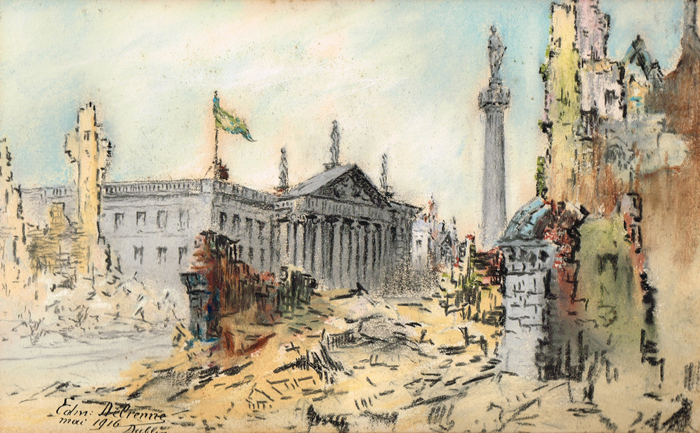
1916 Artwork in pastels by Edmond Delrenne, a Belgian refugee who had arrived in Ireland in 1914, he drew and coloured the ‘Irish Republic’ flag on the GPO (centre picture). The painting also shows Nelson’s Column, which was blown up in 1966. (Artwork source: Whyte’s)
After the surrender in Moore Street, Eamon Bulfin, as with nearly 100 insurgents was sentenced to death by British military court martial but most sentences (excepting the 15 shot by firing squads in the following days)4 were commuted to periods of prison incarceration in England and Wales.
On March 21, 1917, Eamon Bulfin was deported from jail under Britain’s Aliens Restriction Act of 1914.
The Argentine Government did not want to anger the British Empire, with whom they were already having problems, not the least with their long-standing argument over the sovereignty of Las Malvinas/Falklands.They therefore arrested Eamon Bulfin when he arrived in Buenos Aires and sentenced him to jail for leaving Argentina for the purpose of ‘deserting from military service’.
As Eamon had been a schoolboy when he and his family left for Ireland, the charge was an excuse for the authorities but suspicion of being a communist, which the British gave for his deportation might have been the real reason.
He was conscripted into the Argentine military and served in the army before transferring to the navy, being released after ten months as his mother was a widow, which qualified him for an exemption from military service.
One of two photos of the ‘Irish Republic’ flag being displayed upside down by British soldiers, symbolising the defeat of those who flew it. The site is the base of Parnell’s Monument in Parnell Street with the Rotunda in the background. (Source: Internet)
When Eamon Bulfin was released in 1919, the General Election in Ireland had resulted in an overwhelming victory for Sinn Féin5 which, in accordance with their manifesto, made a Unilateral Declaration of Independence declaring Ireland a republic and set up a parliament in Dublin.
The President of the Irish Republic, Eamon de Valéra wrote to Bulfin in May appointing him the official representative to Argentina. As Irish Consul, Bulfin was to “inaugurate direct trade between Ireland and the Argentine Republic… to co-ordinate Irish opinion in the Argentine, and to bring it into the Irish demand for a republic.”6
Bulfin began work, establishing close contacts with Argentine government officials, Irish Argentine leaders and he launched an Irish Fund to help the cause.
In 1920, during the county council elections, Eamon Bulfin was nominated in his absence for a seat on King’s County Council. He was not only elected but appointed Chairman of the council.
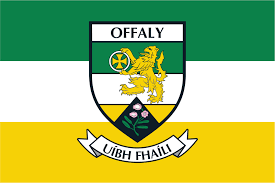
One of the first things the new Council did was to agree that the county’s name be returned to the region’s ancient Irish form of Co. Uí Fáille (anglicised as Offaly). Meetings were conducted with the Chairman’s seat in the council chamber left empty and with a Tricolour draped across it.
In 1922 Eamon Bulfin was finally allowed to return to Ireland where he set up home in his father’s native Derrinlough, Birr, Co. Offaly. He took the Anti-Treaty side in the Civil War and handed over 600 Stg from fund-raising in Argentina.
However the killing of Michael Collins affected him deeply and he stayed out of the Republican forces, telling them that he had refused an officer’s post in the Free State’s National (sic) Army.
On 16 February 1927 Eamon married Nora Brick (Nóra Ní Bríc) of Tralee, a former member of Cumann na mBan, in an Irish language ceremony in Drumcondra, Dublin (his occupation was recorded as a farmer). They had four children: Edward, Jeanne, Blanaid and Michael.
Eamon Bulfin died of a cerebral haemorrhage in the Meath Hospital, Dublin, on 24 December 1968, and was buried in Eglish Cemetery, Co. Offaly.
Remnant of the ‘Irish Republic’ flag in the National Museum of Ireland (Photo: NMI)
His sister, Catalina, also born in Buenos Aires in 1901, had become secretary to Austin Stack (1880-1929). Stack was elected to the Dáil (32-County Irish Parliament) in 1918 and became Minister for Home Affairs from 1920-22.Stack accompanied de Valéra to London for the initial Truce talks but became a leading opponent of the terms agreed by Collins.
Catalina Bulfin married Seán MacBride (1904-1988), born in Paris and his first language French. Sean was the son of John MacBride, executed by the British in 1916 and of Maude Gonne.
Seán McBride is the only Nobel Peace Laureate to have also won the Lenin Prize; he was former IRA Chief of Staff (1936-1937), Irish Minister for External Affairs (1948–‘52) and Secretary of the International Commission of Jurists.
MacBride was a founder member of Amnesty International and Assistant General Secretary of the United Nations. He survived Catalina MacBride by 12 years after she died in 1976, her remains being buried in Glasnevin Cemetery, Dublin. Some descendant of Eamon Bulfin live in Offaly to this day.
2The Sinn Féin party at the time was an Irish nationalist one advocating a dual monarchy, Irish and British.
3And no doubt Spanish too, having been reared in Argentina, a language acquisition that probably helped with the acquisition of Irish and French, which have a great number of similarities in structure.
4And the sixteenth execution was of Roger Casement, by hanging in London.
5Then a reformed and much-expanded party with a Republican constitution.
6 Kennedy, Michael and Joseph Morrison Skelly (eds). Irish Foreign Policy: 1919-1966 From Independence to Internationalism. Four Courts Press: England 2000, p.45. (Quoted in the Wikipedia entry on Eamon Bulfin)
Alerted by a sibling to a short exhibition on the life of the Spice Man (Thom McGinty), a remarkable performance artist and character of Dublin streets particularly associated with Grafton Street, I was fortunate to view it on its final day.
The exhibition was part of the annual Phizzfest’s annual program and was staged in the Bohemians FC room above the Phibsborough shopping centre. The space was a moderately-sized room with a few installations, a film projector, panels of images and text displayed on the walls.
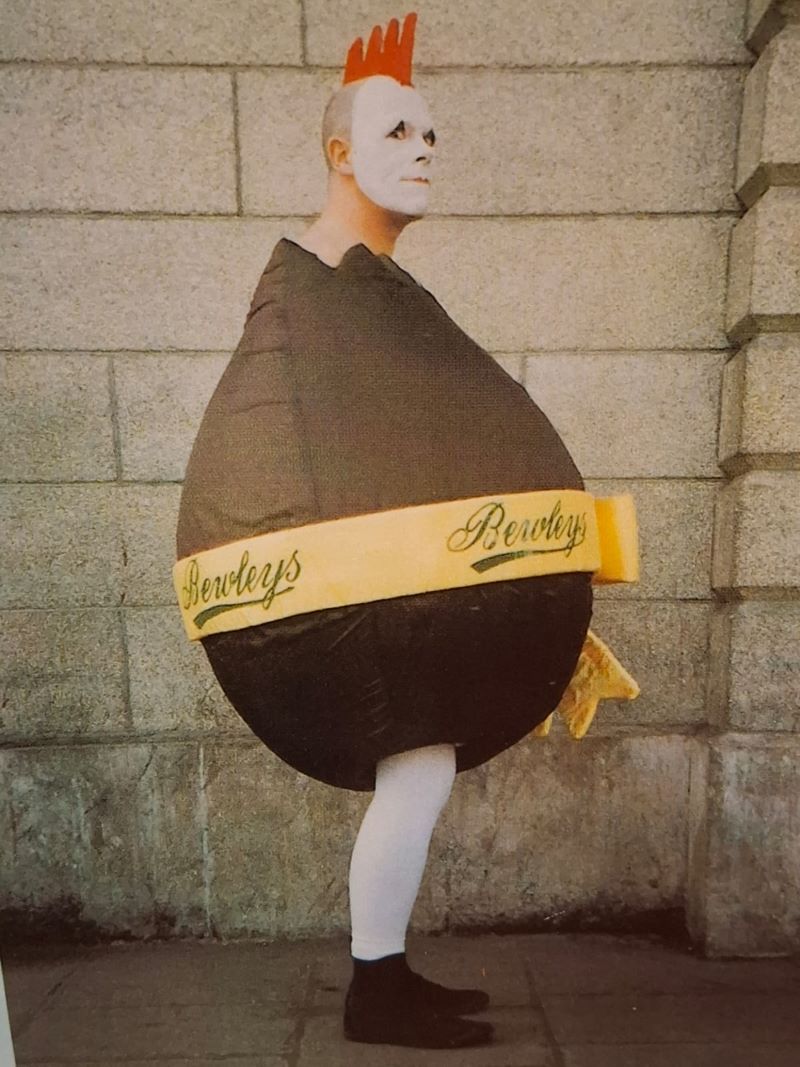
One of the panels at the exhibition.
Sadly the chatter of a number of people made it difficult – for me at least – to understand all the audio accompanying the film footage but some of the images were very interesting, in particular the reaction of Dublin adults and children to the Spice Man’s street performances.
When he spoke it was with a Scottish accent, having been born to a father from Donegal and mother from Wicklow and reared in a village outside Glasgow from where he recalled journeying on holidays to Baltinglass for family reunions.
He came to economically-depressed Ireland in 1976, trying his hand at a number of occupations before he found the one that both gave him success and defined him publicly.
Typically, his performance was silent, his movement stilled or gradual, slow but moving to avoid arrest.1 But his costume and makeup were something else. Though McGinty later initiated performances in social and political protest, his initial ones in Dublin were commercial promotions.
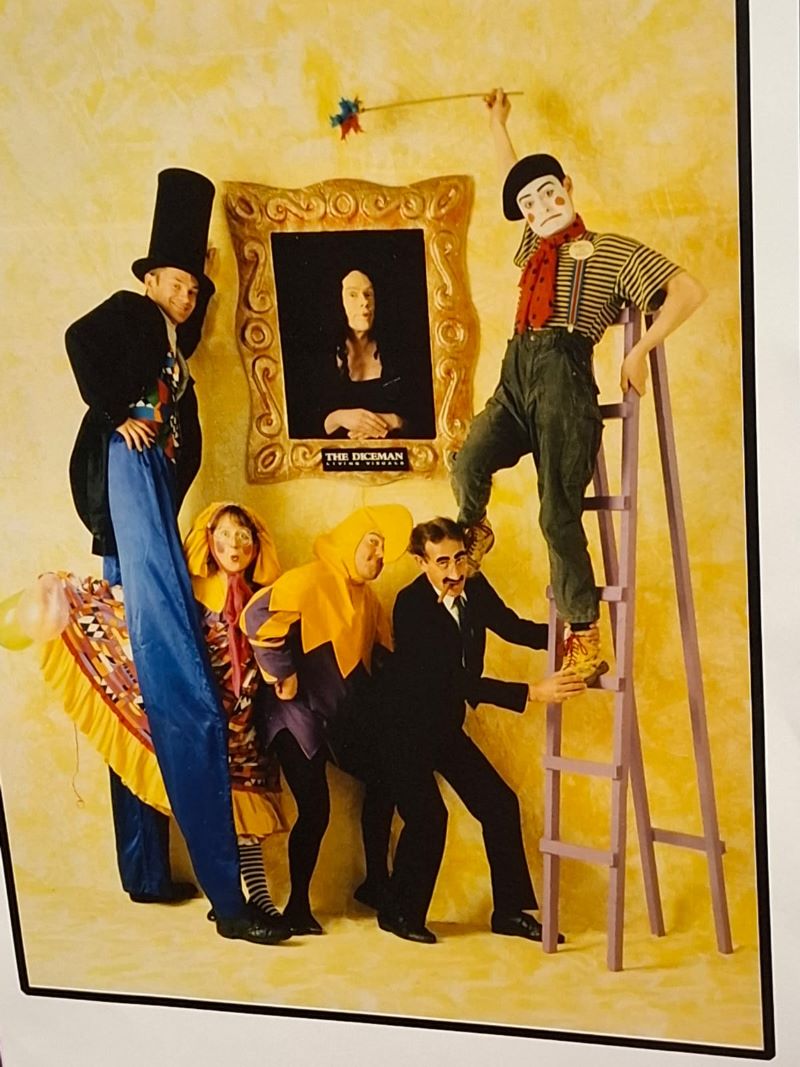
A gaming shop called The Dice Man was the first of these and the one that gave him the nickname by which he became known and found fame. It was one of the commercial promotions, ironically not a political one, that ended with his arrest.
The promoters of a run of The Rocky Horror show in Dublin hired Thom to promote their show which he did, walking the street in ‘horror’ facial makeup, a cerise basque, fishnet stockings and a thong. He was arrested.
McGinty was charged with acts contrary to public decency under Section 5 of the Summary Jurisdiction (Ireland) Amendment Act, 1871, and with breach of the peace. Thom protested that these were his working clothes and he had been contracted to wear them.
According to the arresting gardaí, complaints had been made that Thom’s buttocks were clearly visible, “and the only thing covering his genitals was a G-string.” He was bailed from Store Street Garda Station pending the trial but could not be released until he was given a raincoat to wear.
The Act, which is still on the statute books (according to the exhibition text) had sexual connotations and could be used against gay people. McGinty’s lawyer raised the ramifications of a conviction under this Act and the judge sentenced him to probation without recorded conviction.
The 1991 production of the Rocky Horror Show at the Bord Gáis Theatre could not have asked for better publicity and McGinty personally got exposure (!) internationally and offers of work abroad as a result, from which he always returned to Ireland.
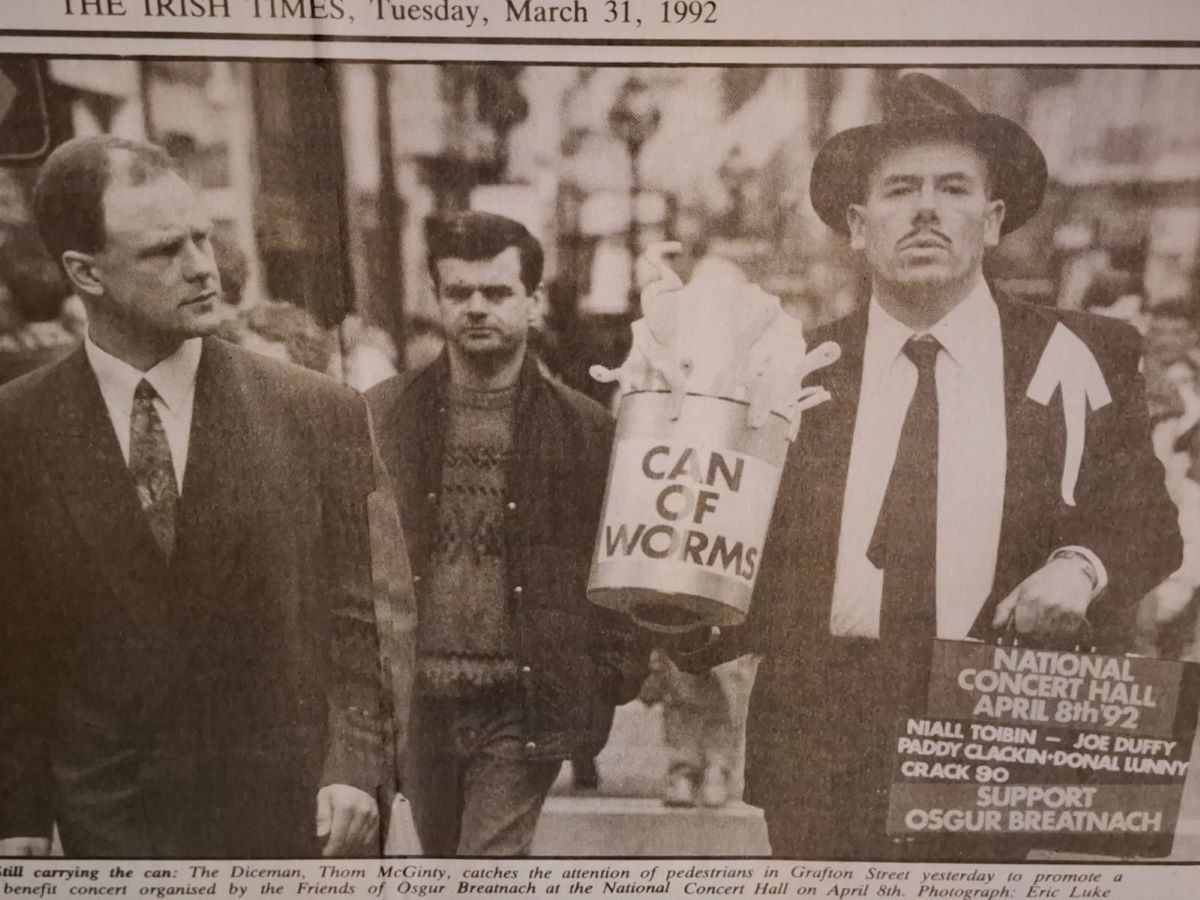
Among social causes which Thom protested with performance was the financial penalty on the Union of Students in Ireland for breach of injunctions by publishing anti-pregnancy choice information in a case pursued by SPUC.2 Another was against restrictions on the sale of condoms.3
Thom’s performances and the causes espoused would have been of interest to me had I been living in Ireland at the time but they touched on my family in Dublin a number of times. Foremost was his support for the wrongly accused, framed and brutalised of the Sallins Mail Train robbery.
One of the panels at the exhibition.
It is nearly 50 years since three socialist Republicans were wrongly convicted and sentenced to nine and twelve years imprisonment. As a result of much campaigning, two of the accused, one of whom is a sibling of mine, were released with convictions revoked after 18 months in Portlaoise jail.
The third accused, who had absconded the day prior to the sentence, returned to Ireland and was immediately jailed, campaigners then switching to obtain his freedom, gained only ‘on humanitarian grounds’ after four years in jail and a hunger strike of 38 days.
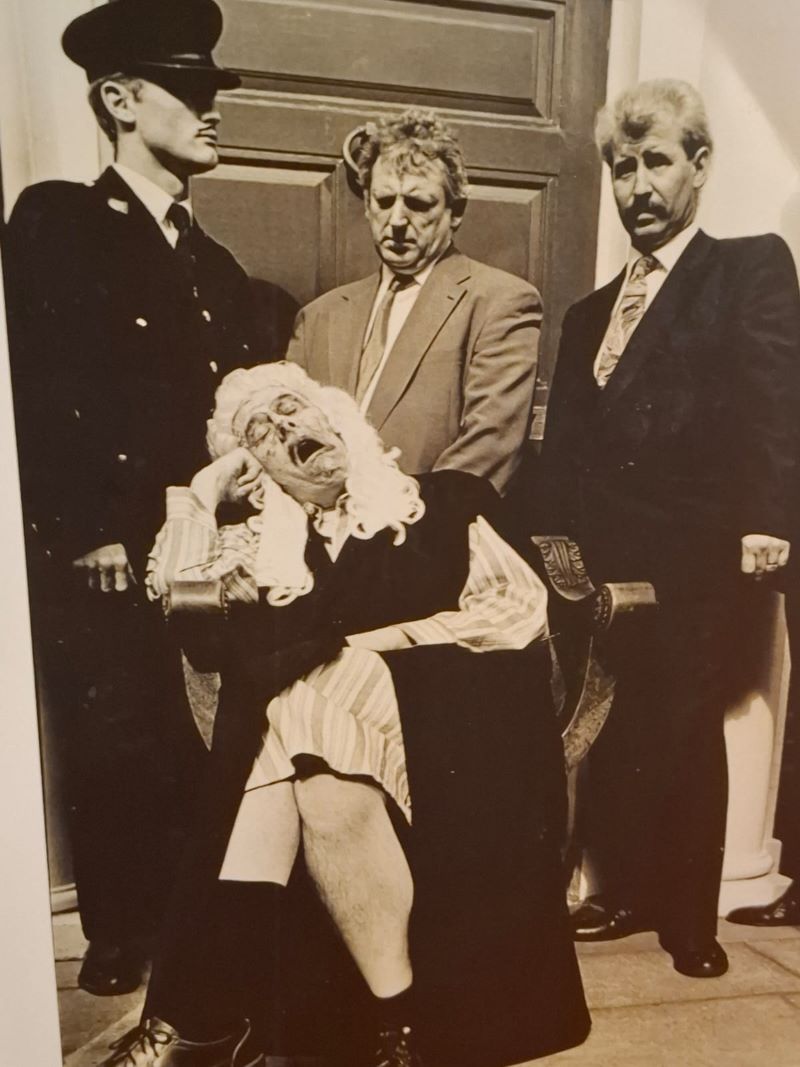
Satirising the ‘sleeping judge’ in one of the Sallins trials (he was clearly seen sleeping but his co-judges and State denied it and then to embarrassment of State, he died days later). In suits, two of the framed, (l-r) Nicky Kelly and Osgur Breatnach.One of the panels at the exhibition.
A recent concert, packed both by audience and performers in the Vicar Street Dublin venue was organised by yet another sibling to promote a campaign for an inquiry into how that travesty of justice could be carried out by state police, Government and judiciary right up to the High Court.4
Thom was a strong supporter of liberal social rights such as the right to prevent pregnancy or birth and for gay and lesbian rights. His defence of framed Irish Socialist Republicans centred on their right to a fair trial and not to be brutalised, as did his support for the Birmingham Six.
One of the panels at the exhibition.
But he was far from being an Irish Republican. Dressed as the Grim Reaper with scythe, Thom also led a delegation of ‘Peace Train’5 people in protest to the offices of Provisional Sinn Féin where, in a twist of fate, it was another sibling of mine who had to receive him and to face the cameras there.
At the time, SF was the political party leading a struggle for Irish reunification and independence from British occupation and, though its leadership and much of the party’ base support was socially conservative, it was not that which focussed the attacks of two states and a statelet6 upon it.
And those armed and judicial attacks were backed by the imperialist and neocolonial-dominated liberal and social-democratic sector of society, the likes of the ‘Peace (sic) Train’ and ‘Peace Women’.7 I would have argued strongly with Thom I’m sure but regret very much his passing.
Thom McGinty (1952-20/21 February 1995)
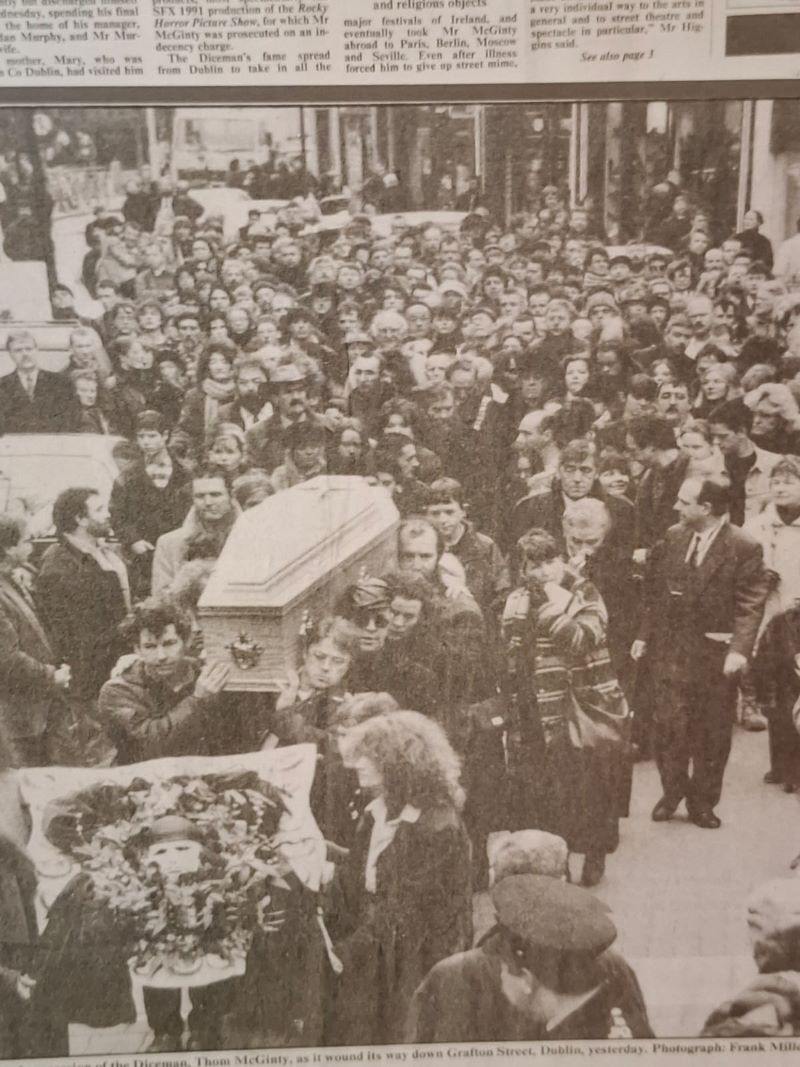
Thom McGinty’s funeral, from one of the panels at the exhibition.
end.
Note: If you found this article of interest, why not register with Rebel Breeze for free, so that you will be notified by email of subsequent articles. You can de-register any time you wish.
2Society for the Protection of the Unborn Child. After a long struggle ending pregnancy became legal within the Irish state but regulated under the Health (Regulation of Termination of Pregnancy) Act 2018, allowing for termination on request up to 12 weeks of pregnancy. Following a 2018 referendum, abortion services began on 1 January 2019, providing free access for residents.
3Following campaigning and public defiance of the law, restrictions on the sale of condoms were only finally removed in 1993 in the Irish state.
5https://en.wikipedia.org/wiki/Peace_Train_Organisation The issue is not whether bombing the railway line was a useful activity or not but rather that its condemnation took the place of condemning and drawing attention to the British occupation of a colony in Ireland and the brutal repression of resistance to that occupation.
6Although it has the trappings of a state, the Northern Ireland (sic) Assembly is a UK colonial administration.
Composed of Socialist Republican, Communist and Anarchist contingents, along with independent activists of various tendencies, a broad Revolutionary Bloc marched among other groups and individuals in the annual May Day march in Dublin on May 1st.
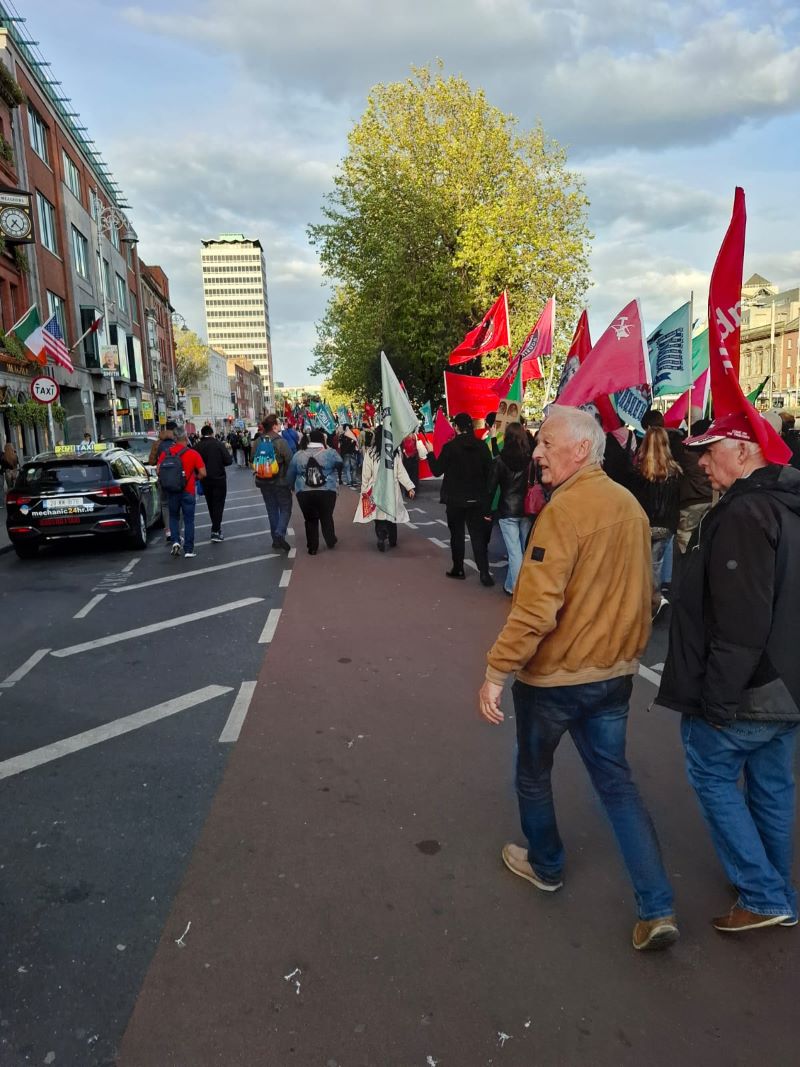
Eden Quay, as the march turns off O’Connell Street, heading for Beresford Square, by the tall Liberty Hall building in the left background. (Photo: R.Breeze)
At intervals the banners of the Communist Party of Ireland, the Independent Workers’ Union and flags of the Anti-Imperialist Action contingents could be seen and a number of flags denoting specific groups or campaigns were on show but the Bloc was mainly identifiable by its slogans.
Led in call-and-answer almost non-stop from departure point at the Garden of Remembrance to Beresford Place in front of Liberty Hall,1 slogans called on workers to strike work and fight, to oust imperialist states and NATO from Ireland, for resistance unity, revolution and a socialist republic.
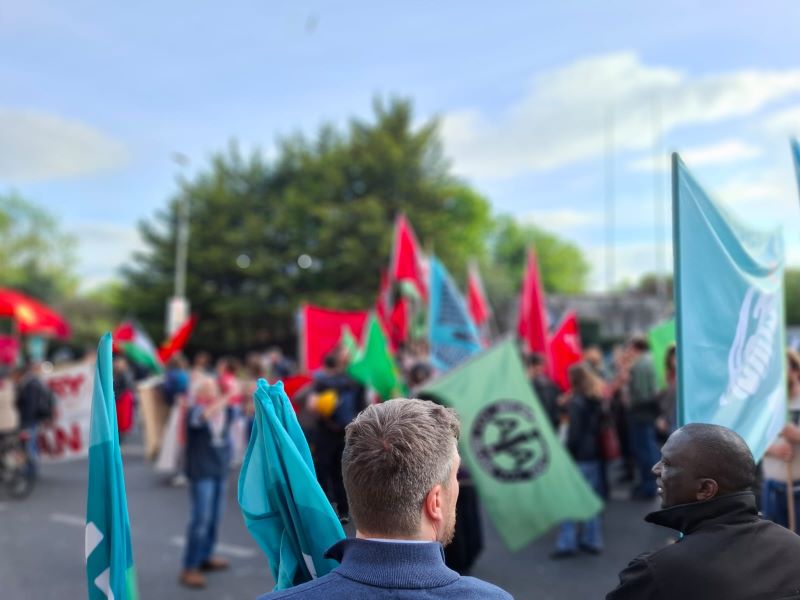
Section of the Revolutionary Bloc, centre image. (Photo: R.Breeze)
It was notable that an Irish Tricolour and a number of Starry Plough flags were visible among the Bloc and indeed one of the chants was against the appropriation of the Tricolour by ‘traitors’. They also called for funding for education and not for big corporations and for a hotel-free city centre.
At least one of the flags was of the Revolutionary Housing League and the march passed an empty building appropriated three years earlier by the RHL who were then evicted by a Garda force of 100 with helicopter and armed unit as backup. The building remains empty to this day.
People in Dublin stopped in the early Friday evening to watch and in the northern reach of O’Connell Street an elderly man stepped off the pavement to march along with the Bloc, though in silence while further along, two teenage girls in school uniform joined the Bloc also.
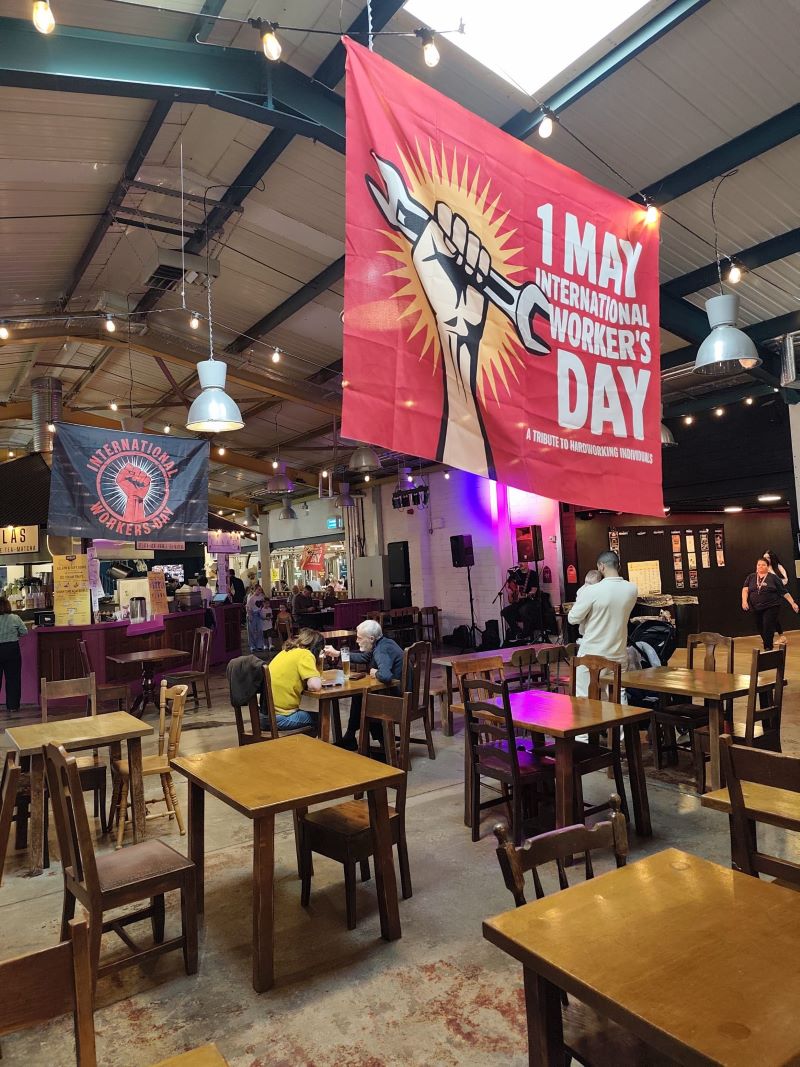
The Priory Market, Tallaght, Dublin prior to opening (Photo: Supplied by supporter)
Led by a long piper, the various contingents marched into Beresford Place, where a stage had been set up in front of the SIPTU2 headquarters building but most of the Revolutionary Bloc marched past to congregate for a group photo around the nearby monument to James Connolly.
Using the Bloc’s megaphone, one of the group then sang the Be Moderate song (also known as We Only Want the Earth) composed by James Connolly3 and, as the singer informed his listeners, published in the Songs of Freedom songbook by Connolly in New York in 1907.
As most of the Bloc dispersed, speeches were being made from the nearby stage and a group of mostly younger people from Turkey were assembling at the Connolly Monument also for a group photo.
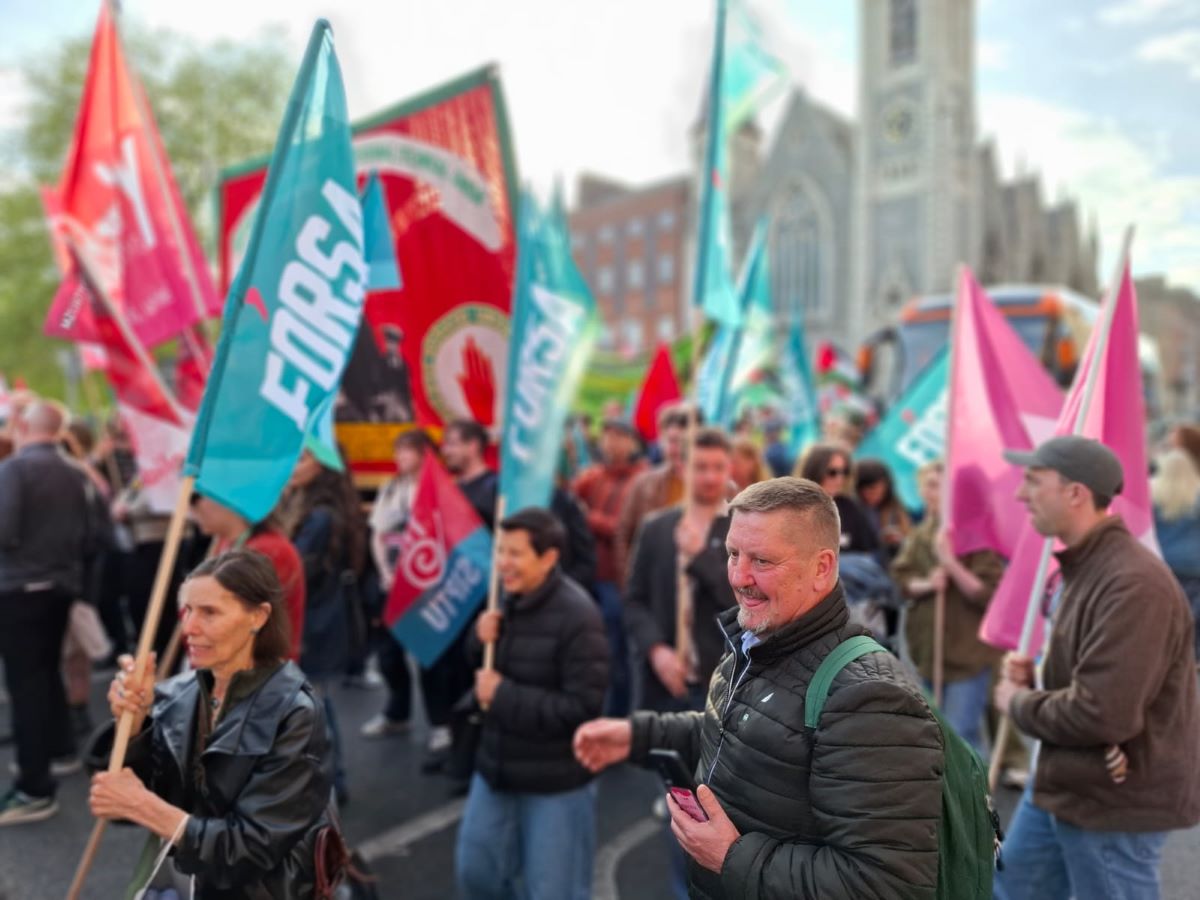
The May Day march and rally in Dublin is traditionally organised by the Dublin Council of Trade Unions. However the participation of union banners was low in numbers and those present mostly of the FÓRSA union.
Section of the march showing FORSA union flags being carried. (Photo: R.Breeze)
Distinct from other European states, the foremost struggle in Ireland for centuries has been on the national question which has entailed less development in the forces devoted to socialism, so that in general May Day does not bring out the numbers one can see in the capitals of the EU and UK.
However, Ireland’s long history of resistance to colonial occupation has entailed a greater history of insurrection than most European states and it has also produced a remarkable number of leaders of labour struggles among the Irish diaspora in Britain, the USA and Australia.
End.
Note: If you found this article of interest, why not register with Rebel Breeze for free, so that you will be notified by email of subsequent articles. You can de-register any time you wish.
FOOTNOTES
1A highly-visible very tall building on the site of the original Liberty Hall, HQ of the IT&GWU, now of SIPTU.
2One of the largest (possibly the largest) trade unions in Ireland, formed by amalgamation of other unions on the base of the Irish Transport and General Workers union, of which James Connolly had been an officer and for a period, its overall leader.
3James Connolly (5 June 1868 – 12 May 1916), born and raised in the Cowgate area of Edinburgh, revolutionary socialist activist-theoretician and Irish Republican, author, journalist, historian, union organiser, executed by the British occupation along with another 15 prominent insurrectionists of the Easter Rising.
Last Saturday (26th April) in Dublin a march took place in support of Irish neutrality and in opposition to Irish Government attempts to remove an obstacle to joining some future imperialist military alliance.
The march was organised by the Irish Anti-War Movement, an organisation that flickers into life on occasion as desired by the leaders of the People Before Profit organisation, although some of its activists are not members of PBP. And not all marching by any means were members of either.
I have a regular commitment on Saturdays elsewhere until 1.30 and it’s at least 1.45 by the time I’m free. I caught up with the march as it began to wheel around Trinity College. At its destination1 I looked around to see how many flags were representative of the Irish nation.
I counted three Irish Tricolours and one other which was also combined with a Palestinian flag. I was carrying a Starry Plough flag (the original version of gold design on a green background).2 A total of four Irish national flags in a march of several hundred amidst lots of Palestinian flags.
The stupidity is almost beyond belief. The march was not organised primarily to express solidarity with Palestine but to call for Irish neutrality and for remaining outside NATO. However, one-sixth of the nation is inside NATO without even the pretence of democratic agreement.
The other five-sixths are what constitutes the Irish State, the one upon which the march was focused, to save the Triple Lock,3 to prevent the Gombeen Government from driving us into NATO or some other military alliance. But apparently to be done without symbolising the Irish nation.
Again, the stupidity stretches credulity. We have passed through a number of years in which the Far-Right and outright fascists, in order to disguise themselves as Irish nationalists, have appropriated primarily the Tricolour but also the Irish Republic flag which was created in 1916.
A situation was permitted to arise whereby to see many Irish Tricolours being carried was to suspect a far-Right event — and usually to have that suspicion confirmed as accurate. This occurred because the broad anti-fascist anti-racist movement in general allowed it to happen.4
The fault is primarily that of the Irish socialist Left and their dislike or distrust of nationalism and their association of the Tricolour with the Irish State. They fail to recognise it as a democratic, anti-colonial, anti-imperialist republican symbol of national sovereignty and resistance.
The design was presented to the Young Ireland movement by revolutionary women in Paris in 1848, the ‘Year of Revolutions’ in Europe. Its colours represent national revolutionary unity (White) between the indigenous Irish (Green) and the descendants of colonial settlers (Orange).
Unlike its presence among racist and homophobic gatherings, the Tricolour was completely appropriate for a march in support of Irish neutrality. But somehow this did not occur to the organisers of the march nor, apparently, to most of the participants.
There would be no need to exclude flags representing the socialist or anarchist movements nor indeed of struggles in other countries but on this march they should have been outnumbered by Irish Tricolour and Starry Plough flags.
The Republican movement, for all its faults, would not have failed in this representation. Sins of omission in politics can be as bad as those of commission and the almost absence of Tricolours on this march epitomises how badly some of the movement in defence of neutrality is being led.
The general absence of the Republican movement from this march, whatever their reasons, is to my mind another part of this problem.
End.
Note: If you found this article of interest, why not register with Rebel Breeze for free, so that you will be notified by email of subsequent articles. You can de-register any time you wish.
1Molesworth Street, facing Leinster House, home of the parliament of the Irish State.
2Essentially the original design of the flag of the Irish Citizen Army, a workers’ defence militia during the 1913 Lockout which also fought in the 1916 Rising.
3A measure which does not permit the State to send more than 12 personnel abroad on a military mission unless with 1) a government decision, 2) a majority vote in the Irish Parliament and 3) a UN mandate. Recently leaders of the Coalition Goverment parties have been saying that a vote in the Parliament would not be necessary.
4This is not alone the fault of the PBP but also of the anarchists who did fight the fascists but also of the Republicans who, some notable attacks on the National Party aside, largely ignored the fascist and far-Right protests.
Until very recently it was a widely-held belief that Hezbollah, the main Lebanese Islamic resistance organisation, was finished as a serious threat to western imperialism in Lebanon and to Israeli Zionism.
Such analyses ignored the fact that the organisation’s fighters for nine weeks held back the IOF from advancing into South Lebanon and made the Zionist army pay a very heavy price for even trying to advance – a heavy price in tanks and bulldozers destroyed and in personnel casualties.
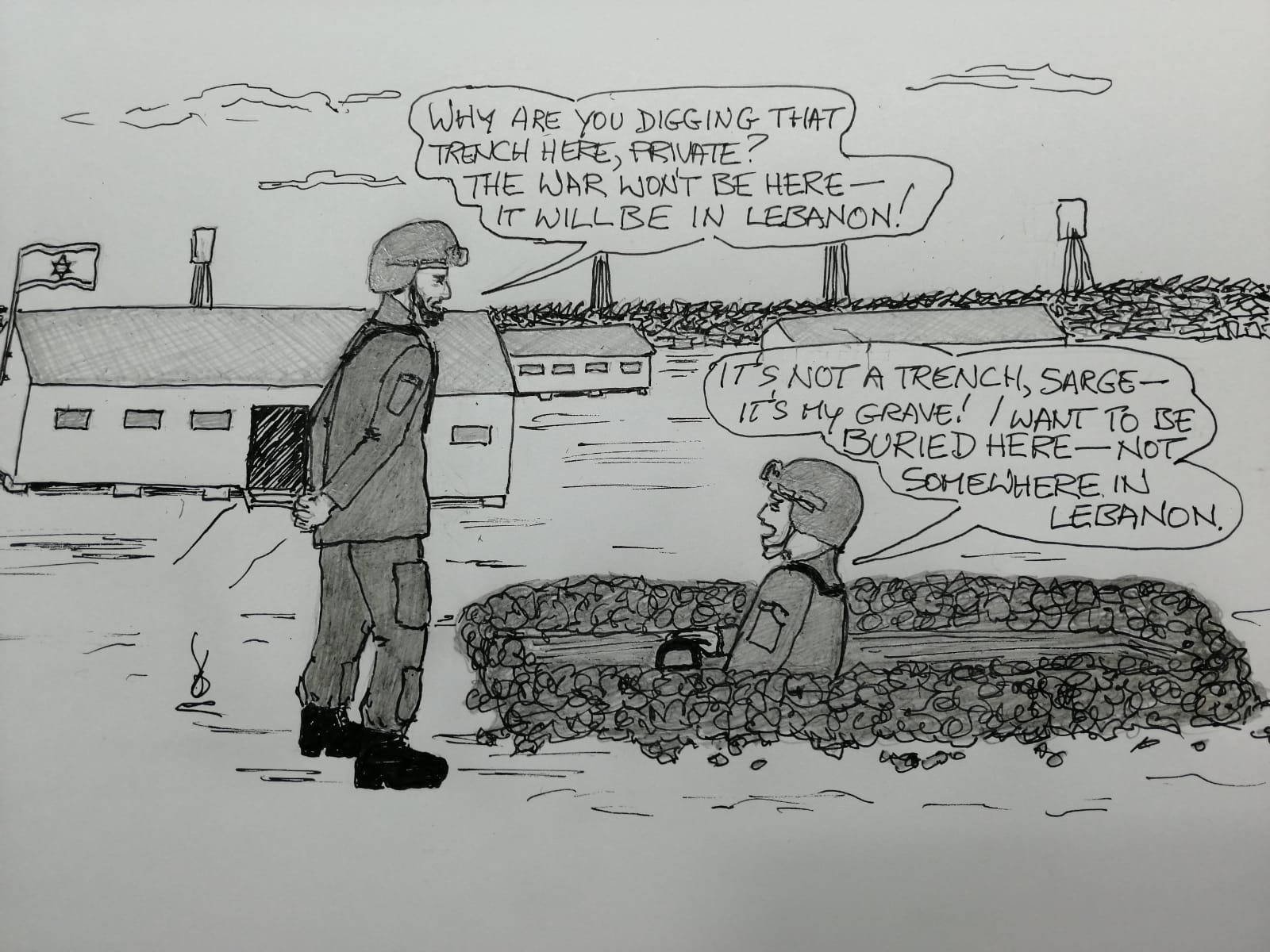
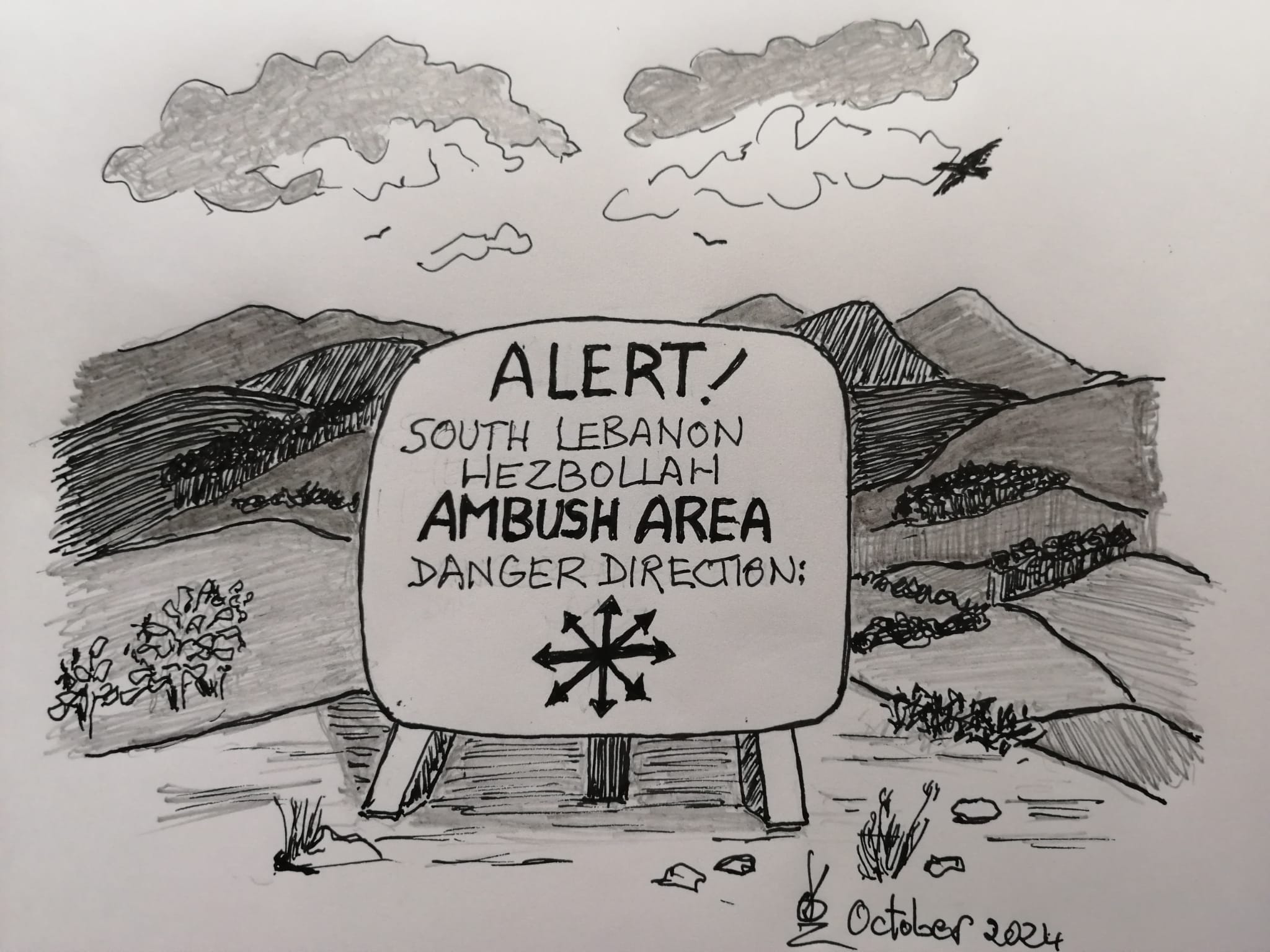
2024cartoon by D.Breatnach
All the same, it seemed strange that after doing so and agreeing to the ‘Israeli’ request for ceasefire, they suffered daily violations by the IOF including regular assassinations of people in Lebanon, many or at least some of which were presumably Hezbollah personnel, without a return to war.1
Hezbollah’s statements during that period indicated that they wished to expose the weakness of Lebanon’s Government and their domination by US imperialism. Yes, we might have thought, but day after day, and your people being bombed and members assassinated?
It did look as though not so much their military capabilities but their political leadership had been weakened greatly. Of course, the loss of Hassan Nasrallah, assassinated by the IOF, was grievious, as had been the mayhem of the exploding pagers and cellphones.2
And since despite all that, Hezbollah nevertheless stopped the IOF at their border and made them weep for their losses, it seemed that it was the political leadership that had weakened, rather than their fighting ranks.
The United Nations Interim Force in Lebanon (UNIFIL) and the Lebanese government reported on 26 February more than 15,400 ceasefire violations by Israeli forces, while more than 370 people had been killed by Israeli fire in Lebanon since the ceasefire requested by ‘Israel’ began.3
Whatever Hezbollah were waiting for is hard to say for sure. Possibly they were waiting for a Zionist war with Iran, in order to open up a second front against their enemy but if so it is strange that they did not go on the offensive immediately but launched their attack on March 2nd.
Even then, the initial Hezbollah attack seemed performative and Hezbollah quoted the Israeli assassination of Ali Khamenei, Supreme Leader of Iran and leading Shia Cleric in West Asia as the reason for their offensive, in addition to daily deadly ceasefire truce violations by the IOF.
Hezbollah fired its initial barrage days after the US and ‘Israel’ had attacked Iran. It did seem as though their leadership were hesitant to return to war and perhaps initiated their attack in response to intelligence that the IOF were planning a war against them (which they referenced later).
The official plan of the Zionist is to occupy southern Lebanon to the Litani river as a “buffer zone”. However, this occupation can also be a part of the “Greater Israel” plan, which Netanyahu and a number of Israeli Zionist leaders4 and US Ambassador Mike Huckabee have publicly espoused.5
Hezbollah is fighting two kinds of war with ‘Israel’, one in which they bomb the state as part of the ‘axis of resistance’, against the state’s genocide against Palestinians and its attack on Iran, the other in which they defend Lebanon against ‘Israeli’ invasion and occupation.
In the first, they have clearly coordinated bombardment barrages with Iran6 and, more recently with Yemen.7 Hezbollah fires at targets in northern occupied Palestine, while Iran and Yemen concentrate on southern occupied Palestine.
Hezbollah was at first only firing at the IOF in the north but recently targeted what might be seen as civilian sites, since the IOF are using them, many of which are deserted, as staging and rest areas. However, Hezbollah issued public warnings before they began that stage of bombardment.
The IOF, on the other hand, in keeping with its traditions, has been bombing Lebanese civilians, housing, paramedics, hospitals and civilian infrastructure. And carrying out targeted assassinations.
Hezbollah employs its intelligence, mostly compiled from observation, to bomb areas where IOF personnel and vehicles are gathering, after which it bombs that area (or houses, in the case of these occupied by the IOF), all of which makes it very difficult for the Zionists to organise an invasion.
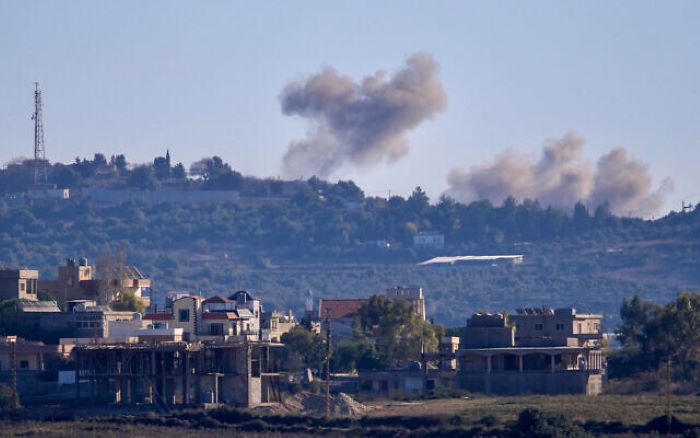
A picture taken from from the southern Lebanese village of Tayr Harfa, near the border with Israel, shows smoke billowing near an Israeli outpost from rockets fired by Hezbollah on Dec. 15. (Photo: AFP via Getty Images)
With the Zionist state currently having dominance in the air, the Resistance cannot hold static positions at the border and therefore has to allow the IOF to advance into Lebanon to ambush them there, either with missiles and artillery or at close quarters with light and medium weapons.
The latter can also be dangerous for the fighters for as their positions are revealed, they can then be bombed by the IOF. Even the fighters’ close proximity to the invaders may not restrain the IOF, as the orders of the latter are to kill their own personnel if they are in serious risk of capture.8
That said, it is reported that some of the missiles fired into occupied Palestine, i.e ‘Israel’, have been launched from north of the Litani river. Meanwhile the IOF take propaganda and morale-boosting photos of themselves in Lebanese villages in which they cannot remain.
A feature of the ambushes and battles in Lebanon which differs significantly from Gaza Resistance operations is that Hezbollah target the IOF rescue forces and medical evacuation transports. Considering the targeting of ambulances by the IOF the restraint of the Gaza resistance is strange.
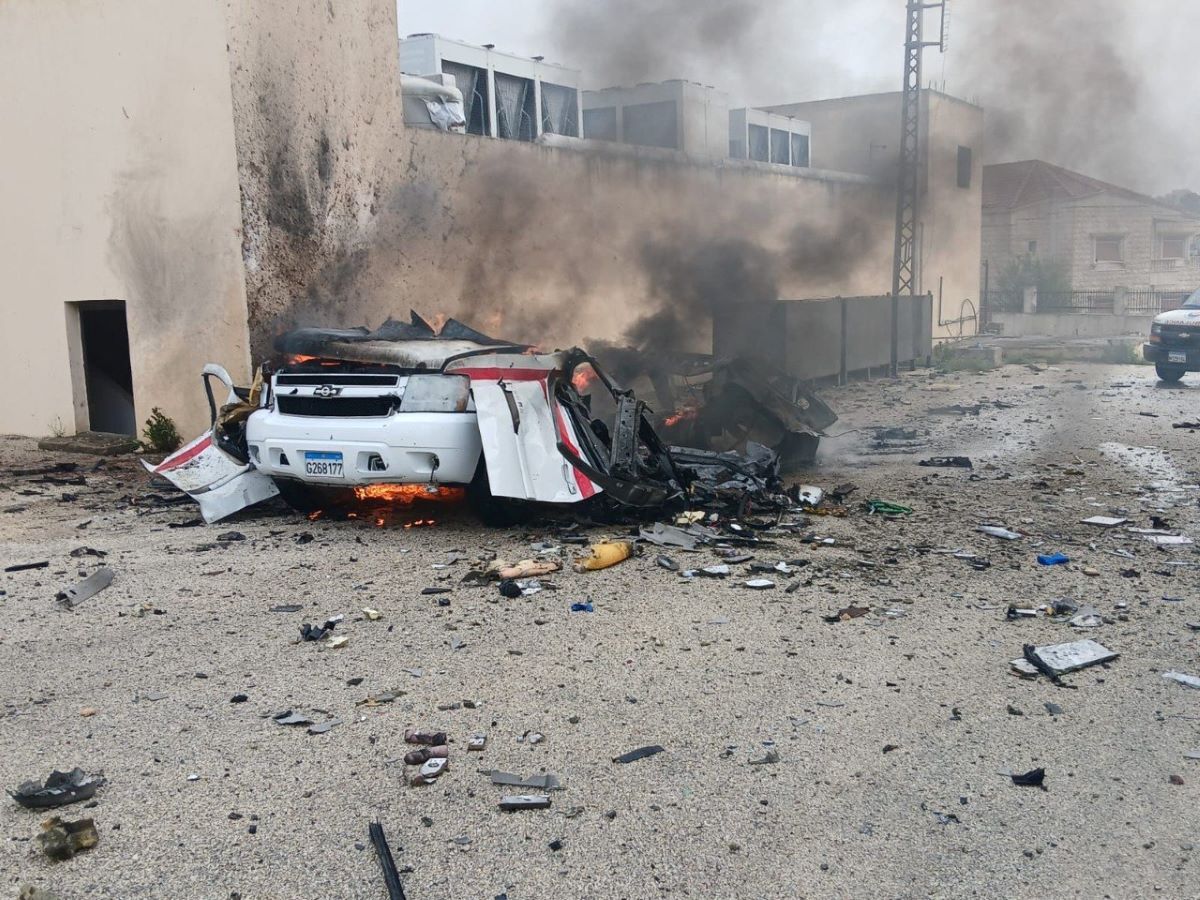
Ambulance struck by ‘Israeli’ drone in Bint Jbeil, S. Lebanon recently.
Sources report nearly 100 Merkava tanks of the IOF hit by Hezbollah missiles, rockets or IEDs and many videos have been posted on social media by Hezbollah. In addition, fortified positions, radar units, artillery batteries, troop transporters and bulldozers have been partially or fully destroyed.
The skies are also gradually getting cleared of Zionist drones too. The number of daily operations by Hezbollah is high, having risen from around 20 per day previously to 30 on 5th April9 and to between 80-90 recently.
According to the northern correspondent of the Hebrew newspaper Yedioth Ahronoth, Hezbollah has carried out 779 attack waves against Israel between 2 March and 21 March, a tempo that could surpass the number of attack waves recorded in October 2024.10
The figures refer to the number of observed “attack waves,” not the total number of munitions launched.11
TRYING FOR CIVIL WAR AND SUBVERSION
The imperialists tried, through their clients in Lebanese society and armed forces to get the Lebanese national army to disarm Hezbollah. That was never going to happen since Hezbollah is more the real national army and the official armed forces just a poor imitation.
But a civil war, with outside involvement, like the one from 1975 to 1990 with Israeli intervention12 was a possibility. However, now the Lebanese people have seen their government neglect to defend them and the official army retreat from invading IOF, while Hezbollah stopped them hard instead.
As the US leadership and the rest of western imperialism (and their proxies in Western Asia) felt Iran’s restrictions in the Strait of Hormuz bite into their profits, Trump indicated a wish to return to negotiations – to which Iran has responded positively but with caution.
Recalling assassinations of negotiators twice during negotiations, Iran’s caution is more justified than normal. But there is also the issue of dragging the confrontation on by insincere peace talks while the Zionist genocide continues in Palestine and is being exported to Lebanon.
Iran’s 10-point basis for negotiation, including an end to the aggression against Lebanon was accepted by the US and publicised by Pakistan, the intermediaries. But soon was refuted by ‘Israel’ and then by the US; the talks then foundered as the US tried to impose its own terms.
Once again, Iran reiterated that an end to US and ‘Israeli’ aggression in West Asia has to be part of any agreement. Jumping opportunistically on this, Lebanon’s quisling government sought talks on a ceasefire with ‘Israel’ through the offices of US imperialism.13
Though the craven Lebanese regime had no cards to play, a ceasefire in Lebanon seemed to have been agreed,14 which the IOF celebrated with a massive bombing attack on Lebanon, killing 300 people in the hours before the deadline and also another attack after.
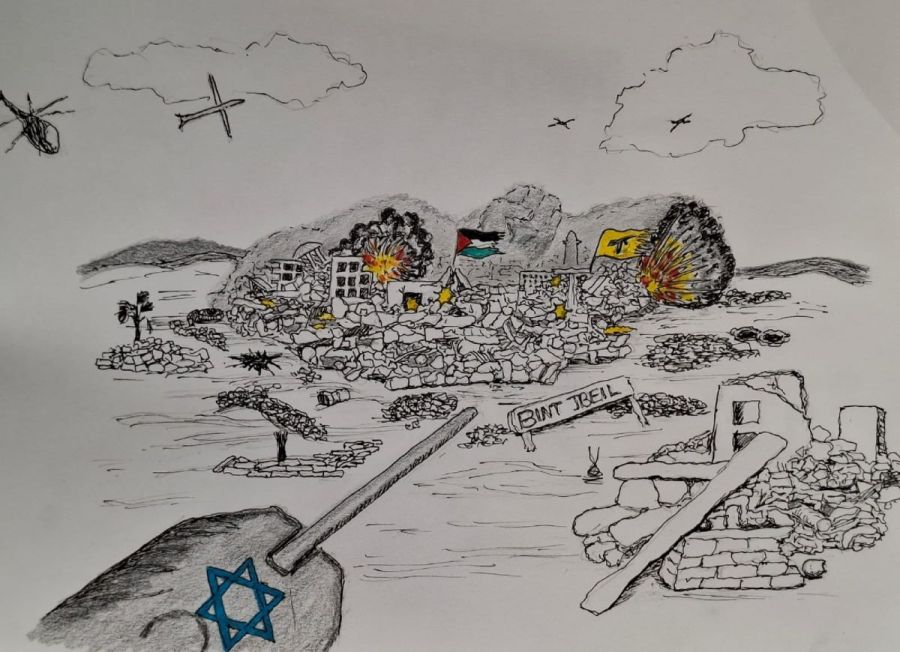
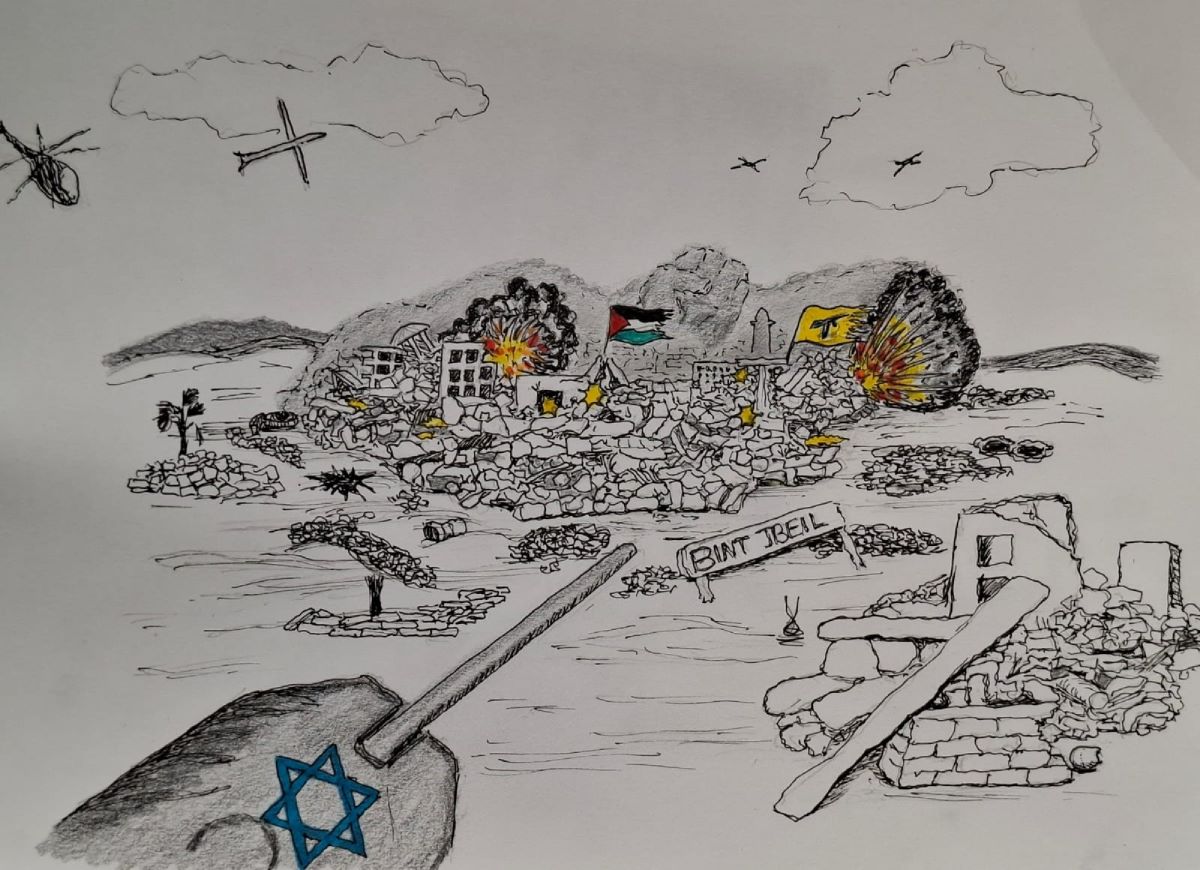
Bint Jbeil resists still. D.Breatnach cartoon, April 2026
If the US leadership is not convinced they have lost this war and cannot replay it to win – and if they allow the ‘Israeli’ Zionist leadership to undermine any agreement, then the war will resume, whether including Iran or focused on Hezbollah in Lebanon.
If Hezbollah can hold their ground and prevent a successful IOF invasion into South Lebanon while continuing to respond to Zionist entity attacks and if Iran sticks to its conditions on an end to aggression in West Asia, then the future seems bright for the people of Lebanon.
There will be ongoing internal struggle of course between the mass of people and the neo-colonial clients of imperialism, also with a fascist rump of French ‘Christian’ colonials in Lebanon but, without outside interference, the people can resolve these with positive results.
End.
Note: If you found this article of interest, why not register with Rebel Breeze for free, so that you will be notified by email of subsequent articles. You can de-register any time you wish.
APPENDIX
South Lebanon field report from Al-Manar correspondent Samer Haj Ali (17 April 2026):
•Eastern villages axis: From Blida to Mays al-Jabal, the situation remains unchanged.
Enemy forces are refraining from showing themselves west of these towns, as they would be exposed to direct fire from the resistance.
•Al-Hujair axis:
The enemy is mainly positioned in the Taybeh project area.
The situation remains unchanged in Deir Siryan, which the enemy has withdrawn from. The occupation forces attempted to advance from their positions between Al-Qantara and Taybeh toward the town of Al-Qantara once again.
They established an outflanking route reaching the Al-Khazzan area in Al-Qantara. They were met with resistance fire, which destroyed four Merkava tanks and two armored personnel carriers. They failed to reach the Litani River from the direction of Taybeh or Wadi al-Hujair.
•Khiam axis:
The resistance maintains its capability to prevent the enemy from advancing toward the northern neighborhood. The enemy circulated reports claiming progress toward Debbin, but these reports are denied by field sources.
The road from Debbin to Marjayoun and Ebl al-Saqi remains open for civilian movement.
• Arqoub axis:
The enemy has expanded its attacks in recent days, without any change in its ground deployment. Airstrikes targeted some of its villages such as Shebaa, Hebarieh, and Halta, accompanied by simultaneous artillery shelling.
Hezbollah announced 74 operations on 14–15 April against Israeli forces, sites, settlements, and military infrastructure
Border clashes
Heavy fighting intensified across Bint Jbeil, Khiam, Bayyada, Naqoura, Kfar Kila, Mays al-Jabal, Aitaroun, Shamaa, and surrounding axes, with repeated close-range engagements and sustained confrontations against advancing Israeli forces.
A major ambush targeted a paratrooper unit (Battalion 101) near Maroun al-Ras as it advanced toward Bint Jbeil, resulting in casualties and forced evacuation under heavy fire.
Israeli forces were repeatedly struck in troop concentrations, homes used for positioning, and along movement routes, while engineering vehicles, including a D9 bulldozer, were directly hit. Merkava tanks were also targeted by attack drones, with confirmed hits during ongoing clashes.
Drone and air defense operations
Attack drones were extensively deployed against artillery positions, command nodes, troop concentrations, and armored units, including direct strikes on Shraga base (Golani Brigade HQ), Meron air control base, and multiple frontline positions.
Air defense activity was notable, with multiple Hermes 450 drones intercepted over southern Lebanon and along the coast, alongside engagements against Israeli fighter jets and an Apache helicopter forced to withdraw.
Drone strikes also targeted artillery batteries in the Golan and northern front positions, as well as Israeli troop gatherings in Bint Jbeil, Khiam, and Naqoura.
Rocket and missile strikes
Sustained and high-intensity rocket barrages targeted Israeli troop concentrations, military sites, and settlements across the northern front, including Kiryat Shmona, Metula, Misgav Am, Nahariya, Shlomi, Avivim, Yir’on, Dovev, Kfar Giladi, and Manara.
Large-scale, synchronized barrages hit multiple settlements simultaneously, while repeated strikes targeted positions in Bint Jbeil, Khiam, Bayyada, and surrounding areas.
Fire was maintained throughout both days, with dozens of salvos launched in waves, including heavy bombardment of troop concentrations and staging areas.
Strategic military targets
Strikes hit key Israeli military infrastructure, including Shraga base (Golani command), Meron base for air surveillance and operations, Filon base near Rosh Pinna, Liman barracks, and artillery positions across the Golan.
Additional targets included communications infrastructure, newly established artillery sites, and logistics nodes in Karmiel, Maalot-Tarshiha, and other northern areas, alongside continued targeting of command, control, and fire management positions.
4Speaking on an Israeli radio program, Israeli Finance Minister Bezalel Smotrich said that the war on Lebanon “needs to end with a different reality entirely, both with the Hezbollah decision but also with the change of Israel’s borders.” “I say here definitively … in every room and in every discussion, too: the new Israeli border must be the Litani,” he added
12With an estimated 150,000 fatalities, the externally-instigated civil war and ‘Israeli’ occupation gave rise to the creation of Hezbollah in 1982 and it was they who led the expulsion of the Zionist invaders and the collapse of their local fascist collaborators, the South Lebanese Army (sic).
13The Lebanese Government withdrew its army in the face of IOF advances and went against its own laws in recognising ‘Israel’ while seeking a ceasefire from it.
14The US Imperialists and their Zionist proxy want the Government and Army to disarm Hezbollah. While they also know that this is not possible, due to both the superior strength of Hezbollah and reluctance of many, including some senior officers in the Lebanese Army, a civil war would do instead.
A call for unity of Irish Republicans in action to win Irish freedom and independence was made at a 1916 Rising commemoration in Dublin on Sunday, an event organised by the Anti-Imperialist Action Ireland organisation.
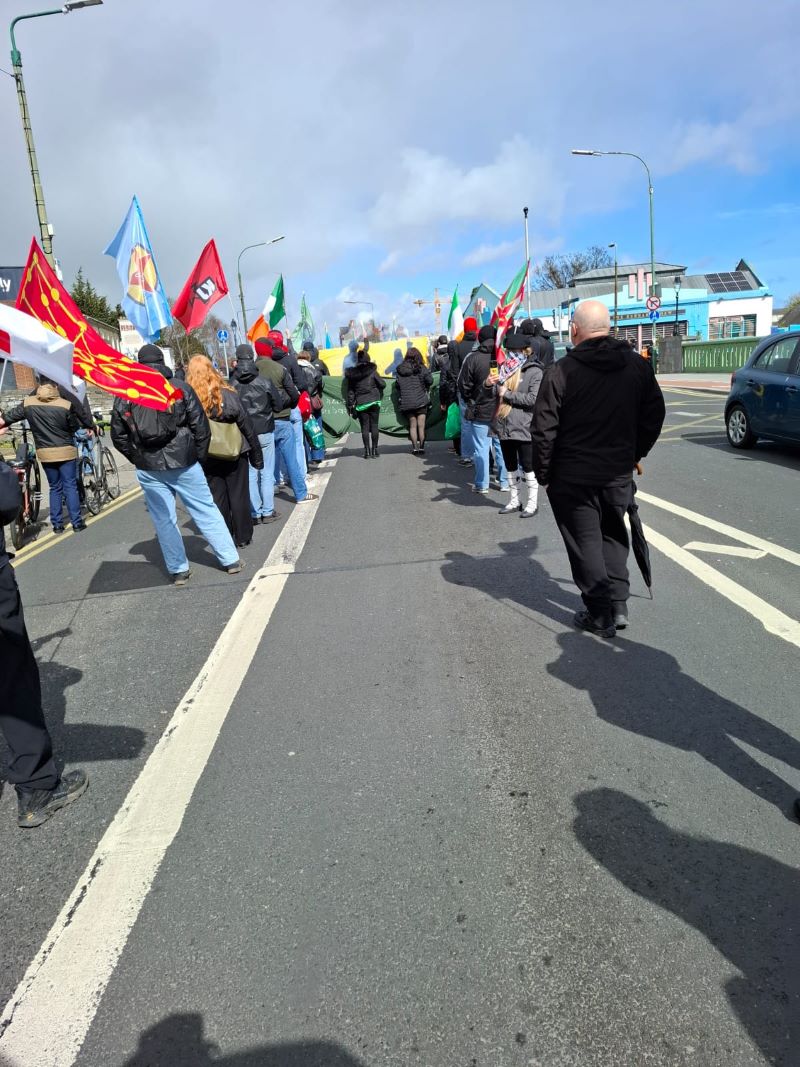
Section of the marchers looking back towards Phibsborough as they approach Cross Guns Bridge from Phibsborough. (Photo: R.Breeze)
A relatively large number of people participated, including a number of delegations from organisations of struggle in the Spanish, Turkish, German and Italian states. Young people were particularly well represented.
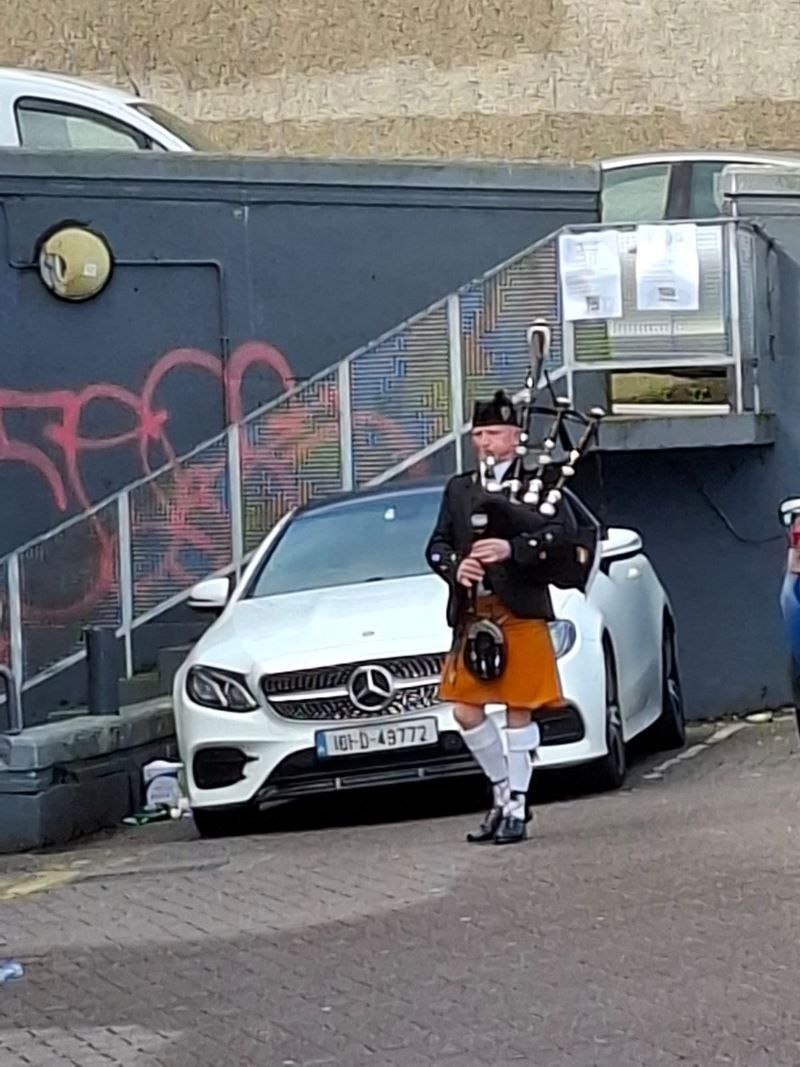
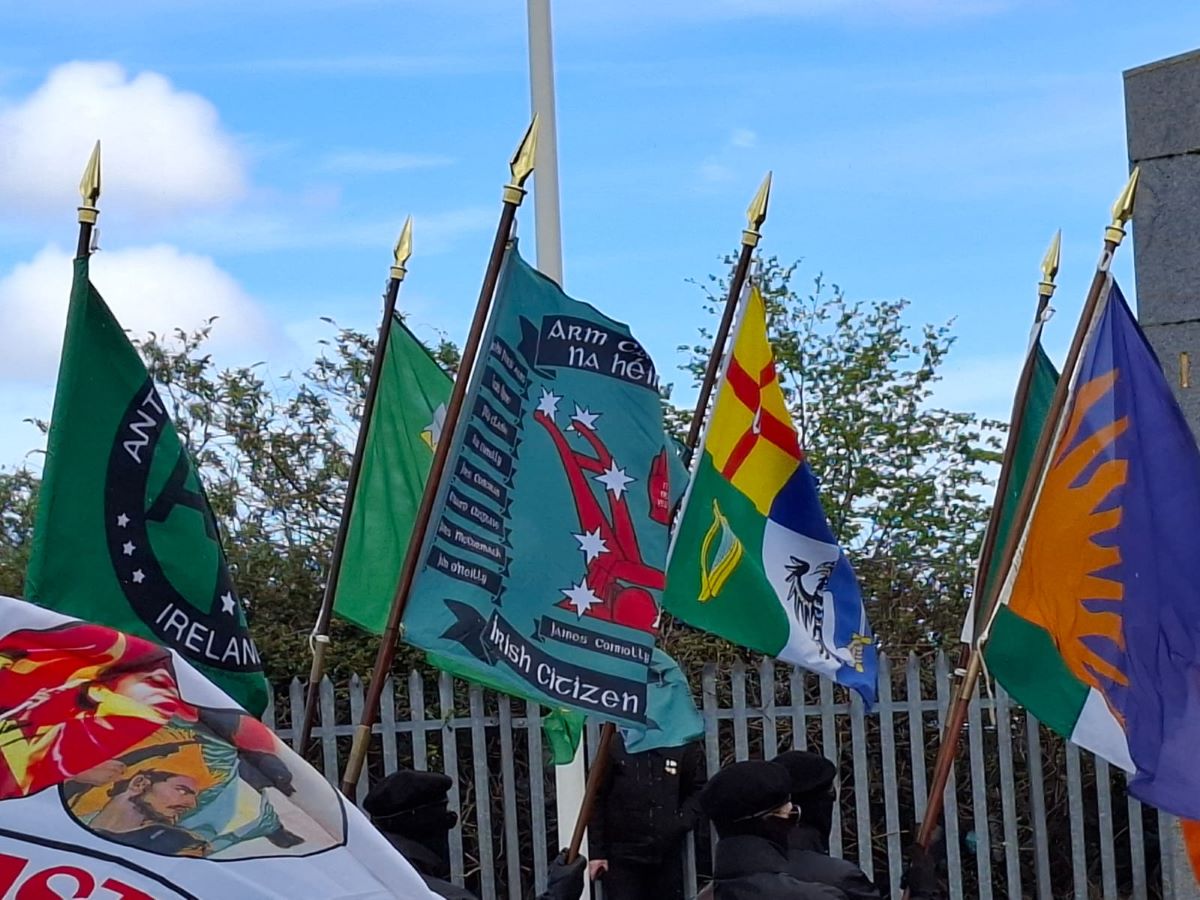
Participants met outside the Phibsborough shopping area on Dublin’s northside from which they were led by a lone piper, a colour party and a number of banners. Among them flew various flags of national and social struggle in Ireland, the Basque Country, Catalunya, Palestine, Turkey …
The lone piper in Phibsborough exercising his lungs and warming pipes and bag as he prepares to lead the procession towards Glasnevin. (Photo: R.Breeze)
The orders to the colour party, as is traditional, were all given in Irish.1 At Cross Guns Bridge, the march halted and, in what has become a tradition for the AIA, flares were lit in memory of the presence of Irish Volunteers there in 1916 and the murder of a civilian by British soldiers.
Proceeding along Finglas Road to the interest of passers-by and the odd ‘beep’ of solidarity from a passing vehicle, the march turned left outside the gates of the older Glasnevin Cemetery to cross over the railway pedestrian bridge to the St. Paul’s section of the Cemetery.
Section of the marchers approaching Cross Guns Bridge from Phibsborough, halting as flares are lit in memoriam. (Photo: R.Breeze)
Winding their way on a path through the headstones, what was now one thick column approached the monument to six Irish Republican armed uprisings, commissioned by the National Graves Association, where a representative of the AIA greeted them.
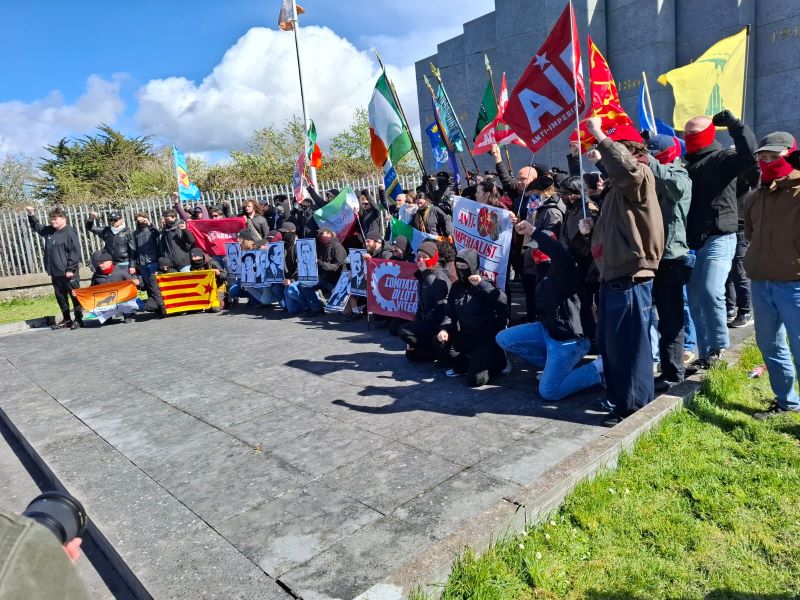
From the Monument, the AIA representative introduced the reason for the commemoration and listed in honour the Irish Republican Brotherhood, Irish Volunteers, Irish Citizen Army, Cumann na mBan and Na Fianna Éireann, different organisations that fought together in the Rising.2
Central: Flags of the colour party, from left to right: Flag of AIA, Irish Citizen Army (mostly concealed), a version of Irish Citizen Army, emblems of the four provinces of Ireland, the Tricolour (mostly concealed), the Gal Gréine (Sunburst). The flag intervening from the left is of some participants in the Anti-Imperialist Front, a different organisation. (Photo: R.Breeze)
He called for delegates of different organisations to meet to decide a basis for unity, following which, going on to note that the AIA has long been prepared to work alongside others for shared objectives, he announced floral wreaths to be laid on behalf of the CPI and IDR.3
After the laying of those wreaths, another man was called to read the text of the 1916 Proclamation.
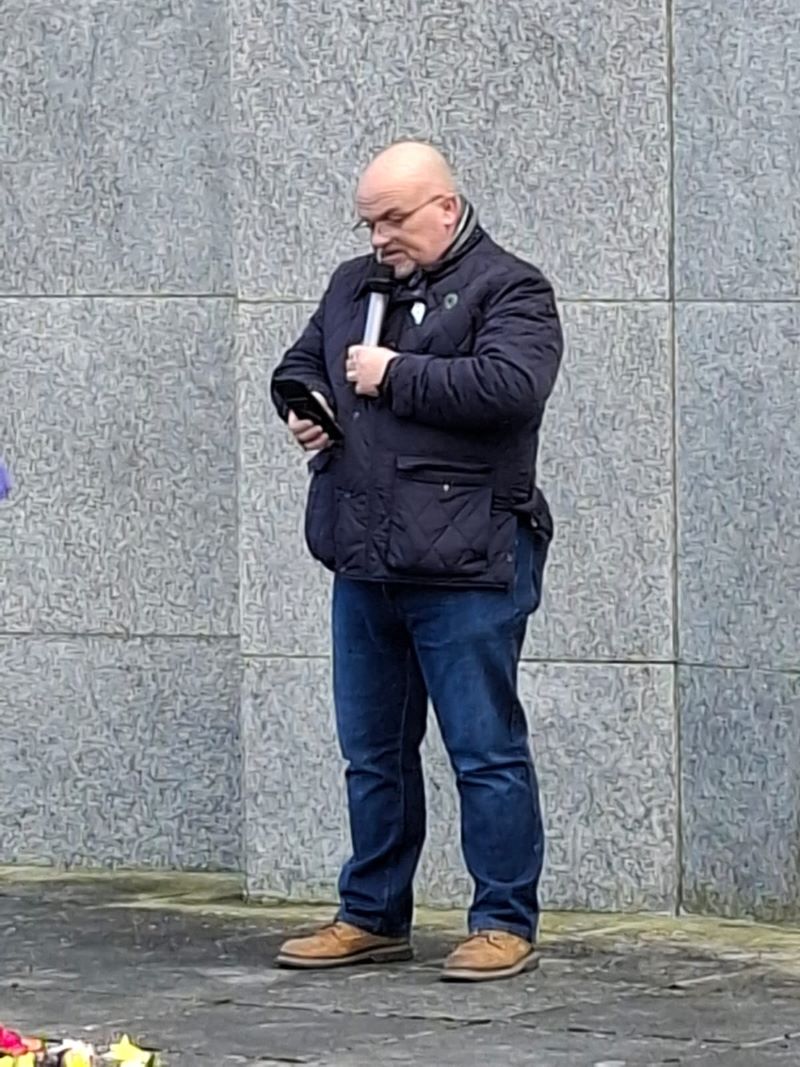
The keynote speaker, a veteran Irish Republican and former political prisoner, was then introduced. He began by reminding his audience of Irish Republican armed uprisings before 1916 going back to 1798 and forward up to the war in the occupied Six Counties.
The main speaker, veteran Irish Republican and ex-political prisoner, delivering the oration for the commemorative event. (Photo: R.Breeze)
The speaker made a number of points regarding the text of the 1916 Proclamation, the declarations of which remain to be fulfilled, in its address placing women on an equal standing with men, ‘cherishing the children of the nation equally’ and guaranteeing ‘civil and religious freedom to all.’
Drawing on the example of those of varying ideological positions who in the 1916 Rising united to “fight against the largest world empire in history”, the ex-prisoner called on Irish Republicans to find the means to unite in action today against imperialism and colonialism.
The speaker also highlighted that the objective of the Rising had been an independent democratic republic which is still to be achieved and that Republicans need to honestly confront the failures which, despite strong resistance, have weakened the struggle to date.
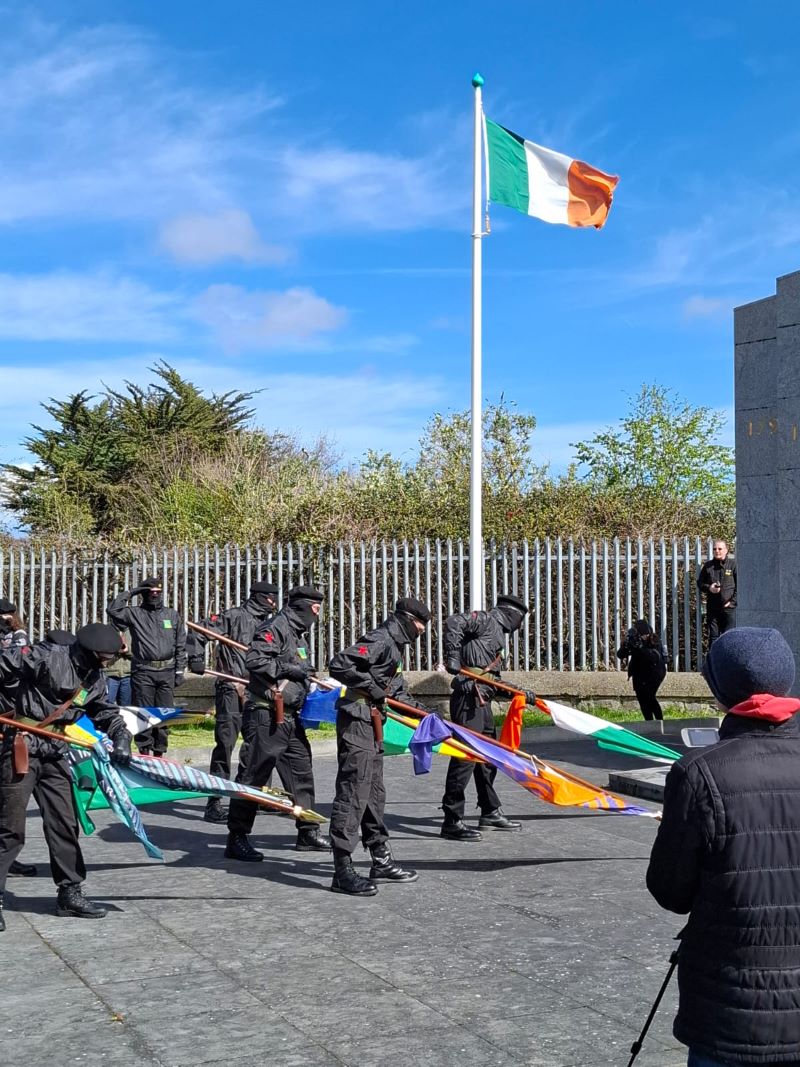
The piper played a slow air as the flags of the colour party were lowered and a few minutes’ silence observed – a traditional Irish Republican honouring of its martyrs in struggle. Announcing the end of the event the MC then called for the piper to play Amhrán na bhFiann4 to conclude.
A moment in the lowering of the colour party’s flags during the moments’ silence in honour and remembrance of fallen martyrs. (Photo: R.Breeze)
COMMENT
The attendance at this year’s event was numerous and encouraging, even discounting the numbers from abroad. The latter has been a feature of AIA commemorations for some years but has also grown visibly in numbers and in countries of origin.
In previous 1916 commemorations of the AIA, songs had been performed by singers but that feature was missing this year. Another missing feature was a part-address in the Irish language, au contraire to the main speaker’s call for the restoration of Irish as the nation’s spoken language.
In common with a great many commemorations by varied organisations at this spot, there was no mention of the independent National Graves Association, for whose work and the monument itself much thanks are due.
A large section of the participants chose to have their photo taken in a group with the monument behind them, their flags, banners and the portraits of the Seven Signatories of the Proclamation to the fore. (Photo: R.Breeze)
The call for unity in struggle is a common one in the Socialist and Republican movement though less verified in practice across their organisations. That said, on many occasions the AIA has put the desire into practice in joint action with other organisations and independent activists.
It is certain that without general unity in action across the resistance movement in Ireland, neither independence nor revolutionary change in society can be achieved.
In the city centre, at the GPO,5 site of the HQ of the Rising in 1916, the State held its own commemoration, with admittance to the area close to the podium by ticket only. According to reports, the speeches of the Taoiseach6 of the Coalition Government were received in silence.
This was in contrast to the speech of the new Uachtarán or President, a native Irish speaker and of broadly left-nationalist political outlook, which was enthusiastically applauded.
End.
Note: If you found this article of interest, why not register with Rebel Breeze for free, so that you will be notified by email of subsequent articles. You can de-register any time you wish.
FOOTNOTES
1However, no other instructions were given in the language, not even ‘dhá líne’ (i.e two lines) when the marchers were being instructed by stewards to separate into two columns.
2Omitted, as it often is, was the participation of the Hibernian Rifles unit, who though not part of the planned Rising joined it and acquitted themselves well in the GPO Garrison and in support of the City Hall Garrison.
3Communist Party of Ireland and Independent Dublin Republicans.
4This air and its lyrics are widely considered the National Anthem of Ireland but for the State, it is only the air of the chorus that is their National Anthem. Composed shortly before the Rising by Peadar Kearney and Patrick Heeney in English, it was sung during the Rising and widely adopted by the Republican movement afterwards. The lyrics were translated to Irish by Liam Ó Rinn in 1923 and, unusually, that version became dominant.
5The General Post Office, an imposing building in Dublin’s main thoroughfare,1 for which recently the Irish Government announced plans to remove the An Post (postal service) to develop in part as a shopping centre.
6Equivalent to Prime Minister. The Government is a coalition of formerly hostile parties Fine Gael and Fianna Fáil, from oppositional sides of the Irish Civil War (1922-1923) and supported by the Green Party and some Independents.
The recognised date known as International Working Women’s Day is March 8th and it was commemorated on that date with a march and revolutionary words and symbolism organised by Irish Socialist Republicans in Dublin.
The marchers gathered outside Wynn’s Hotel in Lower Abbey Street, to mark the founding there of the revolutionary Republican military women’s organisation, Cumann na mBan, on 2 April 1914. The organisation, with its own officers, was possibly the first of its kind for women in the world.1
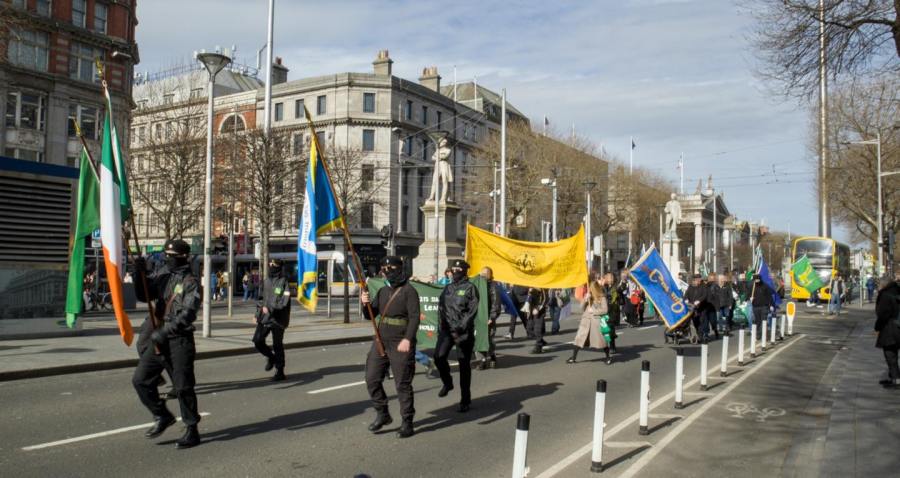
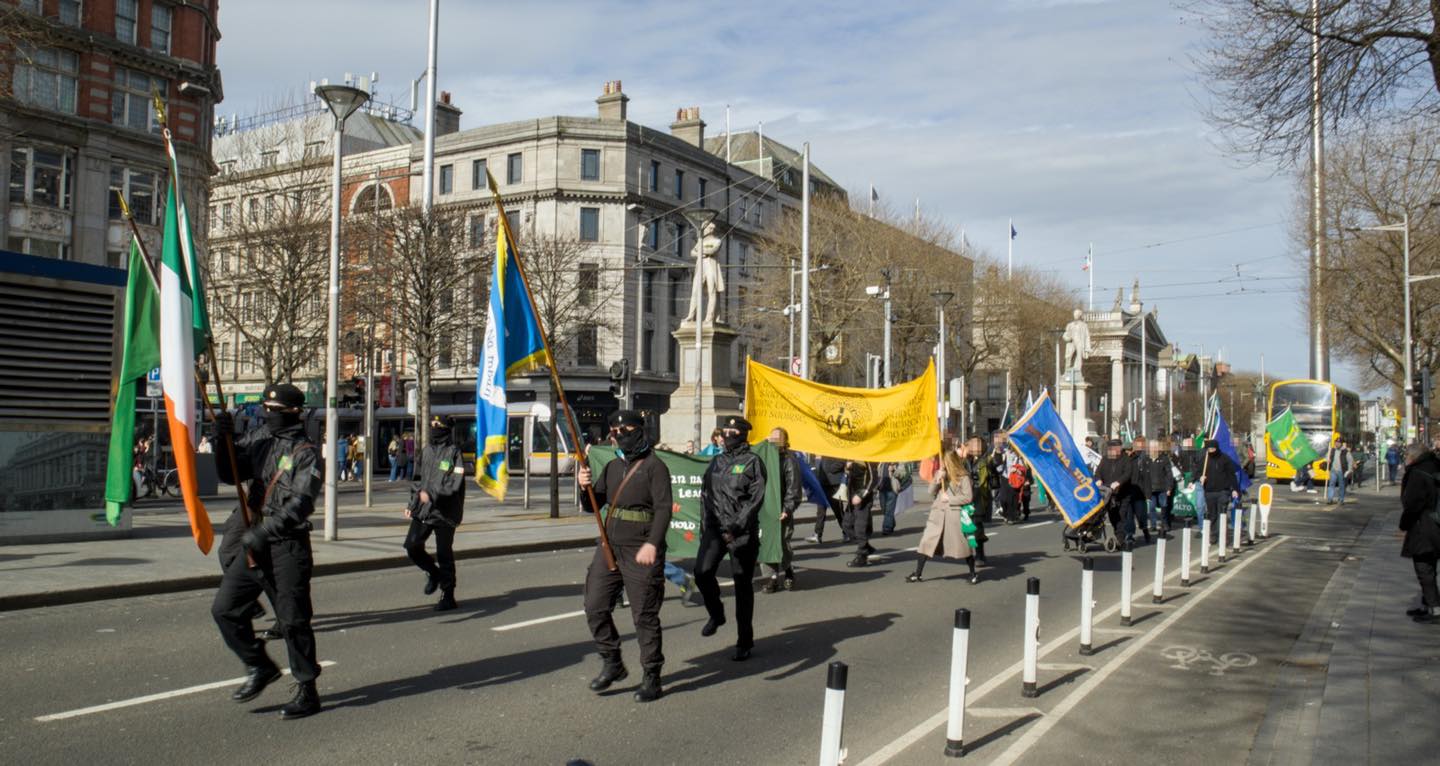
From there the march set off into O’Connell Street, then marching southward to cross the Liffey into D’Olier Street before turning left into Townsend Street, continuing to the statue of Constance Markievicz where the colour party’s flags were lowered in respect.
The march near the start in O’Connell St (photo credit: An Pobal Abú FB page)
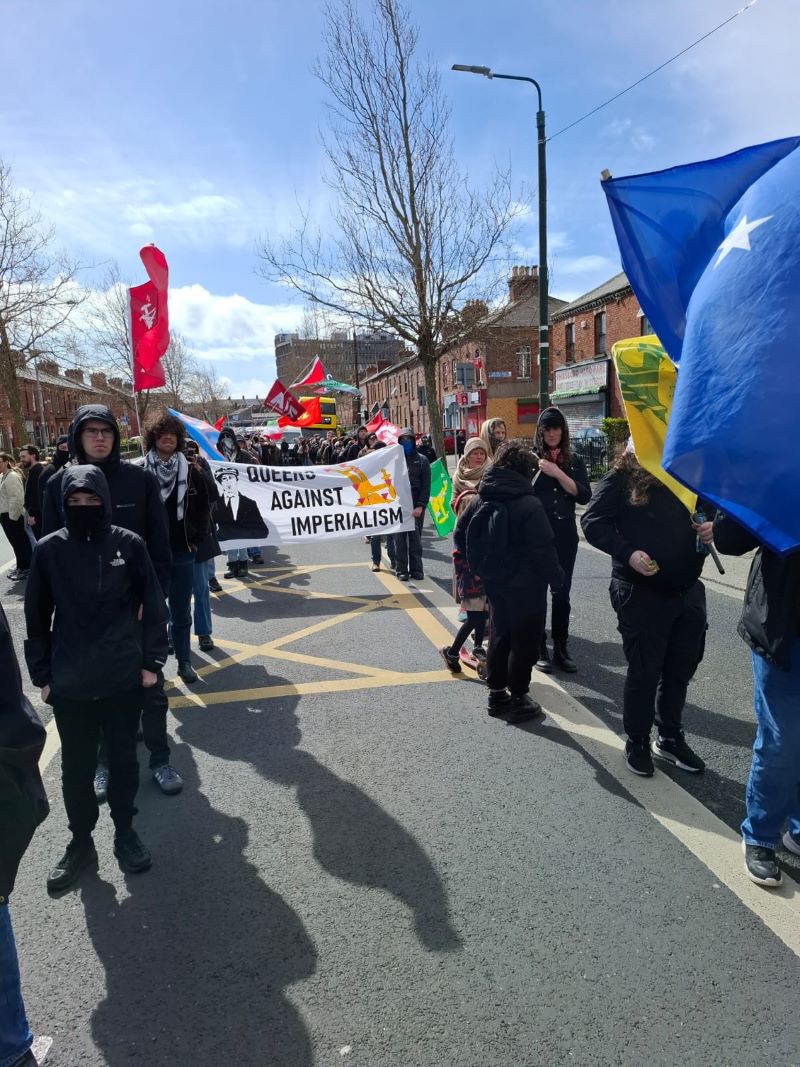
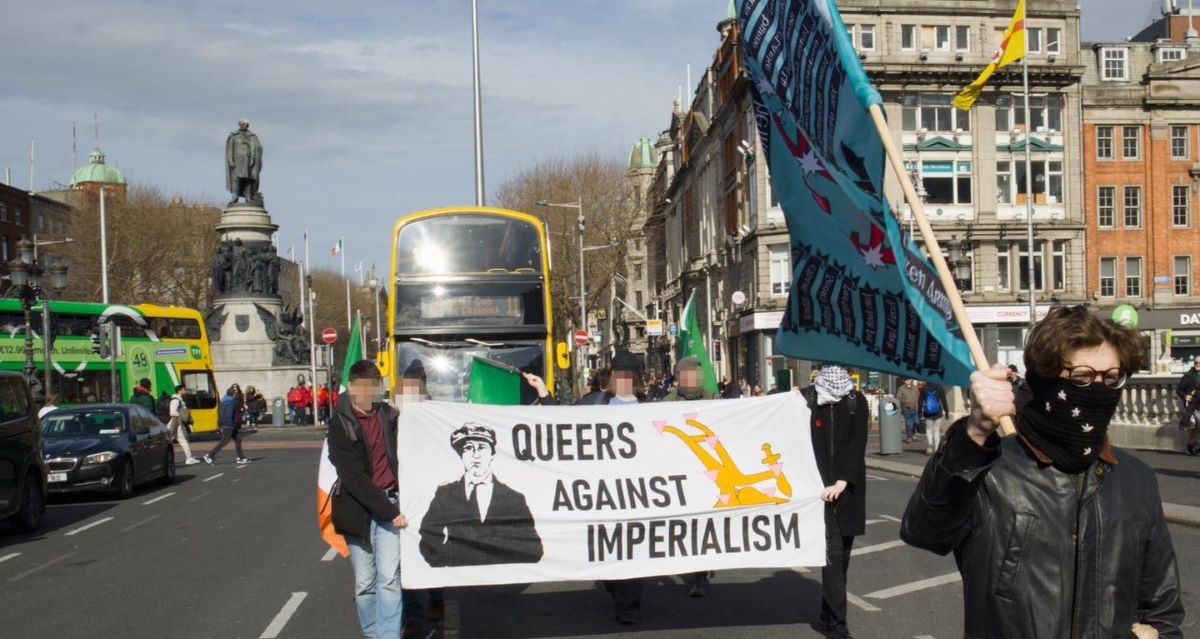
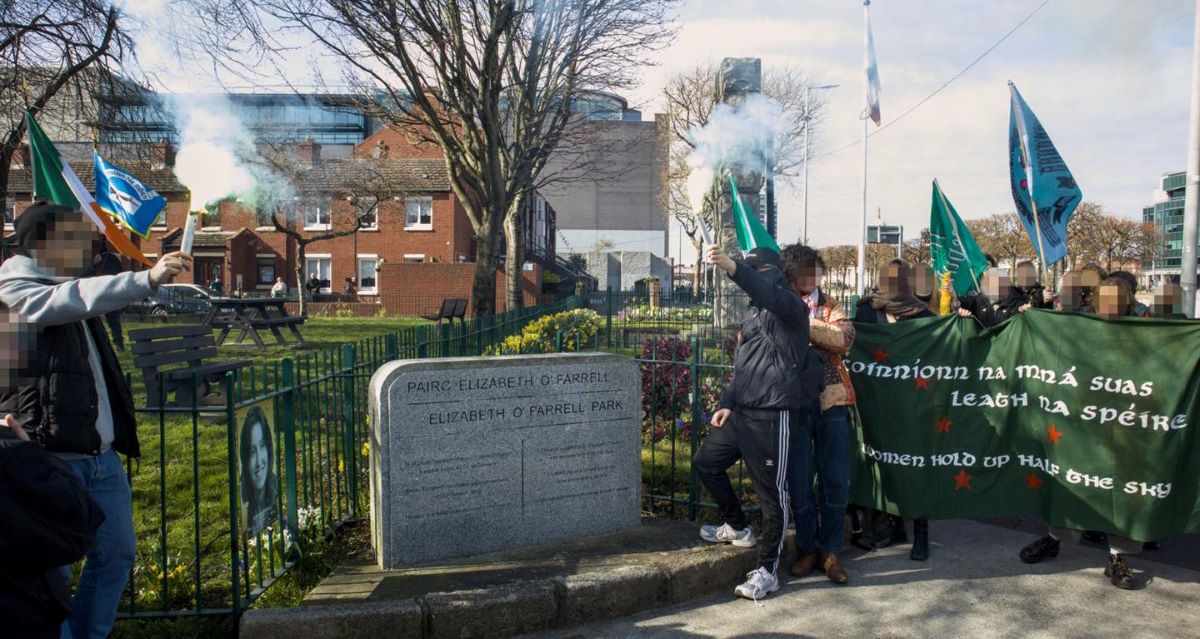
Throughout, chants of “Ní Saoirse go Saoirse na mBan”2 and “Britain out of Ireland” reverberated through the streets of Dublin as banners displayed the slogans “coinníonn na mná suas leath na spéire / women hold up half the sky” and “Queers Against Imperialism”.
Markievicz was an active member of Iníní na hÉireann, the Irish Citizen Army and of Cumann na mBan. She was part of the command of the Stephens Green/ College of Surgeons garrison in 1916 and elected MP on an abstentionist ticket in 1918 and Minister of Labour in the First Dáil in 1919.
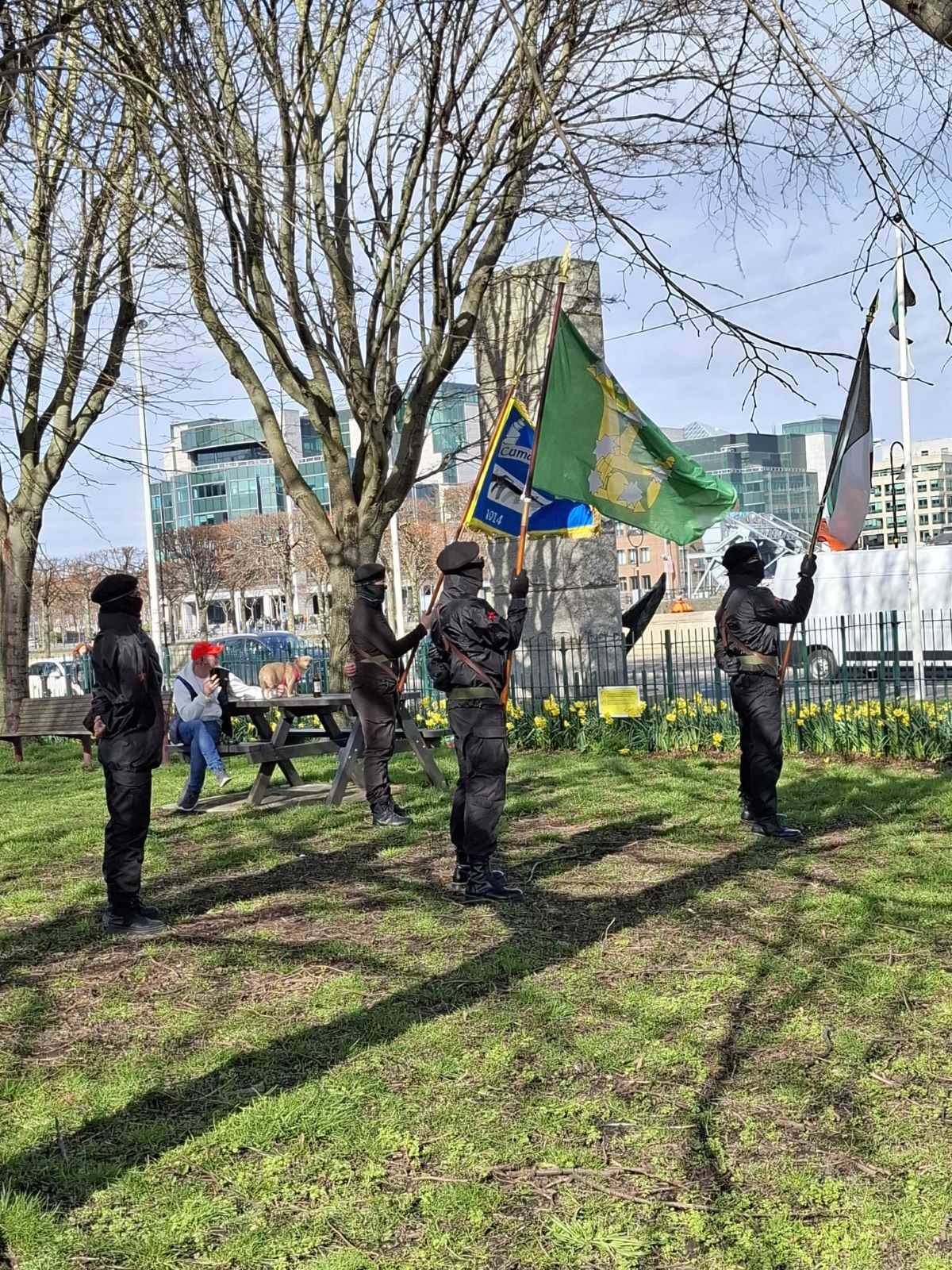
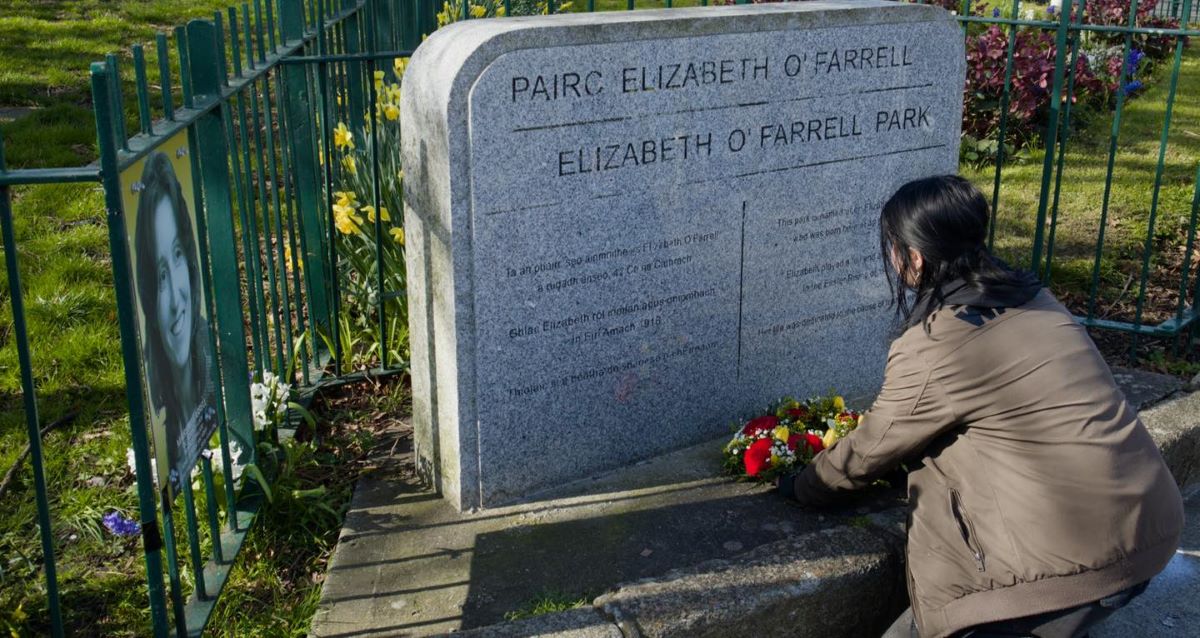
Continuing along Townsend Street and ending at Elizabeth O’Farrell park where a commemoration was held outside in honour of the role of women in the struggle for national liberation while the colour party took up position inside the park.
(Photo credit: An Pobal Abú FB page)
A woman read a speech on behalf of the AIA, tracing founding of International Women’s Day from when women in Russia in 1917 had led strikes and marches against the Tsar and WW1, later becoming known as the February Revolution, leading later to the October Socialist Revolution.
The speaker went on to speak of the role of women in the Republican struggle, from Cumann na mBan, the Irish Citizen Army and Armagh Gaol Republican prisoners, followed by a woman reading the 1916 Proclamation of Independence and the burning of two green flares.
(photo credit: An Pobal Abú FB page)
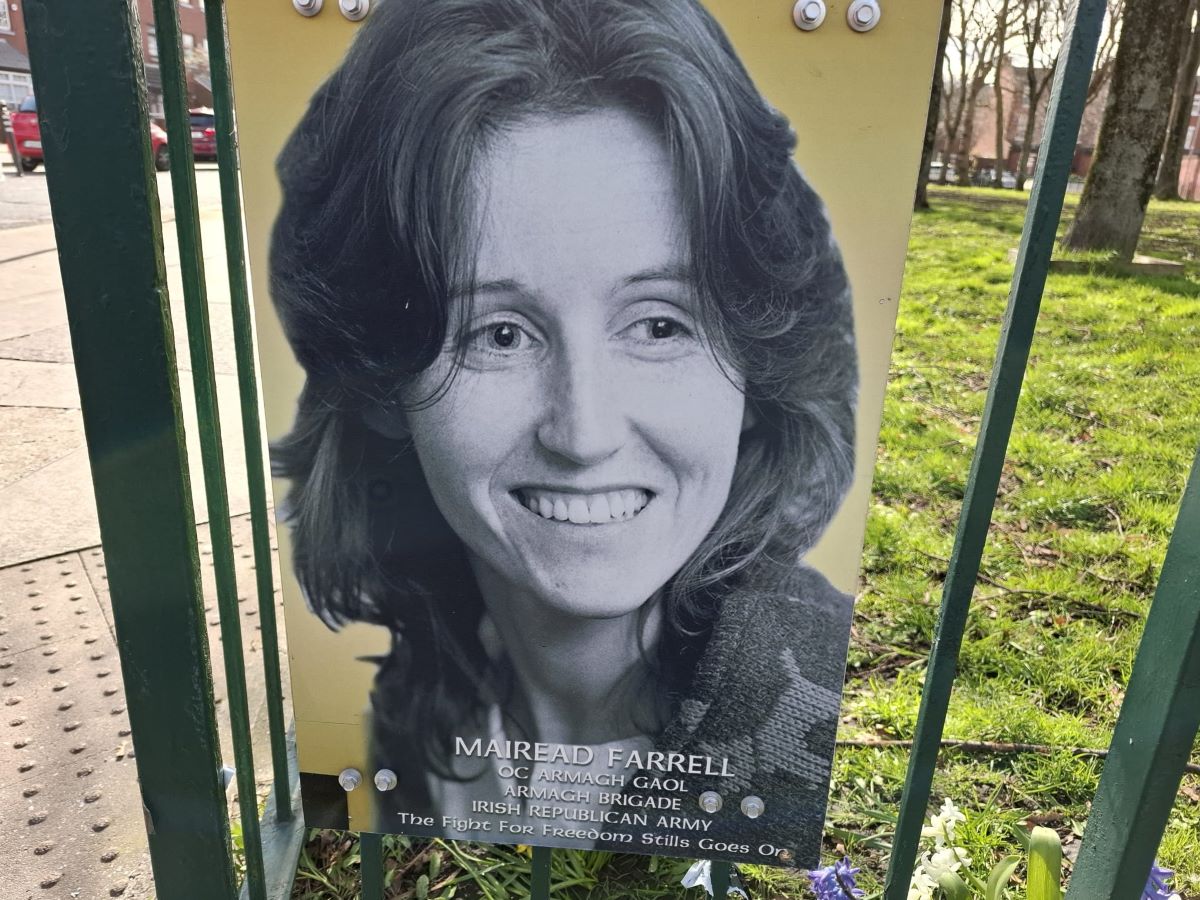
A new plaque of the Socialist Republican Mairéad Farrell was unveiled with the laying also of a commemorative wreath during a minute’s silence observed for all revolutionary women and gender oppressed people who gave their lives for national liberation and anti-imperialist struggle.
The Colour Party in Elizabeth O’Farrell Park (Photo: R.Breeze)
At the same time the colour party lowered their flags in respect, during which the command calls in Irish rang out in the area through the silence.
The area in which the Elizabeth O’Farrell and her life-long friend Julia Grenan3 grew up is a south Dublin docklands still largely working class area. It was in a yard in Lombard Street nearby, actually within sight of the park, that the IRB (Fenians) was founded on March 17th 1858.
Laying of the wreath (photo credit: An Pobal Abú FB page)
Elizabeth O’Farrell and Julia Grenan both participated in the 1916 Rising and, along with Winifred Carney, refused to join the earlier evacuation from the burning GPO building on the Friday, later participating in the final evacuation which ended in the central terrace in Moore Street.
When the leadership took the decision to surrender, O’Farrell went out to negotiate under a white flag even though a man had been killed under such a flag earlier in the very street. In 1922, along with almost the entirety of Cumann na mBan and the ICA, she rejected the Anglo-Irish Agreement.
(Photo: R.Breeze)
Many women were interned by the nascent neo-colonial Irish Government.
After the Elizabeth O’Farrell Park event, people gathered again at a recently-occupied social centre in Dublin, to view an exhibition of images in honour of the day and to watch an English-subtitled French-language film about women and the Omani Resistance, followed by a music session.4
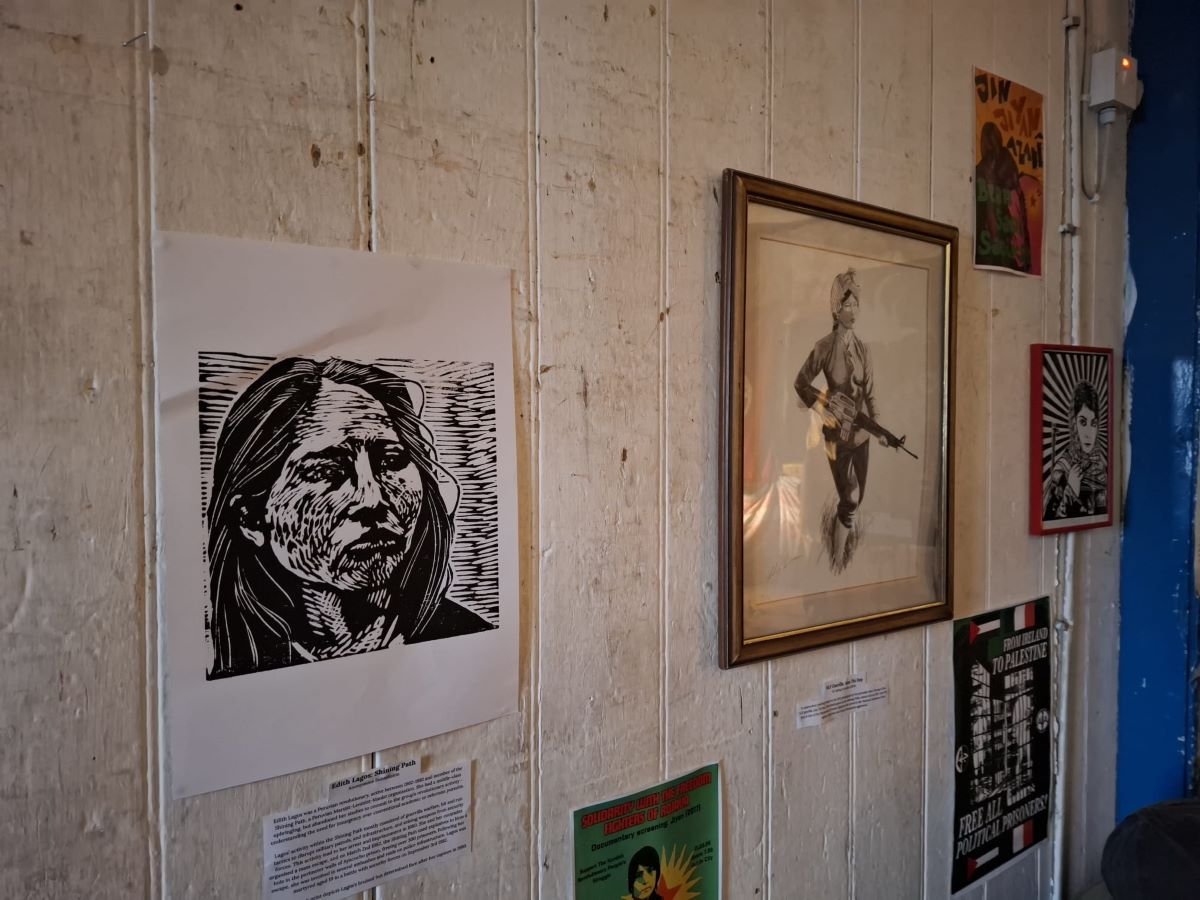
Part of exhibition for International Working Women’s Day in the social centre (Photo: R.Breeze)
End.
Note: If you found this article of interest, why not register with Rebel Breeze for free, so that you will be notified by email of subsequent articles. You can de-register any time you wish.
Footnotes
1In its early years the organisation worked mainly as an auxiliary to the Irish Volunteers but asserted greater independence at a later stage. It coincided in time with the women in the Irish Citizen Army who shared equal status with male members and indeed in the case of some of them, such as Markievicz and Lynn, actually commanded men. Wynne’s Hotel was also where the decision to found the Irish Volunteers had been taken in 1913.
2Translated as ‘There can be no freedom until women are free.’
3And life partner, many have speculated – certainly they lived together until the end.
4The Hour of Liberation Has Arrived by Heiny Srour