Diarmuid Breatnach
(Reading time: 4 mins.)
Alerted by a sibling to a short exhibition on the life of the Spice Man (Thom McGinty), a remarkable performance artist and character of Dublin streets particularly associated with Grafton Street, I was fortunate to view it on its final day.
The exhibition was part of the annual Phizzfest’s annual program and was staged in the Bohemians FC room above the Phibsborough shopping centre. The space was a moderately-sized room with a few installations, a film projector, panels of images and text displayed on the walls.
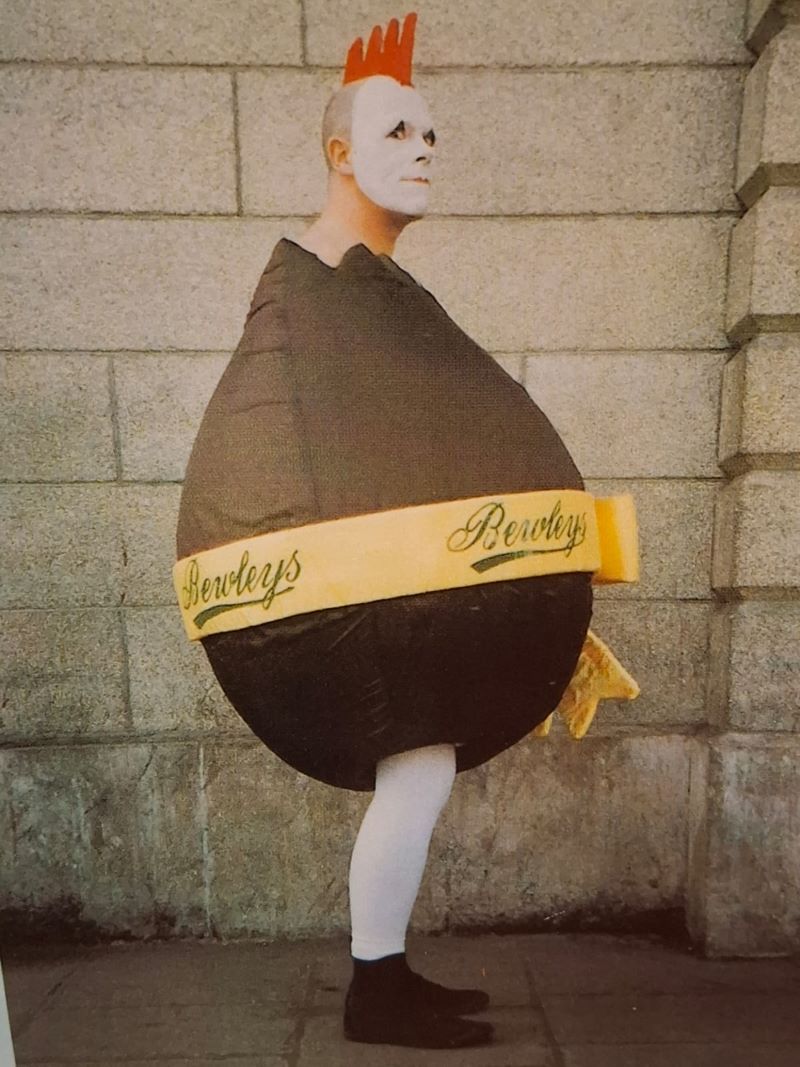
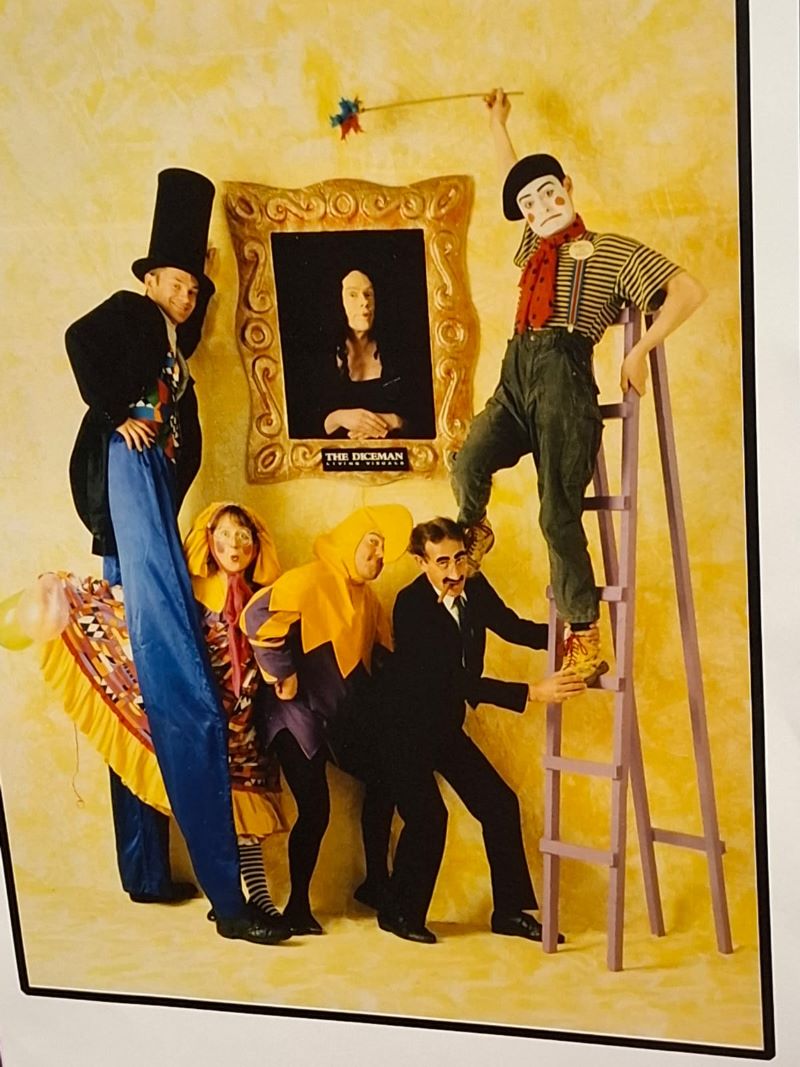
Sadly the chatter of a number of people made it difficult – for me at least – to understand all the audio accompanying the film footage but some of the images were very interesting, in particular the reaction of Dublin adults and children to the Spice Man’s street performances.
When he spoke it was with a Scottish accent, having been born to a father from Donegal and mother from Wicklow and reared in a village outside Glasgow from where he recalled journeying on holidays to Baltinglass for family reunions.
He came to economically-depressed Ireland in 1976, trying his hand at a number of occupations before he found the one that both gave him success and defined him publicly.
Typically, his performance was silent, his movement stilled or gradual, slow but moving to avoid arrest.1 But his costume and makeup were something else. Though McGinty later initiated performances in social and political protest, his initial ones in Dublin were commercial promotions.
A gaming shop called The Dice Man was the first of these and the one that gave him the nickname by which he became known and found fame. It was one of the commercial promotions, ironically not a political one, that ended with his arrest.
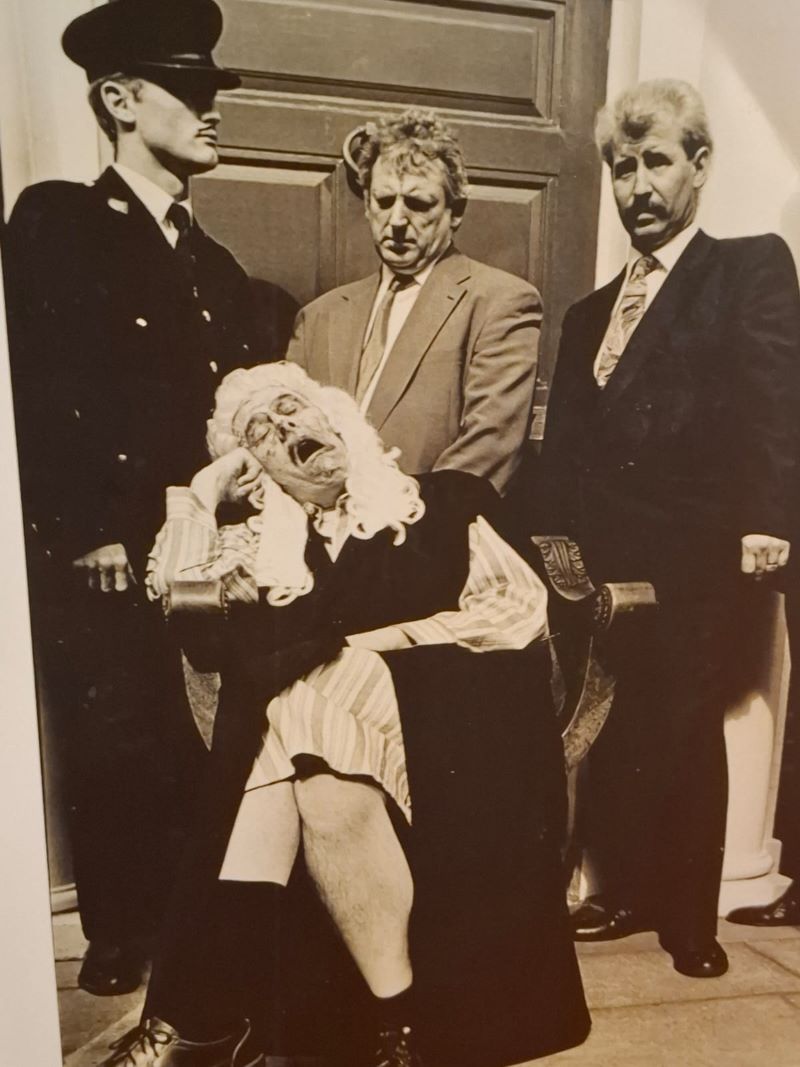
The promoters of a run of The Rocky Horror show in Dublin hired Thom to promote their show which he did, walking the street in ‘horror’ facial makeup, a cerise basque, fishnet stockings and a thong. He was arrested.
McGinty was charged with acts contrary to public decency under Section 5 of the Summary Jurisdiction (Ireland) Amendment Act, 1871, and with breach of the peace. Thom protested that these were his working clothes and he had been contracted to wear them.
According to the arresting gardaí, complaints had been made that Thom’s buttocks were clearly visible, “and the only thing covering his genitals was a G-string.” He was bailed from Store Street Garda Station pending the trial but could not be released until he was given a raincoat to wear.
The Act, which is still on the statute books (according to the exhibition text) had sexual connotations and could be used against gay people. McGinty’s lawyer raised the ramifications of a conviction under this Act and the judge sentenced him to probation without recorded conviction.
The 1991 production of the Rocky Horror Show at the Bord Gáis Theatre could not have asked for better publicity and McGinty personally got exposure (!) internationally and offers of work abroad as a result, from which he always returned to Ireland.
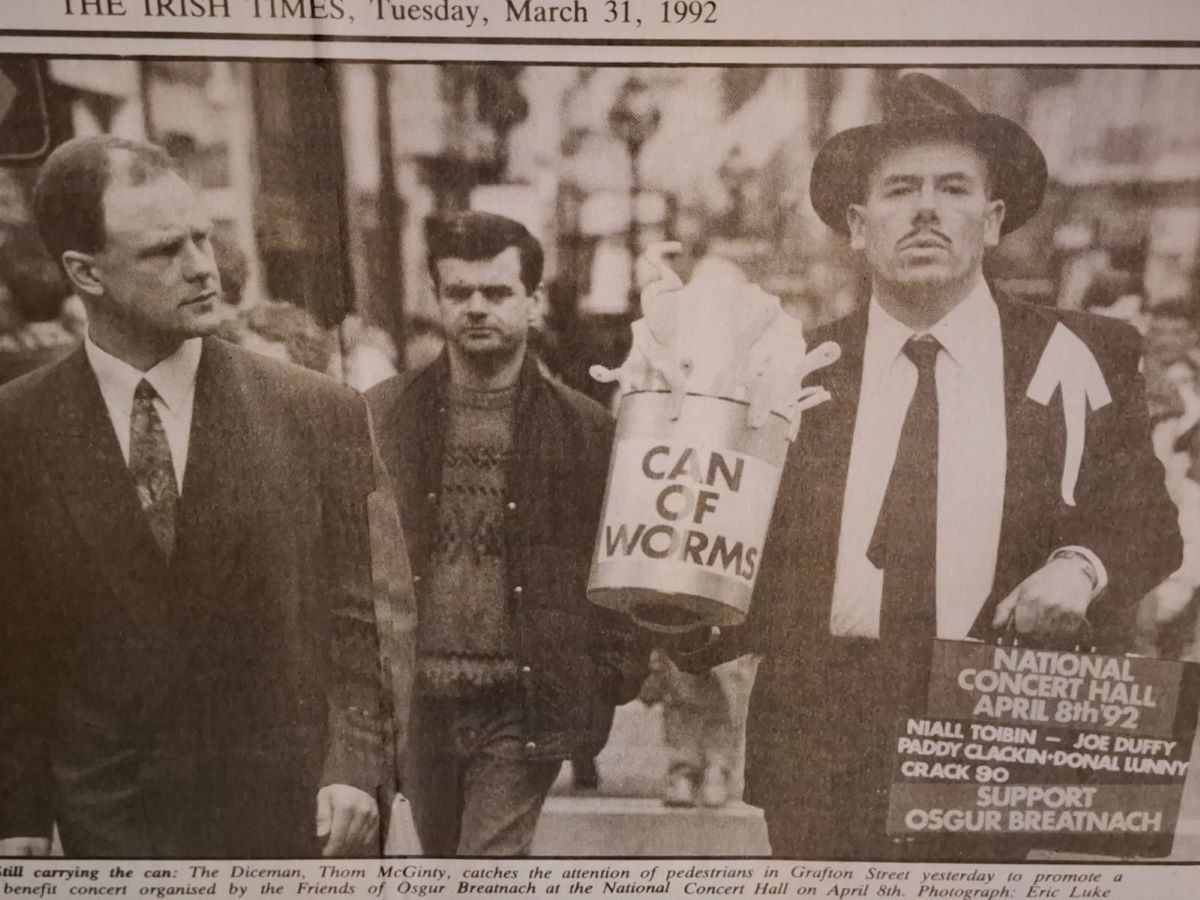
Among social causes which Thom protested with performance was the financial penalty on the Union of Students in Ireland for breach of injunctions by publishing anti-pregnancy choice information in a case pursued by SPUC.2 Another was against restrictions on the sale of condoms.3
Thom’s performances and the causes espoused would have been of interest to me had I been living in Ireland at the time but they touched on my family in Dublin a number of times. Foremost was his support for the wrongly accused, framed and brutalised of the Sallins Mail Train robbery.
It is nearly 50 years since three socialist Republicans were wrongly convicted and sentenced to nine and twelve years imprisonment. As a result of much campaigning, two of the accused, one of whom is a sibling of mine, were released with convictions revoked after 18 months in Portlaoise jail.
The third accused, who had absconded the day prior to the sentence, returned to Ireland and was immediately jailed, campaigners then switching to obtain his freedom, gained only ‘on humanitarian grounds’ after four years in jail and a hunger strike of 38 days.
A recent concert, packed both by audience and performers in the Vicar Street Dublin venue was organised by yet another sibling to promote a campaign for an inquiry into how that travesty of justice could be carried out by state police, Government and judiciary right up to the High Court.4
Thom was a strong supporter of liberal social rights such as the right to prevent pregnancy or birth and for gay and lesbian rights. His defence of framed Irish Socialist Republicans centred on their right to a fair trial and not to be brutalised, as did his support for the Birmingham Six.
But he was far from being an Irish Republican. Dressed as the Grim Reaper with scythe, Thom also led a delegation of ‘Peace Train’5 people in protest to the offices of Provisional Sinn Féin where, in a twist of fate, it was another sibling of mine who had to receive him and to face the cameras there.
At the time, SF was the political party leading a struggle for Irish reunification and independence from British occupation and, though its leadership and much of the party’ base support was socially conservative, it was not that which focussed the attacks of two states and a statelet6 upon it.
And those armed and judicial attacks were backed by the imperialist and neocolonial-dominated liberal and social-democratic sector of society, the likes of the ‘Peace (sic) Train’ and ‘Peace Women’.7 I would have argued strongly with Thom I’m sure but regret very much his passing.
Thom McGinty (1952-20/21 February 1995)
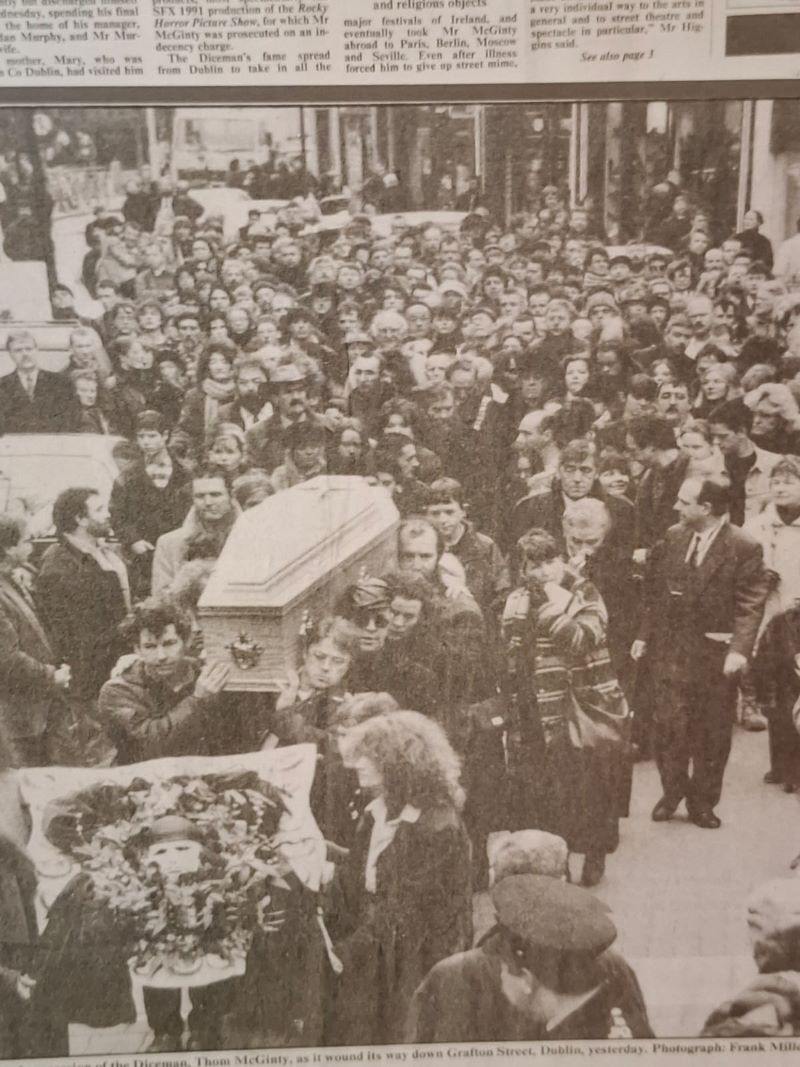
end.
Note: If you found this article of interest, why not register with Rebel Breeze for free, so that you will be notified by email of subsequent articles. You can de-register any time you wish.
FOOTNOTES
SOURCES
Biography Thom McGinty: https://www.thejournal.ie/readme/the-dice-man-5007353-Feb2020/
The Sallins Mail Train frame-up and campaign: https://sallinsinquirynow.ie/
The ‘Peace People’ etc, Mairéad Corrigan/ Maguire: https://en.wikipedia.org/wiki/Mairead_Maguire
1On ‘loitering’ charges.
2Society for the Protection of the Unborn Child. After a long struggle ending pregnancy became legal within the Irish state but regulated under the Health (Regulation of Termination of Pregnancy) Act 2018, allowing for termination on request up to 12 weeks of pregnancy. Following a 2018 referendum, abortion services began on 1 January 2019, providing free access for residents.
3Following campaigning and public defiance of the law, restrictions on the sale of condoms were only finally removed in 1993 in the Irish state.
4https://sallinsinquirynow.ie/
5https://en.wikipedia.org/wiki/Peace_Train_Organisation The issue is not whether bombing the railway line was a useful activity or not but rather that its condemnation took the place of condemning and drawing attention to the British occupation of a colony in Ireland and the brutal repression of resistance to that occupation.
6Although it has the trappings of a state, the Northern Ireland (sic) Assembly is a UK colonial administration.

