

Clive Sulish
(Reading time: 3 mins.)
The CCJ (Criminal Courts of Justice) in Parkgate Street, Dublin, are seeing an increase in political cases in recent weeks with activists in housing and Palestine solidarity as well as Irish Republicans fighting extradition to the British colony.
Eoghan Ó Loingsigh, who made the mistake of asking a Garda for his badge number while they were carrying out an eviction, appeared there in February only to see his case thrown forward to June.

Another housing activist’s charge of attempting to break into an empty property was dismissed. The property in question, empty for a number of years is leased to the Salvation Army and three years ago two RHL1 activists were evicted from it by 100 Gardaí (some armed) with helicopter support.
Jack Brazil, a Palestine solidarity activist whom the Gardaí are trying, believe it or not, to tie into the racist and criminal riots of November last year, had yet another appearance in court without trial as he’s still trying for CCTV footage from Gardaí to support his alibi for the night.
At least the remaining bail restriction on Brazil was lifted: at the outset he had to sign on at Mountjoy Garda station once every week, observe a curfew of 12am-6am and not to loiter at any point in the Dublin city centre (D1 and D2). His case is now remanded to 26 March.

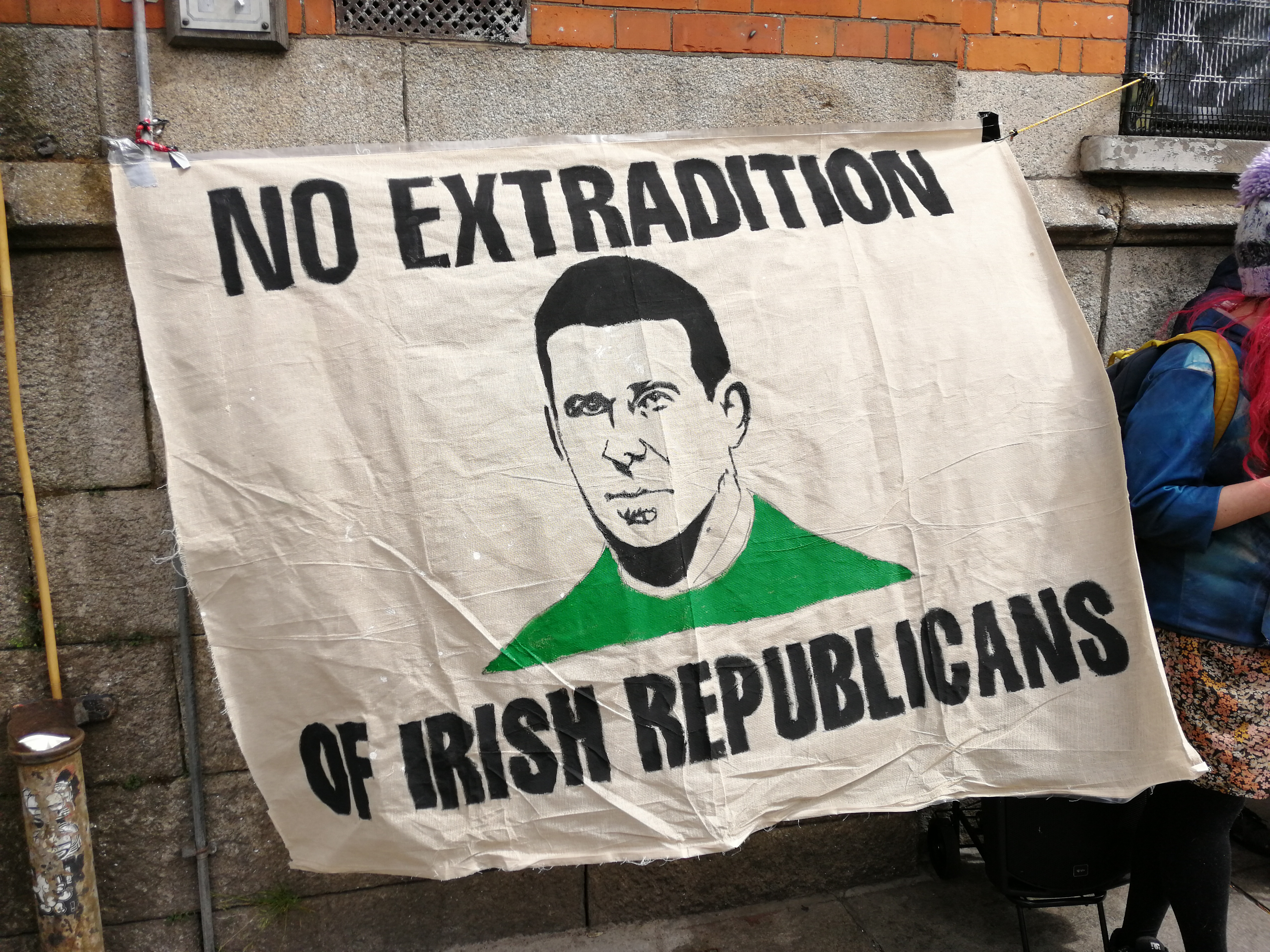
Jim Deneghan had a number of court appearances fighting extradition to the Six Counties on foot of charges alleging an act during the 30 Years War there – fifty years ago. He was unsuccessful and it appears that the only avenue open to him now would be to challenge it in the High Court.
Should they even grant him leave to do that which is not always the case.
Another extradition case has been dealt with in the Special Criminal Court, which is located within the same building as the CCJ, distinguished from other courts by the glass-enclosed reception ‘box’ through which one must pass to gain entry, first satisfying ‘security’ provisions.2
Sean Walsh has been fighting extradition to the UK’s Irish colony, the Six Counties on a charge of membership of an armed Republican organisation, which is deemed illegal on both sides of the British Border. He is in custody in Portlaoise awaiting a decision from the ECHR in Brussels.
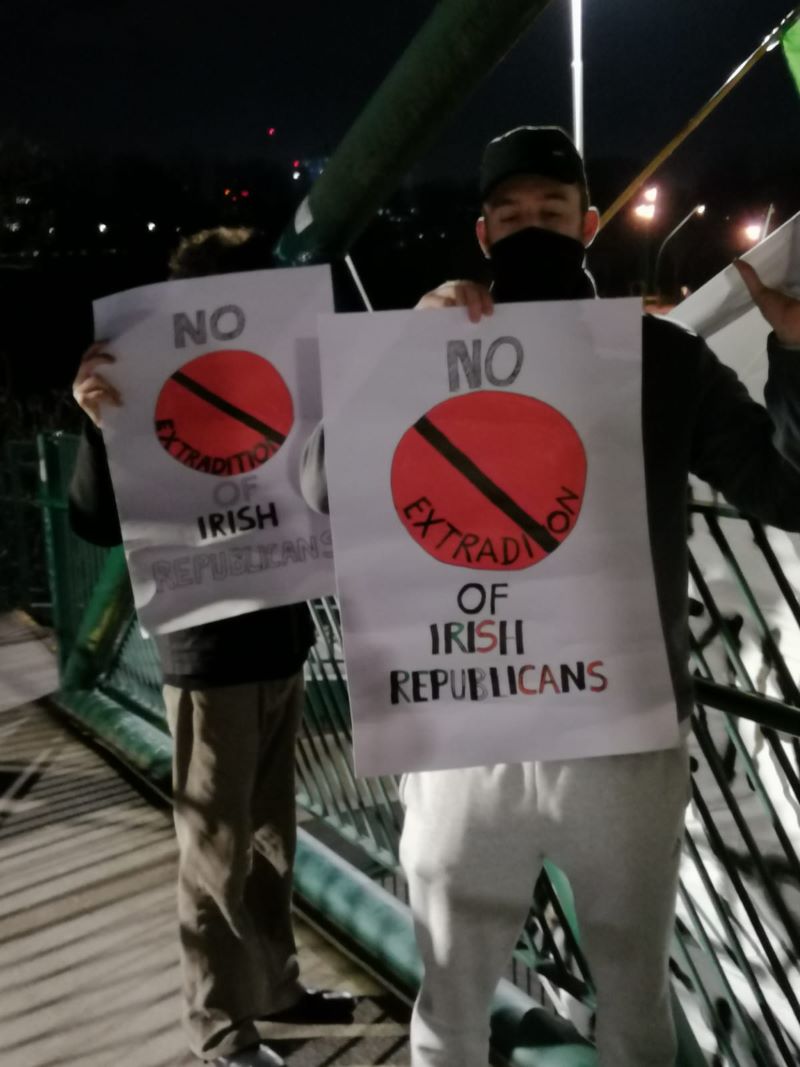
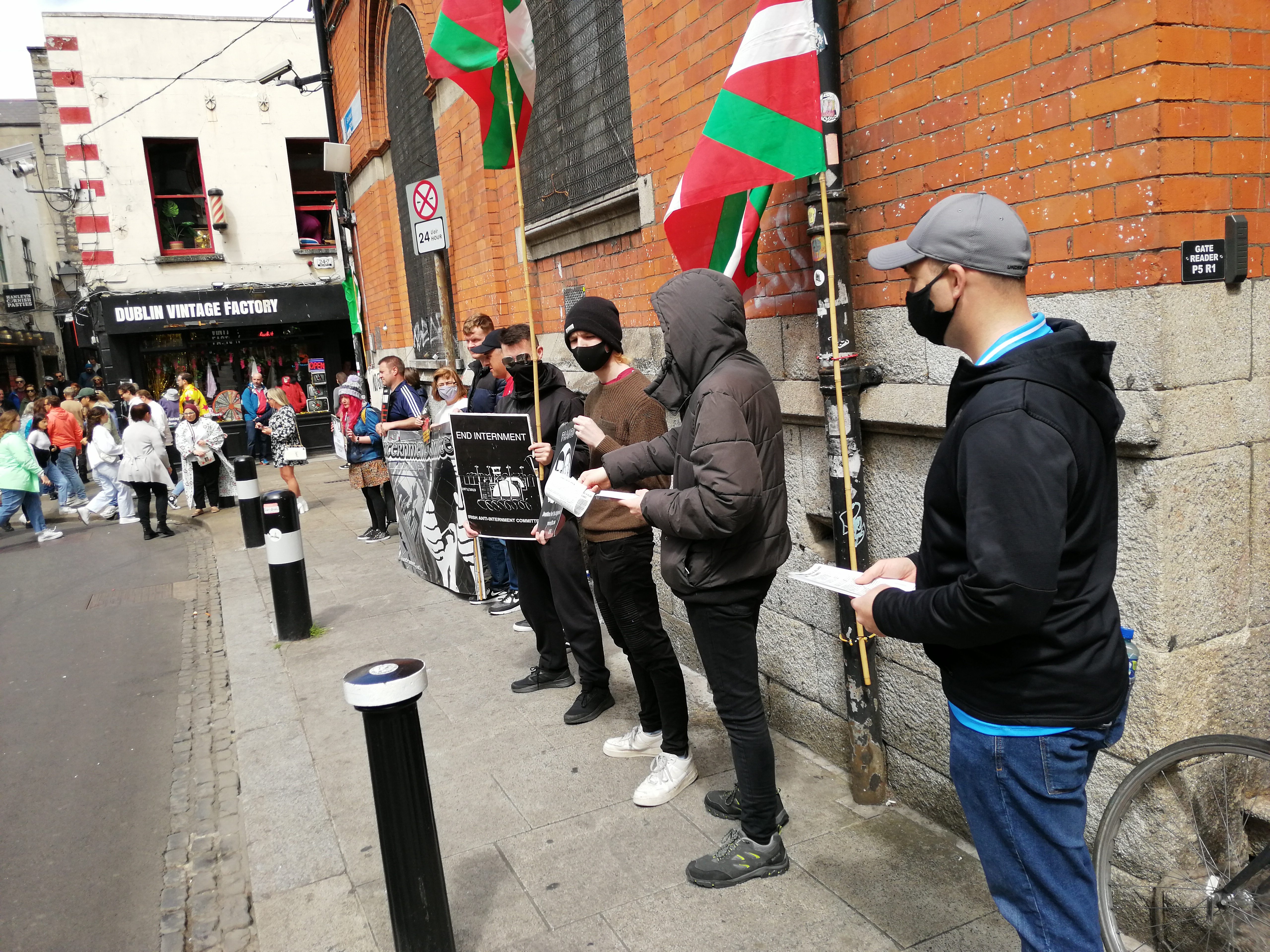
Independent Dublin Republicans organised solidarity pickets outside the court on the mornings of Denneghan’s appearances, while Anti-Imperialist Action held a picket against extradition outside the nearby Heuston Train Station and a more recent banner drop on the Fairview Pedestrian Bridge.

The CCJ courts, in particular those on the ground floor are extremely busy with what seems at times like industrial-scale processing of setting further dates for court appearances, granting or refusing bail, requiring ‘discovery’ and other documentation from the Gardaí and some sentencing.
The human subjects of these proceedings are mostly from what might be termed the under-class of Dublin with some migrants added for good measure. Most face charges of possession of drugs, anti-social behaviour, threatening behaviour, theft and breach of bail conditions.
A huge amount of court, lawyer and Garda time is taken up with processing people accused under these charges. On the other hand the processes also interfere hugely with the normal lives of those charged and in addition, in the case of political activists, disrupt some of their legal activity.
And can cost them loss of pay and even threaten their employment. Which might be deliberate on the part of the system or if not, at least something those who manage it will not regret.

The sheer number of that social group being processed through the courts daily is an indication of something really wrong with Irish society and which worsens even through generations, while the major reaction of the State is to maintain the social conditions and repress its victims.
By and large the middle class only come into contact with that element of society when they are prosecuting or defending them in court, or professionally dealing with them in hospital or social services environments.
It is also where many of those who are trying to change the prevailing social and economic conditions, i.e political activists, will first rub shoulders with that group while next to them on court seating benches. Unless the political repression goes a step further and they meet in jail.
End.
1Revolutionary Housing League which had renamed the building, on Eden Quay, ‘James Connolly House’.
2The non-jury SCC was established under an Amendment to the Offences Against the State Act, pushed through Leinster House by Fianna Fáil amidst collapse of its opposition during a panic caused by (British Intelligence) terrorist bombing of Dublin in 1972 killing two and maiming many. The scene of many unjust decisions, its most famous was the conviction of the innocent ‘Sallins Four’ when the SCC was based at Green Street, appropriately enough the scene of many injustices under the British occupation, including the death sentence on Robert Emmet after his famous speech. The existence of the SCC is opposed by Amnesty International and Irish civil rights organisations and, until a few years ago, by the majority political party in Ireland, Sinn Féin, which no longer opposes it.


 rebelbreeze