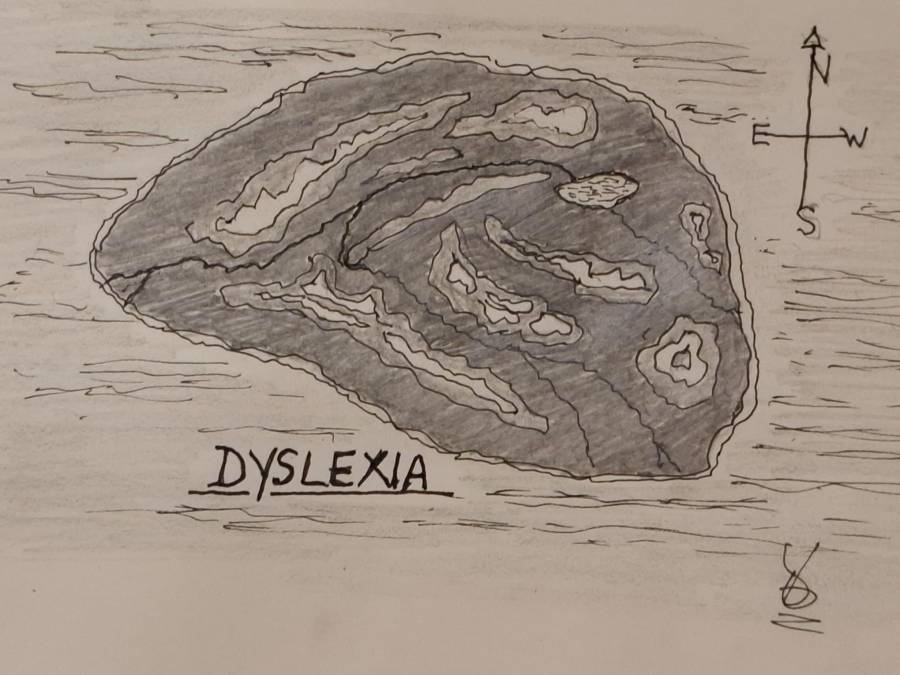
DYSLEXIA – A COUNTRY WHERE SURPRISE IS EXPECTED

Diarmuid Breatnach

(Reading time: 6 mins.)

(The author is known as a traveller to many exotic places, including expeditions in search of mythical lands, most famously “The United Kingdom”, the “Republic”, “Norn Ireland” and “The Mainland.” Here he writes about the land of Dyslexia).

Dyslexia is, as the suffix “-ia” suggests, a country …. think of India, Mongolia, Russia, California [now relegated to a vassal state], Hibernia [also something of a vassal state], Narnia [er .. no, that is an imaginary land in a series of children’s tales].

Strangely the existence of Dyslexia was not even suspected until 1881, when Oslawd Khanber1 claimed to have visited the land. His discovery was widely doubted until confirmed by Ludorf Linber2 in 1887.

The people of this newly-discovered land were distinguished by all having a difficulty to varying degrees in spelling and/or in remembering sequences of numbers.

Khanber and Linber both named this land (and the rest of the world agreed) “Dyslexia”, from the Greek root “dys” meaning “bad/ abnormal/ difficult” and “lex” meaning “word” (although in Latin it means “law”, understood as “written word”).

Dyslexia was, like many other lands and people, not named by the natives themselves, but by people from elsewhere. Such examples abound, for example “Australia”, “America”, “Scotland”, “Eskimo”, “Teddy Boys”, “Pagans”, “Celts”, “Saxons”, “Teagues”, “Gypsies”, “E.T.s” etc.

Attempts to identify what the Dyslexics themselves called their land have so far collapsed in confusion, with different spellings and even pronunciations hotly argued for against others.

In fact, there have been accusations of racism aimed at those who named the land “Dyslexia” and the people “Dyslexics” — it seems particularly cruel to create a word itself so difficult to spell to name a people with a known disability in spelling.

Previously, Dyslexics just called themselves “people” and the land “the land”, while those who came across migrants from there before Dyslexia was actually discovered called them other names: such as “stupid”, “slow”, “thick” or “people with ADD or ADHD”.3

However, most “Dyslexics” today have not only adopted the name and learned to spell it but are wont to proudly declare “I’m Dyslexic” (but rarely “I am a Dyslexic”).

When Dyslexia came to the attention of the rest of the World no-one seemed astonished that it should be discovered long after the North and South Poles, the Mariana Trench, the Matto Grosso Plateau and indeed a great number of planets.

What did astonish the World was that Dyslexia had apparently independently within its borders invented television, radio, Ipads, microwave ovens, central heating and hot showers and of course the internal combustion engine and nuclear power.

This proliferation of technology would have been normally amazing (if anything normal can be said to be amazing, or vice versa) in a previously undiscovered country.

But what was really, really amazing was that everyone in Dyslexia had overcome a disability to climb to such industrial heights. The obstacles must have been tremendous.

Imagine confusing, for example, sodium chloride, a common table salt, with sodium chlorate, which is used as a weedkiller.

Also by the way, as an ingredient in making home-made bombs, a curious fact since nitrogenous fertiliser, with a directly opposite effect to sodium chlorate when spread on weeds, is also sometimes used in making home-made bombs).

Anyway, shake sodium chloride in small quantities on your weeds and they probably won’t like it but most will survive – especially those that actually like a little of it, like relatives of the cabbages and such. Shake a little sodium chlorate on your food, however and ….

well …. no, don’t try it – without urgent and skilled medical attention you will die quickly and painfully.

For another example, imagine confusing “defuse” with “diffuse”: one goes to de-escalate a conflict and ends up spreading it around. Other confusions are possible between the noun or verb “ware”, the (usually) adverb “where” and the past tense verb “were”. And so on.

For physics, knowledge of and accuracy in mathematics is essential – algebra, logarithms, binary codes, sines and co-sines, square roots (these last are mathematical constructs, not mythical regulated-shape carrots as propagated by anti-EU campaigners).

In calculating distances, heights and depths, spaces and circumferences, ability in geometry, trigonometry and ordinary mathematics is required. Somehow, the Dyslexics, the inhabitants of Dyslexia, had overcome their disability or compensated for it in some way.

They had developed as flourishing and environment-poisoning an industrial society as the most developed parts of the world, such as the United States of America (most developed industrially, that is).

Dyslexics are said, despite this disability with letters and numbers, to be of above-average intelligence. They had to be, to develop all those complicated benefits of industrial society despite their handicap.

Strangely, one may think, many Dyslexics have become literary figures famous throughout the world, Hans Christian Andersen, Agatha Christie, F. Scott Fitzgerald and WB Yeats among them. Contrary to popular belief among non-natives, James Joyce was not from Dyslexia.

This prevalence of Dyslexics among so many giants of literature and indeed of virtually every other field of human endeavour has given rise to a group of Dyslexians who call their disability “the gift of Dyslexia”.
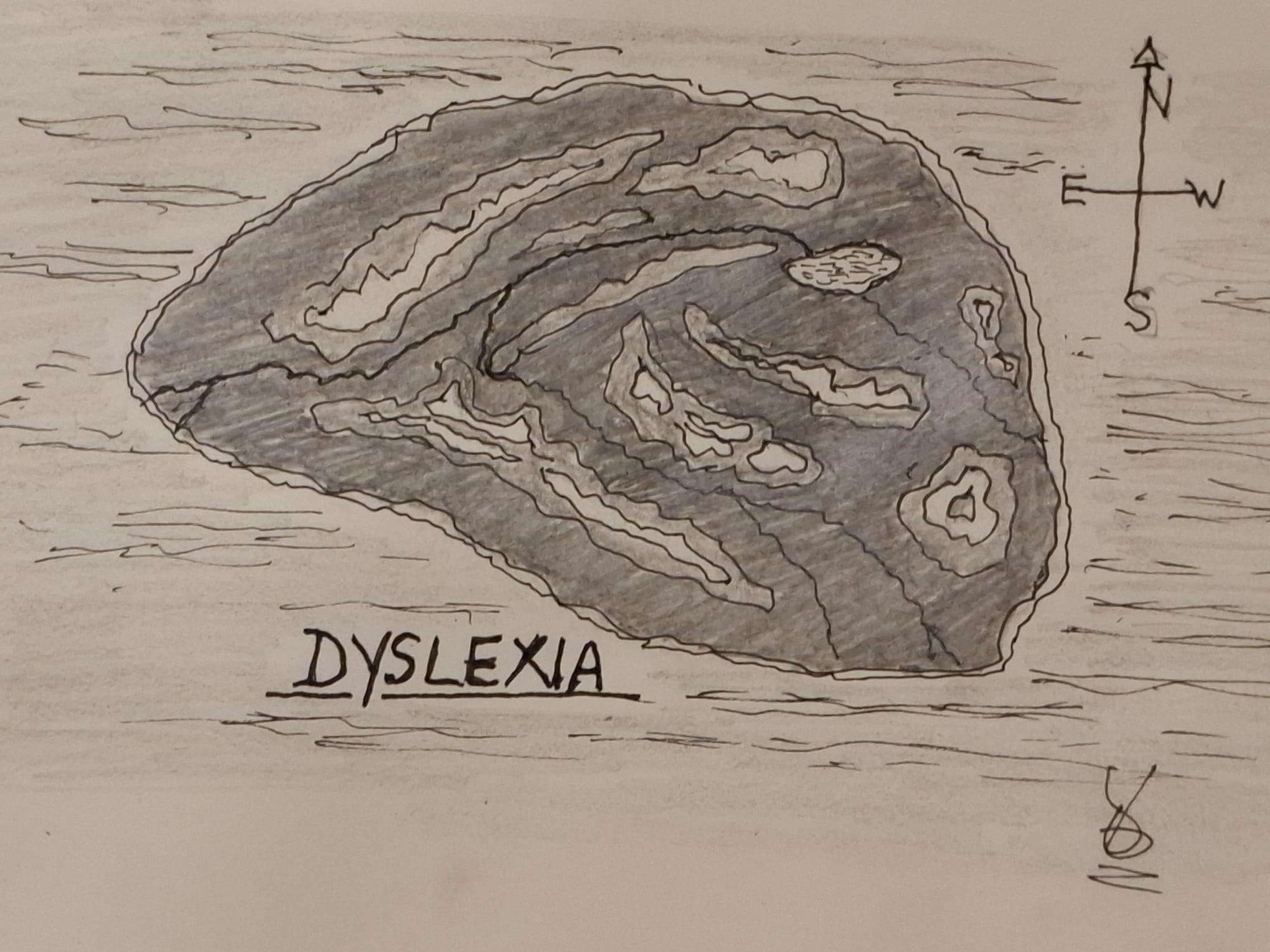
The Dyslexics are often garrulous and sociable and this is especially true when in Dyslexia itself. The difficulty in remembering telephone numbers for example makes every telephone call an adventure.

Say a native wished to phone another native called Cathy (also known as Cthy, or Ktay, Thyca etc), and the phone number was 731 1062 (please note, this is an imaginary telephone number by which neither Cathy nor anyone else can be reached).

The Dyslexic might phone 371 1026 – all the correct digits but in a different order (note, this also is an imaginary telephone number by which no-one may be reached).

The conversation, somewhat simplified, might go like this:

“Yes, hello?” (female voice, breathless with anticipation of another adventure).

Our caller: “Hi, is that Cathy?”

Recipient (giggling): “No, it’s not. There isn’t any Cathy here. I’m Wanda.”

Our caller: “Oh, hi Wanda, you sound very nice. How about going on a wanda with me?”

Wanda (with a little giggle but playing cautious): “Maybe …. What’s your name?”

Our caller: “Terry.”

Wanda: “Where were you thinking of wandering with me?” (A moment’s pause while both mentally translate the last part of that into “wandering on me”).

Terry (clearing his throat which has suddenly gone dry): “Well, there’s a nice new Indian restaurant opened up in town. Do you like Indian food, Wanda?”

“Ohhh, Terry, I love it. So spicy!” (Very slight pause as both translate “spicy” as a description for food flavouring into a metaphor instead). “When were you thinking of?”

“Er … tonight too soon?”

“No, I happen to be free tonight.”

“Shall I come and pick you up? Say …. seven pm?”

“That would be lovely, Terry. I live off the Trans City Road, tenth left, first right, eighth left, in Hopeful Street, the seventh house on the left-hand side if you’re coming from town, with a brown and white door and a hydrangea bush in the garden.”

“Got it – off the Trans City Road, tenth left, first right, eighth left, Hopeful Street, seventh house on the left-hand side, brown and white door and a hydrangea bush in the garden. At seven pm. I’m looking forward to meeting you.”

Most Dyslexics are always open to adventure, ‘going with the flow’. One never knows what a simple telephone call may bring or to what an appointment or written address may lead.

But as a result, Dyslexics are also philosophic about missed appointments, forgotten birthdays and so on; they waste little time mourning something lost and instead look forward to something gained.

Terry might or might not make it to Wanda’s but they both know the world is full of other possibilities.

Cathy, for example, who failed to receive a call from Terry to congratulate her on her gaining a dystinction in her dyploma, received later that evening what non-natives would term “a wrong number” call from a Sofia who had meant to call a Geraldine.

Sofia had intended trying to patch up a long-running difficult relationship with Geraldine and instead found herself making the acquaintance of Cathy, who seemed much nicer and more understanding than was Geraldine.

Putting her problems with Geraldine aside, Sofia agreed to Cathy’s suggestion to meet for a late coffee (which they both knew could lead to an early drink and who-knows-what from there). Cathy had by now forgotten that she was hoping Terry would call.

Dyslexia is not just another land, nor even just a strange one – it’s an entirely different way to live.

End.

Note: If you found this article of interest, why not register with Rebel Breeze for free, so that you will be notified by email of subsequent articles. You can de-register any time you wish.

Footnotes:

1Adolph Kussmaul, to non-dyslexics.

2Rudolf Berlin, to non-dyslexics.

3A supposed disability the existence of which is hotly debated but has exonerated many teachers accused of bad teaching methods and states accused of having too large classes in their schools and which has been profitable for some educational psychologists and extremely so for some chemical companies.

TRUTH AND POWER –THE FIRST LESSON

Diarmuid Breatnach

I remember my first lesson at school. First lesson from a teacher, that is, because you learn other lessons in school as well, from other kids. That particular lesson has remained with me for the rest of my life.

OK, it couldn’t have been the first lesson – it was my second year at school — but it is the first I remember which, in a way, does make it the first. And it wasn’t from any book or written on the blackboard.

Lesson One - Truth to Power

That was in senior infants then, I was five years old and our teacher was Iníon Ní Mhéalóid, Miss Mellet in English. It’s a rare Connemara family name, I know now and that is where she was from. She was handsome, maybe even more than that, I can’t remember now. I never had a crush on any teacher who taught me but if I had, it would not have been on her.

The day of this particular lesson, I must’ve been misbehaving in some way, I suppose. Not paying attention to her and talking or laughing with another kid, probably.

She called me out from my desk, admonished me, told me to stick my hand out and … whacked it with a ruler. Maybe my eyes gave her a message, I’m not sure. They say the eyes are the windows of the soul and right then, at that moment, I guess my soul must’ve been pretty dark.

What are you thinking?” she asked me in Irish.

Now, my Da had brought me and my brother up to tell the truth – always. Years later, my young sister at school would have teachers tell her that though I had often misbehaved, I had always told the truth. I did too, mostly.

When Iníon Ní Mhéalóid asked me that, my training came to the fore but it was more than that – I wanted to tell her what I was thinking.

I think you’re horrible,” I replied, in Irish too, of course.

I thought I heard my classmates suck in their collective breath.

Hold out your hand again!”

I did so, half disbelieving. She’d asked me, hadn’t she?

Whack!

What are you thinking now?”

That …. that …. you’re h-horrible,” I sobbed.

Hold out your hand again!”

Whack!

What are you thinking now?” She had a glint in her eye.

I paused, conflicted, then replied.

Nothing.”

An bhfuil tú cinnte (are you sure)?”

Tá (I am)”.

Go back to your seat then.”

So now you’re thinking things like “physical abuse, abuse of power, bully, traumatic experience” and feeling sorry for me. Right?

You have it wrong.

Iníon Ní Mhéalóid had taught me a very valuable lesson, relating to truth and power. It is this:

You can speak truth to power because you feel like it, through pride, to encourage others or for any other reason. But those in power are not like your equals down below. You don’t owe those in power any truth and it is perfectly acceptable to tell them lies, to protect yourself or others.

You can of course speak the truth out of choice but know that they do not respect it, will probably use it against you and ….. you must be prepared to pay the price.

End.

DON’T CARE ABOUT HISTORY?

(Reading time: three minutes)

Diarmuid Breatnach

You don’t care about history? Well, perhaps but history cares about you. Or rather, it affects you and the world you live in, explains how you got to where you are, your successes and failures – and where you might yet go.

          Of course, what I said earlier was kind of a slick answer; history doesn’t really care about you …. or about me …. or anyone else. The wind moves the trees, fills the sails, cools us or brings rain or snow – it affects us, moves us and things around us …. but is not moved by us. That is a useful metaphor because often people think they can stop some things happening by wishing strongly that they would not. Liberals and social democrats, for example …. But the metaphor breaks down – unlike our relationship with the wind, we can move things.

The shape of a tree testifies to the forces that have come to bear upon it as it was growing and its bark rings tell us of years of plenty or scarcity. To say that you don’t care about history is like, in a way, saying you don’t care about your childhood. That period of your past life and the influences that came to bear upon it and how you reacted to them have made you, to an extent, who you are today. Certainly they have hugely affected you, as any psychologist will tell.

Tree Bent by Wind in Grass
A tree shaped in its growing by prevailing wind etc, revealing an important part of its history. (Photo source: Internet)

If you really don’t care about history, you should not care whether you experience pain or pleasure. Typically, humans like to repeat pleasure and to avoid pain. But how do we know in advance what will give us pleasure or instead cause us pain? Experience. And that too is a kind of history. Which may also teach us what pleasure may be reached through pain, as for example in certain kinds of exercise – or what pleasures may end in pain, as with addictions. And we don’t only have our own experience to go on but that of many others, in their stories and in the accounts of those who have studied them. Another kind of history.

To say that you don’t care about history is to say that you don’t care about cause and effect. You don’t care about science, in other words. Science, in the sense of observation of processes and in the sense of experiment, is a kind of history. If you do this to that, in this atmosphere at that temperature, this will be the result. How do we know? It has been observed or tested, time and time again and recorded. Very like history.

Perhaps history was not taught to you in the way most suited to you at the time. Or rather, perhaps it was not introduced to you as it would best have been. A required subject to study, to gain marks and to ignore forever afterwards is hardly likely to inspire. A list of dates, of kings and queens, of prime ministers, along with their desires, though they figure in it, is not really history. “Facts” without encouragement to challenge, to interpret, to ask and to search for why and how – these drive some minds away while others learn them – but only as dogma.

History Cursive Script Blackboard

Kings, Queens, Generals and Leaders of insurgents helped make history – but they didn’t really make history, though we are told they did and often say it ourselves. No king built a castle or a city though we are often told that is what happened. People build castles and cities: they dig foundations and sewers or latrines, dig wells or canals, cut timber and stone, mine and forge metal, construct buildings, grow food, settle, take up livelihoods, raise children, study nature, perform arts, record in print or orally …. History was made by people, ordinary people mostly with a few extraordinary individuals; history was made by people like you and I.

Or perhaps you acknowledge all that but think ok, as an ordinary person, there is nothing you can consciously do to alter the course of things now? Yes, our masters would like you to think that. The reality is that you can make choices: to join that organisation or movement, participate in that action or demonstration …. or not. To vote for one person or party or another – or to abstain. To treat people in this or that way.

What will help you make those choices? Well, for a start, your experience. And experience is a personal history. I did that and this happened; I didn’t agree with that outcome so now I will do something else. But we also have the experiences of millions of others upon which to draw, across thousands of years. History.

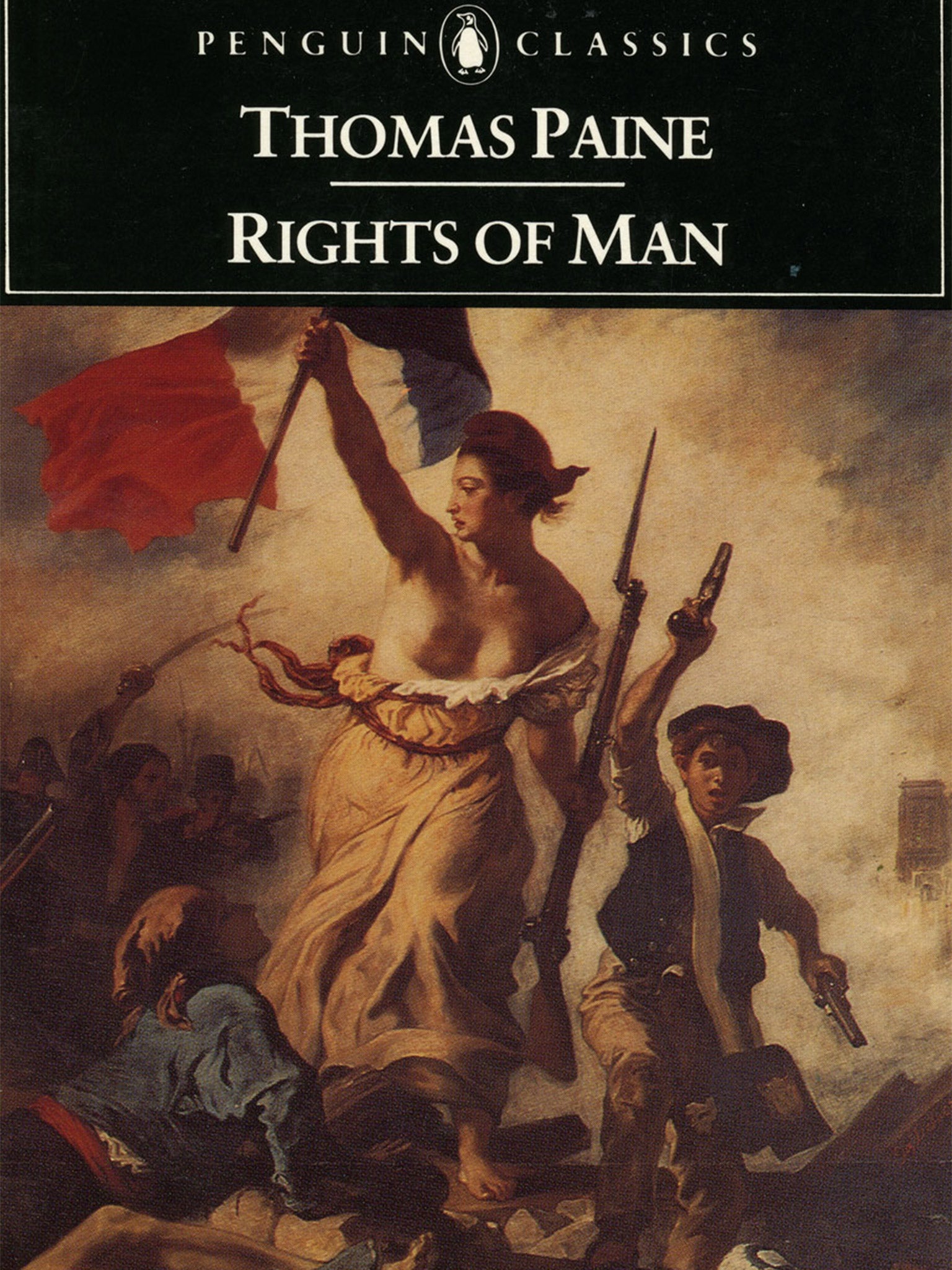
Rights Man Book Cover Penguin French Revolution
Thomas Paine’s writings influenced republican thinking which in turn led many to revolution. (Photo source: Internet)

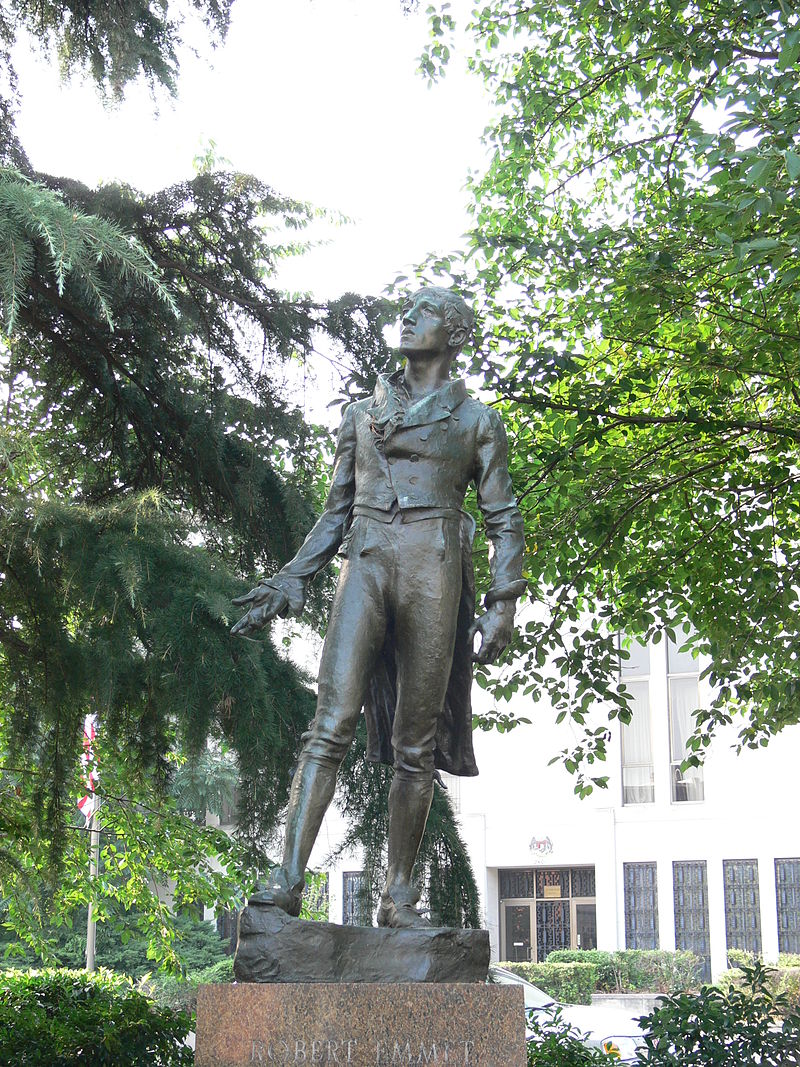
USA Emmet Washington DC monument
Washington DC Monument to Irish Republican revolutionary Robert Emmet, a United irishman (a copy of the monument is in Stephens Green, Dublin). He was part of a historical process. (Photo source: Internet)

You are not an isolated individual and your people, your nation or state, is not an isolated mass. The productive forces of emerging capitalism struggled with monarchy and feudalist systems and elites and produced republicanism. Republican ideas were promoted by English and French intellectuals, for example and found receptive minds among the capitalist sons and daughters of English colonists in Ireland, bringing about the bid for a democratic parliament of all the people in Ireland. When that attempt failed, the ideas impelled some to found the United Irishmen, which hundreds of thousands of others supported because they wished for freedom from the colonial power. Less than a decade after the failure of Grattan’s Parliament to admit representation by Catholic and Dissenter, the United Irish rose in revolutionary upsurge. That was in 1798 and they looked for support from republican France, which had its revolution less than a decade earlier, in 1789. The Irish and the French republicans were encouraged by the American Revolution, which had begun in 1765 and emerged victorious in 1783.

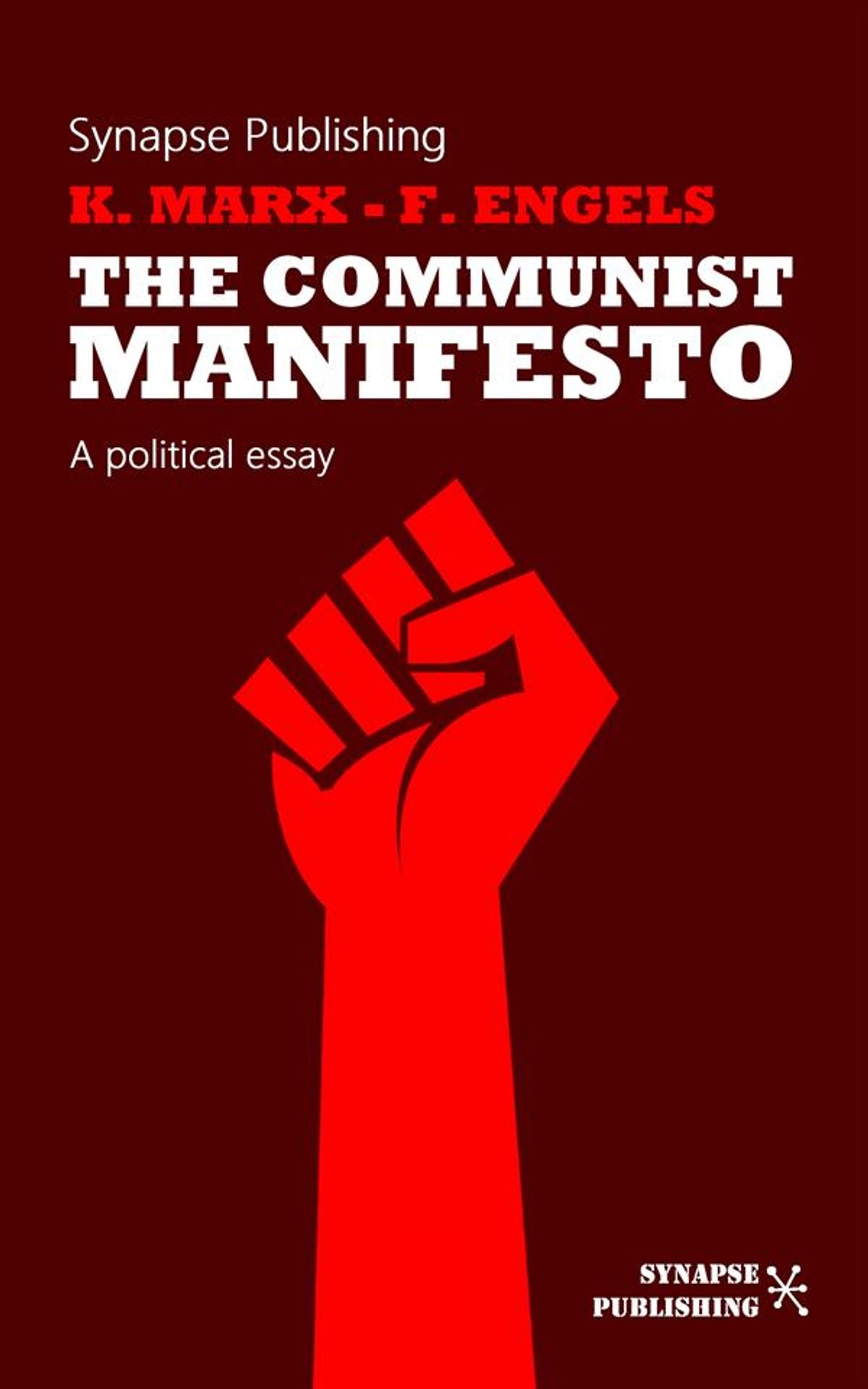
The republican revolutions were carried out by the ordinary mass of people but it was the capitalist class that they brought to power; today the working class struggle to overcome them and come into power themselves, for the first time a majority class taking power and holding up the possibility of the end of classes and therefore of class exploitation. “The history of all hitherto existing society is the history of class struggles”, wrote Karly Marx and Frederick Engels in the Communist Manifesto, published in 1848.

Communist Manifesto Clenched Fist Book Cover

You are in history. You are a product of history. What you do now affects the historical outcome to some degree at least – to one degree or another you are making history. You might as well study its process and use its lessons to illuminate your way: the distilled and concentrated experiences of millions of human beings like you.

End.

CUSTOMERS, NOT CITIZENS: Consuming Education

By William Wall on The Ice Moon blog

(reprinted by kind permission of William Wall)

In the introduction to his most famous book on education, Ivan Illich says that for most of his life he never questioned that universal free education was an absolute good. This, I believe, would be the position of most people, even conservatives. But Illich went on to argue that institutionalising education (in fact as a service industry) has led to the institutionalising of society. In other words, education serves, not to emancipate the individual but to create a slavish attachment to the institutions. Illich’s solution is to abandon institutional education (the service industry) in favour of peer to peer education, what he calls a web of learners. Illich’s book preceded the creation of the internet as we now know it, and the development of peer to peer education as a service industry in its own right! Antonio Gramsci, mulling over the same problem in his prison cell in the 1930s came up with a similar analysis and a different solution. He wanted to subvert the institution, to create a school that would teach radicalism. The state controlled most forms of discourse, including that of educational institutions, he argued, therefore it was necessary for the radical left to create its own parallel institutions to defeat the hegemony of the state.

4 T
From the video accompanying Pink Floyd’s “The Wall” (copied and inserted by Rebel Breeze)

In Ireland (and throughout those countries where the doctrines of neo-liberalism have come to dominate public discourse) education has undergone a significant, but largely unremarked change, one that may well be founded on a gramscian understanding of the necessity for the state’s total control of public discourse (the gramscian concept of hegemony). Until the advent of neo-liberalism, the stated aim of modern education (whatever its real achievement) was founded on an etymological understanding, false or otherwise, of the verb to educate as deriving from the Latin educo ‘to lead out.’ The child was largely ignorant and needed to be led out of this ignorance. A child growing up in a wilderness and isolated from its peers would learn many useful things, but nothing of the wealth of human culture. The purpose of education was to enable a child to acquire modernity, enlightenment, civilisation.
Of course, all of these terms are themselves culturally laden and the concept itself was paternalistic in all its senses. Children are not ignorant – Joseph Jacottot proved that – otherwise they could not acquire such a sophisticated knowledge of language and culture. Nevertheless, the intelligent schoolteacher could attach herself/himself to the idea of enlightenment and enabling. One could, in fact, bring the best of intentions to teaching. Good teachers were expected to teach pupils, first and foremost, to be questioners, and here, at least, was some hope for change. Such teachers could argue that their purpose was to enable critical thinking, and that such thinking was for the betterment of the individual and society. It was a modest ambition, but a decent one, founded on a a belief that individual self-realisation and social change were important values.

But following the ascendancy of the ‘business model of politics’ in Irish political thinking, the curriculum has been crowded out with ‘business’ subjects. In Ireland what was once a single subject – Commerce – has tripled into Business Studies, Economics and Accountancy so that ‘business’ teachers are now the largest single homogenous group in any staffroom. History has suffered and all but disappeared in some schools. Geography, with its study of large-scale human interactions, has been drastically reduced. The classics, which at best encouraged a long view of human existence are now taught in a handful of schools. English has had a significant injection of ‘practical’ writing and reading and the texts used tend more towards the kind of books written specifically for teenagers (itself now a massive service industry). Chemistry, Biology and Physics are now sold as gateways to lucrative careers. Mathematics is moving towards the failed strategy of ‘problem-solving’ at the behest of industry. The Irish department of education’s website says:

‘This Government believes in education, both as a means of enabling all individuals to reach their full potential and as a major contributor to our current and future economic success. These two key priorities underpin the actions set out in this Statement of Strategy.’

Which translates as: education is a means of enabling individuals but it is also an element of capitalism. Significantly, the pupil/student is referred to as an ‘individual’, rather than a citizen, a pupil or a student all of which terms imply some form of community. The ‘individual’ is the base unit of neo-liberalism. Elsewhere in the site pupils/students are referred to as ‘clients’. She is to see herself as a cog in the machine, a contributor to current profit. In the section headed ‘Focusing on the needs of our clients’, the word ‘customer’ appears twelve times including in the following contexts: ‘The Department’s main customers are the Education Service Providers, i.e., teachers, management of schools and colleges and organisations providing education services’; ‘the Department is committed to delivering quality services that meet the needs of our customers and clients, particularly learners, at all levels. This commitment is reflected in the performance management process, where quality customer service is identified as a core competency for all our staff.’; ‘The Customer Charter describes the level of service that can be expected in accordance with the 12 Quality Customer Service (QCS) principles.’, etc.

This unsubtle use of language betrays two things: firstly, the department’s certainty that its use of terms like ‘customer’ for young people, parents and teachers is unremarkable; and secondly, the increasing brutalisation of the system as a whole. Neo-liberalism has turned us all into customers (‘a person or organization that buys goods or services from a store or business’) who must approach their own state wallet in hand to purchase ‘quality services’ and who can expect ‘core competencies’. Every department of government, every county council and city council and every state and semi-state company now has a ‘customer charter’, as do banks, insurance companies, oil companies, etc. In the neo-liberal state there are no citizens. In the ‘customer charter’ for the Department Of Justice, Equality and Law Reform, for example, the word ‘customer appears’ a total of forty times, while ‘citizen’ only appears in this sentence: ‘For complaints about service delivery in relation to Immigration, Citizenship, Visas or other services at INIS, please email INIScustomercomplaints@justice.ie’. Even here, the complaining citizen or non-citizen is directed to ‘customer complaints’.

Thus, the neo-liberal nirvana is so easily achieved.
In the course of two generations we went from citizens of a republic to customers of a state. Our government became a service industry with laudable aims like efficiency and value for money. Its old-fashioned Republican ideals (like liberty, equality and fraternity, perhaps?) now relate entirely to customer satisfaction. Not so long ago, in Easter 1916, the first provisnional government of the Irish Republic declared the following:

‘The Republic guarantees religious and civil liberty, equal rights and equal opportunities to all its citizens, and declares its resolve to pursue the happiness and prosperity of the whole nation and of all its parts, cherishing all the children of the nation equally’.

‘Citizens?’ Shouldn’t that be ‘customers?’ And surely we should substitute ‘Economy’ for ‘Republic’, after all, it is the economy that underpins our rights. In which case, we shouldn’t be a bit surprised if the word ‘equality’ is dropped in favour of ‘equal access to services’ and the word ‘happiness’ is dropped entirely or at least re-defined as ‘shopping’. And if we’re going to use the word ‘guarantee’, shouldn’t it be only used in the context of banks?

And why should we accept such changes? Well, we did it at school…

From http://www.williamwall.net/Ice_Moon_Blog/Entries/2009/4/13_Customers_not_Citizens__Consuming_Education.html