
Diarmuid Breatnach
(Reading time: 5 mins.)
That’s what she wrote — in response to a political statement I had written. And it was funny — but at the same time an expression of the gulf that separates people like her not only from people like me – but from reality too.
Her comment on a FB post was that the PSNI are not the same as the RUC, to which another woman had replied that the uniforms and the name are different but that’s all, the essence being still the same.
In turn, herself above had replied that anyone who thought that, didn’t understand the current realities and what the whole peace process is about.
To which I replied that I too agreed that all that happened was that the colonial gendarmerie had changed its name and uniform and what the pacification process (because let’s call it what it was and is) is about is holding on to the colony while dismantling the opposition.
And then she made that response, the “Oh. My. God!” — and quoth no more. I laughed but also recognised that her response, from her point of view (apart from the appeal to a nebulous deity, which I take as just an idiom to express shock), was entirely logical.
No, not her political position, which is entirely illogical – but her reaction, from where she stands, away on the other side of the chasm between us.
AN UNBRIDGEABLE GULF BETWEEN WORLDS
She recognises the gulf that separates her world from mine and knows straight away that there is no bridge to cross it. There is no point in debate, not only because I may not be easily overcome in argument but because we don’t even agree on the reality of the world.
By which I mean the economic, political and philosophical reality of the world of humanity, rather than the physical world of gravity and weather.
In her world, I’m guessing, admittedly there were some horrible injustices in the history of “Northern Ireland” and then there was a horrible war which made things worse and now everything is changed (even “utterly”, perhaps!) and going in the right direction.
To call the “Northern Ireland” entity a colony is shocking to her, though she knows some people probably think that.
Seeing reality is useful for getting around but it can be very uncomfortable too. The Six Counties is of course a colony, taken by force and maintained by force since 1921.
The whole of Ireland was a colony even when it had its tiny minority parliament1 and it continued to be one when that Parliament, under massive bribery, voted to abolish itself in 1800 without the vast majority of the population in Ireland, native AND planter, having any say in the matter.
When the level of anti-colonial struggle in Ireland rose to a certain level and the rulers of the UK were beset by difficulties on most sides, a deal was done with an Irish client bourgeoisie and the country partitioned.
Whatever the status of the Irish State thereafter, the status of the Six Counties was clearly that of a colony. That is and was so, regardless of whether it is sectarian or not, whether there are civil rights or not. It is part of our nation held for the Crown by force of arms.
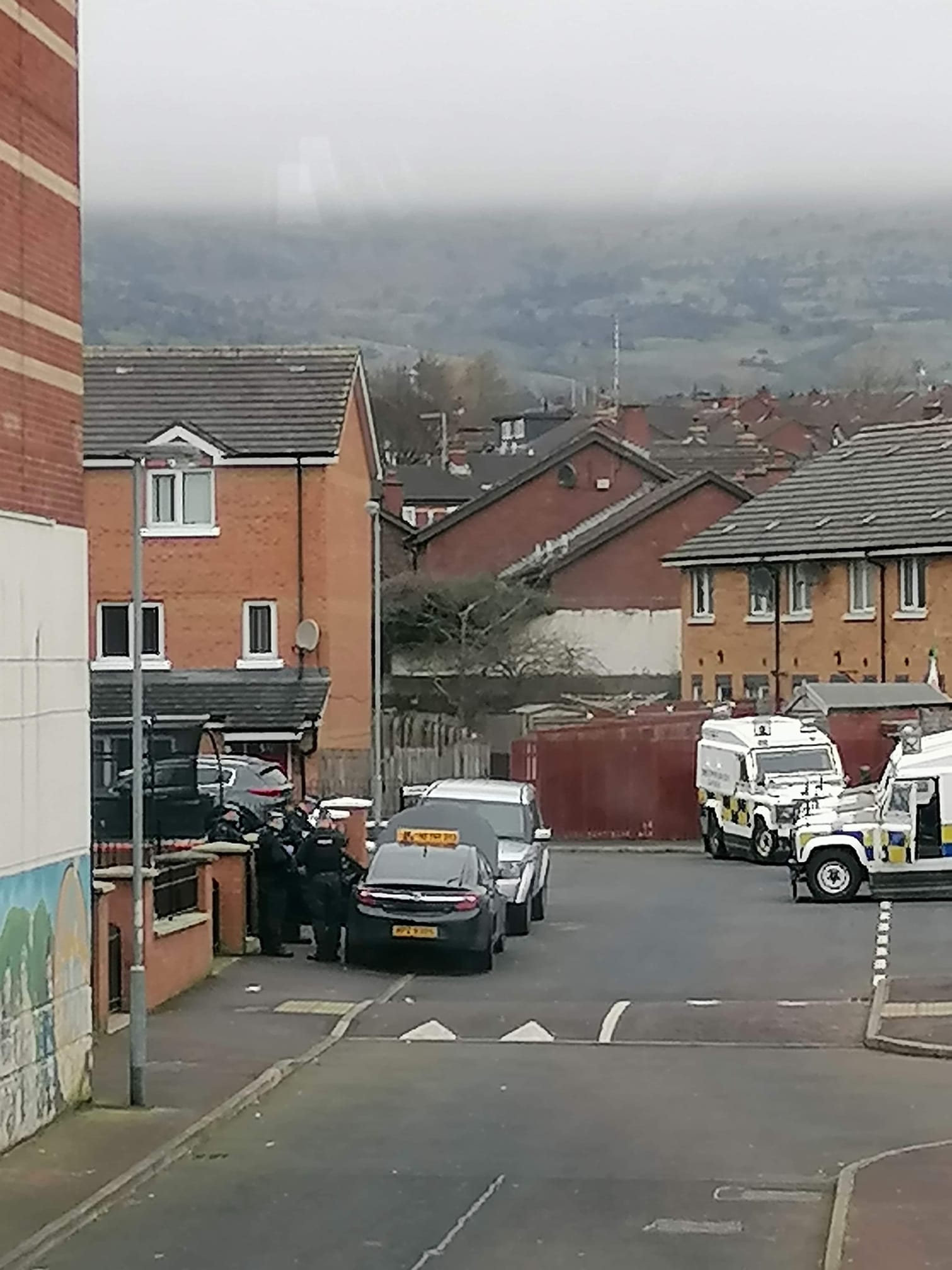
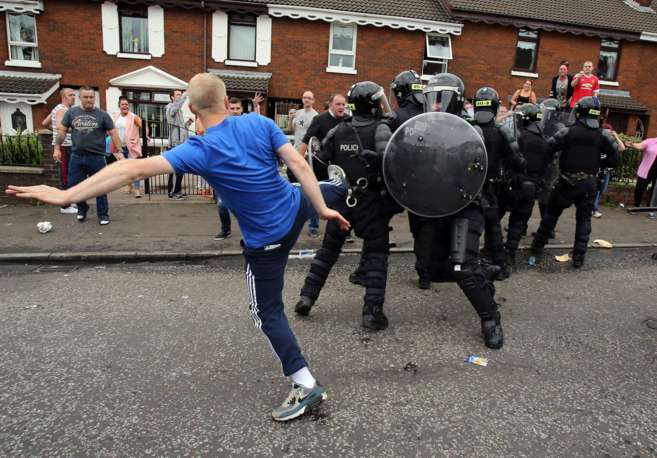
Those arms were again very much in evidence during the fairly recent 30 Years’ War – in the hands of the formal British Army, formal colonial police and informal proxy murder gangs.
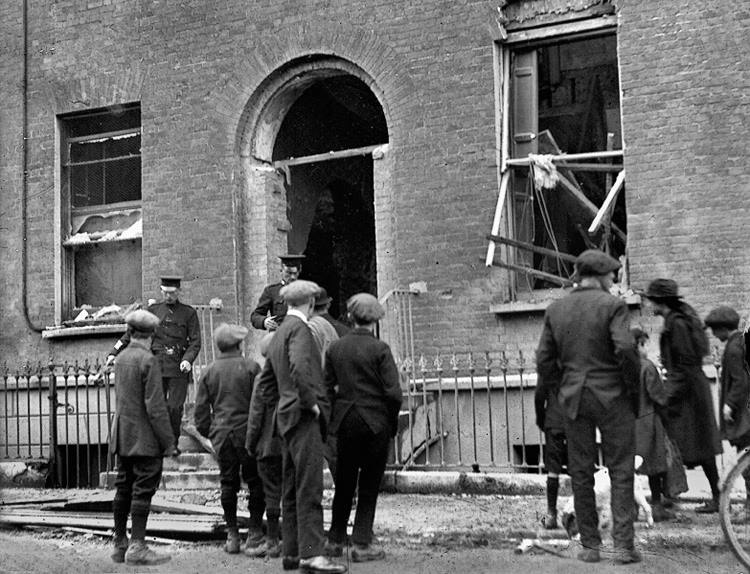
And yes, the PSNI today is an armed colonial police force – and it would be that even if it had no history, if it were created today. But as it happens, it does have a history. It is a variant of the Royal Ulster Constabulary. And the RUC was a variant of the Royal Irish Constabulary2. And the RIC was a gendarmerie.
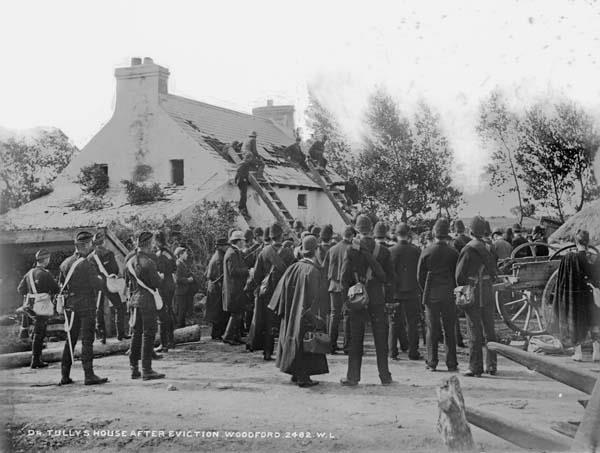
A COLONIAL POLICE FORCE WITH A LONG HISTORY
Perhaps my opponent has heard the term before. Maybe she associates it with Turkey … or even with the Spanish state. But such things belong to foreign and authoritarian states, right? Couldn’t possibly be to do with here!
States that have conquered nations within them, resisting from time to time, or regions that are otherwise difficult to manage, need to control them by army or police. The first becomes problematical over time and the second needs to be coordinated from the centre, not mainly local.
The solution some states have found is to have a central quasi-militarised police force: the Guardia Civil of the Spanish State, the Turkish Gendarmerie, the Caribieneri of the Italian State, the French Gendarmerie.
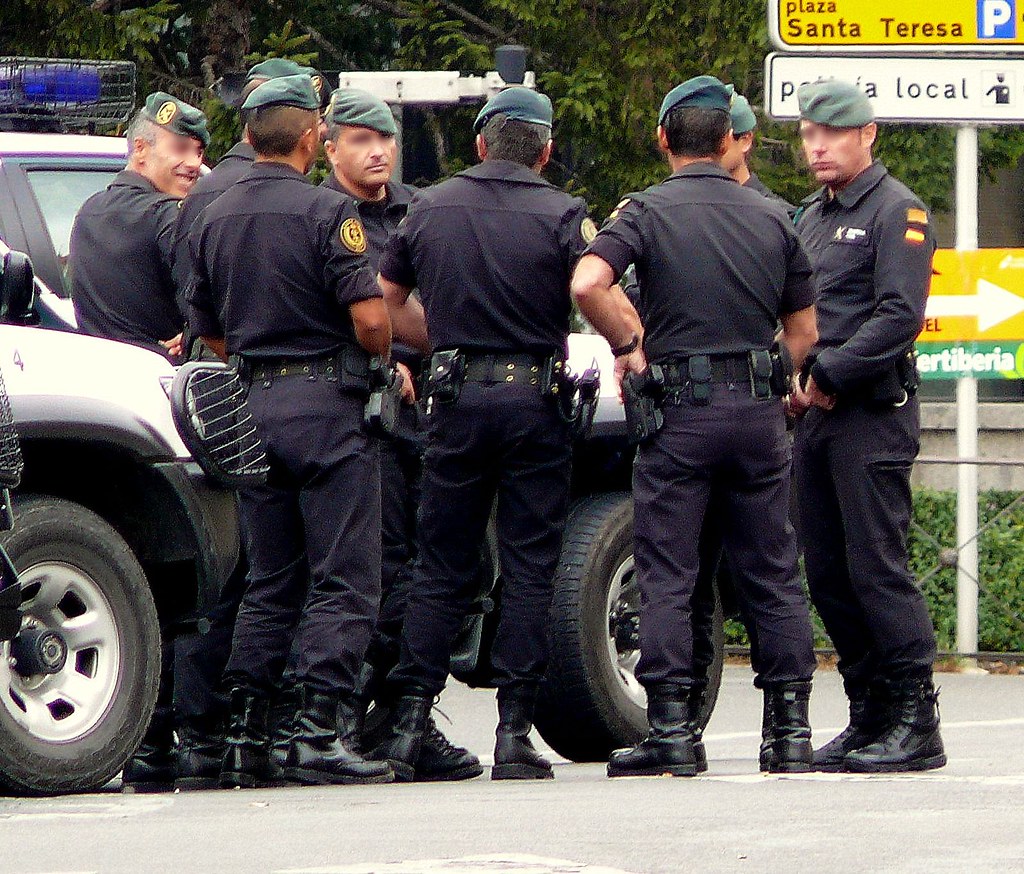
These forces typically live in barracks and are directly answerable to the central State. The Royal Irish Constabulary was such a gendarmerie also. And nothing like it existed in Britain.
It was a colonial armed quasi-militarised police force to spy on and suppress the Irish by force.
What was left of the RIC in Ireland became the RUC after Partition and the RUC became the PSNI after some reforms. They don’t live in barracks but they do sally forth from them and they are armed – still keeping ‘the natives’ down since 1836.3
PACIFICATION FOR NORMALISATION
Then there was my shocking description of the role of the ‘Process’ that she described as for peace and I for pacification. She is shocked even by the title I give it, a title suggesting it is not about justice but rather about maintaining control, by trickery or violence.
And I actually stated that is its purpose! Oh. My. God indeed!
Any process which starts from the basis of normalising the colony is doing just that: normalising the foreign occupation of a part of the nation taken by force and which has never been accepted by the conquered population. It is “about is holding on to the colony”, as I described it.
But what is fundamentally abnormal can never be normalised.
That attempt requires pacification, by repression and coercion or by deception – or by a combination of both. The Occupier has used all but, since the late 1990s, mainly deception. The masking and twisting of reality, the blowing of smoke in eyes.
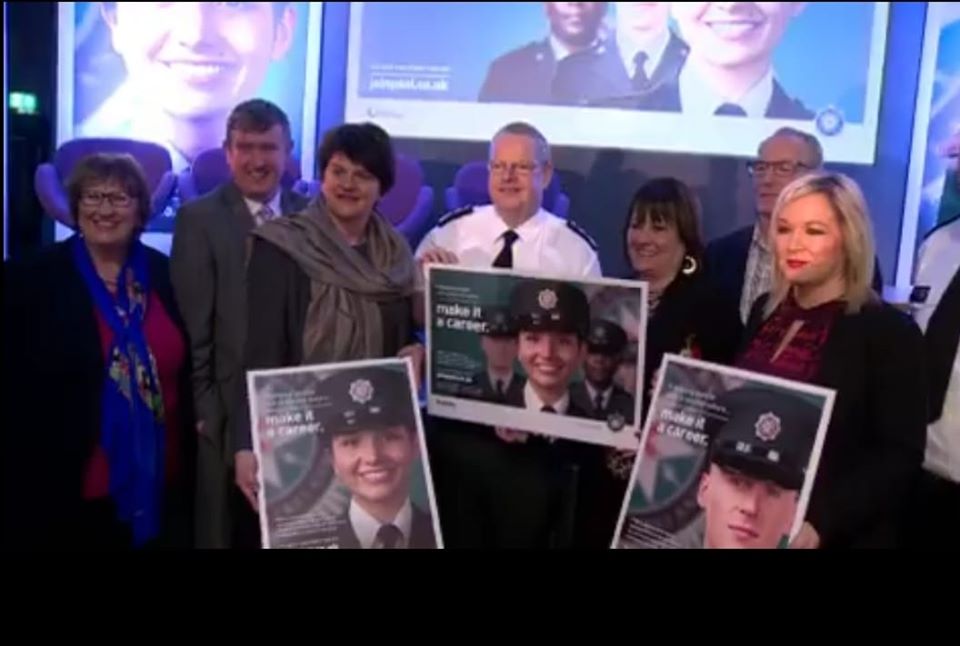
Who is fooled? Mostly, those who want to be, some who see a workable future in the colony, under occupation.
The other deluded ones are those who are being deceived by their leaders, the latter who have given up not only the arms but any kind of struggle other than climbing into the elite.
Ultimately, the reality is so obvious that the deception is only possible when the deceived help it along themselves. Why do that? Because it’s comfortable, or seen as an alternative to hopelessness, or less frightening than the alternative – revolutionary struggle.
Oh. My. God! Yes indeed.
And yet we say, we who look at the reality, in the face of those who deny it, as Galileo is said to have muttered to his persecutors, who denied the world moved around the sun (rather than the reverse): “Eppur si muove”(“And yet it moves)”.4
We might also say, whether some find it shocking or just uncomfortable, something more mundane: Est quodcumque est. (It is what it is.)
end.
FOOTNOTES
1At various times Catholics were excluded from voting for representation in the Parliament and at all times from the Reformation onwards barred from being elected to the body or from holding high office. The vast majority of the Irish population were Catholics. Protestants other than Anglicans suffered discrimination too but not to the same degree.
2The PSNI themselves recognise that history – see https://www.psni.police.uk/about-us/our-history/history-policing-ireland
3And they got the “Royal” in their name in 1867 for their role in suppression of the Fenian rising that year.
4Galileo di Vincenzo Bonaiuti de’ Galilei (15 February 1564 – 8 January 1642) was an Italian astronomer, physicist and engineer. He publicly ascribed to the theory of Copernicus before him that the sun’s position is static with the Earth revolving around it (heliocentrism) which had been attacked by the Protestant religions as contradicting the Christian Bible (Old Testament). But it was the Catholic Inquisition of which Galileo fell foul, firstly in 1616 when he was instructed not to hold that opinion. In 1633 he was forced to recant it after a long trial and lived under house arrest for the rest of his life.
SOURCES
Gendarmerie: https://en.wikipedia.org/wiki/Gendarmerie

 rebelbreeze