

Diarmuid Breatnach
(Reading time: 6 mins)
Last week saw the anniversary of the creation of the Irish Citizen Army, a militia formed initially to defend the workers from attacks of the Dublin Metropolitan Police on behalf of the Dublin capitalists but that went on to fight in the 1916 Rising.
The ICA was born in the struggle of the consortium of Dublin employers, led by big capitalist and Irish nationalist William Martin Murphy, to smash the militant and successful Irish Transport & General Workers Union in Dublin, where the union had its headquarters, in August 1913.
The workers were presented with a declaration to sign that they would not support the ITGWU but no union in Dublin at the time, whatever they thought of the targeted union and its founder,1 could sign such a declaration. As workers began to be sacked, others came out in solidarity strikes.
Dublin entered an extended struggle between the organised capitalists and the organised workers. In such a struggle of course, the organised capitalists had on their side the magistrates, the hierarchy of the various churches, the mass media2 – and the Dublin Metropolitan Police.

The DMP, a British colonial police force for Dublin would have needed no specific instructions to attack demonstrations of the ITGWU, their instincts as guardians of colonial ‘law and order’ sufficing but in addition, the attitude of the media would have outlined their ‘duty’.
And after representation from W.M. Murphy to Dublin Castle, the HQ of British control, the ‘duty’ of the DMP was outlined and they were reinforced by a number of the colonial gendarmerie,3 the Royal Irish Constabulary.4
On the evening of 30th August a mass meeting of the ITGWU in Beresford Place, outside the union’s headquarters, Liberty Hall, was attacked by a baton-wielding force of the DMP, leaving two workers mortally wounded5 with resulting running battles towards city working class areas.6
The following day, the DMP again viciously attacked crowds in O’Connell Street in front of Clery’s from which Larkin attempted to address the crowd in a meeting banned by the city magistrate.7
Not long after, a marching music band leading a strikers’ parade was also attacked by the DMP with musical instruments damaged and members injured and the leadership of the union decided that a counter-strategy was required for self-defence and possibly the very survival of the union.
The Lawrence O’Toole Pipe Band’s website lays claims to having been the victims of this attack while other history talks and articles have claimed that the ITGWU’s Fintan Lawlor Pipe Band was the one attacked. It is not impossible that the DMP attacked both.
On 19th November 1913 the Irish Citizen Army was born8 following a suggestion by Seán O’Casey and a call by Jim Larkin as a workers’ defence militia. After Larkin left Ireland for the USA in 1914, James Connolly took over leadership of the ICA and wielded it into a revolutionary force.
I recall attending a book launch or talk about the ICA in which it was described as “the first workers’ army in the world” but searching for that quotation I now find it refuted by AI online and replaced by “first working-class army”.9 I cannot agree with the latter.
Most armies, especially nowadays, are “working class” in that this most numerous social class will contribute the vast majority of its rank-and-file. In the past, the peasantry and landless labourers would have been the majority.
Despite the overwhelming worker membership of the ICA, its most important distinction was not in the social class of its membership. Nor was it totally working class, containing as it did some notable members of middle-commercial and one of a landowning classes.10
What made the Irish Citizen Army very different from other armies and qualified it, I maintain, for the title of “workers’ army” were the intentions and ideological perspective of its founders, the conditions of its birth, ethos of its members and – most of all – its declared purpose.
The ICA was founded with the express intention and necessity of defending a worker’s organisation which was resisting an attempt by the capitalist employers to break that organisation. The struggle was led by declared openly-socialist leaders who gave the call for the ICA’s founding.
In every respect, I maintain, even without a specifically socialist constitution, this was a workers’ army, formed by workers, in a workers’ struggle in defence of their organisation and of the right to organise, defending their previously-won improvements and their dignity.
And the lack of evidence of any such precursor qualifies the Irish Citizen Army as “the first workers’ army in the world.”

However, none of the preceding makes it a socialist organisation, in my opinion. A socialist organisation would have as one of its principal objectives the attainment (whether by reformist or revolutionary methods) of a socialist organisation of society.
As to Lenin having allegedly called the ICA “the first Red Army in the world”, I have searched for the original reference without success, finding only it quoted by speakers, writers, organisations and authors – but never with a reference of where and when Lenin supposedly said it.
I strongly suspect that Lenin never said that. But even if he had, the ICA’s constitution does not support it, being rather of a democratic nationalist and anti-colonial character.11
Socialist Republicans today approve of the Irish Citizen Army throughout the 1913-1916 period. But it is not unknown for them to go further and to characterise it as socialist republican in nature and orientation. I don’t see evidence of this in either the ICA’s constitution or in its membership.
Though certainly Irish nationalist in intention, the word ‘Republic’ is not mentioned anywhere in the constitution. One might argue that it was understood but I can’t see the evidence for that either. Some contemporary prominent Irish nationalists were not even wedded to the idea of a Republic.
The 1919-1921 IRA was not a socialist organisation. Nor was the monarchist Sinn Féin party, even after its founder Griffiths permitted its reformation as Republican in order for the disparate nationalist movement to contest the UK’s 1918 General Election on an abstentionist manifesto.
The political leadership of the Republican movement split over the British offer of dominion status with partition as against a unitary Republic. Churchill was quite adamant that the new Irish State could not be a Republic and it was not declared so until the 1937 Constitution.
Certainly the founders of the ICA were socialist Republicans but in the absence of its constitution being of a kind, for the organisation to qualify as such it must be shown to have been also the widely-embraced ethos of its membership.
Even if imagining that the membership of the ICA, like its founders and a number of its officers, were Irish Republicans, it is still a greater step to assert that they were socialist Republicans, in the sense of intending the socialist organisation of society and elimination of capitalism.12

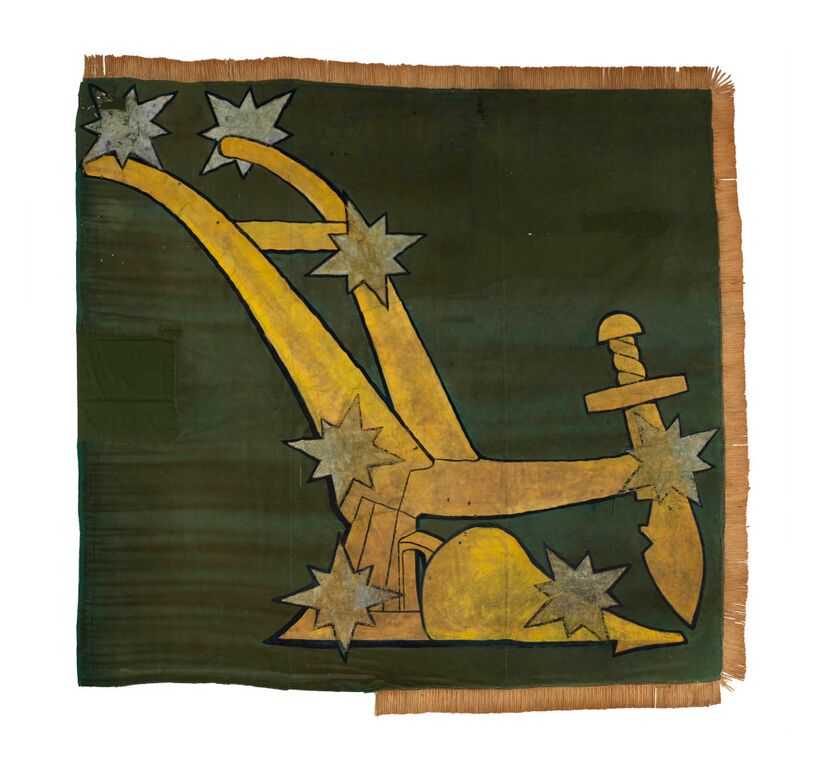
(Photo sourced from Internet)
TODAY AND TOMORROW
Whereas these historical questions may fuel debate, no debate should be needed regarding the right of workers to organise to defend and improve their conditions, nor to change the dominant political shape and allegiance of their country, nor to defend their organisation from the police.
Indeed, not only can we take those rights as legitimate and necessary to exercise but it also becomes clear that at some point we will, as workers, as socialists and/ or as Republicans, need such an army. The ruling class has its physical force organisations in the Gardaí and the Irish Army.
The history of ruling classes bears testament to the fact they never relinquish power without using violence against challenges from the rising social forces; even such social and political rights as we have were won through hard struggle, sacrifice and indeed martyrdom.

The Far-Right has also given ample proof of their readiness to employ violence against the vulnerable sections of our class and against also those they consider opposed to them ideologically; the history of fascism too warns us of the need to organise our defence.
In that respect too let me briefly comment on the false “ICA” recently proclaimed in a video which, while claiming a 32-County outlook and repeating that Britain has no right in Ireland, filled the rest of their video with racist anti-migrant rhetoric, conspiracy theory and lies.
Of course they contain nothing of the workers’ solidarity ethos of the ranks of the real ICA, not to mention the anti-fascist, anti-racist internationalist and socialist outlook of the ICA’s leadership.
The ICA developed as a force for physical defence of workers’ rights on the streets, which is where the DMP and RIC attacked them. It was some years later, in the course of inter-imperialist World War I that the ICA fought in an armed rising alongside other democratic national forces.
Some, usually only among Irish Republicans, have striven also to organise a fighting force. Typically they concentrated on gaining arms and planning armed actions. Isolated from the masses, they were easily infiltrated by State agents, resulting in activists going to jail.

While needed, I believe a workers’ defence force should, in current circumstances, concentrate on street defence-and-offence fighting tactics, also that it should be based on the broad democratic political front, on unity in action against imperialism, colonialism, fascism and Loyalism.
Defence on a broad front basis can and should educate the whole resistance movement, in its disparate ideological influences, as it may be that similar recruits in the Irish Citizen Army were educated and trained under the leadership of revolutionary socialists and republicans.
End.
Note: If you found this article of interest, why not register with Rebel Breeze for free, so that you will be notified by email of subsequent articles. You can de-register any time you wish.
FOOTNOTES
SOURCES AND REFERENCES
Reprint of Sean O’Casey’s account of the formation of the ICA with a short anti-Irish nationalist introduction: https://libcom.org/article/story-irish-citizen-army-1913-1916-sean-ocasey
In important respects a different account from those by most socialists and Irish Republicans of the origins of the Irish Citizen Army: https://www.thepensivequill.com/2021/04/the-irish-citizen-army-james-connolly.html
St. Lawrence O’Toole Pipe Band: https://slotpb.com/about.html
1913 – A Policeman’s Lot and Murphy’s Law. Talk given at Garda Historical Society at Store Street Station, August 29th 2013 and Dublin Castle at Police Memorabilia Exhibition, November 16th, 2013 (speaker’s name not listed). https://1913committee.ie/blog/?p=1800
1Jim Larkin, a migrant and union organiser from Liverpool, had formed the ITGWU as a split from the British-based National Union of Dock Labourers after serious clashes with the latter’s General Secretary, ?????? Sexton (also an Irish nationalist). Larkin was very popular with the ITGWU’s members but much less so with other union leaders around Dublin.
2Not least the editorial and management boards of the Irish Independent, owned by William Martin Murphy, leader of the union-busting consortium.
3An armed police force under central State control, like the Guardia Civil (Spain), Carabinieri (Italy) and similar in France and Turkey.
4A Policeman’s Lot and Murphy’s Law. https://1913committee.ie/blog/?p=1800
5James Nolan and John Byrne, which Wikipedia has for years erroneously recorded as killed the subsequent day in another DMP riot in O’Connell Street, known as Bloody Sunday (1913).
6South-eastwards along Townsend Street towards Ringsend and Northwards towards Corporation Street in the Montgomery (Monto) Street area. There the residents defended the strikers and attacked the police, an example of class solidarity for which they paid soon afterwhen a DMP force paid them a visit, smashing household furniture and ornaments and beating John McDonagh. Paralysed from the waist down and in bed, McDonagh was unable to effectively defend himself and when his wife attempted to do so, she also was beaten and McDonagh died shortly afterwards in Jervis Street Hospital. (see Police Retaliation [sic] in A Policeman’s Lot and Murphy’s Law https://1913committee.ie/blog/?p=1800)
7See a number of entries, including Wikipedia on Bloody Sunday Dublin 1913. Though some of those claim the deaths of James Nolan and Patrick Byrne were caused then, in fact it was the previous day that they received their fatal wounds from the police. Unmentioned in most is the case of Fianna Éireann youth Patsy O’Connor, knocked unconscious as he gave first aid to another victim of the police. Patsy O’Connor suffered repeated headaches thereafter and died on 15th June 1915 at the age of 18. https://1913committee.ie/blog/?p=2293
8https://www.nli.ie/1916/exhibition/en/content/stagesetters/other/jimlarkin/index.pdf
9https://www.connollybooks.org/product/irishcitizenarmy
10I state this qualification despite Connolly’s remark in Workers’ Republic, 30 October 1915: Hitherto the workers of Ireland have fought as parts of the armies led by their masters, never as a member of any army officered, trained and inspired by men of their own class. Now, with arms in their hands, they propose to steer their own course, to carve their own future.
Constance Markievicz and Katherine Lynn were officers in the ICA but neither were born into the working class.
11See https://cartlann.org/dicilimt/2022/05/ConstitutionOfTheIrishCitizenArmy.pdf
12I am not unaware that a significant number of individuals and organisations claiming to be Irish socialist Republicans currently spend hardly any time at all discussing the socialist organisation of society.



 rebelbreeze