
Diarmuid Breatnach
(Reading time: 5 mins.)
I wish to briefly clear up what I believe to be some confusion about the terminology in the title, basing not so much on opinion but relying in the main on fact as illustrated by history.
I will attempt to show thereby that Republicanism and Irish Republicanism are different things ideologically and that socialism is different from both of them.
Republicanism entered the world as a political aspiration and, after revolutions in Britain, France and the USA, practised as a system of Government. It proclaimed electoral democracy for its citizens (at first men but later women) – but quite clearly the bourgeois class ruled society.
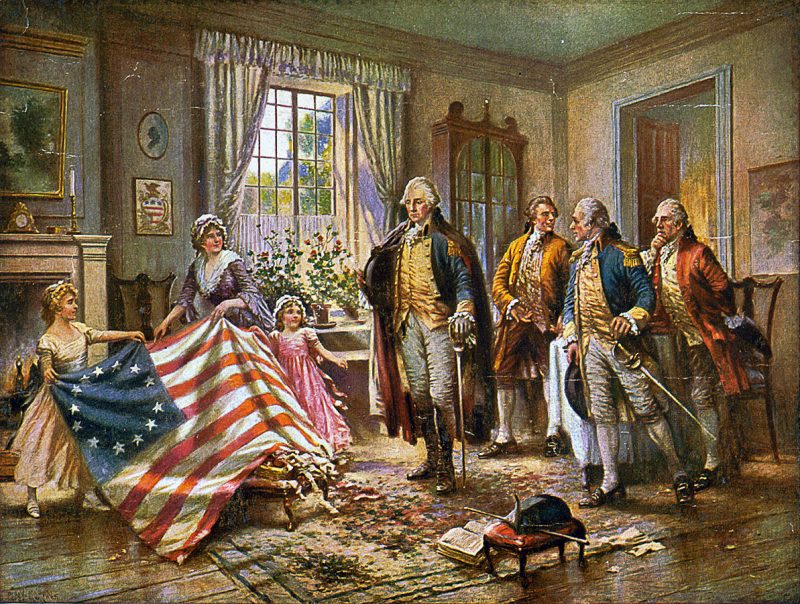
It was a democratic bourgeois (essentially capitalist) ideology characterised by individual choice,1 opposition to feudalism and monarchy and separation of church and state. It was not essentially socialist nor even anti-colonial, as we can clearly see from its early examples.2
Republican government was overthrown in Britain (English and Scottish administrations), the monarchy restored and in time a kind of compromise monarchy-democratic system evolved. The republican system in France and the USA remained and is with us to this day.
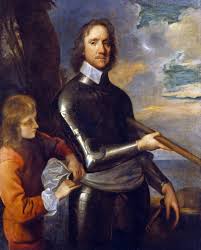
(Image sourced: Internet)
Irish Republicanism also developed as a bourgeois ideology (drawing on English, French and US Republican thinking)3 but it was clearly also in favour of Irish sovereignty and therefore against the colonialisation of Ireland.4 Once measures of reform were blocked it became revolutionary.
This gave rise to the revolutionary organisations of the United Irishmen of the 1790s and early 1800s and the Young Irelanders of the middle of the 19th Century; also of the Irish Republican Brotherhood of the later 19th.
The IRB or Fenians however had a strong working class character and were admitted to the First International Workingmen’s Association, the first international socialist organisation. However, Irish Republicanism remained a bourgeois ideology albeit democratic and revolutionary.

Socialism
The ideology of socialism has a long pedigree but was made more concrete under and in opposition to capitalist society. It found development on a scientific ideological and organisational basis particularly with the work of two German migrants to Britain, Karl Marx and Frederick Engels.
This ideology emphasises communal over individual ownership of the means of production, distribution and use/ consumption and sees the socialist state as a stage on the way to communist society. Its mantra is: From each according to their ability, to each according to their contribution.5
In terms of implementation the Paris Commune of 1871 was the first socialist capture of a city and the October Socialist Revolution of 19176 in Russia the first time a country was taken by socialists.7
Irish Republican ideology continued into the early decades of the 20th Century with its military organisation first the Irish Volunteers of the 1916 Rising and later, the Irish Republican Army of the War of Independence, whose leadership split over the English offer of autonomy with partition.
Ireland had been kept under-industrialised by colonialism but socialist political organisation was developing slowly in some urban areas. In 1896 Connolly and others founded the Irish Socialist Republican Party in Dublin and in 1912 he and Larkin also the Irish Labour Party.
In 1911 Larkin had founded the Irish Transport and General Workers Union.
The employers strove to break the ITGWU and implemented a Lockout of union members or supporters in 1913; attacks on the workers by the Dublin Metropolitan Police led to the defensive creation of the Irish Citizen Army – the first workers’ army in the world.8
Some Irish Republican leaders and followers sympathised with the strikers and some did not but the Republican movement did not mobilise in their support with the exception of a number of members of Iníní9 na hÉireann, which would later split between the ICA and Cumann na mBan.
In 1916 the IRB organised an insurrection with the participation of its Irish Republican military forces of the Irish Volunteers, Cumann na mBan and Na Fianna Éireann united with the Socialist force of the Irish Citizen Army (including women members).10
The War of Independence 1919-1921 was led by the Irish Republican movement with some support, particularly in intelligence and arms smuggling, by the Irish Citizen Army.
The Civil War 1922-2311 followed the British offer of autonomy with partition, as the leadership of the Irish Republican movement, including a section of the IRA split. The ICA had lost its leadership but did not join the neo-colonial side and in subsequent years faded organisationally.
The main opposition leadership to the State returned to being nationalist in the shape of Sinn Féin and the Anti-Treaty IRA, both of which split again with a substantial number joining the De Valera-led Fianna Fáil, which would soon show itself to be also neo-colonial in outlook and practice.
In this period a Socialist current grew within the Irish Republican movement, responding to international and domestic events including the growth of fascism. The short-lived Republican Congress attempted to combine the Socialist and Irish Republican currents in one broad front.
The Irish Republican movement leadership and substantial sections of its membership was however socially conservative and largely dominated by Catholic Church influence. The IRA responded to the Republican Congress with a new anti-communist rule and the expulsion of Congress members.
This sad part of the history of the Irish Republican movement illustrates very clearly the separate nature of Irish Republican and Socialist organisation. The IRA of the 1930s were Irish Republicans but anti-socialist and those who joined Congress had begun as Republicans but were now socialists.
Or Socialist Republicans perhaps but with the emphasis on socialism. Henceforth other variants would exist, of Republicans who were socially conservative, or liberal, or socialist-influenced … but Irish Republicans first and foremost.
Such an ideology would allow them later to unite to focus on a war against the colonial occupation of one-sixth of the nation but to largely neglect the social, economic and cultural issues arising from a socially conservative neo-colonial regime affecting the majority of the Irish population.12
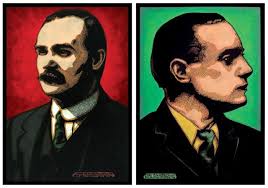
There may be a tragic illustration of the difference between revolutionary Irish Socialism and revolutionary Irish Republicanism in the last of the Dublin 1916 executions, on 12th May, of the socialist James Connolly and of the Irish Republican Brotherhood organiser Seán Mac Diarmada.
Connolly was one of the leaders of the ITGWU and its Irish Citizen Army which had fought the bitter eight months against the Lockout to smash the union. Mac Diarmada is reported opposing the workers’ action, believing that Irish manufacture and trade would lose out to English competition.13
CONCLUSION
There are Irish Republicans who are revolutionary socialists and Irish Republicans who are not. There are also some revolutionary Irish socialists who are not strictly speaking Irish Republicans. All can and should join in the struggle against British colonialism and other imperialism.
A sovereign Irish Republic on a united 32 Counties would be a great progressive step, for democracy and against imperialism and colonialism. It would not, however, be socialist just because it was Irish Republican, even if it adopted some socialist measures.
A socialist Ireland would be one in which the working class ruled and its measures would include socialisation of all productive enterprises including factories, agricultural and construction enterprises and distribution centres, i.e any which employed workers not of the owner’s family.
And socialisation of all transport and communication networks and social and health services in addition to financial services.14
If it did all the above the regime in Ireland would be socialist and would not even need to call itself ‘Republican’.15 If it were not socialist then it would be capitalist and the struggle for socialism would need to confront the Irish state which would in turn seek to repress the socialist struggle.
Republicanism and Irish Republicanism are different things and socialism is different from both of them.
If people wish a socialist society they should not expect Irish Republicans to present them with that but will instead need to educate, organise and lead their own revolutionary socialist forces while simultaneously participating in the broad anti-colonial and anti-imperialist struggles.
End.
FOOTNOTES
1And property, of course.
2English Republicanism did not in general envisage the right of Ireland to self-determination, nor France agree with the national rights of the Breton and Basque nations, nor of the colonies abroad for independence; nor the USA of the rights of the Indigenous not to have European settlers occupy their land.
3Largely adopted by sections of business and professional classes of the Occupation, i.e settlers and descendants of settlers.
4Many Irish Republicans were historically able to collude in English settler colonialism in Australia and early colonial occupation of America, as well as later USA settler colonialism into lands still held by the Indigenous Americans.
5However, in communist society, it was understood that the second half of that slogan would be ‘to each according to their needs.’
6The earlier February Revolution had been a workers’ strike and bourgeois uprising against war and the absolutist power of the Tsar. Incidentally it had been only the second revolution against world war, as the 1916 Rising in Ireland had been the first.
7I am not discussing its development or degeneration here, which would take us away from the central topic of discussion.
8Most armies chiefly recruit from the working class but the ICA was specifically for as well as of the workers.
9Modern spelling, meaning: ‘Daughters’.
10That they were distinct forces is clear in their development and leadership but in the membership the differences would not always be so clear-cut. The Constitution of the ICA was Irish nationalist but required all members to be trade union members and people chose an organisation to join on the basis of family and social circle loyalties.
11Also described as ‘the counter-revolution’.
12And eventually lose that always unwinnable war.
13https://www.irishtimes.com/culture/heritage/the-sean-mac-diarmada-papers-this-blood-was-not-shed-in-vain-1.2524097 However Brian Feeney in the 16 Lives series is quoted as stating the opposite, which is true of Mac Diarmada’s mentor Thomas Clarke. I have not seen Feeney’s evidence for Mac Diarmada’s sympathies.
14Though transport and communication services have been socialised by capitalist states, the majority of financial services are rarely socialised.
15Though it could do so, of course and probably would.
 rebelbreeze