How does a rat-ridden eyesore become a charming garden? And how does a sheet-metal fabricator-welder who knew nothing about gardening become its creator? The answers are: slowly, learning as he goes along and with support in the community.
In a little housing cul-de-sac or ‘turning’ as we used to call them, in a Dublin inner-city southside dockland, there was a disused area overgrown with brambles harbouring rats. Its only attractive feature was a big beech tree (Feá) left there when the area was cleared for housing construction.
But Jimmy saw something else there. In the eye of his mind, he saw a garden, a place of calm and beauty. The vision nagged at him until he began to clear the brambles and other undergrowth. And then to plug the rat-runs inside the brick back wall.
Though he was no stranger to the area, living as he does in the Markievicz flats, the neighbours might have been wary at first of what he was doing. But before long, they were bringing him cups of tea and biscuits, commenting approvingly on progress.
Flower bed in the garden (Photo: D.Breatnach)“… in vacant or in pensive mood, they flash upon that inward eye which is the bliss of solitude …“ Jimmy Browne, creator of the garden, caught in a moment of reflection. (Photo: D.Breatnach)
NOW AND FUTURE
Trees are valuable oxygenators and carbon-sequestrators, absorbing CO2 in the environment, as well as attractive but the big beech tree was shading the whole garden, restricting many other plants from growing. Sadly it had to go and two of its sections provide nice features in the garden.
Flowering shrubs and perennial flowers now grow in borders around an attractive brick floor. To those Jimmy has added other features of stone, metal posts and a garden bench.
Among the many that Jimmy acknowledges helping him is Shane Daly of the Windjammer, Leo for garden bench donation and Christy Barry who transported materials Jimmy collected to the garden.
Younger Rowan trees in the garden. (Photo: D.Breatnach)
The beech has been replaced by some Rowan trees, also known as Mountain Ash (Caorthainn), some in full berry flush when I visited the garden with local man Christian, who introduced me to Jimmy. I hoped Jimmy would install a pond that frogs or newts might breed in, attracting also damselflies.
The garden is attractive now and safe for children to visit but Jimmy has plans for a rockery, a fountain, a small shelter from rain showers over a seat and bird nest boxes, for tits for example. The Blackbird and robin are sure to nest in trees there in time, sending their songs into the area.
Section of beech trunk, now the stand for a table. (Photo: D.Breatnach)
FROM DERRY TO DUBLIN
Jimmy Browne is from Derry and came to Dublin in the 1970s, “on the hop” he says and indeed there were many from the Catholic areas that did the same in those years, whether temporarily or permanently. Coincidentally, the area around the garden has a strong political history too.
Around the corner, next to the Windjammer pub, is a plaque commemorating the founding of the Irish Republican Brotherhood in a wood yard there on St. Patrick’s Day, 1858, its counterpart in the USA being formed on the same day, soon to be known as “Fenians” which was adopted here too.
(Photo: D.Breatnach)
Almost facing the open end of Lombard Close is a little park with a monument, both dedicated to Elizabeth O’Farrell, of the 1916 Rising GPO Garrison, who took part in the occupation of Moore Street, where she had the dangerous responsibility of negotiating the surrender.
She grew up in that area as did nearby also her childhood friend, comrade and later lifelong house partner Julia Grennan, who also fought in the Rising and was there in Moore Street at the end also.
By strange coincidence, both Jimmy’s employers in Dublin, before he set up his own fabrication/ welding shop, had his own family name: Browne’s Foundry and Brownes Brothers.
Older Rowan trees in the garden (Photo: D.Breatnach)
Contrary to the drive for profits that dominates our society, a great many people contribute their physical and mental energy not only to their immediate family and friends but to the community at large. The garden is a benefit to the 19 homes in the Close and 40 others in attached streets.
Jimmy is not being paid to do this work. But he is being rewarded and not only by cups of tea and biscuits. He enjoys the feeling of creation, of making things from his mind come to life, of keeping busy in retirement, of feeling contentment. And of knowing his work is appreciated in the area.
End.
View of the garden from the outside: (Photo: D.Breatnach)Plaque to the birth-place of the Ireland section of the Fenians in Lombard Street, Dublin. (Photo sourced: eadingthesigns.weebly.comblog).(Photo: D.Breatnach)Garden bench – suigh síos and relax (Photo: D.Breatnach)
An estimated 10,000 people marched through Dublin city centre on Saturday in a national protest organised by CATU about homelessness, high rents, lack of public housing and the facilitation of property speculators by Irish Governments.
Groups from across Ireland attended the national march organised by the Community Action Tenants Union and without regard to the British Border around the Six-County occupied colony. They gathered at the Garden of Remembrance before marching towards Leinster House.
One of the housing groups that travelled to Dublin from the occupied Six Counties (Photo: D.Breatnach)
It was warm but not excessively so and the rain held off. The march ended with a rally in Molesworth Street, where Garda barricades prevent marchers from crossing the street to approach the gates of Leinster House, where the parliament of the Irish State sits.
In addition to drummers and also some singing, many chants could be heard: Homes for need – not for greed! What do we need? – Public housing; When do we need it? Now! When tenants are under attack? Stand up, fight back! (also something like: Get the landlords out of the Dáil!).
Among banners and flags of local area housing action groups and trade unions there were a great many Irish Tricolours in view; to see them being flown on a demonstration not of the Far-Right was a welcome sight. There were some Starry Ploughs and some red flags flying also.
It was good also to see the Irish language on some placards among the demonstrators. A notable feature was the high proportion of young people participating, many with their own home-made placards.
A certain species of vulture seems to have raised hostility in Ireland! (Photo: D.Breatnach)(Photo: D.Breatnach)Too Damn everything – except good! (Photo: D.Breatnach)
A lot of people were also in Dublin that afternoon for other events, including supporters of Gaelic Athletic Association county teams competing in Croke Park, in particular the Cork Vs Dublin teams in the Hurling Semi-Final. (Dublin getting that far surprised many but Cork beat them decisively).
A large anti-abortion demonstration also took place in the city centre, starting later than its advertised hours but immediately after the start of the CATU march. There are a range of attitudes on abortion but in general those campaigners like to project themselves as ‘pro-life’.
Some might comment that a pro-life cause would also include good housing for all – or to support the Palestinian people but generally the anti-abortion campaigners do not march in support of those, which is why they are often accused of being ‘pro-birth’ rather than ‘pro-life’.
Numbers of homeless single people and families with children rising annually passes 15,000 for the first time.
Out of 10,743 adults accessing emergency accommodation in March this year, 1,178 were under 24. In addition, 4,675 children were also using emergency accommodation.1 In January 134 individuals were counted sleeping on streets and in parks in the four Dublin areas, a 14% increase on 2024.2
In addition, the numbers of homeless does not include those sofa-surfing, awaiting eviction, in domestic violence refuges or unaccommodated refugees.
CATU’s list of demands points to the unfilled needs across a range of indicators and in itself is an indictment of the current state of affairs. In addition, the numbers of homeless has been rising annually and does not include those sofa-surfing, in violence refuges or unserviced refugees.
(Photo: D.Breatnach)
Prior to the march, CATU published a list of objectives and demands:
End child homelessness by 2026
Eviction ban North & South, Lower rents
Properly resource the Tenant In Situ scheme
End Direct Provision
Ban Vulture Funds
Build and maintain Public Housing – use public land
Build and resource culturally-appropriate Traveller Accommodation
Homes, not Holiday Lets
Build Communities of Care: education, community, addiction & mental health services now!
Front of the CATU march comes around from D’Olier Street while the rest of it is still coming down O’Connell St. (Photo: D.Breatnach)(Photo: D.Breatnach)
COMMENT – Housing Need and Action
It was an excellent turnout for CATU who are to be congratulated on their mobilisation and organisation around the country and in Dublin. The housing crisis is one of the great practical problems facing working people and a very big public housing program is the only solution.
However, the Irish neo-liberal ruling class are clearly wedded to housing provision by the private sector, with its soaring rents and mortgage payments resulting for many in sleeping on the street or living in hotels and hostels, not just single people but family groups with children too.
Housing marches and occasional symbolic occupations of buildings through the years have not changed the situation which worsens annually. The far-Right use the issue to target migrants who have not caused the crisis and even asylum seekers who cannot possibly have any effect on it.
Plentiful public housing is clearly the answer, rented according to the occupiers’ income. After the initial building cost, the rents will pay for maintenance, repairs, upgrades and even new buildings. And the construction program will provide much employment too.
Clearly a radical program of action will be needed to force the Irish ruling class to adopt a large public housing program. It does not require a revolution to achieve the change but it will almost certainly need the fear of one to move our rulers in the necessary direction.
In the 1960s and 1970s a number of housing schemes construction and renovation programs were won by the direct action of the Housing Action Committees of Dublin and Dún Laoghaire. The Committees included occupations in their program, alongside street rallies and marches.
Some years ago a small group called Revolutionary Housing League began a series of occupations of empty buildings, also refusing to give guarantees not to continue the actions when taken to court. They called for replication action on a wide scale along the same lines but that did not materialise.
Action of the kind up and down the country seems to be what is required and activists may be jailed before this ruling class is prepared to supply the basic human need of decent and affordable housing for the working people. It remains to be seen what role CATU will play in all of that.
A large number of tenants organised by the Community Action Tenants’ Union (CATU) from a number of Dublin City Council housing estates gathered outside City Hall on Monday 12th May evening to lobby the monthly elected Councillor’s meeting.
Those attending for the most part came from public housing blocks and estates from Ballymun to the Liberties and Coolock to Pearse Street. They carried placards and demanded that Dublin City Council negotiate with them.
A section of the lobby outside City Hall facing Parliament Street (note on top extreme left of photo plaque commemorating two leaders of the Irish Citizen Army shot dead in 1916). (Photo: D.Breatnach)
The recently-appointed Assistant Chief Executive over housing and community came out to receive the Union’s demands and petitions from tenants organising within their complexes and areas andthe lobbyistsalso forced the issues onto the agenda of the council meeting that night.
The protest was organised by the Dublin city CATU branch with wide support from community organisers and was attended by a number of elected councillors from some political parties and independents.
(Photo: D.Breatnach)
The problems CATU representatives listed verbally and in writing included a general low level of maintenance and upkeep of their estates and blocs, of the actual dwellings, communal areas, playgrounds and rubbish chutes. Rat infestations were a problem in some.
Damp leading to mould, rainwater penetration, inadequate proofing, badly fitting windows and doors were also listed at a number of sites, as were inadequate insulation leading to high heating costs and a need for overhaul of the heating system itself.
Among the slogans chanted was: Dublin City Council – Negotiate!
(Photo: D.Breatnach)
Included in their demands was that DCC officials recognise the right of their tenants to be represented by CATU as their union, which they stated was not always respected and they sought formal meetings with named officials responsible for the areas in question within one month’s time.
Although apparently currently not members of CATU, the organisation had invited the Pearse House Residents’ Committee to attend and speak at the lobby. Their chairperson Neil Maloney did so, addressing the issue of the long overdue regeneration of their housing bloc.
(Photo: D.Breatnach)
Maloney described the “blow to the community” when funding for stage two of the regeneration project to eliminate overcrowding was withdrawn, after their hopes had been raised by presentation of a regeneration timescale and a physical design in August of the previous year.
Ironically, the housing crisis was implicated in the Government’s reason for refusing to support the regeneration going ahead, in that the increase in inner space of the dwellings would reduce the number of actual housing units.
(Photo: D.Breatnach)
The Pearse House chairperson commented that “the current bedsits are illegal” and that their homes currently don’t meet European standards, going on to state “a real need for bigger homes to address overcrowding and family needs.”
“This was always going to be a challenge for this protected structure, but in phases 2 and 3 of the regeneration plan, there would be 2 additional blocks built. The additionality that the Government is seeking would be gained through the social homes gained during the decanting process.”
Pearse House residents attended CATU’s protest “to highlight our anger and what we see as another block on this project,” Maloney said. And note that although DCC has committed to redesigning the project for submission to the Government there is no guarantee this will be successful either.
(Photo: D.Breatnach)
“Ireland is still in breach of the European Charter for social housing and our human rights. Our community has seen the redevelopment and construction of new buildings, offices etc. and Pearse House is the eyesore in the middle of our community.”
“We were the community before all this redevelopment, and we will be the community when it’s all over,” concluded Maloney, voicing a common complaint along the south Dublin dockside. 1
A section of the lobby outside City Hall viewed looking down Dame Street. (Neil Maloney is pictured after his speech). (Photo: D.Breatnach)
Public Housing Background
There was little public housing in Dublin under British rule and the big town houses of the rich had been sold and sub-divided for rent by private landlords (including some who were elected councillors (or aldermen).
The new State built “2,000 local authority homes by 1924, a feat all the more remarkable in the context of a shortage of State funds, and the need to rebuild much of the infrastructure damaged in the War of Independence.”2
But of course it was not keeping up with the existing need or population growth and 40% of the population were forced to emigrate in the first 50 years of the Irish State.3
However 1924 too was the introduction of legislation facilitating state money subsidising the building of private housing.4 “In the decade after 1932 some 82,000 homes were built, the vast majority (public and private) with State subsidies.”5
Prof. Kenna relates that by 1940, some 41% of the Irish housing stock had been built by local authorities, far higher than that in England and Wales (25%) and also comments on the effect this had on subsidiary employment not only in construction but in sourcing and supply of materials.6
Although by 1964, a further 74,000 private and 63,000 local authority homes were built with State support and that between the 1950s and 1960s a million people had left the country, there was still a housing shortage and rents on private properties dug deep into workers’ incomes.7
Prof. Kenna comments that little attention was paid to the need for housing estate management, amenities, shops and the social, educational or other needs of the new community established there. That this should coincide with a boom time for property developers should not surprise us.
(Photo: D.Breatnach)
Government schemes to facilitate the purchase of their local authority accommodation from the 1950s resulted in the disappearance of much public housing stock into the private sector.8 Theoretically they would be replaced by new public housing builds but that didn’t happen.
Public land and land held by NAMA9 has been increasingly sold or even given away to private developers on promises of provision of a low percentage of public housing and often those individuals or consortiums do not even keep their earlier promises.
The Report of the Commission on the Relief of the Sick and Destitute Poor in 1927, Prof. Kenna reminds us, found 3,257 homeless people including 901 children, while in January 2021 there were 5,987 homeless adults and 2,326 homeless children in Ireland.
The Far-Right has jumped on the opportunity of the current housing crisis to blame it – not upon lack of public housing construction, big landlords, property speculators and vulture funds – but on migrants.
The Left in Ireland has until now in practical terms left this ground for exploitation of racists.
One of a number of speakers, photographed from across the street as too crowded there. (Photo: D.Breatnach)One of a number of speakers, photographed from across the street as too crowded there. (Photo: D.Breatnach)One of a number of speakers, photographed from across the street as too crowded there. (Photo: D.Breatnach)
GOING FORWARD
CATU seemed pleased with the lobby turnout and announced their intention to organise a housing protest march on Saturday July 5th. In the meantime they will no doubt be following up on the meetings they requested with area housing managers and agreeing objectives and deadlines.
Hopefully, seeing the initial results in the attention of DCC housing and amenity officials, and reflecting on their numbers when they take joint action, tenants of DCC will take heart and grow in confidence in their ability to ensure provision of decent housing and services for their needs.
Of course, the Far-Right won’t like that as it distracts from their targets – but the extension of this campaign does provide some hope of something like a solution to the current terrible grinding crisis of both housed and homeless.
End.
One of a number of speakers, photographed from across the street as too crowded there. (Photo: D.Breatnach)
APPENDIX: I916 Battleground
It might or might not have been mentioned (I couldn’t hear much of the speeches) that City Hall, outside of which CATU were protesting, had been a 1916 resistance centre, occupied by a small force of the Irish Citizen Army, known in some circles as the first workers army in the world.
Unaware of the extremely low British garrison on the Castle that day, the ICA had failed to take the complex and retreated to City Hall and some outposts in Dame Street and Parliament Street where they resisted until overwhelmed by British Army reinforcements.
The symbolism of the Castle, the administrative seat of the British occupation in insurgent hands, resulted in a ferocious assault on the ICA garrison and it fell on the Monday/ Tuesday of that week. One of the statues inside bears what appears to be a bullet hole to this day.
A steel plaque on the right of the outside front of the building lists the names of the ICA garrison of the area, around 50% of which were women. An older cast plaque at the east corner lists the names of two of the five who were killed there, Sean Connolly (OC) and Sean O’Reilly (2i/c).
The 1916 Rising was followed by the election of the First Dáil in 1919 with its Democratic Program affirming that all right to private property must be subordinated to the public right and welfare, and that no child should suffer hunger or cold from lack of food, clothing, or shelter.10
That was followed by the War of Independence and the Anglo-Irish Agreement; and the new State that came into being had no intention of fulfilling the promise of the Democratic Program but rather a determination to suppress any who tried for that fulfilment.
Footnotes
1For example the construction plans for the Irish Bottle Glass site (sold by Nama to the Ronan consortium) contain no components of public housing and units at expected prices will not be affordable by most local people.
Chris Hedges (shared from his substack Subscribe here for more)
(Reading time: mins.) NB: Edited by RB from original article for formatting purposes
The wildfires in California replicate the massive fire storms in the boreal forest in Canada and Siberia, the lungs of the earth. Our addiction to fossil fuel has ignited an age of fire.
The apocalyptic wildfires that have erupted in the boreal forest in Siberia, the Russian Far East and Canada, climate scientists repeatedlywarned, would inevitably move southwards as rising global temperatures created hotter, more fire-prone landscapes. Now they have.
The failures in California, where Los Angeles has had no significant rainfall in eight months, are not only failures of preparedness — the mayor of Los Angeles, Karen Bass, decreased funds for the fire department by $17 million — but a failure globally to halt the extraction of fossil fuel.
The only surprise is that we are surprised. Welcome to the age of the “Pyrocene” where cities burn and water does not come out of the hydrants.
The boreal forest is the largest forest system on earth. It circumnavigates the Northern Hemisphere. It stretches across Canada and Alaska. It travels through Russia where it is known as “the taiga.”
It reaches into Scandinavia, picks up again in Iceland and Newfoundland, and moves westward across Canada, completing the circle. The boreal forest has more sources of freshwater than any other biome, including the Amazon Rainforest.
It is the lungs of the earth, able to store 208 billion tons of carbon, or 11 percent of the world’s total.
Yet it has been steadily degraded, assaulted by deforestation and the extraction of the tar sands in Alberta, Canada — which produces 58 percent of Canada’s oil and is the U.S.’s largest source of imported oil — man-made drought and rising temperatures from carbon emissions.
Almost two million acres of boreal forest have been destroyed by extraction industries and timber companies. They have scraped away the topsoil and left behind poisoned wastelands.
The Final Toast by Mr. Fish (Source: C. Hedges substack)
The production and consumption of one barrel of tar sands crude oil releases between 17 and 21 percent more carbon dioxide than the production and consumption of a standard barrel of oil.
The oil is transported thousands of miles to refineries as far away as Houston, through pipelines and in tractor-trailer trucks or railroad cars.
This vast assault, perhaps the largest such project in the world, has accelerated the release of carbon emissions that, unchecked, will render the planet uninhabitable for humans and most other species. There is a direct line from the destruction of the boreal forest and the raging wildfires in California.
The boreal forest system has, for over a decade, seen some of the planet’s worst wildfires, including the 2016 Wood Buffalo (aka Fort McMurray) wildfire, which consumed nearly 1.5 million acres and which was not fully extinguished for 15 months.
The monster wildfire, which was, according to journalist John Vaillant, about 950 degrees Fahrenheit — hotter than Venus — destroyed thousands of homes and forced the evacuation of 88,000 people.
The fire ripped into Fort McMurray with such ferocity and speed that residents barely escaped in their cars as buildings and houses were instantly vaporized. Flames shot 300 feet into the air. Fireballs rolled up into the smoke column for another 1,000 feet. It was a harbinger of the new normal.
More than 100 climate scientists have called for a moratorium on the extraction of tar sands oil. Former NASA scientist James Hansen warned over a decade ago that if the tar sands oil is fully exploited, it will be “game over” for the planet.
He has also called for the CEOs of fossil fuel companies to be tried for “high crimes against humanity and nature.”
It is hard to get a sense of the scale of the destruction unless you visit, as I did in 2019, the Alberta tar sands. I spent time with the 500 inhabitants of Beaver Lake, the Cree reserve, most of whom are impoverished and live in small, boxy prefabricated houses.
They are victims of the latest iteration of colonial exploitation, one centered on the extraction of oil that is poisoning the water, soil and air around them.
Beaver Lake, as I wrote at the time, is surrounded by over 35,000 oil and natural gas wells and thousands of miles of pipelines, access roads and seismic lines.
The area also contains the Cold Lake Air Weapons Range, which has appropriated huge tracts of traditional territory from the native inhabitants to test weapons.
Giant processing plants, along with gargantuan extraction machines, including bucket wheelers that are over half a mile long and draglines that are several stories high, ravage hundreds of thousands of acres.
“These stygian centers of death belch sulfurous fumes, nonstop, and send fiery flares into the murky sky,” I wrote. “The air has a metallic taste.
Outside the processing centers, there are vast toxic lakes known as tailings ponds, filled with billions of gallons of water and chemicals related to the oil extraction, including mercury and other heavy metals, carcinogenic hydrocarbons, arsenic and strychnine.
The sludge from the tailings ponds is leaching into the Athabasca River, which flows into the Mackenzie, the largest river system in Canada.”
Nothing in this moonscape, by the end, will support life. “The migrating birds that alight at the tailings ponds die in huge numbers,” I noted. “So many birds have been killed that the Canadian government has ordered extraction companies to use noise cannons at some of the sites to scare away arriving flocks. Around these hellish lakes, there is a steady boom-boom-boom from the explosive devices.”
The water in much of northern Alberta is no longer safe for human consumption. Drinking water has to be trucked in for the Beaver Lake reserve. Cancer and respiratory diseases are rampant.
…mile upon mile of black and ransacked earth pocked with stadium-swallowing pits and dead, discolored lakes guarded by scarecrows in cast-off rain gear and overseen by flaming stacks and fuming refineries, the whole laced together by circuit board mazes of dirt roads and piping, patrolled by building-sized machines that, enormous as they are, appear dwarfed by the wastelands they have made.
The tailings ponds alone cover well over a hundred square miles and contain more than a quarter of a trillion gallons of contaminated water and effluent from the bitumen upgrading process.
There is no place for this toxic sludge to go except into the soil, or the air, or, if one of the massive earthen dams should fail, into the Athabasca River. For decades, cancer rates have been abnormally high in the downstream community.
The out-of-control fire storms and blizzard of swirling embers, he chronicles, are what we are witnessing in California, a state which normally experiences wildfires during June, July, and August.
Neighborhoods burn “to their foundations beneath a towering pyrocumulus cloud typically found over erupting volcanoes” and fires generate “hurricane-force winds and lightning that ignites fires miles away.”
These cyclone-like fires resemble the firebombing of Hamburg or Dresden during World War Two, rather than forest fires of the past. They are almost impossible to control.
You can see an interview I did with Vaillant here.
“Fire wants to climb,” Vaillan told me. “[W]e all know heat rises. It’s rising up into the treetops and it’s sucking in wind from underneath because it needs oxygen all the time. So the fire, it’s helpful to think of it as a breathing entity.
It’s pulling oxygen in from all around and rising into the architecture of the trees and so there’s this rushing chimney-like effect. Where the fire is in a way happiest, most energetic, most charismatic, and dynamic is up in the treetops, and then it’s pulling in wind from down below.
As that heat builds, as the whole tree is engaged, you have this increasing heat and increasing wind which then builds on itself so it becomes almost a self-perpetuation machine. If you have hot enough, dry enough, [and] windy enough conditions, those flames will then begin to leap from treetop to treetop.”
The heat releases vapor, hydrocarbons from the fuels around it, which is why we see
“explosive fireballs and massive surges of flame coming out of big boreal fires because that’s the superheated vapor rising up and then ignited. Imagine an empty gas can — even though there might not be a lot of liquid in it, it will still explode in a spectacular fashion.
Well, that’s really what the fire is enabling in the forest, for all those hydrocarbons to release in this gaseous cloud that then ignites. That’s when you see, especially a boreal fire, in full run. It’s called a Rank 6. It’s comparable to a Category 5 hurricane.”
When houses and buildings become very hot they, like trees, release hydrocarbons. Vaillant calls modern buildings “incendiary devices.” They are packed with petrochemicals and often sheathed with petroleum products like vinyl siding and tar shingles.
When fires push temperatures to over 1,400 degrees the vinyl siding, tar shingles, glues and laminates in the plywood vaporize.
“The modern home is in fact more flammable than a log cabin or a 19th-century home that’s made mostly out of wood, mostly furnished with cotton-stuffed furniture or horse hair stuffed furniture, things that we think of as antiques now,” Vaillant said.
“But the modern home is really in a way a giant gas can and we don’t think of that when it’s 75 degrees. But when it’s 300 degrees because of the radiant heat coming off a fire, or 1,000 degrees because of the radiant heat coming off a boreal wildfire, it turns into something completely different.”
“All of us alive today have grown up in the petroleum age,” Vaillant said. “It feels normal to us the way I think people smoking on airplanes and in doctors’ waiting rooms felt normal to people in the 1950s. We’re completely habituated to it, to the point that it’s invisible to us.
But if you really stop and think about how petroleum is rendered and what it in fact is, it’s literally toxic at every stage of its life. From the moment it’s drawn from the ground through the incredibly polluting refining process, into our cars and where it’s burned…
Petroleum will kill you in every form, whether as a liquid, as a toxic spill, as a gas, as an emission.
It’s strange to think that we have surrounded ourselves and persuaded ourselves that this profoundly toxic substance is an ally to us and an enabler of this wonderful lifestyle that we live that is now being compromised in measurable and visible ways by that very energy source.”
We have harnessed the concentrated energy of 300 million years and set it alight. We are addicted to fossil fuels. But it is a suicide pact. We ignore the freakish weather patterns and disintegration of the planet, retreating into our electronic hallucinations, pretending the inevitable is not inevitable.
This vast cognitive dissonance, fed to us by mass culture, makes us the most self-deluded population in human history. The cost of this self-delusion will be mass death. The devastation in California is the harbinger of the apocalypse.
end.
The Chris Hedges Report is a reader-supported publication. To receive new posts and support his work, consider becoming a free or paid subscriber.
Clare Daly stood for election in the 2024 elections of the Irish State, in the Dublin Central parliamentary constituency, one with a tradition of independent representation going back to Maureen O’Sullivan and Tony Gregory before her.
Daly was standing as one of the loose Left coalition of Independents for Change in a heavy competition for the four-seat constituency.
Clare Daly has a track record as elected public representative and socialist political activist, also as a prominent Socialist Party activist, with which organisation she partedcompany in August 2012.
She was elected MEP for the Dublin constituency from July 2019 to July 2024, TD1 for Fingal from Feb. 2016-July 1999 and TD Dublin North Feb. 2011-2019; in recent years Daly has been better known outside Ireland due to her public interventions in the European Parliament.
Daly and her partner Wallace were both vilified by pro-imperialist liberals and ‘Left’ for publicly opposing US/NATO/ EU imperialist campaigns against Islamic regimes and the Russian Federation, being subjected to a host of unfounded allegations contrary to their actual record.
Tik Tok clips of Daly’s biting attacks on the EU’s complicity in the US-backed ‘Israeli’ genocide provided relief for many around the world from the Zionist sycophancy and insincere and ineffective concern for the victims of that daily genocide prevalent in the EU Parliament.
And who can forget Daly’s calling German politician and EU Commission President Ursula Van Der Leyen out as ‘Frau Genocide’ in the European Parliament in December last year!2
While an MEP, Daly also intervened in the discussion around the Irish Gombeen3 class’ attempt to push us towards NATO, further undermining a quite tattered Irish neutrality. And while a TD, she and her partner Mick Wallace TD were arrested protesting the foreign militarisation of Shannon.
To their credit both risked jail by refusing to pay the fines imposed but the Gombeen ruling class decided to restrict the damage of its exposure of collusion with US imperialism by also reducing the punishment of both to a few hours in captivity.
Daly has been one of the few TDs prepared to speak in public against the repression of Irish Republicans and to visit some of the consequent victims in jail.
In the EU Parliament, Daly also denounced the Spanish State’s police invasion of Barcelona and violence against voters there on 1st October 2017 during the referendum on Catalunya’s independence.
2024 Dublin Central election poster for Clare Daly.
In Ireland today
In her election flyer here Daly highlighted representation independent of political party for her electoral area, housing, health service, cost of living, Palestine, the endangered climate and Irish neutrality without any indication of how these issues might be effectively addressed.
Daly’s election flyer did not mention capitalism or imperialism, nor did she campaign on a platform of overthrowing the current neo-colonial and neo-liberal capitalist system in force, instead indicating her wish to “hold to account the people who’ve got us into this mess.”
“Holding to account” is something to which Daly is accustomed doing and does it well, eloquently, with passion and fluently, scarcely having to refer to her notes while doing so. But like ‘speaking truth to power’, it has little effect on those who are in control of the political-social system.
It can indeed have an effect on the victims of the system but we are left with the question of what to do about the situation. Refreshing as it may be to hear her again in Leinster House, neither voting Daly in — nor fifty Dalys — is going to change any of the conditions under which we suffer.
BY THE WAY,
in case anyone’s interested, I gave my first preference vote to Daly and hope she does get elected.
End.
1Teachta Dála, the title of a public representative elected to the parliament of the Irish State.
2Imperialist politician and proven plagiarist in her doctoral thesis.
3Vernacular term in Ireland for huckster, carpet-bagger-type capitalists, derived from the Irish language gaimbíneachas, profiteering, nowadays used to describe the neo-colonial Irish capitalist class.
On 26 September 2022, an explosion blew a section of the Nord Stream 2 gas supply pipeline from Russia to Germany, incidentally causing an environmental disaster for sea-life in the area. Investigations confirmed that it was an act of sabotage.1
Amidst accusations and theories,2 no perpetrator was conclusively identified.
But two years later, in September 2024, an important item of previously-suppressed information came to light in a Danish newspaper. It was not however picked up by the mainstream western media, despite its potentially crucial contribution to solving the mystery.
Alternative sources however alighted on it and it is now coming into the public light.
In any investigation of culpability for a human action, one of the first established principles to investigate is – and targets of investigation should be — cui bono? (in Latin, who benefits?). Next, Qui habet potestatem? — Who has the means? Finally, Who had the opportunity?
Map of route of the Nord Stream pipelines showing neighbouring state. (Source image: Financial Times)
Potentially, any in the anti-Russian coalition around NATO stood to benefit by harming not only a Russian installation but also a major source of financial benefit to Russia, i.e of sales of gas to Germany. Many eyes turned towards Russia’s opponent in the Ukraine, the Zelensky regime.
However, neither Russia nor any other serious commentators ever considered that NATO proxy to be the culprit. Russia and others stated that the operation required a major state, both in the depths concerned, in surface support needed and in the explosive type and detonation system.
A number of commentators pointed the finger at the USA, which denied any involvement. Well, the USA is a major state and certainly had the motive, as Russia was and remains its major target in the Ukraine war and it also had the potential technical and personnel means.
It would also of course, as an enemy of Russia, benefit from harm to its opponent. It would benefit the USA financially too, though that was yet to become clear.
From whom would Germany buy its power to warm its population and production through the winter as an alternative to Russian gas? That new source would turn out to be – yes, the USA.
OK, so suspicion should fall heavily on the USA, leader of NATO and chief among the enemies of Russia. But did it have the opportunity?
Since there was no record of a US naval presence in the area at the time of the explosion (even though they had been there previously in one of those major joint exercises they like to carry out to bring their allies closer and intimidate their opponents), the media investigation floundered.
Russia asked at the UN Security Council for an investigation, which was rejected. No decision of the Council can be made against a veto of even one of the five Permanent Members, of which three are part of the NATO coalition (USA, UK and France).
A number of alternative theories began to be put around, including mention of large yacht in the area and a Ukrainian oligarch financier. Official investigations were launched by two states in whose economic zone the operation must have taken place: Denmark and Sweden.3
Both regimes are part of the US/NATO/EU coalition and there may have been suspicions that their investigations might not be sufficiently thorough. In any case, in February this year both states closed their investigations without having identified the perpetrator.
Germany’s investigation is ongoing and it issued an arrest warrant for a Ukrainian oligarch who fled to NATO proxy Ukraine with assistance of NATO member Poland. However Russia and serious commentators have always said that a major state, something Ukraine is not, was culpable.
On 17 July 2024, the German government refused to publish the preliminary results of the investigation after the Alternative für Deutschland (AFD) party asked for it, or to comment about the possible involvement of American intelligence services or Ukraine in the pipeline attack.4
In October 2024, the Swiss newspaper Die Weltwoche wrote an article based on an interview given to Danish Politiken by John Anker Nielsen, the harbourmaster of Christianso in Denmark on the day of the two-year-anniversary of the Nord Stream pipelines sabotage.
Back in September 2023, the Christianso harbourmaster detected the presence of ships in the area with their transponders, equipment identifying the ship and its course, silent. Assuming some kind of accident, Nielsen sailed out to investigate, finding US Navy there.
With no evidence of disaster and a request that he leave, Nielsen turned for home. (Suppose that information had been included in the Danish investigation, would the fingers pointing at the USA not have multiplied?)
Nielsen says he was told to keep quiet about what he knew but decided to end his silence in September and his story was published in a local newspaper. Later alternative commentators such as Glen Greenwald and others on X picked up on it and now it’s finding its way into wider media.
The Swiss newspaper article went on to note that the USS Keararge three months earlier had participated in the BALTOPS 2022 exercise that included unmanned underwater vehicles suitable for demining and other underwater operations.5
Such vessels as those could transport explosive charges suitable for blowing the Nord Stream pipelines. The Swiss newspaper claimed this new information calls into question the assumption that a Ukrainian group was responsible for the sabotage and that investigations are continuing.6
OUTCOMES
The outcomes to date are that Russia has received heavy financial damage, both in the cost of the pipe and any repair costs but also through loss of a customer who might well have resumed its purchase of gas from Russia in preference to dearer fuel from elsewhere.
Carlos Latuff cartoon outlining the major suspicions at the time.
The USA has benefited financially because it is also an energy exporter, including to Germany, where Russia was its main competitor.
In 2022, Germany imported 44.65 million tonnes of hard coal. Its leading coal suppliers were Russia (29.2%), the United States (20.8%) and Colombia (16.3%).7 So in the event of any embargo on Russian hard coal, the US stands to benefit enormously.
But what about natural gas, formerly supplying 55% of Germany’s power supply, no longer possible from Russia through the Nord Stream 2 pipeline? About 45% …. comes from Norway through pipelines, 4% from the Netherlands, 5% domestic production … the rest from western neighbours.8
Norway and the United States were the top suppliers of gas to the EU in 2023. Norway provided almost 30% of all gas imports. But the actual origin of those supplies is not so easy to identify and reports even estimate that a small percentage of the EU’s supply is actually Russian.
Although additional suppliers include North African countries, the UK and Qatar, in 2023, the United States was the largest LNG supplier to the EU, representing almost 50% of total LNG imports. In 2023, comparing to 2021, imports from the US almost tripled.9
It seemed likely that some at least – and perhaps a lot – of Germany’s current LNG supply, though perhaps through another country, would actually be of US origin. And it turns out that the US has been the dominant LNG supplier to Germany since 2022 at 82% of total imports.10
IN CONCLUSION
While the USA has benefited significantly financially from the pipeline explosion and strategically through damaging an opponent, Germany has at the same time suffered a loss in having to buy more expensive fuel (from the USA).11 But Germany is an ally of the USA and a prominent one in NATO.
This episode demonstrates that 1) the USA, in advancing its own interests, is prepared to break the law and to see an ally suffer but also that 2) a major European capitalist power has surrendered a substantial portion of its own interests for the benefit of the USA, as a price of membership of the NATO club.
Germany, though an enthusiastic supporter of NATO, due to its dependence on natural Russian gas, had been reluctant to engage fully in the economic sanctions against Russia proposed by NATO. The blowing up of the Nord Stream 2 pipeline removed that dependence, transferring it to the USA.
The USA benefited, both politically/ militarily in hurting its opponent and in increasing the dependence of an ally. It also benefited subsequently financially, in gaining a major customer market share. The USA had more than enough Motive to carry out the sabotage.
It also had the Means (the capability) and now, as we know, the Opportunity also! Circumstantial? Sure but a mountain of evidence nevertheless.
4Receiving the answer: “after careful consideration, the Federal Government has come to the conclusion that the question cannot be answered for reasons of public interest”.
I learned that the Truth and Neutrality Alliance would be organising a protest on Sunday afternoon (18th) in Dublin’s O’Connell Street and attended in order to take some photos, talk to some people and report on it.
The small gathering with a banner and placards on the central pedestrian reservation in Dublin’ main street opposite the iconic General Post Office building1 included apparently Irish and East European people. They were addressed by a number of speakers.
Separately nearby was a small number of floral tributes dedicated to Alexei Navalny, right-wing anti- immigration Russian political activist and opponent of the Putin regime about whose recent death in Russian jail the Biden regime had made critical statements.
(Photo: D.Breatnach)
SPEAKERS
The first speaker, who appeared to be one of the organisers, denounced the “massive censorship” about the conflict in Ukraine and said we live “in a world of lies” and that “anyone who tells the truth is accused of being a Russian agent”.
He went on to draw parallels between anti-Russian propaganda and that which had been against Syria also. “The end of the war in Ukraine is now in sight”, he said and looked forward to a democracy with full rights for all including Russian-speakers.
The speaker said that one cannot (legally, publicly) be a communist in the Ukrainian state and talked about radio stations being closed down by the Kiyv regime.
In preparation for the end of the war he said that the regime is planning sabotage groups, training terrorists to act in the post-war Donbas as they are doing currently in Russia.
He ended with a reference to “the Banderites” (a reference to followers of the memory of WWII Nazi collaborator Stepan Bandera) and the antifascist slogan from the defence of Madrid during the Spanish Antifascist/ Civil War: “No pasaran!”
(Photo: D.Breatnach)
Bill O’Brien spoke on behalf the Truth and Neutrality Alliance which, he said, had been founded two years previously. “The Russian intervention was necessary”, he said, to act against the carrying out “of atrocities like some in Gaza.”
He went on to refer to “proxy wars such as those in Gaza, Ukraine and Yemen which are financed by NATO” and referred to the Minsk Agreements to which the Ukrainian Government had signed but “had been told by Britain not to honour”, he said.
The Minsk Agreement had been signed twice, O’Brien said and if adhered to, “the war would be over.” He said that “we need to push for the implementation of the Minsk Agreements.”
(Photo: D.Breatnach)
The speaker felt that despite the use of Cold War propaganda, the war would soon be over since the Ukrainian Army was “mainly mercenaries” and currently recruiting women and 60-year-old men.
A third speaker with an Irish accent said that he had been in the Crimea until two weeks previously and that “no-one wants to return to Ukrainian rule. NATO will never get their hands on any of it”, he said.
The Crimea was invaded by Russia in February 2014 and later annexed after a referendum in which the vast majority voted for inclusion into the Russian Federation. Though condemned by NATO allies, the result was no surprise, partly because 60% of the residents were of Russian ethnicity.
(Photo: D.Breatnach)
The official result from the Autonomous Republic of Crimea was a 97% percent vote for integration of the region into the Russian Federation, with an 83% voter turnout and from Sevastopol where there was also a 97% vote for integration with Russia, with an 89% voter turnout.
Crimea and the Donbas region had been under threat or actual attack since the 2006 overthrow of the Ukrainian Government of Yanukovych in what many have described as a US proxy coup. As the war continued, Russia returned to invasion of other parts of Ukraine in February 2012.
The war continues in the Donbas and the Zelensky regime has sworn to retake the Crimea which does not look possible.
One of the people in attendance displays a satirical poster of Zelensky. (Photo: D.Breatnach)
CONVERSATIONS
I interviewed one person from the Ukraine/Russian region who was willing to talk and who asked me first whether I would report truthfully, to which I replied that I would. (But wouldn’t most reporters claim that they were being truthful?).
Larisa Keller told me that although born in Georgia she has lived in other countries during her life and now in Ireland for 14 years. Ms. Keller has grandchildren and wants an environmentally-sound and peaceful world for them in which to grow.
(Photo: D.Breatnach)
“Dismantle NATO is the solution”, she said and “Weapons kill everything in nature” and “new types of weapons” are worse, she indicated, arguing for a ban on the development of weapons. But isn’t Russia also a state with a military, I asked – how does she feel about that?
“At this moment Russia is defending itself,” Ms. Keller said and she herself is supportive of “activities against the pressure of fascism”.
In conclusion, she had this to say: “Tell the world that they should recognise that we live in one world and we should appreciate our ability to stay there; it’s important that we support one another”.
One of the placards displayed at the event (Photo: D.Breatnach)
A young man with an Irish accent in attendance approached and told me that he had an East European girlfriend. He told me also that priests from his Russian Orthodox Church have been killed while pastoring with troops in the Donbas,2 that they are targeted “because they are morale-boosters”.
The young man told me he had friends among the Chechens also.
1Many protests and other events take place in this vicinity, not only due to its central location but also because the building was occupied by the leadership of the 1916 Rising against British occupation for five days.
2The area in the east of Ukraine that is predominantly Russian-speaking where the war is taking place and was besieged by Ukrainian troops, often fascist-led, from 2014 onwards (i.e 8 years before the Russian invasion).
The coca zones of Colombia are in crisis. The cash crop par excellence, i.e. coca is going through an unprecedented crisis, or so we are told.
The main promotors of the idea that the coca is in crisis because fentanyl has displaced it and sooner or later it will finish off the coca were from the government. Amongst those promoting this stupidity are Colombian state functionaries from the NGOs, social organisations and of course high-ranking members of the Historic Pact. The very president of the country, Gustavo Petro stated in August that
The cocaine market in the USA has collapsed and has been replaced by an even worse one: fentanyl that kills 100,000 per year. Cocaine used to kill 4,000 due to the poisonous mixtures from the market clandestine.(1)
It is simply the case that nothing that Petro said at the time was true. Whereas Clinton exaggerated the deaths due to cocaine consumption in order to justify Plan Colombia, Petro sought to minimise them. First of all, we should be clear that fentanyl did not displace cocaine, but rather another opioid, heroin. And the most notorious aspect of fentanyl is not the increase in consumption, but rather that due to its toxicity, a dramatic increase in overdoses. Petro’s government makes statements on the drugs issue without even understanding basic concepts.
The overdue publication of its drug policy allows us to analyse properly what it aims to do, as up till now we have had to put up with a year of contradictory speeches, tweets that don’t say much and complete incoherence in the matter, without even mentioning his stated aim of handing over the Colombian Amazon region to the US military, something that not even Pastrana openly proposed when he announced Bill Clinton’s Plan Colombia.
In a US study published in May of this year, the researchers found that the deaths from fentanyl tripled between 2016 and 2021, increasing from 5.7 per 100,000 inhabitants to 21.6 in 2021. The deaths from cocaine overdoses increased in the same period from 3.5 to 7.9. At the same time there was a 40% decrease in heroin related overdoses, falling from 4.9 in 2016 to 2.9 in 2021.(2) The study just confirmed the analysis of previous research published in December 2022 that looked at increases in mortality since 2001.(3)
Fentanyl is a new problem for the USA, but neither the increase in its consumption nor deaths tell us anything about the future of coca as Petro and Roy Barreras claimed. Quite the opposite. According to the UN, coca crops reached the figure of 230,000 hectares in 2022.(4) Of course, Petro is not to blame for that, he only took over the presidency in August 2022, but it belies his statements that coca is a thing of the past due to the economic crisis in the coca regions of the country.
So, what can be said of Petro’s new drug policy? Well, the first thing is that there is at last a policy outlined in a public document. They took their time in doing it but better later than never. The document proposes with a certain amount of hyperbole Oxygen for the communities affected, through support from licit economies, environmental measures and treating the matter of consumption as a public health issue. It also proposes Asphyxiation for drug trafficking organisations. Furthermore, it proposes being the voice and leadership of “an international diplomatic strategy to change the paradigm in how the drugs phenomenon is dealt with.”(5)
The document kicks off with a correct analysis that contradicts the public declarations made by Petro and other high ranking government functionaries, a few weeks prior to its publication. It is inexplicable how the president can boast about the collapse of coca at a point when it is almost certain his drugs policy was at the printers. It must be due to mediocre functionaries, as this government has continued with the policy of Duque and the previous governments of hiring mediocre friends. But in any case, the document gets somethings right, at last.
For decades, Colombia has made an enormous investment in human and economic terms in fighting drug trafficking. Although there are no official figures on the outlay in fighting drugs, but the Drugs Observatory of Colombia calculates an annual average expenditure of 3.8 trillion pesos [885.2 million euros] ascending to an approximate investment in the last twenty years of 76 trillion pesos [17.7 billion euros]. Whilst some results have been achieved along the way, it is true that the two main goals have not been reached: reduction in the supply and demand for illicit drugs.
Even though 843,905 hectares of coca were forcibly eradicated between 2012 and 2022, the planted area in this period increased by 327%. In 2022, Colombia had 230,000 hectares of coca with a productive potential of 1,738 tonnes of cocaine. As for demand for psychoactive substances, between 1996 and 2019 an increase of 5.1% to 8.7% in the consumption of all illicit substances (marijuana, cocaine, base, extasy or heroin) was observed.(6)
The document then goes on to acknowledge that the collapse in cocaine consumption is not real but rather on the contrary there has been an increase. It states that one of the first hypotheses was a global fall in demand for cocaine.(7) They are trying to save their own skin. There was no data to sustain the supposed hypotheses: none. It was dreamed up by mediocres and no one else made the claim. The document goes on to say “However, according to the lastest Global Cocaine Report from the UNODC (2023), demand has risen.(8) At least we are having a debate about the reality of poorly written studies from the children of the lovers of their friends who they hired.
So, what do they propose? It would seem that they propose a shift in the punitive model without abandoning it completely. They accept that the fumigations have not worked and that the periods of greatest fumigation do not match those of a lesser supply of the drug.(9) But the punitive element continues to be an integral part of the policy, the supposed shift is a mirage.
The evidence has shown that a security strategy on its own is not enough [the emphasis is mine] but rather it must go hand in hand with actions to prevent crime and deal with the underlying causes.(10)
The document takes a look over the international treaties in the area, softening the real demands of the Single Convention of 1961 stating that it doesn’t prohibit anything but rather submits the plants and the drugs produced to a strict control. There is not enough space here to go into detail on that debate. But once again what the government is saying is not really the case. The Single Convention does actually allow for some coca crops for medical and industrial purposes, mainly in Peru and also opium in India. But it is not the case that Colombia has misinterpreted those treaties. And this is a major issue, as any change in the paradigm is dependent on changes in those treaties or better still their complete derogation and the drawing up of new treaties under a new paradigm.
Whilst it is true that a country can allow coca crops for licit purposes, that is done with the permission of the UN control bodies, i.e. the USA. Even traditional consumption of the coca leaf is frowned upon in the Convention. Article 26.2 states that.
The Parties shall so far as possible enforce the uprooting of all coca bushes which grow wild. [emphasis is mine] They shall destroy the coca bushes if illegally cultivated.
Although Article 49 permits chewing of coca leaf in countries where it was already legal on the 1st of January 1961 (subparagraph 2a), it does so on the condition of banning it and eradicating it once and for all by 1986 (subparagraph 2e), something which was not achieved. Whether they like it or not, this treaty has not been misinterpreted and the whole UN framework i.e. US policy in the area is the problem and not a misinterpretation of previous governments. The supposed freedom to grow and licit use of coca that Petro imagines is not real.
Some states in the US legalised the production and recreational consumption of marijuana and clashed with the federal banking system that was not willing to receive funds from the industry, forcing many producers to resort to mechanisms more suited to money laundering in illicit industries. Something similar happened in Uruguay. The country regularised the recreational production and authorised and regulated the state control of it. However, not even the Bank of the Republic of Uruguay was willing to receive money from a lawful activity in the country due to a fear of reprisals from the USA.
It would seem that the architects of the law did not foresee the problem that would arise in the banking industry, owner and lord of the commercial and financial transactions in Uruguay. Were the Uruguayan legislators aware that it was not just a matter of convincing the international system of prohibition to reclassify cannabis as a substance in the drugs conventions but that they also had to convince the banking system to accept money from cannabis transactions? Everything seems to indicate that the directives the banks implement are those that are simply related to the formality of Cannabis being a prohibited substance and the fact that the money from the cannabis market is legal, illegal, black or white has no bearing on decisions.(11)
Uruguay found itself at the mercy of the repressive whims of the US government and in practice was not autonomous nor sovereign. Any drugs policy should take as its starting point that Colombia is not sovereign in the matter and it faces a massive enemy when it comes to solving the problem: the USA. It is not a matter of a restrictive interpretation by Colombian governments, but rather the reality of imperialist domination. This was the case with Uruguay.
… according to the Uruguayan government implementing a national law [on drugs] depends on the modification of a foreign law. Note that at no stage is a modification of international drug treaties that Uruguay has ratified mentioned, but rather a federal law that internally classifies cannabis in the USA.(12)
The government has no proposals in the matter and its proposals for the peasants are remoulds of the previous policies with a slightly modified language. They no longer talk of crop substitution but rather licit alternatives or economies. And the licit alternatives for the countryside are the usual ones, exportable monocultures.
And the iron hand continues for the peasantry. They have talked a lot about distinguishing between large and small-scale coca producers, increasing the definition of small-scale producer as one that has up to 10 hectares. But the iron hand continues. They have said that they will not use forcible eradication but…
Forcible eradication will be applied to crops that: (i) do not fall into the category of “small-scale grower”, (ii) increase in area, (iii) planted after the publication of this policy (regardless of size), (iv) have infrastructure for the production of base and cocaine hydrochloride, (v) do not fulfil their commitments to substitution and other mechanisms on the path to licit economies.(13)
Many peasants have some infrastructure to produce base, an infrastructure that is not all that complicated. So, I don’t know who these peasants who will not be subjected to forcible eradication are. It is not all that different from the policies of Uribe and Pastrana and borrows policies from Plan Colombia, the Exporting Stake of Uribe and the directives of the former Social Action and of course the Peace Laboratories of the European Union and the nefarious apologist for the economic policies of Uribe and also in passing the World Bank, the priest Francisco de Roux: the so-called Productive Alliances.
Productive agreements between the public sector, private sector and grassroot economies
These consist of a tripartite collaboration between the state and the private sector as drivers of the productive reconversion, through actions such as capitalist investment, transfer of know-how and insertion into local, national and international markets. To that end the “Productive agreements for life and hope” will be implemented, in which the state will offer benefits to the businesses that commercially associate themselves with the communities. The Ministry of Industry, Commerce and Tourism will facilitate and strengthen these type of alliances.(14)
Not that long ago in 2017, various current senators and representatives of what is now called the Historic Pact publicly denounced a proposal from Santos on the countryside. They stated:
… limits [the communities] chances of defining the productive and economic model that would allow the building of peace with social justice, by tying it to technical criteria… that give priority to the establishment of alliances and chains of production between small and large producers and the efficient use of rural land, technological innovation, technical aid, credit, irrigation and commercialisation that favour an entrepreneurial large-scale agro-industrial production.(15)
So, what about now? Ah of course, the proposal is yours, and it doesn’t matter whether it is the same proposal or not, but rather who makes it. And if the peasants do not agree with the economic model being imposed, what will happen to them? Well, “a differential treatment will be promoted that will be transitory and conditioned on their signing up to processes on a path to licit economies”.(16) In other words, they are going to jail.
As for money laundering, there is nothing new. The government is obliged by various international treaties to fight against money laundering. But the language used is telling.
This last point [laundering] is based on identifying high value financial targets, understood to be persons or legal entities, goods, assets or bodies that due to their nature, volume or characteristics may be exploited by criminal groups (emphasis is mine) to hide or channel illicit funds and thus launder money from criminal activities.(17)
HBSC Tower, Mexico (Photo source: Wikipedia)
As with other governments, including the USA, the banks are seen as another victim. More so than the peasants, exploited by criminal groups when in reality they themselves are criminal enterprises. The massive laundering of assets that HSBC carried out in Mexico cannot be understood in any other light. There are no measures taken to jail the banks’ directors, cancel their banking licence, freeze their assets, fine them to the point of leaving them naked in the street. No. The asphyxiation the government talks about is like the law, to be applied to some but not to others. They are more concerned about illegal mining in coca zones than the laundering of assets only yards from the Presidential Palace.
The document is very similar to previous policies with some small changes, a slightly distinct language and “new” proposals that are not new. Perhaps we could say that it indicates some goodwill in some aspects, but nothing more. Petro can’t fight for a new paradigm without changing the current one.
Proposing a revision of the international legal framework does not imply a conflict between prohibition or total freedom in the market for psychoactive substances. On the contrary, it means coming up with intermediate solutions such as alternatives to prison, harm reduction strategies and the responsible regulation adult use substances such as cannabis. The progress, failure and lessons learnt from international cooperation on drugs represent an opportunity for the international community to evidence based innovative strategies and policies.(18)
Harm reduction is policy in most of the world, including some parts of the USA. Alternatives to prison also, though in practice it is not always the case in all countries. What is put forward is the current state of play, not a big struggle to change the paradigm. It is a disappointing document, more so than previous policies, as this one tries to play with the language to stupefy, fool and lie to us. In the end, it is another lost opportunity. If you want to see something innovative in drug policy, you would be better off taking a drug, preferably a magic mushroom.
(2) Spencer, M.R. et al. (2023) Estimates of drug overdose deaths involving fentanyl, methamphetamine, cocaine, heroin, and oxycodone: United States, 2021. Vital Statistics Rapid Release; no 27. Hyattsville, MD: National Center for Health Statistics. May 2023. DOI: https://dx.doi.org/ 10.15620/cdc:125504. P.3
(3) Spencer MR, Miniño AM, Warner M. Drug overdose deaths in the United States, 2001–2021. NCHS Data Brief, no 457. Hyattsville, MD: National Center for Health Statistics. 2022. DOI: https://dx.doi. org/10.15620/cdc:122556.
The imagination’s land of the Red Cross, cheese, cuckoo clocks and chocolates plans the massacre of 70% of its wolf packs.1
In reality of course Switzerland is a very regulated country, with a rich financial/ industrial economy and is a major arms producer.
However in 2020 Swiss voters made their desire to protect endangered species clear, when 52% of voters rejected a hunting law that would have made it easier to kill endangered species such as wolves.2
Despite the vote, the Swiss parliament passed a new law in December 2022 that allows the wolf population to be ‘regulated’. Then, just days ago, the government proposed a regulation that will wipe out 19 of the 31 wolf packs remaining in Switzerland!
Eurasian Grey Wolf in snow (Photo sourced: Internet)
WOLF MYTH & REALITY
Childhood and adult fiction is replete with horror stories about wolves (to say nothing of werewolves) attacking humans but, when set against reality, these seem like propaganda. The reality is that it’s not to humans that wolves are generally a danger but to their livestock.
Wolves (Canis lupus) are highly intelligent pack canines and, apart from having donated the dog (Canis lupus famialaris) as a worker and companion for humans, is well aware of its survival boundaries with Earth’s very apex predator – humans (Homo sapiens).
Wolf fondling another; pack members are very affectionate to one another while the alphas maintain boundaries. (Photo source: Internet)
Wolves prey substantially on rodents but must also, for pack survival, prey on larger mammals such as deer, mountain goats and boar. When these are in poor supply or other prey is temptingly easy, such as cattle and sheep, they will take those too.
The traditional human fear of wolves is therefore not one based on self-preservation but on economic priorities. And in the moralistic story of “The Boy Who Cried ‘Wolf’” it is not the human villagers that are attacked by the wolf pack but the community’ssheep.
However, if humans are to continue consuming a diet that will include meat, they will of course need to protect their livestock from wolves and have being doing so even before history was written.
Traditionally the main agent in that protection has been, ironically perhaps, the wolves’ own descendant, the dog – or more specifically, several livestock guardian breeds of dog.
Known livestock guardian dog (LDG) breeds include the Aidi (Atlas Mountain Dog), Carpathian Shepherd, Estrela, Greek Shepherd, Komondor, several breeds of Mastiff and Sardinian Shepherd; a known extinct breed is the Alpine Mastiff (before 5th century BC to 19th century AD).3
Mastín (Mastiff) amidst sheep it guards near Lagunas de Somoza (León, Spain). (Photo sourced: Internet)
Livestock guardian dogs are socialised to the livestock and to their immediate human ‘family’ and will not tolerate the close approach of any potential predator (which often includes even other humans). The primary role is to protect the herd, warn of danger and if necessary, attack.
Where employed in the past, LGDs have been highly effective in protecting their charges, in most cases not even having to fight predators but rather intimidating them. If they have to fight, they are bred for fearlessness and tenacity and their throats also protected by a “wolf-collar”.
Anatolian or Kangol Livestock Guard Dog, with sheep herd it is protecting, Eastern Turkey. (Photo sourced: Internet)
Predators, however courageous, also have strong survival instincts which warn against danger to life or limb (the latter, for a predator in the wild, often in time equalling the first). Unless absolutely desperate they will move on to safer although more difficult-to-catch prey.
For a good LGD however, there is no backing down possible, it is in defence of its own (as a wolf pack might defend its pups). The herder, when present with a firearm, is mainly an additional protection, as well as an alpha member of the dog’s ‘pack’ to obey and protect.
In contemporary times, LGDs have proved effective throughout the world, even in the experimental reintroduction of wolves to the USA.4 So why are they not being more widely employed and, instead, the remaining large predators being exterminated?
Central Asian breed of Livestock Guardian Dog beside its owner (Photo sourced: Internet)
It is no doubt more profitable for big livestock famers to have huge herds roaming freely and when they run out of edible pasture, to move the herd by herding dogs, mechanised herding vehicles or even helicopters. But is it all-around better? And are huge herds environmentally viable?
Apart from other considerations, wolves have been shown to have an environmentally positive effect in a balance between predator, prey and the environment, including vegetation and even water courses, for example in the famous case of the reintroduction of wolves to Yellowstone.5
Deer are pretty to look at but eat young trees and cause damage to reachable branches, while wild goats will eat almost anything, right down to the roots. Wild boar can also be very destructive and, being omnivorous like humans, even prey on ground-nesting birds.
Eurasian Grey Wolf in woodland (Photo sourced: Internet)
All of those invade agricultural crop lands to eat, in the course of which they also trample other crops; wild boar6 are now invading villages and suburbs in a number of towns and cities, overturning large refuse containers for their edible contents.
Female wild boar with litter of piglets in German urban area (Photo cred: Florian Mollers)
Wolves and other predators keep those species down to numbers in better balance with the environment but also of less bother to human settlements. Wolf packs on the other hand do not grow in size beyond the food supply that is fairly safely available.
The human race has made a huge impact on the environment which is sustainable up to a point beyond which, however, we are rapidly passing. We live in a sustainable balance with the environment — or we perish. Perhaps “let the wolf live” can be part of the lesson we need.
4“After the reintroduction of wolves, that were eliminated in the United States in the 1930s, American farmers were losing about a million sheep annually to wolf attacks. 76 farmers took part in the Coppingers program, which introduced European livestock guardian dogs into the US sheep breeding (in their project they used Anatolian Shepherd Dogs). In all farms, where, in the absence of dogs, up to two hundred attacks of wolves per year happened, not a single sheep was lost under the protection of LGDs. At the same time, none of the predators protected by law got killed: the dogs simply did not allow them to approach the herd.” – https://en.wikipedia.org/wiki/Livestock_guardian_dog
6A wild boar is much more likely to attack a human than is a wolf in Ireland, where the Wolfehound breed was famous, it was a boar that mortally gored Diarmuid of the legendary Fianna after his return from exile. Wild boar also carry diseases that can infect domestic pigs and humans.
She’s been here a while now but has lost none of her beauty. She’s by no means fragile – very adaptable, in fact, like many of our own emigrants to other lands. She sounds kind of Japanese but isn’t, not at all.
It’s the fuchsia shrub, seen often in gardens but the hardy Fuchsia magellanica ‘Riccartonii’ variety grows naturalised in Ireland, especially along our west and south-west coasts where the soil tends to remain warmer than inland in winter.1
Naturalised Fuchsia (& Montbretia) in a country lane, West Cork (Photo cred: Stone Art Blog)
The first of her kind to receive European classification was Fuchsia triphylla on Hispaniola (now Haiti and Dominican Republic), baptised by French friar and botanist Charles Plumiere in the late 1690s in honour of the German botanist and medical investigator, Leonhart Fuchs (1501-1566).
We tend to pronounce her name as “foo-shia”, which sounds Japanese (to me at any rate) but in keeping with the origin of the name perhaps we should be pronouncing it “fooch-sia”, with the “ch” pronounced as the Irish one, e.g in the word “loch”.
Giúise (g’yoo-sheh) is its Irish botanical name but it has also been popularly known as “Deora Dé” which translates as “God’s tears” but can also mean “Drops of God’s blood” (more appropriately when the flower has yet to open).
There are 110 varieties of the plant, not counting cultivars, of which there are many also. The natural varieties are nearly all native to South and Central America, with a few varieties in New Zealand2 and Polynesia, testifying to the Silurian period connection between those landmasses.
Hanging fuchsia blooms from a bush growing in a Drumcondra garden a few days ago against its back wall, with many dropping to form a carpet in the lane beneath. (Photo: D.Breatnach)
In many parts of Latin America the flowers were pollinated by different species of hummingbirds but here in Ireland they do well enough with bees, both native and imported, to assist in their procreation.
The fruits are small and vary from sweetly edible to unpleasant to taste. As children we didn’t try the developed fruits but we did pluck the flower and chew the dark red part of the stem that becomes the fruit when the flower drops – and could often taste a faint sweetness.3
The fuchsia has been in Ireland a long enough time – since the early 19th Century — and, though not native, is not generally referred to as “alien”, much less “invasive” to Ireland, unlike for example Cherry Laurel, Japanese Knotweed and a number of water plants such as Parrot’s Feather.
The Rhododendron and the Cotoneaster, which probably ‘escaped’ from gardens at the same time as the fuchsia, however do cause serious enough problems.
A fallen fuchsia bloom carpet in a Drumcondra lane at twilight a few days ago. (Photo: D.Breatnach)
The naturalised South American migrant fuchsia brings bright colour wherever she grows for four months of the year, from June to October.
Fáilte roimpi – bienvenida!
end.
FOOTNOTES
1That favours rooted plant life so long as they can withstand the wind-chill factor and Atlantic gales.
2An exception to the bush/ shrub nature of the fuschia is one New Zealand species, the kōtukutuku (F. excorticata), which grows up to 12–15 m (39–49 ft) tall.


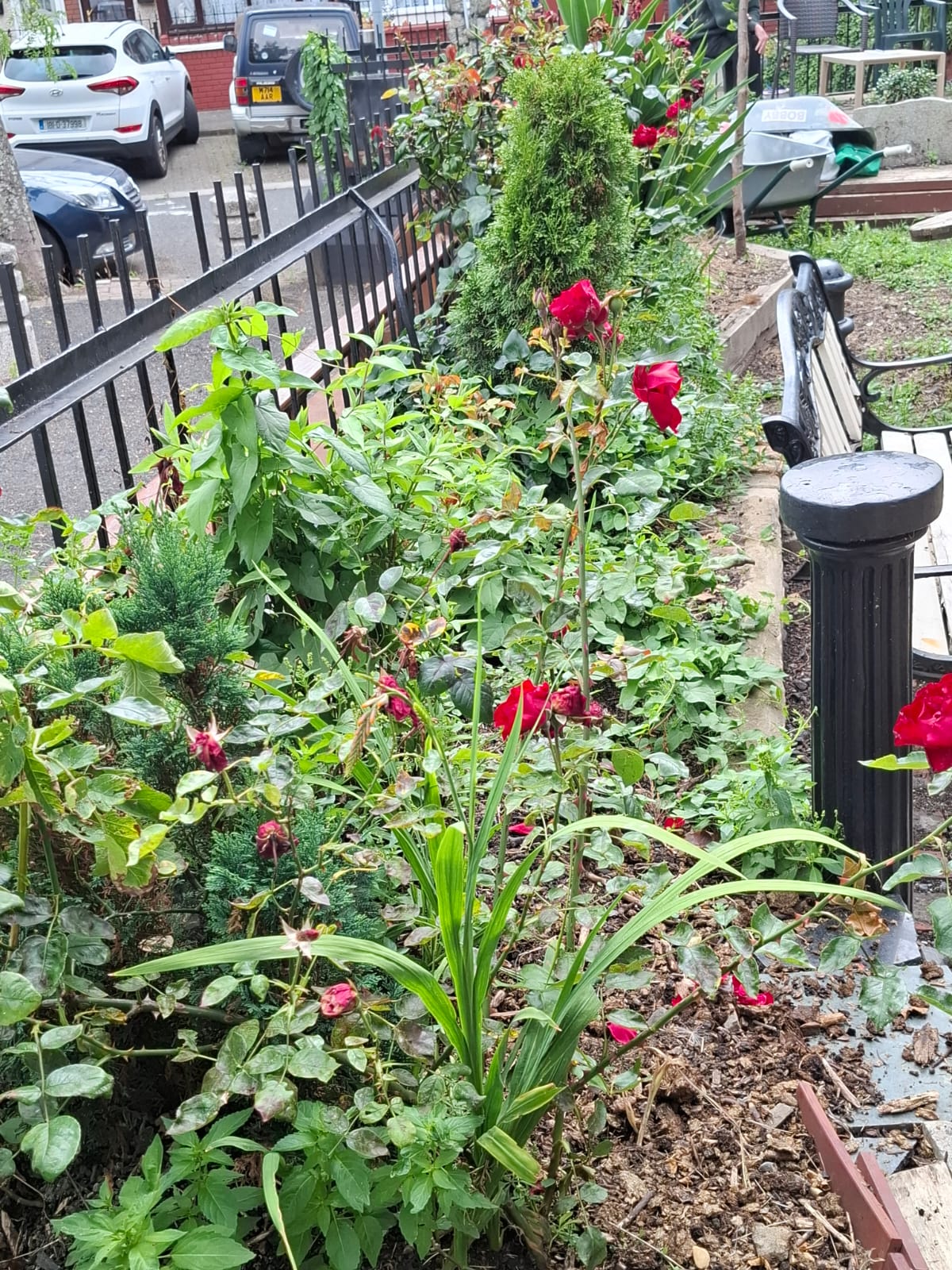


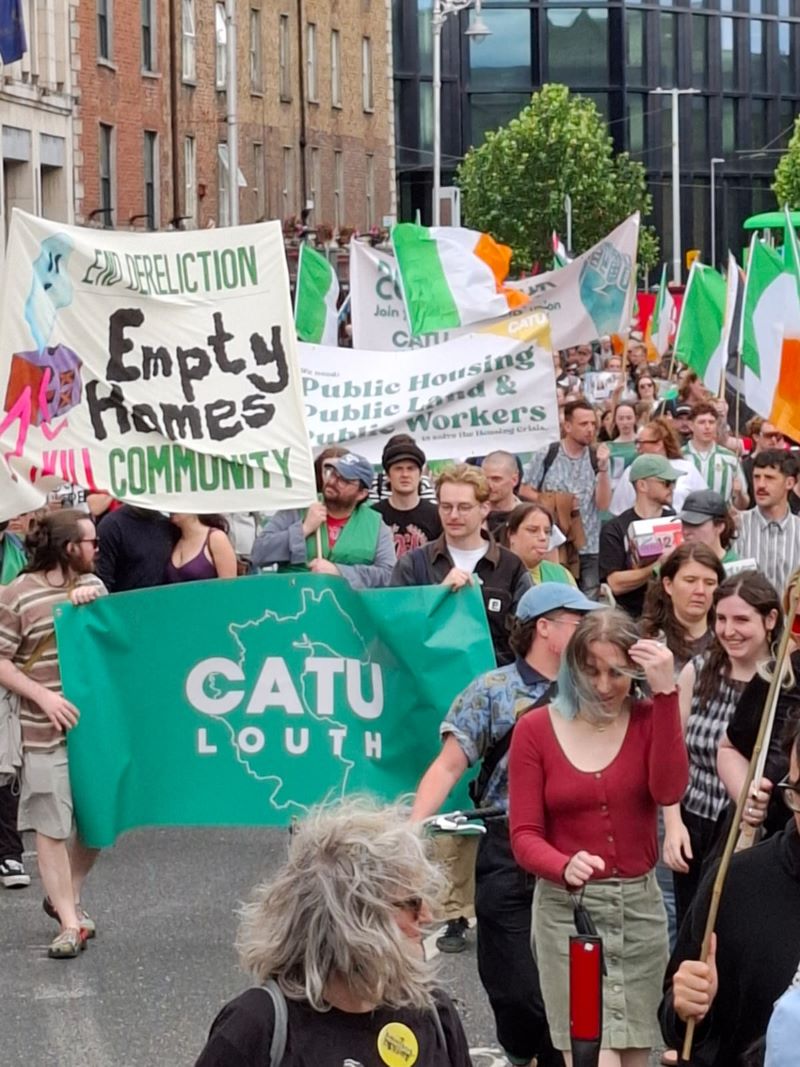


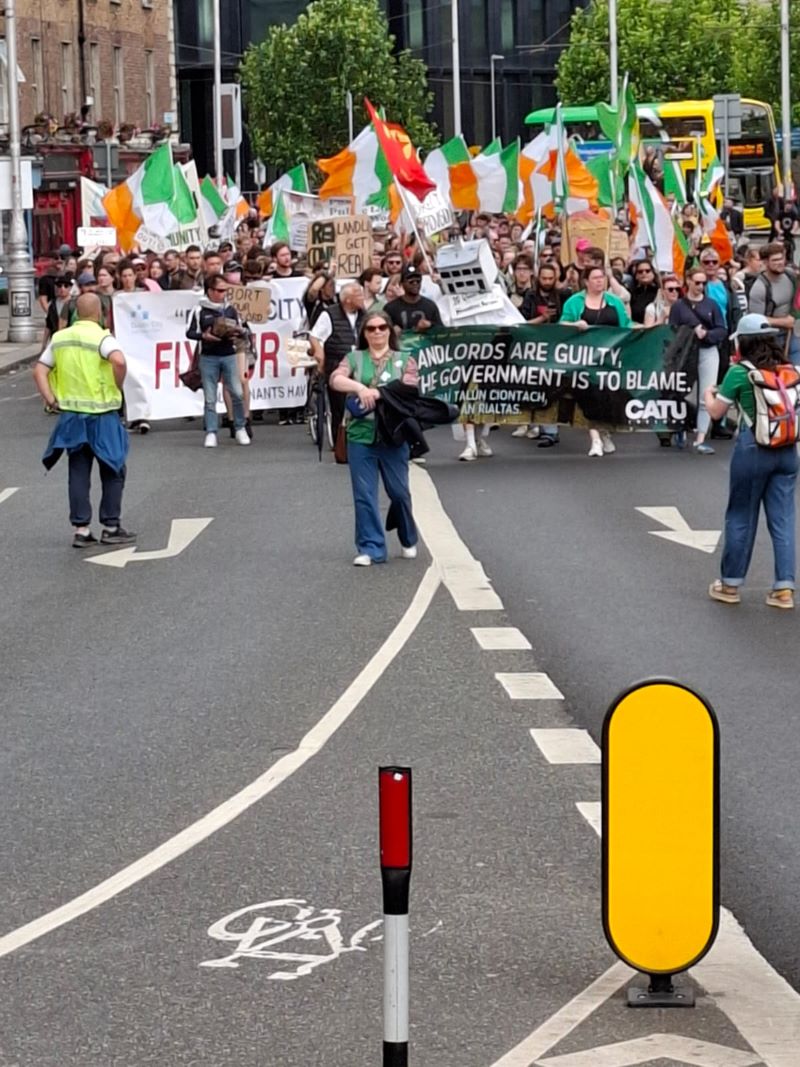

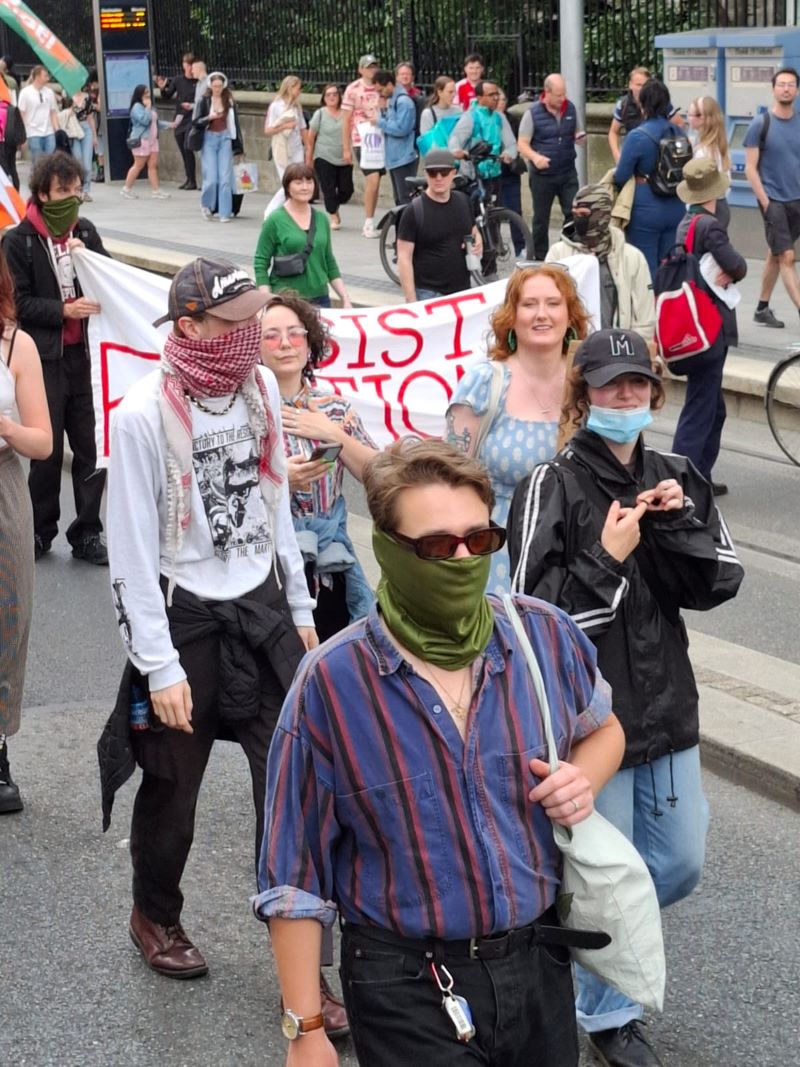


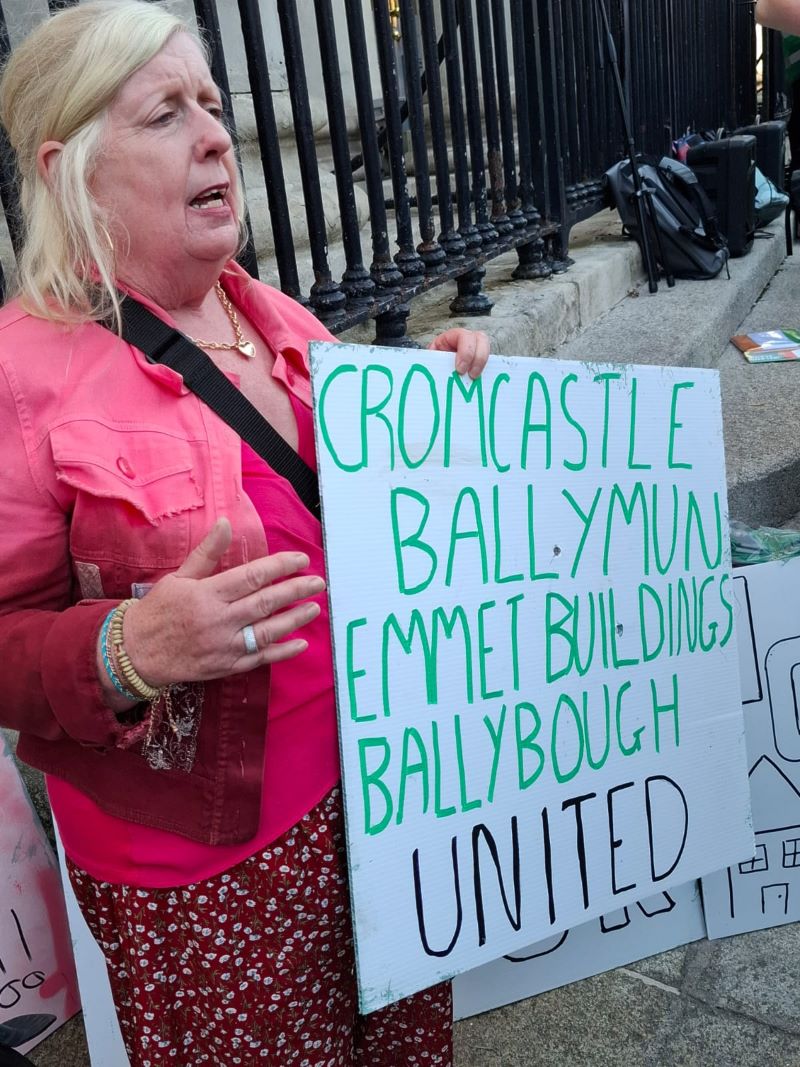


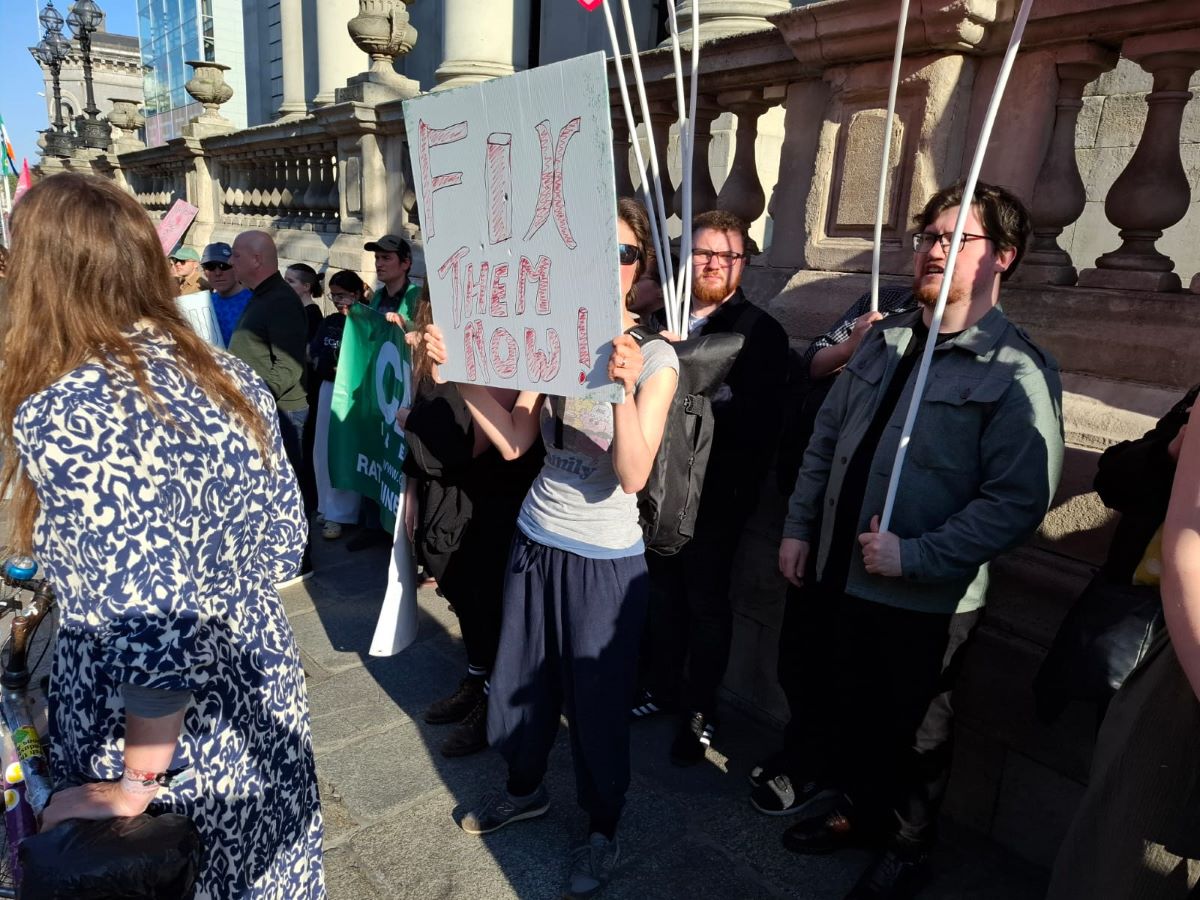



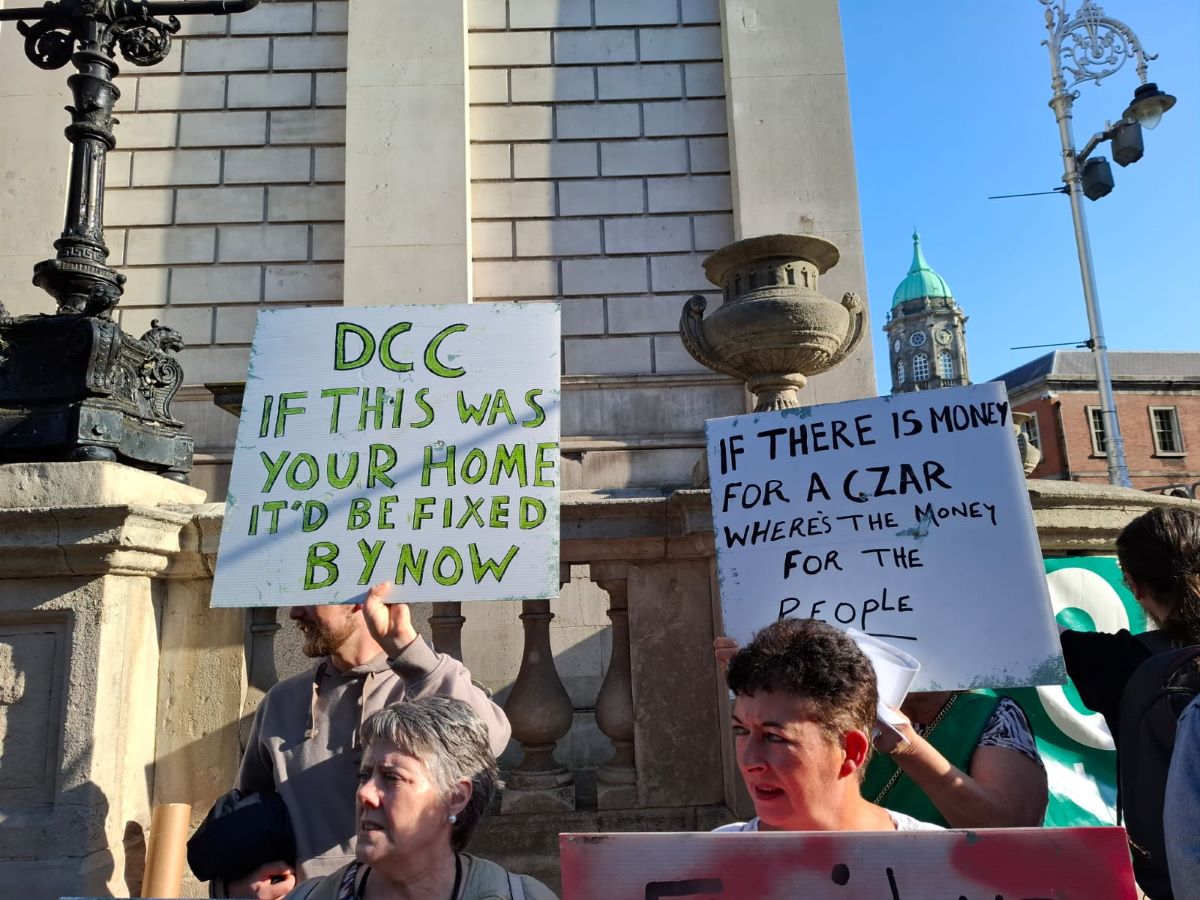





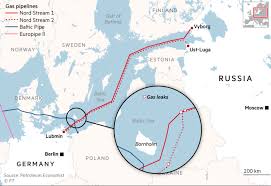
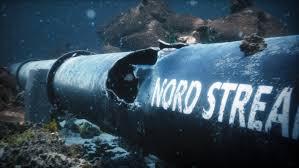


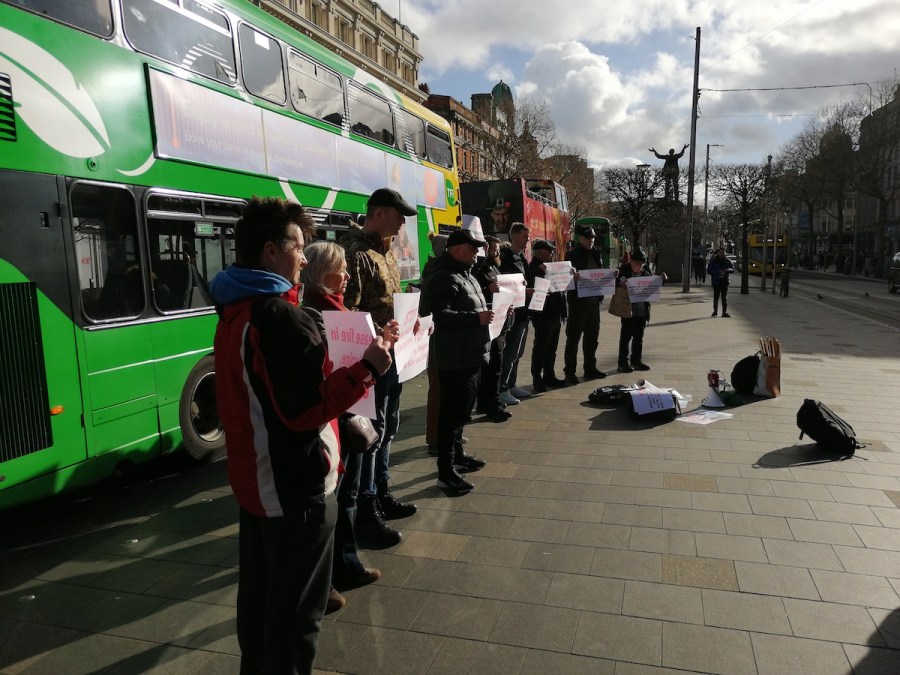
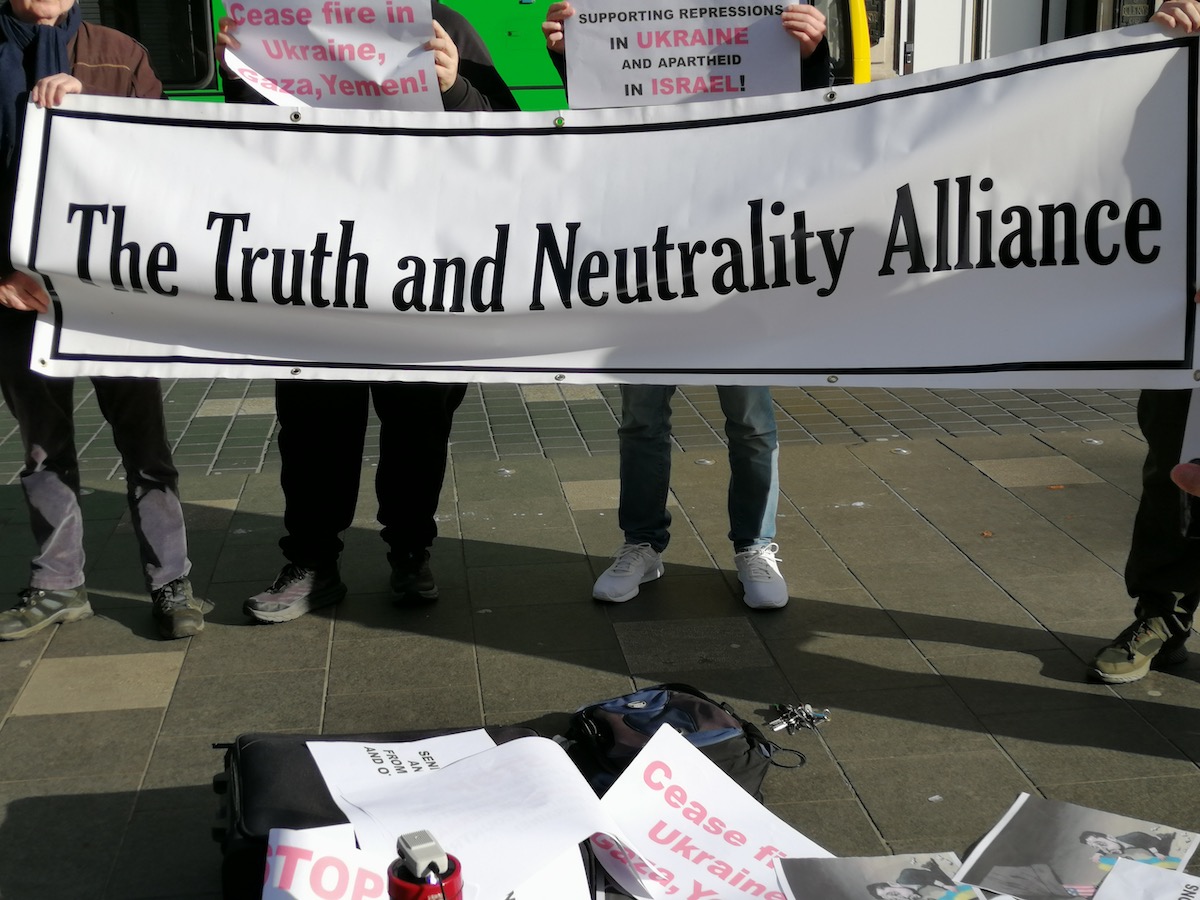

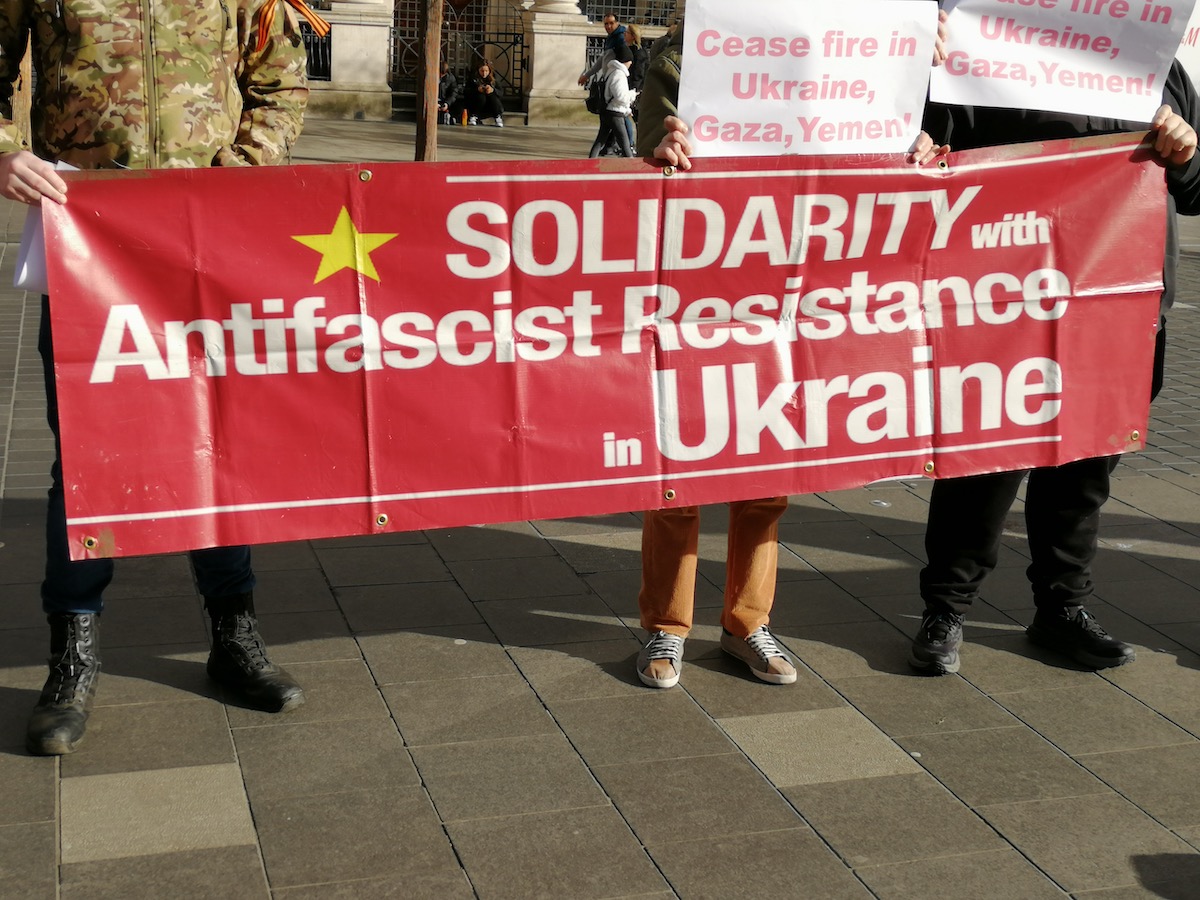



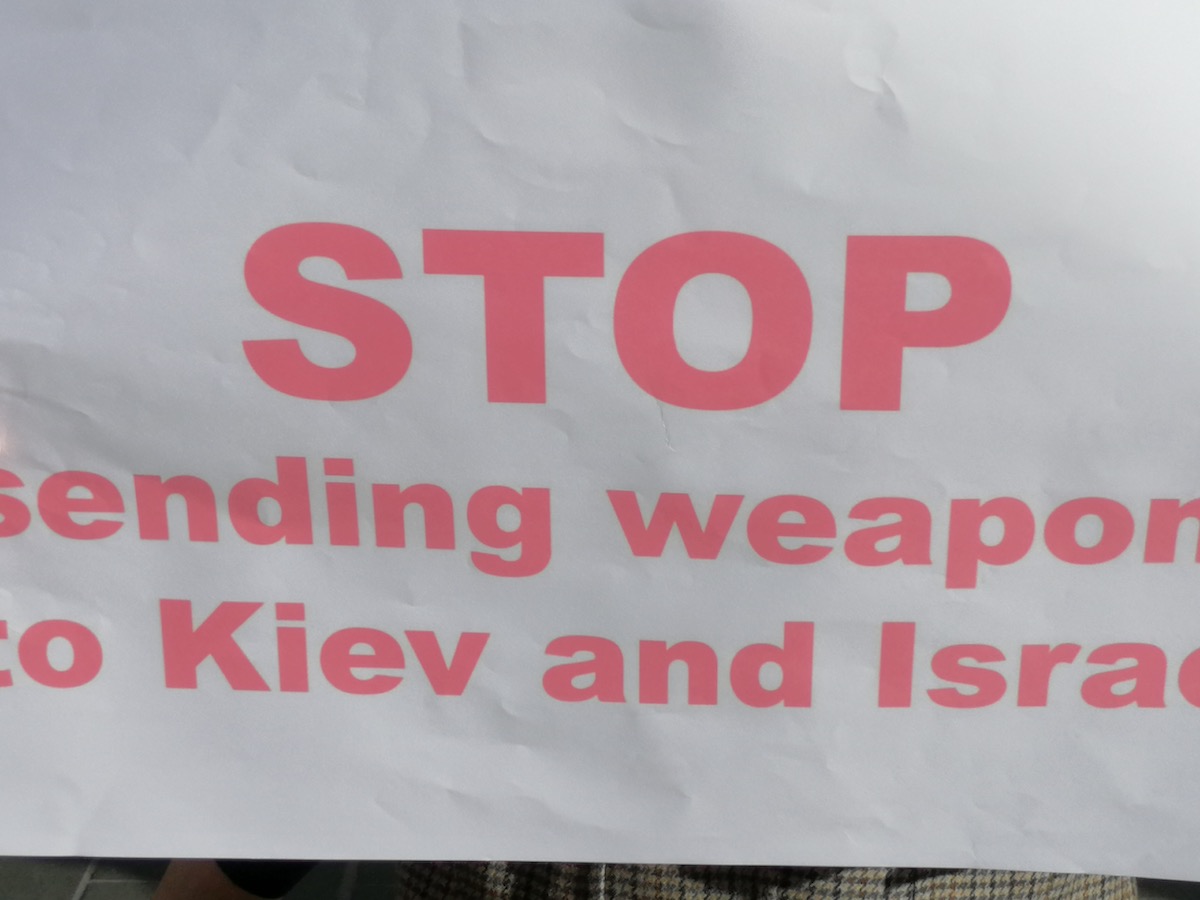





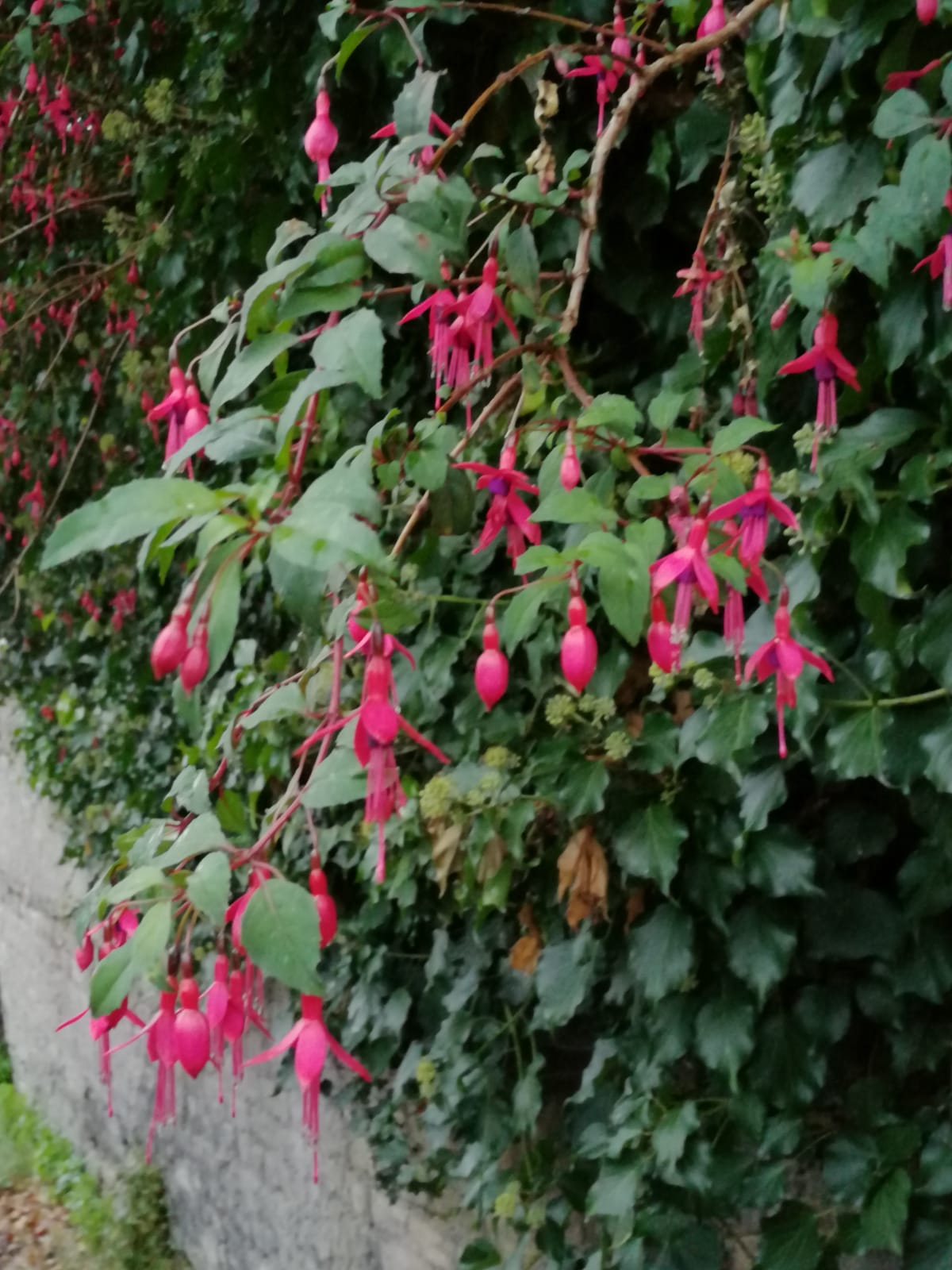
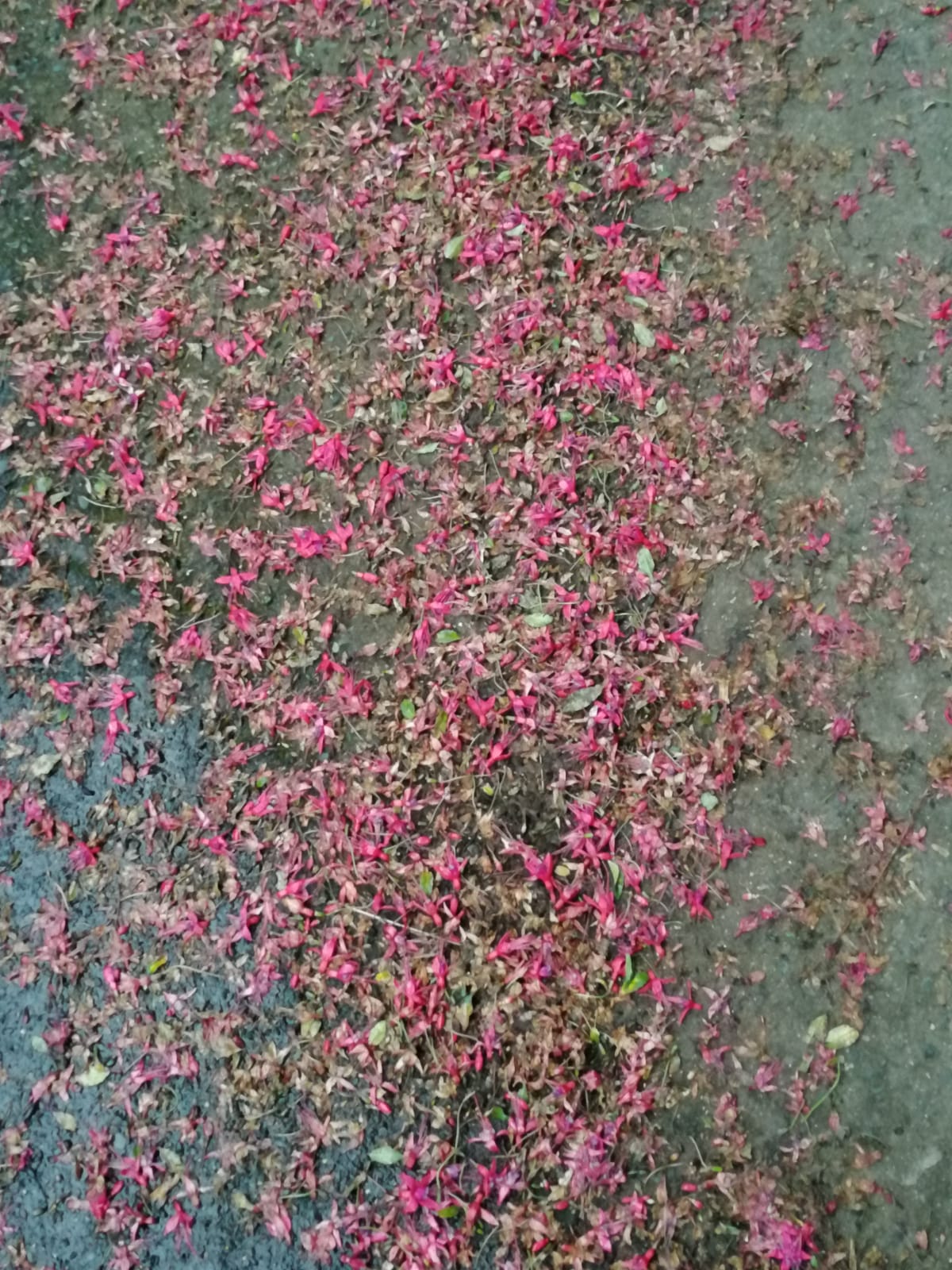
 rebelbreeze