RALLY AND MARCH AGAINST GARDA REPRESSION IN DUBLIN

Diarmuid Breatnach

(Reading time: 6 mins.)

Hundreds gathered Wednesday night near the rear entrance of Leinster House, home of the parliament of the Irish state, in a demonstration organised by Mothers Against Genocide to protest the police attacks on demonstrators of the previous week.

Background

Over four days the previous week the Gardaí, police force of the Irish State, had attacked demonstrators in a number of different locations in Dublin. On Monday the MAGS group at the front entrance of Leinster House was attacked as they neared the end of their overnight vigil there.

The women were calling for Government action to match the will of the Irish population by preventing military supplies sent to Israel through Irish airspace and airports, to end processing Israeli bonds through Irish banks and to institute sanctions against the Zionist Occupation.
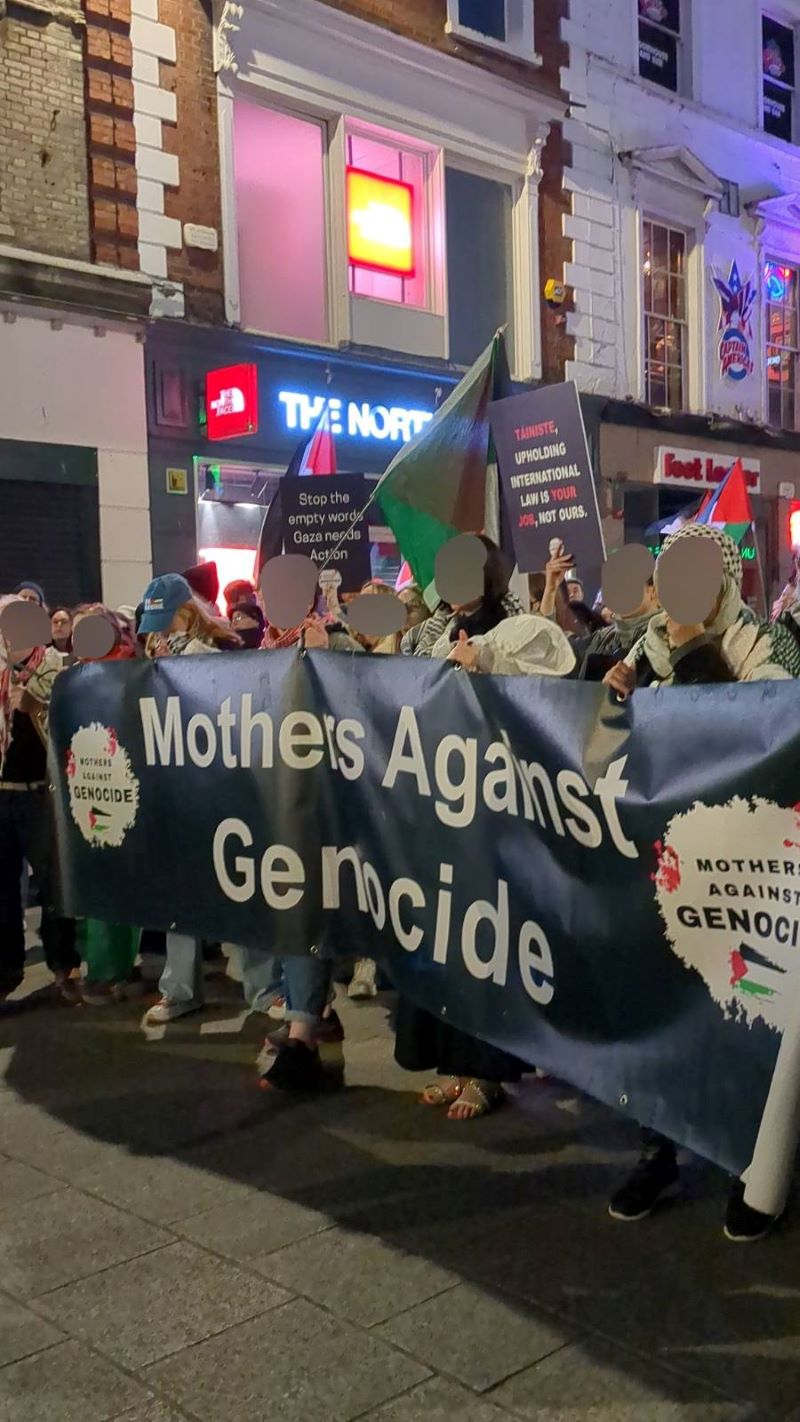
MAGS banner in Grafton Street later in the evening. (Source: Participant)

Eleven women and three men were arrested and taken to different Garda stations where a number of women were strip-searched, including one in an apparent cavity search; three men were charged under the Public Order Act and women pressured to accept an official caution.

Two days later, at a protest organised by the Boycott, Divestment and Sanctions (BDS) Society of the Dublin City University against the official opening visit of the Taoiseach (‘Prime Minister’) to a University building, Gardaí arrested a student for knocking on the window of the building.

On Friday, Gardaí attacked six protesters engaged in a protest at the front entrance to the Belgian Embassy in Dublin, where NATO is represented. The Anti-Imperialist Action protest was against the Irish elite’s attempt to slide the State into membership of the military alliance.

Those protesters were pepper-sprayed into their eyes, forced to the ground, handcuffed and treated so violently that the ankle of one man was broken; the breast of one woman was also grabbed. Two more picketing outside were also arrested, all again distributed around different police stations.

On public order charges, six also on trespass, all eight were brought to a special late court sitting that early evening where a crowd of supporters gathered.

All were bailed on a range of bizarre bail conditions including banned from protesting at Government buildings and a requirement to give 12 hours notice to the Gardaí with details before attending an embassy protest.

Wednesday night’s Leinster House protest

The mood of the crowd of over 500 last night in Merrion Street was militant, being addressed by a woman on behalf of the Mothers group. The crowd was joined by a group flying Starry Plough1 and Palestinian flags, bearing a banner of the AIA and a hand-painted one against NATO.

View of the rally in Merrion Street before the march. (Source: AIA)

The speaker introduced Aileen Malone, mother of Dara Quigley, a well-known blogger some years ago who appeared naked in public while suffering a mental ill health episode. One of the Gardaí dealing with the incident took a video of her and circulated it widely on social media.

Following that public shaming, Dara had taken her own life. Her mother pointed out that the offending Garda, instead of being dismissed, had been allowed to resign and keep his pension. She also condemned the Garda treatment of the women while extolling their courage in resistance.

Another speaker, introduced as representing Jews for Palestine Ireland spoke against the Irish State adopting the IHRA’s definition of antisemitism, the function of which, he stated is to protect the state of Israel against any criticism including regarding its genocide against Palestinians.2

He regretted the diversion from Palestine solidarity entailed in this focus, pointing out that genuine anti-Semitism is to be found among the far-Right while anti-racists and anti-fascists in Palestine solidarity, far from being anti-Semitic are on the contrary active against that variant of racism.
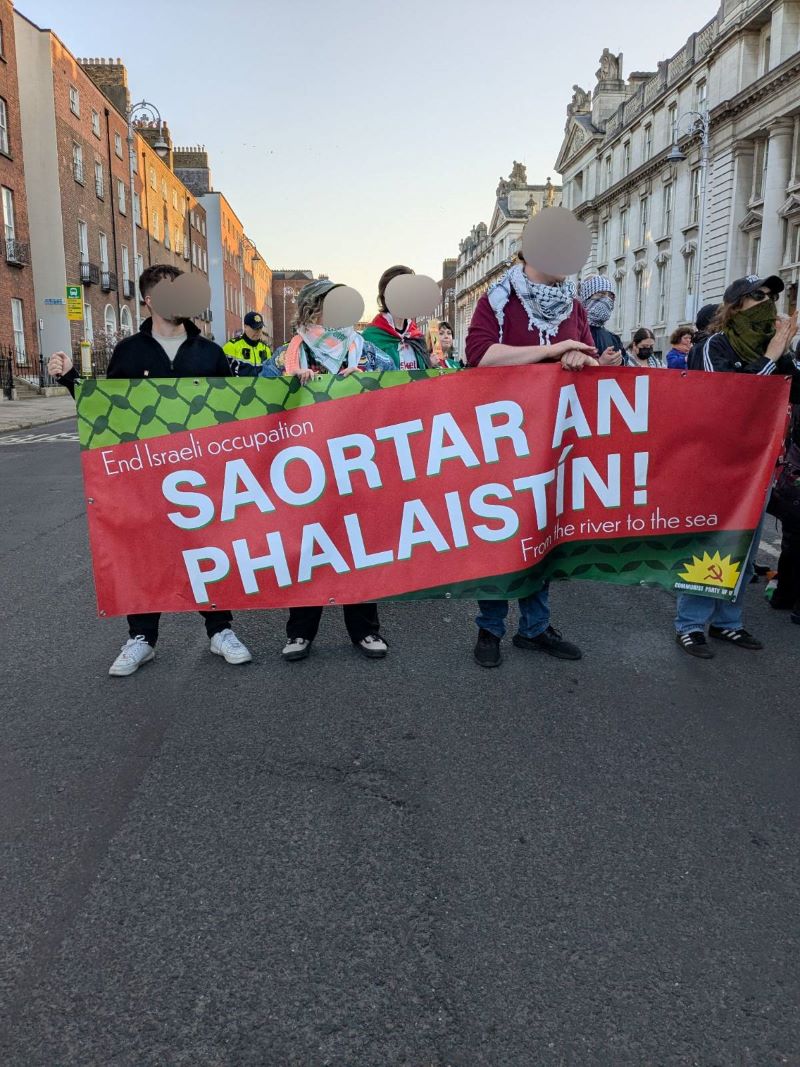
One of the banners at the rally in Merrion Street. (Source: Participant)

A woman from Mothers Against Genocide in Belfast spoke about the history of Irish resistance to colonialism and solidarity with Palestine which had no relation to the Irish Government, vehemently insisting also that being anti-genocide and for human rights is far from anti-Semitism.

Ruth Coppinger, Socialist Party TD, had signalled she wished to speak and was invited to so. She commented on Wednesday’s session in Leinster House when the Garda attack was defended by Mícheál Martin in respect of the right of access to Leinster House.3

A member of the Mothers in Dublin read a solidarity poem she had written and introduced the Resistance Choir, who sang Gonna Let No-one Turn Me Around, a lively song from the US Civil Rights4 movement of the 1960s, followed by slower lament about the Zionist slaughter in Gaza.

The energy in the crowd was dissipating by this point, almost an hour having elapsed and at last the direction to march was given. But where to? It was unclear. Earlier indications had been that one of the Garda stations would be the destination but now the Dept. of Justice was being mentioned.

The slogans shouted were those usually heard at Palestine solidarity events, with calls supporting the Intifada increasingly popular, and even one to Globalise the Intifada! US Warplanes out of Shannon! was another and NATO out of Ireland! was also heard.

Very appropriately also: One, we are the people! Two, We won’t be silenced! Three, Stop the bombing now, now, now, now!

Some banners during the march, seen here on the east side of Stephens Green. (Source: AIA)

The march proceeded, chanting, up Merrion Street, then into Merrion Row, turning left at the Huguenot Cemetery, then along the east side of Stephen’s Green, stopping briefly at the Dept. of Foreign Affairs building, then along the south side to the Dept. of Justice building.

But soon it was on the march again, perhaps heading for the Kevin Street Garda station … But no, along the west side of the Green now, past the Unitarian church where Edward Fitzgerald was married to his French revolutionary wife and then on again down through Grafton Street.

A meeting here was addressed mainly by one speaker, for some reason the crowd repeating his sentences. Not one speaker had yet referred to the attack on the anti-NATO protesters on Friday, much less their bizarre and repressive bail conditions. But perhaps we were heading for the GPO?

No, left and into Dawson Street, up to the Green again, then down Kildare Street to the front of Leinster House. There at last the crowd was addressed on behalf of the Anti-Imperialist Action group regarding the Garda attack on the anti-NATO protesters at the Belgian Embassy.

His talk was interrupted by cries of ‘Shame’ directed at the Gardaí and State. The speaker continued, referencing the resistance history of Irish Republicans and concluded by calling for unity of the Left against repression of any aspect of the Resistance, a call vigorously applauded.

To conclude the evening’s events a display concerning victims of Garda violence was presented, this including the case of Terence Wheelock, a working-class youth who died in Store Street Garda Station as a result of their violence, a crime then covered up by the State.

In Retrospect

It was important and a good act of resistance to organise an emergency protest5 this week and the eventual attendance of around 700 at such short notice was excellent. It is essential to meet repression of resistance with more resistance.

It was noticeable how low the numbers of Gardaí were and although uniformed and a number of plainclothes Special Detective Unit members followed the marchers, at no point did they attempt to stop the marchers or even to line up in numbers to protect the Government offices.

Most of the speakers at the commencing, intermediate and final rallies were clear that the Irish State had made a conscious decision to crack down on solidarity actions the previous week, using physical and sexual violence against activists, and of the need to continue solidarity and resistance.

The commencing rally was however too long and dissipated some of the energy. The lament as the last song just before that march, though no doubt appropriate in some contexts, continued that dissipation.

Coppinger, as a leading member of the Socialist Party was inappropriate as a speaker at the event. The party in the past has opposed boycotts against Israel and South Africa on the spurious grounds that it harms the oppressed people and works against solidarity between progressive settlers.

The Socialist Party also supports the Two-State proposal which would concede 80% of Palestine to the Zionist settlers. Coppinger personally and her party have also publicly condemned the Palestinian Resistance breakout operation of 7th October 2023.

The marching seemingly for ever, at times to symbolic but empty Government buildings was not helpful and most of the people already detest the Government. A good destination would have been at least one of the Garda stations where activists had been held the previous week.

Marching from and to an essentially closed Leinster House and Government buildings runs the risk of replicating the routine marches every month or so of the Ireland Palestine Solidarity Campaign.

The value of the Mothers has been their departure from that increasingly sterile practice and continuing in that vein would be a useful contribution to the solidarity movement and resistance in general.

Unity against repression is a historically-proven necessity and, as called for at the final rally last night, increasing unity between newer and longer-lived elements of the Resistance is also needed.

End.

An excellent riposte in the poster slogan/ meeting title. The design is based on the poster against strip-searching Republican women in the 1970s, design by Oisín Breatnach. (Source: Mid-Ulster IPSC)

Footnotes

Sources and further information

https://www.irishtimes.com/opinion/2025/02/05/ireland-is-signing-up-to-a-definition-of-anti-semitism-that-has-been-used-against-irish-politicians/

https://www.independent.ie/regionals/wexford/wexford-district/demonstration-at-wexford-garda-station-over-alleged-strip-searching-of-mothers-against-genocide-protestors-in-dublin/

1Flag of the Irish Citizen Army, first produced in 1914, the design is based on the Ursa Mayor constellation, including a plough in gold colour, with a sword instead of the ploughshare, all on a green background. A later version of the Republican Congress represents only the stars of the constellation in white on a blue background. The green and gold version was the one flown by the AIA.

2https://www.irishtimes.com/opinion/2025/02/05/ireland-is-signing-up-to-a-definition-of-anti-semitism-that-has-been-used-against-irish-politicians/

3This was a spurious defence by the Taoiseach: a) It was before 7am and the Mothers were leaving at 7.30am; b) the pedestrian entrance was not blocked; c) the gates at the rear of the building were not blocked.

4But, like many of those songs, based on an earlier Christian song.

5There had also been an emergency protest outside Leinster House on last week’s Wednesday morning, Kildare Street being blocked for an hour without Garda action.

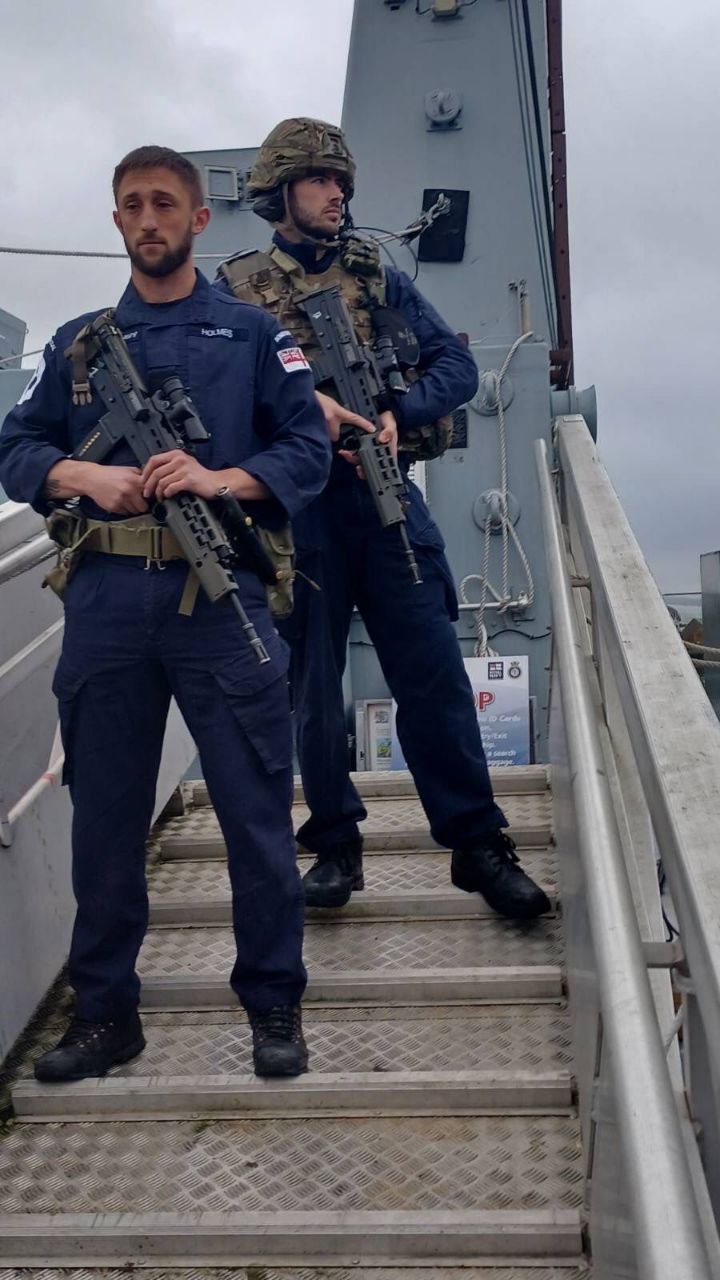
BRITISH NAVY VESSEL PROTESTERS SENTENCED IN DUBLIN

Diarmuid Breatnach

(Reading time: 5 mins.)

Around 30 people demonstrated outside Dublin’s Criminal Court on Thursday, many of them displaying Irish flags (Tricolour and Starry Plough) along with those of Palestine in solidarity with three activists before the court.

The activists were charged under Public Order legislation arising out of protesting a British war ship at Dublin docks in November last year, in solidarity with Palestine and against NATO’s support for the Israeli state’s slaughter in Gaza.

It was alleged that the activists (variously from Saoirse Don Phalaistín and Anti-Imperialist Action organisations) had entered a restricted part of the Dublin Docks and, holding a Palestine flag, had approached a British warship docked there and then occupied the gangway.

British military displaying firearms on Irish state soil in November last year. (Photo: Anti-Imperialist Action)

Gardaí had been called and the activists had refused their instruction to leave under the Public Order legislation and they had then been arrested. No act of violence, physical or verbal, took place on either side other than the refusal to leave and the arrests.

The activists appeared in the Parkgate Street building before Justice John Hughes and all three were defended by Damien Coffey of Sheehan Partners, a law firm which often handles political and human rights cases. Three Gardaí from Store Street acted in the role of the Prosecution.

The Garda in charge of the prosecution and his two colleagues gave evidence as to the arrests. Questioned by Coffey for the Defence, all confirmed that although the protesters had refused to leave, there had been no violence offered by them during their arrests.

Strangely, as shall become evident and relevant, one did not recall the British military presence on the gangway to be armed, whereas another did and confirmed that a photo of the armed men was of those who had been present.

One of the Garda offered his opinion that whereas the vessel was regarded in law as “British soil”, the gangplank was legally “Irish soil” and, if the protesters had actually set foot on the ship, they might have been charged with piracy. This piece of evidence also had unintended consequences.

One of the placards displayed by supporters outside the courthouse (Photo: Rebel Breeze)

According to this evidence, the British in a foreign military uniform had been present on Irish state soil and all replied to the defence lawyer that they were unaware of any Ministerial permission to do so — or that this could have constituted an offence under Section 317 of the Defence Act 1954.1

Furthermore, none were aware of any special permission granted to them to carry firearms on Irish state ground. The British military personnel themselves were not present as witnesses as their superiors had not replied to the Garda request to discuss giving evidence in the case.

Port security camera footage was shown as evidence by which protesters could be seen at the gates of a fenced-off section of the docks and some time later proceeding through a gate. A port security employee had been summoned by the Gardaí as a witness.

After he had been taken through his evidence (and failed to respond to what seemed an attempted prompt) by the Garda in charge the only relevance of his evidence was that a) the area was restricted and b) that he was worried for the safety of the protesters.

This (and the reason for the possible attempted prompt) was of importance when Coffey developed his defence summary on the legal grounds that Section 14 (1) of the Public Order Act required there to be an element of fear arising from the actions of those to be charged under the Act.

None of the evidence for the Prosecution had shown the presence of fear of anyone from the defendants and, furthermore, he submitted, any element of fear was much more likely to arise from the presence of two men holding firearms, to whit, the British military personnel.

The second part of the Defence summary dealt with right to protest, Coffey quoting a number of legal sources, also referencing the Irish Government’s recognition of a Palestinian state and statistics of people killed by the Israeli state against which the activists had been protesting.

Judge Hughes announced that a recess was due for lunch and that he wished to consult legal authority (case law etc) so they would recess and reconvene in an hours’ time.

A number of supporters who had taken time off from other commitments left at this point while a few arrived instead.

THE JUDGEMENT

After reconvening Judge Hughes began his long drawn out summing up and it gradually became clear that he intended to find the accused guilty. However people awaited with varying degrees of patience for the details of the sentence.

The Judge referred to the right to protest but also to the restrictions upon it (usually limiting its effectiveness) though he did not say that, nor that powers exist to abolish those rights when the State feels it necessary.

With regard to the ‘element of fear’ required for conviction under the Public Order Act Hughes quoted a judgement as a reference that seemed neither relevant nor reasonable, involving a woman experiencing fear of being broken into and even fear of children playing outside her home.

Despite repeating the standard claim of capitalist law that judges cannot adjudicate emotionally nor be swayed by what was occurring in Palestine, John Hughes revealed his own political bias when he bizarrely claimed that a British fleet had been welcomed into an Irish port in 1820.

He revealed his political naivety also when he expressed surprise that the British had not replied to the Garda communication regarding the incident.

On submission by Coffey regarding the lack of previous convictions and effect of criminal convictions on the lives of the three, Johnson, again drawing out the moment, gave them what amounts to a conditional discharge with a provisional forfeit of 500 euro.2

No doubt the desire not to create martyrs around whom solidarity campaigns might intensify played at least as much a part as any concern for the lives of the activists.

The defendants and their supporters left; outside the court they were embraced by a number of supporters before the gathering broke up, some attending to other solidarity activities elsewhere. The show of support was a good sign of solidarity against state repression.3

View of some of the people outside the courthouse on Thursday in solidarity with the three activists (Photo: Rebel Breeze)

SERIOUS ISSUES AMONG ELEMENTS OF COMEDY

The name of the British naval vessel being The Penzance and the mention of a possible piracy charge brings to mind of course the Gilbert & Sullivan opera The Pirates of Penzance (1879).

The focus of the Gardaí on arresting peaceful protesters in preference to unauthorised people in foreign military uniform carrying unlicensed firearms on Irish soil and also trying to suggest that not they but the protesters would give rise to fear is not without its comedic elements.

However overall the whole matter is extremely serious, with regard to the zionist genocide in Palestine, the active collusion of the UK/NATO, the active collusion of the Irish ruling class4despite its verbal positions – and the repression of its State on more active and directed solidarity actions.

End.

FOOTNOTES

1 317. — (1) No person shall, save with the consent in writing of a Minister of State, enter or land in the State while wearing any foreign uniform. (2) No person shall, save with the consent in writing of a Minister of State, go into any public place in the State while wearing any foreign uniform.

2 It will not appear as a criminal record but in the event of a subsequent conviction, the 500 euro can be levied as a fine in addition to any other punishment in court sentence.

3 Though the absence of a number of political organisations and trends was also marked.

4 “Dual-use”exports to the zionist state which can be adapted to military use; failure to press for any economic, academic or cultural sanctions against the zionist state; shelving of the Occupied Territories Bill; failure to impose diplomatic sanctions of any kind.

REFERENCES AND USEFUL LINKS

Anti-Imperialist Action

Defence Act, 1954, Section 317 – irishstatutebook.ie

Anglo-US company supporting Israeli occupation picketed in Dublin

Diarmuid Breatnach

(Reading time: 1 minute)

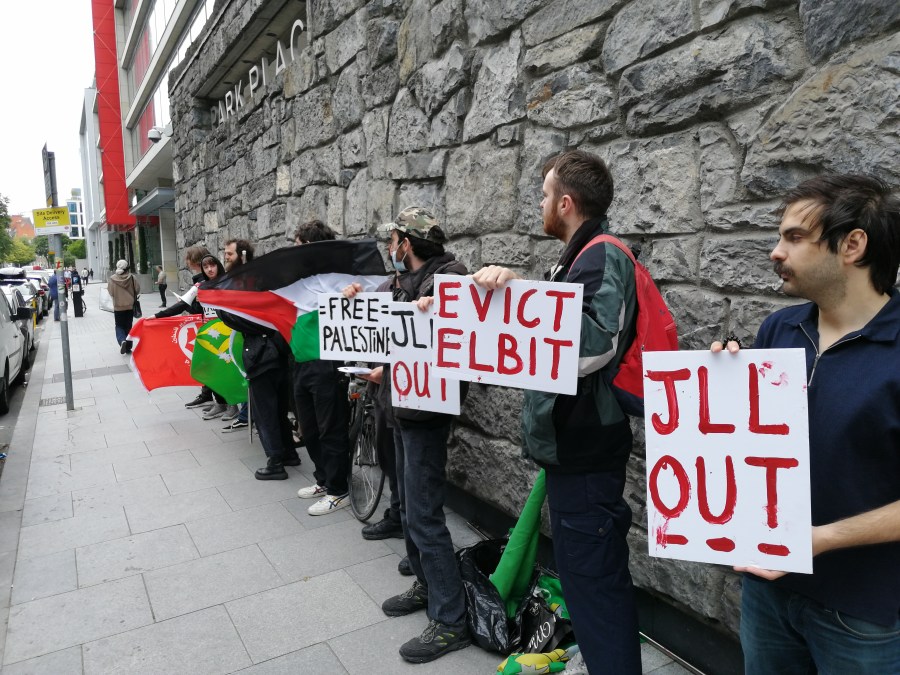
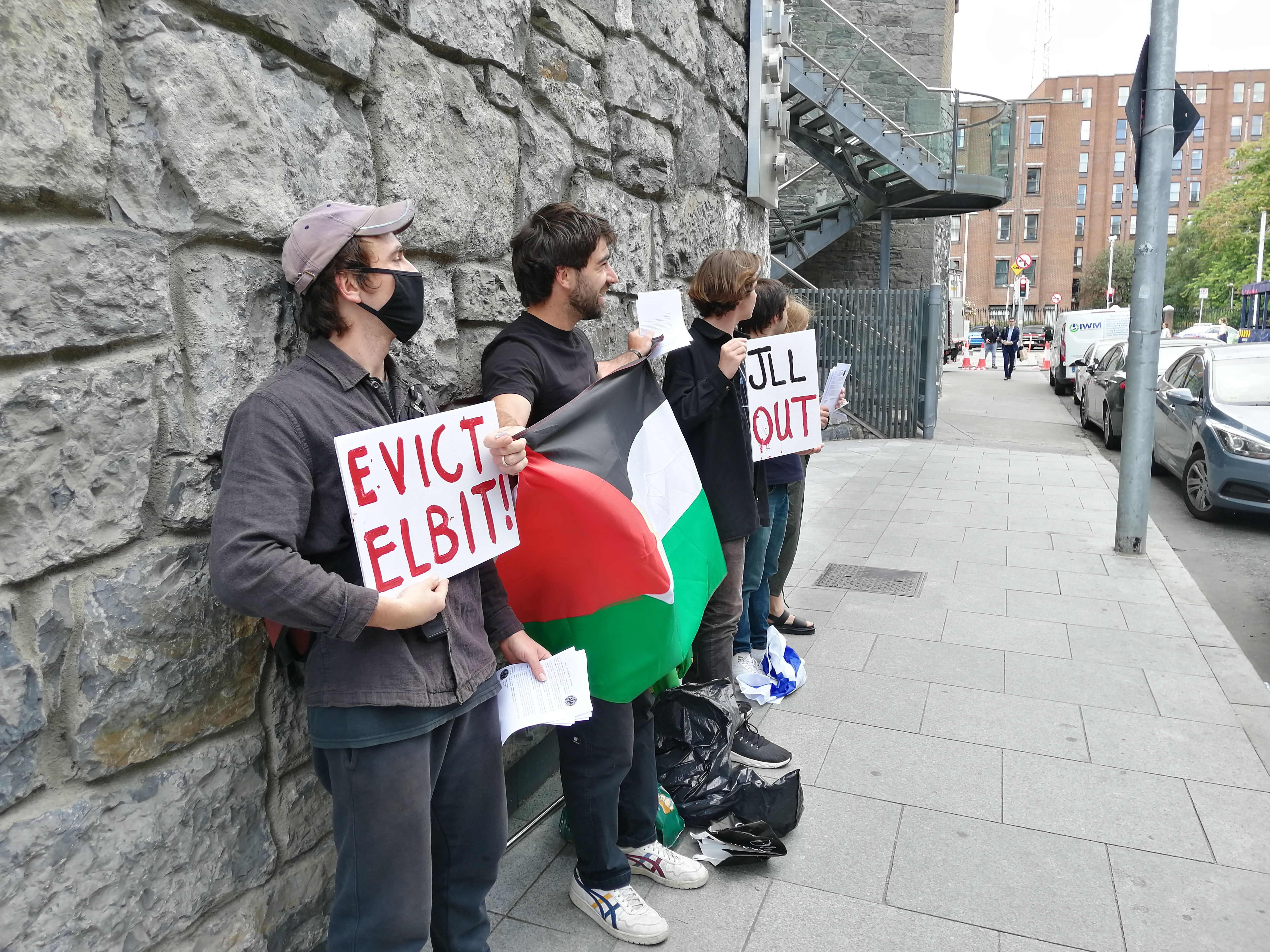
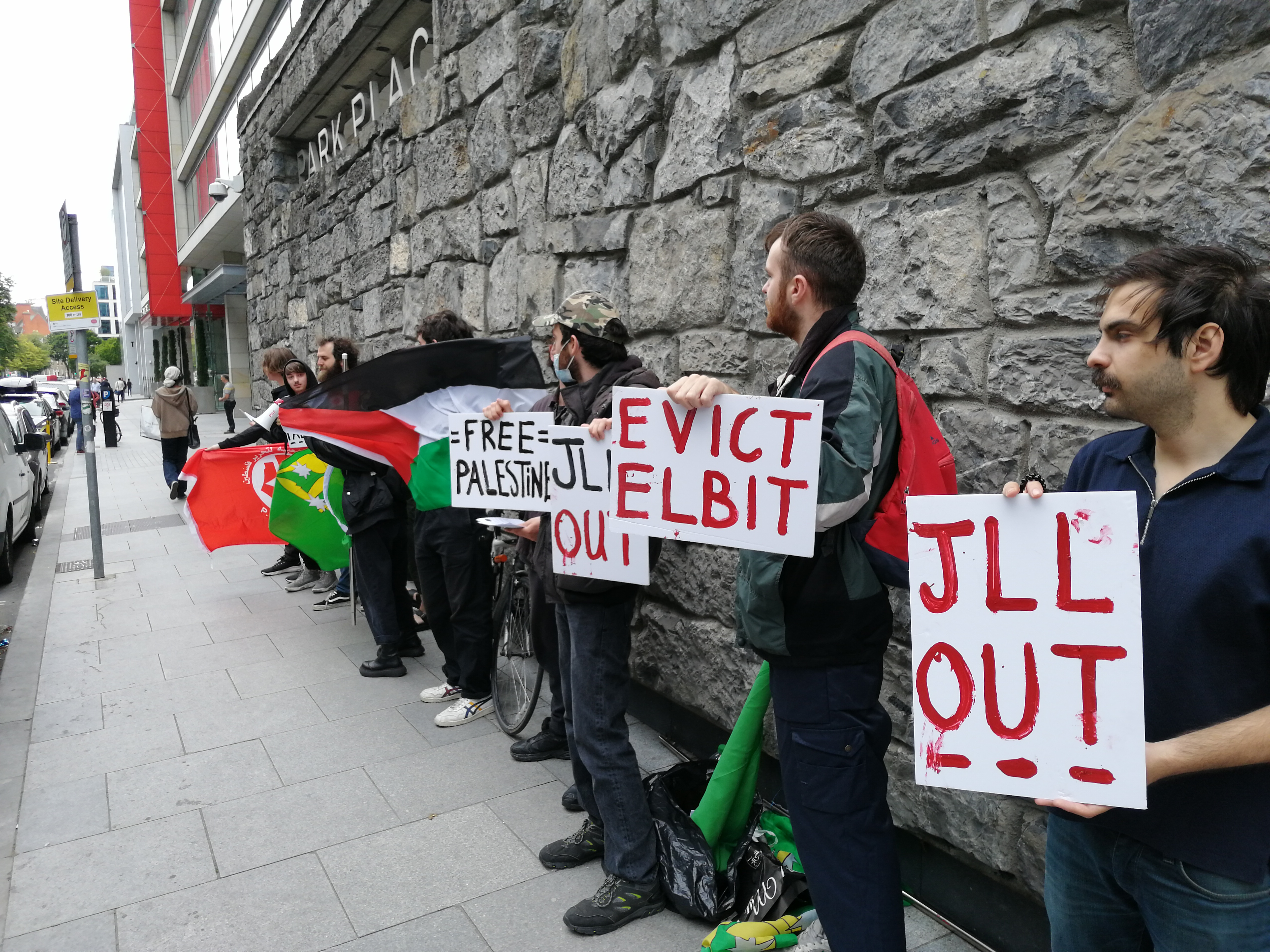
Hatch street in Dublin is an unusual venue to hear the sounds of a political protest but that was where a protest took place Friday, outside the headquarters of Jones Lang LaSalle, an Anglo-US real estate and investment multinational.

Section of the protesters. (Photo: D.Breatnach)

The lunchtime protest was organised by the Anti-Imperialist Action organisation in protest at JLL’s complicity in what they called “the occupation and genocide in Palestine.”

In a leaflet handed out to construction workers, office workers and passers-by, AIA stated that JLL “work with Elbit Systems, the largest private arms supplier for the occupation” and that last year “their CEO boasted about ‘a significant increase in (its) activity in Israel’ “.

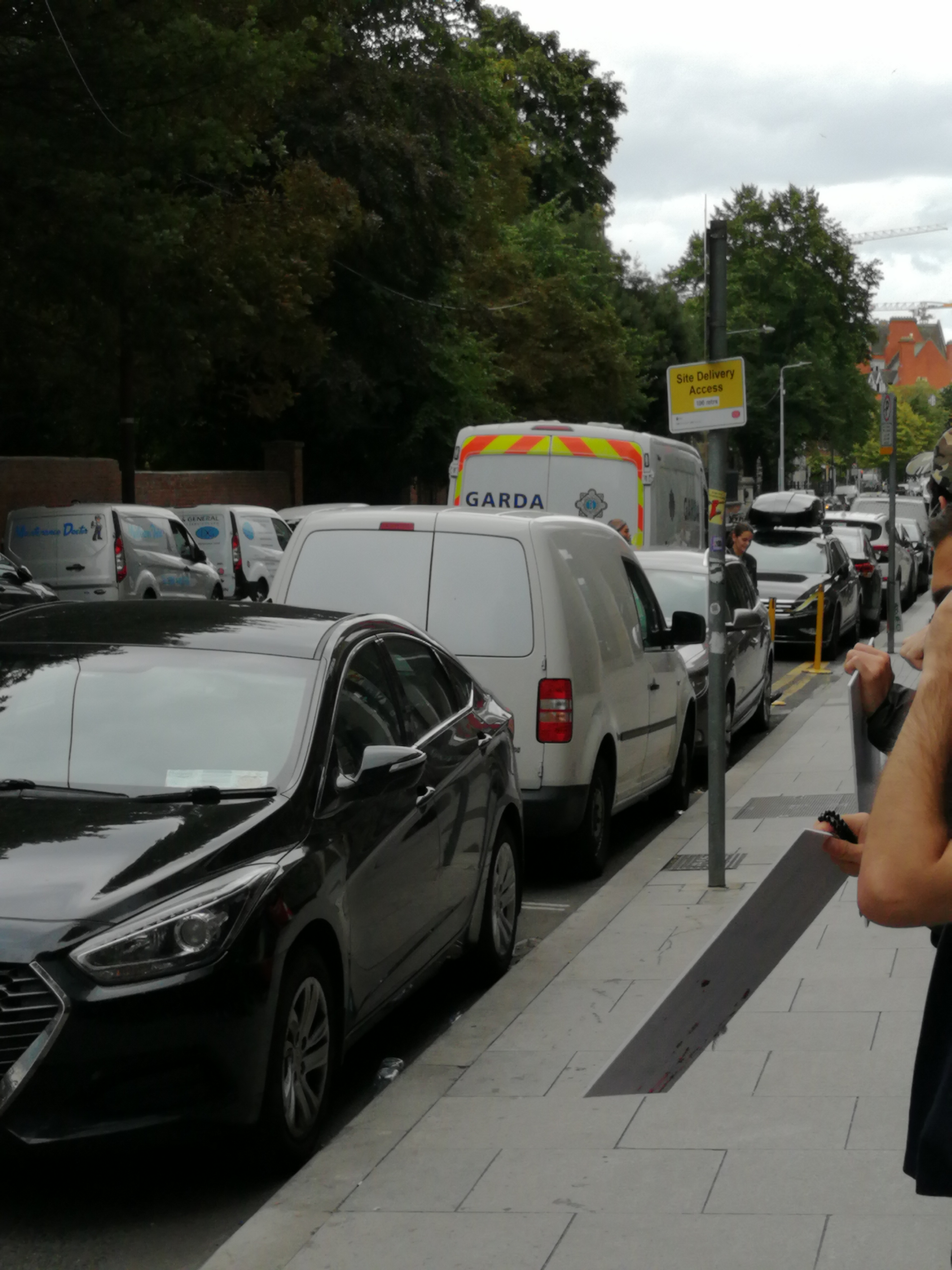
The Garda van as part of the State’s protection for the JLL building (Photo: D.Breatnach)

The leaflet also pointed out that “Palestine Action, a group in England and Scotland, have successfully shut down two of Elbit’s sites through … direct action” against the companies.

Also pointed out in the leaflet was the result of property management companies in stoking the housing crisis and also commented on the colonial history of Ireland and its solidarity with the Palestinian people.

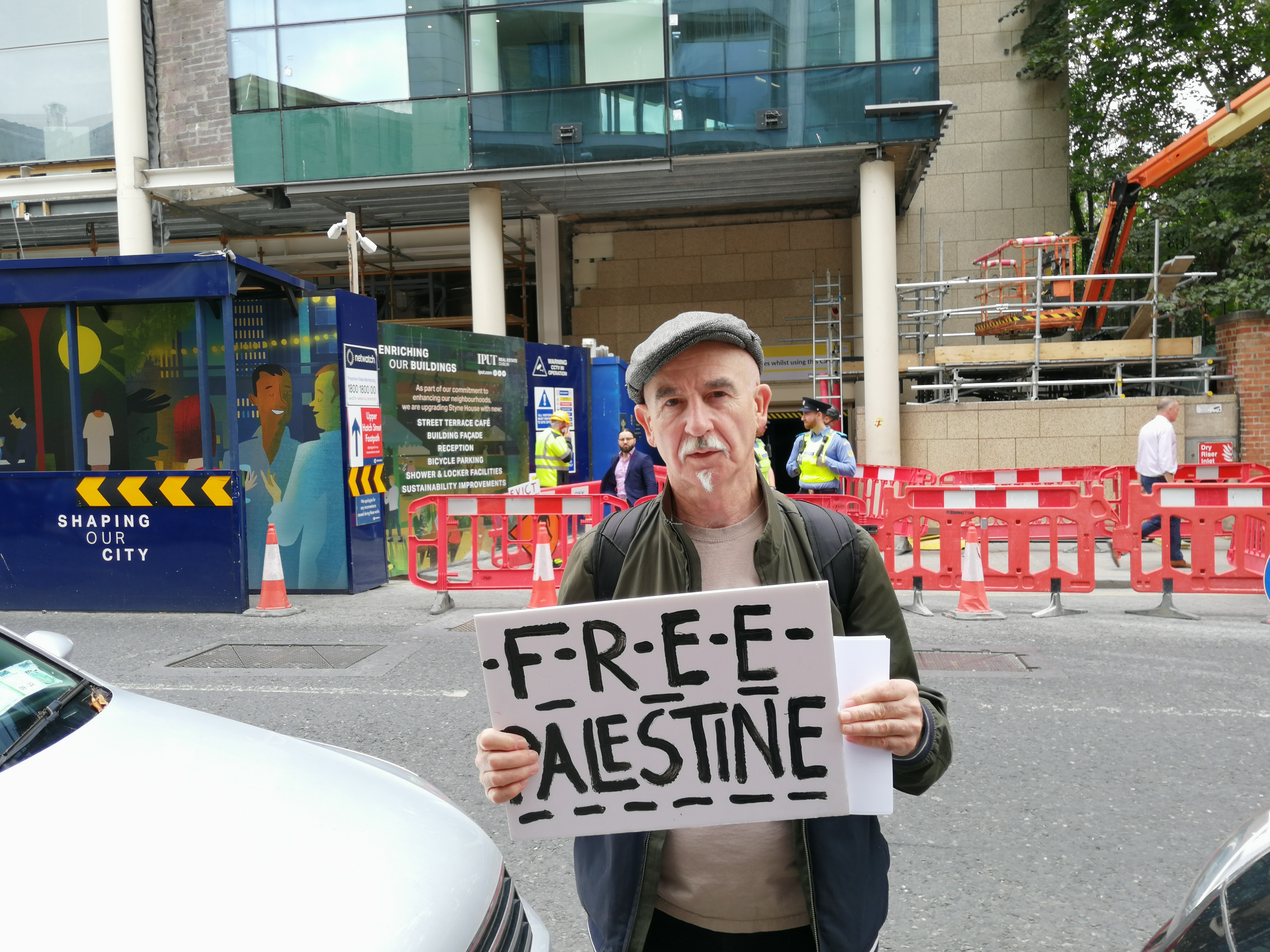
The protest photographer, JLL building and some Garda protection in the background.

The picketers displayed placards along with flags: the Starry Plough, Palestinian national flag and another of the PFLP, one of the Palestinian liberation organisations. They regularly shouted slogans against the Israeli occupation, in solidarity with Palestine and against the JLL organisation.

Gardaí (Irish police) arrived to protect the JLL building but there were no incidents. The reaction of those who accepted a leaflet varied from non-committal, through curious to supportive.

end.

(Photo: D.Breatnach)

FURTHER INFORMATION:

isrmedia@protonmail.com

FRAME-UP OF THE CRAIGAVON TWO HIGHLIGHTED ACROSS IRELAND

14 YEARS IN JAIL FOR SOMETHING THEY DIDN’T DO

Clive Sulish

(Reading time main text: 2 mins.)

On 16th July 2022 the frame-up of the Craigavon Two was highlighted in public events in locations across all four provinces of Ireland. John Paul Wooton and Brendan McConville were framed and convicted in 2012 of the killing of colonial police officer Stephen Carroll in 2009.

The agency that framed them is the colonial police force of the Six Counties statelet but then they were railroaded through the non-jury Diblock Courts. As a result the two men have spent 14 years in jail for something they did not do.

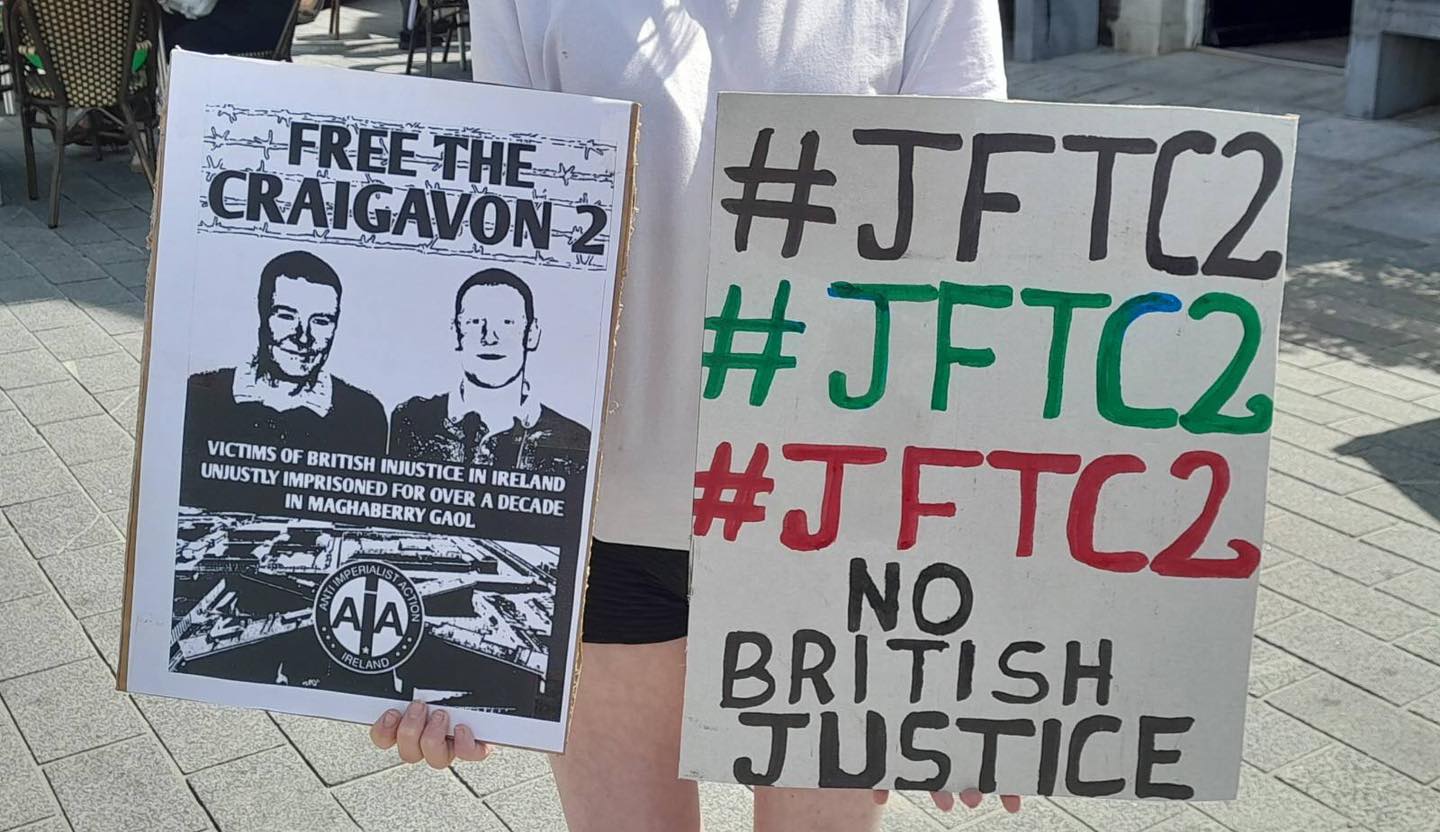
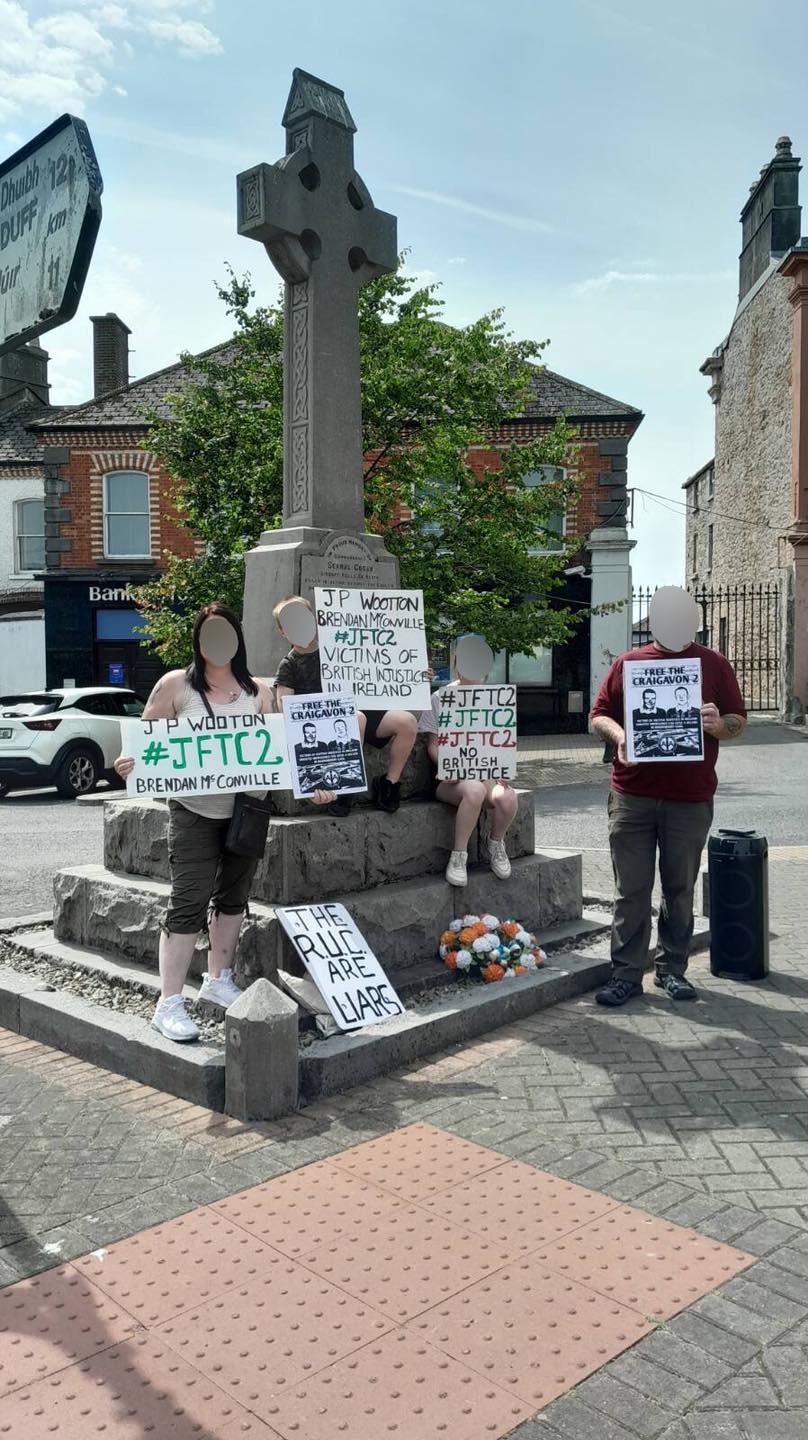
A young woman participating in the protest on the 16th in Mulingar, Co. Westmeath displaying two placards, one home-made, to passers-by. (Photo sourced: AIA)

EVENTS

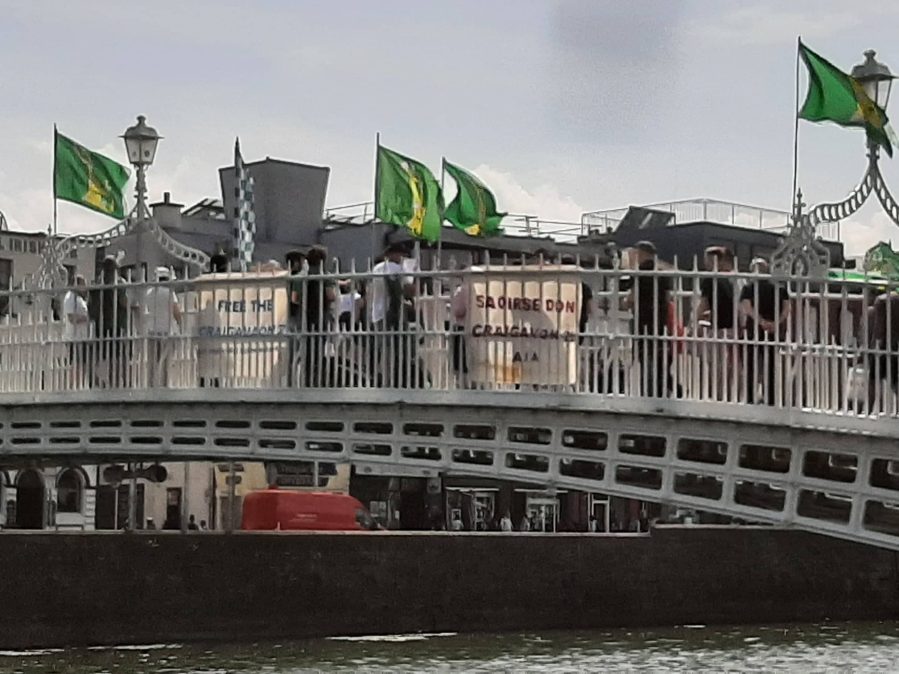
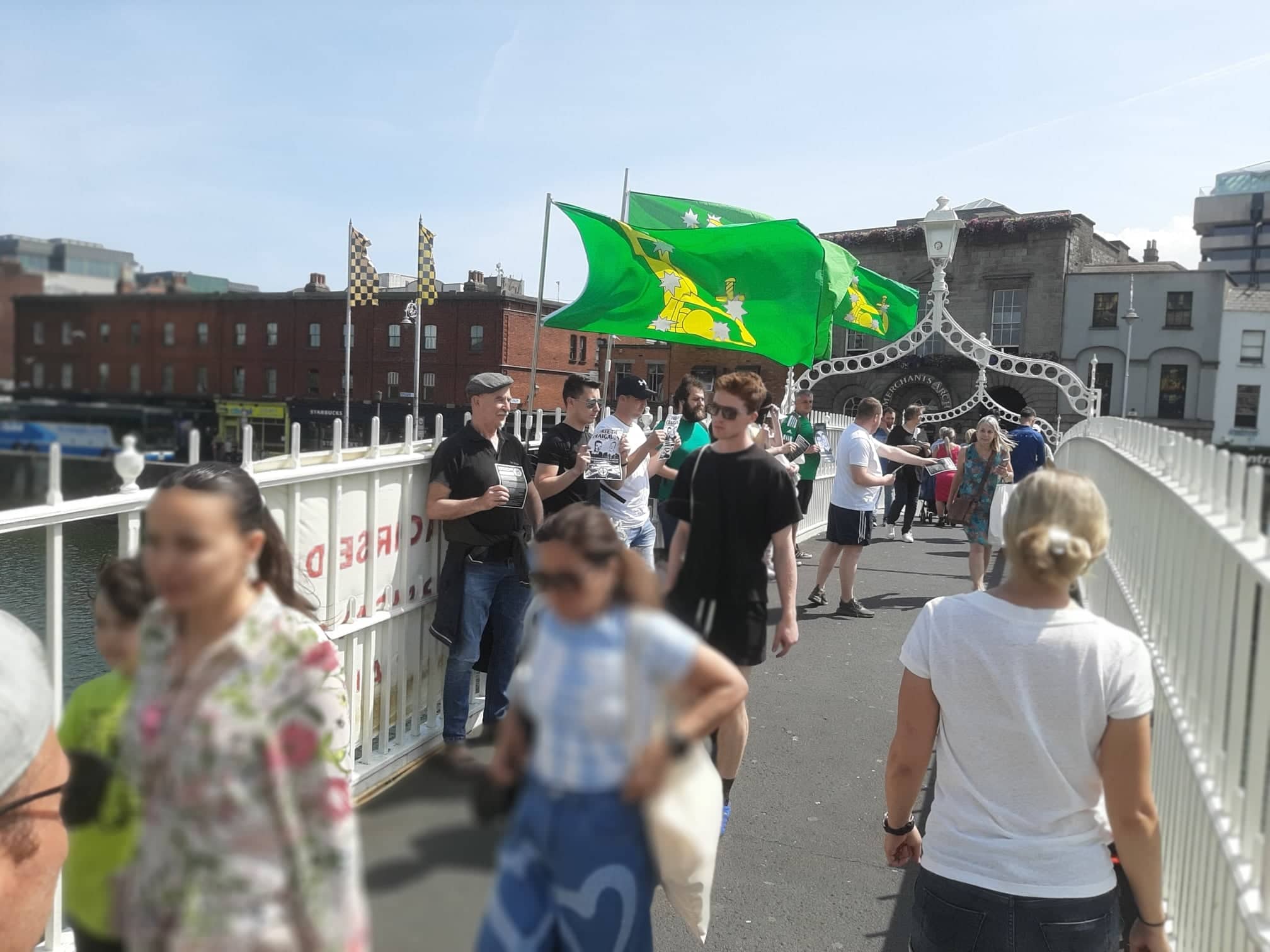
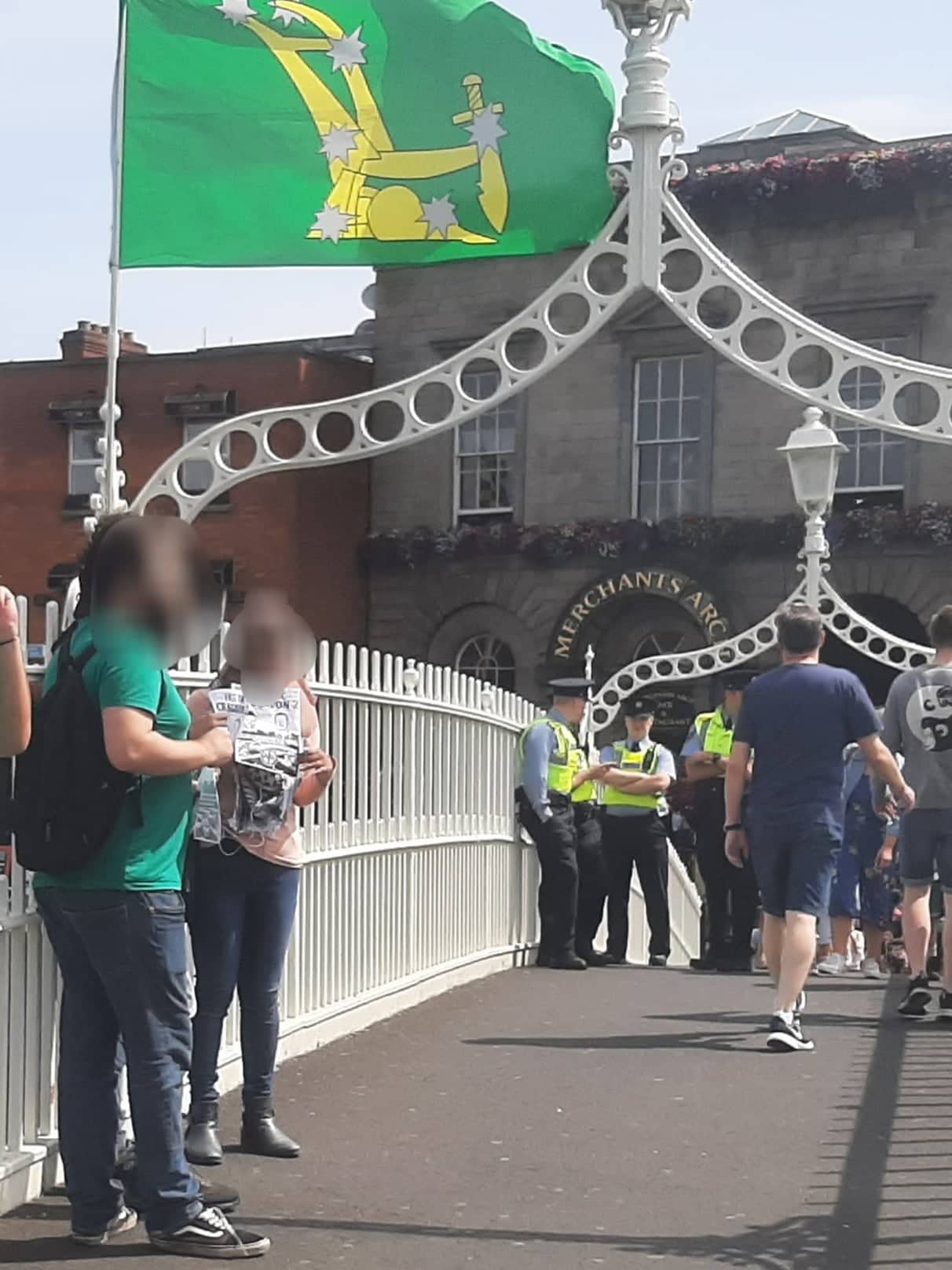
In Dublin city centre banners in Irish and in English calling for the freeing of the Craigavon Two were hung from the iconic curved pedestrian Ha’penny Bridge. Green and gold Starry Plough flags streamed in the breeze from the sea as leaflets were distributed to passers-by.

Hand-held Placards called for the men’s release and regular calls could be heard of “Justice for the Craigavon Two!” followed by “14 years in jail for something they didn’t do”. In addition there were calls to “Smash the Specials”1 and comments about “British justice”.

Strangely no artist(s) name was posted on line with the video

All the leaflets brought to the event were distributed and a number of conversations with interested people took place.

Leaflets being distributed and placards displayed on the Ha’penny Bridge, Dublin on the 16th. (Photo sourced: AIA)

At one point four members of the State’s police force, the Gardaí, walked past the picketers and gathered at the far end of the bridge, watching them. However, the picketers were not intimidated and the police took no further action.

The events in respect of the Craigavon Two were organised by the Anti-Imperialist Action Ireland organisation and took place in Waterford, Oldcastle (Meath), Naas (Kildare), Mullingar (Westmeath), Kerry, Galway, Dublin, South Derry, Armagh and Arklow (Wicklow.)

Gardaí watching the awareness-raising picket on the Ha’penny Bridge on the 16th. (Photo sourced: AIA)

A CROOKED CASE

To say that the case against the men was flimsy would be to give it too much credit. The killing weapon was recovered and the fingerprints on the weapon and magazine did not match either of the men’s. No eyewitness was found except one who claimed to have seen one of the men in the area.

The alleged eyewitness who identified one of the men, “Witness M” only came forward 11 months after the killing and long after the arrest of both men. Witness M’s inability to have identified anyone at night at the distance he claimed to have done was exposed in court.

Awareness-raising event on the 16th in Oldcastle, Co. Meath (Photo sourced: AIA)

That man’s father described him as “a Walter Mitty character” who was chronically untruthful and his own partner refused to corroborate the witness’ account of his movements on the night of the killing.

The ‘evidence’ against the second man of being in the area came from an MI5 agent who testified from behind a screen about a tracking device they claimed to have planted in the accused’s car which had unexplained gaps in its recording.

The agent declined to answer a number of questions under “public immunity” certificate related to “national security”.

The colonial police went further and detained Witness M’s father to intimidate him into not giving evidence about his son’s veracity (or lack of it) — and the witness was also paid a sum of money.

One can say that the no-jury Diplock Court was crucial in convicting the men of murder but even when they were eventually granted leave to appeal in 2014, their convictions were not overturned. The normal judicial system is bad but the no-jury courts are worse.

Another victim of being framed in the British ‘justice’ system, Gerry Conlon, 15 years in jail in the famous case of the “Guildford Four”, joined the campaign for the men and was proclaiming their innocence until a mere few days before his premature death in June 2014 (aged 60).

End.

In Naas, Co. Kildare. (Photo sourced: AIA)
Mulingar, Co. Westmeath. (Photo sourced: AIA)
A woman leafletting in Co. Waterford on Saturday talking to people in the town centre. (Photo sourced: AIA)

FOOTNOTES

1A reference to the political no-jury courts of the colony and of the Irish State, the Diplock Courts and the Irish State’s Special Criminal Courts.

USEFUL LINKS

Craigavon Two campaign: https://www.facebook.com/mrsmcconville

Anti-Imperialist Action Ireland: https://www.facebook.com/AIAI-For-National-Liberation-and-Socialist-Revolution-101829345633677

“Justice Craigavon Two” song by Pól Mac Adaim: https://www.youtube.com/watch?v=TzUdD80obMY

In Waterford on Saturday. (Photo sourced: AIA)
The event on Ha’penny Bridge, Dublin, seen from the north side facing south-west. (Photo sourced: AIA)