Diarmuid Breatnach
In the lands under the direct dominion of England, i.e. the “United Kingdom”, and in some others that are part of the British Commonwealth, the dominant class has called the people to join in a cultural festival in November which they call “Remembrance”. In this year of 2014, the centenary of the beginning of World War I, there is a particular focus in the Festival on that war.
The organisation fronting this festival in the ‘UK’ is the Royal British Legion and their symbol for it (and registered trademark) is the Red Poppy, paper or fabric representations of which people are encouraged to buy and wear – and in some places, such as the BBC for personnel in front of the camera, forced to wear. In many schools and churches throughout the ‘UK’, Poppies are sold and wreaths are laid at monuments to the dead soldiers in many different places. Prominent individuals, politicians and the media take part in a campaign to encourage the wearing of the Poppy and the festival of remembrance generally and of late, to extend the Festival for a longer period.
High points in the ‘The Festival of Remembrance’ are the Royal Albert Hall concerts on the Saturday and the military and veteran’s parades to the Cenotaph memorial in Whitehall, London, on “Remembrance Sunday”. According to the British Legion’s website, “The concert culminates with Servicemen and Women, with representatives from youth uniformed organizations and uniformed public security services of the City of London, parading down the aisles and on to the floor of the hall. There is a release of poppy petals from the roof of the hall.
“The evening event on the Saturday is the more prestigious; tickets are only available to members of the Legion and their families, and senior members of the British Royal Family (the Queen, Prince Phillip, the Prince of Wales, the Duke of York and the Earl of Wessex) and starts and ends with the British national anthem, God Save the Queen. The event is televised.
“Musical accompaniment for the event is provided by a military band from the Household Division together with The Countess of Wessex’s String Orchestra.”
The money raised from the sale of the “Poppies” and associated merchandise is to be used to support former military service people in need and the families of those killed in conflict. On the face of it, military and royal pomp apart, the Festival may seem a worthy charitable endeavour and also one which commemorates very significant historical events — therefore a festival which at the very least should not be opposed by right-thinking and charitable people.
Yet the main purpose of this festival and the symbol is neither remembrance nor charity but rather the exact opposite: to gloss over the realities of organised violence on a massive scale, to make us forget the experience of the world’s people of war and to prepare the ground for recruitment of more people for the next war or armed imperialist venture – and of course more premature deaths and injuries, including those of soldiers taking part.
Video and song On Remembrance Day from Veterans for Peace lists British conflicts (including Ireland) and condemns the Church of England for supporting the wars, calling also on people to wear the White Poppy
Partial Remembrance – obscuring the perpetrators and the realities of war
The Royal British Legion is the overall organiser of the Festival of Remembrance and has the sole legal ‘UK’ rights to use the Poppy trademark and to distribute the fabric or paper poppies in the ‘UK’. According to the organisation’s website, “As Custodian of Remembrance” one of the Legion’s two main purposes is to “ensure the memories of those who have fought and sacrificed in the British Armed Forces live on through the generations.”
By their own admission, the Legion’s “remembrance” is only to perpetuate the memories of those who fought and sacrificed in the British Armed Forces – it is therefore only a very partial (in both senses of the word) remembrance. It is left to others to commemorate the dead in the armies of the British Empire and colonies which Britain called to its support; in WWI, over 230,500 non-‘UK’ dead soldiers from the Empire and, of course, the ‘UK’ figure of 888,246 includes the 27,400 Irish dead.

The Festival of Remembrance excludes not only the dead soldiers of the British Empire and of its colonies (not to mention thousands of Chinese, African, Arab and Indian labourers employed by the army) but also those of Britain’s allies: France, Belgium, Imperial Russia, Japan, USA and their colonies.

No question seems to arise of the Festival of Remembrance commemorating the fallen of the “enemy” but if the festival were really about full “remembrance”, it would commemorate the dead on each side of conflicts. That would particularly be appropriate in WWI, an imperialist war in every aspect. But of course they don’t do that; if we feel equally sorry for the people of other nations, it will be difficult to get us to kill them in some future conflict.
A real festival of remembrance would commemorate too those civilians killed in war (seven million in WWI), the percentage of which in overall war casualty statistics has been steadily rising through the century with increasingly long-range means of warfare.
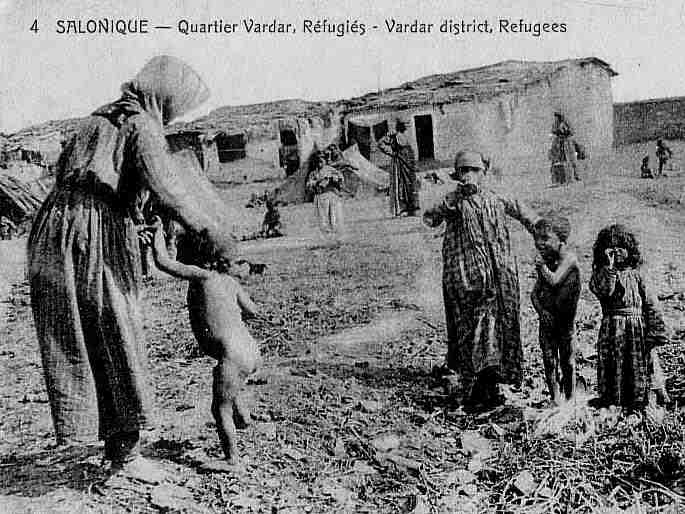
Civilians in the First World War died prematurely in epidemics and munitions factory explosions as well as in artillery and air bombardments, also in sunk shipping and killed in auxiliary logistical labour complements in battle areas and through hunger as feeding the military became the priority and farmhands became soldiers.
In WWII 85,000,000 civilians died in extermination camps or forced labour units, targeting of ethnic and social groups, air bombardments, as well as in hunger and disease arising from the destruction of harvests and infrastructure. Air bombardments, landmines, ethnic targeting and destruction of infrastructures continue to exact a high casualty rate among civilians in war areas: one admittedly low estimate up to 2009 gave figures of 3,500 dead in Iraq during the war and aftermath and another 100,000 dead from western trade sanctions, along with 32,000 dead civilians in Afghanistan. Another review up to 2011 gave a figure of 133,000 civilians killed directly as a result of violence in Iraq and “probably double that figure due to sanctions”. (1)
The number of civilians injured, many of them permanently disabled, is of course higher than the numbers killed. Most of those will bring an additional cost to health and social services where these are provided by the state and of course to families, whether state provision exists or not.
Real and impartial “remembrance” would include civilians but not even British civilians killed and injured are included in the Festival of Remembrance, revealing that the real purpose of the Festival is to support the existence of the armed forces and their activities (“shoulder to shoulder with our armed forces”) (2) contributing at the same time to a certain militarisation of society and of the dominant culture.
If the Festival were really about “remembrance”, they would commemorate the numbers of injuries and detail the various types of weapons that caused them. But that might reflect unfavourably on the armaments manufacturers, who run a multi-billion industry in whatever currency one cares to name, so of course they don’t.
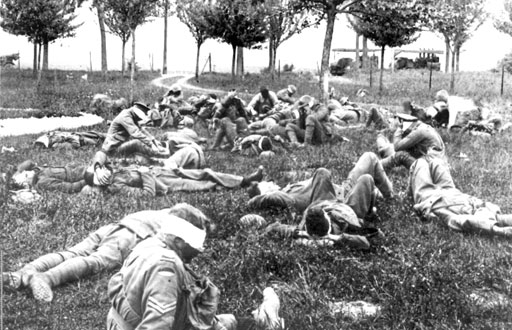
And if really concerned about death and injury in war, they would campaign to end such conflict – for an end to imperial war. But then how else would the various imperial states sort out among themselves which one could extract which resources from which countries in the world and upon the markets of which country each imperial state could dump its produce? So of course the Royal British Legion doesn’t campaign against war.
Partial remembrance is indeed embodied in the song chosen by the British Legion to promote its Festival. No Man’s Land, sung by Joss Stone, is actually a truncated version of the song of the same title (better known in Ireland as the Furey’s The Green Fields of France), composed by Scottish-raised and Australian-based singer-songwriter Eric Bogle. The Joss Stone version contains the lyrics of the chorus as well as of one verse and one-half of another, omitting two and-a-half verses of Bogle’s song.
Some of the British media created a kind of controversy, at the behest of who knows whom, to have the British Legion’s song included top of BBC’s Radio One playlist. The song is reproduced in entirety below, with the lines sung by Joss Stone in italics and those she omitted in normal type.
Well, how do you do, young Willie McBride?
Do you mind if I sit here down by your graveside?
And rest for a while in the warm summer sun,
I’ve been walking all day, and I’m nearly done.
I see by your gravestone you were only 19
When you joined the great fallen in 1916,
I hope you died well and I hope you died clean
Or, Willie McBride, was it slow and obscene?
(Chorus)
Did they beat the drum slowly, did they play the fife lowly?
Did they sound the death march as they lowered you down?
Did the band play The Last Post in chorus?
And did the pipes play the Flowers of the Forest?
Did you leave a wife or a sweetheart behind
In some faithful heart is your memory enshrined?
Although, you died back in 1916,
In that faithful heart are you forever 19?
Or are you a stranger without even a name,
Enclosed forever behind the glass frame,
In an old photograph, torn, battered and stained,
And faded to yellow in a brown leather frame?
(Chorus)
The sun now it shines on the green fields of France;
There’s a warm summer breeze that makes the red poppies dance.
And look how the sun shines from under the clouds
There’s no gas, no barbed wire, there’s no guns firing now.
But here in this graveyard it’s still No Man’s Land
The countless white crosses stand mute in the sand
To man’s blind indifference to his fellow man.
To a whole generation that were butchered and damned.
(Chorus)
Ah young Willie McBride, I can’t help wonder why,
Do those that lie here know why did they die?
And did they believe when they answered the cause,
Did they really believe that this war would end wars?
Well the sorrow, the suffering, the glory, the pain,
The killing and dying, were all done in vain.
For Willie McBride, it all happened again,
And again, and again, and again, and again.
(Chorus)
It’s easy to see why the Royal British Legion might shy away from the omitted lyrics, which would hardly encourage recruitment or support for war. Interviewed on video, Joss Stone herself said how important it was to be “true to the lyrics” and that “the last thing one would want to do would be to disrespect the lyric”; incredibly, she and John Cohen, the record producer, both separately claimed that they had captured the essence of the song lyrics in the British Legion’s version.(3)
Although Bogle stated that he did not think the Joss Stone version glorifies war, he also said that it did not condemn it and was ultimately a sentimentalised version.
“Believe it or not I wrote the song intending for the four verses of the original song to gradually build up to what I hoped would be a climactic and strong anti-war statement,” Bogle said. “Missing out two and a half verses from the original four verses very much negates that intention.” (apparently in a reply from Bogle to a blogger’s email and quoted in a number of newspaper reports).
The truncation of the song and the removal in particular of the anti-war lyrics epitomises partial “remembrance” and stands as a metaphor for it, the production of a lie by omission and obscuration.
If the main objective were really to care for soldiers and veterans and their families ….…
If the festival were really about caring for veterans and their families, would it not seek to allocate that responsibility completely to the State? It is the capitalist state (and prior to that, the feudal state) which sent people to fight for it, so it should be that state which cares for the military personnel and for their families. According to histories of the British Legion, one reason for its formation was the callous disregard of the British state and low level of provision for its military injured in the First World War and for the dependents of the dead. Taking that principle further, the State could impose a War Tax or Veterans’ Dependent’ Tax, say, on the big capitalists, on whose behalf the State has sent its armed forces off to fight. After all, it is those capitalists who will benefit from the plunder of resources and opening of markets for their produce, the very reasons the wars are being fought.
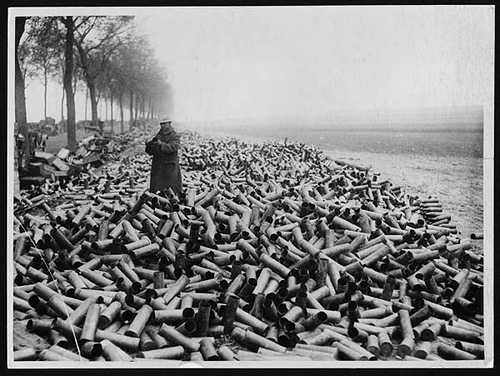
Not only that, the capitalists directly profit from war itself; war is not merely a means of settling territorial disputes among capitalist nations – war itself is very big business. Every bullet, shell, bomb, rocket, mine was produced at a profit and when exploded, will be replaced by another, again at profit and so on, in huge production batches. Every gun, tank, armoured car, lorry, jeep, ship, plane, helicopter built … huge production, huge profits. Then uniforms, equipment, food production and packaging, deliveries …. it will be indeed a rare capitalist who does not profit from war while it is being fought.
The Royal British Legion does in fact do some campaigning around State support for armed forces personnel and their dependents. On the Legion’s website, under the section on “Campaigning”, the following appears:
“In no particular order, our top five recommendations for the next Government are to:
-
Enable all Armed Forces widows to retain their pension should they decide to later cohabit or remarry
-
Ensure that all veterans with Service-induced hearing problems can have their MOD-issued hearing aids serviced and replaced at no cost, and that working-age veterans can access higher grade hearing aids, including ‘in-the-ear’ aids
-
Protect the lifetime income of injured veterans by uprating their military compensation by the higher of earnings, inflation or 2.5% (the ‘triple lock’)
-
Offer veterans evidence-based treatment for mental health problems within a maximum of 18 weeks from referral, provided by practitioners with an understanding of veterans’ needs, in line with the Government’s commitment to parity of esteem between physical and mental health
-
Include spouses and Early Service Leavers in the resettlement support provided by the Career Transition Partnership”
As one can see, these are pretty minimal demands of the State and in no way impede its engagement in war and may actually assist in recruitment.
Shhhh! Suicide and PTSD among military personnell
While campaigning for mental health provision for referrals of veterans and serving personnel may help reduce suicides among this group, nowhere in the official Festival of Remembrance is the existence of this component of mortality even alluded to. It is known in the USA that statistics of suicides in their armed forces since 2003 actually exceed their numbers killed in combat.
Evidence is now emerging of suicide statistics among veterans of recent British armed conflicts too — and the statistics are rising. According to a BBC Panorama documentary last year, more British soldiers committed suicide in 2012 than were killed in action in Afghanistan (the British Army does not publish records of suicide death but Panorama’s researchers dug up the statistics from various sources).
The Ministry of Defence does keep some records of diagnoses of post-traumatic stress disorder (PTSD) among its serving personnell and says the incidence is lower than in the general population but many suspect that the figures do not reflect the full reality. Also, the same statistics show that male military under 20 years of age “had a 46% statistically significant increased risk of suicide than the rest of the general population”.(4)
PTSD was not recognised by the beligerents in World War One and many of those who were shot by firing squad for “cowardice”, “desertion” or “refusing an order” “in the face of the enemy”, were sufferers of that syndrome. Their dependents were left without a war pension too.
Talking about PTSD and suicide among soldiers is hardly likely to encourage recruitment to the armed forces and so, despite its pledge to “support all members of the British Armed Forces past and present, and their families”(5), the British Legion draws a veil of silence over those aspects, particularly during the Festival.
Getting the public behind the armed services and war
Far from campaigning against war or even assigning financial and moral responsibility to the capitalists who cause war and also profit from it, the British Legion, through the promotion of the Poppy and “Remembrance”, strives to keep the public in support of militarism (6) and in readiness to support future wars.
It does this in a number of ways: it maintains a separation from the reality of war for the public, as well as a separation between the victims of the State-sponsored wars and the cause of their victimhood. It avoids mention of the causes of war and of those who profit by it. And it promotes the armed services and the conflicts in which they have participated uncritically, a promotion embodied in the Legion’s slogan in use until this year, “Shoulder to shoulder with all who Serve” (which it intends to replace with “Live On – To the memory of the fallen and the future of the living”).
War is presented in the mass media during the Festival and at other times as unfortunate but also as giving rise to uplifting heroic action and to comradeship. Feeling of comradeship is a real phenomenon among people suffering equal or similar conditions and, in the military, is most commonly seen among the lower ranks. When the British Legion was an organisation limited to veteran membership, presenting it as providing comradeship was understandable. However, the British Legion has now extended its membership not only to families but to all kinds of supporters, whether active as volunteers (for example, selling “Poppies”) or completely passive (just paying an annual membership subscription). It now promotes a different kind of “comradeship” and, under that very heading, invites members of the public to “Become part of a network of people who care about the Armed Forces family”.(7)
The British Legion is actively seeking a different kind of ‘comradeship’ or solidarity to that existing among the military or veterans. But this is not an alternative such as the comradeship of humanity nor of the working class, which would lead the workers of the opposing armies to rise up against their masters, but of “the nation”.
This of course would be a misnomer anyway since there are a number of nations in the ‘UK’, for example. But even if the comradeship were for “England”, or “Australia”, these territorial-political units are by no means homogenous. All of them are divided into classes and in each, one class rules – the monopoly capitalist class. It is that class that decides on war and it is that class that profits from it, along with smaller profits for smaller capitalists. But it is not they who will be blowing up, shooting and stabbing one another in the wars they instigate – it is the working and lower middle classes.
The military casualties in war are presented as heroic sacrifices for “the nation”, a mythical concept often represented by neighbourhood and family. Family and neighbourhoods in all the countries in the conflict will suffer but it is neither the families nor the neighbourhoods which instigated the war, nor will they profit from it. In fact, their representatives will be sent to kill one another on the battlefields, leaving desolation and loss among their families and neighbourhoods.
However, as was pointed out by speakers at the recent launch of a book against militarism in a London bookshop recently(8) the fact that the British monopoly capitalist class is having, through the British Legion and its Festival, to exert itself to seek identification with its armed forces and support for war, is a sign that public opinion is not all going the way it would like.
Left and liberal support for the Red Poppy
People enlist in imperial and colonial armed forces for a variety of reasons. Excitement and adventure of course appeal to many but there is also the push of unemployment, the pull of education and training (however doubtful the usefulness of that training may be in later life although in the USA, serving and ex-armed forces people qualify for educational funding http://www.collegescholarships.org/grants/military.htm).
Then of course there is the propaganda about the atrocities committed by enemy forces (whether real or not) and the alleged threat they pose to the population of the state doing the recruiting. The alleged threat is the propaganda reason most aggressive imperialist powers name their war ministries the Department or Ministry of Defence and that some even incorporate the concept into the title of their armed forces, viz. the “Israel Defence Force”).

And, quite often, people are conscripted by force, as they were in Britain during both World Wars as well as for “National Service” up to 1960, as well as in other European countries (and in the USA in the draft for WWII, Korea, Vietnam). The standard punishment for refusing to join up when conscripted was a jail sentence but some conscientious objectors in WWI were shipped by the British Army to France, so that they could be shot for “desertion in the face of the enemy”. The penalty for certain acts in a war area, such as desertion, refusal to obey orders or striking an officer, could be death – during WWI, 306 British and Commonwealth soldiers were shot by firing squad, while others were executed in the armies of Britain’s allies, as well as in those of Germany, Austria and Turkey.
As an aside from the purpose of this article, it is noteworthy that the only area of the ‘UK’ where conscription was not introduced was Ireland, where opposition to it ran right across a spectrum from the IT&GWU and some other trade unions, through the Irish nationalist and republican movements to the Catholic Church hierarchy. The only area of the European-settler Commonwealth where it was not introduced, being defeated in two consecutive referenda, was Australia – where 40% of the population is said to be of Irish descent and where the Irish diaspora, with some justification, was blamed by supporters of conscription for the failure to introduce it. However, thousands of Irish and Australians did volunteer, especially in the earlier days of the war.
The issue of why and how people join the imperialist armed forces is often raised by Left and liberal advocates of wearing the Poppy or of similar commemoration festivals (e.g. Armed Forces Week in the USA, second Saturday to third Sunday of May). Another group contend that the real or original purpose of these commemorations and festivals is to commemorate the great human loss of their country or to support veterans and their families.
These commemorative events, these Left or liberal advocates often contend, have been hijacked by militarists and, in the case of the ‘UK’, by the Royals and they should not be allowed to get away with it. Accordingly, one may find socialists and anti-war people and even activists wearing the Poppy, as is the case for example with a few of the activists of the British-based group Veterans for Peace, although most of them do not wear the Red Poppy and many promote the White Poppy.
Personally, I do not believe that Left and liberal advocates of wearing the Red Poppy have correctly analysed the original purpose of those who created it. But even if they should be correct, clearly serious cognizance should be taken of how the Red Poppy symbol is being used today and what its main thrust is. It is pretty clear that this symbol and the commemorations in imperialist countries in general are being used to recruit personnel for the armed forces of those states and, above all, to swing public opinion behind not only those armed forces but also in support of their state’s armed actions against other states and in wars of conquest in other lands.
The White Poppy – in Britain, Australia, Canada and in Ireland
To counter the propaganda offensive surrounding the Red Poppy, some in the ‘UK’ and in some Commonwealth countries advocate the wearing of a white poppy symbol. The idea of an alternative and anti-war symbol was apparently first proposed in 1926 and the White Poppy was first sold by the Women’s Cooperative Movement in Britain in 1933. The following year, the major anti-war organisation in Britain, the Peace Pledge Union, began its annual sale of the White Poppy symbol. Although tolerance of the White Poppy has been pronounced by the Royal British Legion, the wearing of it has been attacked by a number of public figures in Australia and in Britain, including Margaret Thatcher during Question Time in the House of Commons.
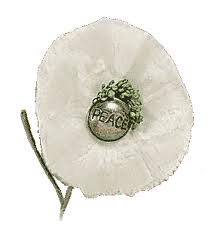
In 2006 the Royal Canadian Legion initiated legal action against the main Canadian distributor of the White Poppy symbol and against the Peace Pledge Union. This action gained considerable publicity in the Canadian media and, according to the PPU, “resulted in widespread support and a substantial increased sale of white poppies in Canada”(9). The PPU site also carries accounts of orchestrated hostility by the media, in church groups and schools, although some schools also provide the White alongside the Red Poppy symbol.
Reviewing the principle behind it and the history of its existence as a symbol, also not ignoring its pacifist associations (which are unwelcome to me), it does seem a progressive act for people in Britain and Australia, New Zealand and Canada to wear the White Poppy. The act of wearing that symbol is statement that the wearer dissents from the wearing of the Red Poppy and is opposed to imperialist and colonialist war.
I have no strong feeling about whether people should wear it in Ireland or not but nor do I see any reason to promote it (with the exception of within the “Unionist community”, where discussion around it could be useful, although the practice would almost certainly be dangerous). Although our whole nation was a part of the ‘UK’ during World War I, twenty-six of its 32 counties have since ceased to be so. The thrust that led to that current status was embodied in the 1916 Rising (itself an action against WWI) and the War of Independence 1919-1921, events of much greater historic national significance for us, despite their much smaller loss of Irish lives, than is the First World War. The symbol covering that period and in particular the 1916 Rising is the “Easter Lilly” (the Arum Lilly or Calla. Z. aethiopica), paper and metal badge representations of which are worn around that time, both in Ireland and in some cases abroad.
There has been a growing attempt in Ireland in recent years to have a national honouring of the Irish who died serving in the British Army and at the moment this is concentrating on the First World War period. This is far from unproblematic: they were soldiers in the armed forces of a state that was occupying our country, then a colony, and actively engaged in repression of our people – a repression which at that time had been going on for 700 years. The 1916 Rising had taken place right in the middle of WWI and had been suppressed by British troops – including units recruited in Ireland. Almost immediately after the end of World War One, the IRA had begun the War of Independence, during which its principal opponents in armed action were the British Army, the Royal Irish Constabulary and the special auxilliary forces of the latter (“’Tans” and “Auxies”).
As if that were not problematic enough, that same colonial power remains to this day in occupation of a part of our national territory. And that colonial occupation and its colonial police force is backed up by that same British Army, an army which only recently fought a 30-year war against Irish guerrilla forces in the colony. During that war, the British Army daily harassed civilians in ‘nationalist’ areas and at times gassed, arrested and beat them up or shot them dead. That same Army also colluded with sectarian assassination squads and carried out unofficial executions, i.e. murders, of guerrilla fighters and of political activists.
Given this history and current situation, it is curious that some determined efforts to commemorate Irish dead in the British Army during WWI continue. Some of its advocates may be motivated by nothing more than a genuine historical commemorative interest and some by some kind of sense of justice. But undoubtedly there exists in Ireland, as well as the unionist mentality in parts of the Six Counties, a nostalgia for the British among some in the Irish state. This is the “West Britain” mentality that never ceased to wish Ireland to be a part of the British Empire, reinforced by the desire of some other elements to see Ireland part of the British Commonwealth. For these elements, celebration of the Irish who fought in the British Army is a way of stating their claim to the past they like and the future to which they aspire. These tiny sections of the Irish population have some representation in Irish academic and public life and, one suspects, among the Irish capitalist class, a class with no sense of history but a strong sense of the quick Sterling, Punt, or Euro – whichever seems best at the time.
Uncritical commemoration of Irish soldiers who died in the British Army and particularly in WWI is not only problematic but plays into the agenda of “West British” and Commonwealth enthusiasts and for those reasons the broad Irish Republican movement is right to oppose such commemorations. But the issue goes far beyond that of “Brits Out!” — for socialists, these commemorations screen the real purpose of imperialist wars and the ways in which working people are pulled into them, to fight their corresponding working people in other countries, for the profits and strategic interests of a tiny, parasitic minority.
Certainly the Irish who fell in WWI in British military units should be remembered, as should all those working class and lower-middle class people of all countries who were sent to butcher their class brothers and be butchered in turn, along with the civilian casualties, in a dispute over territories, resources and markets between a small number of capitalists who would never fight one another in person and indeed who often wined and dined together and, not infrequently, intermarried. Those dead should be remembered as casualties of capitalism, imperialism and colonialism and their remembrance serve as part of a drive to overthrow those evils and to eliminate imperialist war forever.
End main article
Video Veterans for Peace at the Cenotaph, Remembrance Sunday 2014
https://www.youtube.com/watch?v=t34dnIabsGw
Footnotes:
1) See “Civilian war dead” links at end of article
2) Quotation from the Royal British Legion’s website (see link at end of article)
3) She may be seen and heard saying those things and a number of other inane (or dishonest) things in a number of videos entitled Behind the Scenes of the Official Poppy single with Joss Stone and John Cohen can be seen and heard saying his piece on one of those too (see video links at end of article).
4) From the British Legion’s website (see link at end of article)
5) From The Female Front Line blog (see link at end of article)
6) Members of the armed forces are recruited and maintained by successive Armed Forces Acts every five years as a specific, albeit continuing, derogation from the Bill of Rights 1689, which otherwise prohibits the Crown from maintaining a standing army. http://en.wikipedia.org/wiki/Bill_of_Rights_1689
7) Quotation from the Royal British Legion’s website (see link at end of article)
8) Confronting a Culture of Militarism by David Gee, in Housmans Radical Bookshop
9) Referred to, without detail, on Peace Pledge Union site, about The White Poppy (see link at end of article)
Appendices: Historical Background, Natural History, Cultural Usage, Uses.
Historical background of the Poppy symbol
(Most of this section is taken from The Story Behind the Remembrance Poppy
http://www.greatwar.co.uk/article/remembrance-poppy.htm)
The symbol of the Poppy was chosen, it is widely believed, because of the prevalence of this flower on battlefields in WWI. Although it grows reasonably well in meadows, the plant grows best of all on recently disturbed ground, so that rural battlefields, where bombs and shells have cratered the land and heavy vehicles and the tramp of human feet have flattened other vegetation and churned up the earth, suit it well. It has been seen as symbolic of some kind of rebirth and of course, the colour is that of blood.
In 1855, British historian Lord Macaulay, writing about the site of the Battle of Landen (in modern Belgium, not far from Ypres) in 1693, wrote “The next summer the soil, fertilised by twenty thousand corpses (apparently more like 28,000 human and many horse corpses – DB), broke forth into millions of poppies. The traveller who, on the road from Saint Tron to Tirlemont, saw that vast sheet of rich scarlet spreading from Landen to Neerwinden, could hardly help fancying that the figurative prediction of the Hebrew prophet (Isaiah – DB) was literally accomplished, that the earth was disclosing her blood and refusing to cover the slain.”
Moina Michael: “The Poppy Lady”
The origin of the red Flanders poppy as a modern-day symbol of Remembrance was the inspiration of an United States woman, Miss Moina Michael. According to her memoirs, while working in Overseas War HQ of the religious charitable organisation the YMCA, she was inspired by the poem “We Shall Not Sleep” (also known as In Flanders Fields) by Canadian Liutenant-Colonel John McCrae, which she read in The Ladies Home Journal, where it was illustrated by a vivid field of red poppies. Lieutenant-Colonel John McCrae had died of pneumonia several months earlier on 28th January 1918. Part of his poem reads:
Take up our quarrel with the foe:
To you from failing hands we throw
The torch; be yours to hold it high.
If ye break faith with us who die
We shall not sleep, though poppies grow
In Flanders fields.
In her autobiography, entitled “The Miracle Flower”, Moina describes this experience as deeply spiritual. She felt as though she was actually being called in person by the voices which had been silenced by death and vowed always to wear a red poppy of Flanders Fields as a sign of remembrance. She jotted down a poem in response, which she entitled “We Shall Keep the Faith”, of which the first verse read:
Oh! you who sleep in Flanders Fields,
Sleep sweet — to rise anew! We caught the torch you threw
And holding high, we keep the Faith
With All who died.
The First Poppies Worn in Remembrance
Later that day Moina found one large and 24 small artificial red silk poppies in Wanamaker’s department store. When she returned to duty at the YMCA HQ later that evening, the delegates from the conference being held there enthused about the symbols and she handed out all but one of them, which she kept for herself. The inspirations for the Poppy as a symbol then, by its creator, can be said to be religious but also nationalistic and warlike: “Take up our struggle with the foe.”
Campaign for the Poppy as a National Memorial Symbol
Thereafter Moina Michael campaigned to get the Poppy emblem adopted in the United States as a national memorial symbol, in which she was encouraged by the press.
Originally she intended to use the simple red, four petalled field poppy of Flanders as the Memorial Poppy emblem. Mr. Lee Keedick was contracted to design a national emblem and in December 1918 he produced a final design, which was accepted. This emblem consisted of a border of blue on a white background with the Torch of Liberty and a Poppy entwined in the centre, containing the colours of the Allied flags: red, white, blue, black, green and yellow.
The Torch and the Poppy Emblem
The “Torch and Poppy” emblem was first used officially on 14th February, 1919 in Carnegie Hall, New York City. The event was a lecture given by the Canadian ace pilot, Colonel William Avery “Billy” Bishop, VC, CB, DSO & Bar, MC DFC, ED. His lecture was titled “Air Fighting in Flanders Fields”. As the lecture ended a large flag with the new torch and poppy emblem on it was unfurled at the back of the stage.
However, in spite of the interest raised by the appearance of the new emblem at the time, and Moina’s continued efforts to publicize the campaign, this emblem was not taken up by any group or individual to help establish it as a national symbol.
There was so little public interest in the enterprise that eventually the emblem’s designer, Mr Keedick, abandoned his interest in pursuing Moina’s campaign.
The Poppy and Help for Wounded Ex-Servicemen
During the winter of 1918/1919 Moina Michael continued working for the Staff of the Overseas YMCA Secretaries, including doing charitable work such as visiting wounded and sick men from her home state of Georgia in nine of the debarkation hospitals in and around New York City.
During the summer months of 1919 Moina taught a class of disabled servicemen. There were several hundred ex-servicemen in rehabilitation at the University of Georgia. Learning about their needs at first hand gave her the impetus to widen the scope of the Memorial Poppy idea so that it could be used to help all servicemen and their dependants.
Official Recognition of the Memorial Poppy
In the early 1920s a number of organizations did adopt the red poppy as a result of Moina’s dedicated campaign.
1920: The American Legion Adopts the Memorial Poppy
In 1919 the American Legion was founded as an organization by veterans of the United States armed forces to support those who had served in wartime in Europe during the First World War.
In August 1920 the Navy representative promised to present her case for the Memorial Poppy to the convention. The Georgia Convention subsequently adopted the Memorial Poppy but omitted the Torch symbol. The Convention also agreed to endorse the movement to have the Poppy adopted by the National American Legion and resolved to urge each member of the American Legion in Georgia to wear a red poppy annually on 11th November.
One month later, on 29th September 1920, the National American Legion convened in Cleveland. The Convention agreed on the use of the Flanders Fields Memorial Poppy as the United States’ national emblem of Remembrance.
Anna Guérin: “The French Poppy Lady”
Fund Raising for France with Poppies
A French woman by the name of Madame Anna E Guérin was present at the same American Legion convention as a representative of the French YMCA Secretariat. She considered that artificial poppies could be made and sold as a way of raising money for the benefit of the French people, especially the orphaned children, who were suffering as a result of the war.
Anna Guérin returned to France after the convention. She was the founder of the “American and French Children’s League” through which she organized French women, children and war veterans to make artificial poppies out of cloth. Her intention was that these poppies would be sold and the proceeds could be used to help fund the restoration of the war-torn regions of France.
Anna was determined to introduce the idea of the memorial poppy to the nations which had been Allied with France during the First World War. During 1921 she made visits or sent representatives to America, Australia, Britain, Canada and New Zealand.
Spreading the Message of the Memorial Poppy
1921: French Poppies Sold in America
In 1921 Madame Guérin made arrangements for the first nationwide distribution across America of poppies made in France by the American and French Childrens’ League. The funds raised from this venture went directly to the League to help with rehabilitation and resettlement of the areas of France devastated by the First World War. Millions of these French-made artificial poppies were sold in America between 1920 and 1924.
5th July 1921: Canada adopts the Flower of Remembrance
Madame Anna Guérin travelled to Canada, where she met with representatives of the Great War Veterans Association of Canada. This organization later became the Royal Canadian Legion. The Great War Veterans Association adopted the poppy as its national flower of Remembrance on 5th July 1921.
11th November 1921: The First British Legion Poppy Day Appeal
In 1921 Anna Guérin sent some French women to London to sell their artificial red poppies. This was the first introduction to the British people of Moina Michael’s idea of the Memorial Poppy. Madame Guérin went in person to visit Field Marshal Earl Douglas Haig, founder and President of The British Legion. She persuaded him to adopt the Flanders Poppy as an emblem for The Legion. This was formalized in the autumn of 1921.
The first British Poppy Day Appeal was launched that year, in the run up to 11th November 1921. It was the third anniversary of the Armistice to end the Great War. Proceeds from the sale of artificial French-made poppies were given to ex-servicemen in need of welfare and financial support.
Since that time the red poppy has been sold each year by The British Legion.
11th November 1921: Armistice Day Remembrance in Australia
A resolution was passed in Australia that from 11th November 1921 the red Memorial Poppy was to be worn on Armistice Day in Australia.
The American and French Childrens’ League sent a million artificial poppies to Australia for the 1921 Armistice Day commemoration. The Returned Soldiers and Sailors Imperial League sold poppies before 11th November. A poppy was sold for one shilling each. Of this, five pennies were donated to a French childrens’ charity, six pennies were donated to the Returned Soldiers and Sailors Imperial League and one penny was received by the government.
Since that time red poppies have been worn on the anniversary of Armistice in Australia, officially named Remembrance Day since 1977. Poppy wreaths are also laid in Australia on the day of national commemoration called ANZAC DAY on 25th April. This is the day when the ANZAC Force landed on the beaches of the Gallipoli penninsular at the start of that campaign on 25th April 1915.
24th April 1922: The First Poppy Day in New Zealand
In September 1921 a representative from Madame Guérin visited the New Zealand veterans’ association, called the New Zealand Returned Soldiers’ Association (NZRSA) at that time. This organization had been established in 1916 by returning wounded veterans.
With the aim of distributing poppies in advance of the anniversary of Armistice Day on 11th November that year, the NZRSA placed an order for 350,000 small and 16,000 large French-made poppies from the French and American Childrens’ League. Unfortunately the delivery of the poppies did not arrive in time to organize and publicize the first nationwide poppy campaign, the Association decided to hold the first Poppy Day on 24th April, the day before ANZAC Day, in the following year.
The first Poppy Day in New Zealand in 1922 raised funds of over £13,000. A proportion of this was sent to the French and American Childrens’ League and the remainder was used by the Association for support and welfare of returned soldiers in New Zealand.
May 1922: French-made Poppies Sold in the United States
In 1922 the organization of the American and French Childrens’ League was disbanded. Madam Guérin was still keen to raise funds for the French people who had suffered the destruction of their communities. She asked the American organization called Veterans of Foreign Wars (VFW) to help her with the distribution of her French-made poppies throughout the United States.
That year the VFW assisted with the sale of the poppies in America to help keep up the much needed funds for the battle-scarred areas of France. The poppies were sold before Memorial Day which was observed at that time on 30th May. This was the first time that a United States war veterans’ organization took on the task of selling the red poppy as a symbol of Remembrance and as a means of fund raising. The VFW decided to adopt the poppy as its own official memorial flower.
1923: The American Legion Sells Poppies in the United States
In 1923 the American Legion sold poppies in the United States which were made by a French company.
Remembrance Poppies Made by War Veterans
American Legion Auxiliary Pays for Poppies
The Auxiliary to the American Legion was an organization founded in 1919 to support The American Legion. It was for women who wanted to devote their voluntary services to veterans and young people. The first convention of the Auxiliary took place in September 1921 and delegates agreed to adopt the red poppy as the memorial flower for the organization.
The delegates at the convention also agreed that disabled American war veterans could make their own poppies to be sold within the United States. The Auxiliary believed that US veterans making their own poppies could generate much needed income for disabled and unemployed veterans who had no other means of earning money. The Auxiliary provided all the material for the artificial poppies and had it pre-cut to form easily into individual flowers. The Auxiliary paid a penny for each poppy that was made.
The American Legion Auxiliary continues its work to support veterans and promotes the wearing of a red poppy on the annual Memorial Day observed in May in the United States. Paper poppies are handmade by veterans who are paid for them.
The Buddy Poppy Factory, U.S.A.
Following the distribution of the red French-made poppies for Madame Guérin in 1922, the Veterans of Foreign Wars (VFW) organization formally agreed in 1923 that American veterans of the Great War could also benefit from making and selling the red Memorial Poppy.
From 1924 disabled ex-servicemen started making poppies at the “Buddy Poppy” factory in Pittsburgh. The name “Buddy Poppy” was registered as a U.S. Patent in February 1924. In the following May a certificate was issued to grant trademark rights to the VWF for the manufacture of genuine “Buddy Poppies”.
Since the 1920s there are now 11 locations where the “Buddy Poppies” are made by disabled and needy veterans. Some 14 million “Buddy Poppies” are distributed each year in the United States.
Natural history and biology of the Red Poppy
(Taken in entirety from Wikipedia)
Papaver rhoeas (common names include common poppy, corn poppy, corn rose, field poppy, Flanders poppy, red poppy, red weed, coquelicot, and, due to its odour, which is said to cause them, as headache and headwark) is a herbaceous species of flowering plant in the poppy family, Papaveraceae. This poppy is notable as an agricultural weed (hence the “corn” and “field”).
Before the advent of herbicides, P. rhoeas sometimes was so abundant in agricultural fields that it could be mistaken for a crop. However the only species of Papaveraceae grown as a field crop on a large scale is Papaver somniferum, the opium poppy.
The origin of the Red Poppy plant is not known for certain. As with many such plants, the area of origin is often ascribed by Americans to Europe, and by northern Europeans to southern Europe. Its native range includes West Asia, North Africa and Europe. It is known to have been associated with agriculture in the Old World since early times and has had an old symbolism and association with agricultural fertility. It has most of the characteristics of a successful weed of agriculture. These include an annual lifecycle that fits into that of most cereals, a tolerance of simple weed control methods, the ability to flower and seed itself before the crop is harvested, and the ability to form a long-lived seed bank. The leaves and latex have an acrid taste and are mildly poisonous to grazing animals.
A sterile hybrid with Papaver dubium is known, P. x hungaricum, that is intermediate in all characters with P. rhoeas.
Cultural usage of the Red Poppy
(Taken in entirety from Wikipedia with addition of two asterisked sentences)
United States commemorative stamp depicting Moina Michael and corn poppies

Claude Monet, “Summer Field of Coquelicots”, 1875
Due to the extent of ground disturbance in warfare during World War I, corn poppies bloomed in between the trench lines and in no man’s lands on the Western Front. Poppies are a prominent feature of “In Flanders Fields” by Canadian Lieutenant Colonel John McCrae, one of the most frequently quoted English-language poems composed during the First World War. It is also mentioned in one of Eric Bogle’s excellent anti-war songs, In No-Man’s Land (also known as The Green Fields of France), which has become a standard in the Irish folk-singing repertoire and part of which is being employed to opposite effect by the Royal Legion through the singing of Joss Stone.* 1
During the 20th century, the wearing of a poppy at and before Remembrance Day each year became an established custom in most western countries. It is also used at some other dates in some countries, such as at appeals for Anzac Day in Australia and New Zealand.
This poppy appears on a number of postage stamps, coins, banknotes, and national flags, including:
-
Canadian twenty-dollar note (2012) and Canadian ten-dollar note (2001)
-
some commemorative Canadian twenty-five cent coins in 2004 and 2008
-
Great Britain commemorative stamps 2000-2009: 2007 Lest we forget – 90th anniversary of the Battle of the Somme
The common or corn poppy was voted the county flower of Essex and Norfolk in 2002 following a poll by the wild plant conservation charity Plantlife.
By what seems a strange coincidence, the red poppy has been a symbol of martyrdom and/or love in a number of older cultures.*
In Persian literature, red poppies, especially red corn poppy flowers, are considered the flower of love. They are often called the eternal lover flower. In classic and modern Persian poems, the poppy is a symbol of people who died for love (Persian: راه عشق).
Many poems interchange ‘poppy’ and ‘tulip’ (Persian: لاله).
- [I] was asking the wind in the field of tulips during the sunrise: whose martyrs are these bloody shrouded?
- [The wind] replied: Hafez, you and I are not capable of this secret, sing about red wine and sweet lips.
In Urdu literature, red poppies, or “Gul-e-Lalah”, are often a symbol of martyrdom, and sometimes of love.
Uses:
Red Poppy: The commonly-grown decorative Shirley Poppy is a cultivar of this plant.
P. rhoeas contains the alkaloid rhoeadine which is a mild sedative.
End Appendix
Sources:
http://en.wikipedia.org/wiki/Papaver_rhoeas
Red Poppy Symbol:
http://www.greatwar.co.uk/article/remembrance-poppy.htm
http://www.britishlegion.org.uk/get-involved/poppy-appeal
(see also Red Poppy and British Legion links)
British Legion:
http://en.wikipedia.org/wiki/The_Royal_British_Legion
http://www.britishlegion.org.uk/
Videos containing quotations from Joss Stone and John Cohen about how they have stayed “true to the song” or “lyric” of No Man’s Land by Eric Bogle https://www.youtube.com/watch?v=ez1WBJaZZ7U#t=10 and
https://www.youtube.com/watch?v=6rotXZFXJWo
White Poppy symbol:
http://www.ppu.org.uk/whitepoppy/index.html
Military Covenant:
http://en.wikipedia.org/wiki/Military_Covenant
WWI war dead:
http://en.wikipedia.org/wiki/World_War_I_casualties
Suicide in British Armed Forces – ref. BBC Panorama programme:
http://www.bbc.com/news/uk-23259865
also Female Front Line blog with graphs
http://thefemalefrontline.wordpress.com/2012/05/05/suicide-within-the-uk-armed-forces/
“Controversy” over Legion’s 2014 Festival promotional song by Joss Stone (truncation of Eric Bogle’s No Man’s Land):
http://www.mirror.co.uk/news/uk-news/bbc-snubs-official-poppy-appeal-4600035
http://johnhilley.blogspot.ie/2014/11/poppy-appeal-and-royal-british-legions.html
Civilian war deaths Iraq and Afghanistan to 2009
Civilian war deaths Iraq to 2011:
http://costsofwar.org/article/iraqi-civilians
British and Commonwealth soldiers shot by firing squad
http://www.bbc.co.uk/history/british/britain_wwone/shot_at_dawn_01.shtml
Images WWI
Veterans for Peace
http://veteransforpeace.org.uk
Video and song On Remembrance Day from Veterans for Peace (lists British armed conflicts) https://www.youtube.com/watch?v=hPLtSkILwvs#t=62
Video Veterans for Peace at the Cenotaph, Remembrance Sunday 2014
https://www.youtube.com/watch?v=t34dnIabsGw
November 2014
1This was discussed near the beginning of the article, on p.2