Diarmuid Breatnach
(Reading time: 4 mins.)
On 25th March 2026 the Irish State’s UN representative declined to vote in favour of the UN Declaration of the Trafficking of Enslaved Africans and Racialized Chattel Enslavement of Africans as the Gravest Crime against Humanity.1
The voting patterns reveal much about the world and the position within it that is occupied by the Irish state. The total voting membership present was 193, out of which 123 voted YES, i.e. in favour of the resolution. But where was the Irish State? It abstained, along with 51 other states.2
The Western Powers, its chief the United States and including Australia, Canada and all western Europe, including of course all EU states, abstained.
But most of the eastern European states also abstained: Albania, Armenia, Bosnia & Herzegovina, Bulgaria, Croatia, Czechia, Estonia, Georgia, Hungary, Latvia, Montenegro, North Macedonia, Poland, Republic of Moldova, Romania, Slovakia, Slovenia and Ukraine.
Voting YES in Eastern Europe were Azerbaijan, Belarus and the Russian Federation,
In Africa, including North Africa, all states voted YES for the motion.
In East Asia, China, Mongolia, North Korea and South Korea voted YES but Japan followed the Western Powers in abstaining (Taiwan is not a UN member state).
In S.E. Asia only Cambodia abstained, the rest of the states in the region voting YES.
In Central Asia, all UN member states voted YES.
In Western Asia (previously termed ‘the Middle East’), only Oman abstained, all other states in the region voting YES, i.e. in favour of the resolution.
In the Western Pacific only Palau and in the Southern Pacific, only Fiji abstained (along with Australia and New Zealand, as noted earlier, as medium powers within the Western Bloc).
In Latin America, only Paraguay abstained and as we’ll see, Argentina voted No to the motion. All other Latin American countries vote in favour.
Yes, Argentina actually voted against the motion, one of only three states voting NO, the other two being the United States and Israel.
The Irish state’s excuse for their abstention included3 “ … concerns regarding certain legal references and assertions that are either inaccurate or inconsistent with international law.”
While the Minister’s response seems to indicate concern over terminology and legality, the Irish representative’s abstention coincided with the whole of the EU, as the Minister indicated but also with most European states and with the Western Powers.
Or in line with the ‘Global North’, in other words. And against the votes of the overwhelming majority of the states of the ‘Global South’. Ireland is geographically located in Western Europe but as a neo-colony (and direct colony in the Six Counties), Ireland belongs much more to the Global South.
In declining to join the vote for the Declaration, the representatives of the Irish State not only aligned themselves with the Western Powers and took a shameful stand in modern times but also went against the history of the Irish people and even of the Irish bourgeoisie itself.
In one of the two recorded writings of 5C St. Patrick, he wrote fiercely denouncing Coroticus, the British Celtic leader who was raiding Ireland and taking slaves.4
Cromwell in 1649 after his sack of Drogheda had Irish men and women sent as slaves to English colonies in Virginia and Barbados.
Yes, I say SLAVES. Although later Irish people were transported to the British colonies as contracted indentured servants, bound to their master for up to 10 years, the notion that Cromwell managed some kind of servant recruiting service among surviving captives in 1649 is ludicrous.5
Irish patriotic songs are full of hostile references to symbolic slavery, for example The Soldiers’ Song: No more our ancient sire land/ Shall shelter the despot or the slave and Who Fears to Speak of ‘98: He’s all a knave or half a slave/ Who slights his country thus …
Many Irish Republicans of the late 18th Century including the United Irishmen abhorred slavery and boycotted sugar because it was harvested by slave labour from sugar cane on colonial plantations.
Daniel O’Connell (1775–1847), better known for campaigning for an end to the anti-Catholic laws of the English occupation, was nevertheless a tireless campaigner against chattel slavery. Escaped slave and campaigner Frederick Douglass recorded hearing him mentioned by Irish labourers in the US.
Douglas came to Ireland to escape slave-catchers, staying from 31 August 1845 to January 1846, being welcomed into upper class private houses across Ireland and to address meetings and congregations. In Dublin, Douglass attended a Repeal Association meeting to hear O’Connell speak.
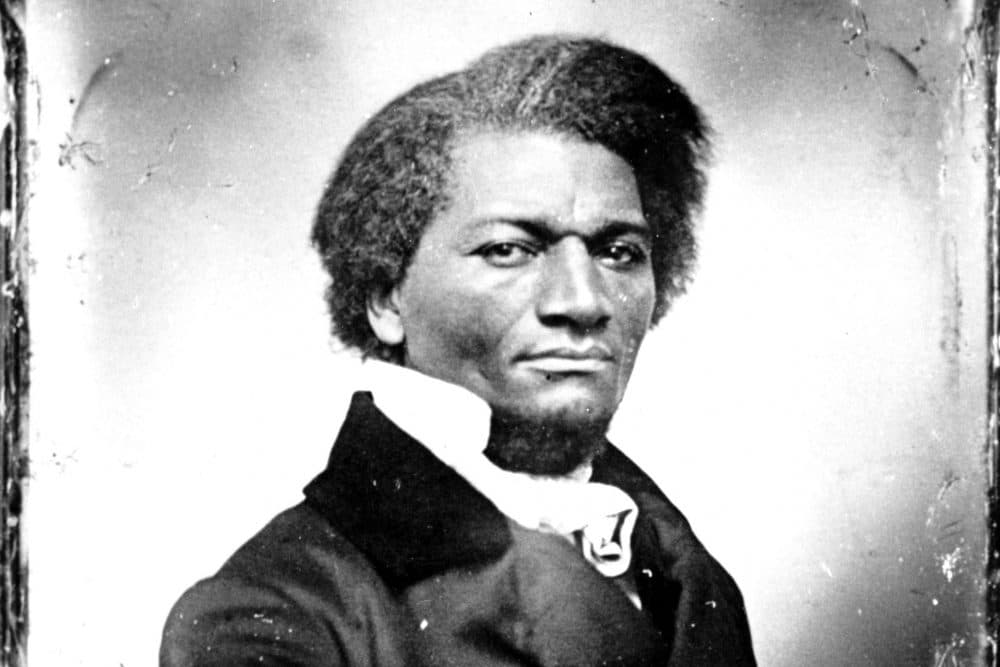
At the meeting at Conciliation Hall on September 29, 1845, learning that the famous abolitionist was in the crowd, O’Connell invited Douglass to join him on stage and to address the audience, which experience made a deep impression upon Douglass’ life.
Although Irish migrants enlisted in the US Army and fought in wars of conquest, in the US-Mexican War (1846-1848) a significant number had deserted to form the St. Patrick’s Battalion and fought on the Mexican side against the USA.
Mexico had abolished slavery in 1829 while many states in the US still upheld it, including Texas which the US had conquered earlier from Mexico.
The Young Irelanders received the Irish Tricolour from women activists of the 1848 French revolution in Paris. They supported the Second French Republic and its Abolition of slavery.
Although John Mitchell, one of the Young Irelanders’ leaders, espoused the Confederacy other Young Ireland leaders supported the Union in the American Civil War (1861-1865), including Thomas Meagher as Captain in the 69th New York Militia, later as Brigadier-General in the Union Army.
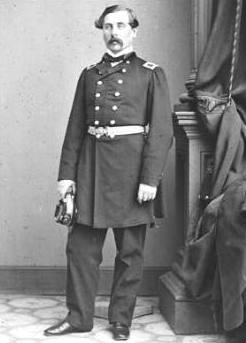
(Photo sourced: Internet)
The vast majority of Irish young males who survived emigration to the US from 1845 to 1866 fought in the Union Army in the American Civil War, which is to say on the anti-slavery side. The Fenians in the USA too, as an organisation, mostly fought on the Union side.
The Irish capitalist bourgeoisie, now the neo-colonial Gombeen class, has degraded so much, sunk so far that it cannot even stand by its own weakly progressive strands, never mind by the principles of the earlier Irish Republican bourgeoisie or those of the democratic populace today.
end.
Note: If you found this article of interest, why not register with Rebel Breeze for free, so that you will be notified by email of subsequent articles. You can de-register any time you wish.
APPENDIX
First modern abolition of slavery
Vermont Republic (later a State in the USA) 1777
Second
Republic of France 1794 but reinstated briefly by Napoleon 1802
Third
Haiti Revolution and Independence (1791), 1804.
Fourth
Mexican Republic, 1810-1829
Fifth
UK 1833/ 34 (but the UK undermined the US Union during the American Civil War by building warships for the Confederacy, contraband smuggling and raids from Canada. See also: https://en.wikipedia.org/wiki/Trent_Affair)
Sixth
USA 1865 at end of American Civil War
FOOTNOTES
1https://digitallibrary.un.org/record/4106660
2Ibid.
3https://www.oireachtas.ie/ga/debates/question/2026-04-14/284/ Written response by Minister for Foreign Affairs to Eoin Ó Broin TD.
4https://www.youtube.com/watch?v=oOsHlDbKC2s
5Unlike the case of the imported black slaves, their slave status continuing on to their children if occurred at all, would have been rare unless of course the children were visibly part-African.
SOURCES
2026-03-25 UN General Assembly Resolution on the Declaration of the Trafficking of Enslaved Africans and Racialized Chattel Enslavement of Africans as the Gravest Crime Against Humanity: https://digitallibrary.un.org/record/4106660
Oireachtas question following Ireland’s abstention: https://www.oireachtas.ie/ga/debates/question/2026-04-14/284/

