Diarmuid Breatnach
(Reading time: 5 mins.)
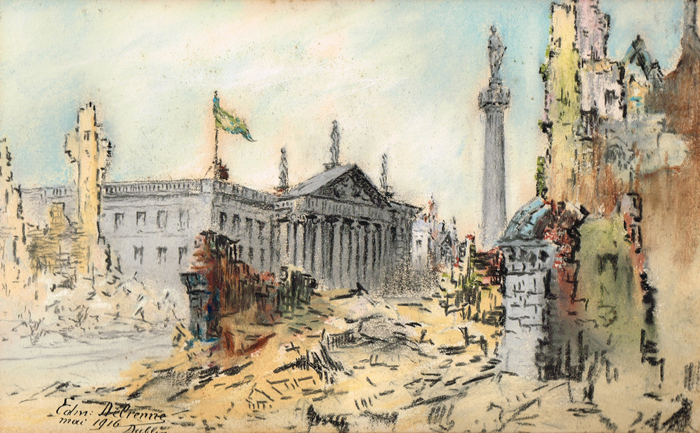
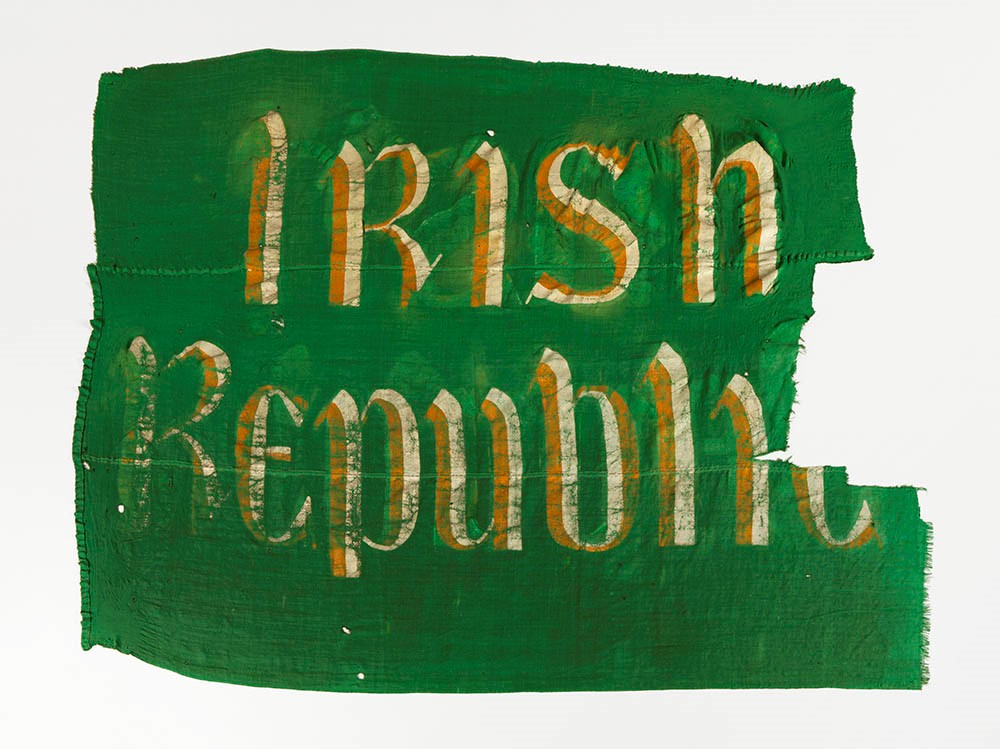
It was an Irish Argentinian who erected the “Irish Republic” flag over Dublin’s General Post Office during the 1916 Easter rising: Eamon Bulfin, born in Buenos Aires on 22 September 1892.
The flag in question was painted by Theobald Wolfe Tone Fitzgerald in the home of Constance Markievicz (1868-1927)1 with the words “Irish Republic” in gold or yellow, edged with white on material of a green curtain or bed-covering.
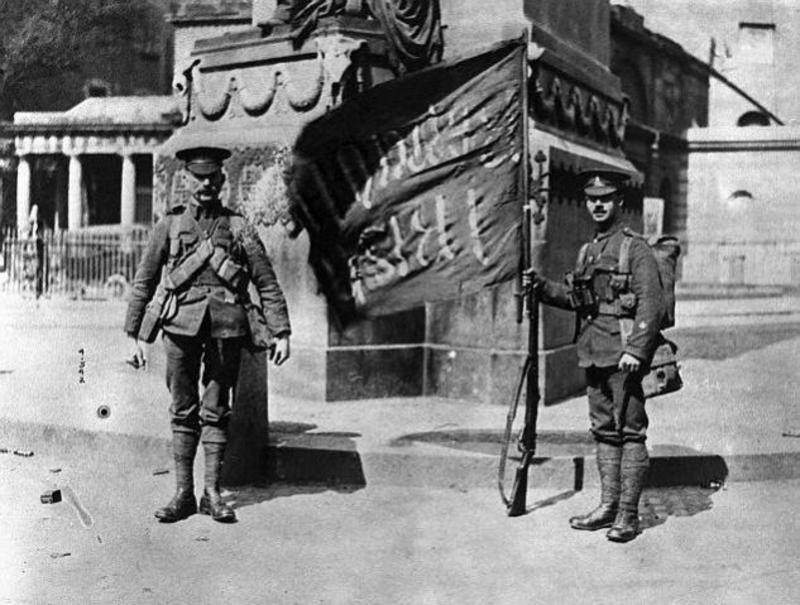
This was the flag later triumphantly displayed upside down by the British in front of the Parnell Monument (of which photographs may be found by search of the Internet).
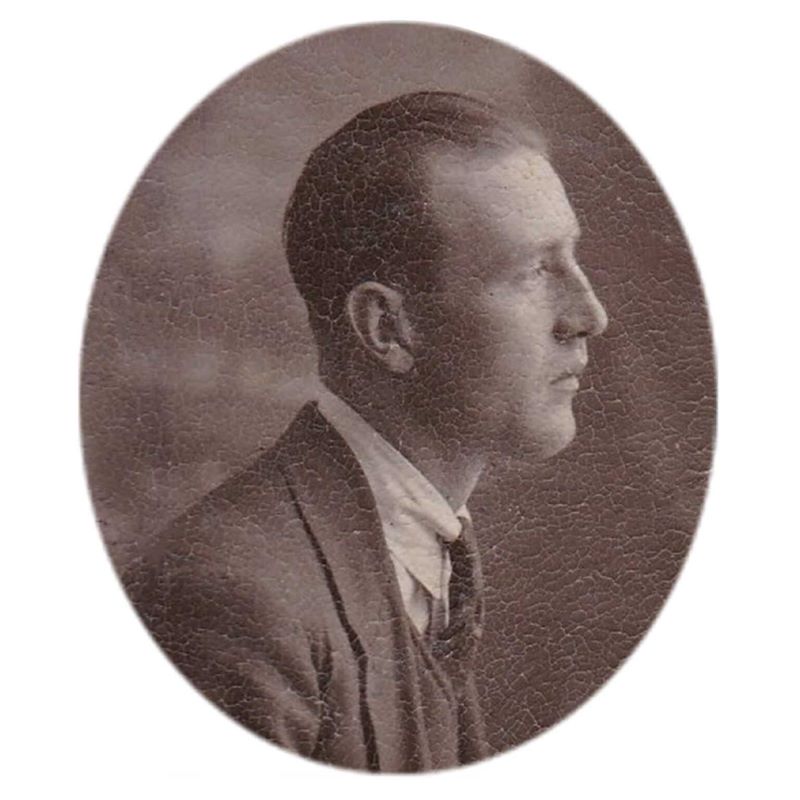

Eamon was the son of William Bulfin (1864-1910) from Birr, King’s County (now Co. Offaly), who emigrated to Argentina at the age of 20 and was a writer and journalist who became editor and proprietor of ‘The Southern Cross’ newspaper. William also helped finance Pádraig Pearse’s Scoil Éanna (St. Enda’s School) which opened in September, 1908.
Bulfin returned to Ireland in 1909 with his wife, Anne O’Rourke, and their children Eamon and Catalina. William’s death in 1910 was a blow to his friend Arthur Griffith and the efforts to launch a Sinn Féin2 daily newspaper.
Eamon was enrolled in St Thomas Aquinas College, Newbridge, before attending St Enda’s School (Scoil Éanna) in Cullenswood, Rathmines, from September 1908 at the age of 17.
He impressed the headmaster and school founder, Patrick Pearse, who noted his aptitude for Irish, French and English,3 though also that he was weak at mathematics.
Bulfin enthusiastically engaged with the ethos of the school, acting in dramas, contributing short stories to the school review, An Macaomh, and captaining the St Enda’s football team in 1909–10.
He was enrolled as a student at St Enda’s until 1910 but remained as a boarder at its new location in Rathfarnham; he became close to the Pearse family. Eamon enrolled in the National University of Ireland in 1911 to study for a science degree.
While at university Bulfin won both Sigerson and Fitzgibbon cups (in football and hurling respectively) on a number of occasions, captaining the National University of Ireland (NUI) football team that won the Sigerson Cup in 1915.
In his 20th year Eamon joined the Irish Republican Brotherhood, being sworn in by Arthur O’Connor and, a year later, in 1913 joined E Company, Fourth Battalion (Rathfarnham) of the newly-formed Irish Volunteers
By 1915 he was involved in organising the volunteers in Dublin and Co. Meath, and in manufacturing munitions and explosives in St Enda’s, which activities continued up to the Easter rising, just prior to which he helped Kathleen Lynn transport these weapons to Liberty Hall.
Bulfin was promoted to the headquarters staff of the volunteers and, mobilised for the 1916 Rising, was under Pearse’s personal command and stationed at the GPO, where he hoisted the “Irish Republic” flag on the roof at the corner with Princes Street.
After the surrender in Moore Street, Eamon Bulfin, as with nearly 100 insurgents was sentenced to death by British military court martial but most sentences (excepting the 15 shot by firing squads in the following days)4 were commuted to periods of prison incarceration in England and Wales.
On March 21, 1917, Eamon Bulfin was deported from jail under Britain’s Aliens Restriction Act of 1914.
The Argentine Government did not want to anger the British Empire, with whom they were already having problems, not the least with their long-standing argument over the sovereignty of Las Malvinas/Falklands.They therefore arrested Eamon Bulfin when he arrived in Buenos Aires and sentenced him to jail for leaving Argentina for the purpose of ‘deserting from military service’.
As Eamon had been a schoolboy when he and his family left for Ireland, the charge was an excuse for the authorities but suspicion of being a communist, which the British gave for his deportation might have been the real reason.
He was conscripted into the Argentine military and served in the army before transferring to the navy, being released after ten months as his mother was a widow, which qualified him for an exemption from military service.
When Eamon Bulfin was released in 1919, the General Election in Ireland had resulted in an overwhelming victory for Sinn Féin5 which, in accordance with their manifesto, made a Unilateral Declaration of Independence declaring Ireland a republic and set up a parliament in Dublin.
The President of the Irish Republic, Eamon de Valéra wrote to Bulfin in May appointing him the official representative to Argentina. As Irish Consul, Bulfin was to “inaugurate direct trade between Ireland and the Argentine Republic… to co-ordinate Irish opinion in the Argentine, and to bring it into the Irish demand for a republic.”6
Bulfin began work, establishing close contacts with Argentine government officials, Irish Argentine leaders and he launched an Irish Fund to help the cause.
In 1920, during the county council elections, Eamon Bulfin was nominated in his absence for a seat on King’s County Council. He was not only elected but appointed Chairman of the council.
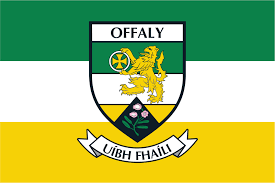
One of the first things the new Council did was to agree that the county’s name be returned to the region’s ancient Irish form of Co. Uí Fáille (anglicised as Offaly). Meetings were conducted with the Chairman’s seat in the council chamber left empty and with a Tricolour draped across it.
In 1922 Eamon Bulfin was finally allowed to return to Ireland where he set up home in his father’s native Derrinlough, Birr, Co. Offaly. He took the Anti-Treaty side in the Civil War and handed over 600 Stg from fund-raising in Argentina.
However the killing of Michael Collins affected him deeply and he stayed out of the Republican forces, telling them that he had refused an officer’s post in the Free State’s National (sic) Army.
On 16 February 1927 Eamon married Nora Brick (Nóra Ní Bríc) of Tralee, a former member of Cumann na mBan, in an Irish language ceremony in Drumcondra, Dublin (his occupation was recorded as a farmer). They had four children: Edward, Jeanne, Blanaid and Michael.
Eamon Bulfin died of a cerebral haemorrhage in the Meath Hospital, Dublin, on 24 December 1968, and was buried in Eglish Cemetery, Co. Offaly.
His sister, Catalina, also born in Buenos Aires in 1901, had become secretary to Austin Stack (1880-1929). Stack was elected to the Dáil (32-County Irish Parliament) in 1918 and became Minister for Home Affairs from 1920-22.Stack accompanied de Valéra to London for the initial Truce talks but became a leading opponent of the terms agreed by Collins.
Catalina Bulfin married Seán MacBride (1904-1988), born in Paris and his first language French. Sean was the son of John MacBride, executed by the British in 1916 and of Maude Gonne.
Seán McBride is the only Nobel Peace Laureate to have also won the Lenin Prize; he was former IRA Chief of Staff (1936-1937), Irish Minister for External Affairs (1948–‘52) and Secretary of the International Commission of Jurists.
MacBride was a founder member of Amnesty International and Assistant General Secretary of the United Nations. He survived Catalina MacBride by 12 years after she died in 1976, her remains being buried in Glasnevin Cemetery, Dublin. Some descendant of Eamon Bulfin live in Offaly to this day.
End.
FOOTNOTES
SOURCES
https://www.dib.ie/biography/bulfin-eamonn-edmond-a10114
https://en.wikipedia.org/wiki/Eamon_Bulfin
https://en.wikipedia.org/wiki/List_of_flags_of_Ireland
1Irish politician, revolutionary, nationalist, suffragist, socialist, the first woman elected to the Westminster Parliament, Markievicz was elected Minister for Labour in the First Dáil, becoming the first female cabinet minister in Europe. She served as a Teachta Dála for the Dublin South constituency from 1921 to 1922 and 1923 to 1927. She was a Member of Parliament (MP) for Dublin St Patrick’s from 1918 to 1922.
A founding member of Fianna Éireann, Cumann na mBan and the Irish Citizen Army, Markievicz took part in the 1916 Easter Rising in, when Irish republicans attempted to end British rule and establish an Irish Republic.
2The Sinn Féin party at the time was an Irish nationalist one advocating a dual monarchy, Irish and British.
3And no doubt Spanish too, having been reared in Argentina, a language acquisition that probably helped with the acquisition of Irish and French, which have a great number of similarities in structure.
4And the sixteenth execution was of Roger Casement, by hanging in London.
5Then a reformed and much-expanded party with a Republican constitution.
6 Kennedy, Michael and Joseph Morrison Skelly (eds). Irish Foreign Policy: 1919-1966 From Independence to Internationalism. Four Courts Press: England 2000, p.45. (Quoted in the Wikipedia entry on Eamon Bulfin)

