THE FLAG, THE PEOPLE & THE PLACE: The ‘Irish Republic’ flag

Diarmuid Breatnach
(Reading time: 5 mins.)

It was an Irish Argentinian who erected the “Irish Republic” flag over Dublin’s General Post Office during the 1916 Easter rising: Eamon Bulfin, born in Buenos Aires on 22 September 1892.

The flag in question was painted by Theobald Wolfe Tone Fitzgerald in the home of Constance Markievicz (1868-1927)1 with the words “Irish Republic” in gold or yellow, edged with white on material of a green curtain or bed-covering.

This was the flag later triumphantly displayed upside down by the British in front of the Parnell Monument (of which photographs may be found by search of the Internet).
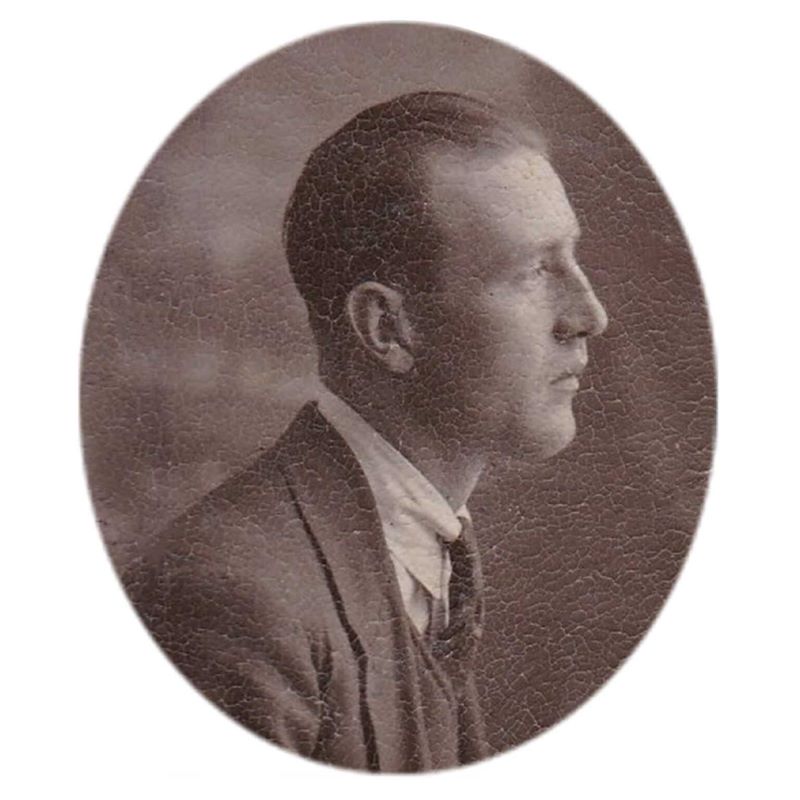
Eamon Bulfin
Colourised photo of Constance Markievicz in Irish Citizen Army uniform. The ‘Irish Republic’ flag was painted on material in her house and delivered by her to the GPO. The words declared to the world that the national liberation forces were fighting for an independent Republic. (Photo sourced: Internet)

Eamon was the son of William Bulfin (1864-1910) from Birr, King’s County (now Co. Offaly), who emigrated to Argentina at the age of 20 and was a writer and journalist who became editor and proprietor of ‘The Southern Cross’ newspaper. William also helped finance Pádraig Pearse’s Scoil Éanna (St. Enda’s School) which opened in September, 1908.

Bulfin returned to Ireland in 1909 with his wife, Anne O’Rourke, and their children Eamon and Catalina. William’s death in 1910 was a blow to his friend Arthur Griffith and the efforts to launch a Sinn Féin2 daily newspaper.

Eamon was enrolled in St Thomas Aquinas College, Newbridge, before attending St Enda’s School (Scoil Éanna) in Cullenswood, Rathmines, from September 1908 at the age of 17.

He impressed the headmaster and school founder, Patrick Pearse, who noted his aptitude for Irish, French and English,3 though also that he was weak at mathematics.

Bulfin enthusiastically engaged with the ethos of the school, acting in dramas, contributing short stories to the school review, An Macaomh, and captaining the St Enda’s football team in 1909–10.

He was enrolled as a student at St Enda’s until 1910 but remained as a boarder at its new location in Rathfarnham; he became close to the Pearse family. Eamon enrolled in the National University of Ireland in 1911 to study for a science degree.

While at university Bulfin won both Sigerson and Fitzgibbon cups (in football and hurling respectively) on a number of occasions, captaining the National University of Ireland (NUI) football team that won the Sigerson Cup in 1915.

In his 20th year Eamon joined the Irish Republican Brotherhood, being sworn in by Arthur O’Connor and, a year later, in 1913 joined E Company, Fourth Battalion (Rathfarnham) of the newly-formed Irish Volunteers

By 1915 he was involved in organising the volunteers in Dublin and Co. Meath, and in manufacturing munitions and explosives in St Enda’s, which activities continued up to the Easter rising, just prior to which he helped Kathleen Lynn  transport these weapons to Liberty Hall.

Bulfin was promoted to the headquarters staff of the volunteers and, mobilised for the 1916 Rising, was under Pearse’s personal command and stationed at the GPO, where he hoisted the “Irish Republic” flag on the roof at the corner with Princes Street.
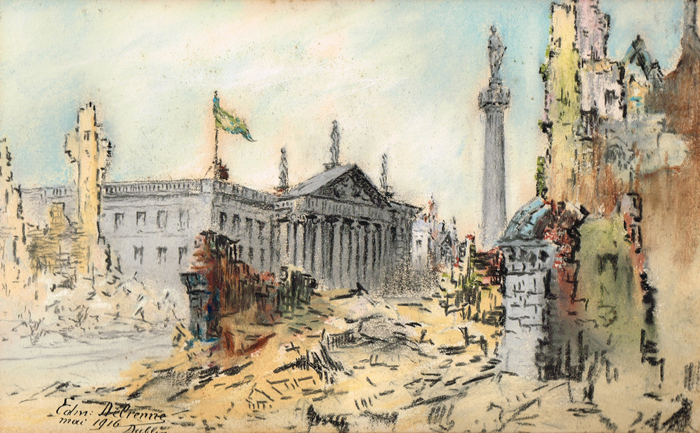
1916 Artwork in pastels by Edmond Delrenne, a Belgian refugee who had arrived in Ireland in 1914. drew and coloured the ‘Irish Republic’ flag on the GPO (centre picture). The painting also shows Nelson’s Column, which was blown up in 1966. (Artwork source: Whyte’s)

After the surrender in Moore Street, Eamon Bulfin, as with nearly 100 insurgents was sentenced to death by British military court martial but most sentences (excepting the 15 shot by firing squads in the following days)4 were commuted to periods of prison incarceration in England and Wales.

On March 21, 1917, Eamon Bulfin was deported from jail under Britain’s Aliens Restriction Act of 1914.

The Argentine Government did not want to anger the British Empire, with whom they were already having problems, not the least with their long-standing argument over the sovereignty of The Malvinas/Falklands.They therefore arrested Eamon Bulfin when he arrived in Buenos Aires and sentenced him to jail for leaving Argentina for the purpose of ‘deserting from military service’.

As Eamon had been a schoolboy when he and his family left for Ireland, the charge was an excuse for the authorities but suspicion of being a communist, which the British gave for his deportation might have been the real reason.

He was conscripted into the Argentine military and served in the army before transferring to the navy, being released after ten months as his mother was a widow, which qualified him for an exemption from military service.
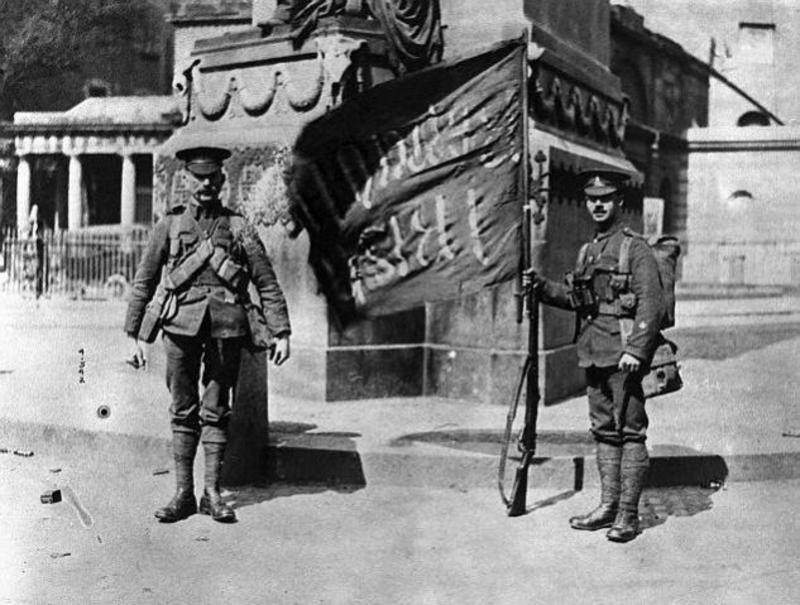
One of two photos of the ‘Irish Republic’ flag being displayed upside down by British soldiers, symbolising the defeat of those who flew it. The site is the base of Parnell’s Monument in Parnell Street with the Rotunda in the background. (Source: Internet)

When Eamon Bulfin was released in 1919, the General Election in Ireland had resulted in an overwhelming victory for Sinn Féin5 which, in accordance with their manifesto, made a Unilateral Declaration of Independence declaring Ireland a republic and set up a parliament in Dublin.

The President of the Irish Republic, Eamon de Valéra wrote to Bulfin in May appointing him the official representative to Argentina.As Irish Consul, Bulfin was to “inaugurate direct trade between Ireland and the Argentine Republic… to co-ordinate Irish opinion in the Argentine, and to bring it into the Irish demand for a republic.”6

Bulfin began work, establishing close contacts with Argentine government officials, Irish Argentine leaders and he launched an Irish Fund to help the cause.

In 1920, during the county council elections, Eamon Bulfin was nominated in his absence for a seat on King’s County Council. He was not only elected but appointed Chairman of the council.

One of the first things the new Council did was to agree that the county’s name be returned to the region’s ancient Irish form of Co. Uí Fáille (anglicised as Offaly). Meetings were conducted with the Chairman’s seat in the council chamber left empty and with a Tricolour draped across it.
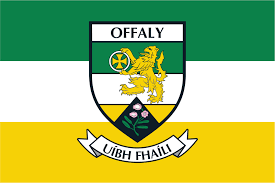
In 1922 Eamon Bulfin was finally allowed to return to Ireland where he set up home in his father’s native Derrinlough, Birr, Co. Offaly. He took the Anti-Treaty side in the Civil War and handed over 600 Stg from fund-raising in Argentina.

However the killing of Michael Collins affected him deeply and he stayed out of the Republican forces, telling them that he had refused an officer’s post in the Free State’s National (sic) Army.

On 16 February 1927 Eamon married Nora Brick (Nóra Ní Bríc) of Tralee, a former member of Cumann na mBan, in an Irish language ceremony in Drumcondra, Dublin (his occupation was recorded as a farmer). They had four children: Edward, Jeanne, Blanaid and Michael. 

Eamon Bulfin died of a cerebral haemorrhage in the Meath Hospital, Dublin, on 24 December 1968, and was buried in Eglish Cemetery, Co. Offaly.
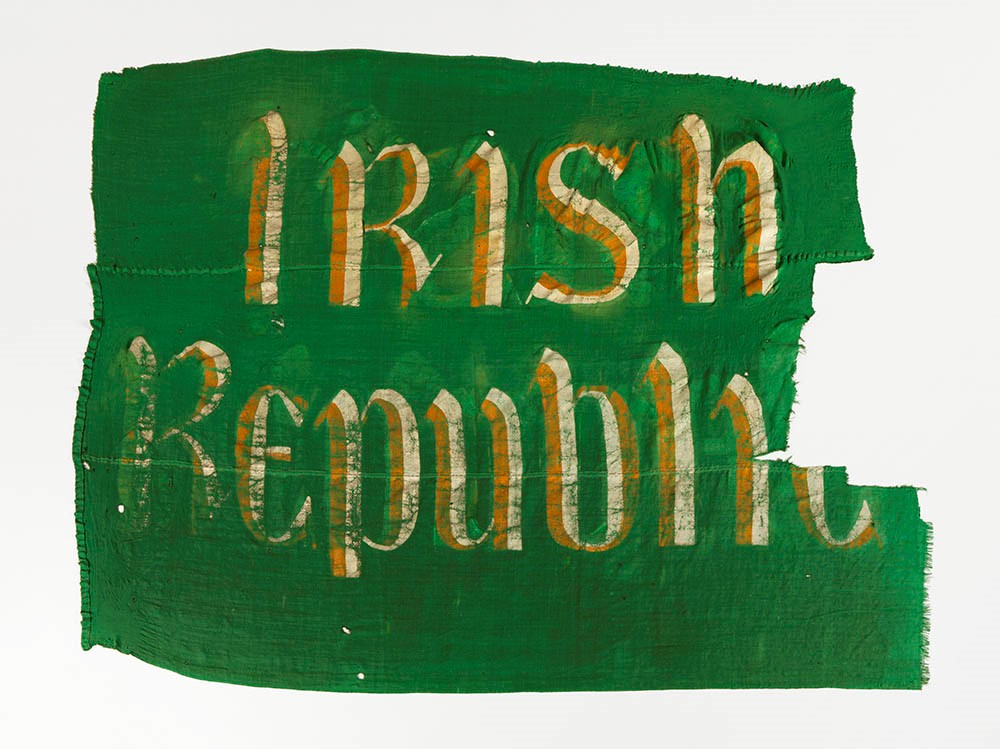
Remnant of the ‘Irish Republic’ flag in the National Museum of Ireland (Photo: NMI)

His sister, Catalina, also born in Buenos Aires in 1901, had become secretary to Austin Stack (1880-1929). Stack was elected to the Dáil (32-County Irish Parliament) in 1918 and became Minister for Home Affairs from 1920-22.Stack accompanied de Valéra to London for the initial Truce talks but became a leading opponent of the terms agreed by Collins.

Catalina Bulfin married Seán MacBride (1904-1988), born in Paris and his first language French. Sean was the son of John MacBride, executed by the British in 1916 and of Maude Gonne.

Seán McBride is the only Nobel Peace Laureate to have also won the Lenin Prize; he was former IRA Chief of Staff (1936-1937), Irish Minister for External Affairs (1948–‘52) and Secretary of the International Commission of Jurists.

MacBride was a founder member of Amnesty International and Assistant General Secretary of the United Nations. He survived Catalina MacBride by 12 years after she died in 1976, her remains being buried in Glasnevin Cemetery, Dublin.

End.

FOOTNOTES

SOURCES

https://www.dib.ie/biography/bulfin-eamonn-edmond-a10114

https://en.wikipedia.org/wiki/Eamon_Bulfin

The flag: https://www.museum.ie/en-IE/Collections-Research/Collection/Resilience/Artefact/Test-4/8961f46b-5885-4aea-af9d-63894e2b76b4

https://en.wikipedia.org/wiki/List_of_flags_of_Ireland

https://www.irishtimes.com/news/ireland/irish-news/rising-from-the-ashes-irish-republic-flag-on-display-1.2573071

1Irish politicianrevolutionarynationalistsuffragistsocialist, the first woman elected to the Westminster Parliament, Markievicz was elected Minister for Labour in the First Dáil, becoming the first female cabinet minister in Europe. She served as a Teachta Dála for the Dublin South constituency from 1921 to 1922 and 1923 to 1927. She was a Member of Parliament (MP) for Dublin St Patrick’s from 1918 to 1922.

A founding member of Fianna ÉireannCumann na mBan and the Irish Citizen Army, Markievicz took part in the 1916 Easter Rising in, when Irish republicans attempted to end British rule and establish an Irish Republic.

2The Sinn Féin party at the time was an Irish nationalist one advocating a dual monarchy, Irish and British.

3And no doubt Spanish too, having been reared in Argentina, a language acquisition that probably helped with the acquisition of Irish and French, which have a great number of similarities in structure.

4And the sixteenth execution was of Roger Casement, by hanging in London.

5Then a reformed and much-expanded party with a Republican constitution.

6  Kennedy, Michael and Joseph Morrison Skelly (eds). Irish Foreign Policy: 1919-1966 From Independence to Internationalism. Four Courts Press: England 2000, p.45. (Quoted in the Wikipedia entry on Eamon Bulfin)

LEGACY of ARGENTINIAN STATE FASCISM

A heart-breaking story with courage and a heart-warming ending.

Report by Luciana Bertoia from Pagina 12 published through arrangement with Publico.es
Translation by D.Breatnach

The last time Julio Santucho saw his wife, Cristina Navajas, was on June 14, 1976. Appointed as head of international policy for the Revolutionary Workers’ Party (Partido Revolucionario de los Trabajadores), he had to leave Argentina for six months.

They had been married for almost five years then and had two children: Camilo, three years old, and Miguel, who had not yet turned one. The three accompanied him to the Retiro terminal, where he took a bus to Sao Paulo and then arrived in Rome.

In the terminal, Cristina had Miguel in her arms and Camilo by the hand. When saying goodbye to him, she insisted on a promise:

I only ask you one thing. If something happens to me, you have to take the boys with you. They shouldn’t stay with your mom, with my mom, or with other comrades. They have to stay with you.

But, Cris, we’ve been living in hiding for a long time, and nothing has ever happened to us.

“Now it’s different,” she cut him off.

One day before a month had passed since Julio’s departure, Cristina was kidnapped by the Dictatorship. She was in the apartment at 735 Warnes Avenue, where her sister-in-law Manuela Santucho lived.

Another comrade from the PRT-ERP, Alicia D’Ambra, also lived with them. All three were kidnapped that day. The oppressors left Cristina’s two sons, Camilo and Miguel, and Manuela’s son, Diego, in the apartment.

Cristina managed to ask a neighbour to call her mother, Nélida Navajas. When the phone rang, Nélida had to ask where the boys were. For security reasons, she did not know their address.

When she arrived, she heard the screams of the two youngest, Miguel and Diego, from the street. Camilo was asleep.

Nélida found her daughter’s bag on the ground. Inside was a series of letters that she had written to Julio, waiting to receive an address to to which to send them. She had started writing the last one on Saturday, July 10, but had finished it the next day:

“Miguel is much better, he hardly coughs anymore, but he is more of a bandit and wilder every day. Cami is calmer and doesn’t give me work, the only thing is that he is getting clingy to me. He asked again which house we are going to, which house is this, etc.

Now the one who is not well is me, I do not know if I am pregnant,” she told her husband.

Julio found out about the kidnappings the next day, when he called to greet his brother-in-law on his birthday.

Refugee from Argentinian Dictatorship accompanied by a son as he attends a press conference about his reunion with another son, abducted by the regime, 43 years ago. (Photo: Enrique Garcia Medina/ EFE)

That day he spoke ten times with his mother-in-law. He would not hesitate to return to Buenos Aires to collect his children, but the PRT sent two comrades who, pretending to be a couple , took the children out and abroad to their father.

Forty-six years later, Julio managed to meet his third child, the baby that Cristina had while she was kidnapped in the Pozo de Banfield, after having gone through Coordinación Federal and Orletti Automotive (places of detention of the fascist regime – Trans.).

He is the 133rd grandchild found by the Grandmothers of the Plaza de Mayo (group of women who began the campaign to trace those made missing by the fascist regime – Trans.)

In an interview with Página 12, Julio Santucho relates how he was reunited with his youngest son, now a 47-year-old adult.

How was the search?

The main heroine in this story is Cristina, who for eight or nine months was pregnant in the most inhumane conditions: mistreatment, torture, bad food. She put up with all of this with willpower and finally gave birth to our son.

My son began to question his (new family – Trans.) relationship based on references from those close to the family. A sister who lived with him for 20 years told him “these are not your parents.”

From the way he was treated by the appropriator who raised him, he came to realise that he was not his father.

In 2019, he began to search, although stopped during the pandemic and then resumed. He had a birth certificate from another province. Finally this year he managed to have his DNA tested.

We searched but we had no approximation or probability of discovering my son. It was an exceptional case: he was born in the Pozo de Banfield, but police doctor Jorge Bergés did not sign the certificate. He surprised us.

What is it like to meet a son who is 46 years old?

It is good. The bad thing is that they took 46 years from us. It is a victory for the human rights organizations that have fought for this and it is a defeat for the dictatorship. They wanted to steal my son but I, later than ever, got him back.

My mother-in-law, Nélida Navajas, joined the Abuelas (Grandmothers’ group – Trans.) to look for her grandson. Abuelas is an irreplaceable institution, it is an enormous benefit to society because it is precisely the place where people who have doubts can recover their identity.

In July 1976, you lost much of your family and now, another July but 47 years later, you have your son back.

You strike a chord. On July 13, Cristina, Manuela and Alicia were kidnapped. She was a comrade that I also knew because she worked in the party schools.

On the 19th, six days later, they killed my brother “Roby” (Mario Roberto Santucho, leader of the PRT-ERP), and later my brother Carlos.

It was a tragic week for the family. We are not better-off than others. All the 30,000 disappeared were brave, generous and devoted themselves to a fight for the well-being of society and humanity.

What could he know about Cristina during her captivity?

There are testimonies like that of Adriana Calvo. The Santuchos were visited by all the mothers that were in the Pozo de Banfield. Adriana asked to spend a day with them.

She had her baby in her arms and so as not to worry her Cristina did not tell her that she had had a child and that it had been taken from her.

Adriana, afterwards, spoke at the trial of Cristina’s tremendous generosity in not telling her anything so she wouldn’t worry about her because they could take the baby away from her. Do you realise how far thinking about the welfare of others went?

They were screwed. But they told her: “We are Santucho, we don’t have any possibility of leaving, but they are going to release you.”

And then there is that scene that Adriana recounts: when the officers arrived, all the women made a human wall – led by Manuela, Cristina and Alicia – and the men had to leave without being able to take their baby from her.

They were in a concentration camp. They knew they could shoot them all at that moment.

And now how is the reunion going?

Some ask me about the appropriator of my son, all I say is that I hope that Justice intervenes. For now, this is all like walking on clouds. We talk to my son every day, we see each other often. Now we have the commitment to make a video call to my granddaughters. Let’s go little by little.

Joy is infinite. Besides, we have time. I am 78 years old. My father died at 89. I have a brother in Santiago del Estero who is 101, another who is 96. If they don’t kill us Santucho, we live a long time. So I look forward to enjoying my son for a few more years.

End.

ADDITIONAL NOTES by D. Breatnach

The Argentinian dictatorship lasted from 1976 to 1983 and apart from banning dissenting newspapers and organisations, detained, tortured and killed thousands.

But not only that, very young children and babies were abducted and given to couples who supported the regime to raise as their own. This was also done by other dictatorships, including the Spanish Franco regime of four decades.

In a time when a week-old military coup in Niger is threatened with invasion by France and by some western-allied African states, it is well to remember how other military dictatorships have been viewed by western states.

The lack of democratic elections and opposition parties did not matter to the western states who in fact fully supported the Argentinian and many other coups and dictatorships.

The military dictatorship of Argentina only became a problem to the UK’s ruling class when Argentina’s military invaded the British colony of the Malvinas/ Falkland Islands in 1982, the same year that the USA stopped supporting the junta for the first time.

SOURCE MAIN STORY

https://www.publico.es/internacional/julio-santucho-dictadura-me-quiso-robar-mi-hijo-recupere.html?

SHOT A FEW HOURS BEFORE THE POET GARCIA LORCA – GALLICIAN PATRIOT ALEXANDRE BÓVEDA

(Translated from the article in Castillian by Alejandro Torrús [Publico 01/24/2021] by Diarmuid Breatnach)

(Reading time text: 7 mins.)

The descendants of Alexandre Bóveda join the ‘Argentine complaint’ together with the grandchildren of Amancio Caamaño, president of the Pontevedra County Council; and Ramiro Paz, editor. The three were murdered in 1936 in Galicia by Franco’s forces. Around 5,000 Galicians were shot by the Franco regime.

– Provided by the family

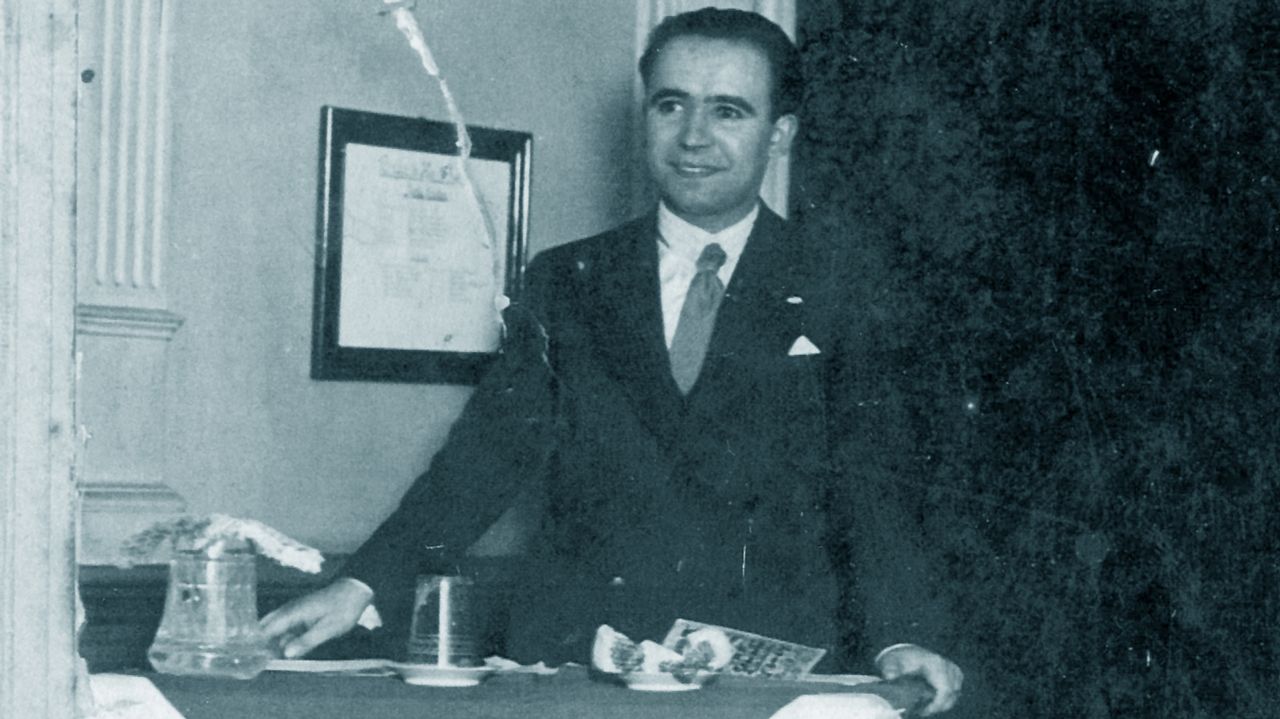
Alexandre Bóveda in a conferenece in Vigo (Photo supplied by the family)

They say that after the body of Alexandre Bóveda fell to the ground, shot by firing squad, one of his friends approached and placed a small Galician flag in his jacket pocket, near a heart that no longer beat. Thus was the last will fulfilled of the man that Castelao himself had described as the engine of Galicianism. It was August 17, 1936 and Bóveda was murdered after a farce of a trial that sentenced him to die for treason. Just a few hours later, at dawn on August 18, 1936, at the other end of the peninsula, the poet García Lorca was also murdered by the Francoists. In just a few hours, in two of the most remote territories of the country, two elevated minds of the country were murdered. Point blank. One after a sham called a trial. Another, after being arrested as a criminal. Two elevated brains, two unique sensibilities, and two ways of fighting, fighting for a freer, more democratic and more plural country fell by force of arms. The country was entering the long Francoist night.

The figure of Alexandre Bóveda is so spectacular that it is difficult to summarize in just a few paragraphs. He was one of the drafters of the Statute of Galicia of the Second Republic (which would never come into force due to the Civil War); he was the soul and “motor” of the Galician Party; and, furthermore, he had participated in the founding of the first savings bank in Galicia. The list, in a telephone conversation with his grandson, Valentín García Bóveda, is practically endless. To the political successes must be added a good number of professional successes, which led him to participate in the founding of Campsa, the Hacienda de Pontevedra or to expand the funds of the Pontevedra Council using only the existing law. He was only 33 years old.

The focus of his political struggle, however, was Galicia. He was convinced that the economic and social backwardness of the country was due to the centralism of a State that squeezed every last drop of sweat from the workers of the periphery. His love for the land, in fact, was taken to its ultimate consequences and in front of the same court that sentenced him to death he declared: “My natural homeland is Galicia. I love it fervently, I would never betray it. If the court believes that for this love the heavy death penalty must be applied to mey, I will receive it as one more sacrifice for her. “

So it was. Bóveda stood in the February 1936 elections to Parliament in the Ourense constituency, competing against Calvo Sotelo, who would be finally elected. Months later, Calvo Sotelo would be murdered in Madrid, while, just a few weeks later, Bóveda would be murdered in Galicia. He face it tied to a pine tree, in the mount of A Caeira, in Pontevedra, some bark of which is still kept by the family.

Pieces of bark from the pine tree against which Bóveda was executed (Photo supplied by the family)

His grandson says that he could have escaped, that he was warned on several occasions of the danger he was running, but that Bóveda answered all those warnings with the words he recited in front of the court. “I wanted to do good, I worked for Pontevedra, for Galicia and for the Republic and the confused judgment of men (which I forgive and all of you must forgive) condemns me,” he wrote in a letter to his brother hours before being shot.

“My grandfather was a marvel of the economy and aa elevated brain. Everything he achieved within only 33 years is impressive, which was at the age at which he was killed. I have always wondered what would have happened to this country if people so important such as Bóveda, like Lorca and like so many others who were shot or had to go into exile by Francoism could have lived another 30 years … Surely now we would live in a different country”, explains Valentín García Bóveda, grandson of the political victim and Vice-President of the foundation that bears his name.

Now, almost 85 years after this murder, Valentín takes over the family struggle to reestablish the memory of Alexandre Bóveda and has filed a complaint with the Argentine Judicial system. In doing so, he joins the nearly 1,000 legal actions that the victims of the Franco regime have presented in the last ten years before Judge María Servini de Cubria in Federal Court No.1 of Argentina.

“I go to the Department of Justice of Argentina with several objectives. On the one hand, to reestablish the memory of my grandfather. I do it for him, but also for my grandmother, who had to die seeing how, legally, her husband was listed as being shot for treason to the homeland. I want that sentence to be judicially annulled. On the other hand, I also go to Argentina to fight against this amnesiac democracy that was based on the foundations of oblivion and injustice,” explains García Bóveda, who hopes that Argentina can declare the crimes of the Franco regime to be crimes against humanity.

The case of Alexandre Bóveda is not the only one to reach the Servini court recently. The descendants of the Republican doctor and politician, president of the Pontevedra County Council in May 1931, Amancio Caamaño, and of the printer and political leader Ramiro Paz, have also filed a complaint. Begoña Caamaño, Amancio’s granddaughter, explained to Público that her grandfather was arrested a week after the Francoist coup and shot on November 12, 1936.

“I could never agree with the Amnesty Law or with the Historical Memory Law. In this country the wounds were never closed even though others accuse us of wanting to open them. The Francoist hierarchy passed to democracy without being held accountable. The Police that were torturing was the new democratic police. And for this reason neither my family nor I have been able to sue in Spain about the execution of my grandfather and we have decided to go to Argentina. All I am looking for is justice and for the sentence against my grandfather to be annulled “, Begoña Caamaño explains.

That fateful November 12, 1936, the Francoist forces executed Caamano and Paz in A Caeria, but also doctors Telmo Bernárdez Santomé and Luis Poza Pastrana; the teachers Paulo Novás Souto, Germán Adrio Mañá and Benigno Rey Pavón; the lawyer José Adrio Barreiro; journalist Víctor Casas Rey; and Captain Juan Rico González. Their murders, however, were only a few more drops of pain in the midst of the slaughter that Franco’s forces were carrying out. The repression ended in just a few years with the lives of 4,699 Galician citizens. Seven out of ten (3,233) were executed in the so-called Francoist “strolls”1. The rest, 1,466, were killed by the carrying out of a death sentence, according to data from the Nomes e Voces (Names and Voices) project. A veritable extermination in an area where the war lasted no more than a few days. In the first months of the Civil War alone, the four civil Governors, the Mayors of five of the seven Galician cities and of the 26 most important towns and the highest Galician military authorities who opposed the coup were all murdered in Galicia.

However, selective or indiscriminate murder was not the only means of repression. With the aim of destroying a civil, plural and organized society, 1,597 citizens were sentenced to life imprisonment and 1,981 were sentenced to various shorter prison terms. In total, 28,234 Galician victims suffered some type of judicial persecution by the new military authorities.

The lawsuits of Bóveda, Caamaño and Paz are not the only ones that have reached Argentina for Francoist crimes perpetrated in Galicia. The “Argentine complaint” was born, in fact, after the complaint filed by a Galician citizen, Darío Rivas, for the murder of his father, Severino, Republican mayor of Castro de Rei and the first of the executed exhumed in Galicia.

Doctor and Politician Santiago Caamaño

Likewise, in 2014, Público reported on a good number of complaints filed about crimes committed in Galicia. Among them was the case of the murders of Manuel Díaz González, a doctor from O Incio (Lugo) and the first Mayor of the Republic in that town, and his brother José Díaz, elected in the last elections as the new Mayor of the municipality. His granddaughter Esther García then explained how her grandfather had been dragged for several kilometers tied by the tail of a horse to the municipality to be murdered where he had been Mayor.

The repression in Galicia also led to a long exile to Latin American countries. In 1942 Galician exiles in Argentina established August 17, the day of the assassination of Alexandre Bóveda, as ‘Día da Galiza Mártir’ (Galician Martyr Day) to commemorate a unique generation that was wiped out by the weapons of Francoism.

Descendants of victims at the Argentine Consulate in Vigo (Photo supplied by the Pontevedra Council)

COMMENT:

The dictator and leader of the coup General Franco was himself a Gallego, a Galician. So was Manuel Fraga Ibibarne (despite the Basque second surname), Minister of propaganda during the Franco Dictatorship and director of repression during the Transition years after Franco’s death (“The streets are mine” — yet claimed by some as steering the ‘democratic transition”) and founder of the Alianza Popular/ Partido Popular party. The claim of fascists to uphold and defend nationalism was exposed as a lie in so many examples in history but very starkly indeed in the Celtic nation of Galicia. The foremost national intelligentsia of Galicia, political, cultural and law-making – those that did not flee — was wiped out by the Franco military and the fascist Falange.

Also a Gallician — an elderly Franco on a Spanish State occasion (Photo sourced: Internet)
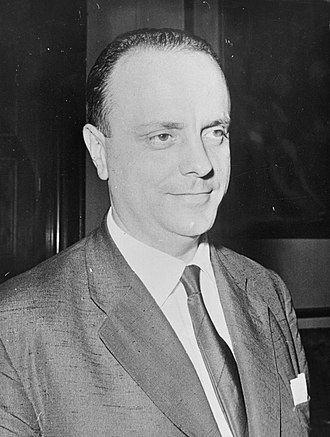
Also a Gallician, fascist Manuel Fraga, propaganda Minister and director of repression. (Photo sourced: Wikipedia)

The supporters of the military-fascist coup against the democratically-elected Popular Front Government of the Spanish State called themselves “Nationalists” and the media in much of the rest of the world did them the favour of referring to them likewise.

But it was the Spanish imperialist “nationalism” that was upheld by the coupists, one which denied the social aspirations of the population of the central “Spain” and denied the cultural, social and political aspirations of the Basque, Catalan, Galician and Asturian nations within the State and those of its colonies outside, for example the people of Western Sahara.

Today that false nationalism remains in power in the Spanish State, whether the social-democratic PSOE or the right-wing conservative PP are in government. It is supported in effect by sections of the Left as represented by the (old) CPE/ Izquierda Unida/ Podemos and by the extreme right-wing of Ciudadanos and Vox. The struggle between progressive national independentism and that centralist-imperialist bloc continues.

Diarmuid Breatnach

End.

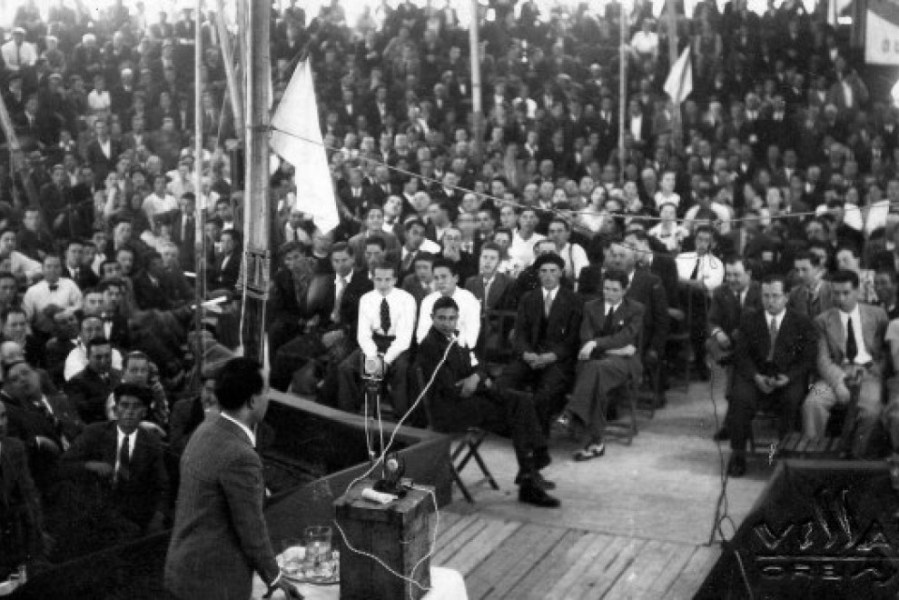
Alexandre Bóveda addressing a mass meeting in Vigo (Photo supplied by the family)

ORIGINAL IN CASTILLIAN

https://www.publico.es/politica/batalla-alexandre-boveda-martir-galleguismo-fusilado-horas-poeta-garcia-lorca.html

FOOTNOTES

1Translator: Many of those murdered by the Francoist repression were not as a result of firing squad ordered by military tribunal but, in particular by the fascist Falange, by unofficial execution which the perpetrators called “paseos” (strolls). They would collect the victims from places of detention or their homes, telling them that “We are going for a walk”.