Clive Sulish
(Reading time: 3 mins.)
300,000 unionised municipal and state-service workers struck work for one day on Wednesday 14th in pursuance of a living wage among the steadily rising cost of living. A second such day is planned for Wednesday October 21st.
This is the biggest action of its kind since the financial crisis of 2009 when the Irish Government bailed out the banking section and imposed austerity on worker’s wages and public services.
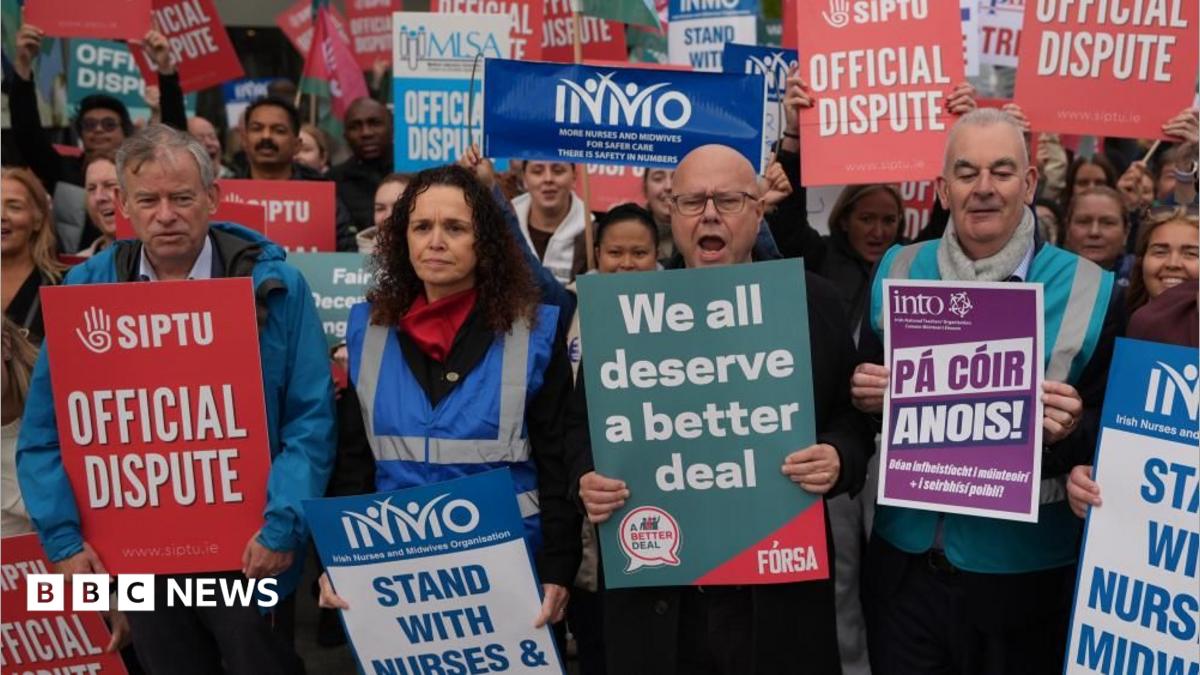
The 2024-2026 Public Service Agreement came to an end without agreement between Government and Trade Union representatives on the next stage, as the unions pointed to an effective 5%-7% loss in the purchasing power of their members’ wages due to rising cost of living.1
Workers in public health, teaching, sanitation, museums, libraries, parks and historical sites struck work with emergency cover. Not all public services participated, some being privatised or part-privatised, as for example with the telecommunication network, bus and rail passenger transport.
The strike was called by the Public Services Committee of the Irish Congress of Trade Unions (ICTU), covering 19 unions.
The main unions included Fórsa, with over 100,000 public sector members; SIPTU (75,000 public service members), the Irish Nurses and Midwives Organisation (INMO -5,000), the teachers’ unions (INTO primary level – 48,25O; ASTI and TUI, secondary/ tech 43,000) and the Unite union.
The Government, having refused the workers’ demands during earlier negotiations, tried to prevent or delay the strike by calling for further negotiations which, in the absence of any further offer, the unions naturally refused and went ahead with their industrial action according to earlier ballot.
The mood for action was overwhelming with returned ballots of over 90% of members in the high ninety percentages voting for action.2
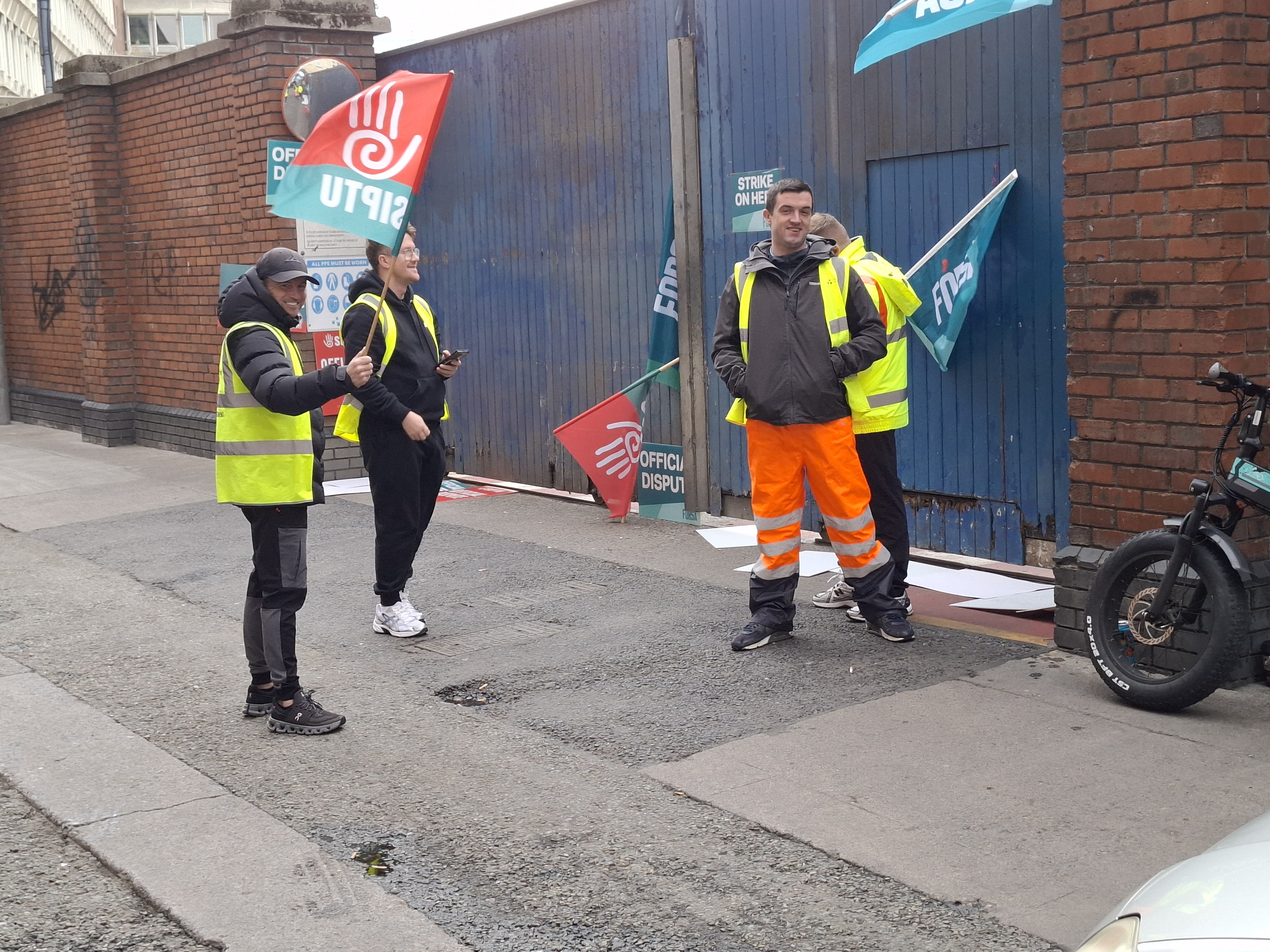
As picketers gathered outside their workplaces, the air rang to the horns of solidarity blowing from passing traffic — private, taxis, firms and buses. According to reports, while they remained silent outside Mountjoy Jail, the horns burst into sound while passing the nearby Mater Hospital.3
Some other protests in the city, such as for Palestine solidarity, continued but took on added features of workers’ solidarity. At the weekly Dubs for Palestine solidarity rally 12 noon to 1pm outside Leinster House, numerous supporting references were made to the workers’ actions.
Diarmuid Breatnach sang James Connolly’s song ‘Be Moderate’ there while Jimi Cullen sang the ‘Power to People/ Workers’ chant, both acapella with the audience joining in.4
SOCIALIST NOTES
For tens of thousands of workers, this will have been their first experience of a strike. Though many Irish migrants abroad built unions and struck, in Ireland for nearly all, Irish-born and workers from abroad will also for the first time be taking industrial action together.
Union density among workers is estimated at 22%-25% in the Irish state, with the private sector by far the lowest, a huge drop from the around 60% of the early 1980s, blamed on trade unions entering into decades of Social Partnership with Government and employers’ representatives.
While socialists celebrate the workers’ actions they are aware that trade union gains in wages are always temporary and will always fall behind the average costs of living – and even further behind the more rapidly rising costs of daily/ weekly essentials such as food and clothing.
Revolutionary socialists welcome the worker solidarity that trade unions tend to impart, in addition to resistance to impoverishment and fighting for safer and healthier working conditions but also know that trade union consciousness alone does not aim for socialism but for social democracy.5
The struggle for a shorter working week has advanced little since the fight for the 8-hour day began on May 1st 1866 across the USA, with the Chicago police Haymarket Massacre on May 4th followed by seven death sentences and a 15-year jail sentence of workers’ leaders.
Though the working week for most workers has been reduced over years of struggle from six or even seven days to five, 8 hours remain the contracted lot for many, leaving little time and energy for family, socialisation, study and training, especially with hours travelling for many.
While trade union militancy in Ireland now may be a passing phase it may also presage a return to (or even a surpassing) of the Irish trade union militancy of the past, prior to the Social Partnership and such union activity is considered necessary to achieve a successful social revolution.
End.
Note: If you found this article of interest, why not register with Rebel Breeze for free, so that you will be notified by email of subsequent articles. You can de-register any time you wish.
FOOTNOTES
1For examples, food, heating, transport fuel prices, along with home rental and purchasing costs. Some saw the gap widen to 15% https://www.irishtimes.com/business/work/2026/03/30/unite-trade-unions-public-sector-workers-feeling-cost-of-living-pinch/
2https://www.wsws.org/en/articles/2026/10/14/tjwd-o14.html
3Both Mountjoy Jail and the Mater Hospital are on the North Circular Road and near to each other. Prison staff had pickets out while maintaining incarceration of inmates and presumably serving meals.
4Ironic title to lyrics of one of Connolly’s entries in Songs of Freedom (New York, 1907), sometimes referred to as We Only Want the Earth. Breatnach sings it to the air of a A Nation Once Again, which arrangement he says first heard from an English Communist. The Power to the People chant is often heard on demonstrations in particular from the PBP group; Cullen added ‘Workers’. Both singers are independent political activists.
5A form of goverment under capitalist exploitation with involvement of trade unions and some social benefits.
SOURCES
https://www.facebook.com/search/top?q=f%C3%B3rsa%20trade%20union
https://www.irishexaminer.com/news/arid-41923693.html
https://www.irishtimes.com/ireland/2026/10/13/qa-who-is-going-on-strike-on-wednesday-and-why

