EAST WALL REMEMBERS ANTI-FASCIST BRIGADISTA JACK NALTY

Clive Sulish

On the 80th Anniversary of his death in the Anti-Fascist War in ‘Spain’, the East Wall History Group organised a remembrance of a local man from that dockland Irish area who was the last Irishman to die fighting in the war against Franco and Spanish Fascism. The event was attended by relatives of that Irish antifascist fighter and of another, by a cross-section of Left and Irish Republicans, including historians and by a number of elected representatives from the Dublin City Council and the Dáil (Irish Parliament).

Crowd assembling outside school before event. (Photo: D.Breatnach)

Jack Nalty was the last Irish and one of the last International Brigaders to fight and die in that war. The rest of the Brigaders, those not held as prisoners by Franco’s forces, were withdrawn soon afterwards as the indigenous anti-fascist forces fought on, losing against the Spanish military coupists with their German Nazi and Italian fascist allies.

Those commemorating Jack Nalty met at the St. Joseph’s Co-Educational School on the East Wall Road at 1pm on Sunday (23rd September) and included a cross-section of members of organisations and independent activists, socialists, republicans, communists and anarchists and other members of the local community. At the front entrance of the School a number of relatives of Jack Nalty held a banner along with a son of an Irish International Brigader and the crowd was addressed by Joe Mooney, of the East Wall History Group.

Joe Mooney speaking at start of event, relatives of International Brigaders beside him holding the banner in the colours of the Spanish Republic (Photo: D.Breatnach)

Mooney told the crowd that John Nalty came to the area at the age of six from Galway and on 31st August 1908 entered the East Wall National School on the Wharf Road. Just over thirty years later, 23rd September 1938, he would die on a Spanish battlefield, shot down in a hail of fascist bullets as he engaged in one last heroic act.

A member of the IRA during the War of Independence, Jack was a Republican, Socialist and trade unionist”, Mooney said, “representing 600 oil workers in Dublin Port. But in 1936 when the Spanish Civil War — or Anti-Fascist War as it should more accurately be called1 – began, he volunteered for the International Brigades to join the fight against European fascism. He was badly wounded and came back to Ireland, but would again go into action and was killed at the Battle of the Ebro. Having being among the first Irish volunteers to travel to Spain, he would die on their last day as they were preparing to withdraw from combat.

Nalty’s unit had been called to retreat when it was realisted that two machine-gunners had been left behind and he went back to collect them. On their retreat they were fired at and Jack Nalty was killed.

Section of crowd lined up in front of house where Jack Nalty had lived (Photo: D.Breatnach)

Mooney also asked those present to remember not only Jack Nalty but the ‘comradeship of heroes’ from Dublin’s Docklands and North Inner City – Dinny Coady, Tommy Wood and others.

The crowd then set off in a march led by a piper to East Road to unveil a memorial plaque. Across the road from Jack Nalty’s former house, the crowd paused to hear Diarmuid Breatnach sing a few verses of Christy Moore’s tribute to the Irish “Brigadistas”: “Viva La Quinze Brigada”.2

UNVEILING THE PLAQUE

Joe Mooney unveiling the plaque not far from Jack Nalty’s former house (Photo: D.Breatnach)
The plaque (text difficult to read in photograph)
(Photo: D.Breatnach)

The plaque could not be attached to Jack Nalty’s house and was affixed a little further down the road. Joe Mooney siad a few words there and introduced James Nugent who gave a speech he had prepared and the plaque was unveiled. Nugent concluded by saying that “the history of the past helps us to understand the present and to create the future.”

Kate Nugent read a message from the daughters of Steve Nugent (sadly died 2017) who researched the story of his uncle Jack and Mary Murphy read a short post from Vicky Booth (granddaughter of Syd Booth, who was with Jack when he died).

(Photo: D.Breatnach)
Piper plays lament by plaque
(Photo: D.Breatnach)

Harry Owens gave a short tribute speech on behalf of Friends of the International Brigades and Manus O’Riordan, son of Irish communist and International Brigade Volunteer, sang the chorus of Amhrán na bhFiann (“The Soldiers’ Song”, Irish national anthem) and the Internationale.

Section of crowd a location of the plaque (Photo: D.Breatnach)
At the unveiling ceremony (Photo: D.Breatnach)
Also at the unveiling ceremony
(Photo: D.Breatnach)

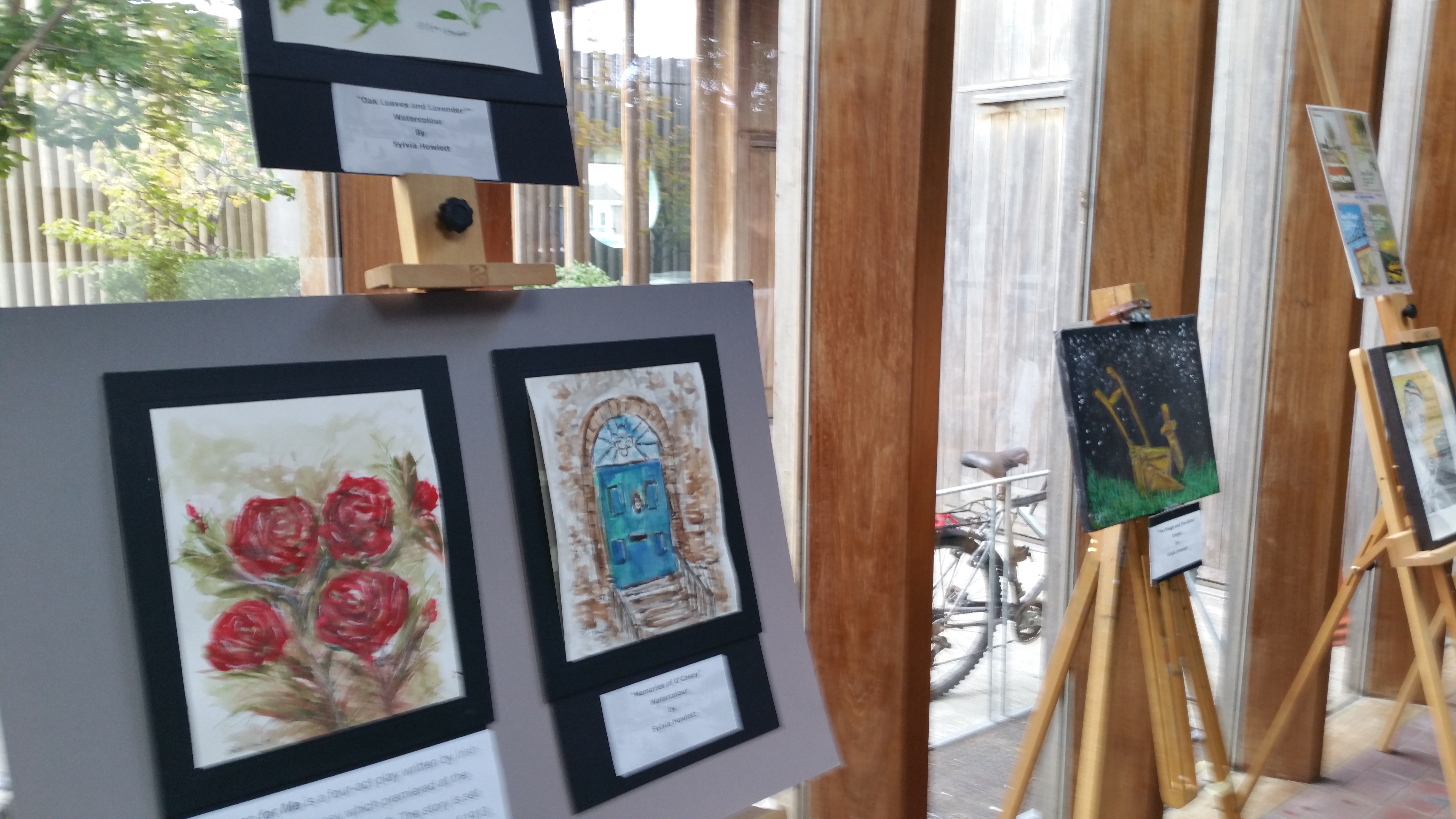
Joe Mooney acknowledged the presence of elected representatives Mary Lou McDonald, Sean Crowe and Cieran Perry and asked people to march to the nearby Sean O’Casey Centre to see the art exhibition and see two short films.


Marching from the plaque site, heading for the SO’C Centre
(Photo: D.Breatnach)(Photo: D.Breatnach)
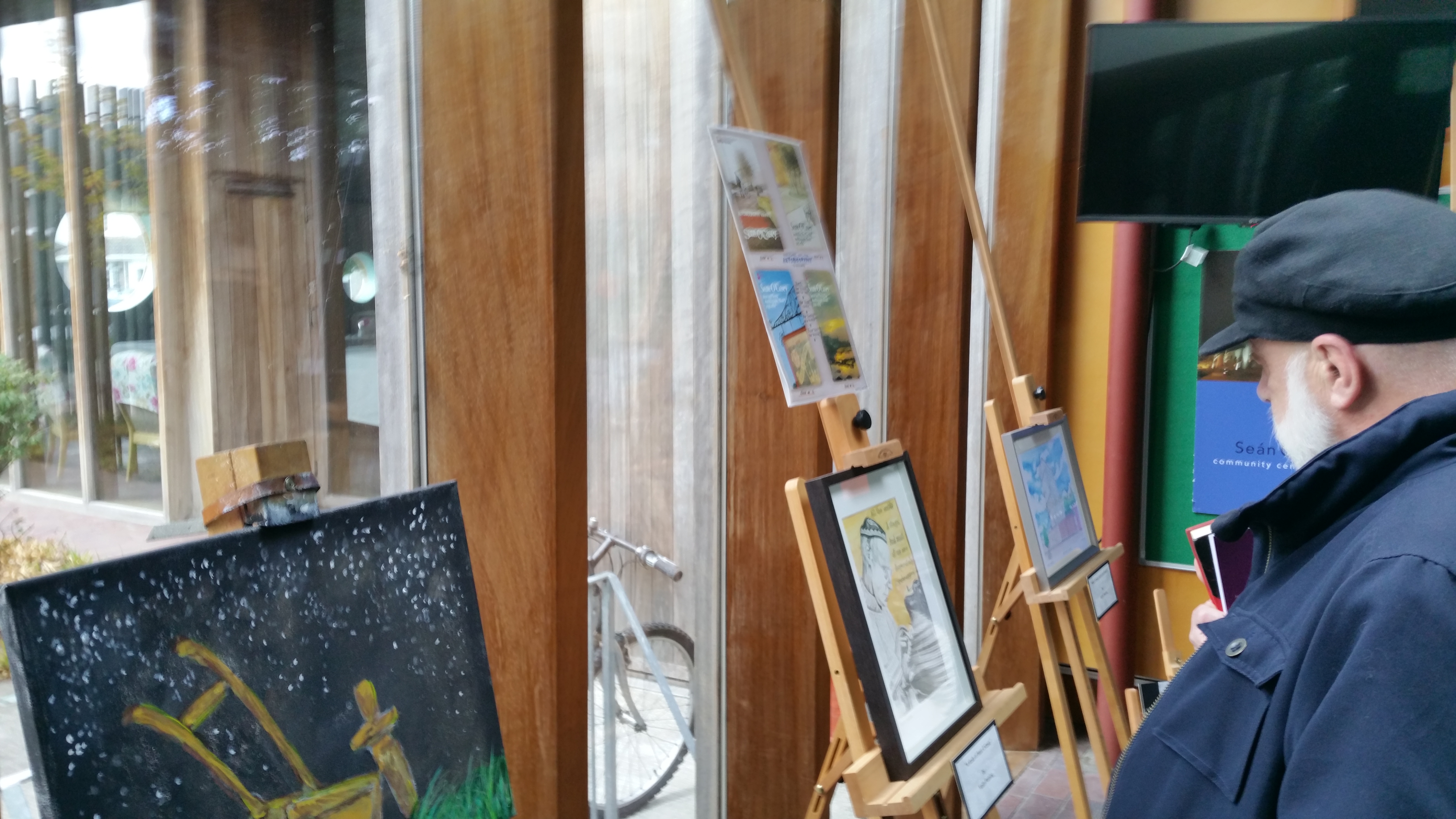
Section of the attendance relaxing at the Sean O’Casey Centre between the plaque event and the films to be shown, also examining the art exhibition [see photos at end of post]

Back at the Sean O’Casey Community Centre, two short films were shown. One was a school project film in which a descendant of Jack Nalty interviews the latter’s nephew about his famous uncle. The second was dramatic film in which a Spanish trumpet player joins the fight against the fascist military uprising by Franco and other generals and features also actors playing two Irish International Brigaders, O’Connor and Charlie Donnelly3. When the former trumpet player is shot he sees into the future ….

Eddie O’Neill talked about the pulling out of the International Brigades in October 1938 in a bid to have the “non-interventionist” Western democracies put pressure on Nazi Germany and Fascist Italy to have them withdraw too, which did not happen. They marched through Barcelona on 17th October and were addressed in an emotional rally by La Pasionara4 and Eddie asked Nerea Fernández Cordero to read an English translation.

Nerea on stage just after reading translation of La Pasionara’s farewell to the Brigaders
(Photo: D.Breatnach)
Eddie O’Neill at the SO’C Centre with concluding speech: “We can’t afford to forget.”
(Photo: D.Breatnach)

Nerea told the audience that she is from Extremadura (a province of the Spanish state next to the Border with Portugal) and her grandfather, Antonio Fernández had fought against Franco, been captured, escaped to the mountains but was in time recaptured. Upon his release he had married Nerea’s grandmother and lived a peaceful life. Nerea said that she was proud of her grandfather and those who fought Franco and that “ we know La Pasionara’s speech in Spanish by memory.”

Reading of translation of La Pasionara’s speech to English from Youtube:

At the event the newly published pamphlet “In Pursuit of an Ideal – from East Wall to the Ebroabout Jack Nalty was made available for the first time and copies are available from the organisers.

Eddie O’Neill recalled being in the Spanish state with a group from Friends of the International Brigades to commemorate those who fought against Franco during that war and afterwards searching for an appropriate pub in which to socialise. They found a pub with a Guinness sign and went there which however turned out to be one of the most fascist pubs in the area but undeterred, they continued to celebrate the memory of the antifascist fighters there. A lone man in suit and tie asked people as they passed him to use the toilet why they were commemorating people who had died so long ago but when they explained he said he could not understand English.

We can’t afford to forget,” O’Neill told his audience, “least of all when the forces of fascism are gathering again.”

To conclude the event O’Neill called on Diarmuid Breatnach who sang the whole of Christy Moore’s “Viva La Quinze Brigada”, calling on the audience to join him in the chorus, remembering those who fought and gave their lives in the struggle against fascism.

Eddie O’Neill close at right of photo at unveiling ceremony
(Photo: D.Breatnach)

AN ANNUAL EVENT?

The organisers are reputedly considering making this an annual event – it is to be hoped that they do so.

Another section of the crowd at the plaque unveiling.
(Photo: D.Breatnach)
Also at the plaque unveiling ceremony
(Photo: D.Breatnach)

POSTCRIPT: JACK NALTY – ATHLETE COMPETING FOR IRELAND

In publicity prior to the event, the East Wall History group posted the following:
“In addition to his political and trade union activity, Jack Nalty was also a busy athlete, a regular competitor and medal winner with the Dublin Harriers. In 1931 he represented his country at the International Cross Country Championship, held at Baldoyle. Fellow competitor Tim Smyth became the first Irishman to win this competition.

(The full Irish Group for the event held on 22nd March 1931 is listed as: Frank Mills, J. Behan, John Nalty, J.C. McIntyre, John Timmins, T. King, T. O’Reilly, Thomas Kinsella, Tim Smythe).

This British Pathe footage shows the runners in action. Somewhere in the group is John (Jack) Nalty, East Wall resident, Republican and hero of the International Brigades. (The Pathe footage is viewable on post on the East Wall History Group event — CS)

Ironically, the same year as the competition the future leader of Irish Fascism, General Eoin O’Duffy had become the President of the National Athletic and Cycling Association (NACA) , and apparently was an admirer of Jack Nalty as an athlete!”
(Photo: D.Breatnach)


FOOTNOTES


1Basques in the provinces of Bizkaia, Guipuzkoa and Alava say it was not a civil war there, i.e between different sections of Basque society — the fascist forces came from outside.  In the fourth southern Basque province of Nafarroa, where the Carlists took control, they wiped out around 2,000 antifascists but it was hardly a war. The Catalans also say that the fascist forces invaded them and that it was not a civil war but an antifascist one. In some other places in the Spanish state many also say that the presence of Nazi German and Fascist Italian military in such numbers invalidated the term “civil war”.

2Also known as “Viva La Quinta Brigada”, which is however also the title of a different song from the Anti-Fascist War. Both titles are correct for this song since the Irish were in the Fifth of the International Brigades but when added to the ten indigenous Brigades (Spanish, Basque, Catalan etc), that became the Fifteenth. Wikipedia quotes authors to report an estimate that “during the entire war, between 32,000 and 35,000 members served in the International Brigades, including 15,000 who died in combat; however, there were never more than 20,000 brigade members present on the front line at one time.”

3Charlie Donnelly was a poet and member of the Republican Congress. He went to Spain to fight against Franco, where he died in February of 1937 at the Battle of Jarama. He is also one of those 19 names mentioned in Christy Moore’s song (“Viva La Quinta Brigada” or “Viva La Quinze Brigada”).

4Isidora Dolores Ibárruri Gómez (9 December 1895 – 12 November 1989), born and brought up in the Basque Country to a Basque mother and Spanish father, founder-member of the Spanish Communist Party and known for her political writing and speeches. She wrote an article when quite young under the pen-name “La Pasionara” (the Passion Flower) and was known by that nickname throughout her life.
SPANISH CIVIL WAR AIR RAID SHELTER, HIDDEN SINCE 1938, DISCOVERED IN MADRID


RECENTLY DISCOVERED DURING DEMOLITION WORK, THE UNDERGROUND COMPLEX HAD NOT BEEN SEEN BY HUMAN EYES SINCE 1938

(Translation to English by D.Breatnach from article by Daniel Ramirez in El Espanol on line on 14 May this year — link given at end of translation.  Photos reproduced and article translation published by kind permission of El Espanol)

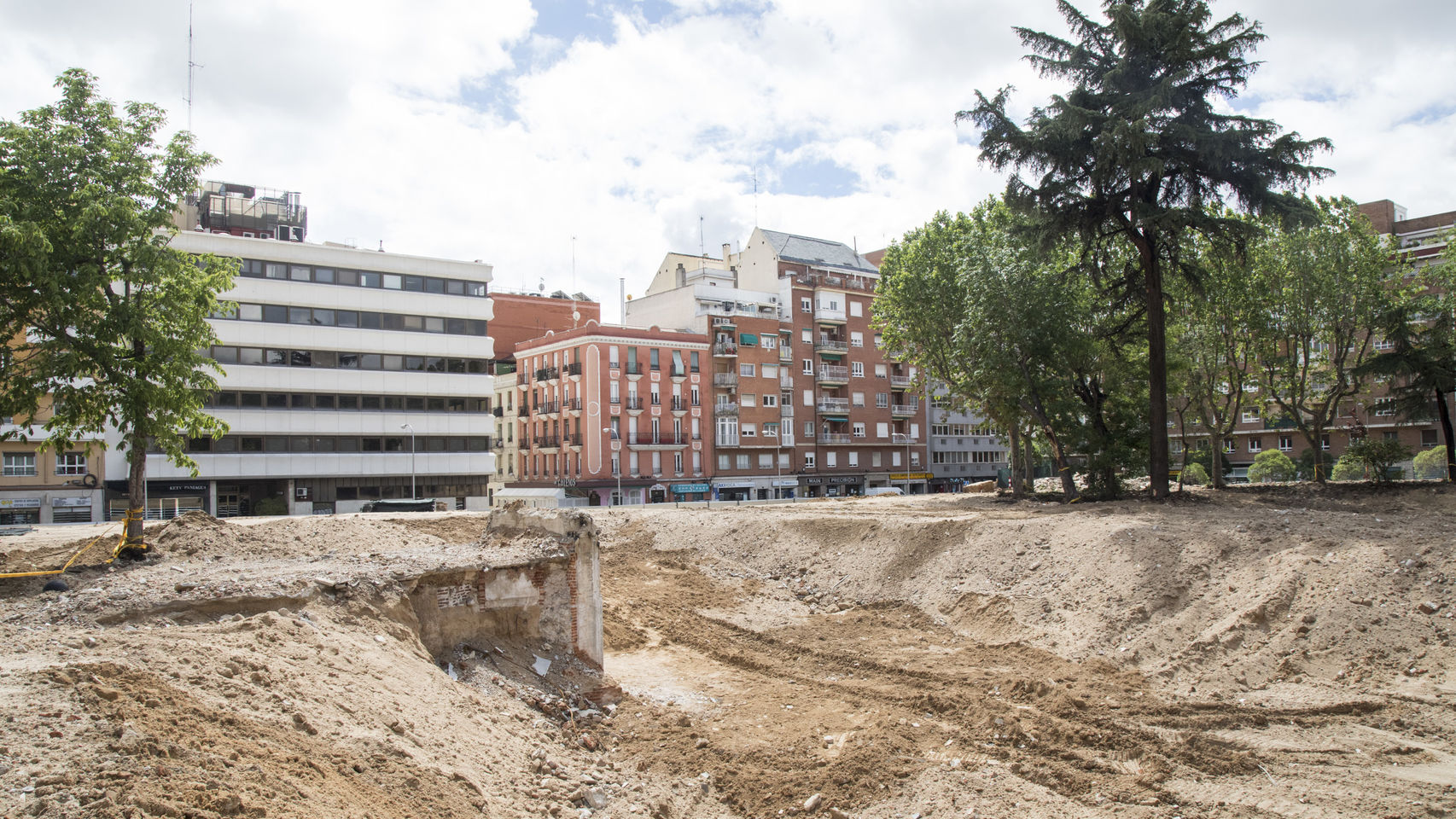
A hole in the ground, in the entrails of the city. Dry earth covered with mud. It had rained. The American girls and those dressed up run in search of a taxi when the Raimundo Fernández Villaverde street dies, just as they rise in the Nuevos Ministerios area. Noise from horns, ambulances, shouts. And in the middle of it all, the big hole.

It is surrounded by cranes and scrap metal. Also building workers and architects in yellow vests. In the centre, five or six metres deep, a door of cement and brick. It may not be interfered with. In the guts of the Artillery Workshop, recently demolished, the financial heart of Madrid has just discovered an air raid shelter, built in 1938. That’s the reason for the dug earth, the mud, the emptiness.

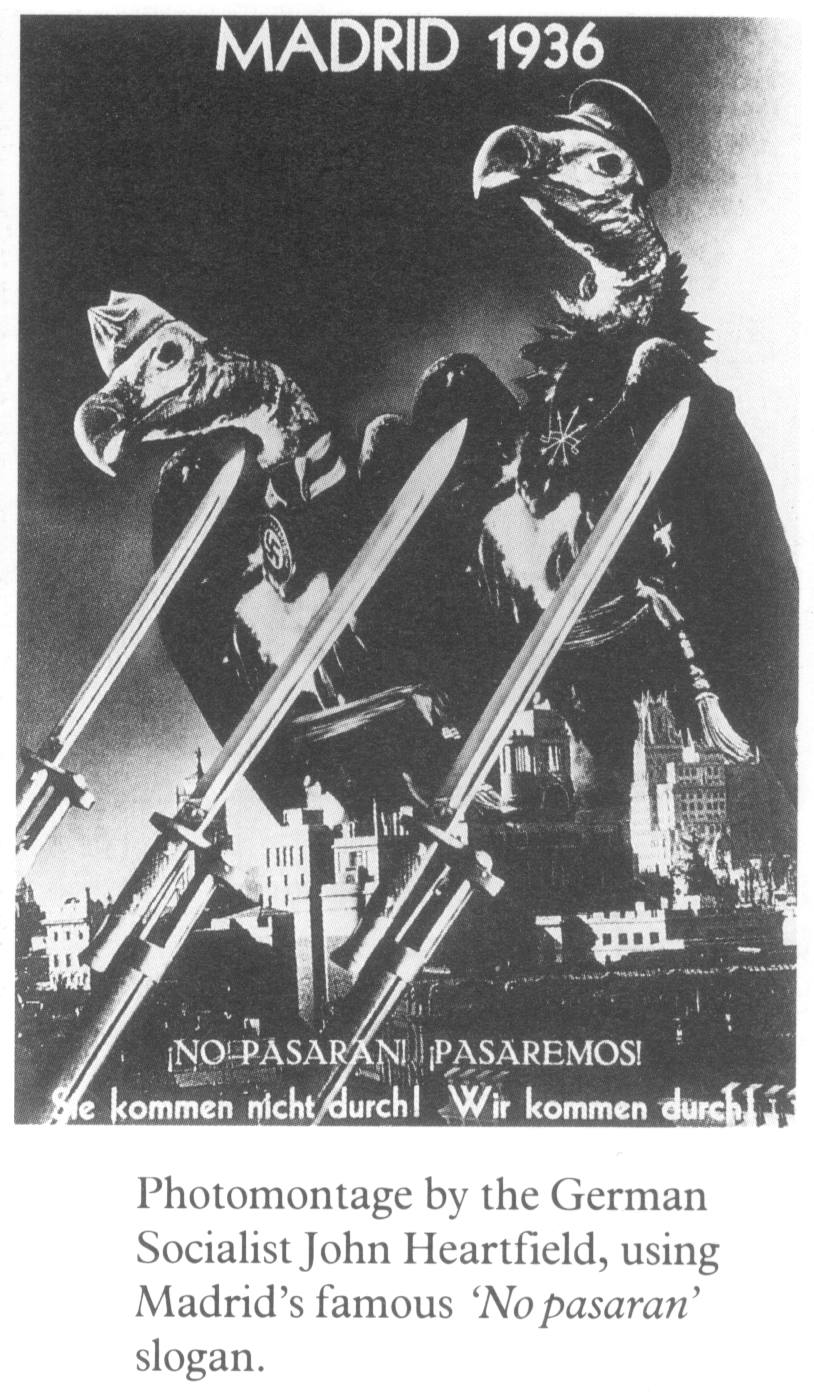
The Condor Legion was a Luftwaffe air force unit supporting Franco)
(Image source: Internet)

The demolition of this neomudéjar-style building to make room for a block of housing split the Madrid City Council of which Carmena is Mayor. Those who wanted to keep it lined up against the rest, but few knew what was hidden by the floor of the now defunct first concrete construction of the city, built in 1899 by the Ministry of War. It belonged to the state – in military use for decades – until 2014, when it was sold to a real estate cooperative for 111 million euros.

“It’s the first visit after its discovery”

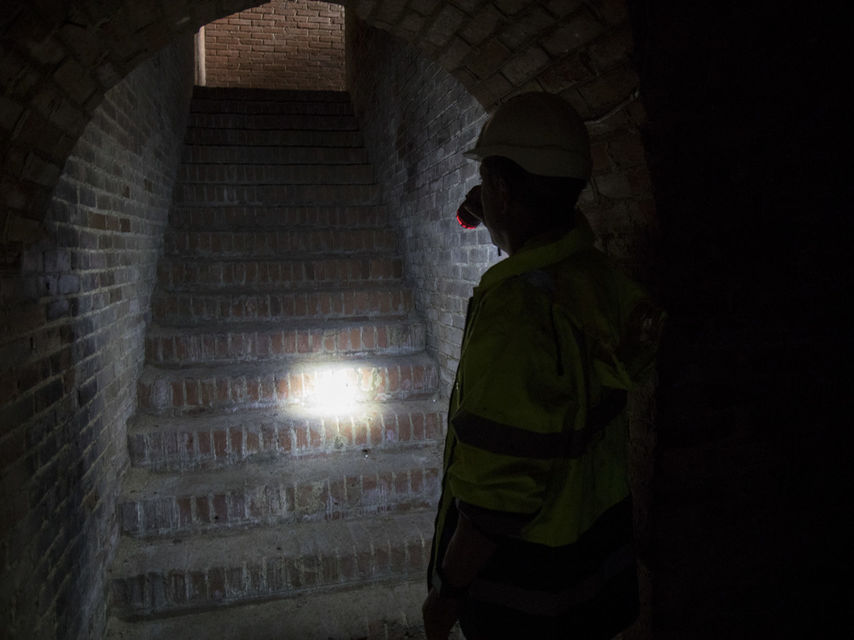
Steps descending from entrance.
(Photo Jorge Barreno, El Espanol newspaper)

Just beyond the open door, stairs. The cement benches that allayed the fear of death appear six metres down. Virgin earth for camera and notebook. “This is the first visit after its discovery,” says Isabel Baquedano, archaeologist of the General Directorate of Heritage of the Community of Madrid, which froze the work permit until the survival of the shelter had been ensured.

One last look at daylight. Baquedano brings to life the race to the basement. The hole in the earth was then an inner courtyard in the Artillery Workshop. On the floor, a door. Then another, like the one that we are now going through.

Photo showing entrance to air-raid shelter in a demolition/ building site (Photo Jorge Barreno, El Espanol newspaper)

HEMINGWAY AND THE AERIAL BOMBING

Hemingway said that, at the beginning of the war, the citizen would quickly see the enemy plane and the sirens would soon be screaming. Then they flew much higher and the deaths multiplied. A bomb was “that growing whistle, like a subway train that crashes against the cornice and bathes the room in plaster and broken glass.” The American, with lively irony, used to joke: “While you hear the glass tinkle as you fall you realize that, at last, you are back in Madrid.”

The stairs and walls are brick. “Like those of almost all shelters,” explains Baquedano. The archaeologist who acts as a guide for this visit outlines a universal, institutionalised architecture, fruit of necessity, constructed in a race against time. “The International Red Cross came to draw up a map of the air raid shelters in Madrid,” says Javier Rubio, a historian whose brother was hiding in Madrid at the time.

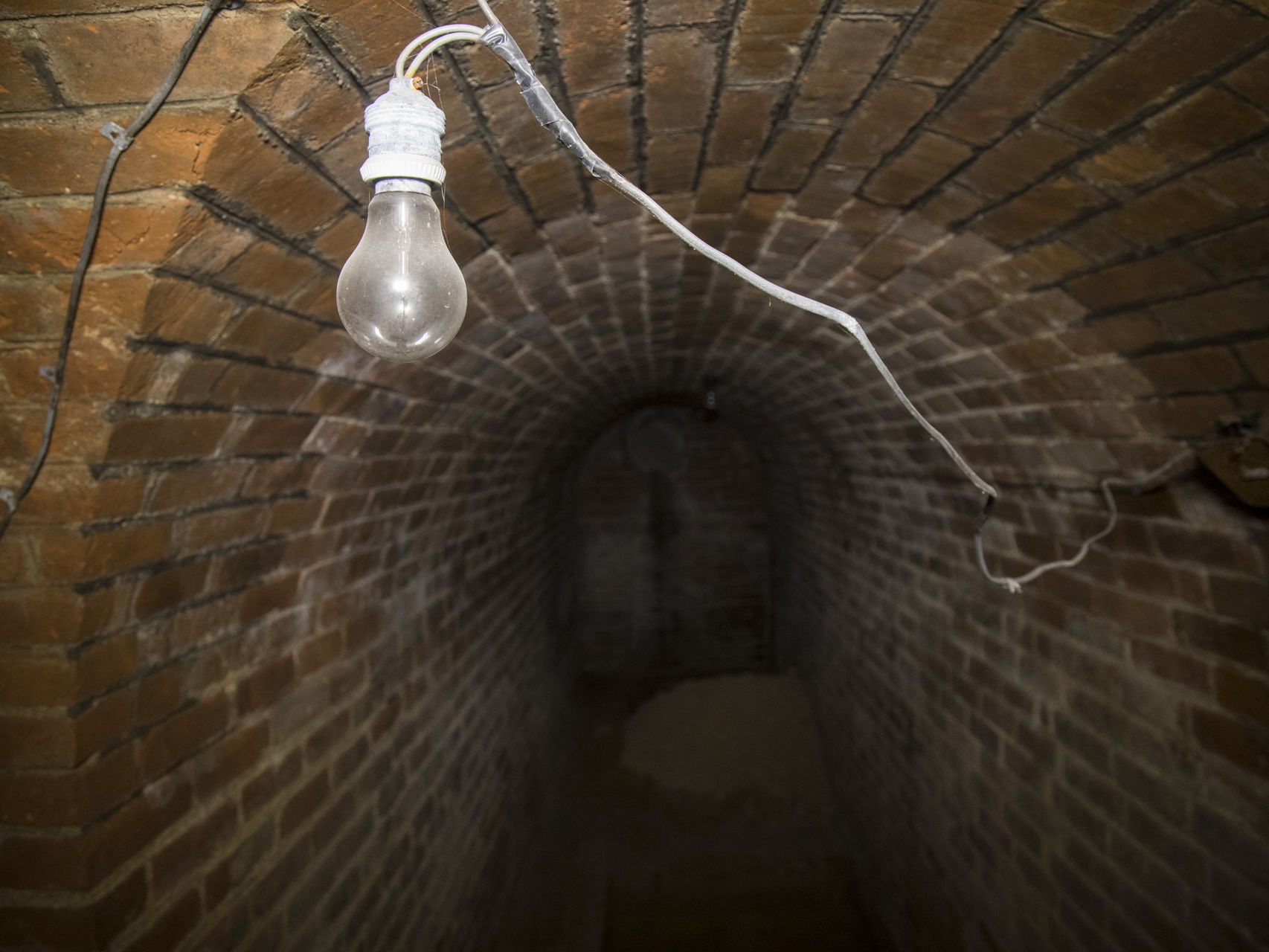
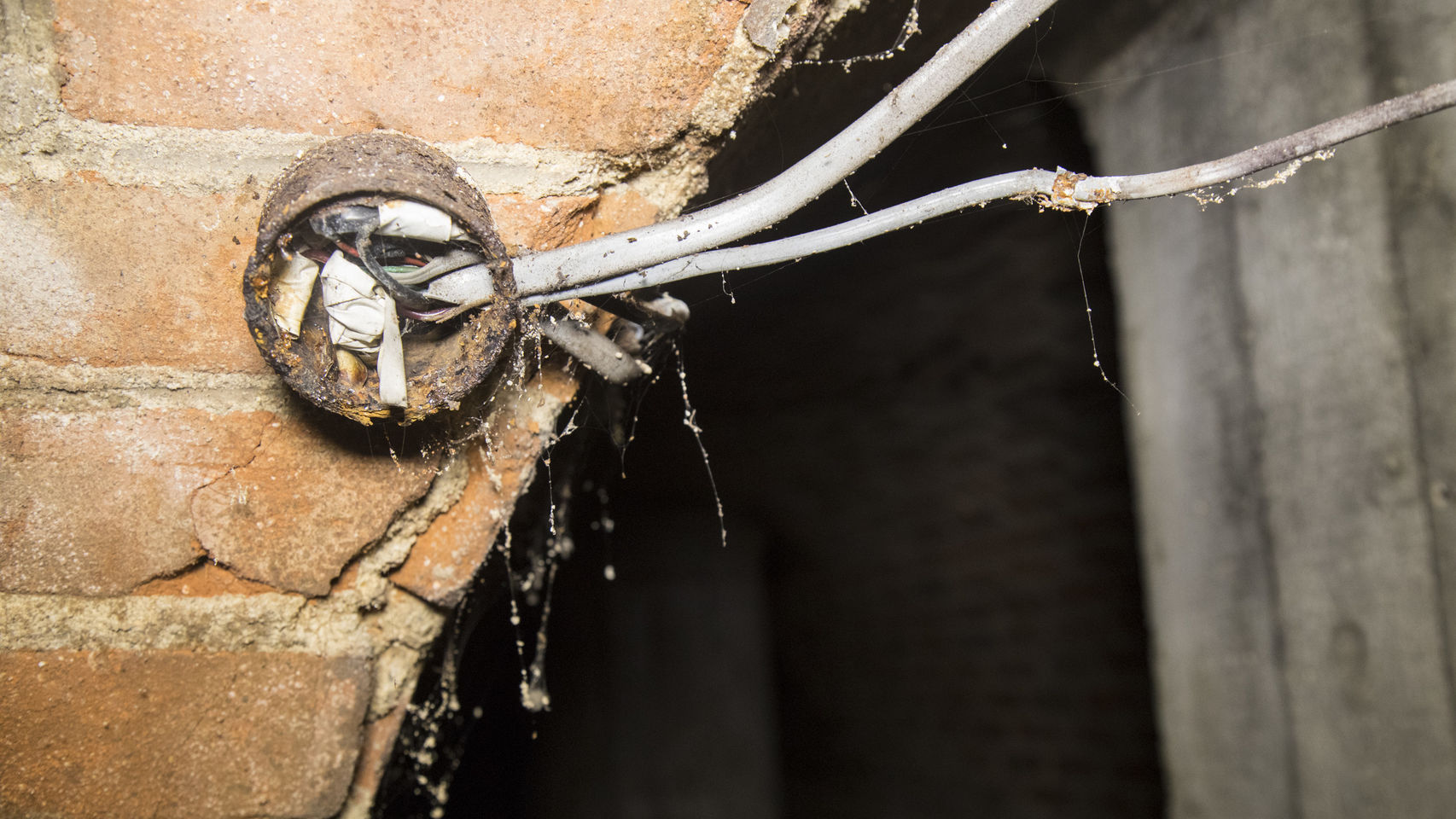
The shelter, when built, had an electricity supply.
(Photo Jorge Barreno, El Espanol newspaper)

Small steps for the flashlight to illuminate. In 1938, a filthy, rusty cabling gave light to the whole refuge. There were also subterranean armchairs and red velvet, but this is not the case now.

The chroniclers wrote that seeing a drunk and desperate man who pushed and jumped over elderly people and children was not unusual. Here is a quick but military descent. It is believed that this basement only sheltered the military of the Artillery Workshop, when a few meters away, in the Glorieta de Cuatro Caminos, a hospital had a similar space.

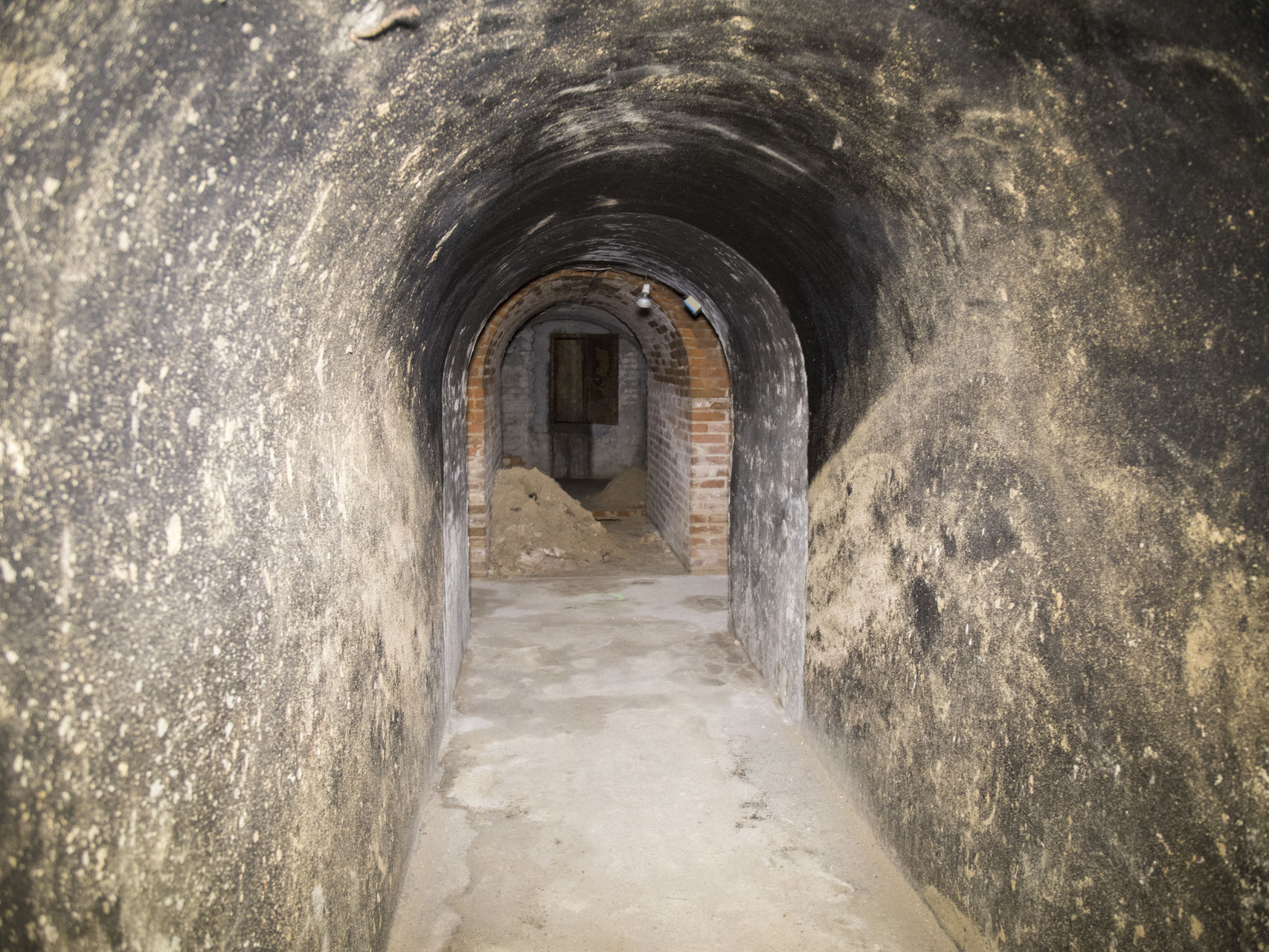
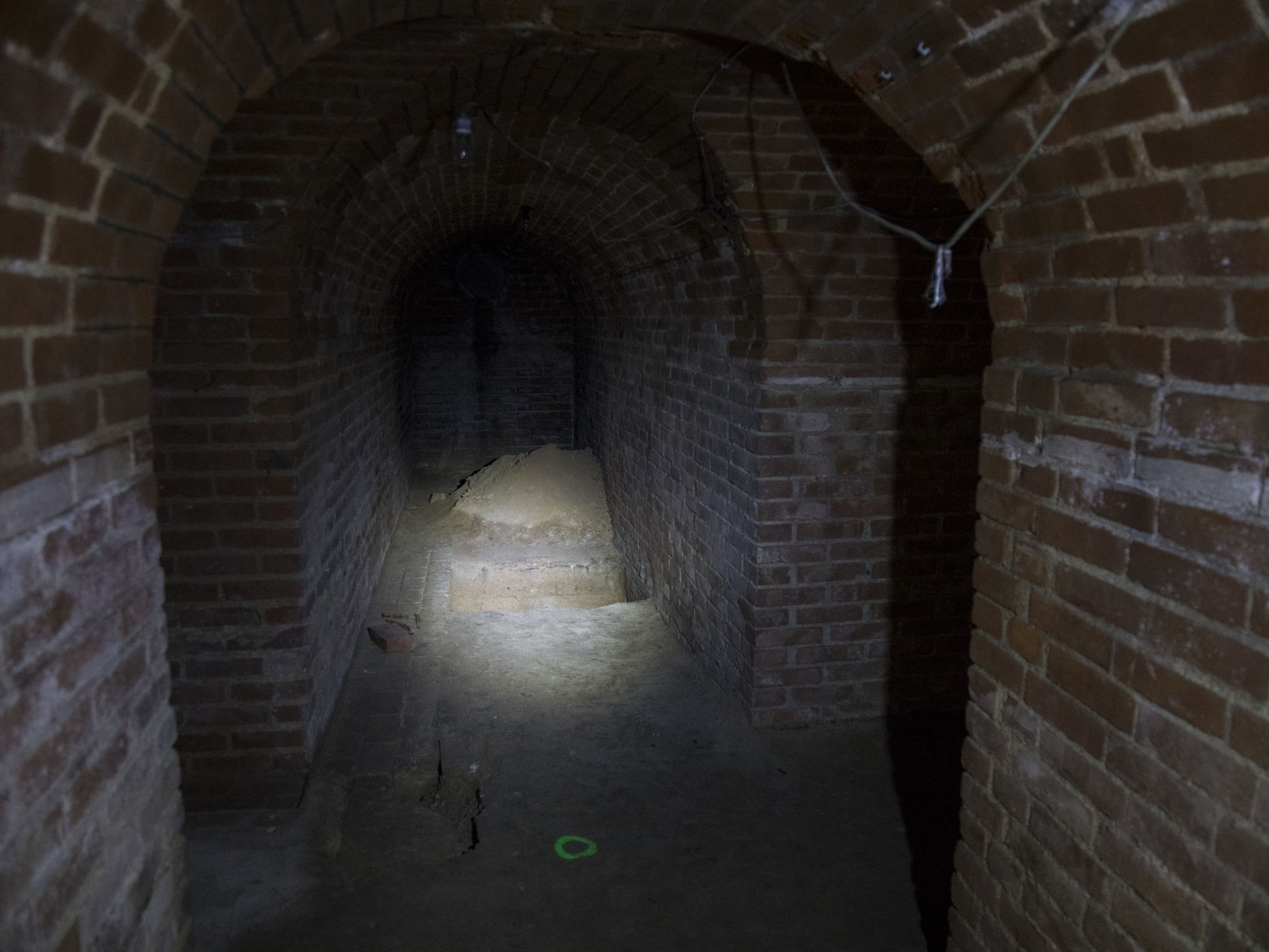
One of the galleries
(Photo Jorge Barreno, El Espanol newspaper)

The lightbulbs, intact, but empty. The shelter is a labyrinth of intersecting galleries. The photographer and Javier, one of the construction workers, leads the route with lanterns. The cement benches show some marks, made by the archaeological study commissioned by the Community, which confirmed the finding. They are almost at ground level. “Capacity is estimated for between 80 and 100 people,” says Baquedano.

WHAT DID NOGAL KEYS SAY?

In 1938, Madrid was the epic of a lost war. General Miaja, a Republican hero, defended the trenches exposed to gunfire. Gun in hand, he shouted for men who knew how to die. Strips of paper were stuck to shop windows to prevent the bombing’s vibration from shattering them.

“Everybody went scared to his hole. Life had fled streets and squares; not a light, nor a noise in the ghostly environment of the big city,” said journalist Manuel Chaves Nogales. “This little bourgeois liberal”so he described himself – who predicted the birth of a dictatorship regardless of the colour of victory, saw in the bombings a sort of lottery in which Madridians participated unconcerned: “Insensate and heroic, Madrid learned to live with joyful resignation. “

Little is left of that daily fear in these difficult tunnels, sometimes too narrow, fresh, guardians of absolute silence, still oblivious of the shopping centres that have grown up around them.

Intersection of galleries in the underground complex (Photo Barreno)

SÁNCHEZ MAZAS AND TALES TO FORGET

Some spoke, others were silent. Close or open your eyes? Different ways of coping. The fearful Rafael Sánchez Mazas, in the words of those who dealt with him then, wrote a novel to the rhythm of the bombs. For evasion and for other reasons. Chapter by chapter, he read it to his Falange colleagues at the Chilean embassy, where Carlos Morla Lynch, the diplomat in charge, provided refuge for them.

In the famous photo, Sánchez Mazas in the middle, several refugees listen to that unfinished novel of the title Rosa Kruger. Here the benches, in a row, do not invite conversation. Only recollection, although it may be the lack of habit.

In line with what Chaves said, Agustín de Foxa, in his “De Corte a Checa”, reflected: “At five o’clock in the morning, the local people commented on the bombardment by eating churros and drinking glasses of anise.”

“To leave a trail, not to disappear at all”

At the doors of the shelter, or perhaps inside, in these benches unequivocal proof of the finding, the tears of farewells ran. “Like those insects that perform the nuptial flight before they die, the men who were being sent to the Sierra or those who awaited in agitation their execution were longing for female presence and love so as to leave a trail, so as not to disappear altogether.”

Old cabling from 1938 (Photo Jorge Barreno, El Espanol newspaper)

“Little is known of this shelter,” Baquedano continues on this path of short steps. Archaeologists found no traces beyond the benches. The soldiers who arrived after the war used the subway as a shooting gallery. That is the reason for the gouges that bullets have left in the brickwork.

THE NOISE OF THE BOMBS

Suddenly a noise. Loud, deafening. The conversation ends abruptly. The cameraman and the journalist look at Javier, who laughs. “Calm down, the cranes are moving the scrap and it will have fallen up above.” It is a noise to make one cower and which makes the legs tremble.

A cosmopolitan and naive noise, which has nothing to do with the thunder of the shell that haunted Arturo Barea. In his “Forging of a Rebel” he confessed to having nightmares about the impact. He imagined the mutilation of bodies, their rotting, the limbs torn off the sidewalk … When the sirens began to sound and the danger became true, Barea reported feeling “a deep relief”, a result of the return to reality, the only way out then from that spiral of madness.

“My mouth was filled with vomit”

“We would go down to the basement, sit there with other guests, all in pajamas or gowns, while the antiaircraft barked and the explosions shook the building, sometimes my mouth filled with vomit, but it was a comfort because everything was real, I was deeply asleep,” he wrote.

On leaving, the light, and a city that beats, has nothing to do with that Madrid that, in Foxa’s words, turned off the lanterns for fear of bombing, while the last trams passed on their routes with their tragic, blue-green painted lights.

At the fence, several curious people approach the hole. Office workers, clerks, consultants, lawyers … In 1938, Barea said, there were neighbors of distant neighborhoods who came to see up close what a bombing was. “They left happy and proud with pieces of shrapnel, still hot, as a souvenir.”

Additional notes from translator, D. Breatnach:

There were a few words and phrases with which I had difficulty since the apparent translation from dictionaries did not seem to make sense in the article and I converted them into what seemed to be the sense in the text and context.

The future of the archaelogical site by law requires protection from the owners of the site in which it is located.  It may or may not be open to limited or full public access.

In the original article there was a lovely version of the Viva la Quinta Brigada song, about the 5th Brigade of the Republican forces (not Christy Moore’s wonderful song which, despite the original title is about the 15th International Brigade).  I tried to embed it here but failed but you may find it on the original article link below.

LINKS

Original article: http://www.elespanol.com/espana/20170513/215728433_0.html