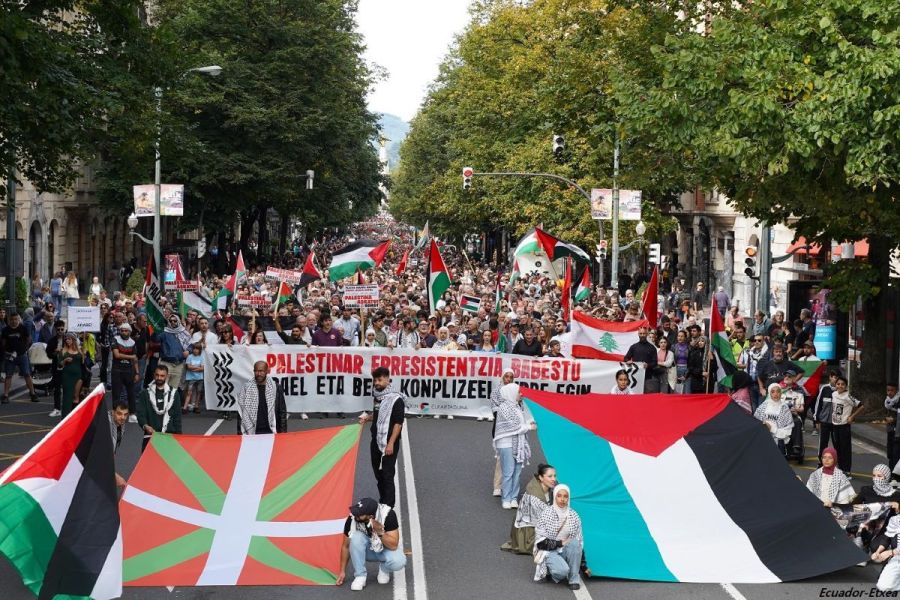
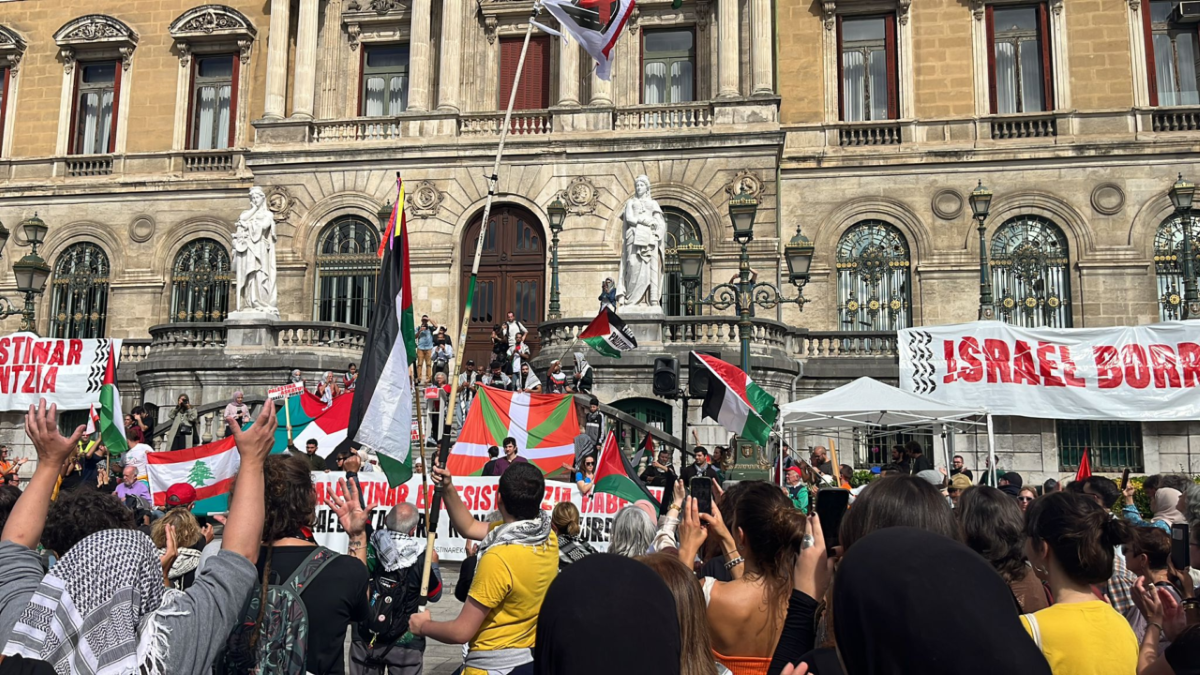
Thousands marched recently in two cities of the Basque Country, Bilbo and Iruña/ Pamplona,1 respectively the capitals of the Bizkaia and Nafarroa2 provinces, in solidarity with the Palestinian people and with their Resistance.
And almost immediately posters could be seen calling for the same on the 11th November, but in four Basque cities, including a city in one of the provinces on the French state’s side.3
“Well that’s great but sure we do that here every second week or so,” some might say. But they’d be wrong. The marches organised by the Ireland Palestine Solidarity Campaign, while calling for solidarity with the Palestinians and BDS4 of the ‘Israeli’ state and businesses, do not support the Resistance.
The rally stage at the end of the march in Bilbao, on the east bank of the Nervion river. Banner exalting the Resistance in the centre facing the crowd, banner to the left calling for solidarity with the Resistance and another to the right calling for struggle against ‘Israel’. (Photo cred: Resumen Latinamericano)
Nor do the marches organised by the main Palestine solidarity organisations in England or in Scotland. It might be pleaded that in the UK at least, people could be arrested for declaring support for a number of Palestinian resistance organisations that are on the EU “terrorist” list.5
The leadership of the Basque Patriotic Left6 does not support the resistance either, preferring to draw the Palestinians and Basques together as victims under a Gernika-Gaza initiative and even criticising the resistance along with the Zionists in a “both sides” kind of analysis.
But no law exists in these countries forbidding expression of “solidarity with the Palestinian Resistance.” The organisers of those campaign organisations don’t declare for the Resistance because a) they don’t support it or b) wish to remain tolerated by the upholders of the status quo.
View of section of the crowd, giving an idea of its size, the largest Palestine solidarity demonstration in the Basque Country since the present phase of Zionist genocide began on 8th October last year. (Photo cred: Resumen Latinamericano).
IT MATTERS
Well, ok, but does it really matter? Yes, it does and it matters a lot, for the Palestinians, for others struggling against imperialism elsewhere around the world – and for us. Not supporting the Resistance leaves open the question of, for example, the Palestinian Authority.
This Vichy-like organisation headed by a corrupt Quisling sends its security force to intimidate and beat up critics and demonstrators, to arrest them and also Resistance fighters (including invading hospitals to chase down the wounded) and removes defences against IOF invasion.
The PA, despite its widely-acknowledge corruption and the contempt in which it is held by broad Palestinian society, is formally recognised as the ‘representative of the Palestinian people’ by the western imperialists and by many social-democratic parties in Europe.
It is an offence against the Palestinian people and internationalist solidarity to accept the PA as any kind of representation of the heroic Palestinian people – or even to leave the question open. Furthermore, such a stance leaves the door open to all kinds of traitors and confusion.
In our own struggles, we need to be clear who are our enemies and friends. To accept treasonous agencies as representatives of struggling people contaminates our own attitudes in struggle, confuses and undermines our thinking, clouding our vision.
A woman holds high a placard calling to “Free Palestine” and to “Boycott Israel.” (Photo sourced: Internet)
BEING CLEAR AND MAKING IT CLEAR
We need to be clear – and to make it clear – that we support the Palestinian resistance in all its forms: popular, armed, trade unionist, cultural, artistic … and that we abhor collaboration and collusion with the enemy.
We can do that – and it has been done on occasion – by mobilising all who agree on a demo behind a banner celebrating the Palestinian Resistance. But how much better, if like the Basques today in Bilbao and in Iruña/ Pamplona, the whole demonstration marched behind that kind of slogan!
It might be thought that the demonstrations on 5th October would gather less than the safer Gernika-Gaza group of the official leadership of the Left Basque Patriotic movement (Otegi & co.) and other liberals but this was not the case in Bilbo anyway, on the biggest solidarity demonstration since October last year.
Advance posters for the solidarity march. (Photo sourced: Internet)
Two Palestinian Resistance factions, the Popular Front for the Liberation of Palestine and the Democratic Front for the Liberation of Palestine sent messages of thanks to the organisers and the demonstrators.
The demonstration and its theme were covered widely in Basque, Spanish, European and Latin American media, usually with photos.
Addressing the rally after the march in Bilbo on 5th October, a speaker listed the many crimes of the Zionist State and was loudly cheered when she said that only the abolition of that state could bring that career of genocidal crimes to an end.
The cheers grew louder still as she called for solidarity with the Palestinian resistance and all others fighting against imperialism and Zionism. And continued as she went on to call for a break with all states and political parties that support the Zionist State.7
The cheers might even have reached EH Bildu’s office and the leadership of the Gernika-Gaza group.
The march on its way to the rally across the river pauses on the way for photos.The long banner calls for “Support for the Palestinian Resistance” but also ” Oppose Israel and its accomplices.”(Photo cred: Boltxe)
End.
FOOTNOTES
1A number of places with Basque toponymics, under Spanish colonialism, were given Spanish names.
3There are seven provinces in the Basque Country, three on the French side of the Border (Iparralde, ‘the North Country’) and four on the Spanish side (Hegoalde, ‘the South Country’).
6That was the broad movement of legal and banned organisations of revolutionary Left and independentist outlook, the movement now reformist, much reduced and fragmented under the leadership of Arnaldo Otegi and the EH Bildu party.
7That clearly includes the conservative Basque Nationalist Party (PNV) and the social-democratic Spanish Socialist Workers Party (PSOE) currently in coalition government in the Basque Autonomous Regional Government.
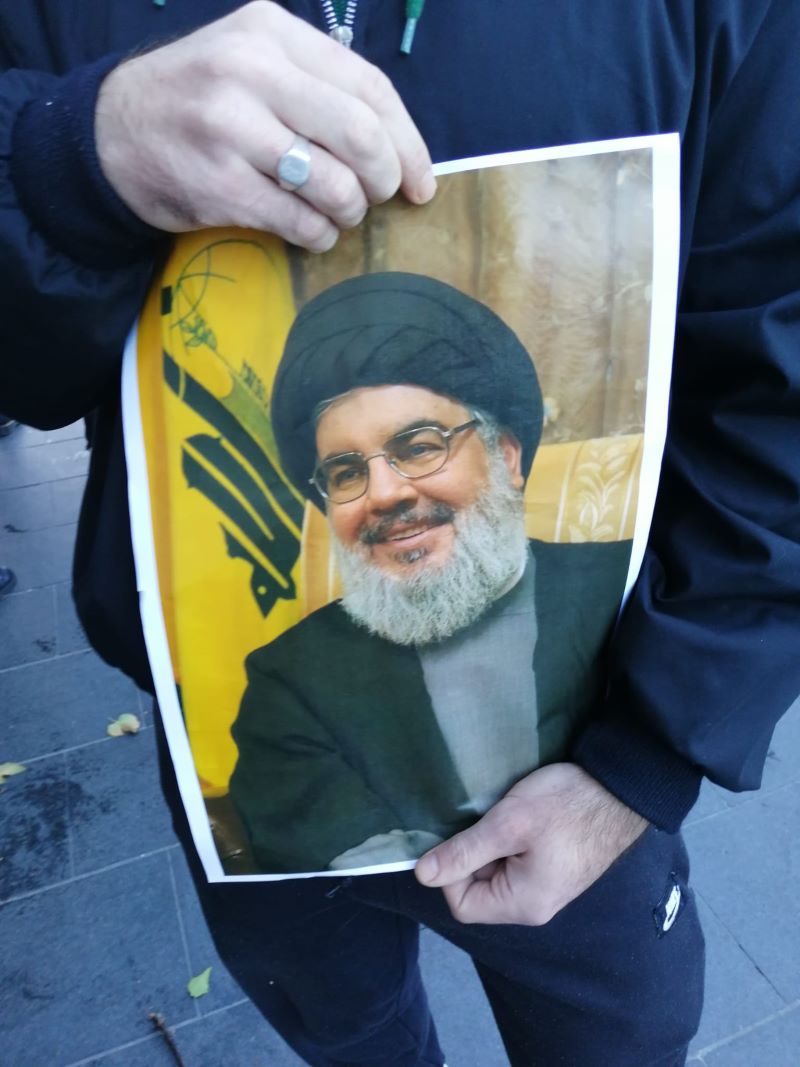
People with Palestinian flags including one containing a slogan in Irish, flags of Palestinian resistance factions and holding portraits of Ismail Haniyeh and Nasrallah rallied on Sunday evening outside Dublin’s General Post Office.
(Photo cred: Rebel Breeze)
The Action for Palestine organisation had advertised the solidarity and honouring event at short notice. Originally planned to take place on O’Connell Bridge, the storm conditions1 made that venue unsuitable and the GPO2 was chosen as an appropriate alternative.
Calling and replying to solidarity chants, the crowd of Irish people and others from the Middle East also listened to four speakers, two Irish and two Palestinian, while two plain-clothes Special Branch Gardaí photographed them from east side of the street.
(Photo cred: Rebel Breeze)
One passing Zionist sympathiser insulted the gathering, giving rise to a wave of chants in solidarity with the Palestinian Resistance. On the other hand, many pedestrian passers-by congratulated demonstrators and some stopped to join or pressed horns on their vehicles.
The speakers referred to the horrors of the genocide being inflicted upon the Palestinian people in particular in North Gaza3 at this time by the IOF, the armed forces of the Zionist state, backed up and supplied by the USA and a number of European states.
(Photo cred: Rebel Breeze)
They spoke also to praise the resistance of all kinds of the Palestinian people, including armed resistance and at all levels up to leadership, who are assassinated and replaced, always under threat of death.
One speaker also spoke about the need to also support the resistance struggles and the prisoners as a result of resistance too. “It is not required of us that we agree with everything they say or do but it is required of us that we support the resistance”, he said.
Among the slogans chanted were Long live the Intifada! There is only one solution – intifada revolution! From the River to the Sea – Palestine will be free! Resistance is an obligation – in the face of occupation! Saoirse – don Phalaistín!
(Photo cred: Rebel Breeze)
From Ireland to Palestine – Occupation is a crime! From the Sea to the River – Palestine will live forever! In our thousands, in our millions – we are all Palestinians! Free, free Palestine! Netanyahu you can’t hide – you’re committing genocide! (Repeated also for Joe Biden).
A speaker also reminded the crowd of the long resistance to occupation of the Irish people, against Vikings and English occupation and the need to support the resistance of people around the world. “Resistance is everything”, he said and referred to the heroic resistance of the Palestinian people.
To conclude an organiser thanked all for their attendance at short notice and promised other actions in future, then encouraged those who wished to gather for a photo in front of the statue to “our hero in Irish myth, Cú Chullainn”,4 which stands in the central front window of the GPO building.5
Some gathered for a photo in front of the representation of the Irish mythological hero Cú Chulainn statue in the display window of the GPO. (Photo sourced: Action For Palestine)
While they were doing so, another reminded them that in the epic legend, Cú Chulainn’s enemies dared not approach him while he was alive and only finally did so when they saw a carrion crow or raven alight on his shoulder to reassure them that he was dead.
“Yahya Sinwar’s enemies did not face him while he was alive either. They fired a tank shell into the building where they believed the fighters were, retreating when grenades were tossed at them, firing another shell into the building and even then only dared send a spy drone in.
“When they saw on their monitor the badly-injured Sinwar throw a stick at the drone, they fired yet another shell into the building, finally killing him.”
End.
View of the Cú Chullainn statue in the GPO window on a working day (Photo cred: Cambridge University)Far distant from any kind of heroism or solidarity, two plainclothes members of the political police, the Special Branch of the Gardaí, surveilling the participants. (Photo cred: Rebel Breeze)
2Also a central location, i.e on Dublin’s main city centre street but also the HQ of the 1916 Rising against British rule.
3Some Palestinian commentators have called this phase the worst of all in the intensified genocide since October last year. Constant aerial strikes on buildings and tent encampments, shooting at people, besieging hospitals and blocking food or fuel from entering and constantly insisting that the people move out in ethnically cleansing.
4The hero is a central figure in the epic of the Táin Bó Cuailgne (The Cattle Raid of Cooley), along with back and after-stories, in the Ulster Cycle of Irish myths and legends. The sculpture, cast in bronze, is by Oliver Sheppard.
5The sculpture by Oliver Sheppard was later dedicated to the martyrs of the 1916 Rising.
Scores of people participated in a symbolic ‘funeral of Zionism’ on Monday evening (7th October) in Dublin’s city centre. In front of the James Connolly monument1 and near a mock coffin of ‘Zionism’, they listened to a song and short speeches.
This was followed by a march carrying the ‘coffin’ through city centre streets to O’Connell Bridge, where it was dumped in the Liffey river.
The ethnic composition of the mostly young mixed-gender crowd, by appearance and accent, seemed to be a mixture of Irish and Middle Eastern origin.
The chairperson of the event recalled that a year had passed since the heroic action from Gaza of October 7th and the events that followed, all being gathered there at the James Connolly memorial to hold a funeral for Zionism, the ideology of settler colonialism and genocide.
The first contribution was from a man introduced as Seán Óg with a song of his own composition, three verses rendered acapella in fine voice to the air of two well-known Irish patriotic ballads, Men of the West/ Fir an Iarthair and The Boys of Killmichael.2
The audience began to pick up and join in the chorus lines:
So here’s to the boys of Gaza, Jenin, Nablus and Hebron, Who fought ‘neath the brave flag of Palestine and sent the Settlers on.
Section of crowd at event listening to speeches, viewed facing north-eastwards. (Photo: R. Breeze)
Two speakers followed, pointing out the unanimity of imperialism nowadays in supporting Zionism as distinct from the 1950s and the importance of struggles such as that in Palestine to our own in Ireland, of internationalist solidarity and the need for that solidarity to be for the Resistance.
One speaker interspersed his words in English with some phrases in Irish and recalled the protest against the 1897 visit of the British Queen Victoria which saw James Connolly and Constance Markievicz leading a funeral cortège through the streets bearing a coffin for British Imperialism.
Though a ‘funeral’ for British Imperialism might’ve seemed only aspirational in 1897, the speaker said, signs of its decline were there to be seen for the educated, the intelligent and those who wished to see them — and before two decades elapsed it had received a major challenge.
(Photo: R. Breeze)
It survived that challenge of the First World War victorious but weakened and the embers of revolt were burning around its Empire. Before two decades after that funeral march, the torch of freedom had been lit in Dublin,3 the first uprising against world war of that century anywhere in the world.
The speaker went on to recall the subsequent War of Independence in Ireland three years later and remarked that had it not been for some Irish failures in unity and resolution that British Imperialism might have been given its mortal blow then in Ireland.
Subsequently British Imperialism survived by serving as a subject ally to US Imperialism. “Zionism is a rotten tree”, he said, “planted in Palestine by British Imperialism and nurtured by US Imperialism. Even so, Zionism is damaging its very fosterers and we welcome that.”
“Rotten trees don’t fall on their own,” the speaker continued. Trees that are rotten inside may seem healthy on the outside but when a strong storm comes along, they are knocked down. It is then we can easily see the rot inside them that we may not have noticed before.
Storms are now breaking out around the world, he said. We can and need to play our own part in those storms, “to knock down the rotten tree of Zionism and go on to demolish the whole rotten evil forest of imperialism.”
Section of crowd listening to speeches at the event, photo taken facing south-eastwards. (Photo: R. Breeze)
After applause some chants were led, among them: From Ireland to Palestine – Occupation is a crime! Saoirse don-Phalaistín! There is only one solution – Intifada revolution! From the river to the sea – Palestine will be free! Resistance is an obligation – in the face of Occupation!
The attendance then took to the street, carrying the coffin and flying Irish and national flags of Palestine along with those of factions of the Resistance, also Hezbollah’s and Lebanon’s, continuing the chants as they marched up lower Abbey Street,4 then turning left along O’Connell Street.
Along the way, some bystanders cheered and a man leaned out of a delivery van to shout encouragement with clenched fist in the air.
On O’Connell Bridge, after a few words, the ‘coffin’ containing ‘Zionism’ was pushed over the parapet into the river Liffey, to cheers, which then changed to cycling through the accustomed solidarity chants.
The ‘coffin’ is on the Bridge parapet (left of photo) and about to be dumped into the river Liffey. (Photo: R. Breeze)
There were three external interventions.
A known Irish Zionist who regularly tries to harass Palestinian solidarity participants appeared at the outset in attempted intimidation of an activist but was quickly discouraged from doing so. At the Bridge, a person under the influence of alcohol and shouting confusedly was calmed by activists.
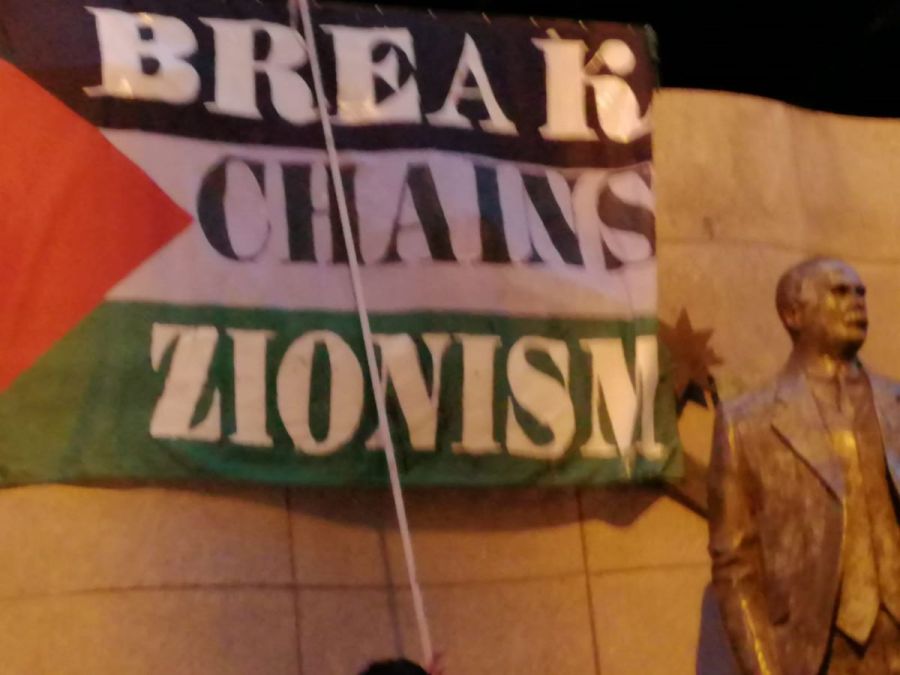
Break the Chains of Zionism banner next to James Connolly Monument (Photo: R. Breeze)
A Garda patrol car crew whose political undercover colleagues had clearly overlooked keeping informed drew up at the Bridge bemusedly during the chanting and, after attempting to gain some information as to events, left again – as did the participants soon afterwards.
The event was organised by Anti-Imperialist Action Ireland and Saoirse Don Phalaistín, the former’s Facebook page having been taken down by Meta while the event was being organised but the groups may be followed on Instagram and Twitter.
End.
Footnotes
1The location of this fine monument is in Beresford Place, across from the site of the original Liberty Hall, home of the Irish Transport and General Workers Union which Connolly led after Jim Larkin departed for the USA at the end of the 1913 Dublin Lockout. The site is now occupied a multi-storey building of SIPTU.
2The first is about the last major engagements of the 1798 Republican uprising, when a relatively small French force landed in Co. Mayo and was joined by Irish Republican insurgents; the second celebrates the IRA ambush of a column of the Auxiliary Regiment in West Cork, wiping it out almost to the last British terrorist.
4Until they reached O’Connell Street they were following in the footsteps of the GPO Garrison on Easter Monday, 1916 and passed by a number of historical political and artistic locations of 1848 and of the early 20th Century.
A number of demonstrations were held in Ireland to make it clear that Kier Starmer, Prime Minister of the UK and supporter of the Zionist state of ‘Israel’, has no céad míle fáilte in Ireland, or indeed any fáilte whatsoever for his Dublin visit.
After fourteen years of Conservative Party management of the UK, Starmer at the head of the Labour Party rode a change-seeking wave to win the General Election in July this year. But he soon revealed how little difference there is between the parties, including on Palestine.
Mostly of the east-facing section on the Bridge (Photo: R.Breeze)
Although the Labour Party on the Zionist State, its Government continues to support that state politically and economically, also militarily with supply of weapons components and RAF missions.1
Very recently the UK Labour Government temporarily suspended 30 military items which may (may!) be implicated in genocide. The UK, holder of one of the five Permanent seats of the UN Security Council is complicit in the ongoing Zionist colonial settler genocide of Palestinians.
In fact, the UK is responsible for settling Zionist Jews in Palestine and then for allocating much of Palestinian land to the settler who, as European settler colonists do, expelled hundreds of thousands of Palestinians and continued extending their land-grabbing ever since.
West-facing section of protest (Photo: R.Breeze)
PROTEST ON O’CONNELL BRIDGE
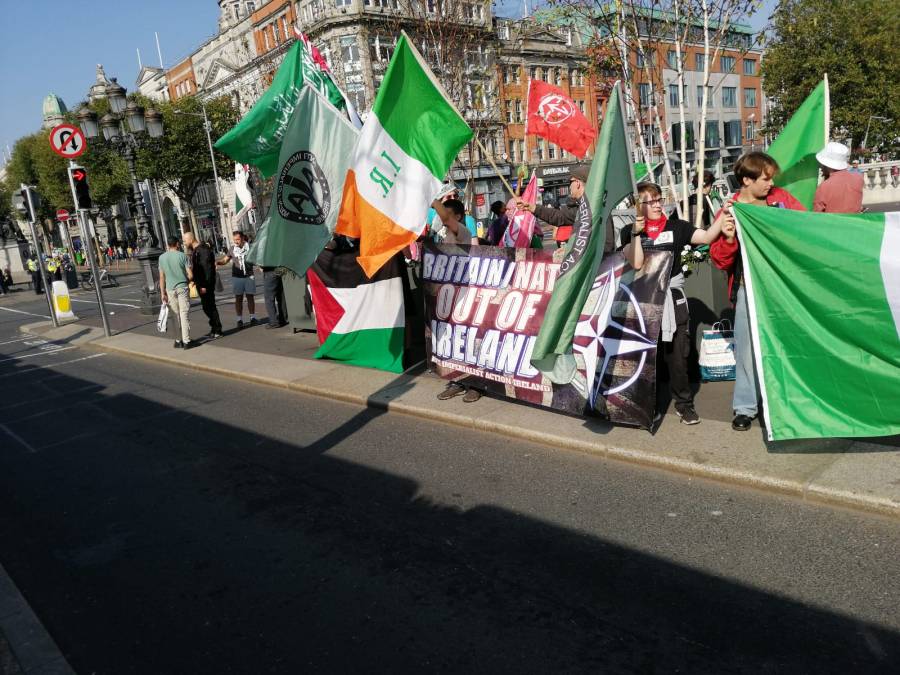
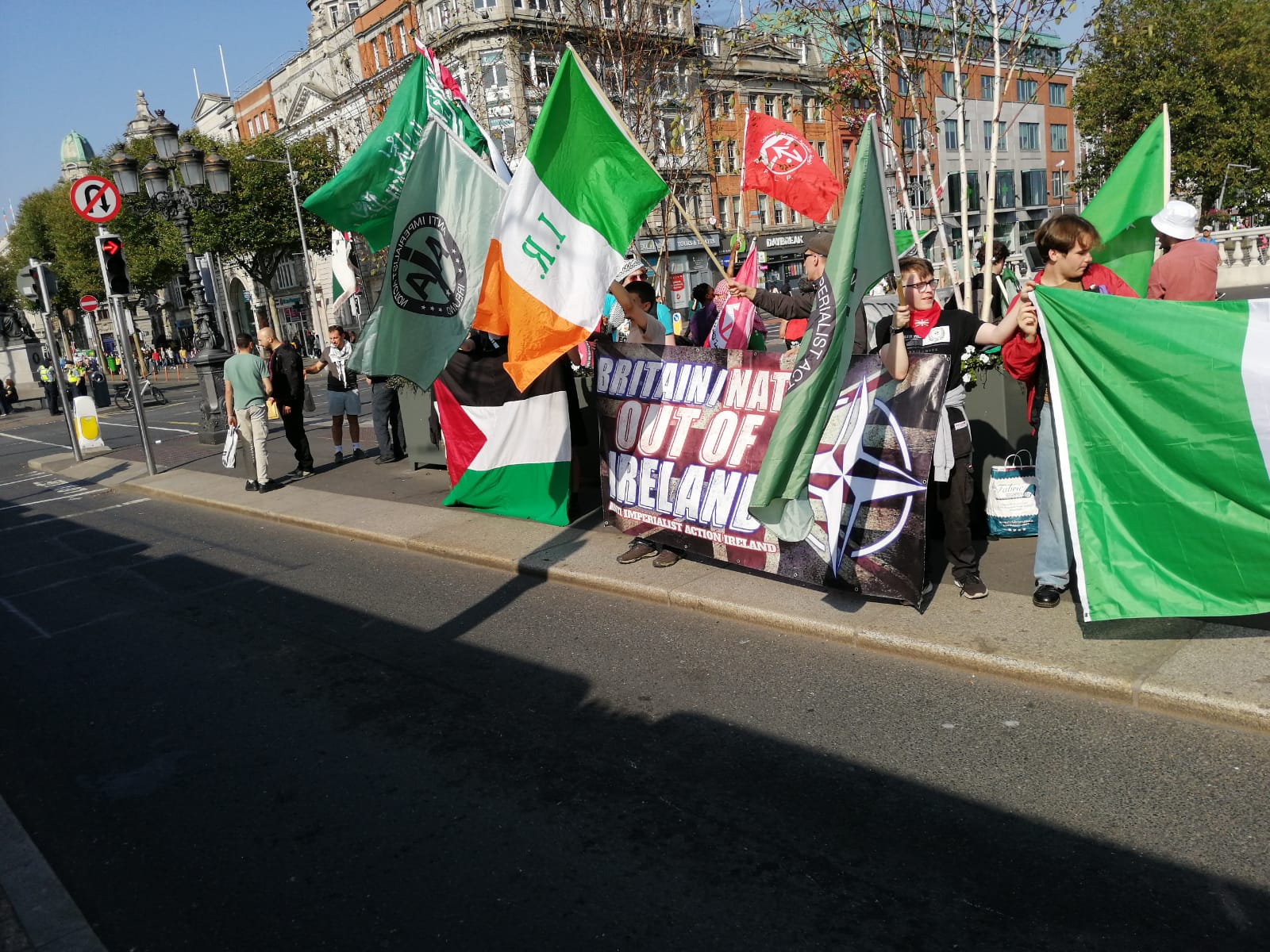
The Saoirse Don Phalaistín and Anti-Imperialist Action groups organised a protest against Starmer’s visit to take place on O’Connell Bridge at 3pm on Saturday and took up position on the central pedestrian reservation, with one section facing eastward and the other towards the West.
The Bridge spans the River Liffey and is in the heart of the city centre, crossed by north and southbound traffic and in view of westbound and eastbound traffic along the quays also.
There was a heavy presence of uniformed police in the vicinity, with five Special Branch nearby and a Public Order Unit van driving by a number of times as did other Garda vans. A prisoner transport van was also parked on the Bridge for a period but no attack was forthcoming.
Collection of banners and flags in west-facing section of protest. (Photo: R.Breeze)
RECORD OF THE LABOUR PARTY
One of the speakers at the O’Connell Bridge event reminded people of the history Labour Governments vis-a-vis Ireland, having sent the troops to the Six County colony to quell the struggle for civil rights there and also targeting the Irish in Britain with the Prevention of Terrorism Act.
This 1974 PTA, the speaker said, was later extended into the current Terrorism Act of repression in Britain. He reminded people too of the innocent Birmingham Six, Guildford Four, Maguire Seven and Judith Ward who were framed and jailed for long years under a Labour Government.
A speaker at the protest giving some reasons why Keith Starmer is not welcome in Ireland. (Video cred: Social Action Ireland)
The speaker could have also mentioned the Labour Party’s participation in the WWI War Cabinet which had sentenced and executed 16 Irish leaders after the 1916 Rising and its bipartisanship with the Conservatives on the partition of Ireland in 1921 and instigation of the Civil War in 1922.
SUPPORT AND OPPOSITION
The attitude expressed by protest passers-by on foot, bicycle or in motorised transport was nearly uniformly supportive. One exception was a fascist who called the protesters ‘traitors’ and attempted to take closeup photos before being blocked by a participant with a flag and seen off.
(Photo: R.Breeze)
Another was a big man who in a UStates accent seemed to shout something derogatory about Ireland and then claimed to be Irish (he might have been part of the diaspora there since the Irish tricolour colours appeared on the back of his top).
For much of the two hours of the event, slogans were shouted in support of Palestine, against the Zionist State, against Starmer, against British occupation of Ireland, for Intifada revolution, and for the solidarity action of Yemen at sea regarding Zionist-collusive shipping companies.
End.
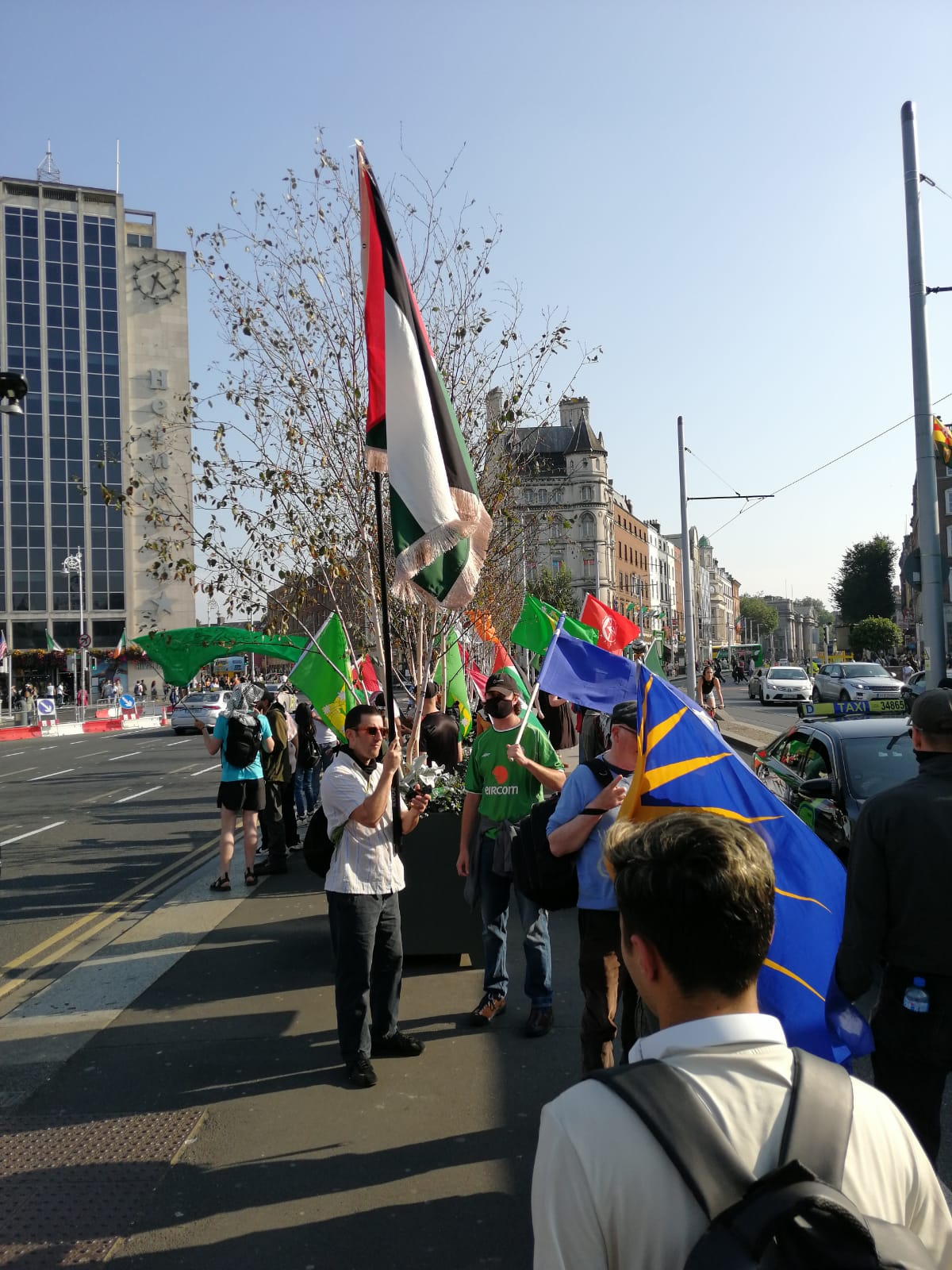
Another view of west-facing section of protest with newly-made ornate Starry Plough flag. (Photo: R.Breeze)
FOOTNOTE
1There have been a number of reports of special units of the British army in Palestine and on British Intelligence personnel assisting the ‘Israeli’ Occupation Force.
A number of great leaders of Arab resistance to imperialism and zionism have fallen in the last few days. “Those who live by the sword …”, the wise will comment. But they did not die by the sword but rather by long-range missile assassination.
Still, we can take the comment as a metaphor, that those who live by violence die by violence. But do they? Has Genocide Joe Biden died by violence? Sunak? Von der Leyen? Scholz and Merkel? Macron? Netanyahu, Gallant, Smotrich? No, it is clearly not a general rule.
But revolutionary fighters, commanders and leaders – they are killed, again and again. Fighters who become commanders are particularly targeted and, in the Middle East for sure, so are their spouses, their children, their parents … This is the way of Mossad and the IOF but also of the US and UK.
The SAS and MRF units of the British Army did that in the 30 Years’ War in the occupied Six Counties too. Assassinations of leaders are intended to disrupt the revolutionary organisation and demoralise the Resistance.
Sometimes, the intention is to have a revolutionary leader replaced by a traitor or someone who is ideologically pliable but often too the fallen are replaced by others as dedicated and competent, if not more so.
The IOF are accomplished assassins of individuals, also killers of civilians, just not very good at combating armed resistance, particularly in the absence of air cover..
But why shouldn’t revolutionary leaders be felled – don’t they send others out to kill or be killed? Certainly they do and all Arab resistance movement commanders know that they risk assassination, many of the commanders and fighters writing their wills while in active service.
However, visit imperialist war memorials listing the names and ranks of the fallen in war and see how many names of their armies’ generals can be found there. Not many, that’s for sure.
Haniyeh was the chief Resistance representative in the Gaza ceasefire/ peace talks. Prime Minister Mohammed bin Abdulrahman al-Thani of Qatar, which is mediating the talks, tweeted: “How can mediation succeed when one party assassinates the negotiator on other side?”1
Two revolutionary leaders who fell to assassination so recently were Sayyed Fouad Shukr of Hezbollah in a suburb of Beirut and Ismail Haniye of Hamas in the Iranian capital, Tehran. Each organisation has issued statements that they will not be stopped and that they will claim revenge.
In another assassination strike on Tuesday in Iraq, admitted by the USA, Khateb Hezbollah suffered the loss of martyred leader Abu Hassan Al-Maliki and martyred fighters Ali Al-Moussawi, Hassan Al-Saadi and Hussein Karim Al-Daraji,2 bringing huge crowds out in protest there.
The Iraqi Islamic resistance had begun shelling US Army bases there recently, partly in frustration at the lack of any move to leave the country despite having indicated they would but partly also no doubt in frustration at not contributing to the united effort in solidarity with the Palestinians.
Iran declared furthermore that since the assassination of Ismail Haniyeh took place on their national territory that the obligation of response falls upon them. One imagines that another strike on somewhere in Israel will be considered necessary though the precise target is unknown.
Declarations of condolence, defiance and continuity were also issued by resistance factions in Palestine, Lebanon and Iraq, as well as by the leaderships of Yemen and Tunisia. A general strike was called in the West Bank and marches of defiance and solidarity held in a number of countries.
Confrontations with settlers and with the Occupation army have been taking place in towns across the West Bank and the war in Gaza continues, more or less as normal: daily massacres by the IOF, actions by the Resistance.
‘Collateral damage’
The strikes on the leaders also claimed other lives: six people including three women and two children, along with Iranian Revolutionary Guard Corps member Milad Bedi were killed in the Beirut assassination of Fuad Shukr and 78 injured in the collapsed building.3
Along with Haniyeh in Iran died his bodyguard and veteran Palestinian resistance fighter, Wassim Shabu, with no details of other ‘collateral damage’ from there or from Iraq so far.
According to the rules of war agreed among the imperialists, assassination of commanders, even civilian ones in times of war, is justified. ‘Collateral damage’ to a certain degree is also permitted by those rules but how can the bombing of journalists and killing two in Gaza be justified?
They were at the rubble site of Haniyeh’s former home, perhaps reporting on some kind of event marking the assassination, since they cannot attend the equivalent of a wake or a laying out of the body, the funeral to be held in Iran. How was their killing justifiable by any stretch of rules?
Ismail Al-Ghoul and Ramy Al-Reef were the two press men martyred there. Those two deaths bring the number of journalists killed in Palestine (always by the IOF), to 165, the highest number of journalists killed in any conflict since data began to be collected by the CPJ in 1992.4
Life of revolutionary leaders
The life stories of the martyred leaders are instructive in themselves. Ismail Haniyeh grew up in a refugee camp in Al-Shati in Gaza, son of a community driven out of their home in Jura in Askelan5 in 1948. He graduated with a degree in Arabic Literature from the Gaza University in 1981.
It was in university Haniyeh became politically active, joining the student section of Islamic Bloc (forerunner of Hamas), becoming arrested and detained three times, the final one for three years, after which he was deported to southern Lebanon with other leaders.
Ismail Haniye survived at least four assassination attempts, including in 2003 and in 2006.
Haniyeh led Hamas to victory in the 2006 elections for the legislature of the Palestinian Authority. The Fatah leadership refusing to hand over the administration in Gaza, Hamas removed them in a short struggle,6 then Abbas7 refused to recognise the election results there or in the West Bank.
The Zionist State followed, as did the Western powers and the siege of Gaza began.
Haniyeh’s granddaughter was killed last November in a bombing on a school. Three of his sons and three grandsons were assassinated in an IOF strike on their car in April and last month, 10 of his family, including his sister, were killed in an IOF bombing.
Sayeed Fuad Shukr 62, also known as Al-Hajj Mohsen, was born in the city of Nabatieh in Baalbek in eastern Lebanon, according to the US government’s Rewards for Justice website, which offered up to $5 million for information on Shukr.
He came to political struggle in the resistance to the IOF invasion and occupation of Lebanon which was the spur to the creation of Hezbollah. Fuad Shukr as a fighter rose through the political and military ranks to the Jihad Council fighting the IOF and its Lebanese proxy.
Sayeed also would have been party to the decision to send Hezbollah fighters to assist the Syrian state resist attacks by NATO forces and their proxies and probably also Turkish.
He was married with children; his daughter wrote pieces in particular about martyrs under a pseudonym but just published a piece about her father under her own name on Resistance News Network (on Telegram).
Dying Gaul statue, 1st Century CE, probably Roman sculpture. By his neck ornament, the Gaul appears to be a warrior of high rank. The Gauls were a Celtic culture inhabiting most of modern-day France, Switzerland and parts of Italy; after many wars they were crushed by the Roman Empire. (Source image: Internet)
Great leaders
I commented that they were great leaders. By all accounts they were. They were Muslim revolutionaries and I am an atheist but more to the point their religious belief was an important part of their politico-social ideology, to which my own secular revolutionary ideology is opposed.
But they were revolutionaries non the less, courageously leading their people in struggle against their oppressors, who are very powerful enemies. They had emotion, which they let out in speech. In planning and in response to events however, they thought things through before acting.
Ismail Haniye probably underestimated the extent – in length of time and numbers of dead, in starvation and destruction of all infrastructure — of the ‘Israeli’ genocidal war after October 7th.8 That does not mean however that the breakout and attack was not necessary.
But the resistance was led, day after day, using the tunnels that had been dug through the years of preparation and the weapons researched, developed and produced over that time. In the truce/ ceasefire negotiations, the leadership stuck to the necessary minimum, which must’ve been hard.
Great fighters of the rank and file fall and are constantly being replaced and multiplied. Thousands of civilians have been killed, disabled and traumatised, yet the Palestinian population will recover and rebuild. Great leaders have fallen – let us hope their replacements will be great too.
End.
Footnotes
1https://www.axios.com/2024/07/31/hamas-ismail-haniyeh-killed-iran Just one more proof, in addition to going back on agreements, adding new requirements etc showing that Netanyahu never had any intention of negotiating a genuine ceasefire, exchange of prisoners and withdrawal from Gaza and the Rafah Gate to allow humanitarian aid to enter. Indeed he often said that his chief aim was wiping out Hamas and would not permit self-governance in Gaza – it was only a few of his officials and the US administration which kept pretending otherwise.
6This is the reality usually disguised in the western mass media by phrases like “Hamas seized power in Gaza” or “Hamas took control in Gaza”.
7Mahmoud, Fatah’s boss of the PA, widely known for personal corruption and nepotism and also for collusion with the Zionist Occupation.
8Even the most pessimistic could hardly have expected the extent of the genocide or the extent of the collusion or forbearance of the West and most of the Arab states.
The ability of enemy drones to evade detection and even attack, reaching into the heart of the ‘Israeli’ state’s territory, both to photograph and, in the case of the Jaffa (‘Haifa’) town and ‘Eilat’ port to strike, have shocked the state’s military.
They have shocked settler society too. Hadashot Bazman1 reported: “Hezbollah’s drones do not need a visa, and they are controlled remotely via cameras with an operator in the control room. What you do not know will not kill you now …2
“they are telling us: ‘We are here, inside you, planning, and capable of delivering harsh strikes’.” ‘Israeli’ daily newspaper Maariv added: “The Air Force has been asleep at the wheel for years.” 3
‘The sarcasm reached the point where one person wrote: “I lost a black leather wallet at Haifa (sic) Port; we hope Hezbollah will locate it accurately and professionally.”4
The hit in Jaffa was by Ansar Allah, exploding a drone near what was the former main US Embassy building (before its internationally illegal relocation to Jerusalem)5; the other was claimed by the Islamic Resistance in Iraq. But the drones hitting them almost daily are from Hezbollah.
Why the shock? It’s because they have come to believe in their security, their own racist European settler propaganda of innate superiority, instead of recognising the real source of their domination over the indigenous: the financial, military and political support of the Western powers.
With constant propaganda through western mass media, that image of the westernised (‘civilised’) ‘Israelis’ has permeated throughout the west, even infecting many who detest the Occupation’s genocidal actions.
Imagine the reaction as we explain years of Hezbollah’s drone development, testing, production, more testing … “We thought they got their weapons from Iran.6 Wait a minute! You’re talking engineers, designers, labs, test crews … Actual factories, assembly lines! In an Arab insurgency army?!”
We have been trained to see the ordinary people of the Middle East as underdeveloped industrially and (therefore!) socially, their fighters as religious fanatics. This image is not compatible with decades devoted to research development and production of sophisticated modern weaponry.
And yet, that is the ‘secret’ of the Yemeni success: determination, years of R&D, testing their ability, testing the enemy’s, redesign, more testing, tight security and deceiving the enemy … until the cat is out of the bag, spitting, claws fully extended.7
Hezbollah’s Karar drone. (Source: Yemen’s Air Force PDF)
And yet … and yet … Hezbollah is still showing restraint. Yes, they are targeting the IOF in the occupied lands and, in response to genocidal attacks on Palestinians, also some of the colonial settlements until recently untouched.
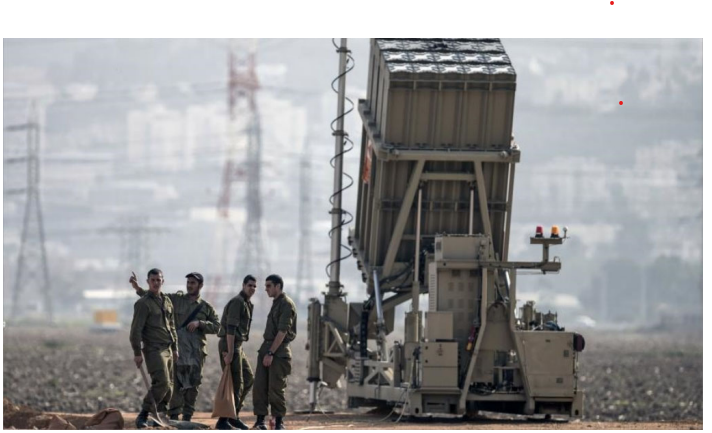
They are also hitting and destroying parts of the genocidal state’s surveillance and defence infrastructure, practically on a weekly basis. The “Iron Dome” depends on launching interception missiles and the launchers are being periodically hit by Hezbollah too.
‘Iron Dome’ launcher of interception missiles with members of the IOF in attendance (Source: Yemen’s Air Force PDF)
And they will continue doing this, they say, until the genocidal attacks on Palestinians cease and international humanitarian aid returns unimpeded (Yemen’s attacks on certain shipping will continue until the same point, as made clear by Ansar Allah).
Hezbollah, like most anti-imperialists, Arab or otherwise, want to see the demise of the genocidal state. But they clearly don’t want all-out war with it at present, with attendant wide-scale destruction of Lebanon by the air forces of the imperialist alliance.
So they have published the results of their surveillance drones flyovers, including most recently of the IOF’s high-security military airport, noting the identity of its commanding officer and also exploded a warning in the centre of the state’s third-largest city.
Published results from the earlier ‘Flight of the Hoopoe’ in June.
THE SHORT, MEDIUM AND LONGER-TERM SIGNIFICANCE
In the short term, the significance of this development is that the settler state is very vulnerable. It must endure Hezbollah’s attacks on its military and its defence systems, knowing that its vulnerability increases steadily.
Scenes from and commentary on the most recent published results of Hezbollah’s undetected drone flight containing detailed aerial film of the IOF’s airbase.
Or attack the source, which Gallant has threatened and Netanyahu desires — for which, as this was being written, they tried to find an excuse in a deadly explosion on children playing football in the occupied Golan, blamed on Hezbollah but for which they’ve denied responsibility.8
But it is extremely doubtful that their armed forces now have the necessary numbers of armour or troops to attack Lebanon, having suffered so many damaged or destroyed of the first and dead or severely injured of the second, inflicted by the lower-tech fighters of the Palestinian Resistance.
In the short-to-medium term, all the allies of the Palestinians in the Middle East draw encouragement in their own contention with the ‘Israeli’ state and with its imperialist supporters and suppliers, while some other states reconsider their alliance with what looks increasingly like a loser.
There is no question but that in recent decades the role of drones in wars between states has been significant but also in asymmetrical conflicts against resistance fighters, such as that of the ‘Israeli’ state against the Palestinians, both against fighters and more commonly against unarmed civilians.
(Source: Yemen’s Air Force PDF)
From now on, insurgency movements will have to organise not only to neutralise the adverse effects of drones in their adversaries’ hands but also to maximise the numbers and efficiency of their own against their enemies’ troops, armaments and battle HQs, production and administrative centres.
The term “drone” is used to describe UACVs (unmanned aerial combat vehicle) but versions operating on the ground, on and under sea have also been developed.
Sea versions like an unmanned boat exploding on contact or from radio signal have been used by Yemen recently. In the NATO proxy Ukraine war, the latter has also deployed them against Russian assets. The development of multi-environment military drones cannot be far away.
Drones can also observe, record, hunt and attack through detection of infra-red imaging, attacking human fighters of either side at night or in heavy fog, rain or snow – as long as the drones can fly.
In future, killer combat drones may hunt not only by detecting infra-red light and carbon dioxide emission,9 gun oil odour, presence of ammonia etc but even of pheromones, able to distinguish between sexually active males and females.
Of course, the development of drones could focus on means to find survivors (or recover bodies) in collapsed mines or buildings (something the Palestinians could make great use of due to IOF bombing), locate missing persons etc, instead of for observing people in order to kill them.
5Under Trump’s previous Presidency but not withdrawn under Biden’s.
6Well Iran might be viewed as ‘mad Arabs’ (they’re not even Arabs, for the most part) but at least it’s a state, not an insurgent army. In fact, it appears to be the case that Hezbollah have not only developed their own drone-building capacity but contributed to Iran’s.
7Or one of the cats, anyway; Hezbollah says it has more surprises in store and it’s hard not to believe them.
8The western mass media has recorded Hezbollah’s denial of responsibility for the explosion perfunctorily while giving much space to ‘Israeli’ and US accusations against the organisation. This should be bizarre, given Hezbollah’s record of accuracy in missile firing and in statements, compared with an ‘Israeli’ history of blatant and monstrous lies (as recently as by Netanyahu in his address to the US Congress in Washington) … but has sadly become routine.
9One of the ways in which female mosquitoes locate their prey from which to suck blood.
The role of culture in revolution is of great importance – greater even than that of the armed struggle, certainly in the initial and later stages. We are created by evolution but we are born into and raised in culture.
The question of whether that culture is to be revolutionary or liberal is of crucial importance.
I have remarked on how Mandela, jailed for his revolutionary armed activities, was marketed as a peacemaker and later became a figurehead of pacification of the South African struggle. Bobby Sands, a revolutionary fighter to the last, has also been represented as a peaceful icon.1
And so also was Terence McSwiney who, like Bobby Sands, died on hunger strike.2
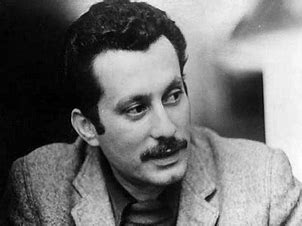
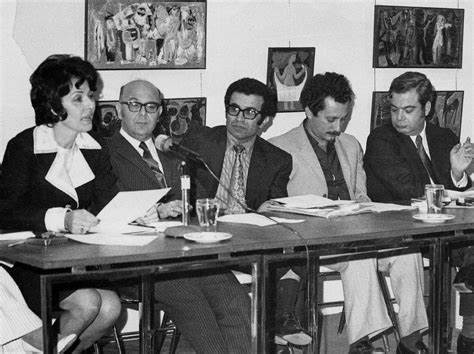
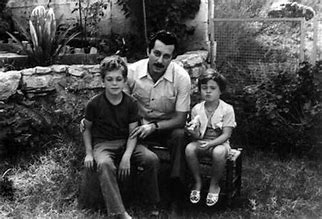
The following article from Resistance News Network, reflecting on the work of the revolutionary writer Ghassan Kanafani who was murdered by Israeli Zionism and his subsequent representation as an icon is I think of substantial interest. D.Breatnach
Ghassan the poet? Ghassan the Palestinian? No, Ghassan the revolutionary!
In colonial wars, the creation and dissemination of symbols to the public is a crucial battle in the war of consciousness building, even if its effects are not clearly visible in the present.
Perhaps the most prominent example of these battles was the image of Che Guevara in the wars of liberation in Latin America. Ernesto Guevara’s persona represented an individual model that encapsulated the revolutionary spirit of people fighting for their freedom from American hegemony.
As the American empire recognized its inability to destroy Guevara’s image, they transformed his image into a consumer commodity.
This was to divert his image from its original revolutionary meanings and repurpose it in the service of economic and cultural agendas that contradicted Guevara’s own principles and what he represents.
In the Arab context, the war to liberate Arab symbols from the captivity of history monopolists continues to intensify, as it involves obscuring forgotten heroes in favour of fabricating mythical legends designed to tamper with the boundaries of nationalism and betrayal in the Arab mind.
In this context, the fiftieth anniversary of the assassination of the martyr Ghassan Kanafani is being observed, with pages and websites filled with commemorations of Ghassan’s life, his quotes, and his most significant works.
It is no longer surprising that Ghassan Kanafani is celebrated on both normalization platforms as well as liberal ones, when voices are raised to commemorate Ghassan even as they are in the heart of the hostile project under the umbrella of its military bases.
Thus, the question arises: which Ghassan Kanafani are we commemorating today? And how do we protect the Ghassan we know?
Ghassan Kanafani’s life provided rich material for readers, followers, and analysts after his martyrdom.
However, the perception of Ghassan was not independent of the political contexts of the recipient interpreting his word, resulting in multiple “versions” of Ghassan Kanafani, some of which we review below.
Ghassan Kanafani: The Writer (only?)
The most widespread version of Ghassan Kanafani is that of a “writer” who wrote stories, plays, and depicted the Palestinian reality.
The spread of this version may be justified since Ghassan’s literary works are the most popular among people and have played a significant role in spreading his name.
However, confining Ghassan Kanafani to the realm of “literature” is not always innocent, and in some respects, it is a deliberate reduction of Ghassan Kanafani’s political work.
Ghassan was responsible for mobilization, media, and was a part of the political decision-making circle in the Popular Front for the Liberation of Palestine since it was part of the Arab Nationalist Movement. He remained in this role until his martyrdom.
Moreover, Ghassan’s literary output never compromised or was at the expense of his political positions or took precedence at any point in his career.
In terms of production, his political studies, research, articles, and editorial journalism are as abundant and important as his narrative and theatrical works.
Even the latter were never detached from the political context; instead, the narrative served as a framework through which Ghassan conveyed his political, social, and even philosophical ideas.
Consequently, the image of Ghassan as “the writer engaged in politics” falls away, replaced by the truth of Ghassan — the politician who harnessed literature in the service of a political cause.
The danger of this deliberate reduction lies in paving the way for a sanitized image of Ghassan Kanafani, presented to the public by liberal (and even normalization) pages and platforms to gain credibility in Ghassan’s name.
Kanafani tackles a fundamental dilemma that burdens our political reality to this day, which is the crisis of “the prioritization of internal change over liberation.”
Thus, reductionism turns into deliberate distortion, making Ghassan Kanafani’s name a “honey” slipped into the poison of isolationist, liberal, and anti-resistance ideas on our land under the guise of freedom and liberation.
Otherwise, how can we understand the celebration of Ghassan Kanafani by liberal platforms and influencers at Al-Udeid Air Base?
Ghassan Kanafani: the Palestinian (only?)
One of the unjust reductions of Ghassan Kanafani is the confining of his personality and his works to “Palestine,” as delineated by colonialism.
Again, one can find an excuse for this reduction because Palestine represents the primary aspect of Kanafani’s political and literary identity, and his experience is closely tied to the general Palestinian experience of war, forced displacement, diaspora, and the struggle for return.
Some people overly emphasize Ghassan’s Palestinian identity, overshadowing his Arab dimension, which he never concealed.
In reality, examining Ghassan Kanafani’s political studies unveils to us the truth of Ghassan as an Arab nationalist thinker who worked hard and struggled to develop practical frameworks for Arab revolutionary theory.
This is made clear in his in-depth study, “The Arab Cause in the Era of the United Arab Republic,” where he discusses the essence of the imposed war on our region, identifying enemy and friend camps, and ultimately defining the main goal of the war: liberation as a condition for unity and renaissance.
Ghassan further elaborates on this study’s conclusions in another study titled “The Revolutionary Applications of Arab Nationalism,” published in 1959, in which he masterfully details the concept of Arab unity and the tools for its practical implementation.
Ghassan Kanafani goes beyond this by considering the confrontation of isolationist (regionalist) thought a revolutionary necessity, describing “isolationism” as something that “contradicts the nature of the formation of societies.”
Isolationism or “regionalism” are anti-unity tendencies, based on defining society’s interests from colonial borders and treating each Arab state as “independent” in itself, as Sykes and Picot intended.
Kanafani tackles a fundamental dilemma that burdens our political reality to this day: the crisis of “the prioritization of internal change over liberation.”
No better formulation to this question can be found than Ghassan’s own words when he stated that “raising the concept [of focusing on internal development first] is a deliberate exclusion of the popular current directed towards unity with determination,
and diverting it to side and regional battles that are easily manipulated (as long as each Arab country is not -nationally- at a level of complete liberation worthy of proper social construction).”
Ghassan concludes his argument by asserting that “unity is a prerequisite of the renaissance… even its regional aspect.”
We mention these ideas as examples of Ghassan Kanafani’s Arab nationalist thought, which fundamentally opposed isolationism and the canned projections of Marxism and others, with strength and clarity.
Therefore, the celebration of Ghassan by the proponents of these ideas indicates their exploitation of Ghassan’s legacy (from their side) and a significant failure in protecting Ghassan (from the side of those who believe in his ideas).
How, then, do we protect Ghassan Kanafani?
The starting point lies in defining ourselves. Are we believers in Ghassan Kanafani’s approach and vision for the ongoing conflict on our land, which comes at the expense of our blood, lives, and destinies?
If so, our foremost duty is to reclaim Ghassan Kanafani from the chains of cheap consumerism and to present him to the public in his true and impeccable form: an Arab nationalist fighter who made among the most significant contributions to modern Arab revolutionary theory.
Additionally, our responsibilities also include reviving the spirit of party work, in which Ghassan was a pioneer, and correcting the Arab party frameworks to harness the wasted energies in the prisons of virtual activism,
within the halls of “non-governmental organizations” and the labyrinths of despair and discouragement.
Our obligation towards Ghassan Kanafani demands that we comprehend our reality and its conditions and that we clearly define our goals, grounded in a deep conviction in our civilizational role as a nation.
We must believe that the liberation of the land is a step towards unity, and that unity is a prerequisite for the renaissance that will elevate us to our rightful civilizational status among nations. Finally, here is a part from Ghassan Kanafani’s ongoing will:
“A human being who does not live the average of sixty years will not find enough space to live peacefully; instead, they will carry the crisis from the moment they are born… and pass it on to their children at the hour of their death.
“The results of this struggle will be for a generation we do not know when it will arrive, even though we are optimistic about witnessing its early days towards the end of our lives…
“Our only reward may be that the next generation, the happy generation that will enjoy our victories, will envy us for having earned the honour of living in the age of struggle for life. And that is enough for us temporarily.”
End.
Footnotes
1In particular by the constant reproduction of his statement that “our revenge will be the laughter of our children”, completely abstracted from his role as an armed freedom fighter and what he wrote in support of that.
2Similarly to Bobby Sands, his statement that is those who who endure, rather than inflict the most who will triumph. The statement taken in isolation seems to endorse passive resistance but McSwiney was an officer of the IRA in the War of Independence, a role skated over in the Wikipedia entry dedicated to him.
The fundamental thing to grasp here is that there can be no peace deal as such. Although there can – and needs to be – an end to Israeli massacres of Palestinians, no arrangement that leaves the zionist settler state in situ can possibly deliver peace.
Even if the zionists could go against their settler nature and therefore abandoned expansion, the Palestinians will never reconcile themselves to their dispossession of most of their country, including their best land and water.
TALK OF A CEASEFIRE DEAL
Very recently Biden put forward a ceasefire plan which he claimed to be an ‘Israeli’ one; Netanyahu seemed to reject it but one of his ministers accepted it was their position.
News footage of Biden’s announcement of the ceasefire proposal “by Israel”. The Palestinian resistance states that the offer received from ‘Israel’ does not at all match the content or process laid out by Biden. (Source video clip: Internet)
Since it contains the main items in the deal brokered by the Arab state intermediaries and approved by the CIA’s man some weeks ago, naturally the Palestinian Resistance1 has welcomed the proposals.
But with caution – they have seen Netanyahu torpedo ceasefire deals before, including the earlier one. And Netanyahu has said repeatedly that eliminating Hamas (by which he means Palestinian Resistance capability) and recovery of the detained Israelis2 is a necessity for any ceasefire.
Of course, the actions of the IOF under his orders don’t suggest that he is serious about recovering the detainees – not alive, anyway. On the other hand, he dearly would like to eliminate the Resistance capability and was happy to wipe out more than the 36,000+ civilians he has already.
But it may be that he has come to believe – or has been pressured into believing – that that project may have to be put off for awhile. The settler society is deeply divided over the question of the Israeli detainees and in a recent poll only 10% believed that the IOF was winning the war.3
Netanyahu’s position is rational from the settler perspective which is that the Indigenous have to be dispossessed and, because they naturally resist, have to be also heavily repressed. But he would like to keep the war going for another reason, which is that he is due to face trial for corruption.
However, he doesn’t get to be where he is or do what he does as an individual but rather with the backing of, in the first place the Israeli ruling class and secondly, of course, of the US Government, which really means by the rulers of the US financial-industrial-military complex.
Supporting ‘Israel’ has been basic US imperialist policy since 1948, when the zionist lobby in the US was not anywhere near as strong as it is today. Biden now, Trump before (and possibly again), Obama, Clinton, Bush, Bush, Reagan – all of them have supported the zionist colony.
Contrary to what many people think, the main reason for the US supporting ‘Israel’ is that it is the only state in the Middle East totally safe from national liberation revolution (because it’s a settler state fighting the Indigenous) or Islamic fundamentalist revolution (because it’s zionist).
In other words, it’s the only safe long-term USA foothold in the Middle East. Or at least it was.
Current map of the Middle East states. The US has overthrown the Iraq ruling regime and made clients of the regimes of all the others with the exception of Yemen and Iran, both of which overthrew their western-aligned ruling elites. (Source map: Internet)
So if Biden is really pressuring Netanyahu– which is not clear yet, given that money and weapons are still being supplied and massacres of Palestinians continue daily — that means that the US ruling class (or at least its dominant section) is pressuring the Israeli ruling class.
Perhaps that’s why John Kirby, Biden’s Middle East envoy is now heading back to the Middle East, in the first place to the zionist state then possibly to Egypt afterwards, where some Resistance leaders have gone already (at least of Islamic Jihad and of the PFLP, according to Arab media).
But every passing day, the IOF massacres between 50-100 Palestinians on average, the population of Gaza suffers from malnutrition, their housing and shelters are bombed, rescue workers are targeted and the only functioning hospital4 is low on fuel and out of many medicines and drugs.
Since the talk of a deal began, the known death toll in Gaza (not to mention the West Bank) passed 5,000 and is now half way through its sixth thousand.
The cold hard fact is that if the US shut off finance and munitions delivery to Israel, the massacres would stop within a day or two and, because the IOF can’t fight without air cover, it would have to withdraw from its blockade of the Rafah crossing, instantly allowing in food, fuel and medicine.
But also as the Medical Director of GLIA5 Tarek Loubani stated in a recent very informative interview,6 the Palestinian bordering states of Egypt and of Jordan, which also have gates, could break the siege tomorrow. Of course these are ruled by elites that are clients of the imperialists.
“THE TWO-STATE” OPTION
But what’s the long-term plan for Palestine?
For some Zionists, including a couple of members of Netanyahu’s war cabinet, it’s the expulsion (sorry, “voluntary resettlement”) of Palestinians from Gaza to be run by ‘Israel’ and resettled by zionists. Not many outside the state would openly espouse that objective.
Although liberal ‘Israeli’ journalist Gideon Lev, who no longer supports the “2-State solution” (sic) commented that Biden dropped that objective from his outline of the alleged deal,7 it has been for decades the only long-term plan of the US, UK and EU and of their main political parties.
This plan is to get some kind of collaborator management to run less than 20% of historic Palestine next to the robbers of most and the best of its land and most of its water, in a “state” dominated by the robbers and under their constant eyes, genocidal guns and air force.
Who gets the Quisling management job? The USA suggested months ago a “revamped Palestinian Authority” which is despised by most Palestinians, corrupt and authoritarian (hence to be “revamped”). Others have suggested some kind of Arab state partnership to manage at least Gaza.
The most recent map of the imagined two-state “solution”, drawn up during Trump’s earlier presidency – areas in green allocated to Palestine, beige to the zionist state. (Source: Wikipedia)
But Netanyahu says the PA will not run Gaza. Of course, if he’s on the way out, he may be ignored but the Resistance is on record saying that what they have, whether part of 2-State setup or not, must be run by Palestinians and that they will not accept any other states doing so.
And that for Palestinian unity, the PLO8 must be opened to Islamist organisations such as Hamas.9
If legislative elections (overdue by almost two decades) are run now, the likelihood is that Hamas will win again10as it did in Gaza and the West Bank in 2006.11
MEANWHILE, THE DEAL …
“The first stage proposes to involve a six-week ceasefire during which the Israeli army will withdraw from the populated areas of Gaza. Hostages, including the elderly and women, would be exchanged for hundreds of Palestinian prisoners.
“Civilians would also return to all of Gaza, with 600 trucks carrying humanitarian aid flooding the enclave daily, Biden said.
“The second phase would see Hamas and Israel negotiate terms for a permanent end to hostilities. “The ceasefire will still continue as long as negotiations continue,” the president said.
“In the third phase, a permanent ceasefire would follow, facilitating the reconstruction of the enclave, including 60 percent of clinics, schools, universities and religious buildings damaged or destroyed by Israeli forces.”12
The Resistance leadership, while welcoming what Biden said, declare they want to see all the provisions spelled out – and quite rightly so – before they commit to the pacification plan. They also want to see that Netanyahu himself commits to it, which is far from what he’s currently saying.
They want to stop the genocidal murder of their people through bombing, starvation and destruction of medical care facilities. No doubt they also welcome the opportunity for a respite for their surviving veterans and for training new recruits, perhaps also stocking up on war materiel.
But what game are the USA and the Zionists playing? Could this just be electioneering for Biden? Is there a serious split in the Zionist war-cabinet? Or could it be a playing for time and divide-and-rule game by the US, the Zionists and allies?
A statement given by “a senior leader in the Palestine resistance” to Al-Akhbar and published in Resistance News Network suggests that the latter might be the imperialist game.13
The latest attempts will occur in the coming days, following an invitation issued in the name of Egyptian President Abdel Fattah al-Sisi through his intelligence chief Major General Abbas Kamel to senior leaders of the Popular Front and Islamic Jihad
to visit Cairo for consultations on the situation and the possibility of “creating a breakthrough which would lead to a deal the United States wants to happen now.”
The factions will visit Egypt, and there will be separate or joint meetings.
It is expected that a Hamas leadership delegation will also arrive in Egypt, where representatives from the United States and Qatar will be present, while the “israelis” will be sitting in a private hotel waiting for the results of the meetings.
However, it is clear and decided by the resistance factions that the message that will be conveyed to the Egyptians or any other party present will be much higher than the position announced by Hamas.14
However all this pans out, despite the huge toll of its genocidal campaign, the Zionist state gained nothing militarily, while it has lost hugely on the international political stage. Which means its primary sponsor, the US has lost influence too.
The world is not the same place it was up to the first week in October last year. Nor is it likely to be ever so again. Not just in the Middle East but also in the global South and even in the global West, especially in the latter for thousands of young people.
End.
FOOTNOTES
1Spokesmen of a number of different Palestinian resistance organisations have made it clear that the negotiators of Hamas represent them in the talks and that they are kept informed.
2I use this term to describe what are normally called “hostages”, given that the hostages of the zionists are usually called “prisoners”.
3Quoted by Jon Elmer in last week’s Intifada Update. This is in a society with military censorship of the press and, as Jon Elmer remarked on an Electronic Intifada update, “10% is an error margin for zero.” Elmer also quoted the result of 40% who believed “Hamas” was winning.
4For a million people, according to a recent of the almost daily appeals from the Health Authority.
7Interview today on line (can’t recall which agency).
8The Palestine Liberation Organisation, dominated by Fatah, which has largely been sidelined in the Resistance struggle, in particular since October last year.
9And Islamic Jihad – and there are others. Secular organisations like the PFLP are in the minority. The latter have been in the Fatah-dominated PLO, which excluded Islamist resistance organisations and which has been seen as betraying Palestinian objectives and colluding with the zionist occupation while indulging in substantial corruption until the Palestinian electorate voted them out and Hamas in in 2006.
10Probably with gains too for any Resistance group standing and even less votes than before for Fatah, from which the PA leadership comes.
11In Gaza Fatah refused to accept the electoral verdict and to give up their control; in a short battle they were removed by Hamas which chose not to do the same in the West Bank, where civil war would have been much more intense. From the moment Gaza came under Hamas management it was blockaded physically by the zionist state with Egyptian and Lebanese regimes collusion and politically and financially with full backing of the US and the imperialist states of the EU and the UK (and again, collusion of the Palestinian Authority). The intention was to make life in Gaza so unbearable that it would be abandoned or otherwise ripe for ‘Israeli’ control.
13The context about attempts to split the Resistance: “They attempted to open communication channels with local leaders in Gaza but were met with the shocking response to go to Hamas. They then tried to open side channels with the Popular Front [for the Liberation of Palestine] and factions of the Palestine Liberation Organization that have military wings in the Strip, and they led an initiative they believed would be tempting to the leadership of [Palestinian] Islamic Jihad, only to hear the same response. Nevertheless, the enemy continues to try to break the unity behind Hamas.”
14I interpret that as meaning that the factions will exceed the demands of Hamas, forcing the negotiators to abandon their splitting plans and deal with the actual issue of a ceasefire deal and present the detailed written terms as presented by Biden (and previously agreed by the Resistance but refused by Netanyahu) with the ‘Israeli’ Government’s acceptance, which the Resistance will accept.
On 25 May, a video surfaced on Israeli social networks in which an armed and masked man in an Israeli army uniform stood in front of a camera and threatened mutiny to Prime Minister Benjamin Netanyahu.
The message was also directed to Israeli Defense Minister Yoav Gallant and Chief of Staff Herzi Halevi, the reserve soldier said Gallant should resign.
He warned that 100,000 reservists in Gaza are not willing to “hand over the keys of Gaza to any Palestinian Authority” or other “Arab entity,” and said these soldiers would only take orders from Netanyahu.
Among the many that shared the video was Yair Netanyahu, son of the Israeli prime minister, who later deleted it following the resulting controversy.
Despite being masked, the rifle in the video appears to carry the name “Luzon,” which helped eventually identify the man a few days later as Ofir Luzon, a right-wing activist from Herzliya, a town north of Tel Aviv.
He is a supporter of the local Likud party, which is also the party of Netanyahu.
Luzon is a reserve soldier serving in Gaza, but the video probably wasn’t shot in Gaza but rather in an abandoned building in the Tel Aviv area. He was likely acting alone.
Israeli media have since published many of his social media posts in which he expresses right-wing views, is seen alongside Likud ministers and city council members in Herzliya, threatens leftists and Israeli protesters against the judicial overhaul and opposes Gallant.
He expresses enthusiasm about the approaching attack on Rafah.
Day after
The immediate context of the video was a recent ultimatum issued by Benny Gantz, a member of the Israeli war cabinet, to Netanyahu, in which Gantz demanded that his concerns over the management of Israel’s assault on Gaza and its aftermath be answered by 8 June.
And threatening to resign from government if they aren’t.
The “day-after” scenario is a heated subject of debate within the war cabinet. Gantz wants clarity around a “governing alternative” to Hamas to rule over Gaza, envisaging an international, Arab and Palestinian administration to handle civilian affairs in Gaza.
Netanyahu, however, is insisting there be no discussion of post-war scenarios or who should govern Gaza, arguing that as long as Hamas is not defeated, such discussions are “meaningless.”
Netanyahu has expressed strong opposition to the Palestinian Authority taking over, and maintains that Israel must keep “security control over the entire territory to the west of Jordan,” meaning Israel, the West Bank and the Gaza Strip, or all the area from the river to the sea.
This is in direct contrast to Gallant, who is pressuring Netanyahu to declare that Israel will not take over civil rule or maintain a military occupation in Gaza.
Disintegrating army
The wider context, however, is a bit different, and has to do with dynamics that some Israeli analysts describe as part of the “disintegration” of the military.
Luzon’s video may be the first time that an open expression of mutiny has been voiced from within the ranks of the Israeli military, but Israeli reservists in Gaza during the current genocide have regularly disobeyed orders right from the outset in October.
The Israeli military has admitted to disciplinary problems and difficulty in controlling the rank and file. So far, these issues have been seen on social media, especially TikTok, where soldiers have filmed themselves giving political speeches, trashing homes and vandalizing shops.
Or blowing up universities and committing other war crimes.
These disciplinary problems have also surfaced over nationalist graffiti on houses and properties in Gaza, some calling for revenge and some for the rebuilding of Jewish settlements in the territory.
The military has not investigated most of these incidents, perhaps out of fear of pressure from right-wing politicians or protest from within the military, borne out of experience.
In November, an order to soldiers in Gaza to erase their own graffiti led to a public outcry from right-wing politicians, including from minister of national security Itamar Ben-Gvir, who called on Gallant to rescind the order.
Some soldiers openly refused to obey the order.
Chain of command
In addition to disciplinary issues with reservists, problems in the chain of command have also been exposed, notably between the chief of staff and division commanders on the ground.
Infamous, of course, is Barak Hiram, who gave orders to bomb an Israeli settlement near Gaza during the 7 October attack, and also gave the order to bomb a university in Gaza, without, the army says, prior approval.
Brigadier General Dan Goldfuss, meanwhile, was reprimanded following a statement to the media in which he said that national leaders must be “worthy of the soldiers.”
Whether from division commanders or rank and file reserve soldiers, it is clear that the Israeli military has a growing problem with discipline.
It is a problem that stems not only from deepening political divisions within Israeli society, but also from class and identity conflicts. Many reservists and regular soldiers are traditionally drawn from marginalized areas, and are often from religious and right-wing backgrounds.
It’s difficult to predict whether 100,000 soldiers will actually disobey orders to withdraw from Gaza, should such an order eventually come down.
But Luzon’s video does not come in a vacuum. It is rather the latest expression of a growing rift within the Israeli military, and in Israeli society more generally.
End.
Mati Yanikov is a Haifa-based anti-colonial activist.
This version of the original is very slightly edited organisationally with no matter changed or removed.
Responding to its latest genocidal atrocity which it claims was “a tragic error”,1 bombing a displaced person’s tent camp2, the zionist state offered some excuses for its general behaviour which are not only not acceptable but are not even true.
In fact the Israeli state does exactly the things of which it accuses its Palestinian resistance.
Palestinians look at the destruction after an Israeli strike on a camp for internally displaced people declared “safe area” by the Israeli military in Rafah, Gaza Strip, May 27, 2024 (Photo cred: AP Photo/Jehad Alshrafi)
Let’s examine one of its claims in the statement: “Israel says it does its best to adhere to the laws of war and says it faces an enemy that makes no such commitment, embeds itself in civilian areas and refuses to release Israeli hostages unconditionally.”3
Every phrase about its own conduct is the opposite of what the zionist state does. Every accusation directed at the ‘other’ is what it does itself.
The Israeli state embeds its armed forces in civilian areas by a) requiring military service of nearly every Israeli male and female and b) by providing military backing to its settlers, including those in areas of what international bodies recognise as ‘illegal occupation’.
The Israeli regime and its armed forces ignore the international rules of war with regard to attacks on (Palestinian and Arab) civilians, journalists, medical and aid personnel4 and civilian cultural, administrative, infrastructural, educational and religious locations and buildings.
It is the zionist state that refuses to release their captives unconditionally (even re-detaining those they’ve agreed to release under prisoner exchange deals). At the time of writing the zionist state has detained 8,875 Palestinians since 8th October last year, including about 295 women, 630 children, 76 journalists (49 still in detention) and has issued 5,210 “administrative detention orders” (i.e internment without trial).5
On the other hand, the resistance forces target mostly the Israeli armed forces but also settlers. They allow military helicopters to land and remove IOF dead and wounded but do not fire on them, unlike the IOF who fire on paramedics, doctors and hospitals, killing many medical personnel.
Of course the Resistance is embedded amongst the people because it is of it, born of the population’s will to resist and also fights to protect it, insofar as it can. Were this not so the Resistance would long ago have been expelled by the people or exposed to the occupying forces.
However, the Resistance does not base itself in hospitals, in mosques or in refugee centres, which the Occupation’s military does not hesitate to bomb or invade.
Two Medical Staff Kuwait Hospital Rafah, South Gaza, Killed by Israeli Missile 27 May 2024 (Photo sourced: Resistance News Network)
Recently, Netanyahu, Biden, Sunak and some others, in responding to the International Criminal Court’s statement that it was going to issue arrest warrants for Netanyahu and Gallant,6 along with three Hammas officials, exclaimed in rage that there is no equivalence between the two groups.
They are absolutely correct.
The Palestinian resistance has not stolen land, does not target Israeli women and children, hospitals, schools and universities nor are its members afraid to fight its enemies on the ground without armour or air cover.
Bodies of two workers of the Kuwait Hospital in Rafah killed by missile strike on othe gate of the hospital today. (Sourced at: Resistance News Network)
The symbolic decision of the Irish, Spanish and Norwegian states to recognise a Palestinian state drew the ire of the same parties as with the ICC statement, the Israeli Foreign Minister accusing the Irish State’s leaders in a racist video of having rewarded Palestinian “terrorism” with statehood.
This is yet another example of the zionists accusing others of what they themselves have done.
The zionist settlers waged a war against the English occupiers and the indigenous Palestinian people from the 1920s to the 1940s through the terrorist groups of the Irgun, Lehi, Haganah and Palmach, going on in 1948 to kill and rape Palestinians, burning villages and expelling 700,000 people.7
The Zionists declared their state in 1948 and demanded recognition, granted by the USSR and the USA, thereby rewarding their terrorism with recognition of their state, which was followed by other states later.
One of the terrorist groups, the Haganah, became the core of the army of the zionist state.
1At first they tried to justify it by saying that Resistance militants were gathered there, then remembered it was an area they had claimed safe from bombing and so changed their story to one of “tragic error”, blaming the chaos of war. But these bombings are ordered and directed far from any battle-chaos and with satellite and drone imagery to consult. Which means the area could not be confused with some other and the bombing was deliberate.
2On Sunday, 26th May 2024 killing 45 Palestinians and wounding 250 (at the time of writing), having also bombed a number of UNRWA displaced person centres.
4As recently as today the Occupation killed two medical workers as they shelled the doorway to Kuwait Hospital in southern Rafah, Gaza. There is not a medical centre in Gaza which the Occupation has not partially damaged or completely destroyed.
5Source: Adameer, Palestinian prisoner support organisation.
6Prime Minister and Minister for ‘Defence’ (sic) of ‘Israel’, respectively.