Britain secretly helped Chile’s military intelligence after Pinochet coup

John McEvoy 5 September2023

(Reading time: 6 mins.)

NB: Rebel Breeze shares this near the anniversary of the fascist military coup in Chile, the same date as the Twin Towers massacre years later.. The article is a year old but relevant as long as British imperialism exists.

As the Pinochet regime rounded up and murdered its political opponents after the 1973 coup, a UK Foreign Office propaganda unit passed material to Chile’s military intelligence and MI6 connived with a key orchestrator of the coup, newly declassified files show.

  • Foreign Office helped Pinochet regime to develop a counter-insurgency strategy based on British military campaigns in Southeast Asia
  • MI6 officer David Spedding was attached to British embassy in Santiago in 1972-4, and had relations with a key member of the military junta

The UK government assisted Chile’s military intelligence in the aftermath of the brutal 1973 coup against elected president Salvador Allende, newly declassified files show.

The assistance was authorised by the Information Research Department (IRD), a secret Foreign Office propaganda unit which worked closely with Britain’s secret intelligence service, MI6.

Foreign and Commonwealth Office building, Whitehall, London. Many a dark deed was planned here. (Photo accessed: Internet)

The IRD had long seen Allende as a political threat. As Declassified previously revealed, throughout the 1960s, the unit had sought to prevent Allende from ever becoming president through election interference and covert propaganda operations.

After Allende was elected in 1970, the IRD’s distribution of propaganda material became “strictly limited”, with the British embassy having fewer reliable contacts in the Chilean government. 

This all changed after the coup.

In January 1974, the IRD began to “extend the distribution” of its material, which was now passed “to the Chilean Ministry of Foreign Affairs, Government information organisations” and, crucially, the dictatorship’s “military intelligence” services.

At this time, Chile’s security forces – including the country’s intelligence apparatus – were responsible for massive human rights violations, including the widespread use of torture as a political weapon.

The UK government was under no illusions about this. As Foreign Office official Christopher Crabbie noted three months after the coup in December 1973, “I do not think that anyone seriously doubts that torture is going on in Chile”. 

Reliable figures indicate that, between 1973 and 1988, Chilean state agents were responsible for over 3,000 deaths or disappearances and tens of thousands of cases of torture and political arrests. This was in a country which, in 1973, had a population of only 10 million people.

Our major interest is copper’: Britain backed Pinochet’s bloody coup…

Chile Army 1973 coup soldiers watch detainees – many were shot, many more tortured then shot, many more still ‘disappeared’, probably tortured and shot. Many, many more were jailed where they were also tortured; young children were also abducted and given to fascist childless couples. (Photo accessed: Internet)

Hearts and minds’

The nature of the information passed to Chile’s military intelligence remains unclear, though the files suggest it may have included material for use in propaganda, research reports on left-wing activity, and even manuals on domestic security operations.

For instance, newly declassified files show how the UK government secretly helped the Chilean authorities to develop a counter-insurgency strategy, using techniques refined during Britain’s colonial interventions in Southeast Asia.

The idea for such assistance was first raised during the visit of British navy chief Sir Michael Pollock to Chile in late November 1973, two months after the coup. 

The timing of Pollock’s visit was “politically tricky”, noted the British ambassador in Santiago, Reginald Secondé, since there was “much critical attention” being given “to the Chilean Government’s treatment of their political opponents”.

However, there were “two frigates and two submarines for the Chilean Navy under construction in British yards” – an arms deal worth around £50m – and “this was not a moment to prejudice the historic tradition of Anglo-Chilean naval friendship”. 

“This was not a moment to prejudice the historic tradition of Anglo-Chilean naval friendship”

In Santiago, Pollock and Secondé met with a number of regime officials, including navy chief José Toribio Merino Castro, defence minister Patricio Carvajal Prado, and foreign minister Ismael Huerta.

With Huerta, the British officials spoke about the UK government’s “hearts and minds” campaign in Northern Ireland, a counter-insurgency strategy inspired by Britain’s war in Malaya (1948-60).

Huerta “seemed impressed with the concept”, and Secondé “later twice heard him muttering to himself ‘hearts and minds’”.

Subsequent meetings were held between Secondé, British information officer Tony Walters, and Captain Carlos Ashton, the director of overseas information in Chile’s Ministry of Foreign Affairs.

Like Huerta, Ashton was “very receptive to the idea that this kind of approach to Chilean security problems might be the right answer”, and requested “details of what practical measures a ‘hearts and minds’ exercise would involve”.

Exclusive: Secret cables reveal Britain interfered with elections in Chile

Counter-insurgency advice

Ashton’s request for assistance was forwarded to Rosemary Allott, the head of the IRD’s Latin American desk.

In a letter dated 15 February 1974 and marked ‘secret’, Allott agreed to provide the Chilean regime with counter-insurgency advice, but limited this to material on Britain’s past colonial interventions.

“In view of the delicate political considerations involved”, Allott wrote, “it would be best to confine, at this stage at least, the material we send you of insurgencies of the past, rather than those currently preoccupying HMG” such as Northern Ireland.

The Pinochet regime was soon issued with three books on British counter-insurgency strategy, alongside a “Manual of Counter Insurgency Studies”. 

“Britain agreed to share its colonial policing methods with the Chilean junta”

Allott also tracked down “various official reports on Malaya” including “The Fight Against Communist Terrorism in Malaya”, the “Review of the Emergency in Malaya (1948-57)”, and “two booklets on the Philippines insurrection”. 

Britain’s military campaign in Malaya involved the “resettlement” of over 500,000 civilians, aerial bombardment, and an intensive propaganda operation. 

Embassy officials suggested that they were teaching Chilean officers “tactics of tolerance and magnanimity”. However, brutal repression often lay behind the UK government’s rhetoric about “winning hearts and minds”, and the Chilean authorities were only sharpening their repressive techniques.

None of the material given to the Pinochet regime was “for attribution to HMG”. This meant that the Chilean authorities could use the information but not source it to the UK government. 

The extent to which Britain’s advice was acted upon remains unclear; the Pinochet regime was certainly not lacking in support from the CIA. 

Nonetheless, it is clear that Britain agreed to share its colonial policing methods with the Chilean junta, with the goal of stabilising Pinochet’s regime against domestic opposition.

MI6 in Chile

Evidence of British assistance to Chile’s intelligence services raises further questions about what Britain’s own secret intelligence service, MI6, was doing in Chile. 

In 1972, MI6 officer David Spedding was attached to the British embassy in Santiago – his only foreign posting outside of the Middle East throughout his career. 

This was not Spedding’s first visit to Chile. As a postgraduate student at Oxford University during the mid-1960s, Spedding had spent his gap year in Santiago and found work as an assistant in the British embassy’s press office. 

Spedding’s first role in the diplomatic service was thus in the same British embassy that had been directing covert propaganda operations against Allende throughout the 1960s. The job gave him “an entrée into SIS [MI6]”, historian Nigel West noted.

Spedding remained in Chile until September 1974. He was subsequently made responsible for MI6 operations across the Middle East, and would go on to become MI6 chief between 1994 and 1999.

Our relationship with Admiral Merino’

Spedding’s name rarely appears in declassified Foreign Office files on Chile.

Yet in one file, dated 4 December 1973, Spedding informed the Foreign Office that 2,800 civilians and 700 armed forces personnel had been killed during and after the coup. 

“In order to protect our relationship with Admiral Merino”, Spedding noted, “we would not like these figures to be quoted, at least for the time being”. 

Admiral Merino was one of the key orchestrators of the 1973 coup. He was head of the Chilean navy in September 1973, and remained in post until the fall of the dictatorship in 1990. Merino claimed responsibility for convincing Pinochet to join the coup.

Some of the culprits saluting (Photo accessed: Internet)

One of Spedding’s roles, then, was to ensure close collaboration with the Chilean junta by covering up its responsibility for massive political repression and human rights violations. 

The MI6 station in Santiago was only closed down in 1974 amid the UK Labour Party’s return to government.

It would not be surprising if MI6 played a supporting role to the CIA’s covert operations against Allende during the early 1970s. It was recently revealed that the Australian Secret Intelligence Service (ASIS) had “opened a base in Santiago to assist in the US Central Intelligence Agency’s destabilisation of the Chilean government” in 1971.

Britain’s secret assistance to the Pinochet regime was consistent with the UK government’s position on the coup. 

The Conservative government under Edward Heath had welcomed the coup and rushed to give diplomatic recognition and arms to the Chilean junta, with the Foreign Office noting that it had “infinitely more to offer British interests than the one which preceded it”.

The coup against Allende inaugurated a 17-year dictatorship under General Augusto Pinochet, who only left office in 1990.

end.

John McEvoy is co-directing a forthcoming documentary investigating Britain’s hidden role in the death of Chile’s democracy and rise of the Pinochet dictatorship. You can support the film’s production here.
ANNIVERSARIES AND ALTERNATIVES

News & Views No.9: Chile Coup – Twin Towers – the Legacy Bill

Diarmuid Breatnach (Reading time: 5 mins.)

September 11th is the anniversary of the al Qaeda attack on the new World Trade Center in the USA known as “the Twin Towers” and also of the Pinochet Coup in Chile. The former caused the deaths of 2,996 people and the latter of over 40,000.

These are not happy anniversaries and US Imperialism bears a major portion of the blame for both events.

How so, one might ask? The coup in Chile, probably with CIA help, sure. But the Twin Towers? That was a Muslim jihadist attack AGAINST the USA! Surely we’re not expected to believe that stupid conspiracy theory that the USA ruling class actually staged the attack?

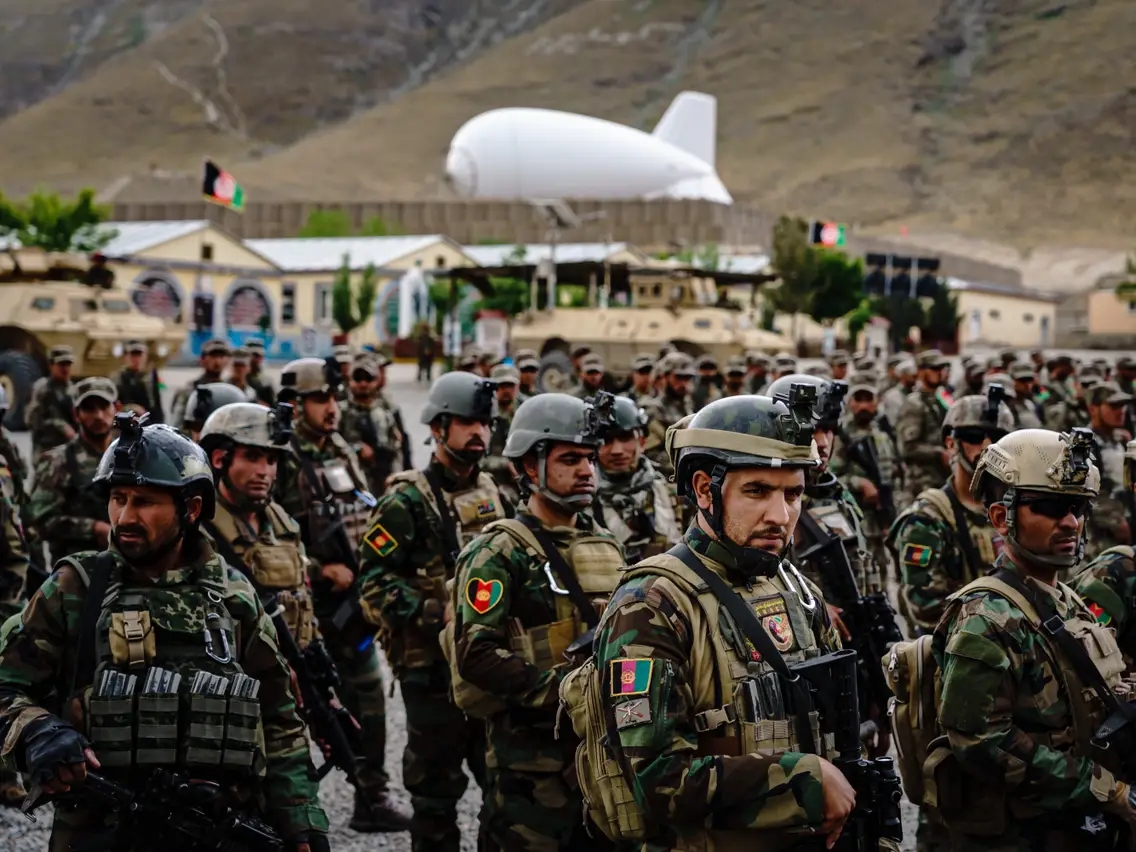
US proxy soldiers, Special forces Afghan National Army, 2021 (Photo sourced: Internet)
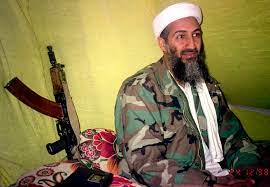
Osama Bin Laden (10 March 1957 – 2 May 2011), Saudi-born founder and first general emir of Al Qaeda from 1988 until his assassination. (Photo sourced: Internet)

That is truly a crazy conspiracy theory but the historical truth does indeed involve a conspiracy. In 1997 the government of Afghanistan was socialist which was worrying for the USA, so in partnership with Saudi elements, they funded and even founded Muslim jihadist groups there.

These groups were to be encouraged to overthrow the socialist regime and when the USSR sent troops to support the government, to defeat the Russians too. Which they did.

But forget about fantasy stories of traditional tribesmen with ancient muskets fighting a world power’s army – these were jihadists, fundamentalists, armed with modern automatic weapons and mobile missile launchers including SAMs (Surface to Air Missiles).

Forget too about Rambo-led simple hill people – since the US achieved the overthrow of the socialist regime and invaded Afghanistan alongside their British allies, those jihadist groups have been squabbling over their share of the spoils, often murderously.

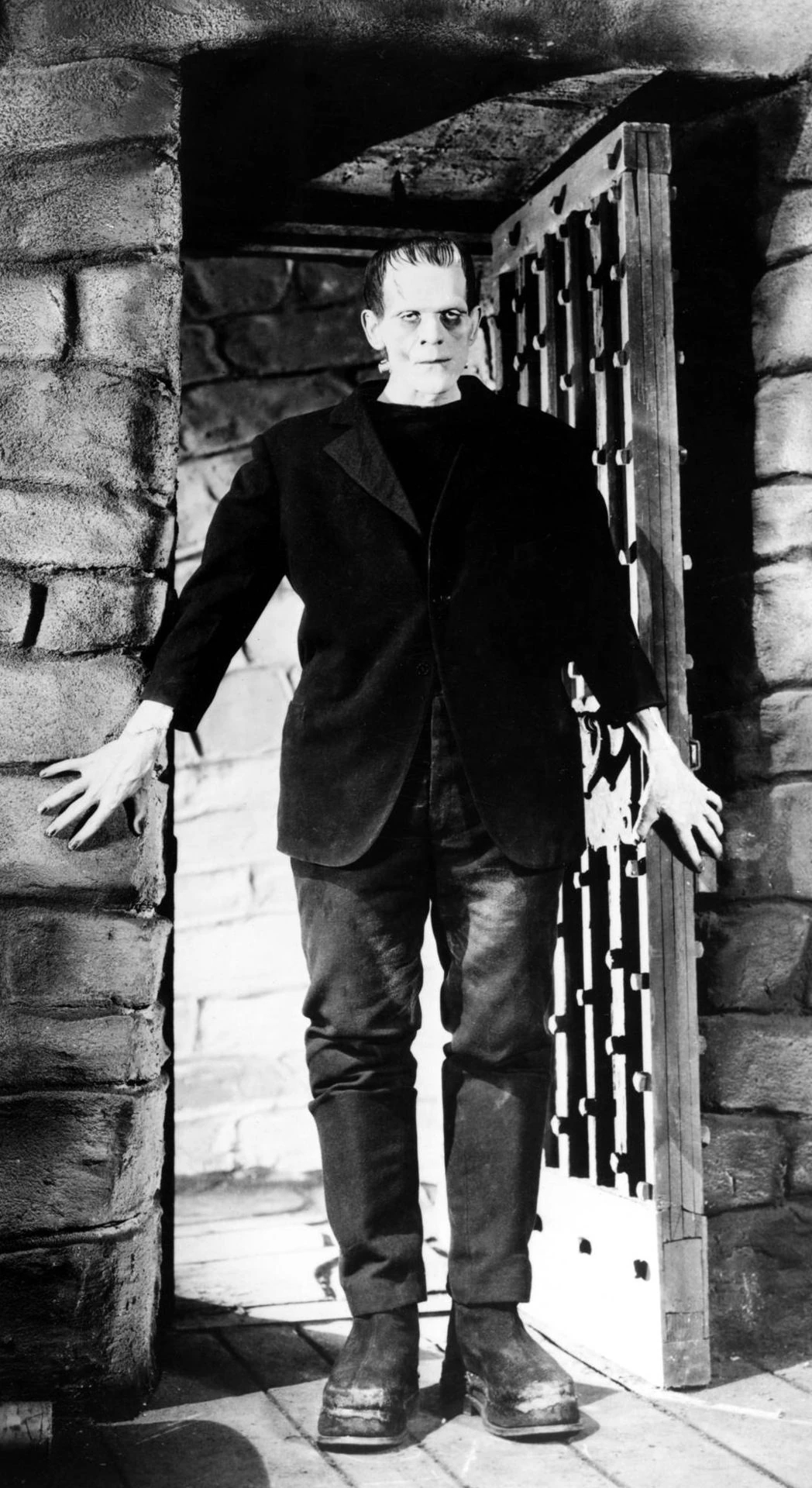
In fact, US imperialism is largely responsible for the world pestilence of not only jihadism of the Al Qaeda type, but the even more virulent Islamic State variety (which indicates Mary Wollstonecraft’s story of Frankenstein’s monster to be more prediction than fiction).

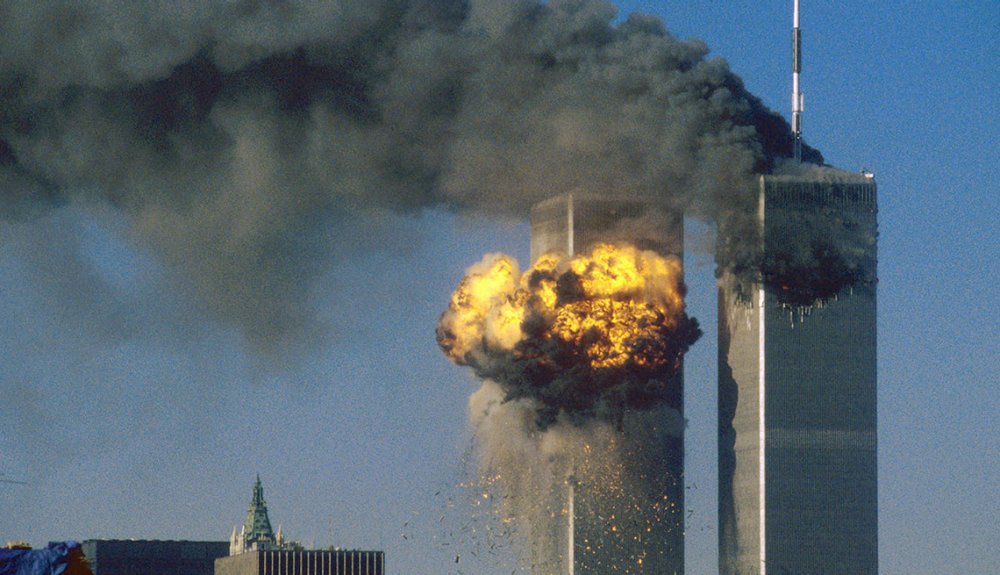
Explosion in one of the Twin Towers on 11th September 2001 in Al Qaeda attack. (Photo: Sean Adair/ Reuters)
Frankenstein’s monster in Mary Wollstonecraft’s famous story; he returns to attack his creator (Image sourced: Internet)

Although US Imperialism had created Al Qaeda and although Saddam Hussein’s regime in Iraq was totally opposed to the jihadist group (and vice versa), US politicians used the attack on the Twin Towers to ‘justify’ the US military invasion of Iraq.

“Sweet are the uses of adversity” indeed when manipulated by US Imperialism for domestic consumption and for world public opinion, also when assisted by British Imperialism’s Labour Government, in particular by lying-through-his-teeth Tony Blair.

The US-led campaign against Iraq resulted in about 1.5 million deaths through economic sanctions alone followed by over 300,000 civilians in the Western military campaign. These figures do not include deaths and injuries of Iraqi military and of the invading allies under the USA and UK.

Nor do those figures include the many deaths, military and civilian, in internal conflicts since the invasion of Iraq which continue to mount.

The deaths resulting from the coup in Chile were overwhelmingly of civilians as the coup was carried out by the Army with little opposition within the military and the civilian population were mostly unarmed.

Most of the deaths occurred in succeeding days and years as the regime rounded up communists, trade union militants and others suspected of having supported Allende’s party, to torture and execute them, including most famously the renowned musician and singer-songwriter Victor Jara.

The anniversaries of both the Pinochet coup and the Twin Towers have been commemorated in various parts of the world with, it appears, the coup being remembered in most of them, not only in Latin America but also in many countries in Europe where Chilean political exiles found refuge.

In the USA, of course, the attack on the Twin Towers was officially commemorated and probably communally too much more so than the coup in Chile.

Another imperialist-generated disaster, the anniversary of which falls only a couple of days after those two, is that of the Oslo Accords, signed on 13th September 1993 and often also known as a stage in “the Palestinian Peace Process”.

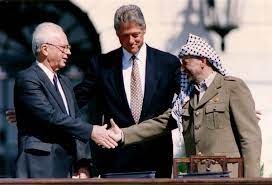
At the White House, supervised by Bill Clinton, elected chief of US Imperialism at the time, Yitzak Rabin for the Israeli Zionist state and Yasser Arafat, for the Palestine Liberation Organisation, signed an agreement, as a result of which the PLO would be permitted to run their own statelet.

Oslo Accords, 13 September 1993, Washington: Yasser Arafat of the PLO shakes hands with Yitzak Rabin of the Zionist State under the stewardship of (then) US President Bill Clinton, representing US Imperialism. (Photo: Gary Hershom/ Reuters)

Hailed as a great breakthrough by most media at the time, the PLO, dominated by Arafat’s Al Fatah, got to have limited self-government within the Zionist State, with the borders of any future Palestinian state undefined and no mention of the millions of Palestinian exiles around the world.

Although the increasing encroachment on Palestinian lands by Zionist settlers was temporarily halted, the land already taken and built upon remained in Zionist hands, that issue and others ‘to be discussed later’ but the Palestinians were to give up the armed resistance immediately.

The South African pacification process had begun earlier and, though enfranchisement of non-white South Africans was not to come until 1994, it was clearly on the way. The ANC promoted pacification processes to Al Fatah and both parties promoted them to Provisional Sinn Féin.1

The Palestinian ‘Process’ was controversial among their people from the start and grew more so as it became clear how little the Palestinian cause had gained and how much had been set aside, along with the growing official corruption and nepotism growing among the Al Fatah organisation.

Though the pacification process was widely rejected in Palestine and failed to install a widely-recognised ‘official’ collusive leadership, it did achieve the fragmentation of the Palestinian leadership and helped to ‘justify’ the demonisation of Hamas, winner of the 2006 elections.

ALTERNATIVES

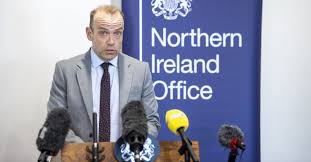
The Secretary of State for Northern Ireland (sic) is quoted in the media as saying that there is no alternative to the UK’s legacy legislation, which proposes to prevent recourse in law for any crimes committed by its soldiers, colonial police, proxies or Government Ministers.

Secretary of State for the Northern Ireland (sic) colony, Chris Heaton Harris (Photo cred: PA)

The legislation in question is titled The Troubles (Legacy and Reconciliation) Bill.

All political parties in Ireland on both sides of the British Border have vigorously opposed this legislation and THERE CLEARLY IS AN ALTERNATIVE, which is to abandon it. What the UK’s ‘colonial governor’ of the Six Counties means is: no alternative acceptable to the ruling class.

While we’re on alternatives, all liberation movements had and have the alternatives to embracing pacification processes, which is to maintain the path of resistance upon which they embarked until the day they win that for which their people and fighters have sacrificed their liberty and lives.

Allende and the communists in Chile had the alternative of arming the people and purging the Army but instead chose to put their faith in the ‘loyalty’ of Pinochet, ‘democracy’ and the opinion of the
Western powers.

The people armed cannot be harmed”, perhaps, rather than “The people united can never be defeated”.2 Allende’s error cost him his life but also the lives of hundreds of thousands of others.

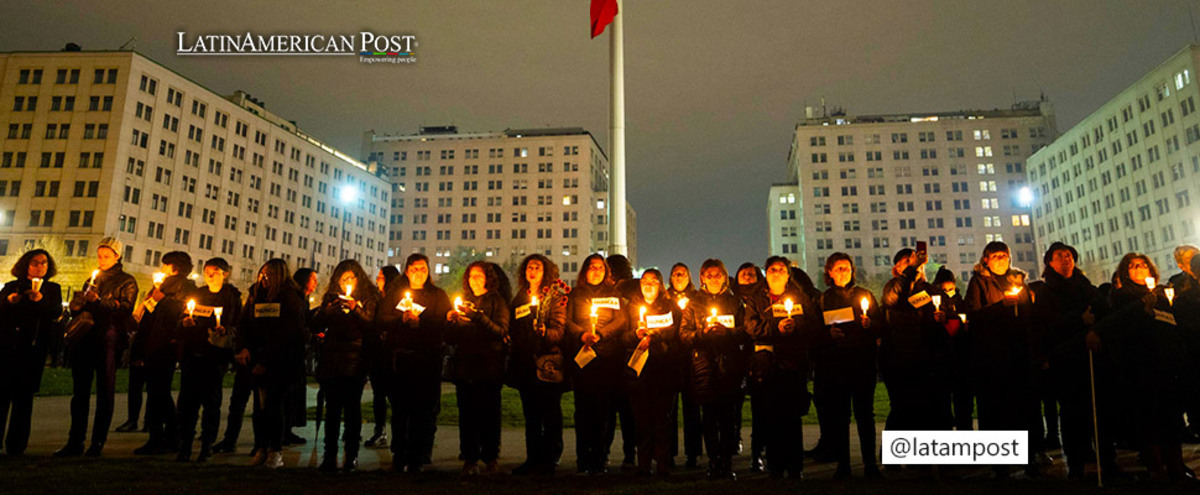
Women on 11th September hold a candlelit commemoration at La Moneda, Santiago, Chile for the victims – in particular of sexual violence – of the Pinochet coup and dictatorship. (Photo: Adriana Thomasa / EFE)

Imperialists have the alternative of respecting the right to self-determination of the peoples of the world and to cease from exploiting, oppressing and repressing them.

But if they did that, they wouldn’t be imperialists, would they? And since they cannot change their nature, they have to be overthrown.

End.

FOOTNOTES

1Provisional Sinn Féin signed up to the Irish Pacification Process in 1998 and they and the ANC then moved on to promote a pacification process to the leadership of the Basque movement for independence, which also finally signed up to it without even obtaining release of the political prisoners. By that time the Palestinian Process had shown its empty promise and the Second Intifada (2000-2005) demonstrated its rejection by most Palestinian youth and the elections to the 2006 Palestinian Legislative Council were won convincingly by Hamas.

2An alternative slogan to “El pueblo unido jamás será vencido” was even then being promoted by a smaller communist group: “El pueblo armado jamás será aplastado!”, i.e ‘The armed people will never be crushed’.

SOURCES

https://en.wikipedia.org/wiki/Oslo_Accords

https://www.breakingnews.ie/ireland/no-one-has-an-alternative-to-the-legacy-bill-says-heaton-harris-1525387.htm