BARMBRACK, HALLOWEEN PARTY – AND NO ‘TRICK OR TREAT’!

Diarmuid Breatnach

(Reading time: 5 mins.)

Years ago we did not have the USA import of ‘trick or treat’ – but we did have Halloween. In fact, the UStaters got their Halloween originally from – us. Yes, us.

And it was based on the ancient Gaelic feast of Samhain (which is also the name of the month in Irish).

“Happy Halloween” as a wish would seem an oxymoron since it is a feast of the dead or at least for the dead and to propitiate pagan gods. It is recorded in Ireland as far back as the 9th Century, one of the four great feast days of the Gaelic year.

While the festival is often described as Celtic, a number of neolithic passage graves in Ireland and in Britain, predating the arrival of the Celts, are aligned to face sunrise at the time of Samhain.

In the Celtic world it seems to have been a particularly Gaelic festival, being also our name for November, with strong survivals in Ireland, parts of Scotland and Manx, though there are also some echoes of customs in Wales and Brittany.

However, some researchers believe that the word Samhain is related to the month of Samon, in an ancient calendar of the Gauls, the main body of Continental Celts.

No ancient feast of Samhain could have involved pumpkins, unless it was something thought up by a deviant among St. Brendan’s followers when they got to America in the mid-6th Century. Of which there are a number of sound reasons for believing they did.

But no plant we know of came back from that voyage.

Some varieties of pumpkin squash (Photo cred: The Garden Museum)

Pumpkins of course and many other squashes come from Turtle Island/ America, where they were cultivated by the indigenous people as an important source of food or dried to make containers, utensils and even musical instruments — and they taught the settlers how to cultivate them.

Pumpkin pie is a traditional USA settler culture dish, particularly in the annual Thanksgiving feast, where the arrival of the original English settlers is celebrated along with their survival (thanks to help from the Indigenous, against whom they later committed genocide in gratitude).

Although most people in the US will not be conscious of this aspect of the Thanksgiving celebration there is a pushback against it gathering in the US of late, as there is also in many parts of the world against the celebration of the ‘discovery’ of America for European colonisation by Columbus.

IN DUBLIN, IRELAND

The traditional Irish Halloween cake is the báirín (boyreen) breac, the báirín being Irish for a cake, according to Dineen’s Dictionary and breac meaning piebald or speckled (i.e. from the dried fruit), becoming mispronounced as ‘barmbrack’.

Quite when it became traditional Halloween fare I’m not sure but the basic ingredients would have been available centuries ago – except for the tea, which came from China originally and only became widespread in Ireland through our colonisers in the early 1800s.

Now of course, we’re marbh le tae agus marbh gan é (‘killed by tea but dead without it’) and still pronounce our name for the beverage in Irish as apparently they did in English in Shakespeare’s time. Many cultures call it ‘chai’ from which the English soldiers in India brought back ‘char’.

This one was apparently made with whiskey which is not the original. The one produced by a number of baker companies was round and more yellow inside.

Anyway, to get back to the báirín breac, it was soaking the dried fruits in tea that gave a yellow tint to the dough when it was baked. We children all looked forward to eating the báirín when we got back home after going from door to door collecting donations of apples or nuts or sweets.

Taste apart, it had a ring hidden in it and, though we had no interest in the prospect of marriage symbolism, we each wanted to be the lucky one to get the slice with the ring. Our Da cut up the slices carefully so we couldn’t tell which had the ring and we had to eat them in sequence.

Earlier on the Halloween evening we had been out in costumes knocking from door to door and of course, other children had knocked on our door too. Many of those would have been known to us but it was surprisingly difficult to identify them, even if only face-painted and without a mask.

It was for us a kind of thrill to knock at a neighbour’s door in costume and be unrecognised. All the houses except a very few welcomed callers at Halloween and kept a supply of fresh fruit, nuts and sweets on hand for the callers.

“Any apples or nuts?” we called as they opened the door or, later “Help the Halloween party?” None of that imported “trick or treat” nonsense!

Three types of nuts that were available and traditionally eaten in Ireland on Halloween at least from the 1950s: hazel nuts, walnuts and Brazil nuts (this one not so commonly seen more recently, apparently due to bad harvests attributed to El Nino). Also available would have been almonds, peanuts, and pieces of broken coconut.

In an amusing piece about that contrast between earlier days and now, a social mores commentator in song at the monthly 1916 Performing Arts Club commented on how pleased he was to see children at his door in costumes made from ‘traditional’ black bin-liners.

Until they spoiled it all by chanting “trick or treat”. “Get outa the garden!” was his response.

You can listen to the song on YouTube here https://www.youtube.com/watch?v=0k-JmfVZ2lw

Kids still go out (usually escorted by adults now) from door to door at Halloween in Ireland, often with elaborate costumes and chanting the UStater-borrowed “trick or treat”.
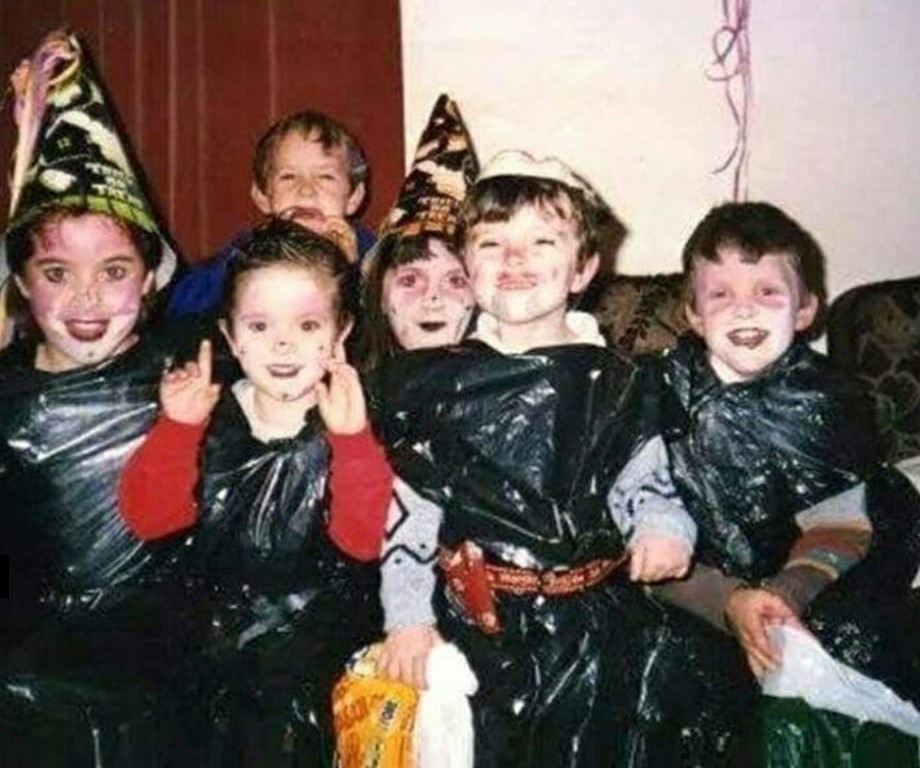
A gaggle of kids in what was for many in areas of Dublin a ‘traditional’ Halloween costume but some of course were more elaborate. (Photo sourced: Hill Sixteen FB page)

In clubs or pubs the festival seems to have been taken over by late teens and young (and not-so-young) adults in costumes depicting horror and death and, for mostly women it must be said, also sexual allure.

And strange though it might seem, the festival was originally primarily for adults and was an occasion of blessing of kine, divination and at least in recorded history, of “mummers” and “guising” going door to door, performing and begging for donations.

‘BARMBRACK’ IN LONDON

In SE London, I was for some years involved in organising an annual Irish Children’s Halloween Party as part of the annual activities of the Lewisham branch of the Irish in Britain Representation Group.

The event was primarily for the benefit of children of the Irish diaspora but children of any other background were welcome to attend.

A local shop selling fresh fruit and vegetables was approached for a donation of fruit and nuts to which they agreed and of course were thanked publicly by word and in print. The local print media were invited to take photos.

The program for the day included street games (but indoors), Halloween activities including apple-bobbing, face-painting and food that would have been traditional for Irish Halloween parties.

Funds raised by the branch through the year bought Irish brand biscuits, Cidona and red lemonade from a shop supplying Irish food items in South London and of course included the ‘barmbrack’.

The children on the day were largely from Irish, Caribbean or mixed background.

As I doled out slices of ‘barmbrack’ to children sitting at the long table, recommending it as traditionally Irish, one Caribbean-seeming child turned to the other and began: “It’s like …” “bun-and-cheese!” finished the other.

This turned out to be a traditional Jamaican food at the other end of the year, at Easter, two slices of a spiced moist ‘brack’ (the “bun”) with a slice of cheese between. They are not as fond of butter in the Caribbean as are the Irish (not many people are) and so that is absent.

One day I decided to try a slice of buttered (of course) ‘barmbrack’ with a slice of cheese on top. The sweetness and slightly spicy taste of the ‘brack’ contrasted with the tart taste of the cheese. And do you know? It’s not at all bad.

End.

BOBBY SANDS – FREEDOM FIGHTER AND BEACON FOR THE DIASPORA

Diarmuid Breatnach

(Reading time: 6 mins.)

The anniversary on Sunday of the death on hunger strike of IRA Volunteer Bobby Sands was marked with a number of posts on social media. I would like to add an Irish migrant’s1 perspective and some analysis of his legacy.

The Irish diaspora was a powerful sector in solidarity for the Irish struggle not only because of their cultural background but also because of their numbers. Some British cities had an estimated diaspora population of 10% (Irish-born and 1st and 2nd generations).

Furthermore, the higher proportion of those in turn was of the working class, a section of society which, although they in no way had their hands on the standard levers of power, certainly had a strong potential of the kind the British ruling class had learned to fear.

Irish Republicans of course formed part of that sector and organised within it but on the other hand the IRA’s bombing campaign in Britain was of no help at all. The popular fear of being caught in an explosion greatly enabled the Government to tighten the screws under the guise of “security”.

Karl Marx, a strong supporter of Irish freedom had commented after the Clerkenwell prison bombing of 18672 that “One cannot expect the London proletarians to allow themselves to be blown up in honour of the Fenian emissaries” (i.e who they were trying to free from the jail).

In 1974 the Labour Government had repressive legislation ready and on 29 November, using hysteria arising from the Birmingham and Guildford pub-bombings they rushed through the Prevention of Terrorism Act (1974) which permitted the holding of suspects for two days without charge.

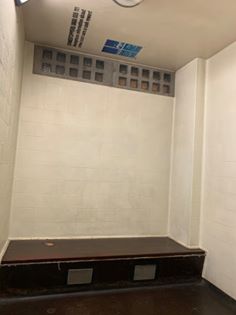
An underground cell in London’s Paddington Green police station – this is where Irish detainees under the Prevention of Terrorism Act might be kept and interrogated for seven days without visitors or access to solicitor. “The old cells were 12-foot square, contained no windows and were reportedly too hot in the summer and too cold in winter(Wikipedia).(Photo: Posted in 2020 on Internet by Green Anti-Capitalist Front who occupied the empty building intending to turn it into community centre.)

That could be extended for another five days – and often enough was — by application to the Home Secretary. Access to solicitor was usually denied and though not lawful, the fact of the detention itself was often denied to concerned people making enquiries of the police station.

The prospect of disappearing for seven days into police custody somewhere was naturally terrifying and a ‘suspect’ could also be deported without trial to Ireland – even to the British colony of the Six Counties, which amounted according to their law to “internal exile”.

Snapshot of London police harassment and intimidation of Irish solidarity activists in 1981. (Photo sourced: Internet)

The framing of a score of innocent Irish people3 in five different trials4 with very heavy sentences added to the intended terrorising of the Irish community in Britain, the “suspect community”5, many of whom believed the victims to be not only innocent but most not even politically active.6

Irish solidarity activity in Britain diminished greatly after 1974 as state repression impacted across the Irish community. But the hunger strikes and concerns to save the lives of the strikers in 1981 broke the hold of state terror as people took to the streets in their thousands once again.

They were unsuccessful but never returned to that state of immobilising fear that had settled over the community.

The Irish in Britain Representation Group got its initial start in 1981 which happened as follows: the bourgeois Federation of Irish Societies had its AGM in May 1981 and one of the members proposed that a motion of sympathy to the Sands family be recorded when he died.

IBRG and Irish Republican POW Support Committee banners on march Birmingham 1984 (Source: Mullarkey Archive)

The meeting’s Chairperson ruled the proposal out of order and ‘the Fed’ continued with their ordinary business. The then Editor of the Irish Post7, writing in his “Dolan” column, found this disturbing and suggested there might be a need for a new type of Irish community association.

A number of individuals wrote in and the ball got rolling, though it took until 1983 to set up the branch-based organisation with a constitution and democratic safeguards in operational rules. The IBRG soon had a number of branches in London and others in the North and Midlands.

For the next two decades the organisation campaigned for the release of the framed prisoners, against the Prevention of Terrorism Act, strip-searching, all racism but in particular the anti-Irish and anti-Traveller varieties, for Irish representation in education, services, Census category, etc.

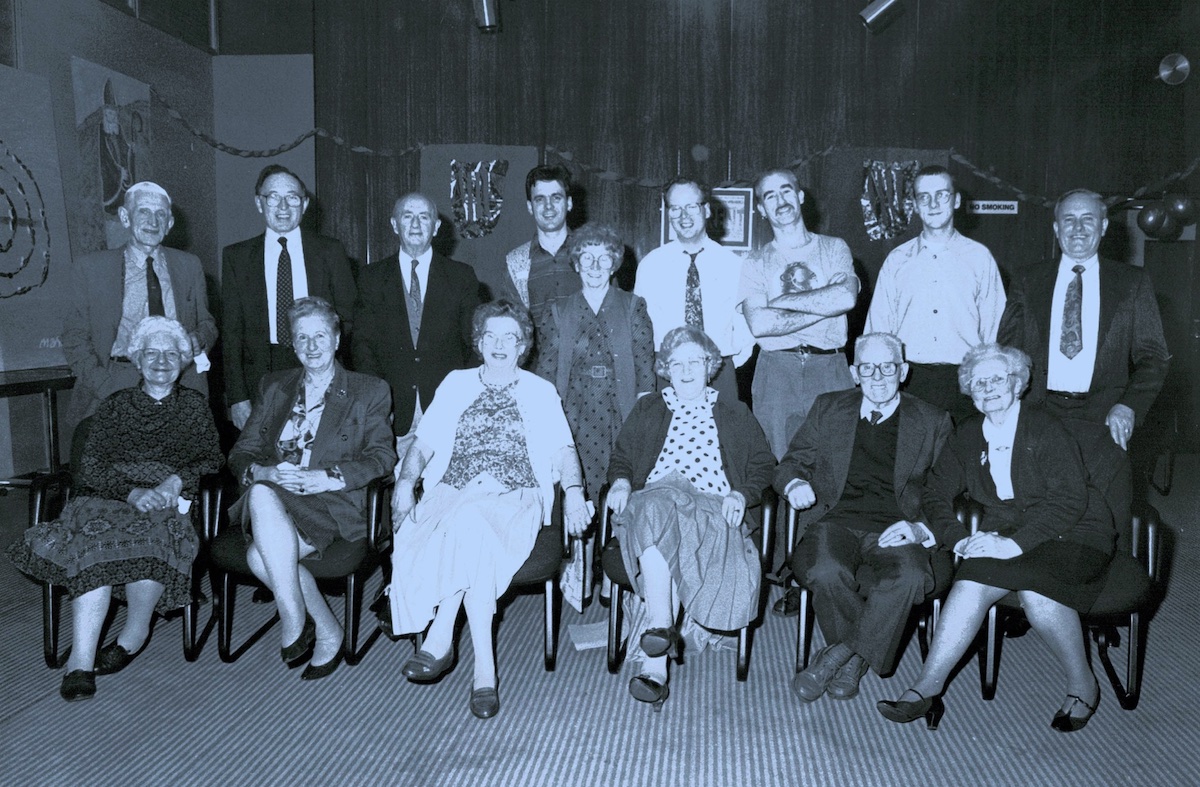
Lewisham Irish Centre Management Committee and Staff, possibly 1994. The Centre was campaigned for and won by the Lewisham Branch of the IRBG in conjunction with the Lewisham Irish Pensioners’ Association (which the IBRG had also founded).

The IBRG also called for British departure from Ireland and collaborated with other organisations in marches, demonstration, pickets, conferences, producing also a number of important report documents. The organisation’s officers were drawn from migrant Irish and those born in Britain.

THE LARK8 – a poem

Last night, from afar, I watched the Lark die

and inside me, began to cry,

and outside, a little too.

There’s nothing more that can now be done,

to save the life of this toilers’ son;

another martyr – Bobby, adieu.

Imperialism takes once more its toll,

another name joins the martyrs’ roll

and a knife of sadness runs us through.

But sorrow we must watch,

for it can still,

yes, it can kill

the song that Bobby listened to.

And if his death be not in vain,

let’s fuel our anger with the pain

and raise the fallen sword anew;

and this sword to us bequeathed:

let its blade be never sheathed

’till all our foes be ground to dust

and their machines naught but rust ….

Then will the servant be the master

and our widening horizons ever-vaster

and our debt

to Bobby

paid

as due.

(D.Breatnach, May 1981, London)

Bobby Sands Mural on gable end of a house in Belfast (Photo cred: Brooklyn Street Art)

REPRESENTATION OF BOBBY SANDS

Bobby Sands was a man of great courage whose leadership qualities were recognised by his fellow political prisoners when they elected him as their Officer Commanding in the H-Blocks. He was also an accomplished writer and poet.

When the British reneged on the agreement that ended the 1980 hunger strike and a new one was planned, Sands insisted on being first on the list, which also meant that in the event of resulting deaths, his would be the earliest.

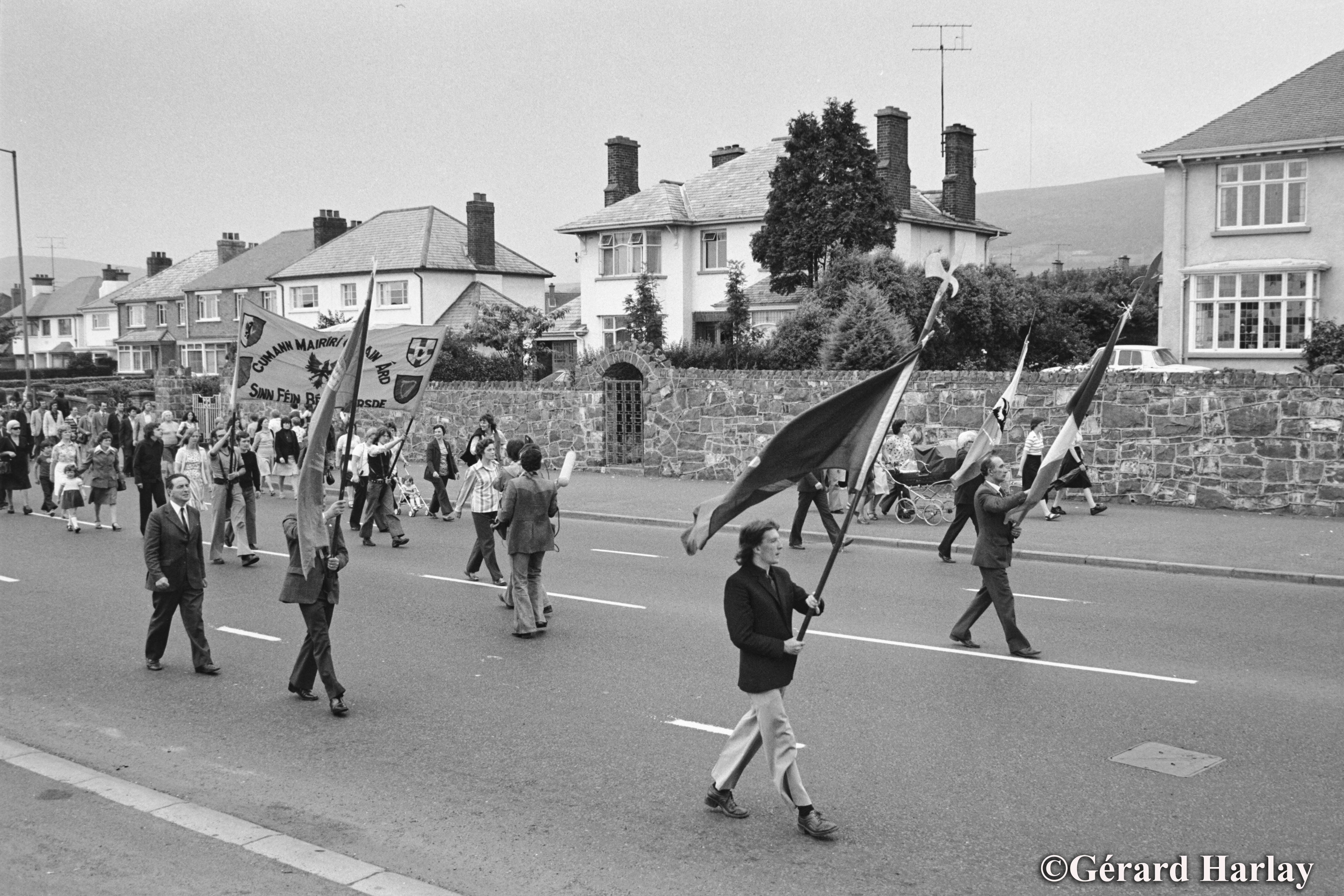
Bobby Sands (front left, colour party), Andersonstown Road,1976. (Photo: Gérard Harlay Archive)

Most people will agree easily with all the above evaluation of the man but from that point onwards, his representation is manipulated to suit different agendas, in particular those of pacifists, social democrats, liberals and a variety of opportunists.

Some of them love above all his quotation that “Our revenge shall be the laughter of our children”. They forget many other things he wrote and seek to turn him into an angel or saint of pacifism.

Since they embraced the pacification process, Sinn Féin try to represent Sands as an advocate for and proof of the effectiveness of participating in the parliamentary electoral system, based on his success in a 1981 Westminster by-election with 30,492 votes, 51.2% of the total of valid votes.

What both these groups fail to recognise is that Sands was an IRA volunteer and was sentenced for possession of handguns in 1972 and again in 1976. If he was an angel, it was of the Archangel type, fighting against what he considered evil.

He was proposed in the Fermanagh-South Tyrone by-election mainly in order to support the campaign of the prisoners against criminalisation and for the political status recognition that they had previously. Saving the lives of the hunger strikers was of course part of the plan too.

Nine protesting Republican prisoners contested the general election in the Irish State in June. Kieran Doherty and Paddy Agnew (who was not on hunger strike) were elected in Cavan-Monaghan and Louth respectively, and Joe McDonnell narrowly missed election in Sligo-Leitrim.

But that is a long way from proving that the electoral process is a viable way of dislodging the ruling class and their system and, in fact, history has proven the opposite.

Nobody knows what position Sands and the other nine would have taken on the electoral process had they lived. Possibly some would have gone along with the SF leadership on that and some others would now be reviled as “dissidents” (as are indeed some H-Block survivors).

All we can say for certain is that they were men of courage in that all of them had joined the armed struggle for Irish national liberation. They had even higher courage of a level hard to imagine, to risk and then experience slow physical disintegration and death by the day and by the hour.

Long after their erstwhile prominent enemies are forgotten, their names will shine in our history and Bobby Sands’s, the brightest of them all.

End.

FOOTNOTES

1At the time I was living and working in England.

2A bomb was planted against the prison wall to free a member of their group who was being held on remand awaiting trial at Clerkenwell Prison, London. The explosion damaged nearby houses, killed 12 civilians and wounded 120; no prisoners escaped and the attack was a failure. Michael Barrett was found guilty of the bombing despite his claim supported by witness testimony of having been in Glasgow during the bombing and was hanged on Tuesday 26 May 1868 outside Newgate Prison, the last man to be publicly hanged in England (the practice was ended from 29 May 1868 by the Capital Punishment Amendment Act 1868). https://en.wikipedia.org/wiki/Clerkenwell_explosion.

3Carole Richardson of the Guildford Four was not Irish but she was the girlfriend of one of three Irishmen.

4Birmingham Six, Guidford Four, Giuseppe Conlon, Maguire Seven and Judith Ward. They were not acquitted and released until decades later, by which time Giuseppe Conlon had died in jail.

5Suspect Community by Paddy Hillyard, Pluto Press (1993)

6Believing them innocent and not active worked even better to terrorise because if the likes of those could be framed and jailed, no-one was safe. But perhaps safest was to do absolutely nothing to draw the attention of the State.

7Brendán Mac Lua, co-founder of the Irish community newspaper in 1970 which is now a very different periodical.

8The lark is associated with Sands because he wrote a story about a man who had captured a skylark, a bird that unusually sings in flight. In the cage the bird would not sing so the man draped the cage with cloth and still the bird would not sing, nor would it do so when he refused it food and water until eventually, it died in the dark, silent to the last.

REFERENCES

Powers under the Prevention of Terrorism Act: https://cain.ulster.ac.uk/hmso/pta1974.htm