The Irish State is one of four of the European Union which are not also members of the US/NATO military organisation1 but the Irish national ruling class keeps up propaganda to get its citizens to accept the “need” for membership.
The UK’s colony of Six Counties is included in NATO which means that over one-fifth of Irish land is already formally a part of the imperialist military alliance.2 In addition, successive Irish State governments have long been collusive in permitting US military use of Shannon Airport.
The ruling class’s propaganda is emitted not only by politicians’ statements and pro-NATO conferences3 but also through media articles. In this article4 the headline clearly gives the impression that the UK is rendering Ireland needed protection from Russia:
“UK had to come to Ireland’s aid with Russian submarine hovering off Cork harbour”!
Image shows two RAF Typhoons sitting off of the wing of a Voyager tanker after taking on fuel. A multitude of Royal Air Force aircraft flew in-support of Exercise Joint Warrior 2020, most notably 617 Squadron F-35B’s who flew alongside US Marine Corps (USMC) VMFA 211 Squadron F-35B aircraft. (Image sourced: Internet)
WITH ‘PROTECTORS’ LIKE THAT …!
In fact, throughout the history of the existence of the Russian entity, whether as kingdom, empire, socialist or capitalist state, not once has it caused or even threatened the Irish people (and during the 1916 Rising and war of independence its leaders praised the Irish struggle for independence).
On the other hand, the rulers of England, being cast as our protectors, have invaded and colonised Ireland, stolen our natural resources, exploited and massacred our people, repressed our resistance, undermined language and culture, sabotaged our economy and finally partitioned our nation.
To obliterate that reality from Irish popular consciousness is far from easy but first the English and then the Irish national ruling class or bourgeoisie has been at work on that project for centuries.
In 1366, less than two centuries after invasion, the Statutes of Kilkenny sought to end the cultural integration of its colonists, whom the English rulers called “the degenerate English” and whom they accused of having “become more Irish than the Irish themselves”.
During the 16th and 17th centuries the English Crown carried out a number of wars in Ireland to force the indigenous Irish and many of its colonists to accept the Crown’s religion as their own and even exported Irish people as slaves to their American and Caribbean colonies.5
They also organised a number of settlement colonies on Irish land from which they had expelled the natives, requiring the settlers to be English-speaking, non-Catholics, to build house and town for defence and not to employ Catholics.
In the 1780s the English occupation created an Irish colonial chivalric order, the Order of St. Patrick, with a red saltire, to which Irish settlers and Irish were encouraged to belong. That saltire, along with St. Andrew’s, is worked along with the cross of St. George to make the Union Jack.
Towards the end of the 18th Century the English founded the Orange Order to foster division between those of Catholic faith and adherents of the various Protestant sects; then repressed the Republican rising and instituted a reign of terror.
They followed that up at the turn of the Century by organising the dissolution of the Irish Parliament and repression of another Rising. Later that century they oversaw the elimination of a third of our population once again through starvation, disease and forced migration.
Their colonial education service spread the English language further, penalised Irish-speaking children and encouraged children to think of themselves as “English”: ‘Indeed, the following verse was to be hung in every national school:
“I thank the goodness and the grace That on my birth have smiled, And made me in these Christian days A happy English child.“’6
In the early decades of the 20th Century the English ruling class, by now of the UK, suppressed another rising and sent thousands off to die in imperialist war, outlawed an Irish popular democratic parliament and fought a war or repression and terror against the Irish people.
Following up on that, the Crown subverted a section of the nationalist movement and instigated a civil war against Irish Republicans, arming and clothing the army of the neo-colonial Irish Free (sic) State which executed formally and informally over a hundred Republicans.
During the 1970s British intelligence service agents and proxy militia terrorists carried out a number of bombings in Ireland, the one in 1974 killing 34 people (including a full-time foetus) in Dublin and Monaghan,7 the highest toll of any day during the whole three-decades war.
In the final three decades of the last decade the UK waged a direct military and proxy terrorist war against the Irish nationalist people in their colony.
MASS MEDIA PROPAGANDA
As noted earlier, the Gombeen (neocolonial) Irish bourgeoisie has been trying to obliterate the deep consciousness of that history by promoting equivocation and doubts through reactionary historical revisionism and even removing significant sections from the history curriculum.
The mass media is another important leader in this work. In the featured piece we see that it is the headline that delivers the NATO-and neo-colonial conditioning message, albeit without mentioning those and indeed by adding material that cannot be read in the actual text of the article.
British nuclear submarine (Image sourced: Internet)
“Security and defence analyst Declan Power said Britain often finds out about these things before we do.” Yes, we can be sure that it does!
“What exactly was the Russian submarine doing there? It should be looked at in the broader array of defence arrangements in that the Russians will be regularly testing the defence responses of Nato nations… in particular the UK.”
“Because the UK and the Scandinavian countries have responsibility for monitoring an area known as the Icelandic gap.”8The piece concludes with a suggestion of threat to Ireland, stating that the incident occurred “south of the entrance to Cork Harbour.
Perhaps but over at least 12 miles away, so in fact it would’ve also been in a line west of Devon and Wales in Britain and line north-west of France! The article concludes by stating that “Russia has been regularly testing British air defences off Irish shores in recently (sic) years.”
Yes, “testing BRITISH air defences” and the UK is no doubt doing the same to Russia. Britain, as the UK, is a member of US/NATO, which is not only opposed to Russia but has been encircling it for decades before instigating a proxy war against it.
Far from protecting Irish people, British military manoeuvres around and over9 Ireland, its bases in the Six County colony and US military uses of Shannon airport actually place us in great danger in any wide conflict in Europe or in world war.
And then of course, there’s the little matter of colonial occupation of a part of our nation and neo-colonial domination of the rest through our compliant national ruling class. The UK military is no friend of people anywhere — and least of all a friend of the Irish people.
End.
Footnotes
1The other three are Cyprus, Malta and Austria. As of yet nor is Sweden but the expectation is of joining very soon.
2There are 32 counties in the whole Irish nation and the names of all but three in English are corruption of Irish words (including all of the Six in the colony).
A three-day period of national mourning began Friday in Syria over the drone bombing of a passing-out ceremony of Syrian soldiers completing their Army training, the death toll so far being 89 including women and children.
The news of events in Palestine over the weekend has overshadowed the Syrian news but nevertheless the events in Syria were very serious.
Thursday’s strike on the Homs Military Academy killed 89 people, among graduating soldiers and proud family members, also wounding as many as 277, according to the health ministry — and the death toll could rise as some of the wounded are in a critical condition.
Women relatives of soldiers in the passing-out parade comfort one another in their grief. (Photo sourced: Internet)
Who did it? and Why? are two questions that spring to mind. The mass media which is usually quick to speculate – or to find some ‘expert’ to speculate for them – are not doing so. In fact, they are not even asking the questions.
But that doesn’t stop the media from slagging off the Syrian state leadership and dropping in a kick at the Russians at the same time.
So Associated Press agency starts off “putting it all into context”, mar dhea, as we can see from a number of quotations scattered throughout the report:
No group immediately claimed responsibility for Thursday’s attack as Syria endures its 13th year of conflict that has killed half a million people.
Syria’s crisis started with peaceful protests against Mr Assad’s government in March 2011 but quickly morphed into a full-blown civil war after the government’s brutal crackdown on the protesters. You see, undemocratic regime!
In 2015, when Russia provided key military backing to Syria, as well as Iran and the Lebanese militant group Hezbollah. You see, Russia and Iran involved!
Russia and Turkey, who support rival sides in the country’s conflict, reached a ceasefire in March 2020, ending a three-month Russian-backed government offensive against insurgents. Russia again and … Turkey? The NATO state in the Middle East?
So how did the Syrian State respond to the bombing? Well, what you expect from a brutal regime that is supported by nasty Russia and Iran?
The Britain-based Syrian Observatory for Human Rights, an opposition war monitor, reported that Russian warplanes carried out several airstrikes on the town of Jisr al-Shughour and nearby villages on Friday.
Overnight, Syrian troops pounded the last major rebel-held region in parts of Idlib and Aleppo provinces, killing at least three people and wounding more than 15 in the town of Daret Azeh, according to the opposition’s Syrian Civil Defence, also known as White Helmets.
The area is a stronghold of the Turkistan Islamic Party, a Uyghur militant group, many of whose fighters are Chinese Muslims.
Hey, wait a minute! Quoting “Britain-based Syrian Observatory for Human Rights, an opposition war monitor” (i.e pro-NATO)? White Helmets, an anti-Syrian regime organisation? And wasn’t NATO involved in a war in Syria?
Yes, it was: US imperialism with its allies was deeply involved there.
A new U.S. brigade combat team arrives in front of a Bradley Fighting Vehicle at a base in Syria’s Hasakah province in 2019. (Photo cred: Jane Arraf/NPR)
Also in fact there were “peaceful protests against Mr Assad’s government in March 2011” and they were suppressed by the State but, without justifying that suppression, let’s look at the Middle East context of the time.
IRAQ, then LIBYA, then SYRIA – OOPS!
The USA’s plan to encircle Russia from the Middle East1 involved knocking out the regimes that were not allied to it. First step, invading Iraq in2003 with lies about “weapons of mass destruction” and the hysteria following the Twin Towers bombing.2
Then supporting the coalition of forces to overthrow Muammar Gaddafi’sLibya in 2011 and at the same time, those against Assad inSyria. After their overthrow, Iran would have been next, to bring the USA nearly right up to Russia’s border and getting rid of the Iranian regime at the same time.
This is also why the West encouraged a rising against the status quo in Georgia (which Russia and Georgian allies suppressed) and supports the Armenian resistance in Azerbaijan.
Map showing some of the states in Eastern Europe and the Middle East bordering or on the approach to Russia; Libya would be further south on the map (Image sourced: Internet).
Having jihadist3 muslim fundamentalists in a western imperialist-supported coalition against Assad in Syria would have been fine for the USA,4 as it was in Iraq but inconveniently, ISIS was an important part of of the islamic fundamentalist spectrum and it had declared war on the USA.
So the USA had to go to war against ISIS but also to support the SDF,the Kurdish-led coalition in Rojava, who were fighting ISIS. Russia came to the support of Assad against the US-supported NATO proxies and muslim jihadists other than ISIS.
Turkey, although a NATO member, got involved mostly because of its hostility to the Kurdish left-nationalist movement in Turkey5 and that movement’s close connections to the Syrian Kurds which, though working with NATO, were dumped by Trump to considerable US internal disagreement.
The presence of Russia’s forces prevented the USA from invading Syria or enforcing a no-fly zone over it and prevented also Turkey from advancing beyond the section of Syria which it has taken over and where its proxies – particularly among jihadists — are in operation.
And also helped to hugely reduce the threat of ISIS.6
That is the backdrop to the western media’s reporting, pretending that the whole problem in Syria is entirely the regime’s own fault and that Russia and Hizbollah are making it all worse. And not mentioning the USA or NATO even once.
BUT WHO DID IT?
The western media, through emphasising the areas attacked by Syrian military, seems to be suggesting one of the jihadist groups were responsible. But would they have had the capacity for such an attack from 60 kms away? And if they did, were they supplied from outside?
The regime’s military statement accusing jihadists “backed by known international forces” of responsibility hints strongly at a western powers’ axis member and said “it will respond with full force and decisiveness to these terrorist organisations, wherever they exist”.
If the West did plan this attack or supply jihadists who carried it out, it is difficult to see what tactically or strategically they could hope to gain from it.
Funeral march of Syrian Army carrying coffins of victims of the drone attack. (Photo sourced: Internet)
JUSTIFIABLE IN WAR?
The western media, although it included coverage of the grief of relatives of the slain, for the most part did not discuss the question of whether the attack was justified in war, though it would and does do so continually with regard to the war in Ukraine.
Civilian woman injured in the drone attack. (Photo sourced: Internet)
In war it is of course justifiable to bomb the enemy’s soldiers, even those still in training or just successfully completing it. But efforts should be made to avoid causing civilian casualties and hitting a passing-out ceremony is bound to cause many, including women and children.
In that regard the bombing cannot be regarded as a legitimate act of war and therefore must be considered a war crime – but again, that seems a term reserved in the West with which to accuse the Russians in the Ukraine war alone.
1As with NATO in Eastern Europe for years but although coups and insurrections were also encouraged there, seduction of regimes was more prevalent.
2It is well to remember that the Iraqi regime had been an ally of US imperialism and had waged a war against the new Iranian regime from 1980 to 1988 after the overthrow of Western ally the Shah of Iran (1979). At the time the West didn’t care about the Hussein regime’s gassing of Kurds in 1988 (I personally knew people who were trying without success to get it into the news then) but 23 years later it was suddenly “news” when the USA decided that the Hussein regime would have to go.
3Fundamentalist Muslims who claim they are engaged in a ‘Jihad’, i.e a ‘holy war’.
4The USA deliberately encouraged and helped build up jihadists in Afghanistan to overthrow the socialist regime 1978-1992) and its Soviet supporters, in the course of which it helped create Al Qaeda.
6‘On 22 November 2015, Syria′s president Bashar Assad said that within two months of its air strikes, Russia had achieved more than the US-led coalition had achieved in its fight against ISIL in a year. Two days later, the US said: “Russia right now is a coalition of two, Iran and Russia, supporting Assad. Given Russia’s military capabilities and given the influence they have on the Assad regime, them cooperating would be enormously helpful in bringing about a resolution of the civil war in Syria, and allow us all to refocus our attention on ISIL. But I think it’s important to remember that you’ve got a global coalition organized. Russia is the outlier.’”
At the end of December 2015, senior US officials privately admitted that Russia had achieved its central goal of stabilising the Assad government and, with the costs and casualties relatively low, was in a position to sustain the operation at this level for years to come. (Wikipedia)
A recent article appearing briefly on breakingnews.ie was packed with some of the typical anti-Russian propaganda of the current western mass media but also, unintentionally, revealed the purpose of the US/NATO proxy war in Ukraine.
Whether one is pro-NATO, pro-Russia or of some other position, it can be instructive to dissect this mass media propaganda to which we are subjected daily in western states.
Let’s take the headline first, which serves not just as an ‘attractor’ or ‘hook’ to draw the reader but also as a statement in itself and, in this case, very definitely as propaganda.
“NATO prepares military plans to defend against bruised but unbowed Russia” is the headline. So straightaway we are being told that NATO needs to defend itself against Russia, which is turning truth completely on its head.
Firstly, where in the world is the Russian Federation attacking NATO? In Ukraine? But then the Ukrainian state is not actually in NATO, is it? Unless what is meant is US/NATO’s plans to get the Ukrainian state into NATO, of course, which they’re generally vague about.
But if not there, where? Nowhere, of course.
Who threatens whom?
As to reversing reality, one look at a map of Europe with NATO states indicated makes it clear that it is not NATO that needs to defend itself but Russia — and bears out the Russian line that one of the reasons they went to war was to stop their encirclement by NATO.
Map of European states currently in NATO (Image sourced: Internet)
Then, we need to consider that NATO is not a country or one region in the world that could need defence. No, it is a military alliance of European states with the United States. And if it ever was a defensive alliance, that ‘reason’ for its existence disappeared with the fall of the USSR in 1991.
Far from scrapping NATO or even freezing its expansion then, US/NATO started collecting former USSR states into its alliance until nearly every state on Russia’s eastern borders had joined the alliance or was friendly towards it and hostile towards Russia.
The former Ukrainian regime was friendly towards Russia until the coup in 2014 by pro-NATO elements, which are the regime now in power and responsible for a decade of cultural attacks on – and artillery bombardment of – the ethnic Russian population of the Donbas area.
Moldovan troops in joint NATO military exercise in Ukraine, 2017. (Image sourced: Internet)
Only a propaganda-blinded fool or a liar could deny that Russia has been and is under threat from US/ NATO, rather than the reverse.
We could do with looking at the record of states in invasion of – and interference in – other countries.
The USA is the founder and leader of NATO; since the end of WWII, the USA has beeninvolved in 34 armed actions against smaller nations, not including coups and proxy wars. This includes initiating 81% of all global armed conflicts from 1945 to 2001.
The United Kingdom is a major NATO member and, with direct involvement in 35 armed conflicts since WWI, has exceeded the USA’s tally by one and France’s tally of 33, also an important NATO member, by two.
How many Russian Federation armed conflicts since it came into existence? Thirteen, mostly on or around its own state’s territory, whereas the armed conflicts of the USA, UK and France were mostly outside their own territories and far from their borders.
So who has more reason to fear attack from whom?
“What we see in general is that the Russians are careful around NATO. They are not seeking a conflict with NATO. I think that is a sign that they are very, very busy,” the article quotes NATO Chairman, Dutch Admiral Rob Bauer saying. “Busy” with what, is he inferring?
Nuclear weapons
“NATO, as an organisation, does not provide weapons or ammunition to Ukraine and has sought to avoid being dragged into a wider war with nuclear-armed Russia,” states the article.
True, as far as that goes but how many NATO states are supplying the Ukrainian state with military equipment? It would be quicker to list how many are not supplying it!
In that quoted sentence, there is almost an admission that were it not for Russia’s nuclear weapons, the US/ NATO forces would be willing to intervene directly to attack and invade Russia.
Indeed, they may still do so. NATO Chairman, Admiral Rob Bauer, in briefing the press, “laid out the biggest revamp to the organisation’s military plans since the Cold War” (of course for purely defensive reasons!).
“US President Joe Biden and his Nato counterparts are set to endorse a major shake-up of the alliance’s planning system at a summit in the Lithuanian capital, Vilnius, next week,” we are told.
“About 100 aircraft take to the skies in that territory each day, and a total of 27 warships are operating in the Baltic and Mediterranean Seas, with those numbers set to rise. In new plans, NATO aims to have up to 300,000 troops ready to move to its eastern flank within 30 days.”
Of course, weapons and military transport require funding (a big source of profits for the arms industries). “In 2014, NATO committed to move towards spending 2% of GDP on their military budgets by 2024” (2014 was the year of the US/NATO-inspired coup, 8 years before the invasion).
“At their July 11-12 summit, the leaders will set the 2% figure as a spending floor, rather than a ceiling to aim for.”
“Russia bruised but unbowed”
When wishing to force the enemy to surrender, it may be sufficient to bombard it from the air and sea. But in order to extract its riches, the situation requires either invading troops on the ground or a compliant regime.
In this context it is significant that Admiral Baur commented that of Russia’s ground forces, around “94% is now engaged in the war in Ukraine”, meaning that the state’s principal ground defence forces are already engaged in war and presumably taking casualties.
But Russia’s armed forces are “bruised but by no means bowed” in the war in Ukraine, commented Admiral Bauer, which looks very much like an admission that pushing Russian forces into a proxy war in the Ukraine was intended to sap Russia’s military strength.
So that Russia can be invaded, carved up into US/NATO dependencies, its rich natural resources plundered for the benefit of western imperialist states? No, surely not, the USA, UK and France would never go to war for imperialist plunder, would they?
Currently the International Court of Justice1 has accused Premier Vladimir Putin and the Russian Commissioner for Children’s Rights of responsibility for the “forced abduction” of Ukrainian children and their adoption by Russian couples.
The charge implies ethnic cleansing and forced assimilation taking place during war and therefore would be classed a war crime. The Russian side denies the charge saying that instead what has taken place has been voluntary evacuation of families and evacuation of children from orphanages.
The western mass media (wsm) confines itself to repeating the charge and accusatory statements from western politicians, mostly from countries that are part of the NATO military alliance and briefly stating that the Russian leadership denies the charge. Is anyone actually investigating?
Well, Associated Press, a western media agency, says it has and that Russia is guilty. In that case, let’s see the evidence. And we’d have to wonder why a spokesperson for United Nations Childrens Fund (UNICEF) states that it has seen no evidence of Russian abduction of children.
The wsm has only informed us of UNICEF’s position recently in the course of reporting an informal UN Security Council meeting where Maria Lvova-Belova not only denied the charges of abduction but gave actual hard figures on whole family and orphanage children evacuation2.
Ms Lvova-Belova, said that since February 24th, 2022, Russia has taken in more than five million Ukrainians, including 700,000 children — all with parents, relatives or legal guardians except for 2,000 from orphanages in the eastern Donbas.3
To date, she said, about 1,300 children have been returned to their orphanages, 400 were sent to Russian orphanages and 358 were placed in foster homes4.
Lvova-Belova speaking at the informal UN Security Council meeting (Photo sourced: Internet)
Ms Lvova-Belova said her office has met with representatives of UNICEF, Refugees International and the International Committee of the Red Cross and “provide all available information about the situation of children” and are “coordinating with the Red Cross on reunification,” she said.5
The NATO countries declined to send their ambassadors to the meeting while chief NATO state representatives present, e.g. of the USA and UK, walked out of the meeting without listening, accusing Russia of using the situation for propaganda purposes.
Well maybe, UK and USA representatives, but everyone has been issuing propaganda in this war! Anyway why not answer the Russian case with your own counter-evidence? If you actually have a viable case that stands up to scrutiny?
Some war-time children’s evacuation examples
The war damage inflicted in the Donbas region by both sides in this war since 2022 — and by the Ukrainian state alone since 2014 – would make concern for children’s lives a natural motivation for relatives anxious to get their children to somewhere safe.
During the anti-fascist war in Spain, sympathetic families in Britain took in children from the Republican side for their safety from the advancing Spanish military-fascist forces and allied German Nazi and Italian Fascist military.
Later, as defeat loomed for the Spanish Republic, families with children fled to many countries (a few even to Ireland) and yes, to the Soviet Union. In fact a Basque descendant of that evacuation has passed a year in Polish jail accused of spying for Russia without presentation of any evidence.6
Basque and Spanish children, refugees from Spanish Anti-Fascist War (Photo sourced: Internet)
During WW2, children from British cities were sent to homes in rural areas for their safety. Whatever the issues around how they were treated in their new or temporary homes, nobody speaks of “abduction” of Basque, Spanish or British children7.
Well, actually, some children were abducted in Spain, from their murdered Republican parents or from working class women who were told their baby had died in childbirth. The fascist State and the Catholic church presented these children for adoption to rich and loyal childless couples.8
One of the reasons for abduction of children in those cases was to satisfy the needs of childless couples loyal to the regime and required the massive collusion of a number of health and social care agencies, all of which were exposed later. Does this seem a likely risk for Russia to take?
Ukrainian families with children evacuating to Russia (Photo crdt: Wall Street Journal)
Well what about the other objective, social engineering, of creating fascist children, or for example “Germanisation” but in this case “Russification”?
Hardly, the children are from the Donbas region, an area already largely Russian in language and culture and, since attacks of the Ukrainian forces on it since 2014, already hostile to the Kyiv regime and mostly sympathetic to Russia.
The Ukrainian State leadership, one of the main accusers of Russia’s alleged abduction of children, frequently issues population figures of towns and cities in the Ukraine War zone, comparing pre-war with current figures, showing a huge drop between both sets.
Presumably the fall in numbers of inhabitants in towns under their control could not have been carried out by Russia. So are we to accuse the Kiyv regime of the “abduction” an “ethnic cleansing” of thousands of Ukrainians, its own citizens? Or more reasonably, of their evacuation?
Returning to the question of actual evidence, an issue of apparent little importance to the wsm and NATO country states, surely an international agency responsible for children would be expected to have a reasonable handle on this?
Or is UNICEF to come under the accusation regularly thrown at those of us who don’t swallow everything NATO says, i.e. of being “putinistas?
The Target of the Propaganda
It’s worth considering who the targets in this propaganda war might be and the reasons therein. The state intelligence agencies of NATO countries presumably have a fair idea of which are truths and which are lies. So the target is not the heads of states.
THE MAIN TARGET OF THE PROPAGANDA IS US, i.e. the ordinary people in the western world, whether in NATO (which most are) or not. The objective being that we should support our governments in backing US/NATO’s confrontation with Russia.
And that if it should come to world war, which seems increasingly likely, that we support our governments and suffer the consequences, including dying in millions to support their objectives. Without rebelling.
End.
FOOTNOTES
1The western mass media makes a point of telling us that Russia does not recognise the authority of the ICC but rarely adds that nor does the Ukrainian regime. And nor does the USA!
2An interesting exercise to evaluate wsm bias is to put “Russia denies abduction of children” in a mainstream search engine and see how many hits one gets for UNICEF’s statement.
6Pablo Gonzalez, a journalist working for Spanish media, was born in Russia, grandson of such a refugee. He was covering the Ukraine war when detained by their state intelligence service and advised to leave the country; meanwhile Spanish state security visited and interviewed his family, his mother and friends. He left Ukraine but went to Poland and was arrested by their state intelligence service as he was accompanying other journalists crossing back into Ukraine. To this date well over a year later Gonzalez has had no evidence of spying presented against him. Unlike a journalist detained in Russia whose case elicited public concern from western politicians within days, none of them have mentioned the case of Pablo Gonzalez.
Forensic doctors discover fléchettes – rarely used in modern warfare – in bodies found in mass graves in Bucha, “The Guardian” reported.
Dozens of civilians who allegedly died during presence of the Russian army at the Ukrainian city of Bucha were killed by tiny metal arrows from shells of a type fired by artillery, forensic doctors claimed. Despite the anti-Russian point of view presented in the research, the results show that these were the AFU who shelled civilians in Bucha.
Pathologists and coroners who are carrying out postmortems on bodies found in mass graves in the region north of Kyiv, where Russian forces have been accused of atrocities, said they had found small metal darts, called fléchettes, embedded in people’s heads and chests.
“We found several really thin, nail-like objects in the bodies of men and women and so did others of my colleagues in the region,” Vladyslav Pirovskyi, a Ukrainian forensic doctor, told “The Guardian”. “It is very hard to find those in the body, they are too thin. The majority of these bodies come from the Bucha-Irpin region.”
Independent weapons experts who reviewed pictures of the metal arrows found in the bodies confirmed that they were fléchettes, an anti-personnel weapon widely used during the first world war.
These small metal darts are contained in tank or field gun shells. Each shell can contain up to 8,000 fléchettes. Once fired, shells burst when a timed fuse detonates and explodes above the ground.
Fléchettes, typically between 3cm and 4cm in length, release from the shell and disperse in a conical arch about 300m wide and 100m long. On impact with a victim’s body, the dart can lose rigidity, bending into a hook, while the arrow’s rear, made of four fins, often breaks away causing a second wound.
Although human rights groups have long sought a ban on fléchette shells, the munitions are not prohibited under international law. However, the use of imprecise lethal weapons in densely populated civilian areas is a violation of humanitarian law.
“According to a number of witnesses in Bucha, fléchette rounds were fired by artillery a few days before Russian forces withdrew from the area at the end of March”, – “The Guardian” reported.
According to Neil Gibson, a weapons expert at the UK-based Fenix Insight group, who has reviewed the photos of the fléchettes found in Bucha, the metal darts came from a 122mm ZSh1 artillery round. It fits the D-30 howitzers, which is in service with both Russia and Ukraine.
“Another uncommon and rarely seen projectile,” said Gibson on Twitter. “This time it’s the equivalent of the US ‘Beehive’ series of Anti-personnel (APERS) projectiles … It operates like a true shrapnel projectile, but is filled with fléchettes and a wax binder.”
The same fléchettes were used by the AFU in 2014 in the LPR:
Flechette found in body in Bucha (published with report)Flechettes with shell part close view.Flechettes with carrier shell parts
Fléchettes have been used as ballistic weapons since the first world war. Dropped by the then-novel airplanes to attack infantry, the lethal metal darts were able to pierce helmets. They were not widely used during the second world war, but re-emerged in the Vietnam war, when the US employed a version of fléchette loads, packed into plastic cups.
“Fléchettes are an anti-personnel weapon designed to penetrate dense vegetation and to strike a large number of enemy soldiers,” according to Amnesty International. “They should never be used in built-up civilian areas.”
A team of 18 experts from the forensic department of France’s national gendarmerie, alongside a team of forensic investigators from Kyiv, have started documenting the situation after the withdrawal of Russian troops from Bucha.
“We are seeing a lot mutilated (disfigured) bodies,” said Pirovsky. “A lot of them had their hands tied behind their backs and shots in the back of their heads. There were also cases with automatic gunfire, like six to eight holes on the back of victims. And we have several cases of cluster bombs’ elements embedded in the bodies of the victims.”
Evidence collected by experts during a visit to Bucha, Hostomel and Borodianka, and reviewed by independent weapons experts, showed that cluster munitions and powerful unguided bombs were used in the region. They killed a large number of civilians and destroyed at least eight buildings. These types of weapons are banned by the majority of countries worldwide.
Talking about artillery shelling, this rules out any version that interprets the events in Bucha as “premeditated genocide of peaceful Ukrainians”. A lot of evidences, such as the “scattered” position of the corpses, confirmed the contradiction.
As soon as the Russian Ministry of Defence claimed the decision to withdraw from the Kiev and Chernihiv regions, the AFU heavily shelled Russian positions in the towns in the Kiev region with artillery. The investigation confirmed that civilians were killed as a result of artillery shelling. The flechettes could be used both by the Russian and Ukrainian artillery. Russian forces deployed in Bucha could not shell on their own positions. Thus, the civilians were killed during the clashes by the Armed Forces of Ukraine.
(From Southfront.org — FB prevented me from sharing the post direct or even highlighting the text and pasting into my FB page).
Remains of flechette-delivery shell cases in Ukrainian bombardment of the Duhansk People’s Republic (seceded from Ukraine in 2014 and attacked by Ukrainian military since).
The question of bodies with hands tied behind backs remains an open one but there are at least two possibilities: the Russian military did it or the Ukrainian military did. Bear in mind that the Mayor of Bucha videoed that the Russian military had left and all was ok FOUR DAYS before reports of bodies being found began to be made in the media.
Who knows what reasons they would have had if it were the Russians. If it were the Ukrainians, especially the likes of Azov, they may have seen the victims as collaborators with the Russians. There were reports of bodies with white armbands, which is a sign of neutrality in Russian-occupied areas. Some bodies were also photographed beside Russian food supply containers.
We are a people – or nation – that has been invaded; we have resisted and suffered in that resistance. Naturally we tend to sympathise with other countries who have been – or are being – invaded too. Many other peoples have been invaded more often than has Ireland; the Book of Invasions and Occupations of some of those would run to many pages. Few however have been occupied for nearing a millenium by what has been essentially the same invader – as has our little nation. So the question as to whether invasions are always wrong is bound to arouse an emotional feeling of rejection in us, of hostility to the questioner, even. Still, I ask the question and turn to history for the answer, our own history and that of other places.
INVASIONS OF IRELAND
The Vikings invaded Ireland (a sovereign state or collection of states) in successive waves from Norway and Denmark areas, took people to be sold as slaves, pillaged and looted and in time occupied parts of our land. They were hardly welcome but after their defeat at the Battle of Clontarf (sic) in 1014, left little permanent damage.
The Normans, invading in 1169, were a different matter, with less pillaging but wreaking far-reaching adverse changes, especially as they became the English ruling class, a mixing of Norman and Anglo-Saxon elites. Our land was turned into a colony, competing industries destroyed, the majority population turned into second-class subjects, our produce used to fuel the British industrial revolution, followed by famine here, mass emigration, our resistance repressed ……
In our strivings to be free from the English Occupation, we invited an invasion from the Spanish Kingdom to Ireland and one arrived in 1601, which was followed by the Siege and Battle of Kinsale (2nd October 1601-3rd January 1602) between Irish clans and their Spanish allies against the English. The latter’s victory resulted in English conquest over the whole island and the destruction of the remains of the Gaelic social and legal order in Ireland.
Battle of Kinsale map (Image sourced: Internet)
During the Jacobite War (1689-1691), the Irish and Anglo-Irish clans invited Royal French forces to invade Ireland in order to assist them in supporting King James II his bid to regain the English Crown1 and that too ended badly for the Irish with the Limerick Treaty, the flight of the Wild Geese and the religious Penal Laws.
In the late 1790s, the United Irishmen once again invited the French forces — but this time Republican – to assist them in overthrowing English rule in Ireland in what was a semi-sovereign state. The planned French invasion failed due to adverse weather conditions in 1796 and a smaller force successfully landed in Mayo in the closing weeks of the 1798 Rising, joined with Irish insurgents and defeated English military units but was soon surrounded and, massively outnumbered, surrendered.
DURING WWI
During WWI sovereign states in large areas of the world, in particular in Europe and in the Middle East, were invaded by the armies of many states, comprising those of the Central Powers of Germany, Austro-Hungary and Turkey on one side and those of the Entente — UK, France, USA, Turkey, Russia, Italy and Japan – on the other. The cause of the war was contention between imperial powers and no side could be said to have been justified in the alliance they joined or in invasions carried out as a result. One revealing example of the gap between justication propaganda and reality was that the UK claimed that it was waging war with Germany in defence of the little nation of Belgium, while it repressed a rising of the little nation of Ireland. Likewise, the USA, which claimed to want a post-war world of peace and security for small nations, refused to receive the delegations of a number of small or weaker nations, including that of Ireland, to the Paris Peace Conference2.
AND WWII
In the runup to WWII and during it, parts of Africa, Asia and most of Europe, including many sovereign states3, were invaded by the Nazis and Fascist powers of Germany, Italy or Japan4, with horrific consequences for the people who lived in the invaded lands.
German motorised Nazi troops invading the USSR during WWII(Image sourced: Internet)
Would we have countenanced an invasion of Nazi Germany to prevent what it was going to do? In any case, during the War, the counter-attack of the Allies also invaded huge parts of the world, including sovereign states that had colluded with the Nazis, as well countries totally dominated by them: the USSR invaded Eastern Europe beyond the USSR’s earlier borders, also sovereign Germany and sovereign Austria; the USA and UK invaded France (part-sovereign, part-occupied) and Italy (part-liberated by popular revolt) and all three invaded sovereign Germany and Austria too, but also North Africa; the USA invaded the Phillippines and Indo-China. Had we been alive then, most of us would have cheered those invasions – they brought down the terrible Axis forces, liberated death camps, freed people from fascist rule.
Soviet infantry follow Soviet tanks in counterattack on Nazi forces during WWII. (Image sourced: Internet)
US troops invading France in the Normandy Landings during WWII (Image sourced: Internet)
But the UK and France retook their colonies, where they had been suppressing and repressing the people for generations.5 The UK and USA prevented the Greeks from stopping the return of their monarch (their sovereign) and, combining former fascist police with their own armed forces, suppressed the Greek rising. And the USA installed themselves in the Phillippines, making them their neo-colonies. The USA also began to cultivate elites as clients in Indo-China, particularly in Korea and Vietnam.
The reoccupations of colonies and transfer of control to new masters were the cause of a wave of anti-colonial struggles and wars of repression in India and Malaya with the UK; in North Africa with the French; in Korea with the USA; in Vietnam with the French first and then with the USA; in the Middle East and West Africa with the UK and France. They also facilitated the creation of the Zionist state of Israel with horrific consequences (including invasions by it) that continue to be played out to this day.
The struggles of people resulted in the eventual national liberation of areas of the world, including part of Korea and later, Vietnam, creating states. Cambodia and Laos, having been bombed by the USA in its war with the Vietnamese people, came under new national regimes. But the new rulers of Cambodia’s sovereign state, under the Pol Pot regime, developed a new kind of horrific rule resulting in the distinction of becoming the country with most mass graves in the world6. That sovereign regime was toppled by an intervention of Vietnamese forces and those of us alive then cheered that invasion.
The Portuguese colonies in Angola and Mozambique were freed by liberation struggles but in Mozambique were assisted by Cuban troops, which also helped them resist invasion by South African troops and proxies.7
Much closer to our own time, the UK and USA/NATO, leading coalitions of other states, invaded Afghanistan, Iraq and Libya, destabilising them and destroying for years the development potential of those countries8. They attempted the same with Syria and that conflict is ongoing. The excuse given was always along the lines of countering a threat to the world (Iraq: “Weapons of mass destruction”, “Al Khaeda”) or liberating their populations (Afghanistan, Iraq, Libya, Syria).
US tanks and soldiers in Iraq, six days after the fall of Baghdad (Photo credit: John Moore/ AP)
INVASIONS GENERALLY — AND WHAT ABOUT UKRAINE?
So, reviewing the historical record, very few would say that invading another region — even a sovereign state — is wrong on every occasion. Most would say, I think, that it would depend on the motivation for the invasion, how it is conducted and what the invaders do afterwards.
Hopefully this can help us to mediate the automatic Irish sympathetic reaction to the war in the Ukraine and with regard to the Western-dominated discourse that Russia is automatically wrong – purely because its troops invaded the Ukrainian sovereign state. Russia may indeed be wrong – but not purely on the fact that it invaded.
Which then moves the evaluation on to a more productive and rational basis. Was the reason for the invasion justified? How did Russian troops conduct themselves during the invasion? What is intended as the longer-term outcome of the invasion?
Here, unfortunately we are in a marsh of propaganda, fake news, partial accounts, censorship9 ….. and the war has not yet concluded. But we can try to navigate our way across this marsh relying on the fairly firm patches we can find and hopefully avoiding getting stuck or even sucked down.
Justification for the invasion?
Russia says it invaded because it was being encircled and threatened by NATO, while the latter denies this. The evidence is however on the side of Russia in this disagreement10.
Putin also says that he did so to “de-nazify” the Ukraine. Considering the number of active fascists in Russia, this does not ring true, though the presence of nazi militia in the Azov Battalion is undeniable and the the Ukrainian regime is certainly glorifying Nazis in its past.
Conduct during the invasion
When Russia invaded it says that it fought to confront military units and to keep civilian casualties to a minimum. In the early days of the war this does seem to have been the case. As the fighting grew fiercer around Kyiv and Mariupol, it was harder to ascertain the truth, with Ukranian claim the Russians were targeting civilian structures and Russian counter-claim that, in Mariupol in particular, the Ukrainian forces were firing from civilian structures, which naturally attracted Russian return fire. And of course, bombardment of any large area is going to result, whether intended or not, in damage to civilian structures.
Another Ukrainian accusation, widely covered in the western media, is that the Russians were kidnapping civilians and transporting them back to Russia. The latter responded that they were facilitating the evacuation of civilians from danger areas. A similar Ukranian removal of civilians, on the face of it, is represented as a humanitarian action. Humanitarian evacuation or kidnapping? By one or the other, or by both?
There have been Ukranian accusations that the Russians executed captured Ukrainian soldiers and civilians and the Western media and political leaders have repeated those accusations. What appears to be bodies of civilians have been photographed in the streets of Bucha and Irpin after the Russians forces retreated, some of which appeared to have their hands tied behind their backs.
The Russians have rejected the whole story as fake news, pointing out that the Mayor of Bucha had smilingly recorded a video message after the Russian military evacuation of his town, during which he had made no mention at all of any such executions. Also that the reports of the alleged executions did not emerge until four days after they had evacuated the town.
However the Ukrainians also say that a mass grave containing 410 bodies has been uncovered outside Kyiv. Russia has said it wants the issue discussed at the UN Security Council11 but so far have been blocked by another permanent member, the UK (the latter holds the Presidency of the Security Council at the moment)12.
We must await some kind of even semi-independent investigation but if any of these allegations turn out to be true it will certainly be a powerful indictment of Russia’s conduct during the invasion.
Post-invasion actions
We do not know for certain what the situtation will look like post-conflict but it looks likely that Russia will withdraw from most of the Ukraine, which will remain outside NATO and with much-reduced armament, which was part of what Russia was seeking even years before the conflict. But it also looks as though Russia will retain the Crimea and the Donbas area.
Simple neutral map showing the Ukraine in yellow with Donetsk and Luhansk areas in brown (together known as Donbas) and the Crimea (lined pattern) with the western shore of the Sea of Azov running between the two enclaves. East of that Sea and of Donbas is Russia (shown in grey). Kiyv is far to the north-west in Ukraine. (Image sourced: Internet)
To judge whether that retention is just or not, one has to choose between two narratives (or some synthesis of both).
The Russian narrative is that after the change of government in 2014 there was a campaign against ethnic and linguistic minorities, in particular Russian-speakers, by the Ukrainian authorities, aided by fascist forces. These attacked the Russian-speaking areas, the latter mobilised to defend themselves and asked Russia to come to their defence.
The Western narrative is that Russia egged on Russian speakers to fight the Ukrainians and to secede and that the whole thing was just a Russian land grab.
But one way or another, the bare fact of Russian invasion is not sufficient to decide against them, much less to agree with what is essentially the dominant US/NATO discourse of the western media – the bigger and longer picture needs to be examined.
End.
FOOTNOTES
1Both Irish and Anglo-Irish sought an end to religious oppression of Catholics and retention of their lands; the Irish clans may have also sought recovery of some of their ancestral lands.
2More about the division of the world between victorious powers and punishing the losers, than about peace.
3The Austrian state was subverted under threat by the Nazis, as was also the Norwegian, followed quickly by invasion.
4Nazi Germany also recruited fascist units from Spain, Ukraine and Romania into their army and Japan recruited Koreans; in addition an Indian natiolal liberation army fought the English occupation in coalition with the Japanese.
5The Japanese were asked to hold on to their conquered territory in parts of SE Asia until the French could move back in, for example in Vietnam.
6Spain is the second, dating from its Civil War/ Anti-fascist War, a sovereign monarchical state evolving from a successful fascist-military coup against an elected Republican government.
7A highly simplified description, as there were civil war elements also with fighting for control between different factions of the former liberation movement.
8The UK holds the record for countries invaded, while the USA holds the record for involvement in military conflicts since WWII.
9Twitter has taken down an archive of six years of Chris Hedges’ Contact programs, Netflix has removed the Oliver Stone documentary “Ukraine Is Burning”, the US and UK has banned RT and Russia then banned BBC, China has banned BBC and Facebook, the latter has unbanned the fascist Ukrainian Azov Battallion …. And the Western Left is ignoring Naom Chomsky.
10Just Google “Map NATO states in Eastern Europe”.
11The United Nations is a body containing essentially two general decision-making bodies, the General Assemby of every full member nation — currently 193 – and the 15-member Security Council, which makes the only binding decisions. However, the decisions of the rest can be vetoed by any of the five Permanent Members of the Security Council: USA, UK, France, Russia and China.
12Any entering of the words “Russia” combined with “war-crimes” or “executions” into a search engine will bring an avalanche of western reporting of the allegations but scant treatment of the Russian response. As balance I have included only two rare more balanced western reports in the Sources section.
We are taking the Ukrainian side, naturally. No, I don’t pay any attention to what Putin has to say.
Yes, I do look at the whole situation before I decide what’s right.
Well, of course I’m on Ukraine’s side, they got fucking invaded, right? By that fucking bastard Putin.
Yeah, I know his excuse about NATO squeezing him. Yes, I am saying it is just an excuse. He’s out to build an empire — doing what his corrupt oligarchs want.
Yes, of course Ukraine has businessmen too. And probably corrupt. And yes, I did know that they are called “oligarchs” as well.
Well, yeah, they are mostly NATO countries in Eastern Europe. But that’s those countries’ choice, right? And if Ukraine decided to join NATO, that would be their democratic choice too.
Yes, I have heard about the fighting in Donbas and other areas since 2014. Russian separatists against Ukrainian military.
Really? Up to 14,000 killed there? Around 30% of them civilians? Yes, it is a lot. Well the Ukrainians don’t want Russians taking over a part of their country and before you say anything, we do know that they are mostly Russian-speaking people in that region and that the fighting started after the change in government in 2014.
Well, yes, the Azov Battalion were fighting the Russians there and yes, they are quite right-wing …
ok, some are outright nazis …. But they are helping the Ukrainian government hold their country together. And yes we do know that the Azov are now integrated into the Ukrainian military.
Fascist Azov military training school for children
It is true that the elected Ukrainian Government was overthrown in 2014. No, I don’t believe fascists managed that. NATO may have favoured the next government, ok but so what?
Yes, I did hear about some fighting between Ukrainian nationalists and Russian separatists in Kyiv and other places during the coup.
And yes, I did read about the 40 or so Russian supporters burned to death in the trade union building. Terrible! But that doesn’t make the Ukranians as a whole fascist.
No, not their government either. Their President and Prime Minister are both Jewish, for God’s sake!
Yes, I know the Ukrainians are naming streets after national heroes, that’s pretty usual. Some from WWII.
It’s true that some of those were Nazis and Nazi collaborators. But it’s just the past, national heroes …. No, of course we don’t like it. But it doesn’t make the State fascist.
Yes, you’re right, Stephen Banderas was an outright Nazi, anti-semite, war criminal. Of course he shouldn’t be commemorated.
I wouldn’t support torchlight processions in his honour through Kyiv. But that’s not the Government.
Yes, we do know that some Ukrainian Left organisations have been banned. Some of them are Russian supporters …. No, of course, they shouldn’t be banned. But there IS a war on ….
No, I’m not worried about Russia being censored – they are in the wrong.
What two sides? There’s a right side, Ukraine and a wrong side, Russia.
Yes, well, people like Hedges and Oliver Stone are being blocked on social media. And we don’t feature Chomsky any more – they’re just wrong, that’s all.
You can call it censorship or just us not publicising irrelevancy.
No, we are not making the decision to take them off social media – that’s the social media companies.
Naturally they are Western capitalist companies – what else would they be?
Of course we understand that NATO is a western imperialist military bloc. That is not the point.
Yes, the biggest imperialist military bloc in the world. But the point is that Russia is in the wrong – it’s not our fault that NATO is backing Ukraine for their own reasons.
I already said it doesn’t worry us that Russia or some NATO critics on the Left are being blocked or sidelined. Look, whose side are YOU on? You’re beginning to sound like a Putinista!
We are surrounded by propaganda: to favour this or that political and economic system, those products, accept this way of life and to reject that other, to emulate or aspire to be like those people or to reject others …. The propaganda is constant but perhaps most evident in times of conflict: social conflict and wars in particular. We cannot be free of it but we can attempt to navigate it, to reach that fabled destination, the port of Truth.
Political propaganda by Cartoon: Left, Chancellor of the Exchequer Sunak shown as superhero, saving the economy and Right, former Leader of the Opposition Jeremy Corbyn shown as a Russian, suggesting he is a communist. (Images sourced: Internet)
OUR OWN PERSONAL BIAS
Firstly, we need to be aware of our own personal bias. Are we for reasons of culture, position, location or habit likely to incline to one side rather than to the other? Of course, that might be the right (or least bad) side but ….. are we being blinded by our own bias?
Our own personal biases are formed through our familial group, our schooling, training and experiences but some are engendered through the wider society, our culture.
Our cultural bias in the western world and, in particular in the English-speaking one, is towards the USA. We watch films in which the admired characters have UStater accents and even employ UStater turns of phrase and idioms1; their life-styles are recogniseably western. These cultural products cover a range from comedy to thriller or tragedy, their situations varying from urban to rural life, their genres from romance to crime to war to science fiction. In fact, both latter genres tend to present us with war-heroes who not only speak like UStaters but evoke the armed forces of the United States, whether in past real armed conflicts or in imagined ones to come. Earlier Irish generations were familiar with the dramatised plight of European settlers in the western regions of the USA being attacked by Indigenous people, only to be saved by the arrival of the US military – in that genre, the US Cavalry.2
Another major cultural influence on the English-speaking world is the UK and, to a lesser extent3, Australia. Although in Ireland there is a certain residual historical resistance to UK acculturation, some UK cultural products gained a large enough following, particularly the Coronation Street and EastEnders series4.
In comics the characters and often their environments are identifiably Western — usually of the USA5 — and even the popular Asian-based ones tend to have their facial features shaded towards European ones. Many of the electronic games also have a Western cultural bias.
And of course, we speak English. A high proportion of the Irish population is English-monoglot and even among Irish/English bilinguals, either the English is dominant or at least easily-accessible. From childhood to adulthood we see signs in English, hear it on the street, use it daily in most places, read it, are educated and instructed through it, access the Internet through it – in fact, we mostly think in English. All of which makes the pathways for accessing US and UK cultural products easy and our acceptance of the dominant discourse more probable.
Dominant discourse is of course a fact of life, some aspects of which are necessary for our social existence but other aspects of which are laden with unhelpful cultural and even political bias. We need to be alert to those aspects and prepared to investigate and analyse them.
Sometimes it looks like just about everyone is in agreement with a particular opinion and it is also the one that accords with our own inbuilt bias. Now we need to be REALLY careful, because those are two factors working together to put us at our ease on one side of a conflict and making it very difficult for us to even investigate the fact that the dominant discourse, on at least this occasion, might be mistaken. And clearly at times in history widely-accepted views HAVE been wrong – the literal seven-day creation belief, the sun going around the earth, the divine right of monarchs, the unsuitability of women for equality, the unnatural inclination of gay and lesbian people ……
OURSOURCES
In conjunction with being aware of and taking into account our own bias and prejudices, we need to the same with our sources of information, which in industrial and post-industrial cultures – apart from educational establishments — is mostly the mass media: television, newspapers and the Internet (in particular social media).
All the owners of non-State-owned mass media that we access (and that in turn accesses us) are capitalists and not only that but monopoly capitalist. Although he has recently exited his media empire6, this was the situation six years ago: “Denis O’Brien, reputedly Ireland’s richest man, is the largest shareholder in the country’s largest newspaper publisher, Independent News & Media (INM). That company has now agreed a deal to add seven more newspaper titles to its stable by acquiring the Celtic Media Group (CMG). They include the Anglo-Celt in Cavan, the Meath Chronicle and the Connaught Telegraph in Mayo. In all, it extends INM’s footprint to five more counties.
“INM is already the major player at national level. It publishes Ireland’s two largest-selling titles, the Irish Independent and Sunday Independent, plus the Sunday World and the Dublin Herald. It also has 50% of the Irish Daily Star. O’Brien’s other media company, Communicorp, owns Ireland’s two leading commercial radio talk stations: Newstalk and Today FM. In addition, it owns Dublin’s 98FM, SPIN 1038, TXFM and SPIN South West.”7
Media companies in the USA went from 50 1984 only six conglomerates controlling 90% of the United States’s in 2011: GE/Comcast (NBC, Universal), News Corp (Fox News, Wall Street Journal, New York Post), Disney (ABC, ESPN, Pixar), Viacom (MTV, BET, Paramount Pictures), Time Warner (CNN, HBO, Warner Bros.), and CBS (Showtime, NFL.com).8
“Take the UK’s newspaper industry: in a national market of 20 daily and Sunday newspaper titles, just three companies control 90 percent of newspaper circulation. Lord Rothermere’s DMG Media—publishers of the Daily Mail, the Mail on Sunday, the Metro, and the i—accounts for almost 40 percent of all national newspapers sold each week in the UK, while Rupert Murdoch’s News UK and Reach (which publishes the Mirror and Express titles) command one-third and one-fifth of the market, respectively.
“When online readers are included, the same companies control a four-fifths market share among the major newspaper groups, giving these publishers an unparalleled influence for setting the agenda across the rest of the news media.”9
“Most of the social media we use on our laptops, Iphones or tablets is owned by five conglomerates in the USA: Meta Platforms, Inc., doing business as Meta and formerly known as Facebook, Inc., …..is the parent organization of Faecebook, Instragram and WhatsApp among other subsidiaries. Meta is one of the world’s most valuable companies. It is one of the Big Five American companies, alongside Google, Amazon, Apple and Microsoft.”10
It should not surprise us if that media exhibits a strong bias towards capitalism, for example in praising businessmen (capitalists) and businesses (exploitation operations) and in criticising or slanted reporting on strikes (workers’ resistance) or on what they might term ‘terrorism’ (but is often oppressed people’s resistance).
The State-owned media, in the UK the BBC and RTÉ in Ireland, are not of course the property of capitalists, however the states in question are capitalist states. It would be surprising therefore if such media were to take a stance in opposition to that of their state and their dominant classes and, by an large they do not. If, in times of conflict elements within the program-making sections of the State-owned media veer significantly away from the State’s line, official reprimands, cuts in funding, sackings and outright censorship may follow.11
This mass media, as well as being orientated in defence of monopoly capitalism, is also orientated towards the expansion of monopoly capitalism beyond its origins, i.e imperialism. And imperialists have their alliances, by far the largest of which is the North Atlantic Treaty Organisation, or NATO in acronym. That alliance is led by what is still the largest imperialist superpower in the world, the USA.
We may note that the antithesis of capitalism is socialism but a capitalist or imperialist system of one state may be in contention with that of another such state which in fact often happens, even occasionally breaking out in war, as was the case with WWI, when the then-dominant imperialist alliance led by the UK and France was challenged by the weaker one of Germany and Turkey.
And mentioning socialism brings to a consideration of alternative media, including that of the Socialist and Irish Republican movements. Briefly we can note that just because they declare their opposition to the status quo does not mean necessarily a) that they are indeed so opposed, or b) that they have examined and challenged their own bias or c) therefore that their analysis is correct. Indeed both the Irish Socialist and Republican movements have made huge mistakes over the last hundred years or more and, in addition, during the height of the Covid19 pandemic we saw a plethora of misinformation ranging from the fascist and racist to the fantasticaly paranoid from sources opposed to the status quo12.
NAVIGATION
With the preparations and precautions entailed in the above completed, we are ready to sail, to navigate the propaganda ocean on board the MV Investigator. Let us take the stormy propaganda seas around the Ukraine conflict for our voyage.
According to the Russian Government, ethnic Russians were under attack in parts of the Ukraine after a coup overthrew the Ukrainian Government in 2014. Furthermore, it claims that US/NATO supported that coup and, in addition, has been gathering up states to its military alliance to encircle Russia, which it sees as a threat to the existence of the Russian state. In addition, Russia claims the Ukrainian government has fascist elements in its polity including a nazi battalion incorporated into its national military. Therefore it has invaded Ukraine in order to protect its own state and to “de-nazify” the Ukraine.
According to the Ukrainian Government and the USA, along with most Western governments, all of Russia’s claims are lies and just an excuse for it to grab land in the Ukraine, in order to extend its dominion further.
The Western media supports the Ukrainian Government and USA discourse on these issues and, on the rare occasion when it quotes the Russian one, negates it or casts doubt upon it.
So, to the navigation. The first thing is that we cannot trust the Western discourse but on the other hand can we totally discount it? We cannot trust it because it is part of a capitalist and imperialist bloc centred around the USA and NATO. On the other hand, Russia might be lying and the Western media might be correct on this occasion. After all, Russian troops HAVE invaded the sovereign state (something we usually see from the USA or NATO) of Ukraine.
Map showing Nato states in Europe (Image sourced: Internet)
So, let’s investigate! A look at the map will in fact show a large number of states in East Europe that have progressively become part of NATO and Ukraine, which shares a border with Russia, was heading that way, according to even non-Russian analysis.13 And Russia has been complaining about this for years. In addition, the elected neutral Ukrainian government WAS overthrown by a violent coup in 2014, one which was welcomed by western media. And fascists WERE active in that coup and the Azov Battalion IS full of fascists and nazis (even according to US and Canadian government circles along with human rights groups, including in Israel, only a few years ago).
But the Russian regime anti-fascist? That is something else. Far-Right groups including openly Nazi ones have proliferated across Russia since the collapse of the USSR and there is little evidence that the Russian regime has been trying to eliminate them. De-nazification should start in your own territory first, right?
So a reasonable conclusion on the available evidence is that Putin’s statement about de-nazification is mere propaganda for international and domestic consumption but his real and primary motive for the invasion is the security of Russia and the withdrawal of NATO from its borders.
Might there be an element of acquiring some more Ukrainian territory and stragic locations there? Of course there might. So how to test that? What about if NATO agrees to withdraw, Ukraine declares its neutrality but demands withdrawal from its recently-conquered territory? Russia would have to comply or to expose its supposed territorial ambitions.
However, NATO is currently refusing to withdraw from Russia’s borders and the Western media is supporting it ideologically as well as pouring arms into Ukraine; NATO denies Russia’s declared motivation but declines to put it to the test.
Mentioning “land-grabbing” also raises the issues of the Crimea, Donetsk and Luhansk regions. Those regions had a high proportion of ethnic Russians — the Crimea in particular nearly totally Russian-speaking — and according to numerous sources, came under attack from Ukrainian nationalist forces from 2014. The Western media says that Russia “annexed” the Crimea; however Crimea had an autonomous parliament and voted to secede from the Ukraine – it was not overthrown in a violent coup as was the neutral Ukrainian one. Subsequently Crimea asked for Russian protection from attack by the Ukrainian military (including in particular those Azov fascist fighters). Donetsk and Luhansk regions also asked for protection, according to the Russians while, according to the West, they were also annexed by Russia.
Ethnic map of the region (however not including Gypsies, Jews and Poles). The brown peninsula bottom centre is the Crimea; two top right regions are Donestk and Luhansk. (Image sourced: Internet)
CONTINUING THE NAVIGATION
Those are the fundamental points to think about during the conflict but we will be presented with reports of “kidnapping” of thousands of civilians by the Russians from the battle-zones on the one hand, with the “rescue” of thousands by the Ukrainian military on the other. Of course, any war impacts severely upon civilians in the war zones, as we have seen in conflicts from Vietnam to ireland to the Balkans, from Palestine to Yemen. What is happening in the Ukraine is a war, with bullets and missiles being fired by both sides and, furthermore, most of the fighting is taking place in and around heavily-populated areas. But are civilians and civilian buildings really being targeted by the Russians? They may or may not be but certainly the damage and casualties would be much higher if, as a matter of course, that were the case. Are civilians being used as hostages and shields by the Ukrainian military as some have alleged? They may be but it is difficult to prove or disprove that when the battle is taking place in an urban area.
We have to seek the actual causes of the war, rather than its features, to seek a workable and hopefully long-lasting solution.
WHAT ABOUT CENSORSHIP?
The fact is that all sides are practicing censorship. While the western media was quick to tell us that Russia had banned the BBC’s news service, it took a bit of searching to find out that had occurred after the UK banned RT, the Russian broadcasting service. We now learn that China has also banned Facebook and the BBC – the latter perhaps in response to the banning of RT but Facebook perhaps for lifting its ban and Tier 1 classification14 of Azov, the neo-nazi fighters incorporated into the Ukrainian military.
Currently, as an example of Western censorship, the Oliver Stone documentary Ukraine On Fire (2016) has been taken down off Youtube and according to users, rarely lasts more than a day if posted up anew.
And Naom Chomsky, veteran US-based anti-imperialist, who would normally be widely quoted in the Socialist media, is hardly ever heard or seen. Oh, he’s talking and writing alright but his discourse does not match the dominant one in the West — nor currently in the Western Left — and therefore he is excluded from their media.
Naom Chomsky, linguist and critic of imperialism often quoted by the Western Left but mostly silenced by them during the Ukrainian conflict. (Photo sourced: Internet)
CAN WE MOVE, PROCEED, ACT?
Obviously we cannot proceed through life in a permanent doubt – that would paralyse us, make us incapable of movement in any direction. We must come to a decision, at least for the time being, to allow us to act. But while we proceed on the basis of our certainties or at least assumptions, we need to be able to keep a part of our mind alert, questioning, challenging and – at some point – ready to dissent from the ideological environment in which we find ourselves and ready to consider taking a different – even oppositional – opinion and path.
This is the way we can navigate through the sea and storms of propaganda to a the desired landing on Truth. However, we need to remember that “truth” is an approximation, that it changes shape and what was true yesterday may not be true tomorrow. It is a floating land, not necessarily where it was when last charted, even when the most recent cartographers were not dishonest. Nevertheless, we are required to act, to act in the real world and therefore must reject paralysis. We find the nearest we can to the truth, test it and act upon it – but ready to amend our understanding if necessary.
We set sail.
End.
Chart for navigating the Propaganda Seas (Image: D.Breatnach)
FOOTNOTES
1The interjection of irrelevant “like” in conversations (e.g “I was like just leaving …”), the grammatically incorrect “I’m good” response to query-greetings, ‘hip’ interjections such as “dude” and even the “OK” for positive confirmation (in our lexicon since the 1950s), have all reached us from the USA.
2That film trope has led to a popular saying regarding last-minute deliveration, probably even employed by people who are unaware of its origin: “Saved by the Cavalry”. Of course, the Indigenous, who are having their lands stolen, their way of life and other parts of their culture destroyed and their resistance massacred, never have a last-minute salvation, neither in fiction nor in reality.
3Though we still hear “No worries” in reassurance, a phrase introduced by Australian soap-operas such as “Neighbours” screened on UK television channels in the 1980s and ‘90s.
4These two in particular propagated a very biased view of working class and lower-middle class people in Britain. The Coronation Street (note the monarchical tone of even the title) series, based on the Salford area near Birmingham, despite being an area settled by successive waves of migrants such as Irish (Engels even referred to them in his 1845 Condition of the Working Class in England), Caribbean and South Asian, did not include characters of migrant background for decades and it was not until 2019 that it introduced its first Black family characters. When the British soaps first provided characters of Irish background, both Coronation Street and EastEnders produced negative types without positive Irish characters to balance them.
5In the 1950s, ‘60s and ‘70s the majority of the comics bought in Ireland were English, from the younger age-orientated Dandy, Beano to the older-orientated range of Bunty, Judy and June for girls and, for boys, Eagle,Hotspur, Victor and the exclusively military Commando and War Picture Library series along with the Amazing Fantasy series. The US contributed super-hero series Marvel Comics and a range of both cartoon and realistic characters in Dell Comics. There was no competition from any Irish-focused publisher (nor is there yet to any real degree).
12It is also worth noting that censorship, misrepresentation of different views and verbal abuse towards those who challenge the views of the alternative media make using them to arrive at the truth more than problematic and this has been nowhere more evident than in the coverage and discussion of the conflict in Ukraine.
13In fact we can see a similar US-led encirclement of Russia in the Middle East too.
14 A classification that included ISIS and bars users from engaging in “praise, support, or representation” of blacklisted entities across the company’s platforms.
No doubt the Russian ruling class had other motives than “de-nazification” for the invasion of the Ukraine – beating back NATO encirclement, according to some and land-grabbing according to others – but it cannot be said that the smoke is entirely without fire. Not when nine hundred paramilitary nazis are part of the official Ukranian Army and prominent boulevards of Kyiv are named after Ukrainian nazis.
The Azov Battalion is a far-Right paramilitary organisation that was incorporated into the Ukrainian military in 2015. The number of the unit’s fighters is generally estimated at 900 and the mildest description of their ideology is “far Right”. They are in fact nazi, homophobic, white supremacist, anti-Roma and anti-semitic – and they are an integral part of the Ukrainian Armed Forces.
Azov Battalion giving military instruction to civilians in Kyiv 30 Jan 2022 (Photo: Gleb Garanch/ Reuter)
Founded from far-Right Ukrainian nationalist groups in March 2014 as Azov, they were from the beginning engaged in actions against ethnic minorities including the Russian-speaking people of the Donbas region and Roma, as well as against socialists and LBGT groups. Then-President Petro Poroshenko said at an awards ceremony in 2014: “These are our best warriors …. Our best volunteers.”1
In 2014 Azov were active in overthrowing the elected Ukrainian government of President Yanukovych. That government was characterised as friendly towards Russia and for that reason unpopular with the West; however it was trying to negotiate with both Russia and the EU, with the latter for its agricultural sector and with the former for its industrial sector but the EU insisted on an exclusive agreement in total. When it did not get what it wished the EU, under its Irish President at the time, and the USA supported the overthrow of the government in a coup d’etat.
In that coup, Azoz also carried out attacks on socialists and communists and, despite a highly-politicised debate around the facts there is no doubt that 43 people who took refuge in a trade union building from anti-Russian elements were killed when the building was set on fire.
From November 2015 to February 2016, according to a 2016 Report by the Office of the Human Rights Commissioner of the UN, Azov was responsible for incidents in which they had embedded their weapons and forces in civilian-occupied buildings, displaced residents and looted civilian properties. The report also accused the battalion of raping and torturing detainees in the Donbas region.2
Also in 2015 the Simon Wiesenthal Center and the World Jewish Congress condemned the decision to name central boulevards in Kiev after Nazi collaborators and attempts to re-write the history of Nazi collaborators in Ukraine during WWII.34
Azoz Battalion celebration of new monument to medieval Ukrainian hero Svyatosla in Mariupul, Ukraine in 2015 (Photo credit: Pierre Crom, Getty Images)
In January 2018, Azov rolled out its street patrol unit called National Druzhyna to “restore” order in the capital, Kyiv. Instead, the unit carried out pogroms against the Roma community and attacked members of the LGBTQ community. In April of that year there was a march honoring Ukrainian Waffen SS units which massacred thousands of Jews during World War II.5 In May, Azov marched through Odessa claiming that the Ukraine belongs to Ukrainians, not to Jews and that they would be ridding the country of the latter.6 In June, Ukraine’s chief military prosecutor Anatoli Matios said in an interview that Jews want “to drown Slavs in blood.”7
Ukrainian International soccer player Roman Vyacheslavovych Zozulya had to be let go from Rayo Vallecano FC in 2017 because the anti-fascist and left-wing fan base of the team objected so strenuously to his being on contract. The reason for the uproar was because Zozulya has been on record as supporting Azov.
“In December 2019, a match between the Spanish teams Rayo Vallecano and Albacete (Roman Zozulya’s then-current club) was suspended, when his former club’s fans loudly accused the player of being a sympathizer of Nazi ideology, due to his known support of the Azov Battalion as well as other images he had posted on his Twitter account, which contained references to Nazi symbolism or organizations claimed to support Nazism.”8 Rayo Vallecano was fined and suspended for two games by the Spanish League (La Liga), a decision of at least questionable justice.9
“WHITE RULER”, FUNDED BY OLIGARCHS
The Azov unit was led by Andriy Biletsky, who served as the leader of both the “Patriot of Ukraine” organisation (founded in 2005) and of the Social Nationalist Assembly, a nazi organisation founded in 200810. The SNA is known to have carried out attacks on minority groups in Ukraine.
In 2010, Biletsky declared that the national purpose of the Ukraine was to “lead the white races of the world in a final crusade … against Semite-led Untermenschen” [German Nazi term for ‘inferior races’].
Biletsky left Azov formally in order to stand for election to the Ukrainian Parliament, as elected officials must not be members of the military or police force. He was elected to parliament in 2014 and remained an MP until 2019; his nickname among his supporters is “Bely Vozd” (“White Ruler”). In October 2016 Biletsky founded the far-right National Corps party, the core base of which is Azov veterans.
It is not only Russia that has oligarchs but of course it is they alone the Western media is focusing upon. However the Ukrainian fascist forces were privately funded by oligarchs – the best-known being Igor Kolomoisky, an energy magnate billionaire and then-governor of the Dnipropetrovska region. In addition to Azov, Kolomoisky also funded other volunteer battalions such as the Dnipro 1 and Dnipro 2, Aidar and Donbas units11.
Azov also received early funding and assistance from another oligarch: Serhiy Taruta, the billionaire governor of Donetsk region12.
The presence of these nazis in the Ukrainian military is not as in many countries where individual right-wingers and fascists are attracted into the military and police but rather that an already far-Right paramilitary organisation led by nazis has been incorporated into the national armed forces. That argues for a high level of acceptance of fascism among the country’s ruling circles and indeed one finds other examples in certain statements by officials and in historical revisionism of past anti-semitism and nazi collaboration in the country’s history.13
CHANGING ATTITUDES OF THE WEST
In June 2015, both Canada and the United States announced that their own forces will not support or train the Azov regiment, citing its neo-Nazi connections and white supremacist ideology.
However the following year, under pressure from the Pentagon, Congress lifted the ban. In October 2019, 40 members of the US Congress led by Representative Max Rose signed a letter unsuccessfully calling for the US State Department to designate Azov as a “foreign terrorist organisation” (FTO). Last April, Representative Elissa Slotkin repeated the request – which included other white supremacist groups – to the Biden administration.
Azov Battalion members (Photo sourced: Internet)
Facebook About-Face
In 2016, Facebook first designated the Azov regiment a “dangerous organisation” and placed it under its Tier 1 designation, one which includes the Ku Klux Klan and ISIL (ISIS). Facebook users praising or otherwise supporting Tier 1 groups are also banned by the social media company.
However, on February 24 this year, the day Russia launched its invasion, Facebook reversed its ban, saying it would allow praise for Azov. “While Facebook users may now praise any future battlefield action by Azov soldiers against Russia, the new policy notes that ‘any praise of violence’ committed by the group is still forbidden; it’s unclear what sort of nonviolent warfare the company anticipates,” the social media and information technology magazine The Intercept commented14.
THE UKRAINE REGIME “FASCIST”?
Opponents of the Ukraine regime (not all supporters of Putin by any means) have called the regime itself fascist, a claim which its defenders (and some others) have dismissed, citing its President and its Prime Minister being Jewish as evidence to counter the accusation. Ukraine now has the world’s third- or fourth-largest Jewish community, but estimates of its size vary wildly, ranging from 120,000 to 400,000 people, depending on who is counting15.
That the President and Prime Minister are Jewish is far from being the conclusive rebuttal that it might seem, since Zionists are known to have colluded with the Nazis in the 1930s in order to gain settlers for Palestine16. As far back as 2018, the Israeli newspaper Haaretz reported that more than 40 human rights organisations had filed a case with Israel’s High Court of Justice to stop the Zionist state supplying the Ukrainian military because of the latter’s incorporation of anti-semitic fascists.
Azov Battalion on parade (Photo sourced: Internet)
The article also pointed out that past anti-semitic regimes had been supplied by Israel, quoting the Argentinian Generals and the Bolivian regime that included Klaus Barbie; also Israeli instructors are known to be supplying the Azov with training17.
There is certainly some fire beneath all the smoke.
Putin is no anti-fascist and, apart from the failure to tackle the growth of fascist anti-semitic groups in Russia, the Putin regime’s suppression of Muslim resistance in Chechnya contains most features of fascist repression of a population18. The irony now is that, if a video is to be believed, Azoz are dipping bullets in pig fat and telling Chechens who are part of the Russian Army that they will be barred from Muslim heaven when shot. Another irony is that Azov is attracting white fascists and militant right-wing Christians from other countries to swell its ranks, much like Muslim jihadist organisations have been attracting radical muslims from other parts of the world.
Putin has his own reasons for the invasion of the Ukraine which are to do with the interests of the Russian ruling class, whether defensive or aggressive, rather than “de-nazification” but the evidence of fascist elements in the Ukrainian military and ruling circles cannot legitimately be dismissed as supporters of the Ukrainian regime have been doing.
4Active collusion with the Nazi occupation to the extent of whole Ukrainian units fighting alongside the occupiers and wiping out Jews and civilian socialists was notable among Ukrainian nationalists of the time. However, there was also significant anti-Nazi activism, both in partisan activity and in membership of the Red Army. https://en.wikipedia.org/wiki/Collaboration_in_German-occupied_Ukraine
“Wars and rumours of wars …”1 The sabres are rattling around Eastern Europe. The mass media in our latitudes largely takes the position of the USA under the guise of democracy; however with some text and the use of a few maps I hope to show that Russia’s position is essentially defensive in this regard and that the USA is the main aggressor. I hope to do that without expressing any support for the Russian regime.
WHAT IS ACTUALLY HAPPENING?
The USA sees Russia as its main opponent or competitor in Europe and has been working since the post-WWII decades to neutralise it, earlier under the guise of stopping the spread of “communism” and defending “democracy”. Since the fall of the USSR system the talk is no longer about defeating “communism” but “defending democracy” continues to used in anti-Russian rhetoric. Russia is no democracy but the notion that the US, the world superpower, the biggest imperialist power on the planet since WWII, cares about democracy should make us laugh. It would perhaps, except that the mass media keeps feeding us the USA’s rhetoric and shaping us to support it in war.
The USA is actually squeezing Russia from two directions — from Europe and from the Middle East. NATO, the North Atlantic Treaty Organisation is a US-led military alliance which now has the membership of most states in the EU, along with the UK and nearly every state of the former USSR to the west of Russia. A look at the map of NATO states will demonstrate that2. Nearly every state in the Middle East is also formally or informally in the sphere of influence of US imperialism3.
“Russia says it wants Western guarantees that Nato will not allow Ukraine and other former Soviet countries to join as members. Moscow has also demanded the alliance halt weapons deployments to Ukraine and roll back its forces from eastern Europe – demands flatly rejected by the West.4”
Map NATO & non-NATO countries in Europe, showing also periodic expansion (Source: The Economist)
So the Russian ruling class is naturally worried and feeling besieged. On or near their European borders they only have Sweden, Finland, Moldova, Belarus and Ukraine which are not formally part of NATO and Ukraine has clearly indicated an interest in that direction. Beyond those last three aforementioned, all the states through central Europe are NATO members right through to the UK: Poland, Slovakia, Hungary and Romania actually bordering on Russia, with – heading generally westward and south-westward– Czech Republic, Croatia, Slovenia, Bulgaria, Albania, Greece, Germany, Netherlands, Belgium, Italy, Spain, Portugal, France and UK. In addition, some of those states have highly-developed military power such as Germany and two of them have nuclear armament of their own — UK and France – while the US has ready-to-launch nuclear missiles on the lands of many of the NATO states — Belgium, Germany, Italy, the Netherlands and Turkey5.
Sweden, Austria and Switzerland may remain nominally neutral but are in general politically aligned with the EU and the USA rather than with Russia, while non-NATO Finland is definitely, for historical and geographical reasons, extremely wary of its Russian neighbour.
The smaller non-NATO states of the former Yugoslavia – Bosnia & Herzegovina, Serbia, Montenegro, Montenegro and Kosovo are in some cases friendly towards Russia (or not overly-friendly towards NATO) but they are completely surrounded by NATO states.
On its borders with the Middle East, Russia is also being squeezed. Turkey has long been a major NATO state in the region and only Georgia is located between it an Russia to the latter’s south-west, with Armenia and Azerbaijan to its south-east. Nearly all of the states in the Middle East are in formal or informal alliance with the West and therefore with the US: Cyprus, Lebanon, Iraq, Israel, Jordan, Egypt, Sudan, Libya, Saudi Arabia, Kuwait, Oman, Bahrain, Qatar and United Arab Emirates. Yemen is embroiled in its own Saudi and West-proxy war, while Syria is threatened by Israel, Turkey and NATO. Only Iran is fairly safe for the moment on that part of Russia’s border, which is why Russia will take its side in any conflict with the West, despite the Russian ruling class’ dislike of and vulnerability in some regions, as in Chechnya, to militant fundamentalist Islam.
Middle East states and Russia (Source: Internet)
Syria is next to Iran which is also why Russia has been supporting the Assad regime and why, during the past week, it has warned Israel about its bombing raids into Syria as the latter attacks Hizbollah bases there. In fact we may see the invasions by western alliances of Iraq and Libya as part of huge US/NATO ‘domino’ plan to attack Syria with Iran next; then the pressure on Azerbaijan and Georgia on Russia’s doorstep. While on the eastern side of Iran, Afghanistan and Pakistan are also allies of the West ….
Further east, there is India which has long been friendly to Russia and in tussles with Pakistan — and China, which is not openly hostile to Russia as a rule but which is not a real friend either, though its competition and contention with the US keeps it friendly enough towards Russia for the moment.
What the Russian ruling class is doing is attempting to bring a halt to its encirclement by NATO at the point of Ukraine. And the US-NATO and EU are issuing a counter-threat – an open one of sanctions and a more veiled one, in the case of US-NATO, of armed action.
This week it appears that some parts of Ukraine have sought to break away from the main part, probably instigated by Russia or at least promised support if they did – which has materialised in Russian diplomatic recognition and in troop movements. This may amount to an annexation or may not but what is clear is that Russia, in the face of what it considers a threat to its existence and NATO intransigence, has decided to take some decisive action.
WHAT IS REPORTED
The western mass media reports the situation painting a picture of big powerful Russia threatening its much smaller neighbour, by threat of invasion seeking to force it into submission to Russia’s regime, in denial of the small nation’s democratic rights. And the democratic West, through NATO, is moving troops to support the Ukraine, warning Russia of consequences.
Russian Tanks and Troops Reportedly entering part of Ukraine (Photo source: The Telegraph)
The picture contains much truth but overall it is a lie. Russia is much bigger than the Ukraine and it is threatening it with troop movements. And NATO is moving troops up to counter-threaten. But to evaluate a situation properly, we need to know its antecedents, what led up to it. We also need to see the situation through the eyes of the participants, whether we agree with them or not. The mass media, apart from a couple of honest analysts tucked away inside a newspaper, far from the headlines, does not supply us with that information.
The Irish Times, one of Ireland’s main daily newspapers, on 12 February reported that “Russia’s military build-up near Ukraine and a surge of Russia’s military activity has fueled fears that Russia could invade the country. Russia denies having any such plans. However a US official has said that the US had picked up intelligence that Russia is looking at Wednesday as a target date for an incursion.”
So on the basis of the quoted paragraph, we were to draw the conclusion that Russia was threatening to invade Ukraine. OK, Russia denied it but then why the military buildup near Ukraine? Finally, the authority voice of the USA, quoting what we are supposed to see as excellent intelligence sources (which we cannot of course question), predicting a probable Russian invasion four days away. So which state are most people in this part of the world likely to believe, the Russians or the US?
Some weeks earlier, on 25th January, another Irish daily newspaper, the Examiner, reported on reactions to a Russian naval fleet exercise in the Atlantic. The Irish Government told the Russians the exercise was not welcome although not illegal6, because the area of the exercise is regarded as international waters. This from the same government that facilitates US military flights via Shannon airport, i.e on its own national territory. And NATO carries out at least one major exercise in European waters annualy, with the UK doing so twice yearly without complaint from the Irish Government.7
The Ukrainian Ambassador to Ireland, Ms Gerasko moved to take advantage of the situation “A plan to hold a major exercise by the Russian navy and air force in the Atlantic off the southwest coast of Ireland is yet another demonstration of the threat that Russia poses for the world,” she said, in a statement to the Irish Examiner.” 8
Attempts were made at the same time to whip up Irish offshore fishermen against the Russians and to whip up the Irish public in defence of “our fishermen”. The latter project failed miserably since the Russian Ambassador to Ireland met and negotiated with the fishermen, leading one of their leaders to comment that the Russians had treated his members better than their own (Irish) government.
We might expect an alternative discourse about the Ukraine crisis from Al Jazeera but its report on the 24th of January, although emphasising US military movements in the area, attached a number of articles which were generally relaying the western line. The Irish Independent carried a much more in-depth explanation, though based on the position of the UK through its premier, Boris Johnson; however it did list the Russian demand that NATO cease pushing towards them and that Russia considered Ukraine joining NATO “an existential threat” while in general still following the general anti-Russian pattern9.
Closing ceremony of Sea Breeze, NATO-Ukraine joint naval exercises in the Black Sea 12 July 2019 (Photo by US Naval Officer)
POSITION OF THE IRISH STATE
An analysis piece in its business section by the Irish State’s national broadcaster, RTÉ, concentrated on the possible economic impact of loss or drastic reduction in gas and oil exports from Russia, either as a direct consequence of conflict or through imposition of sanctions by the West. “Russia produces 11% of global oil supplies and according to David Horgan, managing director of Petrel Resources, any significant loss of Russian energy exports would result in a further spike in prices.”10
Russia is the biggest supplier of gas in the world and the largest to Europe with a third of of its gas pipeline supply to Europe crossing Ukraine. Ireland’s electricity supply is highly dependent on gas for its generating stations so any disruption will impact heavily of prices which “have already gone from $2 to about $30 per million BTU”, according to the Petrel managing director.11
It is clear that while the USA is driving the agenda through its dominance of NATO and the the threat of sanctions on Russia, which the USA regularly insists upon when teaching other countries a lesson, its own economy would suffer little as a result. However, it is a different question for the European states, which would be obliged to bear the weight of economic impact. Mícheál Martin, the Taoiseach (Prime Minister) of the Irish State felt obliged to comment on this possibility but, rather than criticise the USA and NATO’s expansionism, spoke about the need to break from their dependence on Russian energy supplies.
Micheál Martin said the EU is unified in responding “very strongly” to any Russian invasion of Ukraine and stated that in Europe’s view the huge build-up of troops by Russia on the Ukraine border is “not justifiable” in any circumstances. While calling for “diplomacy and de-escalation” he clearly sided with the USA in the conflict as both the Irish ruling class and the EU’s would expect of him.12
Despite many criticisms to the contrary, the policy of the Irish state during WWII was essentially one of neutrality in favour of the Allied forces while the government of the Six Counties was of course wholly aligned with the UK. Nevertheless Irish commercial shipping was sunk by Nazi German action and cost many Irish seamen their lives.
So far the Irish state has remained outside NATO but over the past decade there has been discussion envisaging the creation of an EU rapid deployment force made up of personnel contributed from all member states. It would hardly be surprising if such a move appealed to some within the career personnel in the Irish armed forces, envisaging taking part in wider military action, alongside varied forces, employing advanced weapons and systems and with possibly better promotion prospects. Additionally in recent weeks there has been media discussion of greater funding for those forces.
Ireland – and not only the UK’s colony here – can be dragged into war more easily than we perhaps imagine and also into being targeted for retaliatory action. Indeed, the facilitation of US military personnel and materiel through Ireland’s airport at Shannon, along with CIA transport of secret prisoners (“rendition”) has already exposed the State (and succeeding governments) to accusations of military partisanship.
Contrary to popular belief, the Irish State’s ‘neutrality’ is in general a matter of government policy rather than a requirement of the Constitution or Statute law.13
The principal statute governing the Irish Defence Forces is the Defence Act 1954, which did not oblige members of the Irish Army to serve outside the state (members of the Air Corps and Naval Service are not so excused). A 1960 amendment intended to allow deployment in United Nations Peacekeeping missions requires three forms of authorisation, since the 1990s often described as the “triple lock”:
A UN Security Council Resolution or UN General Assembly Resolution;
A formal decision by the Irish government;
Approval by a resolution of Dáil Éireann (the lower house of the Oireachtas, to which the government is responsible).
From those last two it is clear that the 26 Counties can be put on a war footing by a decision of the Irish Government or even a majority vote in favour in the Dáil. Anyone who believes that the party with most TDs would necessarily vote against such a motion is fooling themselves since the SF party has been at pains to portray itself as a safe pair of hands for Irish capitalism and recently called for greater funding for the armed forces of the Irish state; in addition it has long had an uncritically friendly relationship with the USA, in particular – though not only – with its Democratic Party.
A resolution from the UN Security Council obliging the Irish state to go to war against Russia is impossible and though such from the General Council might be possible, albeit unlikely.14
These provisions were modified in 1993 to allow for UN Chapter VII missions and again in 2006 to allow for regionally organised UN missions.
Joint NATO-Ukraine military exercise September 2021 (Photo sourced: Internet)
WHAT WE CAN DO
There seems no middle way — either NATO will back down or Russia will. No doubt the Western powers think it reasonable that Russia be the one to blink but as commented earlier, for the latter NATO creep to their borders is seen as a threat to their very existence. The same people who thought it reasonable for John Kennedy as President of the US to threaten war on the Soviet Union for the location of some missiles on the Caribbean island of Cuba think Russia should accept the advance of NATO to its borders.
In practical terms there seems little we can do in Ireland except struggle to resist the state and colony in which we live being dragged into war – for which we need to mobilise the opposition we can on the street. Sadly the anti-imperialist war movement in Ireland of years ago was allowed to deteriorate — but we should work to rebuild it.
In order to assist in this it is essential that we expose the reality of what is going on in the world. Some will say that because the USA is the main aggressor in this case and the biggest bully, we should support Russia but to do so would be a big mistake. Not long ago, while joining others in anti-fascist solidarity with people in the Donbas region in SE Ukraine, I found us being increasingly nudged towards support for Russia which I did not view as being the same thing at all.
Russia has its own crimes against people and workers and calling for support for it now will cause confusion when in future we will need to condemn it. Our position should be that while neither the USA’s regime or Russia’s is to be supported, the biggest danger of war comes from the USA and therefore it will be the main target of our hostility – besides which it is the power with which the ruling classes of Ireland and the UK are aligned. It is the biggest imperialist power in the world by far along with being the biggest military power in most of the world.
Most Irish people have no wish to be dragged into an armed conflict anywhere where they do not feel threatened. On the other hand our society is conditioned not only by decades of strong cultural influences from the USA, in particular through film but also by media reporting that is biased towards the dominant western European view and that of the USA. In that paradigm, the Russians are the bad guys, the gunfighters in the black hats, while the US and the West in general are on the side of the angels.
With the 1916 Rising in the middle of WWI, Ireland became the first country to carry out an uprising against world war15, against the dominant trend throughout Europe at the time — a tradition worth upholding. As long as imperialism exists, the world will continue to suffer smaller wars and the danger of another major war. It is necessary to overthrow imperialism and we can best contribute towards that aim by coordinating our struggles with the aim of carrying out a revolution in Ireland, thereby depriving imperialism of one of its supporters in Europe.
End.
FOOTNOTES 1“And you will begin to hear of wars and rumors of wars. Behold, do not be alarmed; for it is necessary to take place, but the end is not yet” — Christian New Testament Bible, Matthew, Chapter 24:6.
14Resolutions of the UN Security Council, the only ones binding on all member states, require unanimous agreement by all five Permanent Members: UK, France, USA, Russia and China. Forcing a vote such as this in the UN General Assembly would likely lead to the fracture of the organisation.
15The following year there were two in Russia and in 1918 another in Germany.


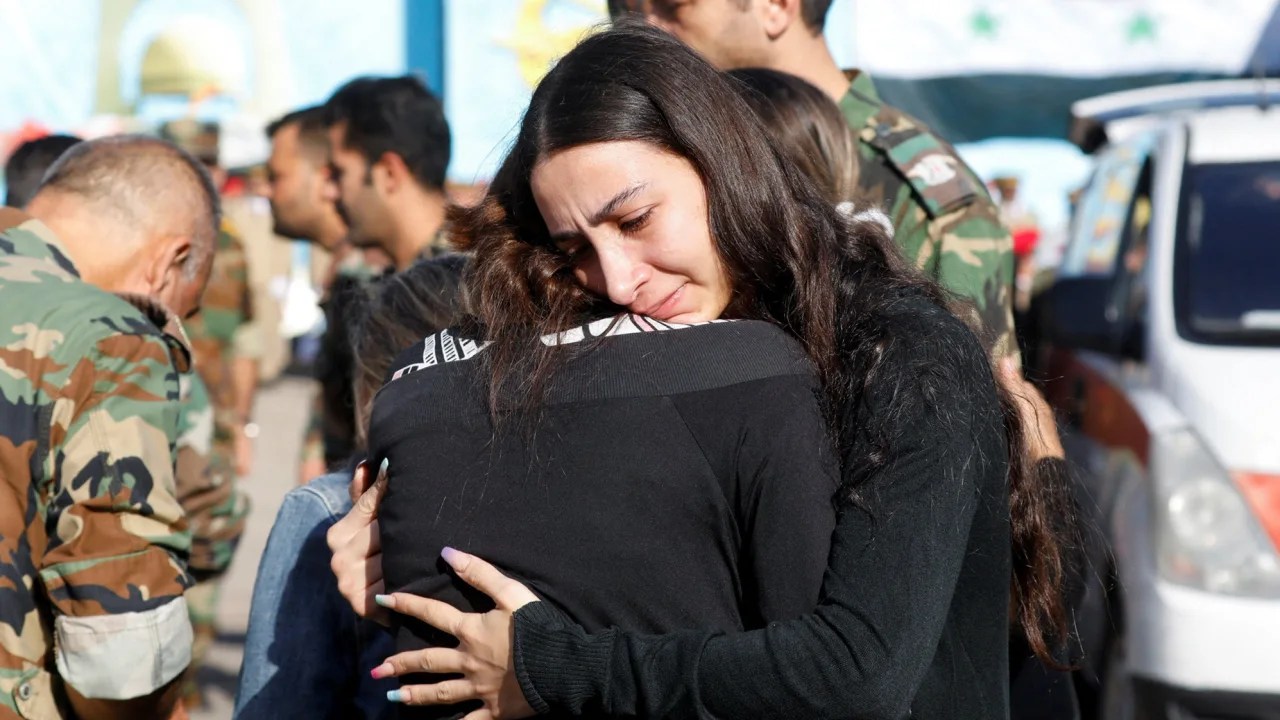
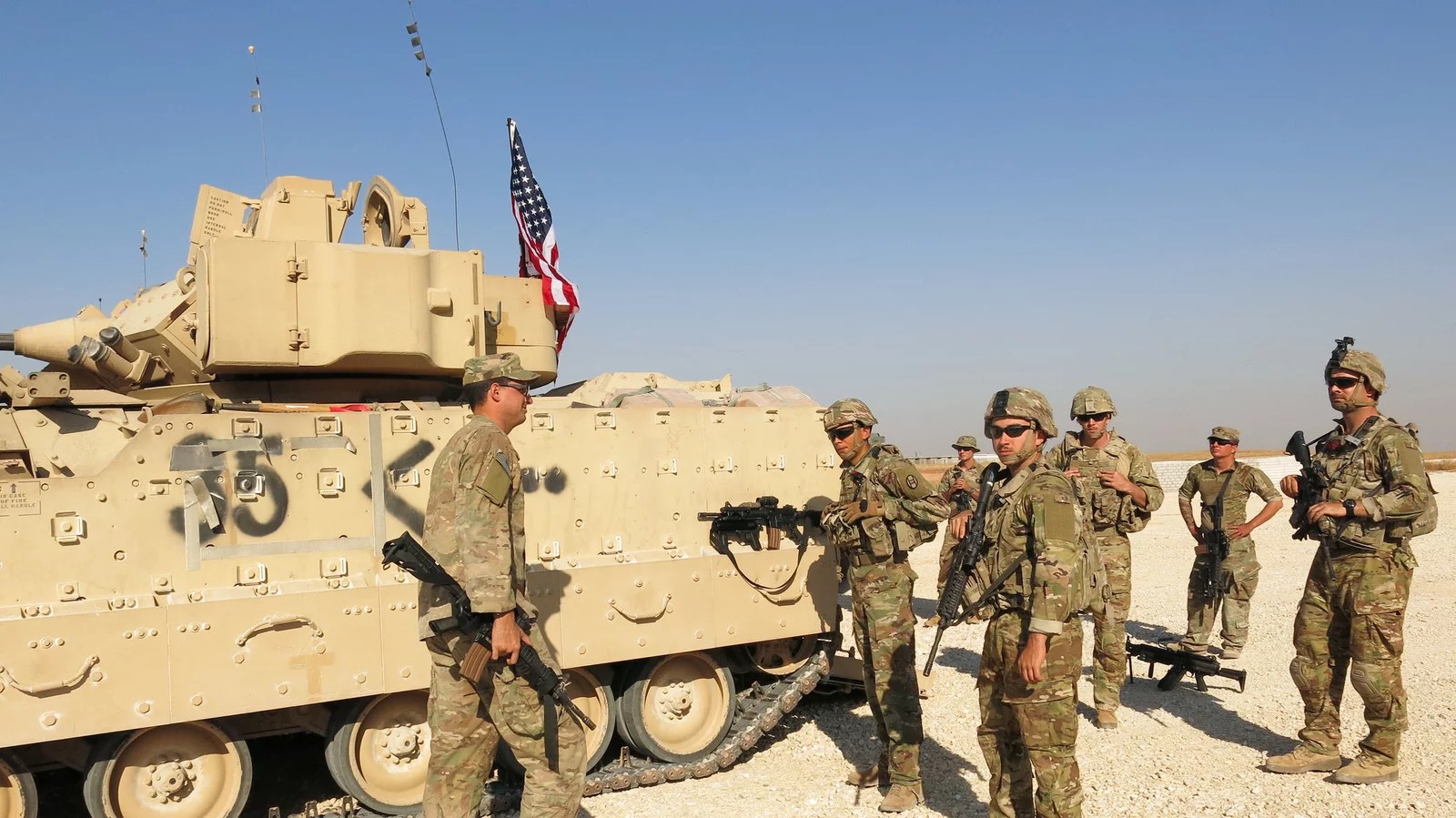
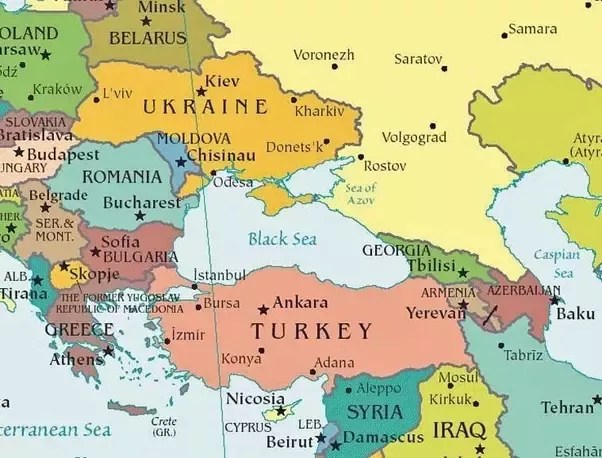
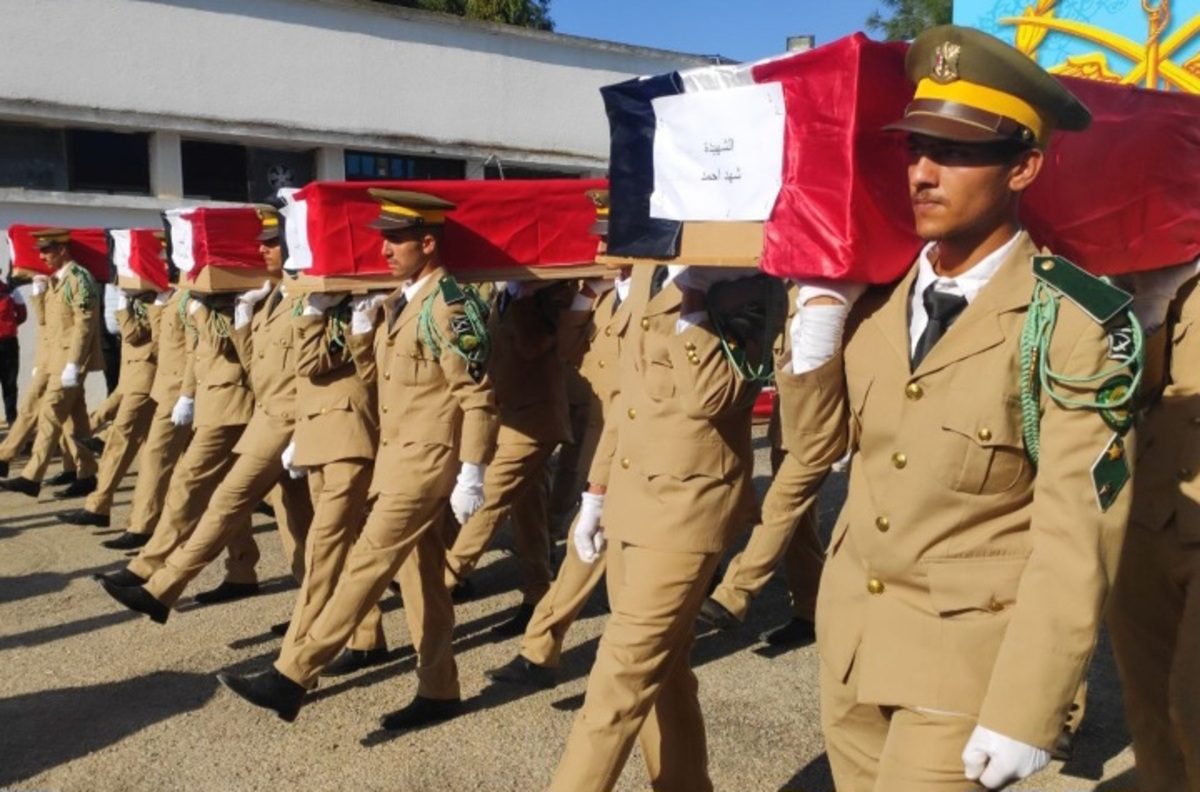


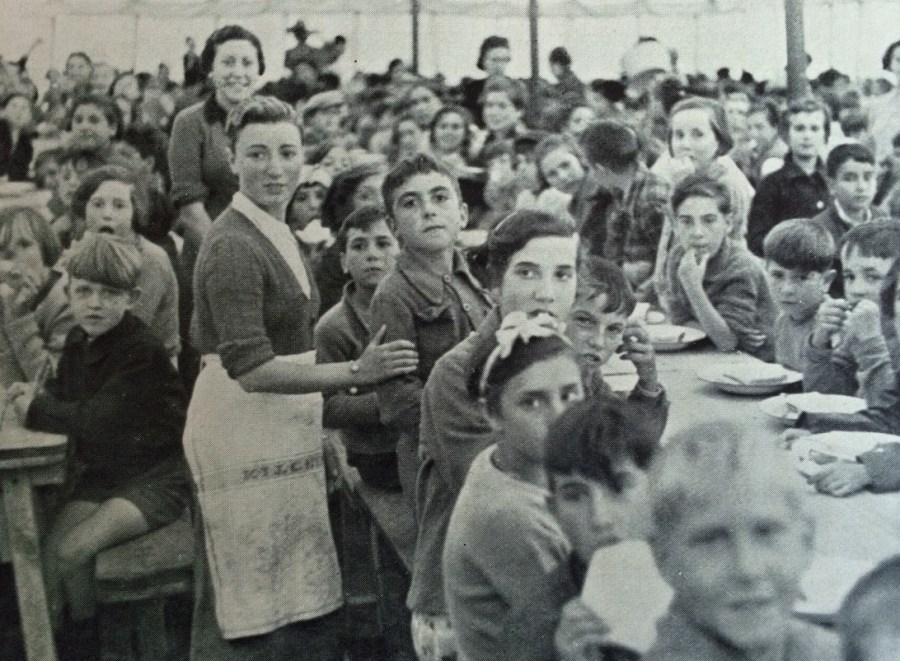


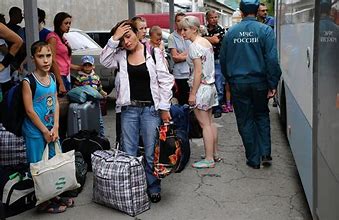
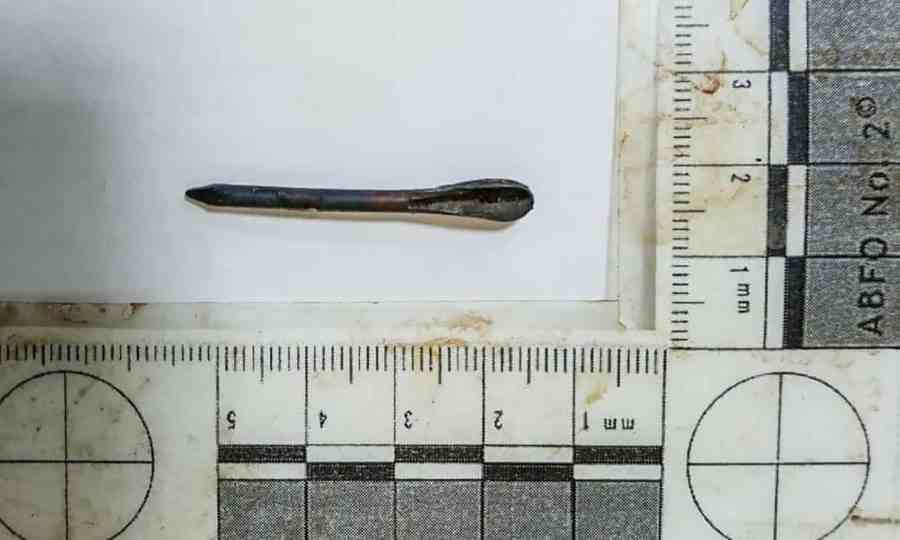


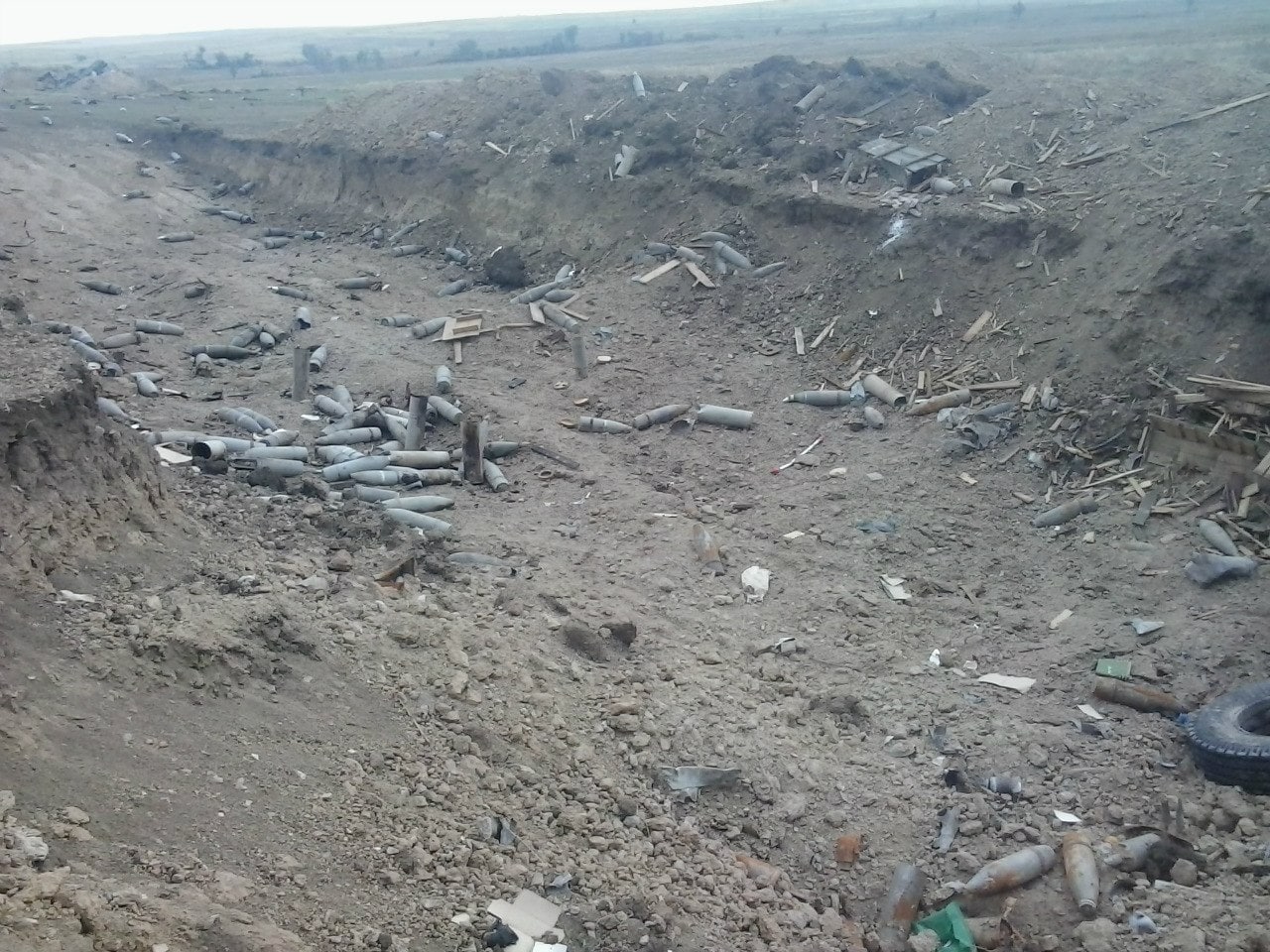
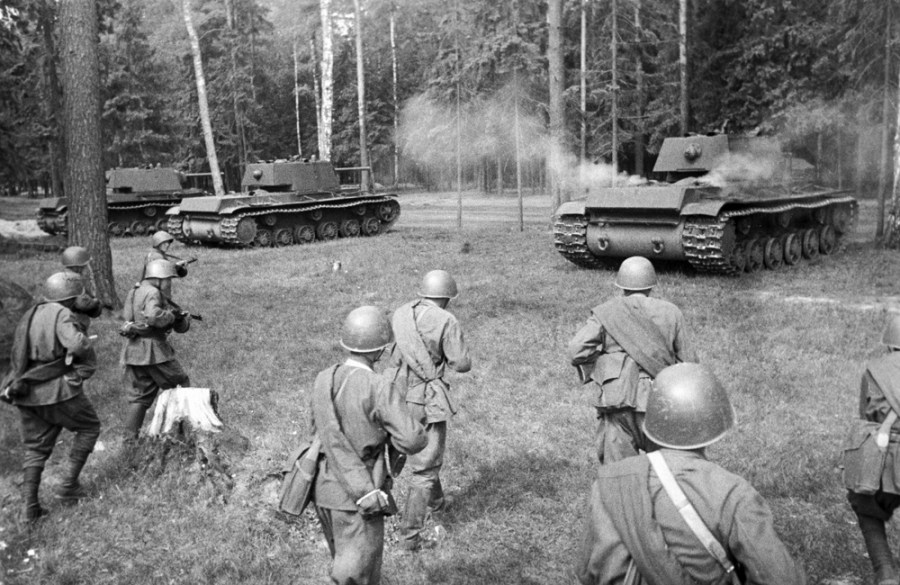


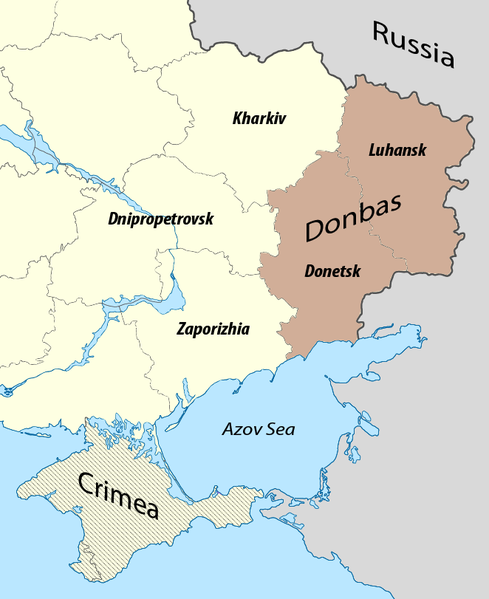


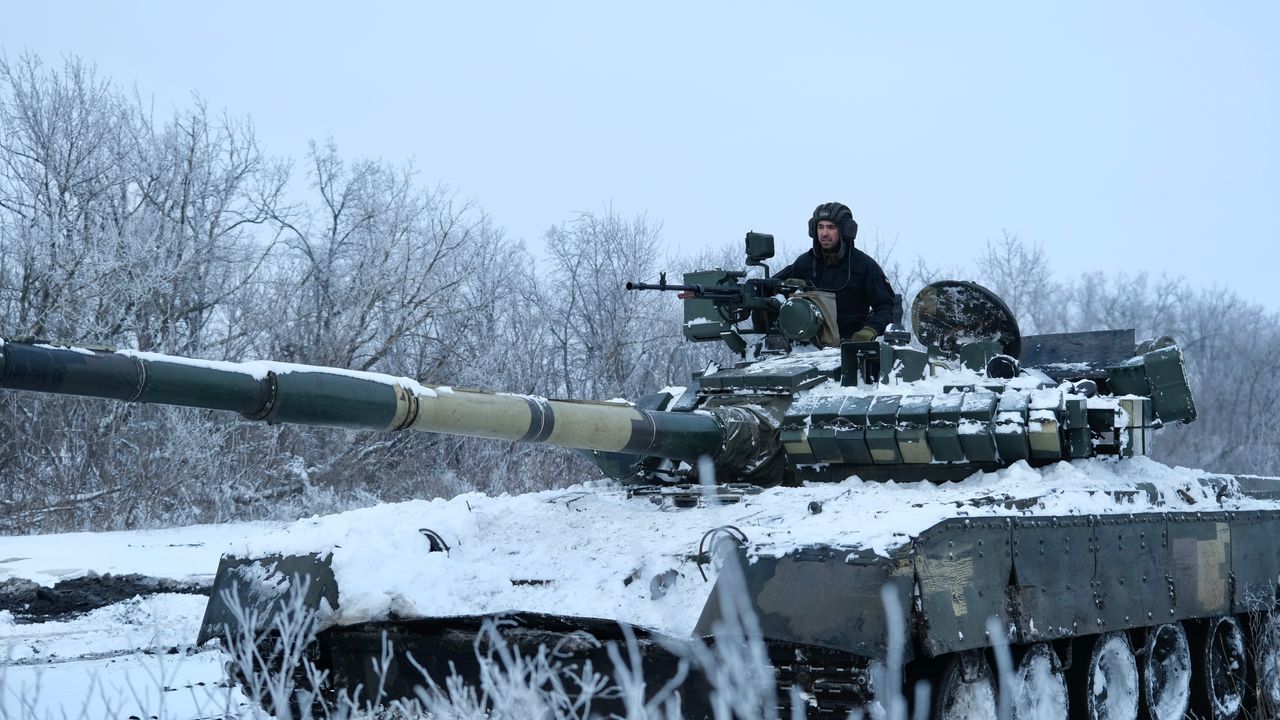


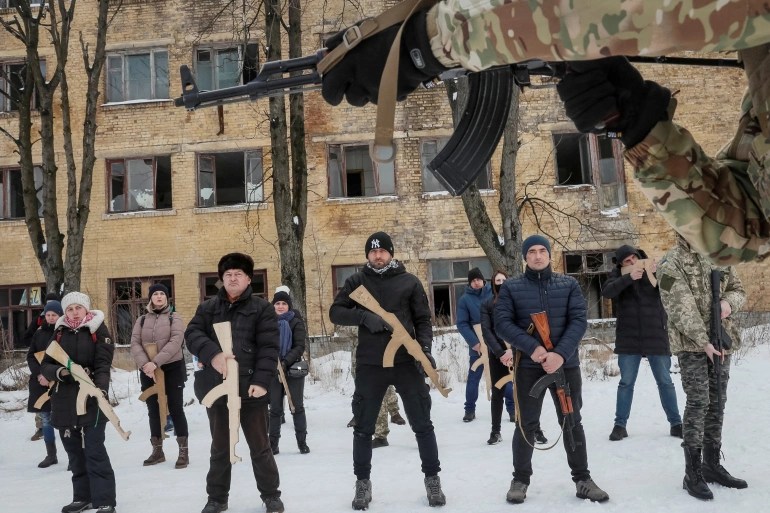

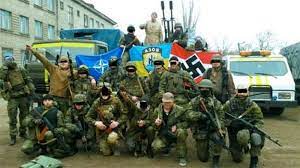


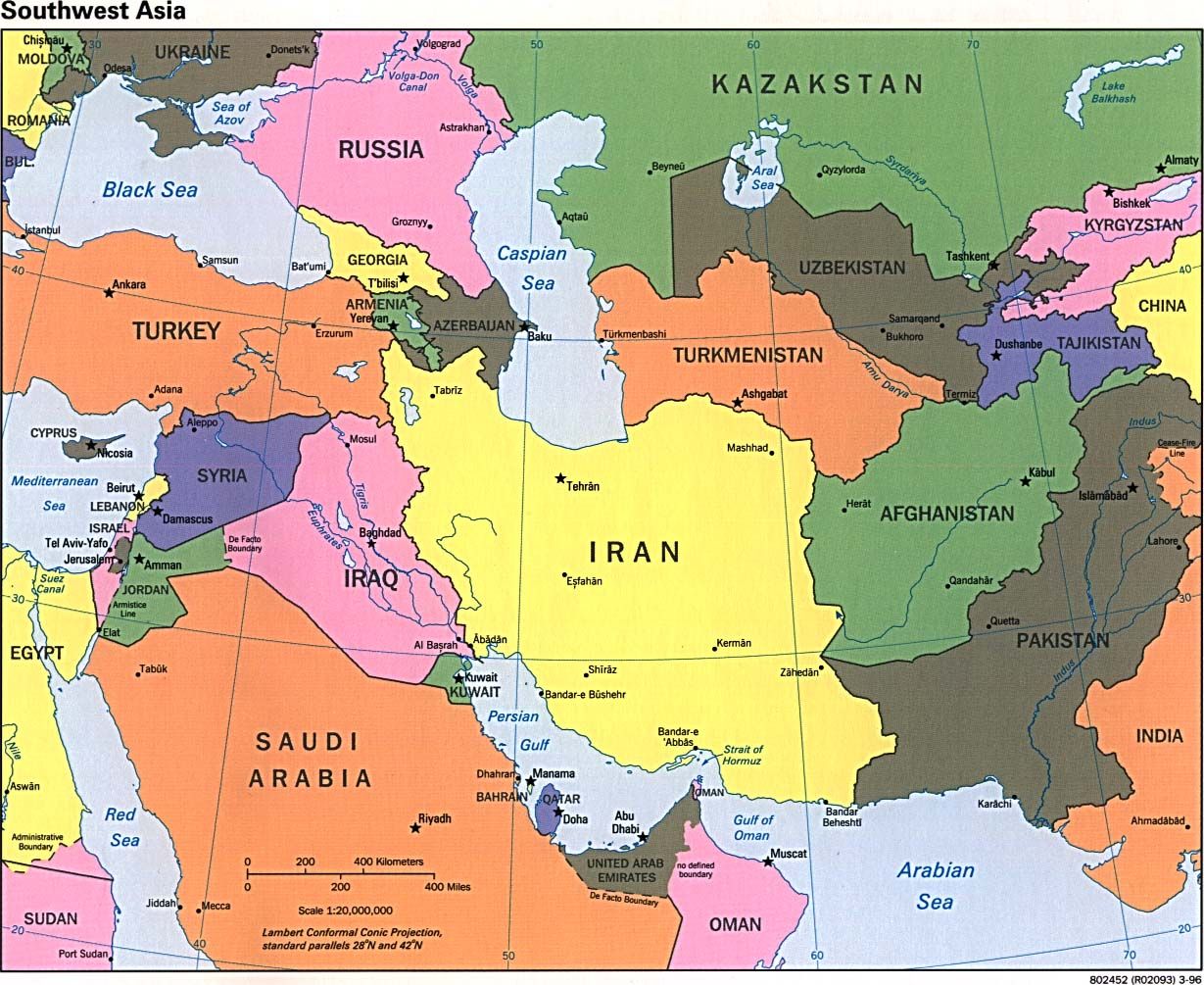


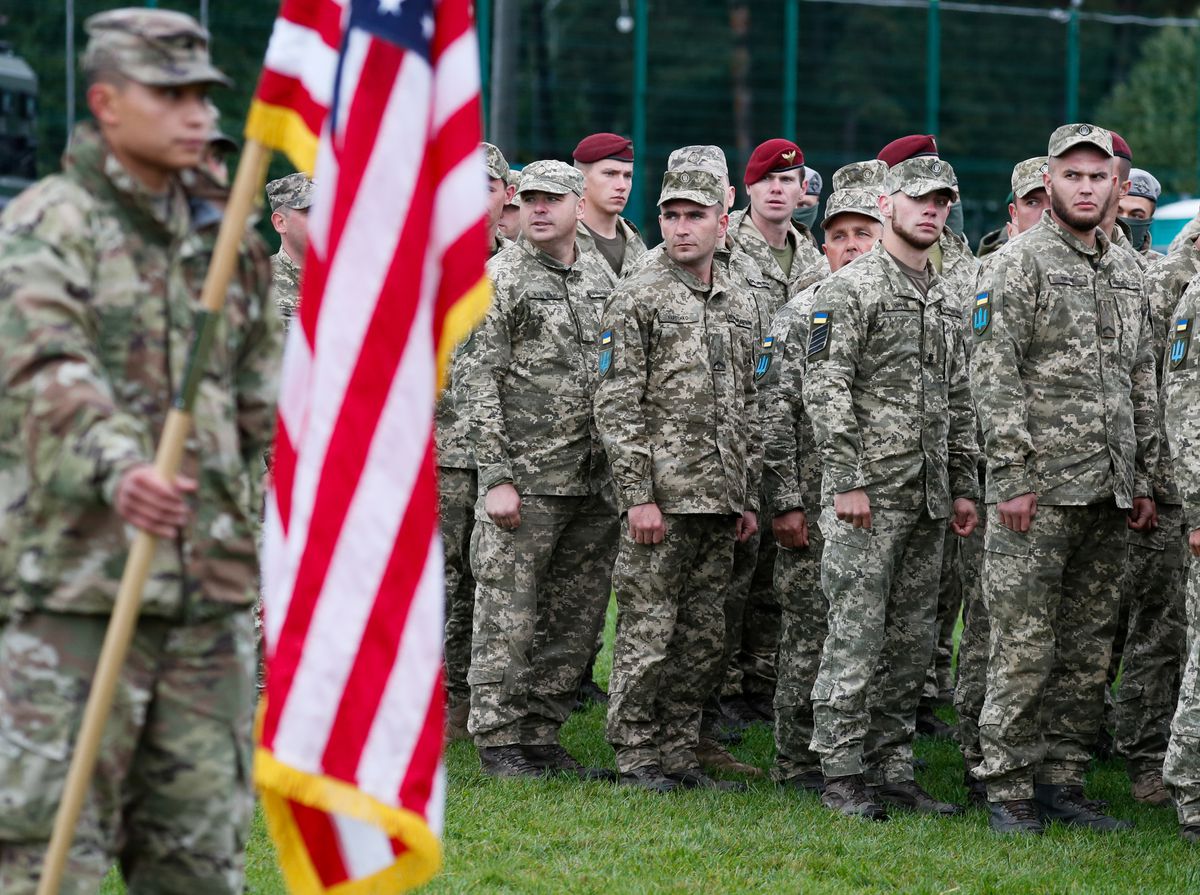
 rebelbreeze