WHY BOMB DUBLIN AND MONAGHAN?

Diarmuid Breatnach

(Reading time: 9 mins.)

Thirty-five people were killed by bombings on 17th May 1974, the most in one day during the recent 30 Years War but outside of Ireland and even within it, most people are unaware of that fact. That’s because the perpetrators were not the IRA.

And probably also because the victims were killed not just in Ireland but within the Irish state. Also no doubt because the perpetrators were Loyalists led by British Intelligence.

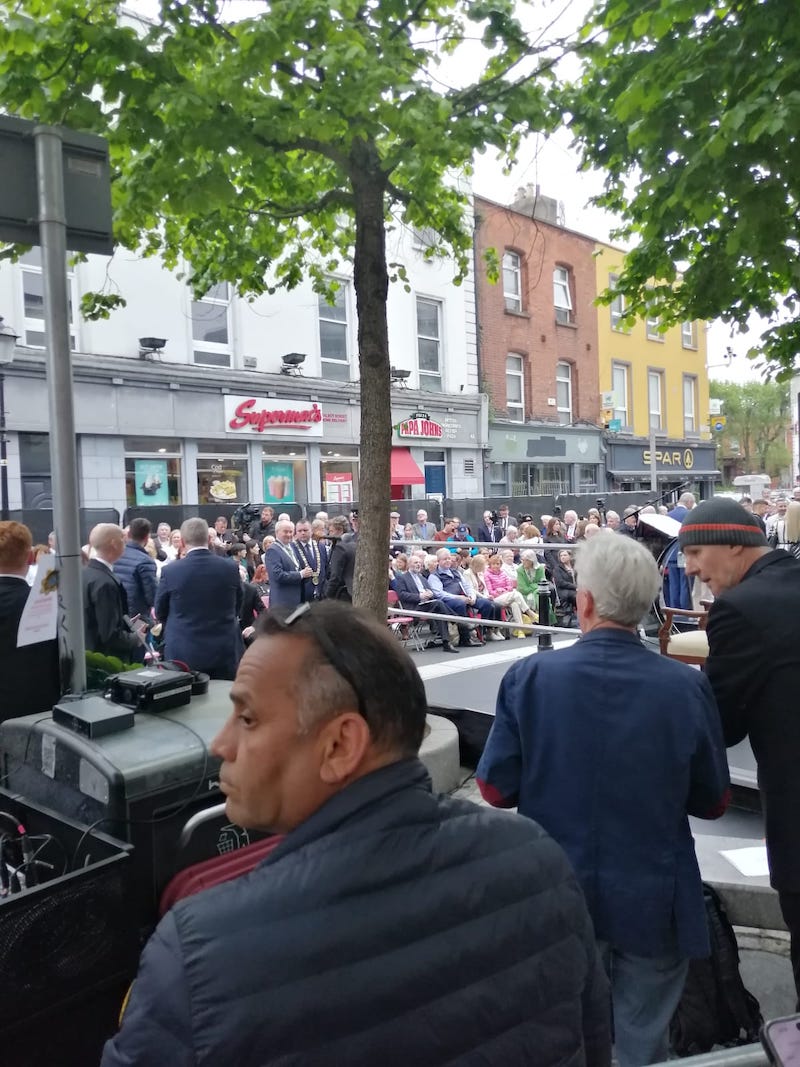
Section of westward end of attendance at event as President Michael D Higgins approaches (just out of view)(Photo: D.Breatnach)

Three bombs exploded on that day in the middle of a rush hour in Dublin City Centre: Talbot Street, Parnell Street and South Leinster Street. Somewhat later, a bomb exploded also in Monaghan Town. Altogether 35 were killed1 and “about 300”2 injured, some permanently.

The names of some of the victims being displayed at the premiere of the Anatomy of a Massacre documentary. (Photo: D.Breatnach)

Within days and perhaps hours a number of suspects among Loyalist murder gangs had been identified but they were not arrested or even questioned about the atrocity – no-one ever was. Despite that, the Gardaí closed the case investigation seven months afterwards that same year.

A new documentary on the atrocities by Fergus Dowd was premiered in Dublin on Friday to two full screen auditoria in the Lighthouse Cinema, Smithfield, featuring interviews with witnesses, victims and relatives of victims, a former Taoiseach and a former State forensic scientist.
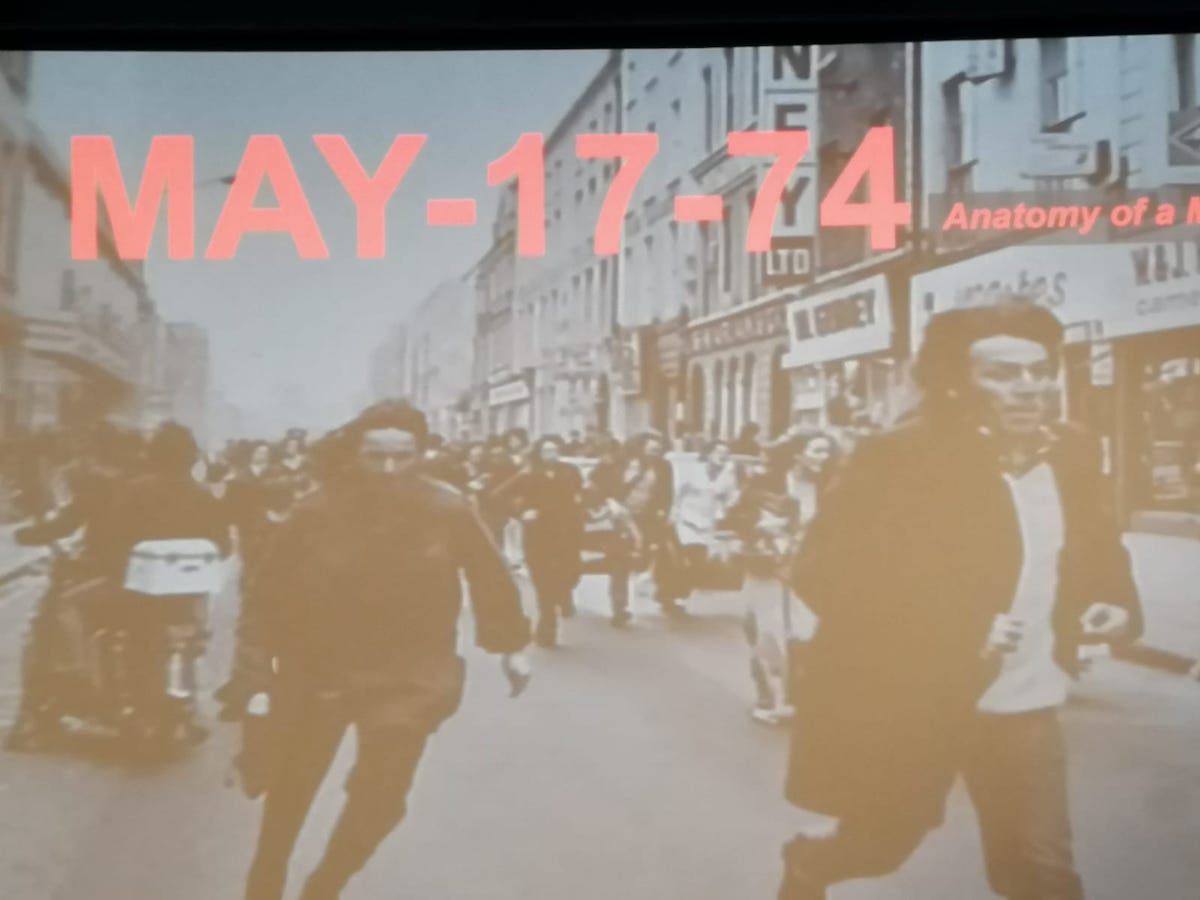
May-17-74 Anatomy of a Massacre is directed by Joe Lee and produced by Fergus Dowd.

The forensic expert had been given very little of the remains of cars containing the bombs since most had been sent to the RUC (colonial police) for their analysis (!) from which nothing useful emerged but he was able to determine that a high amount of amatol had been used.

At that time only the IRA among “paramilitary organisations” had the expertise to develop that explosive material which leads commentators to believe that the Loyalists received the necessary quantities from those seized from the IRA and held by the British armed forces.3

Given that many of the Loyalists involved were members of the Ulster Defence Regiment, a British Army unit, on the face of it the explosives could have been directly supplied by the British Army or indirectly obtained through the UDR as members of the British Army.

Nothing adverse is known about the Garda Commissioner who sent the exploded car remains to the colonial police but his Deputy and successor was Ned Garvey and whistle-blowing British spook Fred Holroyd claimed Garvey was a British Intelligence “asset” and to have met him in Dublin.

Confronted with this exposé years later Garvey admitted having met Holroyd but not to being a British spy – though he had not informed his superiors of his meeting with a foreign secret service agent. 4 Sadly this is not alluded to in the documentary.

As documented in Anatomy there had been a Loyalist bombing campaign of Dublin since 1969,5 with those in 1972 and 1973 killing between them three transport workers and no-one had been arrested by Gardaí or extradition sought in connection with even those fatal explosions.

No documentary about the bombing was made by RTÉ, the Irish broadcaster until 2004, thirty years after the atrocity.

However a much earlier documentary was by British company Yorkshire Television on ITV in 19936. RTÉ had declined the offer of joint screening and many people in Ireland who did not have access to ITV at the time missed it or had to go to a friend or relative to view it.

The British documentary was mentioned only in passing by one of the interviewees in Anatomy but without reference to RTÉ’s declining of the offer of joint screening.

British spook whistleblower Colin Wallace states that he was obliged to report on every meeting he had with Loyalists or others and his erstwhile bosses would have kept those papers, as they would have for the MI5 operatives who steered the bombing gang for Dublin and Monaghan.

The existence of MI5 documents that would throw much light on the bombings was referred to a number of times in Anatomy and the Justice for the Forgotten campaign keeps seeking them. Irish Government ministers regularly state that they have requested them but are always refused.

Missing from the documentary was what is now known of the secret contemporary memos of Arthur Galsworthy, British Ambassador to the Irish state: It is only now that the South has experienced violence that they are reacting in the way that the North has sought for so long …

… I think the Irish have taken the point.

Galsworthy also noted that the Irish Foreign Affairs Minister Garret FitzGerald told him that “the government’s view was that popular hostility appeared to be directed more against the IRA“.

In the immediate aftermath of the bombing, both Liam Cosgrave for the Government and Jack Lynch for the Opposition sought to widen the blame to include Irish Republicans.7

VIEWING THE DOCUMENTARY

Two screens at the Lighthouse cinema were fully booked to view the premiere.

The documentary is fascinating and some of the witnesses and relatives really excellent in their descriptions and commentary. Others interviewed pulled no punches in castigating successive Irish governments for closing the investigation and allowing it to remain closed.

Some, too, alleged a conjunction of interests between the Irish and UK states in ensuring the truth about the perpetrators and the Irish State’s reaction never surfaced.

Many people prominent in Irish political circles at different ends were present to see the premiere and after a few words from Margaret Unwin, Coordinator of the Justice for the Forgotten campaign, along with filmaker Dowd, the Resistance Choir sang their song composed about the bombing.

The Resistance Choir performing their song about the bombing massacre (Photo: D.Breatnach)
Section of crowd from the Monument eastward (Photo: D.Breatnach)

Justice for the Forgotten organise a commemoration of the atrocity every year at which some music and poetry is performed, along with speeches by politicians representing the Irish State, and the local authority Councils of Dublin City and Monaghan and another individual or two.

Some of what is said there I have welcomed and some disliked but most of all I detest Ministers in the Irish Government coming there to tell us how they want the British State to release their secret documents regarding the event but never have any action to pressurise its Ministers in mind.

Cormac Breatnach playing low whistle at event (Photo: D.Breatnach)

This year, the 50th anniversary, the event took place after noon on Friday 17th May with a large crowd but only one speaker listed, President of the Irish State Michael D. Higgins, with traditional Irish music from Cormac Breatnach and Eoin Ó Dillon, a duo performing at the event for years.

Eoin Ó Ceannabháin sang The Parting Glass and poet Rachel Hegarty performed her poem about the bombing. But there was a surprise speaker also, an Italian from Breschia who also referred to state collusion in a bombing against an anti-fascist rally in his home town the same year, a few weeks later.
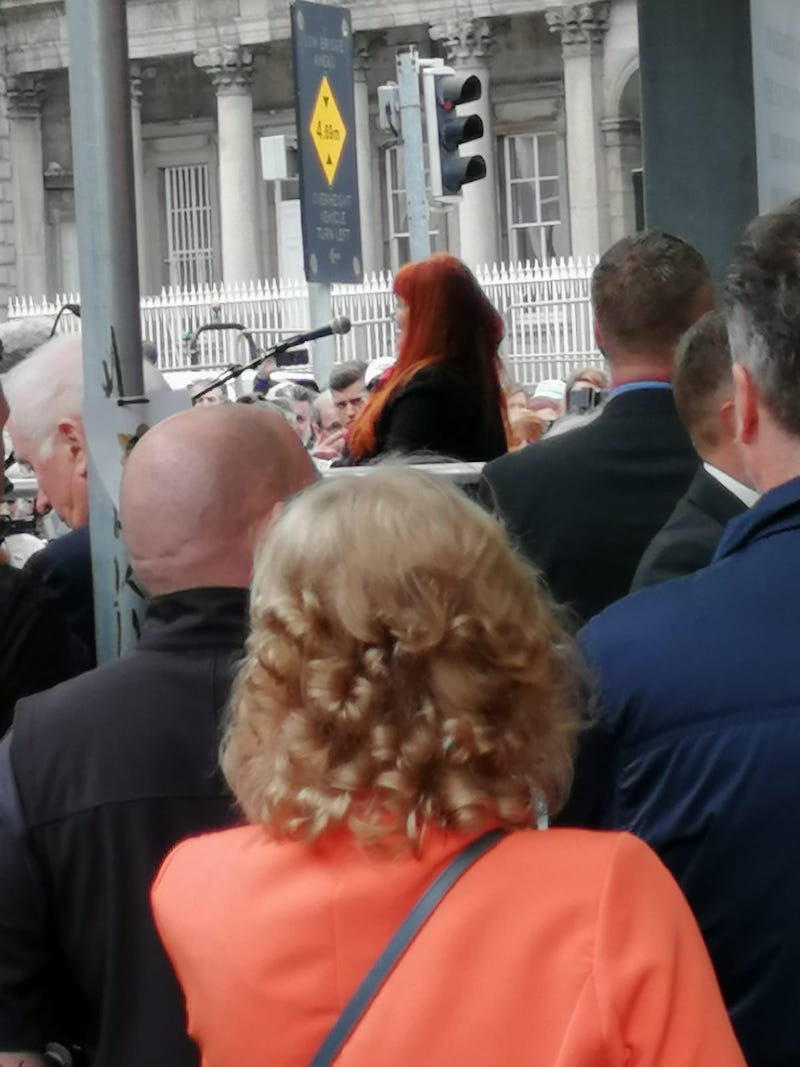
Poet Rachel Hegarty performing her poem about the event (Photo: D.Breatnach)

The MC of the event, Aidan Shields, son of fatal victim Maureen, told the audience to applause that Justice for the Forgotten would be sending a delegation to Breschia for the 50th commemoration of the atrocity in their town.

At left, Aidan Shields, son of fatal victim and MC at event, with Monument to the victims centre (Photo: D.Breatnach)

WHY THE BOMBING?

Trainee journalists are told to answer the ‘Five Ws’ in their reports: who, what, where, when and why.

The answers to four of those questions have been known for decades: Dublin and Monaghan is where; 17 May 1974 was the when; the bombing atrocity was the what. The who were the Loyalists and British Intelligence. But nobody seems to attempt to answer the why – or even to ask that question.

For the earlier 1972 bombing, the “why” is clear: to get the Irish parliament to vote for the Amendment to the Offences Against the State Act.

And they were successful in that since, all logic to the contrary, some of the Opposition decided to believe that the bombing was the work of Irish Republicans. So we now have that no-jury political court and senior Gardaí can give ‘evidence’ unseen by the accused from Garda “secret files”.

Apart from the guidelines of journalism, there are also those with regard to criminal investigations, which outline the importance of motive and opportunity. The British secret service certainly had opportunity – but what was their motive?

A bombing such as that in Dublin on 1974, in the Irish State’s capital city, is a message to the Irish ruling class (though the victims be different) were the. And from the British state through their intelligence service, which would hardly dare to carry out such an attack without at least the endorsement of their masters.

So the message was … what? “We will bomb your capital city if you don’t do what we want or if you do what we don’t want”? But the Irish ruling class was already cooperating about as fully as possible with the occupation in the Six Counties and repressing resistance in the Twenty-Six.

A similar campaign occurred in the 1980s, in the Basque Country within the French state (mostly). The Spanish Government waged a terrorist campaign8 of bombings, kidnappings and assassinations against suspected activists of the armed Basque liberation group ETA.

It seemed that what the Spanish authorities wanted was for the French to turn over Basque activists who were on the “French” side of the Border to the Spanish authorities, something the French had been unhappy to do, the Guardia Civil believed to be torturers even after Franco’s death.

After some of those bombings, the social-democratic French Government led by Mitterand began to hand over Basque activists to the authorities across the border, sometimes without even going through the official extradition procedures.

The Irish State did also permit extradition of Irish Republicans to the Six Counties (and later to Britain too) after the Dublin and Monaghan bombings, but not until ten years later, with Dominic McGlinchy, which hardly looks like the effect following its cause.

The Sunningdale Agreement had been signed in December 1973 which proposed some kind of power-sharing between nationalists and unionists with a role for the Government of the Irish state against which the Loyalists of the Ulster Workers’ Council had organised a general strike.

A British whistleblower, Colin Wallace claims that the bombing was a warning to the Irish ruling class to keep their fingers out of the colony.

VICTIMS AND RULING CLASS

Apart from not answering or even seeking the motivation for MI5 to arrange and oversee the bombing, I have not seen any discussion of the class nature of the locations. The bombings of 1972 and 1973 targeted transport workers.

But the bombings on the north side of the river in areas to the east of O’Connell Street also took place in areas where working and lower middle-class people worked, shopped and got on to the public transport buses. This hardly seems accidental.

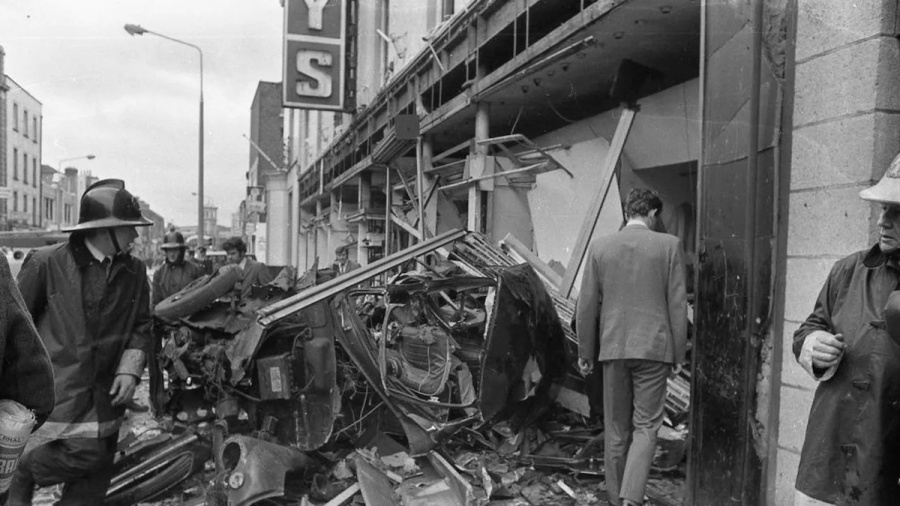
Aftermath in Talbot Street facing westward with Connolly Station tower in far background (Photo: PA)

A part of MI5’s message could have been: “This time it was mostly the kind of people nobody (who are in power) cares about, so be thankful. Next time we might hit the north-east centre around Henry Street, or areas around Trinity College, Dame Street and Grafton Street on the south side.”

One other point that is rarely made is that the bombing and the State’s reaction to it showed the totally craven and foreign-dependent nature of the Irish ruling class, to allow their capital city to be bombed by another state without seeking revenge or even restitution.

The French state made a deal with the Spanish after some bombs exploded in territory to which it laid claim but does anyone believe the result would have been the same if the Spanish terrorist groups had bombed Paris?

End.

FOOTNOTES

1 Some accounts give a total of 34 or 35 dead from the four bombings: 34 by including the full-term unborn child of victim Colette Doherty, who was nine months pregnant; and 35 by including the later still-born child of Edward and Martha O’Neill. Edward was killed outright in Parnell Street.

2 https://en.wikipedia.org/wiki/Dublin_and_Monaghan_bombings

3 Whether as a gift or stolen from the stores.

4 When Fianna Fáil came into government, they sacked Garvey but presumably not wanting to expose British Intelligence penetration of the Irish State’s management upper echelons, gave as a reason only that they had no confidence in him. This opened the way for Garvey to claim wrongful dismissal and win, giving him a payout and retaining his pension. Garvey was also important in running the notorious “Heavy Gang” within the Special Branch.

5 The Wolfe Tone Monument in Stephens Green had been blown up and the O’Connell monument, the Glasnevin ‘Round Tower’ had also been bombed.

6 “Yorkshire Television broadcast a documentary entitled ‘Hidden Hand – the Forgotten Massacre‘ made as part of its ‘First Tuesday‘ series. The programme dealt with the Dublin and Monaghan bombings of 17 May 1974. [The programme came to the conclusion that the Ulster Volunteer Force (UVF) would have required assistance to carry out the bomb attacks. There was speculation as to where such assistance might have come from. While no firm conclusions were reached, it was suggested that the security forces in Northern Ireland were the most likely source of help. Allegations concerning the existence of a covert British Army unit based at Castledillon were considered; as well as alleged links between that unit and Loyalist paramilitaries. It was shown that Merlyn Rees, the former Secretary of Sate, had known of the unit’s existence. On 15 July 1993 the UVF issued a statement in which it claimed sole responsibility for the Dublin and Monaghan Bombings.]” https://cain.ulster.ac.uk/events/dublin/chron.htm

7https://en.wikipedia.org/wiki/Dublin_and_Monaghan_bombings (The Aftermath)

8 Mostly using the GAL (Grupos Antiterroristas de Liberación [sic]) cover name.

SOURCES& USEFUL LINKS

Justice for the Forgotten campaign: https://www.patfinucanecentre.org/projects/justice-forgotten

https://en.wikipedia.org/wiki/Dublin_and_Monaghan_bombings

https://cain.ulster.ac.uk/events/dublin/chron.htm

Breschia fascist bombing: https://en.wikipedia.org/wiki/Piazza_della_Loggia_bombing

THE COLONIES STRIKE BACK – IN FILM

Diarmuid Breatnach

(Reading time: 5 mins.)

The colonies have been striking back at the Empire in film for some time and why not? Sure the Empire’s been colonising them all over again for decades, also through film.

But for a long time the liberal anti-colonial script-writers couldn’t bring themselves to make the main heroes of the film the indigenous colonised in Africa, America, Asia or Oceania – or else the finance backers doubted they’d recover their investment.

So the situation of the colonised had to be seen through the eyes of a liberal hero of European background or ancestry1 — someone with which, as they thought the the white European audience could identify2.

Stories figuring the Europeans colonised by England, i.e the Irish and the Scots, many who were in turn used by the Empire to colonise the lands of others — gets the film-makers over that difficulty.

Script-writers and casting directors in that ex-colony-now-superpower have been getting back at the English for years, of course, in historical drama3 but also portraying their villains with English accents4. Posh accents at first and then regional and London-Cockney5.

But rarely against the Irish, being often heroes in US films, providing they are Irish-Americans, which is to say Irish UStaters.

Two productions I’ve watched recently had as heroes people exported by the Empire from their own conquered homelands to other conquered colonies, in each case forming alliances with indigenous people.

Billy (Baykali Ganambarr) and Clare (Aisling Franciosi) in a scene from the Nightingale film (Image sourced: Internet)

Both productions have also given coverage to native languages of the indigenous people and, in one of them, also to a fair bit of the Irish language, spoken and sung.

THE NIGHTINGALE IN TASMANIA

The Nightingale (2018) is set in the British colony of Tasmania in 1825. In that period, which is not the main story, the Black War took place, in which an estimated 600-900 indigenous Tasmanians were killed, nearly wiping out their entire population. The killers were British colonial armed forces and settlers.

Political or social prisoners in the UK6 of the period were often transported to serve their time in penal colonies where, if they survived, they could be freed upon completion of their sentences or even earlier by agreement but to return was impossible unless they could purchase passage home.

Clare — “The Nightingale”, so nicknamed for her singing voice — is one such social prisoner, an Irish woman convicted of stealing and transported to Van Diemen’s land to serve her time.

She is part of the household staff of a British officer stationed there but is permitted to marry a free Irishman, Aidan; they live together in a hut and have a child together. The officer desires Clare and acts violently upon that desire, giving rise to a chain of tragic events.

Clare sets out to track the officer down and wreak revenge upon him but, needing a tracker-guide, employs an indigenous Tasmanian for that purpose. The story then is not only about her journey but about the uneasy relationship between these two victims of colonialism and occasional glimpses of other aspects of colonial rule, particularly in Tasmania.

IRISH, SCOTS AND INDIGENOUS

Frontier (2016) was originally a series for Television and, like The Nightingale, found a home later on Netflix. It features Irish and Scots heroes against the British Authorities and military.

It is set in British Canada in a historical struggle for control of the fur trade between the Hudson Bay Trading Company, a monopoly jealously protected by the UK, and a consortium of trappers striving for independence in trade.

Tavern owner Kate Emberly (Zoe Boyle) being meneaced by Captain Chesterfield (Evan Jonikeit) in the Frontier series (Image sourced: Internet)

The indigenous people are represented too, with a female warrior and communities, speaking Cree and a number of other Indigenous languages, including Inuit, with subtitles providing a translation.

The main hero is Declan Harp (now there’s names with an Irish connection!) who is half-Cree and half-Irish; after his parents were killed, he is adopted by Benton, the British administrator of the area but Harp later grows to hate Benton, who had his wife and child murdered.

A lesser male hero and ally is Michael, totally Irish but with a shaky moral compass. The main female heroes are a Cree warrior/ hunter and a Scottish woman, owner-manager of a tavern.

A female sort of anti-hero is a wealthy English woman of aristocratic type and there’s an Irish woman of humble background, being schooled to be “a lady”. There are a number of male Scottish anti-heroes too and there’s a Metis (of mixed Indigenous and French [or Breton or Basque?] parentage) helper, trapper and guide.

The Frontier has a couple of villains of US-origin but that’s allowed, this is Canada after all, its domination taken over by the USA from England. Otherwise nearly all the bad characters, the “black hats”, are English and so too with The Nightingale.

The British soldiers in both stories have regional English accents but so do some of their lower-ranking officers. Most of them are brutal and drunkards, some also murderers and rapists. Anti-English propaganda? No doubt but from what we know of history and even of more contemporary colonialism, very likely true enough.

Reviews have praised Jason Momoa’s portrayal of Declan Harp in The Frontier and certainly his physical size and appearance (long tangled locks, one eye clouded, looking out under lowered eyebrows) does focus one’s attention.

Jason Momoa as Declan Harp and Jessica Matten as Sokanon in a scene from the Frontier series (Image sourced: Internet)

Personally I found the number of times he survives torture, serious beatings and wounds straining credulity and, in a way, tending towards boring, as though the Director or screenplay writer thought: Let’s get Declan to have another massive bloody fight here, we haven’t had one of those in a couple of episodes now.

However, even with at times difficult-to-believe plot turns, there are some excellent performances, chiefly perhaps and not surprisingly Alun Armstrong as Lord Benton and Shawn Doyle as the ruthless smoothly urbane but underneath volcanic Samuel Grant

Greg Bryk as Grant’s smooth and sinister manservant-lover Cobbs Pond puts in effective performances too. Evan Jonigkeit as Captain Chesterfield, is also good, particularly in his anguished frustrated desire for the tavern owner Grace Emberly (Zoe Boyle), and his burning desire to rise above his social station.

Jessica Matten is believable as the Cree warrior-hunter Sokanon, despite her gender being unlikely in that role, but her frowning expression grows repetitious after a while.

Katie McGrath played the plotting and provocative English aristocrat Mrs. Carruthers well in her unfortunately short run as a character (but Wardrobe and Sequence, would she wear the same lace-sleeved undergarment so many day in a row?).

Katie McGrath as Lady Carruthers in Frontier. (Image sourced: Internet)

The female who develops something of a penchant for killing violent dominating males and disposing of their bodies is an interesting character creation though her appearances in that role are few.

When Declan Harp commandeers a ship to take him and McTaggart (Jamie Sives) to Scotland to rescue Grace and avenge himself on Lord Benton, we are introduced to a Portuguese ship captain and a Polynesian mariner, the latter also singing and praying in his native language.

In Scotland, Harp recruits local toughs to attack the English Castle Benton where Lord Benton has taken residence and they kill many redcoats.

STEREO OR TRUE-TYPES

The main characters in The Nightingale are of course the vengeful woman Clare (Aisling Franciosi), her aboriginal guide and companion ‘Billy’ (Baykali Ganambarr), along with the British Lieutenant Hawkins (Sam Claffin) and Sergeant Ruse (Damon Herriman) she pursues.

All are believable characters with strong performances by the actors. England is an evil bastard in this story, represented by the officer Hawkins and sergeant Ruse but some decent English individuals make their appearance on occasion too.

The dialogue is mostly English but the Tasmanian language spoken and sung in the film is Palawa Kani. Some Irish is spoken between Aidan and Clare, the latter singing mainly English folk songs but to her child sings the Irish language lyrics of Cailín Álainn to the Scottish air of the Mingalay Boat Song7.

Speaking their own language makes the subjects their own people; speaking English, usually badly or with heavy un-English accents, though making them more intelligible to English fluents also presents them to the English-speaker as lesser-English, lesser-UStater, lesser-Canadian — in total: lesser human.

End.

FOOTNOTES

1 For example the plight of the Cheyenne in 1864 was represented in Soldier Blue through the eyes of the European woman Cresta Lee (Candice Bergin); it’s the liberal newspaper editor Donald Woods (Kevin Kline) who we accompany as we follow the story of the hero Biko in Cry Freedom, murdered by the South African white minority regime. Even in the British colony in Ireland, where the natives are white, the heroes may be English (Brian Cox playing an honest English cop in Hidden Agenda, Emma Thompson as the lawyer in Name of the Father).

2 When the promoters and financiers finally realised that a large part of their paying audiences were not in fact white European is when one started to see heroes of other backgrounds and ‘blacksploitation’ films.

3 Mel Gibson’s The Patriot and Bravehart, for example but going much further back, Disney’s The Fighting Prince of Donegal (1966).

4 For examples Grand Moff Tarkin in original Starwars trilogy (1977-1983), Steven Berkoff in Beverly Hills Cop (1994), Scar in The Lion King (1994), arguably Anthony Hopkins [though Welsh and playing a Lithuanian] in Silence of the Lambs (1991), Sher Khan in The Jungle Book (1996) and sequel.

5 Tim Roth in Pulp Fiction (1994).

6 Not just the British – the French had their penal colonies abroad, for example in Guyana and the Spanish state sent prisoners to Ceuta, in North Africa even in modern times.

7 An anachronism, since the composer of the Irish lyrics of An Cailín Álainn is Tomás ‘Jimmy’ Mac Eoin from An Bóthar Buí in An Cheathrú Rua, Conamara, Galway, Ireland – and he was only born in 1937. The lyrics of the Mingalay Boat Song are also apparently sung to a much older air and one supposes the original lyrics would have been in Gaedhlig.

SOURCES

https://en.wikipedia.org/wiki/The_Nightingale_(2018_film)

https://en.wikipedia.org/wiki/Frontier_(2016_TV_series)

“DEADLY CUTS” FILM IS … DEADLY

Clive Sulish

(Reading time: 4 mins.)

“DEADLY CUTS” FILM IS … DEADLY1

Michelle (Angeline Ball) runs a hairdressing salon in Piglinstown, a fictional Dublin city suburb that looks like Finglas3 and the area is suffering the attention of a local gang of thugs led by Deano (Ian Lloyd Anderson). The Gardaí4, represented by one individual played by Dermot Ward, are ineffectual in dealing with local crime and seem also well-disposed to a local politician, a Dublin City councillor, whose solution to the area is demolition of a parade of shops, including the hairdressing salon, followed by redevelopment. Michelle’s staff are Stacey (Ericka Roe), Chantelle (Shauna Higgins) and Gemma (Lauren Larkin).

Playing smaller roles are the local butcher Jonner (Aaron Edo), along with owners of the fish and chip shop, the local pub, pub entertainment organiser and three elderly ladies in particular.

Darren Flynn (Aidan McArdle) is the local politician, a Dublin City Councillor, who lets slip later in the film that he has a lot of property speculators waiting to get their hands on the area. Of course, in real life, nothing like that would happen in Dublin City Council, among the Councillors or the City Managers, would it? Quite apart from that, one must feel some sympathy for a certain Dublin City councillor who must surely wince every time he hears “Councillor Flynn” mentioned in the film’s dialogue.

(Image sourced: Internet)

If you know Dublin working and lower-middle class suburbs then some of the visual scenes will be familiar, the streets of housing, the green area, short strips of shops, including the chipper, the cheeky kids on bikes, the pub as a social centre. But for women the hairdressing salon plays a social role too as one can see from the varied ages and requirements of the customers. There was a time in some areas when the local barber shop played the same role for men, the waiting customers, the customer in the chair and the barber all taking part in the same conversation.

You’ll know too that unemployment tends to be higher in such areas and that there are social problems in particular with bored and disengaged youth, drug-taking and selling …. but not necessarily more of the taking than occurs in middle-class areas, particularly when the young people start clubbing.

Areas that could do with regeneration around the local community are not unusual in and around Irish cities but when that regeneration takes place it’s usually for another class – the gentrification project. That’s what’s in store for Piglinstown, if Mr. Flynn and his invisible property speculators have their way. This film is making its debut at a time when property speculators are visibly running wild over Dublin, building hotels, residential apartment and student accommodation blocks (of which most students can’t afford the rents), meanwhile destroying communities, cultural amenities and historical sites. And Dublin City Managers are giving the go-ahead for these planning applications while An Bord Pleanála regularly turns down appeals or moderates the application somewhat but rarely in essence.

The highpoint of the film both in tension and in flash and showbiz buzz is the Ahh Hair competition, which the Piglinstown hair dressing salon wants to win in order to boost their profile and avoid demolition by the speculators. Here Pippa (Victoria Smurfit) plays the vicious upper-class nasty with abandon, aided by her three familiars, the snooty Eimear (Sorcha Fahey) chief among them, many hands in the film’s audience surely itching to slap. Nor is the nastiness only verbal.

Snooty upper-class hair stylist Pippa, played by Victoria Smurfit, at the Ahh Hair competition. (Image sourced: Internet)

But it is also high satire, from Thommas Kane-Byrne as Kevin, the camp announcer and poseur judges with ridiculous hyperbole, including the star hairdresser D’Logan Doyle (Louis Lovett), to the cheering hooray henry and henrietta types in the audience. Even the finalist hairdressing creations would be to most people ridiculous, as are some of the creations and installations that win the annual Turner prize. Are the real hairdressing competitions anything like this?

Among the actors, it’s good to see Angeline Ball who charmed us in The Commitments (1991), 30 years ago and still looking good as the salon owner Michelle and Pauline McLynn who insisted in the eponymous series that Father Ted would have a cup of tea, “Ah, you will, you will, you will”. Comedienne Enya Martin, from Giz a Laugh sketches plays the staff’s somewhat sluttish friend.

The Deadly Cuts salon team in film promotion poster (Image sourced: Internet)

As I noted earlier, most reviewers have given the film high marks for entertainment value – not so Peter Bradshaw, who dealt it savage cuts in the Guardian and gave it only two stars out of five. “With violent gangsters, a gentrification storyline and a hairdressing competition, this movie can’t figure out what it wants to be.” Really, Peter? It seems to me that the film is all those things and manages them well within an overall comedic form, something like Dario Fo and the problem is that you just don’t get it.

The incidental music is a series of lively hip hop by clips from different artists, including the mixed English-Irish language group Kneecap. These should have your foot tapping and body swaying as you follow the plot and the dialogue, smoothly edited from scene to scene, laughing and occasionally shocked.

The resolution of the Piglinstown community’s problems in the film is as drastic as unlikely, (however much some viewers may agree with it). But the film is a very enjoyable and if you haven’t seen it already, I strongly recommend you do so.

End.

FOOTNOTES

1“Deadly” was a common Dublin slang expression which has fallen out of use but would still be recognised by many; in the way that much counter-culture slang uses the opposite from an accepted term, “deadly” meant “excellent” and is being employed here in that sense.

2Notably at the moment threats of demolition to the street market and historical site of Moore Street, part of the traditional music pub the Cobblestone and to the laneway at the Merchant’s Arch.

3In fact, Finglas’ in one of the communities acknowledged in the credits, the other being Loughlinstown.

4Police force of the Irish state.

SOURCES

https://www.imdb.com/title/tt11366736/

https://www.rte.ie/entertainment/movie-reviews/2021/1008/1251092-irish-comedy-deadly-cuts-is-a-cut-above-the-competition/

https://www.rottentomatoes.com/m/deadly_cuts

https://www.dublinlive.ie/news/celebs/giz-laugh-comedian-enya-martin-21694809

https://www.theguardian.com/film/2021/oct/06/deadly-cuts-review-ortonesque-dublin-comedy-thats-more-silly-than-funny

COMPLAINT TO DAVID ATTENBOROUGH

Dear Mr. Attenborough,

We wish to draw your attention to what we perceive as a serious bias in your series The Natural World, a bias which is as unjust as it is unproffessional and, indeed, unscientific.

In your otherwise excellent film documentary series The Natural World you depict the wonders of our world and the many levels of interaction and responses to different environments within it, of plant and animal, of eater and eaten, prey and predator.

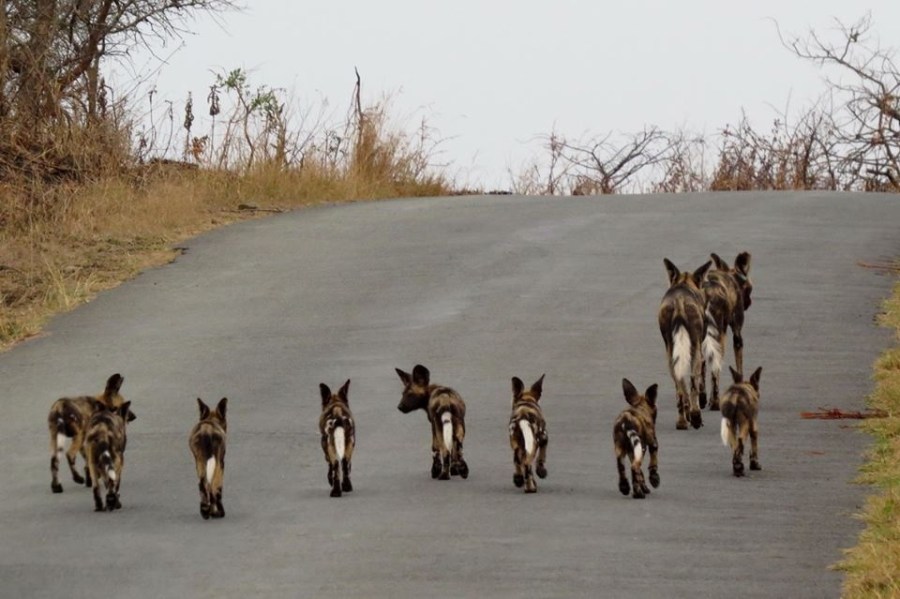
However, when any of us appear upon the scene, your narrative voice drops in volume as if to indicate the arrival of something sinister, the evil presence in this otherwise natural world. We are neither sinister nor evil, Mr. Attenborough – we are an integral part of this natural world, the same as all the rest.

You seem to delight to show footage of us pursuing the young calves and fawns of grazers, thereby seeking the sympathy of your human audiences for their plight and, in turn, hostility towards us. No doubt the omnivores among your human audience are able to disassociate themselves mentally from the relative immaturity states of lamb, veal, piglet, pullet, egg and sprat in their diet. But much more to the point – do we not have young too? And how do you – or your sympathetic audiences – imagine that our young get fed? Or what do you or they imagine stands between our cubs and dying of starvation?

We note also that it is not all higher predators that you depict in this way – not of course humans but not the great cats either. We laugh when we see you depict the lion, “the king of the jungle” as some kind of majestic monarch. Those of us in the African veldt know well that most of what he eats is what our brethren have chased and brought down before he has bullied us off what is ours. And the rest of his food is killed only by the females in his group. Among us, on the contrary, males and females all take part in the planning, the chase and the kill.

As a naturalist you know that all predators play a part in the balance of nature and generally cull the weak and unwary, strengthening the overall health of the prey species. As a naturalist, we would not expect you to have this bias against us and can only wonder whether perhaps as a child you had an unpleasant experience with a domesticated canid. If so we hope that you can put it behind you.

We trust you will consider what we have to say and hope that you will change your depiction of us in any future series.

Sincerely,

Wolves, Dingoes, Wild Dogs, Jackals and Hyenas

on behalf of Canids of the Wild (CaW)

A Grey Wolf adult ‘cuddles’ a pup (Source: Internet).


Three Dingo pups — one of them camera shy. (Source photo: Internet)

“Parents have to work hard to feed a big family.  We hope you’ll think about that, Mr. Attenborough.  Goodbye for now ….. C’mon, kids.”
(Photo source: Internet)

“MY IRELAND” – OUR LAND?

(Reading time text: 15 mins maximum)

Film review by Diarmuid Breatnach

Around 60 people viewed the film “My Land” on Sunday morning (23/ 06/ 2019) in the Irish Film Institute in Dublin, scheduled at the decidedly un-prime time of 11.30 am on a Sunday morning. “In this revealing documentary, Anthony Monaghan, an Irish filmmaker now living in the United States, takes a hard look at economic migration, mass evictions, and the growing homeless crisis that plague Ireland today. In search of answers, he travels the nation and interviews Irish people from all walks of life” (the description on the FB page for the event).

One of a number of versions of title photos for the film
(Photo source: advertisement for the film)

          The film opens focused on heavily-built man in shorts with a broad somewhat weathered face, wearing a straw stetson-type hat, brim turned up both sides and overall looking quite like a middle-aged man of the American Indigenous people. The rhythms of his speech and accent soon however reveal a mixture of western Irish and USA. The man parks his construction company pickup truck, gets out and we watch him walk on to a bridge, to look down upon a river, possibly the Missouri, where he stands looking for awhile before turning to the camera and beginning to speak.

Monaghan photo?

DEVASTATION OF RURAL AREAS

          Anthony Monaghan is from Erris, County Mayo and went to work in England when he was 15 years of age as many others around his age did too, especially in that area with an absence of industries and therefore of employment. Later, he emigrated to the USA. Later still, he returned and took out a mortgage on a house but, as we learn later, the bank took it from him and he has now returned to Missouri USA, where he decided to make the documentary.

We hear the sound-track of Lovely Blacksod Bay, a song about the ‘return’ of the son of an emigrant to Mayo.

View of Termon, Blacksod Bay. The English version of the place-name comes from the irish original “An Tearmann”, meaning “the sanctuary” (several place-names of this kind in Ireland).
(Photo: Internet).

Interspersed with beautiful scenery shots, interviewees talk about the problems of the Belmullet area, principally of lack of employment and consequent emigration. Included among those interviewed are Rose Conway-Walsh, Sinn Féin Senator from Bellmullet, Mayo, whose grown-up children had to move away. Another a former male emigrant who returned to the area in the early 1980s now sees his children moved away to work in England, his grandchildren there, returning twice a year, which brings excitement as they arrive and sadness as they leave. Another ‘returned’ migrant, a writer, came to the area from the Irish diaspora in London, brought as a child by his parents. He too had to emigrate for a while – now, back again, he expects his daughters to leave also.

As we accompany Monaghan to the local graveyard overlooking the sea, he points to the name of a brother on a headstone, a sibling who did not return alive from emigration.

The film shifts to a young woman, possibly Irish-UStater, accompanying herself on auto-harp while singing Noreen Bawn (Nóirín Bán), a sentimental song about tragedy in emigration.

John McGuinness, TD for Kilkenny-Carlow area, is also interviewed as is a FG member of the legal profession. Peter McVerry, of an NGO working with the homeless, also speaks, as does a local businessman.

The talk is of the devastation suffered by rural communities by unemployment and emigration, then the cutbacks on services to the areas, the closing of post offices, the isolation and vulnerability of the elderly, the long journeys to medical services ….

At a harbour, Monaghan talks to a man who fishes from a boat for a living, who says that kind of livelihood is gone, with big boats competing with the smaller ones. He sees no future for the younger generation making a living from the sea as he has done.

DUBLIN AND HOMELESSNESS

A homeless couple sleeping rough

          The film shots switch to Dublin streets and homeless people sleeping rough or begging. Among the interviewed now are the same people as before but more are added, including actor-author and former homeless person Glen Gannon and radio broadcaster Marion Shanley who, with three children, had faced eviction from her home. Tony Walsh, former homeless man and organiser of a food-serving service to homeless and other persons in need was also interviewed, as was bankrupt property developer Tom Hardy, author of “Waiting for the Sheriff”. Along with those was a young Dubliner, currently homeless.

A number of people, including the young Dublin homeless man, point out the profits that are being made by landlords. Tom Hardy reels off statistics in the profits being made there and also by the vulture funds in “buying” mortgage debts from banks at knockdown prices which the banks would not offer their debtors. A woman talks about the horror of having to raise one’s children in the hotel rooms in which homeless services place them, where they are cramped and cannot cook food. She talks about what this is doing to the children and wonders psychological problems are in store for them in future. “Why don’t the Government declare a housing emergency?” she almost wails. Clearly it is a housing emergency but as Gannon points out, they won’t declare it. It is not in their interests to do so. And according to the woman quoted earlier, a tsunami of evictions is on the way.

McVerry commented that there is a section of the population in Ireland who are doing quite well and who have no stake in any radical change in society. A number of the interviewees made reference to the wealth of the country, including several who said it was the fifth wealthiest state in the EU. I failed to find confirmation of that particular statistic and istead found a wide variety of rankings. Of course, the wealth of a state is not necessarily reflected in its people or, to be more exact, among the majority. While the problems of lack of affordable decent housing and employment, along with emigration cause suffering among a large section of people, revealed in rising rates of suicide, the number of wealthy are rising fast, with 83,000 people in Ireland whose income exceeds more than one million dollars per year (see References at end of review). It’s hard to believe that the misery of the struggling does not have some relationship to the soaring wealth of a tiny minority.

“Homes not hostels” banner on the side of Apollo House, a protest occupation of some weeks in December 2016 which attracted much support and media attention. But the homeless crisis has got much worse since.
(Photo: D.Breatnach)

SOLUTIONS

          All the interviewees, to one degree or another, placed the blame for the situation on the Government. Most of them also blamed the banks and the vulture funds. Some pointed to vested interests of TDs who are rental landlords while other went as far as to allege corruption and in effect an integrated system of banks-landlords-vulture funds-district courts-TDs- Government.

Some of the interviewees alleged that the Irish are too accepting, too meek. One who did so was a Ginley (or McGinley), who said that the Irish had fought for the British and for the USA but had never fought for themselves. He seemed either ignorant or dismissive of the long Irish history of resistance and also of the fact that not only the Irish who fought in the British and US armies were not “fighting for themselves” but neither were the British and US working people alongside them!

Marion Shanley was one who upheld the Irish history of resistance and pointed out that in war, to which she hoped it would not come, incidents of suicide tended to almost disappear.

Given the size of the problems and the combination of political and financial interests, it was going to be interesting to see what solutions were advocated.

Anthony Monaghan wished to see some kind of combination of workers and business people to sort out the problems and hoped “the fighting Irish” would come to the fore.

TD McGuinness stated it was important for the politicians to come closer to the people and asked for greater leniency from the district courts in house repossession cases. Senator Conway-Walsh also wanted to see greater leniency from the courts but tighter legislation against vulture funds too. The homeless young Dubliner put forward the radical solution of having members of the Government spend a week in the conditions of homeless people.

Only Glen Gannon baldly put forward the clear solution, the only one possible, given the interlinking of financial and political interests: Revolution.

DANGERS

          There is a vacuum of leadership, as a couple of interviewees remarked.

During his interview, the man I remembered as Ginley (or McGinley), referred to Ben Gilroy as a champion “of our own”, an electoral candidate who had been failed by the electorate and whose “vote was derisory” in the recent elections. However Gilroy (who was present at the screening, as were a number of interviewees), had in the past posted an islamophobic rant on social media and had shared leadership of the recently-defunct Irish Yellow Vests with a racist, anti-emigration, anti-gay and lesbian islamophobe.

This points to a possible danger, not only that we might continue to be driven downwards but that in desperation, we might turn to fascism and racism, as other people have done in difficult times. And in precisely those kinds of times, the ruling capitalist class has not usually been shy of finding their champions to push those kinds of ‘solutions’, splitting the working class and diverting attention from the real problems.

And one form of fascism has been indeed to seek the unity of workers and businessmen sought by Monaghan (though that should not of course be taken as a suggestion that he is himself a fascist). In such “unities” there is no question of which sector will be in command.

In a film about the Ireland of today, it was interesting to see no images or hear any reference to immigration other than that of the Irish diaspora. It could have been that the makers wanted to keep the narrative simple …. or there could have been another reason for it.

Anthony Monaghan said at one point that although he knew that was not possible, he’d like to go back 20 years. At the turn of the century, i.e twenty years ago, the false Irish economy bubble was about to burst.

SPIRITUALITY IN RESISTANCE

          In one scene, the camera follows Anthony Monaghan going down into a holy well (St. Dervla’s) near his original home and blessing himself with some of the water there. Remarking that although he does not condone the scandals that have come out of the church in recent decades, he regrets the Irish turning away from the Catholic faith, which he feels sustained us in years past and bound us together.

One of Monaghan’s interviewees points out that the worst thing about the scandals in the Church was not the abuses themselves but the cynical covering them up by those in authority, exposing more people still to abuse and suffering.

Talking about Catholicism as a binding agent of the Irish while almost in the next breath about our martyrs and heroes of the past, ignores a very important part of that very history of resistance which Monaghan upholds. The Catholic Church, from the moment Penal Laws began to be lifted, worked might and main against that Irish resistance. Its leadership condemned the United Irishmen (in particular the few priests who joined them), the Land League actions, the Fenians and the IRA in nearly every period and in all of its manifestations. In addition, the founders of the United Irishmen were Protestants, as were nearly all the prominent people of the Young Irelanders; Protestants were to be found too among the founders of the Volunteers, the Fianna, Ininí na hÉireann and the Irish Citizen Army.

In fact, history was sorely missing in all the analyses, since no-one pointed out that the State had been set up in a counterrevolution, an alliance of Catholic Church and Gombeen capitalist class under the old master’s tutelage. There seemed to be no acknowledgement that the Irish state is a neo-colony, run by a Gombeen capitalist and political class, its natural resources to be plundered by foreign multinationals, its services to be sold to the same, its own natural industries to be run down.

Human beings do have a spiritual sense, whatever anyone may say against that – but that is not necessarily about religion, contrary though that statement may seem. A sense of who we are as Irish people, as workers, as human beings, as part of life on earth, can be both practical and spiritual. It can be conveyed in language, song, poetry, visual art …. and in a knowledge of living history.

In that respect, it was strange that in a film about Ireland made by a man from Erris, by the Belmullet Peninsula and a large part of which figures in the narrative and images, there were only five words in Irish to be heard. For Béal Muirthead is a Gaeltacht, an Irish-speaking area, though shrinking under pressure from English-speaking monoglots.

Pub in Erris with name (“Harbourside”) in Irish
(Photo sourced: Internet)

IN CONCLUSION,

it was an interesting film from the point of view of presenting the issues and gathering some opinions about them.

But as well as who were interviewed, it was interesting to note who were not. No active revolutionaries — socialist, communist, republican …. no activists in recent or current movements of resistance. And no reference to the mass mobilisations against the water charges and the local battles resisting meter installation. Nor of the demonstrations protesting homelessness. Not even a mention of the titanic (or biblical Davidian) struggle in Rossport, Mayo, against Shell BP.

The last song I remember hearing on the film’s soundtrack was James Connolly, not the song about the revolutionary socialist and trade union organiser he was (see below) but instead one which portrays him as an “Irish rebel” out of context, without mention of class or of the Irish Citizen Army, of which he was the leader.

End.

REFERENCES AND SOURCES:

Trailer for film: https://www.youtube.com/watch?v=vP1lcSvBbtQ&feature=share

Lyrics and air Lovely Blacksod Bay song: https://www.itma.ie/inishowen/song/lovely-blacksod-bay-song-cornelius-mceleney-singing-in-english

Recording of Noreen Bawn: https://www.youtube.com/watch?v=_0n3VwC9Kr4

Recording of James Connolly, the Irish Rebel: https://www.youtube.com/watch?v=wEmy8nif7J8

Recording of Where Is Our James Connolly?: https://www.youtube.com/watch?v=6tqGknooC9g

Irish economic and financial status: http://www.oecdbetterlifeindex.org/countries/ireland/

https://www.independent.ie/business/irish/ireland-scores-well-on-growth-and-gdp-but-inequality-soars-36518158.html

Millionaires in Ireland: https://www.thejournal.ie/wealth-report-ireland-3264492-Mar2017/