The Spanish state’s General Election was held on 20th December, four years and one month since the previous one; although in some countries not such a long period, it was the longest between elections in the state since Franco’s dictatorship. A number of financial scandals affecting the ruling right-wing Partido Popular (PP) in recent years no doubt made their leaders reluctant to go to the polls but holding off longer might have resulted in even worse results.
On the other hand, their main parliamentary opposition, the social-democratic Partido Socialista Obrero Espaňol (PSOE) were also embroiled in some financial scandals during the same period, though not as many. (Please see summary of the main financial scandals in appendix).
Both political parties had something to fear in the growth of the new political party Podemos (“We Can”) but the PSOE much more than the PP, since the image projected by Podemos is generally one of the Left. As expected, Podemos took votes from the PSOE but unexpectedly came in as the third parliamentary party in strength overall.
Pablo Iglesias celebrating Podemos’ results in elections
The PP’s vote was under strong threat from the new right-wing party Ciudadanos (Citizens), which pre-elections polls predicted moving into third place in number of seats but instead came in a fourth and well below Podemos. Nevertheless, it did take votes from the PP.
On a state-wide turnout of over 70% of the electorate, the election resulted in the most politically-fragmented parliament since 1936. Although the PP remains the party with the highest vote overall and therefore the most seats, it gained only 123 out of 350, which does not allow it to form a government. Even a coalition with Ciudadanos would give the PP insufficient seats to form a majority unless they could rely on abstention by the PSOE not voting against them, a tactic which would leave the PSOE vulnerable to further gains from Podemos or others in future. A PP-PSOE coalition does not seem possible, both parties having much to lose from such a coalition in the future, not to mention the state itself, which functions under an illusion of political choice between “left” and “right”.
On the other hand, the number of seats held by PSOE (at 90, the lowest ever in its history) is even less than those of the PP and it would need to go into coalition with others in order to form an alternative government. With Podemos? Possibly … but the numbers would still be insufficient and would require others to come on board. It could function, of course, with the PP abstaining from voting against them but that in turn would probably cause further defections from the PP to Ciudadanos or a split. A PSOE-Podemos alliance would also harm the new Podemos party in the future, as it has based much of its propaganda to date on attacking “political bipartisanship” in the running of the state by the “oligarchy”. And on the 29th the party chief, Iglesias, ruled out a coalition with either of the main parties.
United Left also suffers
The Izquierda Unida bloc was also devastated, presumably by Podemos, losing six seats on previous showing and remaining with two. (For the trajectory and electoral performance of the “United Left” — Izquierda Unida – please see separate article).
Background of the Spanish state
The present form of the Spanish state emerged from a fascist dictatorship, in turn the victor of a vicious civil war. The dictatorship of 36 years came to an end without a revolution or bringing to trial of state torturers, mass murderers and robbers. The new form of the state developed a constitution insisting on the unity of the state with the explicit threat of army violence against any nation within its borders seeking independence.
A younger General Franco giving a fascist salute
It was as though a coach with fascist emblems and full of fascists went into a paint-spraying garage, coming out a few minutes later a different colour but with all the original passengers on board. Of course, a few new passengers got in too, like the previously repressed PSOE and the CPE (Partido Comunista de Espaňa). And they also helped with the painting.
Alone among the state’s population, the majority in three of the Basque provinces voted against the 1978 Constitution (many also abstained). The more democratic articles of the Constitution never found expression in practice, especially with regard to democracy and civil rights in the Basque and Catalan countries. In the 1980s the social-democratic PSOE government was embroiled in the scandal of the GAL assassination squads operating against the Abertzale Left movement in the Basque Country, resulting in the jailing of the Minister of Internal Affairs of the Spanish state, the most senior Police Chief and a number of highly-placed officials.
The Spanish state includes within its borders as already noted most of the Basque Country and the Catalan Countries, which have their own cultures and languages. Also with a significantly different culture are Asturias and Galicia, both of them considering themselves Celtic rather than Latin-Hispanic and and having their own languages. There are in fact small movements seeking independence or greater autonomy in all other regions of the state, including in the political centre itself, Castille.
The Spanish state has long been the most unstable in the core European Union. Collusion between fascists, alleged social democrats and alleged communists internally, along with the support of the USA and the tolerance of its European partners has kept it afloat. Nevertheless, it represents the part of the EU most vulnerable to revolution, with immediate impact should that happen on the French and Portuguese states and further ripples throughout the EU. However the revolutionary and potentially revolutionary forces are currently weak, divided and riddled with opportunism.
End
APPENDIX
Some major recent corruption scandals
(From Wikipedia)
The political landscape of Spain was shaken in early 2013 by the “Bárcenas affair”. On 18 January 2013, Spanish daily El Mundo revealed that former PP treasurer Luis Bárcenas had, up until 2009, used a slush fund to pay out monthly amounts, ranging from 5,000 to 15,000 euros, to leading members of the party. On 31 January 2013, Spanish daily El País published what became known as “the Bárcenas’ papers”, facsimile excerpts from handwritten ledgers in Bárcenas’ hand. Among the recipients were incumbent party leader and Prime Minister Mariano Rajoy and Secretary-General María Dolores de Cospedal.
The PP took the position that these payments were in accordance with law. Further, on 14 July 2013, El Mundo published excerpts from several SMS between Bárcenas and Rajoy from 2011 through 2013 in which Rajoy promised help to Bárcenas and gave him encouragement. The most recent of these messages was in March 2013, when publicity on the Bárcenas affair had already broken out. Under pressure from international media and opposition parties threatening him with a motion of censure, Rajoy spoke out to Congress in an extraordinary plenary session on 1 August.
Rajoy denied any criminal responsibility, which he attributed solely to Bárcenas, but recognized “errors” and “having trusted the wrong person”. This did not prevent the opposition bloc from demanding Rajoy’s resignation, but with the PP commanding an absolute majority in Parliament and with no judicial proof on Rajoy’s direct involvement in the scandal, chances for a successful motion of censure were slim.
At the same time, a corruption scandal affecting the Duke of Palma Iñaki Urdangarín, “the Nóos case”, resulted in the charging of his spouse Cristina de Borbón, Infanta of Spain and daughter of King Juan Carlos I, for tax fraud and money laundering in April 2013. She was summoned to court in February 2014, and in November 2014, the High Court of Palma de Mallorca upheld charges against her, paving the way for her to face trial, though only on tax fraud charges.
In June 2015, King Felipe VI officially deprived his sister of her dukedom, privately announcing his intention beforehand. These corruption allegations severely eroded the Spanish Royal Family’s popularity within Spain; according to an opinion poll by the CIS, between 1995 and 2013 the Spanish monarchy’s approval rating had dropped from 7.5 to 3.68 on a scale of 10 amongst Spaniards.
In late 2014, the sudden emergence of several episodes of corruption that had taken place over the course of the past years and decades was compared to the Italian Tangentopoli episode in the 1990s. As a result, this episode has been dubbed by some media as ‘the Spanish Tangentopoli’ or ‘Black October’.
Starting on July 2014, former Catalonia President Jordi Pujol had come under investigation after he acknowledged possessing a large, undeclared, familiar fortune, with several of his sons being already under investigation on alleged tax offense charges. By October 2014, most of his family had already come under investigation under alleged money laundering, fraud, public contract kickbacks and other tax offenses.
In early October a massive expenses scandal was unconvered involving former Caja Madrid senior executives and advisers. At least 86 bankers, politicians, officers and trade union leaders were accused of using undeclared “black” credit cards between 2003 and 2012, spending over 15 million euros in private expenditures. Involved was former Caja Madrid chairman between 1996 and 2009, Miguel Blesa, but also notable members from the PP, PSOE and IU parties, such as former Deputy PM, IMF Managing Director and Caja Madrid/Bankia chairman Rodrigo Rato, as well as members from Spain’s main trade unions UGT and CCOO.
In late October, Judge Pablo Ruz charged former PP Secretary-General and several-times Minister during José María Aznar’s tenure, Ángel Acebes, with a possible misappropriation of public funds as a result of the Barcenas affair. A few days later, Ruz’ inquiry on a Treasury investigation unveiled that the People’s Party could have spent as much as 1.7 million euros of undeclared money on works of its national headquarters in Madrid between 2006 and 2008. On 27 October, a large anti-corruption operation, Operation Punica, resulted in 51 people arrested because of their involvement in a major scandal of public work contract kickbacks, amounting at least 250 million euros. Among those arrested were notable municipal and regional figures from both PSOE and PP, as well as a large number of politicians, councilors, officials and businessmen in the Madrid community, Murcia, Castile and León and Valencia.
On 26 November, Judge Ruz summoned Health Minister Ana Mato to court after concluding she could have benefited from several corruption crimes allegedly committed by her former husband Jesús Sepúlveda, charged in the Gürtel case. As a result, Ana Mato resigned from her office that same day, defending that she had not been charged with any penal crime, but declaring that she did not want to bring further harm to her party. A Congress plenary in which Rajoy was to announce legal reforms against corruption had been scheduled for 27 November several weeks previously; the media concluded that Rajoy had forced Mato’s resignation in order to prevent a complicated political situation on that day.
As the votes in the General Election in the Spanish state result in huge gains for the Podemos party and the most fragmented Parliament since before the Spanish Civil War, the Abertzale Left’s party in the elections also loses massively to the newcomer. This occurs in the context of wide discontent within the Abertzale Left, especially among the youth, with a potential split emerging around the issue of political prisoners.
The Spanish state includes within its borders most of the Basque Country and the Catalan Countries, which have their distinct cultures and languages. Also with a significantly different culture are Asturias and Galicia, both of them considering themselves Celtic rather than Latin-Hispanic and also having their own languages. There are in fact small movements seeking independence or greater autonomy in all other regions of the state, including in the political centre itself, Castille.
Four of the Basque Country’s seven provinces are currently inside the Spanish state and they were included in the Spanish state’s General Election on 20th December. A number of financial scandals affecting the ruling Spanish right-wing Partido Popular in recent years no doubt made their leaders reluctant to go to the polls but holding off longer might have resulted in even worse outcomes.
On the other hand, the PP’s main parliamentary opposition, the social-democratic Partido Socialista Obrero Espaňol (PSOE) were also embroiled in some financial scandals during the same period, though not as many.
In the event, both main parties achieved disastrous results and neither can form a majority government. The new party of the social-democratic Left, Podemos (“We Can”), which did not even exist two years ago, has leapt into third place and a new party of the Right, Ciudadanos (“Citizens”), is in a poor fourth place. No two of the aforementioned parties can form a coalition government except in the case of a PP-PSOE coalition; however that would cause massive problems for each party and also dispel the political myth of a democratic choice between “Left and Right” in the Spanish state.
The Spanish state has long been the most unstable in the core European Union. Collusion between fascists, alleged social democrats and alleged communists internally, along with the support of the USA and the tolerance of its European partners has kept it afloat. Nevertheless, it represents the part of the EU most vulnerable to revolution, with immediate impact should that happen on the French and Portuguese states and further ripples throughout the EU. However the revolutionary and potentially revolutionary forces are weak, divided and riddled with opportunism. (see separate article focussing on the elections and the Spanish state in )
Despite the weaknesses in the Spanish state, the Basque Abertzale Left has made little headway against it and has been slipping electorally badly this year.
Election Results in the Basque Country
EH Bildu, party of the Abertzale Left in coalition with social-democratic Basque parties, presenting their program in Nafarroa in 2012 and seeking broader alliances
EH Bildu (“Basque Country Unite”), the social-democratic coalition party under the direction of the Basque Abertzale (Patriotic) Left, came out of the Spanish state-wide elections badly (as it did in the regional elections earlier this year in the Basque Country also, with the exception of in Nafarroa). With a drop of nearly two-thirds of its previous percentage of the vote, it lost five seats and now has only two in the Spanish Parliament (the Cortes). The christian-democrat PNV (Basque Nationalist Party), traditionally the dominant in the three southern provinces of Euskadi (i.e. excluding Nafarroa, the fourth), also took a drop in its percentage but a much smaller one and despite that, increased its numbers of seats from five to six. The Basque nationalist coalition in Nafarroa, Geroa Bai (“Yes to the Future”), lost its only seat.
The winner that swept up the ‘missing’ votes in the Basque Country was Podemos, a party that did not even exist until last year. Although gaining one seat less than the PNV in the “Euskadi” or CAV (three provinces region), Podemos actually won more votes and its share was 25.97%, against the PNV’s 24.75%. Shockingly, at 15.72%, EH Bildu has now been reduced to fourth place after the other two and the PSOE, with only the PP worse off but with the same amount of seats. Even in Gipuzkoa, the province most loyal to the Abertzale Left, their share fell to 20.89% and their coalition party EH Bildu lost two seats. In the same province Podemos topped the poll in votes and gained two seats.In the fourth province, Nafarroa, EH Bildu lost their only seat and took a 9.90% share against UPN-PP’s 28.93%, Podemos’s 22.9%, and PSOE’s 15.53%.
Podemos leader Pablo Iglesias after results of Spanish Election results December 2015
It seems clear that in the Basque Country, Podemos took votes both from the PSOE and from the Abertzale Left’s coalition party, EH Bildu and even some from the PNV. For the PSOE, a party in Government in the past and implicated in the GAL murders, also involved in a number of recent financial scandals across the state, to lose votes in the Basque Country to a radical-left coalition, would have come as no surprise to most people. It is a different matter altogether for EH Bildu, with a strongly patriotic Left following, never tainted with a financial scandal and never yet in Government, to lose votes to a newcomer like Podemos — and that needs some explanation.
The fact is that the AL leadership flirted with Podemos – even proposing a joint electoral platform — and thereby sent the message that voting for them would not be such a bad thing. But there were sufficient reasons for the AL to have done otherwise, even without the objective of safeguarding their own vote. It has been clear for some time that the leadership of Podemos is hostile to aspirations towards independence of nations within the State. Their leader recently criticised the decision of a Catalan pro-independence coalition to use the regional elections as a quasi-referendum on Catalunya’s independence. Also one of their ideologues, in the midst of an intervention in discussions within Colombia, likened ETA to Columbia’s fascist assassination squads (who murder trade unionists, human rights workers, socialists, even street children). In addition, Podemos has never come out against the repression in the Basque Country.
There were enough reasons for the AL leadership to draw a deep line between themselves and Podemos. But they did the opposite. This contrasts with the left-republican Catalan nationalists (Esquerra Republicana de Catalunya-Catalunya Sí) who engaged in a public battle with Podemos’ leadership. Incidentally, they increased their share of the vote by 1.33% and their representation from three seats to nine.
Another vulnerability of the AL movement to a party like Podemos is precisely the road of conciliation with and concession to the Spanish state taken by the AL over the recent five years and longer. If that road is seen to be OK then, some might say, why not vote for a radical reformist left party and one which, crucially, has a large following throughout the State? Such thinking combines a perception that revolution is not possible, implicit in the approach of the AL leadership, with a view that a solution can only be found outside the Basque Country, which although contrary to most of AL’s propaganda, does seem in part to be the case, based on population statistics alone (see discussion on this further on).
This view was seemingly endorsed by the post-election statement of Barrena, spokesperson for the Abertzale Left’s party Sortu, who characterised the vote for Podemos as “the right to decide” and held out his hand for electoral coalitions with them in the future. The irony — that precisely Podemos does not support “the right to decide” of nations within the Spanish state – was apparently lost on Barrena.
Around September there were whispers of the intention to hold a review of their trajectory within the Abertzale Left. This seemed an acceptance that their chosen path had, if not failed completely, then certainly fallen far short of their own expectations. I wondered how they would contain severe criticisms within such a review, a much more difficult process now than some years ago, when confusion combined with illusions and the soothing words of long-standing leaders.
Further confirmation of this review has since come out: called ABIAN (“Launch”), it’s a debate being organised by Sortu (“Create”), a social-democratic party of the AL. A recent article in a Gipuzkoa news media stated clearly that the review was a response to criticisms of Sortu, “for the first time within the Abertzale Left” (i.e. not only outside of it). The article went on to list a number of organisations within the AL who had published criticisms, including “Boltxe” and the revived “Eusko Ekintza” (http://m.noticiasdegipuzkoa.com/2015/09/01/politica/las-duras-criticas-internas-empujan-a-sortu-a-revisar-su-estrategia-politica-y-organizativa). This contradicts Barrena’s public statement in September that those who criticise the current path of the Abertzale Left and their policy on the prisoners could no longer be counted as within the movement.
Given the electoral showing of the AL’s coalition party EH Bildu and other issues, such a review may be a way of “managing” the dissent but must also hold much danger for the leadership’s line, despite the party positions of the Otegi/ Permach/ Barrena leadership seeming reasonably secure at the moment (Otegi is due for release very soon).
Aside from all this and going back for a moment to Podemos, it does seem unlikely that this party has a long-term future but its development will be interesting to observe.
The political prisoners – a fracture point for the movement?
Annual Basque political prisoner demonstration January 2014 in Bilbao
Whereas the Provisional Republican movement suffered a number of small splits and some defections as a result of its embarkation on the pacification road, it is a fact that they had something pretty significant to deliver – the release of political prisoners affiliated to them. Nearly every single one walked out of jail and their release was not only a result to “sell” the GFA to the movement but some of the prisoners themselves were used as advocates of the process. Although it is true the prisoners were only released “on licence” and a that number were sent back to jail without a trial again later, including new prisoners, that only happened to “dissidents”. For the moment that could be seen as helping the continuation of the Good Friday Agreement and hampering the mobilisation of Republican opposition to Sinn Féin and their chosen path.
The Abertzale Left has had no such gain and a split in the movement seems to be forming precisely around that issue.
There are 410 Basque political prisoners officially recognised by the Abertzale Left (there are some dissidents too outside that, apparently) and they, like their counterparts in the Irish Republican movement, have always been an important element in the struggle. Political prisoners are dispersed all over the Spanish state and the Basques are by far the most numerous component of these. Some are also serving very long sentences, as are their comrades who are jailed by the French and also dispersed throughout their state.
Around a dozen are suffering with very serious illnesses and the Spanish prison administration has admitted that it does not have appropriate treatment facilities for a number of them. However, mostly there they remain and a number have died in captivity in recent years. Twelve people have also died in automobile crashes on the long journeys to visit prisoners dispersed to hundreds or even a thousand kilometres from their homes and an average of one serious traffic accident a month for visitors was recorded last year.
Dispersal is a serious issue and for many years has been one of those upon which the movement concentrated, in particular Etxerat, the prisoners’ relatives’ and friends’ group, and the short-lived Herrira, a prisoners’ political campaigning group banned by the Spanish state and their leading organisers arrested. But that demand also stood alongside the demand for amnesty, the freeing of the prisoners as part of a political settlement.
Joseba Azkarraga, spokesperson for Sare and lawyer Asun Landa, at a press conference
More recently, however, the Abertzale Left’s leadership has been placing the emphasis on combating the dispersal and, according to some of their critics within the movement, abandoning the demand for amnesty. Perhaps the leadership felt that dispersal was an issue they had the capacity to change (though it is difficult to see how), whereas without an armed struggle to use as a bargaining chip, a prisoners’ amnesty may have seemed out of reach.
Meanwhile, last year, Sare (“Network”) was created by the AL leadership to pick up the threads dropped by Herrira but little has been heard or seen of it. The organisation’s spokesperson is Joseba Azkarraga, who has a somewhat radically fragmented track record. During the 1960s and 1970s a member of ETA (a fact missing from his Wikipedia entry in Spanish), he left them and joined the christian democrat PNV (Basque Nationalist Party). Azkarra was elected to be member of the Alava province local government for the PNV in 1979, a role he fulfilled later for Bizkaia province 1982-1986 and in the latter year also for the province of Guipuzkoa — representing the PNV throughout.
In 1987 he was part of a split from the PNV that led to the formation of Eusko Alkartasuna (EA), for which party he was elected a member of local government for Bizkaia in 1989. He was a member of EA’s National Executive 1987-1993 and 1999-March 2009, in between which periods he had withdrawn to concentrate on his business in the banking sector. From September 2001 to May 2009, he had the responsibility of Councillor for Justice, Employment and Social Security for the Basque Government. He has been quoted as saying that the more prosecutions of Abertzale Left activists the better – this from a man with a law degree in a State where prosecutions of Basques are more often than not ensured by “confessions” extracted by torture and where the standard of “evidence” required to convict is derisory.
Grumbling, particularly among younger activists about the emphasis on the institutions and the “abandonment of the street”, has been growing over the years. “Our movement’s spokespersons no longer speak of ‘freedom’ and ‘socialism’ but use more ambiguous words like ‘right to decide’ and social justice’ ” is a growing complaint.
Recently an organisation called Amnistia Ta Askatasuna (“Amnesty and Freedom”) was launched to campaign not only against dispersal but for amnesty for the prisoners too. The movement also goes by the name of Amnistiaren Aldeko Mugimendua (“Amnesty Movement”). In August of this year ATA/AAM held a small but significant demonstration in Bilbao associated with the annual alternative festival there which is strongly patronised by youth. At the end of November they held another in the same city, this time attended by an estimated 9,000.
New solidarity campaign for for political prisoners raising demand of amnesty takes to the streets Bilbao 28 November 2015
In a Basque alternative radio station interview in August, some of ATA/AAM’s spokespersons complained of attempts to malign and isolate them but said they were overcoming these tactics and gaining support. The AL’s bilingual daily newspaper, GARA, did not publicise their demonstration in advance and their estimate of the attendance afterwards was about half of the real figure. The report also neglected to mention the messages of support from a number of political prisoners to the rally.
In December, the six alleged ETA prisoners awaiting trial in Paris on charges involving kidnapping, car and weapons theft and, for two of them, murder of a police officer, made a press statement denouncing the ATA/AAM group and claiming that they were using the prisoners as a Trojan horse in order to attack the whole recent direction of the Abertzale Left. They also accused them of trying to get Basque prisoners to leave the prisoners’ collective, the EEPK. No evidence was produced of this and the ATA/AAM were not asked to comment. GARA published the Paris statement under a headline containing the allegations without even putting them in quotation marks. It is rumoured that GARA lost many subscribers after that reporting.
It seems likely that this controversy will sharpen over the coming months with people, including prisoners, being obliged to take sides and it may be that it will be characterised by a similar bitterness to that which exists in the Republican movement in Ireland. But unlike the case of Ireland, the numbers of Basque prisoners in the jails remains very high. In addition, the Spanish state continues to jail people who are clearly political activists which adds to the political prisoner population. Without a change in that situation, the likelihood of very serious contention within the movement is high and on a much larger scale than has been the case in Ireland.
The recent dismal electoral showing of EH Bildu can only increase unhappiness within the movement and lead to judgements critical of the AL leadership and, inevitably, to one degree or another, of the path they openly set out upon a little over five years ago.
Background – the origins and trajectory of the Abertzale Left
Born during the Franco dictatorship, the Abertzale Left (Basque: Ezker Abertzalea; Spanish: Izquierda Abertzale) is a broad alliance of patriotic and Left elements with many aspects situated on the social, cultural-linguistic, trade union, media and of course political fronts. The movement was subject to heavy repression from the outset and after nearly a decade a section responded by taking up arms. The Basque Nationalists had done that against Franco in the Civil War – however, the Abertzale Left was doing so in a country occupied by the victors of that war.
Not many outside the Basque Country realise that ETA (“Basque Country and Freedom”) is more than “the armed wing of the Basque patriotic movement” — it is the origin of the Abertzale Left, operating solely politically and culturally (albeit clandestinely) for nine years, its activists spied upon, arrested, tortured, jailed. Eventually ETA took up the gun.
It was one of the main ideologues and organisers of ETA, José Miguel Beñaran Ordeñana (alias “Argala”, 1949 – murdered by GAL 21st December 1978) who pushed for the legal and semi-legal aspects of the work to form themselves into separate organisations from ETA while the parent organisation kept a relationship with them.
Although the old Basque Nationalist Party was legalised under the new form of the state after the death of Franco, repression of the Abertzale Left continued. Nevertheless the movement continued to grow, in particular its many non-military aspects, although they too were and are subjected to heavy repression.
Despite the adaptability of the movement and its significantly wide base (between 12%-20% on past electoral showings, despite banning and disqualifications of electoral platforms), it was difficult to see the validity of its strategy of combining armed struggle and popular political movement within the Basque Country, with regard to its long-term objectives of national independence and socialism.
The ruling classes of both the Spanish and French states have a long imperial history along with a strong traditional insistence on the unity of their “home” states, on which they have never shown a willingness to compromise. That is reflected not only within their main right-wing parties but also within the main social-democratic parties and the remains of the old Moscow-orientated Communist parties. In the Spanish state the situation is even more problematic, since the Basque Country and Catalunya are two of the most economically successful within the state, outperforming nearly every other region by a significant margin. Why would the Spanish ruling class wish to give those regions up?
The total Basque population is only around 3.5 million, some of which is within the borders of the French state. The Spanish state has a population of around 45 million outside the Basque Country and even with the subtraction of that of Catalunya (7.5 + million) and the Balearic Islands (just over one million), that still leaves a population of 36.5 million from which to draw soldiers and police.
According to Wikipedia, “the Spanish armed forces are a professional force with a strength in 2012 of 123,300 active personnel and 16,400 reserve personnel. The country also has the 80,000 strong Guardia Civil which falls under the control of the Ministry of Defence in times of a national emergency. The Spanish defence budget is 5.71 billion euros (7.2 Billion USD) a 1% increase for 2015.” The Wikipedia paragraph ends with the ominous sentence that “The increase comes due to security concerns in the country.”
Those figures of course do not include the other police forces, such as the National (Cuerpo de Policía Nacional or “los Grises”)), with a strength of nearly 88,000. This armed force, along with the Guardia Civíl (“los Verdes”), has been traditionally repressive of the Abertzale Left, a task now mostly left to their respective forces in the Basque Country, the Ertzaintza and Policía Forál, forces which, like their counterparts in Catalunya, the Mossos d’Escuadra, have been viciously engaged in repression of the patriotic movements. Then of course there are the municipal police forces inside the Basque Country and elsewhere which can be mobilised as backups to military operations.
Add to that the fact that Nafarroa (the fourth southern Basque province) contains significant Spanish unionist and right-wing elements (it has voted a PP majority for decades) and that much of the Basque Nationalist Party’s following is hostile to the Abertzale Left and it is difficult to see how the AL ever expected to win a straight contest of strength with either state.
Perhaps, like the Irish Republican Movement, with which it has traditionally had fraternal relations, the Abertzale Left thought to make itself such a nuisance to the power occupying it that the latter would get fed up and leave them to it. In both cases but even more obviously so in the case of the Basques, that would have been a serious misreading of the situation and an underestimation of the importance to the power in question of remaining in possession.
It seems clear that the only scenario in which the Basque Country could set up a truly independent state would be one in which the Spanish state at the very least (and probably the French one too) would be unable to send repressive forces in to deal with such an attempt. And what would be the nature of such a scenario? Why, nothing less than that the ruling class of the Spanish state (probably of the French state also) were facing a revolutionary situation across the rest of its territory. Not only would such a situation tie down much of its armed forces but it would have the potential for soldiers refusing to fire on workers, mutinies and defections to revolutionary forces.
Working from such an analysis, activists of the Abertzale Left, as well as organising their movement within the Basque Country, would have been busily building relationships with the revolutionary movements and organisations across the Spanish state. But apart from the electoral alliance for the European Parliamentary elections of 2009 (the creation of the Iniciativa Internacionalista platform, which was the victim of massive electoral fraud by the State), the Abertzale Left has never seriously set about such a project. On the other hand, the formerly-Moscow orientated communist party and left-social democrats across the state, as noted earlier, have also kept at a distance from the Abertzale Left and from their aims. The left coalition of mostly Trotskists, Communists and radical social democrats of Izquierda Unida has done likewise.
There are however small formations of revolutionary communists, anarchists and left-independentists, along with anti-centralist movements with revolutionary potential, as well as a number of anti-unionist and independent trade unions throughout the state. To be sure, the immediate prospects are not glowing – but what other option is there? And how else can one be placed to take advantage of a revolutionary upsurge across the state should one occur?
A significant deviation from the original route
During the 1980s, during an ETA truce, there were peace talks held between ETA and the Spanish Government which came to nothing. Similar overtures during the early 1990s had similar results.
It appears that at some point in the late 1990s, perhaps attracted by the development and apparent gains of the Irish pacification process, the leadership of the Abertzale Left began to look for a different way out of their difficulty. Arnaldo Otegi is widely seen as the architect of this trajectory.
Part of this new approach involved seeking alliances with the PNV and with social-democratic parties within the Basque Country. The PNV is the party of the Basque nationalist bourgeoisie, no longer prepared to fight the Spanish ruling class as it was in 1936. It has its capitalist interests and has a record of jobbery and corruption including its involvement in the TAV, the High-Speed Rail project. It even asked the Spanish state to make militant opposition to this project a terrorist offence. The PNV manages its police allocation, the Ertzaintza, a vicious force active against the Abertzale Left and against striking workers and responsible for the serious injury and death of several. The PNV also manages the Basque TV station EITB and therefore controls both the arms of repression and of propaganda. Although the AL criticises the PNV from time to time this is mostly for the lack of support for a broad front against the Spanish state – AL spokespersons rarely attack it for its capitalist exploitation or jobbery.
Otegi was apparently active with ETA in the French state for around ten years and served three years in a Spanish jail for an ETA kidnapping in 1987, after which he involved himself in political activism. Ten years later the jailing for seven years of senior members of Herri Batasuna left a vacuum in the leadership of the organisation which Otegi filled along with Joseba Permach (sentenced to three years jail in August 2014 – but halved on appeal — in the “social centres trial” which confiscated the assets of the centres) and Pernando Barrena.
Arnaldo Otegi, leading figure in the Abertzale Left and seen as architect of recent path of the movement, addressing a rally some years ago.Joseba Permach and Pernando Barrena giving the clenched fist salute at a political rally some years ago. Both have been close colleagues of Otegi’s in the Abertzale Left’s leadership and shift in strategy some years ago
Otegi led a number of initiatives for the Abertzale Left to embark on a different path, which combined ETA ceasefires, talks with other parties, and militant rhetoric. The latter landed him with a 15-month sentence of which he eventually served one year. Subsequently he has been arrested a number of times, convicted twice and exonerated twice. In 2011 he was charged with trying to rebuild Batasuna, the AL party banned by the Spanish state and was sentenced to ten years; this was reduced on appeal to 6.5 years so that he is due out soon. In 2013 he was elected General Secretary of the AL social-democratic political party Sortu.
Despite the relatively short prison sentence (compared to many other Basque prisoners) and the fact that he appears to be in good health, a campaign was started for Otegi’s release and a petition circulated around and outside the movement. This broke a long-standing rule in the movement that there would be no campaigning for individual Basque political prisoners, from which an exception was previously made only in the cases of seriously-ill prisoners. Nevertheless the campaign petition and Facebook page has been circulated through the movement without any official condemnation — or even distancing from — by the AL leadership. However the campaign has attracted some muted criticism across the movement.
The AL leadership proposed a “peace process” but the problem was that, unlike the case with the British, the Spanish ruling class had no interest in developing anything like that. Their aim was to crush the movement with an iron glove, not to “choke it with butter” as their British counterparts had done.
So the Abertzale Left took the road of unilateral ceasefire. This seemed to many of their friends a doomed tactic since it left the Basques with nothing to bargain. In September 2010, ETA announced a ceasefire, saying it wished to use “peaceful, democratic means” to realise the aspirations of the Basque people. The Spanish state’s reaction was not encouraging but nevertheless on 20th October the following year, the organisation announced a “cessation of armed activity”. This followed the conclusion of the “International Peace Conference” held in Donostia/San Sebastián.
The composition of the conference was clear indication of the AL leadership’s projected route and in particular the type of allies it sought internationally: former UN Secretary-General Kofi Annan, former Taoiseach of Ireland Bertie Ahern, former Prime Minister of Norway Gro Harlem Brundtland, former Interior Minister of France Pierre Joxe, President of Sinn Féin Gerry Adams and British diplomat Jonathan Powell, who had served as the first Downing Street Chief of Staff. To summarise, a collection of servants and executives of imperialism, colonialism, capitalism and even executives of repression and one exposed in a financial corruption scandal.
The declaration at the conclusion of the conference was also supported by former UK Prime Minister Tony Blair, former US President Jimmy Carter and the former US Senator and former US Special Envoy for Middle East Peace George J. Mitchell. In other words, former leaders of US and British Imperialism and one of their agents.
Despite the abandonment of armed struggle by the Abertzale Left leadership, the meeting did not include Spanish or French government representatives and the ruling classes of both states remained unreceptive to the overtures of the AL leadership. Not only that, but the Spanish state continues to arrest the movement’s activists, to torture and to jail them. No amount of criticism by committees for the prevention of torture working for the UN or for the EU, nor condemnation by Amnesty International and many human rights associations within the Spanish state, have had any visible impact on the operations of the Spanish state in recent years. And “confessions” obtained by torture continue to be used as admissible ‘evidence’ for the Prosecution even when withdrawn by the victim and the torturers denounced in court.
The ETA ceasefire continues to date and a number of other statements have been made by ETA including one in which they announced the destruction of a number of weapons, verified by a decommissioning expert. A number of “international conferences” have been held with further calls on the Spanish state to cooperate, also without significant result.
The new €2 coin design is now published and the coins will themselves be put into circulation in the New Year. Designs were submitted and the winning design for the ordinary currency coin is by Emmet Mullin, while the design for the gold and silver special editions is by Michael Guilfoyle. Both designs incorporate the statue of “Hibernia” and that name is prominently displayed on one of side of the coin and although Guilfoyle’s design incorporates some words from the 1916 Proclamation, they are in the background to the representation of “Hibernia”. The image is taken from a the centre one of a trio of statues erected on the GPO in 1814, while still under British occupation.
One side of the new Irish coin
“Hibernia” was regularly used as an image to represent Ireland by “Punch”, a satirical racist British publication and she was always
(British penny showing the image of “Britannia” — a martial female wearing a crested war helmet, carrying a shield and holding a trident (perhaps to indicate domination of the seas).
shown as a pretty younger sister of “Britannia”, in need of her older sister’s protection (usually from the rebellious Irish, the despair of poor “Hibernia”). She was never in martial garb, unlike Britannia herself who was usually represented as a majestic and martial figure, with a crested war-helmet and shield and sometimes carrying a trident (perhaps to indicate domination of the seas).
That representation of Britannia appeared not only in the cartoons of “Punch” and other publications but also in sculpture — for example at the top of Somerset House, in the Strand, London – and also on many mints of British penny coins.
Of course, in British history the most likely model for the representation of a female fighter was Boudicca (“Boudicea”) who, after her humiliation and the rape of her daughters by Roman Legionnaires, raised her formerly pacified tribe of the Icenii against the Roman occupation and came close to driving them out of Britain. The irony is that the whole of Britain at that time was Celtic, as were Boudicca and the Icenii. But the English ruling class appropriated Boudicca into their English iconography as they did also with King Arthur and the Round Table knights.
Romanised and civilised
Ireland had many names among the Gael but “Hibernia” was not one of them. “Hibernia” was a late Latin name for Ireland, which the Romans had previously called “Scotia” (yes, “Scotland” originally meant something like “the land the Gael have invaded and settled and defend”).
The Roman linguistic connection is interesting – Irish Anglophiles and some English lovers of Ireland have been wont to bemoan the fact that Ireland was never conquered by the Romans. These commentators have tended to see Romanisation as civilising, forgetting perhaps the words of Rome’s own greatest historian, Publius Tacitus (or Gaius Cornelius Tacitus; c. 56–after 117 AD) who said that “they have created a desert and call it peace.” Calling Ireland “Hibernia” might be a way to bring that Roman conquest belatedly to the unquiet isle, to make her more “civilized” — in fact more like her neighbour and therefore more accepting of her neighbour’s domination and of her ways.
When John Smyth designed the statues to go on top of the General Post Office building in Dublin’s main street, then Sackville (but now O’Connell) Street, Dublin was widely considered the second city of the British Empire, next to London. The building opened to the public in 1818 but Dublin’s slow decline in status had already begun. Since the abolition of the Irish Parliament by the Act of Union in 1801, following the suppression of the United Irish uprising three years earlier, the Irish Members of Parliament had to go to London to take their seats, taking a great deal of political, commercial and social life with them. Irish landlords deserted their Irish estates in greater numbers, leaving them in the hands of their often rack-renting agents as the owners demanded more and more rents to keep them in their homes in Britain and their lifestyle there and in Europe. Throughout the 19th Century the social focus slowly followed the political to England – except where a militant nationalist one arose.
Statue representing “Hibernia” on top of the GPO, a martial female wearing a crested helmet, holding a spear and a harp.Sculpture representing Britannia on top of Somerset House, The Strand, London city centre. She is a martial female wearing a crested war helmet, carrying a shield and holding a trident.
Submission or subversion?
Perhaps the representation of Hibernia by John Smyth, reflecting that of Britannia, was meant to show Ireland as equal in grandeur to her dominant neighbour. The Society of the United Irish had been part of a wider cultural movement that sought to explore and appropriate an older Gaelic culture for the colonists, many of them settled for generations on Irish land. Assertions of autonomy and complaints about English political and commercial restrictions had been part of that movement too and had found sharpest expression in the republican and separatist ideas of the United Irish. Some aspirations remained, severely modified. Perhaps it was John Smyth’s intention to show Hibernia as grand but there was no mistake about who was really in charge in Ireland, Hibernia or Britannia.
As if to underline the relationship, Smyth placed a statue representing “Fidelity” on Hibernia’s left on top of the GPO. What could that fidelity be, except to the Empire? Some suggest that because Fidelity holds the Key and is with the Dog, that she really represents Hecate. I know nothing about Smyth nor have I the time to research him at the moment but it is possible he was being somewhat subversive in that representation. Hecate had a number of earlier and later interpretations and the key seems to have appeared later – the key to the household perhaps but also to Hades, the Underworld.
On Hibernia’s right, John Smyth erected the statue of Hermes, known to us as the messenger of the gods but also representing commerce. Commerce, then as now, was the backer of military and political initiatives, indeed often the driver. Of course, many of the Irish bourgeoisie, both native and colonist in origin, wanted a successful commercial Ireland. But after 1798 and 1801, they were not going to get it. From then on, most progress for Irish finance would be made through investing in the Empire rather than in Irish industry and trade.
Whether the representation of Hibernia was intended as some kind of subject of Britannia with pretensions to something grander or was in fact just aping her better, dressing in her mistresses’ clothes when the lady was away, is a moot point. What is certain is that neither the image nor the name itself is of native origin.
The names for Ireland
As noted earlier, among the many names of the Gael for Ireland, “Hibernia” does not appear. The clan-based resistance had used Irish names to describe the land and this continued in the wars against Cromwell and William, with “Ireland” being the most common name when speaking in English by both sides of the wars.
The United Irishmen, a late 18th Century republican movement for independence led mostly by descendants of colonists and largely English-speaking, called the land “Ireland”1 or “Erin” (a phonetic representation of the Irish-language “Éirinn”, the dative case of “Éire”). These names, along with the genitive “Éireann” later, continued to be those most often used by nationalists of the 19th Century, the Young Irelanders, the Fenians, the Land League, as well as by the various advanced nationalist and revolutionary organisations in the early years of the 20th Century2.
“Ireland” is named in a banner of the Irish Transport & General Workers’ Union in October 1914, with the Irish Citizen Army parading outside.
This continued to be the case during the War of Independence and by both sides in the Civil War and was the case with the setting up of the 26-County state and with the various national resistance movements to that state of affairs since then. One finds “Hibernia” in the Ancient Order of Hibernians, of course and in the Hibernian Bank but they are exceptions – it is “Éire”, “Erin” or “Ireland” over all – and has been so for many centuries.
“Hibernia” is a foreign colonial import, both in terminology and in concept. She is poor image of her big sister on “the mainland”, the real boss. The use of her image and of her name is inappropriate to commemorate the 1916 Rising but their use may signify much more than an error – they may reveal a subliminal desire to return to the Empire, or at least the Commonwealth, in the psyche of those who were never all that sure they should have left it.
1“From my earliest youth I have regarded the connection between Ireland and Great Britain as the curse of the Irish nation …” Theobald Wolfe Tone
2Inghinidhe na hÉireann, Na Fianna Éireann, The Irish Citizen Army, The Irish Transport & General Worker’s Union, The Irish Volunteers, Óglaigh na hÉireann. Also, when the Abbey Theatre was founded by W.B. Yeats and Lady Gregory in 1904, they declared it was “to bring upon the stage the deeper emotions of Ireland”.
This is a timely and interesting article by Liam Ó Ruairc about the significance of the Easter Rising beyond our little parish.
Apart from that, it would seem to suffer a little from a terminology problem with regard to “imperialism”. In the world today this is not an insignificant issue. At the time of the 1916 Rising it was common for commentators to conflate the words “colonialism” and “imperialism” — and why not, since we had the British Empire, the French Empire etc. However, that same year, VI Lenin completed his work “Imperialism — the final stage of capitalism” which he published the following year but exchanging, for the censor, the word “highest” for “final”. Lenin described imperialism as the merging of finance with industrial capital and its export to the underdeveloped world and also explained how its colonialism was undermining British industrial capacity and competitiveness by starving it of capital which was instead being invested in the colonies for quick return of superprofits.
He showed that imperialism could be practiced where the developed state did NOT have colonies but instead had influence.
Decolonisation was indeed one of the big processes of the early to mid-21st Century, as quoted in the article, but it was accompanied by an increase in imperialist expansion, with the USA becoming the world leader and displacing the former colonial powers of Britain and France. By and large this was achieved without occupying countries and setting up colonies of UStaters within them.
Lenin also showed that imperialism leads to war; colonialism did too but not on the scale that imperialism has. Colonial wars were largely limited by the amount of people available to occupy colonies whereas imperialism fights most of its wars through proxies (with some notable exceptions such as Vietnam, Ireland, Iraq and Afghanistan, involving large committal of its troops but even there, proxies have been/are also used).
Those regimes that imperialism cultivates were later classified by national liberationists as “comprador (buyer) capitalists” or “neo-colonials”. Such an analysis of Ireland today would have to conclude that the Six Counties are a remaining British colony and the Twenty-Six a neo-colony.
In the “comment” section of the article there is a reference to another article on the same theme of international importance which is also of interest.
In less than six months, the one hundredth anniversary of the 24-29 April 1916 Easter Rising will be commemorated throughout Ireland. What is striking about the so-called ‘Decade of Commemorations’ is how insular its outlook is: the 1912 Ulster Covenant, the 1916 Rising or the setting up of Northern Ireland are seen as a purely Irish phenomenon, divorced from global trends. As Edward W. Said once noted, while the Irish struggle was a ‘model of twentieth-century wars of liberation’, “it is an amazing thing that the problem of Irish liberation not only has continued longer than other comparable struggles, but is so often not regarded as being an imperial or nationalist issue; instead it is comprehended as aberration within the British dominions. Yet the facts conclusively reveal otherwise.”[1] This article will argue that the significance of the 1916 Easter Rising lies less in its
One cannot criticise the national liberation movement or Left political party in another country, apparently. Or so some think. Why not? “Because it goes against internationalist solidarity to do so.” “Besides, one doesn’t live in the other country or maybe know their conditions and their culture as well as does the group one is criticising.” So, one should just applaud their resistance and say nothing negative. Apparently.
Like many positions, that seems fine until you break it down a bit. So let’s take a look at this more closely. The Khmer Rouge was a national liberation organisation of socialist or communist orientation in Kampuchea (Cambodia). The Khmer Rouge had both male and female fighters and they led a struggle against US Imperialism and against feudal rule in their country. The US carpet-bombed the country and aided the Cambodian Government in resisting the Khmer Rouge, who were in turn assisted by the North Vietnamese and the Chinese. So, a clear case of which side we’re on, right? With the Khmer Rouge. Against US Imperialism and feudalism.
Khmer Rouge fighters (Photo: Internet)
But when in 1975 the Khmer Rouge leadership declared that all Cambodians needed to return to the land and, in order to implement this policy, exterminated all who disagreed or who they thought might disagree, and in the course of their programme caused hunger and illness which killed more, all of which came to a total of around 21% of the country’s population, what then? Are we still in solidarity with the Khmer Rouge then? What? No? We’re actually condemning them?
The young Khmer Rouge guerrilla soldiers enter17 April 1975 Phnom Penh, the day Cambodia fell under the control of the Communist Khmer Rouge forces. Khmer Rouge fighters (Photo: Internet)
Good! And so we should. But what happened to “uncritical support and solidarity” and “we don’t know what’s going on there as well as the locals” etc, etc?
Ok, that was an extreme example and there was a massacre and huge loss of life. But the massacre event had a trail leading up to it and that trail could have been marked. Apparently two of the leaders back in their Paris student days had written theses advocating returning to a peasant economy. No doubt there were other signs in terms of who became leaders and how they maintained their leading positions – this was the time of the high tide of leader-worship, when in China photos of Mao and in Vietnam photos of Ho Chi Minh, predominated not only in official buildings but in public spaces and in the hands of their supporters abroad. Whether Ho Chi Minh or Mao Tse Tung were good or bad revolutionaries, or even a mixture of good and bad, is not the point. What is the point is whether it is healthy to treat living human beings as saints or gods; whether if you trust them unquestioningly today you will be able to question them (or be permitted to) if they take the wrong path or just a wrong turning tomorrow.
Now let’s take another example, much closer to home and much less in magnitude – the French Mayor of Vitry-sur-Seine in 1981 who, it was reported, in an anti-immigration demonstration, personally drove an earth mover to demolish a hostel for migrants from Mali. He was a member of the Communist Party of France and also the Party’s General Secretary, Georges Marchaise, ran a racist campaign when he stood as a candidate in the French Presidential Election that year. Now, the Communist Party of France had organised the Maquis and most of the urban French Resistance to Nazism and had led the liberation of Paris before the Allies arrived. Surely Georges Marchaise had been elected by his large party and the Mayor of Vitry-sur-Seine not only by his party supporters but also by a majority of the people of his town. So who are we to criticise them, right? No, wrong, you think – and quite rightly so. We are not only entitled to – we should criticise them, expose them and try to get them to change. And our criticism should also serve as a warning to any others thinking of taking the same path.
Anti-Austerity march of Communist Party of France in Paris 2012 (Photo from Internet)
Back to another big example now. Before WWI all the socialist parties in the world (that included what we would now call communist and social democratic parties) agreed that imperialist war would be a terrible thing and against workers’ interests. Some even vowed that if their governments tried to join a war, they would turn the imperialist war into a war against capitalism. But when it came to the crunch, the main socialist party in nearly every European country made an alliance with their capitalist class and recruited cannon fodder for them. There were very few exceptions and among them were the Irish Labour Party, which had been founded on a resolution by James Connolly in 1912 …. and the Bolsheviks. Although it didn’t openly oppose it, the Irish Labour Party was in general critical of the War and two of the party’s founders, Connolly and Larkin, overwhelmingly so. The Bolsheviks placed ending the War among their main slogans for insurrection and as a result recruited many soldiers and sailors into the actual insurrection.
OK, so would we have had the right to criticise the war collusion policies of the British Labour Party, of the German socialists, French, Italian, Belgian, Australian? Of course we would have had the right – and would have been correct to do so.
And another big example. The Shah of Persia was an ally of western imperialism and had a substantial repressive apparatus, including a huge secret service. In 1978/’79, a wide movement began to rise up against the Shah and his regime fell suprisingly quickly – so quickly that the CIA, who had their HQ for the Middle East in the country, were caught shredding their documents (many of which were pieced together again by Iranians).
There were a number of different interest groups but two important and very different ones were socialist activists, many of them students, on the one hand and Muslim fundamentalists on the other. When the Shah was overthrown, the latter group seized power and thereafter wiped out the socialists. I don’t know whether any mistakes were made by the socialists in their alliances or if anything could have been done to avoid the outcome. But if there were and if there was something, and we thought we knew what it was, would it not have been criminally negligent and uninternationalist of us not to have told them? And if necessary to have argued it with them? And would our criticism not also help others who might find themselves in similar situations now and in the future?
Now, let’s take a minute to look at the other side of the coin. A leader of the popular movement Podemos in the Spanish state recently made a public intervention in Colombian politics the nature of which need not concern us here. But in the course of that, he denounced the Basque armed group ETA and likened them to Latin American fascist murder squads. Was he entitled to do so?
No, he was not. He was entitled to criticise ETA armed actions but in the course of that he should have taken account of the fact that the state in which he lives had practiced fascist repression on ETA for nearly a decade before it took up arms and has never ceased its repression of the Basque people since 1939. He was not at all entitled to compare ETA to fascist murder squads.
During the recent 30-year war, was the Communist Party of Great Britain entitled to publicly criticise IRA bombings in Britain, a number of which killed and injured innocent civilians? Yes, it was. But it was not correct to join the right-wing chorus denouncing them as vile murderers. And with the right to criticise also came a duty of solidarity, to campaign for British withdrawal from Ireland, against repression of the Irish community in Britain and for decent prison conditions and repatriation for Irish republican prisoners in jails in Britain (and the score of politically-framed uninvolved Irish prisoners).
To its shame, the CPGB took the road of histrionic censure but without taking up its duty of solidarity, an internationalist duty more applicable to itself than to any others around the world, since its party is based in the very colonial state that was waging war in Ireland.
I take one last example. At a certain point during the South African people’s struggle against the white racist regime (a settler ruling class which was totally supported by imperialism) it emerged that some things were not quite right within the resistance movement and, as time went on, that they were a lot worse than “not quite right”. We began to hear rumours that Winnie Madzikela Mandela was a member of a corrupt clique that had brutalised and even murdered people within the movement. But Winnie had become an icon of the struggle – a strong, handsome, militant woman with a husband, a leader, decades in jail. And the struggle seemed to be entering a crucial phase so, not wanting to undermine that struggle, we said nothing. (When her husband, Nelson Mandela was released, he agreed to an investigation into Winnie’s clique and ended up divorcing her. However, she is still a member of the ANC’s national Executive).
Worse, in a way, were the rumours of concentration camps being run by the ANC’s armed wing Umkhonto we Sizwe in neighbouring countries which were jailing ANC dissidents, torturing and even killing them. But the struggle was at a high point …… and we didn’t want to undermine …..
Yes, beginning to sound familiar, isn’t it? Besides, for some of us, the source of these stories were Trotskyists and we didn’t trust their bona fides too much ….. But it turned out that there had been these camps and they had done the things that were rumoured …. and testimonies of some of those cases have now been documented in the Truth and Reconciliation hearings. What’s more, it seems that some of the people in the ANC leadership were not only aware of them but had a hand in setting them up.
Mandela may not have known about them while in jail but learned of them at least when released. He eventually criticised the torture carried out in them but did nothing to root out those responsible. This is crucial in terms of what happened later.
When the South African deal was done, an accommodation between the ANC and the white settler ruling class, it was also a settlement with imperialism which not only continued its plunder of the South African resources and labour but increased it. The masses got the vote and little else but a top stream of the ANC, SACP and NUM benefited in terms of government jobs and corruption. The recent head of the National Union of Mineworkers and current Deputy President of the ANC, Cyril Ramaphosa, is a millionaire and on the board of Lonmin, a British corporation mining platinum in South Africa.
In 2012, workers went on strike at Lonmin and other mines, looking for substantial pay rises; many were saying that the NUM was not fighting for them and wanting representation by a new union, AMCU. The mine-owners refused to negotiate, SACP said the strikers should be arrested, Ramaphosa asked the Government to crack down on the strikers, Zuma (President of the ANC and of South Africa and one of those implicated in the concentration camp scandal) covered for his Chief of Police Riah Phiyegawhile she organised what followed – the massacre of 34 striking miners in one day (in addition to some more over previous days) and many injured.
The Marikana Massacre of striking miners by the South African police of the ANC government. The victim in a green top or blanket is believed to be Mgcineni Noki, a strike leader, who was shot 14 times. (Photo from Internet)
The Marikana massacre brought many of the elements that had been separately visible earlier together into high relief: ANC, NUM and SACP (South African Communist Party) corruption and jobbery; intolerance and brutality against any dissent; collusion with the white settler regime and foreign imperialists – now coupled with exploitation of black workers and murderous repression on a scale not seen in a single incident in South Africa since the Sharpeville Massacre of 1960.
Were we right to have said nothing about the activities of Winnie’s gang? And not to have tried to check out the rumours about the concentration camps? Were we right to say nothing critical about Mandela and the deal he led the people in accepting? I don’t think so. I think we had an internationalist right to speak, comrades – an internationalist duty. And it was a duty we failed to fulfill.
I could have picked so many other examples from history but I chose these as being ones on which most people would take the same side, so as to get the principle across without sectional positions being taken.
There is another very important role of criticism. It helps to clarify things for us in our own struggles. We have to think things through (hopefully) before criticising and then consider and weigh the reply we receive, then think about our reply to that as well. And so on. And many if not all of these issues will be in some way applicable to us too, either now or in the future.
But in criticising, do we abandon solidarity? Most assuredly we should not. Obviously we could have had no solidarity with Pol Pot and his clique or with his party comrades who followed them – our solidarity is fundamentally with the people and it was the Cambodian people who deserved our solidarity, which in that case had to be oppositional to the party. But we should, as well as being in solidarity with the Mali migrants in Vitry-sur-Seine in 1981, also be in support of French workers there in struggles against French capitalism, while simultaneously criticising any racist tendencies in their movement or parties.
We could and should have, were we adults during WWI, have criticised the policies of the socialist parties who colluded in the bloodbath of Europe, the Dardanelles and the Middle East, even if we had never set foot in one of the countries of those parties at the time.
Maybe it would help to bring the issue down to a more personal level. In families, we generally accept that we should express and act in solidarity with one another. Does that mean that if someone in our family does something really wrong, we should remain silent? Clearly not. We can support him in changing, we can support him in other ways but we cannot – or should not – support him in continuing to act wrongly. For the good of society, the family and even of the individual, we are obliged to point out the wrongdoing and that we disagree with it – in other words, to criticise. What kind of family members would we be if we did not do that, if our attitude were “Whatever you do is fine, no matter what it is or who ends up getting hurt, you or someone else”?
And if we are internationalists, of whatever particular socialist trend, we have an internationalist duty to our ‘family’ around the world not only to act in solidarity but also to express criticism when we think our comrades elsewhere embark on the wrong road or take a wrong turning. Proletarian internationalism and uncritical support not only don’t go together – they are actually opposites. There may be considerations of in what manner to present the criticism but continued silence is not an internationalist option.
A central character in a Cory Doctorow novel comments that the cast-iron railings donated by householders in Britain for use in making munitions during WWII were instead dumped into the Channel.
Doctorow takes liberties with the present and the future but not so much with the past. Even so I doubted this story. I doubted even more the reason given, that the iron was allegedly unsuitable for making munitions but that the people were not told in order to keep their morale up – the belief that their sacrifice was helping the war. While working in London I had heard stories myself of the railings going to help Soviet Russia, convoys carrying the iron on those awful Artic runs to Murmansk, across a sea infested with Nazi submarines and so cold that your body in the sea had minutes at most to live. And no ship would stop to pick you up either, because it would endanger their whole crew and the rest of the convoy.
Did I doubt that the British Government was capable of keeping the truth from the people in the cause of war morale? Not for one minute – they have lied and concealed truth from the people for reasons much worse throughout history …. and continue to do so. No, what I doubted was that the metal was unusable. I’ve worked in a few foundries and although they were non-ferrous, I think I know a little about metal and its preparation. I’ve been a welder too.
Allied warship in Artic waters during WWII giving some idea of the conditions
Cast iron is what it sounds like, iron that has been cast – melted in high heat and then poured into molds to the required shape. But it isn’t just iron – among other things it also contains carbon. So does steel, even the lower-carbon steels – but cast iron contains a much higher proportion of carbon, at least 2% and often just over 4%. Not much, you might think but it does make a big difference.
Once, many familiar objects were made out of cast iron – gutters, drainpipes, gas pipes, sewer pipes, manhole covers, gas lamp-poles, baths ….. A very hard metal but also brittle. You’ve seen an old metal broken drainpipe, right? Broken into a point? Cast iron, for sure. Steel doesn’t break like that. Corrodes, dents, bends and under extreme pressure, shears – but doesn’t shatter or break off like cast iron when it gets a hard enough knock. Well, maybe steel will shatter in extreme cold but we’re talking about within a normal range of temperatures here.
A wall of a former girl’s boarding school showing where railings were removed during WWII (no doubt to the warm approval of the local lads). The holes show the lead that was poured into the hole in the stone around the railing bar to grip it tightly when it set.
Cast iron is denser and heavier than steel and needs a greater thickness than steel to make something, it being possible to work the latter while very thin. Think of a food ‘tin can’: it’s not tin, though typically it had a coating of tin inside. It is steel, pressed very thinly – “thin can” would have been a more accurate name. Now, think of those cans you’ve seen, rusting away from the outside (the reason for the protective coating of tin inside).
So why use cast iron at all? Well, corrosion-resistance is one of the reasons to choose it as a material — cast iron doesn’t corrode as badly or as quickly as steel (stainless steel of course is something else). And cast iron melts at a lower temperature than steel, which makes it significantly cheaper to produce. Cast iron is very good under compression, i.e. at bearing weight and, when used in arches, could and did make effective iron bridges (though not good under tension or “pull”, where steel has it beat). And it can be machined well – so engine blocks and big machine frames could be made from it. And the kitchen range stove.
For years my mother wanted a big cast iron frying pan like those she had been familiar with from the Spanish state, because the heat stayed in the pan longer and food stuck less (this was before Teflon and other non-stick surfaces). The cast iron pan is heavy to manipulate but I prefer cooking in it myself.
Boy and possibly father or grandfather removing railings, probably during WWII
Now, iron is common to cast iron, steel and wrought iron. All iron can be melted down and re-used. You might have to process some other elements out and add other elements but so what? Is it being suggested that Britain in the mid-20th Century did not have the technology to do so? Or even that it was cheaper to dump the cast iron, at a time when cheaper imports could not possibly be available?
But then what happened to the missing railings? They were definitely removed and to this day you can see some walls in Britain, with rows of holes filled with lead, where the railings were secured. The newspaper magnate and owner of the Daily Express, Lord Beaverbrook (William Maxwell Aitken),who was variously Minister for for Aircraft Production and later for Supply, had put out the call for the public to donate the cast-iron railings for armament production.
A stone wall, probably limestone, showing the holes once occupied by railings. Curiously there is no sign of the lead that was also poured into the holes to hold the railings firmly in place. Perhaps it was removed at some time when the scrap price for lead made such extraction worth the trouble.
There are at least hundreds of recorded eye-witness accounts of the removal of railings and gates, as well as quite a few photographs showing people working on their removal. But where they went is a mystery. There are no similar eye-witness accounts of the arrival of those railings in the steelworks of England, Wales and Scotland, even though the histories of those steelworks are well documented.
Discounting the popular belief that the metal was “unsuitable”, the London Gardens Trust website writer has this to say:
“Another more likely explanation is that far more iron was collected – over one millions tons by September 1944 – than was needed or could be processed. Certainly the huge underground munitions factory Beaverbook set up at Corsham in Wiltshire ran far below capacity for its short life.”
So why not just halt the collection? One reason might be that Government Ministers hate admitting mistakes. But another could be the desire to keep the war effort morale going among the population:
“Faced with an oversupply, rather than halt the collection, which had turned out to be a unifying effort for the country and of great propaganda value, the government allowed it to continue. The ironwork collected was stockpiled away from public view in depots, quarries, railway sidings. After the war, even when raw materials were still in short supply, the widely held view is that the government did not want to reveal that the sacrifice of so much highly valued ironwork had been in vain, and so it was quietly disposed of, or even buried in landfill or at sea.”
John Farr wrote an article in Picture Postcard Monthly, (‘Who Stole our Gates”, PPM No 371, March 2010), in which he claims that only 26% of the iron work collected was used for munitions. He also states that “most of the pertinent records at the Public Records Office had been shredded”.
A recurring tale in London is that the railings were taken out on barges and dumped in the Thames Estuary. The source for this seems to be an 1984 often-quoted letter to the Evening Standard by journalist Christopher Long. It seems too that this might have been Cory Doctorrow’s source, although his character said “the Channel” (hardly likely in time of war),
Christopher Long claimed to have this information from dockers in Canning Town, East London, who gave accounts of the disposal. So much was dumped, they said, that ships in the estuary needed local pilots to guide them because their compasses were made unreliable by the sheer amount of iron down below.
Aerial view of the Thames Estuary — was this the final destination of the railings?
Sadly, we are unlikely to verify or disprove this story except through archaeological underwater investigation. Strangely, Christopher Long appears not to have rigorously documented his sources or to have recorded the names of his informants, much less made oral history recordings. If he did do all that, he did not refer to it in his letter or subsequent publication.
But it does seem extraordinary that, if true, this information could be kept a secret for so long. One possible reason is a political one – but from the Left rather than the Government. Support for the Soviet Union from British workers was a significant element in British Left-wing discourse during the War and afterwards. It may not have suited the Left to undermine the dominant narrative of British railings, torn out by British workers, going to make Soviet tanks. And collectors of oral history among working class communities tend to be of Left-wing ideology, it would appear.
But it would also seem that these stories are not too far away in time to be investigated, as other investigations of oral history of WWI in Britain or the 1916 Rising in Dublin have shown. And how hard would it be to investigate the often-repeated story that some of the railings are to be found in West African ports, as allegedly they had been used as ballast in ships bound for Africa?
It occurs to me that one unexpected effect of the mass removal of railings would have been rendering public many of the parks in bourgeois areas, previously accessible to “residents only”. Perhaps working class people living nearby would have been particularly enthusiastic about removing these to support the war effort?
I write to express my admiration for your work and my sympathies with regard to the criticisms with which you are currently being bombarded. I hope you will forgive my ignorance of much of the work you have been doing in the area of Heritage, which is not really where my strengths lie. But I love the way you talk, the way you shoot down those critics, especially those TDs who ask those nasty questions. And I’m sure you had something to do with removing Westport House from the NAMA sell-off, even if it is in Enda’s constituency. Such a fine example of our colonial architectural heritage!
Heather Humhpreys, Minister for Arts, Heritage and the Gaeltacht
But as we know, Minister, that wouldn’t be the kind of thing that would be appreciated by your critics. They’d rather you devoted your talents to a shabby row of Dublin houses of dubious architectural importance in a grubby street market. A street which they say is “pre-Famine” — as if that were something to boast about! Laid down earlier than Sackville Street (now O’Connell Street) they say …. Sure why would we want to keep a street that old …. or remember that embarrassing episode in our history either, when we lost a third of our population to over-reliance on one crop! We learned from that, though, didn’t we? Sure we grow hardly any crops at all now and get them all in from abroad. And we live in cities now — who wants to be getting up at 6 a.m. in all kinds of weather and plodding through muck? If people like growing things that much, get a house with a garden, I say. And a gardener to do the donkey work.
Supporters at the symbolic Arms Around Moore Street event organised by the Save Moore Street From Demolition campaign in June this year. This is the corner of Moore Lane and Henry Place, across which Volunteers had to run under machine-gun and rifle fire from Parnell Street (at the end of Moore Lane, to the right of the photo) and at least one Volunteer died here.
But I’m digressing, Minister, my apologies. Apparently the reason they want to save that shabby terrace, that “pre-Famine street” — and the backyards and surrounding lane-ways, if you please! — is for HISTORICAL reasons. Historical! Sure have we not had enough of history – Brehon Laws, Golden Age, Clontarf, Normans, 800 years of British occupation, blah, blah, blah! Weren’t we sick of it at school?
I’ve never liked Labour too much (somehow even the word sounds sweaty) but I have to admire their Education Ministry’s efforts to remove history as a subject from the compulsory school curriculum. I’m sure they’re doing it for their own reasons – after all, wasn’t their party founded by that communist James Connolly? Sorry, revealing my own knowledge of history there, ha, ha! But whatever their reasons, they are on the right track. Who wants to know where we are coming from? It’s where we ARE and where we are GOING TO, that matters!
But some people just can’t let it go, can they? They trail history around like something unpleasant stuck to a shoe. So what if 300 of the GPO garrison occupied that terrace in 1916? The Rising, if you ask me, was a big mistake and I know plenty of people agree with me, even if most don’t have the courage to say so. Wouldn’t we be much better off if we’d stayed in the UK? And kept the Sterling currency? And as for the War of Independence …. don’t get me started!
Aerial view Moore Street, looking northwards, 1960s, before the building of the ILAC and the running down of the street market.
And then there’s all that communist-sounding stuff about treating “all the children of the nation equally” — what kind of rubbish is that? Some are born to big houses with swimming pools and some are born to flats, or even rooms. That’s just the way of life. And some will claw their way up to get to own big houses and if they are a bit uncouth, well that can’t be helped, they still deserve where they get to. And their children at least will be taught how to fit into their new station. That’s democracy! But everyone equal? Please!
Sorry, back to the Moore Street controversy. OK, after the mob pressured the Government, four houses in the street were made a national monument. But was that enough for the mob? Oh, no, not at all — eight years later the State had to buy the four houses to satisfy them. Thankfully the specul ….. sorry, the developer, got back a good return on his investment – four million, wasn’t it? That’s the kind of thing that makes one proud to be Irish – buying run-down buildings and letting them run down more, then selling them for a million each. That’s your entrepreneur! If only we had more like that, to lift this country up!
I must say I really liked that developer’s plan to build a big shopping centre from O’Connell Street into the ILAC, knocking those old houses in Moore Street down (although I know he had to leave those “national monument” four houses still standing in the plans). I do hope whoever has bought the debt off NAMA and now owns those houses will carry on with that plan. Actually, I’d like the whole of O’Connell Street under glass if it were possible. Wouldn’t it be great to do your shopping from the north end of the street to the south and from left to right, without ever having to come out into the weather? Of course, not much shopping there now, with Clery’s closed …. still ….
And then they’re going on about the market ….. traditional street market …. blah, blah. What’s wrong with getting your veg and fruit from the supermarket? Or getting them to deliver it your house, come to that? “Traditional street market” my ar….. excuse me, I got carried away there. Those street markets are all very well for your Continentals, your Africans, Asians, Latin Americans and so on. Or for us to go wandering around in when we’re abroad on holiday, maybe. But back home? It’s the nice clean supermarkets for me any day.
Well now, if the mob insists on saving the street market, here’s an idea: why not provide a showcase stall or barrow, stacked with clean vegetables and polished fruit, right in the middle of the new shopping centre. After all, that’s heritage, isn’t it? And aren’t yourself the Minister for Heritage?
On a very stormy Wednesday night (17 Nov. 2015) in Dublin around 150 people attended the launch of the video “Laneways of History” at Wynne’s Hotel, Lwr. Abbey Street.
The video maker is Marcus Howard who has videoed a number of interviews with relatives of 1916 heroes as part of a campaign to preserve the historic Moore Street 1916 Terrace and the laneways surrounding it. Marcus also videoed the second Arms Around Moore Street event, which was organised by the Save Moore Street Demolition campaign.
The video itself uses footage shot in a Dublin of today, tracing the footsteps in Easter Week 1916 of James Connolly from Williams Lane to the GPO, then of the garrison’s retreat from the burning building to Moore Street. It also stops at 21 Henry St. where the 1916 Proclamation was signed and follows the ill-fated heroic charge led by The O’Rahilly up Moore Street against the British barricade at the end, on Parnell Street.
The narrative is provided by Jim Connolly Heron (great grandson of James Connolly) and Proinsias O Rathaille, grandson of The O’Rahilly, and also by excerpts from witness statements of participants read by Marcus Howardand a woman whose name I did not catch (but will record when I find out).
Sound effects on images of the past are firing from artillery, rifles and machine guns and clips from the Cabra Historical Society are used to good effect. The video also includes recent footage from the campaign, including Taoiseach (Prime Minister) Enda Kenny being shown around the Moore Street Battlefield and the 2nd Arms Around Moore Street event, which was organised by the Save Moore Street from Demolition campaign.
Around the function room there were men and women in Ctiizen Army and Volunteer uniforms and typical IRA War of Independence dress to protect us from a raid by the British Army, Dublin Metropolitan Police or the Auxillaries (or perhaps to keep an eye out for unruly elements).
Music and some songs were provided before the speakers by two members of the Dublin band The Invincibles, one of which Paul Stone, sang Where Is Our James Connolly to a hushed room.
The main speakers were James Connolly Heron, Críona Ní Dhálaigh (SF Mayor of Dublin), Proinsias O Rathaille and Marcus Howard. Also called up to speak a few words were long-time supporters of the campaign TD Maureen O’Sullivan and Frank Allen.
Frank Allen speaking from the podium
Frank unveilled the 1916 Commemoration Bond and invited everyone to buy one at €100 each. Frank announced that the aim is to make sufficient on sales at home and abroad, to buy the threatened 1916 Terrace.
Presentations of the first three bonds were made to long-time supporters of the campaign Brendan O Neill, Colette Palsgraaf and Pat Waters (who had written the song for the “16 Signatories” production).
Crowding outside the bar
Frank also thanked Diarmuid and Mel (also thanked by Marcus Howard) for their long presence in Moore Street (the Save Moore Street from Demolition Campaign, which also includes Bróna Uí Loing).
Pat Waters in conversation in the bar
There were some questions and interventions from the floor before people repaired to buy a DVD and/or a bond and thence to the bar, to chat and no doubt plot further steps in the campaign. Among the contributors from the floor were TV presenter Duncan Stewart, Donna Cooney (PRO 1916 Relatives’ Committee and grand-niece of Elizabeth O’Farrell), Manus O’Riordan (includ. Friends of the International Brigades in Ireland), Diarmuid Breatnach (includ. Save Moore Street from Demolition campaign), Bernie Hughes (Finglas community campaigner against the Water Charge). A Dutch woman living here 15 years made the point that migrants should be included in the vision — a point echoed by at least another two from the floor, one of whom drew attention to the fact that James Connolly had been a migrant.
Some more from inside the bar (an ID parade?)
Indeed, this was so, both to the USA and to Ireland, as was the case with Jim Larkin too; Tom Clarke had been born in England also and a number of those who fought for the Republic in the Rising (especially the Kimmage group) had been born and brought up in British cities and a few had no Irish connections at all.
Two women drew attention to the exclusion of the Irish language from the video and presentation. This last was a particularly relevant point, given that one of the seven signatories of the Proclamation was a writer in Irish and in English, as well as an educator and that five of them had been members of the Gaelic League (as were others of the executed or who died in the fight). One asked what the strategic purpose of the bonds was and how this fit into the campaign.
Overall, any criticisms or doubts aside, everyone who spoke was positive about the video and wholeheartedly in favour of the retention of the historic buildings and laneways. It was notable that no-one, from panel, podium or the floor, expressed faith in the Government or in most politicians — quite the contrary.
Among the historians present were Lorcán Ó Coilleáin and Mícheál Ó Doibhlín. Also seen were Aengus Ó Snodaigh TD, Robert Ballagh (Reclaim the Spirit of 1916) and Barry Lyons (Save 16 Moore Street).
(Photos, mostly long-range dodgy mobile ones: D.Breatnach)
Derek Molyneux and Darren Kelly are a great 1916 Rising history double act. Taking turns at the narrative, bouncing one off the other at times, sometimes one correcting the other, interrupting one another and on occasion comically resenting the
Darren Kelly and Derek Molyneux presenting their talk at the Cobblestone
interruption. They are great entertainment. But they are also very knowledgeable on the history of the 1916 Rising and on comparative military history, as well as being passionate about the subject.
They are joint authors of “When the Clock Struck in 1916” by Collins Press (2015) and were the guest speakers presenting a talk on “Close Quarter Combat in the Easter Rising” in the back room of the Cobblestone on Saturday (07/11/2015). The talk was one of a series organised by the Sean Heuston 1916 Society.
Poster for the event
Their lively and engaging narrative focused more on the insurgent participants and their feelings and on some of the main locations of the fighting than on the leaders. They also speculated on some of the thoughts of the British soldiers engaged in the fighting and quoted from a few of their officers. Contrary to some historical narratives, the duo emphasised the good military sense of the planning and the locations chosen for fortification, as well as the effective fields of fire created. Criticisms of some failures, for example to occupy Trinity College, they ascribed to the confusion occasioned by Mac Neill’s countermanding order canceling “parades, marches or other movements” scheduled for Sunday, which resulted in a serious depletion of numbers turning out to challenge the Empire on Easter Monday.
Front cover of their book launched earlier this year
Their points were well made and although in my opinion did not completely refute some of the criticisms, in terms of fields of fire as illustrated their points were interesting and convincing.
The talk was a little overlong in my opinion and the subsequent discussion in question-and-answer time cut short accordingly, as the room had to be cleared for a music group event. However, some of the audience and the speakers carried on an interesting discussion in the bar, a discussion that broke up into smaller groups and ranged far and wide for hours afterwards.
An interesting and enjoyable talk I would recommend highly – even without the bar follow-up.
An interesting look at the Mac Neill cancellation and on Mac Neill in general as well as, in passing, the politics of the reorganised Sinn Féin party in 1919. The comment about Irish Murdoch’s novel is also interesting.
The common view has it that Eoin MacNeill, the head of the Irish Volunteers at the time of the Easter Rising, was not let in on the plans for a rebellion. He only found out on its eve and put an advertisement in the Irish Independent on Easter Sunday, cancelling the manoeuvres under which rubric the rebel leaders had planned to launch the rebellion. As the Irish Times website section on the Rising puts it, “The militants had to deceive their own official leader, Eoin MacNeill. MacNeill’s position was that the Volunteers should resist, by force if necessary, any attempt to disarm them, but that aggressive action could not be contemplated unless it had a real chance of success.”
For historians, political figures and commentators opposed to republicans, this all shows the lack of morality of the rebel leaders and becomes part of the indictment of the Rising and its…


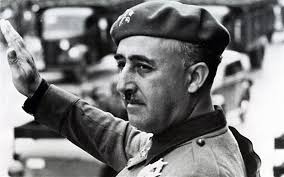

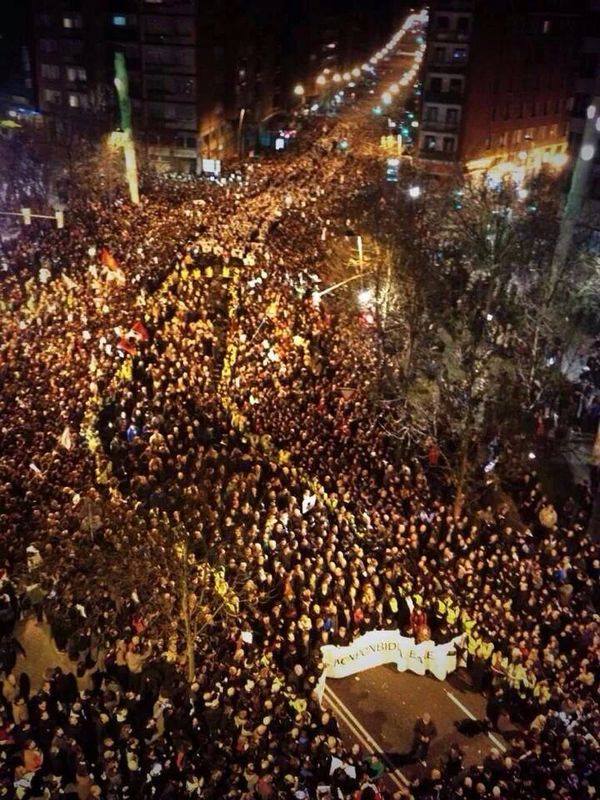
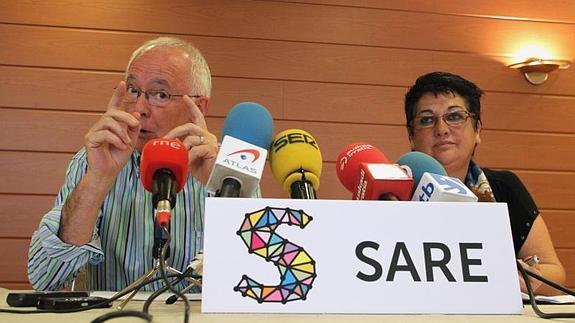
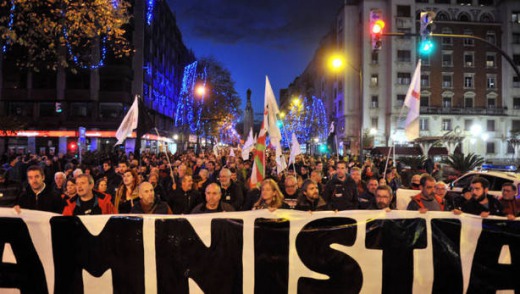


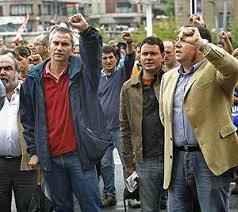

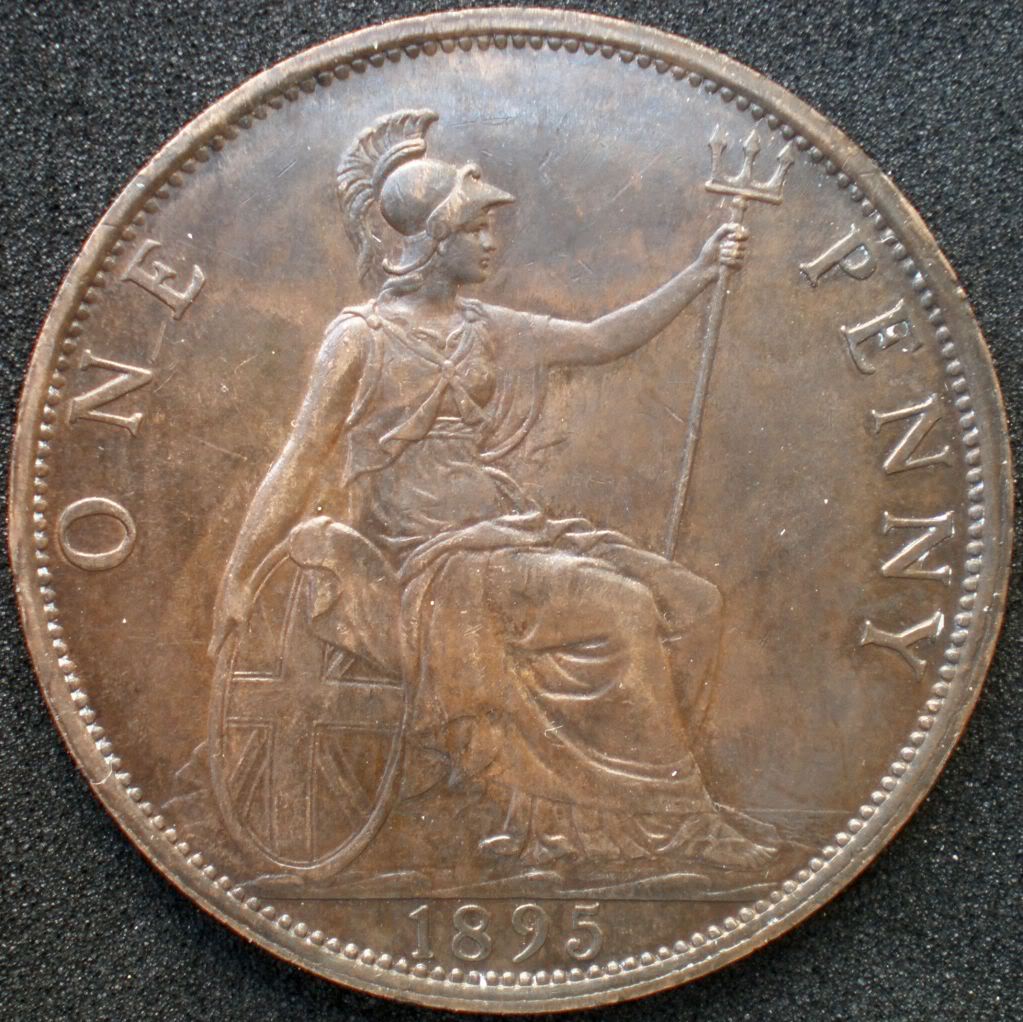


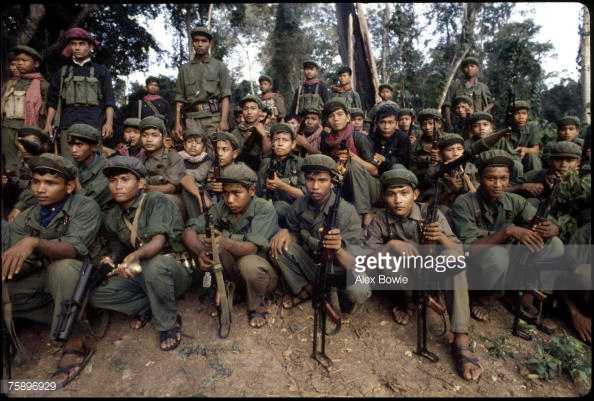
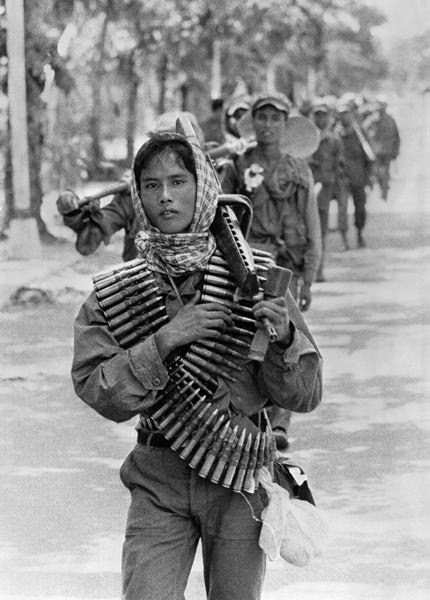
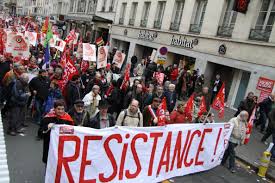

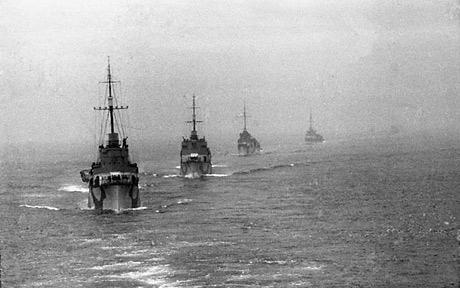
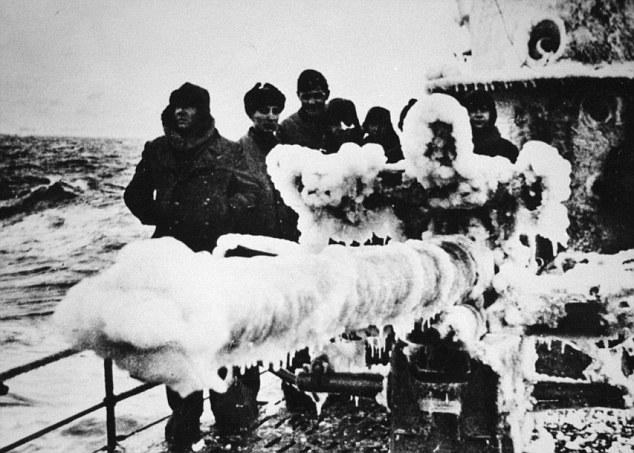
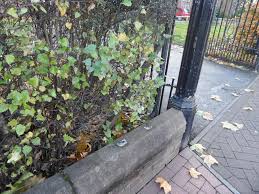
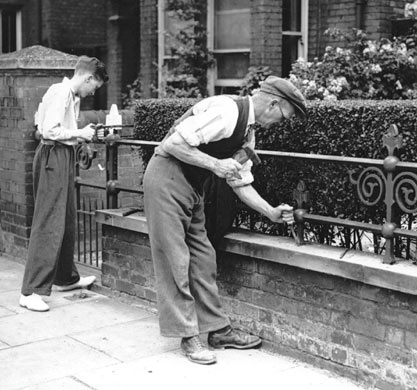
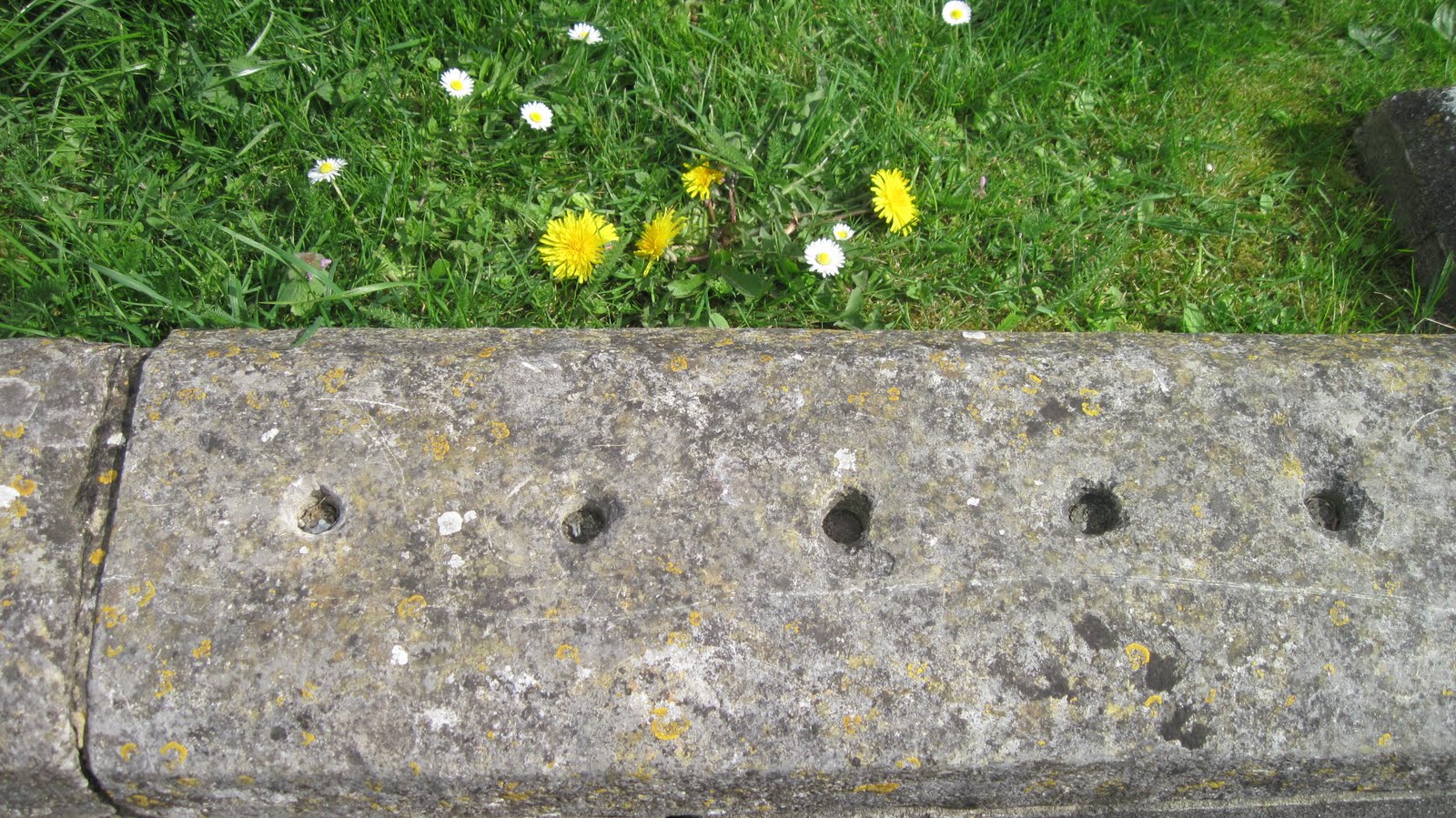
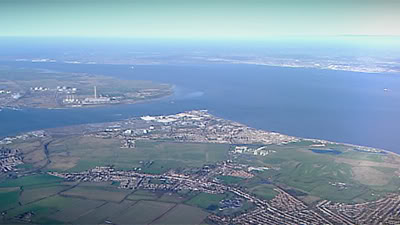

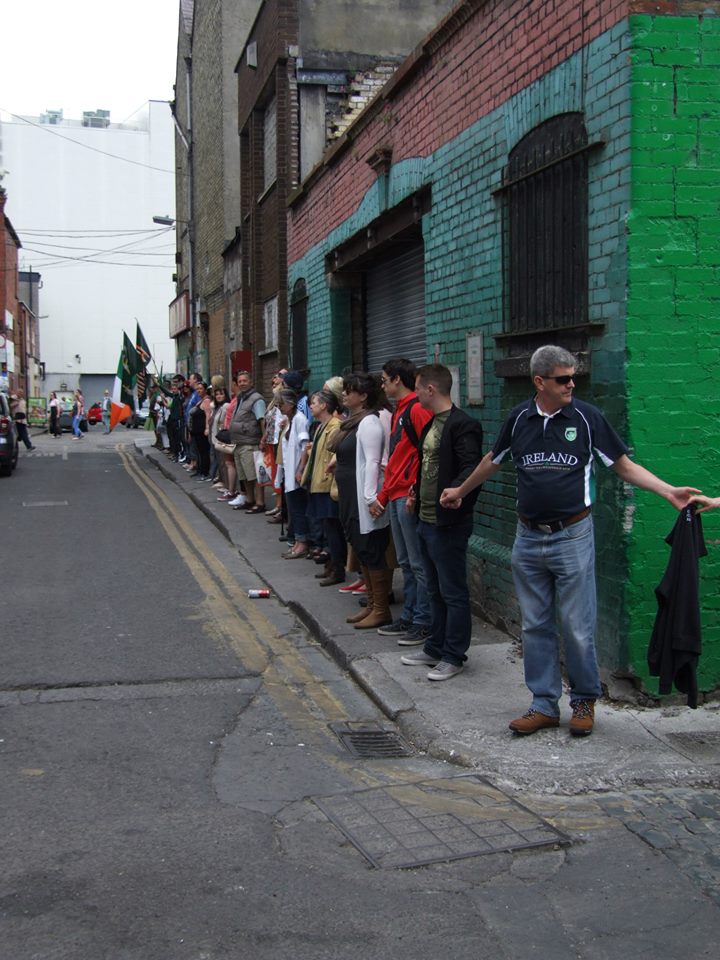




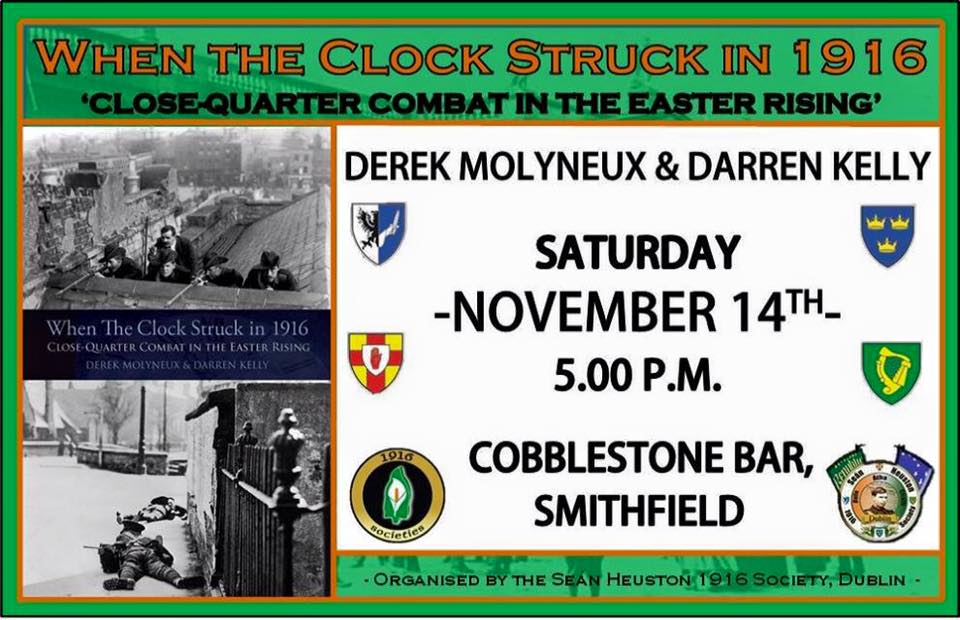

 rebelbreeze