Today is the anniversary of the death of Pat O’Donnel, an Irish patriot or a murderer, depending on one’s point of view. There are memorials to him both in his native village and in Glasnevin Cemetery in Dublin, the latter paid for by US-Irish contributions.
Pat O’Donnel was a travelled man with an interesting life story (the little of it that is known). He was born in Gaoth Dobhair (which remains an Irish-speaking area today in Co. Donegal)in 1835 and emigrated to the USA where, among other things, he worked as a miner. He stayed with his cousins for a while, who were with the ‘Molly Maguires’ (a workers’ underground resistance organization), in the coal-mining area of the state of Pennsylvania.
His greatest claim to fame however is that he killed James Carey, a man who informed on his “National Invincibles” comrades who in 1882 had assassinated Lord Cavendish, newly-appointed Chief Secretary of Ireland and Thomas Henry Burke, Permanent Under-Secretary – i.e. both chief representatives of British colonialism in Ireland — as they walked through Phoenix Park.
Sketch-portraits of the Invincibles
The British made arrangements for Carey which bear most of the features of the “witness protection program” of the FBI as presented in a number of fictional Hollywood films. Carey was given money in payment for his treachery, a new identity and passage for him and his family to begin a new life in South Africa.
There is no dispute that O’Donnell shot Carey a number of times and killed him in the latter’s cabin on board ship. The rest has been the subject of discussion and even argument but it does seem likely that although O’Donnell did intend to kill Carey, he provoked him and gave him a chance to go for his gun. Carey’s son probably concealed the weapon when O’Donnell was arrested in Carey’s quarters. Had Carey’s gun been produced in the cabin, instead of being found later on the son, it would have given O’Donnell some chance of being convicted of manslaughter instead of murder.
The biggest debate is about whether O’Donnell was sent to kill Carey or whether, after befriending him and his family, he learned of his identity and decided then to kill him. Evidence points in both directions although O’Donnell’s behaviour in the Carey family’s company tends towards the second interpretation, which is what most historians hold to. Most non-historians seem to prefer the story that O’Donnell was sent as an instrument of justice against informers and there is a Dublin folklore tradition to that effect. Curiously, the jury too preferred that theory — or that O’Donnell had shot an unarmed man — and found him guilty of “willful murder”.
Even most of those in Ireland who were horrified at the assassinations of the British colonial representatives despised Carey, who had been the one to actually give the signal for the fatal assaults and later seemed to delight in condemning six of his former colleagues to death — and others to prison sentences — by his evidence at their trials.
James Carey, National Invincible leading member who turned informer against his comrades. (Portrait by unknown engraver)
My great-grandfather J. J. Walsh was one of the legal team defending the Invincibles but my feelings about Carey would have been the same even had I not known that. It is recorded that eight great bonfires were lit in Ireland in celebration at the news of Carey’s death and that musicians led thousands in joyful processions.
The Judge refused to allow O’Donnell to speak after passing sentence upon him but the convicted man shouted “Three cheers for Ireland! Goodbye, United States! To hell with the British and the British Crown!“
The President of the USA intervened to try to save his life, since he had become a US citizen, but Pat O’Donnell was hung this day in Newgate prison, one hundred and thirty-one years ago and is numbered among the hundreds of thousands of men and women who fell in the fight for Irish Freedom.
(* “Skin the Goat” was the nickname of the assassination group’s getaway cart driver, whose real name was John Fitzharris; he served a long sentence for refusing to give information on anyone).
Further information and songs:
Pat O’Donnell, the Invincibles and Carey also get a mention in one verse of “Take Me up to Monto” by Irish Times journalist George Hodnett (a colleague of my father’s):
“When Carey told on ‘Skin the Goat’*,
O’Donnell caught him on the boat —
He wished he’d never been afloat,
The dirty skite!
It wasn’t very sensible
To tell on the Invincibles —
They stood up for their principles
Day and night.
And they all went up to Monto, Monto, Monto …” etc
There’s a good article here by historian Shane McKenna in which he calls the event in Phoenix Park “killings”, unlike their usual description as “murders” even in articles from Irish writers — evidence that the hand of colonialism still rests on our brains. Elsewhere one reads in history about the “assassination” of Arch-Duke Ferdinand, of Lincoln etc. They are not usually described as “murders”.
A version of the Pat O’Donnell Ballad sung by Diarmuid Breatnach (at19.40 minutes on the video), 23rd February 2013 as part of the Songs from the Docks event, preceded by Paul O’Brien, Seán O’Casey Centre, East Wall; video Rashers O’Reilly)
Lyrics: Traditional
Air: Traditional.
Another version of the Pat O’Donnell ballad, sung by Martin Collins, a Traveller who got it from his father Johnny Collins, sung here at the Celebration of Irish Traveller Music event at the Cobblestone pub, Smithfield, Dublin on 11th December 2014:
What tactics should we use in political resistance struggle? Physical action or not? If we think physical action is valid, what type do we support and when should we employ it? On the other hand, the same questions arise with regard to non-physical action ….
For most people in this country, the closest they come to physical action in politics is to present themselves at the polling booth. One of the primary declared objectives of most political groups, in fact, is to deepen the involvement in political action of the majority of the population of the country (although what each means by this and to what degree they are serious about it differs greatly).
Something of an ideological struggle has been taking part in the movement against austerity measures as to how best to increase public involvement in effective resistance. Some advocate participation in demonstrations and pickets as their main activity, with perhaps a sprinkling of public meetings. Others advocate civil disobedience and/or disruption as the most effective tactics. Curiously, most agree with participation in on-line petitions and “liking” particular ideological Facebook pages. Many agree with voting for candidates perceived to be in opposition to austerity measures, while some do not. For some, membership of a political party is an important step while for others it is of no value at all. Faced with this lack of general agreement across the spectrum opposed to the status quo, how are we to make decisions, to make reasonable choices?
I’d like to attempt to answer this question but first I’d like to give an example from which to learn, a parable, if you will.
ONCE UPON A TIME ….
Let us imagine a country called Awtaegin. Across the world in the 1960s and 1970s, youth and students were in a ferment, disenchanted with the dominant system as they perceived it and in this Awtaegin was far from being an exception. This disenchantment with the dominant system also extended to many of the oppositional political parties, such as the main social democratic opposition party (which we can call the “Labour Party”) and the USSR-aligned Communist Party (which we can call the UCP).
A number of organisations arose which were opposed not only to the existing order but also to those aforementioned political parties which they considered to be no more than a slightly alternative way to manage the same system and order to which they were opposed, in the case of the Labour Party and a hindrance to mobilising for real change, in the case of the UCP.
One of the opposition organisations to arise was a communist group advocating revolution but which did not support the system in the USSR, which it considered oppressive and imperialist. This group in fact supported the system in China and the politics of its leader at the time, Mao Tse Tung. At that time this leader and his country were very popular among revolutionary communist and national liberation organisations around the world. Let us call this group the MCP.
In its early days, the MCP was something of an object of derision for most of the Left organisations including those advocating revolution in Awtaegin. It was very small and put a lot of store in the Red Book of Mao’s sayings. The MCP popularised Chinese posters. The leaflets and newspapers produced by the MCP tended to contain many quotations from “Chairman Mao” (but also from Lenin and Marx, which the other revolutionary organisations liked to quote too) and the party insisted on using revolutionary political terminology which had gone somewhat out of fashion in Awtaegin.
No-one could deny that the members and supporters of the MCP were hard-working. They went on to the streets and door to door in working class areas with their newspapers and leaflets, attended demonstrations and strike pickets, held internal discussion meetings, organised public meetings, put up posters. Nor could anyone deny that they had guts – their activists often vigorously resisted arrest, they carried their political struggle into the courts instead of, as had become the norm, just trying to be found “not guilty” or to receive the least possible punishment. It was not long before some of them found themselves being sent to jail by the State and there too they often continued their struggle.
If the members and supporters of the other revolutionary organisations had a sneaking respect for those of the MCP, they did not show it. The commitment to work and resistance exhibited by the MCP was explained as fanaticism.
The MCP had built links with a loose network of ethnic minorities in Awtaegin, most but not all students. Mao and China were very popular among many of these ethnic minorities, particularly among the students from Africa, Asia and Latin America, whether on grounds of the national liberation of their home countries from imperialism and colonialism or on the grounds of overthrowing capitalism and of building socialism. Many of these students were organised into a broad organisation which we can call the Progressive Afro-Asian Association (PAAA).
The MCP developed fraternal links with the PAA, which had quite a large network. Through reading, through internal discussions and discussions with the PAA, the MCP developed a theory on racism and its relation to fascism in application to conditions in Awtaegin. In that country at that time racist ideology was dominant and also a number of organisations with an openly racist agenda were on the rise.
The MCP theorised racism as a product of and justification for colonialism and imperialism and also as a method of dividing the working class to facilitate capitalist exploitation. They characterised the organisations with a racist agenda as fascist, as both a concentrated reflection of the dominant racist ideology in Awtaegin and as organisations encouraged to attack revolutionary and progressive people and to intimidate ethnic minority people, in particular settled and migrant ethnic minority workers. MCP articles also analysed and criticised racist writings and statements by politicians and authors.
Although some of these attitudes were to be found in the rest of the revolutionary organisations to some extent, there was a general agreement among them that the racist organisations could not be termed “fascist” and the MCP was criticised for adopting the position that they were. The opposition to the MCP however arose to fever pitch when the party put forward the political position that “Fascists have no right to speak” and advocated this with regard to authors and politicians. The rest of the Left at this time was largely split into two camps: those who thought the racists should be ignored and those who thought they should be defeated in public argument.
But the MCP and PAA applied this policy in action, refusing public debate with racists and those they considered fascists and disrupting lectures, book launches and public meetings that featured speakers they considered racist or otherwise fascist. These disruptions tended to take place mostly in institutions of higher education, where space was being provided for racist and fascist idealogues but also where the PAAA had many members and supporters. The disruptive actions of the PAAA and MCP were criticised by both pro-establishment figures and by most of the Left in Awtaegin. But many people began to consider seriously the arguments put forward by the MCP and the PAA. In time, the position of “Fascists have no right to speak” became popularised as “No platform for fascists” and gained widespread acceptance across the Left spectrum in Awtaegin – it was even adopted as official policy for a year or two by the Students’ Union in that country.
The MCP had been studying, as related earlier, and attempting to popularise the teachings of Mao Tse Tung but they had also studied and discussed other writings and had examined specific contemporary conditions in Awtaegin about which Mao had written nothing. The MCP also investigated the history of earlier struggles against fascism and racism. They uncovered and popularised the history of the resistance to fascism and racism (mostly anti-Jewish racism in those years) in Awtaegin, which had been led for a period by the UCP, the same party that in the more modern struggle was leading people away from confrontation with racist organisations. In the 1930s, the anti-fascists had fought fierce battles with the fascists and with their police protectors.
A barricade against a fascist march in Awtaegin in 1936. The alliance of ethnic minorities, communists and anarchists fought off thousands of police spearheading the intended fascist march. One main barricade was breached but no others were and the fascist march had to retreat (being harassed along the way).
The policy of “fascists have no right to speak” was applied by the MCP to the racist organisations organising outside the institutions of higher education. The public meetings of racist organisations were beginning to be picketed and their rallies met with counter-demonstrations. Such opposition now had to be taken into account by racist organisations planning public meetings and rallies, as well as by local authorities and other bodies considering hiring out venues to such organisations. By now the disruptive response was becoming popular among the revolutionary Left, with the exception of the UCP which generally tried to outnumber the racist organisations in counter-demonstrations but then lead a march away from them so as to avoid clashes. Another exception included some libertarians, who thought it wrong to deny even racists the right to free speech.
The policy of confrontation with racist organisations, now becoming widespread in the Awtaegin revolutionary movement and even among radical and democratic anti-racist sections of society, was largely confined in practice to peaceful demonstrations and pickets, with the exception of some ethnic minority youth taking actions into their own hands and opportunist physical attack by some members of the Awtaegin Left.
But the MCP took their policy to its logical conclusion and openly advocated physical attack on fascists in the street. When they could, the MCP also physically attacked members and supporters of the racist organisations, particularly during counter-demonstrations to fascist ones. Once again, the MCP appeared to be isolating itself from the rest of the revolutionary movement in Awtaegin. However, their position found favour with many in the PAAA and with ethnic minorities who were under attack by racist organisations, the racist state police force and by racist immigration legislation. In time, the MCP’s position was adopted by the fringes of some of the revolutionary organisations too (some of which were expelled or split from their parties as a result) and the broad anti-fascist and anti-racist ‘physical force’ organisations that arose at that time spent the next decade or so successfully beating the fascist organisations off the streets. The threat of fascist organisations gaining dominance in Awtaegin did not resurface for another two decades.
So what are we to make of this history of the MCP and of the revolutionary movement and the racist organisations at that time? First of all, is it true? Yes, it is, though a little simplified and with names of country and organisations changed.
WHY WERE THEY SUCCESSFUL?
Why and how did the MCP succeed in having their political line with regard to fascism and racism, at first so widely disparaged, adopted so widely later? It certainly was not due to the influence of numbers as the MCP was a very small party. Even with the support of the PAAA, their numbers were smaller than some other revolutionary Left organisations and the PAAA split and diminished after a few years anyway, leaving the MCP to depend totally upon itself.
The MCP had very few individuals within it who had fame as intellectuals or a personal following of any kind – any influence the MCP had came about as a result of their work. Revolutionary organisations opposed to the MCP’s line included in their membership well-known journalists, actors and public speakers.
I can see no reasonable alternative to the judgement that the MCP’s line of physical opposition to racist organisations and idealogues gained popularity because it was the correct one, at least for its time and that implementing it also proved effective, giving victories in the short term to the anti-fascist anti-racist movement.
OK, so if we can agree on that, how was it that the MCP came up with this correct line when so much of the rest of the revolutionary and radical Left in Awtaegin were in disagreement with it? Was it because the MCP’s political ideological position was so generally advanced that they could not help but be correct on the question of fascism and racism? Hardly – they were followers of Mao’s and his ideology has been rejected by most of the revolutionary Left today; China has become a state facilitating internal capitalist expansion and foreign imperialist penetration within a few years of the death of Mao. In Europe, the MCP supported Albania under Enver Hoxha’s leadership, a state the collapse of which took mere days with the bankruptcy of its political line exposed to the world. In fact, the MCP itself is no longer in existence and in real terms lasted little more than a decade after the death of Mao.
It seems to me that the MCP was correct on the question of fascism and racism in the 1970s in Awtaegin because they started from a position of ‘commitment to revolution, whatever it takes’. In that regard, their “fanaticism” worked in their favour. In addition, they studied not only the writings of Mao but also those of other writers on the topic and discussed their opinions internally and with other progressive people. Then they also studied the history of the world’s people in struggles against fascism and racism and that of Awtaegin in particular. Finally, they had the courage (or arrogance) to advocate their line publicly and to put it into practice when the opportunity presented. They used research, investigation and analysis to develop their theoretical position and they progressed it to practical application.
The MCP could have decided that the task of convincing the rest of the movement was too great and either abandoned it or thrown themselves into it in isolation. What they did was take on the task of convincing the rest of the movement with polemics and historical example and also putting it into practice themselves, seeking allies who agreed with that approach without necessarily agreeing with the rest of their ideology.
TODAY, IN IRELAND
So, in deciding what are correct tactics in struggles in Ireland today, I suggest that we should use the same overall approach as did the MCP in the example given. Study writings on revolutionary tactics, research and study our own class and national history, study current circumstances, discuss ….. then advocate publicly and, when appropriate, apply in practice.
If we look around us in Ireland at the moment, we see that the majority of the population, as observed earlier, is not engaged in political struggle. The sector in opposition to the status quo that has the most people in it, with however a wide spread in ideology, is the Republican movement. This sector has revolutionary and non-revolutionary parts; the major part of it has become non-revolutionary and the rest of it is struggling with fragmentation and ideological confusion. Traditionally, with some exceptions, the Republican movement has concentrated on the struggle against British colonialism and left the rest of the political, social and economic issues more or less alone. As a movement, the revolutionary rump of the Republican movement has given virtually no leadership to — and organised little participation in — the current and recent mass struggles against the Household and Property Taxes and the Water Charge (though its members are clearly in sympathy with the resistance).
In the historically small Socialist sector in Ireland, revolutionaries and radicals sometimes occupy the fringes of the social democratic Labour Party while the rest operate as independents or belong to a number of small revolutionary Left organisations. Chief in size of the latter, although comparatively still very small indeed, are the Socialist Party and Socialist Workers’ Party, with their respective front organisations, the Anti-Austerity Alliance and People Before Profit. While these organisations exhibit little interest in the Irish anti-colonial struggle (other than to condemn periodically those engaged in it) or in the struggle against the repression of the anti-colonial movement, they have concerned themselves very much with social and economic issues.
Both the SWP and the SP have concentrated their activities in opposition to the recent and current taxes and water charge in trying to build large protest mobilising organisations and in electoral campaigns. The mobilising organisations for mass demonstrations and pickets have also been seen as areas of contention between the SP and the SWP. The electoral campaigning is also intended to promote one party or the other, as well as promoting the resistance to the economic and financial attacks upon the working people.
The mass mobilisation has yielded numbers which at first surprised even the activists, growing in thousands succesively from the first demonstration in October to the next in November and many predict even larger numbers this week, on the 10th December. These numbers have forced some recognition of the level of public dissatisfaction by the mass media along with significant initial water charge reductions from the Government. The latter concessions are clearly intended to mollify public discontent and reduce the oppostion to the water charge while the State and the media concentrate on driving a wedge between the general opposition to the charge and some of its more active elements.
Meanwhile, some activists, mostly independent of any political party, have been organising physical opposition to the instalation of water meters. Let us remember that mass non-registration coupled with the threat of non-payment defeated the Household Tax but that the Property Tax replaced it, with the change in the law permitting the Revenue Department of the State to collect the tax through people’s salaries and pensions. In order to levy a charge on water consumption, however, in the absence of a blanket same-for-everyone charge, the State has to install water meters. Currently this work is being undertaken by a private company on behalf of the State with widespread speculation that capitalists involved in that company (such as Denis O’Brien) will eventually buy the water “industry” cheaply from the State.
The resistance to the instalation of the water meters has been taking the form of groups of people turning out in some communities where the meter instalation teams are in operation and physically impeding them in carrying out that work. The tactics have involved parading slowly in front of the company’s vehicles, slowing down their progress enormously and also by physically blocking with their own bodies access to the spots outside houses or estates where the meters are planned.
The Irish state has responded to these physical but peaceful tactics in some cases by postponement of instalation but mainly by a physical repression of the resistance with methods varying from deployment of sufficiently large numbers of police to force the resisters aside, to assaults on those resisting. In one area in Clonmel, even armed police were deployed for a while. In addition, the State issued court injunctions against a number of activists but for the moment has suspended them, for fear of giving the movement some martyrs in jail and augmenting the resistance. This fear is a realistic one, given that public condemnations of the water meter resisters by two Government Ministers, backed up by a compliant media, have resulted mainly in antagonizing public opinion against the Government and the police. Detecting political opportunity in the changing breeze, a number of political parliamentary representatives, notably Sinn Féin TDs, who previously announced they were going to pay the Water Charge but under protest, have now indicated they will not be paying (though however being careful not to advocate a general campaign of non-payment and thereby ruining their party’s chances of integration into the system).
To sum up: the SP and SWP, to varying degrees, are concentrating on two main approaches, building mass demonstrations and electoral campaigning. A group of non-aligned individuals are concentrating on physical opposition to the instalation of meters. Which should we support?
The mass demonstration mobilisation approach is already idealogically split between insistence on non-payment one the one hand and on the other, a broader church tolerating payment under protest by its numbers. Increasing numbers at the cost of an important tactic such as non-payment, particularly at a time when the opposition to the meters is growing, seems a particularly retrograde step. On the other hand it seems tactically unsound, in the absence of a convincingly large presence in the resistance movement, to split on this issue rather than to remain inside it fighting for the line of non-payment.
It is hard to avoid the suspicion that the SWP, through its front PBP, has agreed to tolerate in the ranks of the mobilising organisation those who refuse to advocate non-payment, like for example Sinn Féin and the Unite trade union, even to dropping or muting the SWP’s own line of non-payment, in order to be the left-wing of a larger campaign – i.e. political opportunism. Since the SP and the AAA do not have anything like the numbers or connections necessary to have a significant impact on the resistance movement from a lone position, it is also hard to avoid the suspicion that they have left the broader campaign in order to posture at being more revolutionary than the SWP and, perhaps, if the broad resistance movement continues to grow, to gain in recruitment from its more militant Left members.
However, the general strategy of both the SP and the SWP is in any case wrong. Large demonstrations have a morale-building effect, of course; they give the resistance a physical presence representing many who could not be present and they strengthen the hopes of the resistance – up to a point. But building successively larger demonstrations will not in itself change the ruling class’ determination to make the people pay for the financial crisis. And at some point, demonstrations may peak and then begin to reduce in numbers as people perceive that nothing will be changed through this tactic. This in fact occurred a couple of years ago when the SWP tried to organise a programme of escalating demonstrations against austerity measures. The demonstrations then have a demoralising effect as those who continue to attend see them getting smaller.
The “Pink Ladies” in Coolock protest Garda violence against water meter resisters November 2014. A similar demonstration took place in Tallaght. (Photo John Ayres, published in The Broadsheet – see link for the issue and more photos).
Those who advocate physical resistance with regard to the meter installation seem to me to be on the right track but they are too few in numbers to have a decisive impact. They need the support of the rest of the resistance movement. It is the meter resisters who have widely exposed the connection between the State and private company installing the meters and the degree to which the State is willing to go in order to push its program through. They have done this through their actions and through filming police violence and disseminating the videos through the Internet. It is they who have rattled the Ministers into making ill-considered statements which in turn have deepened the mood of resistance. The rest of the resistance movement needs to find ways to support the physical resistance, physically if possible and ‘morally’ when not, e.g. by statements of support, pickets of news media demonising physical resisters as for example recently against Independent Newspapers and protest pickets of the police, as the “pink ladies” did for example in Coolock and in Tallaght (photos: http://www.broadsheet.ie/2014/11/20/the-pink-ladies/)
In the long run, of course, the Irish capitalist class can content itself with installing meters where it can do so without difficulty, then later isolating each area of resistance in turn, swamping it with police and installing the meters. But if the meter installation resistance were to be combined with large demonstration mobilisations and identified with by the broader movement, then the State would risk the development of a situation that could threaten its very existence unless it abandoned its Water Charge plan and thinks again about how to finance its debt. That is far from being all that revolutionaries would want but that kind of victory, transitory though it may be in the longer term, would provide a welcome respite for the people. It would also give rise to a huge boost in confidence for the ordinary people and lessons in effective tactics of resistance, as well as a sorting through of who are worthy to lead future struggles and who are not.
In the lands under the direct dominion of England, i.e. the “United Kingdom”, and in some others that are part of the British Commonwealth, the dominant class has called the people to join in a cultural festival in November which they call “Remembrance”. In this year of 2014, the centenary of the beginning of World War I, there is a particular focus in the Festival on that war.
The organisation fronting this festival in the ‘UK’ is the Royal British Legion and their symbol for it (and registered trademark) is the Red Poppy, paper or fabric representations of which people are encouraged to buy and wear – and in some places, such as the BBC for personnel in front of the camera,forced to wear. In many schools and churches throughout the ‘UK’, Poppies are sold and wreaths are laid at monuments to the dead soldiers in many different places. Prominent individuals, politicians and the media take part in a campaign to encourage the wearing of the Poppy and the festival of remembrance generally and of late, to extend the Festival for a longer period.
High points in the ‘The Festival of Remembrance’ are the Royal Albert Hall concerts on the Saturday and the military and veteran’s parades to the Cenotaph memorial in Whitehall, London, on “Remembrance Sunday”. According to the British Legion’s website, “The concert culminates with Servicemen and Women, with representatives from youth uniformed organizations and uniformed public security services of the City of London, parading down the aisles and on to the floor of the hall. There is a release of poppy petals from the roof of the hall.
“The evening event on the Saturday is the more prestigious; tickets are only available to members of the Legion and their families, and senior members of the British Royal Family (the Queen, Prince Phillip, the Prince of Wales, the Duke of York and the Earl of Wessex) and starts and ends with the British national anthem, God Save the Queen. The event is televised.
“Musical accompaniment for the event is provided by a military band from the Household Division together with The Countess of Wessex’s String Orchestra.”
The money raised from the sale of the “Poppies” and associated merchandise is to be used to support former military service people in need and the families of those killed in conflict. On the face of it, military and royal pomp apart, the Festival may seem a worthy charitable endeavour and also one which commemorates very significant historical events — therefore a festival which at the very least should not be opposed by right-thinking and charitable people.
Yet the main purpose of this festival and the symbol is neither remembrance nor charity but rather the exact opposite: to gloss over the realities of organised violence on a massive scale, to make us forget the experience of the world’s people of war and to prepare the ground for recruitment of more people for the next war or armed imperialist venture – and of course more premature deaths and injuries, including those of soldiers taking part.
Video and song On Remembrance Day from Veterans for Peace lists British conflicts (including Ireland) and condemns the Church of England for supporting the wars, calling also on people to wear the White Poppy
Partial Remembrance – obscuring the perpetrators and the realities of war
The Royal British Legion is the overall organiser of the Festival of Remembrance and has the sole legal ‘UK’ rights to use the Poppy trademark and to distribute the fabric or paper poppies in the ‘UK’. According to the organisation’s website, “As Custodian of Remembrance” one of the Legion’s two main purposes is to “ensure the memories of those who have fought and sacrificed in the British Armed Forces live on through the generations.”
By their own admission, the Legion’s “remembrance”is only to perpetuate the memories of those who fought and sacrificed in the British Armed Forces – it is therefore only a very partial (in both senses of the word) remembrance. It is left to others to commemorate the dead in the armies of the British Empire and colonies which Britain called to its support; in WWI, over 230,500 non-‘UK’ dead soldiers from the Empire and, of course, the ‘UK’ figure of 888,246 includes the 27,400 Irish dead.
Cossack soldier volunteers WWI. Imperial Russia was an ally of Britain and France; the war was one of the causes of the Russian Socialist Revolution 1917. The following year, the war ended.
The Festival of Remembrance excludes not only the dead soldiers of the British Empire and of its colonies (not to mention thousands of Chinese, African, Arab and Indian labourers employed by the army) but also those of Britain’s allies: France, Belgium, Imperial Russia, Japan, USA and their colonies.
German soldiers playing cards during WWI. Photos of Germans in WWI more readily available show them wearing masks and looking like monsters.
No question seems to arise of the Festival of Remembrance commemorating the fallen of the “enemy” but if the festival were really about full “remembrance”, it would commemorate the dead on each side of conflicts. That would particularly be appropriate in WWI, an imperialist war in every aspect. But of course they don’t do that; if we feel equally sorry for the people of other nations, it will be difficult to get us to kill them in some future conflict.
A real festival of remembrance would commemorate too those civilians killed in war (seven million in WWI), the percentage of which in overall war casualty statistics has been steadily rising through the century with increasingly long-range means of warfare.
Civilian war refugees in Salonika, NW Greece, WWI
Civilians in the First World War died prematurely in epidemics and munitions factory explosions as well as in artillery and air bombardments, also in sunk shipping and killed in auxiliary logistical labour complements in battle areas and through hunger as feeding the military became the priority and farmhands became soldiers.
In WWII 85,000,000 civilians died in extermination camps or forced labour units, targeting of ethnic and social groups, air bombardments, as well as in hunger and disease arising from the destruction of harvests and infrastructure. Air bombardments, landmines, ethnic targeting and destruction of infrastructures continue to exact a high casualty rate among civilians in war areas: one admittedly low estimate up to 2009 gave figures of 3,500 dead in Iraq during the war and aftermath and another 100,000 dead from western trade sanctions, along with 32,000 dead civilians in Afghanistan. Another review up to 2011 gave a figure of 133,000 civilians killed directly as a result of violence in Iraq and “probably double that figure due to sanctions”. (1)
The number of civilians injured, many of them permanently disabled, is of course higher than the numbers killed. Most of those will bring an additional cost to health and social services where these are provided by the state and of course to families, whether state provision exists or not.
Real and impartial “remembrance” would include civilians but not even British civilians killed and injured are included in the Festival of Remembrance, revealing that the real purpose of the Festival is to support the existence of the armed forces and their activities (“shoulder to shoulder with our armed forces”) (2) contributing at the same time to a certain militarisation of society and of the dominant culture.
If the Festival were really about “remembrance”, they would commemorate the numbers of injuries and detail the various types of weapons that caused them. But that might reflect unfavourably on the armaments manufacturers, who run a multi-billion industry in whatever currency one cares to name, so of course they don’t.
Australian soldiers who survived gas attack but injured by it awaiting hospitalisation, Northern France, WWI 1916.
And if really concerned about death and injury in war, they would campaign to end such conflict – for an end to imperial war. But then how else would the various imperial states sort out among themselves which one could extract which resources from which countries in the world and upon the markets of which country each imperial state could dump its produce? So of course the Royal British Legion doesn’t campaign against war.
Partial remembrance is indeed embodied in the song chosen by the British Legion to promote its Festival. No Man’s Land, sung by Joss Stone, is actually a truncated version of the song of the same title (better known in Ireland as the Furey’s The Green Fields of France), composed by Scottish-raised and Australian-based singer-songwriter Eric Bogle. The Joss Stone version contains the lyrics of the chorus as well as of one verse and one-half of another, omitting two and-a-half verses of Bogle’s song.
Some of the British media created a kind of controversy, at the behest of who knows whom, to have the British Legion’s song included top of BBC’s Radio One playlist. The song is reproduced in entirety below, with the lines sung by Joss Stone in italics and those she omitted in normal type.
Well, how do you do, young Willie McBride?
Do you mind if I sit here down by your graveside?
And rest for a while in the warm summer sun,
I’ve been walking all day, and I’m nearly done.
I see by your gravestone you were only 19
When you joined the great fallen in 1916,
I hope you died well and I hope you died clean
Or, Willie McBride, was it slow and obscene?
(Chorus)
Did they beat the drum slowly, did they play the fife lowly?
Did they sound the death march as they lowered you down?
Did the band play The Last Post in chorus?
And did the pipes play the Flowers of the Forest?
Did you leave a wife or a sweetheart behind
In some faithful heart is your memory enshrined?
Although, you died back in 1916,
In that faithful heart are you forever 19?
Or are you a stranger without even a name,
Enclosed forever behind the glass frame,
In an old photograph, torn, battered and stained,
And faded to yellow in a brown leather frame?
(Chorus)
The sun now it shines on the green fields of France;
There’s a warm summer breeze that makes the red poppies dance.
And look how the sun shines from under the clouds
There’s no gas, no barbed wire, there’s no guns firing now.
But here in this graveyard it’s still No Man’s Land
The countless white crosses stand mute in the sand
To man’s blind indifference to his fellow man.
To a whole generation that were butchered and damned.
(Chorus)
Ah young Willie McBride, I can’t help wonder why,
Do those that lie here know why did they die?
And did they believe when they answered the cause,
Did they really believe that this war would end wars?
Well the sorrow, the suffering, the glory, the pain,
The killing and dying, were all done in vain.
For Willie McBride, it all happened again,
And again, and again, and again, and again.
(Chorus)
It’s easy to see why the Royal British Legion might shy away from the omitted lyrics, which would hardly encourage recruitment or support for war. Interviewed on video, Joss Stone herself said how important it was to be “true to the lyrics” and that “the last thing one would want to do would be to disrespect the lyric”; incredibly, she and John Cohen, the record producer, both separately claimed that they had captured the essence of the song lyrics in the British Legion’s version.(3)
Although Bogle stated that he did not think the Joss Stone version glorifies war, he also said that it did not condemn it and was ultimately a sentimentalised version.
“Believe it or not I wrote the song intending for the four verses of the original song to gradually build up to what I hoped would be a climactic and strong anti-war statement,” Bogle said. “Missing out two and a half verses from the original four verses very much negates that intention.” (apparently in a reply from Bogle to a blogger’s email and quoted in a number of newspaper reports).
The truncation of the song and the removal in particular of the anti-war lyrics epitomises partial “remembrance” and stands as a metaphor for it, the production of a lie by omission and obscuration.
If the main objective were really to care for soldiers and veterans and their families ….…
If the festival were really about caring for veterans and their families, would it not seek to allocate that responsibility completely to the State? It is the capitalist state (and prior to that, the feudal state) which sent people to fight for it, so it should be that state which cares for the military personnel and for their families. According to histories of the British Legion, one reason for its formation was the callous disregard of the British state and low level of provision for its military injured in the First World War and for the dependents of the dead. Taking that principle further, the State could impose a War Tax or Veterans’ Dependent’ Tax, say, on the big capitalists, on whose behalf the State has sent its armed forces off to fight. After all, it is those capitalists who will benefit from the plunder of resources and opening of markets for their produce, the very reasons the wars are being fought.
Millions of artillery shell casings, each designed to kill and mutilate, each produced at a profit to Capitalists.
Not only that, the capitalists directly profit from war itself; war is not merely a means of settling territorial disputes among capitalist nations – war itself is very big business. Every bullet, shell, bomb, rocket, mine was produced at a profit and when exploded, will be replaced by another, again at profit and so on, in huge production batches. Every gun, tank, armoured car, lorry, jeep, ship, plane, helicopter built … huge production, huge profits. Then uniforms, equipment, food production and packaging, deliveries …. it will be indeed a rare capitalist who does not profit from war while it is being fought.
The Royal British Legion does in fact do some campaigning around State support for armed forces personnel and their dependents. On the Legion’s website, under the section on “Campaigning”, the following appears:
“In no particular order, our top five recommendations for the next Government are to:
Enable all Armed Forces widows to retain their pension should they decide to later cohabit or remarry
Ensure that all veterans with Service-induced hearing problems can have their MOD-issued hearing aids serviced and replaced at no cost, and that working-age veterans can access higher grade hearing aids, including ‘in-the-ear’ aids
Protect the lifetime income of injured veterans by uprating their military compensation by the higher of earnings, inflation or 2.5% (the ‘triple lock’)
Offer veterans evidence-based treatment for mental health problems within a maximum of 18 weeks from referral, provided by practitioners with an understanding of veterans’ needs, in line with the Government’s commitment to parity of esteem between physical and mental health
Include spouses and Early Service Leavers in the resettlement support provided by the Career Transition Partnership”
As one can see, these are pretty minimal demands of the State and in no way impede its engagement in war and may actually assist in recruitment.
Shhhh! Suicide and PTSD among military personnell
While campaigning for mental health provision for referrals of veterans and serving personnel may help reduce suicides among this group, nowhere in the official Festival of Remembrance is the existence of this component of mortality even alluded to. It is known in the USA that statistics of suicides in their armed forces since 2003 actually exceed their numbers killed in combat.
Evidence is now emerging of suicide statistics among veterans of recent British armed conflicts too — and the statistics are rising. According to aBBC Panorama documentary last year, more British soldiers committed suicide in 2012 than were killed in action in Afghanistan (the British Army does not publish records of suicide death but Panorama’s researchers dug up the statistics from various sources).
The Ministry of Defence does keep some records of diagnoses of post-traumatic stress disorder (PTSD) among its serving personnell and says the incidence is lower than in the general population but many suspect that the figures do not reflect the full reality. Also, the same statistics show that male military under 20 years of age “had a 46% statistically significant increased risk of suicide than the rest of the general population”.(4)
PTSD was not recognised by the beligerents in World War One and many of those who were shot by firing squad for “cowardice”, “desertion” or “refusing an order” “in the face of the enemy”, were sufferers of that syndrome. Their dependents were left without a war pension too.
Talking about PTSD and suicide among soldiers is hardly likely to encourage recruitment to the armed forces and so, despite its pledge to “support all members of the British Armed Forces past and present, and their families”(5), the British Legion draws a veil of silence over those aspects, particularly during the Festival.
Getting the public behind the armed services and war
Far from campaigning against war or even assigning financial and moral responsibility to the capitalists who cause war and also profit from it, the British Legion, through the promotion of the Poppy and “Remembrance”, strives to keep the public in support of militarism (6) and in readiness to support future wars.
It does this in a number of ways: it maintains a separation from the reality of war for the public, as well as a separation between the victims of the State-sponsored wars and the cause of their victimhood. It avoids mention of the causes of war and of those who profit by it. And it promotes the armed services and the conflicts in which they have participated uncritically, a promotion embodied in the Legion’s slogan in use until this year, “Shoulder to shoulder with all who Serve” (which it intends to replace with “Live On – To the memory of the fallen and the future of the living”).
War is presented in the mass media during the Festival and at other times as unfortunate but also as giving rise to uplifting heroic action and to comradeship. Feeling of comradeship is a real phenomenon among people suffering equal or similar conditions and, in the military, is most commonly seen among the lower ranks. When the British Legion was an organisation limited to veteran membership, presenting it as providing comradeship was understandable. However, the British Legion has now extended its membership not only to families but to all kinds of supporters, whether active as volunteers (for example, selling “Poppies”) or completely passive (just paying an annual membership subscription). It now promotes a different kind of “comradeship” and, under that very heading, invites members of the public to “Become part of a network of people who care about the Armed Forces family”.(7)
The British Legion is actively seeking a different kind of ‘comradeship’ or solidarity to that existing among the military or veterans. But this is not an alternative such as the comradeship of humanity nor of the working class, which would lead the workers of the opposing armies to rise up against their masters, but of “the nation”.
This of course would be a misnomer anyway since there are a number of nations in the ‘UK’, for example. But even if the comradeship were for “England”, or “Australia”, these territorial-political units are by no means homogenous. All of them are divided into classes and in each, one class rules – the monopoly capitalist class. It is that class that decides on war and it is that class that profits from it, along with smaller profits for smaller capitalists. But it is not they who will be blowing up, shooting and stabbing one another in the wars they instigate – it is the working and lower middle classes.
The military casualties in war are presented as heroic sacrifices for “the nation”, a mythical concept often represented by neighbourhood and family. Family and neighbourhoods in all the countries in the conflict will suffer but it is neither the families nor the neighbourhoods which instigated the war, nor will they profit from it. In fact, their representatives will be sent to kill one another on the battlefields, leaving desolation and loss among their families and neighbourhoods.
However, as was pointed out by speakers at the recent launch of a book against militarism in a London bookshop recently(8) the fact that the British monopoly capitalist class is having, through the British Legion and its Festival, to exert itself to seek identification with its armed forces and support for war, is a sign that public opinion is not all going the way it would like.
Left and liberal support for the Red Poppy
People enlist in imperial and colonial armed forces for a variety of reasons. Excitement and adventure of course appeal to many but there is also the push of unemployment, the pull of education and training (however doubtful the usefulness of that training may be in later life although in the USA, serving and ex-armed forces people qualify for educational funding http://www.collegescholarships.org/grants/military.htm).
Then of course there is the propaganda about the atrocities committed by enemy forces (whether real or not) and the alleged threat they pose to the population of the state doing the recruiting. The alleged threat is the propaganda reason most aggressive imperialist powers name their war ministries the Department or Ministry of Defence and that some even incorporate the concept into the title of their armed forces, viz. the “Israel Defence Force”).
British soldiers move up through a trench to begin attack at the Somme battle, Northern France, WWI
And, quite often, people are conscripted by force, as they were in Britain during both World Wars as well as for “National Service” up to 1960, as well as in other European countries (and in the USA in the draft for WWII, Korea, Vietnam). The standard punishment for refusing to join up when conscripted was a jail sentence but some conscientious objectors in WWI were shipped by the British Army to France, so that they could be shot for “desertion in the face of the enemy”. The penalty for certain acts in a war area, such as desertion, refusal to obey orders or striking an officer, could be death – during WWI, 306 British and Commonwealth soldiers were shot by firing squad, while others were executed in the armies of Britain’s allies, as well as in those of Germany, Austria and Turkey.
As an aside from the purpose of this article, it is noteworthy that the only area of the ‘UK’ where conscription was not introduced was Ireland, where opposition to it ran right across a spectrum from the IT&GWU and some other trade unions, through the Irish nationalist and republican movements to the Catholic Church hierarchy. The only area of the European-settler Commonwealth where it was not introduced, being defeated in two consecutive referenda, was Australia – where 40% of the population is said to be of Irish descent and where the Irish diaspora, with some justification, was blamed by supporters of conscription for the failure to introduce it. However, thousands of Irish and Australians did volunteer, especially in the earlier days of the war.
The issue of why and how people join the imperialist armed forces is often raised by Left and liberal advocates of wearing the Poppy or of similar commemoration festivals (e.g. Armed Forces Week in the USA, second Saturday to third Sunday of May). Another group contend that the real or original purpose of these commemorations and festivals is to commemorate the great human loss of their country or to support veterans and their families.
These commemorative events, these Left or liberal advocates often contend, have been hijacked by militarists and, in the case of the ‘UK’, by the Royals and they should not be allowed to get away with it. Accordingly, one may find socialists and anti-war people and even activists wearing the Poppy, as is the case for example with a few of the activists of the British-based group Veterans for Peace, although most of them do not wear the Red Poppy and many promote the White Poppy.
Personally, I do not believe that Left and liberal advocates of wearing the Red Poppy have correctly analysed the original purpose of those who created it. But even if they should be correct, clearly serious cognizance should be taken of how the Red Poppy symbol is being used today and what its main thrust is. It is pretty clear that this symbol and the commemorations in imperialist countries in general are being used to recruit personnel for the armed forces of those states and, above all, to swing public opinion behind not only those armed forces but also in support of their state’s armed actions against other states and in wars of conquest in other lands.
The White Poppy – in Britain, Australia, Canada and in Ireland
To counter the propaganda offensive surrounding the Red Poppy, some in the ‘UK’ and in some Commonwealth countries advocate the wearing of a white poppy symbol. The idea of an alternative and anti-war symbol was apparently first proposed in 1926 and the White Poppy was first sold by the Women’s Cooperative Movement in Britain in 1933. The following year, the major anti-war organisation in Britain, the Peace Pledge Union, began its annual sale of the White Poppy symbol. Although tolerance of the White Poppy has been pronounced by the Royal British Legion, the wearing of it has been attacked by a number of public figures in Australia and in Britain, including Margaret Thatcher during Question Time in the House of Commons.
The White Poppy Emblem, worn as an alternative to the Red Poppy but also sometimes alongside it
In 2006 the Royal Canadian Legion initiated legal action against the main Canadian distributor of the White Poppy symbol and against the Peace Pledge Union. This action gained considerable publicity in the Canadian media and, according to the PPU, “resulted in widespread support and a substantial increased sale of white poppies in Canada”(9). The PPU site also carries accounts of orchestrated hostility by the media, in church groups and schools, although some schools also provide the White alongside the Red Poppy symbol.
Reviewing the principle behind it and the history of its existence as a symbol, also not ignoring its pacifist associations (which are unwelcome to me), it does seem a progressive act for people in Britain and Australia, New Zealand and Canada to wear the White Poppy. The act of wearing that symbol is statement that the wearer dissents from the wearing of the Red Poppy and is opposed to imperialist and colonialist war.
I have no strong feeling about whether people should wear it in Ireland or not but nor do I see any reason to promote it (with the exception of within the “Unionist community”, where discussion around it could be useful, although the practice would almost certainly be dangerous). Although our whole nation was a part of the ‘UK’ during World War I, twenty-six of its 32 counties have since ceased to be so. The thrust that led to that current status was embodied in the 1916 Rising (itself an action against WWI)and the War of Independence 1919-1921, events of much greater historic national significance for us, despite their much smaller loss of Irish lives, than is the First World War. The symbol covering that period and in particular the 1916 Rising is the “Easter Lilly” (the Arum Lilly or Calla. Z. aethiopica), paper and metal badge representations of which are worn around that time, both in Ireland and in some cases abroad.
There has been a growing attempt in Ireland in recent years to have a national honouring of the Irish who died serving in the British Army and at the moment this is concentrating on the First World War period. This is far from unproblematic: they were soldiers in the armed forces of a state that was occupying our country, then a colony, and actively engaged in repression of our people – a repression which at that time had been going on for 700 years. The 1916 Rising had taken place right in the middle of WWI and had been suppressed by British troops – including units recruited in Ireland. Almost immediately after the end of World War One, the IRA had begun the War of Independence, during which its principal opponents in armed action were the British Army, the Royal Irish Constabulary and the special auxilliary forces of the latter (“’Tans” and “Auxies”).
As if that were not problematic enough, that same colonial power remains to this day in occupation of a part of our national territory. And that colonial occupation and its colonial police force is backed up by that same British Army, an army which only recently fought a 30-year war against Irish guerrilla forces in the colony. During that war, the British Army daily harassed civilians in ‘nationalist’ areas and at times gassed, arrested and beat them up or shot them dead. That same Army also colluded with sectarian assassination squads and carried out unofficial executions, i.e. murders, of guerrilla fighters and of political activists.
Given this history and current situation, it is curious that some determined efforts to commemorate Irish dead in the British Army during WWI continue. Some of its advocates may be motivated by nothing more than a genuine historical commemorative interest and some by some kind of sense of justice. But undoubtedly there exists in Ireland, as well as the unionist mentality in parts of the Six Counties, a nostalgia for the British among some in the Irish state. This is the “West Britain” mentality that never ceased to wish Ireland to be a part of the British Empire, reinforced by the desire of some other elements to see Ireland part of the British Commonwealth. For these elements, celebration of the Irish who fought in the British Army is a way of stating their claim to the past they like and the future to which they aspire. These tiny sections of the Irish population have some representation in Irish academic and public life and, one suspects, among the Irish capitalist class, a class with no sense of history but a strong sense of the quick Sterling, Punt, or Euro – whichever seems best at the time.
Uncritical commemoration of Irish soldiers who died in the British Army and particularly in WWI is not only problematic but plays into the agenda of “West British” and Commonwealth enthusiasts and for those reasons the broad Irish Republican movement is right to oppose such commemorations. But the issue goes far beyond that of “Brits Out!” — for socialists, these commemorations screen the real purpose of imperialist wars and the ways in which working people are pulled into them, to fight their corresponding working people in other countries, for the profits and strategic interests of a tiny, parasitic minority.
Certainly the Irish who fell in WWI in British military units should be remembered, as should all those working class and lower-middle class people of all countries who were sent to butcher their class brothers and be butchered in turn, along with the civilian casualties, in a dispute over territories, resources and markets between a small number of capitalists who would never fight one another in person and indeed who often wined and dined together and, not infrequently, intermarried. Those dead should be remembered as casualties of capitalism, imperialism and colonialism and their remembrance serve as part of a drive to overthrow those evils and to eliminate imperialist war forever.
End main article
Video Veterans for Peace at the Cenotaph, Remembrance Sunday 2014
1) See “Civilian war dead” links at end of article
2) Quotation from the Royal British Legion’s website (see link at end of article)
3) She may be seen and heard saying those things and a number of other inane (or dishonest) things in a number of videos entitled Behind the Scenes of the Official Poppy single with Joss Stone and John Cohen can be seen and heard saying his piece on one of those too (see video links at end of article).
4) From the British Legion’s website (see link at end of article)
5) From The Female Front Line blog (see link at end of article)
6) Members of the armed forces are recruited and maintained by successive Armed Forces Acts every five years as a specific, albeit continuing, derogation from the Bill of Rights 1689, which otherwise prohibits the Crown from maintaining a standing army. http://en.wikipedia.org/wiki/Bill_of_Rights_1689
7) Quotation from the Royal British Legion’s website (see link at end of article)
8) Confronting a Culture of Militarism by David Gee, in Housmans Radical Bookshop
9) Referred to, without detail, on Peace Pledge Union site, about The White Poppy (see link at end of article)
Appendices: Historical Background, Natural History, Cultural Usage, Uses.
Historical background of the Poppy symbol
(Most of this section is taken from The Story Behind the Remembrance Poppy
The symbol of the Poppy was chosen, it is widely believed, because of the prevalence of this flower on battlefields in WWI. Although it grows reasonably well in meadows, the plant grows best of all on recently disturbed ground, so that rural battlefields, where bombs and shells have cratered the land and heavy vehicles and the tramp of human feet have flattened other vegetation and churned up the earth, suit it well. It has been seen as symbolic of some kind of rebirth and of course, the colour is that of blood.
In 1855, British historian Lord Macaulay, writing about the site of the Battle of Landen (in modern Belgium, not far from Ypres) in 1693, wrote “The next summer the soil, fertilised by twenty thousand corpses (apparently more like 28,000 human and many horse corpses – DB), broke forth into millions of poppies. The traveller who, on the road from Saint Tron to Tirlemont, saw that vast sheet of rich scarlet spreading from Landen to Neerwinden, could hardly help fancying that the figurative prediction of the Hebrew prophet (Isaiah – DB) was literally accomplished, that the earth was disclosing her blood and refusing to cover the slain.”
Moina Michael: “The Poppy Lady”
The origin of the red Flanders poppy as a modern-day symbol of Remembrance was the inspiration of an United States woman, Miss Moina Michael. According to her memoirs, while working in Overseas War HQ of the religious charitable organisation the YMCA, she was inspired by the poem “We Shall Not Sleep” (also known as In Flanders Fields) by Canadian Liutenant-Colonel John McCrae, which she read in The Ladies Home Journal, where it was illustrated by a vivid field of red poppies. Lieutenant-Colonel John McCrae had died of pneumonia several months earlier on 28th January 1918. Part of his poem reads:
Take up our quarrel with the foe:
To you from failing hands we throw
The torch; be yours to hold it high.
If ye break faith with us who die
We shall not sleep, though poppies grow
In Flanders fields.
In her autobiography, entitled “The Miracle Flower”, Moina describes this experience as deeply spiritual. She felt as though she was actually being called in person by the voices which had been silenced by death and vowed always to wear a red poppy of Flanders Fields as a sign of remembrance. She jotted down a poem in response, which she entitled “We Shall Keep the Faith”, of which the first verse read:
Oh! you who sleep in Flanders Fields,
Sleep sweet — to rise anew! We caught the torch you threw
And holding high, we keep the Faith
With All who died.
The First Poppies Worn in Remembrance
Later that day Moina found one large and 24 small artificial red silk poppies in Wanamaker’s department store. When she returned to duty at the YMCA HQ later that evening, the delegates from the conference being held there enthused about the symbols and she handed out all but one of them, which she kept for herself. The inspirations for the Poppy as a symbol then, by its creator, can be said to be religious but also nationalistic and warlike: “Take up our struggle with the foe.”
Campaign for the Poppy as a National Memorial Symbol
Thereafter Moina Michael campaigned to get the Poppy emblem adopted in the United States as a national memorial symbol, in which she was encouraged by the press.
Originally she intended to use the simple red, four petalled field poppy of Flanders as the Memorial Poppy emblem. Mr. Lee Keedick was contracted to design a national emblem and in December 1918 he produced a final design, which was accepted. This emblem consisted of a border of blue on a white background with the Torch of Liberty and a Poppy entwined in the centre, containing the colours of the Allied flags: red, white, blue, black, green and yellow.
The Torch and the Poppy Emblem
The “Torch and Poppy” emblem was first used officially on 14th February, 1919 in Carnegie Hall, New York City. The event was a lecture given by the Canadian ace pilot, Colonel William Avery “Billy” Bishop, VC, CB, DSO & Bar, MC DFC, ED. His lecture was titled “Air Fighting in Flanders Fields”. As the lecture ended a large flag with the new torch and poppy emblem on it was unfurled at the back of the stage.
However, in spite of the interest raised by the appearance of the new emblem at the time, and Moina’s continued efforts to publicize the campaign, this emblem was not taken up by any group or individual to help establish it as a national symbol.
There was so little public interest in the enterprise that eventually the emblem’s designer, Mr Keedick, abandoned his interest in pursuing Moina’s campaign.
The Poppy and Help for Wounded Ex-Servicemen
During the winter of 1918/1919 Moina Michael continued working for the Staff of the Overseas YMCA Secretaries, including doing charitable work such as visiting wounded and sick men from her home state of Georgia in nine of the debarkation hospitals in and around New York City.
During the summer months of 1919 Moina taught a class of disabled servicemen. There were several hundred ex-servicemen in rehabilitation at the University of Georgia. Learning about their needs at first hand gave her the impetus to widen the scope of the Memorial Poppy idea so that it could be used to help all servicemen and their dependants.
Official Recognition of the Memorial Poppy
In the early 1920s a number of organizations did adopt the red poppy as a result of Moina’s dedicated campaign.
1920: The American Legion Adopts the Memorial Poppy
In 1919 the American Legion was founded as an organization by veterans of the United States armed forces to support those who had served in wartime in Europe during the First World War.
In August 1920 the Navy representative promised to present her case for the Memorial Poppy to the convention. The Georgia Convention subsequently adopted the Memorial Poppy but omitted the Torch symbol. The Convention also agreed to endorse the movement to have the Poppy adopted by the National American Legion and resolved to urge each member of the American Legion in Georgia to wear a red poppy annually on 11th November.
One month later, on 29th September 1920, the National American Legion convened in Cleveland. The Convention agreed on the use of the Flanders Fields Memorial Poppy as the United States’ national emblem of Remembrance.
Anna Guérin: “The French Poppy Lady”
Fund Raising for France with Poppies
A French woman by the name of Madame Anna E Guérin was present at the same American Legion convention as a representative of the French YMCA Secretariat. She considered that artificial poppies could be made and sold as a way of raising money for the benefit of the French people, especially the orphaned children, who were suffering as a result of the war.
Anna Guérin returned to France after the convention. She was the founder of the “American and French Children’s League” through which she organized French women, children and war veterans to make artificial poppies out of cloth. Her intention was that these poppies would be sold and the proceeds could be used to help fund the restoration of the war-torn regions of France.
Anna was determined to introduce the idea of the memorial poppy to the nations which had been Allied with France during the First World War. During 1921 she made visits or sent representatives to America, Australia, Britain, Canada and New Zealand.
Spreading the Message of the Memorial Poppy
1921: French Poppies Sold in America
In 1921 Madame Guérin made arrangements for the first nationwide distribution across America of poppies made in France by the American and French Childrens’ League. The funds raised from this venture went directly to the League to help with rehabilitation and resettlement of the areas of France devastated by the First World War. Millions of these French-made artificial poppies were sold in America between 1920 and 1924.
5th July 1921: Canada adopts the Flower of Remembrance
Madame Anna Guérin travelled to Canada, where she met with representatives of the Great War Veterans Association of Canada. This organization later became the Royal Canadian Legion. The Great War Veterans Association adopted the poppy as its national flower of Remembrance on 5th July 1921.
11th November 1921: The First British Legion Poppy Day Appeal
In 1921 Anna Guérin sent some French women to London to sell their artificial red poppies. This was the first introduction to the British people of Moina Michael’s idea of the Memorial Poppy. Madame Guérin went in person to visit Field Marshal Earl Douglas Haig, founder and President of The British Legion. She persuaded him to adopt the Flanders Poppy as an emblem for The Legion. This was formalized in the autumn of 1921.
The first British Poppy Day Appeal was launched that year, in the run up to 11th November 1921. It was the third anniversary of the Armistice to end the Great War. Proceeds from the sale of artificial French-made poppies were given to ex-servicemen in need of welfare and financial support.
Since that time the red poppy has been sold each year by The British Legion.
11th November 1921: Armistice Day Remembrance in Australia
A resolution was passed in Australia that from 11th November 1921 the red Memorial Poppy was to be worn on Armistice Day in Australia.
The American and French Childrens’ League sent a million artificial poppies to Australia for the 1921 Armistice Day commemoration. The Returned Soldiers and Sailors Imperial League sold poppies before 11th November. A poppy was sold for one shilling each. Of this, five pennies were donated to a French childrens’ charity, six pennies were donated to the Returned Soldiers and Sailors Imperial League and one penny was received by the government.
Since that time red poppies have been worn on the anniversary of Armistice in Australia, officially named Remembrance Day since 1977. Poppy wreaths are also laid in Australia on the day of national commemoration called ANZAC DAY on 25th April. This is the day when the ANZAC Force landed on the beaches of the Gallipoli penninsular at the start of that campaign on 25th April 1915.
24th April 1922: The First Poppy Day in New Zealand
In September 1921 a representative from Madame Guérin visited the New Zealand veterans’ association, called the New Zealand Returned Soldiers’ Association (NZRSA) at that time. This organization had been established in 1916 by returning wounded veterans.
With the aim of distributing poppies in advance of the anniversary of Armistice Day on 11th November that year, the NZRSA placed an order for 350,000 small and 16,000 large French-made poppies from the French and American Childrens’ League. Unfortunately the delivery of the poppies did not arrive in time to organize and publicize the first nationwide poppy campaign, the Association decided to hold the first Poppy Day on 24th April, the day before ANZAC Day, in the following year.
The first Poppy Day in New Zealand in 1922 raised funds of over £13,000. A proportion of this was sent to the French and American Childrens’ League and the remainder was used by the Association for support and welfare of returned soldiers in New Zealand.
May 1922: French-made Poppies Sold in the United States
In 1922 the organization of the American and French Childrens’ League was disbanded. Madam Guérin was still keen to raise funds for the French people who had suffered the destruction of their communities. She asked the American organization called Veterans of Foreign Wars (VFW) to help her with the distribution of her French-made poppies throughout the United States.
That year the VFW assisted with the sale of the poppies in America to help keep up the much needed funds for the battle-scarred areas of France. The poppies were sold before Memorial Day which was observed at that time on 30th May. This was the first time that a United States war veterans’ organization took on the task of selling the red poppy as a symbol of Remembrance and as a means of fund raising. The VFW decided to adopt the poppy as its own official memorial flower.
1923: The American Legion Sells Poppies in the United States
In 1923 the American Legion sold poppies in the United States which were made by a French company.
Remembrance Poppies Made by War Veterans
American Legion Auxiliary Pays for Poppies
The Auxiliary to the American Legion was an organization founded in 1919 to support The American Legion. It was for women who wanted to devote their voluntary services to veterans and young people. The first convention of the Auxiliary took place in September 1921 and delegates agreed to adopt the red poppy as the memorial flower for the organization.
The delegates at the convention also agreed that disabled American war veterans could make their own poppies to be sold within the United States. The Auxiliary believed that US veterans making their own poppies could generate much needed income for disabled and unemployed veterans who had no other means of earning money. The Auxiliary provided all the material for the artificial poppies and had it pre-cut to form easily into individual flowers. The Auxiliary paid a penny for each poppy that was made.
The American Legion Auxiliary continues its work to support veterans and promotes the wearing of a red poppy on the annual Memorial Day observed in May in the United States. Paper poppies are handmade by veterans who are paid for them.
The Buddy Poppy Factory, U.S.A.
Following the distribution of the red French-made poppies for Madame Guérin in 1922, the Veterans of Foreign Wars (VFW) organization formally agreed in 1923 that American veterans of the Great War could also benefit from making and selling the red Memorial Poppy.
From 1924 disabled ex-servicemen started making poppies at the “Buddy Poppy” factory in Pittsburgh. The name “Buddy Poppy” was registered as a U.S. Patent in February 1924. In the following May a certificate was issued to grant trademark rights to the VWF for the manufacture of genuine “Buddy Poppies”.
Since the 1920s there are now 11 locations where the “Buddy Poppies” are made by disabled and needy veterans. Some 14 million “Buddy Poppies” are distributed each year in the United States.
Natural history and biologyof the Red Poppy
(Taken in entirety from Wikipedia)
Papaver rhoeas (common names include common poppy, corn poppy, corn rose, field poppy, Flanders poppy, red poppy, red weed, coquelicot, and, due to its odour, which is said to cause them, as headache and headwark) is a herbaceous species of flowering plant in the poppy family, Papaveraceae. This poppy is notable as an agricultural weed (hence the “corn” and “field”).
Before the advent of herbicides, P. rhoeas sometimes was so abundant in agricultural fields that it could be mistaken for a crop. However the only species of Papaveraceae grown as a field crop on a large scale is Papaver somniferum, the opium poppy.
The origin of the Red Poppy plant is not known for certain. As with many such plants, the area of origin is often ascribed by Americans to Europe, and by northern Europeans to southern Europe. Its native range includes West Asia, North Africa and Europe. It is known to have been associated with agriculture in the Old World since early times and has had an old symbolism and association with agricultural fertility. It has most of the characteristics of a successful weed of agriculture. These include an annual lifecycle that fits into that of most cereals, a tolerance of simple weed control methods, the ability to flower and seed itself before the crop is harvested, and the ability to form a long-lived seed bank. The leaves and latex have an acrid taste and are mildly poisonous to grazing animals.
A sterile hybrid with Papaver dubium is known, P. x hungaricum, that is intermediate in all characters with P. rhoeas.
Cultural usage of the Red Poppy
(Taken in entirety from Wikipedia with addition of two asterisked sentences)
United States commemorative stamp depicting Moina Michael and corn poppies
Due to the extent of ground disturbance in warfare during World War I, corn poppies bloomed in between the trench lines and in no man’s lands on the Western Front. Poppies are a prominent feature of “In Flanders Fields” by Canadian Lieutenant Colonel John McCrae, one of the most frequently quoted English-language poems composed during the First World War. It is also mentioned in one of Eric Bogle’s excellent anti-war songs, In No-Man’s Land (also known as The Green Fields of France), which has become a standard in the Irish folk-singing repertoire and part of which is being employed to opposite effect by the Royal Legion through the singing of Joss Stone.* 1
During the 20th century, the wearing of a poppy at and before Remembrance Day each year became an established custom in most western countries. It is also used at some other dates in some countries, such as at appeals for Anzac Day in Australia and New Zealand.
This poppy appears on a number of postage stamps, coins, banknotes, and national flags, including:
The common or corn poppy was voted the county flower of Essex and Norfolk in 2002 following a poll by the wild plant conservation charity Plantlife.
By what seems a strange coincidence, the red poppy has been a symbol of martyrdom and/or love in a number of older cultures.*
In Persian literature, red poppies, especially red corn poppy flowers, are considered the flower of love. They are often called the eternal lover flower. In classic and modern Persian poems, the poppy is a symbol of people who died for love (Persian: راه عشق).
Many poems interchange ‘poppy’ and ‘tulip’ (Persian: لاله).
[I] was asking the wind in the field of tulips during the sunrise: whose martyrs are these bloody shrouded?
[The wind] replied: Hafez, you and I are not capable of this secret, sing about red wine and sweet lips.
In Urdu literature, red poppies, or “Gul-e-Lalah”, are often a symbol of martyrdom, and sometimes of love.
Uses:
Red Poppy: The commonly-grown decorative Shirley Poppy is a cultivar of this plant.
P. rhoeas contains the alkaloid rhoeadine which is a mild sedative.
Videos containing quotations from Joss Stone and John Cohen about how they have stayed “true to the song” or “lyric” of No Man’s Land by Eric Bogle https://www.youtube.com/watch?v=ez1WBJaZZ7U#t=10and
STATEMENT AGAINST DEMONISATION OF WATER METER RESISTERS ISSUED BY COMMUNITIES AGAINST WATER CHARGES NETWORK — a very good statement apart from falling into the trap of agreeing to put “sinister, dissident republicans” in it and to separate themselves from political activists. “Standing together” includes “dissident republicans” and other political activists. Diarmuid Breatnach.
“Resisting the Water Charges and Defending Our Right to Protest.
“We are residents of a number of communities in Dublin North East. Over the last number of months we have come together to resist the installation of water meters in our areas, and to oppose this unfair double taxation that the government calls water charges.
“For most of us, this is the first time in our lives that we have engaged in any sort of protest and have only done so because we simply cannot take any more of this government’s austerity agenda. At all times we have sought to resist the installation of these meters in a peaceful, dignified and resolute manner.
“We are therefore appalled at the recent developments in how An Garda Síochána have policed our protests, and with the blatant campaign to vilify and demonise us that the government and Gardai, supported by segments of the media, launched in recent days.
“They have claimed that Gardai are routinely assaulted at protests, and that our movement has been infiltrated by a “sinister fringe” or by “dissident republicans”. We categorically reject these claims. In recent weeks we have been subjected to heavy handed and abusive policing by the Gardai. Men and women, protesting peacefully, have been pushed, pulled and punched by Gardai. To our knowledge not one of our fellow protesters has been convicted of assaulting a member of An Garda Síochána, and violent protest is not something we would endorse or tolerate.
“With respect to the claim that our movement has been infiltrated by sinister elements, we reject this also. We are the people on the streets, day in, day out, peacefully resisting these meters; we are mothers, fathers, parents, pensioners, workers and unemployed – we are not sinister, dissident republicans.
“In light of these developments, we are genuinely fearful that the Gardai, at the behest of the government, are preparing to become even more aggressive towards our protests and to eviscerate our right to protest.
“We therefore call on all of the people of Ireland to come out and support us this coming Monday, 10 November 2014, in Dublin North East. We fear that GMC Sierra will attempt, with heavy Garda support, to enter our areas and install meters that we do not want. It is our intention to continue to resist this unjust tax in a peaceful and dignified manner, but we fear that the decision has been made to strip us of a meaningful right to protest.
“Each and every one of us has resolved to resist this tax and these meters, we will continue to do so in a peaceful way, but if we are to succeed we need the support of other communities. If we all stand together, we can resist these charges, retain water as a public good and human right, and vindicate our right to protest.
communitiesagainstwatercharges@gmail.com”
Video against water charges — excellent lip-synching dubbing of excerpt from The Fiield film:
Video of Garda Armed Response Unit attending in support of Irish Water at housing estate in Clonmel:
Over the years I have written articles and published them, usually under my own name, in alternative publications. Some of those having been written in Castellano (Spanish) has meant that, with the help of others to check or edit them, I have been able to publish in a number of on-line publications from the Spanish state, including a number in the Basque Country. These articles have been political commentary, analyses and news reports. They come from a revolutionary socialist perspective and from one who has been politically active for many years in London and in Ireland, which is where I grew up.
I do not find it easy to categorise my politics in a short phrase. I have been an active anarchist, from which I learned much, later a supporter of a marxist-leninist party and that too has taught me a lot; I am not an anarchist now nor perhaps even a marxist-leninist (certainly not the type I was). I am opposed to the presence of British Imperialism and colonialism on Irish soil but I am not an Irish Republican (though many in my family have been). I have not found a revolutionary organisation in Britain or in Ireland that comes close to being what I want to belong to now: an organisation that is effective, learns by mistakes instead of covering them up, is honest with itself and with the class it purports to lead, is disciplined yet tolerant of internal criticism ….
As a revolutionary, I am interested in the experiences of people the world round but most of my experience has been with the Irish at home and abroad, with Afro-Caribbeans in London, with solidarity work with Irish prisoners, the Kurds, Palestinians and Basques. Of course, I have also been active in community resistance to cuts in services and grants, to fascists and racists, as well as active in trade unionism.
We live in a time when many anti-imperialist movements and organisations have grasped or are reaching out for something they call a “peace process”. But these processes are not about peace but instead are about pacification. They cannot bring peace since they do not resolve the basic issues: imperialist and capitalist exploitation. They bring instead fragmentation, betrayal, apathy and, from a small section, collaboration with oppression. Ireland and South Africa, often quoted as good examples of “peace processes”, are actually excellent examples of the real nature of these processes.
It is common these days for someone who expresses opposition to pacification processes to be accused of militarism without a political agenda, of favouring immediate resumption of armed struggle, or of being undemocratic. Often these criticisms are made by people from the very same organisations whose militarist acts and lack of political strategy I have criticised over the years. But no matter. It is easier to condemn the critic than to carry out a real analysis of what has been won and what lost through these processes.
Currently the working class (as well as other sections of society) in Europe and elsewhere are under attack by capitalist governments determined to make them pay for the losses incurred by their financial speculator friends and to ensure that the big capitalists not only lose no profits but actually increase them. In the course of that process they are plundering the public purse and stripping the states of their public assets. Energetic and determined resistance is called for but the organisations to which we might look for that have been either completely useless or ineffective. Never before have so many institutions of the capitalist class been so exposed and so reviled by the ordinary people, yet none of the European states seems to be near to revolution. The necessary preparations were not made and we are not in a position, it seems, to lead those disenchanted and angry masses to effective resistance and then to the overthrow of this exploitative system. Not yet anyway. We need to learn from this and build the bases and organs so necessary for effective resistance.
Cultural Interests
My main cultural activity is singing, mostly traditional/ folk and I attend regularly a number of singing circles of sessions around the Dublin Bay area (of which there are a surprising number). I did sometimes play percussion by hand on a dholak (type of Indian drum) in Irish traditional sessions but not since I misplaced the drum and have been unable to find it. I also sometimes compose songs (lyrics and music), write poetry and short stories, along with humorous pieces. Among my many interests is history, both recent and more ancient and I have been known to conduct walking history tours around Dublin on occasion. Another strong interest is natural history, the world of plants and animals.
I am likely to write about all those things at one time or another.
I am primarily trilingual in Irish, Castellano and English.
Ian Paisley addressing an outdoor meeting in typical style
Ian Paisley died on 12th September, five days ago. Much of the mass media portrayed him a man who participated in building peace in the Six Counties. Some of the media painted a different picture or, at least, permitted a different telling of his story. I have searched for but failed to find a photo I remember from decades ago, in the early days of the campaign for civil rights for Catholics in that sectarian colonial statelet, a photo of Ian Paisley and Ronald Bunting standing side by side. In Bunting’s right hand was a pick-axe handle. It was around the time of the Burntollet Ambush of Civil Rights campaigners (who were marched into it by the good old RUC, nowadays the Police Service of Northern Ireland). At Burntollet, the B-Specials and civilian Loyalists had pickaxe handles too, and rocks as well.
Loyalists waiting to attack Civil Rights marchers at Burntollet Bridge mingle with RUC, January 1969.Civil Rights marchers duck from hail of missiles while RUC stand by. Note clubs also wielded by Loyalists, many of them also police reservists.
In an interview around that time, side by side with Ronald Bunting, Paisley made much of how law-abiding they and their crowd were. They could afford to be, since the statelet’s laws gave it enormous powers which nullified every civil right the large Catholic minority might try to use. But illegal violence was never far from the weapons of the State and its Loyalist supporters, to which the imperial master usually turned a blind eye (as it had to the landing of weapons in 1914, including 30.000 assorted rifles with ammunition at Larne and Donaghdee for the Ulster Volunteer Force). Nevertheless, Ian spouted in public about law and order – an old trick of fascists who have their armed thugs already breaking the law … and arms and legs too.
Not long after, Paisley and Bunting went to jail for breaking the law, as the statelet’s rulers strove to control them and also to show the world how “fair” and “even-handed” they were. Unfortunately for them at that time, the world had already seen and was to see more of it – and it was not a pretty picture.
An ex-British Army Major, Bunting had his own paramilitary unit and though he was somewhat sidelined later for a decade, who knows where he might have ended were it not for the 1980 murder of his son, Ronnie, who had joined the Official IRA and later the Irish National Liberation Army. Ronnie was murdered by SAS or Loyalists and after that, the grieving father dropped completely out of politics.
Paisley broke away from his Unionist Party because he could not rise high enough in it, could not control it and so he created his own party, the Democratic Unionist Party. He broke away from his Presbyterian Church for the same reason and created his own, making himself a vicar and Moderator of it. He never joined the Orange Order, perhaps because he did not wish to be answerable to it. When Bernadette (Devlin) McAlliskey warned people not to fear the DUP but rather the Official Unionist Party (so named to distinguish it from other unionist parties), because the former represented the real colonial power in the Six Counties, she could not have anticipated that Paisley would adapt, outflank the Official Unionists and gather the support of the old colonial class and their imperial masters. (As an aside, it’s a curious fact that in Ireland, calling one’s party the “Official” version, is to invite outflanking and eventual marginalisation).
Paisley was a skilfull demagogue and those who, in Britain or in the 26 Counties, laughed at him and his rabid roaring oratory, underestimated him. For he was not talking to them, even when giving an interview on TV, but to his own die-hard Loyalist audience. And most of them loved “Big Ian” or “Bigyan”, even if some of the paramilitary leaders thought at times that he was trying to manipulate them for his own ends (for example, during the Ulster Workers’ Strike of 1974) .
But when different times called for a different act, a different Ian emerged. A man of many smiles, a man who could go back on most of what he had said to his troops when he felt the time was right, a man who could play his part in the newest game of the British Empire in their colony, that of power-sharing with Provisional Sinn Féin, just as the latter’s leadership too adjusted to play the new game, now “the only game in town” for them.
Paisley was a fundamentalist Protestant from the ranks of the “Dissenter” churches, those who opposed the established Anglican church of the imperial state and many of whom had in 1798 taken arms against that state for Irish independence. But those dissenting churches had by now been purged and were loyal servants of the Empire, though still dissenters in religion. Echoing the old Loyalist slogan from the early years of the last century that “Home Rule is Rome rule”, Paisley fulminated against any involvement in Six County affairs by the 26 County “Free State” and also ranted against the Catholic Pope, “the Scarlet Harlot”.
Those who rightly condemn the Catholic Church’s control of the Irish state often forget that the Six County state was as fundamentalist and restrictive in most things. Divorce was already party of UK law when Ireland was partitioned and was incorporated into the new statelet. Contraception was later permitted under UK legislation and entered the Six Counties largely without problem. But they drew the line at gay rights, even after the Sexual Offences Act of 1967 decriminalised sexual acts between consenting males of 21 years of age or over in England and Wales (lowered to 18 years of age only in 1994 and to 16, equally with heterosexuals in 2000). Scotland, another stronghold of fundamentalist Presbyterianism, took another 13 years to pass the same legislation. It did not become law until 1982 in the Six Counties, with Paisley leading the “Save Ulster from Sodomy” campaign against it. Sadly, another eleven years had to pass before similar legislation was passed in the 26 Counties. Abortion, although legal in Britain is still not legal in either part of Ireland.
It was said by many that as a parliamentary representative, Paisley was effective and represented his Catholic constituents on an individual basis equally with his Protestant ones. He also represented a Protestant constituent against the British Army and RUC. The man in question had confronted men with long hair, dressed in combat jackets and jeans and stealing a neighbour’s car. Later in the police station, he saw the same men, some without their long-haired wigs and heard them speaking in English accents, apparently on good terms with the police. The witness made an issue to the RUC of what he assumed to be a British Army undercover squad stealing a car in order to carry out some nefarious act. Some time after that a door in the man’s street was shot at, the door number of which was the reverse of his own. Whether it was a warning or a confused murder attempt is not clear but Paisley came out with a public statement, presumably to make sure the man stayed alive.
Paisley was a sectarian, authoritarian, homophobic bigot, a bully, a fundamentalist Christian, a servant of the colonial statelet masters and in turn of their British imperialist masters. The fact that he proved more adroit than most of his opponents had given him credit for changes none of that. It is entirely appropriate that he should have received an emotional tribute from Martin McGuinness, senior figure in Sinn Féin and Deputy First Minister of the colonial administration he had shared with Paisley, when the latter was First Minister. Martin McGuinness is also a man who has been different things to different men at different times, a man who has lied and also contradicted himself in public without shame or apology. Both got on so well together, at least in public, that they soon came to be described in terms of a British comedy act, as “the Chuckle Brothers”.
Glasnevin Cemetery (Reilig Ghlas Naíon) is a famous Irish graveyard on Dublin’s northside, on the south bank of the Tolca river and not far from the Royal Canal and Mountjoy Jail. As well as those of other people of great fame and none, it contains the remains of the fallen in a number of battles. However, the cemetery itself has become something of a battleground of late.
Rainbow over the tower in Glasnevin Cemetery (photo by Lorcán Collins as mourners left the funeral of his colleague, Shane Mac Thomáis, resident historian of the Cemetery, who died 20th March 2014)
There was the Alan Ryan funeral around this time last year, early September 2013. Ryan had been a prominent member of the 32-County Sovereignty Movement and allegedly head of the Dublin Real IRA (also now known as “the New IRA”) and was shot dead, reportedly as a result of a conflict with drug dealers.
Ryan’s funeral was a massive affair attended by hundreds of mourners; the Irish state police, the Gardaí, policed it heavily. The hearse and cortege were temporarily stopped at the cemetery’s entrance by uniformed and plainclothed police while the grieving mother and family members were taken out of their car, which was searched. Scuffles with police broke out a number of times as the latter even penetrated to Ryan’s graveside.
More recently, on 31st March this year, a commemoration in Glasnevin of soldiers of the British Commonwealth who had been killed in the First World War attracted a smallish protest from Irish Republicans and socialists across the road from the cemetery’s gates. These commemorations are viewed by Irish Republicans and many socialists as events glorifying Britain’s part in WWI and also an attempt to build unity between Irish people and the British Armed Forces. The Commonwealth event, the unveiling of a “Cross of Sacrifice”, was attended by a member of the British Royal Family, which added metaphorical fuel to the fire. However, there were real flames as a British Union flag, brought by the protesters, was set alight and Gardaí Special Branch rushed to apprehend the burners. In the melee, a number of protesters were handled roughly by the police, some were pepper-sprayed and one was handcuffed and taken away by Gardaí, reportedly beaten on the way. Another who objected to being jostled by Gardaí was also promptly arrested.
Most recent of all was the Hunger Strikers’ Commemoration in the Republican Plot inside the cemetery on 23 August. The event was organised by the Sean Heuston 1916 Society to honour the 22 Irish Republicans who have died on hunger strike between 1917 and 1981. The 1916 Societies is a broad collection of organisations of Irish Republicans in different localities who do not agree with the Good Friday Agreement and wish to see Ireland united and independent; one of their main objectives in the interim is to campaign for a referendum on the question of Irish unity. The commemoration was the second of its kind organised by the Sean Heuston 1916 Society and, as the previous year’s had passed without any untoward incident other than the usual Special Branch photographing and taking notes, they had no reason to believe that this year’s would be any different.
The event proceeded as planned with orations, song and laying of wreaths but the trouble came as people tried to leave the cemetery. They were waylaid inside the cemetery’s gates by plainclothes police of the Special Branch, i.e. the political police, and told to identify themselves and to give their addresses. Two who refused to do so unless they were shown reasonable cause were handcuffed and bundled into separate police vehicles. Others who had attended the event then blocked the police vehicles from leaving and many uniformed Gardaí arrived to assist the Special Branch. In the struggle, police were again quite rough and one punched a child in the face. Eventually the Gardaí were successful but both detained men were released later that day without charge.
Many visitors and unconnected mourners attending the famous cemetery were visibly shocked by the incidents. The organisers made it clear to the staff of the cemetery who it was who had initiated the disturbance and had chosen to do so inside the cemetery grounds.
Apart from general harassment and attempted intimidation of Irish Republicans, it is difficult to see what the Gardaí hoped to gain from this provocation and why they had escalated their behaviour at a peaceful commemoration. `One possibility is that the intention was to discourage the management of the Cemetery from permitting such commemorations in future. The organisers moved quickly to call a meeting with the Cemetery management, which has already taken place and reportedly concluded positively. And so it should.
The Republican Plot, managed by the National Graves Association, a voluntary body which does great work, is within the Cemetery. The graves of many Irish Republican and Socialist martyrs and prominent activists are within this plot and also in other places within the grounds. Some, like the great hero Anne Devlin, go back as far as the United Irish of 1798 and of 1803. James Connolly gave the oration here in 1913 at the graveside of the ITGWU martyr Jame Byrne, a victim of the State during the Lockout that year.
Funeral at Glasnevin of Republican Cathal Brugha, shot dead by Free State Army in O’Connell Street, 1922.
In 1915, Patrick Pearse gave his famous oration to a huge crowd at the Glasnevin graveside of the Fenian Jeremiah O’Donovan Rossa, whose body had been returned to Ireland by the IRB in the USA. O’Donovan Rossa had been jailed for planning an insurrection against the British in 1865 and, though released in 1870 as part of a general amnesty, had to agree to emigrate. In 1922, Cathal Brugha, having survived 14 bullet wounds during the 1916 Rising, was killed in O’Connell Street by Free State Army soldiers and his funeral cortege too, also to Glasnevin Cemetery, was a huge affair. In 1966, the remains of Roger Casement, hanged by the British for his role in the 1916 uprising (the last of the death sentences of the 1916 insurgents to be carried out), were brought home from England and reinterred in Glasnevin with an Irish state ceremony.
These historic moments and connections between Glasnevin Cemetery and the national and class struggles may be uncomfortable for some and the police harassment may be intended to deepen that discomfort. However, it is difficult to see how anyone, whether of State or of Cemetery management, could successfully impose a ban on commemorations within this famous graveyard where so many of the Republicans and Socialists of previous years lie and which has been the scene of commemorations for over a century.
The crowd stood in the rain and gusting wind in Ardoyne, Belfast. In front of them, the gable end of a house shrouded in black. The crowd was dotted with uniforms of the various Republican marching flute-and-drum bands from Scotland, some green and some black. Irish Tricolour flags fluttered and here and there the Starry Plough and the Palestinian flag was in evidence, including above the shrouded mural.
After what seemed like a long wait, the MC, life-long Republican activist Martin Óg Meehan, called forward those who had commissioned the mural, the Independent Principled Ex-POWs group; around thirty of them, all dressed in black, carrying a banner with their group name on it, they formed a kind of honour guard during the ceremony. As indicated by its name, this is a collective aligned to no political party or group; it was established earlier this year by North Belfast Republican ex-prisoners.
Then after a short dedication speech, the shroud was pulled down to unveil the newest Republican mural in Belfast, which is surely Ireland’s city of murals (certainly of political murals). The centre-piece was a section of The Rythm of Time poem, written by Republican prisoner and hunger-striker to the death, Bobby Sands; around that central piece a number of panels depicted scenes from the struggles of Republican prisoners from the 1970s onwards. A special mention was made of the families and relatives of Republican prisoners, those who bore much of the brunt of the system that encarcerated their loved ones. One of the Scottish bands was then called to play The Soldiers’ Song, the Irish national anthem written and composed by two Republicans and which had been sung by some of the insurgents during the 1916 Rising against British colonial rule.
Section of the Anti-internment march in Belfast 10th August 2014– The Dublin Committee banner is the high narrow blue one behind the marching band.
Some time after this ceremony, the primary purpose of the day was attended to as people assembled for the march against internment organised by the Irish Anti-Internment League. The British colonial statelet abandoned internment without trial after four-and-a-half years in 1975 but since then has been finding other means to remove its active political opponents from the streets. Some ex-prisoners who were released under Temporary Licence as part of the Good Friday Agreement in 1998 have been returned to jail without charge, trial or right of appeal. Others have been faced with ridiculous charges — of in some way “assisting terrorism” — and jailed while awaiting trial; when eventually found not guilty, they have nevertheless already spent between one and two years in jail. Still others, after periods in jail awaiting trial, are being found “guilty” on highly suspect evidence in the special courts and sentenced to long terms of imprisonment (some of these too have eventually been released on appeal against conviction).
After outlining the order of march, Dee Fennel warned the participants that Loyalists had gathered in the city centre on the route of the march to oppose us. Dee urged us to obey the stewards and not to permit ourselves to be provoked into responding to Loyalist provocation. “The law is on our side, for a change,” he stated, meaning that permission for the parade had been applied for and granted, so that the police, if carrying out their duty, had to prevent others from attacking or obstructing us.
The march was headed by the prisoners’ relatives group and followed in sequence by the Justice for the Craigavon Two Campaign, Wolfe Tone RFB (Republican Flute Band), Anti-Internment Group of Ireland (including the Dublin Anti-Internment Committee), Independent Principled Ex-POWs, Parkhead RFB, IRPWA, Vol.s Patricia Black and Frank Ryan RFB, Cabhair, Vol. John Brady RFB, Cógus, Erin Go Bragh RFB, Éirigí, 32 CSM plus other groups bringing up the rear. The Vol. John Brady band is from Strabane but all the rest are from Scotland: two from Glasgow and the Wolfe Tone and Erin Go Bragh bands from North Lanarkshire.
We worked our way down from Ardoyne in driving rain and strong gusts of wind, through the streets in twists and turns towards the city centre. Along the route we noted occasional Palestinian flags hanging from windows of people’s homes and from some flats in tower blocks. As we turned into Donegal Street coming in from the east and heading for Victoria Street, what sounded like a bestial howl arose ahead of us – the Loyalist mob had sighted the relatives’ group leading the march. There we halted for what seemed a long delay, while our march organisers brought the stewards up to the front. Tension mounted, the worse for the wait and not being able to see what lay ahead. Then the march started forward again.
The howls grew louder and then we could see the Loyalists, about 400, many waving Union Jack flags, straining against yellow-jacketed PSNI, the British colonial police, who faced them. Then a line of colonial police in full black riot gear, including shields, facing us (!). Between us and them stood a line of our stewards, their backs to the police and to the Loyalists. A number of police were videoing the marchers, intelligence-gathering, but I saw only one filming the Loyalists.
Two loud fireworks exploded fairly close ahead, presumably aimed at the relatives or the colour party of the band. The storm of abuse was so loud and varied that it was hard to make out any actual words. On video recordings one can hear us being called “baby killers” and – no doubt totally unconscious of the irony — calls in support of Israel! This last no doubt a response to a number of Palestinian flags showing among the marchers.
In front of our contingent, the Wolfe Tone RPF band marched without playing but to a steady rap …. rap … rap …. of the side-drums. One of the mature members of the band called out some words of encouragement to the younger members and, in time, began to call out “clé …. clé …. clé, deas, clé …” (“left … left … left, right, left …”). Behind me in the crowd, somebody began to shout “the I … the I … the I, R, A” in response to the Loyalists.
By now other missiles were flying from the Loyalist crowd and, not surprisingly to us, the police seemed to be making no effort to arrest the perpetrators. I saw a plastic bottle full of water land ahead – a marcher picked it up and threw it back; an orange or red umbrella landed among the marching band and a tall bass drummer stooped, picked it up and threw it back almost without looking and without breaking stride …. Some police struggled with a very large Loyalist woman, her face contorted in rage, as she tried to break through to attack us. Those of us carrying the Dublin Committee banner brought it to flank between a section of the band and the Loyalist missiles while one continued to film the event. One of our contingent was struck on the head by a flying object but continued to march. Another firework exploded somewhere behind. The band continued marching, facing forward …. clé …. clé …. clé, deas, clé …
In a short enough time (though it seems longer watching the video later), our section of the march had passed the hostile mob but the roaring continued, aimed at the marchers coming behind us. On the main road heading up to the Falls Road, a fierce gust of wind caught us – we failed to lower the banner quickly enough and one of the bamboo poles snapped. We carried our banner the rest of the way, on up the Falls Road, past the Cultúrlann, then past Milltown Cemetery.
As we approached the Felons’ Club, stronghold of Provisional Sinn Féin, the band began to play “Take It Down from the Mast”, a Republican song from the 1930s castigating Republicans who had abandoned the path of fighting for independence. Originally the lyrics had been aimed at the Irish Free State government, then at the Fianna Fáil party; since then they have been thrown in turn at Official Sinn Féin, the Workers’ Party and now, at Provisional Sinn Féin. After Fianna Fáil, each party had sung the lyrics at those considered traitors before them, only for each to become, in turn, the target themselves.
“Take it down from the mast, Irish traitors,
It’s the flag we Republicans claim;
It can never belong to Free Staters,
For you’ve brought on it nothing but shame.”
As we passed the Felons’ Club, a number of their patrons leaned on the rail watching us go past. I wondered what they thought and felt. Before 1998, presumably it would have been them participating in the march – perhaps even having organised it. What did they think of a march for civil and human rights in their heartland of which they were not a part? Of 5,000 demonstrators marching in driving wind and rain on an issue around which PSF no longer organises? An issue, in fact, which they find threatening, now that they are part of the colonial administration … This is perhaps the reason for their dismissal of those independent Republicans and groups they call “dissidents” and “micro-groups” who, they say, “have no programme”. No doubt they are aware that it is a long time since Provisional Sinn Féin were able to mobilise 5,000 people to march on any issue.
The march came to an end at the Andersonstown shopping centre, the participants to be congratulated by Dee Fennel; we stood to one side, applauding the soaked marching bands as each one passed us. A couple of speakers were announced but, too cold and wet, some of us decamped to our coach, which had been summoned to meet us nearby. There we found that our thermos flasks of coffee and tea had fallen inside the coach and that the linings had smashed – so no hot drink for us.
When all our Dublin party were at last aboard and some had changed into dry clothes, we headed back up the Falls Road in search of food. Some of us were annoyed to find the Cultúrlann, in the restaurant of which we had looked forward to a cooked meal, closed and had to be content with a Chinese take-away for some hot food at last. Then back to Dublin; in our own city, our publicity and organising work as an anti-internment committee awaited us, as well as whatever other political work we might undertake as individuals or as members of other groups.
Additional information: IRPWA is the Irish Republican Prisoner Welfare Association and is linked to the 32-County Sovereignty Movement and campaigns for political prisoners.
Cabhair is an Irish Republican prisoner welfare and campaigning organisation linked to Republican Sinn Féin.
Cógus is also an Irish Republican prisoner campaigning and welfare organisation and linked to the Republican Network for Unity.
The Anti-Internment League and the Anti-Internment Committee of Ireland are campaigning groups independent of any political party or organisation.
Lorna was nervous but tried not to show it – especially to Kevin. He drove competently and seemed unaware of her tension. Of course she had known for months it would come to this. There had to be an end to the hiding some day. And now she was going to have to present him to her parents. She shuddered …. or thought she had; thankfully, Kevin hadn’t noticed.
They passed a small wood in a hollow, the trees still wearing their autumn leaves but some already lying on the road, jewels of yellows, oranges and reds, mixed with green, glittering with the wet of a recent shower. In that wood one summer, in her teens, a picnic and a boy, hands trembling exploring, fast-beating heart, her virginity gladly given. at The memory sparked a little arousal; she looked out the passenger window in case it showed in her face. Kevin could be very perceptive …. often just when she didn’t want him to be.
As they drove through the Sligo village she remembered so well from her childhood and teens, she began surreptitiously to do her breathing exercises. Approaching the side road, she had a sudden impulse to say nothing, to just keep going. “Left ahead,” she said instead. And, a little further, “Turn right there, Kevin. Right … that’s the house.”
Slightly uphill from the parking space, the path ran up to and curved along the house to the front door. The house, traditionally whitewashed and, with the exception of the conservatory added to the end, pretty traditional in appearance too. The treetops, grown taller, visible behind the roof, the fuschia bushes growing along the path and the cotoneaster hugging the house wall. Bel, kept inside the house so as not to frighten the expected visitor, barking an intruder warning.
The engine switched off, Kevin looking at the house, then at her. “Looks lovely”, he said and sounded as though he meant it. She turned to him, smiling brightly: “Get the bags, will you? Do the traditional male thing. I’ll carry the wine and the flowers.”
He kissed her quickly, grinned and got out of the car, leaving her free to do her breathing exercises unobserved. In …. hold, two, three, four, five. Out, two, three, four, five …..
Walking up the path, Bel barking madly now, hearing the crunch of gravel. As Lorna got near the door, she called out to the dog. The barking stopped a second at voice recognition, then started again – welcoming this time. The outer door opened, her father there, the skin around his eyes crinkling as he smiled. A hug, careful with the flowers, and a “Fáilte abhaile, a stór.” Then the appraising look at Kevin, the hand stretched out: “And to you too, young man.”
Her father turned and opened the inner door. There was her mother, holding Bel back by his collar as he whined and wriggled, his tail whipping from side to side. Lorna put the flowers and wine on the table and went to the dog, giving him her hand and, while he lathered it with his saliva, hugged her mother cautiously. Then she took the dog to introduce him to Kevin. Of course Bel could smell her on the stranger and that made the introductions easier.
After the greetings, matters proceeded through stages – coffee and tea and biscuits, inquiries about the journey, traffic and road surfaces, comments on the weather, a little local news, as Bel gazed at Lorna and thumped his tail from time to time, her mother jumping up regularly to check on the cooking, the aroma growing around them.
And so to dinner, the table set with the best delf and cutlery, grace said by her mother; Kevin, her atheist lover bowing his head respectfully and agnostic Lorna chiming “Amen” at the end. The dinner delicious of course and greatly enjoyed by Kevin, her father appreciating the Rioja selected by Kevin and brought with them, the flowers they had brought now with some fern leaves picked by her mother, making a nice display in the vase in the window, the westering sun filling the dining area with gorgeous light. The conversation flowed around her job, Kevin’s, Lorna’s parents’ farm, the local area …. It was all going so well. Lorna wasn’t fooled for a moment.
A little after dessert, her father stood up. “Come now, Kevin …. I’ll show you around a little of our wee farm. We have to walk a little of that dinner off.”
Kevin got up eagerly, then hesitated, glancing towards Lorna. “You can do the washing up tomorrow, Kevin,” she smiled. “Go on, while there’s still light to see.”
The two most important men in her life walked out the back door, Bel eagerly escorting them, her father putting his cap on his balding head and picking up his ash stick on the way.
The men’s voices faded and the women turned to meet one another’s eyes, then quickly down to the table, going about their shared tasks with the ease of custom, of practice thousands of times through the years …. and the tension slowly building while desultory conversation centred around the tasks. Then, so soon, all the washing-up done and rinsed, their hands dried and the kettle on the ring for tea. Her mother turned to her and said: “He seems very nice.”
“He is”, she replied, knowing it was an opening shot. “I’m serious about him,” she added, as though this were not obvious, the first of her lovers down through the years that she had ever brought to meet her parents. She was hoping to head off the barrage.
“But Lorna, how could you! Of all the fine men you could have had!”
“He is a fine man. I already told you he’s black but I didn’t think …”
“Lorna Patricia, you wash your mouth out this minute! You know very well that neither your father nor I are racist.”
“But it’s different when your daughter wants to marry one, is that it? ‘We’re not racist but …’ ”
“No, Lorna, it has nothing to do with that – we’re not bothered by the colour of his skin …. that’s not it all.”
“Then what is it? Is it because he’s not a Catholic, then? Because, as I think you know, I’m not much of a one myself!”
“That’s not it at all, Lorna. That’s between you and God …. and between Kevin and God. That’s what He gave you free will for.”
“Then what on earth is all this about? What’s wrong with him?”
“Oh Lorna, do you really not know? Can you not see?” Her mother’s voice rising in a wail.
“No … no, I can’t. See what? What’s wrong?”
“He’s from Dublin, Lorna. Dublin! He’s a jackeen!”


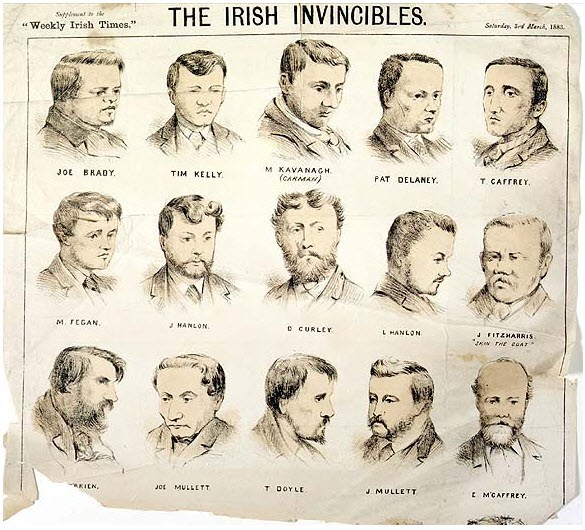
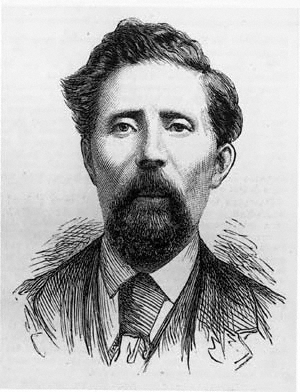
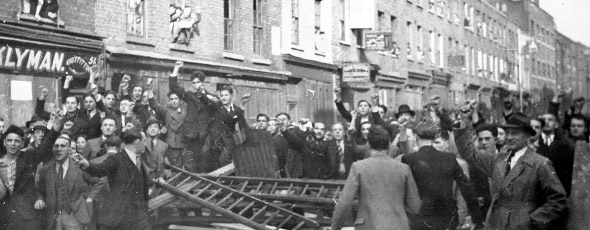


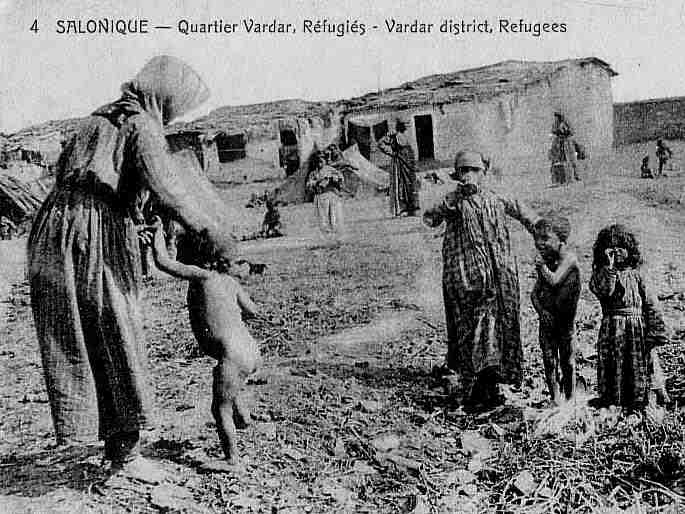
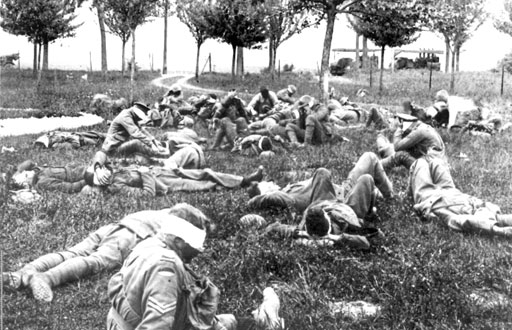
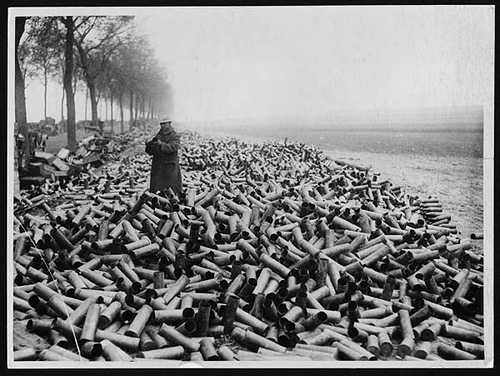

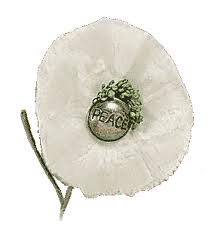


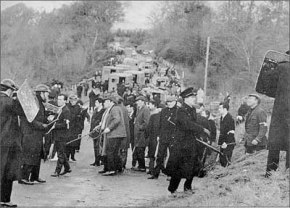

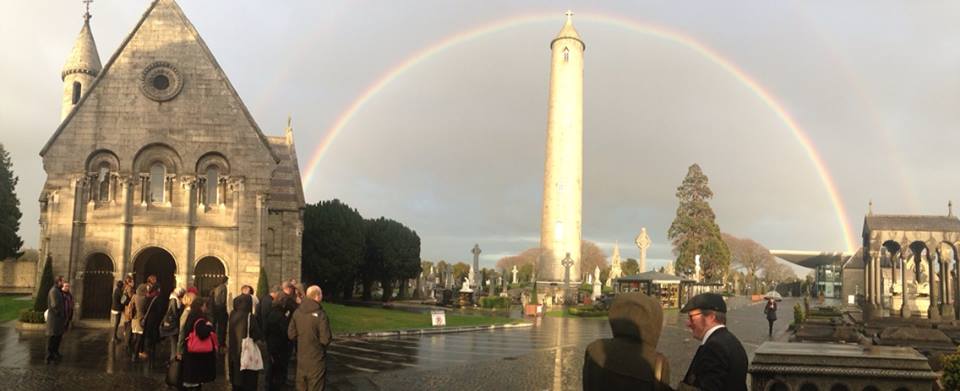


 rebelbreeze