As the Zionist state of Israel made headway in its genocide of Palestinians, although it dithered, the Petro government took various solidarity actions with Palestine such as deciding not to allow the sale of Colombian coal to Israel.
One of the other measures it announced earlier in the midst of the genocide was the suspension of military purchases from Israel.
It is worth pointing out that it was he, as President, who revived those contracts through his decision to buy Howitzers from Israel instead of the Caesar from the French company Nexter.[1]
However, Petro announced that he would replace the Israeli-made KFir planes as they were old, and difficult and expensive to maintain and opened up negotiations to buy 16 Rafale planes from the French company Dassault.[2]
In October of last year, Israel suspended the sale of arms to Colombia,[3] due to the differences and tensions between the two governments.
Now Petro has gone into reverse and announced that he set aside US $ 761,000 for the maintenance of the KFir in addition to the sum from the contract signed in December 2022.[4] Of course this contract is with the Israeli company Israel Aerospace Industries.
It openly contradicts his public statements regarding Israel and also regarding the “modernisation” of the Colombian fleet and as El Tiempo points out.
… itis indeed surprising the large financial increase made last September 30th(bold in original) to reactivate the maintenance contract on the aeroplanes. Money that, furthermore, comes in the midst of serious questioning from political groups given the increase in air accidents amongst the Armed Forces.[5]
Barely 25% of the Kfir fleet is in working order at the moment.[6] But its maintenance is an unnecessary expense. The KFir are fighter jets, with the capacity for air to ground attacks and are supposedly needed to protect the country’s infrastructure.
KFir fighter jets (Photo sourced: Internet)
But that isn’t true either. More than to protect pipelines or other installations from guerrilla attacks they are to repel an attack from neighbouring countries. Their specifications are clear.[7]
The last time Colombia went to war with another country was in 1933 and it lost it, along with a significant part of its Amazon territory.
If Petro really wants to demilitarise the country, why does he insist on maintaining a fleet of planes that are not much use? He should give up on the maintenance of the KFir and as was done in another period with the buses in Bogotá, turn them into scrap metal.
Also, he should forego an unnecessary military expense in a country with so many needs. Are there not schools, hospitals and universities to be built or equipped?
And where is the solidarity with Palestine that he has so often proclaimed?
Gustavo Petro in Palestine-solidarity mode (Photo sourced: Internet)
If breaking off relations with Israel and suspending military contracts in the name of solidarity is a good idea, then it is a good idea at all times and more so now when there can be no doubt that Israel is a genocidal state …
and every dollar that its arms industry receives is another bomb falling on Gaza or an attack on Lebanon. Cheap talk is costly to the Palestinians, but also to Colombians who see how his proposal to demilitarise society has come to nought.
He did not abolish the ESMAD (specialised riot squad), as he promised, nor the obligatory military service, rather they now propose an obligatory social service for those who refuse to carry out military service.
If the rich can’t have youths to fight their wars, at least they will have cheap or free labour through this supposed social service. It is worth remembering that in Spain military service was defeated by a campaign that also defeated the alternative social service. Neither cannon fodder nor slaves.
It is time to be coherent. What does Petro want? Solidarity with Palestine or war planes? He can’t have both. The demilitarisation of society or a social service in addition to military service? It is one thing or the other.
Gearóid Ó Loingsigh (30/09/2024) (Images and captions by R. Breeze)
(Reading time: 6 mins.)
Kemi Badenoch, the contender for the Tory Party leadership in Britain has stirred up controversy through her comments that not all cultures are equally valid.
She referred to women’s rights, gay rights and even hating Israel as signs of which cultures are less valid.
Not surprisingly some right wing “feminists”, like the ones currently campaigning for the man who advocates sexually assaulting women in the US came out to agree with her.
Key amongst them Kellie Jay Keen, who saw fit to bring up child marriage,[1] an issue Trump and every US president would know something about, given the huge numbers of child marriages in the US, where it is legal in 37 states.[2]
There are “cultures” they say where women have fewer or even no rights, gays are hounded or even killed and even where witch burnings are legal. Badenoch said
We cannot be naive and assume immigrants will automatically abandon ancestral ethnic hostilities at the border, or that all cultures are equally valid.
They are not. I am struck, for example, by the number of recent immigrants to the UK who hate Israel. That sentiment has no place here. We must recognise that the world has changed.[3]
Imagine belonging to a culture that hated genocide! I am tempted to say the joke writes itself, except it is no laughing matter.
Although she brought up the issue in relation to immigration, when Badenoch says some cultures are less valid, what she really means is that there are countries that the “civilised” can bomb into the stone age, there are people Western troops can rape, women who can be bombed in maternity hospitals just as Israel does.
What she does not mean is that Britain will not supply weapons to regimes like Saudi Arabia; her concern for women only goes so far. In fact, she would personally sharpen the sword or knot the whip used to mete out lashes to women, if there was money in it for British companies.
Between March 2015, when the Saudis began bombing Yemen, and March 2024 the Saudis received 8.2 billion in weapons sales. BAE received 25 billion in the same period and has 6,700 employees based in the country.[4]
Maybe some of these people whose culture she thinks are less valid are just fleeing the British bombs dropped on them by the head-chopping misogynists in Riyadh.
But what is a culture?
There is no agreed upon definition of what is a culture, but it is popularly understood to be the norms, customs, beliefs, practices, artistic production and world view of a given set of people, who are in turn not that easy to define.
It is a malleable term that can be twisted and distorted to suit any agenda. But Badenoch had specific people in mind. Of course, she meant Muslims, though she pointed out she didn’t mean all Muslims, certainly not the ones buying British bombs.
But are there cultures where rape, witch burning and the persecution of gays is not only legal but socially acceptable? Well yes, but let’s look at some of the facts and the British or Western values Badenoch thinks are being undermined.
Witch burning
Well, belief in superstitious nonsense is prevalent everywhere. Most people believe an invisible man in the sky not only controls their everyday lives, but blesses the bombs as they rain down on the innocent. But that aside, what about witches?
Well, it was Germany that gave us the Malleus Maleficarum and the witch hunts that murdered thousands of women in Britain and Ireland between 1450 and 1750 and King James (yep the bible basher) was particularly obsessed with the issue. That was a long time ago, however, nowadays.
The harshest place for witches, or rather, female foreign domestic house workers the government thinks are witches, may be Saudi Arabia. An entire police unit is dedicated to fighting witchcraft crime, and religious judges often convict people with laughable evidence.[5]
It is now, what it always was, the persecution of women in the economy. But nobody in Britain burns witches nowadays, do they? Well, it depends on what you mean by a witch. The term is as malleable as culture.
Acid attacks are a modern form of witch burning, where women are attacked for being women.
Britain has the highest rate in the world of recorded acid attacks, with 1244 incidents in 2023,[6] not all of them against women, but a significant number were and racists have tried to paint it as an Asian problem.
But police statistics tell another tale and debunked that myth as far back as 2017.
In reality, just 6% of all suspects in London over the last 15 years were Asian.
For the same period (2002-16), ‘White Europeans’ comprised 32% of suspects, and African Caribbeans 38% of suspects. About one in five suspects remain unknown – either because they can’t be identified, or because the victim has refused to identify them.
The number of Asian victims is 421 – around one fifth of the 2,196 total for the 15-year period. Almost half the victims (987) are White European, and one quarter (557) are African Caribbean.[7]
Some right wing “feminists” have also made similar arguments to Badenoch. They ignore all their campaigning on rape when a migrant is charged and talk about imported problems. But rape has been an historic problem in Britain and indeed around the world.
“[Police ]Forces recorded 194,683 sexual offences in 2021-22, including 70,330 rapes, the highest number since records began in 2002/03.”[8] We also know now that it is part of police “culture” in Britain to rape women, particularly in Manchester.
Not sure who is sharing which “British values” Badenoch and her “feminist” friends were referring to. Rape in every society is committed mostly by the partner of the woman or someone she knew.
Migrants are not beating a track to Britain to rape women, women in Britain are being raped by their husbands, boyfriends, partners and other relatives. That is a statistic that holds true around the world.
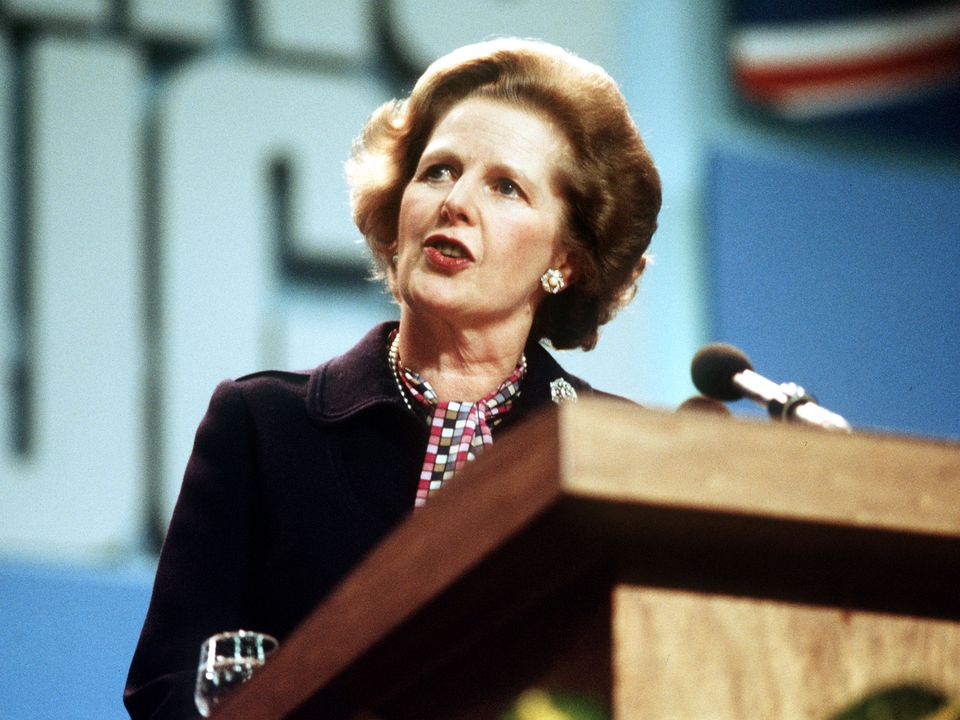
As for political rights. It is true that Britain has had three female prime ministers (well, two and a half), Thatcher, May and Truss. None of these female leaders defended women’s rights, in fact Thatcher was particularly hostile to women.
Margaret Thatcher speaking as Prime Minister of the UK in 1974 – she supported no steps forward for women in the UK or abroad. (Photo sourced: Internet)
She cared so little for women that she agreed to fund the Afghan Mujahideen, the forerunner of the Taliban.[9] The Tories shared the same values as these troglodytes and that is the tradition Badenoch stands in, despite the illusions and denials of right wing “feminists”.
The US has yet to have its first female president, though that may change with the vote in November.
Meanwhile, a host of countries that do not share Badenoch’s commitment to “British values” and the rights of women, as she would claim have had female leaders, including a number of Muslim countries, such as Indonesia, Tunisia, Mauritius, and Bangladesh.
The latter has had two female leaders in the last 25 years, with both of them serving two non-consecutive terms each. One of them was recently overthrown, a fate that should have befallen Thatcher, but didn’t.
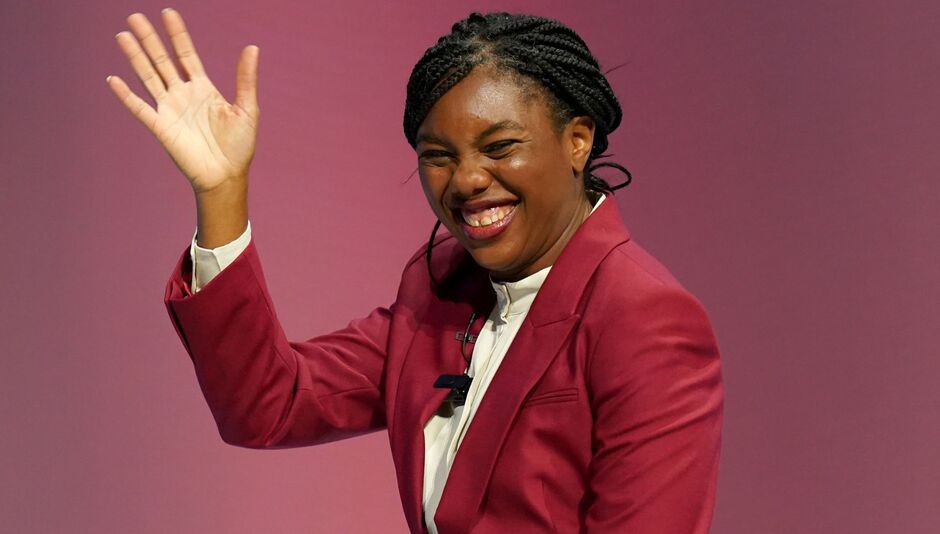
But how does Badenoch fare on women’s rights? Well, she has abstained on extending abortion to Northern Ireland, buffer zones for abortion clinics and she opposed government supports for women going through menopause.
Kemi Badenoch MP, contender for leader of the Conservative Party in Britain. (Photo sourced: Internet)
As Minister for Equality, she refused to outlaw discrimination against women going through the menopause, despite the fact that one in ten women between the ages of 45 and 55 leave the workforce due to menopause symptoms.[10] She has no commitment to women.
Cultures change over time, before the British arrived two of the most celebrated Arab poets were gay. After the British imposition of anti-gay legislation and the promotion of conservative figures, their books were burned.
They are not static and within certain cultures there are those who oppose the most reactionary elements of them, like Irish women who campaigned for contraception, abortion and divorce for decades.
Badenoch is just an old-fashioned imperialist, who likes to play up her own black and migrant credentials to attack other minorities. She does not defend women and the tropes about migrants repeated by KJK put her firmly in the Tommy Robinson camp she joined after the recent race riots.
It is a myth that the West is some bastion of women’s rights, when it is the West that promoted and props up the most reactionary anti-women regimes in the world.
The British police have a record of rape culture both on and off duty. They represent a greater threat to women than the “less valid” cultures of Badenoch’s delirium.
Badenoch is the enemy of women, as is her entire Tory Party, hangers-on and Tommy Robinson’s new found “feminist” friends.
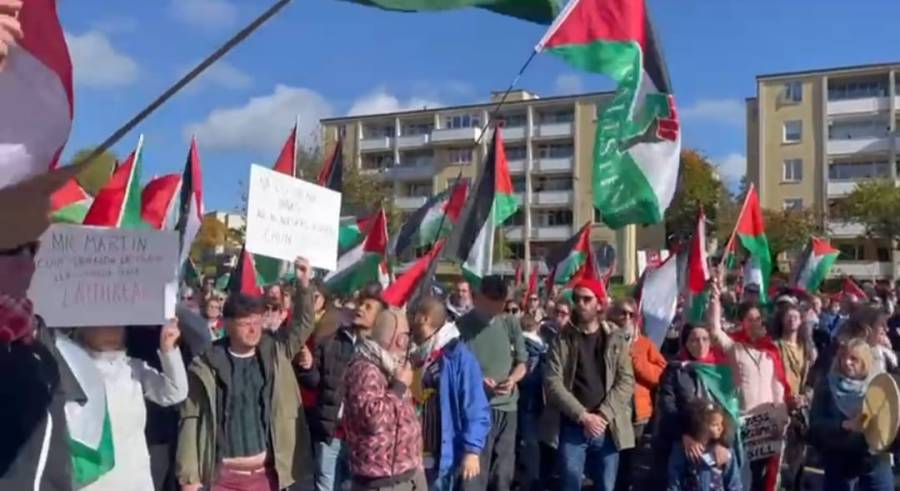
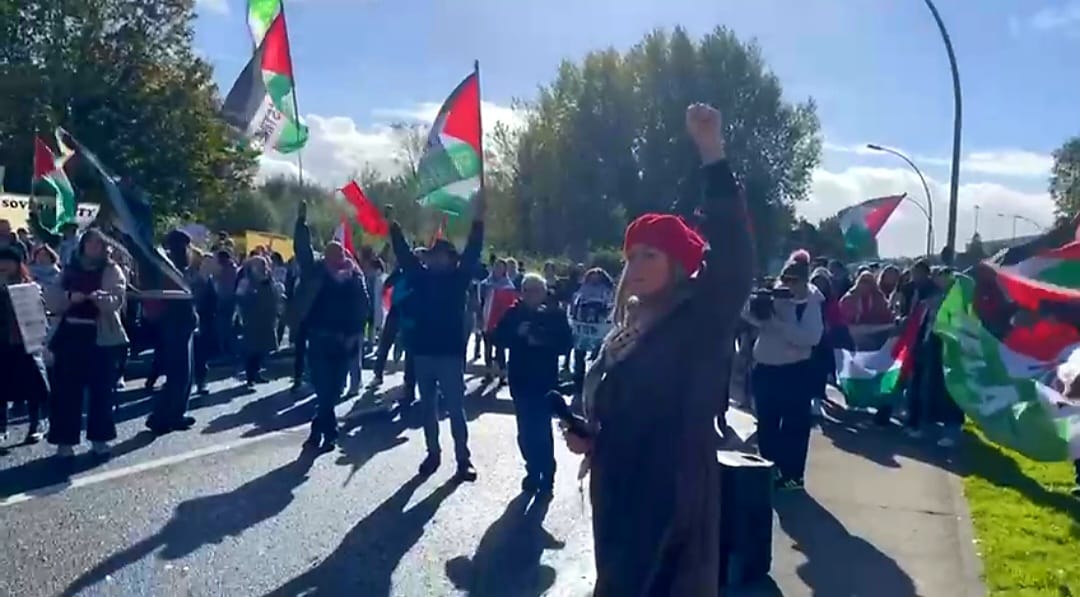
On Saturday 12th October, thousands of people descended on Shannon Airport1 in an organic action to protest our land and airspace being used in the transport of U.S. munitions bound for Zionist Israel.
Demonstrators arriving in buses and cars were immediately met with Garda pushback at checkpoints about 2 kilometres from the entrance of Shannon Airport.
The diverted protestors were led down side roads and cul-de-sacs away from the mini roundabout area where regular anti-war protests occur. Such diversions epitomise government strategy perfectly: Divert. Distract. Divide.
The protestors were met with a hostile environment of steel barriers erected to separate and divide them upon entering the airport from all directions.
The weather was not so unkind, as the sun emerged around noon in time for the beat of the drums striking up an atmosphere of resistance and bold defiance.
Drums, placards, flags and chants at Shannon Airport Saturday (Photo source: Participant)
As the crowd descended, the silence was broken by Social Rights Ireland with a number of speeches given addressing Ireland’s connection with Palestine’s struggle for liberation, whilst our banners, “Break the Chains of Zionism” and “Sovereignty for Ireland NOW!” acted as a backdrop.
Various chants ensued, such as, “From Ireland to Palestine, occupation is a crime!”, “Resistance is an obligation in the face of occupation!” and “Saoirse don Phalastín!” Overall, the protest was peaceful and lasted several hours.
Two arrests were made under Section 6 of the Public Order Act following some pushing at barriers where protestors were gathered.
(Photo source: Participant)
As we know, genocide has been ripping through Palestine, devastating an entire population. Reports of the most brutal and dehumanising acts have forced people of conscience from all corners of the earth to confront the questions: how can this happen?
Why is no government or institution able to stop this Zionist terrorism?
For the first time in human history, a government has openly declared and is conducting a live-streamed genocide. This government also claims it is civilised, democratic and an upholder of human rights.
What started as a war of displacement has turned into a war of total obliteration. Meanwhile, the Irish people look on aghast, lost for words and running out of ideas as to how to make it stop.
The Free State2 watches too, unwilling to act but feigning concern and placating the masses with saccharine-coated words and vacuous gestures.
On the 9th October 2024, Fine Gael blueshirt,3 Simon Harris4 declared, “I think the world in general has failed the children of Gaza,” speaking in abstraction as if he is indeed not “part of the world”.
Not only is this an expression of abdication of responsibility, this admission to the people of Ireland confirms that he knows he is indeed powerless, a mere subject of his U.S. imperialist masters. Whether most Irish voters realise this, is debatable.
Allowing U.S. weapons to pass through our civilian airport, while claiming to be a neutral country and letting on to be concerned about the children of Gaza, is not simply an example of Fine Gael’s hypocrisy or gaslighting.
It is also blatant testimony to Harris’s and the state’s complete unwillingness to cut any ties with the U.S. Today the Free State is a tool of the Zionist ruler, it cannot fathom a future that is not connected to U.S. imperialism.
It is important for the Palestinian solidarity movement to not confuse solidarity and sovereignty.
How can Irish voters fully and genuinely express solidarity with the oppressed and work hand in hand with the oppressor? How can Irish voters call for an end to genocide whilst continuing business as usual?
How can politicians feast with genociders and sympathise with the starving?
Those who understand how oppression works know instinctively that hypocrisy is inbuilt to the psyche of politicians and the ruling class. The idea that politicians or the ruling class can be appealed to is pointless.
(Photo source: Participant)
The façade of Western democracy has completely unravelled. European values have been dismantled and replaced by E.U. interests best illustrated in the rise of Zionist leaders such as Ursula von der Liar and fascist governments across the E.U.
Anti-genocide protestors must stop trusting, appealing to, working with or appeasing the oppressor, be that Fine Gael, Fianna Fáil, the Green fascist Party, or indeed, so-called opposition parties on the neo-liberal Left.
While those who descended on Shannon had a common, collective demand for the government to STOP THE PLANES! STOP THE BOMBS! what is still missing from our collective conversation is the topic of Ireland’s sovereignty.
To question WHY the U.S. or indeed the British forces can use our land, sea and air ports is of vital importance. Socialist Republicans understand that only a 32-county socialist workers’ republic can be truly sovereign, free from the chains of imperialism, free from Zionism.
We know Ireland’s long history of oppression. We know occupation, dispossession and genocide. We know what displacement means and being stripped of our land, our resources, our mother tongue.
However, the slow erosion of our identity as a people through persecution, plantation, genocide, occupation and pacification is not always grasped by the Irish population following the successful assimilation process which still has a tight grip on our people.
This process is mediated through a pervasive neo-colonial mindset which continues to infect many in our places of work, education and society more generally.
Yes, since October 2023, the Irish people have turned their outrage in action, mobilising in local communities and workplaces to take a stand against genocide.
(Photo source: Participant)
Yes, many have applied pressure to the government via petitions, rallies and calls to support bills in government that they believe will effect change.
In response, the Irish government agreed to recognise the state of Palestine, but of course, this action means nothing for the people in Palestine who continue to be bombed, brutalised and slaughtered. But nothing tangible has happened.
If anything, the situation grows worse as the threat of nuclear confrontation becomes imminent.
Trying to quell the rising anger on the streets, the Free State government has attempted to placate Irish voters by deceiving them in the run up to election time.
Real action begins with expelling the Zionist Ambassador from Ireland. Real action begins with stopping U.S. war planes from using our airports. The Free State’s social control mechanism via its fake support for Palestine may fool some voters and placate neo-liberals, just in time for the general election.
In the words of Connolly,5 “Yes, ruling by fooling is a great British art – with great Irish fools to practice on.”
Section of the protest at Shannon Airport on Saturday (Photo cred: Mostafa DarwishAnadolu via Getty Images).
End.
Footnotes
1Located in Co. Clare in the west of Ireland, one of two international airports in the Irish state and has been the target of protests over the years due to documented cases of US military planes landing and taking off from there and Irish Government refusal to inspect alleged non-military US planes for military personnel, materials or indeed prisoners subject to ‘extraordinary rendition’ to CIA dark sites in client states.
2This was the name the neo-colonial state adopted when it was formed in 1921 and the name stuck particularly among the abandoned nationalist population of the occupied Six Counties colony.
3A pejorative term for Fine Gael, recalling its founding from a coalition of three parties, one of which was the fascist Army Comrades Association, commonly known as the ‘Blueshirts’ which described a part of their uniform.
4Taoiseach (Prime Minister) of the current 3-party coalition government of the Irish state: Fianna Fáil, Fine Gael and the Green Party.
5James Connolly, revolutionary socialist worker intellectual, historian, journalist, song-writer and trade union organiser, born and raised in Edinburgh, one of the Seven Signatories of the 1916 Proclamation of Irish Independence and Dublin Commandant of the Rising, executed along with the other signatories after the surrender of the Rising in Moore Street.
In the Basque Country the Day of the Patriot Soldier is commemorated on two different dates: by the Basque Nationalist Party on October 28th and by the Patriotic Left on September 27th. Each date marks different events but each is anti-fascist in character.
On October 28th one of the many atrocities of the Spanish Civil War/ Anti-Fascist War was enacted by the Spanish fascist military when they executed 42 captured Basque soldiers of the Eusko Gudarastea, a Basque antifascist militia opposing the military-fascist coup of Franco and another three generals.
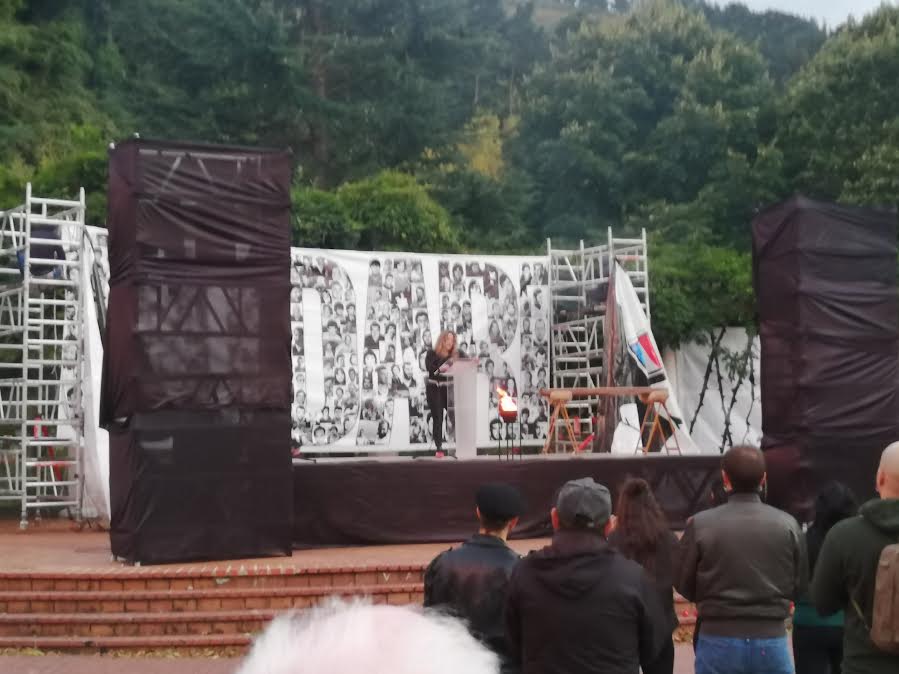
Section of the crowd at the Gudari Eguna commemoration in Arrigorriaga, Bizkaia province, southern Basque Country. (Photo: D.Breatnach)
This atrocity occurred in 1937, when that war had another two years to run. The Basque Nationalist Party (PNV) was then the main political party in that part of the Basque Country1 and many of its politicians and administrative officials were executed by the Franco regime too.
Commemoration of the PNV´s Day of the Patriotic Soldier (Gudari Eguna) was carried out clandestinely during the four decades of the fascist Franco regime but was permitted in the post-Franco arrangement in the Spanish State, when the PNV were legalised.
The PNV became the dominant force politically in the two provinces that had declared for the Spanish Republic, which was the largest part of the Basque Autonomous Region. Nafarroa however was given a separate autonomous government which split the nation administratively in at least four.2
A DIFFERENT DATE TO COMMEMORATE
However in the 1960s a large part of the PNV´s youth wing had become disenchanted with the party and, entering into alliance with a Basque socialist movement, formed ETA, a mainly political organisation but, existing under a fascist-military regime, inclined also towards armed resistance.
The platform at the Gudari Eguna commemoration organised by Jarki with the event’s speaker/ chairperson addressing the participants. (Photo: D.Breatnach)
ETA grew in support and in actions, military but not only, the Left Patriotic movement (Izquierda Abertzale) widening to fight on a number of fronts, linguistic, social, trade unionist and political with the armed section carrying out many actions.
The last political executions of the Franco regime were in 1975 of two members of ETA and three of FRAP3; the two Basques were Juan “Txiki” Paredes4 and Angel Otaegui. All five, despite huge international solidarity mobilisations and appeals for clemency, were shot by firing squads.
Today, the Patriotic Left´s Gudari Eguna is commemorated by different groups and not all together. As has occurred in Ireland, the accommodation of the leadership of the Basque Patriotic Left to the Spanish electoral system and abandonment of armed struggle has resulted in fragmentation.
A protest in Arrigorriaga I passed by on my way to the Gudari Eguna commemoration. I did not stop to enquire as to the purpose; I had made an error on the journey, was late and in a hurry. From the arrows design I understand these to be the Sare group doing their last Friday of the month picket in solidarity with the prisoners. ‘Giltzak’ means ‘keys’ as the graphic banner design shows and so the aim is probably to have them all leave jail. That is also the aim of the ‘dissident’ group Amnestia but they seek complete amnesty for the political prisoners whereas Etxerat, Sare and EH Bildu normally refrain from even calling them ‘political prisoners’since, according to the Spanish State, that amounts to ‘supporting terrorism.’ (Photo: D.Breatnach)
The political party EH Bildu commemorated the executions but so did the dissenting Jarki and Tinko/Amnistia and the historical memory organisation, Ahaztuak. They did not do so together nor, naturally with the PNV on the different date.
In Arrigorriaga Jarki organised their event in the birthplace and home of Argala, nom-de-guerre of José Miguel Beñaran Ordeñana, a theoretician and activist of great importance in the development of ETA and assassinated by the state-sponsored GAL terrorists.
The attendance at the event listened to the event’s MC addressing them, after which a group of youth carrying flaming torches came on stage. The MC ended her talk with calls for a free and socialist Basque Country, after each which the audience chanted “Gora!” (‘Up!’).
She then led them in singing the Eusko Gudariak with clenched fist in the air, followed by introducing the Internationale in Basque, the revolutionary socialist song that emerged from the Paris Commune of 1871, the audience joining in (though not everyone as well-versed as with the previous song).
I sang the chorus in French, the only language other than English in which I know the chorus, sadly.
HISTORICAL MEMORY & THE MARTYRS
The martyrs of the people´s struggles around the world are remembered organically and kept close to their hearts by the people from which they came, at least for a few generations. Initiatives of conserving and transmitting historical memory keep those commemorations going further.
Section of the crowd at the commemoration of Gudari Eguna, organised by the Jarki organisation. (Photo: D.Breatnach)
In Ireland we know that commemorating the risings of the United Irishmen (1798 and 1803) fed into the struggles of the Young Irelanders a half-century later, their memory in turn contributing to the Fenians which again became part of the history of future generations and of several armed struggles.
Counter-movements, recognising the potency of historical memory, try to appropriate it and adapt it to their political program or to diminish its importance and even deny it. Both those counter-currents can be seen in many parts of the world, including in Ireland and in the Basque Country
However, the ongoing revolutionary streams and their commemorations will always be closest to the real meaning of those events in the historical memory of the people, in the real social and political meaning of martyrdom.
Patrick Pearse remarked on this process in his famous oration over the grave of O´Donovan Rosa: Life springs from death and from the graves of patriot men and women spring living nations.
Footnotes:
1The Basque Country is composed of seven provinces, four on the Spanish state´s side of its northern border and three on the French state´s side. The Anti-Fascist War split the southern Basque Country with principally two provinces, Gipuzkoa and Bizkaia, taking the side of the Spanish Republic, which at the last minute granted them national autonomy. Nafarroa (Navarre) mostly took the fascist-military side and murdered around 3,000 antifascists and Alava province took that side too.
2Two separate autonomous regions in the Spanish state and the provinces on the French side in different French regional administrative areas.
3Frente Revolucionario Antifascista y Patriota (Revolutionary Anti-Fascist & Patriotic Front); the three were: José Luis Sánchez-Bravo Sollas, José Humberto Baena Alonso and Ramón García Sanz.
4According to his brother who, despite being misdirected arrived as Paredes was being shot by the Guardia Civil, who were shooting at different parts of his body, Txiki Paredes continued to sing Eusko Gudariak (‘Soldiers of the Basque Country’) until he finally died.
After a terrorist attack through exploding hand-held communication devices1 and later, following the assassination of veteran Hezbollah leader Nasrallah,2 the IOF announced on 30th September their intention of a ground invasion of Lebanon.3
The reaction of the western imperialist allies to the terrorism was mostly silent but to the Zionist planned invasion was either positive or worried – not about the predictable ensuing carnage but about its impact on their assets in the region.
The current Zionist leadership was gung-ho albeit with worried comments from the sidelines, including from some high-ranking retired commanders. Those campaigning for a peace deal with the Resistance and the return of their captured relatives were naturally mostly hostile.
People who knew something about the situation, both those in solidarity with the Resistance and those supporting the Zionist state, wondered how the IOF imagined they were going to be successful, considering the calibre of Hezbollah combined with logistics.
Firstly, the IOF would have to prepare its staging or invasion launch areas in the reach of Hezbollah missiles, rockets and drones. Then they would have to cross at least 300 kilometres under bombardment in terrain well-zeroed already by Hezbollah.
If and when the invaders crossed that land, they would confront their old enemy Hezbollah, many battle-hardened veterans from fighting ISIS and NATO proxies in Syria. And strongly motivated ideologically also, in particular in defending their homeland.
The IOF infantry on the other hand has not faced any conventional fighting force in pitched battle since 1966, being mostly experienced in repression and genocidal operations against civilians already under close surveillance with air dominance and much intelligence support.
Despite their advantages, against the armed resistance of those areas, the IOF have not performed at all well, with a high rate of casualties in personnel and armoured vehicles. In invasion of Lebanon, their armour would be even more vulnerable.
True, the IOF has air advantage in air-to-ground strikes with their US-supplied fighters. But the resistance artillery4 batteries are situated far back from the Lebanon front line, yet able to strike targets with coordinates called in from Hezbollah facing the enemy.
The Zionist air force boasts of having eliminated those batteries in their bombardment were quickly proved false as missiles rose behind the returning IOF aircraft to fall on their regular targets in northern occupied Palestine. Most of those batteries and launchers are underground.
So the main IOF assault and penetration would have to be of their infantry, the issue decided by the calibre of contending fighting personnel, their weapons, along with defences of the defenders, remembering also that a 3-1 superiority is necessary for offensive breakthrough at any point.5
The situation would be bad enough for the IOF if they could at least prepare their staging areas in safety but of course Hezbollah is not letting them do that, pounding their bases and visible troop movements and assemblies again and again with missiles, drones and rockets.
IOF INVASION PROGRESS?
So how has the invasion force fared to date? Hezbollah chose not to fall back fighting the IOF on the way, sucking them further in and hitting their supply lines. Instead, they met the invasion on or around their front lines, with some flexibility and so far have remained there.
All outcomes into the second week so far have justified the pessimists in the Zionist and Western allies camp. Ground assault after assault has been beaten back by Hezbollah, at times in ambushing or other targeting of approaching infantry and some armour.
In one such ambush, Hezbollah forward fighters observed a special IOF force reconnoitring and decided to leave them under observation while they figured the route of advance. When the whole IOF special unit advanced they were hit with a pre-laid explosive and then by small-arms fire.
The IOF are widening their attack front and in the western sector, the IOF attempted to infiltrate again through Labouneh, despite the previous day’s qualitative ambush where according to reports, Zionist vehicles “burned live on air”; the resistance again forced their retreat.
This last was a reference to Ras Al-Naqoura where an entire IOF convoy was struck by the resistance. Al-Mayadeen reports that the convoy was made up of about 60 soldiers, 5 Merkava tanks, and a number of other vehicles and repeated IOF rescue services have been repulsed.
Al-Manar added that “The occupation army advanced along the western line near the sea and attempted to take control … to oversee the coastline stretching to Sour,”6 and “attempted six times in recent days to enter this area and was met with resistance missiles and fire.”
The Resistance reported numerous confrontations against enemy infantry forces in the forests of Al-Labouneh, south of Naqoura and engagements on the Blida, Muhaybib, and Maroun Al-Ras axis.
The Zionist forces have also attempted to use the UNIFIL station as cover and the Hezbollah decision to hold on targeting them for fear of hitting uninvolved forces, reported by Al Mayadeen, raised concerns for the safety of Irish state troops garrisoned there.7
In 10 days of repeated attempts, the IOF has not managed to enter and hold one southern Lebanese village or town and advances of even a 100 metres have been beaten back with casualties. The Zionists have been reduced to fantasy stories of advances and staged photos.8
And this IOF fighting here are considered by the Zionists the elite of their infantry, facing not even Hezbollah’s elite, the al-Hajj Radwan Regiment. Hezbollah is much more a medium-sized army than guerrilla force, though it grew from one, created against the ‘Israeli’ occupation of Lebanon.
On Wednesday the IOF, which maintains a strict censorship on casualties and battle-damage reporting and is well-known for vastly underplaying their battle casualties in Gaza, admitted that over the past 24 hours, 38 soldiers had been wounded in ground battles in southern Lebanon.
In what seems a departure from the Gaza norm, some reports seem to suggest that Hezbollah may not be granting the IOF the same freedom to recover their dead and wounded as has been the case until now from the Gaza resistance (despite IOF targeting of hospitals and medical personnel).9
As it was in Gaza, bombing the civilian population has been the response of the IOF, targeting multi-occupation housing blocks, medical services, emergency services, media service, gatherings of displaced people and refugee routes into Syria.
The only large-scale comprehensive defeats suffered by the IOF were against Hezbollah in Lebanon, in 2000 and in 2006, forcing the Zionist retreat from Lebanon on both occasions. Many Hezbollah are battle-hardened from Syria and of high morale, particularly in battle against the IOF.
REASON
Given the history and sober assessments, why is the Zionist state engaging in this attack and being backed by the western imperialists? Yoav Gallant, Minister for the armed forces, claimed it was in order to degrade Hezbollah and return the Zionist settlers to northern occupied Palestine.
This is a large area denuded of thousands of settlers now being housed in hotels or even camps deeper in occupied Palestine (‘Israel’) or who have left the state altogether, whether temporarily of permanently. Currently it is occupied mostly by the IOF, in bases and Settler houses.
The reason for the emptying of the region of Settler communities is its daily bombardment by Hezbollah since October 8th, the day the IOF began this latest and most intensive period of genocidal bombings. And they’ve been clear: Stop the genocide and we stop the bombardment.
Hezbollah artillery rocket batteries (Photo credit: AZIZ TAHER/REUTERS)
However, despite the wishes of a large section of ‘Israeli’ society, the dominant section of the Zionist ruling class is not prepared to stop its Gaza bombardment and do a deal which would result in admission of defeat and, for Netanyahu, appearance in court to face corruption charges.
Some of the western imperialist alliance are worried that ‘Israel’ will drag10 the US and with it the rest of the Western alliance, at a time also of a war in Ukraine, into a regional war with Hezbollah, Yemen, the Iraqi resistance, Syria and of course Iran, a long-intended NATO target.
Many voices from different positions regarding the Zionist state have warned that in a regional Middle Eastern war, all western military bases in the Middle East become targets, as do all oil and gas wells delivering to the West, with huge economic results across the world.
There are indications of other motivations, beyond loss of Zionist face, of extending ‘Israel’ ‘from the sea to the river’ (!),11 re-occupying Gaza with settlers and ‘remodelling of the Middle East’ in a Zionist messianic dream but combined with a gung-ho attitude in the White House.
In a recent interview on YouTube, Iranian professor Marandi commented that strategic and tactical decisions made by the imperialists are not logical but emotional. I would agree that emotion is involved however also logical calculation — but there are times when emotion overcomes logic.
Such was the situation for example in the ‘forever war’ of the US in ‘Indochina’ when it continued despite all the evidence that it was losing, year after year, could not possibly win and was alienating huge populations even at home.
One of the many jacket designs of the classic Sci-fi novel, based to large extent on the War of the USA in Viet Nam.
It took the logic of a section of the ruling class to overcome emotion and to subdue the Reagan section to sue for peace, under of course the heroic assault of the people of Vietnam, Laos and Cambodia. But the arrogance and world ambition of the US ruling class never died.
Can this now extended war of the IOF endanger all of Western imperialism’s substantial assets in the Middle East? Most certainly. So stop it, pull back! says one section of the imperialists. But Bring it on, says the other section, because after this we’ll have only Russia and China to worry about.
8These included stories of paratroop landings, overrunning Hezbollah defences and a photo of IOF taken in a very forward but abandoned Settler village, which Hezbollah commented had cost the IOF 10 dead and wounded.
9In one notorious instance, they executed two wounded fighters in hospital. Both from the air and the ground the IOF has repeatedly targeted paramedics and civil defence crews and have continued doing so from the air in Lebanon. However commentators have noted how IOF helicopters landing to evacuate wounded and dead IOF, though clearly under observation, are never targeted by the Resistance in Gaza.
10,Assuming its unwilling to do so which may not at all be the case.
Not only our internationalist duty but also our longer-term practical interests are with supporting the Resistance. If so, then it is surely even more required of us that we condemn the collusion of the collaborators.
This is based on the fact of the Resistance opposing colonialism, occupation, imperialism, fascism, exploitation and so on. It is not based on whether the Resistance embraces all of our particular ideology or objectives. But that also means that we do not necessarily offer unconditional support.
Karl Marx, who from Britain not only went to some lengths to support the Irish Resistance to colonialism1 but advised the working class in Britain to do likewise,2 also remarked that it was not to be expected that British workers would support themselves being blown up for Irish freedom.3
I say that internationalist solidarity is not only a question of a kind of moral duty, but also a practical one. If we examine our own situation here in Ireland and our hopes for a united independent and socialist republic, we must also look to what happens when we achieve it.
The lessons of struggles in the world have surely taught us that we cannot hope that the imperialist countries around us will allow us to nationalise our resources and infrastructures which they’ve appropriated in full or in part, close their military bases and wish us good fortune!
Or that they will allow a positive example of the potential of socialist society to exist for the encouragement of their own working classes or for those they exploit elsewhere.
No, we will need movements of solidarity, especially in the states which will be the quickest to threaten us, i.e the western imperialist states. And, whether by coincidence or not, those are in great part the very states that are at this moment attacking Palestine and independence in the Middle East.
We think in that respect first of the United States, UK, Germany but also France, Italy, Spain, Netherlands, Sweden (even Switzerland4). Of course, we’ll be dealing with their interventions of various kinds before we even reach our independent, united socialist republic.
PA Security Forces attacking a demonstrator (Photo cred: Getty Images)
COLLABORATORS AND COLLUSION
Naturally, if we support the Resistance, we must have a corresponding attitude to those who collaborate and collude with colonialism, occupation, imperialism, fascism, exploitation and so on, not only in our own immediate struggle but also in those we support internationally.
The genocidal attacks of the ‘Israeli’ Zionist state could not last a week without the financial, military and material support in particular of the USA, but also without those from Germany, the UK and France, nor in turn without the collusion of many Arab states of the Middle East.
That is a collusion in many cases of the regimes and not supported by most of their own populations. Most dangerous of all of course are those agencies of collusion among the oppressed people themselves and we have experienced those throughout our history of anti-colonial struggle.
Our historical culture is full of contemptuous references to them, even to terms such as “Castle Catholics”; Marx too was scathing in reference to Daniel O’Connell, who sought only Irish autonomy within the British Empire, as did John Redmond, later rejected by the population.5
Many other struggles around the world have had such temporisers and actual collaborators in their midst. Indeed after liberation from fascism in countries in WWII, many of them were executed, some such as “Quisling” and “Vichy” becoming bywords in treachery and collusion.6
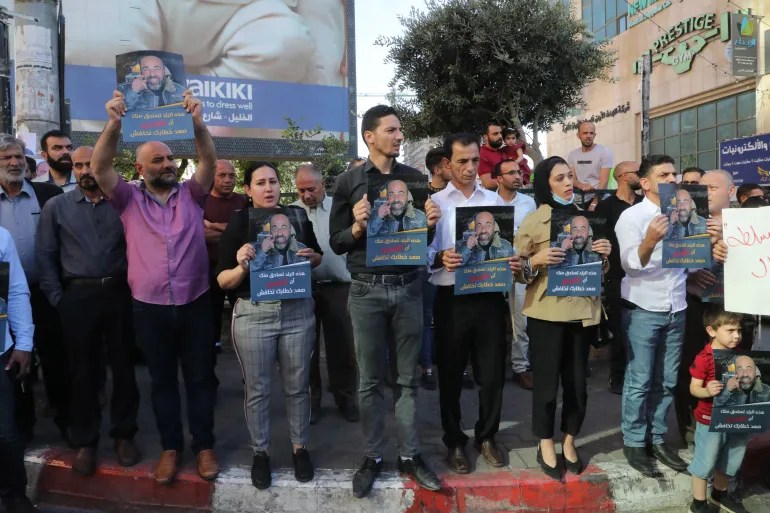
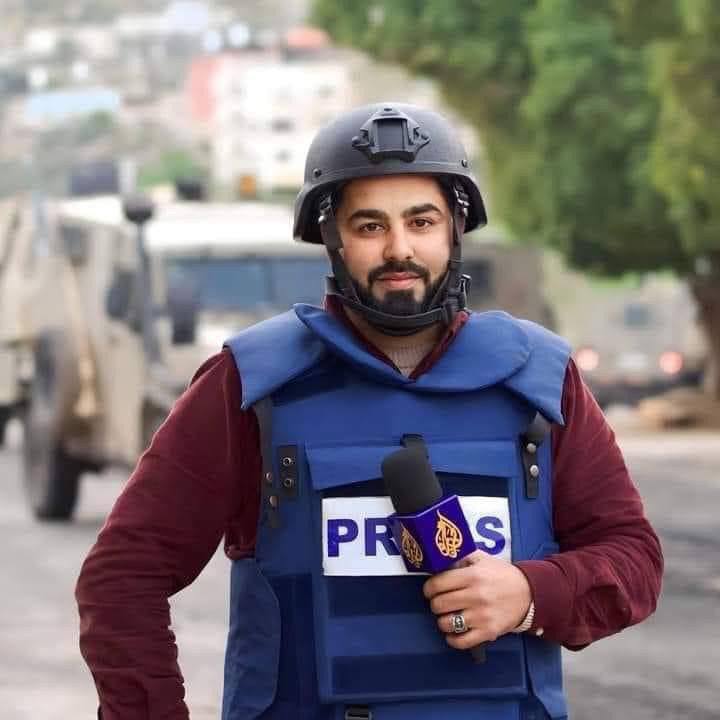
Palestinians hold posters depicting human rights activist Nizar Banat during a protest triggered by the violent arrest and death in custody of Banat, in his hometown of Hebron in the occupied West Bank, on June 27, 2021. [ Photo cred: Mosab Shawer/AFP]Al Jazeera correspondent Laith Jaar, beaten up by PA officer while covering the Tulkarem massacre by the IOF, then jailed when he complained to the PA. [Photo sourced: Internet]
Well then, how is that we tolerate the presentation of the ‘Palestine Authority’ as a representation of the Palestinian people? This corrupt agency with its ‘security force’ beating up and jailing critics and freedom fighters, some of which it also shoots? And dismantling defensive anti-IOF bombs?
This agency which in the Oslo Accords gave up the struggle in exchange for corrupt control of 20% of Palestinian land, which has held no elections since 2006 because the Palestinian people across the political and religious spectrum rejected the Fatah party then and elected Hamas instead.
It is no surprise then that the western imperialist countries claim the PA to be the legitimate representation of the Palestinian people and that some of them fund it, that Palestine ‘embassies’ are PA-run and that Palestine ‘Ambassadors’ are employed by the PA.7
But how is that the PA is not publicly denounced by the wide Palestine solidarity movements in the Western countries? Why this conspiracy of silence and spreading of ignorance?
It is not easy in on-line searches to find how many political prisoners the PA has in its jails or wounded or shot dead – and of course the amount of information about the Resistance passed on to the Zionists and the US awaits some historical investigations in a free Palestine of the future.
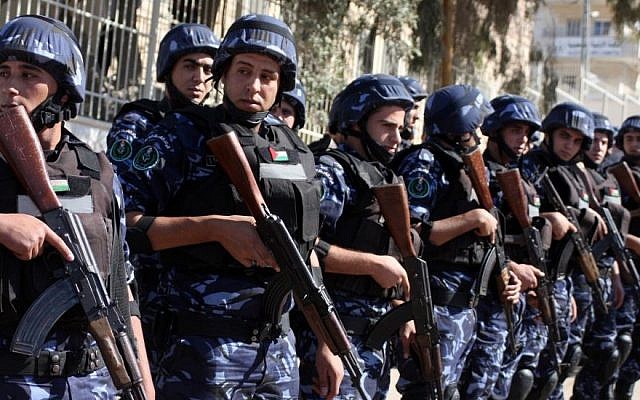
What we do know is that the PA holds over 100 political prisoners, that it arrests freedom fighters (even invading hospitals to arrest wounded fighters), that it tortures prisoners, beats up critics and demonstrators and clears the way of explosives for IOF invasion of West Bank communities.
Very recently, Palestinian journalist Laith Jaar, after reporting on the Palestinian Resistance in Tulkarem, was beaten up while covering the massacre there by Ahmed Ghassan Qawzah, an officer of the PA’s security force. When the journalist went to complain to the PA, they threw him in jail.
The Palestinian Resistance periodically denounces the PA, calling on it to support the people, threatens it when the PA’s actions are particularly egregious but refrains from using arms against it. I admit that I cannot understand that degree of forbearance, even for temporary tactical reasons.
But what about us? How is that only one protest against the PA’s Ambassador to Ireland took place and that the protesters were ejected by alleged Irish supporters of the Palestinian people? How is that only one small protest to date has taken place outside the PA’s Dublin Embassy?
How can we stomach this collusion in what is effectively a conspiracy of silence?
End.
Palestinian Police – their firearms are for opposing the Palestinian Resistance (Photo cred: Issame Ravi/ Flash90)
FOOTNOTES
1Marx and Engels had led the International Workingmen’s Association (later known as the “First International”) in not only supporting the Fenian movement but also accepting Fenians in Britain into the organisation.
2Not out of altruism but in their own interest! “As to the Irish question….The way I shall put forward the matter next Tuesday is this: that quite apart from all phrases about “international” and “humane” justice for Ireland – which are to be taken for granted in the International Council – it is in the direct and absolute interest of the English working class to get rid of their present connection with Ireland.And this is my most complete conviction, and for reasons which in part I cannot tell the English workers themselves. For a long time I believed that it would be possible to overthrow the Irish regime by English working class ascendancy. I always expressed this point of view in the New York Tribune.Deeper study has now convinced me of the opposite. The English working class will never accomplish anythingbefore it has got rid of Ireland. The lever must be applied in Ireland. That is why the Irish question is so important for the social movement in general.”
3Karl Marx, then living in London, observed: The London masses, who have shown great sympathy towards Ireland, will be made wild and driven into the arms of a reactionary government. One cannot expect the London proletarians to allow themselves to be blown up in honour of Fenian emissaries.Marx was commenting on the reaction to the disastrous explosion attempt to liberate Fenian prisoners from Clerkenwell Jail in London, on 13 December 1867, when 12 mostly working class people were unintentionally killed and around 120 injured.
5That was the essence of the O’Connell’s constitutional Repeal Movement objective of the 1840s and of the Home Rule promised by the UK ruling class to the Irish Parliamentary Party in 1914, against which the 1916 Rising took place. In the British General Election of 1918 in Ireland, Redmond’s party was all but annihilated.
6Nazi collaborator Prime Minister in occupied Norway and the French collaborator government under Petain and Lavalle.
7It should perhaps be a surprise that certain parties in Europe, including Ireland, also support the PA but then, perhaps not. Not a year has passed since a meeting hosting the ‘Palestine Ambassador’ for Ireland in Belfast was protested by Palestinians who were ejected among cheers by ‘Irish Republicans’.
The whole western imperialist cabal is in full cry desperately seeking a 21-day ceasefire both sides of northern occupied-Palestine and the Lebanon ´border´, as the ´Israeli´ Occupation Forces allegedly prepare/ carry out a ground invasion.
The concern of the western imperialists is not about the slaughter of mostly civilians in Lebanon, climbing towards a thousand this month but rather about the strong possibility of all-out regional war which would endanger the various western military bases and economic interests in the region.
Projectiles above Jerusalem, on Oct. 1, 2024. Iran has launched a missile and drone attack on Israel’s military airports and some other targets. (Photo cred: MENAHEM KAHANA/AFP via Getty Images)
And also, if the Zionist leadership is serious, about an IOF ground invasion of Lebanon which the western powers fear will end not only in the defeat of the IOF as before in 2000 and 2006, but also in the collapse of the Zionist settler state itself, their most dependable ally in the region.
Fighting on two fronts is rarely recommended and the Zionists are engaged in Palestine mostly in genocide, it is true but also against the Palestinian resistance: the allied factions, Islamist and secular fighting a heroic struggle of defence.
Since the by far most aggressive phase of the Zionist genocide of Palestinians from October 8th last year, Hezbollah has been bombarding mostly military sites and movements and, to a much lesser degree, Zionist settler sites. In particular ´Israeli´ air defence and spying sites have been hit.
As a result, wide areas of occupied Palestine have been abandoned by settlers who are being accommodated at substantial cost to the Zionist state in hotels and even camps. On the Lebanon side, due to IOF barrages, the people have also abandoned their homes.
Hezbollah is a long-standing enemy of the Zionist state which in turn can be ´credited´with the creation of the organisation through its invasions of Lebanon and massacres both directly and through its proxy, the South Lebanese Army, for example in the Tel Al Zataar refugee camp.1
The only complete defeats of the IOF to date, with its European allies and superior level of armament, have been by Hezbollah on Lebanese soil. However Hezbollah´s bombardment of occupied Palestine from October 8th has been in support of the Gaza population against genocide.
Herzi Halevi, top commander of the IOF and Ori Gordin commanding their northern sector recently told their troops that they might soon be employed in a ground invasion of Lebanon in order to crush Hezbollah and two reserve Brigades of the IOF have been called up also.2
However a White House spokesperson recently stated that they did not believe that a ground invasion was imminent. In fact, they are probably hoping it is not because before even reaching Lebanon the infantry and armour will need to cross a large area covered by Hezbollah missiles.
While the IOF air force and artillery might hope to knock out their enemy´s launch sites their bombardments have so far failed to prevent the launching of Hezbollah missiles which have not only continued as before but reached further, including to the Mossad HQ near Haifa.
Upon entering Lebanon, should they reach that far, the infantry would need to confront confident, highly-motivated soldiers fighting in defence of their homeland against a hated enemy. In addition some Hezbollah have been battled-hardened in actual combat against western proxies in Syria.
This is unlike the IOF, mostly accustomed to attacking civilians and their support infrastructure, rarely engaging the Palestinian resistance at close quarters and, when they do, calling in air strikes. In Lebanon in the past, their superior military resources did not prevent their defeat – twice.
The various commentaries from the western powers have not promised any ceasefire in Gaza, only a resumption of talks. However these can go nowhere unless the Zionist leadership and in particular Netanyahu agrees to the terms broadcast in July and to which Hezbollah agreed.
These are the minimum required by Hezbollah: removal of all IOF forces from Gaza, opening of the Rafah gate and safe conduct for delivery of food, medicine and fuel supplies; exchange of prisoners; to be followed by reconstruction of the enormous damage to housing and infrastructure.
So far Netanyahu has refused to agree to complete removal of IOF forces from Gaza and whatever else he or anybody else says, without that there will be no peace or truce agreement in Gaza. And without that, Hezbollah will not cease their bombardment and there will be no ceasefire.
It may be that the Western powers are obliquely trying to pressure the Zionist leadership to agree to the realistic Gaza peace terms but without the removal of Netanyahu and his fascist support coalition this may be a false hope.
As I finished writing the above, the IOF announced a “limited ground offensive” on Lebanon despite the advice (if genuine) of the USA and of its western allies.
However, the Western Powers are not helpless in this, despite their public pronouncements; the closure of the supply chain of armaments and finance would force the Zionist ruling class to come to terms within days, certainly inside of a week.
This step they have refused so far to take and it remains to be seen whether they will take that action to avoid regional war, continue to risk it or indeed, enter that war regardless of the great danger for them and their future plunder of the region and strategic control of much of it.
If they truly want peace around Lebanon, they will need to have peace in Gaza, which means agreeing to the minimum and entirely reasonable terms of the Palestinian resistance.
If the Western Powers want a cessation of conflict around Lebanon and in Gaza, they will need to call off their attack dog. However, the dog is reluctant to acknowledge defeat and also fears that its days, in the longer term, are numbered.
Meanwhile, the Axis of Resistance have taken their own measures, Hezbollah bombarding deep into Zionist-occupied territory and all gatherings of IOF forces preparing to advance towards Lebanon, so far preventing them stepping on Lebanese soil, despite the fabrications of the Zionists.
And the long-awaited retaliation of Iran has arrived also, its missiles and drones hitting in particular the Zionist entity´s military airports, apparently with great success, destroying many of the US-made jets with which the IOF have bombed so many civilians and their infrastructures.
And there it rests while we await how the IOF and their allies will respond. Iran´s leadership have more or less told the Zionists: “Accept that as a just punishment for your attacks on our personnel and on our allies in our land. If you don´t, the next response will be a lot worse for you!”
The Islamic Resistance in Iraq has promised, in the event of USA retaliation on Iran, to attack every USA base currently on their land (and long overdue to depart). And we add: “If it´s peace you want in Palestine, call off your dog and kennel it.”
The news about the sexual predations of Mohammed Al Fayed, owner of Harrods and Chelsea Football Club, was not news to many. His predilections, we learn now, were well-known in his circles. Yet only after his death are these stories made public.
Again and again we learn these stories of sexual predators, even paedophiles, whose predations come to the attention of the public only after their deaths. Entertainers such as Rolf Harris and Jimmy Saville, for example, who preyed on children.
Fayed wasn´t an entertainer but he was very rich and preyed on young women – in this world in which we live, some entertainers are often very rich too. With wealth comes protection, not just of the privately-hired variety but of the public kind also – the police force.
Their victims, at least the adult ones, knew that their words would count less with the police than would those of the rich. In the end, the police know instinctively who are their employers. The government ministers and senior police officers mix in the same circles as some of the rich.
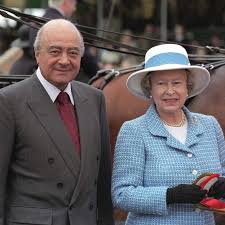
Mohamed Al-Fayed demonstrating his access to power and influence, posed next to the late British monarch, Queen Elizabeth. His son Dodi was friendly with Princess Diane and died in a car crash with her – at the time she was married to the former Prince Charles, now King of the UK. Jimmy Saville, paedophile, we may recall, was also close to the Royal Family as were the Epstein-Maxwell couple, who procured at least one underage female for Prince Andrew. (Photo sourced: Internet)
The victims are aware of how the vertical power structure in society is constructed. They know or are soon taught that the rich have not only direct protection but retribution for those who offend also. There are penalties beyond police harassment or lack of police response to complaints.
There is the jeopardising of employment for the employee, lacking of job reference, unfavourable comment in another employer´s ear … The employers also have a network of mutual interest.
HR managers of one company will wish to further their career progression through the capitalist network. Players know how the game is played.
WHY AND HOW
The predators do not do what they do merely because they like to – there are many temptations in people´s heads that are not acted upon, that remain in internal fantasy or perhaps acted out only with consensual partners.
The famous predators functioned out of a sense of entitlement – like their wealth which they felt they deserved,1 they believed also that they were entitled to do what they wanted to “lesser” beings because they themselves were famous and rich (like Harris and Saville) – or just rich, like Mayed.
Just as their wealth was the accumulation of the wealth created by the work of many others, with their sense of entitlement went also the reality of their ability to do what they wanted. They did it because they could.
Jeffrey Epstein and Ghislaine Maxwell were eventually arrested and went to jail, Epstein dying there. Far from being a vindication of the justice of the system, their victims were initially ignored by the police and even harassed – and Epstein died in mysterious circumstances before trial.
All around the world people are suffering these kinds of abuses to one degree or another, have done so for centuries and will continue to do so. Yes, even with the occasional exposure of this or that person.
For as long as the system of status, wealth and privilege exists. Which means at least for as long as the capitalist system exists – and even beyond that, perhaps.
So in organising to overthrow the capitalist system we must ensure that we do not replace a system of unquestionable authority and power with another.
Yes, well, that´s for the future, right? No. It starts now. In our treatment of one another. In how we conduct ourselves. In ensuring we do not claim a special entitlement or the right not to be be questioned.
And when we err, individually or organisationally, to act to correct and remedy the ill.2
End.
FOOTNOTES
1Let us remember here too that no-one can get rich by their own work, no matter how hard – it requires the work of many others to make one person wealthy.
2Let us not forget the one example among many: the past history of the ostensibly revolutionary socialist organisation of the former Workers Revolutionary Party. Its General Secretary Gerry Healy was accused of the sexual abuse of 26 young female activists in the organisation. A painfully honest description of the replication of systems of unquestioned privilege in the former Party and the process of the expulsion of Gerry Healy and of his defence (for example by famous film actors Corin and Vanessa Redgrave) can be found here: https://libcom.org/article/break-wrp-horses-mouth-simon-pirani
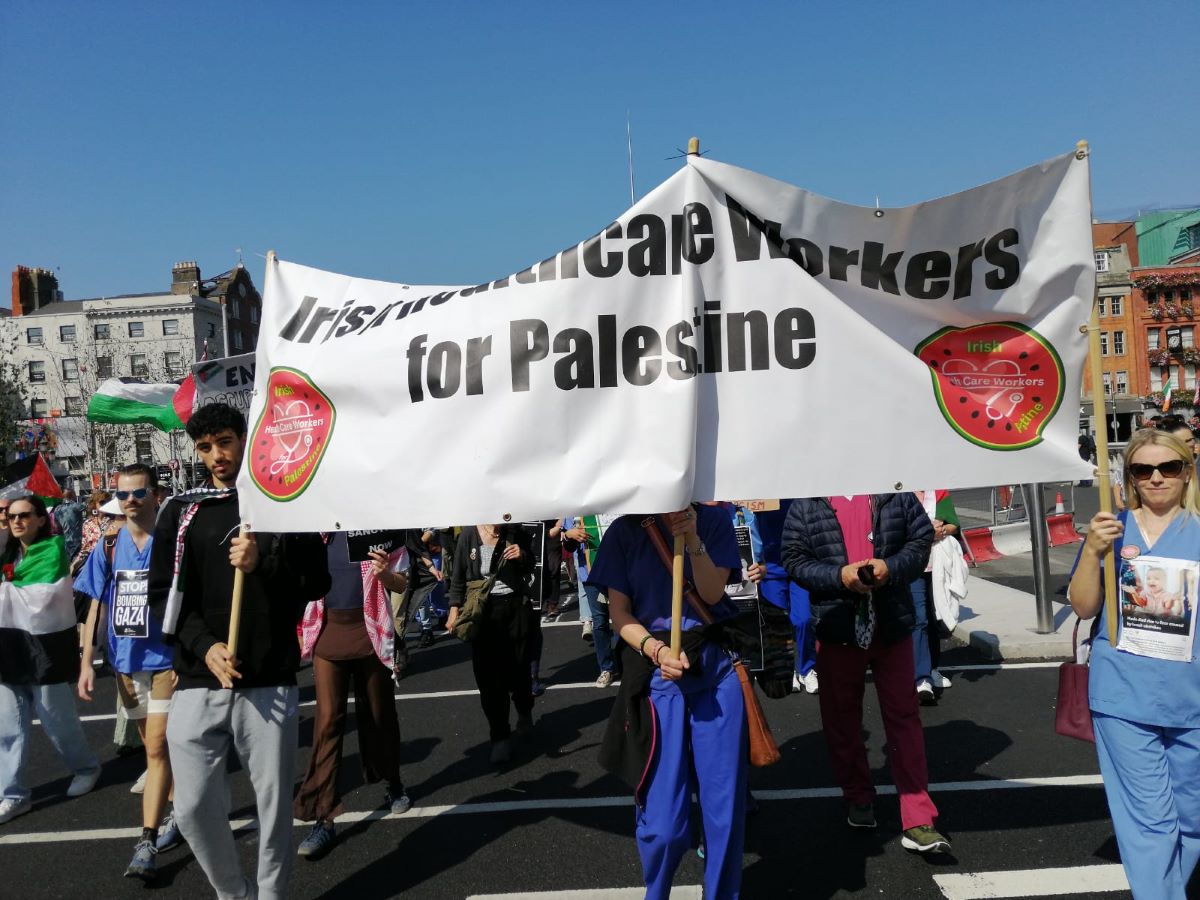
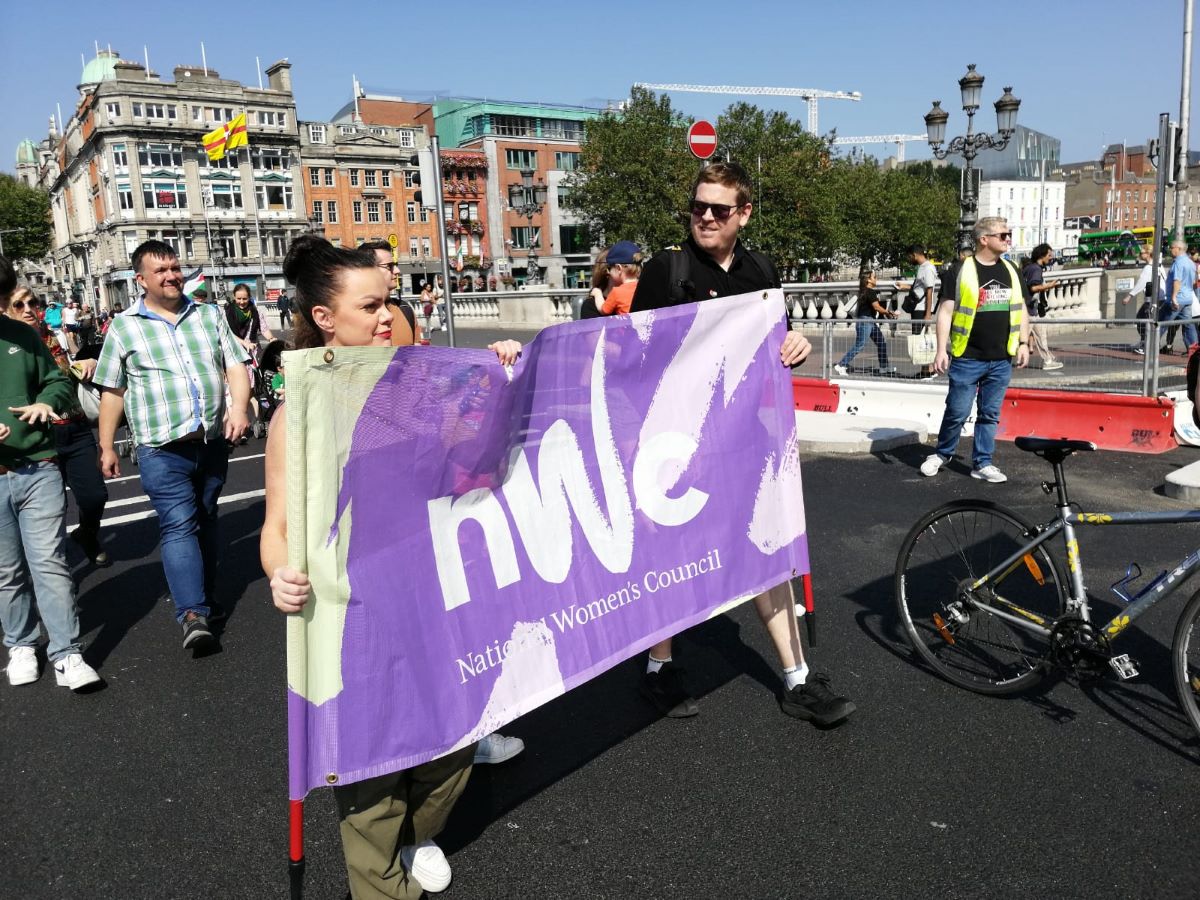
The national demonstration called by the Ireland Palestine Solidarity Campaign for 31st August began at the Garden of Remembrance and, traversing the city’s main boulevard, crossed the river to rally across from Leinster House, the Irish Parliament.
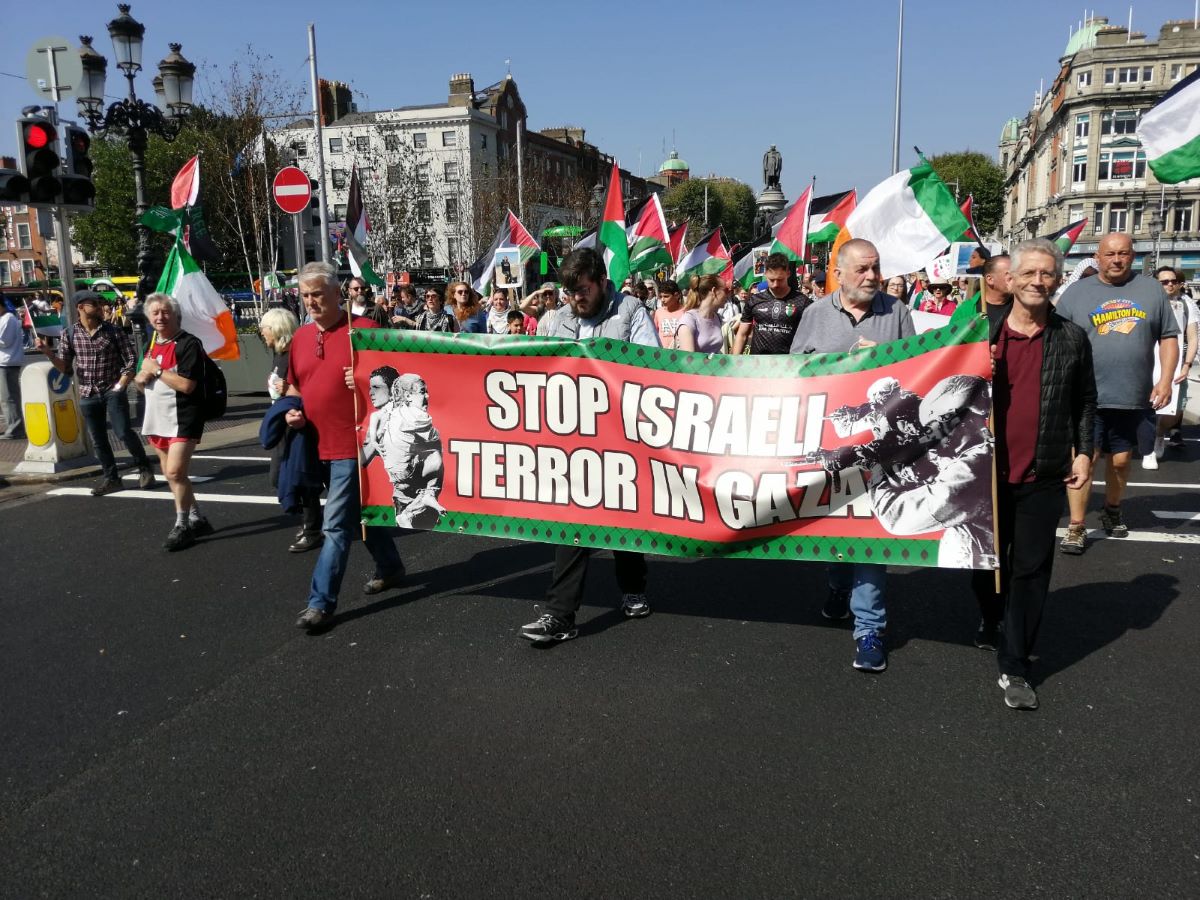
Having a weekly Saturday commitment until 1.30 and the IPSC march start advertised for 1pm, I had to run to catch it up as it marched away up O’Connell Street. I hurried alongside it to try to reach the front but failed to do so before I had to stop and fly the flag with comrades.
Having to run to catch up with the demonstration after an earlier weekly commitment. (Photo: D.Breatnach)
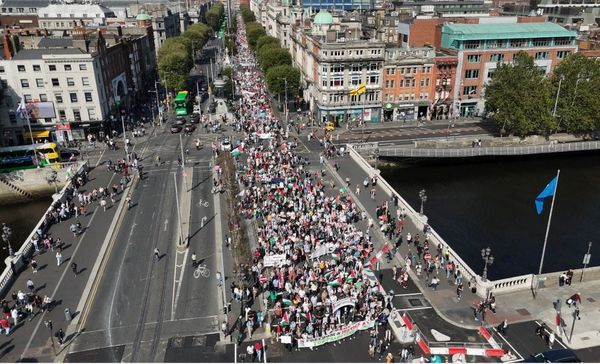
Looking back southward from O’Connell Bridge I could see the march stretching back along part of O’Connell Street while ahead I could see the front of the march winding along the outside of the Trinity College entrance.
Since early October last year, the IPSC and others have organised Palestine solidarity marches at least every second week through different parts of the city, mostly to Government offices and the Parliament. Similar events have also taken place across the land.
There have also been pickets of Zionist-friendly businesses and motorway bridge flag and banner drops, weekly roadside pickets in addition to building occupations and university protest/solidarity encampments.
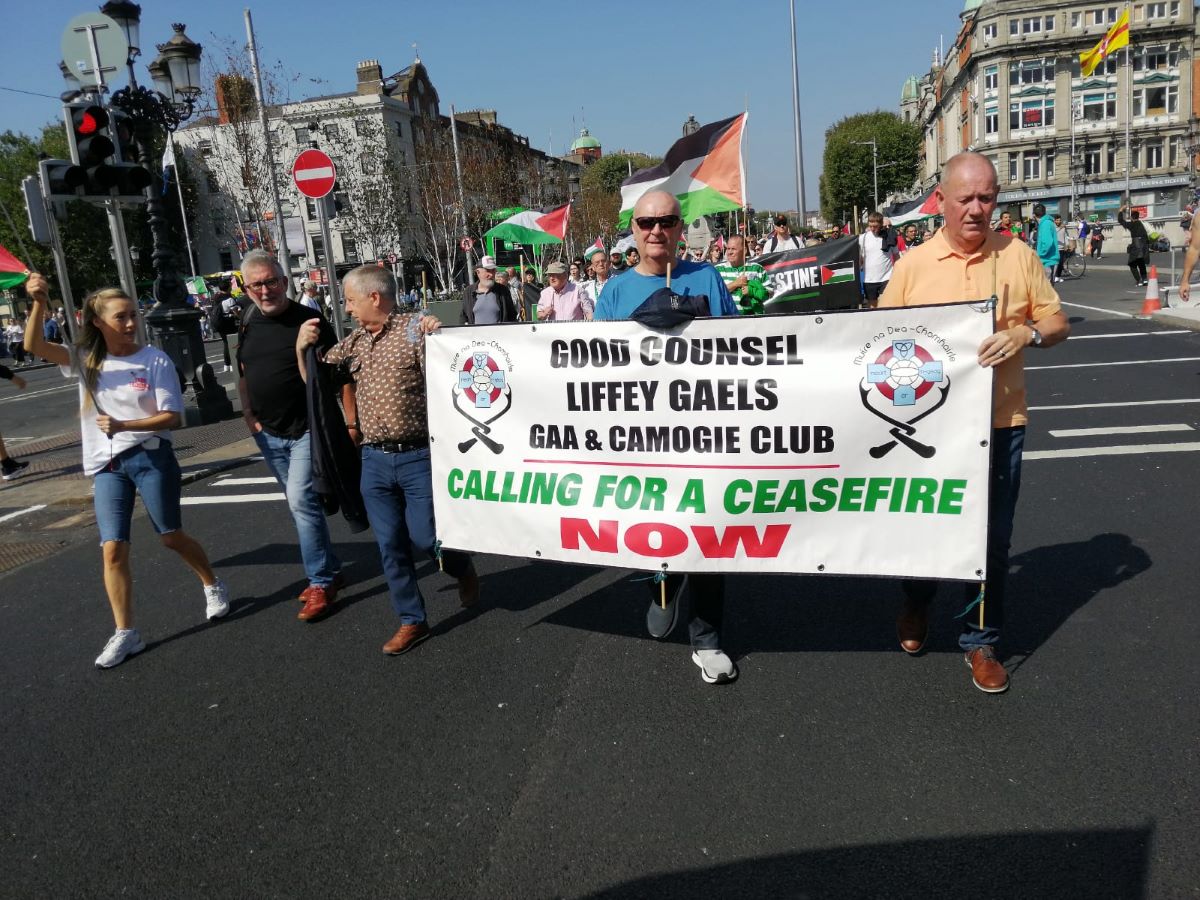
This community solidarity banner may be seen every Thursday evening in four different areas of North Dublin (but for some reason the IPSC does not include it in its weekly list of events). (Photo: D.Breatnach)
Meanwhile, in Palestine the Zionist genocide grinds on unabated through bombing, ground attack, starvation and disease, along with torture of prisoners, destruction of infrastructure, including buildings, while the Resistance fights back with their missile launchers, guns and explosives.
While the fluid tactics of the Resistance are appropriate to the genocidal and well-armoured enemy, we must ask ourselves whether ours are too. Marches are important in showing numbers and in increasing the feeling of wider participation among individuals and small groups of friends.
(Photo: D.Breatnach)(Photo: D.Breatnach)
However the demonstrations are not moving the Government, much less the State, not even to bring forward the agreed Occupied Territories Bill, much less keeping Irish state airspace free of genocidal collusion.
Targeted direct action seems more likely to exert the necessary pressure, as was the case with Axa Insurance, where regular pickets and some occupations resulted in its divestment from ‘Israeli’ banks. University protest encampments also scored some successes.
But where are their trade unions? (Photo: D.Breatnach)But where are their trade unions? (Photo: D.Breatnach)
There are other possibly suitable targets of protest in terms of assistance to the Resistance. Is the Irish Red Cross fulfilling its duty in seeking access to Palestinian prisoners being tortured and starved? Are ‘Israeli’ imports being blocked?
Quite possibly other kinds of organisation are necessary to discuss, plan and lead these kinds of processes and indeed it was such sprung-up organisations that led those direct action events. Perhaps it is wrong to expect and organisation like the IPSC to lead them.
But is it wrong to think that the IPSC should advertise or at the very least tolerate such actions and not discourage them? Or even more, not warn people off from supporting such groups?
(Photo: D.Breatnach) (Photo: D.Breatnach)
Watching IPSC stewards shepherding people to clear the Molesworth Street from Dawson Street to the junction, even when they are packed solid from there to the rally across the road from Leinster House sometimes looks as though they see themselves as policing the march — and the movement.
Those who want that road cleared are the police but a) that is their concern and b) the demonstration is on the road which it has a right to be and traffic will just have to avoid it.
(Photo: D.Breatnach)(Photo: D.Breatnach)
We don’t have to work against one another. If the IPSC doesn’t want to lead some kinds of actions, they don’t have to. And if others want to do things the IPSC doesn’t, then they can. But no-one has the right to be the police within the movement, much less restrict development.
End.
(Photo: D.Breatnach)Aerial view of the march crossing O’Connell Bridge and the numbers all the way back to the Garden of Remembrance. (Photo sourced: IPSC Facebook)
The photo of the massive antifascist rally in London on 28th July following a march from Russel Square shows the recapture of Trafalgar Square from Tommy Robinson and his sea of Union Jacks. Not for the first time, the Irish made their mark upon the place.
There the only two high flying flags were the Irish Tricolours and the Palestinian flags, the Irish contingent being one of the few on the day to see the fight in Britain against the fascists as part of the same fight against the fascist Zionist regime.
Irish and Palestinian flags in Trafalgar Square rally against racism, end July 2024 (Photo cred: PA)
We are mindful of the history of our occupied territories and our 1930s fight against the anti-Semitic Blackshirts1 in London (e.g. standing with the Jewish community at the Battle of Cable Street, 1936) and against the Bridgeton Billy Boys in Glasgow in the 1930s.2
On 28th July our flags sent out a message: We stand against all fascists, at home or abroad. That day we could not but remember all our brave men and women who marched past here from 1971 to 1998 carrying our fight to the heart of government3 in harder times.
We also know that the anti-racist movement now takes its new life from the strength of the Palestinian solidarity movement in Britain and needs to recognise this.
It was strange being in Trafalgar Square again with Tricolours given that we were barred from being there during the ‘Troubles’. Irish solidarity events were banned from using the Square under any circumstances from 1972 to 2001, well after the Good Friday Agreement.
The ban was lifted only once for an Irish event during that period and that was for the Peace Women4 (sic) calling for an ‘end to violence’ (mainly that of the Resistance) and famous US folk singer/ political activist Joan Baez displayed her ignorance of the Irish situation by speaking there.
It was interesting that a reporter for GB News of the British mass media was aware that a picket had been held in Dublin in protest against the assassinations of Palestinian and other Arab resistance leaders. He tried to link the Irish contingent in Trafalgar Square with ‘support for Hamas’.
The linkage was hinted in his broadcast report though he was careful enough not to report a direct link as the Irish group in Trafalgar Square had in fact no connection with the Dublin group. The reporter asked how to pronounce ‘Saoirse Don Phalaistín’ — but still got it wrong in his report.
One of the Irish contingent spoke to the young GB News journalist: He had the stuff from Dublin on his phone and wanted to say that the Irish in the Square were part of the Dublin group.
“Next thing you’d know the Zionists would call for a ban on the Irish for ‘supporting Hamas’”,5 commented one of the veteran Irish activists. “We also get targeted because of the flag and our placards.”
The UK State and the police are all pro-Zionist and the Zionist press tries to trap the Irish into dangerous statements but “We know our history and are well able for them; we just say we support Palestinian resistance to Israeli occupation just as we did with the British in Ireland.”
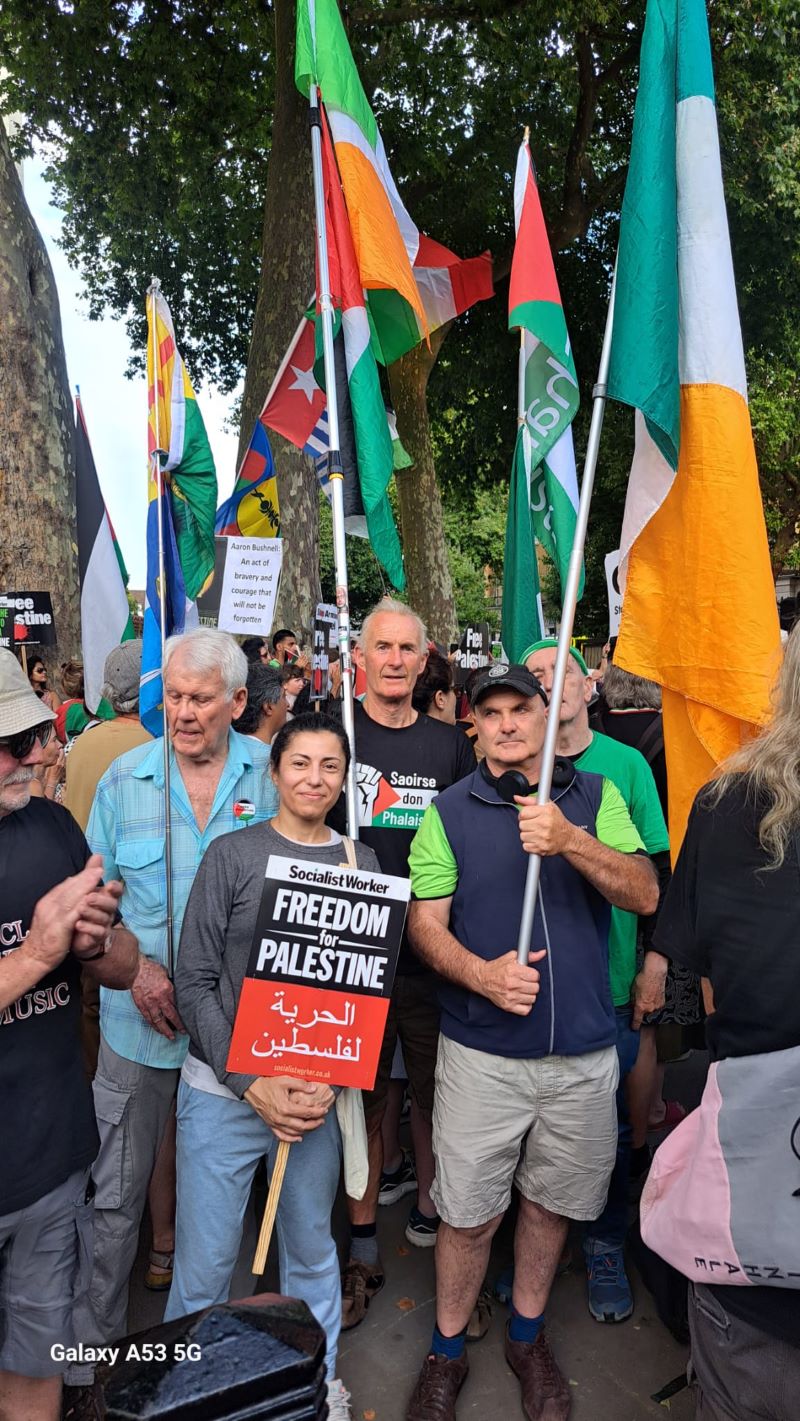
Irish contingent with flags on Palestine solidarity march to Downing Street very recently (not sure whether the SW person is part of it). (Photo sourced from participant).
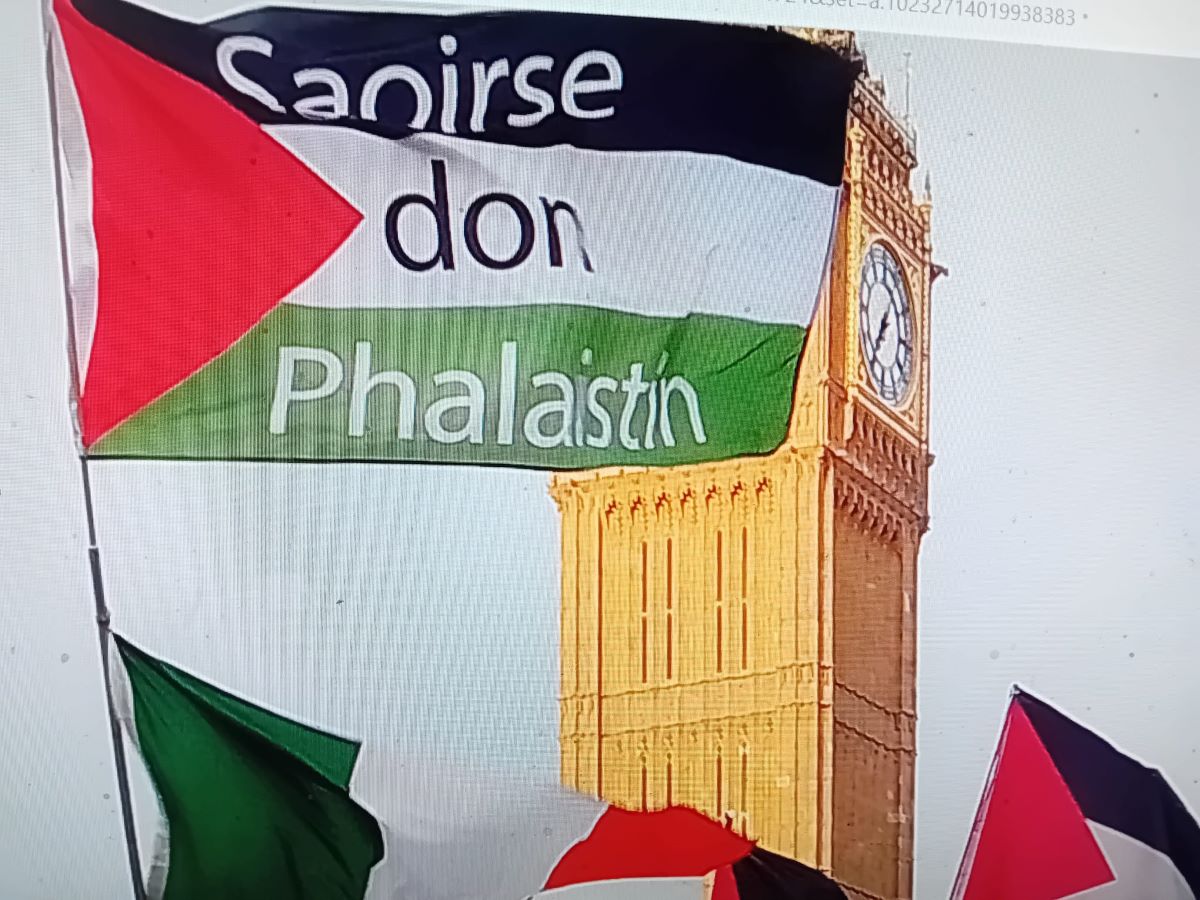
The Irish Tricolours, often in the company of the Palestinian national flag with Saoirse Don Phalaistín printed on it have been seen on Palestine solidarity marches in London since the current Zionist genocide began but also on anti-fascist rallies and in support of Julian Assange.
This is in keeping with the history and tradition of the Irish in Britain who helped found the republican United Englishmen6, the Chartists,7 many trade unions, a section of the First International8 and also gave the British working class their anthem9 and their classic novel.10
Classic novel of the working class in Britain was written by Robert Noonan, aka Robert Tressell, from Dublin. (Image sourced: Internet)
In later times they were prominent in organising solidarity with Vietnam and of course Ireland, against repressive legislation and fascist organisations, solidarity with Nicaragua, Palestine etc. and in struggles against state repression, including within the jails.
The Prevention of Terrorism Act (1974), forerunner of the current Terrorism Act (2000) specifically targeted the Irish community in Britain with suspension of habeas corpus for a period of up to five days, refusal of access to solicitor, as did also the framing of a score of people.
In the midst of the Irish Hunger Strikes of 1981, the Irish community broke out of the State terror stranglehold and formed the Irish in Britain Representation Group, among its objectives being the abolition of the Labour Government-introduced Prevention of Terrorism Act.
End.
Saoirse don Phalaistín and Irish Tricolour flags on Palestine solidarity march this year photographed against Westminster’s ‘Big Ben’. (Photo cred: being investigated)
NOTE ON AUTHORS
Pat Reynolds is a former trade unionist, social worker, a veteran anti-racist, anti-fascist activist, also for Irish independence and for rights for the Irish community in Britain. He was PRO for the Irish in Britain Representation Group for two decades, founding the Haringey Branch and the Green Ink Bookshop. Reynolds is from Granard in Co. Longford and lives in London.
Diarmuid Breatnach is a former trade unionist, worker with homeless/ substance misusers (manual worker before that), also a veteran anti-racist, anti-fascist activist and campaigner for Irish independence. For a decade he was on the Ard-Choiste of the IBRG, founder of the Lewisham Branch and of the Lewisham Irish Centre. Breatnach is from Dublin to which he has returned to settle.
FOOTNOTES
1The British Union of Fascists led by Sir Oswald Moseley which had substantial support in the British elite, including the publisher of the The Daily Mail with police attacks on anti-fascists.
2The Billy Boys were founded and led by Billy Fullerton, a former member of the British Fascists. Fullerton also later became a member of the British Union of Fascists in the 1930s. The Billy Boys adopted a militaristic style of behaviour, marching on parades, forming their own bands, composing their own songs and music, and all dressed in a similar manner.[3] The Billy Boys also formed a junior group whose members were teenagers called the Derry Boys. (Wikipedia)
3From Trafalgar Square to the Houses of Parliament in Westminster runs a broad thoroughfare, in the centre of which is the Cenotaph and a little further, the entrance to Downing Street.
4The organisation/ campaign was founded by Betty Williams and Mairead Corrigan in 1976 after a car driven by an IRA fighter mortally wounded by British soldiers in Belfast crashed into pedestrians and mortally wounded three children of Anne Maguire, sister of Mairead. Branding itself as against all violence the Peace Women in fact targeted primarily the Republican movement, secondarily the Loyalist paramilitaries and hardly ever the Occupation Army. Williams accused the IRA unit of having fired on the Army unit that killed the driver which was untrue (but is repeated on her Wikipedia entry). Both founders received the Nobel Peace Prize in 1976 and a substantial cash prize. Williams resigned from the group in 1980 and disappeared from Irish-related activities though prominent externally. Corrigan however remained politically active in Ireland and elsewhere against war and has campaigned among other things for the end of the ‘Israeli’ siege on Gaza, being arrested with crew and passengers on the Spirit of Humanity aid ship in 2009 by by the Zionist navy, taken to ‘Israel’ and subsequently deported.
5Hamas is proscribed organisation in the UK since March 2001 and a person promoting it would be liable to prosecution under the Terrorism Act.
6A spin-off from the United Irishmen in Ireland; the English chapter led the Spithead and Nore naval mutinies. The Irish also reformed the United Scotsmen when it was faltering.
7Karl Marx called the Chartists “the true mass movement of the working class” – two of its principal leaders, Bronterre O’Brien and Fergus O’Connor were Irish, as their surnames would suggest.
8The Fenians were accepted into the First International Workingmen’s Association.
9The lyrics of The Red Flag were composed by Jim Connell from near Kells, Co. Meath and set to the brisk air of The White Cockade, later changed to the mournful air of Tannebaum.
10The Ragged-Trousered Philanthropists was written by Robert Tressell (real name Robert Noonan) from Dublin.