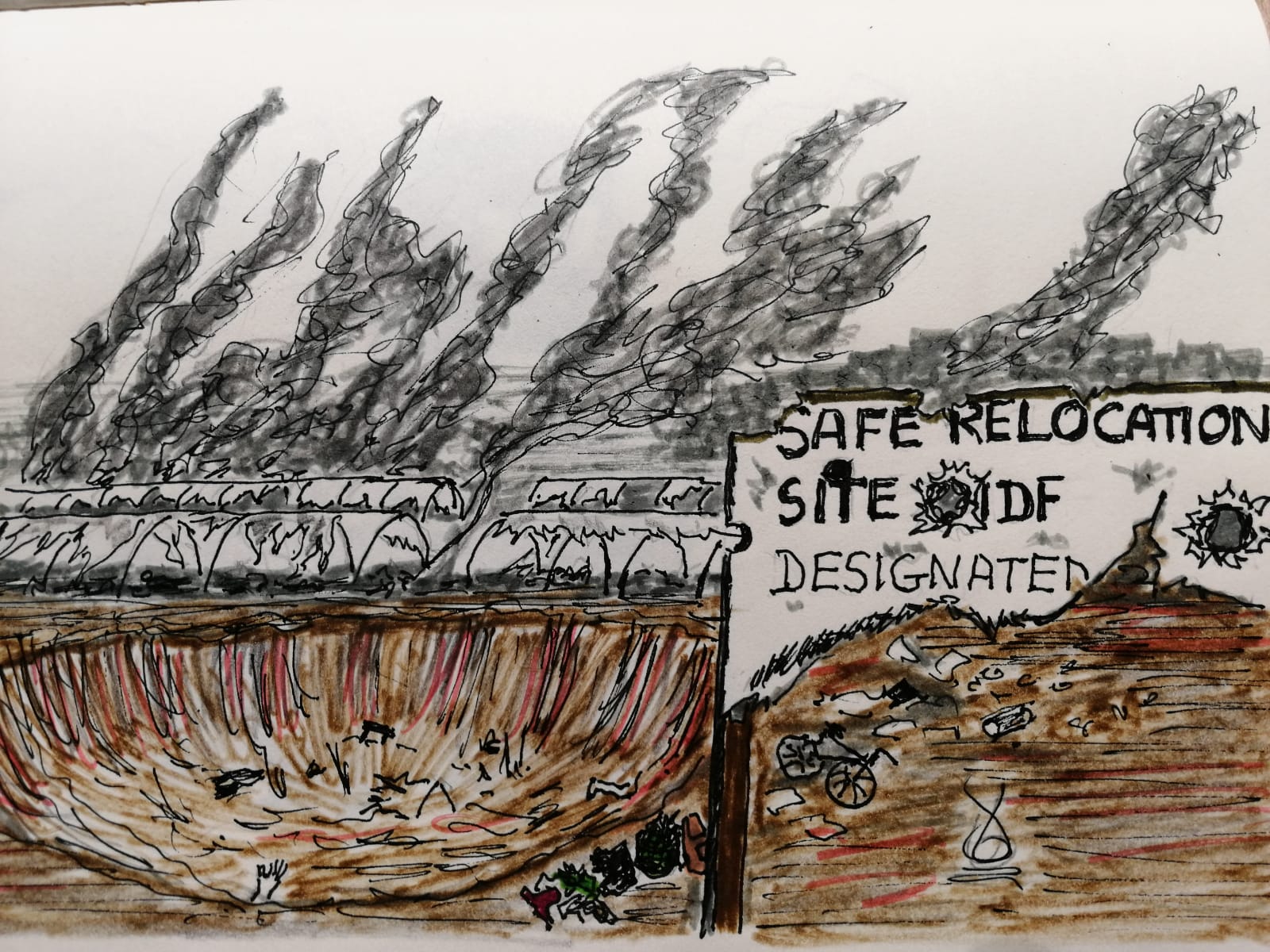
Diarmuid Breatnach (feel free to share with acknowledging source)

.


End.
Diarmuid Breatnach (feel free to share with acknowledging source)


End.
Diarmuid Breatnach
(Reading time: 5 mins.)
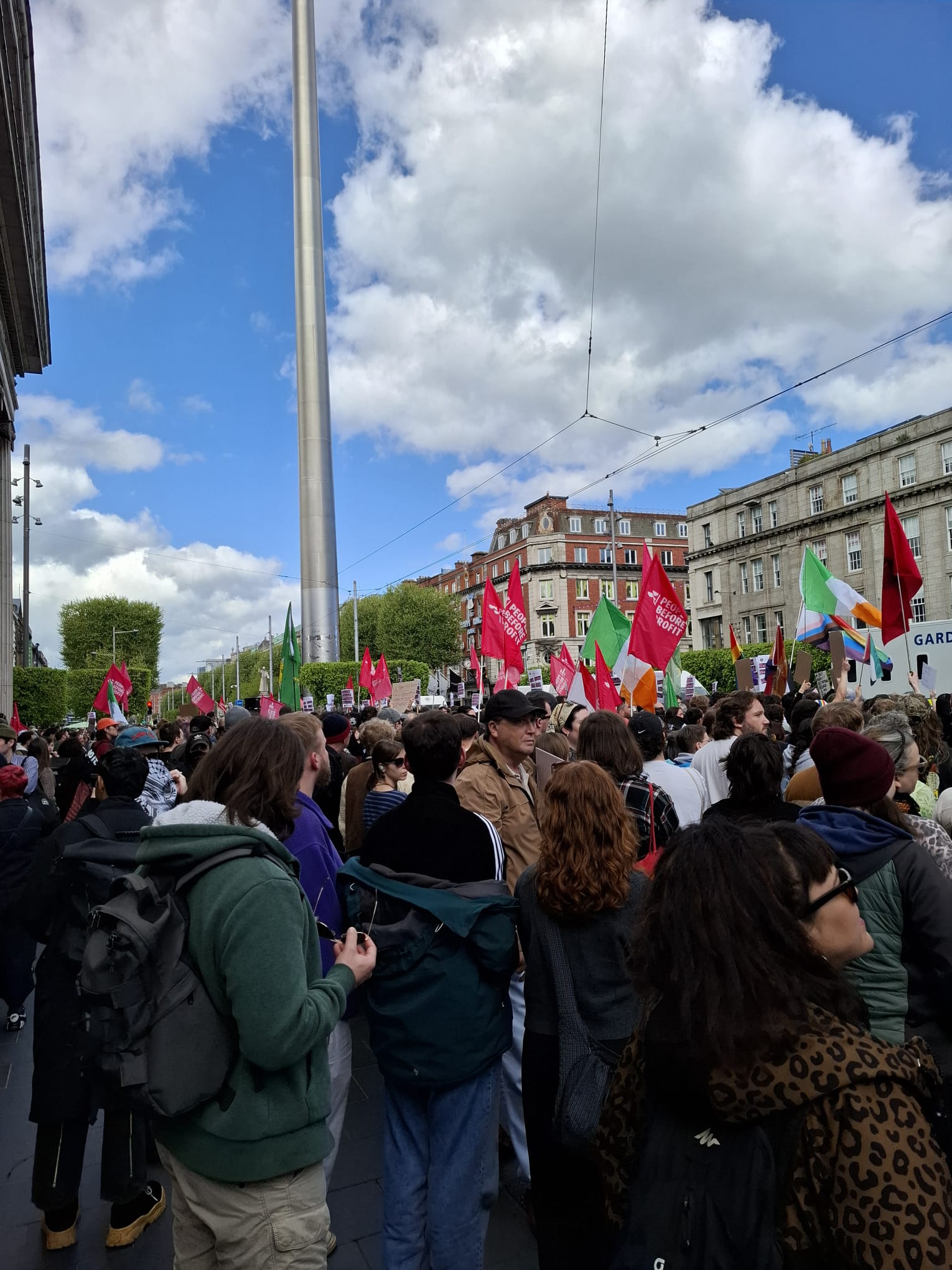
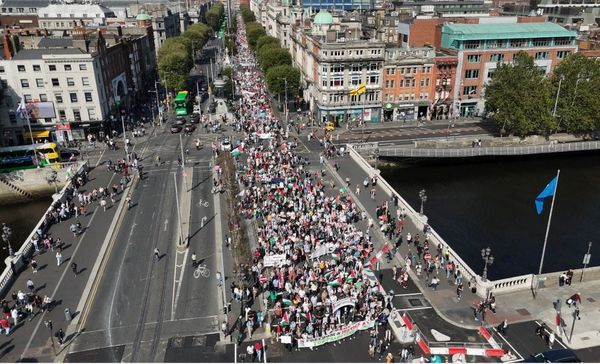
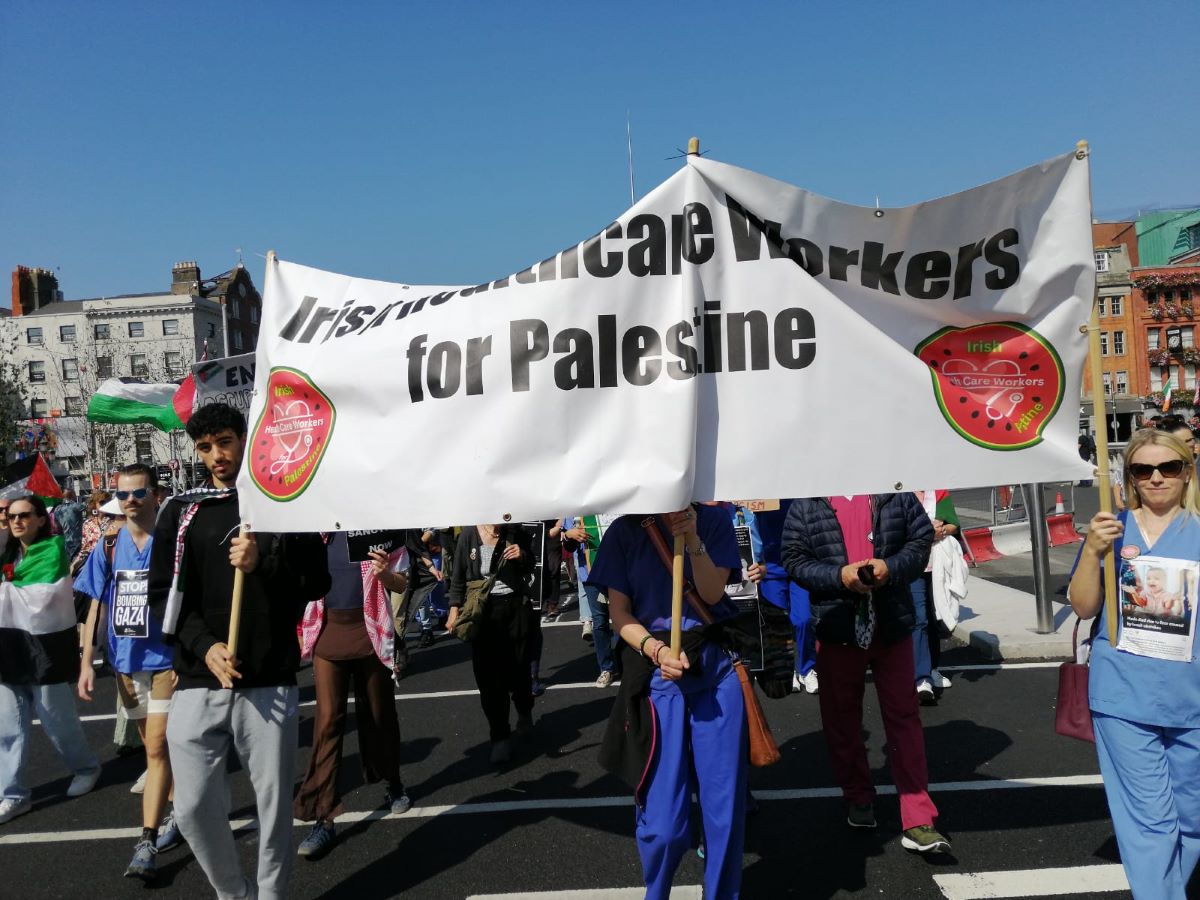
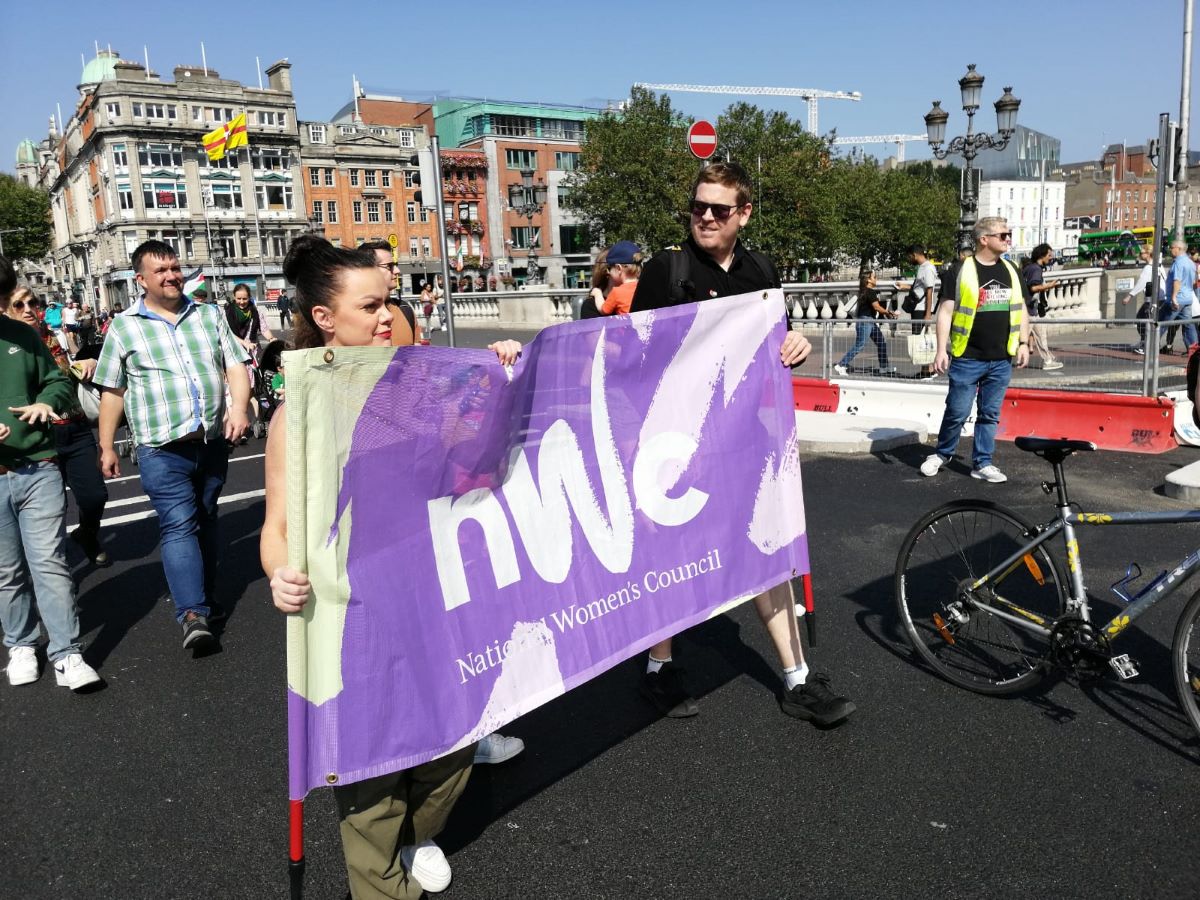
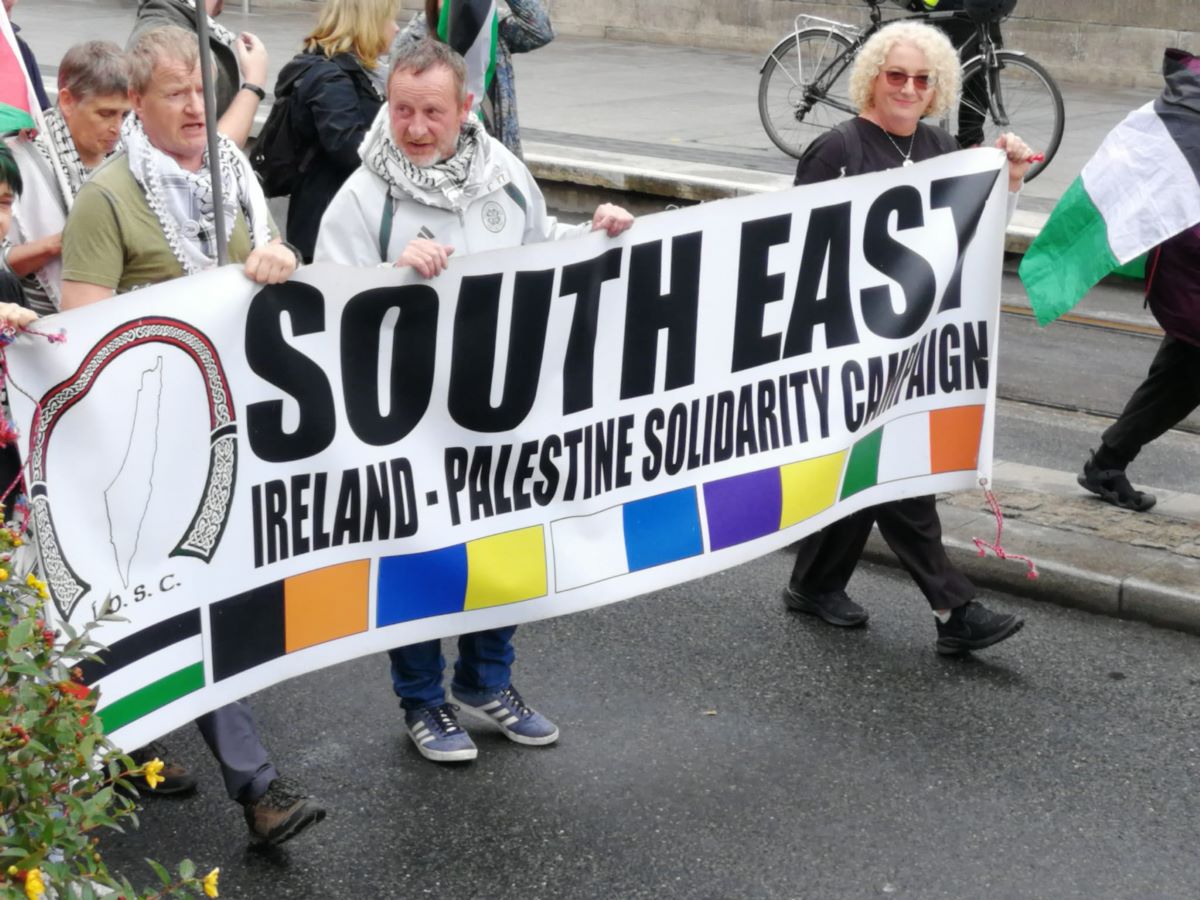
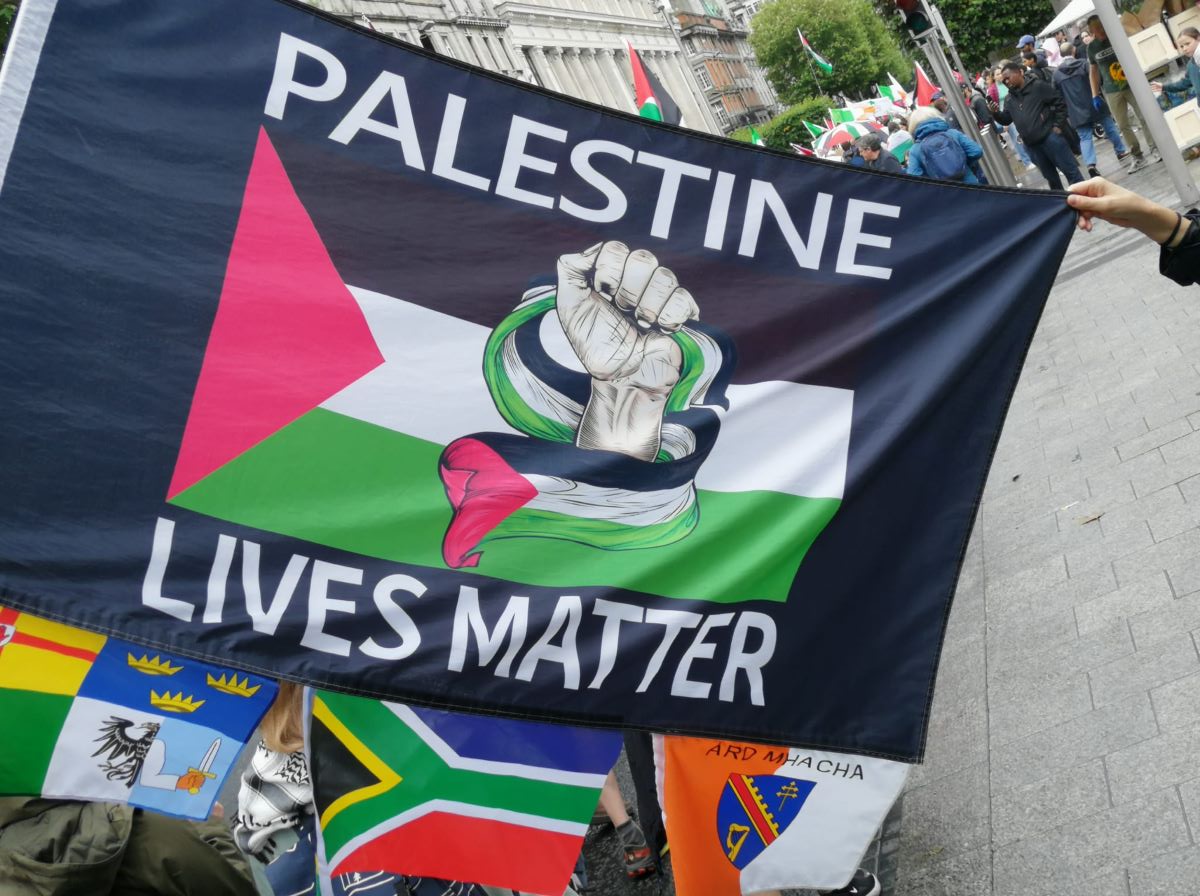
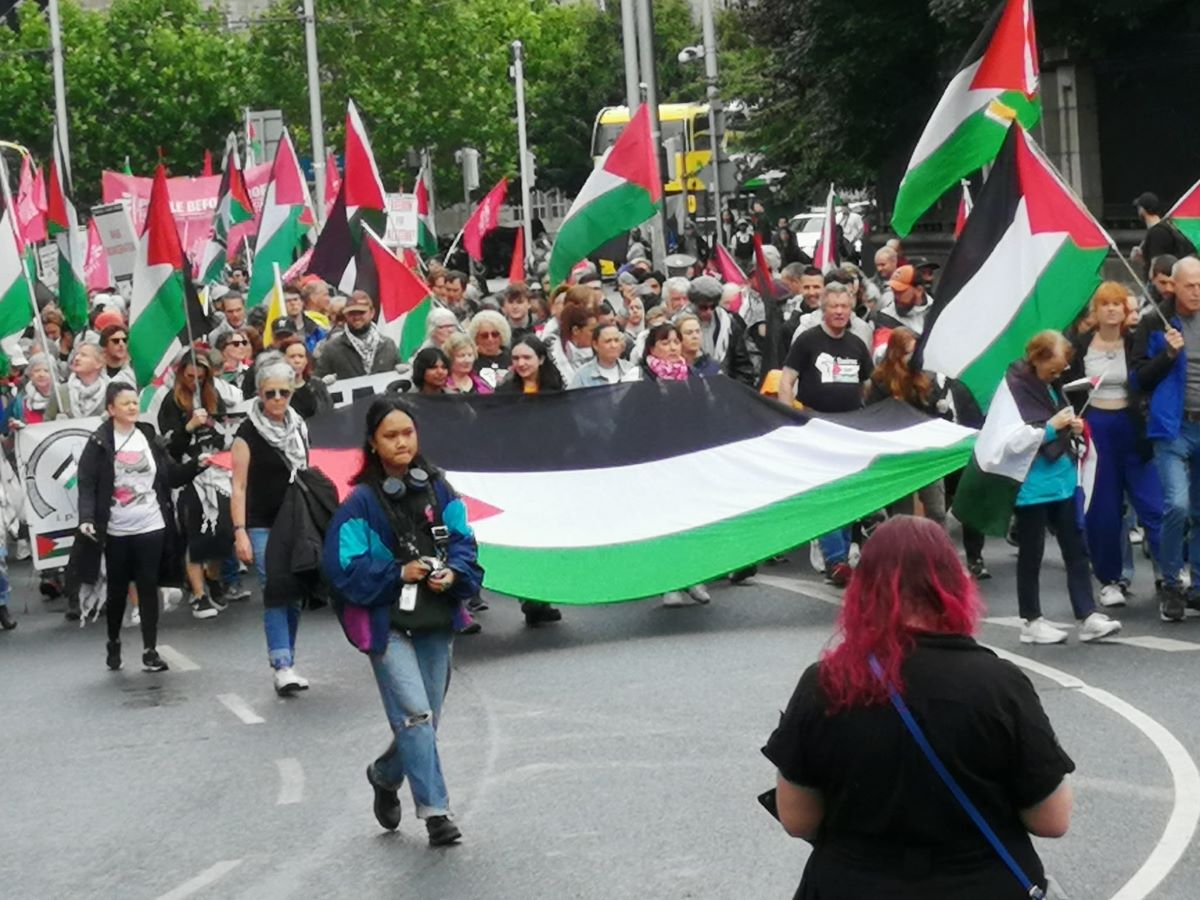
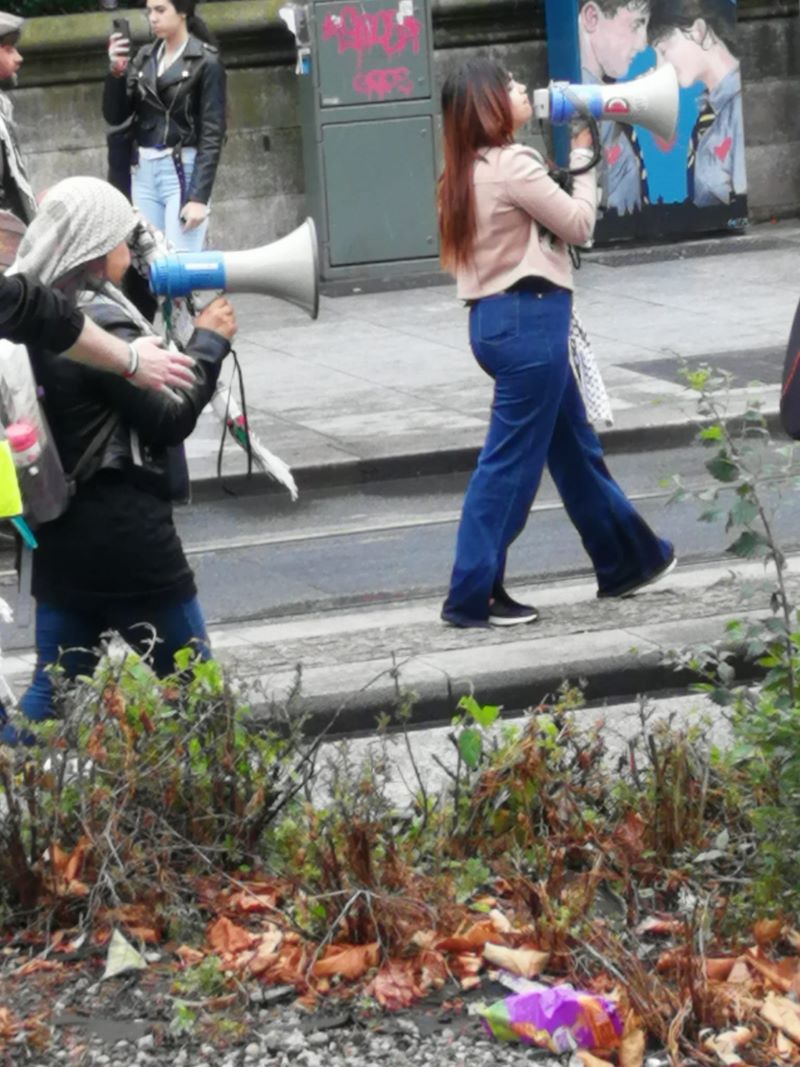
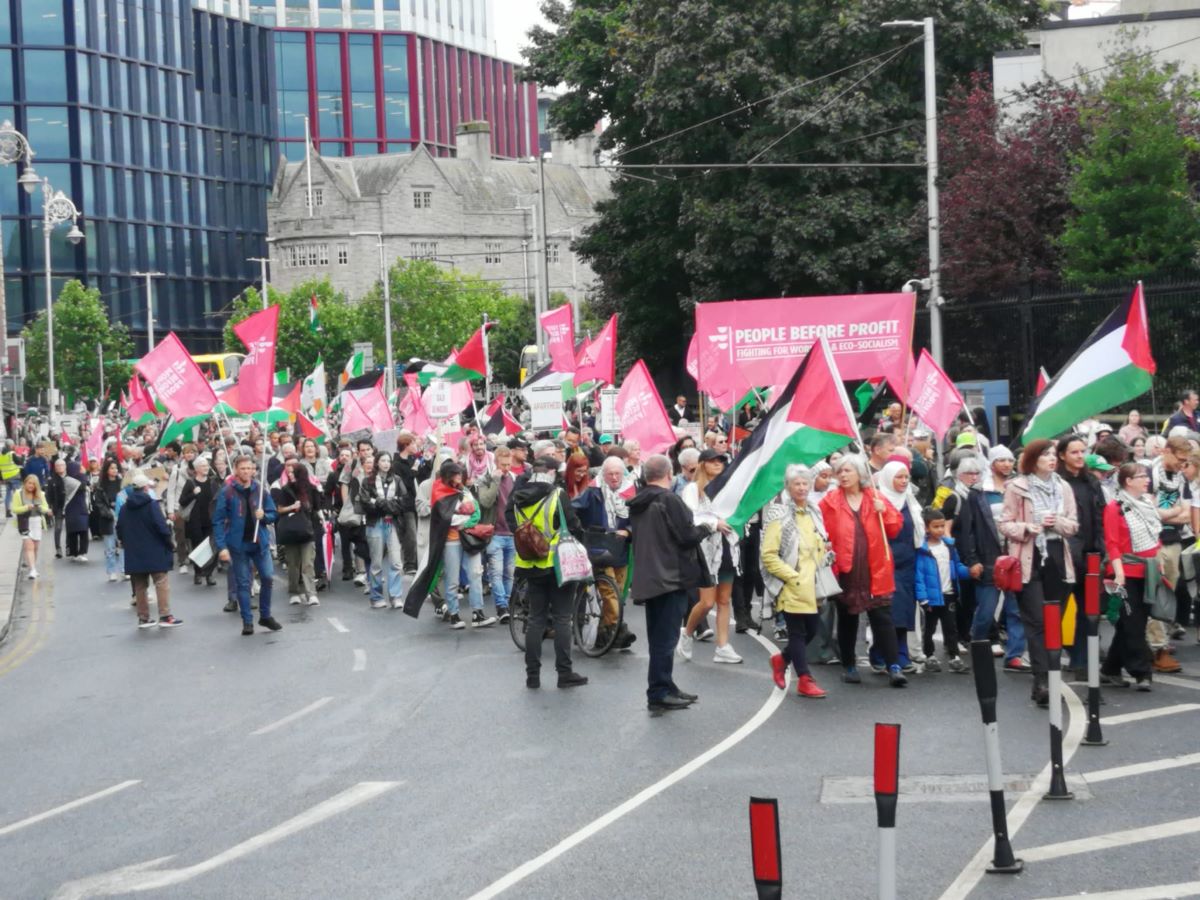
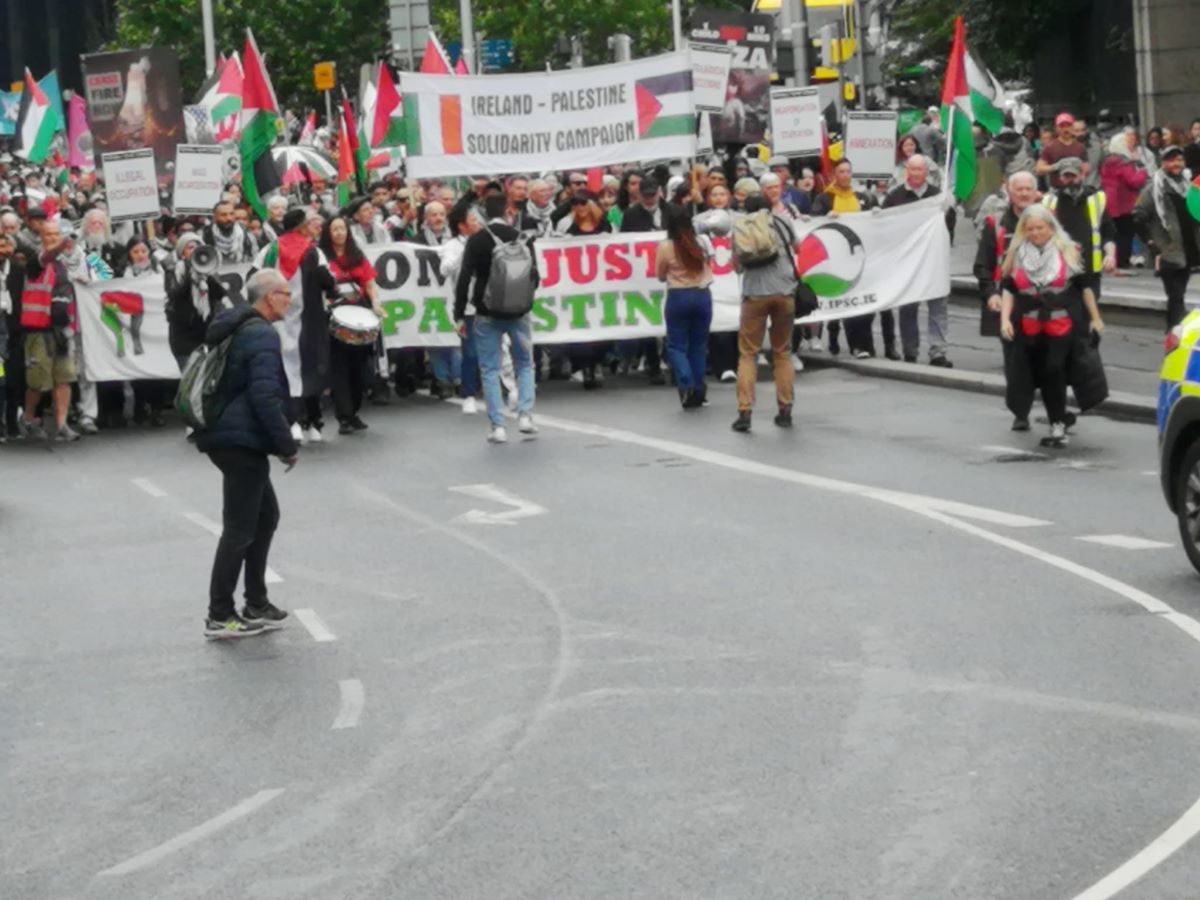
The national demonstration called by the Ireland Palestine Solidarity Campaign for 31st August began at the Garden of Remembrance and, traversing the city’s main boulevard, crossed the river to rally across from Leinster House, the Irish Parliament.
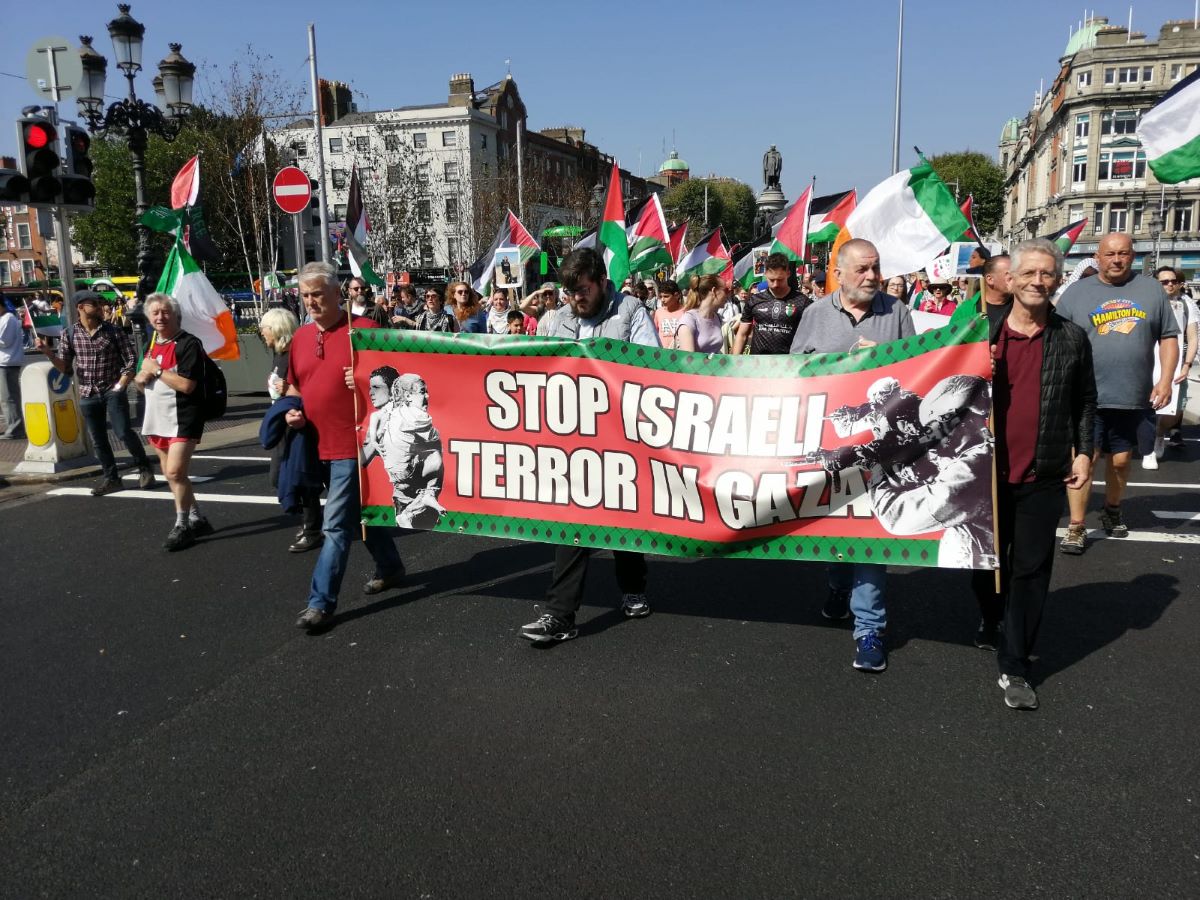
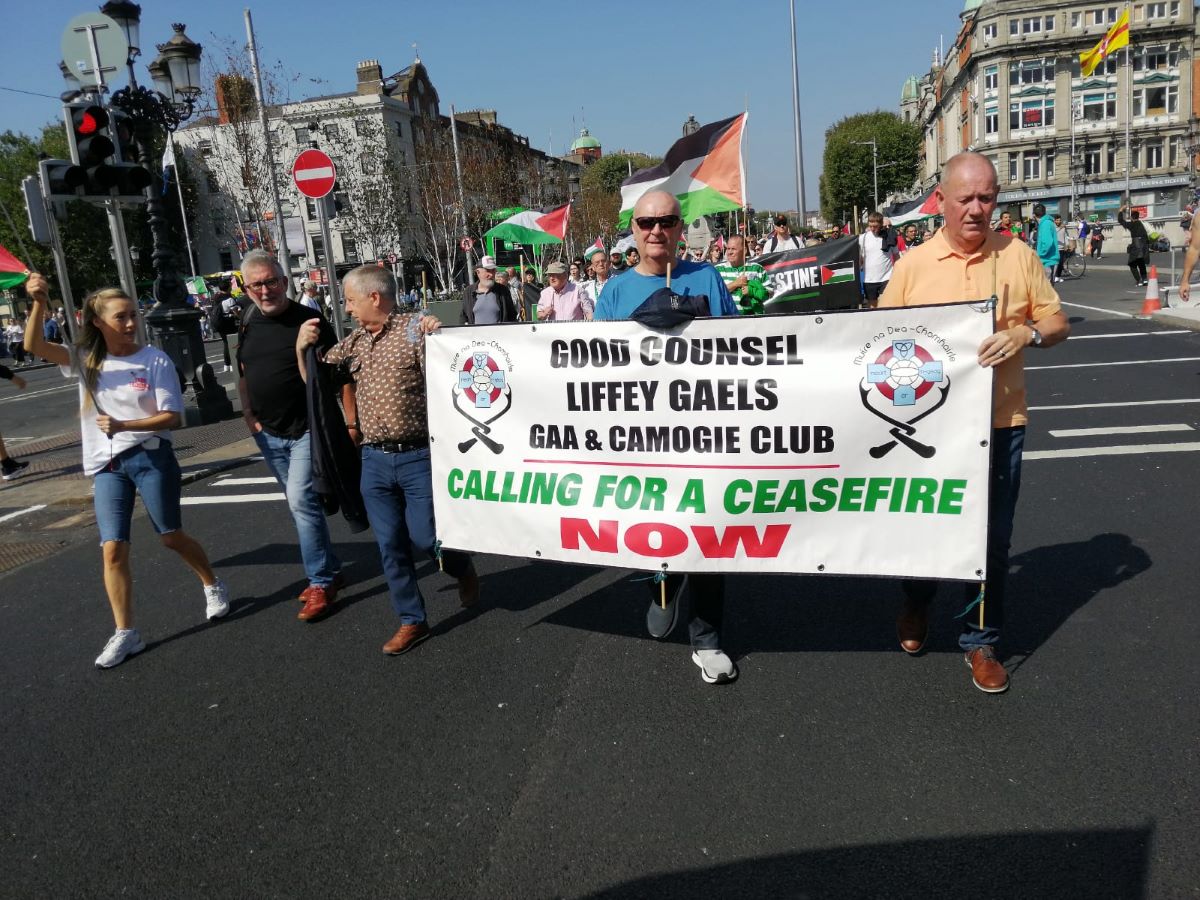
Having a weekly Saturday commitment until 1.30 and the IPSC march start advertised for 1pm, I had to run to catch it up as it marched away up O’Connell Street. I hurried alongside it to try to reach the front but failed to do so before I had to stop and fly the flag with comrades.

Looking back southward from O’Connell Bridge I could see the march stretching back along part of O’Connell Street while ahead I could see the front of the march winding along the outside of the Trinity College entrance.
Since early October last year, the IPSC and others have organised Palestine solidarity marches at least every second week through different parts of the city, mostly to Government offices and the Parliament. Similar events have also taken place across the land.
There have also been pickets of Zionist-friendly businesses and motorway bridge flag and banner drops, weekly roadside pickets in addition to building occupations and university protest/solidarity encampments.

Meanwhile, in Palestine the Zionist genocide grinds on unabated through bombing, ground attack, starvation and disease, along with torture of prisoners, destruction of infrastructure, including buildings, while the Resistance fights back with their missile launchers, guns and explosives.
While the fluid tactics of the Resistance are appropriate to the genocidal and well-armoured enemy, we must ask ourselves whether ours are too. Marches are important in showing numbers and in increasing the feeling of wider participation among individuals and small groups of friends.


However the demonstrations are not moving the Government, much less the State, not even to bring forward the agreed Occupied Territories Bill, much less keeping Irish state airspace free of genocidal collusion.
Targeted direct action seems more likely to exert the necessary pressure, as was the case with Axa Insurance, where regular pickets and some occupations resulted in its divestment from ‘Israeli’ banks. University protest encampments also scored some successes.


There are other possibly suitable targets of protest in terms of assistance to the Resistance. Is the Irish Red Cross fulfilling its duty in seeking access to Palestinian prisoners being tortured and starved? Are ‘Israeli’ imports being blocked?
Quite possibly other kinds of organisation are necessary to discuss, plan and lead these kinds of processes and indeed it was such sprung-up organisations that led those direct action events. Perhaps it is wrong to expect and organisation like the IPSC to lead them.
But is it wrong to think that the IPSC should advertise or at the very least tolerate such actions and not discourage them? Or even more, not warn people off from supporting such groups?


Watching IPSC stewards shepherding people to clear the Molesworth Street from Dawson Street to the junction, even when they are packed solid from there to the rally across the road from Leinster House sometimes looks as though they see themselves as policing the march — and the movement.
Those who want that road cleared are the police but a) that is their concern and b) the demonstration is on the road which it has a right to be and traffic will just have to avoid it.


We don’t have to work against one another. If the IPSC doesn’t want to lead some kinds of actions, they don’t have to. And if others want to do things the IPSC doesn’t, then they can. But no-one has the right to be the police within the movement, much less restrict development.
End.


Pat Reynolds & Diarmuid Breatnach
(Reading time main report: 3 mins.)
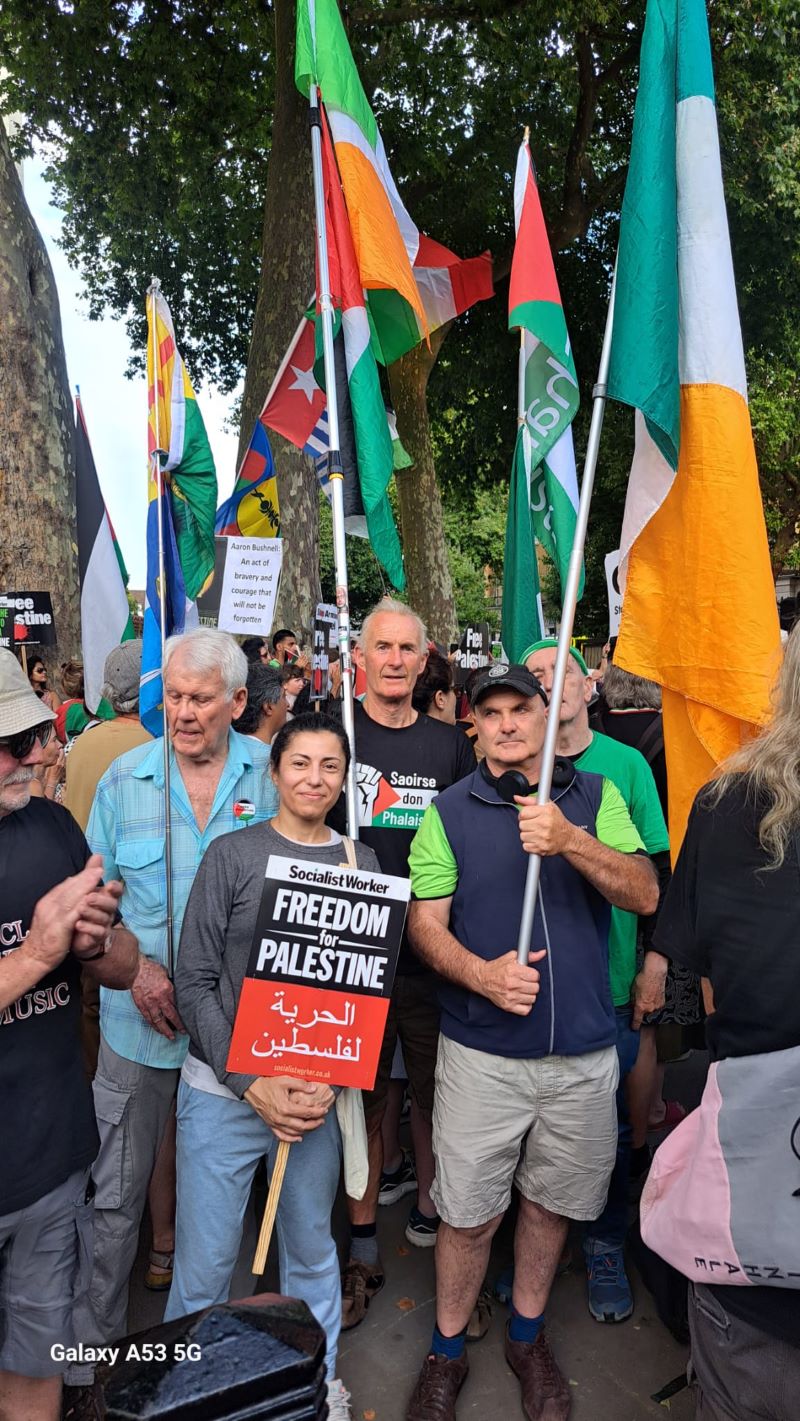
The photo of the massive antifascist rally in London on 28th July following a march from Russel Square shows the recapture of Trafalgar Square from Tommy Robinson and his sea of Union Jacks. Not for the first time, the Irish made their mark upon the place.
There the only two high flying flags were the Irish Tricolours and the Palestinian flags, the Irish contingent being one of the few on the day to see the fight in Britain against the fascists as part of the same fight against the fascist Zionist regime.

We are mindful of the history of our occupied territories and our 1930s fight against the anti-Semitic Blackshirts1 in London (e.g. standing with the Jewish community at the Battle of Cable Street, 1936) and against the Bridgeton Billy Boys in Glasgow in the 1930s.2
On 28th July our flags sent out a message: We stand against all fascists, at home or abroad. That day we could not but remember all our brave men and women who marched past here from 1971 to 1998 carrying our fight to the heart of government3 in harder times.
We also know that the anti-racist movement now takes its new life from the strength of the Palestinian solidarity movement in Britain and needs to recognise this.
It was strange being in Trafalgar Square again with Tricolours given that we were barred from being there during the ‘Troubles’. Irish solidarity events were banned from using the Square under any circumstances from 1972 to 2001, well after the Good Friday Agreement.
The ban was lifted only once for an Irish event during that period and that was for the Peace Women4 (sic) calling for an ‘end to violence’ (mainly that of the Resistance) and famous US folk singer/ political activist Joan Baez displayed her ignorance of the Irish situation by speaking there.
It was interesting that a reporter for GB News of the British mass media was aware that a picket had been held in Dublin in protest against the assassinations of Palestinian and other Arab resistance leaders. He tried to link the Irish contingent in Trafalgar Square with ‘support for Hamas’.
The linkage was hinted in his broadcast report though he was careful enough not to report a direct link as the Irish group in Trafalgar Square had in fact no connection with the Dublin group. The reporter asked how to pronounce ‘Saoirse Don Phalaistín’ — but still got it wrong in his report.
One of the Irish contingent spoke to the young GB News journalist: He had the stuff from Dublin on his phone and wanted to say that the Irish in the Square were part of the Dublin group.
“Next thing you’d know the Zionists would call for a ban on the Irish for ‘supporting Hamas’”,5 commented one of the veteran Irish activists. “We also get targeted because of the flag and our placards.”
The UK State and the police are all pro-Zionist and the Zionist press tries to trap the Irish into dangerous statements but “We know our history and are well able for them; we just say we support Palestinian resistance to Israeli occupation just as we did with the British in Ireland.”

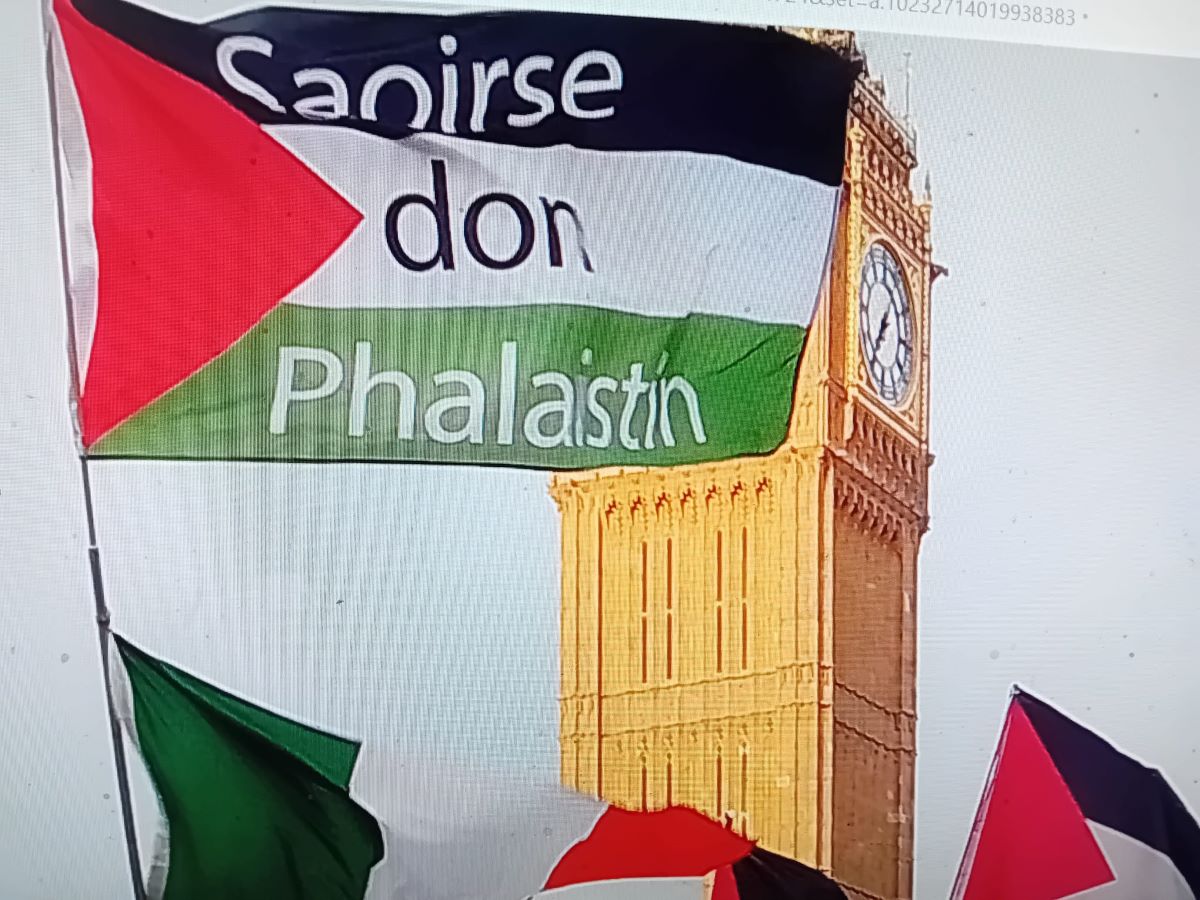
The Irish Tricolours, often in the company of the Palestinian national flag with Saoirse Don Phalaistín printed on it have been seen on Palestine solidarity marches in London since the current Zionist genocide began but also on anti-fascist rallies and in support of Julian Assange.
This is in keeping with the history and tradition of the Irish in Britain who helped found the republican United Englishmen6, the Chartists,7 many trade unions, a section of the First International8 and also gave the British working class their anthem9 and their classic novel.10

In later times they were prominent in organising solidarity with Vietnam and of course Ireland, against repressive legislation and fascist organisations, solidarity with Nicaragua, Palestine etc. and in struggles against state repression, including within the jails.
The Prevention of Terrorism Act (1974), forerunner of the current Terrorism Act (2000) specifically targeted the Irish community in Britain with suspension of habeas corpus for a period of up to five days, refusal of access to solicitor, as did also the framing of a score of people.
In the midst of the Irish Hunger Strikes of 1981, the Irish community broke out of the State terror stranglehold and formed the Irish in Britain Representation Group, among its objectives being the abolition of the Labour Government-introduced Prevention of Terrorism Act.
End.

NOTE ON AUTHORS
Pat Reynolds is a former trade unionist, social worker, a veteran anti-racist, anti-fascist activist, also for Irish independence and for rights for the Irish community in Britain. He was PRO for the Irish in Britain Representation Group for two decades, founding the Haringey Branch and the Green Ink Bookshop. Reynolds is from Granard in Co. Longford and lives in London.
Diarmuid Breatnach is a former trade unionist, worker with homeless/ substance misusers (manual worker before that), also a veteran anti-racist, anti-fascist activist and campaigner for Irish independence. For a decade he was on the Ard-Choiste of the IBRG, founder of the Lewisham Branch and of the Lewisham Irish Centre. Breatnach is from Dublin to which he has returned to settle.
FOOTNOTES
1The British Union of Fascists led by Sir Oswald Moseley which had substantial support in the British elite, including the publisher of the The Daily Mail with police attacks on anti-fascists.
2The Billy Boys were founded and led by Billy Fullerton, a former member of the British Fascists. Fullerton also later became a member of the British Union of Fascists in the 1930s. The Billy Boys adopted a militaristic style of behaviour, marching on parades, forming their own bands, composing their own songs and music, and all dressed in a similar manner.[3] The Billy Boys also formed a junior group whose members were teenagers called the Derry Boys. (Wikipedia)
3From Trafalgar Square to the Houses of Parliament in Westminster runs a broad thoroughfare, in the centre of which is the Cenotaph and a little further, the entrance to Downing Street.
4The organisation/ campaign was founded by Betty Williams and Mairead Corrigan in 1976 after a car driven by an IRA fighter mortally wounded by British soldiers in Belfast crashed into pedestrians and mortally wounded three children of Anne Maguire, sister of Mairead. Branding itself as against all violence the Peace Women in fact targeted primarily the Republican movement, secondarily the Loyalist paramilitaries and hardly ever the Occupation Army. Williams accused the IRA unit of having fired on the Army unit that killed the driver which was untrue (but is repeated on her Wikipedia entry). Both founders received the Nobel Peace Prize in 1976 and a substantial cash prize. Williams resigned from the group in 1980 and disappeared from Irish-related activities though prominent externally. Corrigan however remained politically active in Ireland and elsewhere against war and has campaigned among other things for the end of the ‘Israeli’ siege on Gaza, being arrested with crew and passengers on the Spirit of Humanity aid ship in 2009 by by the Zionist navy, taken to ‘Israel’ and subsequently deported.
5Hamas is proscribed organisation in the UK since March 2001 and a person promoting it would be liable to prosecution under the Terrorism Act.
6A spin-off from the United Irishmen in Ireland; the English chapter led the Spithead and Nore naval mutinies. The Irish also reformed the United Scotsmen when it was faltering.
7Karl Marx called the Chartists “the true mass movement of the working class” – two of its principal leaders, Bronterre O’Brien and Fergus O’Connor were Irish, as their surnames would suggest.
8The Fenians were accepted into the First International Workingmen’s Association.
9The lyrics of The Red Flag were composed by Jim Connell from near Kells, Co. Meath and set to the brisk air of The White Cockade, later changed to the mournful air of Tannebaum.
10The Ragged-Trousered Philanthropists was written by Robert Tressell (real name Robert Noonan) from Dublin.
SOURCES & FURTHER READING
April 2023: Leaked files reveal that British intel used local Yemeni NGOs and social media in a covert campaign to undermine the Sanaa government and influence the war-torn country’s peace process.
Kit Klarenberg
(Reading time: mins.)
The Cradle Editor’s note: All Yemeni NGO employees, journalists, and other private individuals named in this article appear in the ARK documents seen by The Cradle. These Yemenis may be unaware of the UK’s role and/or intent in funding their activities.
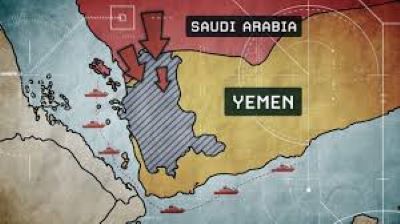
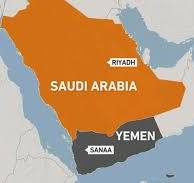
Yemen’s civil war, considered the world’s gravest humanitarian crisis, appears to be nearing its end due to a China-brokered detente between Iran and Saudi Arabia, who support opposing sides in the bitter conflict.
Early signs suggest that the rapprochement between Tehran and Riyadh may not only end hostilities in Yemen, but across the wider region.
The US, Israel, and Britain have the most to lose from a sudden onset of peace in West Asia. In the Yemeni context, London may be the biggest loser of all.
For years, it provided the Saudi-led coalition with weaponry used to target civilians and civilian infrastructure, with receipts running into billions of pounds sterling.
During the entirety of the war, Yemen was struck by British-made bombs, dropped by British-made planes, flown by British-trained pilots, which then flew back to Riyadh to be repaired and serviced by British contractors.
In 2019, a nameless BAE Systems executive estimated that if London pulled its backing for the proxy war, “in seven to 14 days, there wouldn’t be a jet in the sky.”

In addition to supplying weapons, the war also presented a golden opportunity for Britain to establish a military base in Yemen, fulfilling long-held fantasies of recovering the Empire’s long-lost glory days “East of Suez.”
Al-Ghaydah airport in al-Mahrah, Yemen’s far eastern governorate, has for some time quietly housed “a fully-fledged force” of British soldiers, providing “military training and logistical support” to coalition forces and Saudi-backed militias.
There are even indications that this involvement could extend to torture methods, which is a troubling reflection of one of London’s leading exports.
The Cradle has obtained exclusive information about a previously undisclosed aspect of London’s role in the proxy war against Yemen’s Ansarallah-led resistance.

It has been revealed that a multi-channel propaganda campaign, led by the intelligence cut-out ARK and its founder Alistair Harris, a veteran MI6 operative, has been operating in complete secrecy throughout the nine-year-long conflict – one that specifically targeted Yemen’s civilian population.
Anti-Ansarallah ops
Leaked Foreign Office documents have revealed that ARK’s “multimedia” information warfare campaign was designed to undermine public sympathy for the Ansarallah movement and ensure that the conflict would only end on terms that aligned with London’s financial, ideological, and geopolitical interests.
For instance, public acceptance of the UN’s widely unpopular peace proposal required propaganda support from local NGOs and media organizations that “support UK objectives” to “communicate effectively with Yemeni citizens” and change their minds.
It was also necessary to counter “new actors” in the information space that were critical of the Saudi-led coalition’s brutal bombing campaigns and the illegitimate, US-backed puppet government that the aerial assaults sought to protect.
Considering the high rate of illiteracy in the local population, ARK conceived the creation of a suite of “visually rich” products extolling the virtues of a Riyadh-dominated peace plan.
These products would be disseminated on and offline and would “deliberately include different demographics, sects, and locations to ensure inclusivity,” informed by focus groups and polling of Yemenis.
ARK’s campaign even extended to convening “gender-segregated poetry competitions using peace as a theme” and “plays and town hall meetings.”
Publicly, many of these propaganda products appeared to be the work of Tadafur – Arabic for “work collectively and unite” – an astroturf network of NGOs and journalists constructed by ARK.
Its overt mission was to “resolve local level conflicts” and “unite local communities in their conflict resolution efforts.”
The campaign began initially at a “hyper-local level” across six Yemeni governorates, “before being amplified at the national level.” Activities “[in] all areas and at both levels” had unified messaging across “common macro themes,” such as the slogan “Our Yemen, Our Future.”
In each governorate, a “credible” local NGO was identified as a messenger, along with “well-known” and “respected and influential” journalists who served as “dedicated field officers” across the sextet, managed by ARK.
In Hajjah – “a site of strong Houthi influence” – the Al-Mustaqbal Institute for Development was ARK’s NGO of choice; in Ansarallah-governed Sanaa, it was the Faces Institution for Rights and Media; in Marib, the Marib Social Generations Club.
In Lahij, ARK’s choice was the Rouwad Institution for Development and Human Rights; in Hadhramaut, Ahed Institute for Rights and Freedom; in Taiz, Generations Without Qat.
These local NGOs were instrumental in promoting ARK’s agenda and advancing the narrative that aligned with Britain’s objectives in Yemen.
The company’s roster of “field officers” comprised of individuals with various backgrounds, such as:
“Human rights abuse” specialist Mansour Hassan Mohammad Abu Ali, TV producer Thy Yazen Hussain, Public Organisation to Protect Human Rights press official and “experienced journalist” Waleed Abdul Mutlab Mohammed al-Rajihi,
Also producer from Alhadramiah Documentary Institute Abdullah Amr Ramdan Mas’id, editorial secretary of Family and Development magazine and the Yemen Times’ Taiz news manager Rania Abdullah Saif al-Shara’bi, as well as journalist and activist Waheeb Qa’id Saleh Thiban.
A Trojan Horse
Once ARK’s field officers and NGOs “successfully designed and implemented hyper-local campaigns,” coverage of “information around the related activities will then be amplified at the national level.”
A key platform for this amplification was a Facebook page called “Bab,” launched in 2016 with tens of thousands of followers who were unaware that the page was created by ARK as a British intelligence asset.
Under the guise of a popular grassroots online community, ARK used the Bab page to broadcast slick propaganda “promoting the peace process,” including videos and images of “local peacebuilding initiatives” organized by its NGO and field officer nexus.
“Campaign content will highlight tangible, real-life examples of compelling peacebuilding efforts that all Yemenis, regardless of their political affiliation, can relate to,” ARK stated.
“These will offer inspirational examples for others to emulate, demonstrating practical ways to engage with the peace process at a local level. Taken together, these individual stories form the broader campaign with a national message: Yemenis share a collective desire for a peaceful resolution to the conflict.”
When “high engagement levels” with this content were secured, Bab users were invited to submit their own, which demonstrated “support for the peace process.” They were explicitly asked “to mirror content ARK has produced, such as voxpops, short videos, or infographics.”
This was then “shared by the project and field teams through influential WhatsApp messaging groups, a key way of reaching Yemeni youth.”
ARK’s “well-connected communications team” would then “strategically share packaged stories with broadcast media or key social influencers, or offer selected journalists exclusive access to stories.”
Creating a constant flow of content was a deliberate ploy to “collectively be as ‘loud’ as partisan national political and military actors.” In other words, to create a parallel communications structure to Ansarallah’s own, which would drown out the resistance movement’s pronouncements.
ARK’s role in Yemen’s peace process
While one might argue that the non-consensual recruitment of private citizens as information warriors by British intelligence was justified by the moral urgency of ending the Yemen war quickly, the exploitation of these individuals was cynical in the extreme.
It amounted to a Trojan Horse operation aimed at compelling Yemenis to embrace a peace deal that was wildly inequitable and contrary to their own interests.
Multiple passages in the leaked files refer to the paramount need to ensure no linkage between these propaganda initiatives and the UN’s peace efforts. One passage refers to how campaign “themes and activities” would at no point “directly promote the UN or the formal peace process.”
Another passage says concealing the operation’s agenda behind ostensibly independent civil society voices “minimizes the risk” that “outputs are perceived as institutional communications stemming from or directly promoting the UN.”
Yet, once ARK’s campaigns began “performing successfully at the national level,” the company’s field officers planned to “build a bridge” between its local foot soldiers and national “stakeholders” – and, resultantly, the UN.
In other words, the entire ruse served to entrench ARK’s central role in peace negotiations via the backdoor.
Diminished western influence
At that time, the ceasefire deal proposed by the UN required Ansarallah and its allied forces to virtually surrender before Riyadh’s military assaults and economic blockade of the country could be partially lifted, along with other stringent requirements that the Saudis refused to compromise on.

The US aggressively encouraged such intransigence, viewing any Ansarallah influence in Yemen as strengthening Iran’s regional position.
However, these perspectives are no longer relevant to Yemen’s peace process.
China has now encouraged Riyadh to offer significant concessions, and as a result, the end of the war is within sight, with critical supplies finally allowed to enter Yemen, prisoners returned, Sanaa’s airport reopened, and other positive developments.
Evidently, Washington’s offers of arms deals and security assurances are no longer sufficient to influence events overseas and convince its allies to carry out its agenda.
The failure of ARK’s anti-Ansarallah propaganda campaigns to coerce Yemenis to accept peace on the west’s terms also highlights Britain’s significantly reduced power in the modern era.
Whereas wars could once be won on the coat-tails of well-laid propaganda campaigns, the experiences of Yemen, Syria, Iraq, and Afghanistan show that the tide has turned. Subversive information campaigns can confuse and misdirect populations but, at best, can only prolong conflict – not win it.
End.
Republished with kind permission of the author Kit Klarenberg from https://thecradle.co/articles-id/685.
Diarmuid Breatnach
(Reading time: 3 mins. Note: Apologies for delay in publishing this report)
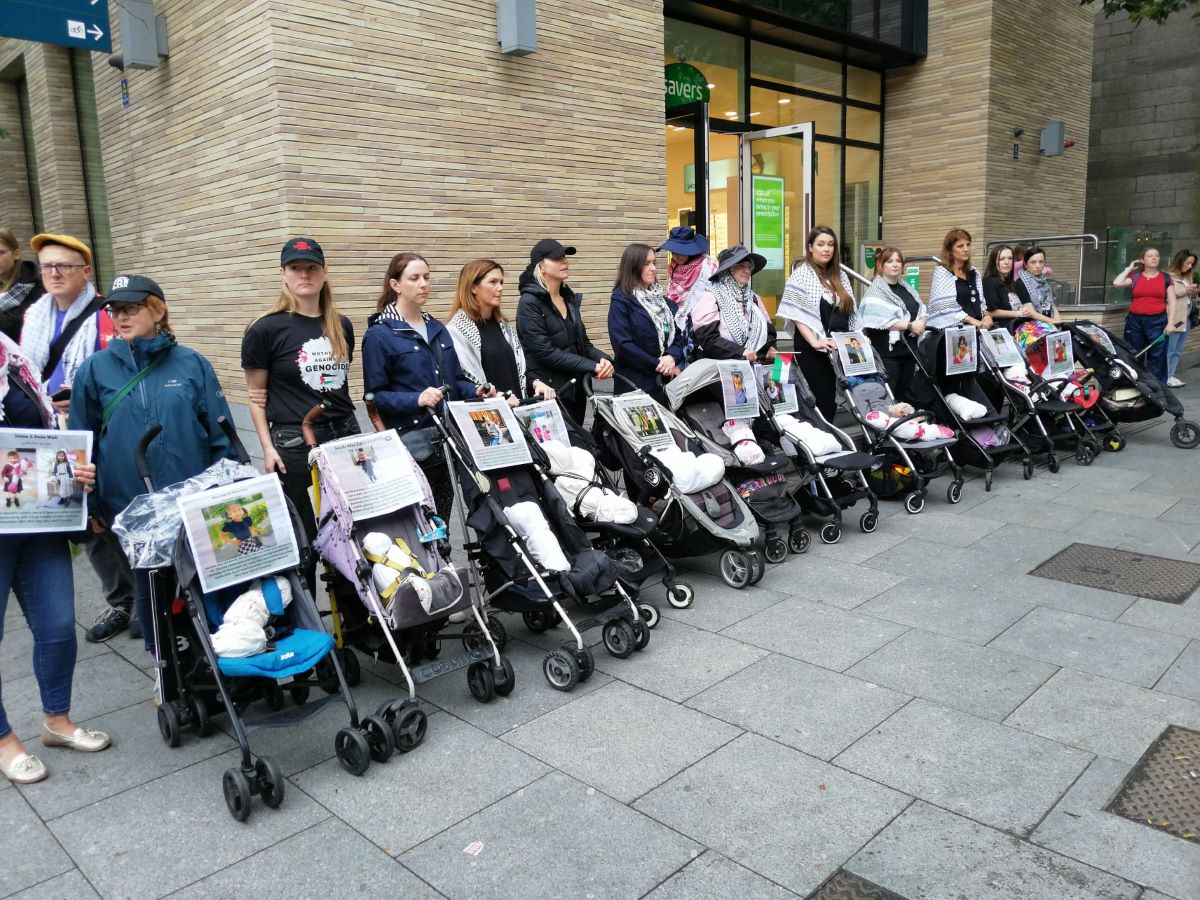
On Saturday 20th June the Irish people, despite their Governments once again marched in a national demonstration to show the Irish majority solidarity with Palestine and horror at their continuing genocide by the ‘Israeli’ armed forces.
The march had been convened by the long-standing Ireland Palestine Solidarity Campaign which has branches across Ireland from Cork to Donegal, including in some parts of the British colony (where however the Loyalists are anti-Palestinian).1


The assassinations of resistance leaders were still to come2 but it had been business as usual in Palestine with daily massacres of civilians by the ‘Israeli’ Occupation forces, ongoing starvation, destroyed health service, impending epidemics, prisoners released as ghosts of their former selves.
Also IOF raids and kidnappings3 in the West Bank, at times with Palestinian Authority4 collusion in arrests of activists, confiscation or destruction of Resistance weapons …


To all this the Palestinians in general have responded by helping one another trying to survive, digging people out of bombed rubble, documenting atrocities, burying their dead, trying to feed their children and elderly …
And their Resistance in all factions (and none) threw stones, fired bullets, launched anti-tank rockets, mortars, missiles and blew up bombs against Occupation armour and soldiers. And of course, contributed new names to the long list of martyred resistance fighters and commanders.
The ECJ,5 to howls of protest from the regime had pronounced its verdict that Israel was indeed, as has long been evident, guilty of practising apartheid against the Palestinians. However not one state ceased giving political or financial cover to the Occupation or supplying it with arms as a result.


IPSC Police?
Only a few Irish Tricolours were displayed on the march which is visually a political mistake, as I’ve observed earlier and the organisers should state that such are welcome. Not one Starry Plough flag, that of socialist Republicans, could be seen either, despite no doubt there being many such participating.
Irish language placards and banners have been getting rarer, despite a previous welcome upsurge upon which I’ve commented in the past. However there were some to be seen, including a number of Saoirse Don Phalaistín flags and the banner of a Newry group, from Co. Down, under British occupation.


As they filled Molesworth Street towards the IPSC stage and police barriers at the end, facing the Leinster House Irish Parliament building, some marchers already began to leave, having heard speeches before and perhaps heading for their transport back to their earlier points of departure.
The company that erects crowd barriers were ready to install them to cut off a section of Molesworth Street at the intersection of narrow lanes and the Gardaí wanted to cram the crowd in beyond the barriers. IPSC stewards began to usher marchers further into Molesworth street.
One approached a group of marchers telling them what the police wanted to which one of the group replied: “I don’t give a f..k what the police want!” and after the steward’s persistence, accused him of doing the job of the police.

Aside from the rough language, what were the IPSC stewards doing passing on police orders?
People in the group said that the IPSC stewards have done this before and that furthermore there was no important-through way being cleared,6 the exercise serving no real purpose other than getting the public used to being corralled and that at the least the police should do their own job.


The main purpose of stewards is to keep the march moving and safely from traffic. The route has been agreed beforehand by the IPSC with the Gardaí which is not a legal requirement in Ireland. Even in that case the stewards should keep a strict separation in functions from the police.
The IPSC does an important job, publishing information and organising events, especially nationally but back in October delayed in even calling for the Zionist Ambassador’s expulsion. Some other groups also organise events and it appears that the IPSC supports some and not others.


Going forward it seems that the solidarity movement, including of course the IPSC, will need to take into account their meagre effect on the Irish Government, not to speak of upon the genocidal state itself and on its supporting states in the West, in particular the USA, Germany, UK …
Such recognition will call for escalation, for direct action, for different kinds of solidarity action … whether some organisations want to participate or not.


FOOTNOTES
1This could be because they see themselves as ‘British’ settlers, while the ‘Israelis’ are European settlers too but is more likely a knee-jerk reaction to the Palestine solidarity exhibited by Irish nationalists (something like “If they’re for them, we must be against them”.
2Assassinations of leaders of Hamas, Hezbolah and senior officers of Islamic Resistance Iraq.
3The IOF and the Zionist State may call them “arrests” or “detentions” but typically they are random or working off a list without warrants or due process. Former prisoners are re-arrested constantly; family of ‘wanted’ individuals are detained in order to pressure the ‘wanted’ to give themselves up. Typically the detained are served ‘administrative detention’ orders, jailing them for months without trial or evidence. Prisoners are underfed, overcrowded, beaten by guards, have dogs set upon them and medically neglected.
4Unelected, undemocratic, corrupt and zionist-colluding body financed by some Western powers and some colluding Arab states.
5https://palestinecampaign.org/icj-ruling-finds-israel-guilty-of-unlawful-occupation-and-apartheid/
6Furthermore, with no side-streets available in that section beyond the intersection, the police could close that west end of the street should they wish to, ‘kettling’ all the demonstrators between two Garda barriers.
Clive Sulish
(Reading time: 3 mins.)
Conflict with security forces of the Palestinian Authority broke out in Tulkarm city in the West Bank today as they tried to seize Palestinian Resistance commander Abu Sujaa (Mohamed Jaber), who was receiving treatment in Thabet Thabet Hospital.
According to reports the PA fired tear gas and used pepper spray inside the Hospital grounds, also striking with batons at protesters including women. Shots were fired at the PA’s HQ and protesters are calling the PA “traitors” and “collaborators”.

After a tense stand-off the PA forces eventually had to leave empty-handed.
Abu Sujaa is a commander of the Tulkarm Brigade, Soraya Al-Quds (Islamic Jihad), one of the main organisations of the Resistance. It is reported that he was injured while handling explosives and taken to hospital; when the PA learned of his presence there they sent forces to capture him.
The arrest attempt by the PA and treatment of protesters has been condemned Soraya Al-Quds and by a number of other Palestinian Resistance organisations including the Al Aqsa Martyrs Brigade coalition, Mujahadeen Movement, PFLP, Hamas and Popular Resistance Committees.
A statement also condemning the PA’s action by students at Birzeit University was signed off by the student movements of Hamas, PFLP, DFLP, PPSF, and PPP.
The point was also made that Abdul Nasser, one of the own PA’s employees, a security officer in uniform, was filmed executed by the IOF recently in cold blood in front of their headquarters in Tubas “without any action, condemnation, or denunciation” by the PA’s leaders.
Abu Sujaa is far from being the first Palestinian Resistance fighter targeted by the PA which holds many prisoners but has also killed fighters, including Ahmed Abu Al-Ful in early May1 and Motasim Al-Arif a month later, on that occasion also while trying to capture Abu Shujaa.2
Two Palestinian civil society activists recently went on hunger strike in protest at their detention by the PA, Fakri Jaradat being released after a week of hunger strike (but 16 days detention) but Ghassan Al-Saadi was transferred to Al-Razi Hospital in Jenin in deteriorated health condition.
This evening, according to local sources quoted on Resistance News Network, PA Security Forces stormed the city of Tubas, apparently in order to assassinate the resistance fighter Omar Meselmani who is wanted by the Occupation, since they shot at him directly.

Palestinian unity?
The Palestinian representative bodies recognised internationally are the PA and the PLO,3 both dominated by the Fatah leadership. The latter were represented at the Beijing Palestinian Unity conference last weekend at which all 14 factions agreed on the need for a unity government.
The PLO excludes Islamist organisations from membership, though both the PFLP and the DFLP delegates stated at the conference that they wished to admit those resistance organisations to the PLO, no such decision was recorded (presumably blocked by Fatah) in the conference decisions.
One might have thought that in the circumstances of the Beijing Agreement, the PA would be keeping a low profile or at least certainly steering clear of conflict with Resistance organisations. On the contrary however, the PA seems to be intent on exacerbating divisions.
Islamic Jihad, possibly divining the PA’s intentions, has declared it will not be drawn into a civil war with the organisation, despite its actions and collusion with the Occupation. But can that posture be maintained if the PA continues persecuting and even shooting its fighters?
Perhaps the PA is doing its best, in order to avoid its being sidelined and as an aid to the beleaguered Israeli occupation, to ensure that civil war breaks out among the Palestinians.
End.
FOOTNOTES
SOURCES & FURTHER INFORMATION
PA arrests of Resistance fighters and other opponents of the Occupation:
https://www.jewishvirtuallibrary.org/political-detainees-in-the-palestinian-authority
https://en.wikipedia.org/wiki/Palestinian_Authority
1https://x.com/PALMENA_IC/status/1786005323565633947
2(https://t.me/PalestineResist/34391)
3Palestine Liberation Organisation
Gearóid Ó Loingsigh (16/06/2024)
(Reading time: 5 mins.)
It was an open secret that the US multinational, Chiquita, financed the paramilitaries. But the company always denied it, until one fine day, due to the insistence of the victims the company had to acknowledge its guilt and pay a fine of $25 million US.
On June 10th, this year, a tribunal in Florida ordered the company to pay $38 million to the families of 8 people who were murdered by the groups Chiquita financed.1
However, the victims in the same period for which Chiquita accepts it financed the paramilitaries and to have allowed them import weapons through their free zone port number more than eight victims, there are thousands.
But it is not just a matter of the number of victims but rather the number of victimisers. The judgement lays bare the discourse of the transitional justice system and that of all the governments, including the current one, about the nature of the conflict.
The peace agreement signed with the FARC, described the problem as one of some criminal guerrillas (and among their ranks there were) and some “rotten apples” in the armed forces (there weren’t any but rather it was a problem with the military institution itself).
The business people were designated as third parties and are not obliged to testify before the Special Jurisdiction for Peace (JEP). But the judgement in the US against Chiquita clearly shows that they are not “third parties” in the conflict but “first parties”.
Once upon a time the role of the multinationals in the conflict was the starting point for all of the left and the human rights groups too, but not anymore.

Before we look at the matter, we should bear in mind that among many of those who are now part of the government, those that signed or promoted the agreement with the FARC are various spokespersons that previously denounced many companies.
I had the honour of investigating the role of the British oil company BP and other companies in the case of Casanare, where the role of the company could be proven.
The company itself, partially acknowledged its bloody role in financing the 16th Brigade alleging that it was legal at that time.
Many organisations have denounced BP, and the voices raised against the company increase in number.2 But legally BP is as innocent as Chiquita once was. In Southern Bolívar we saw how mining companies fomented the war against communities.3

It wasn’t just in that region, but rather in the whole country and included national companies as well.4 The palm companies did their part and the cattle ranchers publicly accepted their role in fomenting paramilitaries,5 to name just a few sectors.
Other reports, as yet not proven to the same degree as the ones against Chiquita, cameout, but few doubt the reports against Coca Cola and Nestlé. Perhaps in a few years we can state it with the same legal certainty as we do now in relation to Chiquita.
And if we get there, it will be exclusively due to the struggle of the victims.
For the current government, the truth commission and many sectors of the Historic Pact (PH) the conflict is to be explained in terms of drug trafficking, minor disputes (never major ones) for land, corruption and the “culture of death in Colombia”.
But none of that is true. It is true that drug trafficking has, up to a point, played a role, and sometimes there are land disputes between neighbours that end badly and violence as a method of resolving problems is socially acceptable amongst many sectors of the country.
But none of this explains the conflict.
The Colombian conflict can be explained in terms of one between national capital, but above all international capital and the Colombian people and can be seen in the fight for land, the economic model, the war on unions, grassroots organisations etc.
Once upon a time it was not controversial on the left to say so, not even among the NGOs and even some politicians did so. Now, however, whoever states as much, dies politically.
Petro has given the excuse that he holds office but not power as a justification to explain the lack of operational capacity of his government and the lukewarm nature of his proposals. But we knew that, we always knew that, even when Petro on the campaign trail said he would “take power”.
People used to accept the idea that Colombian policies are not decided in the Nariño Palace (presidential palace) but rather in the White House and the cafés of Wall Street. The owners of the “cafés” decide more than do the Colombian people.
Those that serve the coffee are companies like Chiquita and it is the Colombians who wash the dishes.
President, are you the owner of one of these cafés, a waiter or a dishwasher? Tell us in detail. We would like to know who took the decision to allow Chiquita and the rest of the companies to kill left, right and centre.
We would like you to name those companies that kill peasants. Or, do you not as President have access to the military and police archives etc.?
On the election campaign, Petro said he was the Biden of Colombia.
But Biden and the Democrats have always received funds from multinationals, particularly from the agribusiness sector. So Petro should tell us whether he is still the Biden of Colombia and what he intends to do with Chiquita and other companies behind the Colombian conflict.
The peace process with the FARC and the rise of the PH as a party of government has left us a pernicious legacy, where we talk about the conflict in psychological terms, of evil, or individual responsibility (except when dealing with the insurgency).
And from the onset deny the role of the US in the conflict and the role of companies, particularly the multinationals. The business people are not on trial in the JEP, except those who voluntarily place themselves before the tribunal.
And that is only done by those who face a sure sentence in the ordinary justice system and see in the JEP the possibility of avoiding jail time. The Truth Commission excluded the business people.
In 2015, in the middle of his speech to the Colombian Oil Association, the then President Santos tried to reassure them and promised that he was not going to pursue them.
He gave them some advice, suggesting that if there was ever report made against them they could allege they were coerced.
Furthermore he stated, “Which businessman is guilty of war crimes or crimes against humanity? If there is even one, he might be put on trial, but I don’t see how, or where…”6
Well, for the moment we could reply that perhaps in Florida, but not in Bogotá and not due to the NGOs, state bodies and other personalities who sell us that image of the conflict in which companies are not the driving force behind the conflict.
End.
Comment by Rebel Breeze:
Chiquita is the current manifestation of the infamous United Fruit Company which organised a massacre against striking fruit workers in December 1928:


NOTES:
1 The Guardian (11/06/2024) Chiquita ordered to pay $38 million to families of Colombian men killed by death squads. Luke Taylor. https://www.theguardian.com/world/article/2024/jun/11/chiquita-banana-deaths-lawsuit-colombia
2 Declassified UK (18/07/2023) La financiación de BP a los militares asesinos de Colombia. John McEvoy. https://www.declassifieduk.org/es/la-financiacion-de-bp-a-los-militares-asesinos-de-colombia/
3 Ó Loingsigh, G. (2003) La estrategia integral del paramilitarismo en el Magdalena Medio. España. https://www.academia.edu/96631813/LA_ESTRATEGIA_INTEGRAL_DEL_PARAMILITARISMO_EN_EL_MAGDALENA_MEDIO_DE_COLOMBIA
4 Ramírez, F. (2010) Gran minería en Colombia, ¿Para qué y para quién? Revista Semillas No. 42/43 https://semillas.org.co/es/revista/gran-miner
5 Ó Loingsigh, G. (2006) El Catatumbo: Un reto por la verdad. Cisca. Bogotá. P.153 https://www.academia.edu/16951015/Catatumbo_Un_Reto_Por_La_Verdad
6 Cited in Sinaltrainal et al (2016) Ambiguo y decepcionante acuerdo: itinerario para la impunidad de crímenes de Estado. P.24 https://rebelion.org/docs/208980.pdf
Diarmuid Breatnach
(Reading time: 3 mins.)
The good news from South Africa’s case against Israel at the International Court of justice is that it considers that the zionist entity has a case to answer with regard to genocide against the Palestinians. But its interim instructions are profoundly disappointing.
The ICJ did not even order a humanitarian cessation of bombing from Israel and without that food, water, waterproof emergency shelters, blankets, medicine and fuel for heating cannot be brought in to Gaza. Ambulances often cannot get to bombed sites to collect and deliver victims to hospitals.
Or to collect the dead for burial.

And in addition to the Israeli bombing, the health situation of the Palestinians in Gaza is dire. According to the relief agency of the EU, though visibly biased against the Palestinians: “Urgent needs include water and fuel … to run generators of hospitals and desalinate water; and
“protection of civilians in line with international humanitarian law, including rapid, unhindered, and safe access of humanitarian aid – at the scale needed – into the Gaza Strip for it to reach those in need; health services; food; sanitation and hygiene; shelter and education in emergencies.”
A Victory?
Some states, organisations and people are calling the interim judgement of the ICJ a victory. I just cannot see that, even partially. So Israel has a genocide case to answer? NO. Israel in full view of the world has been guilty of genocide not just since this bombing of Gaza but since 1948.
Clearly. Repeatedly. And with impunity (save for actions of Palestinian resistance and allies). Not only that but the UK, the USA and the EU are complicit in that genocide, funding, arming and justifying the Zionist state’s actions.
And, like the Irish State, in failing to act to prevent genocide, which is a statutory obligation on signatory states.
The Zionist state is also of course violating the UN Convention on Genocide to which it is a signatory.
None of that is debatable to any degree whatsoever. Not according to the evidence of our eyes and ears and to the UN’s definition of genocide: a crime committed with the intent to destroy a national, ethnic, racial or religious group, in whole or in part.
If killing well over 26,000 Palestinians – a national and ethnic group – in little over 100 days doesn’t fit that definition, what would?
If laying siege to Gaza and shutting off food, medicine and heating to its people, blanking telecommunications, bombing housing, hospitals, refugee camps, schools, bakeries, fishing boats, churches, mosques, water and sewage treatment plants, does not fit the definition, then what will?
And yet we may have to wait years for the final judgement of the ICJ on this question.

Interim Measures
Meanwhile, the ICJ, without specifying an interim humanitarian cessation of bombing, has instructed Israel to take all measures within its power to prevent the commission of all acts within the scope of Article II of this Convention (i.e on Genocide),
But since Netanyahu claims that they are already doing that, how is that instruction going to make any difference?
The ICJ specified in particular: “(a) killing members of the group; (b) causing serious bodily or mental harm to members of the group; (c) deliberately inflicting on the group conditions of life calculated to bring about its physical destruction in whole or in part; and
“(d) imposing measures intended to prevent births within the group. The Court recalls that these acts fall within the scope of Article II of the Convention when they are committed with the intent to destroy in whole or in part a group as such.
“The Court further considers that Israel must ensure with immediate effect that its military forces do not commit any of the above-described acts.”
Again, but since Netanyahu claims that they are already refraining from such acts, how is that instruction going to make any difference?
The only interim instruction of practical use would have been to oblige Israel to a humanitarian cessation of bombing, even if temporary but it failed to do that.
The international humanitarian restrictions on states to prevent and punish genocide after the European genocides of the 1930s and 1940s have failed. They failed before in Cambodia, the Balkans and they are failing now in Palestine.
Perhaps a socialist world order can restore them. It is clear that a world dominated by imperialism cannot.

End.
Sources
Reports on ICJ Interim Judgement:https://www.nytimes.com/live/2024/01/26/world/israel-hamas-gaza-news and https://www.aljazeera.com/news/2024/1/26/world-reacts-to-icj-ruling-on-south-africas-genocide-case-against-israel
Text of Interim Judgement: https://www.icj-cij.org/sites/default/files/case-related/192/192-20240126-sum-01-00-en.pdf
UN Definition of Genocide: https://www.un.org/en/genocideprevention/documents/Genocide%20Convention-FactSheet-ENG.pdf
Dire situation of the Palestinians in Gaza (hostile source): https://civil-protection-humanitarian-aid.ec.europa.eu/where/middle-east-and-northern-africa/palestine_en
News & ViewsNo.16 Diarmuid Breatnach
(Reading time: 3 mins.)
Mary Lou went to London to speak at the rally after a huge Palestine solidarity march in that city. Nothing wrong with that and it could even be a good expression of solidarity — were it not for something she said there.
Mary Lou MacDonald is the President of Sinn Féin, a former revolutionary Irish Republican political party and which, since the last general election, has the most representatives in the Dublin parliament and is widely expected to lead the next coalition gombeen government of the Irish State.
A number of media reports, including SF’s own, quote Ms MacDonald, after rightly expressing condemnation of Israel and support for the Palestinians, referencing the Irish pacification process as a way forward for the Palestinians to peace and freedom. 1

However, the Palestinians have already experienced their own pacification process, back in the early 1990s, which culminated in the Oslo Accords. In exchange for local government and increased opportunities for corruption, the PLO recognised Israel and ended its armed struggle.
They also put the return of hundreds of thousands of refugees on the long finger or more accurately on the pipe-dream-never-never shelf. Although the secular Al Fatah was the dominant member of the PLO it was not long until the youth in particular replied with the Second Intifada against them and ‘Israel’.2
From then on the political stock of Al Fatah and its leader, Yasser Arafat, fell dramatically – the islamist Hamas won the Palestinian Authority elections in 2006, with the result that the latter rule Gaza but decided to avoid civil war and not claim its electoral victory and the PA HQ in the West Bank.
There, the PLO-Al Fatah continue to rule in corruption and in repression of dissent and it is widely accepted that most Palestinians view Al Fatah as enforcers for Israel. But the EU and USA funding continues to flow into the PA’s office which Al Fatah refuse to vacate.
There is no doubt that the corrupt PA leadership is reviled by most Palestinians in the West Bank and abroad or that most Palestinians reject the Oslo Accords and the two-state proposal, even if it were practicable, which it is not.

Didn’t she know? Didn’t Mary Lou know that the Palestinians had already tasted the pacification brew and spat it out? She should have, because PLO and ANC delegates at Sinn Féin Ard-Fheiseanna had both been of use in selling the pacification process to the party’s supporters.
It is possible she did not know – with some exceptions, ignorance of politics and revolutionary processes on the international plane is wide among her party, including at its management level. (After all, does that knowledge help your party get elected? No? Well, then!)
If she did know, what does it mean? It would mean that she was offering her offices and those of her party in selling pacification process Mark II to the Palestinians, i.e backing up the Biden administration’s wish to have the corrupt PA replace Hamas in managing a ruined Gaza.3
Nor would it be the first time SF participated in exporting the poison. Adams did so to the Basque national liberation movement (alongside Tony Blair’s representative) so that its leadership too collapsed its struggle (unlike the Provisionals without having any of its political prisoner freed).4
Mary Lou’s comments represent yet another disgraceful episode in her party’s post-Good Friday Agreement development, yet another milestone on their long road of betrayal and collusion.
But this time in backing the dismemberment of Palestine under neo-colonial Zionist rule in the imperialist-backed two-state “solution”, the poison is being pushed at a fraternal people in the struggle, one which the broad Irish people have overwhelmingly taken to their hearts.
End.
FOOTNOTES
1https://vote.sinnfein.ie/sinn-fein-president-addresses-march-for-palestine-in-london/ and https://www.irishexaminer.com/news/arid-41308273.html
2“The Second Uprising”, 2000-2005.
3https://www.reuters.com/world/us-wants-shakeup-palestinian-authority-run-gaza-after-hamas-2023-12-16/
4The EH Bildu party under Arnaldo Otegi, who promoted the pacification process in the Basque Country, is currently helping to prop up the Spanish social-democratic coalition government. Nearly 50 of the network of political prisoner support groups some years ago, in order to stay out of jail, pleaded guilty to false charges of “supporting terrorism” and EH Bildu no longer refers to “political prisoners” – just to “prisoners”.
SOURCES
https://vote.sinnfein.ie/sinn-fein-president-addresses-march-for-palestine-in-london/