‘PEACE’ PROCESS LESSON FROM THE PALESTINIANS

Diarmuid Breatnach


                        The ongoing slaughter by Israeli soldiers of Palestinians demonstrating at the border of the Israeli State for the right to return to their homeland has rightly received media attention and, after a motion condemning Israel in the UN Security Council was blocked by the USA, the General Assembly passed another by a huge majority. The shootings demonstrate the total disregard of the Zionist authorities for Palestinian life and also the degree to which, by refusing to condemn and by supplying finance and equipment, the USA and major European states stand in support of Israel and are therefore complicit in its murderous actions. But the whole history of the right of return of Palestinians raises another issue of international importance and provides a historical and political lesson applicable widely, far beyond Palestine or even the Middle East.

A Palestinian woman brandishes a key, symbol of the house her family left behind when forced out of Palestine. Ironically Sephardic Jewish families were forced out of medieval Spain and some still keep a key to their ancestral home.
(Photo from Internet)

Negotiations, Agreements and ….?

Back in 1993, the Palestinian Liberation Organisation was in secret negotiation with Israel in Oslo, with Norway in the ‘honest broker’ role (but a later Norwegian Foreign Office investigation concluded that the Norwegian participants had acted as “Israel’s errand boys” – see link). Later it was to be the USA playing the ‘facilitator’ role — yes, bizarre, given the USA’s major economic and strategic interests in the Middle East and its role in supporting Israel. But then, perhaps the PLO figured they’d best have both their enemies there at the same time, both tied to whatever agreement was hammered out.

What had brought the parties to the negotiation table was the First Intifada, a Palestinian uprising against Israeli occupation of Gaza and the West Bank. This uprising had begun on 9th December 1987 and had been characterised by repeated street fighting, barricades, refusal to work for the Israelis and strikes and boycotts, along with refusal to pay taxes. The Israeli state had replied with arrests and shootings, killing over 1,600 Palestinians as against 277 Israelis killed. Between 23,600–29,900 Palestinian children required medical treatment from Israeli Occupation Force beatings in the first two years (Wikipedia).

Palestinian youth throwing stones at Israeli military during First Intifada (Photo: Internet)


Palestinian women confront Israeli soldiers during First Intifada (Photo: Internet)

After signing the Oslo Accords in Washington, Yasser Arafat, Chairman of the PLO and Yitzak Rabin, Prime Minister of Israel, were photographed there shaking hands with US President Bill Clinton looking on approvingly, arms almost around them, like a big friendly uncle making peace between nephews. Yizhak Rabin, Shimon Perez and Arafat were jointly awarded the Nobel Peace Prize in 1994 (a prize already devalued ever since it had been awarded to notorious warmonger Kissinger).

Rabin, Clinton and Arafat, Washington, after signing of the Oslo Accords.
(Photo: Internet)

Much was made of the Oslo meeting and the Accords (including later meetings and agreements) in the international media with talk of coming peace in Palestine and a resolution to the conflict etc signposted and not too far ahead. These prediction proved false and hopes were dashed.

But anyone examining the situation cooly would not have been surprised. Leaving aside other issues such as whether a two-state solution was justifiable, or viable even then, or whether the legitimacy of Israel should ever have been agreed to, the right of return of Palestinian exiles had been set aside by the PLO in the final Oslo agreement, a postponement, along with a number of other big issues, such as illegal settlements, to be discussed later. The Palestinian diaspora is today estimated at 9.6 million people (see link).

Since the omissions were of issues fundamental to any solution even within the parameters of the dubious two-state solution, it would have been obvious to anyone who had their eyes open that the Oslo Accords were no solution nor even a step towards a solution. So why were they agreed by the PLO?

A belief in the Accords as a stepping-stone would not have been sustainable on its own (except for wishful-thinking liberals) and the partial withdrawal of Israeli armed forces insufficient, given that Israel controlled all borders (except the Gaza one with Egypt, in which that state colluded with Israel). In addition, the Israeli troops had the capacity to return whenever they wished (and did so many times).

The motivation has to have been status or money.

The PLO, although containing a number of Palestinian organisations at that time (but not Islamic Jihad or Hamas), was dominated by Al Fatah, a secular Palestinian national liberation organisation. Fatah had the prestige of long existence and of having withstood the Israeli armed assault at Karameh in Jordan in 1968 during which, at a huge cost, it had forced the Zionist army to retreat. The following year Fatah had reportedly racked up 2,432 guerrilla attacks on Israel too — for a population with the Zionist jackboot on its neck, that counted for a lot.

Concluding an agreement with the Israelis, who previously said they would not talk to the Palestinian resistance, might have seemed like a status-raising event to Fatah. And setting up the Palestinian Authority, which of course they would run, would definitely give them status in the eyes of many outside and even inside Palestine.

But running the PA, which would be in receipt of funds and in charge of their distribution, also managing employment, would also provide myriad opportunities for corruption and nepotism, unless the organisation were to be rigorously monitored either externally or internally. That monitoring did not happen and corruption among Fatah was rife. Only the people on the ground seemed to mind, the ones who wanted strong opposition to the Israeli occupation and whatever development could be brought about in the infrastructure and communities, along with the longer-term aims of a Palestinian state and the return of refugees and exiles. And who weren’t part of the corruption.

Failure of Agreements and Insurrection

In 2000, after the failure of the Camp David talks in the US and many failures in the Accords in the nine years of their existence, no-one seriously believed in the Oslo Accords any more and the Second Intifada began. An intifada had provided the reason to negotiate for the Israelis, however insincerely intended and now another intifada brought the negotiation period formally to a close.

As observed earlier, Fatah was the organisation to which the majority of Palestinians (certainly within Palestine) had given their support and it was a secular party (although for the first time the PLA declared the “state religion” to be Islam in 2003, where previously there had been no mention of religion whatsoever). We can assume that most Palestinians were happy to be represented by a secular organisation and perhaps even preferred it.

But in the 2005 municipal, most Palestinians voted for Hamas, a fundamentalist Moslem organisation, for the first time pushing Fatah into second place. And in the Presidential and Parliamentary elections of 2006, again. What brought about that change? Was it a sudden devotional conversion? No, it was that Al Fatah had become corrupt, was not seen to be fighting Zionism hard enough (some would have said was becoming collaborationist) and had given up on the right of refugees and exiles to return. Hamas, though not officially represented in the PLO, was running social programs, its activists seemed disciplined and it was resolutely opposing Israeli Zionism politically and militarily. And it insisted on the right of refugees and exiles to return.

Hamas won the 2006 Palestinian elections with a 3% lead over the incumbents. Unwilling to accept the popular will, Fatah staged an armed uprising against Hamas which, in the Gaza strip, Hamas decisively won (what the Wikipedia entry on Hamas calls a “takeover”!). For some reason, although Hamas was undoubtedly the winner electorally, they let Fatah hang on to power in the West Bank. And the US-led demonisation and isolation of Hamas in Gaza by the West began, along with a series of Israeli armed attacks from that year until 2014, including full-scale missile and air bombardments and infantry incursions, killing thousands of Palestinians including civilians, women and children and destroying much infrastructure.

Since then, the Gaza population is being squeezed with electricity supply reduced to four hours a day and hardly any fuel to run generators or transport allowed in past Egyptian and Israeli gates, its water supply contaminated by damaged sewage treatment plant, the inshore sea likewise contaminated and Palestinians fishing further out attacked by Israeli gunboats, factories bombed out ….

The message seems to be: “Get rid of Hamas, get back with Fatah and we’ll stop exterminating you.” But a delayed extermination is all it would be, as evidenced from the deeper penetration of Zionist colonist enclaves on to Palestinian land, the Zionist-only roads, the ongoing takeover of Jerusalem, the Israeli Wall, the continual theft of water and the harassment by settlers and Israeli Army of any populations of Palestinians living near to Israeli colonists.

The Processes outside of Palestine

Taking a trip back in time to 1993, we saw the Oslo Accords being hailed as a great step forward by the majority of commentators across the West. These coincided with the new interim constitution as a result of the negotiations in South Africa — so that then two major areas of conflict were being hailed as definitely on the way to a solution, to come sooner rather than later. “Peace process” became a buzz-word, firstly among the participants and some of the commentators, then in the agreed discourse of the rest of the media and politicians.

In Ireland, as the Provisionals’ leadership and the British looked at one another across the dance floor, the former wondered what they could get from the same kind of process but crucially, how to sell it to their rank and file. At the Sinn Féin Ard-Fheiseanna (annual congresses of the party), the ANC and Al Fatah (wearing their PLO hat) fraternal delegates were welcomed by hype from the SF leadership and enthusiastic reception from the floor of the hall. The ANC and Fatah of course talked up their parts of the Processes and no-one seemed to examine critically what either the South African blacks or the Palestinians were likely to get out of them.

Ramaphosa, Mandela & Zuma at Jo’burg Conference 2012. Zuma is now deposed from ANC for corruption and Ramaphosa is millionaire President of South Africa and ex-leader of the National Union of Mineworkers. (Photo: from Internet, by Walter Dhiadhia)

And the Pal-African partnership continued to attend congresses, to send fraternal messages to areas of ongoing anti-imperialist resistance, to sing their siren song with a Western chorus backing. The Provisionals joined the actors and took to the stage as they neared and finally accepted the Good Friday Agreement in 1998. But with the Palestinian conflict showing no sign of resolution (unless one considers a kind of genocide of Palestinians) or even a respite — and in particular after the 2006 elections victory by Hamas — the Palestinians were no longer quoted as a good example of the “peace process”. Various actors, including South Africans and Irish, went on to try to sell the “Process” to areas of stubborn anti-imperialist resistance: the southern Basque Country, Turkish Kurdistan, Columbia, Phillipines, Sri Lanka ….. But the Palestinians (or rather Fatah) had been dropped off the billing and bowed quietly out of the Traveling Peace Process Show. They had not even an illusion to portray any more.
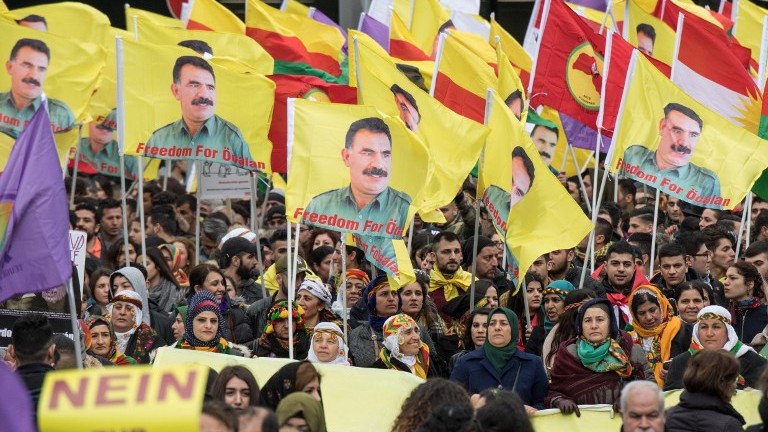
Kurds demonstrating against Turkish dictatorship in Germany fly flags bearing image of Abdullah Ocalan. Some years ago he said he supports a peace process in Turkey but he needs to be freed from prison to lead it
(Photo: the Times in Israel).

However, the show must, as we are often reminded, go on. It failed to deliver in Kurdistan and the Basque Country, not because the leaders of the resistance movements were not amenable but because of the unwillingness to adapt of the Turkish and Spanish regimes respectively. However, the Basque armed organisation ETA threw in the towel a couple of years ago anyway, abandoning their fighters in the jails to seek their own individual ways out through begging forgiveness of the occupiers of their land and oppressors of their people. The Turkish and Syrian Kurds were drawn into partnership with the imperialist allies dominated by the US, in their war against ISIS but also for the overthrow of the Assad regime, though deep Kurdish contradictions continue with the Turkish regime, to which it looks like the US Coalition will abandon them and they may seek an accommodation of sorts with Assad.

The Colombian FARC and MIR swallowed the Processed bait and gave up the armed struggle for a promise of a political one but those of their leaders who are resolute are being hunted by the regime, the quasi-liberated areas terrorised by the Army and assassination squads, the resistance fragmenting and disorientated. The Tamil Tigers didn’t entertain the Peace Process Show but the Sri Lankan Army were able to surround their liberated areas and bombard them to defeat, murdering their leaders and raping, murdering and repressing their followers.

The Phillipines and India? The resistance groups in both these areas are led by a Maoist-type leadership and we wait to see.

And in Ireland, after two decades since the signing of the Good Friday Agreement, the colonial occupier has the leadership of Sinn Féin, the former resistance, in joint colonial government, the party’s southern arm seeking admittance to the Irish comprador capitalist club, the remaining anti-imperialist resistance fragmented and the country not one step nearer to unity and independence.

The Palestinian lesson for the world

All the issues which led to these conflicts and which the processes of pacification did not address – were never intended to address – will return again, to be struggled over anew, under new leaderships. In Palestine now, that is what has been happening. The Right of Return for exiles and refugees, put to one side by Fatah in the Oslo Accords nearly three decades ago, is being demanded again on the Israeli border, the protesters (along with the ‘collateral damage’ of journalists and paramedics) being bombarded by tear gas and shot down by Israeli snipers. The Palestinians, whose leadership nearly three decades ago were chosen by US imperialism to be among the first to accept the new round of historical pacification processes and to become complicit in being its missionaries, are teaching us the fallacy of the facile promises they were made at the time.

There is another irony here: while refusing the right of return to Palestinians who were themselves exiled or are children and grandchildren of exiles, i.e within living memory, the State of Israel offers “the right of return” (sic) to people who have never been there and cannot even prove that their ancestors were, providing only they can prove their Jewishness. And a further irony: Sephardic Jews, who were expelled by the Christian kingdoms in Spain and Portugal in the Middle Ages, were being offered a “right of return” by the Spanish Government in 2014 (see link).

Over time, the people in the other areas of anti-imperialist resistance around the world will regroup, gather strength and return to the resistance. The imperialists almost certainly know this. But they have bought themselves three decades of damage to their opposition and, since they need the people as producers and consumers, cannot eliminate the deep wells of resistance. And capitalism is not about enduring solutions – they work away at undermining the resistance on a temporary basis and as for the future, like Micawber in Dickens’ David Copperfield, believe that “something (else) will turn up”.

End.

LINKS (NB: I have deliberately chosen most background references regarding Palestine from Wikipedia, which is known to be heavily monitored by Zionist interests and also has inputs from friends of the Palestinians and therefore cannot be said to be completely favourable to either side):

Palestinian exiles and the right of return: https://en.wikipedia.org/wiki/Palestinian_diaspora

Account of the Oslo Accords: https://en.wikipedia.org/wiki/Oslo_Accords

The Oslo Accords negotiations and their legacy: https://interactive.aljazeera.com/aje/palestineremix/the-price-of-oslo.html#/14

The Palestine Liberation Organisation: https://en.wikipedia.org/wiki/Palestine_Liberation_Organization

The right of return to Palestine of Palestinians: https://en.wikipedia.org/wiki/Palestinian_right_of_return#UN_General_Assembly_Resolution_194

The right of return to Spain of Sephardic Jews: https://theconversation.com/spain-moves-to-right-a-522-year-wrong-but-still-overlooks-some-23526

FREE JULIAN ASSANGE PICKET AT BRITISH EMBASSY DUBLIN

CROWD AT BRITISH EMBASSY DUBLIN CALLS FOR RELEASE OF JULIAN ASSANGE

Diarmuid Breatnach

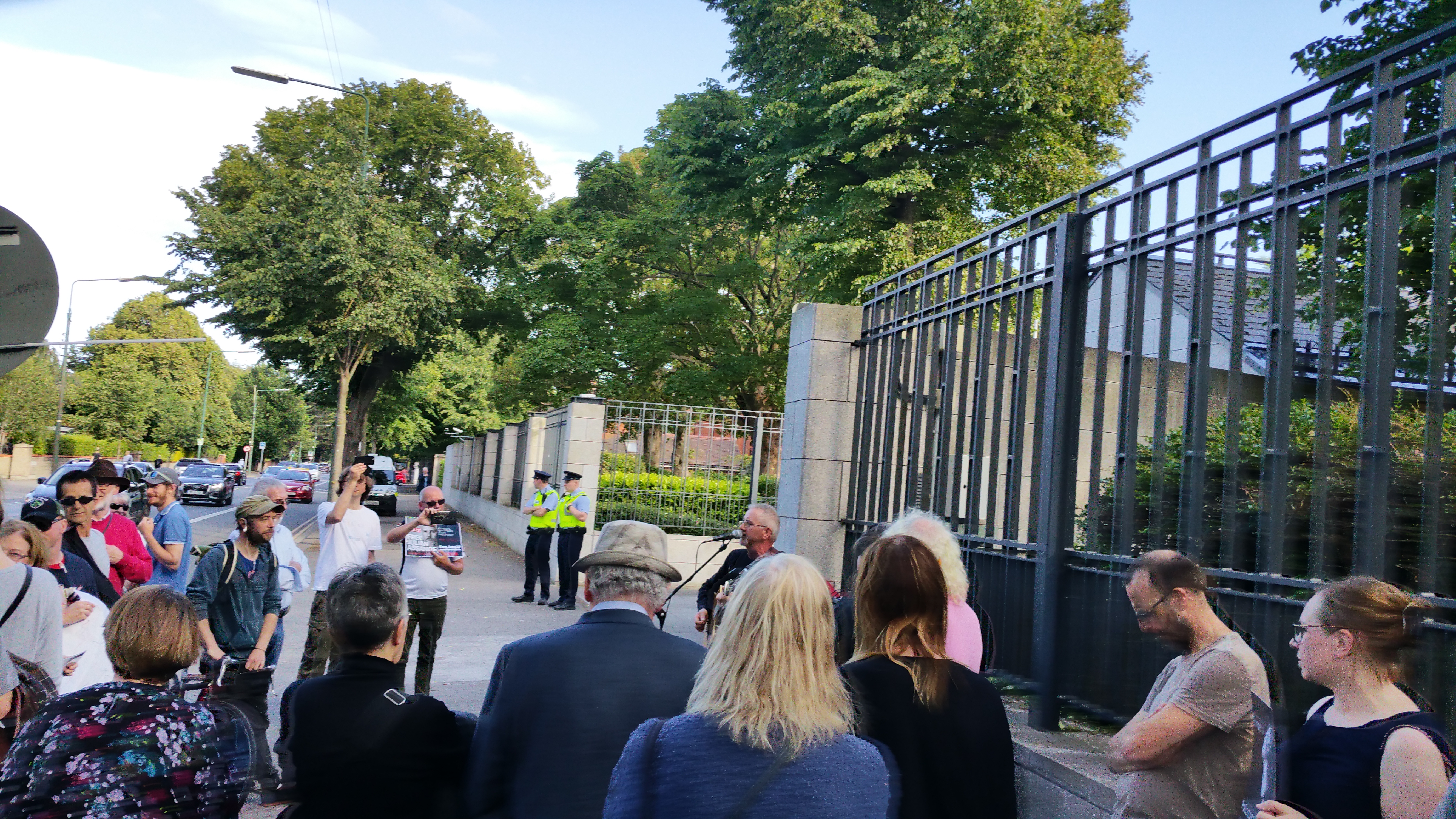
View of crowd at British Embassy from across the street (Photo: D.Breatnach)

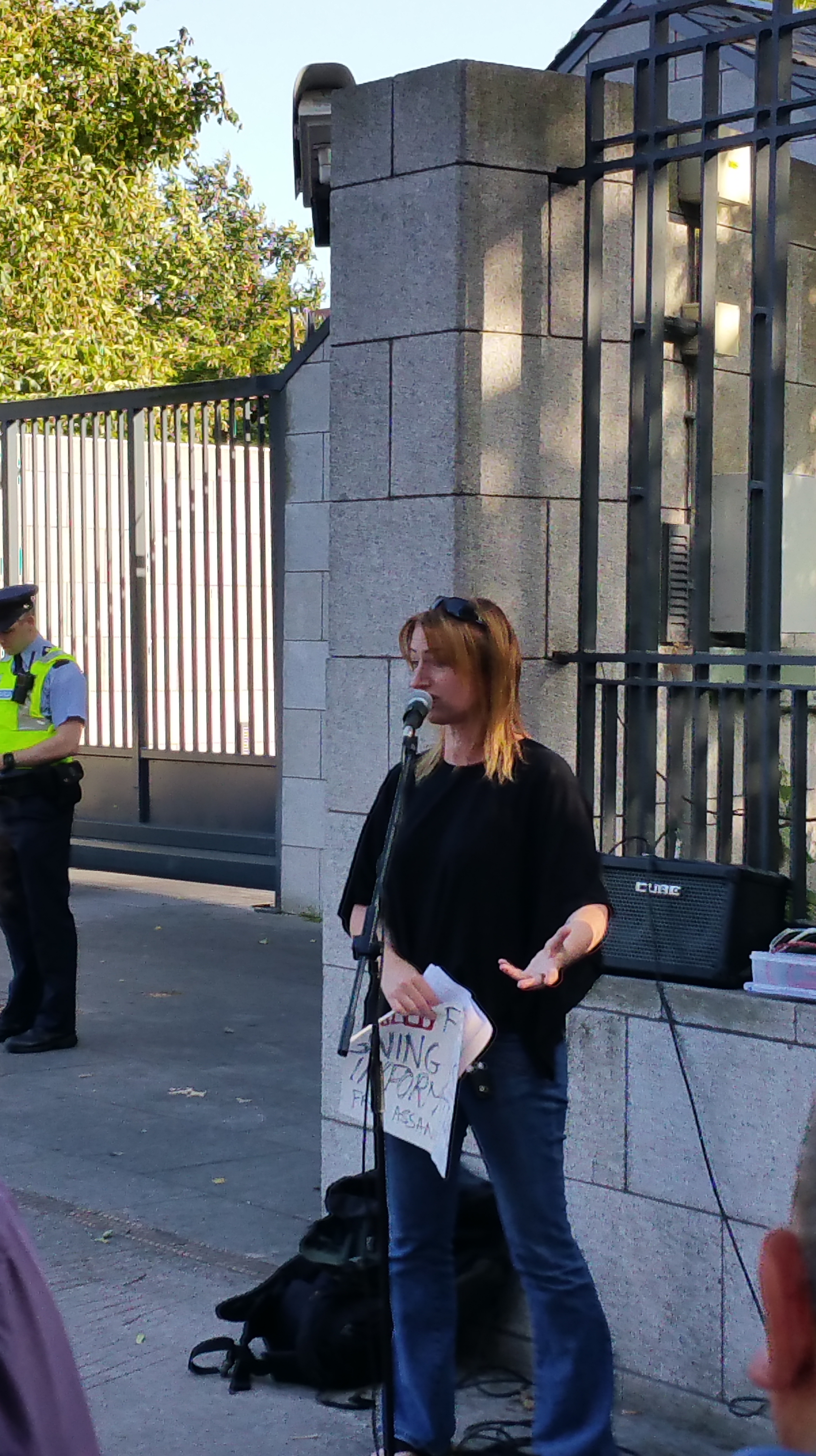
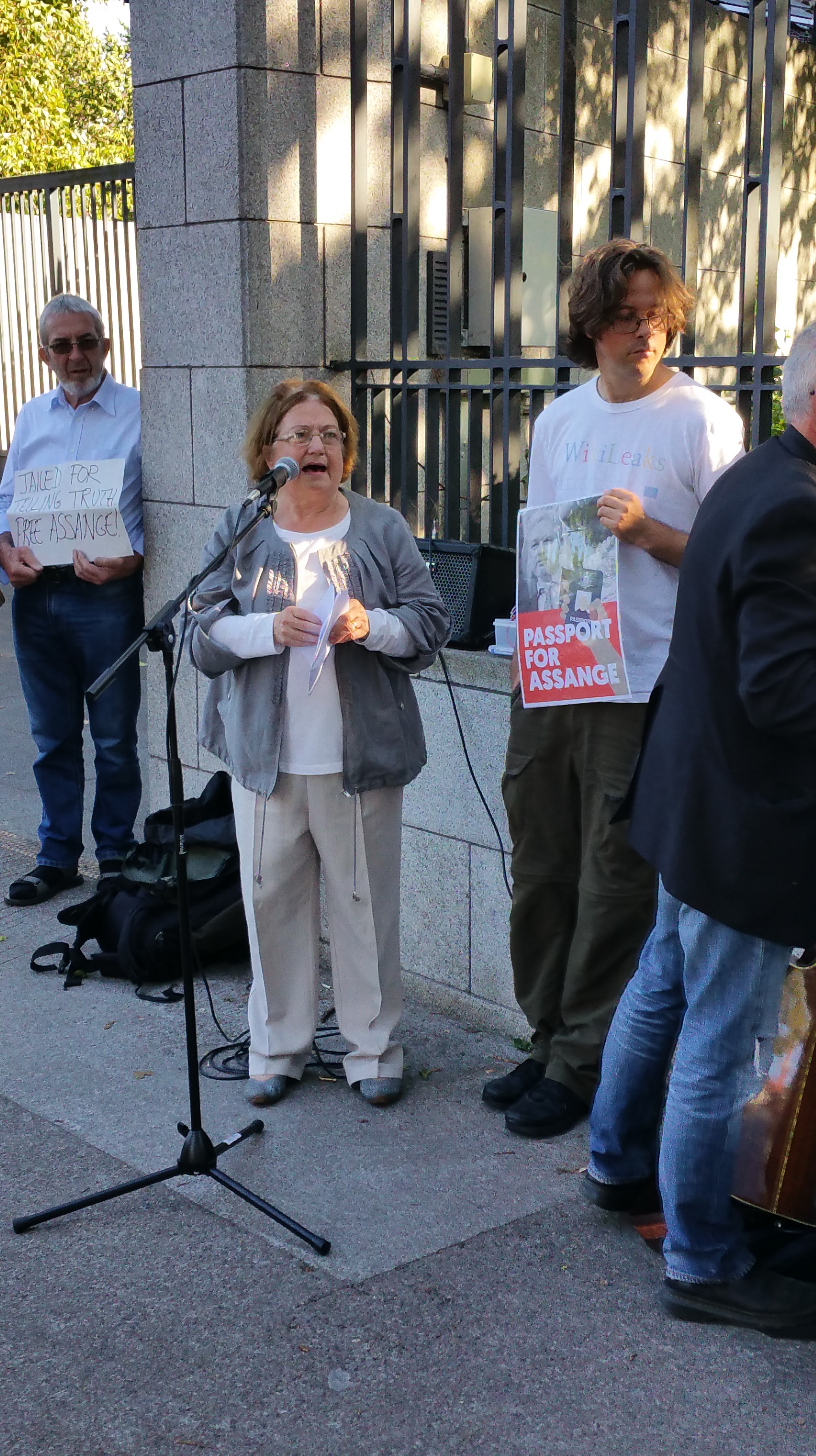
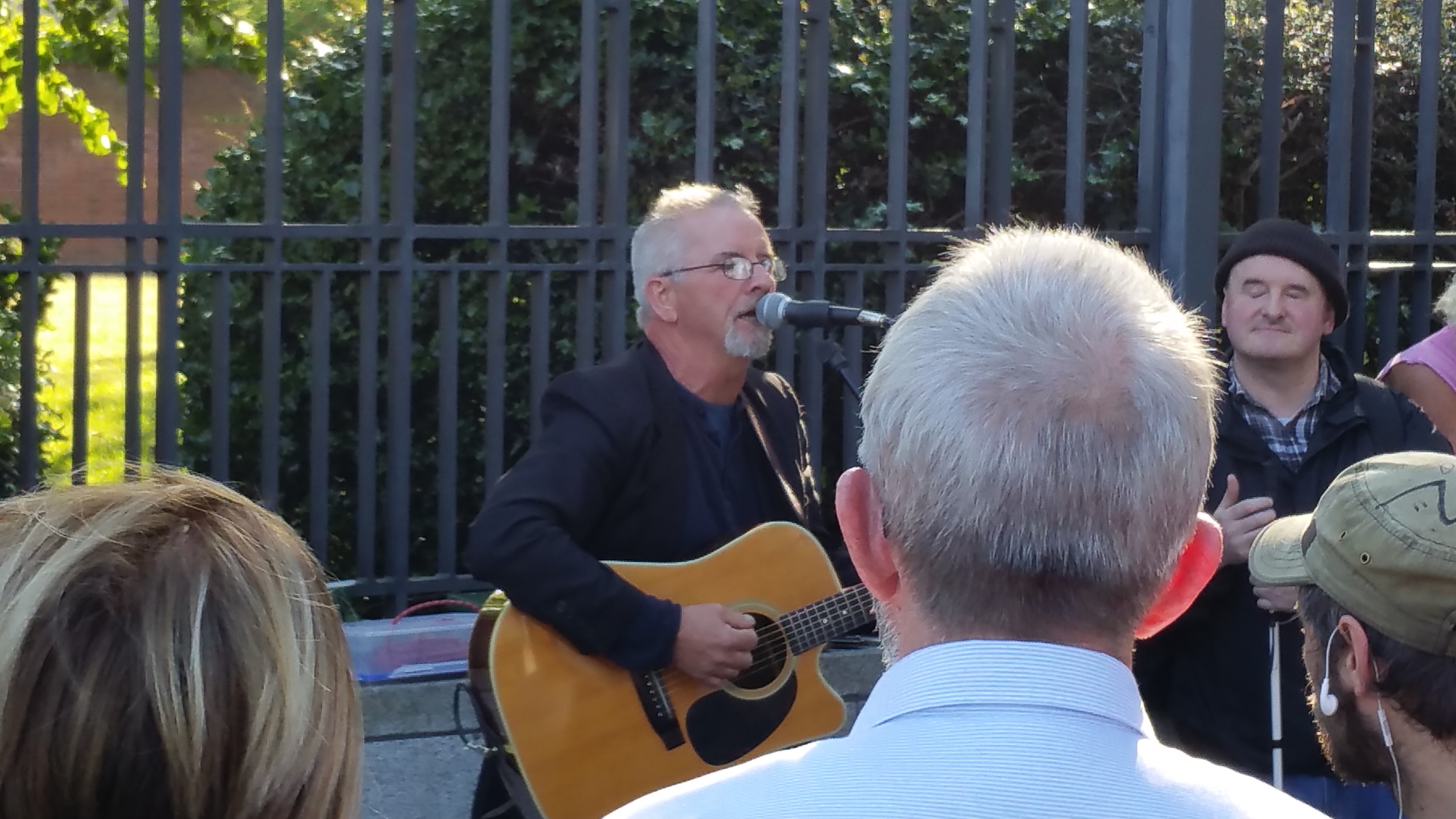
Today, June 19th, is the anniversary of the date when Julian Assange sought asylum in the Ecuadorian Embassy in London, which he was granted. That was 2012, since which he has been confined to a few rooms in that building, unable to leave for fear of British arrest and extradition to the US, where he is wanted for broadcasting their secrets on their murderous campaigns in Afghanistan and Iraq and other matters. A crowd gathered outside the British Embassy to demand Assange be set free – among them as speakers were TDs Clare Daly, Mick Wallace, along with Nobel Peace Laureate Mairéad Corrigan and musician Paul O’Toole (also another musician).

Paul O’Toole playing and singing
(Photo: D.Breatnach)

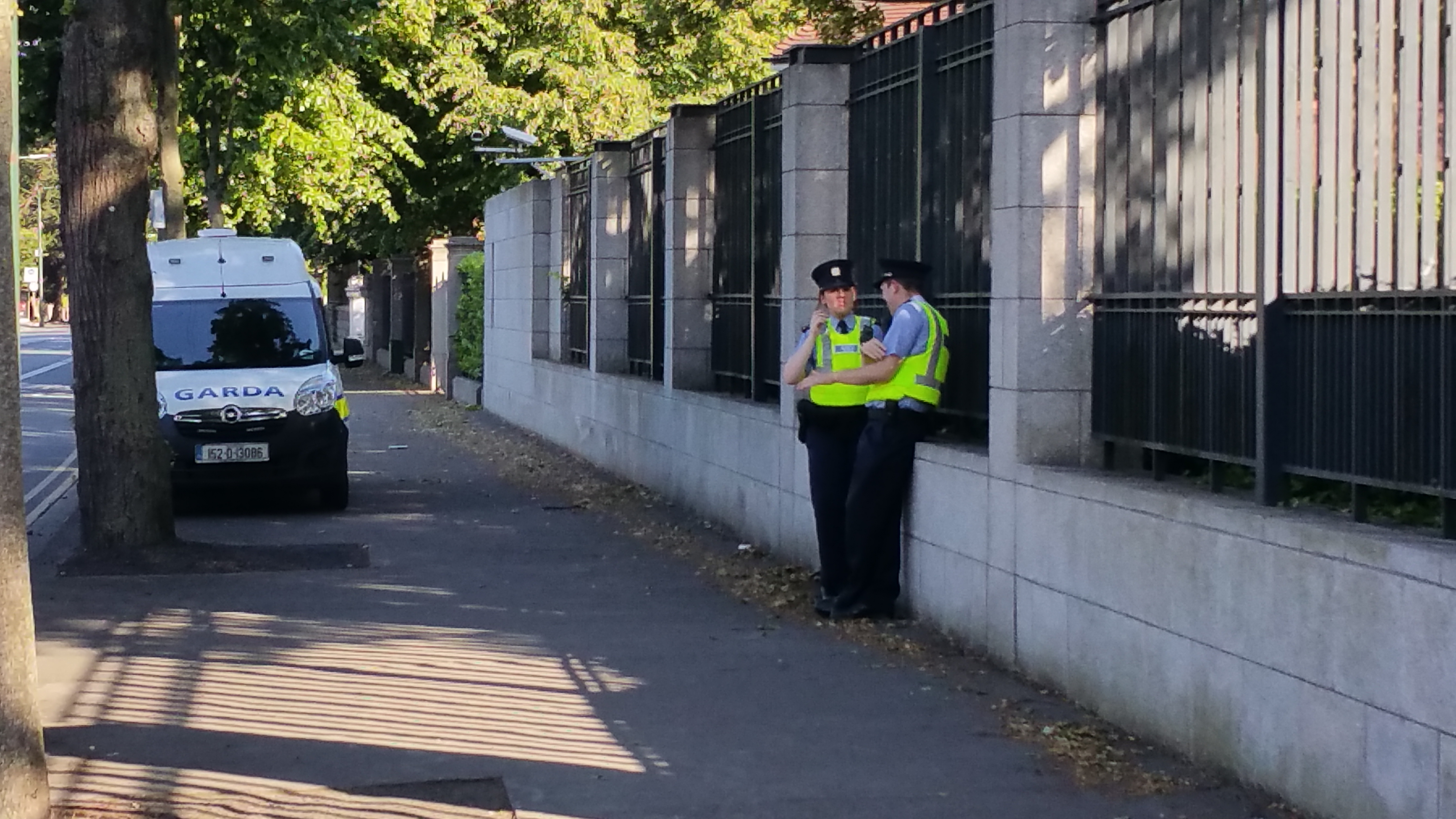
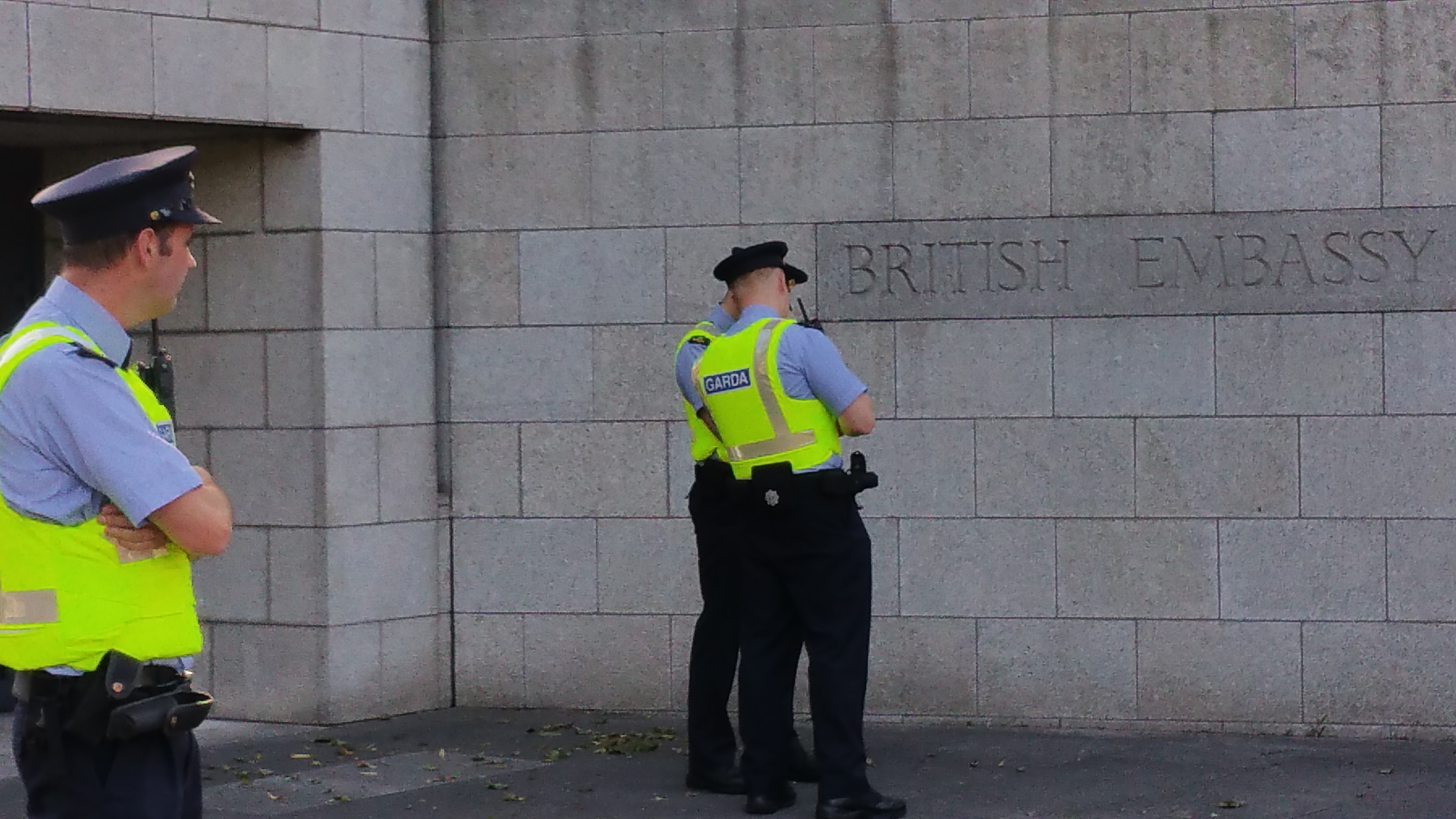
At least five Gardaí were in attendance, along with a police van.

From Wikipedia: Julian Paul Assange (born Hawkins; 3 July 1971) is an Australian computer programmer and the editor of WikiLeaks. Assange founded WikiLeaks in 2006, but came to international attention in 2010, when WikiLeaks published a series of leaks provided by Chelsea Manning. These leaks included the Collateral Murder video (April 2010), the Afghanistan war logs (July 2010), the Iraq war logs (October 2010), and CableGate (November 2010). Following the 2010 leaks, the federal government of the United States launched a criminal investigation into WikiLeaks and asked allied nations for assistance.

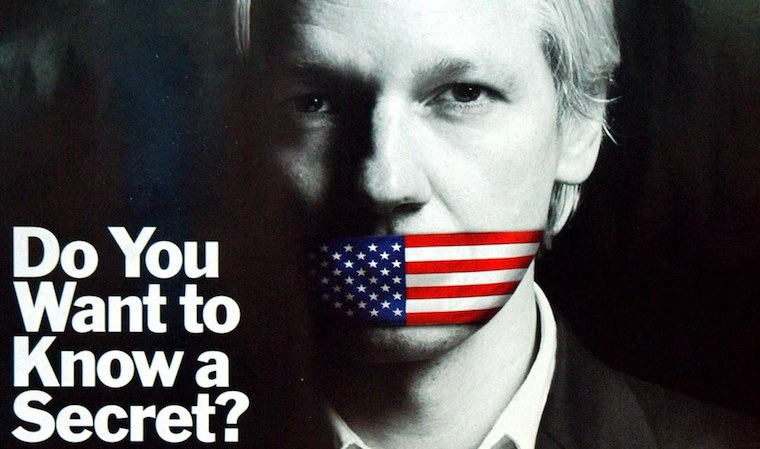
Poster of image of Julian Assange with the flag of the USA as a gag on him. (Image source: Internet)

All the speakers outside the British Embassy made the point that Assange’s only crime is to reveal some murderous secrets of the USA and other powers and that if he can be jailed then so can anyone for speaking or publishing the truth. Clare Daly said that his crime was to be a conscientious reporter.

Paul O’Toole played two songs, one of which was The Cry of the Morning, a song about internment. The other musician played some tunes and then led the crowd in singing “All we are saying, is free Julian Assange.”

Fintan thanked all for coming and the speakers and musicians and the event came to an end.

Mick Wallace TD speaking outside the British Embassy (Photo: D.Breatnach)
Another musician supporting the event (Photo: D.Breatnach)
Section of crowd, looking southward
(Photo: D.Breatnach).


Clare Daly TD speaking outside the British Embassy
(Photo: D.Breatnach)(Photo: D.Breatnach)
Nobel Peace Laureate Mairéad Corrigan speaking outside British Embassy (Photo: D.Breatnach)
Police van & 2 of the six Gardaí that were visible (Photo: D.Breatnach)


(Photo: D.Breatnach)


BACKGROUND

Assange went to Sweden to talk about Wikileaks and its revelations in August 2010. A woman in Sweden wanted Assange to have a HIV test after he had sex with her. Her friend, who had also had sex with Assange in the past, encouraged her to go to the police. Assange went voluntarily to the police station, was interviewed and told he could go, there was no charge and he went back to England. Afterwards, a Swedish Special Prosecutor charged him with sexual molestation and “lesser-degree rape” (a particular Swedish charge) although the original complainant did not accuse him of rape.

By then it was becoming clear that another agenda was behind the Swedish Special Prosecutor and the two women. Assange offered to be interviewed again by Skype or in person in London or, if necessary in Sweden but only if that country guaranteed not to extradite him to the USA. The Swedish authorities refused to give that guarantee. The Prosecutor said Swedish law did not permit an interview on foreign soil but this was publicly contradicted by Swedish legal experts and the Prosecutor eventually interviewed him in London but by this time it was November 2016, by which time the statute of limitations had run out on the less serious charges. In May 2017, the Swedish authorities dropped their investigation against Assange and Chief Prosecutor Marianne Ny officially revoked his arrest warrant.

However, as a result of Sweden’s attempt to extradite Assange, he had been brought to court in London and released on bail. Due to Sweden’s refusal to guarantee him no extradition to the USA, Assange jumped bail and sought asylum in the Ecuadorian Embassy on 19th June 2012 and has been there since. He cannot leave for fear of arrest by the British for breach of bail conditions and extradition to Sweden, from where he may be extradited to the US, where politicians and officials have said publicly that he should be jailed and some even wanted him executed under anti-espionage laws or assassinated.

End.

“The Occupation of the American Mind”

Narrated by Roger Waters of the Pink Floyd band, a useful documented discussion on how the population of the USA, the main political and financial supporter of the Israeli Zionist State, is conned into supporting Israel.

NB: “The US mind” is the subject, not “the American mind” — there is no reference to Latin American or Canadian thinking on the issue.

The film exposes the use of the US media combined with Israeli propaganda, pressure on politicians and media figures and demonisation of opponents.

Interestingly, at least one prominent commentator argues that the USA agrees with Israeli policy largely because it agrees with its own — but doesn’t tell us what that US policy is, much less explain it.  Perhaps that’s beyond the film’s scope or the film is aimed at liberal opinion and exposing naked imperialism would be going too far — but in places, the narrative does hint at it.

Interestingly too that line of argument undermines the narrative that the Israel lobby (incorrectly termed “the Jewish lobby”) is the dominant factor is US policy towards Israel.  A USA Jew also points out that most of his co-religionists in the US do not agree with the hard, right-wing, neo-liberal politics of the Israeli leaders.

Worryingly, in reference to a strand of fundamentalist Christianity in the US which supports Israeli policy, a commentator tells us that one in three US citizens believes that the Bible is factual.

But very encouragingly, the film argues that Israel is at last — finally — losing its propaganda grip on US youth in the colleges and in black communities.

Worth watching to understand the history of US public support for Israel but also to learn how untruthful propaganda works with regard to words.


http://therealnews.com/t2/index.php?option=com_content&task=view&id=31&Itemid=74&jumival=21527

GEORGE GALLOWAY ADDRESSES ANTI-IMPERIALIST MARCH IN DUBLIN

Clive Sulish

A crowd gathered at the Dublin and Monaghan Bombing Monument in Talbot Street this evening for a short ceremony and the start of a march to rally at the General Post Office building in Dublin city’s main street. The event was organised by Anti-Imperialist Action Ireland “to highlight imperialist war-crimes around the world, from Ireland to Yemen and Syria.”

View of section of crowd before start of event with the Memorial in the background (Photo: D.Breatnach)

View of section of crowd near the Memorial before start of event
(Photo: D.Breatnach)
View of section of crowd near the Memorial before start of event
(Photo: D.Breatnach)
View of section of crowd near the Memorial before start of event
(Photo: D.Breatnach)

As people assembled, a crowd of European youngsters was noted passing by, no doubt part of some scheme to learn English and something of the culture outside their own country. Sadly their teacher passed by the Monument without calling their attention to it.

The bombings on 17 May 1974, killing 33 civilians and a full-term unborn child and injuring almost 300, claimed the highest toll of any event during the 30 Years War and was the deadliest attack in the history of the Irish State. The bombings were organised by British Intelligence agents with Loyalist participation and not one person was ever charged.

It was not a good day for the march and participants came prepared for the worst but the rain stopped just before the event and held off, apart from an occasional drizzle, until after the event, when it fairly lashed down.

George Galloway approaching the Monument to lay a floral (Photo: D.Breatnach)
George Galloway after laying wreath, hat removed for a moment in respect. (Photo: D.Breatnach)

Pádraig Ó Fearghaill spoke first in Irish welcoming all who had attended, outlined the order of events and then called on George Galloway, famous British anti-imperialist politician, writer and broadcaster, to lay a floral wreath at the monument, which he did. Ó Fearghaill then called on Diarmuid Breatnach to sing the Woody Guthrie song about the massacre of mineworkers in Colorado, USA, by capitalists including the imperialist John D.Rockefeller. Breatnach sang “The Ludlow Massacre”.

The march then formed up and, led by a floral wreath-holder and black flags, proceeded up Talbot Street, into North Earl Street and up to the GPO. Along the way they chanted “From Ireland to Palestine- Occupation is a Crime” and “Donald Trump/Theresa May- How many kids did you kill today?” The demonstration received a lot of support from passers by along the way and drivers of cars and buses who beeped to show support. The marchers, some of who were carrying candles or light up boards made there way to the GPO where a further crowd had already gathered.

Section of crowd at GPO (Photo: D.Breatnach)

From well-known activists participating and banners carried it was clear that the march had attracted wide support across sections of the Republican movement in parties and campaigns, with participation of independent activists of republican, anarchist and socialist background.

Section of crowd at GPO (Photo: D.Breatnach)

Outside the GPO building, Ó Fearghaill called on Máire Uí Mhaoileoin to lay a wreath in memory of those who have lost their lives as a result of imperialist war-crimes and then introduced George Galloway, who remarked that he was proud to speak outside the building that had played such a part in the first blow against the British Empire of the last century. Galloway went on to refer to continuing British occupation of the Six Counties of Ireland and imperialist interference in the Middle East and the occupation of some countries. In the latter category he praised the Palestinian Ehed Tamimi, whose 17th birthday was just that day and called her “a leader of the resistance for the whole Middle East”.

Section of crowd at GPO (Photo: D.Breatnach)

Reminding the attendance of the ongoing crime of internment, Ó Fearghaill announced a representative of a campaign around Tony Taylor, who announced he was reading a statement from Lorraine Taylor, Tony’s wife. Taylor, a Derry Republican, was detained in March 2016 and has been in jail since, without trial or even charge.

Section of crowd at GPO (Photo: D.Breatnach)

Presenting Diarmuid Breatnach again to sing the famous Eric Bogle anti-war song “The Band Played Waltzing Matilda” referencing the bush-ballad of “Waltzing Matilda”, the Australian unofficial national anthem. However, following

Section of crowd at GPO (Photo: D.Breatnach)

a suggestion from a participant, Breatnach led the crowd in singing “Happy Birthday” in English and in Irish to Palestinian child-prisoner Ehed Tamimi. After Breatnach’s rendition of Bogle’s song, Ó Fearghaill thanked all the the participants and promised that Anti-Imperialist Ireland would continue to build up resistance against imperialism in Ireland and in the world beyond.

End

Section of crowd at GPO (Photo: D.Breatnach)

ARE THE LEFT IN IRELAND DIVORCED FROM REPUBLICANISM?

Clive Sulish

A DEBATE to discuss the above question at the Teachers’ Club, Dublin, was organised by the United Ireland Association with Tommy McKearney and Clare Daly being the debaters on June 16th.

Tommy McKearney
(Photo: Wikipedia)

Tommy McKearney is a long-time Republican, formerly of the Provisional IRA, 1980

Clare Daly
(Photo source: Internet)

Hunger-Striker and ex-Republican prisoner.  He was, along with Anthony McIntyre, a founder of the Republican Writers’ Group which, while not advocating armed struggle, was critical of the Good Friday Agreement, of Provisional IRA and in particular of Sinn Féin. He is currently an Organiser for the Independent Workers’ Union.

Clare Daly is a long-time Socialist, a former trade union shop stewart and has been a Teachta Dála (member of the Irish parliament) since 2011, formerly as a member of the Socialist Party and now a Left Alliance TD.  She has visited Republican prisoners and raised issues about their treatment in court and in jail. Daly was also arrested for trespass at Shannon Airport, along with fellow-TD and partner Mick Wallace, protesting against the use of the airport by US military flights and for transporting of political prisoners of the US military to jails in various parts of the world.

TOMMY MC KEARNEY

Tommy McKearney spoke first and stated that there was an issue of defining Republicanism and that sometimes what was meant was the anti-monarchic Republicanism of France or the United Stated but he was going to discuss it in terms of a specific Irish-based ideology, i.e Irish Republicanism.

Mentioning a number of Left-Irish Republicans such as Fintan Lawlor and Wolfe Tone’s famous quotation about relying on the “men of no property”, Tommy developed a line of reasoning that sought to say that there was not a huge difference between Irish Republicanism and socialism and drew attention to the fact that James Connolly had founded a party by the title of the Irish Socialist Republican Party.

Going on to talk about the objective of Irish Republicans, Tommy stated that not only is a republic desirable for Ireland – it is necessary. Only a Republic that is based upon socialist principles can resolve the economic and political problems facing Ireland today on both sides of the colonial Border.

Referring to the British election results in the Six Counties, Tommy commented on the 238,915 votes and seven seats for Sinn Féin – an increase of 14,670 votes – and the rise of almost 67,000 votes for the DUP with their ten seats. Sinn Féin had been pushing a peace process which was not about peace but about normalisation; their claim to intend to bridge the sectarian divide was empty and the voting lines were drawn up along sectarian lines at least as deeply as before.

Tommy also speculated that the amount of votes cast for Sinn Féin, on a platform of refusing to take their seats in Westminster showed, among other things, the amount of people in the Six Counties who did not care to be represented in a British Parliament and presumably would want representation in a united Irish Republic. He called for an alliance of Left Republicans and Irish socialists and recalled that James Connolly had founded, as well as the Labour Party, the Irish Socialist Republican Party.

CLARE DALY

Clare was next and she in turn highlighted the difficult issue of defining the Left – did it mean the parties that defined themselves as Left, did it include the Labour Party – some would say yes, others no. For Clare it is not issue of the names we give parties or activists but of what we stand for. Clare said she stands for a socialist country and in that sense for a Republic.

Addressing the question for debate, Clare owned that maybe socialists had neglected the national question — maybe they had been put off by images of balaclavas and guns — but it could equally be said that Republicans had for decades neglected social questions such as women’s reproductive rights, women’s rights in general, gay rights …. However, in more recent times, Republicans were seen actively supporting those rights.

Over recent years, Clare said, we had seen the gains our parents fought for in terms of trade union rights and local authority and state services lost or undermined.

Clare said she saw herself as a citizen of the world but as she lived in Ireland that she stood for a Republic that was organised along socialist lines and gave equal rights to all. The real question, Clare stated, is how we are to achieve that and pointed to the swing to the Left in Britain with Jeremy Corbyn’s party receiving a big increase in votes, despite media hostility and predictions of failure. The Conservative Party could only rule now with the support of the DUP’s 10 Mps. Clare said that opportunities of a Left Front existed in Ireland too as was seen by the Right to Water mass marches with broad political party and some major trade union support.


CONTRIBUTIONS FROM THE AUDIENCE, RESPONSES FROM THE PANEL

Included in contributions from the audience were the following:

  • Sinn Féin had seven MPs to the DUP’s 10 and should consider abandoning their abstentionism and go to Westminster to assist Corbyn in voting legislation

  • While the Labour Party in Britain had moved to the Left, Sinn Féin in Ireland had moved to the right

  • Good debate from two good speakers but also two who had put themselves out there for what they believed – Tommy McKearney in armed struggle in the past and hard prison struggle and Clare Daly in protesting US military use of Shannon Airport and also visiting Republican prisoners in jail, along with a few other Tds.

  • We need more debates like these and also to focus on Republicans with regard to where they stood with regard to socialism.

  • The Irish Left as a whole has divorced itself from Irish Republicanism, probably in fear of being associated with nationalism and/ or armed struggle. In doing so, it has walked away from continual violation of human rights, e.g of Republican prisoners in the jails and of civil rights, the right to political dissent of Republican activists on both sides of the Border.

  • The Irish Left has neglected to confront British Imperialism and left the Republicans to confront the various visits of the British Queen and the recent one of Prince Philip, when major roads were shut and even civilians impeded in going about their business or even going to their local shops or to visit their relatives’ graves in Glasnevin and a megaphone wrested by an undercover policeman backed up by a riot squad from the hands of a person about to speak to a protest demonstration.

  • Republicans are socialists and to pose the two as different categories was ridiculous.

  • There should be a broad Left front in Ireland including the trade unions and Sinn Féin.

Among the responses from the panel were that people were hung up on condemning Sinn Féin and should welcome them into a broad Left mass movement on the model of the Right to Water and Right to change campaigns (this from Tommy McKearney)

The socialists might not have done very well opposing British imperialism but had opposed US imperialism, which is one of the imperialist powers in operation in Ireland (this from Clare Daly) and a major one in the world.


COMMENT

The contributor who said that “Republicans are socialists” seemed unaware that historically at least this certainly was not so. Seán Mac Diarmada, the Irish Republican executed on the same day as the socialist James Connolly, had been on record as saying that no-one should support socialism. During the War of Independence, some IRA units took actions to support landless labourers and poor farmers but others took action to repress these in favour of big farmers.

The IRA had a ban on Communists through the 1930s probably up to the 1960s. Sean South, prominent Limerick IRA Volunteer killed in the Bessborough RUC Barracks attack in 1957, was a conservative Catholic, anti-Communist member of the Knights of Columbanus and of An Réalt (Irish-speaking section of the Legion of Mary).

The broad Left front being advocated by a number of people seems to be a reformist social-democratic one and, while there is nothing necessarily counter-revolutionary about fighting for reforms, clarity is needed about whether what they are advocating is a social-democratic program or fighting for some reforms while at the same time openly organising with a revolution in mind.

Clare Daly has certainly fought hard against US Imperialism but others on the Left much less so. The mobilisation against Hillary Clinton’s visit to Dublin was not great and gave up in the face of police opposition before they even reached City Hall and there was no mobilisation at all against Obama’s visit to Dublin in May 2011 and it remains to be seen how much there will be if he comes this year, as he has reportedly promised to do. But the question of oppposing British imperialism is a crucial one since a) it is the main imperialist-colonial power at work in Ireland and b) because it is the main prop of US Imperialism in Europe and in the UN.

There would seem to be fertile ground for debate on the historical and current differences between Irish Socialists and Irish Republicans, as well as for discussing possible joint action and one hopes for many more debates and discussions of this nature with a broad attendance.

End.

ISLAMIST FUNDAMENTALIST BOMBERS AND THE BRITISH SECRET SERVICE

THE MANCHESTER ATROCITY WAS ALLEGEDLY COMMITTED BY SALMAN ABEDI, A MEMBER OF A FUNDAMENTALIST ISLAMIST GROUP SHELTERED BY BRITISH INTELLIGENCE SERVICES. WHAT ARE THE CONNECTIONS BETWEEN MANCHESTER, LIBYA, IRAQ, SAUDI ARABIA? THEY ARE FAR FROM TENUOUS: ESSENTIALLY, THEY ARE BRITISH, US AND FRENCH IMPERIALISM, AS JOHN PILGER EXPLAINS (see link below).

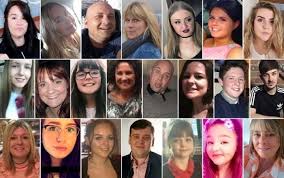
Images of some of the victims of the recent Manchester bombing (Source: Internet)

Comment

by Diarmuid Breatnach:

Irish anarchists and socialists should protest the visits of representatives of the US and British states (including the Royals) for this reason, since they seem unable to bring themselves to protest the occupation of a fifth of their country. Is not internationalist solidarity part of the creed of socialism? Do they not feel shame that the nearest imperialist power to them, its flag stained with the blood of millions and its hands dripping with fresh gore, can send its representatives to both parts of Ireland without any sign of socialist or anarchist protest?

Alleged photo of Salman Abedi, alleged Manchester bomber, from an unnamed source. Abedi was a member of an extreme Islamist group sheltered by British secret services, Pilger says.
(Source: Internet)

Irish Republicans, when protesting the visits of British Royals for reasons the socialists disdain to do, should add these imperialist crimes to their reasons, as well as the collusion of their governments in this world order. Irish Republicans claim to be socialists too – is not internationalist solidarity part of the creed of socialism? They can demonstrate this in support of Palestine – why not embrace the rest of the Middle East? After all, whatever success the Republicans hope to have against British colonialism and imperialism, they are sure to meet resistance from US and French imperialism too.

A man stands next to flowers for the victims of Monday’s bombing at St Ann’s Square in central Manchester, England, Friday, May 26 2017. (AP Photo/Emilio Morenatti)


Social democrats who think that Jeremy Corbyn, even if successful in his campaign for election as Prime Minister of the UK, can put an end to this dirty work are deluding themselves and others. This is the British State at work, representing the British ruling class – its work continues whoever is elected to the British Parliament. Only a revolution overthrowing that State can possibly bring that to an end.  Revolutionary socialists are often accused of being dreamers, impractical, Utopianists even …. but no-one can top social democrats for wishful thinking.

Hard-hitting report and analysis by journalist John Pilger of the connections between those powers and areas alluded to above: John Pilger article here

LESSONS OF POWER, RESISTANCE, SOLIDARITY AND HYSTERIA

Diarmuid Breatnach

The Wikileaks/ Assange persecution saga should teach us important lessons. In the first place, chronologically, it should teach us the lengths to which allegedly democratic countries such as the United States will go to dominate weaker countries and attack movements of resistance, where the US feels its imperial interests are threatened, which is to say, where anyone may attempt to loosen its grip on markets, natural resources and strategic emplacements, or to prevent its grip from clawing further than it has already.

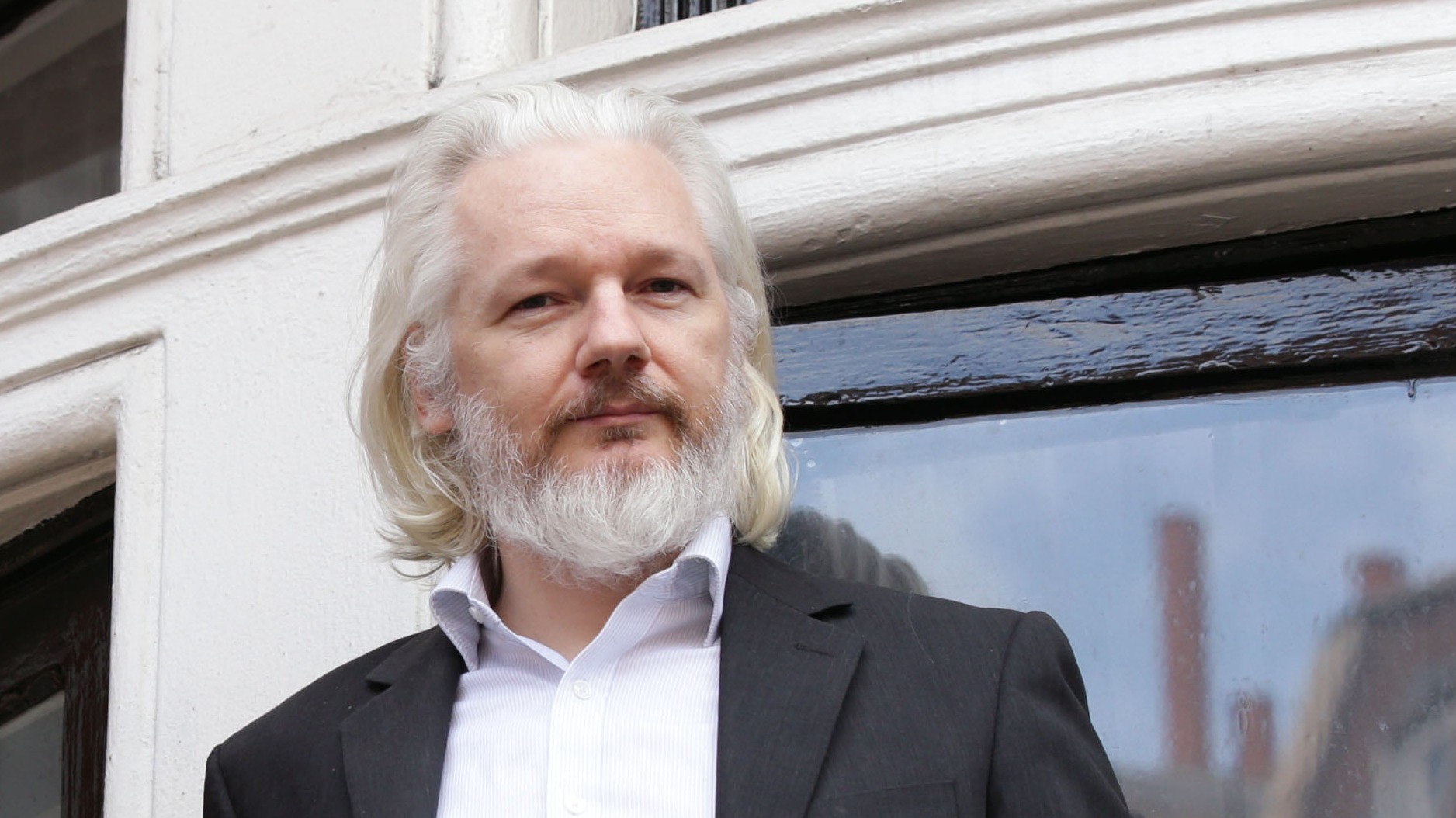
Julian Assange, photographed recently at the Uruguayan Embassy where he has been granted political asylum.
(Photo source: Internet)

Wikileaks also exposed some of the extent to which the US will interfere in the internal or foreign policy matters of even its allies, including the European powers.

Possibly most instructive of all was the determination of the USA to hunt down the chief executive of Wikileaks, Julian Assange, flying in the face of US Constitutional principles and law, as well as international law, with statements confirming that determination even from Presidents and senior politicians and Government appointees, such as former US Secretary of State and the Democratic Party’s candidate for the US Presidency last year.1

In the course of hunting him down, the USA turned to Sweden, subverting the country’s laws and criminal investigative procedures, then to the UK government (which, as a junior partner in many of the US crimes exposed by Wikileaks, was probably only too keen to assist). Australia was brought to assist under threat and France turned away from Assange’s plight and his plea for asylum there. “No hiding place from the World Policeman,” seemed to be the message. Eventually, however, he did find refuge (if not a hiding place) from Uruguay, a tiny power on the world political, economic and political stage.

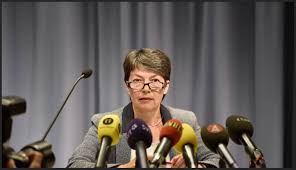
Swedish Prosecutor Marianne Ny, who commenced an investigation after another Prosecutor had already investigated and decided there was no case for Assange to answer (Photo source: Internet)

In the midst of this, how did the mass media perform, that which we are often assured is the guardian of democracy, even more than the vaunted parliament? Badly, in a word. Investigative journalism, intelligent evaluation, if they had been evident before, all went into the rubbish bin as print, radio and TV media joined in the lynch mob to a greater of lesser degree. The British newspaper The Guardian, which had been given exclusive first use on the Wikileaks stories, “the greatest scoop in 30 years”, according to its Editor, not only refused to assist him but allowed its pages to be occupied by witch hunters and made money out of publishing a book about the affair.2

“Anti-journalism”, is what Australian film-maker and renowned journalist (Britain’s Journalist of the Year Award-winner in 1967 and 1978), John Pilger called it.3

Assange learned some personal lessons too which should not be lost on us. Sometime lovers manipulated by police, Prosecutor and media; a close working colleague denouncing him and flinging unsubstantiated allegations against him (unsubstantiated but that did not prevent the media from publishing them).

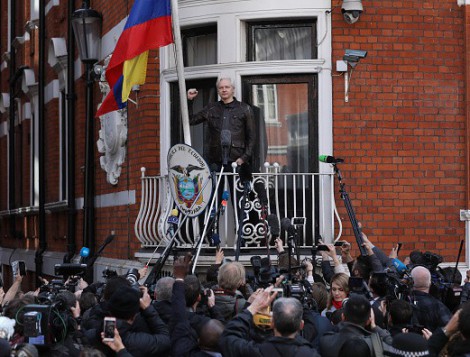
Julian Assange on the balcony of his asylum quarters, the Ecuadorian Embassy in London, after receiving news of the dropping of the Swedish ‘investigation’ of allegations of ‘rape’ against Assange and the voiding of the International Arrest Warrant.
(Photo source: Internet)


LESSONS FOR US SPECIFICALLY

Suppose for a moment that one did not take to Assange’s character. Suppose one even objected to his work. Still, he was entitled to fair due process. That he did not receive it from so many is obvious.  Did he receive it from us?  That community of people who would lay claim to having an alternative view, to be opposed to the status quo and, most of all, to be for Justice?

Injustice meted out by those in power often needs collusion and the more independent of the power the colluders are, the more justified the witch-hunt is made to seem. The media whipped up a passionate hue and cry against Assange, who had not even been charged and had cooperated to all extents reasonable with the investigation of allegations against him.

That hysteria sought to drown Assange but also to catch in its flood any, no matter how puny or how mildly, called for justice and due process. The cry of the mob must be “Hang him!” and no dissenting voices must be heard.

The hysteria generated in some sectors, even among people who would normally insist on justice and who opposed the status quo, reached a very high pitch. For the crime of suggesting at the time on Facebook that the case against him seemed “dodgy” and that besides he was in any case entitled to due process, a person called me a “rape apologist” in public while people I had considered comrades (and had thought one even a friend) remained silent. Shortly after that, a clutch of FB friends (which I made FB ex-friends quickly) backed up the allegation.

That taught me a valuable lesson about comrades and solidarity but it pales beside the severity of the lesson Assange has been taught, the mark of which he may carry for the rest of his life.  But the function of such a process goes far beyond the personal; it is intended to make dissent very uncomfortable and even painful.  We may face the attacks of our declared enemies with courage or at least resolve and commitment but it is a different matter when we are attacked, politically and personally, by those we take to be broadly on our side against the oppressive powers.

Most people would say they are for justice. It is usually easy to say so. But unless we can stand up for it whether we like the victim or not, whether we approve of his work or not and, even in the midst of the hysteria calling for a hanging, we are prepared to cry instead for justice, our declarations are worth nothing.

There are many lessons in the saga for us to learn — but will we?

end


Footnotes

1 “Can’t we just drone this guy?” Hillary Clinton, quoted in the Pilger summary article.

2 Stated in the Pilger summary article.

3 Also in the same Pilger article.

Links

Excellent article by John Pilger summarising the persecution