A group of mixed political background held a picket this afternoon in Henry Street, one of the main shopping streets in Dublin’s city centre. The picket was protesting the continuing internment in Ireland of political activists and also expressing solidarity with political prisoners in different parts of the world – a Palestinian flag and a couple of Basque ones flew alongside the Irish ones. There are over 60 political prisoners in Irish jails both sides of the British Border.
Many people were out shopping or just enjoying the sun on what must have been the hottest day of the year so far. Up to 200 leaflets were distributed and passers-by occasionally stopped to discuss with the picket supporters.
Section of the picket displaying the banner of the organising group held by supporters. Also in the photo from left to right: Basque national Ikurrina; Basque Amnistia organisation; Irish Starry Plough; Palestinian flag. (Photo: C. Sulish)
MESSAGE OF SOLIDARITY TO CAMPAIGNERS FOR MUMIA ABU JAMAL
Near the end of the picket, a representative of the Anti-Internment Committee of Ireland was recorded voicing a message of solidarity for Mumia Abu Jamal, to send to an upcoming conference on Mumia and other political prisoners.
Mumia Abu Jamal in 2019 (Photo sourced: Liberation New)
Mumia is a political prisoner, a black United States activist and author who was awaiting execution but is now in his 40th year in jail. He was a popular broadcaster in 1981 when he went to the assistance of his brother, who was being harassed by a white police officer. As the incident came to an end the cop was dead of gunshot wounds and Mumia was shot in the stomach.
There are so many questions about the scenario the Prosecution laid out and which got Mumia convicted of murder and sentenced to death, which was later commuted to imprisonment for life. His gun had five bullets missing but Mumia was never tested to see whether he had fired the gun nor were the tests on the bullets in the police officer conclusively proven to come from there. The crime scene was not preserved and the police were in and out of it, with Mumia’s gun while Mumia was in hospital, undergoing an emergency operation. Photos taken of the scene by an independent press photographer did not show the presence of the taxi of a witness against Mumia, who claimed he was parked there. Not to mention the later confession of a man who claimed to have killed the police officer on behalf of other police as a contract kill (the decision not to use him as a witness divided Mumia’s legal team and two lawyers resigned as a result).
As the spokesperson of the Anti-Internment Committee said, even if people believe that he fired the shots that killed the police officer, after 40 years Mumia should be freed on humanitarian grounds. The USA is allegedly the country leading the world in democracy, as the spokesperson commented, but holds a great many political prisoners, some of them for many, many years in jail.
MORE EVENTS TO COME
Eastward view of picketers in Henry Street, Dublin, facing Liffey Street (Photo: C. Sulish)
Pandemic permitting, the AIGI intends to hold pickets on approximately a monthly basis to protest continuing internment and in solidarity with political prisoners, such events being advertised on our social media. The organisation is independent of any political party or organisation and all who oppose the jailing of activists without trial or wish to support political prisoners are welcome.
Two of the picketers with placards (Photo: C. Sulish)
Westward view of picketers in Henry Street, Dublin, facing Liffey Street (Photo: C. Sulish)
By Geoffrey Cobb (Reprint from The Irish Echo 23 June 2021)
(Reading time: 2 mins.)
The Rev. Bernard Quinn faced opposition from the Ku Klux Klan on Long Island.
In 1983, African-American priest Fr. Paul Jervis was assigned to the parish of St. Peter Claver in Brooklyn, which had been founded in 1921 by Fr. Bernard Quinn, as Brooklyn’s first black Catholic parish. Speaking with his parishioners, Jervis was amazed to hear the stories of so many older people who still spoke of Quinn with profound reverence, even though he had died 43 years earlier.
Intrigued, Jervis began to research his predecessor and was so taken with Quinn’s life that he decided to write a biography of Quinn calling it: “Quintessential Priest, The Life of Father Bernard J. Quinn.” Jervis’s biography is an inspirational tale of a man whose love for his black congregation defined him and forged a unique community of faith.
Quinn was born in 1888 in Newark, N.J., into a large Irish Catholic family. His father, who was from County Cavan, and his County Offaly mother sent him to parochial school and young Bernard felt such a strong vocation that he entered the seminary in 1906, where he developed a lifelong deep sympathy for the poor and the downtrodden. Ordained in 1912 in Brooklyn, Quinn was assigned to diocesan parishes such as St. Patrick’s in Bay Ridge and St. Gregory the Great in Crown Heights.
SHOCKED BY RACISM IN US ARMY DURING WW1
When World War I erupted, Quinn volunteered to serve as a chaplain for front line troops. Commissioned as a First Lieutenant, Quinn served as chaplain of the 333rd infantry. Serving at the front, he became a victim of mustard gas. Though he recovered, Quinn suffered from the gassing for the rest of his life. In France, Quinn was shocked by the racism in the American army. When a white American Protestant chaplain refused to pray with a dying Black soldier, Quinn intervened and prayed with the dying soldier, but the troubling incident lingered with Quinn.
Fr. Bernard J. Quinn, c.1930 (Photo sourced: Wikipedia)
The war ended, but Fr. Quinn remained in France to minister to the wounded soldiers. After a chance reading of “The Story of a Soul, the life of St. Therese of Lisieux,” in the barracks library, Fr. Quinn discovered a spiritual hero. Learning that he was stationed in the vicinity of Alencon, not far from St. Therese childhood home, Quinn obtained permission to visit it and became the first priest to celebrate Mass there before it became a popular shrine. Intense devotion to St. Therese would define Fr. Quinn’s faith for the rest of his life.
BACK TO BROOKLYN FROM THE WAR
Quinn returned to Brooklyn in 1919. While preparing two black women for baptism, he was inspired to create an apostolate to African Americans, but his concern for Blacks was not shared by all Brooklyn’s Catholics, some of whom did not want African Americans praying in their churches. After repeated appeals, Quinn finally received permission from Bishop McDonnell to begin his mission to the Black people of Brooklyn, but finding Black Catholics proved difficult. Quinn went to the streets, asking every African American he met where he could find Catholics.
Finally, Quinn found Mr. Jules de Weever, the leader of the dissolved Colored Catholic Club, which had met from 1915-1916, seeking in vain to establish a church for Black Catholics in Brooklyn. Frustrated by the church’s indifference to their quest, the group disbanded. Quinn revived the CCC and inspired them to persevere in founding Brooklyn’s first Catholic church.
The Holy Name Band and Fr. Quinn (to far right). (Photo sourced: Internet)The Rev. Bernard Quinn with young parishioners of St. Peter Claver during a religious festival. (Photo sourced: Internet)
Quinn incessantly petitioned the bishops for permission to establish an African-American parish, reminding them that Black Catholics were being excluded from worship at Italian, Irish and German churches, but instead of agreeing, the bishops ignored Quinn’s pleas. Finally, thanks to his perseverance, they authorized the founding of Brooklyn’s first African American Catholic Church, St. Peter Claver Church, in 1921, naming Quinn pastor.
The Irish-American priest now needed a church building and the parish soon found a warehouse for trunks and baggage that had once been a Congregationalist church on the corner of Ormond Street, now Peter Claver Place, and Jefferson Avenue, in the expanding black community of Bedford Stuyvesant. Quinn and the congregation enthusiastically set to work on the herculean task of transforming the warehouse back into a house of worship. The church’s decoration celebrated black faith with murals of early Black saints, and of St. Peter Claver’s work with enslaved Africans in Cartagena, Colombia.
On Christmas Day, 1921, the cornerstone for St. Peter Claver, named for the patron saint of African peoples, was laid. By 1922, the church was ready and blessed by Bishop Thomas Edmund Molloy. Quinn soon proved to be a model pastor and quickly the kindhearted priest endeared himself to his rapidly growing flock. Brooklyn’s Black Catholics were attracted to a church that didn’t just tolerate them, but even welcomed them with open arms. The parish became more than a place to pray, helping the parish’s poor, while also setting up a clinic, a credit union, a parish school, and adult education classes. St. Peter Claver soon became famous for its large children’s choir and its band. Legendary entertainers Lena Horne and Pearl Bailey both started their singing in the church’s choir. Reputedly, it was the first African-American choir ever to sing at the prestigious Brooklyn Academy of Music.
THE LITTLE FLOWER NOVENA BUSTOP
Fr. Quinn began a temporary daily novena, a series of prayers, to his inspiration, St. Thérèse, called the Little Flower Novena, but he never could have imagined the massive reaction the novena received. People begged for the novena to continue and an estimated that 10,000 of all races a week poured into St. Peter Claver’s. Within five years an amazing 2.2 million people had attended the novena, stirring the envy of nearby white Catholic pastors who complained that it drew away their parishioners. The novena was such a hit that the drivers on the bus line near the church would call out “Little Flower Novena stop.” The Brooklyn Daily Eagle soon did a feature article on the amazing success of the novena.
The novena proved to be a huge money maker for the parish, allowing Fr. Quinn to fund some of the parish projects he envisioned including a $300,000 school building, a convent, a recreation center and a Long Island orphanage that would ignite the bitter flames of racism. In 1929, Msgr. Quinn founded the Brooklyn Diocese’s first orphanage for Black children in a farmhouse in Wading River, Long Island, which at the time was still part of the diocese. A cross was burned in front of the Quinn family home in Mineola, but the priest defied the threat. Outraged racist locals contacted the Ku Klux Klan, which was very active on Long Island in the 20s and 30s, and the orphanage burned in an act of arson. The orphanage was rebuilt but burned again in the same year.
THE KLAN AND RACISM IN THE CHURCH
Undeterred, Father Quinn rebuilt the orphanage yet again, this time in stone and brick. The Brooklyn Eagle announced this with a headline, “New Fireproof Orphanage Will Defy Incendiary.” The KKK gave up, and the orphanage, called the Little Flower Orphanage, in honor of St. Thérèse, was dedicated as the Little Flower House of Providence Oct. 26, 1930. Today that organization survives as the Little Flower Children and Family Services of New York, offering adoptions and other social services in Brooklyn, Queens and Long Island.
Quinn became an outspoken defender of Brooklyn’s Blacks against the pervasive racism of his day. He denounced institutionalized racism and invited the Urban League, an African American advocacy group, to speak at his church. Some Brooklyn Catholic clergy spoke out against Quinn’s embrace of Black Catholics. In 1929, Msgr. John L. Bedford wrote in his Brooklyn parish newsletter that “Negroes should be excluded from this Roman Catholic Church if they become numerous.” Quinn vehemently defended his flock writing in the Brooklyn Tablet, “It seems to me that no church can exclude anyone and still keep its Christian ideals. The Constitution guarantees the freedom of religion and this, plus the fact that church property is tax exempt, ought to mean that anyone can go anyplace to worship.”
St. Peter Claver Church, Brooklyn, New York. (Photo sourced: Internet)
The strain of his herculean labors took a physical toll on Quinn. In the spring of 1940, Msgr. Quinn went into nearby St. Mary’s Hospital for surgery for an abdominal problem. He never came back to St. Peter Claver’s, dying on April 7. Brooklyn’s Black Catholics were in shock. They had lost a dear friend and their most vocal advocate. Eight thousand grieving mourners attended his funeral at St. Peter Claver, which was reported in all the New York papers including the New York Times.
In 1992, a movement to canonize Msgr. Quinn received the blessing of the Catholic Church and the long and difficult path to Quinn’s canonization has started. Decades before the founding of the Black Lives Matter movement, Fr. Quinn dedicated his life to serving Brooklyn’s Black Catholics and his life remains a shining example of the power of love to defeat hatred and bigotry.
End.
Author and teacher Geoffrey Cobb will lead a walking tour on Saturday, Aug. 7, of sites associated with the Tipperary-born Paddy “Battle Axe” Gleason, who was the last mayor of Long Island City before its 1898 incorporation into New York City. The event is sponsored by the New York Irish Center, 10-40 Jackson Ave. “Rebel Breeze” will shortly publish an article about the same Gleason by Geoffrey Cobb.
A black American traveling entertainer, boxer and trainer, soldier in two world wars for two different countries, awarded 14 French military medals, airplane pilot, nightclub owner, musician, civil rights activist, associate of famous writers and musicians.
Bullard’s biography is so amazing I cannot believe it has never been made into a movie. Like the lives of many African Americans, it is also a tale full of suffering and pain that highlights the horrible racism that pervaded America in his day. He is such a remarkable person that more people should know about the achievements of this unique figure.
Bullard was born in 1895 in Columbus, Georgia, the seventh of 10 children born to William (Octave) Bullard, a black Caribbean and Josephine (“Yokalee”) Thomas, a Native American Creek woman. Georgia at the time of his birth was a dangerous place for “uppity” African Americans and tragically lynchings were common. His father’s people were Haitians who revolted against French slavery and following the revolution, Bullard’s ancestors left the Caribbean for the United States and took refuge with the Native American Creek people.
As a young boy, he was traumatized by the sight of a white mob attempting to lynch his father over a workplace dispute. A proud man, his father imbued his son with the conviction that African Americans had to maintain their dignity and self-respect, despite all the indignities heaped upon them. Bullard fell in love with his father’s stories of France where slavery had been abolished and blacks were treated equally. At age eleven, Bullard ran away from home hoping to reach France. In Atlanta, he joined a family of English gypsies and traveled throughout Georgia with them, tending their horses and learning to be a horse jockey. The gypsies told him that there was also racial equality in England and Bullard determined to go there instead of to France.
Bullard found work with the Turner family in Dawson, Georgia. Because he was hard-working as a stable boy, young Bullard won the Turners’ affection and was asked to ride as their jockey in the 1911 County Fair races, where he was victorious. Eventually, he made his way to Norfolk, Virginia where he stowed away on a ship to England.
In 1912, Bullard arrived in Scotland and soon went on to London where he boxed and performed in humiliating racist pieces for the Freedman Pickaninnies, an African American troupe. While in London, he trained under the then-famous boxer Dixie Kid who arranged a bout for Bullard in Paris. Bullard fell in love with the “city of light” and decided to settle there. He continued to box in Paris and worked in a music hall until the start of the First World War.
Eugene Bullard showcase (Photo source: Internet)
A SOLDIER IN WWI
When the War broke out Bullard enlisted in the French Foreign Legion and by 1915 had become a machine gunner, seeing combat on the Somme front in Picardy. He served in a regiment known as the “hirondelles de la mort” (“swallows of death”) and saw combat at Verdun where he was severely wounded on March 5, 1916. During his convalescence, Bullard was cited for acts of valor at the orders of the regiment on July 3rd 1917 and was awarded the Croix de Guerre.
After recovering, he volunteered on October 2nd 1916 for the French Air Service and became a machine gunner. He joined a group of American aviators fighting for France on November 15, 1916, called the Lafayette Flying Corps and became the first African American aviator in World War I. He took part in over twenty French combat missions, and is sometimes credited with shooting down one or two German aircraft.
When the USA entered the war, The United States Air Service created a medical board to recruit Americans serving in the Lafayette Flying Corps to fly for the United States. Bullard went through the medical examination but he was not accepted, because in the segregated American military only white pilots were chosen. Sometime later, while off duty in Paris, Bullard allegedly got into an argument with a French officer and was punished by being transferred out of his combat unit and into a service battalion. Before he left the French military, the French government awarded him three different medals for his heroism in battle.
NIGHT CLUB OWNER
After his discharge, Bullard went back to Paris, where he started to play drums in a jazz band at a nightclub named “Zelli’s”, which was owned by Joe Zelli. Bullard worked with Robert Henri, a lawyer and friend, to get Zelli’s a club license, which allowed it to stay open past midnight. Zelli’s soon became the most celebrated nightclub in Montmartre because few other clubs could stay open so late. With the money he saved from playing at Zellis, Bullard traveled to Egypt, where he played with a jazz ensemble at Hotel Claridge and fought two prize fights.
Missing Paris, Bullard returned to the City of Lights where his career was about to take off. He became an entrepreneur hiring jazz musicians for private parties with Paris’ social elites, worked as a masseur and exercise trainer. Bullard then got a job managing the nightclub “Le Grand Duc”, where he hired the famous American poet, Langston Hughes. Around 1928, Bullard had saved enough money to enable him to purchase “Le Grand Duc.” Thanks to being the owner of a hot Parisian club, Bullard made many famous friends, including the dancer-actress Josephine Baker, poet Langston Hughes and jazz musician Louis Armstrong. He eventually became the owner of another nightclub, “L’Escadrille” where he got to know writer Ernest Hemingway, who based a minor character on Bullard in his novel “The Sun Also Rises.” Bullard also opened his own gym and gave boxing lessons, training successful fighters such as “Panama” AL Brown and “Young” Perez. In 1923, he married Marcelle Straumann, a striking French woman from a wealthy family. The marriage ended in divorce in 1935, with Bullard gaining custody of their two surviving children, Jacqueline and Lolita.
A SOLDIER IN WWII
When World War II began in September 1939, Bullard, who also spoke German, agreed to a request from the French government to spy on the German citizens who still frequented his nightclub. When the Germans attacked France, Bullard volunteered and served with the 51st Infantry Regiment and was severely wounded in the battle for Orleans. When the Nazis took over Paris, he slipped over the border into Spain and then headed back to the United States.
Eugene Bullard with US Army comrades, WW2 (Photo source: Internet)
Bullard spent some time in a New York hospital and never fully recovered from his wound. He missed Paris and his minor celebrity there. In New York, he had no celebrity and had to work menial jobs. He longed to return to Paris but learned that his nightclub had become a casualty of the battle for Paris. The French government gave him a financial settlement with which he purchased an apartment in Harlem.
CIVIL RIGHTS
Returning to America after World War II, Bullard was active in the civil rights movement. During one confrontation, a bus driver ordered him to sit in the back of the bus. In 1949, Bullard was a victim of one of the most notorious incidents in New York State history, the Peekskill riots. Bullard was a fan of African American communist entertainer Paul Robeson who was scheduled to sing at a Civil Rights benefit. Before Robeson arrived, however, a mob attacked the concertgoers with baseball bats and stones. Thirteen people were seriously injured including Bullard who was knocked to the ground and beaten by an angry mob, which included members of the state and local law enforcement. The attack was captured on film in the 1970s documentary The Tallest Tree in Our Forest and the Oscar-winning narrated documentary Paul Robeson: Tribute to an Artist. Despite photographic evidence, none of his attackers were prosecuted. Graphic pictures of Bullard being beaten by two policemen, a state trooper, and a concert-goer were later published in Susan Robeson’s biography of her grandfather, The Whole World in His Hands: a Pictorial Biography of Paul Robeson.
Eugene Bullard clubbed to the ground by rioter and cops during the racist Peekskill Riots in 1949; captured on film and photograph but no-one was arrested for this and other assaults. (Photo source: Internet)
The 1950s were difficult years for Bullard whose daughters had married and he lived alone in his apartment, which was decorated with pictures of his famous friends and a framed case containing his 14 French war medals. His final job was as an elevator operator at Rockefeller Center, where no one suspected he had once been the “Black Swallow of Death.” In 1954, the French government invited Bullard to Paris to be one of the three men chosen to rekindle the everlasting flame at the Tomb of the Unknown Soldier under the Arc de Triomphe and in 1959 he was made a Chevalier (Knight) of the Legion De Honeur by President Charles De Gaulle, who called Bullard a “véritable héros français” (“true French hero”). He also was awarded the Medaille Militaire, another high military distinction. On December 22, 1959, he was interviewed on NBC’s Today Show presenting his amazing biography and received hundreds of fan letters.
Eugene Bullard in military uniform (Photo source: Internet)
Bullard died in New York City of stomach cancer on October 12, 1961, at the age of 66. He was buried in the French Veteran’s section of Flushing Cemetery, where nine years later his good friend Louis Armstrong would also be interred. On August 23rd 1994, 33 years after his death and 77 years to the day after the physical that should have allowed him to fly for his own country, Bullard was posthumously commissioned a Second Lieutenant in the United States Airforce.
End.
Unveiling of Eugene Bullard statue monument in Georgia near the USAF base that refused to enlist him as a pilot for WW2 because he was black, even though he had already flown in France.
Driving out of frenzied Manhattan heading out over the 59th Street Bridge and through the highway traffic east into Queens, the dense urban landscape is suddenly broken up by a jarring sight- an immense sea of green. Coming closer, the driver, who sees a vast number of gravestones and monuments, realizes that this great green space is a huge city of the dead.
The Manhattan skyline is seen behind the Calvary Cemetery. Photo credit: REUTERS/Andrew Kelly
This great green city of the dead is Calvary Cemetery, a place rich in New York Irish history. Founded by the Archdiocese of New York, the graveyard contains the remains of a staggering three million people, more than all the current population of the borough of Queens. Calvary holds more burials than anywhere else in the United States, covering an unbelievable 365 acres of prime real estate. The cemetery reaches into two neighborhoods and is comprised of four large sections. Many of the most important characters in New York Irish history rest beneath its fields and walking around Calvary is a lesson in New York Irish history. It even holds the remains of Annie Moore, (1874-1924) the Irish immigrant who was the first person of the millions of hopeful immigrants who passed through Ellis Island.
Annie Moore, teenager from Ireland, first immigrant processed through Ellis Island (Photo sourced: Internet)
By the 1840’s, Lower Manhattan’s Old Saint Patrick’s Cathedral graveyard was filling up and it was no longer possible to bury its large population on the island. In 1847, faced with many corpses from a raging cholera epidemic the New York State Legislature passed the Rural Cemetery Act, authorizing non-profit corporations to operate commercial cemeteries. The trustees of St. Patrick’s bought the 151-acre Alsop farm in Queen, which became the original section of Calvary Cemetery, today known as Old Calvary. When Mrs. Ann Alsop sold the farm to the Trustees, she insisted that her Protestant Alsop family burial ground remain separate from the Catholics and the trustees have maintained this division to this day. The tiny family plot still remains walled off, dwarfed by the hundreds of thousands of Catholic tombstones around it.
Calvary was consecrated by the legendary Tyrone-born Archbishop “Dagger John” Hughes (1797-1864) in August 1848 and by 1852 there were 50 burials a day, half of them poor Irish kids under seven years of age, victims of the noxious conditions in the disease-ridden, teeming Manhattan slums. It cost seven dollars for an adult to be buried there, children under age seven cost three dollars and children aged seven to fourteen cost five dollars. In the early 20th Century, influenza and tuberculosis epidemics caused such a shortage of gravediggers that people were forced to dig graves themselves for their own loved ones.
In the days before highways and city parks, people reached Calvary by ferryboat and excursions to the graveyard were regular Sunday family outings. People often picnicked while visiting their loved ones and enjoyed the bucolic charm of the giant green expanse. With amazing statuary, marble mausoleums and towering trees, the graveyard remains a place of great beauty, though today there are few family visitors. Calvary, though retains a wonderful tranquility, making it a welcome refuge from the noisy city around it. Today, some harried New Yorkers visit Calvary to collect their thoughts or just to enjoy its wonderful calming silence. I have just written a book The Irish in New York and I realized that many of the characters in my book and hundreds of other famous Irish figures lie in Calvary’s ground. The Irish clawed their way to power and acceptance by creating an infamous political machine called Tammany Hall and dozens of its most notorious members lie in Calvary’s earth. The most famous Tammany Hall politico lies there, Al Smith, (1873-1944) the first Catholic Governor of New York, a reformer and the first Catholic nominee for President of the United States. A poor boy himself, Smith enacted many factory safety and labor reforms to help the working class. Another Tammany Hall figure who lies there is the infamous “Big Bill” Devery” (1854-1919). Serving as a notorious police chief of New York City, Big Bill stole enough money to become part-owner of a baseball team that would be known as the New York Yankees. A generous thief, Devery died almost broke.
William “Bill” Devery, Irish corrupt Superintendent NY Police DepartmentGravestone Al Smith, Tammany Hall politician, reformer and Irish Governor New York (Photo sourced: Internet).
Fr. Edward McGlynn, Irish social reformer in the US unfrocked by the Catholic Church hierarchy as a “communist” but reinstated at a later date (Photo sourced: Internet)
A contrast to the corrupt Devery, Fr. Edward McGlynn (1837-1900) also lies in the graveyard. McGlynn was so passionately attached to the ideas of socialism and helping the poor that the Catholic Church branded him as a Communist and had him defrocked, though he was later reinstated. He was so loved that three decades after McGlynn’s death a parishioner wrote these words in Gaelic and English on paper attached to his tombstone:
Fr. McGlynn, We thank the Lord who gave us you, Soggarth aroon, (beloved priest in Gaelic)
Learned and wise, kindly and true, Soggarth Aroon,
You know your cause was sanctified,
Stood till measures were rectified,
And rest with God’s beatified, Soggarth Aroon.
There are also many infamous characters in Calvary including “ The Queen of The Night Club” Tex Guinan (1884-1933), who became a legendary, and often arrested, hostess of speakeasies during the Great Depression. She became famous for her sharp tongue and for insulting her rich male clients who still spent vast sums in her clubs. Tex lies amongst many famous murdered Italian mafiosi who also sleep in Calvary.
The Irish have been valiant New York fire fighters and some who lie in Calvary died fighting fires. One of the memorable graves contains a life-sized statue of Charles Keegan (1858-1882), a Brooklyn firefighter killed in the line of duty while fighting a blaze at Locust Point (the long-lost locale is at Meeker Avenue where it meets Newtown Creek), caused by a lightning strike at the Sone and Fleming Kings County Oil Refinery in 1882. Explosions associated with the blaze claimed the first Penny Bridge; Keegan and fellow firefighter Stuart Deane suffered grisly deaths, being burned alive. Some of the teenage girls who were burned in the tragic 1911 Triangle Fire also sleep in Calvary.
(Photo sourced: Internet)
Union Civil War officer, one of a series of sculptures in Calvary Cemetery by Daniel Draddy from Cork (Photo sourced: Internet)
Perhaps the most striking feature in the cemetery is the city park located completely inside Calvary, dedicated to the Civil War soldiers who defended the Union. Irish sculptor Daniel Draddy from Cork created the park’s most stunning feature — amazing life-sized statues of Civil War soldiers. There is also a Fenian Monument in Calvary, erected in 1907 to honor members of the Fenian Brotherhood buried there, one of whom is the great Tipperary Fenian leader and Civil War veteran Michael Doheny (1805-1862) .
There is also — and a monument also honors — the legendary Civil War NY Irish regiment, the Fighting 69th, whose leader Thomas Meagher is also profiled in my book. My friend Peter McHale, author of Greenpoint Doughboy, wrote his excellent work about his great-uncle who fell in France fighting with the 69th in World War I. The book ends with the fallen hero’s return to be interred in Calvary.
Monument to the famous “Fighting 69th” Regiment US Army first formed from Irish migrants for the American Civil War (Photo sourced: Internet)
One of the most famous figures interred there is Mayo legend and Olympic Gold Medalist Martin Sheridan (1881-1919). Sheridan, a World Record-setting discus hurler, was cut down just short of his thirtieth birthday by the last great pandemic a century ago. He lies in sight of the former Celtic Park where a number of Irish immigrants formed a legendary sports club that brought home several Olympic medals.
Artists and musicians also lie there. Galway-born Patrick Gilmore (1829-1892), song writer and band leader, known as “The Father of the American Band,” who wrote When Johnny Comes Marching Home and Meath’s John Mulvany (1839-1906) the great western painter of Custer’s Last Stand also rest there. Also among the dead is James Blake (1862-1935) who wrote the text to the iconic New York song “ The Sidewalks of New York.”
Millions of New Yorkers lie here, each with his or her own biography. Sadly, the Archdiocese shut down walking tours of the cemetery and unlike Brooklyn’s Green-Wood Cemetery, Calvary fails to commemorate its amazing history. Let’s hope that this changes soon.
Born and raised on the New Jersey shore, Sean Tobin was influenced by Folk-song troubadours like Guy Clark, Merle Haggard and Willie Nelson, as well as high-energy rockers like Bruce Springsteen, Bob Seger and Tom Petty. Self-taught and trained by the New Jersey bar scene, Tobin owes much to his time spent busking on the streets of Galway, Ireland throughout 2015 and 2017. After graduating college in 2017 and uncertain of which direction to take he undertook the El Camino de Santiago, a 500-mile trail through Spain, with his guitar tied to his pack. Upon completion, the future became obvious and on returning to New Jersey he worked hard to fund his music. He released his first album, This Midnight, in the summer of 2018, and in 2019 he played Frank Turner’s Lost Evenings III Festival at the House of Blues in Boston and soon after quit his day job.
In July 2019, Sean released ‘Dreams & Black Caffeine,’ a four-song EP recorded in Ocean, NJ with his band, The Boardwalk Fire. The group played several shows promoting the work, and had planned a tour for the summer of 2020, but were forced to cancel due to the Covid lockdown. The last year has seen the release of ‘East Coast Artifacts’, a compilation of his first EP, various tracks recorded through lockdown and three new songs.
“We’ve all played together as duos or trios in the past, but St. Patrick’s Day Forever really fortified us as a band,” said Tobin. “I just wish we could play live. That’s what we’re best at.”
Well he has a lot of catching up to do and on his new 4-track EP, accompanied by his band The Boardwalk Fire, he has made a pretty good start.
Released at the end of February, 2021 the EP features two originals and two covers and kicks off with the title track, a fast paced Irish trad influenced Celtic-Punk song about the lockdown and it’s first anniversary in New Jersey. It was after all the cancellations of St. Patrick’s Day events around the world that set the scene for what was going to follow. Lively, upbeat and catchy as hell Sean Tobin tells a great story with a brilliant accompanying video too!
It was winter 2020, we were playing on the roof, Jack was slapping stand-up to another song by Bruce. A mere twenty hours later, we heard it on the news: the Jersey Shore’s in lockdown, so stock up on your booze!*
Now it’s one, two, three fuckin’ months inside this house. There’s not too much I need, but I need fuckin’ out. So I make my way down Main Street, the flag’s on every door–it’s St. Patrick’s Day forever on the Jersey Shore, St. Patrick’s Day forever on the Jersey Shore.*
Not long later it was Easter, I was sippin’ on some stout. I’d horded fifty cases out of fear that they’d run out, but I couldn’t taste a drop ’cause I gave it up for Lent. So come Easter, fifty cases, up the field they went!*
Now it’s one, two, three fuckin’ months inside this house. There’s not too much I need, but I need fuckin’ out. So I make my way down Main Street, the flag’s on every door–it’s St. Patrick’s Day forever on the Jersey Shore, St. Patrick’s Day forever on the Jersey Shore.*
Murphy! Your laws are screwin’ me! But frankly, I don’t blame you. If it’s what we gotta do, to keep people from dyin’, then I’ll stay home for you. I just miss my friends…and the bar…*
So now it’s comin’ up on summer, and I’m still drinkin’ stout. I would be switchin’ to Corona, but I don’t think that’s allowed…So instead I’ve got a toucan on one can, three cans, five. If Guinness makes you stronger, I’m the strongest man alive!*
Now it’s one, two, three fuckin’ months inside this house.There’s not too much I need, but I need fuckin’ out. So I make my way down Main Street, the flag’s on every door–it’s St. Patrick’s Day forever on the Jersey Shore, St. Patrick’s Day forever on the Jersey Shore.
Now it’s one, two, three fuckin’ months inside this house.There’s not too much I need, but I need fuckin’ out. So I make my way down Main Street, the flag’s on every door–it’s St. Patrick’s Day forever on the Jersey Shore, St. Patrick’s Day forever on the Jersey Shore.*
The EP’s other original song is titled ‘Ode to Anna Liffey’s’ a bittersweet love song to the now closed Irish bar Anna Liffey’s in New Haven, Connecticut. As with all of Sean’s songs and in common with Irish music in general the songs tell intricate stories and at over six minutes the song gives him plenty of scope in telling his story of days spent propping up the bar there. A swirling gentle song with Sean’s strong voice backed by accordion and percussion that soon enough gets faster and faster with Sean’s guitar and Sean-David’s fiddle smoking! A real Irish tinged bluegrass/country floor filler that ends on a sad note (especially for us Irish!) with the last chorus going out to all the bars that are forced to close but “go down swinging”.
Prominent among the crazed mob that stormed the American Capitol building on January 6th were banners of QAnon, a far right-wing, loosely-organized network and community of believers who embrace a range of wacky, discredited beliefs. Ashli Babbitt, who was shot and killed during the violence inside the Capitol was a fanatical QAnon adherent. Babbitt’s social media feed was a stream of messages celebrating President Trump and QAnon conspiracy theories and many of her co-insurrectionists were also QAnon true believers. For many on the American far right, QAnon shapes their worldview and explains their fanatical support for President Trump, but what exactly is QAnon, how large and powerful is it, and what do they believe?
At its heart, QAnon is a cult united by the insane belief that President Trump was waging a secret war against a cabal of elite cannibalistic Satan-worshipping pedophiles. QAnon supporters believe that Trump was planning a day of reckoning, known as the “Storm”, when thousands of members of the cabal would be arrested. After the Storm, believers say military tribunals would ensure that these baby-eating traitors would be executed or sentenced to life in prison. Faced with overwhelming proof of the cabal’s existence, a stunned public would mourn; rage; and ultimately unite behind President Trump, ushering in a golden age of patriotism and prosperity.
QAnon supporters claim liberal Hollywood actors, Democratic Party politicians and high-ranking “deep State” government officials are all members of the cabal. They have also claimed that Trump feigned a conspiracy with Russians to trap Robert Mueller into exposing the sex-trafficking ring and preventing a coup d’état led by Hillary Clinton, Barrack Obama and George Soros. Disgraced General Michael Flynn, who was convicted of lying to the FBI, but then pardoned by Trump is one of the heroes of the movement. He was filmed reciting the QAnon oath — “Where we go one, we go all” — with his family.
No-one knows the exact number of QAnon believers but social media and opinion polls indicate there are at least hundreds of thousands, if not millions of people who believe at least some of the bizarre theories offered up by QAnon. In August, according to NBC, an internal Facebook review identified more than three million followers across a number of groups and pages. Roughly 10 percent of American adults believe in some or all of QAnon’s theories, according to a Pew Research study conducted last year.
It all started in October 2017, when an anonymous user posted a series of notes on social media message board 4chan. The user signed off as “Q” and claimed to have a level of US security approval known as “Q clearance.” These messages became known as “Q drops” or “breadcrumbs”, often written in cryptic language peppered with slogans, pledges and pro-Trump themes. True believers argue that deliberate misinformation is sown into Q’s messages, making the conspiracy theory impossible to disprove.
QAnon placard at Trump rally (Photo sourced: Internet)
“Q” signs and merchandise were first spotted at Trump campaign rallies in 2018 and the cult has spread like wildfire. In 2019, the FBI designated Qanon as a potential domestic terrorist threat. Using social media, QAnon believers swap conspiracy theories, welcoming opponents of vaccinations, people who believe the moon landing was faked, and followers of just about every other conspiracy theory into their community. QAnon is also tightly linked to the equally mad “pizzagate” conspiracy theory, which claimed that Hillary Clinton ran a pedophile ring from a Washington pizzeria. Many of the most popular QAnon groups also double as pizzagate groups, according to leaked documents. Theses fantasies though have spurred violent reactions among its believers. Both pizzagate and QAnon have been implicated in real-world violence, including armed standoffs, harassment campaigns, attempted kidnappings, a shooting and two murders. Data from digital researchers shows that QAnon content spiked during the early coronavirus lockdowns in the spring of 2020. Even after mainstream social media platforms began cracking down on QAnon-related accounts — Twitter banned them in July with Facebook and Youtube following in October — people continued spreading conspiracy theories through camouflaged account names and hashtags.
Prior to the 2020 election, a Yahoo Poll found that nearly half of Trump supporters had heard of QAnon, and of those, more than a third said they believe at least some of it is true. When asked about the baseless claim that “top Democrats” were involved in child sex-trafficking, half of all Trump supporters agreed.
Chansley aka Angeli aka Q Shaman, photographed inside the Capitol building 6 February 2021. (Photo sourced: Internet)
QAnon played a prominent role in the 2020 election. In the election, more than 70 congressional candidates endorsed some part of the QAnon ideology. The Texas Republican Party used a QAnon slogan for its 2020 campaign, (“We Are the Storm”), then rolled it out with a new line of swag and text messages to supporters (“Text STORM2020 for updates”). Fox News, playing to the group’s adherents, ramped up its coverage of sex-trafficking stings and, in an interview with Eric Trump, Fox host Jesse Watters said: “Q can do some crazy stuff, with the pizza stuff and the Wayfair stuff, but they’ve also uncovered a lot of great stuff when it comes to (pedophile Jeffrey) Epstein and when it comes to the deep state.” Trump himself mentioned QAnon during a debate in October claiming he knew “nothing about it” but had heard “they’re very strong against pedophilia, and I agree with that.”
Q predicted a Trump victory and true believers were devastated when Joe Biden won, but in a worldview dominated by the belief that Democratic elites have rigged the system, a Biden victory wasn’t a repudiation of the theory, instead it was further evidence of a scandal. A QAnon believer soon claimed that the Biden campaign used a powerful supercomputer known as the hammer to change millions of Trump votes to Biden ones. The Hammer story neatly fit into QAnon’s overarching narrative of corrupt Democrats stealing the election from its rightful winner, Mr. Donald Trump and hence, the presence of so many of its followers inside the Capitol.
Though Trump lost, in many ways QAnon won. Almost a million and a half Americans will be represented in Congress by people who support QAnon. Gun-toting Colorado Republican Representative Lauren Boebert who won her race to represent her district is perhaps the most famous QAnon supporter. In the wake of the Capitol attack, Boebert has faced fierce criticism for disclosing the secret location of House Speaker Nancy Pelosi during the insurrection, putting Pelosi’s life in danger. Boebert has been called the “Qanon Congresswoman” for saying she hopes the conspiracy theory is “real.”
Boebert is not alone in the House of Representatives. Republican representative Marjorie Taylor Greene from Georgia has called “Q” a “patriot” who is “worth listening to and claimed that Q “posted many things that seem to verify that he is the real deal,” she says. “It’s not just someone poking in the dark, messing with people.” Taylor Greene has also accused holocaust survivor George Soros of collaborating with the Nazis and Trump has called her a “future Republican star. There is speculation that she might run for the United States Senate or Governor of Georgia.
Republican Congresswoman for Georgia Marjorie Taylor Greene, hopes QAnon conspiracy theory is real. (Photo sourced: Internet)
Perhaps the poster child for the movement is the Q Shaman, whose name is actually Jacob Anthony Chansley. Also known as Jake Angeli, he was photographed striding through the Capitol bare-chested wearing a fur and horns, while carrying a six foot spear and a USA flag. In February, Mr Angeli was photographed at a Trump rally holding a sign that read “Q Sent Me.” Mr Angeli has called himself a “multi-dimensional or hyper-dimensional being” and claims he can “see into these other higher dimensions that these entities – these pedophiles, these rapists, these really high up people … that they can almost hide in the shadows in.” He faces multiple charges including violent entry and disorderly conduct. Angeli told federal authorities he traveled to the Capitol to answer the call from his President, who had asked his supporters to muster in Washington, D.C., on the day Congress met to certify the election defeat of Donald Trump. Angeli’s claim of following Trump’s order, along with the same claim made by others arrested in the insurrection, will serve as evidence in Trump’s impeachment trial in the Senate.
Republican Senator Ben Sasse of Nebraska recently warned in an op-ed in The Atlantic magazine that the QAnon conspiracy theory movement is destroying his Party. He wrote, “We can dedicate ourselves to defending the Constitution and perpetuating our best American institutions and traditions, or we can be a party of conspiracy theories, cable-news fantasists, and the ruin that comes with them.” He added, “The GOP must reject conspiracy theories or be consumed by them. Now is the time to decide what this party is about.”
Will Biden’s victory dim QAnon’s allure? Or will these conspiracy theories always survive, even in the face of apparent contradictions? Will Sasse and rational Republicans prevail or is the movement too powerfully entrenched in the party to be extirpated? One thing is sure: Qanon is not going to go away quietly.
Back in November, I was horrified enough by an orgy of violence at a Pro-Trump march to write a column exposing it, but never in my wildest dreams could I have imagined the horrific scenes that unfolded on television Wednesday January 6th. Millions of Americans watched in disbelief as tens of thousands of Neo Nazis, White Supremacists and other members of the extreme Right invaded the Capitol. A horrified CNN presenter asked the question that was on everyone’s mind: where is the National Guard and law enforcement? Black Lives Matter protestors asked: why was their peaceful march in Washington met by a huge National Guard and police presence, while these same forces were nowhere to be seen as violent white supremacists ran amok?
Trump supporters all along stairs at front of the Capitol building, the seat of the USA legislature. (Source: Internet)
Looking at the complete lack of preparations for the violent mob which swarmed the Capitol on Wednesday, it may have seemed like bad planning. However, it’s becoming more and more obvious that the lack of security was absolutely intentional.
The attacks that took place should have surprised no one. The extensive multi-billion dollar security apparatus ignored several red flags. Plotters in on-line far-right forums explicitly discussed how to storm the building, handcuff lawmakers with zip ties and disrupt the certification of Joe Biden’s election — in what they portrayed as responding to orders from President Trump. Trump supporters exchanged detailed tactical advice about what to bring and what to do once they assembled at the Capitol to conduct “citizen’s arrests” of members of Congress. One poster said, “[expletive] zip ties. I’m bringing rope!” Online chatter was organized, in some cases, around hashtags such as #StormTheCapitol and included threats to kill congressional leaders.
The violence that occurred was orchestrated at the highest levels of the Trump administration. Trump made sure that the Pentagon would not provide necessary forces to protect the nation’s capital against the assault he was orchestrating. Shortly after losing the election in November, Trump began replacing Pentagon officials. Principled leaders were dismissed as Trump packed the Pentagon with sycophants who had demonstrated blind loyalty to him. The new appointmentss included bringing in disgraced former Gen. Anthony Tata, Islamophobic right-wing radio host Frank Wuco, and conspiracy theorist Rich Higgins. A day after positioning this trio, Trump replaced the Chief of Staff at the Pentagon with former Devin Nunes staffer Kash Patel. On the same day, he forced out the undersecretary of Defense for Intelligence
Last Wednesday’s assault on the Capitol seemed that the Government was caught unprepared, but the lack of response was carefully crafted. Trump made certain to get rid of those officials who had resisted efforts to use active military troops against Black Lives Matter protestors over the summer. When the violence started last Wednesday, Trump’s lackeys at the Pentagon blocked repeated requests from D.C. Mayor Muriel Bowser for the use of the National Guard to contain Trump’s “wild” protest and continued blocking it, even as Senators and Representatives were frantically phoning from inside the besieged Capitol. This was not a spontaneous event. It was, in every way, a plotted coup and the Pentagon was part of it.
While exactly what happened still remains murky it is now clear that the Pentagon limited the Washington D.C. National Guard to managing traffic. Foreseeing violence, D.C. Mayor Muriel Bowser requested support in advance of Trump’s rally, but the Department of Defense said that the National Guard could not have ammunition or riot gear, interact with protesters except in self-defense, or otherwise function in a protective capacity without the explicit permission of acting Secretary Christopher Miller, whom Trump put into office shortly after the election after firing Defense Secretary Mark Esper.
When Capitol Police requested aid early Wednesday afternoon, the request was denied. Defense officials held back the National Guard for about three hours before sending it to support the Capitol Police. Maryland Governor Larry Hogan, a Republican, tried repeatedly to send his state’s National Guard, but the Pentagon would not authorize it. The National Guard of Virginia was mobilized only when House Speaker Nancy Pelosi called the Governor, Ralph Northam, herself.
There was also a personal angle to holding back the National Guard. Bowser was harshly critical of Trump in the summer, and the Pentagon got revenge on her by denying help when she needed it. A White House adviser told New York Magazine’s Washington correspondent Olivia Nuzzi that Trump was watching television coverage of the siege and was enthusiastic, although he didn’t like that the rioters looked “low class.” Many people called for Trump to make a statement urging his followers to desist, but for hours Trump said nothing.
As the assault on the Capitol unfolded, Capitol Police Chief Steven Sund, who resigned on Thursday, made “an urgent plea” for a 200-member rapid response force to rush to the Capitol building. However, an official from the office of the Secretary of the Army replied that “wasn’t going to be possible.” As a reason, that official said the Pentagon didn’t like the “optics” of Guard members entering the Capitol—even though the building was at that point surrounded by thousands of Trump supporters who had forced their way through multiple levels of police security. It wasn’t until Trump supporters had actually stormed the building, smashed their way into the chambers of Congress, ransacked congressional offices, and prowled the halls hoping to take political leaders hostage, that the Pentagon finally approved the use of National Guard forces.
US Far-Right activists and supporters in possession of the Capitol, building of the Legislature of the USA on 6th January 2021. (Source: Internet)
On Thursday, Army Secretary Ryan McCarthy ludicrously claimed the military had “acted as quickly as possible” and that officials hadn’t anticipated the level of violence demonstrated by Trump supporters in their “wildest imagination.” If so, they were the only ones. Trump encouraged exactly this type of action, and many others warned of the potential for violence. In fact, many of the same groups that rioted in December planned another orgy of violence for the bigger event that Trump was already advertising for January 6th.
Perhaps the prime target of the Capitol rioters was Vice President Mike Pence who had refused to block the certification of Biden’s election as president. While the rioters were in the Capitol, Trump tweeted: “Mike Pence didn’t have the courage to do what should have been done to protect our Country and our Constitution, giving States a chance to certify a corrected set of facts, not the fraudulent or inaccurate ones which they were asked to previously certify.” The Vice President had to be whisked away to a secure location to save his life. Reuters photographer Jim Bourg, who was inside the Capitol, told he overheard three rioters in “Make America Great Again” caps plotting to find Vice President Mike Pence and hang him as a “traitor”; other rioters were shouting the same.
Many of the rioters are being identified and they allegedly include police officers, elected Republican Party officials and former members of the military. Some rioters gained access to the security cordon around the Capitol supposedly by flashing badges. Some Capitol police allegedly opened barricades for the rioters and even took selfies with the mob. Five people died in the mayhem including a woman shot in the chest. Capitol Police have identified her as Ashli E. Babbitt, an Air Force veteran and Q Anon conspiracy believer from San Diego. Fifty U.S. Capitol Police and Metropolitan Police Department officers were injured in the riot and one officer died while on duty.
Trump supporters storm thin line of police at an entrance to the Capitol building, Washington DC, capital of the USA.
(Source: Internet)
AMAZING NOT MORE LOSS OF LIFE
It is amazing that there was not more loss of life. An Alabama man allegedly parked a pickup truck packed with 11 homemade bombs, an assault rifle and a handgun two blocks from the US Capitol. Another man showed up with an assault rifle and hundreds of rounds of ammunition and told acquaintances that he wanted to shoot or run over House Speaker Nancy Pelosi. Christopher Alberts, of Maryland, was arrested for carrying a handgun and 25 rounds of ammunition on Capitol grounds. Explosives were found in the Capitol and multiple locations around Washington.
Trumpist supporters actually inside the Capitol. Some Rightists including a Senator claimed the riot was caused by Antifa and BLM supporters! The FBI denied any substance to that allegation. (Source: Internet)
In response to the wave of anger that spread across the country, right wingers claimed that the rioters were Antifa and Black Lives Matter activists. Speaking on the House floor only hours after the mayhem, Representative Matt Gaetz (R-Fla.) expressed his anger at the perpetrators. But Gaetz wasn’t accusing fellow Trump supporters — instead, he suggested members (sic) of Antifa had secretly infiltrated the group to cause the chaos. The F.B.I subsequently refuted claims that Antifa activists took part in the attack.
Will Trump be punished for his role in the violence? If there were real justice in America, Donald Trump and his flunkies in the Pentagon who planned holding back the National Guard would face severe punishment. It is almost certain, though, that Trump will avoid paying for his criminal role in the riot, even though he has blood on his hands.
End.
Shot of Trumpist mob in front of Capitol building as many have already gained entrance (Source: Internet)
In the capital city of the USA, the most powerful superpower in the world, supporters of the President who lost the elections stormed the Capitol, seat of the Congress of Representatives and of the legislative branch of the USA. The Trump supporters invading the building, according to some witness and police reports, carried weapons such as steel bars and chemical sprays and wounded 50 police officers, some seriously. Four people died in the Capitol grounds, at least one shot by a police officer.
Those who forced their way into the Capitol building were apparently intent on preventing Congress, the parliament of the USA, from discussing the Presidential election results and probably voting that they were legal and correct. They had been whipped up through weeks of President Trump claiming that the vote that ousted him was rigged and then yesterday again by him in person addressing a mass protest meeting in the Capital.
While mainstream opponents of Trump and some of his erstwhile supporters are calling these incidents an attack on democracy, I cannot agree. I certainly agree that current Trump supporters generally and those in the riot in particular are hostile to democracy – many of them are racist, fascist and violent. However I cannot agree that the system of government in the USA is democratic, much less representative — but more about that anon.
THE COPS AND THE FAR-RIGHT
I feel pretty confident in saying that if that rioting crowd had been black – or socialist – that there would have been a lot more than four dead. The Capitol steps and the ground around would have been dark with bodies and awash with blood. US police forces carry guns and are not shy of using them. Nevertheless, at most they shot four and possibly less out of an armed crowd that assaulted them and stormed the building of the government of the USA. What could explain that degree of restraint on the part of the cops?
Washington DC Trumpist rally prior to the Capitol invasion.
(Photo source: Internet)
The Capitol’s Chief of Police Steven Sund, responding to criticism of lack of police preparedness, said that his force had a good plan worked out but that it was for a peaceful demonstration. OK — but why that assumption? There have been many examples of the violent behaviour of that Trumpist sector in many cities where the Right are in minority and one as recently as 14th November 2020 in Washington itself (reported on Rebel Breeze, see below). On that evening, far-Right Trump supporters, angry at the election totals in favour of contender Joe Biden and at Trump losing the election, rioted in the capital city and attacked people who did not agree with them.
Ah, yes, but you see, that violence was not directed at the police – in fact, it was directed at people who the police tend not to like either. Like socialists. Like people of colour. Trumpists attacked people of colour and left-wingers while police mostly stood by or attacked the victims defending themselves. The police have come to regard most of the Far-Right in the USA as being the right kind of people with the right kind of thinking – i.e Right-wing. Which is because the police themselves, for the most part, have the same kind of thinking. They expected the demonstration to be peaceful because they did not expect the Trumpists to attack the police.
The cops have got so accustomed to the Far-Right attacking the traditional targets of the cops, so used to colluding with them on many occasions, even in murders, that it seemed inconceivable to them that they would actually attack cops to get where they wanted to go. And we see this often, don’t we? The PSNI shocked at the violence towards them from the Loyalists in the Six Counties because normally, they collude against the Republicans and the nationalist areas. French police shocked when French fascists turn on them instead of both attacking the Algerians, Africans, commies ….
The US Acting Attorney General announced that they were processing evidence and expected to have 52 participants charged on Thursday as well as possibly others later. But what about charging Trump as the instigator?
A Trump supporter in the Capitol with Confederacy flag, an even more reactionary flag than the usual. (Photo source: Internet)
TRUMP WENT TOO FAR?
Twitter gave Trump a 12-hour ban only after he appeared to condone the rioting and Facebook has banned him until he steps down from the Presidency. I don’t view that as democratic defence action since I have seen comrades and other activists regularly suspended and banned from Facebook for doing no more than telling the truth about the behaviour of the PSNI or of the Israeli Zionist state. But to ban a right-winger and the President of the USA! What that says to me is that there is a growing consensus in the ruling class of the USA that Trump has gone too far, that he is a danger – not to democracy but to their class. That he has taken his ego above the needs of the class of which he was a member and which sustained him.
Trump addressing rally of his supporters in Washington DC prior to their storming the Capitol building.
(Photo source: Internet)
That consensus is growing with resignations from his administration, including one of the Secretaries (like a government Minister in many European state parliaments). And also with cries for his impeachment again (he beat the process in 2019!), i.e something like being put on trial by the legislature and losing his position as President. Of course, the majority may wish to wait until January 20th when Trump has to step down anyway, as apart from him, only two other US Presidents have faced impeachment: Andrew Johnson and Bill Clinton (Nixon resigned before it came to that). But there is no doubt that Trump’s actions and the attack and invasion of the Capitol have rattled the elite so what they will do is not certain yet.
“DEMOCRACY”
Though they may be concerned about the members of their class sticking to agreed procedures and respecting their institutions (at least on the surface), their alarm has nothing to do with defending democracy. The USA Congress is not a democratic institution; just over half the members of the House of Representatives are at least millionaires and many billionaires – hardly representative of the population of the United States. Successful election campaigns are funded by financial, industrial and military interests that then expect payback in voting favourable legislation, tax cuts and other measures. And voting down “harmful” proposals such as reducing the damage to the environment or taxing corporations adequately. In my time alone I have seen all US Presidents lie blatantly about foreign policy (Trump perhaps less than some others), one instigate burglaries and tell lies, another bring the country to war based on blatant lies, another use government offices for liaisons and then lie about it … and so on.
Although the USA is perhaps one of the most obvious examples of corrupt government on a huge scale, all capitalist government is like it, albeit possibly to a lesser degree. The most we may expect from capitalist democracy is to be given a choice as to which party of the exploiting capitalist class we can put into government.
AND THE FASCISTS ….
Most fascists pretend most of the time that they support democracy, by which they mean the kind of capitalist democracy which I have just been describing. Socialism, on the other hand, is “undemocratic”, they claim. But when fascists feel what they want is being threatened, they quickly drop all appearance of democracy, even capitalist democracy. That is when fascists burn government buildings (like the Reichstag in Germany in 1933) or when they stage coups (as in Austria 1934, Spain in 1936, Hungary in 1944). Or when they storm the Capitol because they didn’t get the candidate they wanted reelected as President of the USA. Democracy, for fascists, is what gives them what they want.
Trump supporters overwhelm cop lines and storm the Capitol building.
(Photo source: Internet)
Not only that, they lie and put the blame on their enemies. Like they tried to blame communists for the burning of the German Reichstag in February 1933 and anarchists for the bombing of the Basque Town of Gernika in April 1937. Like some blamed the Washington violence last November (including in a rant to Rebel Breeze) on “BLM and Antifa”. And like some are already, incredibly one might think, blaming the Left for having “taken over” the Capitol “demonstration” (see RTÉ report below).
Minimising the violence and blaming the Left (from RTÉ reporting):
“American conservative media has played down the gravity of the storming of the US Capitol citing anger at the establishment and accusing the hard left – without proof – of having infiltrated the crowd.
“As well as Fox News, new ultra-conservative outlets battling to nibble market share from the television news giant sought to dissociate Trump supporters from the chaos in Congress.
“The demonstrators “pushed and shoved but for the most part, that was about it,” said Kevin Corke, a Fox News reporter.
“ “Most of what we saw was beautiful today,” said Ben Bergquam, a reporter for the small online channel Real America’s Voice.
“Outlets including Real America’s Voice, Newsmax and the One America News Network (OAN) – which Trump has recommended several times in recent weeks – claimed without any evidence that the crowd had been infiltrated by small ultra-left groups.
“ “I think they were undercover Antifa,” Gina Loudon, presenter for Real America’s Voice, said of the rioters she encountered in the corridors of the Capitol.
“While denouncing the violence committed in the precincts of Congress, Greg Kelly, of Newsmax, said it nonetheless followed a certain logic.
“ “If you steal an election,” he explained, echoing Trump’s discredited accusations, “there are going to be a lot of angry people.”
“ “There’s a reason this is happening,” said Fox News anchor Tucker Carlson. “It is happening because the people with all the power have decided to clamp down so harshly on the population that things explode at a certain point.” ”
Few Irish American women have led a more controversial life than Elizabeth Gurley Flynn. A fiery orator with a passionate dedication to social justice, Flynn dedicated her life to the working class. A militant’s militant, Flynn was arrested dozens of times fighting for the causes she espoused and served a prison term for her political beliefs. Flynn became one of the most influential labor organizers of the early 20th century, while also becoming the first female leader of the American Communist Party. Famed international journalist Eugene Lyons praised her intelligence saying she was “the most brilliant woman I had ever met.”
Elizabeth Gurley Flynn, the daughter of Irish immigrants, was born in Concord, New Hampshire on August 7th, 1890. The family moved to New York’s impoverished South Bronx in 1900,where Flynn attended the local public school. She later recalled, “I hated poverty. I was determined to do something about the bad conditions under which our family and all around us suffered.” Influenced by her parents to become a socialist, Flynn was kicked out of high school for giving her first radical speech, What Socialism Will Do for Women , at the Socialist Club of Harlem.
Not yet eighteen years of age, Flynn became a full-time organizer for the radical labor group The Industrial Workers of the World, or as they were more commonly known, the Wobblies. A passionate devotee of free speech, she led the first of three free speech fights in 1909 as an I.W.W organizer and over the course of her life Flynn remained a dedicated advocate for free expression, freedom of the press and assembly, and the right to a fair trial for all labor activists, regardless of their political affiliation. In 1907, Flynn met a much older Minnesota local I.W.W. organizer, J. A. Jones. Flynn later stated in her autobiography, “I fell in love with him and we were married in January 1908. She had two children with Jones, one who died as an infant and her son Fred who was born in 1910. The marriage broke up and Flynn returned to her family.
Her first major involvement in an I.W.W. job action was at the famous Lawrence, Massachusetts Textile Strike of 1912, which began when the American Woolen Company there tried to reduce the wages of its largely immigrant workforce. The workers walked off the job and the I.W.W. formed a strike committee with two representatives from each of the striking nationalities sitting on the committee. The strikers demanded a 15 per cent wage increase, double-time for overtime work and a 55 hour week. Using her powerful oratory, Flynn became one of the leaders of the strike, which became very violent. Reporters from around the country covered the strike and filed stories on the violence and the poverty of the Lawrence workers. Eventually, after management realized that it was losing the publicity battle, they settled with the strikers, giving Flynn and the I.W.W a great victory.
The following year Flynn gained even more fame for her role in the famous Patterson, N.J. Silk strike, which saw three hundred silk mills shut down by thousands of striking workers, many of whom were female. Flynn set up weekly women’s meetings on the issues. Flynn wrote in her autobiography of her experience in Paterson:
“Sunday after Sunday, as the days became pleasanter, we spoke there to enormous crowds of thousands of people — the strikers and their families, workers from other Paterson industries, people from nearby New Jersey cities, delegations from New York of trade unionists, students and others. Visitors came from all over America and from foreign countries. People who saw these Haledon meetings never forgot them.”
1913 Patterson Silk Workers’ strike. L-R Patrick Quinlan, Carlo Tresca, Flynn, Adolph Lessig, Big Bill Heywood.
(Source photo: Wikipedia)
Unfortunately for the workers, management was able to drive them back to the mills without achieving their strike demands. Flynn continued to organize restaurant workers, silk weavers, garment workers and miners across America. She was often arrested, but never convicted. She became such a celebrated labor activist that leftist songwriter Joe Hill wrote a 1915 song, reputedly dedicated to Flynn, called The Rebel Girl. A feminist, she began to write articles and make speeches criticizing labor unions as being male dominated and deaf to the needs of female workers.
1915 song sheet cover for ” The Rebel Girl” by Joe Hill, dedicated to Elizabeth Gurley Flynn.
(Source photo: Wikipedia)
She later became romantically involved with Carlo Tresca, a fellow I.W.W labor organizer and writer. When Flynn discovered that her sister was also romantically involved with Tresca, she suffered a mental breakdown that prevented her from working for eight years. During this period Flynn lived in Portland, Oregon with birth control activist, suffragette, and I.W.W activist Marie Equi.
Returning to politics, Flynn joined the Communist Party of the United States in 1936 and began to write a women’s column for the Communist Party newspaper the Daily Worker. She quickly was elected to the party’s national committee, but as a result of her party membership she was ejected from the American Civil Liberties Union as part of a pre-World War II red scare. During the war, she played a central role in the campaign for equal economic opportunity and pay for women, as well as the establishment of day care centers for working mothers. She ran for Congress in New York and received an astonishing 50,000 votes in a losing effort. In the Red Scare that followed the war, Flynn was arrested under the Smith Act, which made it a crime to support a violent overthrow of the American government. She was convicted and sentenced to a three-year term. Flynn served her sentence in the Alderson Federal Penitentiary in West Virginia. During her incarceration she wrote a memoir entitled, in The Alderson Story: My Life as a Political Prisoner (1955). That same year she published her memoir, I Speak My Own Piece: Autobiography of “The Rebel Girl.
Flynn became national chairman of the Communist Party of the United States in 1961. She made several visits to the Soviet Union and died there unexpectedly in September 1964. She was given a state funeral in Red Square. In accordance with her wishes, Flynn’s remains were flown to the U.S. for burial in Chicago’s Waldheim Cemetery, near the graves of I.W. W. Members Eugene Dennis and Big Bill Haywood.
End.
Elizabeth Gurley Flynn’s gravestone in Waldheim, Chicago.
(Source photo: Wikipedia)
Rebel Breeze comment:
Elizabeth Gurley Flynn was indeed an Irish UStater and made a point of her background, keeping the surnames of both mother (Gurley) and father (Flynn) and stating it in her autobiography.
Her ashes being taken to Waldheim Cemetery near the grave of Big Bill Heywood can be viewed as something of an irony as in 1916 she had a major rupture with Big Bill over a plea bargain that she and another organiser, Joe Ettor, had counseled three innocent miners to accept when Heywood thought they could beat the charges. In addition, the one year jail time part of the plea bargain somehow ended up as 20. According to some accounts, she and Ettor were expelled from the IWW but according to others, Ettor left and Flynn remained but generally avoiding Heywood from then on.
During the years of Flynn’s labour organising in the USA, employers often hired company thugs (including the (in)famous Pinkerton Detective Agency) to beat up those they considered agitators or union organisers, who were also targeted by reactionaries including racists and fascists. Many worker organisers were killed or permanently disabled. In addition, many were jailed by the UStater legislature or even executed, as were the Molly Maguires, Saccho and Vanzetti, five of the Chicago Eight and Joe Hill. Being even a moderate union organiser in those years required courage and Elizabeth Gurley Flynn was far from being a moderate.
Elizabeth Gurley Flynn speaking from a public platform.
(Source photo: Internet)
It is reported in the news today that Trump has ordered the deregistration on the Stock Exchange of three China companies in the belief that they are basically fronts for the Chinese military. It is reported also that the incumbent, Joe Biden, is unlikely to take a different line and that “US officials have complained that China’s ruling Communist Party takes advantage of access to American technology and investment to expand its military, already one of the world’s biggest and most heavily armed.”
China’s military may indeed be one of the world’s biggest and most heavily armed but there is no question of which power isthe most heavily-armed, far above all others: the USA. According to statistics supplied by an EU armed forces comparison site (see SOURCES below), China spends $288 billion on its military, which is much more than doubled by the USA’s $610 billions. And the USA’s military share of its GDP (Gross Domestic Production), at %3.1 is way ahead that of China’s 1.9%.
One of the few areas in which China’s military outstrips the USA’s is in active personnel, at 2,300,000 against 1,281,900. Which is hardly surprising, as China’s population is more than four times that of the USA’s (1.43 billion, compared with 329 million). And that too would account for its reservist imbalance, 8,000,000 versus the USA’s 811,000.
China Type99 Tank. Armoured vehicles and numbers of personnel are the few areas in which China outstrips the USA. (Photo source: Internet)
Another area in which the Chinese military outstrips the USA’s is in tanks, armoured vehicles, artillery, self-propelled artillery and rocket artillery (that last by not so large a margin). But the USA has three times the total military aircraft of China, twice the number of attack aircraft, nearly four times the number of multirole aircraft and over four times the number of helicopters. Only in fighter aircraft does China outnumber the US’s and that by a significant amount: 1,150 against 587 – but multirole aircraft, of which the USA has 2,192, are designed for air-to-air combat as well as missile launching against ground targets.
In naval power, although China’s total of 780 looks impressive next to the USA’s 437, the USA has 20 aircraft carriers while China has …. two. The USA is not bothered with frigates or corvettes, of which China has respectively 54 and 42 but the USA’s 85 destroyers are more than double China’s 36. In submarines they are not far off level pegging, with China’s 76 against the USA’s 71.
The USA has 20 aircraft carriers while China has just two. This hi-tech US carrier cost $13 Billion. (Photo source: Internet)
These figures tell us that the USA far outranks China in military hardware and also that its military production per head of population is vastly greater than China’s. But when we look at the type of weapons in which one predominates over another (without regard to quality or modernity), it tells us something else: the USA is far better fitted for long-range warfare than is China. No state is safe from long-range attack by the USA military but many parts of the world are relatively secure from such an attack by China’s current military capability.
Furthermore, in a war between both powers, the USA would rely on hitting China from afar with bombing raids from air bases in countries with US-friendly regimes (e.g Pakistan, Indonesia, Australia, Thailand, Philippines, South Korea, Japan) and from its fleet of aircraft carriers.
China could perhaps overrun the USA’s defences on the ground but how could their troops and vehicles reach America?
Of course, the USA vastly outnumbers China in nuclear warheads too: 6,500 against 280.
MILITARISATION OF THE ECONOMY
Lenin and others wrote that increasingly in the capitalist countries, finance capital had become merged with industrial and whereas finance had earlier fed industrial development, it was towards the end of the 19th Century deserting industry at home to invest in super-profits available through exploitation of natural resources and labour power in the developing world. Countries that had large colonial territories and foreign investment preferments or monopolies were neglecting their industries in the time of imperialism while capitalist countries without the same outlets were concentrating their capital on modernising their production models and methods.
In the USA, finance capital merged long ago with industrial but, since WW2, with military expenditure also. But not only merged — the military side has come to dominate. Not necessarily in actual production statistics, though these are pretty high – according to industrial analyst Louise Echitelle writing in 2017, Roughly 10% of the $2.2 trillion in factory output in the United States goes into the production of weapons sold mainly to the Defense Department for use by the armed forces. But in addition, over half the World’s arms sales in 2013, according to a SIPRI (Stockholm International Peace Research Institute) pie chart quoted by Wikipedia, were by the USA and this share is likely to have increased since.
USA’s multirole fighters far outnumber China’s. This is the F-15E Strike Eagle. (Photo source: Internet)
Military production is publicly funded in Government purchasing and also in allocation of production sites – Echitelle wrote three years ago that the bidding to get a major company to locate in a municipality
“can sometimes top $100 million per factory location. A manufacturer who finally accepts a municipality’s bid collects tax breaks, a gift of land on which to put a factory and sometimes the cost of building and equipping the factory itself at taxpayers’ expense.”
Share of arms sales by state in 2013: chart by the Stockholm International Peace Research Institute (Photo source: Wikipedia)
Incidentally, that level of reliance on military production also makes for a militarisation of the labour force, a binding of workers and trade unions to military production. This will be reflected also in cultural products such as war films (documentaries of US Wars, fictional or semi-fictional war films, Sci-Fi with US military in the future), war games and novels, USA Armed Forces Day barbecues and street parties on the third Saturday of each May, all together resulting in social support for war, invasion of other countries and …. further military expenditure.
Although the figures here have concentrated on military production and its public funding in the USA, one has to take into account many other aspects, such as that expended on raising and educating a child to military age and all that is involved in that huge investment over a period of 18 years or so.
Another factor in the calculation is what is not being produced because of the concentration on military production and its secure source of public funding. Or no longer being produced. Echitelle points out that at the end of WW2, US industry produced cars and appliances, clothing, shoes, houses and furnishings for the home market and exported many of them too. The reliance on military spending in production facility and its public funding has seen the US give way to foreign competitors in those consumer goods not only abroad but in its domestic economy too. On the other hand, China is increasingly producing such goods for its huge home market and even exporting some, for example in communication technology products.
One does not need to be a supporter of the Chinese regime to burst out laughing at the irony when a US President or US officials accuse the Chinese of militarising their economy.


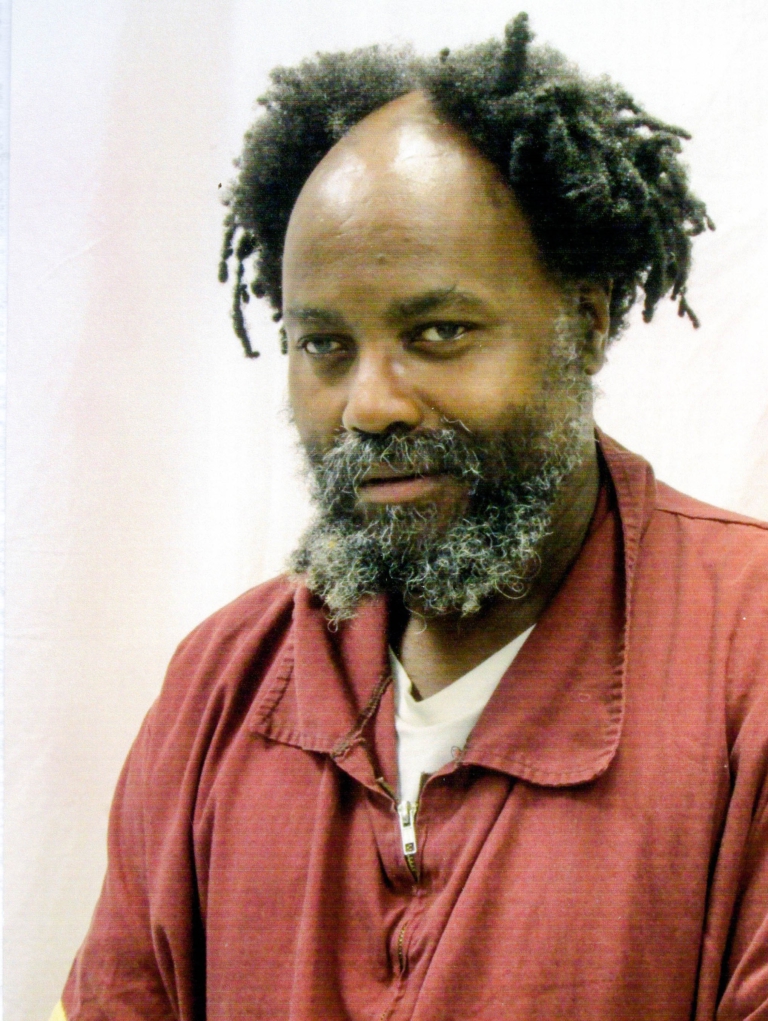



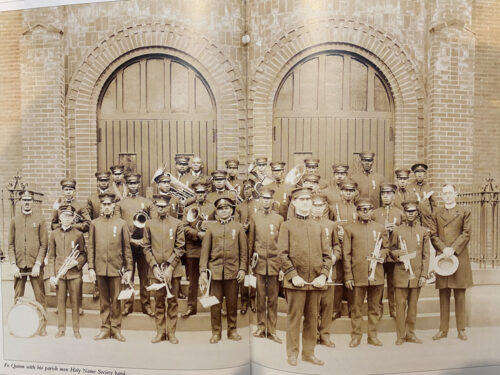
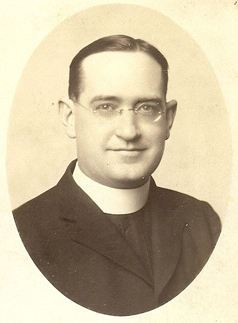


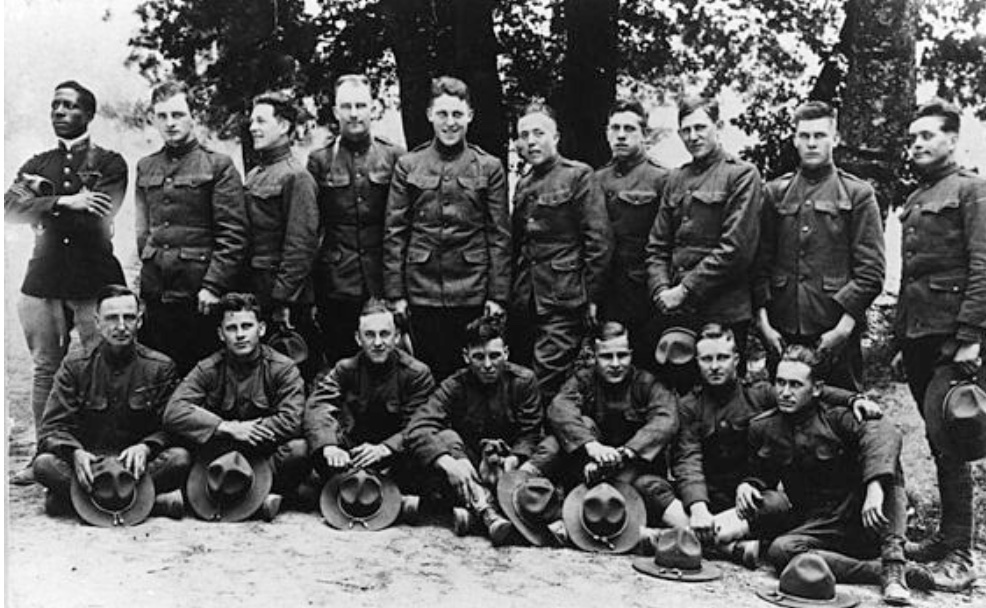


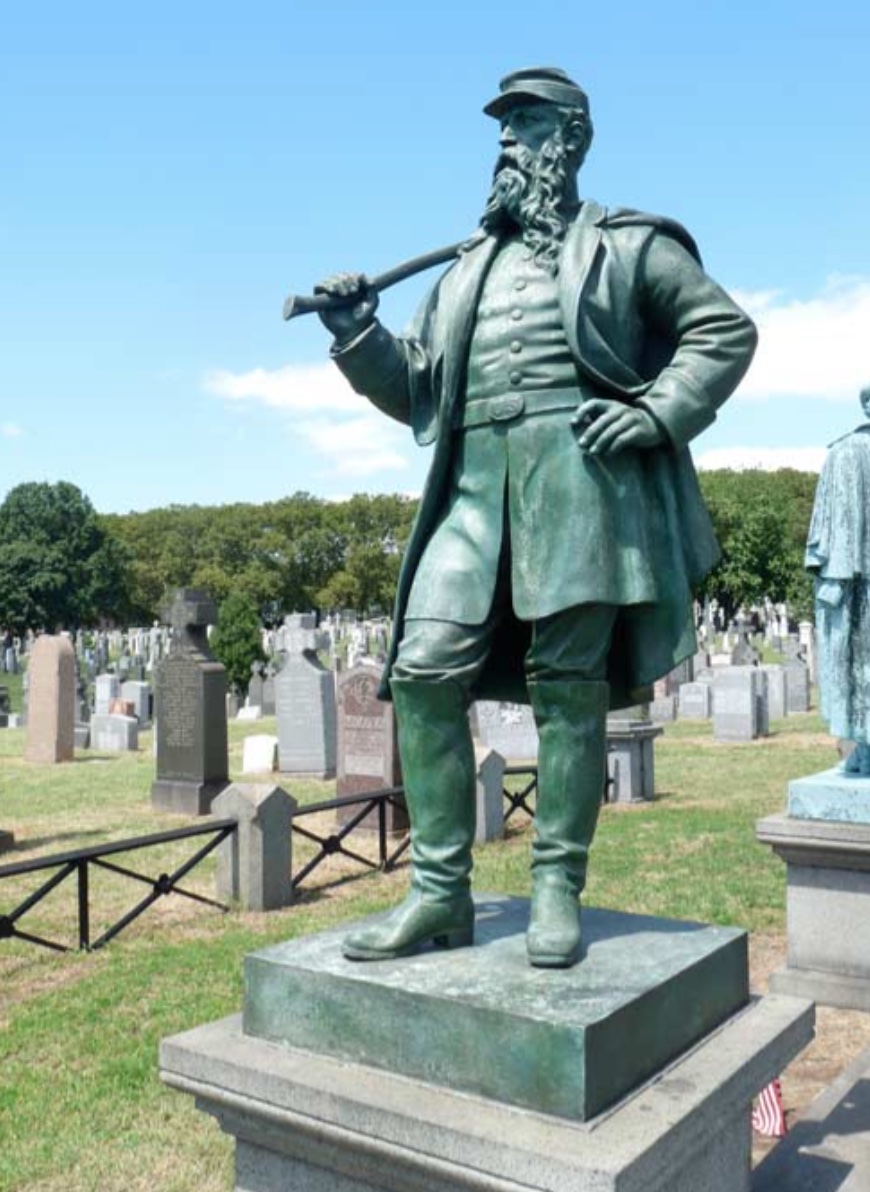

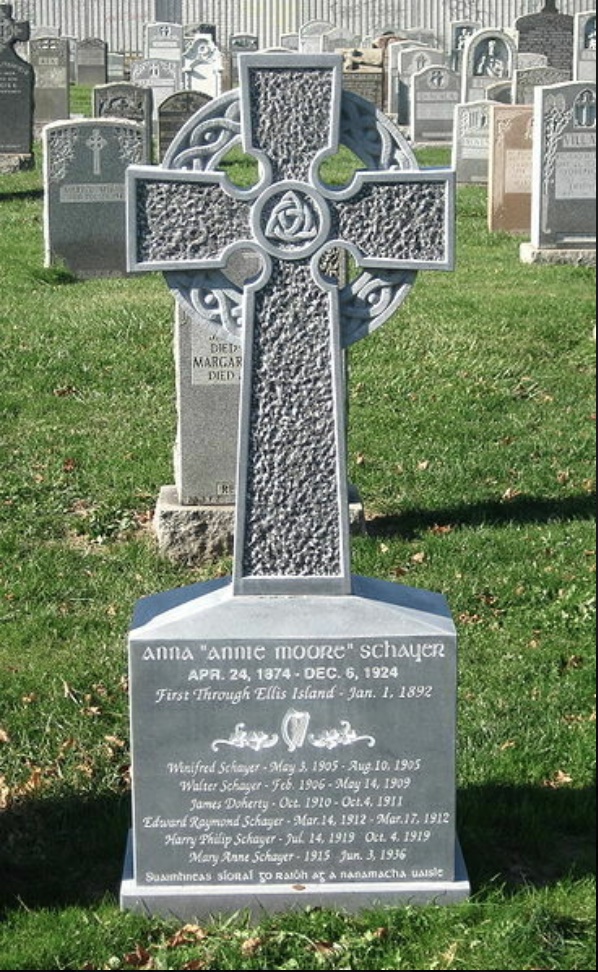


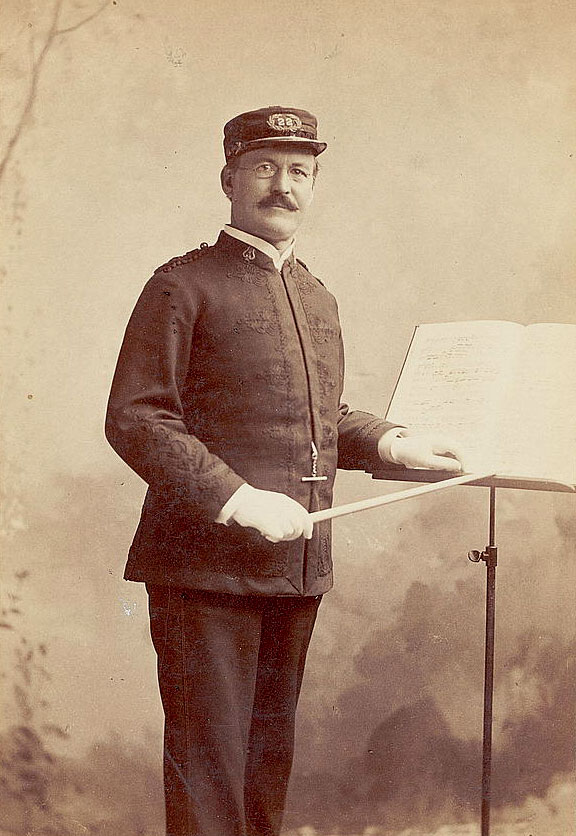


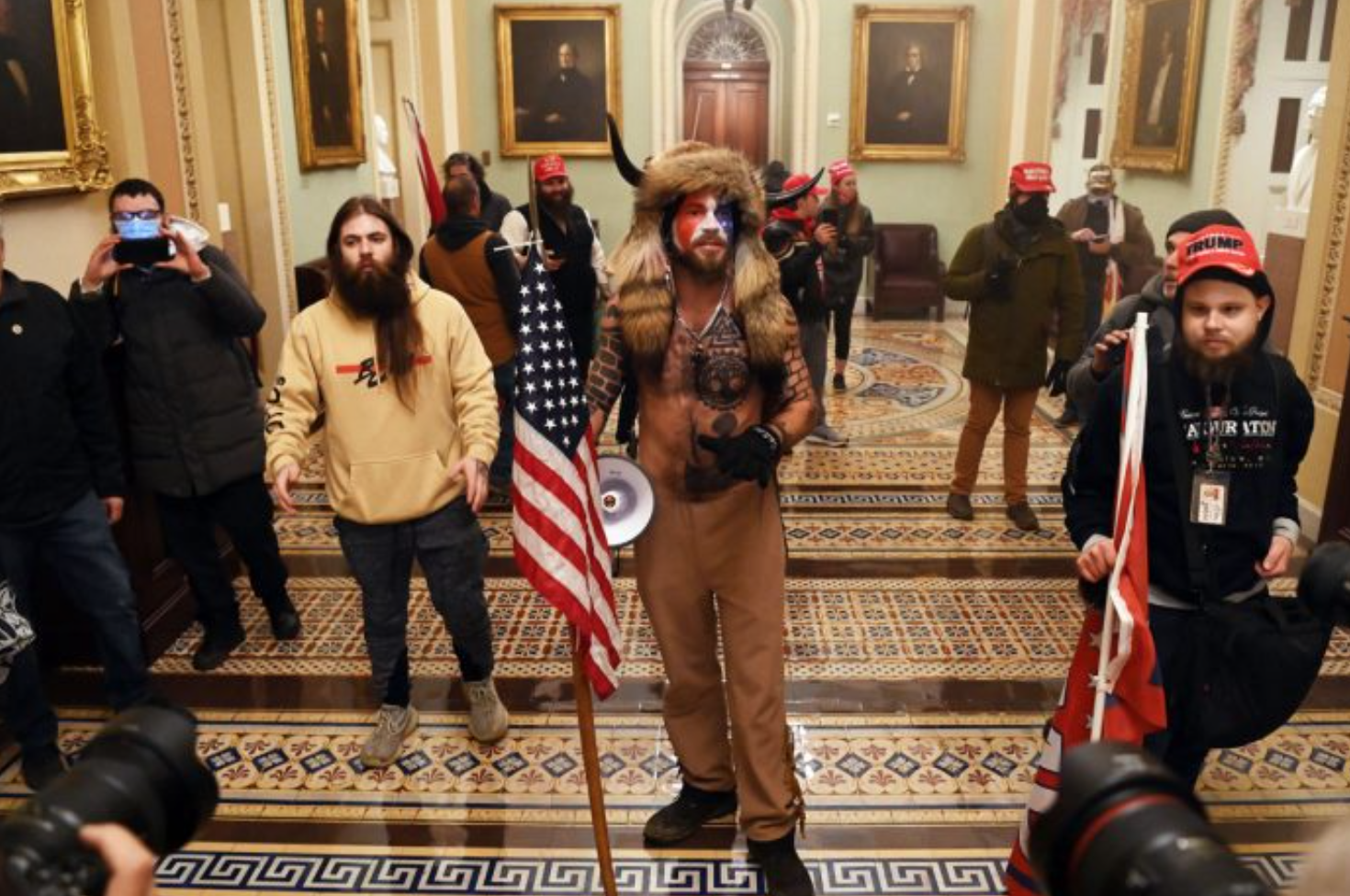


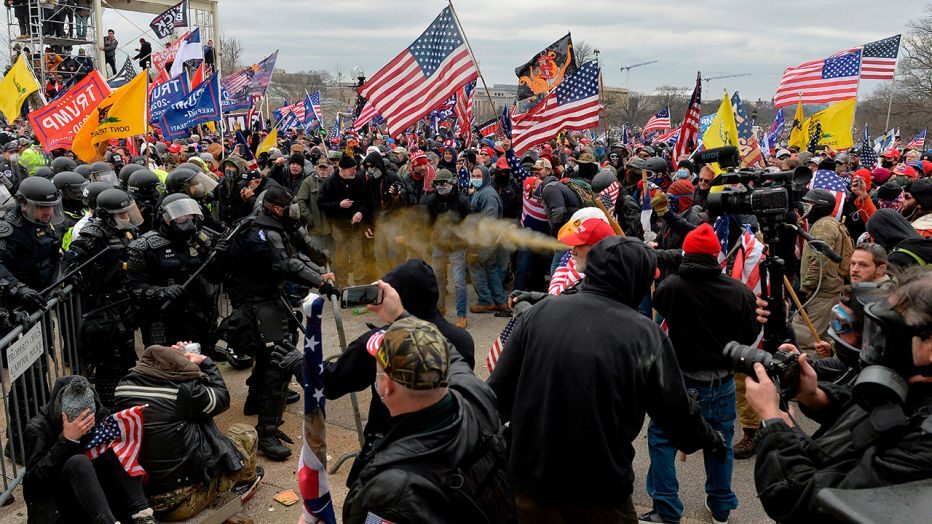


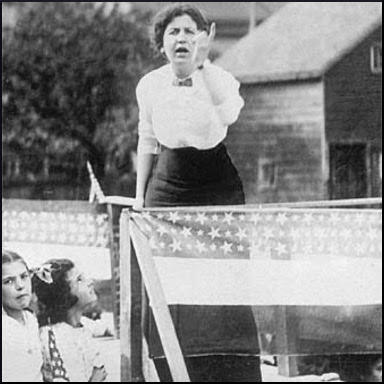

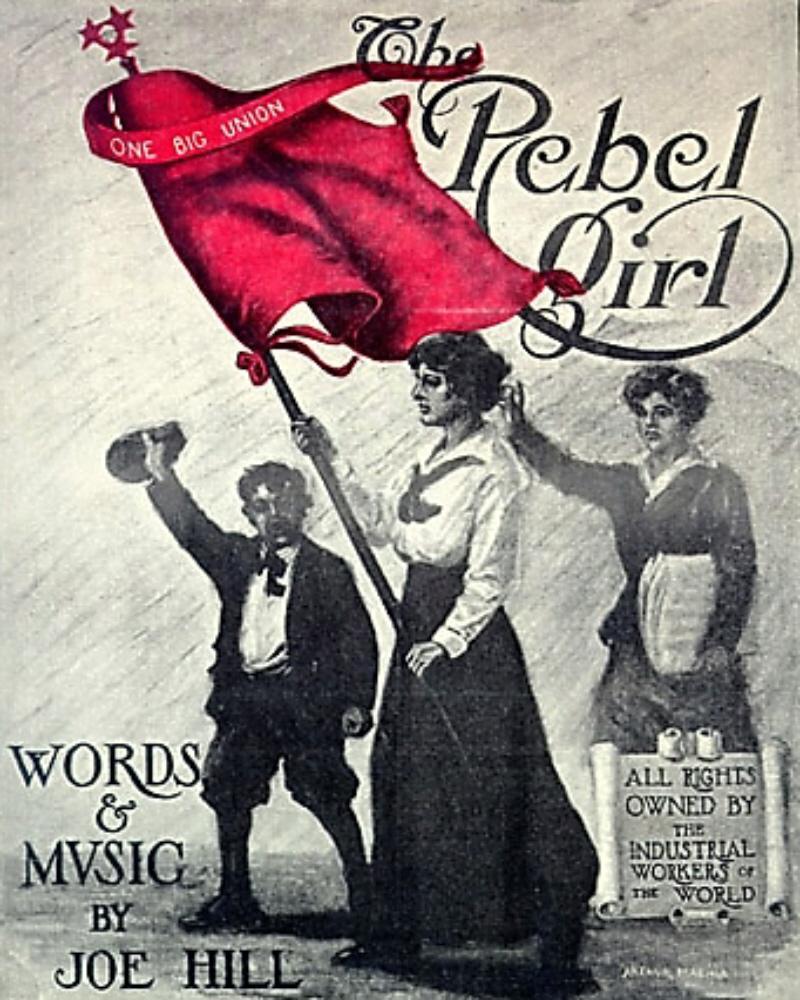


 rebelbreeze