A recent arrest in France and concert in Dublin are connected by events in both countries a half-century earlier.1
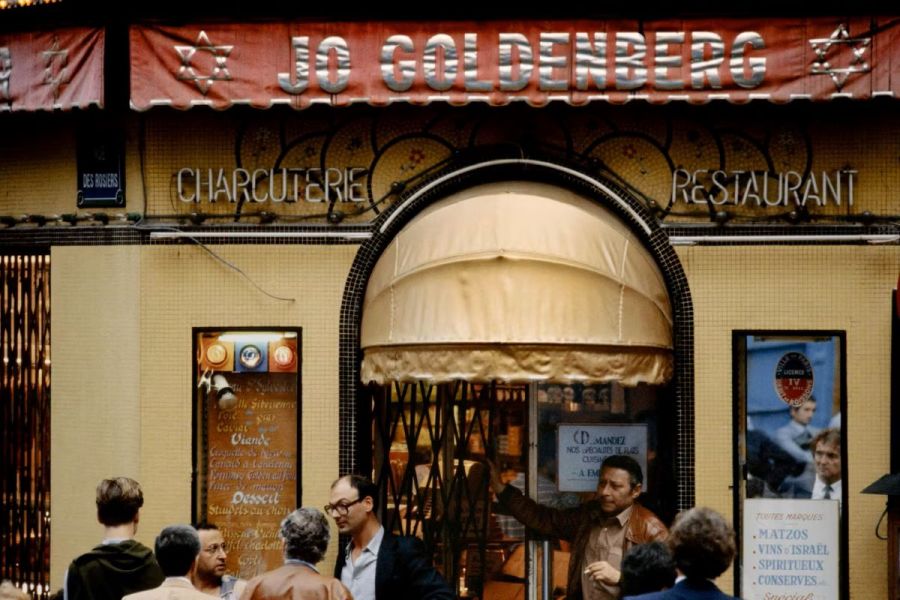
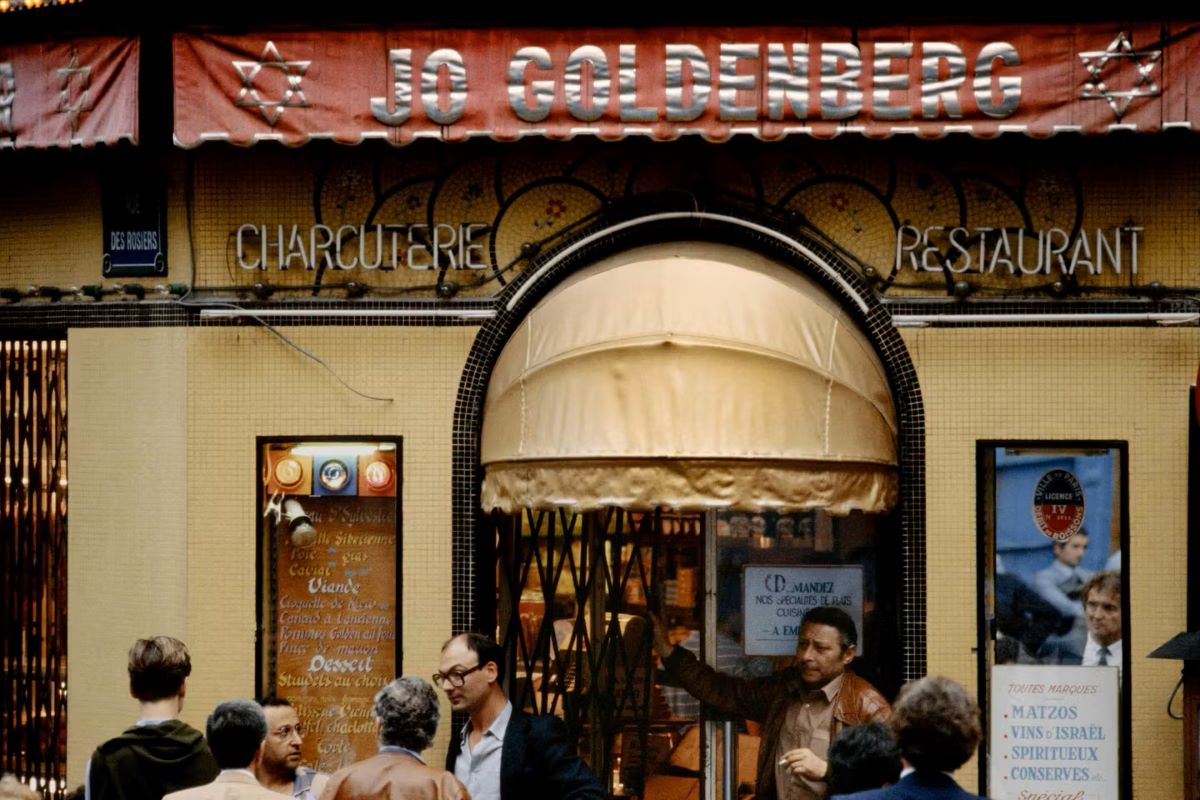
The arrest in question by French police was on 16 April of Mahmoud Khader Abed Adra, for alleged involvement in the 1982 attack on the Jo Goldenberg restaurant in the Marais district of Paris.2
The report of the arrest came less than a week after the Dublin commemoration by concert of another event, also half a century earlier. And strangely, there was a connection between both events.
On 11 April, a concert was held in Vicar Street to commemorate the arrest, torture, framing of three Irish Socialist Republicans and their jailing in 1986.3
Musicians, poets and journalists came together at the event, organised by musician Cormac Breatnach, brother of one of the accused, to commemorate the event and to press for an inquiry into three activists being tortured into making false confessions incriminating themselves.
And into how, despite their retractions and medical evidence of torture, they were then convicted of an event they had not committed. And how the legal system, from the Court of Appeal to the High Court, had all colluded in the injustice.
The trial in Ireland was for the Sallins Mail Train Robbery of 1976. The convicted three were Osgur Breatnach, Nicky Kelly and Brian McNally: Breatnach and Kelly were sentenced in the no-jury Special Criminal Court to 12 years, McNally to nine.
The day before sentence, Nicky Kelly jumped bail but returned nearly two years later when the convictions of Breatnach and McNally were deemed ‘unsafe’ and that their statements had ‘not been made voluntarily’.
However, the State insisted that the time period for registering an appeal had by then been exceeded and it took much campaigning and his own hunger strike before Kelly was finally released, on a Presidential pardon for a crime he had not committed.
A fourth, Mick Plunkett, had stood trial with the three on the same charges but having succeeded in not making a false confession under torture and threats, was finally acquitted. The French connection with the extradition of Mahmoud Khader Abed Adra, is Plunkett’s.
Mick Plunkett4 had decided that, despite his escaping the framing, that the Garda Heavy Gang5 would be out to get him and that a departure to other climes might he healthy. Plunkett settled in France but did not give up his politics.
Photo: Joel Robine/ AFP
The Jo Goldenberg restaurant was subjected to a grenade and firearms attack on 9 August 1982, killing six and injuring 22.
On 28 August that year, Plunkett, Mary Reid and Stephen King (not the novelist) were arrested by a special anti-terrorist unit of the Gendarmerie (perhaps Le Gang Lourd, the Heavy Gang a la Francaise!).
The police claimed that all three were part of a terrorist organisation and that leaflets confirming that had been found in their apartment. And also firearms. All the allegations were vigorously denied by the three Irish activists.
Eventually the case against all three fell apart and they were released with, in time, the Gendarmerie admitting that the evidence against them had been ‘planted’ and the special unit was disbanded.6
One of the acts which the French police had claimed for the organisation of which they had falsely claimed membership of Plunkett, Reid and King was the attack on the Jo Goldberg Restaurant — the same incident for which the French Police have now charged Mahmoud Khader Abed Adra.
The French state got Khader Abed by extradition from Occupied Palestine. The State of Israel does not extradite its citizens anywhere but the Palestinian Authority was willing to do the job for France, which last year had officially recognised ‘the State of Palestine.’
end.
Note: If you found this article of interest, why not register with Rebel Breeze for free, so that you will be notified by email of subsequent articles. You can de-register any time you wish.
Footnotes
1This story was published recently in the Irish language-only weekly An Páipéar (available in newsagents and online).
Currently the Palestinian Resistance is engaged in an important struggle to eliminate four Israeli-proxy militias. This type of militias of colonial and imperial powers have a long history, not least in Ireland from the 1800s to the present.
SETTLER AND NATIVE MILITIAS IN IRELAND
The British colonial occupation of Ireland had an army to quell native resistance but many settlers also organised themselves into armed bands (as in Palestine), such as the Hearts of Steel or Hearts of Oak in the late 18th Century in order to resist the big landlords.
The United Irishmen were successful in uniting a number of these, both native and settler bands such as the Whiteboys and Hearts of Oak, particularly in Antrim but the Peep O’Day Boys went mostly with the sectarian and royalist Orange Order.
The settlers also organised yeomanry militias which they labelled ‘Volunteers’, initially to defend against a feared invasion from Napoleonic France. Some of those contained Republican sympathisers and some quite the opposite.1
In response to the successful uniting efforts of the mostly Protestant-led United Irishmen, the Orange Order was founded by British loyalists and soon received official support in organising anti-Catholic pogroms and in exposing United supporters, especially among the Protestant communities.
LOW INTENSITY OPERATIONS AND “PSEUDO-GANGS”
During the three-decades war towards the end of the 20th Century mostly in the 6 Counties, the British Occupation also organised proxies such as the Ulster Volunteer Force and the Ulster Defence Association. These were recruited among the Protestant/unionist community.
But not only among civilians.
As has been a pattern among colonial possessions, the occupying power organised a gendarmerie, i.e an armed police force under central command of the occupying power. In Ireland that was the Royal Irish Constabulary which came to prominence in the suppression of the 1867 Fenian rising.
After the partition of Ireland by the British in May 1921, the RIC within the remaining direct colony of the Six Counties was renamed the Royal Ulster Constabulary2. British Intelligence used this force to channel intelligence, arms and recruits into the Loyalist gangs.
In addition, many members of the disbanded RUC’s semi-militia, the part-time B-Specials, were reorganised into the RUC Reserve of the colonial police or recruited into the British Army as the newly-formed Royal Ulster Regiment, from which the Loyalist militias could be supplied as before.
Brigadier Frank Kitson was a leading colonial counter-insurgency strategist who had served in Kenya and Malaya before he was sent to the Six County colony to coordinate the Loyalist militias and the official armed forces and gendarmerie, no doubt in coordination with MI5.
Kitson published Gangs and Pseudo-Gangs (1960) and Low Intensity Operations (19713) based on the experience of colonial resistance repression in Malaya and Kenya, going on to introduce these ideas organisationally in the occupation of the Six Counties.
Pseudo gangs give the occupying power deniability and, being generally from the occupied country,4 have local knowledge. They can carry on terrorism and assassinations at ‘a remove’ from the occupying power.5 In the case of criminal gangs, they have an existing organisation.
Such gangs may have family or other social relationships with some in the targeted community, introducing allegiances and communal fragmentation as has been occurring to some extent in Gaza. However, in Ireland, the gangs were all originating from the unionist community.
Frank Kitson (now Brigadier) in 1971 (Photo source: Internet)
Jeffrey Sluka summarises6 “… beginning in 1972, there has been a vicious, continuous campaign of sectarian assassination against Catholics in Northern Ireland waged by Loyalist paramilitary groups (the Ulster Defence Association [UDA] and Ulster Volunteer Force [UVF]) …
“… and their associated death squads (the Ulster Freedom Fighters [UFF], Red Hand Commandos, Protestant Action Force, etc.), who have killed nearly 700 innocent Catholic civilians – the largest category of casualties in the war.
“Thousands of other Catholics have survived Loyalist attempts to murder them.
“The existence of this campaign has never been publicly acknowledged by the British authorities, who have ignored it, downplayed it, and actively misrepresented it …
“… to influence the media and public in this regard, both at home and abroad, as an integral part of their counterinsurgency strategy.
“The official position of the British authorities is that there is no state terror in Northern Ireland, and certainly no death squads. When pressed, they admit that there is Loyalist terror against Catholics, but insist that they have nothing to do with it.
“When pressed with evidence such as the fact that hundreds of members of the Security Forces have been convicted of involvement with Loyalist paramilitaries, they claim that this collusion is informal – individual acts by rogue soldiers and policemen
“- and not a reflection of government policy or military strategy. All of these are political lies.”7
SEPOYS
The use of military forces recruited among the occupied people dates back further even than the Roman Empire and the British Empire used them extensively in India, where they called them ‘Sepoys’,8 which is what the Basque pro-independence people call the Basque Autonomous Police.9
In India, one of the most serious uprisings against British rule was sparked by a mutiny of its Sepoys.10
In Palestine, the ‘Zipaios’ equivalent are the police of the Fatah-controlled Palestine Authority. They are bad enough, brutally suppressing dissent, spying on and even attacking Palestine organisations in the West Bank, arresting and even killing critics.
The Royal Irish Constabulary in Ireland were a gendarmerie mostly composed of sepoys and of course there were many Irish regiments in the British Army and Irishmen also served in other British Army units, the Royal Navy and the Royal Air Force.
WORSE THAN SEPOYS
The militias in Gaza are however even worse. Based on criminal gangs and social groups, they have consistently looted aid trucks coming into Gaza before Israel closed all the gates, then selling the goods at high prices to the hungry population as Gaza starved and medicine became scarce.
According to reports there are currently four Zionist-linked militias in Gaza: Abu Shabab around Rafah in southern Gaza; Husam al-Astal in Khan Younis, Ashraf al-Mansi in Beit Lahia in the North, and Rami Heles in eastern Gaza.
Sourced from The Cradle based on Sky News investigation.
Their looting, supported by the Zionist state, was even used to try to blame on the Resistance, with Israeli spokespersons claiming that Hamas was stealing the aid. Conversely, as the Resistance strove to counter the proxy militias, the fighters were targeted by the Israeli Occupation Force.
Consequently it was almost impossible for the Resistance to suppress the proxy militias – until the current ‘ceasefire’. Now, able to operate to some extent more openly, the Resistance is settling accounts with the proxy militias. And it is very important that they do so.
Not only for what they have done, the plundering of emergency aid, attacks on displaced persons, torture and murder of famed journalist Salah al-Jafarawi.11 But because they are a serious infection, injected into Gazan society by the Zionazi occupation in order to cause serious harm to the society.
According to reports, undercover operatives of the Resistance have infiltrated the gangs and managed to appropriate a large number of weapons and vehicles of the gangs donated by the IOF or by the United Arab Emirates.12
Hamas advertised a truce for gang members to hand over their weapons and surrender themselves to the authorities, which some have done but many have not. The Resistance has operational clashes with the militias and has captured many. Some were publicly executed by gunshot.
Whether full-scale war returns to Gaza after this ‘ceasefire’ (full of IOF bombings, shelling and shooting) or not, their presence in Palestinian society cannot be tolerated, not by the civil government, nor by the broad community, nor by the armed resistance.
End.
Note: If you found this article of interest, why not register with Rebel Breeze for free, so that you will be notified by email of subsequent articles. You can de-register any time you wish.
APPENDIX:
A Sky News investigation has revealed that Israel is backing four Palestinian militias inside Gaza to weaken Hamas as part of what militia leaders call “Project New Gaza.” Hossam al-Astal, head of one of the groups, said the militias are coordinating their efforts to remove Hamas from power.
He claimed that Yasser Abu Shabab and Ashraf al-Mansi, leaders of other groups, have also joined the project. All four militias are reportedly positioned along the yellow line in areas under Israeli control.
Astal told Sky News his headquarters is only 700 meters from an Israeli military outpost and that an Israeli coordinator had agreed to establish a “Green Zone” free of shelling or gunfire. Footage reviewed by the outlet showed militia vehicles with Hebrew markings scratched off.
Astal admitted the group receives logistical support and ammunition from outside Gaza and has bought Hamas weapons on the black market. A senior fighter in the Abu Shabab militia also said Israel had enabled the smuggling of guns, cash, and vehicles.
The militias reportedly coordinate their movements with Israeli forces at Kerem Shalom to bring in supplies, while western powers are said to provide indirect material support. Two of the militia leaders are former Palestinian Authority security officers.
While the Mansi militia denied direct contact with the Israeli military, it acknowledged coordination with Israel’s District Coordination Office. Abu Shabab previously told Army Radio he was open to working with Israel, calling Trump’s ceasefire plan “a way to end the war.”
“Soon we will achieve full control of the Gaza Strip,” he told Sky News.
(Summarised by The Cradle online news updates on Telegram 26 October 2025).
FOOTNOTES
1The yeomanry militias deployed in Wexford, such as the North Cork, proved to be the most vicious and indisciplined of the Occupation’s forces and are noted in a number of songs in English and Irish: “… He led us on against the coming soldiers,And the cowardly yeomen we put to flight…” (Boolavogue, Patrick McCall, 1898);
“… Is go gcuirfeam yeomen ag crith in a mbrógaibh Ag díol a gcomhair ar Shliabh na mBan.” (Sliabh na mBan, believed byMícheál Óg Ó Longáin, 1798).
2Since then renamed the Police Service of Northern Ireland (sic).
3The same year that mass internment without trial was introduced by the British Occupation and that the Ballymurphy Massacre of protesting nationalist civilians was carried out by the Parachute Regiment.
4Sometimes even from the oppressed native community.
5They are more easily dispensed with too, should they be no longer needed or their relationship become too public.
6In his own chapter For God and Ulster: The culture of terror and Loyalist Death Squads in Northern Ireland in Death Squad: The Anthropology of State Terror, Ed. Jeffrey Sluka (200), USA.
8The term in Persian originally denoted ‘soldier’ but borrowed into Urdu and Hindi and under British rule, denoted native soldiers and their units in the British armed forces.
9The Ertzaintza. The Navarran police (‘Forales’) could also be called ‘Sepoys’ but are more usually called by other uncomplimentary names.