
Diarmuid Breatnach
The new €2 coin design is now published and the coins will themselves be put into circulation in the New Year. Designs were submitted and the winning design for the ordinary currency coin is by Emmet Mullin, while the design for the gold and silver special editions is by Michael Guilfoyle. Both designs incorporate the statue of “Hibernia” and that name is prominently displayed on one of side of the coin and although Guilfoyle’s design incorporates some words from the 1916 Proclamation, they are in the background to the representation of “Hibernia”. The image is taken from a the centre one of a trio of statues erected on the GPO in 1814, while still under British occupation.
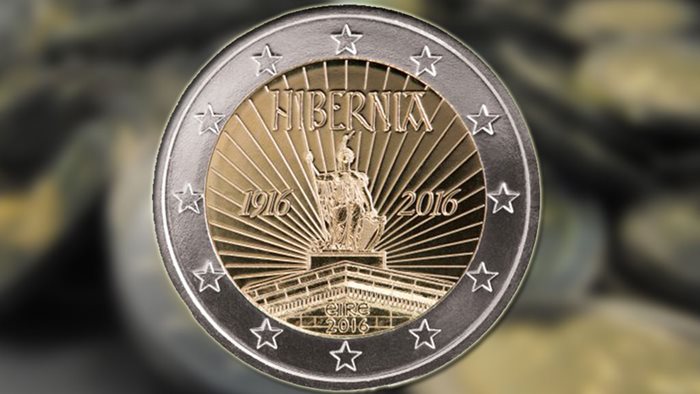
“Hibernia” was regularly used as an image to represent Ireland by “Punch”, a satirical racist British publication and she was always
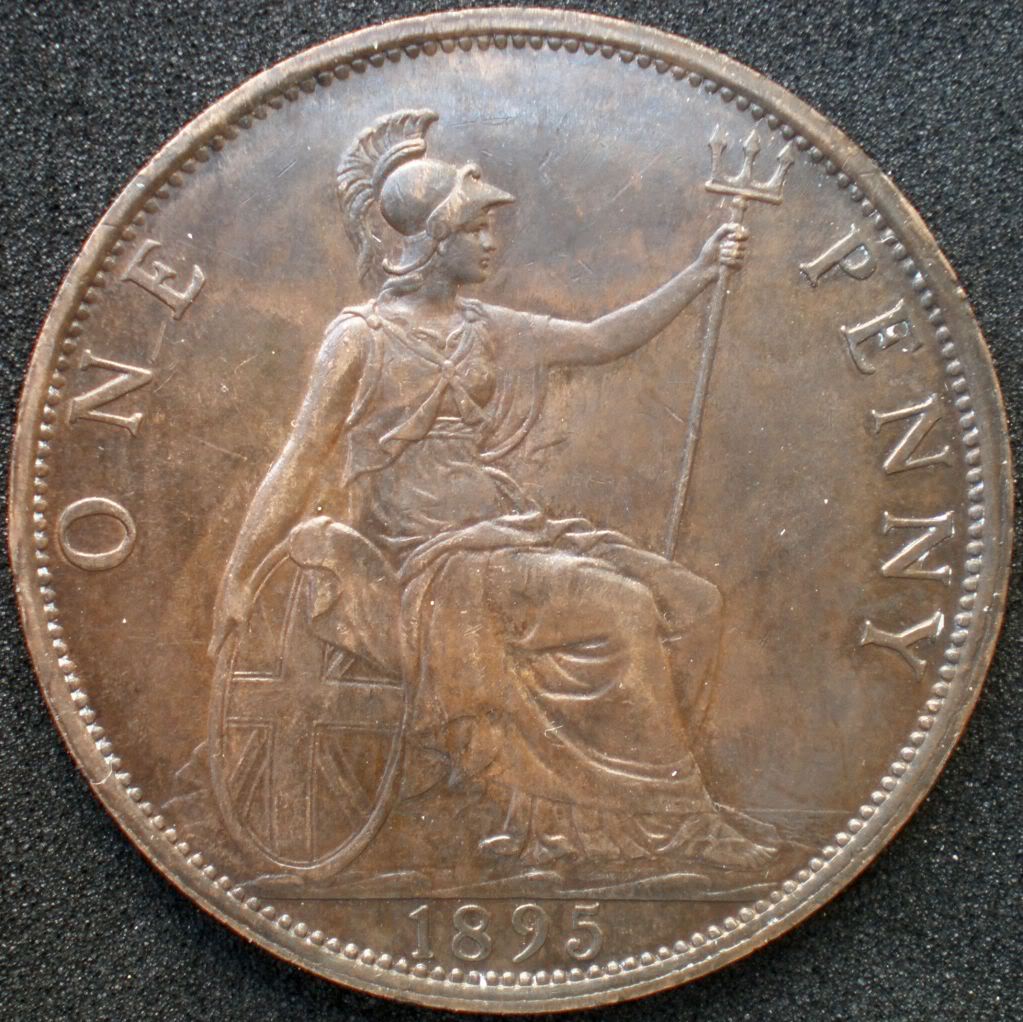
shown as a pretty younger sister of “Britannia”, in need of her older sister’s protection (usually from the rebellious Irish, the despair of poor “Hibernia”). She was never in martial garb, unlike Britannia herself who was usually represented as a majestic and martial figure, with a crested war-helmet and shield and sometimes carrying a trident (perhaps to indicate domination of the seas).
That representation of Britannia appeared not only in the cartoons of “Punch” and other publications but also in sculpture — for example at the top of Somerset House, in the Strand, London – and also on many mints of British penny coins.
Of course, in British history the most likely model for the representation of a female fighter was Boudicca (“Boudicea”) who, after her humiliation and the rape of her daughters by Roman Legionnaires, raised her formerly pacified tribe of the Icenii against the Roman occupation and came close to driving them out of Britain. The irony is that the whole of Britain at that time was Celtic, as were Boudicca and the Icenii. But the English ruling class appropriated Boudicca into their English iconography as they did also with King Arthur and the Round Table knights.
Romanised and civilised
Ireland had many names among the Gael but “Hibernia” was not one of them. “Hibernia” was a late Latin name for Ireland, which the Romans had previously called “Scotia” (yes, “Scotland” originally meant something like “the land the Gael have invaded and settled and defend”).
The Roman linguistic connection is interesting – Irish Anglophiles and some English lovers of Ireland have been wont to bemoan the fact that Ireland was never conquered by the Romans. These commentators have tended to see Romanisation as civilising, forgetting perhaps the words of Rome’s own greatest historian, Publius Tacitus (or Gaius Cornelius Tacitus; c. 56–after 117 AD) who said that “they have created a desert and call it peace.” Calling Ireland “Hibernia” might be a way to bring that Roman conquest belatedly to the unquiet isle, to make her more “civilized” — in fact more like her neighbour and therefore more accepting of her neighbour’s domination and of her ways.
When John Smyth designed the statues to go on top of the General Post Office building in Dublin’s main street, then Sackville (but now O’Connell) Street, Dublin was widely considered the second city of the British Empire, next to London. The building opened to the public in 1818 but Dublin’s slow decline in status had already begun. Since the abolition of the Irish Parliament by the Act of Union in 1801, following the suppression of the United Irish uprising three years earlier, the Irish Members of Parliament had to go to London to take their seats, taking a great deal of political, commercial and social life with them. Irish landlords deserted their Irish estates in greater numbers, leaving them in the hands of their often rack-renting agents as the owners demanded more and more rents to keep them in their homes in Britain and their lifestyle there and in Europe. Throughout the 19th Century the social focus slowly followed the political to England – except where a militant nationalist one arose.


Submission or subversion?
Perhaps the representation of Hibernia by John Smyth, reflecting that of Britannia, was meant to show Ireland as equal in grandeur to her dominant neighbour. The Society of the United Irish had been part of a wider cultural movement that sought to explore and appropriate an older Gaelic culture for the colonists, many of them settled for generations on Irish land. Assertions of autonomy and complaints about English political and commercial restrictions had been part of that movement too and had found sharpest expression in the republican and separatist ideas of the United Irish. Some aspirations remained, severely modified. Perhaps it was John Smyth’s intention to show Hibernia as grand but there was no mistake about who was really in charge in Ireland, Hibernia or Britannia.
As if to underline the relationship, Smyth placed a statue representing “Fidelity” on Hibernia’s left on top of the GPO. What could that fidelity be, except to the Empire? Some suggest that because Fidelity holds the Key and is with the Dog, that she really represents Hecate. I know nothing about Smyth nor have I the time to research him at the moment but it is possible he was being somewhat subversive in that representation. Hecate had a number of earlier and later interpretations and the key seems to have appeared later – the key to the household perhaps but also to Hades, the Underworld.
On Hibernia’s right, John Smyth erected the statue of Hermes, known to us as the messenger of the gods but also representing commerce. Commerce, then as now, was the backer of military and political initiatives, indeed often the driver. Of course, many of the Irish bourgeoisie, both native and colonist in origin, wanted a successful commercial Ireland. But after 1798 and 1801, they were not going to get it. From then on, most progress for Irish finance would be made through investing in the Empire rather than in Irish industry and trade.
Whether the representation of Hibernia was intended as some kind of subject of Britannia with pretensions to something grander or was in fact just aping her better, dressing in her mistresses’ clothes when the lady was away, is a moot point. What is certain is that neither the image nor the name itself is of native origin.
The names for Ireland
As noted earlier, among the many names of the Gael for Ireland, “Hibernia” does not appear. The clan-based resistance had used Irish names to describe the land and this continued in the wars against Cromwell and William, with “Ireland” being the most common name when speaking in English by both sides of the wars.
The United Irishmen, a late 18th Century republican movement for independence led mostly by descendants of colonists and largely English-speaking, called the land “Ireland”1 or “Erin” (a phonetic representation of the Irish-language “Éirinn”, the dative case of “Éire”). These names, along with the genitive “Éireann” later, continued to be those most often used by nationalists of the 19th Century, the Young Irelanders, the Fenians, the Land League, as well as by the various advanced nationalist and revolutionary organisations in the early years of the 20th Century2.

This continued to be the case during the War of Independence and by both sides in the Civil War and was the case with the setting up of the 26-County state and with the various national resistance movements to that state of affairs since then. One finds “Hibernia” in the Ancient Order of Hibernians, of course and in the Hibernian Bank but they are exceptions – it is “Éire”, “Erin” or “Ireland” over all – and has been so for many centuries.
“Hibernia” is a foreign colonial import, both in terminology and in concept. She is poor image of her big sister on “the mainland”, the real boss. The use of her image and of her name is inappropriate to commemorate the 1916 Rising but their use may signify much more than an error – they may reveal a subliminal desire to return to the Empire, or at least the Commonwealth, in the psyche of those who were never all that sure they should have left it.
End
Links for sources:
The design of the new €2 commemorative coin: http://www.joe.ie/news/pic-take-a-look-at-the-winning-designs-for-irelands-new-2016-coins/511479
The GPO building and the statues: http://archiseek.com/2010/1814-general-post-office-oconnell-street-dublin/ among other on-line sources
About origin and personification of Hibernia: https://en.wikipedia.org/wiki/Hibernia_(personification) http://victorianvisualculture.com/2010/10/13/hibernia-as-the-other-ireland/ and despite perhaps its name and appearance a good concise but short summary in http://www.proud2beirish.com/Irelands-Name-Origin.htm
1“From my earliest youth I have regarded the connection between Ireland and Great Britain as the curse of the Irish nation …” Theobald Wolfe Tone
2Inghinidhe na hÉireann, Na Fianna Éireann, The Irish Citizen Army, The Irish Transport & General Worker’s Union, The Irish Volunteers, Óglaigh na hÉireann. Also, when the Abbey Theatre was founded by W.B. Yeats and Lady Gregory in 1904, they declared it was “to bring upon the stage the deeper emotions of Ireland”.
 rebelbreeze
It’s strange that you don’t mention the native Irish language names for Ireland – Éire, Fódhla and Banba, three sisters of the Tuatha Dé Danann who met with the Milesians when they first arrived.
Go raibh maith agat. I chose not to so as not to confuse the issue with a list of names and instead referred to those you mentioned and others by saying “Ireland had many names among the Gael but “Hibernia” was not one of them.” My main thrust was that it is wrong to choose a name given to us by others and also with regard to the role that the representation of “Hibernia” has played in recent history.
Hibernia is the Latin name for Ireland like how Britannia is the Latin name for Britain. The English did try to paint Hibernia as the little sister of Britain but that doesn’t mean we have to accept that image. Instead of trying to tear things down, build things. Don’t let British propaganda trick you into hating Hibernia. Many parts of Irish culture have equal parallels in England. We remember our heroes with an Easter Lily, they remember their soldiers with a poppy. “God save Ireland” was the unofficial anthem before Amhrán na bhFiann and creating familar alternatives to these things like “God save the king” is how we supply our cause. It’s like how languages need to translate new words into their language, obviously It’s based in a foreign word but it’s presentation is created from the need to make a parallel. When nations need to create new institutions or cultural concepts, they’ll often take inspiration from their neighbours. Ireland’s law system is based on the English system of law and our president largely serves a role parallel to their monarch but that doesn’t make our system any less Irish. We have native institutions and cultural concepts already and that’s good but there’s nothing wrong with us using the Latin name of our country for our personification like how Britain does for their’s as long as we show them that she’s not infact a little sister of Britannia.
Hi Adam, thanks for your comment but I need to disagree with the core of what you say. “Britannia’ was the Latin name for Britain because the Celtic Britons lived there so, in that sense, it was keeping the original name or at least a name related to the people. “Hibernia” is understood to mean “the land of winter” and was a foreign view. The names for Ireland have always been Irish language and female and it’s name in the current Constitution, for all its faults, is correct: “Éire” and, as explained in the article, I believe, in English “Éire”+”land “= “Ireland”. Go tigh Diabhail le “Hibernia”!
“God save Ireland” may or may not be intended as a riposte to “God Save the King/ Queeen” but the origin of the song is well-known as its author took it from the shouted words of Larkin, Allen and O’Brien as they were sentenced to die for being Fenians (ostensibly for the ‘murder’ of a policeman accidentally killed during the freeing of prisoners at which at least two were not even present). They are known as “The Manchester Martyrs” as you may know.
Not Britain but the UNITED KINGDOM has the Poppy, which is (as I’ve written in an article about the Blood Red Poppy) to support the imperialist and colonial armed forces of the UK. The Easter Lilly was developed by Cumann na mBan as a fundraiser for the support of Irish Republican prisoners and their dependants and is understood as upholding not only the memory of the martyrs of 1916 and after, but also WHAT THEY FOUGHT FOR (which remains to be won). To suggest an equivalence between the two symbols is to suggest that imperialism equals national liberation!
I agree with you that “Ireland’s law system is based on the English system” if you mean the legal system of the IRISH STATE, which is by no means “Ireland”. Furthermore, that legal system from which this one is developed was a feudal and colonial system imposed on us by violence and replaced the Brehon Laws, a system which, though archaic now was much more humane and generally superior. Even many of the early Norman conqueror/ settlers found it more attractive so that their corresponding Normans in England passed laws forbidding them (“the degenerate English” who had become “more Irish than the Irish themselves” to integrate with the Irish, including submitting themselves to and applying Irish law. (The Statutes of Kilkenny 1966 are a good example of these attempts). There are traces of those British laws to be seen in virtually every “ex-colony” of the UK and this will be one of the marks by which one will be able to identify not only an ex-British colony but one which is still a neo-colony, of the British or of whichever imperial power has taken its place, such as the USA in parts of the Caribbean. Because any truly independent country should scrap those laws and draw up an entirely different legal system.