(The author is known as a traveller to many exotic places, including expeditions in search of mythical lands, most famously “The United Kingdom”, the “Republic”, “Norn Ireland” and “The Mainland.” Here he writes about the land of Dyslexia).
Dyslexia is, as the suffix “-ia” suggests, a country …. think of India, Mongolia, Russia, California [now relegated to a vassal state], Hibernia [also something of a vassal state], Narnia [er .. no, that is an imaginary land in a series of children’s tales].
Strangely the existence of Dyslexia was not even suspected until 1881, when Oslawd Khanber1 claimed to have visited the land. His discovery was widely doubted until confirmed by Ludorf Linber2 in 1887.
The people of this newly-discovered land were distinguished by all having a difficulty to varying degrees in spelling and/or in remembering sequences of numbers.
Khanber and Linber both named this land (and the rest of the world agreed) “Dyslexia”, from the Greek root “dys” meaning “bad/ abnormal/ difficult” and “lex” meaning “word” (although in Latin it means “law”, understood as “written word”).
Dyslexia was, like many other lands and people, not named by the natives themselves, but by people from elsewhere. Such examples abound, for example “Australia”, “America”, “Scotland”, “Eskimo”, “Teddy Boys”, “Pagans”, “Celts”, “Saxons”, “Teagues”, “Gypsies”, “E.T.s” etc.
Attempts to identify what the Dyslexics themselves called their land have so far collapsed in confusion, with different spellings and even pronunciations hotly argued for against others.
In fact, there have been accusations of racism aimed at those who named the land “Dyslexia” and the people “Dyslexics” — it seems particularly cruel to create a word itself so difficult to spell to name a people with a known disability in spelling.
Previously, Dyslexics just called themselves “people” and the land “the land”, while those who came across migrants from there before Dyslexia was actually discovered called them other names: such as “stupid”, “slow”, “thick” or “people with ADD or ADHD”.3
However, most “Dyslexics” today have not only adopted the name and learned to spell it but are wont to proudly declare “I’m Dyslexic” (but rarely “I am a Dyslexic”).
When Dyslexia came to the attention of the rest of the World no-one seemed astonished that it should be discovered long after the North and South Poles, the Mariana Trench, the Matto Grosso Plateau and indeed a great number of planets.
What did astonish the World was that Dyslexia had apparently independently within its borders invented television, radio, Ipads, microwave ovens, central heating and hot showers and of course the internal combustion engine and nuclear power.
This proliferation of technology would have been normally amazing (if anything normal can be said to be amazing, or vice versa) in a previously undiscovered country.
But what was really, really amazing was that everyone in Dyslexia had overcome a disability to climb to such industrial heights. The obstacles must have been tremendous.
Imagine confusing, for example, sodium chloride, a common table salt, with sodium chlorate, which is used as a weedkiller.
Also by the way, as an ingredient in making home-made bombs, a curious fact since nitrogenous fertiliser, with a directly opposite effect to sodium chlorate when spread on weeds, is also sometimes used in making home-made bombs).
Anyway, shake sodium chloride in small quantities on your weeds and they probably won’t like it but most will survive – especially those that actually like a little of it, like relatives of the cabbages and such. Shake a little sodium chlorate on your food, however and ….
well …. no, don’t try it – without urgent and skilled medical attention you will die quickly and painfully.
For another example, imagine confusing “defuse” with “diffuse”: one goes to de-escalate a conflict and ends up spreading it around. Other confusions are possible between the noun or verb “ware”, the (usually) adverb “where” and the past tense verb “were”. And so on.
For physics, knowledge of and accuracy in mathematics is essential – algebra, logarithms, binary codes, sines and co-sines, square roots (these last are mathematical constructs, not mythical regulated-shape carrots as propagated by anti-EU campaigners).
In calculating distances, heights and depths, spaces and circumferences, ability in geometry, trigonometry and ordinary mathematics is required. Somehow, the Dyslexics, the inhabitants of Dyslexia, had overcome their disability or compensated for it in some way.
They had developed as flourishing and environment-poisoning an industrial society as the most developed parts of the world, such as the United States of America (most developed industrially, that is).
Dyslexics are said, despite this disability with letters and numbers, to be of above-average intelligence. They had to be, to develop all those complicated benefits of industrial society despite their handicap.
Strangely, one may think, many Dyslexics have become literary figures famous throughout the world, Hans Christian Andersen, Agatha Christie, F. Scott Fitzgerald and WB Yeats among them. Contrary to popular belief among non-natives, James Joyce was not from Dyslexia.
This prevalence of Dyslexics among so many giants of literature and indeed of virtually every other field of human endeavour has given rise to a group of Dyslexians who call their disability “the gift of Dyslexia”.
The Dyslexics are often garrulous and sociable and this is especially true when in Dyslexia itself. The difficulty in remembering telephone numbers for example makes every telephone call an adventure.
Say a native wished to phone another native called Cathy (also known as Cthy, or Ktay, Thyca etc), and the phone number was 731 1062 (pleasenote, this is an imaginary telephone number by which neither Cathy nor anyone else can be reached).
The Dyslexic might phone 371 1026 – all the correct digits but in a different order (note, this also is an imaginary telephone number by which no-one may be reached).
The conversation, somewhat simplified, might go like this:
“Yes, hello?” (female voice, breathless with anticipation of another adventure).
Our caller: “Hi, is that Cathy?”
Recipient (giggling): “No, it’s not. There isn’t any Cathy here. I’m Wanda.”
Our caller: “Oh, hi Wanda, you sound very nice. How about going on a wanda with me?”
Wanda (with a little giggle but playing cautious): “Maybe …. What’s your name?”
Our caller: “Terry.”
Wanda: “Where were you thinking of wandering with me?” (A moment’s pause while both mentally translate the last part of that into “wandering on me”).
Terry (clearing his throat which has suddenly gone dry): “Well, there’s a nice new Indian restaurant opened up in town. Do you like Indian food, Wanda?”
“Ohhh, Terry, I love it. So spicy!” (Very slight pause as both translate “spicy” as a description for food flavouring into a metaphor instead). “When were you thinking of?”
“Er … tonight too soon?”
“No, I happen to be free tonight.”
“Shall I come and pick you up? Say …. seven pm?”
“That would be lovely, Terry. I live off the Trans City Road, tenth left, first right, eighth left, in Hopeful Street, the seventh house on the left-hand side if you’re coming from town, with a brown and white door and a hydrangea bush in the garden.”
“Got it – off the Trans City Road, tenth left, first right, eighth left, Hopeful Street, seventh house on the left-hand side, brown and white door and a hydrangea bush in the garden. At seven pm. I’m looking forward to meeting you.”
Most Dyslexics are always open to adventure, ‘going with the flow’. One never knows what a simple telephone call may bring or to what an appointment or written address may lead.
But as a result, Dyslexics are also philosophic about missed appointments, forgotten birthdays and so on; they waste little time mourning something lost and instead look forward to something gained.
Terry might or might not make it to Wanda’s but they both know the world is full of other possibilities.
Cathy, for example, who failed to receive a call from Terry to congratulate her on her gaining a dystinction in her dyploma, received later that evening what non-natives would term “a wrong number” call from a Sofia who had meant to call a Geraldine.
Sofia had intended trying to patch up a long-running difficult relationship with Geraldine and instead found herself making the acquaintance of Cathy, who seemed much nicer and more understanding than was Geraldine.
Putting her problems with Geraldine aside, Sofia agreed to Cathy’s suggestion to meet for a late coffee (which they both knew could lead to an early drink and who-knows-what from there). Cathy had by now forgotten that she was hoping Terry would call.
Dyslexia is not just another land, nor even just a strange one – it’s an entirely different way to live.
End.
Note: If you found this article of interest, why not register with Rebel Breeze for free, so that you will be notified by email of subsequent articles. You can de-register any time you wish.
3A supposed disability the existence of which is hotly debated but has exonerated many teachers accused of bad teaching methods and states accused of having too large classes in their schools and which has been profitable for some educational psychologists and extremely so for some chemical companies.
In Dublin’s south docklands the property developers and the corporations dominate city planning and therefore the landscape. And the working class community there feel that they’re being squeezed out.
I’ve met with some concerned people from parts of this community in the past to report on their situation and concerns for Rebel Breeze and did so again recently.
A view eastward of a section of the south Liffey riverfront, showing a very small amount of more traditional buildings squashed between or loomed over by the “glass cages that spring up along the quay”. (Photo 1 March 2024: D.Breatnach)
YOUNG PEOPLE – education, training, socialising
“There’s nothing here for our young people” said one, expressing concern over the attraction for teenagers of physical confrontations with other teens from across the river which have taken place on the Samuel Beckett Bridge over the Liffey.
A young man training as an apprentice in engineering attends a mixed martial arts club but has to go miles away to another area to attend there. Between his industrial training, travel and athletic training he has little time to spare for socialising.
I comment that those sporting activities tend to concentrate on male youth and only some of those also but he tells me that nearly half the regular membership of his club is female. A community centre could provide space and time for such training but they say they have no such centre.
St. Andrew’s Hall is a community centre in the area and there are mixed opinions in the group about it but I know from my own enquiries that the available rooms are committed to weekly booked activities (and our meeting had to take place in a quiet corner of an hotel bar).
As a former youth worker and in voluntary centre management, I know that a community centre can serve all ages across the community, from parents and toddlers through youth clubs to sessions for adults and elders.
Discussing youth brings the talk into education and training. As discussed in a previous report of mine, the youth are not being trained in information technology, which is the employment offered in most of the corporations in “the glass cages that spring up along the quay.”1
Section of the south Liffey docks showing some of the few remaining older buildings as they are swamped by the “glass cages”. The building on the far right of photo, very near to Tara Street DART station, once an arts centre, is already targeted for demolition and replacement with commercial building. (Photo sourced: Internet)
“If they’re lucky, they’ll get work in the buildings as cleaners or serving lattes and snack in the new cafes”. Some opined that the corporations in the area should be providing their youth with the training while others thought Trinity College should be doing so.
HOUSING – price and air quality
Universal municipal housing in the area has declined due to privatisation of housing stock and refusal to build more. A former municipal block in Fenian Street, empty for years is now to be replaced but the “affordable” allocation has been progressively reduced, ending now at zero.
Pearse House in south Liffey docklands, believed earmarked for demolition and site sold to property speculators. (Photo 1 March 2024: D.Breatnach)
Property speculators (sorry, “developers”) with banker support are building office blocks and apartment blocks in the areas, the latter units priced beyond the range of most local people. The average rent for a two-bed apartment in the area is €2,385;2 to buy a 3-bedroom house €615,000.3
The Joyce House site and attached ground area could provide housing and a community centre but appears planned to go to speculators.
Continuation of ‘Pearse House site’ in south Liffey docklands, believed earmarked for demolition and site sold to property speculators. (Photo 1 March 2024: D.Breatnach)
The Markievicz swimming pool near Tara Street has been closed and the local people are told they can go to Ringsend for swimming, an area which already has better community facilities than are available to the communities further west along docklands
A huge amount of traffic goes through the area and one person stated that Macken Street tested as having the worst air quality in Ireland. “I have to close my windows to keep out the noise and pollution,” said another; “the curtains would be black.”
Townsend Street side of ‘Pearse House site’ in south Liffey docklands, believed earmarked for demolition and site sold to property speculators (prospective property speculators must be salivating). The gambling advertisement coincidentally erected there seems to show the likely social types to benefit from these kinds of deals. (Photo 1 March 2024: D.Breatnach)
‘They want us out’
If some town planner were intending to establish a community somewhere, s/he would plan for housing, obviously, so the people would have somewhere to live. But a proper plan would provide also for education and training, along with social facilities — and employment.
But if someone were intending instead to get rid of a community, s/he would target exactly the same elements, whittling them down or removing them altogether. This what some local people feel is intended for their community.
“We feel we’re not wanted here,” said one and others agreed, “They want us to move out.” “But we’re not going! We’re staying,” said another, to grim nodding of heads around.
HISTORY of struggle … and of neglect
In the late 1800s and early 1900s, Dublin had the worst housing in the United Kingdom and many of its elected municipal representatives – including a number of Nationalists of Redmond’s party – were themselves slum landlords.
When the Irish Transport and General Workers Union was formed by Jim Larkin with assistance from James Connolly and the Irish Women Workers’ Union founded by Delia Larkin, many of the dockers, carters and Bolands Mill workers who joined them came from the south docklands.
And when the employers’ consortium led by William Martin Murphy set out to break the ITGWU in 1913, many of those workers
… Stood by Larkin and told the bossman We’d fight or die but we would not shirk. For eight months we fought And eight months we starved, We stood by Larkin through thick and thin …4
And the women of Bolands’ Mill were the last to return to work, which they did singing, in February 1914.
They also formed part of the Irish Citizen Army, the first workers’ army in the world,5 to defend the striking and locked-out workers from the attacks of the Dublin Metropolitan Police and which later fought prominently in the 1916 Easter Rising.6
Many also joined the larger Irish Volunteers which later became the IRA, along with Cumann na mBan,7 fighting in the Rising, the War of Independence and the Civil War, supporting resistance of class and nation for decades after.
The Irish Republican Brotherhood (the Fenians) was founded in the area; Peadar Macken8 was from here and has a street named after him; Elizabeth O’Farrell9 is from the area too with a small park named after her and Constance Markievicz10 also lived locally.
The Pearse family lived in the area too and Willie Pearse and his father both worked on monumental sculpture at the same address; Connolly and his family for a while lived in South Lotts.
Home of the Pearse family and monumental sculpting business (Photo: Dublin Civic Trust)
The working class communities in urban Ireland suffered deprivation throughout the over a century of the existence of the Irish state and the colonial statelet. The communities in dockland suffered no less, traditional work gone, public and private housing in neglect in a post-industrial wasteland.
The population of Ireland remained static from the mid-1800s until the 1990s, despite traditionally large families — emigration in search of employment kept the numbers level. Married couples lived with parents and in-laws while waiting for a house or flat – or emigrated.
In the 1980s, like many parts of the world, Ireland fell prey to what has been described as the “heroin epidemic” and the neglected urban working class worst of all, with the State assigning resources to fight not so much the drug distributors as the anti-drug campaigners.
One of those in the meeting became outwardly emotional when he talked of “the squandered potential” of many people in the local community.
A workers’ day out trip on the Liffey ferry (Photo sourced: Dockers’ Preservation Trust)
The heirs of these then are the marginalised and abandoned that are targeted with disinformation and manipulated by the far-Right and fascists, to twist their anger and despair not against the causes of their situation but against harmless and vulnerable people.
But the Left has to take a share of the blame, for leaving them there in that situation, for not mobilising them in resistance. After all, issues like housing, education and employment are supposed to be standard concerns for socialists, of both the revolutionary and the reformist varieties.
Republicans cannot avoid the pointing finger either. These communities provided fighters and leaders not only in the early decades of the 20th Century but again from the late 1960s and throughout the 30 years war.
The Republicans led them in fighting for the occupied Six Counties but largely ignored their own economic, social and educational needs at home. Perhaps this is why the people are now organising themselves.
Protest placard by housing block in Macken Street protesting noise and dirt from nearby construction (Photo: Macken Street resident)
“THEY DON’T VOTE”
A number of the local people to whom I spoke quote a local TD (Teachta Dála, elected representative to the Irish parliament) who commented that most of the local residents don’t vote in elections.
Whether he meant, as some have interpreted, that therefore they don’t matter or, that without voting, they cannot effect change, is uncertain. However, community activism is not necessarily tied to voting in elections.
Protest placard by housing block in Macken Street protesting noise and dirt from nearby construction. (Photo: Macken Street resident)
As we know from our history and that of others around the world, voting is not the only way to bring about change and, arguably, not even the most effective one.
Whatever about that question, people are getting organised in these communities and those who hold the power may find that they are in for a fight.
End.
The landscape (and airscape) viewed from a housing block in Macken Street (Photo: Macken Street resident).
FOOTNOTES
1From song by Pet St. John, Dublin in the Rare Aul’ Times.
4From The Larkin Ballad, about the Lockout and the Rising, by Donagh McDonagh, whose father was one of the fourteen shot by British firing squad after the 1916 Rising.
5Formed in Dublin in 1913 to defend strikers and locked-out workers from the Dublin Metropolitan Police; members were required to be trade union members. The ICA was unique for another reason in its time: it recruited women and some of them were officers, commanding men and women.
6Historian Hugo McGuinness based on the other side of the Liffey believes that the reason the British troops sent to suppress the Rising disembarked at Dún Laoghaire rather than in the Dublin docks was because they feared the landing being opposed by the Irish Citizen Army and its local supporting communities.
7Republican Female military organisation, formed 1914.
8Fenian, socialist, trade unionist, house painter who learned and taught Irish language, joined the Irish Volunteers, fought in the Rising and was tragically shot by one of the Bolands Mill Garrison who went homicidally insane (and was himself shot dead).
9Member of the GPO Garrison in the 1916 Rising, subsequently negotiator of the Surrender in Moore Street/ Parnell Street and courier for the 1916 leadership to other fighting posts.
10Member of multiple nationalist organisations, also ICA and in the command echelon of the Stephens Green/ College of Surgeons Garrison. Also first woman elected to the British Parliament and first female Labour Minister in the world.
Hundreds of primary and secondary school students demonstrated on 29th April outside the Irish Parliament, to protest the decisions on the Irish language curriculum and lack of State support for education through the Irish language.
Teenagers and younger, many in their school uniforms, led by a few organisers, shouted slogans and some carried placards and banners. There was a sprinkling of a few older adults in their midst also, some long-time campaigners for the Irish language in society.
Primary and secondary school pupils attended from at least six colleges, all Gaelscoileanna, i.e those where instruction in all subjects (except English) is through Irish. Led in by an adult and spontaneously, they chanted slogans such as: Tír gan teanga, tír gan anam!
Confirmed in attendance were pupils from schools in three counties: Coláiste Íosagáin and Coláiste Eoin, from South Co. Dublin; Coláiste na Mara (Co. Wicklow); Coláiste Rachrann (North Dublin), Coláiste Chill Dara (Co. Kildare).
Julian de Spáinn, General Secretary of Conradh na Gaeilge (Gaelic League), a state-funded organisation for the promotion of the Irish language, speaking in Irish, said that the education system is “broken in relation to the Irish language.”
“A comprehensive policy needs to be developed for Irish within the education system from pre-school to third level”, De Spáinn stated. Irish within the education system has been surrounded by controversy in recent years from teachers, parents, students and language organisations.
Concretely, De Spáinn called for the immediate establishment of a working committee “composed of people who understand Irish within the education system and that have experience of it.” He said that the specifications and syllabus for the Junior and Senior Cycles are “nonsensical”.
He went on to claim that more than 90% of those teaching the Senior Cycle are unhappy with it and went on to criticise Minister Foley’s decision to move Paper 1 of the Irish exam for the Leaving Certificate to the fifth year (although its implementation has now been delayed).
In addition to criticising the lack of Gaelscoileanna throughout the state, De Spáinn stated that the exemptions from Irish language study are “out of control” and that pupils with special needs were not receiving the necessary service that they may be facilitated in studying Irish at school.
Shane Ó Coinn, Chairperson of An Gréasán do Mhúinteoirí Gaeilge, the website for teachers of Irish, stated that Irish in the education system was suffering, for which the main cause is that the Education Department had ignored the opinions of teachers and of pupils.
“It is clear from the results of SEALBHÚ”, he continued, “that an oral examination in the third year is urgently needed, the marks for which should account for 40% of the total.”
Gráinne Ní Ailín, officer of the Irish Union of Post-Primary Students, said that an integrated approach of the education authorities was missing and that a proposal from one agency was conflicting with another.
“On the one hand, the Education Minister is intent on moving Paper 1 of Irish to the fifth year, while the state agency, the National Council for Curriculum and Measurement is working on changing the entire curriculum specifications for the Leaving Certificate.”
“It is not possible to carry out both actions simultaneously,” Ní Ailín said and recommended taking a step back and putting together a comprehensive plan.
Pictiúr: Leon Farrell / Photocall Ireland
Status of the Language in the Irish State
Many may be surprised to know that Irish is not only an official language in the Irish state but, according to the Constitution, the language of first status. Nevertheless, Irish-speakers have become a minority in the state and the Irish-speaking areas are all shrinking.
Despite the official position of the State and which Governments and civil servants are obliged to support nominally, many people report a lack of services through Irish at all levels of State and in public services, with even official public notices in Irish often garbled or even incorrect1.
In the 1960s and ‘70s it was only through campaigns including civil disobedience and supporters being fined or even jailed that the State provided an Irish-language radio station and a TV channel and legislation obliged State departments to provide services through Irish on request.
When the Irish state joined the EU (formerly EEC) it did not request that Irish be an official language of the organisation but it became so on 31st December 2021 — and may well reveal a large gap in availability of translators.
The Gaelscoil (school teaching through Irish) movement may be said to be the only visible success for the language within the territory of the Irish state but, as the protests and many other factors reveal, it has struggled against the State system of which it is a part.
In 2020-’21 academic year, there were 152 Gaelscoileanna outside the Gaeltachtaí (Irish-speaking areas), with at least one or two in each county and catering for 7% of all children at that level outside the Gaeltachtaí in the Irish state.2
Out of 700 post-primary education facilities in the Irish state outside the Gaeltachtaí only 29 are Gaelcholáistí, or 2.8% of the total. Ten of those are in Co. Dublin, four in Co. Cork and some other counties have one or at most two.
But twelve counties out of the 26 in the Irish state do not have even one Gaelcholáiste (post-primary level), i.e. approaching half of the counties in the state.3 In a tragic irony, this includes Co. Clare, from which the Irish-speaking Aran Islands are believed to have been colonised4.
In addition there are some units and streams teaching through Irish in other schools and colleges but of course outside of the classroom, even within the school, the dominant environment is an English-language one.
Twenty-eight Gaelcholáistí, representing 18% of total Gaelscoileanna are DEIS, i.e addressing educational disadvantage integratedly. Although 31% of Gaelcholáistí are of Catholic ethos, 69% are multi-nominational or non-denominational.
However, outside the Gaeltachtaí, even with fully-immersive Gaelscoileanna, how is daily use of the language in society to be promoted when the pupils find themselves surrounded by exclusively English language in their lives outside the school gates?
The Irish Language in the Colony
The British colony in Ireland (incorrectly named “Northern Ireland”) from its creation in May 1921 was hostile to the Irish language, as indeed it was to all expressions of ethnic Irish culture. Unionist MPs openly mocked the Irish language even inside their parliament.
Nevertheless following substantial pressure, its parliament passed the Identity and Language (Northern Ireland) Act 2022, giving the language a legal status within the colonial statelet5.
However, as we have seen even in the Irish state, legal status is not necessarily followed by appropriate implementation and unionists have thrown up obstacles against even the erection of bilingual street names within the colony.
(Photo: Leon Farrell/ Photocall Ireland)
Comment
The Irish language has been a part of all movements for national independence of Ireland. The occupier sought to ban its use among its colonisers and degraded its importance and use in all legal, educational and religious spheres.
Though the Irish state formally defended and promoted Irish, it presided over huge emigration for most of its existence. This combined with lack of development of the rural Irish-speaking areas encouraged a drift away from Irish for those whose language it had been at home.
Despite the activity of earnest individuals no major political party in practice moves itself energetically to promote the language. It is not required of their members or even representatives and none run any major language acquisition program – even for their own members6.
The same is true of all Irish Left and Republican political parties and organisations at this time.
Most advances have been won by political activism and the work of volunteers, across a number of parties and none. The movement continues to call on the State to put its money where its mouth is, as the saying goes, or the equivalent in Irish, to commit “beart de réir a bhriathair.”7
Footnotes
1The State used incompetent translation for its Irish language version of its video on the 100th anniversary of the 1916 Rising. The whole video was withdrawn after wide-scale criticism of even the general content in English. Notices urging people to remain safe from Covid, when translated to Irish urged them instead to besaved!
4There are a number of indicators for this instead of from Conamara but one is the pronunciation of the lenited M followed by a broad vowel, which would sound like a W in Conamara but a V in the Aran Islands. This Clare dialect can be seen in place-names extending into Co. Galway, for example Cinn Mhara pronounced Kinvara (it would be pronounced Kinwara in Conamara).
5Even then, to placate Unionist opposition, it had to share equal space with the promotion of Ulster Scots dialect, widely known to be spoken in actuality by less than tens of people.
6This is true even of Sinn Féin, the political party most in support of the Irish language. Their activity in its support within the Irish state comes nowhere near matching the same within the Six County colony, suggesting that for them the Irish language is principally a useful stick with which to beat their Unionist opposition.
I remember my first lesson at school. First lesson from a teacher, that is, because you learn other lessons in school as well, from other kids. That particular lesson has remained with me for the rest of my life.
OK, it couldn’t have been the first lesson – it was my second year at school — but it is the first I remember which, in a way, does make it the first. And it wasn’t from any book or written on the blackboard.
That was in senior infants then, I was five years old and our teacher was Iníon Ní Mhéalóid, Miss Mellet in English. It’s a rare Connemara family name, I know now and that is where she was from. She was handsome, maybe even more than that, I can’t remember now. I never had a crush on any teacher who taught me but if I had, it would not have been on her.
The day of this particular lesson, I must’ve been misbehaving in some way, I suppose. Not paying attention to her and talking or laughing with another kid, probably.
She called me out from my desk, admonished me, told me to stick my hand out and … whacked it with a ruler. Maybe my eyes gave her a message, I’m not sure. They say the eyes are the windows of the soul and right then, at that moment, I guess my soul must’ve been pretty dark.
“What are you thinking?” she asked me in Irish.
Now, my Da had brought me and my brother up to tell the truth – always. Years later, my young sister at school would have teachers tell her that though I had often misbehaved, I had always told the truth. I did too, mostly.
When Iníon Ní Mhéalóid asked me that, my training came to the fore but it was more than that – I wanted to tell her what I was thinking.
“I think you’re horrible,” I replied, in Irish too, of course.
I thought I heard my classmates suck in their collective breath.
“Hold out your hand again!”
I did so, half disbelieving. She’d asked me, hadn’t she?
Whack!
“What are you thinking now?”
“That …. that …. you’re h-horrible,” I sobbed.
“Hold out your hand again!”
Whack!
“What are you thinking now?” She had a glint in her eye.
I paused, conflicted, then replied.
“Nothing.”
“An bhfuil tú cinnte (are you sure)?”
“Tá (I am)”.
“Go back to your seat then.”
So now you’re thinking things like “physical abuse, abuse of power, bully, traumatic experience” and feeling sorry for me. Right?
You have it wrong.
Iníon Ní Mhéalóid had taught me a very valuable lesson, relating to truth and power. It is this:
You can speak truth to power because you feel like it, through pride, to encourage others or for any other reason. But those in power are not like your equals down below. You don’t owe those in power any truth and it is perfectly acceptable to tell them lies, to protect yourself or others.
You can of course speak the truth out of choice but know that they do not respect it, will probably use it against you and ….. you must be prepared to pay the price.
You don’t care about history? Well, perhaps but history cares about you. Or rather, it affects you and the world you live in, explains how you got to where you are, your successes and failures – and where you might yet go.
Of course, what I said earlier was kind of a slick answer; history doesn’t really care about you …. or about me …. or anyone else. The wind moves the trees, fills the sails, cools us or brings rain or snow – it affects us, moves us and things around us …. but is not moved by us. That is a useful metaphor because often people think they can stop some things happening by wishing strongly that they would not. Liberals and social democrats, for example …. But the metaphor breaks down – unlike our relationship with the wind, we can move things.
The shape of a tree testifies to the forces that have come to bear upon it as it was growing and its bark rings tell us of years of plenty or scarcity. To say that you don’t care about history is like, in a way, saying you don’t care about your childhood. That period of your past life and the influences that came to bear upon it and how you reacted to them have made you, to an extent, who you are today. Certainly they have hugely affected you, as any psychologist will tell.
A tree shaped in its growing by prevailing wind etc, revealing an important part of its history. (Photo source: Internet)
If you really don’t care about history, you should not care whether you experience pain or pleasure. Typically, humans like to repeat pleasure and to avoid pain. But how do we know in advance what will give us pleasure or instead cause us pain? Experience. And that too is a kind of history. Which may also teach us what pleasure may be reached through pain, as for example in certain kinds of exercise – or what pleasures may end in pain, as with addictions. And we don’t only have our own experience to go on but that of many others, in their stories and in the accounts of those who have studied them. Another kind of history.
To say that you don’t care about history is to say that you don’t care about cause and effect. You don’t care about science, in other words. Science, in the sense of observation of processes and in the sense of experiment, is a kind of history. If you do this to that, in this atmosphere at that temperature, this will be the result. How do we know? It has been observed or tested, time and time again and recorded. Very like history.
Perhaps history was not taught to you in the way most suited to you at the time. Or rather, perhaps it was not introduced to you as it would best have been. A required subject to study, to gain marks and to ignore forever afterwards is hardly likely to inspire. A list of dates, of kings and queens, of prime ministers, along with their desires, though they figure in it, is not really history. “Facts” without encouragement to challenge, to interpret, to ask and to search for why and how – these drive some minds away while others learn them – but only as dogma.
Kings, Queens, Generals and Leaders of insurgents helped make history – but they didn’t really make history, though we are told they did and often say it ourselves. No king built a castle or a city though we are often told that is what happened. People build castles and cities: they dig foundations and sewers or latrines, dig wells or canals, cut timber and stone, mine and forge metal, construct buildings, grow food, settle, take up livelihoods, raise children, study nature, perform arts, record in print or orally …. History was made by people, ordinary people mostly with a few extraordinary individuals; history was made by people like you and I.
Or perhaps you acknowledge all that but think ok, as an ordinary person, there is nothing you can consciously do to alter the course of things now? Yes, our masters would like you to think that. The reality is that you can make choices: to join that organisation or movement, participate in that action or demonstration …. or not. To vote for one person or party or another – or to abstain. To treat people in this or that way.
What will help you make those choices? Well, for a start, your experience. And experience is a personal history. I did that and this happened; I didn’t agree with that outcome so now I will do something else. But we also have the experiences of millions of others upon which to draw, across thousands of years. History.
Thomas Paine’s writings influenced republican thinking which in turn led many to revolution. (Photo source: Internet)
Washington DC Monument to Irish Republican revolutionary Robert Emmet, a United irishman (a copy of the monument is in Stephens Green, Dublin). He was part of a historical process. (Photo source: Internet)
You are not an isolated individual and your people, your nation or state, is not an isolated mass. The productive forces of emerging capitalism struggled with monarchy and feudalist systems and elites and produced republicanism. Republican ideas were promoted by English and French intellectuals, for example and found receptive minds among the capitalist sons and daughters of English colonists in Ireland, bringing about the bid for a democratic parliament of all the people in Ireland. When that attempt failed, the ideas impelled some to found the United Irishmen, which hundreds of thousands of others supported because they wished for freedom from the colonial power. Less than a decade after the failure of Grattan’s Parliament to admit representation by Catholic and Dissenter, the United Irish rose in revolutionary upsurge. That was in 1798 and they looked for support from republican France, which had its revolution less than a decade earlier, in 1789. The Irish and the French republicans were encouraged by the American Revolution, which had begun in 1765 and emerged victorious in 1783.
The republican revolutions were carried out by the ordinary mass of people but it was the capitalist class that they brought to power; today the working class struggle to overcome them and come into power themselves, for the first time a majority class taking power and holding up the possibility of the end of classes and therefore of class exploitation. “The history of all hitherto existing society is the history of class struggles”, wrote Karly Marx and Frederick Engels in the Communist Manifesto, published in 1848.
You are in history. You are a product of history. What you do now affects the historical outcome to some degree at least – to one degree or another you are making history. You might as well study its process and use its lessons to illuminate your way: the distilled and concentrated experiences of millions of human beings like you.
Thank you so much for visiting our island (well, the independent part). It was a wonderful experience and its effect upon us, the faithful, was at one and the same time energising and calming. And for sure we needed that, needed it so badly.
These past few years have seen this state sinking into greater and greater godliness, between different lifestyles on the one hand and the terrible revelations of what went on in some of the religious charitable institutions on the other.
Pope Francis (Photo sourced: Internet)
Years ago we lost the battle on condoms and the Pill but our Church survived that. And to be honest, if some of the priesthood were going to engage in immorality then it would have been better if they had indeed used condoms, God help me for saying that – but certainly in the case of a certain Galway bishop it would have been useful …. for the Greater Good, of course.
But then legal divorce, and we survived that too. It seemed hardly had we managed to coexist with those travesties than we had marriage between homosexuals legislation, now flaunting their sinful ways not only publicly – but legally married! And now, worst of all by far, abortion legalised! Well, up to three months of pregnancy but we all know, the faithful and the sinful, that once that door is wedged open ….!
Of course the abuse in the institutions run by religious orders was shocking, both in its content and extent. But people want to throw the baby out with the dirty bathwater! Or the dirty laundry water, perhaps. And knowing what people are like and the enemies the Church had and has, of course it was necessary to cover it up. The first duty of any institution is to survive and therefore to protect itself. Why do people find that so hard to understand? Have we not seen political parties and governments doing the same for years? Why do people find it so strange?
So anyway, we badly needed some comforting, some reassurance and it was wonderful that in our hour of need, Your Holiness came. How wonderful to see the gold-and-white Papal Colours fluttering on flagpoles, on bunting festooned! To see so many youngsters bussed in to Dublin from other parts of Ireland, their faces aglow with the excitement (and not just because of a day out in other adolescent company, or in the excitement of youth overnight “camps”, as the cynics have commented). So what if they were somewhat incoherent or illogical when interviewed about their reasons for attendance! The brilliance of the Holy See is enough to bring incoherence to anyone!
And I understand, Your Holiness, understand perfectly why it was necessary to say Your Holiness had not known about the Magdalene Laundries. How could the mass of ordinary people be expected to understand the balancing act of the Holy See, between Perfect Good and Necessary Evil? To balance things in favour of the Greater Good? What a field day the media vultures would have had if Your Holiness had tried to explain the intricacies to them! And the unbelieving hyenas too would have gathered to the feast on our dying bodies, to crunch the bones of our faith.
Sure where else would the Irish priests, bishops and nuns have had their laundry done? Not to mention Áras an Uachtaráin, Guinness, Clery’s, the Gaity Theatre, Dr. Steevens’ Hospital, the Bank of Ireland, the Departments of Defence, Agriculture and Fisheries, CIÉ, Clontarf Golf Club and several leading hotels! In the end there was altogether too much dirty laundry washed in public really.
A Magdalene Laundry (Photo sourced: Internet)
Considering that the story involved the whole Irish church and was publicly recorded going as far as the US, and a film about it went right around the world, I thought it was very brave of Your Holiness to deny all knowledge. Only by the grace of God surely could Your Holiness have kept a straight face. I could not have managed it for a second myself but sure I am but a humble sinner.
Of course Your Holiness’ visit did not take place in the same society as we had in 1979, when your predecessor-but-one His Holiness John Paul the 2nd visited Ireland. One in ten boys born in 1980 were named John Paul in his honour. All the same, we can look forward to a crop of baby boys named Francis this year and next, though it’s unlikely to be anything like one in ten this time. We’d be lucky to reach one in thirty, if you’ll forgive my gloominess.
Still, even Francis — and we’ve had a crop of them over the years anyway, named after the two Saints of that name and maybe even after Frank Sinatra or – God help us – Frank Zappa! Yes, believe it or not, some parents were capable of doing that in the Sixties, Seventies and even the Eighties.
I was going to say, even Francis would be a mile more likely than your Holiness’ original names. I don’t imagine that many male Irish children born this year will be baptised “Jorge Mario”. I shudder to think of the damage done to that first name in Ireland. Horhay, would be the best attempt, I’d guess but for sure there would be Horjays, Georgeays and Georgies. Your Holiness doubts this? Your Holiness has yet to hear mothers calling a “Sor-tchah” in for their tea, instead of the actual centuries-old Irish name, “Sorcha”. Or to hear of a male or female child being proudly introduced as “Sheersheh” instead of “Saoirse”, which means “freedom” — but not the freedom to mangle Irish words, God help us!
Without wishing to be in the least insulting to Your Holiness but with a name like Mario ….. well, not many Irish or migrants are going to want to sound as though their children are Italian – except of course in the Irish-Italian community. Then also, how many would want their child’s name to remind people of a popular 1980s video game, perhaps imagining all kinds of things about the parents, what they were doing when the mother conceived, etc …. And Princess Toadstool! I ask you! Pagan erotic symbolism for sure!
Forgive me, Holy Father, I have digressed.
Anyway, I hope the visit did not tire Your Holiness out too much and hope the ten thousand or so oppositional marchers did not even impinge on Your Holiness’ consciousness. To us however that showing was worrying – a couple of decades ago, only a score would have dared and they would not even have been allowed on the street!
There are signs that soon we will face a battle over the Church’s control of the primary and secondary educational institutions in Ireland. The Godless have the bit between their teeth now and it seems they will shy at no obstacle. Sorry, that’s a riding metaphor; does Your Holiness ride?
It seems we are in danger of losing the gain for which the Holy Mother Church has been striving since the mid-1800s, and which even that Protestant fornicator Parnell championed for us. If we lost control of the schools, Catholic baptisms and marriage ceremonies would cease to be required to get on the premium enrollment lists. Then religious sacraments would be confined to the truly religious and Holy Communion and Confirmation would slowly disappear out of the schools. Losing Education would mean losing most of the population of this state and already the Godless are circling. I shudder to think of it.
Poster with principles of Education Bill being promoted in Ireland (Photo sourced: Internet)
Would it be wrong of us to pray for a religious spectacle, Holy Father? Some kind of miraculous apparition, such as with the young wans at Lourdes or at Fatima? It does seem as though only a miracle might save the Church here in the long run.
A Derry schoolboy has been subjected to emotional blackmail and pressure by his school to sign a “peace scroll” and, arising out of an altercation over his refusal in which it was alleged he was being “sectarian”, was sentenced to two after-school detentions. Why is he being treated in this way, what is this “peace scroll” about and who is promoting it?
According to Pauline Mellon, writing about it in her blog, a boy in her Derry community in September last year was pressured by a teacher in his school to sign a “Peace scroll” with which a Reverend David Latimer is trying to create a world record with the number of signatures. “The child was told by a teacher that he would be ‘the only child in the North not to have signed’ and was further questioned as to whether his refusal was sectarian in nature.” Not surprisingly, the child reacted to this suggestion and used a word for which the school seeks to discipline him.
“The school has a policy (on “abusive language”) which makes no provision for contributing factors,” says Pauline Mellon. However, although the school Board is sticking to the letter of their policy in this regard, they seem not quite so rigorous in upholding their own procedures in other respects.
“When the parents questioned the School Principal over his decision to impose two detentions and what circumstances if any he had taken into consideration, the Principal immediately cut off communication with them and escalated the issue to stage 4 of the school’s complaints procedure. Stage 4 of the school’s complaints procedure requires a written submission to the Chair of the school board from parents.”
Although the parents at this stage had made no such written submission, a sub-committee of the School Board declared that they had investigated the complaint (from whom?!) and upheld the Principal’s decision.The sub-committee had decided to use as “a written submission” some letters written by the parents to the Principal after he refused meet them, thereby violating the parents’ rights to prepare their own submission if they wished to go to Stage 4 of the Complaints Procedure and, indeed, violating the terms of the Procedure itself.
As if to underline their casual attitude to their own procedures, the School Board wrote to the parents to outline their “findings” without even using the school’s headed paper. When this was pointed out to them, the Board apologised for sending the decision on plain paper and said it would not happen again. However, there was a much more significant breach of their procedures, in that the sub-committee had kept no minutes of their meeting, about which the parents have learned only recently. Then when the parents did actually submit a level 4 submission, it was totally ignored.
As Pauline Mellon observed, the Chairman of the Board was in breach of his duties according to “Department of Education guidelines which state that the chairperson has responsibility for all meetings and must ensure that minutes of ALL meetings are retained.”
One can imagine the impact of a comparable chain of events on any individual, let alone a child studying for his GCEs. The parents took him to a counsellor, after which they wished to discuss the counsellors’ report with the boy’s form teacher. The Board prevented this meeting, confusing the counsellors’ report with the parents’ “ongoing issues with the Board”.
Nine months after the first incident in this chain of events, the Board invited the parents to meet with them. The parents brought along an observer and the Board refused to allow the meeting to go ahead with the observer present and when the parents protested, they were escorted off the premises, witnessed by an Independent local authority councillor. The Board in this case is the authority and has the power and the school is also their territory. There are a number of people on the Board. In summary, they held the advantages of power, territory and numbers – yet they refused to allow two parents to be accompanied by an observer to support them (and at a later date to bear witness to what went on, should that become necessary). One must wonder what they had to fear in allowing this one additional person …. and why.
The School Board has a Parent’s Representative on it – the parents of the child sought a meeting with this person, not once but a number of times, but the person concerned has so far failed to meet with them. This is indeed extraordinary – how can anybodfy discharge their duties as a Parents’ Representative to the Board if they refuse to meet with parents who are in dispute with the Board?
There is a body which governs Catholic schools, of which the school in question is one – the Catholic Council for Maintained Schools (CCMS). This is an organisation of the Catholic Church but receives public funding through the Northern Ireland Executive. The parents took the issue to that Council. The CCMS admitted that headed paper should have been used in writing to the parents and commented that the school’s Board had not fulfilled their role; they also noted the parents’ attempt to discuss their child’s counsellor’s report with his form teacher but would not comment on whether the refusal would be normal practice. All in all, the CCMS considered that the Board’s actions of using a letter to the Principal as a submission and refusing the parents the right to submit their own Level 4 submission were “reasonable” and “in accordance with School policy”.
Presumably in their deliberations, the CCMS had discovered that the Board’s sub-committee had failed to keep any minutes but left the parents to discover this through other means at a later date. At a later complaint to the CCMS, the Council refused to acknowledge the failure of the School Board’s Chairperson in ensuring minutes were kept, as laid out in the Department of Education’s guidelines. Finally, the CCMS denied that any breach of the child’s rights took place.
The Chairperson of the CCMS is Bishop John McAreavey, who according to Pauline Mellon, has not even had the decency to acknowledge or respond to two separate letters the parents of the child in question sent to him. This was in contrast to the Bishop of Derry, Rev. McKeown who replied to the parents after they wrote to him. “Bishop McKeown who has knowledge in these matters agreed with the parents that a common sense approach should have been taken and expressed concern that such a small matter had used up so much time and energy.”
Pauline Mellon takes a similar line in concluding her article: “… a matter that should have never made it outside of the school assembly hall from the outset has exposed the School Board in question as being ineffective, unprofessional, non-transparent and unaccountable. It has exposed CCMS, a group acting under the wing of the Catholic Church, as not having learned from previous incidents when the Church has closed ranks and has attempted to silence people.”
As to the Rev. Latimer himself, the promoter of the “Scroll” signatures, although he promised the parents to look into the matter, they have heard nothing from him since.
Who is the Rev. David Latimer?
According to the Department of Education of Northern Ireland, Rev. Latimer is “a visionary”, for which term they offer no explanation apart from his Guinness Book of Records bid for “most signatures on a scroll” and his promotion of it in the schools. http://www.welbni.org/index.cfm/go/news/date/0/key/922:1 Indeed, it is amazing that 84 schools have signed up to the project, as the article says on their website – even more so if none of those saw any wording to endorse and to which to encourage their children to subscribe (see further below).
The Rev. David Latimer, photographed in church
David Latimer was a systems analyst with the Northern Ireland Electricity Board and married before he decided to become a cleric. He did so in 1988 and is now Minister of two churches, the First Presbyterian in Derry’s Magazine Street and the Monreagh Presbyterian, established in 1644 across what is now the British Border in Donegal.
In 2011, David Latimer was invited to address Sinn Féin’s Ard-Fheis and did so. On that occasion he said, referring to Martin McGuinness, that they had “… been journeying together for the last five years and during that time we have become very firm friends, able to easily relax in each other’s company.”
Rev. Latimer went on to say that “The seeds of division and enmity that have long characterised Catholic and Protestant relations were neither sown in 1968 or 1921 but during the 1609 Settlement of Ulster. Mistrust and bad feelings resulting from the colonisation of Ireland by Protestant settlers were followed by centuries of political and social segregation. Partitioning Ireland did little to ease sectarian mistrust and separateness between Protestants and Catholics left in the 6 counties as each community continued to be defined by its particular religious affiliation with little mixture between the two groups.”
The impression given there is of some peaceful colony of Protestants arriving in Ireland around 1609 which led to “bad feelings” and “mistrust”. No mention of the seizure of land from the Irish and their expulsion to the hills or abroad. No mention of the suppression of the religious faith of the majority and the imposition of that of the minority, centuries of discrimination, theft of land, genocide. One can see that this might quite rationally give rise to “bad feelings” and “mistrust”. No mention of the actual promotion by the British of sectarianism and the creation of the Orange order, with the intention of breaking up the unity between “Protestant, Catholic and Dissenter” of the United Irishmen at the end of the 18th Century.
It was again reasons of “little mixture between the two groups” which Rev. Latimer went on to blame for the recent 30 Years War:
“Little wonder this part of Ireland descended into a spiral of communal disorder and violence that was to last for decades. Victims of differences, extending back across trackless centuries that have isolated us from one another it is, with the benefit of historical hindsight, not surprising that our two communities should view each other with suspicion and regard one another as ‘the enemy.’”
Dr David Latimer, First Derry Presbyterian Church, conducts a redediication ceremony on the City’s fortifications, “Derry’s Walls”. Photo: Stephen Latimer
Did the Catholics and Protestants go to war with one another in the late 1960s or at any time during the 30 Years War? No, what happened was that Catholics demanded civil and human rights of which they had been denied in that British colony-statelet since 1921; the state forces tried to suppress their peaceful campaign with batons, tear gas and bullets; right wing and sectarian forces among the Loyalists were mobilised and burned Catholics out of their homes and murdered some. The British Army were sent in to support the “Northern Ireland” sectarian police and the IRA came into limited action to counter them, after which hundreds of “nationalists” were interned without trial, followed by escalation of IRA action, the Paratroopers’ massacres in Derry and in Ballymurphy, and so on.
In fact, Latimer’s false account of history has been the standard British ruling class’ version to justify their war in Ireland for foreign consumption and to the British population throughout those years: the reasonable British with the thankless task of keeping the two tribes apart.
I found the content of the Latimer’s speech on SF’s website without an account of the audience’s reaction but according to the Irish Echo, an Australian on-line newspaper, it “received a rapturous reception from the republican audience”.
Reverend David Latimer and the British Army
Pauline Mellon says that according to the parents, “the child based his decision not to sign the scroll on Rev Latimer’s service in the British Army and with him being stationed in Afghanistan. The child also raised concerns over what he views as Reverend Latimer’s “selective” approach to local human rights issues.”
Surely the boy is mistaken? At least about him having served with the British Army? Well, actually no. In June 2008 Rev. Latimer gave an interview to the Derry Journal to explain why he felt justified in going with the British Army to Afghanistan although he had to “wrestle with his conscience”. Presumably he is an accomplished conscience-wrestler by now since he also admitted to having participated in other British Army missions for more than 20 years.
“It would be against my nature to be part of something that is creating destruction or generating pain or grief within any community”, he was quoted as saying. “The only way I can reassure myself in being part of this is that I am involved with a unit that is going out to provide resources to people who have no choice but to be there because they are under orders.”
Who are they “who have no choice …. because they are under orders”? Ah, yes, the soldiers, pilots and drone technicians who have invaded another country, killing those who resist and generally intimidating the population. Leaving aside the spurious question of “choice”, does one help justice by administering spiritual comfort to an invading army? To whom does one have a greater moral duty? The answer is clear I think and if one lacks the courage to stand up for the population the least one could do is not to offer comfort to their invaders.
Put perhaps Rev. Latimer intends to be some kind of Camillo Torres, preaching for the poor and castigating the wrongdoer? No, of course not. Well then, perhaps subtly undermining Army propaganda? He invites us to think so: “In the quieter times, I will be around for people who will have questions about what they are doing there and about God. I might not have all the answers but I am there to give a view different to the Army view.”
In what way his view might be different to that of the Army he once again fails to explain, or to inform us whether his views were also different on the other more than twenty occasions in which he served with the British Army previously. Surely if he were intending to undermine Army propaganda, he’d hardly be telling us and the Army in a newspaper interview!
He tells us the hospital he’ll be working in over there will be treating Afghanis as well as British servicemen. Hopefully, they will be treating Afghani victims of torture in British and US Army prisons as well as children given a beating in the barracks. He won’t be trying to convert the Muslims to Christianity, he tells us. And I think we can believe that, since abusing people’s religion, their culture, customs, raiding their houses and generally intimidating them is hardly likely to incline them towards one’s religion.
Going on to discuss the possible dangers he would face, Rev. Latimer informs the readers of the Derry Journal that “We know the (military) base is likely to be attacked and we will undergo training in how to deal with chemical, biological and nuclear attacks.” He need not worry, the Afghans don’t have any of those weapons. However, he should exercise caution should he ever have cause to pass through the special arms stores of the British or US military, who do indeed have precisely those weapons and, furthermore, have used most of them in warfare at some point.
“I will receive some weapons training, although this will be limited on how to disable a gun and make it safe.” Useful, just in case any member of the Afghani resistance accidentally drops a gun …. perhaps when calling on the Reverend to make enquiries about the philosophy of the Christian religion.
“Peace” and “Peace” Treaties and Agreements
The vast majority of people would say that Peace is a good thing; despite that, “peace” remains a problematic concept and not one upon everyone can agree. And “peace” is also frequently being promoted in some part of the world by some of the most warlike states with the most horrifying armaments. For those in power, the invoking of the word “Peace” can be a powerful way of invalidating resistance, silencing dissent and of justifying the status quo which has been achieved through vanquishing the enemy in battle or by the recruitment of collaborators in the enemy’s leadership.
During WWI, the British and the French concluded the secret Asia Minor Agreement (also known as the Sykes-Picot Agreement), with the endorsement of Imperial Russia; the Agreement divided the Arab world between the French and the British should they succeed in beating the Ottoman Empire. To the shock and embarrassment of the imperialists, the Bolsheviks published the terms when they took power in 1917. Although this Agreement was intended to bring “peace” between the competing British, French and Russians, it has been in part the source of many wars with others, as well as coups and uprisings in the Middle East since then.
“Peace” does not mean the same to all: many of the British and French public during WWI would have said that “peace” meant defeating the Germans and Turks, conversely many Germans and Turks would have thought the direct opposite. The Russians mostly wanted an end to the War so “Peace” was one of the most popular of the Bolsheviks’ slogans for their October Revolution, after which they pulled Russian troops out of the War; it was one of the reasons so many soldiers and sailors sided with them.
The end of the First World War brought “peace” and “peace treaties”; among these was the Treaty of Versailles between Britain and France on one side and Germany on the other. In effect, the principal victors screwed Germany for war reparations, occupying the industrial Ruhr Valley. Many historians agree that the Versailles Treaty was a contributory factor to the later rise of the National Socialist Party (the “Nazis”) in Germany and also to the Second World War.
After WWII, the “peace” treaties divided the world largely between the USA, the British, the French and the USSR. Some aspects of that division led to two big wars — the Korean and Vietnam Wars – and a host of smaller ones. The USA has fought 20 military engagements since WWII; the British have fought 28 and the French have been directly involved in 15 military actions or wars (these figures do not of course include the wars and coups fought by the many proxies of these powers). Furthermore, not one of those wars was fought on the territories of those states and, in most cases, took place far from them.
To look for a moment further than the three world powers above, Sri Lanka had a war going on inside it since 1983 and had peace talks a number of times. The origin of the war was the communal differences and inequalities promoted by the British when they ruled Ceylon as a colony and continued by the Sinhalese majority Government afterwards. In 2008, the ruling Sinhalese Government decided on all-out war and, abandoning the mutually-agreed ceasefire, surrounded the Tamil Tigers’ “liberated areas” with a ring of steel through which no-one could pass. They then subjected the areas to indiscriminate continuous shelling and air bombardment before sending in their troops, wiping out most of the opposing guerrillas but also thousands of civilians. According to UN estimates, 6,500 civilians were killed and another 14,000 injured between mid-January 2009. The Times, the British daily, estimates the death toll for the final four months of the war (from mid-January to mid-May) at 20,000.
There’s peace in Sri Lanka now, all right — the peace of the grave.
Sri Lanka’s “peace” is similar to the one that followed the 1798 Rebellion in Ireland – that was “peace” after a defeat of the Irish Republican forces by bloody suppression and rabid sectarianism. Of course that “peace” was temporary only (as Sri Lanka’s will no doubt prove to be too) and was followed by other brief uprisings in 1803, 1848, 1867, the Land War 1879-’82, 1916 Rising, the War of Independence 1919-1921, the Civil War 1922-’23, the IRA campaign during WWII …. The partition of Ireland as part of the 1921 Agreement was supposed to bring peace to both parts of the country but again it proved to be a temporary one.
Despite the sectarian riots burning Catholics out of their homes and the wave of terror and repression by the Six Counties statelet in the early 1920s, conflict broke out again with the IRA’s Border Campaign of 1956-’62. In 1967 the Civil Rights campaign in the Six Counties began; the repression with which it was met by State and Loyalists caused the uprising of the Catholic ghettoes of Derry and Belfast afterwards. Then more repression, more resistance, then troops, then 30 years of war with the British Army and colonial police against the Republican guerrilla forces. The Good Friday Agreement claims to be bringing peace but history – and the ongoing repression of dissent by the statelet’s forces — indicates otherwise.
One of the reasons that peace is not necessarily brought by treaties and agreements is that they are themselves intended as temporary measures: by both parties, as in agreements between competing imperialist and colonialist powers, or by one of the parties, for example by the US Government in the case of the Native American Indians. Or they are violated by succeeding governments, as in the case of William of Orange’s promises in the Treaty of Limerick. Or they don’t deal comprehensively with the underlying causes of conflict, as with treaties and agreements between Britain and Ireland in general.
In fact, when a colonial or imperialist power seeks an agreement or treaty with a people or a weaker nation, what it is seeking is not usually peace but pacification – it wants an absence of conflict, or of resistance, so that it can continue extracting the benefits which it was doing before the people began to resist.
Or sometimes, the stronger power wants merely to delay things, to “buy time” until it is expects to be in a better position (and its opponent perhaps in a weaker one) than that which it was at the time. In 1925 the British Government intervened in a conflict between the mine-owners and the miners in Britain, paying a subsidy for nine months to prevent the miners’ pay from dropping. During that period, the Government laid in stocks of coal and bought up newsprint to prepare for a big battle with the miners’ union in particular. In 1926 they took on the British trade union movement and succeeded in forcing the TUC to call it off the General Strike within nine days of its beginning, leaving the miners to fight on alone for eight months until they were defeated.
So what kind of “peace” is being promoted by the Reverend Latimer? Some detailed plan, or some wishy-washy generalisation? That is not an easy question to answer. It is known to be an attempt to get into the Guinness Book of Records by having the most schoolchildren sign it which many have done, including in Donegal and Derry. Is it just a publicity stunt, where people sign up to some vague notion of “peace” which can mean one thing to one person and something completely different to another? What is the context for this “scroll”? “Peace” between whom and on what terms? Or is there a political agenda, as there was in the campaign around the Good Friday Agreement?
The Scroll’s FB page does not explain and the parents have not managed to find out; in addition a number of Google searches of mine failed to turn it up either. What is known about its origins, perhaps the only thing apart from it aiming at a world record, is that it is being energetically promoted by Rev. David Latimer. And as we have seen, he goes on British Army missions and his role in all this is far from clear.
Schools in our society
Coming back to where we began, the pressure and attempted intimidation of a schoolboy is wrong and should not have been inflicted on this boy (and on who knows on how many others). It should not have been but it was and, when the parents objected, the agents of that blackmail, intimidation and repression should have backed down. And if they refused to back down, the managing agents, the School Board should have upheld the parents’ objections. And if they did not, the Catholic Council for Maintained Schools should have done so. All of them failed to do what was right.
As adults, we tend to see schools as neutral institutions, some with good standards, some not so good, with a continuum of teachers ranging from great to abysmal. Schools however do play a role in socialising children to accept authority and discipline outside the home and also into accepting ideas dominant in the society in which the school is located. Seen in that light, we should perhaps be less shocked at this treatment of a boy and his parents.
However this Guinness Book of Records project is not even part of the school’s official program nor of the State’s curriculum and it was the boy’s resistance to the undue pressure brought to bear on him that sparked the verbal response for which he is now being ‘disciplined’ and which he and his parents are resisting.
If the school were an institution dedicated to real learning, it would encourage questioning, even though its teachers and managers might find that uncomfortable at times. It would value courage and principle and instead of persecuting this boy, would encourage him and value his principled stand, his courage and his persistence. But instead it does the opposite and because the boy’s parents do value their child’s principles and courage and want to support him, they also find themselves in conflict with the school.
Such small-scale battles go on constantly everywhere in our society, in institutes of education, in workplaces, in other organisations and associations, in communities. People fight those battles, often on their own or in little groups, or they fail to resist; whichever they do will affect their individual character and their social and political attitudes thereafter, one way or the other. Drawing on those lessons can lead to understanding more general truths about society and can also help to develop the strength of character to withstand psychological and other bullying and pressure at other times in life. Fair play to the boy for his principles and the courage to stand up for them against authority figures and fair play too to his parents who are supporting him.
In the introduction to his most famous book on education, Ivan Illich says that for most of his life he never questioned that universal free education was an absolute good. This, I believe, would be the position of most people, even conservatives. But Illich went on to argue that institutionalising education (in fact as a service industry) has led to the institutionalising of society. In other words, education serves, not to emancipate the individual but to create a slavish attachment to the institutions. Illich’s solution is to abandon institutional education (the service industry) in favour of peer to peer education, what he calls a web of learners. Illich’s book preceded the creation of the internet as we now know it, and the development of peer to peer education as a service industry in its own right! Antonio Gramsci, mulling over the same problem in his prison cell in the 1930s came up with a similar analysis and a different solution. He wanted to subvert the institution, to create a school that would teach radicalism. The state controlled most forms of discourse, including that of educational institutions, he argued, therefore it was necessary for the radical left to create its own parallel institutions to defeat the hegemony of the state.
From the video accompanying Pink Floyd’s “The Wall” (copied and inserted by Rebel Breeze)
In Ireland (and throughout those countries where the doctrines of neo-liberalism have come to dominate public discourse) education has undergone a significant, but largely unremarked change, one that may well be founded on a gramscian understanding of the necessity for the state’s total control of public discourse (the gramscian concept of hegemony). Until the advent of neo-liberalism, the stated aim of modern education (whatever its real achievement) was founded on an etymological understanding, false or otherwise, of the verb to educate as deriving from the Latin educo ‘to lead out.’ The child was largely ignorant and needed to be led out of this ignorance. A child growing up in a wilderness and isolated from its peers would learn many useful things, but nothing of the wealth of human culture. The purpose of education was to enable a child to acquire modernity, enlightenment, civilisation.
Of course, all of these terms are themselves culturally laden and the concept itself was paternalistic in all its senses. Children are not ignorant – Joseph Jacottot proved that – otherwise they could not acquire such a sophisticated knowledge of language and culture. Nevertheless, the intelligent schoolteacher could attach herself/himself to the idea of enlightenment and enabling. One could, in fact, bring the best of intentions to teaching. Good teachers were expected to teach pupils, first and foremost, to be questioners, and here, at least, was some hope for change. Such teachers could argue that their purpose was to enable critical thinking, and that such thinking was for the betterment of the individual and society. It was a modest ambition, but a decent one, founded on a a belief that individual self-realisation and social change were important values.
But following the ascendancy of the ‘business model of politics’ in Irish political thinking, the curriculum has been crowded out with ‘business’ subjects. In Ireland what was once a single subject – Commerce – has tripled into Business Studies, Economics and Accountancy so that ‘business’ teachers are now the largest single homogenous group in any staffroom. History has suffered and all but disappeared in some schools. Geography, with its study of large-scale human interactions, has been drastically reduced. The classics, which at best encouraged a long view of human existence are now taught in a handful of schools. English has had a significant injection of ‘practical’ writing and reading and the texts used tend more towards the kind of books written specifically for teenagers (itself now a massive service industry). Chemistry, Biology and Physics are now sold as gateways to lucrative careers. Mathematics is moving towards the failed strategy of ‘problem-solving’ at the behest of industry. The Irish department of education’s website says:
‘This Government believes in education, both as a means of enabling all individuals to reach their full potential and as a major contributor to our current and future economic success. These two key priorities underpin the actions set out in this Statement of Strategy.’
Which translates as: education is a means of enabling individuals but it is also an element of capitalism. Significantly, the pupil/student is referred to as an ‘individual’, rather than a citizen, a pupil or a student all of which terms imply some form of community. The ‘individual’ is the base unit of neo-liberalism. Elsewhere in the site pupils/students are referred to as ‘clients’. She is to see herself as a cog in the machine, a contributor to current profit. In the section headed ‘Focusing on the needs of our clients’, the word ‘customer’ appears twelve times including in the following contexts: ‘The Department’s main customers are the Education Service Providers, i.e., teachers, management of schools and colleges and organisations providing education services’; ‘the Department is committed to delivering quality services that meet the needs of our customers and clients, particularly learners, at all levels. This commitment is reflected in the performance management process, where quality customer service is identified as a core competency for all our staff.’; ‘The Customer Charter describes the level of service that can be expected in accordance with the 12 Quality Customer Service (QCS) principles.’, etc.
This unsubtle use of language betrays two things: firstly, the department’s certainty that its use of terms like ‘customer’ for young people, parents and teachers is unremarkable; and secondly, the increasing brutalisation of the system as a whole. Neo-liberalism has turned us all into customers (‘a person or organization that buys goods or services from a store or business’) who must approach their own state wallet in hand to purchase ‘quality services’ and who can expect ‘core competencies’. Every department of government, every county council and city council and every state and semi-state company now has a ‘customer charter’, as do banks, insurance companies, oil companies, etc. In the neo-liberal state there are no citizens. In the ‘customer charter’ for the Department Of Justice, Equality and Law Reform, for example, the word ‘customer appears’ a total of forty times, while ‘citizen’ only appears in this sentence: ‘For complaints about service delivery in relation to Immigration, Citizenship, Visas or other services at INIS, please email INIScustomercomplaints@justice.ie’. Even here, the complaining citizen or non-citizen is directed to ‘customer complaints’.
Thus, the neo-liberal nirvana is so easily achieved.
In the course of two generations we went from citizens of a republic to customers of a state. Our government became a service industry with laudable aims like efficiency and value for money. Its old-fashioned Republican ideals (like liberty, equality and fraternity, perhaps?) now relate entirely to customer satisfaction. Not so long ago, in Easter 1916, the first provisnional government of the Irish Republic declared the following:
‘The Republic guarantees religious and civil liberty, equal rights and equal opportunities to all its citizens, and declares its resolve to pursue the happiness and prosperity of the whole nation and of all its parts, cherishing all the children of the nation equally’.
‘Citizens?’ Shouldn’t that be ‘customers?’ And surely we should substitute ‘Economy’ for ‘Republic’, after all, it is the economy that underpins our rights. In which case, we shouldn’t be a bit surprised if the word ‘equality’ is dropped in favour of ‘equal access to services’ and the word ‘happiness’ is dropped entirely or at least re-defined as ‘shopping’. And if we’re going to use the word ‘guarantee’, shouldn’t it be only used in the context of banks?
And why should we accept such changes? Well, we did it at school…
The auditorium in Trinity College on Friday 20th June was nearly empty at the advertised starting time for the lecture on “The Legacy of Power, Conflict and Resistance”. The start was delayed and more people came in but, by the time the speaker and the theme was introduced, the hall was still not full. That was surprising, because the speaker was Bernadette Mc Alliskey (nee Devlin), who had been at 18 years of age one of the leaders of the Civil Rights movement in the Six Counties (“Northern Ireland”), at 21 years of age elected MP for Mid-Ulster in 1969 and still, 45 years later, holding the record for the youngest woman ever elected to the British Parliament.
Bernadette Devlin early 1969. She was elected MP on a People’s Democracy ticket in 1969 but later classified herself as an “independent socialist”.
The same year as her election, Bernadette went to the USA to gather support for the Civil Rights movement in a trip being used by others, rumouredly, to gather funds for arms. She shocked the conservative part of Irish USA, Ancient Order of Hibernians and Democratic Party political allies, by some of her statements and actions regarding blacks and chicanos and in visiting a Black Panthers project. Bernadette returned home to serve a short prison sentence after conviction for “incitement to riot” arising from her role in the defence of Derry against police (RUC and B-Specials) and Loyalist attack.
In 1972, during her five-year tenure as a Member of Parliament, enraged by his comments about the murder a few days previously of 13 unarmed protesters (a 14th died later of his wounds) by the Parachute Regiment in Derry, she stormed up to the then British Home Secretary and, in front of a full House of Commons, slapped him in the face. Bernadette had been there in Derry that terrible day – she was to have addressed the anti-internment march upon which the Paras opened fire.
The Tyrone woman was also a founder-member of the Irish Republican Socialist Party in 1974, which she left after failing to bring the armed organisation, the Irish National Liberation Army, under party control. She continued to be a Left-Republican political activist, in particular campaigning against the treatment of Republicans on arrest and subsequently as prisoners in jail, in the H-Blocks Campaign. She learned to speak Irish. In January 1981, she and her husband Michael McAlliskey were the victims of an assassination attempt by a squad of the “Ulster Freedom Fighters” (a cover name for the Ulster Defence Association, which was not banned until 1992). They both survived, though Bernadette had been shot seven times.
In 1996, while four months pregnant, Bernadette’s daughter was arrested on a German extradition warrant, charging her with being part of a Provisional IRA mortar attack on a British Army base in Osnabruck, Germany. Although taken to England, where a judge agreed to her extradition to Germany, a long and vigorous campaign fought by Roisín’s mother and her supporters eventually defeated the extradition and Roisín gave birth to a healthy daughter.
Recent portrait of Bernadette (Devlin) McAlliskey by Francis McKee
Bernadette’s daughter was arrested twice on the same charge but vigorous campaigning impeded her extradition. Photo shows banner resisting the earlier attempt.
In 1998 and for some years after, Bernadette was an outspoken critic of Sinn Féin and of their direction in the “Peace Process”, which she saw as the party coming to accept British colonialism and Irish capitalism. In 2003 she was banned by the USA and deported, widely interpreted as being due to her speaking against the Good Friday Agreement, but continued her campaigning. However in 2007, another extradition warrant was issued for her daughter Roisín on the same charges as before and the young woman became emotionally ill. The whole trauma was seen by many as a warning to Bernadette to cease criticising the “new dispensation” and subsequently she was seen to fade from the ranks of public critics of the GFA, Sinn Féin and of the treatment of Republican prisoners.
Bernadette remained active through working with migrants in a not-for-profit organisation in Dungannon. In recent years she has returned, on occasion, to the issues upon which she was so outspoken previously, for example standing surety for Marian Price’s bail to attend her sister Dolores’ funeral and speaking at the ceremony herself. Bernadette also spoke at the Bloody Sunday Commemoration/ March for Justice in January this year in Derry.
With a c.v. of that sort, one would reasonably expect a packed auditorium.
Bernadette Mc Alliskey on the platform upon which she had earlier spoken in February 2014 at a rally following the annual Bloody Sunday Commemoration/ March for Justice.
Bernadette has walked the walk and thought the thought too but she can also talk the talk. With one A4 sheet in front of her, she spoke for over an hour, hardly ever glancing at her notes. Her talk was as part of Trinity College’s MPhil Alumni Conference on ‘Power, Conflict, Resistance’ organised by the Department of Sociology for its Mphil course in “Race, Ethnicity and Conflict”.
Bernadette McAlliskey began her talk with the theme of fear of conflict, developing the thesis that this fear is inculcated in us from childhood, as conflict arises out of challenging power and hierarchy. She traced this further back to religious indoctrination where dogma is to be accepted without question and finds its reflection in all aspects of life but particularly in the political.
Talking about Tom Paine, who expounded the theory that human beings, each independently, are responsible for themselves, she stated that this is fundamental to citizenship. Some aspects of this self-responsibility are delegated to institutions when we live in large groups but any decisions made for us without our consent are “an usurpation”. Tom Paine was an English Republican, author of, among other works Common Sense (1776) and The Rights of Man (1791). He had to flee England because of disseminating his ideas, which were considered revolutionary in his time.
Much of Bernadette’s talk was given over to this theme, to the lack of consideration of women even by such as Tom Paine, and also to the racism spread by colonialism, which the Christian hierarchies condoned and even encouraged.
When she finished to sustained applause and took questions, there were two from people identifying themselves as Travellers, another from a person from an NGO working with migrants, another regarding anti-Irish racism in English colonial ideology and the continuing power of the Catholic Church in the education system.
One question seemed to throw her and she admitted that she found it difficult to answer. Ronit Lentin, Jewish author, political sociologist and critic of Israeli Zionism asked Bernadette was it not true that racism in the Six Counties came mostly from within Loyalism, allied to anti-Catholic sectarianism. Bernadette struggled in replying, at one point denying it and pointing to anti-Traveller discrimination in the ‘nationalist’ areas but following this up by observing that Travellers would only camp in or near ‘nationalist areas’ (presumably because the hostility in a ‘unionist area’ would be worse).
Bernadette then went on to recall the recent anti-Muslim remarks made by a prominent Belfast evangelist preacher, James McConnell, and how the First Minister of Stormont, Peter Robinson, had defended the evangelist’s right to free speech. Asked for his own opinion of Muslims, the First Minister had replied that he also distrusted them “if they are fully devoted to Sharia law” but would trust them to go to the shop for his groceries and to bring him back the correct change. All the examples Bernadette drew on, apart from the generalised one about Travellers in ‘nationalist’ areas, were in fact from the Unionist sector.
The final question was from an SWP activist who pointed out that the State does not admit to its institutional racism and often takes no action on racist attacks or denies that the motive for the attack was racism. The activist asked Bernadette how she thought racism can be dealt with in this context. She replied that the legal structures are there and should be used and persisted with.
It seemed a strange response from one who would have described herself in the past as a revolutionary. Earlier in her talk she herself had quoted the black Caribbean lesbian, Audre Lorde, who said that the instruments of the State could not be used to dismantle it (actually I.V. Lenin had made the same point in The State and Revolution in 1917, nor was he the first to do so). A revolutionary’s answer to that question would presumably have been that while the structures should be used in order to expose them that ultimately the capitalist State’s power is the enemy of unity among the people; disunity rather than unity among the people is in the interest of the system. Mobilisation of the people against racism and directing them towards the source of their ills, the capitalist system, and building solidarity in action, is the only realistic way forward. Perhaps Bernadette felt constrained by the academic environment in which she was speaking but that is not the answer she gave.

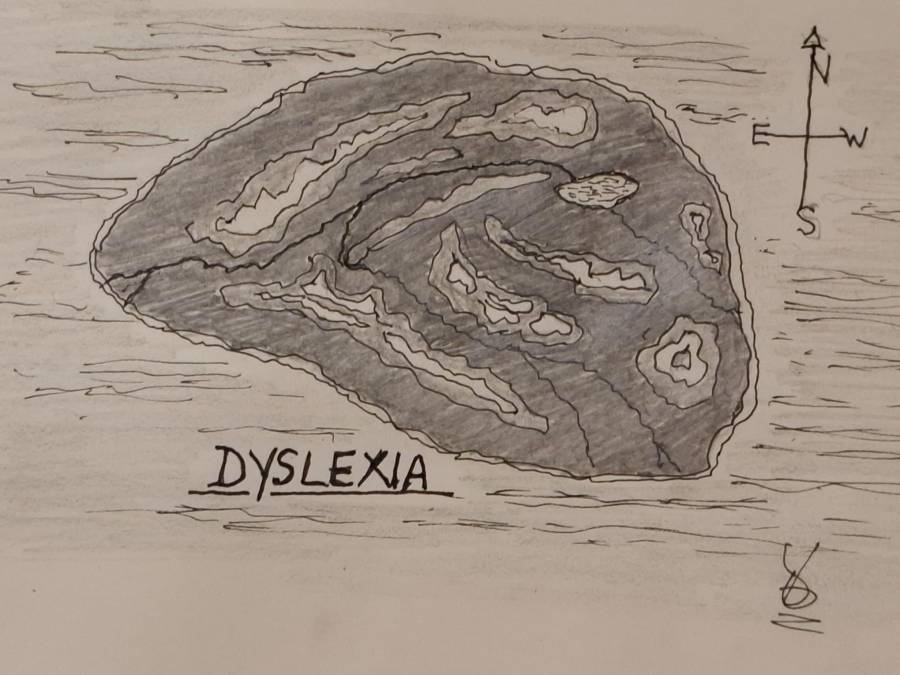
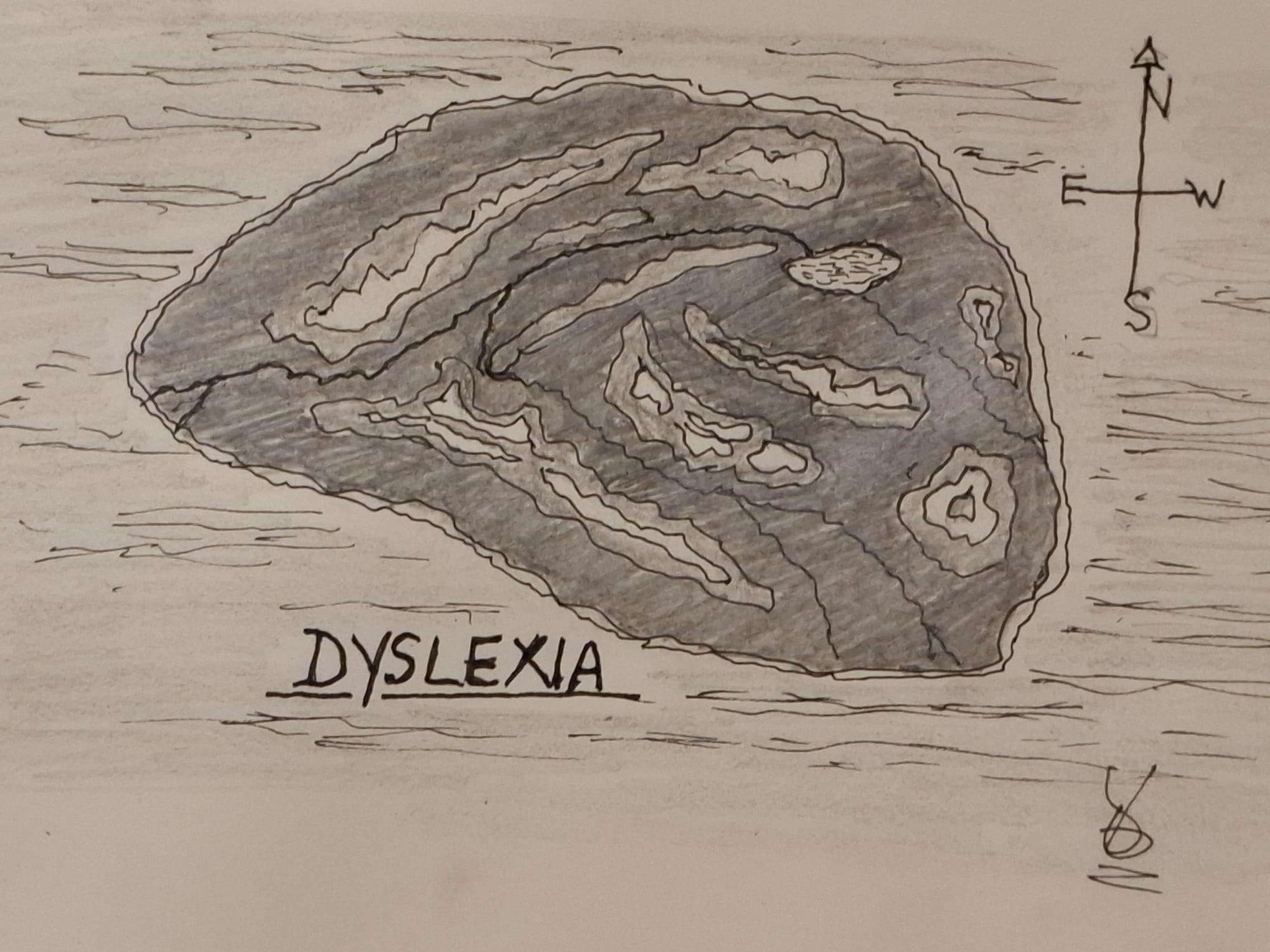


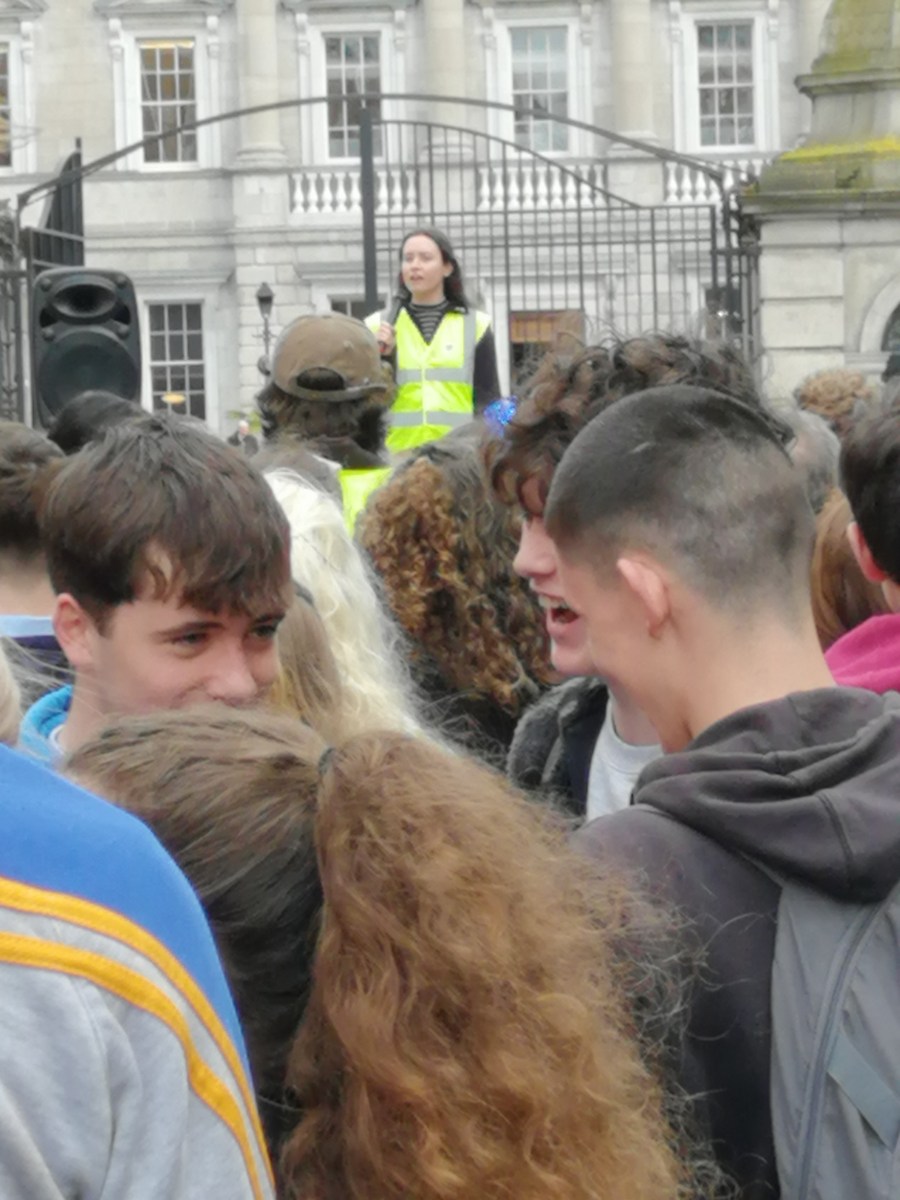


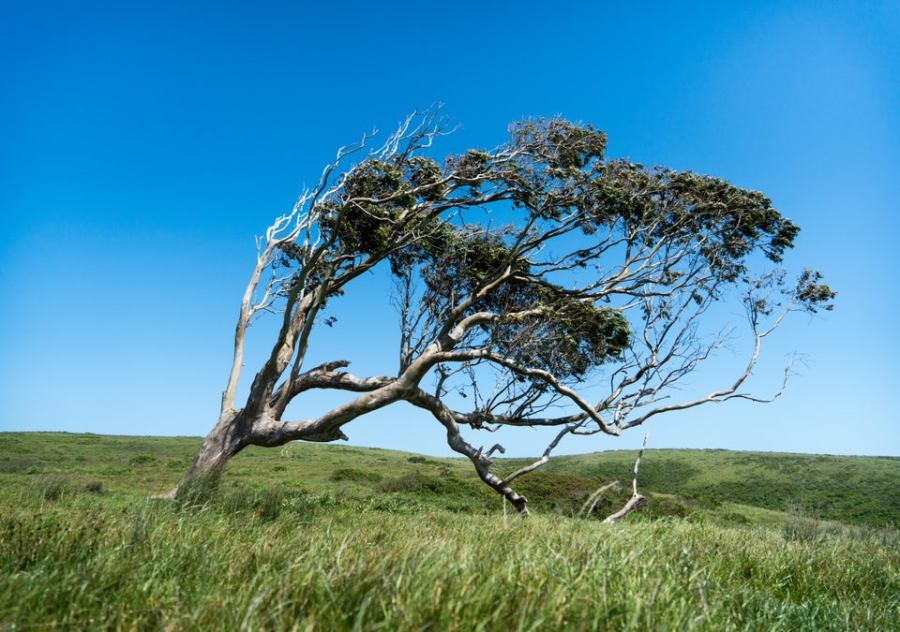
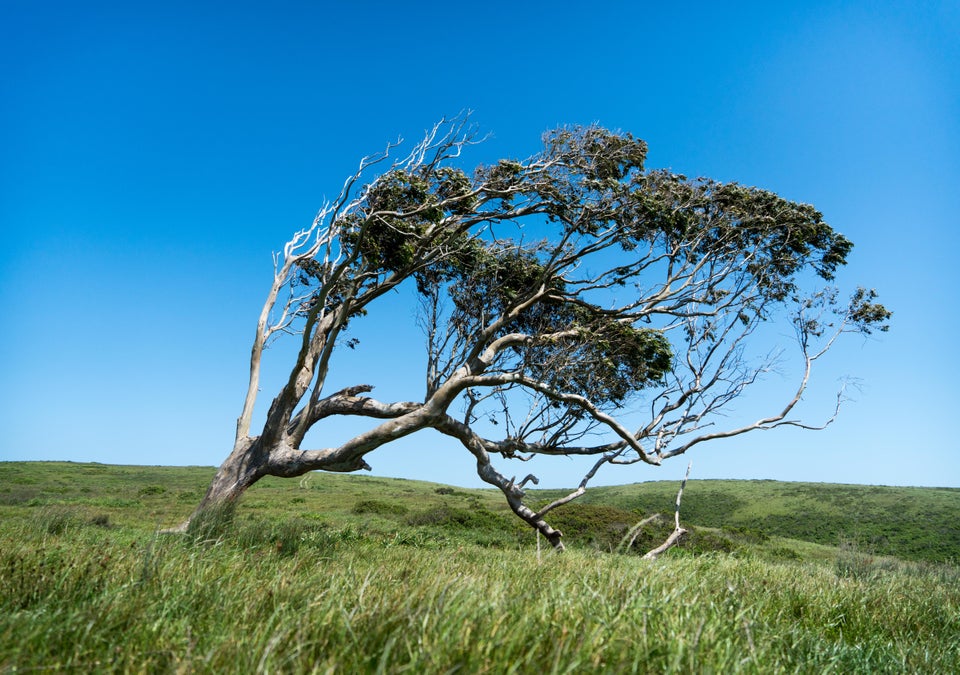

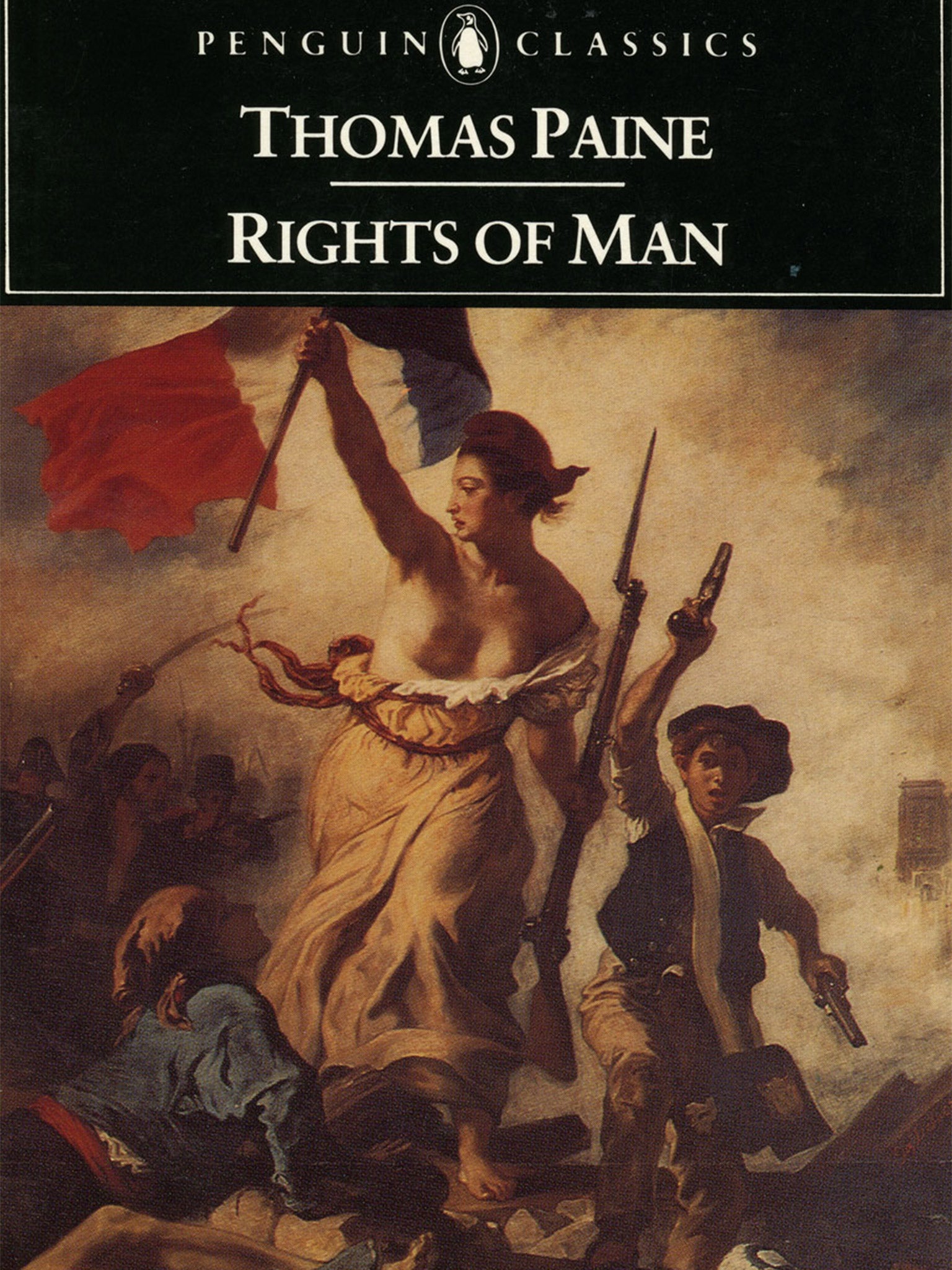
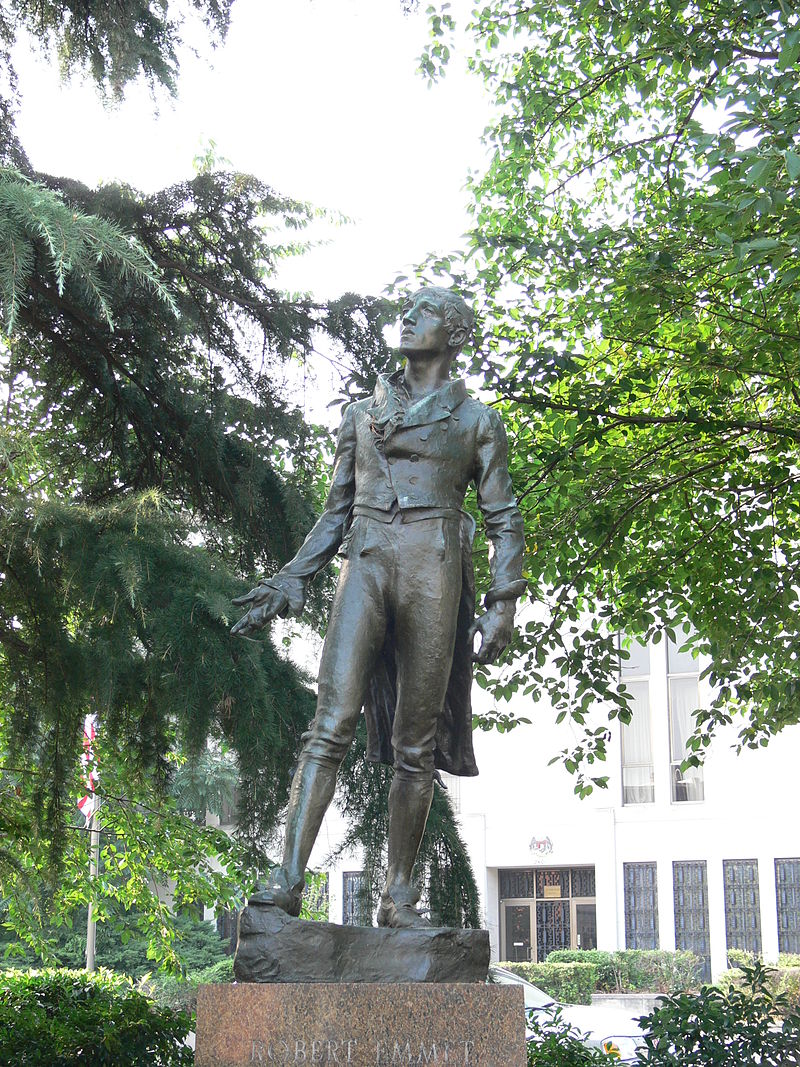

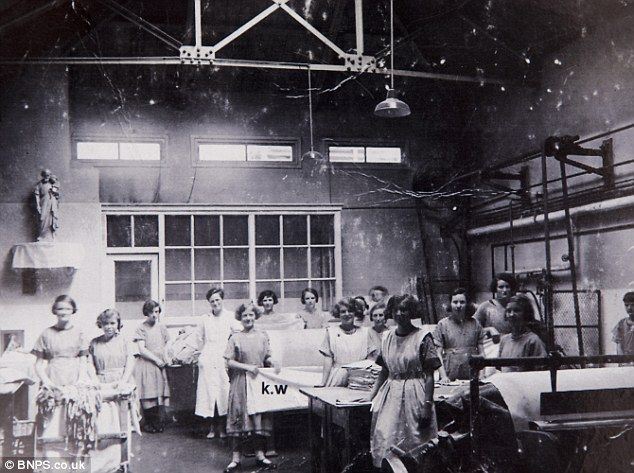

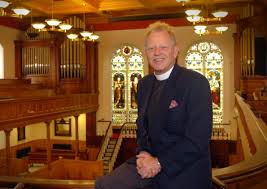
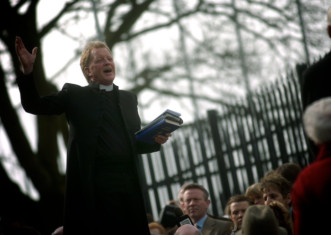



 rebelbreeze