Niall McConnell, Director of the fascist organisation Síol na hÉireann failed to attend court in Dublin on Friday in pursuance of his claim of being assaulted by disabled antifascist Aisling Butler. Gardaí asked for a continuance in order to make further attempts to contact McConnell, including by registered letter but hearing that he had already been sent a letter and also failed to reply to a phone call, the presiding judge struck out the case. Also struck out for failure to appear was another charge by Ciaran Reddin, former right-hand man of McConnell’s (but with whom he has apparently fallen out since). Ms. Butler, who had attended as required, was embraced by supporters.
Devoutly sectarian — part of the Islamophobic protest praying the rosary (Photo: Dublin Republicans Against Fascism)
In July 2020 fascists and other racists objected to the hire of the national Gaelic sports stadium Croke Park in Dublin to a Muslim congregation to celebrate their annual Eid religious festival. The fascist organisation Síol na hÉireann called for a prayer-protest outside the stadium and announced their intention of reciting the Catholic prayer collection of the Rosary there. Their protest was supported by other fascists and racists including Phillip Dwyer of the National Party, Gemma O’Doherty and some others calling themselves Stand Together and QAnon, in emulation of the Trumpist far-Right movement in the USA1.
Dublin Republicans Against Fascism organised a counter-protest and attended with placards in Irish and in English quoting from the 1916 Proclamation2“The Republic guarantees religious and civil liberty to all” and also chanted those words at the fascists.
“Five of us turned up early, mostly women,” said a spokesperson for the anti-fascist group outside the court “and only McConnell and another two were there with a banner. They took fright when they saw us, folded up their banner and called to the Gardaí for protection. But as more of their sort arrived, they got more confident, opened their banner out and began their prayers and racist chants and so on. When there were a lot more of them than us they got aggressive and there were a couple of scuffles when they assaulted a few on the sly or provoked us by pushing their video cameras near our faces. Some local people came out to stand with us against them but the fascists were arriving from all over.”
Photo of Síol early during the islamophobia protest (three in white shirts and black trousers — note their banner folded and Garda protection). Ciaran Reddin furthest to left of their group and McConnell furthest to right. (Photo: Dublin Republicans Against Fascism)
McConnell claimed he had been assaulted by Ms. Butler but apparently the Gardaí on the spot were unimpressed by his claims so he took his complaint to GSOC3, which agency charged Ms. Butler with assault. As a result she has been required to attend court a number of times over the intervening years while McConnell and GSOC got their case together.
The Síol organisation is registered as a company rather than as a political party4 and sells fascist and far-Right material on line, causing some of their opponents to call them, along with general far-Right individuals who seek on-line funding: “PayPal Paytriots”. The latter is because of the claim of the fascists and far-Rightists that they are true Irish patriots with Irish Tricolours and “Irish Republic” flags proliferating at their protests.
Islamophobes with antifascist in foreground holding placard with text quoting the 1916 Proclamation (Photo: Dublin Republicans Against Fascism)
Referring to the words of the 1916 Proclamation displayed and chanted by the antifascist counter-protesters, the spokesperson for the antifascist Republicans said: “One of the fascists had a Tricolour flag with the text of the Proclamation printed on it. We kept inviting her and her friends to actually read the words but of course they ignored us. They wave Irish flags and play patriotic ballads but they don’t know anything about Irish history or what the people who went out against the British Empire in 1916 stood for. The fascists promote Catholic religion dominance in opposition to the secular Republic that was fought for and in denial of the historic role of Protestants in founding and fighting for Irish Republicanism.”
Aisling Butler photographed leafleting in Dublin in 2017 (Photo sourced: Internet)
A repeated feature of the Síol protest outside Croke Park5 was the reciting of prayers of the Rosary loudly through a megaphone. Another was the sprinkling of salt and holy water and vinegar near the feet of the anti-fascists: “They think antifascist women are witches and that will ward them off” Ms. Butler said, smiling.
As Muslims – including children – began to arrive for their ceremony, the antifascists welcomed them and attempted to screen the fascists from the arrivals, while the chants of the fascists grew louder. After the ceremony, the Gardaí arranged for the muslim congregation to leave by another exit and once they were gone, the antifascists left also, some of them to nearby houses.
The Islamophobic protesters later in the day (after more arrived from further away) with placard by local counter-protesters to the right of photo (Photo sourced: Al Jazeera)
Spreading fears about “Ireland being swamped by Muslims” is one of the regular activities of the fascists, in contradiction to the statistical facts6. They also claim that asylum seekers are being treated more favourably than the native Irish, being given houses and money, etc. This is also in contradiction of the established facts which are that asylum seekers are housed in rooms in Direct Provision hostels for years in conditions that have been denounced by human rights activists and where a number of suicides have taken place.
Fascists and other far-Right individuals and organisations were very prominent during the height of the Covid pandemic, some propagating unlikely conspiracy theories and others protesting at the perceived limitations of their civil rights.7 Antifascists counter-protested them on a number of occasions, partly in defence of equal rights but also out of concern that following the epidemic, fascists will be used by the ruling elites as historically to crack down on resistance to austerity measures.
In September 2020 a prominent LGBT campaigner was beset by National Party supporters near Leinster House and a member clubbed her to the ground.8 In October that year, antifascists stormed a rally of the same party, causing the latter to ask for Garda protection to escort them away9. Some confrontations took place outside the GPO10 building in O’Connell Street against “Stand Together” and QAnon also and on Custom House Quay two weeks before the assault of the LGBT activist, at a rally organised by the far-Right organisation Irish Yellow Vests, fascists wielding lengths of metal and wood disguised as flags attacked counter-protesters who were then also attacked by riot police. The general tolerance of police towards the fascists – the latter in clear breach of pandemic restrictions — has been remarked upon by a number of observers.
The celebration of Eid in Croke Park last year drew less than a half-dozen fascist protesters. As the Covid restrictions were relaxed, the fascist and other far-Right protests began to fade, though the organisations are still there, regularly seizing on some issue in the media to promote racism, homophobia etc. Some of the participants have a track record of protesting against all kinds of equality legislation over decades and all of them promote the Catholic religion (though some don’t accept the authority of the Papacy). Niall McConnell himself, like most public fascists, is a practitioner of the big lie: addressing a far-Right gathering in Europe some years ago he claimed that Ireland has more migrants than indigenous; on another he claimed on social media that James Connolly had been born in Ireland.11
End.
FOOTNOTES
1These could be seen every Saturday for months outside the General Post Office building in Dublin city centre’s main thoroughfare, O’Connell Street.
2The Proclamation was issued by insurgents in 1916 and is a remarkable document for its time.
6According to the 2016 Census, the percentage of the population in Ireland that are muslims is 1.33%.
7E.g that the virus was not real but the restrictions part of a Jewish plot, the vaccination were to inject nanobots into people to pacify them; that the Communist Party of China was secretly running the world through the UN and the EU, that the latter (or Jews) was working to replace white people with people of colour, partly through encouraging homosexuality; the masks were to separate people from one another and damage them through inhalation of carbon dioxide ….
8The Gardaí on that occasion ordered the victim — blood streaming from her head — to leave the area and claimed to the media that no incidence of importance had occurred. In the face of video evidence they later changed their statement and eventually, on a registered complaint by the victim, charged NP member Michael Quinn with the assault. In October 2020, Quinn pleaded guilty and was sentenced to three years in prison, the third year suspended.
10The imposing General Post Office building in Dublin city centre was used as a headquarters by the insurgents in the 1916 Rising and the area outside it is regularly used for political rallies, commemorative events and, in recent years, for feeding homeless or otherwise hungry people.
11The claiming by fascists of the revolutionary socialist James Connolly may seem bizarre but is also an indication of the rank opportunism of fascists generally, in this case because of the high regard in which Irish people hold Connolly. James Connolly was born in the working-class Cowgate area of Edinburgh to parents of the Irish diaspora and both he and his brother became socialist activists, James travelling in later life alternately to Dublin and New York as a socialist writer and organiser. Returning to Dublin, Connolly became a trade union and socialist organiser, historian and journalist, co-founder of the workers’ militia the Irish Citizen Army in 1913 and overall Dublin Commandant in the 1916 Rising. He was executed by British Army firing squad in Kilmainham Jail on May 12th 1916.
The Dublin Committee of the Anti-Internment Group of Ireland held a picket yesterday to highlight the ongoing internment without trial of Irish Republicans and to protest the recent extradition of Liam Campbell to Lithuania, a country to which he has never been. The picket was held in Temple Bar, a tourist quarter of the Dublin’s south city centre.
(Photo source: Anti-Internment Group of Ireland)
(Photo source: Anti-Internment Group of Ireland)
Afterwards, the AIGI issued the following report (reposted with kind permission): “Tourists, Irish shoppers and young people socialising in Dublin city centre were interested to see the banners and placards against internment in Ireland, along with a banner against extradition of Irish Republicans. They also noted the various placards of the Anti-Internment Group of Ireland and the flags of Palestine and the Basque Country, in addition to the Starry Plough flag of the Irish Citizen Army, representing three of the many nations holding political prisoners.
(Photo source: Anti-Internment Group of Ireland)
Supporters distributed up to 200 leaflets and had a number of engagements with people wanting to know more. People were surprised and angry to learn that internment under another name continues in Ireland on both sides of the British Border.
A portable PA machine played resistance music and an AIGI speech from a previous public event which attracted some interest.“
(Photo source: Anti-Internment Group of Ireland)
The AIGI’s Facebook page lists approximately 60 political prisoners held in Ireland, mostly in Portlaoise Prison in the Irish state and Maghaberry Jail in the British colony in the north-east of the country. All of those were convicted in special no-jury courts created for the purpose of sentencing political prisoners — i.e nearly always exclusively Irish Republicans. Frequently some charged and facing trial in those special courts are denied bail and are held in custody until their trial comes up, two or three years later and if then chance to be found ‘not guilty’, they will still have spent that time in jail. When granted bail on the other hand it is always under restrictive conditions that prevent them continuing their political activity: e.g night curfew, wearing an electronic tag, banned from attending political activities, etc.
Liam Campbell, an Irish Republican from Dundalk, Co. Louth, was extradited to Lithuania last week to face charges relating to trying to obtain arms in that country. Campbell says that he has never been in that country, which Lithuania and the Irish State both seem to accept yet, after a legal battle of almost 12 years up to the Irish Supreme Court, the Irish Republican was extradited. According to unconfirmed reports Campbell has been granted bail in Lithuania but under what conditions is currently unknown.
The group campaigning against what it sees as ongoing “internment by different names” developed from the campaign to free Marian Price around six years ago and, apart from monthly pickets, has also organised conferences and concerts and representatives have travelled to Belfast, Cork, Derry, Newry and Glasgow. The group has sent messages of solidarity to a Basque liberation group which was read out at the latter’s public event and also to the Mumia Al Jamal and Leonard Peltier campaigns in the USA, Munir Farooghi campaign in England (for which AIGI spoke at public meetings in Ireland), to prisoners in Turkey, Palestine and Latin America. Its street pickets, though legal, have frequently been subject to police harassment on both sides of the British Border — in the Irish state nearly exclusively by the plain-clothes political police, the Special Branch.
The picket yesterday in Temple Bar, view southward towards the Liffey River. (Photo source: Anti-Internment Group of Ireland)
The AIGI report concluded: The Anti-Internment Group of Ireland is a democratic group independent of any political party or organisation that holds monthly awareness-raising pickets, as well as a few special public events every year. It is organised by a democratic committee composed of people who attend our pickets and who would like to become involved in running the group.
NÍ NEART GO CUR LE CHÉILE. AN INJURY TO ONE IS AN INJURY TO ALL.
The Salvation Army went to court yesterday to obtain a court order against the Revolutionary Workers’ Union, the latter currently occupying a building on Dublin’s Eden Quay since earlier this month. The RWU occupied the building — which had been empty last year — in order to house the homeless and as a public protest against continuing homelessness in the city, property speculation and high rents. The RWU were not represented in court, which granted the Salvation Army the order they sought, but some RWU supporters held a protest picket outside the court and held a rally outside the Eden Quay building a few hours later, their speakers and songs expressing determination to continue the struggle and defiance of the authorities.
(Photo: Rebel Breeze)
The occupied building formerly known as Lefroy House and now renamed James Connolly House by the occupiers, in honour of the celebrated revolutionary socialist James Connolly executed in 1916, was constructed on the site in 1925 (all the terraces along Eden Quay had been demolished by British artillery and fire during the suppression of the 1916 Rising). Extended in 1948, the legend “Seamen’s Institute” suggests it served for a time as a seamen’s hostel but in more recent times served as hostel for young people run by the Salvation Army1 organisation, which closed the facility last year when their government funding was cut.
The Salvation Army organisation hold a long lease on the building and claimed in court that they had been renovating the building to house Ukrainian refugees, for which one assumes they have funding. However, a quick independent inspection of the building’s interior found it in good repair but with no sign of ongoing renovation work of any kind. Their claim was repeated in media reports without any attempt to check its veracity. The RWU in a statement date the 17th and of which copies were handed out supporters attending the rally yesterday headed off any attempt to use racism in their support, stating that: “The Revolutionary Workers’ Union is a pro-refugee and migrant organisation” and went on to call for housing for all residents, regardless of nationality and “an end to the shameful prison system of direct provision”.
In common with previous statements, it went on to call on people across the country, all 32 counties, to take similar action. This seems a new departure from housing occupation actions in recent years, of which the most famous was that of the large formerly NAMA building Apollo House in December of 2016. That occupation received a lot of activist support and media attention, the latter due at least in part to the participation of celebrity personalities such as the musicians Glen Hansard and Damien Dempsey and support from actress Saoirse Ronan and film-maker and author Jim Sheridan. After the building was abandoned to its owners for demolition however no similar action followed – except for a protest concert outside Leinster House the following year — and the housing crisis continued to intensify. Some minor occupations have occurred without usually any follow-up action after the occupants were evicted and protest marches have taken place – but the crisis continues to worsen.
Section of the crowd at the rally (Photo: Rebel Breeze)
A wide public housing program is urgently needed to address the crisis but, although by no means a revolutionary solution, has the support of not one of the major political parties, in or out of government. Not only should the sale of any public land to private concerns by declared illegal but other facilities and empty buildings need to be seized for conversion into public housing to rent according to means. Those rents would not only fund repairs and maintenance but new building also.
But any local authority wishing to carry out this program is starved of the necessary funding from the State, which feeds it instead into private landlords and speculators, who then use it to further deepen their grip on the housing market. Not only is the problem not resolved but it gets worse.
According to Department of Housing, there were more than 9,800 people experiencing homelessness in Ireland at the end of March, representing an increase of 3.5% in one month and a 23% increase compared to the same time last year.
Of the 9,825 homeless people, 2,811 were children and there were 5,143 single adults and 1,238 families in emergency accommodation. Youth homelessness is more than double other categories as there was a 58% increase in the number of homeless people aged between 18 and 24 (1,230) when compared to last year.
The Simon Communities of Ireland said it was “the highest level of adult homelessness and young person homelessness ever recorded” by the Department of Housing.2
In addition, the number of homeless people dying is sharply increasing: a total of 115 homeless people died in Dublin last year, more than double the number who died in 2019. In 2020, there were 76 deaths recorded while in 2019 and 2018, the number was under 50.3
Part of the building under occupation on Eden Quay (Photo: Rebel Breeze)
RALLY ON THE QUAY – SPEECHES AND SONG
The rally yesterday evening outside “Connolly House”, which had been called at fairly short notice, started a little late but was fairly short, concluding even as people were still arriving. The average age profile was noticeably young and a number of political tendencies seemed to be represented.
A man chairing the rally apologised for the lack of a PA system and asked people go gather closer. He informed the audience that the Revolutionary Workers’ Group has occupied “a second long-term vacant property in Dublin City, naming it Liam Mellows House, “the great socialist Republican executed by the Free State counterrevolution in 1922 …. which we continue to live with the consequences of and continue to fight to this day.”
A speaker addressing the rally (Photo: Rebel Breeze)
Apart from the man chairing the event, there were two speakers from the RWU, one of whom gave his entire speech in fluent Irish. The message in summary from all was that the housing crisis is artificially created for the benefit of landlords and property “vulture” speculators, that the buildings belong by right to all of us, that housing is a human need that requires fighting for and the time for fighting – “to shake off the paralysis” — is now. All the speeches were cheered.
A performer accompanying himself by guitar sang a new resistance song while a giant banner was waved, reading “EVICTIONS KILL — HOUSE THE PEOPLE ”.
Musician performing for the rally (Photo: Rebel Breeze)
The event concluded with a man singing a cappella The Larkin Ballad4 (also known as the Lockout Song). He introduced his performance by saying that on that very Quay in August 1913 the police had killed two workers and that the Irish Citizen Army had been formed as a result, which had gone on to participate in the 1916 Rising — with the lyrics referencing both periods.
Following that, the chairperson invited those who wished to do so to enter the building but to treat it with respect in general and to abide by the rules of the occupiers of which he mentioned in particular that there were to be no photographs taken. A long queue formed for admittance even as some latecomers still arrived to join it.
End.
(Photo: Rebel Breeze)
FOOTNOTES
1The Salvation Army is a Protestant religious charity and temperance organisation and its funding by the State to address homelessness is another example of the ubiquitous private status of social services in Ireland whether through different faith organisations or other NGOs.
4“In Dublin City in 1913, the Boss was rich and the workers slaves ….” The original lyrics were composed by Donagh McDonagh, son of Thomas McDonagh, Signatory of the Proclamation of Independence and executed by British firing squad in 1916, with some further lyrics by his own son.
The 1974 British Intelligence and Loyalist bombing of Dublin and Monaghan towns, with the highest number of people killed in one day during the 30 Years’ War, was commemorated in Dublin today at the Memorial in Talbot Street, near the corner with Amiens Street. The commemoration, organised by the perennial Justice for the Forgotten campaign, was addressed by the Taoiseach (Irish Prime Minister) and elected representatives of Dublin and Monaghan municipalities. A poet and two musicians performed, wreaths were laid and one former politician gave a strong oration highly critical of the Irish, British colonial and British authorities.
On 17th May 1974, around the work-leaving and shopping-ending busy time of 5.30pm, three car bombs exploded within minutes of each other in the centre of Dublin. The car bombs had been parked in the mainly working and lower-middle class sParnell Street, Talbot Street, and South Leinster Street (as distinct from such streets as Henry, Grafton or Dawson streets, for example). Twenty-six people were killed in Dublin. To cover their way back across the British border, another car-bomb was set off in Monaghan Town, killing another seven. Even excluding a full-term unborn child, the total death toll was 33, the highest number killed in any one day of the three decades of conflict. Around 300 were injured.
Suspicion should naturally fall in the first place on the British Loyalists, since they had been planting bombs in Dublin since 1969 and in 1972 and 1973 their bombs had killed Dublin public transport workers. But the authorities had pretended to believe that the IRA was responsible for the 1972 bombing and used the panic around it to steamroll repressive political legislation through the Dáil, thereby setting up the no-jury Special Criminal Courts to sent Irish Republicans to jail.
However, it is believed that Irish Army Intelligence and Garda Intelligence were quickly aware that the Dublin and Monaghan bombers had in fact been Loyalists of the Ulster Volunteer Force and even knew the names of a number of them.
“No one has ever been charged with the bombings. A campaign by the victims’ families led to an Irish government inquiry under Justice Henry Barron. His 2003 report criticised the Garda Síochána‘s investigation and said the investigators stopped their work prematurely. It also criticised the Fine Gael/Labourgovernment of the time for its inaction and lack of interest in the bombings. The report said it was likely that British security force personnel or MI5 intelligence was involved but had insufficient evidence of higher-level involvement.” (Wikipedia)
Incredibly, despite long-standing allegations of collusion between the colonial police, the RUC (now the PSNI) and Loyalists, the Gardaí sent the car-bomb remnants to the RUC for analysis. Shortly after that, Ned Garvey rose from the Deputy position to Gárda Commissioner and met with a British secret agent in his office – without informing his superiors. When the agent began to blow the whistle on his past activities he exposed Garvey as a British “asset” – Garvey of course denied it but had to admit he had indeed met clandestinely with the agent in his office. When the Fianna Fáil goverment came in, they sacked Garvey as “not having confidence” in him but did it so baldly and outside established procedures that Garvey was able to take the Government to court, have his pension secured and have damages awarded to him!
BRITISH POLICY OF COLLUSION WITH LOYALIST MURDER GANGS
Most experts have been clear that construction of the type of bomb used was beyond the capability of the Loyalists at that time and, in any case, it is clear that British Intelligence and military were working with Loyalist gangs, as were the RUC (some of whom were members of the gangs) and RUC Special Branch. In addition there were reports of British accents in connection with suspects.
Collusion of that type had been openly advocated by a British military expert on counter-insurgency, Major (later Brigadier) Frank Kitson, for example in his “Gangs and Counter-gangs” (1960), based on his experiences in fighting the Kenyan insurgency for national liberation.
Frank Kitson (now Brigadier) in 1971 (Photo source: Internet)
Brigadier Frank Kitson was operational commander of the occupation forces in the British colony from 1970-’72 and left a substantial legacy of military assassinations and collusion with Loyalist murder gangs, along with other “dirty war” operations before he went on to lecture at British military training college.
“….. the de Silva Report (2013) on collusion with loyalist paramilitaries led to two further ‘unconditional’ British apologies for the behaviour of its security forces in Northern Ireland. In November 2013, a BBC ‘Panorama’ investigation into British counterinsurgency in Northern Ireland in the early 1970s revealed that members of a special covert operations unit known as the Military Reaction Force (MRF) admitted to the murder of suspects and unarmed Catholic civilians. These admissions by the state or its agents confirm previous claims by critics dating back many decades. Such abuses were not merely low-level tactical excesses by undisciplined and racist troops but were institutional, systematic, and approved or covered up at the highest levels ….”1
The British State has admitted it has secret papers relating to this atrocity but has refused to hand over copies to successive Irish goverments.
“THE LARGEST MASS MURDER IN THE HISTORY OF THE STATE”
Maureen O’Sullivan, ex-TD (Member of Irish Parliament) for the local area gave the main oration for the Justice for the Forgotten Campaign and called the bombing “the largest mass murder in the history of the State”. She went on to castigate successive governments and most of the political class for their lack of interest in pursuing the planners and perpetrators of the massacre over the years. In her repeated reference to their “ignorance”, O’Sullivan inferred that the legislators’ lack of interest was such that they could not even be bothered to inform themselves of the known facts.
Maureen O’Sullivan castigating the authorities (Photo: Rebel Breeze)
In addition to the Taoiseach, the Ard-Mhaora of Dublin and Cathaoirleach of Monaghan Council spoke and a Catholic priest delivered a short blessing. The event was chaired throughout by a representative of the Justice for the Forgotten campaign group.
Rachael O’Hegarty introduced and recited one of her collection of poems about the victims, this one about Maureen Shields who was 44 years of age when she was killed in Talbot Street.
Rachael O’Hegarty speaking and reciting her poem (Photo: Rebel Breeze)
Cormac Breatnach and Eoin Dillon on whistles played Sí Beag, Sí Mór and later Dillon playing the lament known as Táimse I Mo Chodhladh (I Am Asleep), accompanied by Breatnach on whistle, concluded the event.
Cormac Breatnach and Eoin Dillon on whistles (Photo: Rebel Breeze)
Eoin Dillon on uileann pipes and Cormac Breatnach on whistle (Photo: Rebel Breeze)
THE BOMBINGS EXPOSED THE NEO-COLONIAL NATURE OF THE IRISH CAPITALIST CLASS
In summary, a foreign power — which is also occupying by force one-sixth of Ireland — carried out a number of terrorist attacks in the capital city of the Irish State culminating in a massacre intended to cause maximum loss of life and limb – “the largest mass murder in the history of the Irish State”, as Maureen O’Sullivan correctly characterised it.
The Irish ruling elite failed to stop the escalating attacks and turned the investigation of the massacre into a farce. The Irish ruling elite failed to prevent the foreign power subverting the highest rank of its police force (and no doubt other levels in other areas).
Section of the crowd at the commemoration, the Taoiseach, Mícheál Martin speaking (Photo: Rebel Breeze)
The Irish ruling elite failed to take a full range of diplomatic and legal action to condemn the UK, the foreign power over its actions and failure to respond to requests for release of relevant secret papers. The ruling elite continues in that failure today as can be read into the weak speeches of Government Ministers at this ceremony – this time by the Taoiseach and last time the Minister for Justice.
No self-respecting elite or ruling class of any independent state would permit such violations of the security of its capital city and citizens without taking resolute and persistent action. The Irish ruling class is a neo-colonial capitalist class, undeserving even within capitalist terms to be in charge of any Irish state.
The north side of the Memorial (Photo: Rebel Breeze)The south side of the Memorial (Photo: Rebel Breeze)The clock on the tower of Connolly (formerly Amiens Street) Station — British soldiers fired a machine gun from that tower at Irish insurgents in 1916. (Photo: Rebel Breeze)
It has been noticeably difficult in Dublin to find a place serving hot food between about 4pm and 7pm on a Sunday but that was once a week only (though awkward enough if you were entertaining visitors from abroad). But now it’s difficult to find a decent café in Dublin after 3.30pm all week — and more so if you’d like to sit outside or next to a window, watching life’s “rank and rich array” passing by.
Yesterday I was looking for a cup of coffee before I set off to visit someone in hospital. I found Anne’s Bakery in Moore Street closed at 3.30pm and, after a brief conversation with some people working nearby, headed off for its sister café in Henry Street but realised that if open, it would be closing very soon anyway (I think it closes at 4pm). So I set off for the hospital.
Coming back into the city centre around 5.15pm and still hankering for a coffee and thought-flow, I realised my chances were even worse now because Simon’s Corner in South Great George’s Street would be closed or closing. What about Cornucopia, in Wicklow Street? I cycled there, spotted empty tables outside, locked up my bike across the road just by Dingle company Murphy’s Ice-Cream (where you get 10% discount through ordering in Irish) and entered Cornucopia by left-hand door for the coffee-station. But …. no-one serving there. No sign saying “closed” so … maybe … might just have gone to the toilet?
After waiting awhile without any staff appearing, I made enquiries in the other part, the food-serving section and was told the coffee-station was closed. I looked at the lonnnnng queue, muttered “Fuck it”, went back outside, unlocked the bike and, careful of the big cars coming down that narrow street, pulled out to ride towards Grafton Street and from there northwards and home.
And …. Glory Alleluia! Empty tables outside Mary’s Bar & Hardware Shop! And illuminated by the sunlight slanting from the westering sun. Did they serve coffee, I wondered (I know they don’t sell hardware). Most Irish bars serve tea and coffee but the coffee quality can be questionable … or even instant and …. relief! Spotted the machine at the bar’s end with the roasted beans in the cylinder on top, ordered a cup and went back out to lock the bike.
Outside Mary’s Bar & Hardware Shop, Wicklow Street, yesterday late afternoon with part of my bike in view (Photo: D.Breatnach)
A little later, sitting outside in the sun, sipping reasonable coffee, watching passers-by …. people finishing work, shoppers, tourists, beggars, cops …. and then an interesting chat with one of “Mary’s” customers out for a smoke.
Then home, caffeinated and happy.
End.
PS: If you ever pop in to Mary’s for a drink, do make sure you visit the toilet. You will pass through what looks like an older section of the bar with surprising partitioned parts, past some hardware (but not for sale), then through a door, up some stairs …. On the way back, like as not, you’ll take a wrong turn (as I did) and enter …. a brightly-lit US-style diner with customers seated at red formica-top tables! A dislocating experience like something out of a sci-fi novel.
As you find the correct way back, depending on how much alcohol you’ve imbibed, you might wonder if that other place really exists. In this dimension, anyway.
When I asked the guy filling shelves in the supermarket where the milk powder was I had no idea what was to come.
Picking up on his accent as he showed me, I asked him where he was from.
“Poland,” he replied, so naturally I thanked him in one of the few words or phrases I know in Polish. He responded in Polish too, then asked me where I was from.
“Here”, I replied.
“Dublin’”, he replied, “wha? ah Jayzus. How’re ya doin’, Bud? Allrih?” And there followed a stream of Dublinese: words, accent and even gestures.
This of course, is our third language here in the capital city – not the native one relinquished by so many, not the colonisers’ appropriated by so many, though a version of it, moulded, turned, somewhat UStaterised, slanged, missing endings ….
He had me laughing, of course and as I paid for my purchases I mentioned it to the cashier, who told me the guy works part-time on nightclub security, so he picks up plenty of it on the door. We both agreed he does it very well.
I went off smiling — another small but interesting experience in our capital city.
Yes, indeed, we have been. Let us look back over the campaign of misinformation about conflict in Ireland for it has much to teach us about the mass media, about human credulity. We don’t need to go back over 800 years – just to the recent the 30-Year War.
In 1968 a civil rights campaign1 took off in the British Six-County colony in Ireland to include a number of marches and sit-ins, which was regularly met with violence from Loyalist2 mobs and the State. As part of the campaign, in 1969 a march from Belfast to Dublin was organised under the slogan “Civil Rights – North and South”. One of that march’s stops was in Lurgan, Co. Armagh, where the marchers sat at a crossroads and were instantly attacked by the armed British colonial police (then the RUC3, now the PSNI).
Some of the marchers had come from Britain to support the campaign and after being attacked in Lurgan, they bought an English newspaper to see whether the incident had been reported. An occurrence in the town had been reported alright but not what had occurred – the report told their readers that a fight between Catholics and Protestants had been broken up by the RUC, keeping the two sides apart. “There wasn’t a Protestant in sight,” commented a marcher angrily, “except those in RUC uniform …. or unless he was one of us4.”
Later that year, in August, the RUC killed four civilians, including a child, in the Divis Flats area of Belfast by firing at the area with a machine-gun mounted on an armoured car. Their claim they were returning fire from the area was widely refuted by local people but repeated in the media. The incident was not investigated until decades later when the claims of family and local witnesses were vindicated in an Ombudsman’s report.
The representation of the RUC as a force for peace between two groups in a sectarian conflict was to be a repeated media disinformation line through the ongoing conflict, as the struggle became an armed one — although to a large degree the honest broker ‘peacemaker’ cloak shifted from the colonial police on to the British Army.
British troops were sent in to the colony (by a Labour Government, in case we had illusions) in August 1969 and were initially greeted by many people in the ‘nationalist’5 community as saviours, sent to keep the sectarian RUC and Loyalist mobs (often enough amounting to the same thing) away from them. Most politicians and the media represented them as peace-keepers. For most nationalists the illusions did not last long as the Army turned their guns on them.
Although no British soldier had been killed in the Six Counties by the IRA as yet6, on 3rd July 1970 the British Army invaded the staunchly nationalist area of the Lower Falls and forced their way into homes, saying they were searching for arms. Local youths mobilised and attacked the soldiers with stones and petrol bombs7. The soldiers responded by pumping CS gas into the area and soon gun-battles between the IRA and the British Army broke out.
‘After four hours of continuous clashes, the British commander sealed off the area, which comprised 3,000 homes, and imposed a curfew which would last for 36 hours. Thousands of British troops moved into the curfew zone and carried out house-to-house searches for weapons, while coming under intermittent attack from the IRA and rioters. The searches caused much destruction, and a large amount of CS gas was fired into the area. Many residents complained of suffering abuse at the hands of the soldiers. On 5 July, the curfew was brought to an end when thousands of women and children from Anderstonstown8 marched into the curfew zone with food and other supplies for the locals.
‘During the operation, four civilians were killed by the British Army, at least 78 people were wounded and 337 were arrested. Eighteen soldiers were also wounded. Large quantities of weapons and ammunition were (allegedly – DB) captured. The British Army admitted afterwards that some of its soldiers had been involved in looting.’9
Mural on the Falls Road depicting Andersonstown women breaking the British cordon, Falls Curfew, 1970 (Source photo: Wikipedia)Cutting of unknown newspaper report displaying misrepresentation of the struggle, despite being friendly towards the women who broke the British Army siege of the Falls Road, July 1970. (Source photo: Step Back Ireland)
At the time, most of the media reported the clashes as unruly elements irrationally attacking the Army who were there to protect them and were only doing their job. However, the opinion of the nationalist community, though ignored by the media had undergone a huge shift and the first serving British soldier (of many to follow) was killed by the IRA the following year.10
Later in 1970, during riots in Derry, the Army shot two men from the nationalist area, Seamus Cusack and Desmond Beattie, claiming afterwards that they were armed, a claim local people denied. There was no investigation by the authorities, obliging the constitutionalist SDLP11 to withdraw from the colony’s parliament in protest.
On 4th December 1971, an explosion in the Catholic-owned McGurk’s Bar in Belfast killed 15 people and injured 16. Due to the bar’s ownership and location, the most logical attribution would be to Loyalists or British forces. It would be hard to pin it on the IRA – unless it could be said to have been an accidental explosion of an IRA bomb during storage or transportation. That was what the “security forces” came up with, which of course was repeated by the media. An alternative media theory was that in some manner it was a result of a feud between the Official and Provisional IRA. In order to construct that theory, the denials of the IRA had to be discounted12, despite the organisations’ track record of taking public responsibility for its actions.
The explosion had occurred in the pub’s doorway, which would have thrown doubt on the “IRA bomb in transit” story but somehow, the RUC’s forensic examination did not determine that. But even worse, the evidence of an eyewitness had to be dismissed.
‘On 6 December, however, the RUC took a witness statement from an 8-year-old boy. He said that a car had stopped outside the pub with four men inside and “a wee Union Jack stuck in the back window”. He said one left a package in the Great George’s Street doorway and ran back to the car, which sped off just moments before the package exploded. A man and a woman backed up his story, although they did not witness as much as the boy.’13
‘In March 1976 the RUC received intelligence that linked UVF member Robert Campbell and four others to the McGurk’s bombing. Campbell was arrested on 27 July 1977 and held at Castlereagh RUC base. He was interviewed seven times during 27 and 28 July. He admitted his part in the bombing but refused to name the others.Campbell’s story matches that given by the young boy witness.’14
On 29 July 1977, Campbell was charged with the 15 murders and 17 attempted murders and in September 1978 pleaded guilty to all charges (he also had a separate conviction for the murder of a Protestant delivery driver in 1976). He eventually served fifteen years in prison, being released on 9th September 1993.15
Local people searching in the rubble of McGurk’s Bar after the bombing by Loyalists killing 15 but which was blamed on the Republican armed organisations. (Photo credit: AP)
Despite the 1978 convictions and even Campbell’s confessions, the “own goal bomb” theory of responsibility lingered and relatives sought for years to have the case properly investigated, some also alleging that the RUC had colluded in helping the killers get away out of the area and in the false atrributions later, possibly even with the intention of setting the two IRA organisations at one another’s throats.
In what has become a depressingly familiar story, the relatives campaigned on in the face of police inaction and media disinterest for years, during which many of the directly-affected died through natural causes, to receive partial vindication at last in an Ombudsman’s report which laid the blame squarely on a Loyalist gang and castigated the RUC for a biased and inadequate investigation. The report was published in February 2011– it had taken the campaigners only 40 years16.
The introduction of internment without trial in August 1971 was, according to the media, a necessary measure to deal with political violence from all sides. Not one Loyalist was arrested that year, or the next and it was not until 1973 that a single Loyalist had been interned, the total by December 1975, when the measure was ended, having been 107 against 1,874 from the Nationalist community.17
The Paratroop Regiment, British Army shocktroops, were sent into the colony that year too18. Between 9th and 11th August in the Belfast area of Ballymurphy, the Paratroopers caused the deaths of 10 men and a woman and wounded many19. The Paratroopers claimed they had been shot at and were returning fire and that all their targets had been “terrorists”20. The media repeated these lies and, if reporters interviewed wounded and other witnesses, their accounts were not published. There was no investigation and, as with the deaths of many victims of RUC and British Army, there was no inquest concluded until decades later (2021 for these victims21).
The nationalist community called a demonstration in Derry for 30th January the following year to protest the massacres and against the introduction of internment. The Paratroopers were there again and they and other British Army soldiers shot down unarmed demonstrators, causing the deaths of 14 and injuring at least another 15. The Army claimed they had been returning fire from Irish Republicans and had shot only gunmen and bombers and on the whole, the media parroted their claims.
The British put their top judge, Lord Chief Justice Widgery, to hold an inquiry and in April that year his verdict upheld the Army’s version and also blamed the organisers of the march. The media of course promoted that verdict too. It was not until the extraordinarilyy long and hugely expensive Bloody Sunday Inquiry set up 1998 22 produced the Saville Report in 2010 that the British officially (and then of course also the media) accepted what all of Derry and much of Ireland already knew, that the Paras had opened fire in a non-threatening situation and selectively targeted and killed unarmed civilians23.
British soldiers shot another five unarmed people dead in the Springhill area of Belfast on July 9th, yet again as in Ballymurphy the previous year, including a priest administering the last rites but this time their tally was also an thirteen-year-old girl24. The original ‘official’ account of the shootings— that those shot were ‘gunmen’ — was almost immediately discredited, and was changed shortly after; the claim then became that those murdered were simply caught in the crossfire. Again the media covered the Army story without investigation or challenge.
In 1988 on Sunday 6th March British SAS soldiers shot dead three unarmed IRA volunteers in Gibraltar. When it was revealed that the three had been unarmed, firstly the media claimed that they had been about to trigger an explosion but some time later the British found the explosives in a car in a Spanish carpark across the border without any electronic link to the dead volunteers. When the British claimed that the Volunteers had made threatening moves, eyewitnessed testified that not only had they been unarmed when shot but had been extra-judicially executed as they lay on the ground with their hands up in surrender position. One of the eye-witnesses was Gibraltar resident Carmen Proetta, who then became a target for British media slurs, even going to the extent of suggesting that she was a sex-worker.
On Monday 7 March all eleven British national daily newspapers reported the story that a bomb had been found. Many gave detailed information about the size (mostly 500 pounds), purpose and type of the bomb as well as how it was defused. The Daily Mail suggested that the bomb might have a ‘video timing device’, while Today and the Independent mentioned ‘remote control’. The Daily Mirror told us that ‘a controlIed explosion failed to set off the bomb’ whilst the Daily Mail added ‘RAF disposal men defused it later’.25
On 28 April 1988, almost two months after the Gibraltar shootings, the ITV television channel defied British Government pressure and threats of legal action to broadcast “Death on the Rock” an episode of its current affairs series This Week, produced by Thames Television, based on investigations of three journalists and many interviews. This led to a ferocious media attack on the documentary, its programers and the IBA, the governing watchdog authority.
Documentary program maker Roger Bolton’s account of his hounding by government and media about an accurate documentary of the 1988 SAS murders of three unarmed IRA Volunteers in Gibraltar. (Image sourced: Internet).
‘Over the following weeks, newspapers repeatedly printed stories about the documentary’s witnesses, in particular Carmen Proetta, who gave an account of seeing McCann and Farrell shot without warning by soldiers who arrived in a Gibraltar Police car. Proetta subsequently sued several newspapers for libel and won substantial damages. The Sunday Times conducted its own investigation and reported that “Death on the Rock” had misrepresented the views of its witnesses; those involved later complained to other newspapers that The Sunday Times had distorted their comments.’26
A great number of situations arose during the 30 Years War in the British colony that were either unreported or misrepresented by the mass media, including “confessions” obtained through torture, RUC and British Army collusion with Loyalist murder gangs, inhumane treatment of political prisoners, Army shooting of unarmed civilians, extra-judicial executions of Republican Volunteers and blackmailing individuals for information or to carry out agent-provocateur actions.
WITHIN THE IRISH STATE
In 1969 the grave of Wolfe Tone in Bodenstown was blown up by Loyalists27 and between 1971 and 1974 there was a series of bombings in Dublin by Loyalists and British Intelligence. The bombing campaign began by aiming at symbolic structures and went on to target civilians which cost the lives of 36 civilians (and a full-term unborn child) and injured around 490, presumably to pressurise the Irish Government into increased repression of Republican paramilitaries.
In January 1971 the O’Connell Tower in Glasnevin Cemetery was damaged (not repaired finally until 2019, 47 years later)28, presumably as an attack on a prominent Irish Catholic29 icon. But in February 1971 the Wolfe Tone30 monument in Stephen’s Green was also blown up, like the blowing up of the grave, an attack on Irish Republicanism and its rebellious Protestant origins31. Bombings now aimed at civilians in Dublin followed and between 26 November 1972 and 20 January 1973, there were four paramilitary bombings in the centre of Dublin, claiming the lives of three public transport workers and injuring 185.
The first suspicion of responsibility for those bombings should naturally have fallen on the Loyalists and perhaps, by extension, on a British intelligence agency. It didn’t though; in the media and political circles, it was projected on to the IRA.
That could not have made logical sense, since such explosions could only have harmed the IRA among the Irish population. However there was another specific reason why it made even less sense, (if possible): in 1972 Leinster House32 was about to debate repressive legislation that would set up special no-jury courts to convict Republicans with the word of a police officer (at the rank of Superintendent or above) sufficient to convict of “membership of an illegal organisation”, with an automatic two-year jail sentence. The proposed legislation was being put forward by Fianna Fáil but Fine Gael and the Labour Party were mustering to vote against it and if they did, the new legislation would fall.
Scene of 1973 bombing in Sackville Place, Dublin city centre. The bombing the previous year was irrationally blamed on the IRA and the panic was used to collapse the opposition to proposed undemocratic repressive legislation, which was passed and is with us to this day. (Photo sourced: Stair na hÉireann Facebookpage)
In the midst of the horror about the bombing, the opposition crumbled and the bill went through, against protests of many human and civil rights agencies33; it became law, has sent many people to jail on dubious ‘evidence’ and is in force to this day.
The illogical focus on the IRA as the source of the 1972 and ‘73 bombings and the consequent failure to investigate them and follow up on the likely perpetrators had a horrific result in 1974: three bombs in Dublin city centre and one in Monaghan town centre killed 34 and injured around 30034, the highest number of people killed in any one day during the 30 Years War (often conveniently forgotten by the media, as for example in this report https://www.belfasttelegraph.co.uk/news/northern-ireland/army-knew-mcgurks-bar-bomb-was-placed-in-doorway-solicitor-says-35516460.html.)
Not only that, but the failure to energetically investigate the 1974 bombing meant that some of the Loyalist perpetrators were free to murder many civilians in the following years – some of the bombers were members of the infamous Glennane Gang, a Loyalist-RUC-British Intelligence group of killers responsible for up to 120 murders of civilians35.
WITHIN BRITAIN
The events in Ireland were of course being felt by the Irish diaspora in England too. Marches, pickets and public meetings protesting the RUC’s repression of marches for civil rights were held in many British cities, as they were against sending the British Army into the Six Counties, introduction of internment without trial and shooting protesters dead. Some groups on the British Left were also attending these events and occasionally organising their own. Irish solidarity was becoming a major issue for anti-imperialist solidarity in Britain and abroad, in addition to being in a sense a major domestic issue in Britain too.
The IRA began to extend Britain’s war to their homeland in a bombing campaign in 1971, at first targeting property. However, in 1974 bombs in two pubs in Birmingham killed 21 people which was difficult to understand but according to an alleged perpetrator, the warning intended by the bombers was frustrated through out-of-order public telephone boxes. The Guildford and Woolwich bombs, aimed at pubs frequented by British soldiers, killed five soldiers and two civilians overall and injured 101 people.
The horror and outrage resulting from that carnage gave the British State the environment in which they could launch a wholesale clampdown on the Irish diaspora. The Prevention of Terrorism Act was rushed through the Westminster Parliament in 1974, specifically targeting the Irish community. The Act empowered the police to raid homes, to hold suspects without access to a solicitor for up to five days and longer on special application and to summarily deport Irish people from Britain – even to their own colony. It also empowered the police to stop and question Irish people without warrant or having to show cause and thousands were stopped and questioned at ports and airports as they travelled from Ireland to Britain or vice versa, sometimes missing their flights or boat as a result. People were questioned on the street too and on Irish solidarity demonstrations.
In that atmosphere, of which the media was the main facilitator in British society, it was fairly easy for the State to frame nearly a score of innocent people on bombing charges and to sentence them to many years in jail on the flimsiest of “evidence”, later to refuse their right to appeal, later still, granting that right but denying the justice of their cases.
Judith Ward was arrested in February 1974, sentenced to life imprisonment plus 30 years in October 1974 and her conviction overturned in May 1992.
The Birmingham Six were arrested in November 1974, sentenced to jail for life in August 1975, their convictions finally overturned in March 1991.
The Guildford Four were arrested in December 1974, sentenced to imprisonment for life in October 1975, their convictions finally overturned in October 1989.
Giuseppe Conlon and the Maguire Six were arrested in December 1974, sentenced to 4, 51, 12 and 14 years in 1976, their convictions overturned in 1991. By that time Vincent and Patrick had already served their sentences and Giuseppe Conlon, father of Gerry Conlon of the Guildford Four, had died in jail.
1Patrick Maguire was only 14 at the time and Vincent only 17.
The innocent Birmingham Six at their appearance in court after being beaten up by prison warders as they arrived at the jail falsely charged with the bombings in Birmingham. The mass media played a major role in their being found guilty and in frustrating campaigns to free them which only succeeded 17 years later. (Image sourced: Internet)
The UK media in particular played a huge part in setting the atmosphere in which these unjust convictions could take place and in making the struggle of the innocent for justice difficult. Even after their acquittal, some of the media insinuated that they had been guilty and had got free through some kind of legal loopholes.
Could the media have known differently? Yes, certainly, not one of the cases would stand up to reasonable inspection. The Guildford Four were hippies living in a squat, the Birmingham Six were escorting the body of a deceased IRA man to Ireland when the bombs exploded, the Maguires were a Tory-voting woman with teenage children, Giuseppe was only in London to help his son after the latter’s arrest and Judith Ward was mentally ill, homeless and penniless37. Their ‘confessions’, obtained through torture and intimidation38, were admitted as evidence against them, although they all retracted them and declared how they had been obtained. The forensic evidence was faulty and besides recording a false positive and even though the defence team had a forensic expert to refute it during their trial, the Prosecution’s expert was the one accepted.
The February 1977 confession by an IRA unit to the Woolwich and Guildford bombing after their capture in the Balcome Street siege was not accepted, although they were able to give details of the bombing. So tortured and retracted ‘confessions’ were acceptable whereas one voluntarily given was not.
Apart from the logical doubts that should have arisen in even a light examination of the cases, the media also had access to detailed refutation of the case against the Birmingham Six. Although much has been made recently of the investigation of the case by Chris Mullin, the publication of his book Error of Judgment: The Truth About the Birmingham Pub Bombings (1985), the research for which went into the earlier 1984 ITV World in Action documentary, a detailed challenge to the convictions had been published much earlier. Only two years after the arrest of the Birmingham Six, Fathers Murray and Faul had published The Birmingham Framework39, which they had sent to British politicians and media agents. In 1982 the Irish in Britain Representation Group40 also publicly called for the freeing of the framed prisoners and continued to do so for every year thereafter. Other organisations such as the Troops Out Movement41 called for their release also and trade union branches began to support such calls.
Exposure of the case against the Birmingham Six published by Frs. Murray and Faul as early as one year after the convictions of the innocent men. (Source image: Internet)
It suited the State that the British public think the prisoners guilty and the British media played their part in that purpose. In a way, it also suited the State if the Irish community knew the prisoners were innocent since, if even the innocent could be jailed so easily, how could any Irish person be safe except by keeping his or her head down low? Irish solidarity activities declined in occurrence and in numbers attending. With few exceptions, the Irish community in Britain was cowed from 1974 until the Hunger Strikes of 1981 brought them out on the streets again, the terror broken by the spirit of solidarity and outrage.
WHY?
The above examples are only a selection of situations in Ireland during the period under discussion about which we and the world were misinformed or censored. Throughout the 30 Years’ War so many accusations against the British armed forces, including their armed colonial police, have been ignored or recorded disbelievingly by the media – in particular the British section but within the Irish state also – and repeated by media services abroad, to be picked up by other media …. and so on, and on. And likewise with accusations against British intelligence services and their domestic police force.
Why then are the current claims of the Ukrainian government published through the mass media being accepted without question on every count? Why is everything the Russian government says discounted or ignored without checking? Why are we not concerned at banning of alternative media and censorship of commentators who are not repeating the party line? Why are we not outraged at the agreed delivery of Julian Assange by the UK to the USA on charges of “spying” because he exposed their lies and murderous activities in Iraq and Afghanistan? Given our own experience over 30 years of the UK media’s dismal record of reporting on the conflict in Ireland – and its equally dismal repetition in the western media – why are we now believing without critical examination the western media reporting on the war in the Ukraine?
End.
FOOTNOTES
1The civil rights campaign in the Six Counties was in pursuance of equal rights for the Catholic minority with the Protestant majority there, in the electoral franchise, in housing and employment, along with the repeal of the repressive Special Powers Act.
2‘Loyalists’ is a term describing militants – always of Protestant community background – in various organisations — who insist on remaining within the UK. The first armed actions in the 30 Years War were by Loyalists.
3Although the Royal Ulster Constabulary was created in 1922, when Ireland was partitioned, it was in effect a continuation of the Royal Irish Constabulary, the British occupation’s gendarmerie (nation-wide semi-military police force, such as exists in Spain, Turkey, Italy, France, etc) in existence throughout all of Ireland since 1822. Although the personnel of the RIC had been mostly Catholic in background (usually with Protestant senior officers), the RUC was determinedly Protestant from the start, both in its full-time and part-time membership. However, a minority of the civil rights campaigners were also from Protestant backgrounds.
4As part of the control structures in the Six Counties, the authorities had recruited only non-Catholics into the colonial police force, which helped unionist politicians and media represent an attack on the police as a sectarian attack. Though a few Catholics have been recruited since the 1990s and Sinn Féin has been supporting recruitment drives in nationalist areas, the PSNI personnel remain overwhelmingly of Protestant background.
5A convenient term used to describe the large minority community, mostly of Catholic background, mostly of the original population but with some earlier intermarriage into the majority community, which is of mostly colonist/ settler origin.
6Ironically, the first serving British soldier killed in the Six Counties was killed by indescriminate firing by the RUC into the nationalist area of Divis Flats in Belfast. Trooper Hugh McCabe of the Queen’s Royal Irish Hussars was home on leave, staying with his family when the RUC opened fire with machine-gun on the nationalist area (this was one of the incidents that led to the barricading of “no go” areas excluding the RUC and later also the British Army). Three others were also killed by RUC bullets, including a nine-year-old boy. It took over 50 years for the families to get an acknowledgement and apology after an Ombudsman’s report. https://www.theguardian.com/uk-news/2021/may/06/ruc-erred-at-troubles-dawn-by-firing-on-flats-from-armoured-cars#:~:text=Patrick%20Rooney%2C%20nine%2C%20Hugh%20McCabe,the%20Divis%20and%20Ardoyne%20areas.
7People had learned to make those in defence against RUC and Loyalist attacks during the earlier Civil Rights period.
8A large Belfast nationalist area separated from the Falls area by unionist areas and the city centre.
11The Social and Democratic Labour Party, advocating reform through legal and constitutional methods.
12Two days after the explosion, on December 6th, both the Official and Provisional IRAs issued statements condemning the bombing and denying any involvement. Local people also denied any association between the pub and either of the armed organisations.
18Despite some time searching online I have not come across the exact date they were there by May 1971 and it may be that they had been sent there as part of plan that included the introduction of internment without trial later that year.
20The fact that one fatal victim was a mother of eight children and another, a local priest, should have alerted media to the fact that the Paras were likely lying and local people likely telling the truth.
22Likely initiated as as a payoff to the Provisionals for buying into the Peace/ Pacification Process, the other being the early release on licence of their members in jail, the inquiry lasted twelve years and cost £195 million.
23No senior Army officer or senior politician of the time has even been charged for those murders. One lower-ranking soldier was eventually charged but in July 2021, the Public Prosecution Service decided it would no longer prosecute him either.
29Daniel O’Connell, a constitutional Irish nationalist politician and Catholic, campaigned for the repeal of the anti-Catholic Penal Laws in which he was largely successful in 1869 and unsuccessfully for repeal of the Act of Union, which had transferred the internal legislation of Ireland through its Parliament to Westminster instead in 1801.
30Theobald ‘Wolfe’ Tone was an Anglican campaigner for reform of anti-Catholic legislation (only Anglicans could be elected to the Irish Parliament) who became a revolutionary Irish Republican when those attempts failed. He was a founder of the revolutionary republican United Irishmen organisation. He was captured by the British after surrender of the French naval ship on which he was travelling on 12th October 1978. Although an officer in the Army of France he was tried for treason and sentenced to be executed; on 19th September 1798 he died in prison of wounds, apparently self-inflicted to deny the State his public execution.
40The IBRG was formed late in 1981 as an independent community organisation, among the issues it took up were those of anti-Irish racism, access to resources for the community, an end to strip-searching of prisoners, freedom for the framed prisoners and British withdrawal from Ireland.
41The Troops Out Movement was founded in 1973 as a broad organisation to mobilise the British public for withdrawal of British troops from Ireland; with branches in many parts of Britain, it organised marches, pickets, public meetings and published pamphlets. The relevant Wikipedia incorrectly claims it was “an Irish Republican organisation” — though it naturally did contain Irish Republicans, it also contained British revolutionary left and social-democratic elements. Though maintaining its independence for decades, it did towards the end of the 1990s become closely linked to Provisional Sinn Féin.
On 9th April, the Dublin Anti-Internment Committee held another of its regular awareness-rising events in the city, this time on on the northside, at the junction of the busy shopping Henry Street and Liffey Street.
Section of the anti-internment picket in Dublin last week (Photo: Rebel Breeze)
Supporters lined up with the Anti-Internment Committee of Ireland banner and placards. In addition to the Starry Plough of the Irish working class, the Palestinian and the Basque flags were flown in symbols of solidarity and also as a demonstration that political prisoners are held in many countries around the world.
Going on for 200 of the AIGI’s leaflets were distributed, explaining that Irish Republicans continue to be held in custody without trial through the practice of refusal of bail and through revocation of licence. This practice by administrations on both sides of the British Border are anti-democratic suppression of the right to hold political opinions and to organise in their furtherance.
Plainclothes political policeman (in blue top, far left of photo) stood a little distance away facing the picketers but they were not intimidated (Photo: Rebel Breeze)
Recordings of relevant songs were played on a portable PA, such as The Roll of Honour, Viva la Quinze Brigada and Something Inside So Strong. Throughout the period of the event, two Special Branch (plainclothes political police) kept up an obvious surveillance which however did not deter the picketers.
The Anti-Internment Committee of Ireland is an independent broad and democratic committee, endeavouring to hold regular awareness-raising events and all democratic people are welcome to attend its public events, always advertised in advance on its Facebook page.
Queen Elizabeth II / Sinn Fein president Mary Lou McDonald
Mary Lou McDonald, the current president of Sinn Féin, surprised a few, just a few, with her recent comments thanking the English queen, Elizabeth, for her service. She stated that “Can I also extend to the British Queen a word of congratulations because 70 years is quite some record. That is what you call a lifetime of service.”(1)
Why someone who describes herself as a republican would want to heap praise on a monarch and refer to the reign of the monarch as service is bewildering. However, it is not that strange in the context of the Irish peace process. It is part of the long road of Sinn Féin’s accommodation to the British state that was laid out in the Good Friday Agreement. Sinn Féin at that time abandoned any pretence of having a critique of imperialism and capitalism.
The agreement signed basically stated that the British had no selfish interest in Ireland and the conflict was a communal one. Putting it in blunt terms, two savage tribes agreed to settle their differences, the British state was not one of those savage agents in the conflict.(2)
Exactly what service has the English queen given and to whom? As a monarch she has blessed every British military adventure since her coronation in 1953, including the savagery of the British repression of the Mau Mau rebellion in Kenya, various other colonial wars, not to mention her awarding of an OBE to Lt. Colonel Derek Wilford the man responsible for Bloody Sunday in Derry in 1972. In 2019 she stood over her behaviour when she stated that the British government would “bring forward proposals to tackle vexatious claims that undermine our armed forces, and will continue to seek better ways of dealing with legacy issues that provide better outcomes for victims and survivors”.(3) The massacre of Bloody Sunday was placed in the category of vexatious claims.
Part of the service that McDonald now lauds includes this and many more such incidents. Though it is not unexpected. It can only surprise those who pay no attention to the outcomes of peace processes around the world. Yasser Arafat spent more time repressing Palestinians than he did fighting the Israelis after the Oslo Accords. In South Africa, the former mining trade union leader Cyril Ramphosa became a mining magnate, whose company was involved in the massacre of 34 striking miners at Marikana in 2012.(4) He and the ANC made their peace with white capitalists and obtained a share of the wealth, in Ramphosa’s case a very substantial amount which some estimates place around $780 million dollars. In El Salvador, the FMLN eventually gained power, but did not implement a single thing they had ever fought for and their former commander Joaquín Villalobos is now a consultant to right wing forces on how to defeat left wing movements and contributes to the right-wing think tank The Inter-American Dialogue, which includes such illustrious figures as Violetta Chamorro from Nicaragua and former head of the World Bank, Robert Zoellick, to name just two unsavoury characters.(5) In Colombia, the ink hadn’t even dried on the agreement and the FARC commander Timochenko declared that the Colombian armed forces would be allies of the FARC in building a new country. The murder of just over 300 members of the FARC since the signing of the peace agreement has not caused him to change his evaluation of the Colombian armed forces, in fact he has doubled down on his position.
It is in the nature of the beast. In every peace process that has happened, the former enemies of the state reconciled themselves to the regime and the system, without exception. McDonald’s declarations are just a confirmation of that and also a sign that it is a bottomless pit and there is no level of political depravity that Sinn Féin will not sink to.
Between 400 and 500 people gathered in Moore Street on Saturday 22nd January 2022 to hear a number of speakers declare their complete opposition to the plans of the Hammerson property group, most of which had been approved by the chief officer of Dublin City Council’s Planning Department, in the face of a great many formal and informal objections and against even decisions of the elected councillors. Musicians also played and sang a number of songs at the event.
Section of the crowd at the rally. (Photo: Rebel Breeze)
SPEAKERS AND SPEECHES
Chaired by the Secretary of the Moore Street Preservation Trust, Mícheál Mac Donncha (Sinn Féin Councillor), the crowd listened to a range of speakers: dramatist and campaigner for decades Frank Allen, 1916 relatives Brendan Mulvihill and Donna Cooney (latter a long-time campaigner and also Green Party Councillor), Diarmuid Breatnach for the Save Moore Street From Demolition campaign group (with a campaign stall every Saturday), Carolyn Alright (fourth-generation street trader), Stephen Troy (2nd generation local butcher) and Aengus Ó Snodaigh (Sinn Féin TD [member of the Irish Parliament]).
Micheál Mac Donncha, Secretary of the Moore Street Preservation Trust (also SF Dublin Councillor) chairing the event. (Photo: Rebel Breeze)
Each speech was different but of course sharing such themes as the struggle for Irish independence, historical memory and conservation but also closely linked to issues very much of the day: lack of justice in economic and social policy, lack of democracy in decision-making, reference to the housing crisis, property speculators, vulture funds, the banks ….. A number also made reference to the recent deaths of two homeless people in the vicinity.
Diarmuid Breatnach, of the Save Moore Street From Demolition campaign group, speaking at the rally (Photo sourced: Internet).Independent businessman in Moore Street Stephen Troy speaking during the rally (Photo: Rebel Breeze)
There were some additional points made, for example Frank Allen called on people to tell the Fianna Fáil party they’d never get a vote in Dublin again if they didn’t act to save the area from demolition; Donna Cooney pointed out that demolition of buildings had a much worse effect on the environment than restoration; Diarmuid Breatnach stated that the area was of international historical importance and merited world heritage status; Stephen Troy spoke about the disaster for small businesses next to a 15-year building site; Caroline Alright pleaded for the future of the street to be taken out of the hands of the developers and Ó Snodaigh expected a more supportive attitude from the next Government (widely predicted to be a coalition with Sinn Féin as the larger partner).
Pat Waters, performing at the rally. (Photo: Rebel Breeze)
Donna Cooney, long-time campaigner for Moore Street and relative of Volunteer Elizabeth O’Farrell (see her portrait next to Donna) speaking at the rally. (Photo: Rebel Breeze)
Live music for the event was provided by Pat Waters, performing his own compositions, including a song about the O’Rahilly who was fatally wounded in 1916 in Moore Street leading a charge against a British Army barricade; also two musicians from the Cobblestone Pub, including the son of the owner, Tom Mulligan who performed Pete St. John’s Dublin in the Rare Aul’ Times.
Musicians of the Cobblestone performing (note Frank Allen in left background, who was a passionate speaker at the event). (Photo: Rebel Breeze)
There was speculation in some quarters as to why the rally had been called at such short notice; with prominent members of the Moore Street Preservation Trust absent1 and having an incorrect Irish name of the street2 on the event poster and promotional merchandise did seem to indicate a rushed event.
For some too, the Trust is being increasingly seen as closely linked to Sinn Féin, which for some is a positive factor but for others is not. The closeness has been evident on a number of occasions: a SF public meeting some years ago at which Jim Connolly Heron, prominent member of the Trust was the only speaker representing campaigners and more recently the promotion of the Trust’s Alternative Moore Street plan by SF, including the party President, Mary Lou Mac Donald, speaking at its launch a few months ago. At the rally on Saturday, the speaker for the Save Moore Street From Demolition campaign group made a point of saying that their group is independent of any political party.
Aengus Ó Snodaigh, SF TD and sponsor of Bill on Moore Street in the Dáil, speaking at the rally (Photo: Rebel Breeze)
However, the Bill to make the area a cultural quarter, currently proceeding with glacial slowness through the Dáil (Irish Parliament) is sponsored by a Sinn Féin TD, Aengus Ó Snodaigh, who spoke at the rally. Others counter by pointing out that Darragh O’Brien, a Minister of a party now in Government, Fianna Fáil, had sponsored a very similar bill back in 2015; however, with that party now the leading member of the current coalition Government, their leaders have welcomed the speculator’s plan for Moore Street.
A view of the crowd at the very start of the rally (Photo: Rebel Breeze)
GOVERNMENT
The Government department most concerned with the Moore Street issues is the Department of Heritage, part of the Department of Housing, Local Government and Heritage3. When Heather Humphries was the Minister responsible for Heritage she championed the bid of property speculator Joe O’Reilly to get control of Nos. 24-25 (owned by DCC) at the end of the central Moore Street terrace in exchange for the four buildings the State had declared a National Monument (Nos.14-17).
When Dublin City councillors voted not to allow that “land-swap”, against the recommendation of the City Managers, she castigated them publicly. She also instructed her legal team to appeal the High Court Judgement of March 2016 that the whole area is a National Historical Monument and in February was successful in having the judgement set aside.4 When Humphries attended Moore Street during the Easter 2016 events she was picketed and booed when she spoke. However, the current Minister for Housing, Local Government and Heritage Darragh O’Brien actually put in a submission against the proposed demolition of a building at the south end of Moore Street; however the Planning Department of Dublin City Council approved it.
Section of the crowd in front of the rally (Photo: Rebel Breeze)
As Minister 1n 2016, Humphries set up a Consultative Group on Moore Street on which all the Dáil political parties had a seat, along with a couple of councillors. From the campaigners, only the Jim Connolly Heron group had representation on it. The Minister’s group (latterly “Advisory”) has been in operation from 2016 until late last year but seems to have achieved nothing. The Hammerson Plan was welcomed by its Chairperson and by some of its members, including Brian O’Neill, Chairperson of the 1916 Relatives Association which seems a volte-face of that organisation, which had the conservation of the Moore Street battlefield as a central point of the Association’s constitution. However, the Hammerson plan was strongly opposed by others in the Minister’s Group, including Jim Connolly Heron. Outside the Minister’s Group, the opposition is even more widescale.
Street traders and independent businessman in Moore Street chatting at the rally. Photo: Rebel Breeze)
THE FUTURE
The planning permission given to Hammerson will be appealed to An Bord Pleanála but the Bord has a bad reputation with conservation campaigners, who see it as generally favouring the property developers5. Scheduling the appeal would take at least two months and possibly much longer. Should the campaigners not succeed at that stage, a legal challenge is also a possibility. Alongside the exploring of these options, street activities such as the rally on Saturday are likely. In 2016 conservation campaigners occupied the buildings for six days, blockaded them for six weeks, organised marches, rallies, pickets, re-enactments, concerts, history tours and public meetings.
Moore Street might be in for a hot summer. Or, given how long some processes have taken to date, even a hot Autumn.
2 The name they used was Sráid Uí Mhórdha, which is also the one on DCC’s street nameplate. However, it has been widely accepted in recent years that the correct name in Irish is Sráid an Mhúraigh, which is the one recorded in the State’s database for place-names, logainm.ie and furthermore is the version used in Sinn Féin’s own Bill currently proceeding through the Dáil.
4 The Appeal Court verdict did not discuss whether it was or was not but instead declared that a High Court Judge was not empowered to declare a National Monument.
5 In fact, the Bord approved the O’Reilly plan for a giant “shopping mall” in the area (forerunner to the current Hammerson Plan) even though the Bord’s own officer recommended rejecting it.

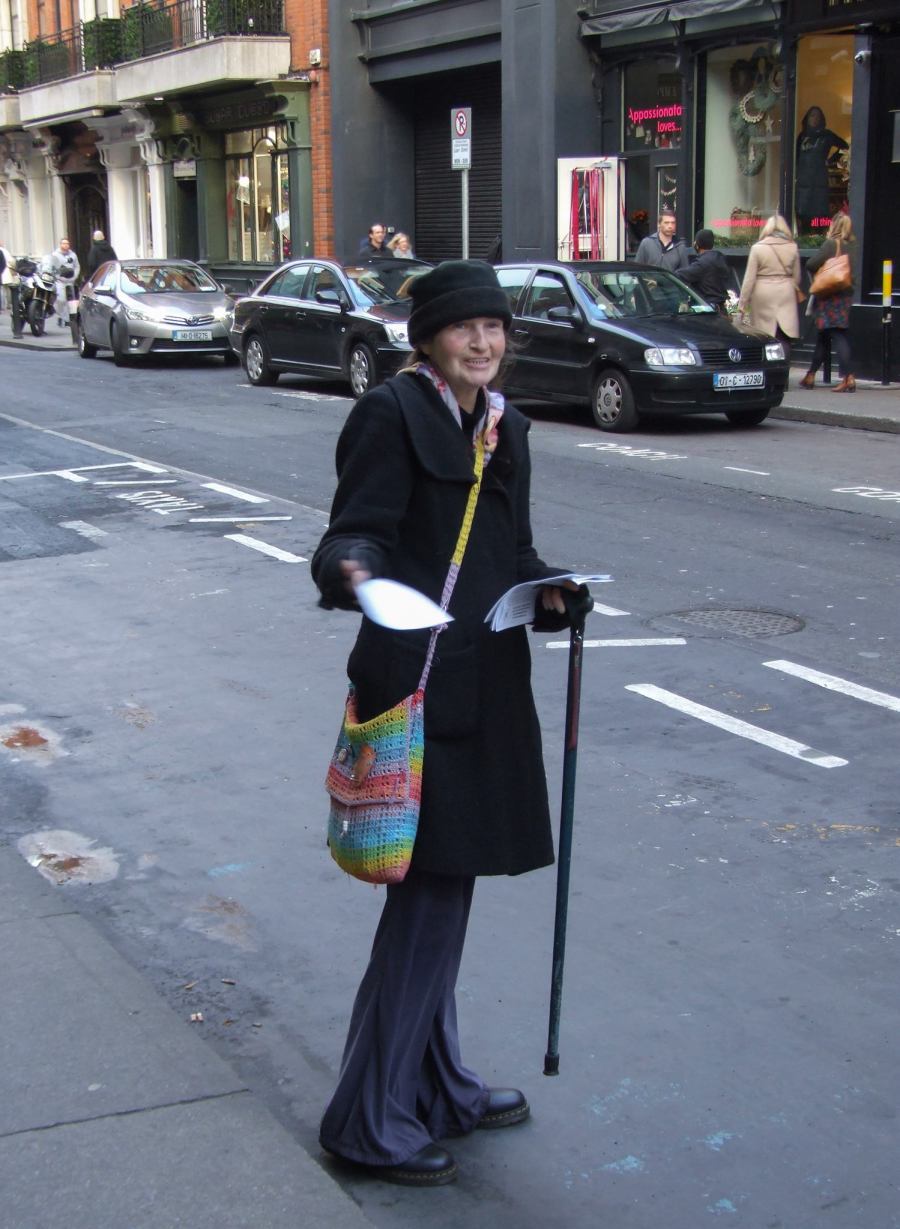
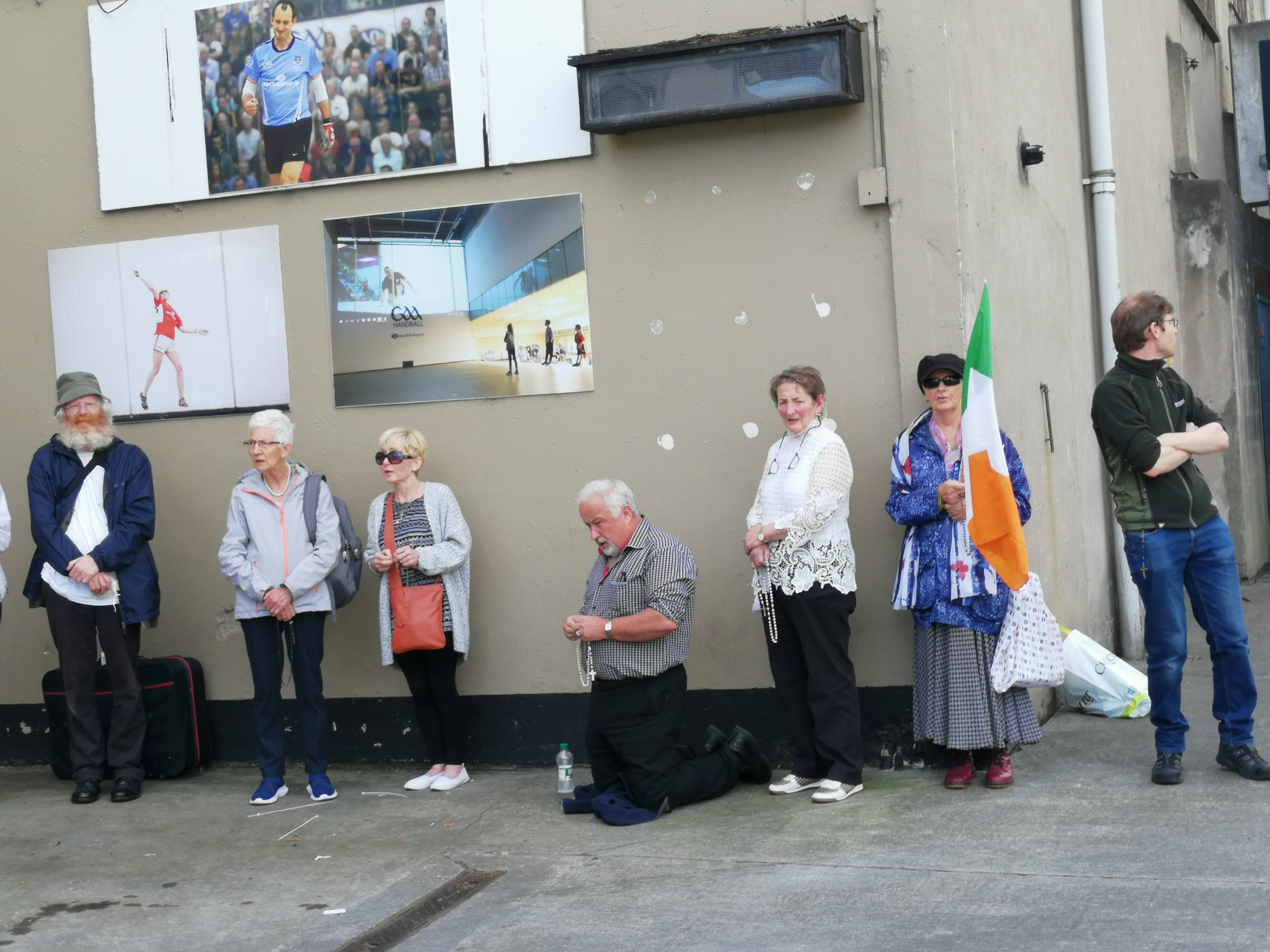

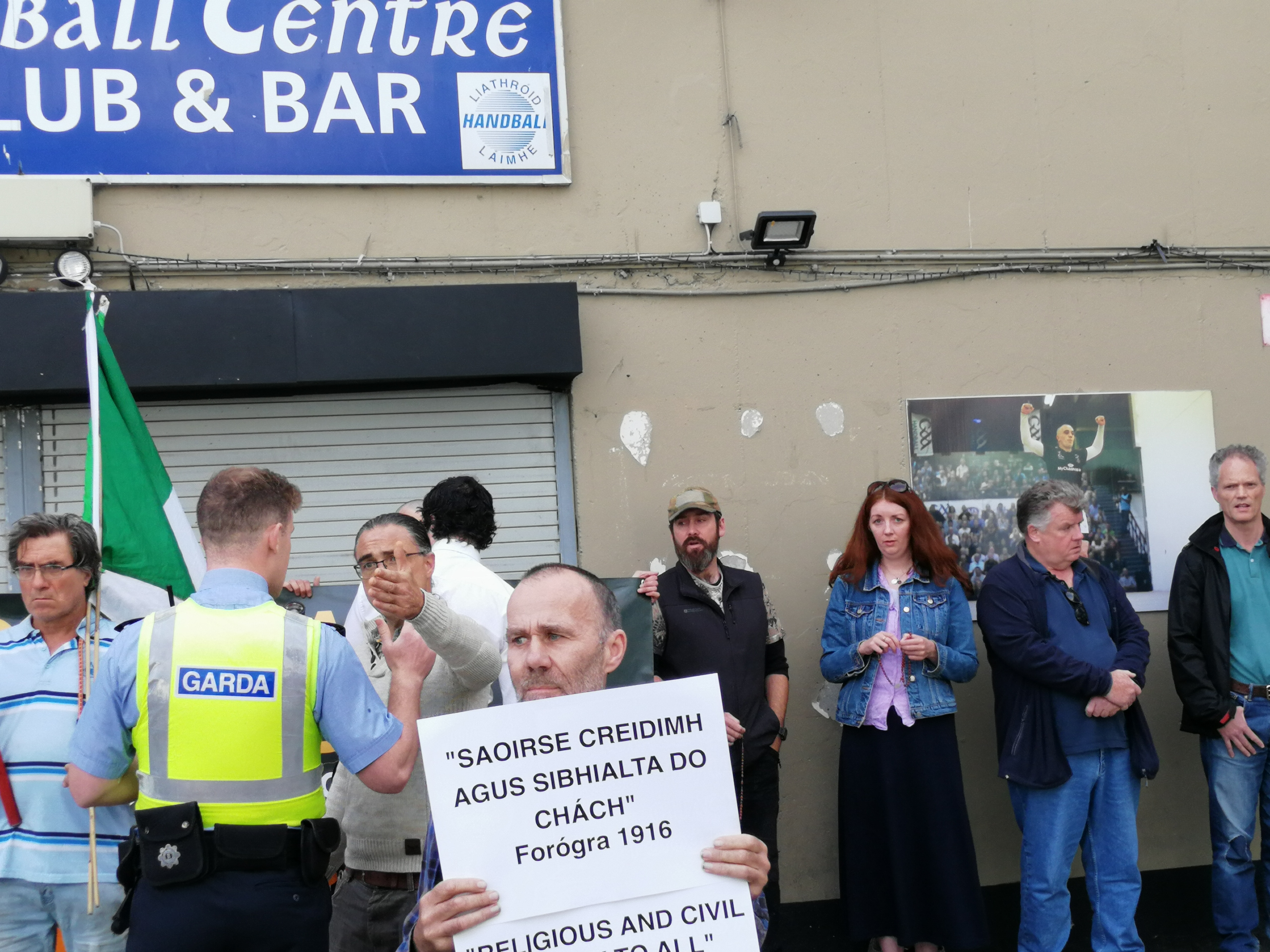


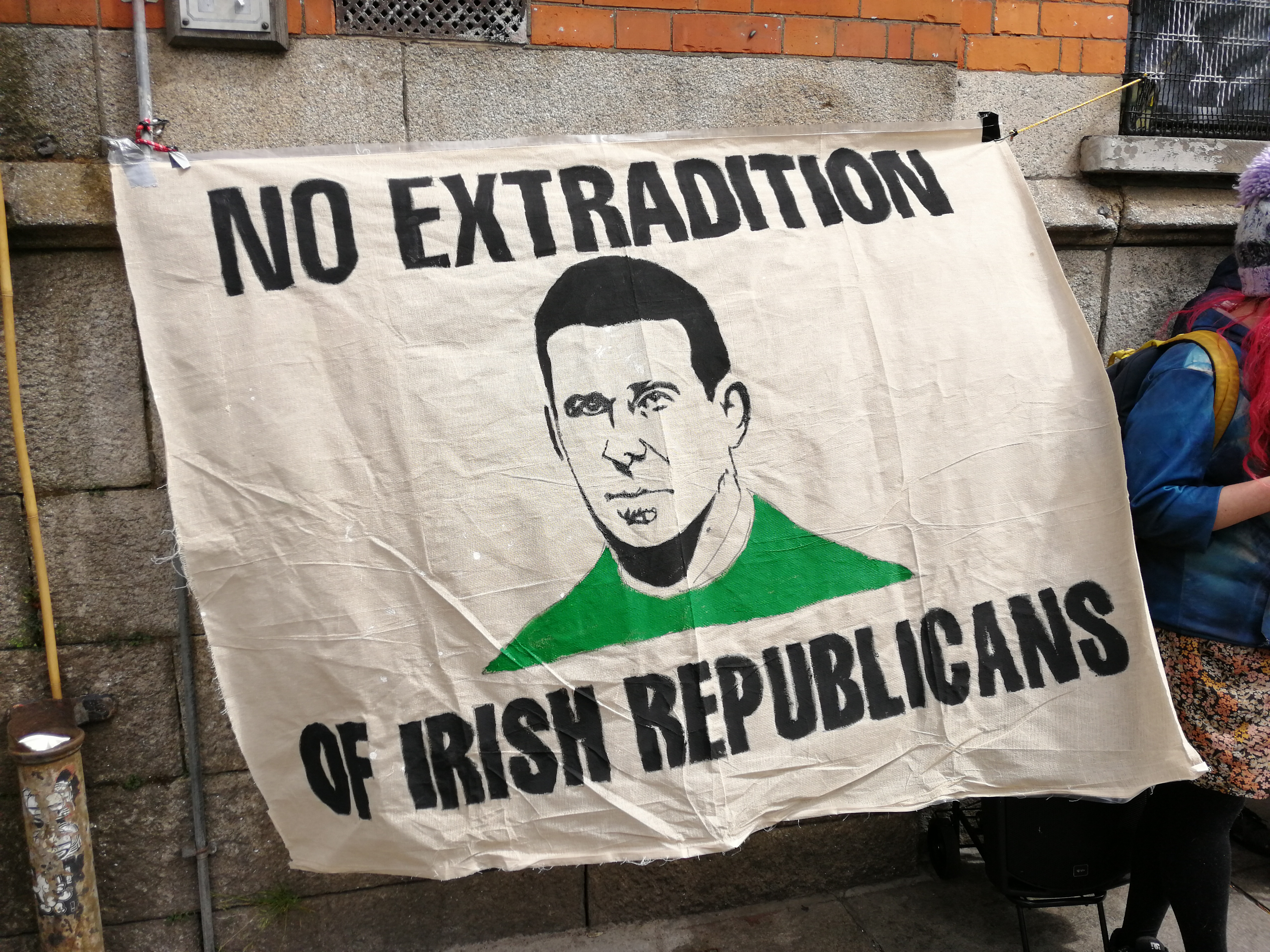

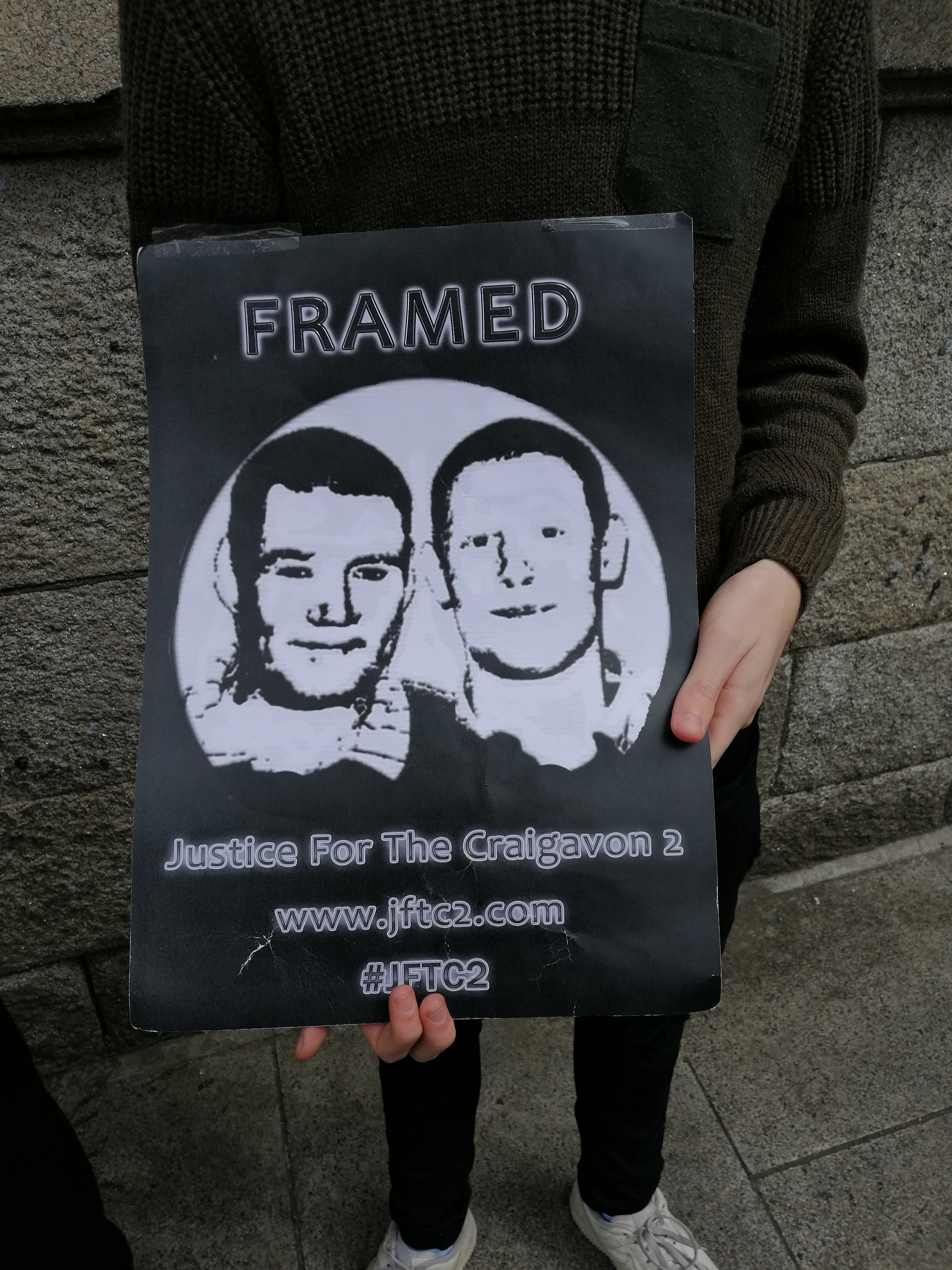
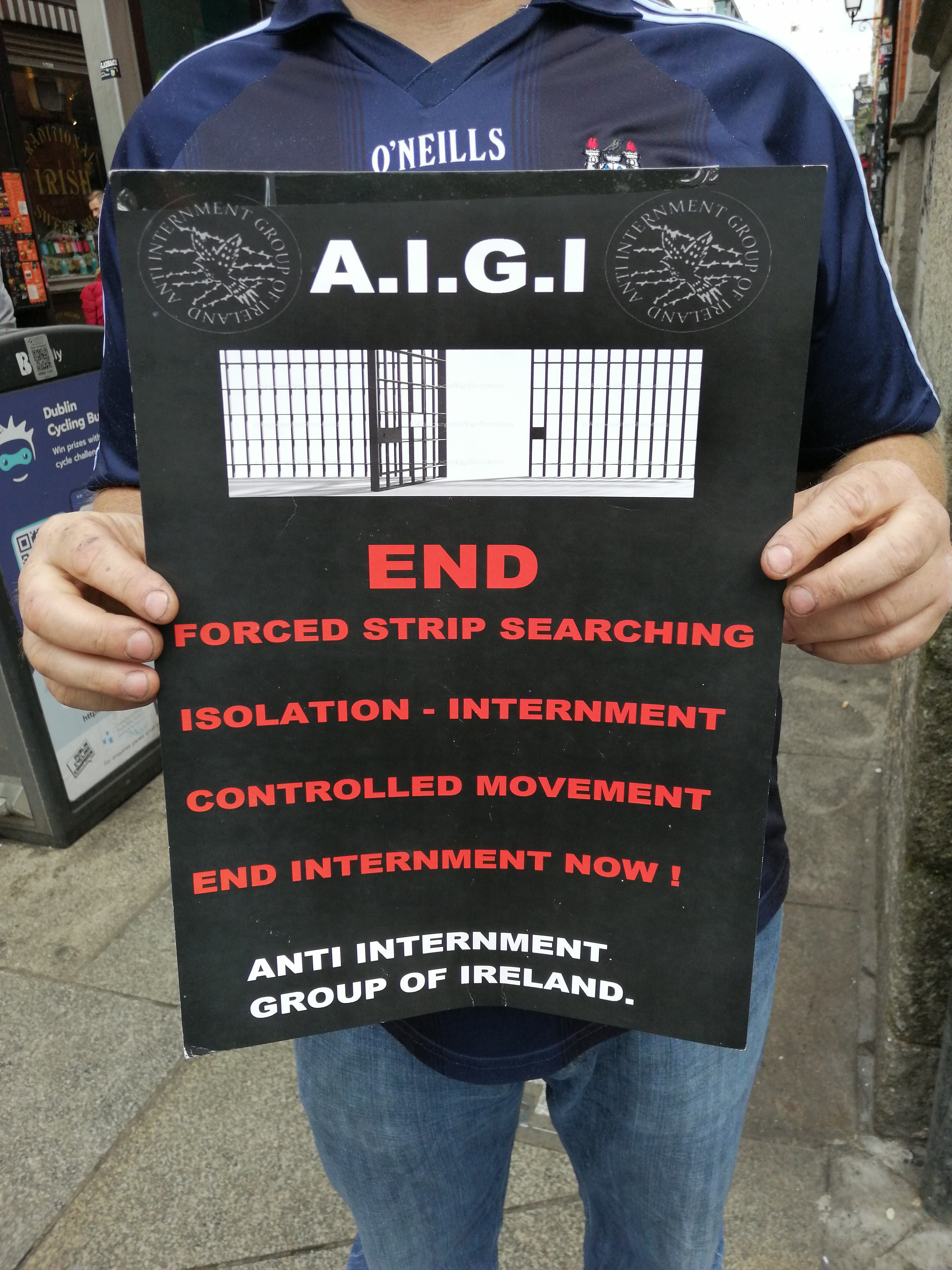
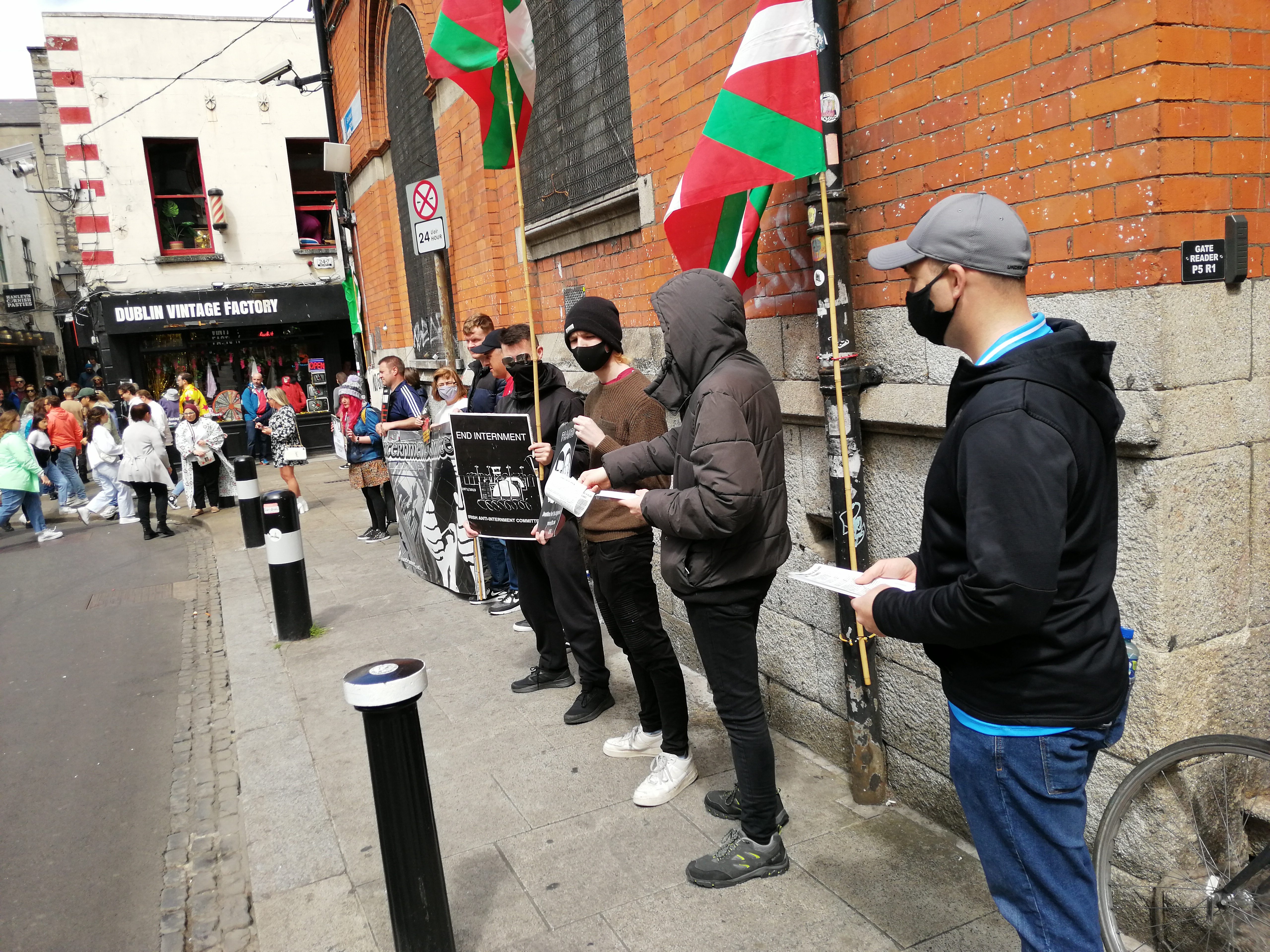

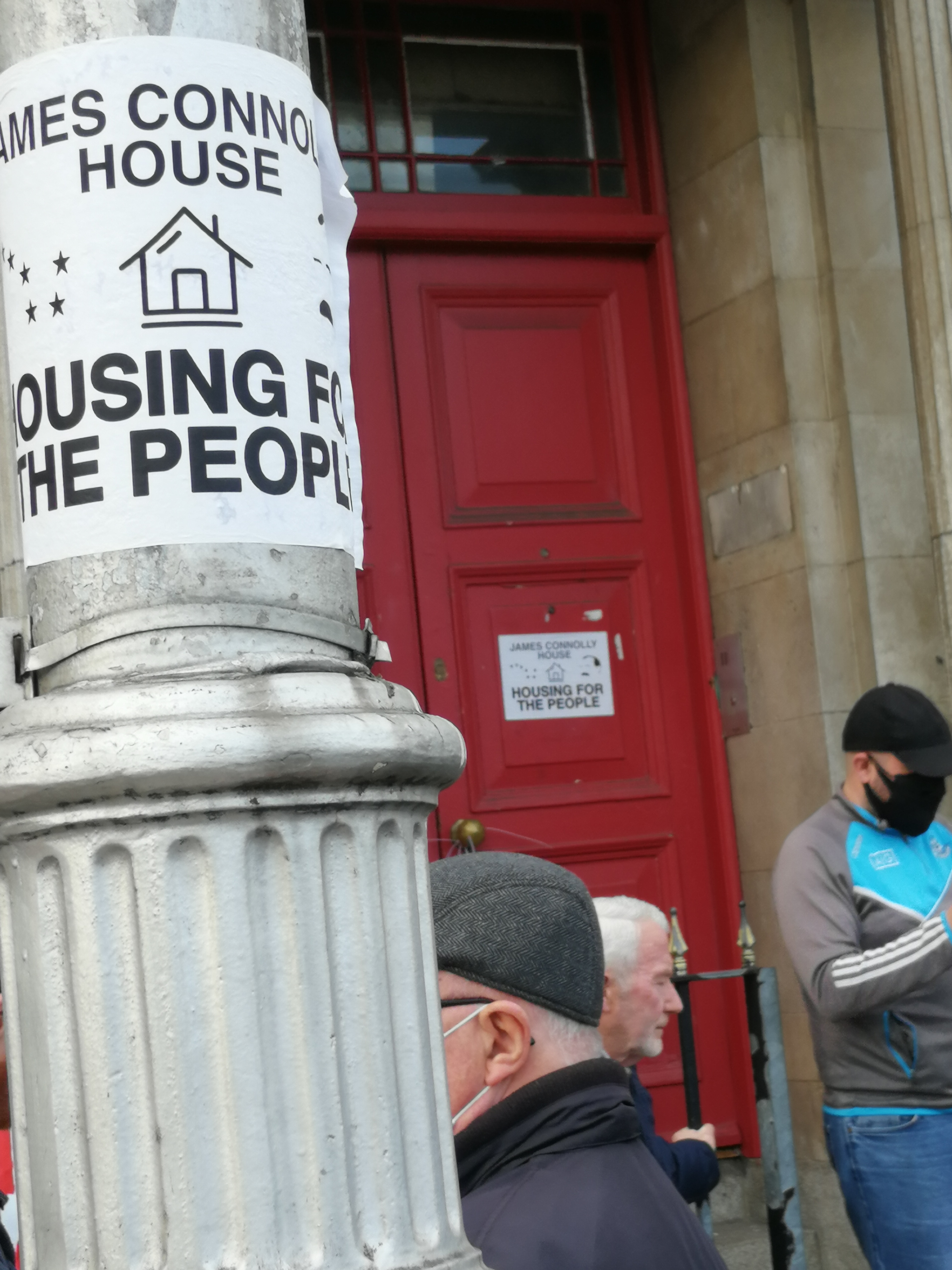


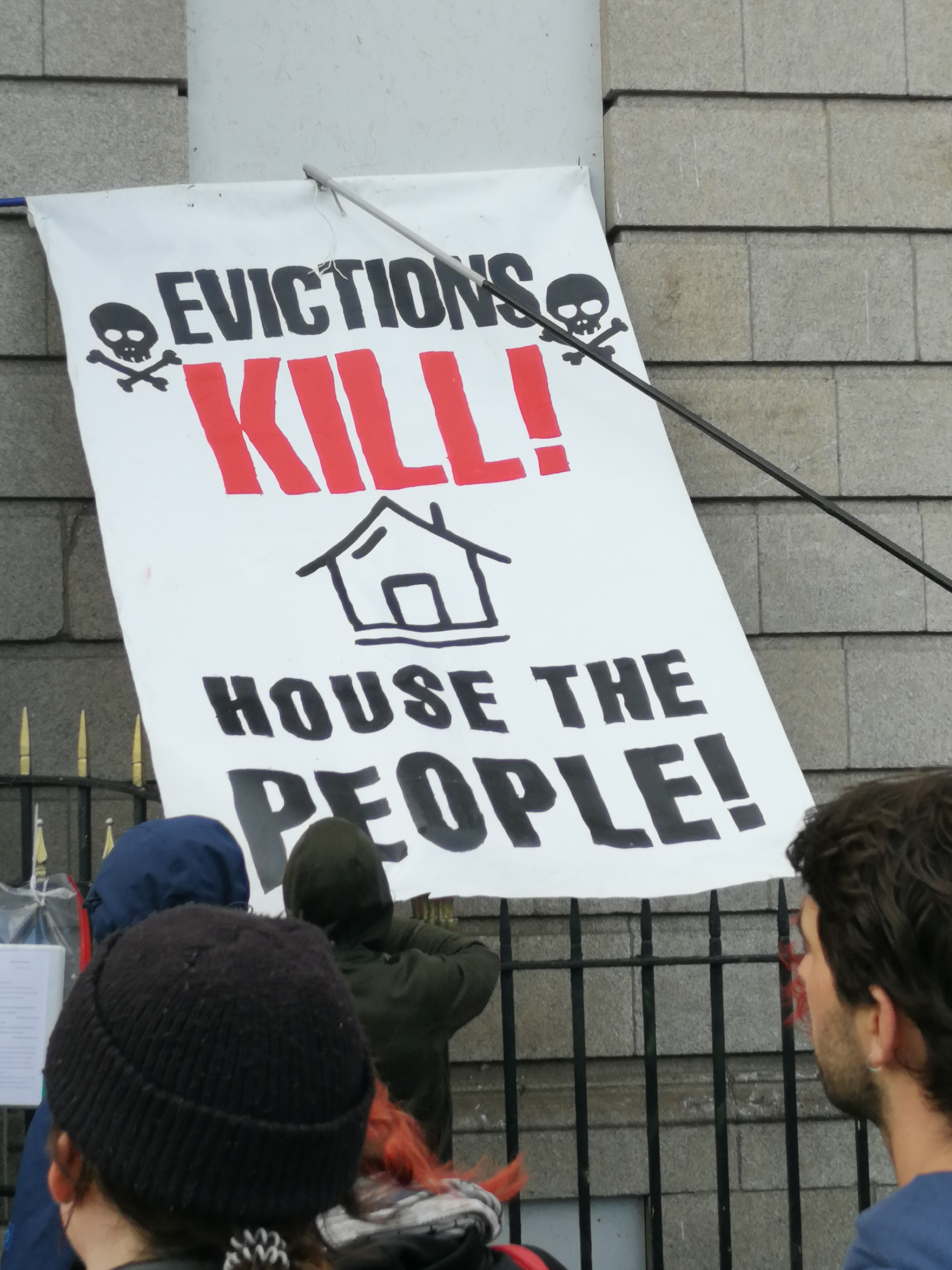


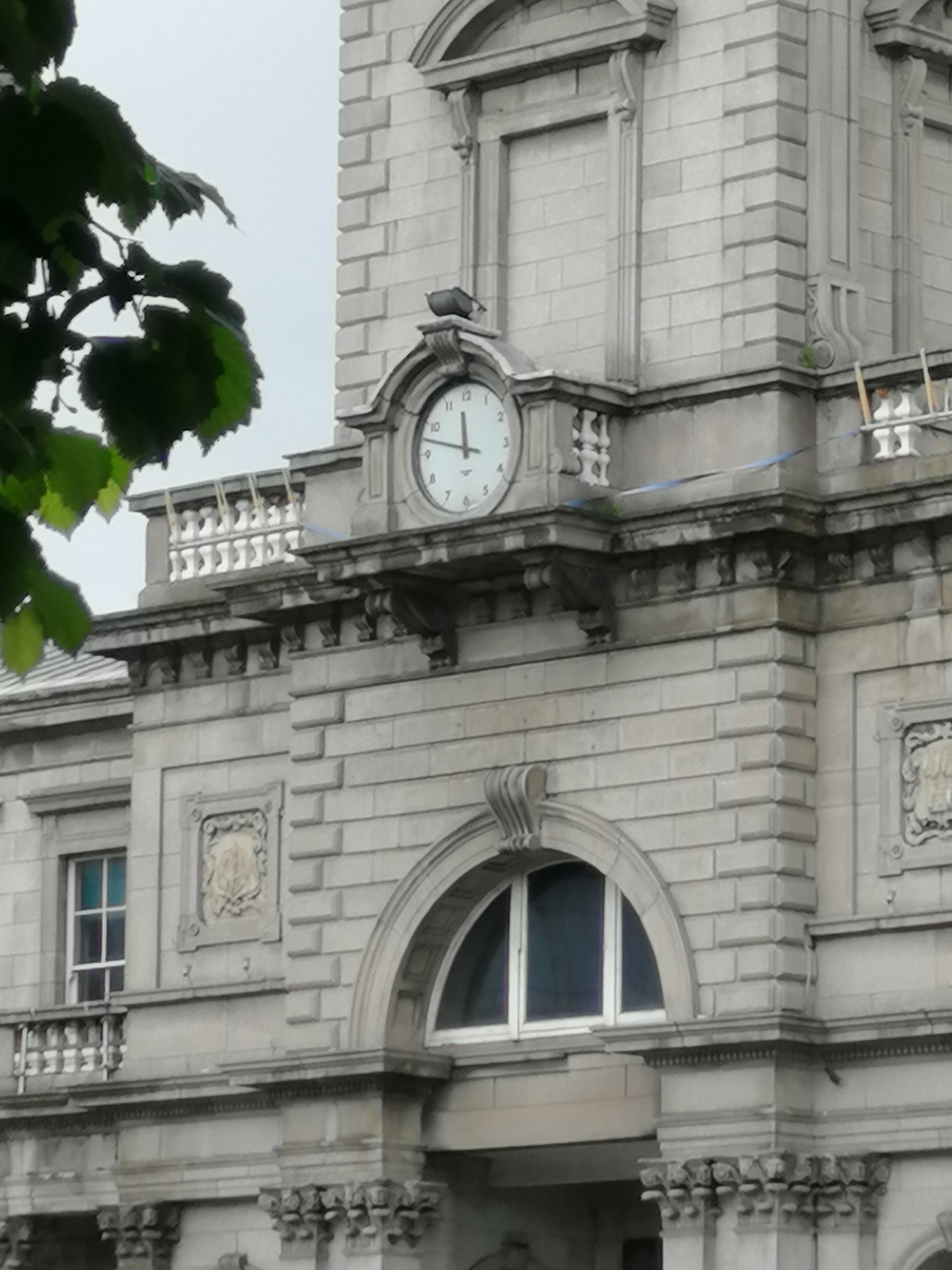


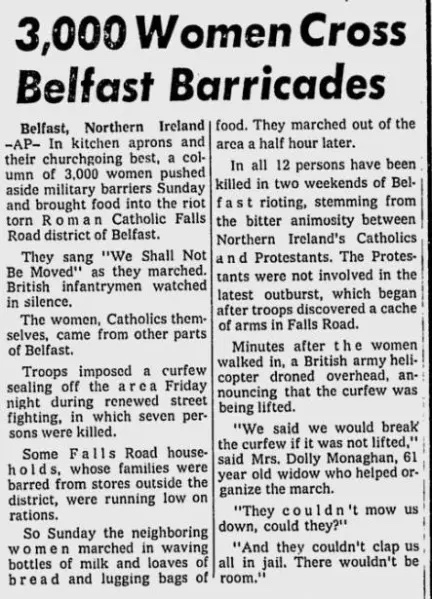
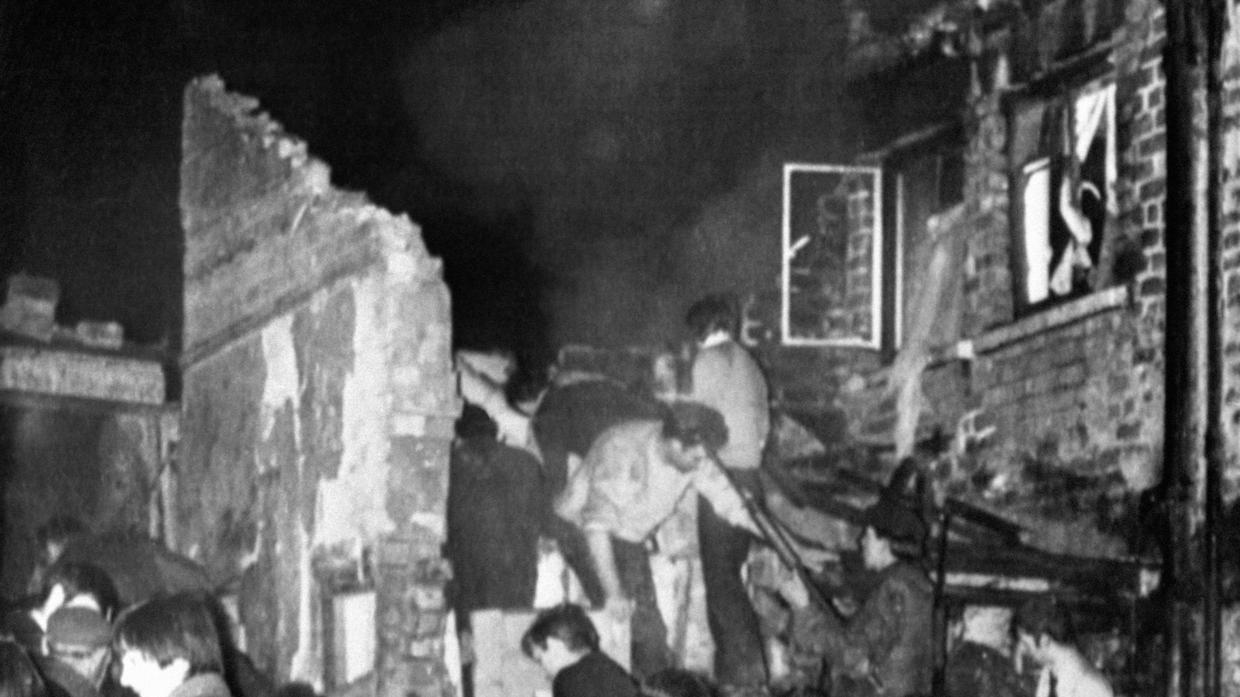
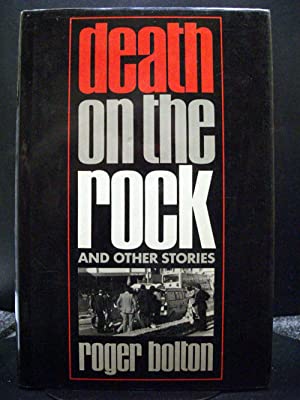
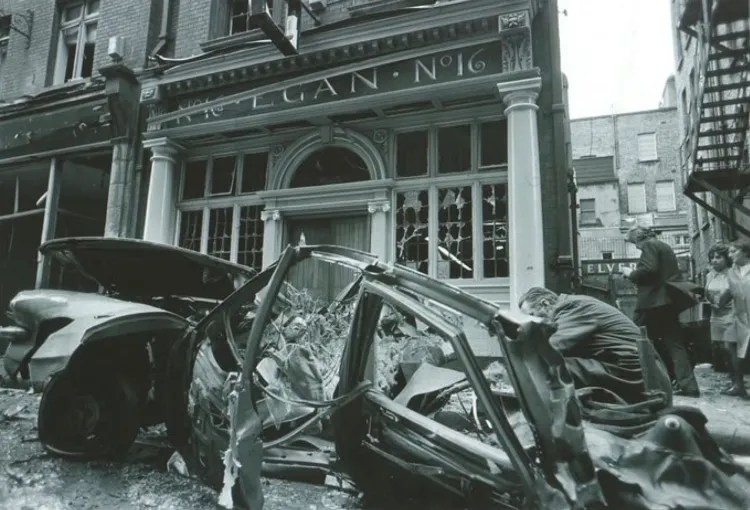
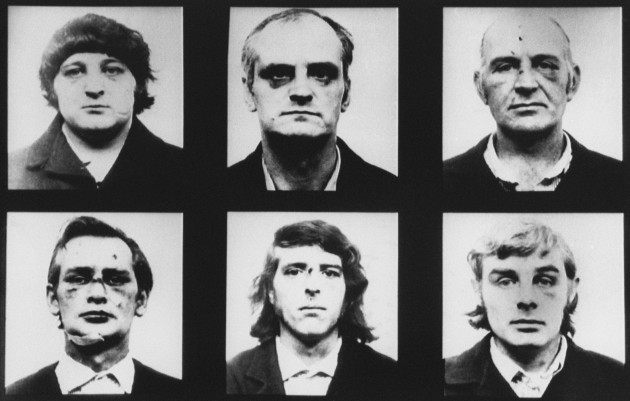


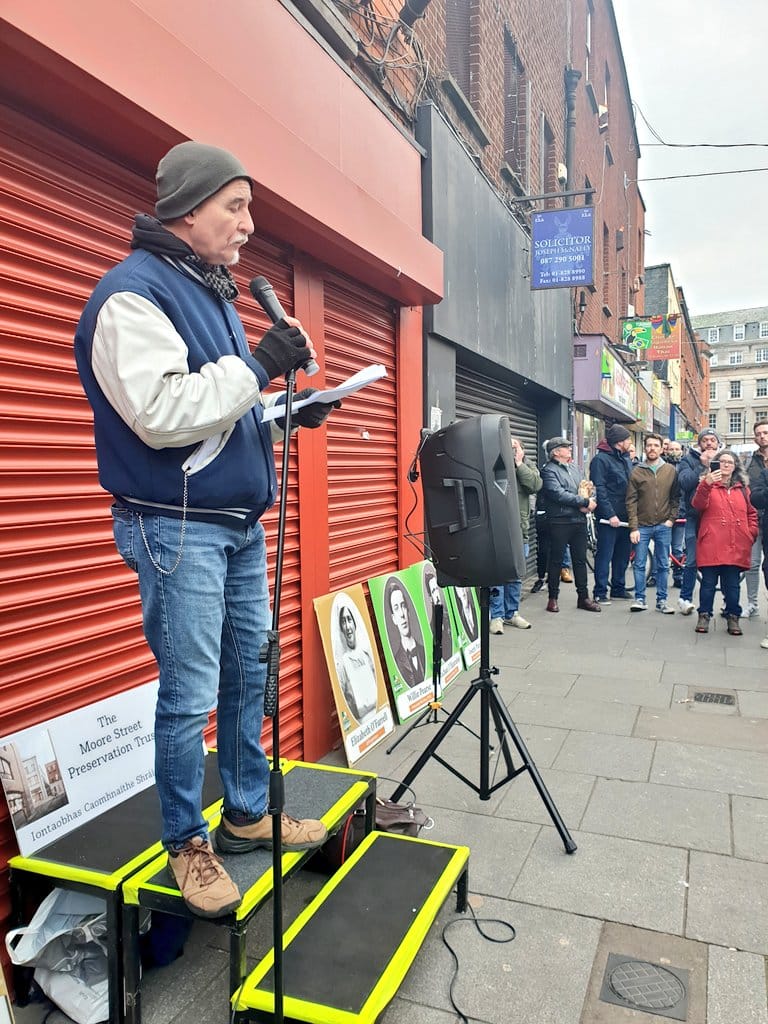


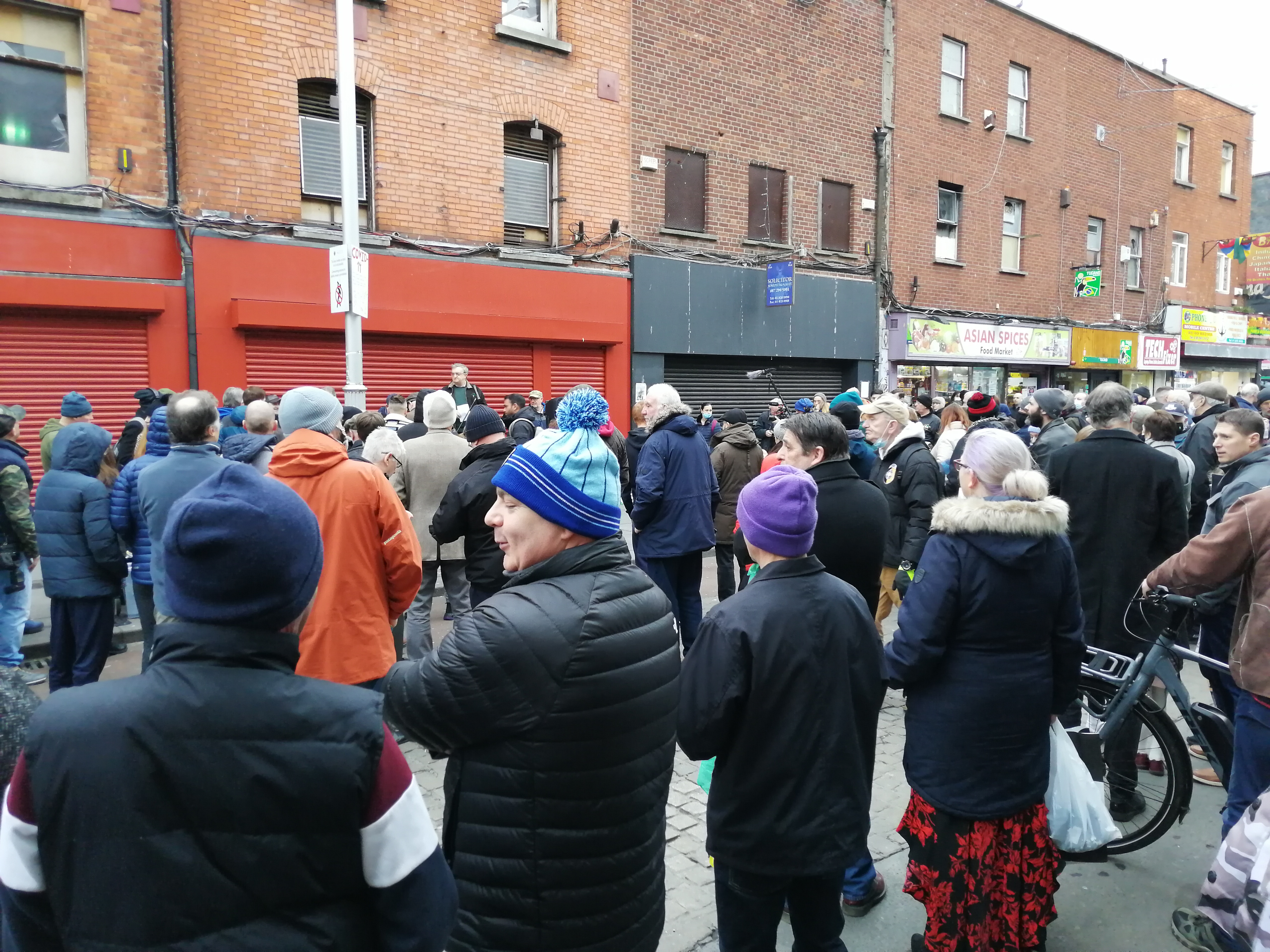
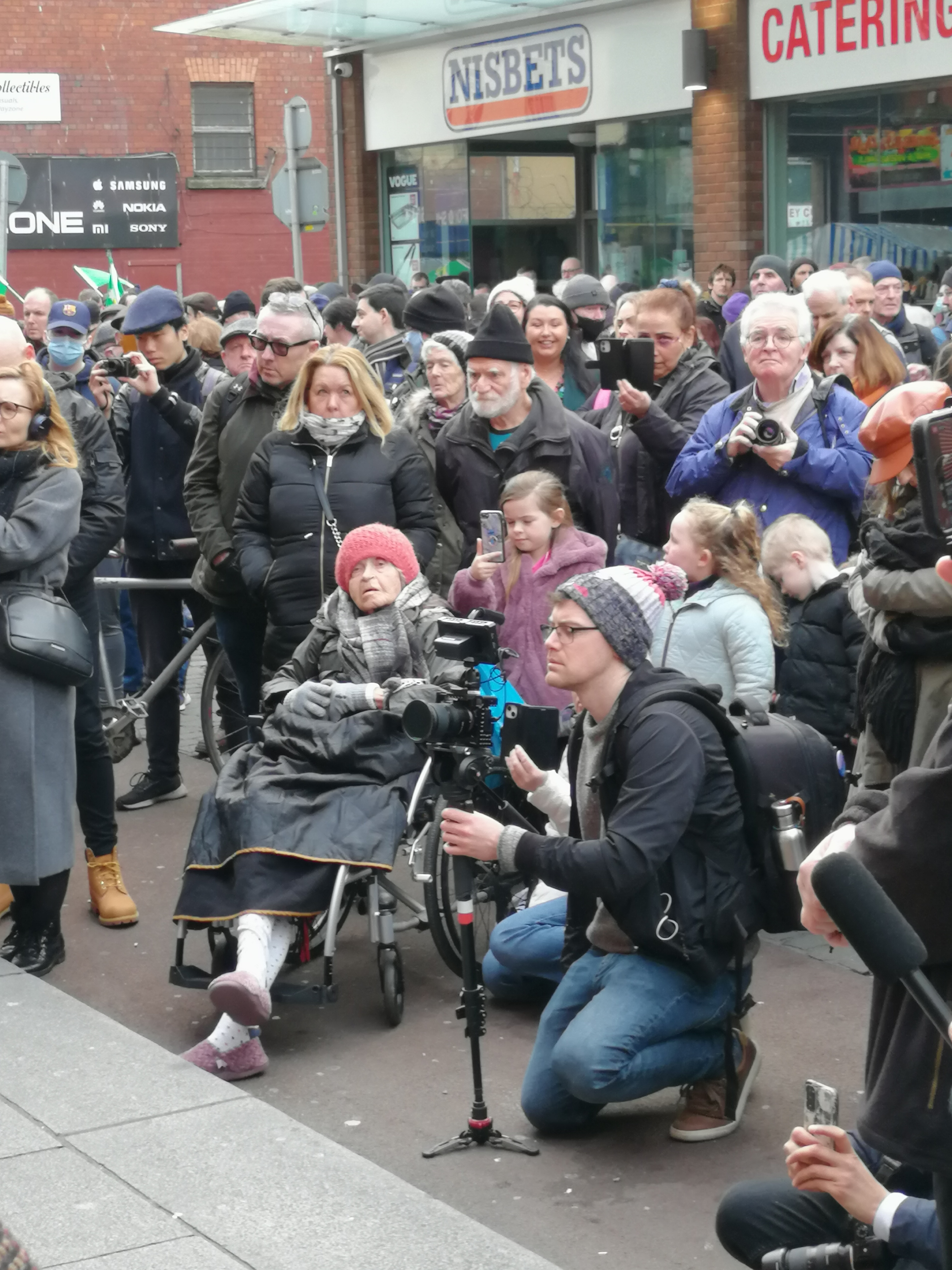

 rebelbreeze