He was a friend of Ireland, it is true — I often heard him speak on Irish solidarity platforms in England. I don’t remember him supporting the hunger strikers in 1981, however. You may recall that Concannon, representing the Labour Party, visited the dying Bobby Sands to tell him that Labour would not support him or his comrades. In London, we marched to Benn’s house (VERY long, hot march) to get him to break with Labour on this but I don’t remember whether we were successful.
In the balance must also be put that when Secretary of State for Energy in a Labour Government, along with the rest of the Gvt, he conspired to break the embargo on apartheid South Africa by covertly selling them oil routed through Portuguese African colonies.
Someone referred to him as an “Ant-fascist fighter” — I don’t know about that. He served as a pilot in Rhodesia (now Zimbabwe) and South Africa during the war. Hundreds of thousands joined up during those years and many others were conscripted. His reasons for joining could have been any, whatever he may have said afterwards. He certainly didn’t fight fascists on the streets of Britain as some did, both before and after the War.
AN ACCOUNT OF PROPERTY “DEVELOPMENT” AND RESISTANCE WHICH MAY ILLUMINATE THE DISCUSSION AROUND MOORE STREET, DUBLIN
Second “Save Paris Bakery” demonstration, 3rd March 2014, as part of Save Moore Street campaign (photo John Ayres)
Currently, a property speculator, Chartered Land, wants to build a new shopping mall in Dublin’s city centre. The plan envisages construction from O’Connell Street (including site of the old Carlton Cinema) through to Moore St and the demolition of a number of houses in the parade in Moore Street. How Chartered Land saw off another developer with a much more modest plan, acquired a number of surrounding sites and came to a privileged arrangement with Dublin City Council has been the subject as far back as 2012 of a TV documentary by an investigative programme of TG4 Iniúchadh Oidhreacht na Cáscahttps://www.youtube.com/watch?v=Cx0Kah7dE80#t=469.
Hands Around Moore Street demonstration in 2013. The dilapidated shuttered shopfront (under a former owner’s name “Plunkett”) is No.16 Moore Street, last HQ of the 1916 Rising, occupied by Pearse, Connolly and others.
Campaigners have been resisting Chartered Land’s plan from a number of viewpoints: historical (conservation of a 1916 Rising battleground and last HQ of the Rising); architectural conservation; defending small businesses and traditional street market; opposition to yet another mall and thoughtless planning. The latest move was the expulsion by Chartered Land of the successful small business Paris Bakery, occupying two of the houses which the campaigners wish to save.
The first of two Save Paris Bakery demonstrations, February 2014, as part of the Save Moore Street campaign, being addressed by James Connolly Heron, grandson of James Connolly shot in 1916 by the British.
A campaign fought in a town on the eastern outskirts of London has, I believe, some lessons for people resisting Chartered Land and other property speculators. In 1968 in the outer London borough of Redbridge, the Ilford Town Council had a plan for a ring road and car parks which required the demolition of many houses. Whatever financial benefits were to be accrued from the plan and to whomsoever they would be going is not known to me but one would assume there were some from the events to be outlined. While they were applying for approval to the Dept. of the Environment AND BEFORE THEY RECEIVED APPROVAL, the Council served compulsory purchase orders on the houses in question and then forced the occupants to leave. The two-storey houses with gardens stood empty.
The Ilford Squatters’ Association, a broad group of different political parties and groups and independents, occupied some of the houses and moved homeless families into them (some of the families and some of the helpers, by the way, were Irish, including from Dublin). The campaign’s position was that they were against the “development” plan but that in any case, even if it went ahead, homeless families could and should be accommodated in houses in the meantime.
The council went to civil court and sought eviction orders which, at that time, had to name the individuals and the property in question. When the orders were granted, the squatters swapped the families at the address and moved the named one to another address.
Then the Council started vandalising the houses still empty, ripping out the stairs, smashing sinks and toilets and knocking holes through walls, ripping up floorboards. The Squatters had many volunteers and some of them had building experience; they repaired/ replaced toilets and sinks, rebuilt stairs and relaid floor boards.
The Council hired a firm of private detectives (i.e. thugs, some of them with National Front badges), and attacked two houses in what amounted to an illegal eviction. In one of them they smashed the jaw of a helper in two places and threw a child with scarlet fever out of her bed on to the floor in a bid to get the family to leave. The police stood by until a doctor arrived at a rush and said the child could not be moved; only then did the police ask the bailiffs to leave.
In another house, the bailiffs came through the street door with a battering ram to discover, as they fell through the joists, that in this house, the floorboards had not been replaced. A medieval-type battle then took place as they tried to climb up ladders on the outside and on the inside too (for the stairs had not been replaced either). Frustrated and battered, they then set fire to the ground floor. At this point, the police had to intervene, as the houses on each side were occupied (a Salvation Army officer on one side and a GP on the other). The bailiffs left and the Fire Brigade arrived to put out the fire.
Eventually the Council did some kind of a deal with the leadership of the Squatters’ Association and with a few remaining families and the campaign was over. By that time numerous helpers had been to civil and criminal courts and to jail on remand and some had accumulated “criminal” convictions. But the ring road was not approved for years afterwards (perhaps never) and nor was the car park.
There are two lessons from the account above, I think, for Moore St. campaigners:
1) Property speculators (“developers”) will do ANYTHING THEY CAN GET AWAY WITH to pursue their objectives
2) They will try and present the regulators with a fait accomplit, that is an accomplished fact. In the Moore St case, that means letting the named national monument buildings go to rack and ruin (as they did before) and getting rid of successful small businesses (as with Paris Bakery) and by making an ugly eyesore of Moore St. (derelict buildings, boarded up businesses, hoardings …) in the hope that opposition will crumble and people will be glad of any change to the area.
The resistance in Moore Street should continue to be holistic and every threatened part and interest should support the others.
Three unarmed Irish Republican Army (IRA) Volunteers were shot dead by undercover members of the Special Air Service (SAS) in Gibraltar. The three were Mairéad Farrell, Sean Savage and Daniel Mc Cann.
The episode sparked intense controversy and began a chain of events that lead to a series of deaths in the Six Counties.
The British government claimed that the SAS shot the IRA members because they thought a bomb was about to be detonated. Eyewitnesses said that those shot were given no warning.British Intelligence and some media tried to discredit one of the witnesses, Carmen Proeta, whose flat overlooked the murder scene and who came forward to say what she had seen. A British newspaper claimed that she was a prostitute running an escort agency and later had to pay her damages in a libel case.
An undercover unit of the Spanish Guardia Civil in the Spanish state had been shadowing the three Volunteers in cooperation with British Intelligence but had lost them just before the border. They were reported unhappy with the unexpected executions carried out by the British death squad. However, it is also true that the Gibraltar killings were carried out less than a year after the last operation of the GAL death-squads (1983-1987), run by the Spanish state with senior Guardia Civil officers and the Minister of the Interior against Basque pro-independence activists.
Tuesday 8 March 1988A car believed to belong to those killed in Gibraltar was found in Marbella and was discovered to contain 140 pounds of high explosives.Wednesday 16 March 1988During the funerals of the three Volunteers at Milltown Cemetery in Belfast a Loyalist gunman, Michael Stone, launched a grenade and gun attack on mourners. Three people were killed and 50 injured. The whole episode was recorded by television news cameras. The police and the army had withdrawn to avoid any confrontation with the mourners. Stone was chased to a nearby motorway were he was attacked by a number of mourners. The police arrived in time to save his life. The main Loyalist paramilitary groups denied any involvement with Stone. One of those killed, Kevin Brady, was a member of the IRA; though unarmed, he had been filmed, along with some others, moving TOWARDS Stone as the Loyalist attacked.
Saturday 19 March 1988
During the funeral of Kevin Brady, killed at Milltown Cemetery (16 March 1988), a car approached the funeral procession at high speed. It was claimed by some present that they feared another attack by Loyalist gunmen. The car’s passage was blocked and a group of the mourners attacked the two passengers, killing them. They were two soldiers in plain clothes and their purpose was never adequately explained.
28 April 1988
Thames Television, as part of the ITV television current affairs series “This Week”, screened a documentary about the killings called “Death on the Rock”. The documentary examined the deaths of three Provisional Irish Republican Army (IRA) members in Gibraltar on 6 March 1988 at the hands of British special forces (codenamed “Operation Flavius”).
The documentary presented evidence that the British government’s version of events was inaccurate and that the three IRA members had been shot without warning or while attempting to surrender, for which it was extensively criticised. The programme was condemned by the Government—who had attempted to have the Independent Broadcasting Authority (IBA) postpone its broadcast—while tabloid newspapers accused it of sensationalism and “trial by television”.
Over the following weeks, several newspapers attempted to undermine the documentary by attacking its witnesses or presenting its findings as distorted or inaccurate. After one of the documentary’s witnesses retracted his evidence at the inquest into the shootings, Thames Television commissioned an independent inquiry into the making of “Death on the Rock”—the first such inquiry into a single television programme—headed by Lord Windlesham and Richard Rampton, QC. The Windlesham-Rampton report largely vindicated “Death on the Rock”, and found, with two exceptions, that it had accurately portrayed the evidence of its witnesses.
Thames lost its franchise and the IBA was abolished as a result of the Broadcasting Act 1990, decisions which many people believed were influenced by the Government’s anger at “Death on the Rock”. http://en.wikipedia.org/wiki/Death_on_the_Rock
September 1995
The European Court of Human Rights found the British government guilty of violating Article Two of the European Convention, which protects a person’s right to life. In the first decision of its kind against a government, the court stated that the British had failed to uphold “the standard expected of a democratic government” when they shot dead three IRA Volunteers in Gibraltar in 1988.
GIBRALTAR THREE SONG
(Air: Glencoe Massacre)
Chorus:
Sad are three homes in Belfast now —
All Ireland shares their sorrow;
Mairéad Farrell, Sean Savage, and Daniel McCann …
They died on the streets of Gibraltar
I
They flew out of Belfast with an ambitious plan
To continue the struggle to free Ireland;
Mairéad Farrell, Sean Savage, and Daniel McCann:
They died on the streets of Gibraltar
Chorus:
Sad are three homes in Belfast now —
Old Ireland shares their sorrow;
As they walked in the sun, the Brits drew their guns
And blood stained the streets of Gibraltar
II
The SAS stood there so proud of their deed
Three more freedom fighters lay dead in the street
They’ve been given no warning no chance to retreat
For three had to die in Gibraltar
(Chorus)
III
Each of them unarmed, without mercy gunned down,
Shot again in the head as they lay on the ground,
By the Special Air Service, assassins of the Crown,
They were murdered on the streets of Gibraltar.
(Chorus)
This song, slightly different version to the one I have, was written I think by the Irish Brigade. The 3rd verse above is mine entirely, written over a decade ago while I was still living in London.
There are also a couple of other songs about the events and Roger Bolton, the TV documentary maker, wrote a book “Death on the Rock and other stories”. The track of one of the other songs, Do Not Stand at my Grave and Weep, written by I think Catherine Jenkins, is on this video which has extracts from an interview with Mairéad Farrell http://youtu.be/xZUeCemzkt4
end
SEAN SAVAGE
28 JANUARY 1985 – 6 MARCH 1988
Was studying for his ‘A’-levels when imprisoned on remand in 1982 on the word of an informer who subsequently retracted. He joined the IRA when he was seventeen years old.
MAIRÉAD FARRELL
3 MARCH 1957 – 6 MARCH 1988
Imprisoned in 1976. She took part in the 1980 hunger strike. She was Officer Commanding of Republican prisoners in Armagh prison throughout the 1981 hunger strike and was very well liked and highly respected by the female POWs. Released in 1986, she campaigned actively against strip-searching and returned to IRA duty.
DAN McCANN
30 NOVEMBER 1957 – 6 MARCH 1988
First imprisoned in 1973 and on three subsequent occasions. From 1979-1981 he was in prison ‘on the blanket’ during the campaign for political status. He had been the target of British Army death threats and survived a loyalist assassination attempt.
“We have had ‘stepping stones’ presented to us before in our history – they turned out to be stone walls.”
(A revolutionary is on trial).
Act 1.
Scene: A courtroom – Judge’s bench high, clerk at lower bench nearby, faced by dock, containing defendant and two guards, one at each side. Long bench in front of dock containing Prosecution and Defence barristers or lawyers.
Judge: Read the charges, clerk.
Clerk: The defendant is charged with treason, sedition, incitement to rebellion against the lawful government, conspiracy with persons unknown to incite discontent, unlawful assembly, obstruction of the highway and membership of an illegal organisation.
Judge: Defendant, you have heard the charges?
Defendant: I have.
Judge: Address the Court properly.
Defendant: I have heard the charges, Judge.
Judge: The proper manner to address me is Your Honour.
Defendant: I have heard the charges, Judge.
Judge: I see. Very well, let us proceed. How do you plead to the charges?
Defendant: Not guilty of any crime against the people.
Judge: Clerk, enter a plea of “Not Guilty.”
Prosecuting Counsel stands up, approaches defendant in the dock.
Prosecuting Counsel: You are against the Agreement?
Defendant: I am. It clearly does not deliver what we fought for, an independent united Republic. In addition, I and some others fought for a socialist republic and it has not delivered that either.
Prosecuting Counsel: You are aware that the electorate voted to accept the Agreement?
Defendant: Yes, but…
Prosecuting Counsel: Just answer ‘yes’ or ‘no’.
Defendant: Yes.
Prosecuting Counsel: And do you believe in democracy?
Defendant: Define ‘democracy’.
Prosecuting Counsel: The will of the majority.
Defendant: With suitable safeguards for certain minorities, certainly.
Prosecuting Counsel: Yet you have admitted to undertaking actions against the Agreement, have you not?
Defendant: I have.
Prosecuting Counsel: You consider yourself above the will of the people, the majority, then?
Defendant: No. But I consider that I have a duty to act according to what is right and I can see clearly that the Agreement delivers nothing of what we fought for.
Prosecuting Counsel: Yet the people voted for it.
Defendant: The people were tired of war and repression and were lied to. Many of our leaders betrayed us and brought many of our movement with them.
Prosecuting Counsel: That is your interpretation. Might it not be that your leaders and those of your movement who followed them were wiser than you?
Defendant: No.
Prosecuting Counsel: No? You could not possibly be wrong?
Defendant: I am not wrong on this. The movement fought for a an independent, united republic. We did not get it.
Prosecuting Counsel: Your leaders and your movement – I beg your pardon, many in your movement – consider it a stepping stone.
Defendant: We have had ‘stepping stones’ presented to us before in our history – they turned out to be stone walls.
Prosecuting Counsel: So you would pursue a strategy of violence in the face of the clear will of the majority!
Defendant: I do not choose violence.
Prosecuting Counsel: You do not? Have you not admitted earlier a statement attributed to you, that violence would be necessary to achieve a successful revolution?
Defendant: Yes.
Prosecuting Counsel: So you do choose violence.
Defendant: I do not.
Prosecuting Counsel: Pray explain.
Defendant: I said that the history of classes and of imperialism shows us that no class has ever been permitted to overthrow the one above it by peaceful means; similarly that no nation has won independence from the state oppressing it without having to face violence. It is the oppressors of the people who choose violence, not us.
But naturally, we should defend ourselves. Anyway, it is hypocrisy for a state to accuse us of violence, when they have a long history of violence and are at this moment collaborating with others who are waging war and armed invasion of countries.
Prosecuting Counsel: That is a different matter and not the concern of this court.
( Defendant mutters something)
Prosecuting Counsel: What did you say?
Defendant: I said ‘You would say that and anyway it should be the concern of any court of justice.’
Prosecuting Counsel: This is a court of law and it is trying a case to decide whether you are guilty or innocent. Let us proceed along another track. Do you believe in dialogue?
Defendant: Certainly.
Prosecuting Counsel: Why then do you not use the Agreement as a basis for dialogue to achieve your aims? Surely that is the democratic way?
Defendant: I’d be happy to engage in dialogue as to the details of Britain’s withdrawal from Ireland. I’d be happy to engage in dialogue as to the details of the capitalists handing over the wealth they have plundered from the people.
Prosecuting Counsel: You would confiscate the property of businessmen?
Defendant: That wealth was created by working people. I would consider it one of the first tasks of a socialist government to confiscate the wealth of the rich, yes.
Prosecuting Counsel: And ruin the country!
Defendant: I consider that it is the imperialists and the capitalists that are ruining the country. Our native industries are undeveloped or taken over by foreign monopolies. There is wide-scale poverty, homelessness, ill-health, unemployment and emigration.
Prosecuting Counsel: These are hard times internationally, yes.
Defendant: Exactly.
Prosecuting Counsel: What do you mean ‘exactly’?
Defendant: The capitalists and imperialists internationally have caused these ‘hard times’ as you call them. They grow richer while the people grow poorer. The second is the direct result of the first or, if you like, the first is the cause of the second.
Prosecuting Counsel: Let us take another track. Do you admit that this present government was elected by a majority?
Defendant: No.
Prosecuting Counsel: No? You do not?
Defendant: No. It gained an overall majority of parliamentary representatives.
Prosecuting Counsel: Is that not the same thing?
Defendant: No. There are those who were eligible to vote but did not and those who voted for other parties but did not elect enough representatives.
Prosecuting Counsel: You quibble.
Defendant: I do not, those are facts and the figures will clearly demonstrate that this present government was elected by a minority of the electorate. But even if it had been elected by the majority ….
Prosecuting Counsel: Yes, please do continue.
Defendant: Even then, it broke many important promises it had made prior to coming to power. It has de-legitimised itself.
Prosecuting Counsel: No party can carry out everything it promises ….. situations arise, measures have to be taken to respond ….
Defendant: I agree that capitalist parties do not carry out their promises. They need the votes of the people but represent the interests of a tiny minority.
Prosecuting Counsel: Oh, please, spare us your socialist rhetoric!
Defendant: I am attempting to respond to your questions.
Prosecuting Counsel: You have encouraged sedition against the lawful government.
Defendant: Sedition according to the laws of this state – capitalist laws.
Prosecuting Counsel: Would you not agree that you are in a minority opinion?
Defendant: On what?
Prosecuting Counsel: In your political views.
Defendant: I am in majority opinion that imperialist war is a bad thing. I am in a majority opinion that poverty, homelessness, unemployment and emigration are bad things. I am not in a minority opinion that the rich get richer while the poor get poorer.
But I do admit that I am in minority opinion as to the feasibility of the solutions I propose. I admit that I am in a minority as to the confidence that revolutionary change is within our power. In that I am in a minority – for the moment.
Prosecuting Counsel: Ah, you believe that the people will see sense and support your ideas.
Defendant: I wouldn’t put it quite like that but … yes.
Prosecuting Counsel: A bit arrogant, would you not say?
Defendant: Not at all. In the history of this and many other lands, many thinkers and activists have been in a minority before their opinions became accepted by the majority. Most accepted scientific opinion now was once that of a minority – indeed, often of a persecuted minority.
Prosecuting Counsel: You consider yourself a persecuted minority?
Defendant: My presence here and the charges are proof enough of that. But one day we shall be a majority.
Prosecuting Counsel: May the Court please, I have no more questions of this defendant.
(Prosecuting Counsel sits)
(All freeze)
Act 2.
(All unfreeze)
State Prosecution Counsel standing, summing up, addressing the Judge …………….
Prosecuting Counsel: The Defendant has pleaded ‘not guilty’ but his own answers under cross-examination have belied that plea. He has in effect admitted to treason, sedition, incitement to rebellion against the lawful government, conspiracy with persons unknown to incite discontent, unlawful assembly and obstruction of the highway.
The only charge to which he has not admitted is membership of an illegal organisation. However, we have clearly shown from the evidence of the police and army witnesses that he is indeed a member of an illegal organisation.
The State submits that the case has been proven in all respects and asks for a verdict of “Guilty as charged.” In addition the State asks for the maximum sentence — the prisoner is a danger to society and totally without remorse.
(Prosecution Counsel sits.)
(All freeze)
Act 3.
(All unfreeze) ….
Judge addressing the Defendant ….
Judge: Defendant, you have been found guilty as charged on all counts. Do you wish to say anything before sentence is passed?
Defendant: Yes. I once again contend that I am not guilty of any crime against the people. The actions I undertook were for the victory of my class, the working class, which entails the defeat of the local ruling class and foreign imperialism. If I am guilty of anything, it is that I did not always work hard or competently enough for the cause.
Time and again, others like me have stood before your courts and of the British before yours and been sentenced to imprisonment or even death. They faced it with courage and I will try to do the same. I do not expect mercy and I will not ask for it. I do not apologise for doing what I know was right.
But I tell you this: one day, it will be representatives of my class that will sit up there and it will be you down here to answer for your crimes. I bid my farewell to comrades, family and friends and I ask them to forgive me for any way in which I have failed them. And may my place in the ranks be filled by many more.
Judge: Have you quite finished?
Defendant: I have.
Judge: You will be kept in custody while the court considers your sentence. Guards, take the Defendant down.
Defendant is escorted out by guards.
Clerk (in muttered but audible aside to the Judge): “Surely your honour is going to sentence him to death?”
Judge (whisperingbut audible): “Possibly …. however, I need to consider what harm may be done by making a martyr of him. Possibly some years in jail will have him forgotten more quickly …. and possibly break that arrogance of his too.”
(Loudly): “Clerk, record the verdict and decision made here this day … 12th of January …. 1923, Irish Free State”.
Street cartooning, hoarding Moore Street, Dublin inner-city historic and market quarter under threat from property speculator/ developer Chartered Land. 1st March 2014.
Street cartooning Moore Street hoarding, Dublin inner-city historic and street market area under threat from property speculator/ developer Chartered Land. 1st March 2014
“Please take a seat. He’ll be right down to you” says the man behind the desk in the Police Service of Northern Ireland uniform.
Before I have much time to read the public notices, a man comes comes through an inner door and approaches me. Average male height, he’s in blue-striped white shirt and dark trousers, dark blue tie askew. “Are you the sociologist?” he asks. His hair is blond-grey and his eyes are very blue.
“Hello, pleased to meet you,” he continues before I can reply that I’m studying sociology, “I’m Detective- Constable Proctor. Can I get you a cup of tea? Let’s go to the interview room.”
Why not? I think, following him – after all, I am interviewing him. Of course it’s usually the police doing the interviewing in that room.
A woman who seems to be a civilian employee brings each of us a cup of tea. Thanking her, I sip mine, looking around the room. I’ve heard about police interviews but I don’t see any bloodstains. They probably clean them up afterwards. Or maybe they do those interviews somewhere else, like in the cells. Then they could leave the bloodstains there to terrify the next occupants … to soften them up before interrogation.
Proctor blows on his tea, sips …. “Well, Mr. …. I’m sorry, I’ve forgotten your name.”
“O’Donnell… Owen.”
“Owen O’Donnell? The name seems familiar somehow ….”
“Maybe it’s my cousin – he has the same name. People call him ‘Red’. ‘Red Owen’.”
“Oh? Like an alias?”
“Well, more like a nickname. Because he is, you see.”
“He’s a Red?”
“No, he’s red-haired. He had quite a successful career for awhile in pest control in Ulster …. with his partner Shane O’Neill.”
“Perhaps I have heard of the firm …..” He looks like he’s searching his memory. After a moment, looking at his watch: ”Now, Mr. O’Donnell, if we could ….”
“Yes, of course. It’s very kind of you to give me your time.”
“I believe you’re studying Sociology?” looking at me over the rim of his mug. Aha, so he does know.
I nod vigorously. Sometimes I believe it myself. The University might even believe it when they get to see my assignments. That would be after I get around to completing them and handing them in, of course.
“And you want to ask me about policing?”
“Yes, for my studies. Policing in general, a bit about the history of the force here … and about a specific case.”
“Well of course, if I can help …. we like to help the public. That’s what we’re here for. But I’m afraid I only have a few minutes.”
“Okayyyyy ….” I say, consulting my notebook. “Originally the PSNI was the RIC –- the Royal Irish Constabulary, right?”
“Yes.”
“The RIC was the police force over the whole island.”
“Yes.”
“The whole of Ireland must have been united then.”
Proctor looks uncomfortable at this. “Aye – under British rule.”
“After the Treaty, in 1921, the RIC disappeared over the rest of Ireland …. but here it became the RUC, the Royal Ulster Constabulary?”
“Aye,” he says, a faraway look in his eyes.
“Have you any theory why it was called that?”
“What?” He looks startled, then puzzled.
“I mean, why ‘Ulster’?”
“Well, this is Ulster, isn’t it?” — looking at me as if I might be a bit simple.
“Well, only six counties of it – there are nine counties in the province of Ulster, aren’t there?”
He jerks a little at the mention of ‘six counties’, frowns. He seems to have heard those words before … perhaps they have unpleasant associations for him.
“Mr. O’Donnell,” he says …. pauses …. “perhaps we could move on to questions about the police force of today?”
“Of course! Of course!” I stammer. “I really am so grateful for your time.” I shuffle my notes. “So the RUC became the PSNI in…” I peer at my notes.
“2000,” says Proctor.
“Yes, that’s it!” I beam at him. “But why?”
“I beg your pardon? Why what?”
“Why the change of name?”
“It was thought more appropriate, I suppose. I really don’t know, Mr.O’Donnell.”
“Well, is the PSNI different from what the RUC was?”
“I suppose …. yes …. we’re more of a community police force now. The wider community.”
“Oh. The RUC didn’t serve the wider community?”
“Of course they did!”
“But how is the PSNI different then?”
“Well, we serve it more than we did before. Even more. Justice for all.”
“I see,” I say, but allowing the puzzled look to remain on my face.
I wonder whether I should ask him why his force has “Northern Ireland” in its name, when every eight-year old who has done basic Irish geography at school would know that Donegal has the northernmost part of Ireland and they don’t have PSNI there …. they have the Gardaí.
I decide not to ask and instead move on to another question. “Do you remember the RUC Reserve, the ‘B-Specials’?”
“Of course,” he replies, a faraway look in his eyes again. “They were …. part of the service.”
“Where did they go?”
“Well, they joined the Ulster Defence ….. I mean, they were disbanded.”
“I think you were going to mention the Ulster Defence Regiment?”
“Well,yes …. it’s just that many of them reputedly joined that Regiment.”
“From police straight into the Army?”
“Aye, it would seem so.”
“Doesn’t that strike you as strange? I mean, police and soldiers …. two very different jobs, wouldn’t you say?”
“Mr.O’Donnell, you are surely aware of the history of this province?”
‘Province’? There are nine counties in the province of Ulster but only six of those in the British colony. But I decide to let that go too as he continues.
“We have had a long battle against terrorist violence here. We … the police force here … had to carry guns. Many gave their lives.”
“Yes,” I say sympathetically. “It must have been so dangerous.”
“Yes, it was. It was a war! So it was a bit like soldiering for us. Then the Army came in when things really started to get out of hand. Mind you, they were doing a lot of police work too. So you might say that there was a fair bit of crossover in our roles.”
Looks at his watch again.
I rustle my notes again. “That’s great. Thanks for that background. Would it be OK to move on to the specific case now?”
“Of course.” He sits back.
“It’s about …..” I consult my notes “…. Stephen Murney.”
“Oh?” — sitting forward again, eyes narrowed.
“Do you know the case?”
“Well… the name does seem familiar ….” He waits for me to go on.
I read from my notes: “He was arrested in November 2012 and is currently in Maghaberry Jail. Can you tell me why he is in prison?” I ask, looking up.
“I understand he was refused bail, Mr.O’Donnell.”
“Ah, of course.” I refer to my notes again. “Yes, of course …that’s right. But why?”
“Why? I’m not a judge and jury, Mr. O’Donnell.”
“No of course not, Detective Constable.”
Aware of the no-jury Diplock courts that try charges under ‘anti-terrorist law’, I add: “He won’t be tried by a jury anyway.”
“No, of course you’re right,” he says, a smile on his lips.
“But why do you think he might have been refused bail?”
“I’d suppose because of the seriousness of the charges. And because of the fear he might abscond before his trial.”
“Yes…. the seriousness of the charges. They’re related to terrorism, aren’t they?”
“Yes, that’s right. We still have a bit of a terrorist problem in Northern Ireland …. though we are getting on top of it.”
“I understand the evidence against him is quite overwhelming.”
“It would seem so,” he says nodding but then stops. “Of course, we must assume he’s innocent until proven guilty.”
“Yes, of course,” I reply, giving him a bit of a crestfallen look.
I consult my notes again. “There was a lot of evidence collected at his home. Lots of photographs of PSNI in action …. even of the RUC going back for forty years.”
“Yes,” Proctor replies, looking grim. “Photographs that could be of use to terrorists.”
“In what way?” I ask, with a puzzled expression.
“Well, they could be used in identifying police officers for assassination. And he put them up on Facebook.”
“Oh dear!”
He sips his tea. I consult my notes.
“Hmmm. But apparently he’s been taking these photos for ages, in full view of your colleagues. And using them to accuse the police of harassment. Why didn’t they arrest him earlier? Before he built up such a collection … and going back forty years!”
“Well, Mr. O’Donnell, it’s not my case, but sometimes we let a suspect run loose for a while, see whether he’ll lead us to other terrorists. Also to lull him into a false sense of security.”
“Yes, I see. I see how that might work. Do you think he was? Lulled into a false sense of security?”
“Perhaps. Perhaps he was,” nodding his head judiciously.
“But according to his lawyers …. at the bail hearing … apparently his car was being stopped and he was being questioned, sometimes having his car searched, nearly every day. Sometimes twice a day. I mean, he wouldn’t be getting lulled into any sense of security under those circumstances, would he?”
Proctor gives me a blue-eyed stare, his face a bit flushed. “I really can’t say, Mr. O’Donnell,” he says coldly.
I consult my notes again. “Oh yes, there was more evidence, apparently. He had a military-style uniform. And a BB gun.”
Proctor is nodding vigorously. He seems to be saying: “You see?”
“BB guns are not illegal, are they? They’re not firearms?”
“No, but they can be used to intimidate people … who might think that they are a firearm. They can also do some damage if fired at close quarters into the face.”
“Oh dear, of course! It’s a wonder they don’t ban them, isn’t it?”
He looks at me searchingly. “Yes ….” Looks at his watch.
“I’m nearly finished, Detective-Constable. It’s so good of you to give my your time … your valuable time. About the military-style uniform ….”
“Yes?
“Apparently Murney claims …. that it was part of a band uniform. A marching fife and drum band. Could it be?”
“Well, it could … but it could also be for a paramilitary organisation. They do like to dress up in uniforms.”
“I see. The uniform was found in his wardrobe, I think?”
“I believe so.”
“Not hidden away …. like under floorboards or anything?”
“No… why do you ask?”
“Well, I mean …. it’s puzzling, isn’t it? A terrorist … sorry, of course we have to assume he’s innocent until found guilty … but anyway … a person keeping a uniform for terrorism in his wardrobe? Not hidden away somewhere?”
“I don’t know …. I really can’t read the minds of terrorists, Mr.O’Donnell. Nor of terrorist suspects. Now, I really need to ….”
“Yes, sorry. About the final piece of evidence …”
“Yes?”
“Stencils for slogans.”
“Yes. Apparently.”
“Could that be something to do with terrorism?”
“No, that’s related to damage to property … the charge is of malicious damage to property. At a time and place unknown.”
“With stencils?”
“With paint, Mr. O’Donnell. The stencils are used … sorry, could be used …. to spray slogans. The paint is difficult to clean off and often leaves a permanent stain. Or the cleaning agent does when people try to clean the paint off.”
“Oh, of course. I’m sure you’re quite right, Detective-Constable. But that is a relatively minor charge, surely? Compared to charges relating to terrorism?”
“People have a right to have their property protected. And nobody wants to live in an area covered in slogans, do they?”
“No, of course not. But why charge a terrorist – sorry, a suspected terrorist – who is already facing very serious charges …. why charge him with relatively minor charges? Oh! Wait! Could it be like a fall-back? So if the other charges don’t get proven, you can get him on at least something?”
Proctor is giving me a steely look. “Mr.O’Donnell, as I said, it’s not my case and I really must go now. I have so much paperwork to catch up on.”
Stands up, walks to the door and opens it, the other arm kind of gathering me, herding me towards the door, even though I am still seated. I get up, collect my notes and put them away in my satchel. Then I pick up my coat and start to move towards the door.
“Thank you again, Detective-Constable. You really have been so helpful. Thank you. And ….”
He looks at me, one eyebrow raised.
“You be careful out there,” I say, looking at him sincerely, then walk out the door.
End
NB: The characters in this piece are fictional, except for the arrested person referred to, Stephen Murney, a Newry Republican political activist (member of éirigí). The charges mentioned and the material produced as evidence for the charges are as detailed. The date of his arrest and incarceration is also as related. He was kept in jail without offer of bail for six months then offered it on condition of not residing in Newry where his family is and other restrictive conditions, including wearing a tag. Eventually, a few weeks ago, with some charges dropped, he was released on bail to his home, without a tag but under curfew. Yesterday, 24th February, he was cleared of all charges. He had been 14 months in prison.
I have something I need to say to you again, socialist comrades in Dublin (though this may apply elsewhere also); I hope you can spare me the time to read. Comrades ….. shall I call you that? It was common, once, to call people that, if one was in the same struggle with them. You, communists, anarchists, revolutionary socialists, you are all in the same struggle as am I, for socialism. For the workers to rise up and take control. So on that level alone, I should call you “comrades”.
But more than that: I have marched in protest marches with you, stood on picket lines with you, attended meetings and conferences you organised; in years past in another land, I have shared blows of police truncheons and police cells with you and also joined you in giving out some of our own blows to fascists … yes, of course, “comrades” must surely be appropriate.
Solidarity!
But ….. isn’t there also a solidarity factor among comrades? That even though we may not be in the same party, or have the same ideas for socialist organisation of society, or even on the steps to take to reach socialism ….. are we not supposed to stand in solidarity with one another when we are physically attacked? Yes, of course! We say to the State, to the bourgeoisie, to fascists: “Touch him or her, and you touch us!” We repeat the motto or slogan: “United we stand, divided we fall!” We regularly chant “El pueblo unido jamás será vencido!”
And we say those things because of the lesson the workers learned when they combined into trade unions, that a large part of their strength lay in unity. Many, many times workers struck work because of the victimisation of one or a few of their number. “Touch him or her and you touch all of us!” Yes, it was a hard-learned lesson, but it was well learned. And we took that into our socialist creed too, didn’t we? Whether we were old-style communists, new-style marxist-leninists, anarcho-syndicalists, anarchists, trotskyists of various belief ….. even radical social-democrats ….. solidarity!
And we learned, didn’t we, just like the workers did, that this “unity” and “solidarity” weren’t idealistic wishful thinking but actual survival stuff! That otherwise we’d get picked off all over the place. We know that one of the main things that keeps us somewhat safe, gives us space to work, is the knowledge that if some of us get arrested and beaten up, some of you will be protesting outside the police station, outside the courts, and so on. And vice versa. “Touch her or him and you touch all of us.”
And when we took up struggles other than directly for socialism, for example against imperialism, against racism and fascism, against gender discrimination, against homophobia ….. we extended that net of solidarity, didn’t we? “You touch that anti-imperialist, that anti-fascist, that ethnic minority, that feminist, that gay or lesbian person …. and you touch all of us!”
Solidarity?
Didn’t we? Didn’t you? Well, there’s a problem right there, you know. Because in theory you said that but did you live up to it? Certainly not with the anti-British imperialists. Here in Ireland, that means Irish Republicans. And you haven’t stood by them, have you? Certainly not since the Good Friday Agreement. You didn’t stand by many who were “railroaded” by the 26 County state, such as Michael McKevitt, who is serving 20 years on FBI informant and Garda “evidence”. You didn’t do it for Colin Duffy and Brian Shivers, who were railroaded by the Six-County state, spending two years and ten months in custody until their case came to trial in 2012and then Duffy was found “not guilty” while on the same evidence, more or less, Shivers was sentenced for murder and possession of explosives.He had been diagnosed terminally ill with multiple sclerosis, by the way. Then Shivers too was found “not guilty” on appeal too after another year in jail (with the colonial judge criticising his being chosen even as a suspect)so he can now live out his last days with his family. But no thanks to the Irish socialist movement.
Certainly in Dublin, you did not stand, expect for a brief token appearance at one demonstration, with Marian Price, a sick woman of sixty years ofage, two years in jail without recourse to the courts, some of it without even a charge. She is out now, her health broken, probably never going to be fit to stand trial anyway, but out. No thanks or not much thanks to you.
I haven’t seen you standing by Colin Duffy, back in jail again on another trumped-up charge (he has already been cleared in three separate murder trials), or by his two family members, who were also jailed for awhile. You didn’t stand by Martin Corey, just short of four years in jail without even a charge and only just recently released on ridiculously restrictive conditions. You didn’t stand with Stephen Murney, in jail on spurious charges but without bail for a year unless he agreed to wear an electronic tag, not go to any political protests and not to live where his partner and child live. He is out on bail at last now, under night curfew but able to live in his home without a tag, able to go to protests. But no thanks to the Irish socialist movement.
You didn’t support the Republican prisoners who are being subjected to humiliating and invasive strip-searching and who have been beaten up resisting it, who went on a long dirty protest campaign as a result. Nor have you stood with Republicans who week in, week out, were harassed by Special Branch in the 26 Counties and uniformed police in the Six, in an attempt to intimidate them, blandly violating their democratic rights to picket, march or hold meetings.
In fact there are so many people you have not stood by; in the Six Counties, the state there must be thinking by now that it can do pretty much what it likes before any of it is going to reach a wider public in the 26 Counties. And Republicans in the 26 Counties are getting used to the harassment. Dangerous that is, too, when political harassment and attempted intimidation are accepted as everyday, as normal …. Dangerous for a lot of people and not only Republicans.
Limits of solidarity?
You see why I’m hesitating about this “comrade” tag? Because it’s clear to me that for you, in practice, it has limits. And there seems to be rather a sizeable chunk that is off-limits for solidarity. Anti-imperialism seems to be off-limits, which is rather strange for comrades who would say that they are anti-imperialist, in a country that is subjected to imperialism, in which the biggest anti-establishment movement is anti-imperialist, which is to say Republican, and which contains the most people of working-class background.
So maybe it’s not “united we stand, divided we fall” for everyone? Maybe it’s “united we stand, so long as you’re not an Irish Republican”? Or maybe even “so long as you’re not doing ‘Republican things’”? Like getting arrested on a picket for a Republican prisoner? Or a demonstration against a visit from the British Queen? Maybe ‘Republican things’ would even include being arrested for standing up for Irish language rights? It would help to be sure where the dividing line was, where I cannot count on your solidarity and where I can.
But I’m pretty clear about the Republicans, don’t worry, it seems none of them are going to receive your solidarity unless they get arrested on a clear class issue, like a …. like a …. like a strike. But wait ….. what if they were waving an Irish tricolour or with a Republican placard when they got arrested on that strike solidarity picket? Hmmm ….. it can get difficult to draw that line.
You see, the thing is, comrades – yes, I know I was having doubts about using it, but I was kind of brought up to use the term, call it a convention – I know that if YOU were arrested, I would be outside the police station and the courthouse and the jail for YOU. But I’m not at all sure that you’d return the favour. Because as an anti-imperialist (the revolutionary socialist variety, not the Republican), I often find myself at protests and events organised by Republicans. And not being sure about whether you’d support me, perhaps I should not offer you my solidarity in the first place? You see where all this could lead, right? The total breakdown of solidarity. Instead of “you touch her or him and you touch all of us”, it becomes “just don’t touch me.” Of course, the answer from any repressive agency to that appeal will be “Why the hell not? Who’s going to stop us?”
And that’s not too bad for you guys for now …. the repression is non-existent or fairly low on your organisations and members at the moment. But do you think it will stay like that? If you do, it’s because you know something about a dramatic upturn in the economy no-one else has heard about, or you have no plans to try to do anything about the situation. Because should you get close, repression there will be. Then you will feel what the Republicans have been feeling a lot of the time already, or what some smaller marginalised groups got at particular times. The Republicans will probably survive it better than you – they have had it for so much longer and their support network is wider. But who will be there for you?
Looking back on what I’ve written above I see that it can be considered harsh and hurtful. It was not my intention but I do want to jolt you. Am I or my words capable of doing that? I don’t know. Who am I, anyway? No famous figure of past struggles, no leader of a party or well-known independent politician, not a well-followed theorist nor Left academic. A man of many years of experience of struggle at one or other level, perhaps …. but we have seen many of those go wrong too, haven’t we? Too many! Well then, why should you listen to what I have to say? I will give you one reason and if that is not compelling enough, there is no other that will do. I am still a revolutionary. I want to see the end of capitalism and imperialism; I want to see a world of justice and equality and I expend a considerable amount of time, thought and effort in that direction.
An unfortunate and unhelpful division of labour
Our historical development as a people in Ireland has led to a deep division in our revolutionary motion – it is almost as though some power decreed:
“Republicans, you will take on the question of British Imperialism and Colonialism; Socialists, you will take on the questions of domestic capitalism and US Imperialism. But never the twain shall meet!”
If we think this through it is obvious that this division serves only our masters. While the Socialist movement keeps itself from ‘contamination’ by Republicanism, it likewise keeps the Republican movement pure from ‘contamination’ by socialist ideas and even some ideas acceptable to social democracy. A number of efforts have been made over the years to bridge this gap organisationally but they have failed; not since the days of Connolly and the early Larkin have we even come close. And I am not proposing that now.
What I am asking you to do is to stand up against the repression of Republicans, activists and prisoners. Whether you do this initially out of enlightened self-interest, for human and civil rights or whatever other reason perhaps matters less at this stage than that you do it. Start with those who are being interned by other processes in Maghaberry. Attend the pickets of the broad Irish Anti-Internment Campaign – bring your own (non-party) placards and colour flags if you like. Take your place in marches about internment or against mistreatment of prisoners (no problem with party banners or placards there). Unite those important branches of our struggle in action. How about it, comrades? Your presence will be welcome.
When the civil rights movement began in 1968 in the Six Counties, the general attitude in Britain, on the street and even in much of the media, was supportive of the campaigners. This was reinforced by the majority of the Irish community there, an estimated average of 10% of the population of most British main cities. The Irish were the largest ethnic minority in Britain and the longest-established, constantly renewed by high emigration since the Great Hunger of 1845-1849 (although seasonal and other migration had been a pattern long before that).
In the Six Counties, the sectarian police force were unable to vanquish the resistance and “liberated areas” emerged. The British imperialist ruling class could no longer tolerate this state of affairs and sent in its Army to “restore order” and also to “clear the no-go areas”. As the Provisional IRA (mostly), later also the INLA, entered the struggle against the British Army in the Six Counties, the mood in Britain began to shift somewhat. After all, a British soldier dead meant a British family mourning, whilst the same did not apply at all with an RUC or B-Special killed (however they might think of themselves as “British”). But still the Irish community in Britain held the line in solidarity with the support of large sections of the British Left (many of whom happened to be Irish or of Irish descent as well). Regular demonstrations were held, as well as pickets and public meetings. People wrote leaflets and letters. Solidarity delegations were sent. MPs were lobbied to ask questions in the House of Commons, which some did.
The introduction of Internment without trial in the Six Counties in 1971 was strongly protested, as was the Ballymurphy Massacre by the Paras that same year. The Bloody Sunday massacre in Derry in 1972 led to protests in many areas of Britain, including solidarity strikes on building sites and a huge demonstration in London — as the head of the wide packed march passed Trafalgar Square on its way to Downing Street, the end of it was still leaving Hyde Park Corner, where it had begun some time earlier, about 3 kilometres away. When the lines of police in Whitheall stopped those leading the march from presenting thirteen “coffins” to No.10 Downing Street, the residence of the Prime Minister, some of the “coffins” were thrown at the police and a riot began. Nor was it the only riot — an earlier march had tried to break through the heavy police cordon in front of Northern Ireland House at Green Park, a couple of mounted police had been knocked off their horses and the demonstration had ended with protesters being chased through Green Park by police on foot and in vehicles.
Protests even made it into the House of Commons as in 1970 when an Irishman called Roche threw a tear gas cannister in among MPs to make them aware of the tons of CS gas being pumped into the Bogside and other areas by the RUC (later by the British Army too), while in 1972, after Bloody Sunday, then People’s Democracy MP Bernadette Devlin (now McAlliskey and no longer an MP) walked up to the Home Secretary, Reginald Maudling, and slapped him in the face.
The IRA bombing campaign in Britain in particular impacted negatively to some extent on sympathy for the Irish struggle but solidarity from the Irish community, along with large elements in the British Left was still strong, despite some potentially lethal explosions such as postal pillar box bombs and the Post Office Tower bombing in 1971, which luckily did not cause any injuries. All that was to change in 1974.
The Birmingham Pub Bombing
In October and November 1974, the Guildford and Woolwich Pub Bombings killed six soldiers and two civilians whilst a further sixty-five people were injured (mostly in the Guildford explosion, where five of the dead had been). The pubs had been in regular use by personnel of the British Army but were also used by a number of civilians.
In between those two bombings, another two bombs exploded in completely civilian bars in Birmingham, killing 21 and injuring 182. It stunned the Irish community and the friendly British Left. The media of course went to town with “Bastards!” being used as a headline for the first time by a British tabloid, over a photograph of the atrocity. At first no-one claimed the Birmingham bombing and then it was denied by the IRA, who up to then had a very reliable record with regard to taking ownership of events (which could not be said of the Royal Ulster Constabulary or of the British Army). Some kind of “black operation” was the suspicion of many. As we know now and as some in the IRA admitted quite some time later, it had been an IRA bomb and the person whose responsibility it had been to telephone the warning, in a time long before mobile phones, had found a number of out-of-order public telephone kiosks and the warning had been too late.
Up to then, the Midlands IRA unit or units had been exploding bombs at targets without injury to civilians when one of their volunteers, James McDade, was killed in a premature explosion while planting a bomb at a telephone exchange in Coventry. His remains were prepared for return to Ireland and burial in his native Belfast. McDade had been well known in the Birmingham Irish community and through much of the Midlands as a talented GAA (Gaelic sports) player and was popular as a singer with a tenor voice. Eddie Caughey, of the Birmingham branch of Provisional Sinn Féin (later the party closed down all branches outside Ireland), was among others accompanying the coffin on McDade’s last journey. Another group of people set off from Britain to attend the funeral, including five Irishmen from the Six Counties resident in Birmingham, catching a train to connect with the ferry at Heysham.
Coincidentally, the Birmingham group arrived for the Heysham ferry the same evening as the Birmingham bombs exploded, although they were unaware of this. The five men were taken from the ferry at Heysham by police and interrogated, later beaten up by the West Midlands Serious Crime Squad and threatened with guns and dogs, four of them forced to confess to things they had not done; they were then were charged with multiple murder along with another Irishman from the Six Counties who had seen them off at the New Street Birmingham train station. They six men were taken to Winson Green prison where they received another savage beating from screws so that when they turned up in court all were bruised and battered. One screw witness many years later was reported to have said that he had not participated and found the brutality sickening (he may have been the inspiration for the scene in the H-Blocks 2008 film “Hunger” directed by McQueen, where a screw hides away from the other screws in riot gear as they go in to beat the “blanket men”).
The six Birmingham Irish were found guilty in a travesty of a trial and became “the Birmingham Six”. Another three, at least one of whom was an IRA volunteer and probably the organiser of the bombings, were convicted on charges relating to explosives and received nine years’ jail.
The Birmingham Six in 1974 — innocent but Irish in Britain — sixteen years in prison, twenty-six before compensated. No state employee has ever been convicted for this deliberate injustice.
Subsequent appeals and prosecutions by the Birmingham Six of officers for assault etc. were all dismissed or ruled out of order by the state judicial system. Individuals in the Irish community, such as Sr. Sarah Clarke, began to campaign for them. In 1976, Fr.s Raymond Murray and Denis Faul in the Six Counties published their booklet The Birmingham Framework: Six innocent men framed for the Birmingham Bombings. In 1981 the newly-formed Irish in Britain Representation Group became the first wide Irish community organisation in Britain to take up their case and made representations on behalf of the Six, including to the Irish Embassy in London (“The Birmingham who?” asked the Ambassador at the time, according to some IBRG who participated in the delegation).
In 1985 after repeated lobbying by the Birmingham Six Campaign, the IBRG and individuals, World In Action (Granada, ITV) made the first programme throwing doubt on the guilt of the Six. A year later, Chris Mullins (a researcher for the World in Action programme and later an MP and a Government Minister) published his book declaring their innocence. Campaigning continued in Britain and in Ireland.
But it was not until 1991, SIXTEEN YEARS after their unjust conviction, that they were finally released, their convictions quashed. The lives of many of them were ruined — marriages had broken up, livelihoods were gone, some never recovered from the trauma. It was not until ANOTHER TEN YEARS before they were awarded financial compensation.
Not one judge, one police officer or one prison officer was ever convicted of assault or perversion of the cause of justice. The British forensic scientist whose “evidence” and “expertise” were used to sway the jury to convict the Birmingham Six, Frank Skuse, suffered a blow to his professional reputation but that was all.
The impression is often given that the Birmingham Six jury was blinded by expert forensic evidence and/or that it could not be known then that the evidence was wrong. But it is also often forgotten that Skuse’s “evidence” contained contradictions suggesting interference and that his forensic conclusions were contested at the trial by those of another forensic practitioner, Dr Hugh Kenneth Black FRIC, the former HM Chief Inspector of Explosives, Home Office. The judge chose to believe Skuse and to sway the jury in that direction. Part of the judgement of the Court of Appeal that freed them in 1991 was that “Dr. Skuse’s conclusion was wrong, and demonstrably wrong, judged even by the state of forensic science in 1974.”
The Guildford and Woolwich Pub Bombings
In 1977, the “Balcolme Street” IRA unit (so named because of the address where they were trapped and besieged before capture) informed the authorities through their trial lawyers that they were responsible for the Guildford and Woolwich bombings. This was an unprecedented step for the IRA but their claim was denied by the State. The Home Office accepted in a memorandum at some point later that the Guildford Four were “probably not terrorists” but thought there was not enough to justify their release. Eventually falsified police notes were found by an investigating police detective and they were used as a reason to throw doubt on the whole case against the Four and they walked free in 1989. They had spent fifteen years in British jails and the father of one, Gerry Conlon, had died in prison.
The Guildford Four around the time of their arrest in 1974. Three of them were Irish in Britain but although obviously not anything like IRA, were framed and jailed. No state employee has ever paid for this crime against them or the other Irish framed prisoners.Giuseppe Conlon, who came to London to help his son Gerry when he heard of his wrongful arrest for the Guildford Pub Bombings. Incredibly, he was also convicted, along with the Maguire Seven — all innocent, but Irish in Britain. Giuseppe Conlon died in prison before the Maguire Seven were finally found “not guilty” on appeal.
The Maguire Seven had to wait another two years before their convictions were quashed in 1991, so that they spent 17 years in British jails. The court accepted that members of the London Metropolitan Police beat some of them into confessing to the crimes as well as withholding information that would have cleared them (this last was also a feature of the Guildford Four case).
In 2005, Tony Blair, then British Prime Minister, apologised to the surviving ten and to relatives of all the eleven for their “ordeal and injustice”. The British media, which had played a key role in creating the public atmosphere in which huge injustices could be and were done, never apologised nor even reviewed their procedures and guidelines and in fact even after their release, one British tabloid had to pay out libel compensation for suggesting that some of the framed prisoners were guilty but had got off on some kind of technicality. And again, not one forensic expert, not one Judge or state Minister was ever charged; some detectives were eventually charged with perjury but were never tried, nor were they ever charged with assault — not to mention torture.
The Prevention of Terrorism (sic) Act 1974
Back at the time when those bombings occurred, a legal measure of huge importance was being planned: at the end of November 1974, the Prevention of Terrorism Act was rushed through British Parliament. The PTA superseded the regulations requiring the police to charge a suspect within 48 hours and to bring them before a judge as early as possible or to release them on bail. The PTA legislation permitted holding of “suspects” for 5 days without charge and without access to lawyers, visitors or their own doctor; it also permitted stopping and questioning and searching without need to establish a reason and house raids and searches. Later this power was extended to seven days.
Finally, it permitted exclusion from Britain and deportation to the Six Counties (even though that was classed as part of the United Kingdom and therefore constituted internal exile), without any need to charge or show evidence of wrongdoing. One victim of such banning for a number of years was Brendan McGill, Provisional Sinn Féin organiser in Britain at the time (but who joined Republican Sinn Féin in 1986; deceased in 2011); he was banned from Britain despite having been a resident for 21 years and had his home, family and a shop in London.
Inside the Mulberry Bush, one of two target pubs in Birmingham in which 21 people were killed and 182 injured by two failed-warning IRA bombs in 1974. The horror helped disarm people ideologically and prepared the public, including the Irish diaspora, for the introduction of the Prevention of Terrorism Act and a campaign of terror against the Irish community in Britain.
It was clear to observers that the Act had been already in preparation; the shocking Birmingham explosion a few weeks earlier provided the right atmosphere for its introduction. Eddie Caughey, the Birmingham-based Irish Republican who had accompanied the remains of IRA volunteer James Mc Dade to Belfast, became the first person to be detained and questioned under the PTA but that was to happen to thousands in the decades to follow, nearly every one of them Irish. According to the West Midlands PTA Research & Welfare Association (set up by Midlands activists of the IBRG), 7,192 people were detained under the PTA between 1974 and 1992. Only 629 of these (8.7%) were subsequently charged with any offence and most of those were totally unrelated to any “terrorist” acts. Even when charges came under the Act they were only such charges as being a member of a proscribed organisation, assisting a proscribed organisation etc; one such conviction was of a young man for having pro-IRA posters and a badge in his possession.
Again according to the West Midlands organisation, 86,000 people each year between 1987 and 1990 were ‘examined’ for more than an hour at British ports and airports under the PTA. The watchdog organisation admits that these are only recorded stops and also did not include anyone stopped at a port or airport for less than an hour.
It only happened to me once: travelling alone from London home to Dublin on holiday with my daughter of seven years, I was taken aside by Special Branch at Heathrow and questioned as to my London address, occupation, destination in Ireland, length of stay and purpose in travelling to Dublin. The questioning was not heavy and probably lasted less than ten or fifteen minutes and, unlike many others, I was not made to miss my plane. But it was really frightening to know that I could be taken in for up to seven days and the overarching apprehension was about what would happen to my daughter. Those days it was not unusual for people, as did I, to make arrangements if they were not going to be met upon arrival, to telephone a friend or family each side, so that in the absence of such, enquiries could be initiated with the police.
“PTA Telephone Trees” were established and those who volunteered for service on them might receive a phone call in the early hours of the morning to say that this or that person had been arrested, or was missing, and to begin making phone calls to other people on the “tree” and/or to a named police station. The purpose of the calls was not only to gather possible information (the police often denied the presence of someone known to be in their cells) but also to make the police aware that their detainees had friends outside who were making enquiries.
It was a testament perhaps to the level of fear engendered that although Irish solidarity pickets were taking place in various places, including of course London, it was not until the early 1990s that a picket was first placed on Paddington Green Police station, the usual destination of people detained under the PTA in London. “The Lubyanka of the Irish Community”, with its sixteen windowless underground cells, too hot in summer and too cold in winter, with a 7-day incommunicado detention period, was frightening enough but had developed a terror mystique.
It was a Kilburn-based British Left group (but with high Irish membership and which had been expelled from the Troops Out Movement) which placed the first pickets on Paddington Green and some time later the Saoirse campaign and the Wolfe Tone Society (Provisional SF support group in London) did so too. These symbolic acts helped to somewhat erode the terror of the place but the overall atmosphere had been dispelled by the mobilisations in solidarity with the Hunger Strikers a decade earlier.
Spokespersons of the Irish community and some others repeatedly warned the British Left, social-democratic and liberal sections of society that if they allowed the PTA to be used temporarily against the Irish community, it would become permanent; and if they allowed it against the Irish community it would be used against others later. In 1991, an article published by conservative British newspaper The Telegraph complained that the police were using “anti-terror” legislation against people who were clearly political protesters; the article cited 1,000 anti-war demonstrators including an 11-year-old child at Aldermaston and 600 protesters at a Labour Party Conference, including an 84-year-old man, all of whom had been questioned under “anti-terror” legislation (http://www.telegraph.co.uk/comment/personal-view/3620110/The-police-must-end-their-abuse-of-anti-terror-legislation.html?fb). Since then, Muslim communities have also complained about the way in which “anti-terror” is used against them, in violation of their civil and human rights.
Repressive legislation labelled “anti-terror” in Britain since the 1970s began with the PTA and detention for five days, then for seven; subsequent legislation authorised it for 14 days; an attempt was made to extend it to three months on police recommendation but failed in Parliament; however the Terrorism Act 2006 authorises 28 days detention without charge.
Not “miscarriages of justice” but exercise in mass intimidation
The convictions and jailing of innocent Irish people were not “miscarriages of justice” but rather an exercise in the mass intimidation and coercion of the Irish community in Britain by the British state. The jailing of six innocent men for murder in 1975, who would have been hung were the death sentence for murder still on the statutes, was part of a campaign of terror against the Irish community in Britain which included the Prevention of Terrorism (sic) Act in 1974 and the convictions of Judith Ward (1974), the Maguire Seven (1975) and Guildford Four (1975).
As remarked earlier, the Irish community in Britain was the largest and longest-established ethnic minority in Britain; it was and had long been a source of solidarity to the struggle in Ireland. It had also contributed significantly to the British Left and the struggle for socialism in the past: Bronterre O’Brien and Feargus O’Connor were renowned leaders of the Chartists in the 1840s and 1850s, TheRed Flag was written by Jim Connell in 1889, The Ragged-Trousered Philanthropists was written by Robert Tressell (real name Noonan) in 1914, the Irish were to the fore in the Battle of Cable Street in 1936 and so on.
Artist’s illustration of Chartist demonstration in Britain. The largest-ever popular political movement of the working class in Britain, two of its leaders were Irish.
The British police had a long hostile relationship with the Irish diaspora, both because of the social position and conditions of the majority of the Irish community but also due to the Irish diaspora’s support for the struggle “back home”. Scotland Yard set up “The Irish Special Branch” to gather intelligence on pro-Fenian activity in the Irish communities in the cities in British cities during the later 19th Century — it was later renamed simply “the Special Branch”, as they are (politely) known today in Britain, the Six Counties and in the Twenty-Six.
Irish communities could be insular in some places and Irish “ghettos” existed: among “The Rookeries” in London (several areas around the city centre) and Wapping, “Little Ireland” in Manchester and so on. But the community also had a high impact on the British working class, particularly in England and in Scotland but also in Wales (the SW Miners’ Federation originally featured Connolly’s image on their banner, alongside those of Lenin and Kier Hardie). The Irish community were ideally placed to call for solidarity for the anti-imperialist struggle in the Six Counties and to counter British media disinformation and censorship. In most places, Irish worked alongside British workers, married among them, followed sports teams and also played sports with them. In many places they also lived in the same streets or housing blocks.
The British ruling class realised the potential of the Irish diaspora in Britain even if the Provisionals seemed not to. When ordinary repression — surveillance, questioning, agents provocateurs, spies and informers, arrests and occasional police charges into demonstrations, along with a hostile media campaign — did not work, something stronger was needed. Very repressive legislation, a high level of arrests, thousands of detentions and jailing of 18 (there were a few other cases too) innocent people in four different high-visibility trials might work instead. Especially if allied to some atrocity with which most Irish people could not agree, so that they felt morally undermined too. For a while, with the combination of the Birmingham Pub Bombing, the framing for murder of innocents and the Prevention of Terrorism, largely this approach did work, with most of the Left running for cover and most of the Irish community keeping their heads down.
Many, many people in the Irish community in Britain knew for certain that the Maguire Seven, Guildford Four and Judith Ward were not IRA and could not be: the Guildford Four were living in a squat, taking drugs and engaging in petty crime and Judith Ward had been mentally ill and had accosted police to claim responsibility for a bombing. The Maguire Seven were a family including two minors, a family friend and a relative, Giuseppe, who had travelled over from the Six Counties to support his son Gerry of the Guildford Four. The feeling that the Birmingham Six were innocent too quickly gained momentum. But for the British authorities, it was actually GOOD that the Irish community knew they were innocent because, if innocent people can go to jail for murder, everyone is vulnerable and the only possible way to safety would be to keep one’s head down and one’s mouth shut.
This was the period in which the Troops Out Movement (TOM), initially founded to bring Irish solidarity into the broad British society, the Left and trade unions, largely abandoned that task and began instead to concentrate on the Irish community. In that pool were now swimming Irish Republican political activists, the IBRG, TOM, some British Left and, in some places the Connolly Association.
One of many Hunger Strikers solidarity march in Britain 1981. The effort to save the ten brought the Irish and some of the British Left out on to the streets, effectively breaking the terror grip of the Prevention of Terrorism (sic) Act and the jailing in separate murder trials of an innocent score of Irish people.
It was the Hunger Strikes of 1981 that broke the stranglehold of repression and fear on the Irish community and brought them out on to the streets again, in solidarity with prisoners and trying to save the Hunger Strikers’ lives. And after a columnist in The Irish Post noted that Bobby Sands had died during the AGM of the Federation of Irish Societies in Britain and not one word from the top table had marked his passing, not even in condolences to Sands’ family, it also led to the founding of the Irish in Britain Representation Group, a broad organisation campaigning on a wide range of issues, from anti-Irish racism in the media to framed Irish prisoners, from a fair share of resources from local authorities to self-determination for the Irish people in Ireland.
Irish solidarity work enjoyed a resurgence for the next decade and longer but external influences began to affect the work and divisions arose as the long road to the Good Friday Agreement in Ireland began to pull and push against different elements in the solidarity movement in Britain. But that’s another story.
Noviembre de 2012 (ligeramente revisado enero 2014)
(Originalmente in inglés y traducido por
Miguel Huertas)
PRESENTACIÓN
La pregunta de cómo una nación sería capaz de derrotar a una potencia imperialista o colonial más fuerte que ha invadido su territorio ha ocupado la mente de muchos revolucionarios – principalmente demócratas patriotas (en Irlanda, “republicanos”) y socialistas. La Historia mundial nos muestra algunas victorias en esta lucha, como la de los vietnamitas contra EEUU. No obstante, también muestra victorias parciales, en las que el poder colonial fue forzado a retirarse pero los nuevos gobernantes del país entregan la independencia que ya tenían en sus manos y se convierten en clientes del antiguo poder colonial o en una nueva potencia imperialista.
La historia de la lucha por el socialismo y la de liberación nacional, separada pero conectada de numerosas maneras, nos a entregado muchos ejemplos de los que extraer lecciones generales que puedan ser aplicadas a las luchas de la misma naturaleza en el presente, el pasado, y el futuro.
VIETNAM
Los vietnamitas tenían a los franceses prácticamente derrotados cuando fueron invadidos por los japoneses, quienes al perder la Segunda Guerra Mundial tuvieron que devolver la mitad del territorio a los franceses, que a su vez se lo entregaron a EEUU, la nueva superpotencia imperialista que había emergido de la Guerra.
Los vietnamitas, en un país que es más pequeño que el Estado de Virginia, combatieron contra EEUU durante otros veinte años, sufriendo tremendos daños y finalmente derrotándoles. Estados Unidos contaba con el ejército mejor equipado del mundo, con la economía más poderosa y una tecnología en constante desarrollo, con una gran población de la que movilizar soldados y un gran presupuesto militar. Y aun así los vietnamitas vencieron.
Guerrilleras vietnamitas — las fuerzas guerilleras y el Ejército Norte Vietnames juntos derrotaron a la gran superpotencia los EEUU.
Por supuesto que estaban luchando por su tierra natal, por supuesto que eran valientes, inteligentes y se adaptaban. Pero esas virtudes, por sí solas, podrían no haber sido suficientes. Tenían otros factores a su favor. Ya tenían liberado la mitad del país (Vietnam del Norte), y EEUU no podía invadir ese territorio sin arriesgarse a que China o incluso la Unión Soviética entrasen en conflicto directo con ellos. Esa parte del país permaneció durante muchos años como una retaguardia segura para los vietnamitas que combatían en las filas de la guerrilla del Viet Cong, y para los soldados regulares del Ejército de Vietnam del Norte, de quienes podían conseguir armas y otros materiales.
En el área de las relaciones internacionales, los vietnamitas tenían el respaldo de la República Popular de China, que podía aprovisionar les con armas y equipo.
En política internacional, todas las fuerzas anti-imperialistas les apoyaron, aislando a EE.UU. políticamente. Ese hecho, combinado con la tasa de mortalidad de los soldados estadounidenses junto con la progresiva radicalización de la juventud, creó un poderoso movimiento contra la guerra imperialista dentro de los propios Estados Unidos que jugó un papel importante minando la moral del personal militar de EEUU destinado en Vietnam.
Un movimiento potente de oposición a la Guerra de Vietnam dentro del mismo EE.UU.
Los vietnamitas también tenían el apoyo del régimen laosiano y de potentes fuerzas anti-imperialistas en Camboya, quienes proporcionaban pertrechos y rutas de escape alternativas para la guerrilla vietnamita.
El territorio de Vietnam es montañoso, con valles y planicies cubiertas de junglas y arboledas de bambú o con “pasto elefante”, una hierba de altura superior a una persona. Escondía perfectamente a la guerrilla y a unidades regulares del ejército.
Tanque de las fuerzas de liberación vietnamitas rompe la puerta de la Embajada de los EE.UU. en Saigon tras las fuerzas de liberación tomar la ciudad desde el régimen títere de EE.UU. después de que las fuerzas estadounidenses se fueron
Y, quizá crucialmente, el monopolio capitalista de EE.UU. podía permitirse perder la parte sur del Vietnam – no estaba integrado en su territorio, ni siquiera en su “patio trasero” (como suelen pensar de América Latina). La pérdida les costó prestigio, algo importante para una superpotencia mundial, así como moral en su propio país. Su clase dominante estaba decidida a no perder, y combatieron duramente para ganar, pero las consecuencias políticas y las bajas eran tan elevadas que otro sector de esa clase optaba por abandonar. Ése es el verdadero motivo del escándalo Watergate y de la acusación del presidente Nixon.
IRLANDA
Irlanda ya no es un país boscoso, y tiene muchas más zonas urbanizadas que Vietnam; no tiene una zona liberada que le sirva de apoyo (el Estado de los 26 condados o “República de Irlanda” es hostil a cualquier movimiento anti-imperialista en su territorio), ni tiene países vecinos que quieran prestar ayuda o hacer la vista gorda ante el uso de su territorio. Tampoco tiene un buen proveedor de armamento (en realidad, el único fue brevemente la Libia de Gadafi). Además, no sólo Irlanda es considerada el “patio trasero” de Gran Bretaña, sino que la isla entera ha sido considerada como un parte integral del “Reino Unido”, la base del monopolio capitalista británico.
Pero ha habido y hay otros factores que el movimiento anti-imperialista irlandés puede usar en su favor, que serán examinados aquí en el contexto de las luchas anti-imperialistas del país en el último siglo.
Primero sería útil echar un vistazo a un breve resumen histórico de las luchas irlandesas contra el colonialismo y el imperialismo pero, por ser caso que el lector ya conocía bien esa historia, lo hemos puesto en apéndice al final.
¿Cuáles fueron las opciones de las fuerzas irlandesas de liberación nacional en algunos momentos del siglo pasado?
Siempre es más fácil juzgar a los actores y las acciones del pasado, pero es necesario hacerlo para permitir que las acciones pasadas nos enseñen a la hora de llevar a cabo las acciones del presente y del futuro. Las examinadas aquí son las opciones, elecciones, y consecuencias, del
Alzamiento de Pascua de 1916,
y la Guerra guerrillera de La Independencia de 1919-1921
y la guerra de 30 años 1971-1998.
El Alzamiento de Pascuas 1916
En 1914 había empezado la Primera Guerra Mundial imperialista, y para 1915 la escala de la matanza era enorme. Los socialistas revolucionarios (en oposición a los partidos socialdemócratas que habían elegido apoyar a sus burguesías nacionales), querían una insurrección que detuviera la carnicería y también brindara una oportunidad a la revolución socialista – en este sector se encontraban James Connolly y el Partido Socialista Republicano Irlandés, que colocaron en la azotea del edificio de su sindicato una enorme pancarta que rezaba: ¡NI REY NI KAISER!
También 1914 era un año después de que el Sindicato Irlandés de Transportes y Trabajadores Generales, una escisión de un sindicato británico, tratase de romper el cierre patronal de Dublín durante ocho meses. Durante ese cierre patronal, el sindicato había formado su propia milicia –el Ejército Ciudadano Irlandés– para defenderse de los violentos ataques de la policía, y tal organización continuó existiendo pese al fin del cierre patronal.
Los nacionalistas revolucionarios demócratas, es decir republicanos, también vieron la oportunidad de luchar por la libertad mientras el ocupante colonial-imperialista estaba luchando contra otras potencias imperialistas. También pensaron que aquellas naciones que hubiesen ganado su independencia o al menos demostrado con fuerza su deseo de ser independientes verían su derecho de autodeterminación ratificado por las potencias emergentes tras la Guerra.
Los nacionalistas constitucionales, por otro lado, la mayoría se apresuraron a mostrar su apoyo por sus amos coloniales y, en el caso de Irlanda, reclutaron a sus compañeros para que se unieran a la carnicería de los campos de batalla.
En Irlanda, la sociedad secreta revolucionaria Hermandad Republicana Irlandesa y las organizaciones de los Voluntarios Irlandeses (que los anteriores controlaban tras la escisión de los Voluntarios Nacionales Irlandeses, de cual muchos se unieron al ejército británico), junto con la organización de mujeres Cumann na mBan y la organización juvenil Na Fianna Éireann, unieron sus fuerzas a la del Ejército Ciudadano (según Lenin, dicen: “El primer Ejército Rojo de Europa”) en una insurrección armada contra el dominio británico. Principalmente tuvo lugar en Dublín en 1916 y duró una semana. Después de que los rebeldes se rindieran ante las superiores fuerzas británicas, la mayoría fueron enviados a campos de concentración junto con otros que fueron arrestados y condenados sin juicio. Casi todos los líderes del Alzamiento fueron ejecutados por pelotones de fusilamiento.
Planes para el Alzamiento
Hubo ciertos elementos en el plan del Alzamiento que merece la pena considerar. La insurrección había sido planeada en secreto, no sólo de cara a las autoridades, sino también de cara a ciertos líderes de los Voluntarios Irlandeses, incluido su comandante. Estaba planeado para ser una insurrección a nivel nacional, y también se había contado con que la Alemania Imperial, en guerra con el Imperio Británico, aprovisionara al levantamiento con armas y municiones.
La primera parte del plan en fallar fue la dificultad de encontrarse, por cambio de destino, con el buque alemán para coger las armas y llevarlas a tierra firme, y su posterior descubrimiento por parte de los británicos, resultando en la captura de la tripulación (después de hundir el barco) y de Roger Casement, el agente de los Voluntarios Irlandeses que viajaba con ellos.
Lo segundo en desmoronarse fue el secretismo interno y que, cuando el comandante de los Voluntarios Irlandeses supo del Alzamiento y del fracaso al obtener las armas alemanas, canceló las “ marchas y maniobras ” planeadas para el Domingo de Pascua, que eran el código para la movilización de los rebeldes. El Alzamiento comenzó en el Lunes de Pascua, pero tan sólo con un millar de hombres y mujeres movilizados en Dublín, muchos menos efectivos en los condados Meath, Galway y Wexford y sin comunicación entre esas fuerzas a excepción del mensajero, un proceso que tardaba días.
En Dublín, las fuerzas rebeldes fueron desplegadas débilmente y no fueron capaces de tomar ciertos edificios importantes, como el Castillo de Dublín, sede del poder colonial desde la invasión de los normandos (que además tenía en su interior a los dos oficiales británicos más importantes destinados en Irlanda), y el Trinity College, que establecía el canon para la altura de los edificios y desde cuya azotea los francotiradores británicos hostigaban a los insurgentes, matando a algunos de ellos (a parecer, la toma de este edificio no era parte del plan original).
El plan original del Alzamiento ha sido analizado por varias autoridades –algunas de ellas militares, y se ha debatido sobre él largo y tendido.
Sin embargo, una movilización de efectivos que puede ser cancelada o muy debilitada por una sola persona, que además no es parte del plan pero puede suponerse que se enterará tarde o temprano, es una debilidad monumental. Si tal acuerdo es contemplado, al menos se debe tener un plan alternativo en caso de que esa persona decida echar abajo la operación, y que cuente además con líneas de comunicación rápida entre las diversas unidades que se quieren movilizar.
Otra debilidad del plan es no haber bloqueado el río Liffey (por ejemplo, hundiendo barcos en él), lo que permitió a un acorazado británico navegar cauce arriba y bombardear la ciudad. Se dice que James Connolly, comandante del Ejército Ciudadano, había pensado que los británicos no llegarían a los extremos de destruir propiedades capitalistas. Esto no fue finalmente un factor fundamental, pues los británicos emplearon también otros cañones para atacar Dublín… pero podría haberlo sido.
También parece que no hubo planes para la destrucción de puentes o vías de ferrocarril, probablemente debido a que se había contado con esas vías de comunicación en el plan original de movilización de los insurgentes.
¿Podría haber sucedido?
Pero incluso contando con estos elementos y con una supuesta movilización total de efectivos, ¿qué probabilidades de éxito tenía el Alzamiento? Irlanda es una isla, y la superioridad naval de las fuerzas británicas hubiese permitido que desembarcasen tropas a voluntad en prácticamente cualquier lugar, aunque es cierto que en ese momento el Imperio Británico estaba combatiendo a otras potencias imperialistas y había comprometido la mayor parte de sus efectivos en esa lucha. Pero, ¿es probable que estuviesen dispuestos a sacrificar una posesión tan cercana a su tierra natal, que es una parte misma del Reino Unido, y además tan cerca de su flanco occidental? ¿No es más probable que hubiesen decidido perder un territorio más alejado?
Lo más seguro es que, en el caso de haberse dado un alzamiento exitoso en la mayor parte de Irlanda, los británicos hubiesen respondido con el desembarco de tropas en varios lugares del territorio y, aunque sin duda tras cruentos combates, hubiesen tomado todas las ciudades controladas por los insurgentes. Hubiesen salido victoriosos porque eran superiores numéricamente, en armamento, en entrenamiento, y en poder naval y aéreo (de los cuales los insurgentes carecían por completo), y porque hubiesen estado combatiendo en una guerra convencional en la cual estos elementos son cruciales.
Después, se hubiesen desplazado de esas ciudades insurgentes al medio rural de los alrededores para eliminar a las unidades rebeldes aún en activo. En ese tipo de operaciones hubiesen tenido el apoyo de la policía y las fuerzas armadas cuartelizadas allí que no hubiesen sido capturadas por los insurgentes, y de las milicias lealistas (de número substancial en la parte norte del país). El control británico de los mares hubiese prevenido que los insurgentes irlandeses se beneficiasen de cualquier ayuda extranjera.
El coste para los británicos hubiese sido elevado: tanto en la ventaja que hubiesen tenido sus enemigos en la guerra como en consecuencias políticas y quizá en la moral de sus propias tropas. ¿Pero quién puede dudar que se hubiesen arriesgado a todo ello?
La calle O’Connell (entonces la de Sackville) desde el Puente mirando hacia el noreste. La destrucción por bombardeo del centro de una mayor ciudad del Reino Unido (como lo era entonces) muestra la determinación por los británicos de aplastar el Alzamiento.
Incluso podrían simplemente haber tomado las ciudades en manos de los insurgentes y haber asegurado que el norte del país permanecía leal hasta después de la guerra, y entonces haberse ocupado de los insurgentes que quedasen con más tranquilidad.
Lo que realmente ocurrió, como sabemos, fue que el Alzamiento fue derrotado en una semana, se declaró la ley marcial, los principales líderes fueron ejecutados, y se produjeron subsiguientes redadaspor todo el país, así como arrestos e prisión sin juicio.
La Guerra de la Independencia y el alejamiento de los objetivos marcados
Tres años más tarde, los nacionalistas revolucionarios volvieron a la lucha armada, esta vez sin milicias obreras ni un liderazgo socialista efectivo como aliados, y comenzaron una estrategia de lucha política combinada después con ataques de guerrilla en zonas rurales que pronto se extendieron a ciertas zonas urbanas (principalmente las ciudades de Dublín y de Cork).
La lucha política movilizó a miles de personas y también resultó en una mayoría absoluta en Irlanda de su partido en las elecciones generales (en Reino Unido, del que Irlanda era parte). La lucha en Irlanda y la respuesta británica estaba generando mucho interés y comentarios críticos en círculos políticos, intelectuales y artísticos de la propia Gran Bretaña. Además, por el mundo, muchos revolucionarios, socialistas y nacionalistas, estaban obteniendo inspiración de esa lucha anti colonial tan feroz, que tenía lugar tan cerca de Inglaterra, dentro del propio Reino Unido.
El desmantelamiento por parte de las fuerzas nacionalistas, mediante amenazas y acciones armadas, de la red de control de la policía colonial británica, que consecuentemente también desmanteló la mayoría del servicio de Inteligencia de contra insurrección, llevó a los británicos a formar dos nuevos cuerpos especiales que ayudasen a combatir la insurrección irlandesa. Estas dos fuerzas se ganaron a pulso una siniestra reputación, no sólo entre los nacionalistas sino también entre los lealistas pro-británicos.
Estas fuerzas especiales de paramilitares policiales recurrieron cada vez más y más a la tortura, el asesinato y el incendio provocado pero, no obstante, en ciertas zonas de Irlanda como Dublín, Kerry y Cork, tuvieron que ser reforzados con soldados británicos regulares dado que no eran capaces de combatir de forma efectiva a los insurgentes, que se volvían más confiados, más decididos y más experimentados cada semana que pasaba.
Sin embargo, dos años después del comienzo de la guerra de guerrillas, una mayoría dentro del liderazgo del movimiento nacionalista revolucionario apostó por la partición del país, con cierta independencia para una de las partes, siempre dentro de la Mancomunidad Británica de Naciones (Commonwealth).
Se ha debatido mucho acerca de los eventos que condujeron a este momento. Se suele decir que el Primer Ministro británico Lloyd George chantajeó a la delegación diplomática irlandesa con la amenaza de “una guerra terrible y total” si no aceptaban el acuerdo. La delegación fue forzada a responder a la propuesta sin tener la posibilidad de consultar a sus camaradas.
Algunos dicen que el Presidente del partido político nacionalista, Éamonn de Valera, envió a un delegado sin experiencia política, Michael Collins, sabiendo que acabaría aceptando un mal trato, del cual De Valera pudiese distanciarse.
Michael Collins, encargado del abastecimiento de las guerrillas, dijo posteriormente que les quedaban sólo unos pocos cargadores más para cada combatiente, y que el IRA, el ejército guerrillero, no podría combatir en el tipo de guerra con la que amenazaba Lloyd George. También dijo que ese Tratado era un paso adelante en la total independencia de Irlanda en un futuro próximo.
Ninguna de esas razones me parecen convincentes.
¿Cómo pudo el liderazgo de un movimiento en el punto álgido de su éxito derrumbarse de ese modo?
Desde luego, los británicos amenazaban con una guerra más dura, pero ya habían hecho amenazas antes, y el pueblo irlandés las había enfrentado sin miedo. Si el IRA se encontraba en tal difícil situación con respecto a las municiones (no estoy seguro de que exista ninguna prueba de ello aparte de la afirmación de Collins), hubiese sido una razón válida para reducir la actividad militar, no para retirarse y aceptar un Tratado cuando estaban tan cerca de conseguir aquello por lo que estaban luchando. El IRA era, después de todo, una guerrilla de combatientes voluntarios, la mayoría de ellos a tiempo parcial. Podría haberse retirado de las operaciones ofensivas y muchos de sus luchadores haberse mezclado con la población o, de ser necesario, haberse “dado a la fuga”.
Si la situación de los suministros militares de los nacionalistas irlandeses era tan terrible de cara al mejor equipo y experiencia de los soldados británicos, ¿realmente es eso lo único a tener en cuenta? Un ejército necesita más que armas y municiones para ir a la guerra, sino que hay otros factores que afectan a su habilidad y efectividad.
La situación precaria de los británicos
En 1919, al final de la Guerra, los británicos, aunque eran la parte victoriosa, estaban en una situación precaria. Durante la misma guerra había habido graves motines en el ejército (durante los cuales los oficiales y suboficiales habían muerto a manos de sus soldados), y cuando los soldados fueron desmovilizados de vuelta a la vida civil y sus viejas condiciones de vida, había una extendida insatisfacción. Las huelgas en la industria habían sido prohibidas durante la Guerra (aunque algunas se habían producido igualmente), y un movimiento de huela estaba ahora en marcha.
En 1918 y nuevamente en 1919, la policía se puso en huelga. También en 1919, los trabajadores del ferrocarril hicieron huelga, al igual que otros sectores, en una oleada que se llevaba organizando desde el año anterior. En 1918 las huelgas ya habían costado 6 millones en días laborales. Esta cifra se elevó a 35 millones de pérdidas en 1919, con una suma diaria de aproximadamente cien mil trabajadores en huelga.
Glasgow presenció en 1921 una huelga con piquetes de 6.000 personas que combatieron a la policía. La unidad local del ejército británico fue encerrada en sus cuarteles por sus propios oficiales, y unidades especiales armadas con ametralladoras, tanques y un obús, fueron movilizadas desde otras partes del país.
James Wolfe, en su trabajo ‘Motines en las Fuerzas Armadas Estados Unidienses y Británicas en el siglo XX’(Mutiny in United States and British Armed forces in the Twentieth Centuryhttp://www.mellenpress.com/mellenpress.cfm?bookid=8271&pc=9), incluye los títulos de los siguientes capítulos:
Trabajadores pasan un tranvía rompehuelgas volcado en Hackney, Londres NE, durante la Huelga General 1926. Por muchas partes, los bienes viajaron a través de Gran Bretaña con la autorización de los trabajadores o bajo escolta de protección policial o militar.
4.2 Los motines en el ejército en Enero/Febrero de 1919
4.3 El motín de ‘Val de Lievre’.
4.4 Tres motines en la Royal Air Force (Fuerza Aérea Real), Enero de 1919.
4.5 Motines en la Marina Real — Rusia, Febrero a Junio de 1919.
4.6 Los motines navales de 1919.
4.7 Disturbios de desmovilización 1918/1919.
4.8 Los disturbios del campamento de Kinmel Park 1919
4.9 “No es un país para héroes” – los disturbios de los veteranos en Luton.
4.10 El descontento en curso –Mediados de 1919 a Fin de Año.
El Gobierno británico temía que su policía fuese insuficiente a la hora de reprimir a los trabajadores, y preocupado sobre la confianza en su ejército si era usado de esa manera.
Ya se habían producido manifestaciones, disturbios y motines en las Fuerzas Armadas acerca de los retrasos en la desmovilización (y también en protesta al ser enviados a combatir la Revolución Bolchevique en Rusia).
Los demás lugares del Imperio Británico eran también inestables. Los árabes estaban enfurecidos ante la negativa británica de darle la libertad, tal y como habían prometido, a cambio de combatir a los turcos, y las rebeliones estallarían y se continuarían a lo largo de los siguientes años.
Los británicos también se estaban enfrentando al descontento en Palestina al estar re ubicando allí a judíos que habían comprado tierra árabe. Una rebelión contra los británicos tuvo lugar en Mesopotamia (actual Iraq) en 1918 y de nuevo en 1919. La Tercera Guerra Afgana se produjo en 1919; Ghandi y sus seguidores comenzaron su campaña de desobediencia civil en 1919 mientras que en la región Malabar de la India se levantó en armas contra el dominio británico en 1921.
Comunicados secretos (pero ahora accesibles) entre Winston Churchill, Lloyd George, y el Jefe del Estado Mayor de las Fuerzas Armadas Británicas revelan serias preocupaciones acerca de la capacidad y disposición de sus soldados a la hora de reprimir futuras insurrecciones y acciones en la industria en Gran Bretaña e incluso, si los soldados en servicio activo demandaban su desmovilización, si tendrían suficientes soldados a lo largo del Imperio para enfrentarse a las tareas que tendrían que enfrentar.
Los nacionalistas revolucionarios irlandeses estaban en una posición muy fuerte para continuar su lucha hasta ganar su independencia, e incluso para ser catalizadores de una revolución socialista en Gran Bretaña y la muerte del Imperio. Pero retrocedieron, dándole al Imperio el respiro que necesitaba para ocuparse de las ascuas de rebelión en otros lugares y para prepararse para el enfrentamiento con los militantes sindicalistas británicos durante la Huelga General de 1926.
Así, los partidarios del Tratado volvieron sus armas contra aquellos que habían sido sus camaradas en una cruel Guerra Civil que comenzó en 1922. El nuevo Estado ejecutaba a los prisioneros del IRA (incluso a algunos sin juicio) y la represión continuó con dureza incluso cuando ya habían derrotado al IRA en la Guerra Civil.
Si los nacionalistas revolucionarios irlandeses no tenían conocimiento de todos los problemas a los que se enfrentaba el Imperio Británico, sí que conocían muchos de ellos. La huelga de hambre en 1920 de McSwiney, el Alcalde de Cork, había captado la atención internacional, y los nacionalistas indios se habían puesto en contacto con la familia de McSwiney. La presencia de enormes comunidades de trabajadores irlandeses en Gran Bretaña, de Londres a Glasgow, daban la oportunidad de mantenerse al día de los conflictos industriales, incluso si a los nacionalistas irlandeses no les importaba establecer lazos de unión con los sindicalistas británicos. Sylvia Pankhurst, de una importante familia de sufragistas y una revolucionaria comunista, publicaba cartas en ‘El Trabajador Irlandés’ (The Irish Worker), el periódico del Sindicato Irlandés de Transportes y Trabajadores Generales (IT&GWU- Irish Transport & General Workers’ Union).
La presencia de un número importante de irlandeses todavía dentro del ejército británico también era una fuente de información.
Dibujo de la Lucha contra el Tratado de 1921, representa a Irlanda siendo coaccionado por Michael Collins, en representación del Ejército del Estado Libre, junto con la Iglesia Católica, al servicio del imperialismo británico
La mayoría de los líderes del movimiento nacionalista revolucionario irlandés tenían un trasfondo pequeño-burgués y no tenían un programa de expropiación de industriales y grandes terratenientes. No buscaban representar los intereses del pueblo trabajador irlandés, e incluso algunas veces le demostraron hostilidad, impidiendo que campesinos sin tierra se estableciesen en grandes fincas y se dividiesen después el terreno. Históricamente, la pequeña burguesía se ha mostrado incapaz de compaginar una revolución con sus propios intereses como clase, y en Irlanda era inevitable que los nacionalistas acabasen siguiendo los intereses de la burguesía irlandesa. Los socialistas irlandeses eran demasiado pocos y débiles como para ofrecer un bando alternativo. La burguesía irlandesa había sido revolucionaria por última vez en 1798, y no iba a cambiar en ese momento. Originalmente, junto a una Iglesia Católica con la que tenían muchos intereses en común, se habían negado a apoyar al nacionalismo revolucionario pero decidieron unir fuerzas con él cuando vieron que había una posibilidad de mejorar su posición, y también cuando parecía que la derrota de los británicos era inminente.
Ante estas evidentes posibilidades es difícil evitar la conclusión de que el sector del nacionalismo revolucionario irlandés que optó por el Tratado ofrecido por Lloyd George, lo hizo debido a que lo preferían a las alternativas. Prefirieron rendirse a cambio de un solo pedazo en lugar de luchar por todo el pastel. Y la burguesía irlandesa se beneficiaría del Tratado, a diferencia de la mayoría del pueblo irlandés. Las frase de James Connolly que decía que la clase obrera era la “incorruptible heredera”
Las tropas del nuevo gobierno irlandés usan cañón prestado por los británicos para bombardear la sede republicana en los Four Courts (Cuatro Juzgados) en 1922, iniciando la Guerra Civil.
de la lucha irlandesa por la libertad tuvo un corolario: que la burguesía irlandesa siempre comprometería la lucha. También es posible que la alternativa que la burguesía nacionalista temía no era tanto la “guerra terrible y total” británica, sino la posibilidad de una revolución social en la que perderían todos sus privilegios.
El siguiente reto al Imperio por parte del nacionalismo revolucionario no ocurriría hasta cincuenta años más tarde, y tendría lugar principalmente en los Seis Condados ocupados.
La guerra de treinta años en los Seis Condados
El IRA no tuvo mucho éxito en la serie de cortas campañas que llevaron a cabo durante la Segunda Guerra Mundial o durante los años cincuenta. El Sinn Féin, su partido político, sufrió una importante escisión durante los años treinta, y la nueva organización, Fianna Fáil, que optó por un camino puramente constitucionalista, pronto se convirtió en uno de los principales partidos burgueses del nuevo Estado irlandés. Este partido estuvo en el poder durante la Segunda Guerra Mundial, y sintió que su posición de neutralidad sería debilitada por la actividad del IRA contra los británicos. Llevó a cabo redadas contra sus propios camaradas, encarceló a cientos de ellos en unas condiciones penosas, les propinó palizas en las que algunos murieron, así como ejecutó a muchos otros.
El Sinn Féin se reformó en los sesenta, revocó su prohibición de posturas comunistas y aparentemente comenzó a desarrollar un punto de vista socialista; también comenzó a preocuparse por asuntos sociales dentro del Estado irlandés y realizó agitación sobre cuestiones como la vivienda. Además, llevó a cabo campañas de desobediencia civil y de traspaso de la propiedad privada de terratenientes extranjeros que poseían viviendas, tierras y ríos sobre suelo irlandés.
En los Seis Condados, el partido contribuyó a la organización del movimiento de protesta por los derechos civiles, pero pronto éste les sobrepasó. Después de que la policía arrasase esas áreas y matase a tiros a un miembro de la comunidad (irónicamente, una persona de la localidad que era soldado británico y que estaba de vacaciones), las comunidades católicas de Derry y Falls Road (Belfast) levantaron barricadas para impedir el paso de la policía, y en Derry fueron capaces de defender las con éxito contra los repetidos ataques de la policía paramilitar, sus reservas a tiempo parcial, y de las turbas lealistas.
Escisión!
Entonces, cuando necesitaron armas, los republicanos del norte descubrieron que el liderazgo en Dublín había dispuesto de ellas (supuestamente las había vendido a un grupo armado galés), y que lo único que tenían para defender sus zonas era un puñado de armas (y sólo una de las cuales era automática). Esto llevó a una escisión en el partido y en el IRA, llamándose las nuevas organizaciones Sinn Féin Provisional e IRA Provisional. La organización original añadió la palabra “Oficial” tanto a su ala política como a su grupo armado. Los escindidos rápidamente pasaron a ser conocidos como “los provisionales” (o “Provos” o “Provies”). Más tarde los Oficiales pasaron a ser conocidos como “los Pegajosos” (o “Stickies”), debido a una desafortunada innovación que les llevó a hacer sus propios lirios de pascua (flor que simboliza el Alzamiento de Pascua de 1916) con papel y pegamento en la parte de atrás (los otros siguieron sujetando con pin, como antes).
Los Provisionales no tenían tolerancia para el socialismo. Muchos de ellos sentían que había sido la ideología socialista la que les había llevado a estar prácticamente desarmados cuando sus zonas estaban bajo ataque. Reiteraron la clásica queja de los soldados sobre “demasiada política”. Además, entre sus dirigentes no había pocos católicos de ideología conservadora. En su frente internacional, más bien escaso, Fred Burns O’Brien, un estadounidense de origen irlandés y republicano pero también sionista, durante un tiempo publicó en el periódico de Sinn Féin An Phoblacht una columna en la que de vez en cuando ensalzaba el ejemplo sionista. Una carta de protesta de un lector que expresaba que los aliados naturales de los irlandeses eran los palestinos y no los sionistas no fue publicada, y O’Brien continuó escribiendo su columna en An Phoblacht durante algún tiempo más.
Los Provisionales se enfrentaron con el Ejército Británico cuando fue enviado a apoyar al Estado colonial contra los levantamientos populares cuando la policía colonial se mostró incapaz de reprimirlos. Pronto estuvieron combatiendo fundamentalmente con los soldados del Ejército Británico, la policía armada colonial, y los escuadrones de la muerte clandestinos de ambas unidades. Además, aunque en menor medida, también combatieron con los paramilitares lealistas, que mayoritariamente concentraban sus ataques de forma aleatoria en personas de origen católico.
Nuevo liderazgo de los Provisionales
Gradualmente, una nueva hornada de dirigentes comenzó a formarse entre las filas de los Provisionales. Los viejos dirigentes habían quedado desacreditados, Mac Stiofáin por ser capturado con papeles incriminatorios, y después empezar una huelga de hambre hasta la muerte que abandonó al poco de empezar. El liderazgo de Ó Brádaigh perdió cierta credibilidad debido a su declaración de que, primero 1972 y después 1973, iba a ser Bliain an Bhua, el Año de la Victoria (por supuesto, ninguno lo fue). También bajo su liderazgo se produjo el alto fuego y tregua de 1975, de los cuales los Provos no sacaron beneficio alguno cuando los británicos rompieron la tregua y atacaron medidas aún más represivas que las anteriores; además, los posibles beneficios propagandísticos no estaban preparados y no se produjeron. “Moss” Twomey, Jefe del Estado Mayor del IRA y uno de los líderes originales de los Provisionales, no apoyó la tregua pero fue cesado de su cargo debido a su arresto en 1977 por parte de la Garda (Policía) en los 26 Condados.
Ruairí Ó Brádaigh y Gerry Adams, conferencia de solidaridad de Londres 1983. Adams derrocó a Ó Brádaigh del liderazgo de los Provos. Ó Brádaigh era dos veces comandante del IRA entre 1958 y 1962, presidente del Sinn Fein Provisional 1970-1983 y del Sinn Fein Republicano 1987-2009.
El nuevo liderazgo, sobre el cual existe la extendida creencia de que Gerry Adams era el personaje principal, junto con un grupo de militantes afines, tomó el control del IRA y del Sinn Féin; el encuentro anual de delegados del partido en 1986 vio cómo Ó Brádaigh y muchos de sus seguidores (lo que no incluía a Twomey) se marchaban para formar poco después el Republican Sinn Féin (desde entonces ligado al IRA de la Continuidad).
El IRA Provisional (y por un tiempo, el INLA, otra escisión del IRA Oficial), combatió en una guerra terrible contra un ejército imperialista moderno con sofisticados sistemas de vigilancia, contra la policía colón británica armada y contra los paramilitares lealistas, controlados por la policía británica y por los servicios de inteligencia militares.
Infligieron un gran número de bajas entre las fuerzas coloniales, pero también sufrieron muchas bajas ellos mismos. Cientos de ellos fueron encarcelados durante grandes periodos de tiempo, y entonces las prisiones mismas se convirtieron también en áreas de lucha.
El área de operaciones de los grupos republicanos estaba prácticamente confinada a los Seis Condados. El Sinn Féin Provisional organizó y llevó a cabo una serie de campañas en los 26 Condados, pero principalmente concentrados en lograr el apoyo para la lucha que se llevaba a cabo en el norte.
El Sinn Féin Provisional no trabajó de forma seria con el movimiento sindical, y cuando uno de sus miembros del Ard-Choiste (Comité Ejecutivo Nacional), Phil Flynn, era un alto cargo sindicalista, tomó parte en lograr un acuerdo de pacto social con el gobierno irlandés con el resultado que el movimiento sindical no fuese una amenaza real para los planes del capitalismo irlandés de ahí en adelante.
Buscando alianzas dentro de Irlanda, el Sinn Féin Provisional (antes y después de la escisión) realizó movimientos de confluencia hacia el ala “republicana” del Fianna Fáil.
El Sinn Féin Provisional no tomó parte en la lucha por la legalización de los preservativos y la píldora anti-conceptiva.Cuando se produjo el referéndum constitucional sobre el aborto, el Sinn Féin Provisional se mostró en contra, mientras que en el del divorcio respondió con evasivas. Cuando se produjo el referéndum acerca de entregar la nacionalidad a los hijos de inmigrantes que hubiesen nacido en Irlanda, su postura era a favor, pero no hicieron ninguna campaña al respecto, concentrándose en su lugar en promover el Acuerdo del Viernes Santo y discutiendo por la retención de las Cláusulas Constitucionales 2 y 3 (aquellas que reivindicaban para toda Irlanda). En otras palabras, en cuatro principales áreas de los derechos civiles, o se tomaron el bando equivocado o fallaron a la hora de movilizarse. Es notable que, en esas ocasiones, el Sinn Féin Provisional se posicionara a la derecha del Partido Laborista irlandés, de línea socialdemócrata.
El Sinn Féin Provisional tampoco se organizó en torno al asunto del desempleo y su consiguiente emigración, un problema que afectaba principalmente a la juventud de todas las capas sociales de Irlanda.
De hecho, el único problema social en el que actuaron con decisión fue en el tráfico de drogas. Aun así, incluso en ese caso, su punto de vista moralista les hacía tratar a todas las drogas igual, excepto por supuesto el alcohol, que vendían en sus clubs y al que ponían un impuesto ilegal en sus áreas, y el tabaco, con el que hacían contrabando a través de la frontera. Su solución al problema de la droga era intimidar a los camellos y conducirles fuera de las áreas donde se llevaban a cabo estas campañas. No obstante, hay persistentes rumores de que cobraban un impuesto a estos camellos en otras áreas como una de sus formas de financiación.
No era de esperar que la mayoría de la gente de los 26 Condados, privados de cualquier referente relativo a las cuestiones económicas y sociales que les afectaban, pudiese ser movilizada exclusivamente acerca de problemas que afectaban tan sólo a una pequeña parte de la población irlandesa, que además vivía bajo otra administración.
El apoyo popular de los Provisionales comenzó a menguar en los 26 Condados, ayudado por la hostilidad de su burguesía, sus medios de comunicación, y su entramado político, mientras que en los Seis Condados ocupados comenzó a calar la fatiga provocada por la guerra.
Fue la lucha de los presos políticos republicanos (principalmente hombres a veces pero con bastante actividad por las presas republicanas), dentro de las cárceles y de sus compañeros y compañeras en el exterior, en principio organizada principalmente por mujeres, la que inspiró nueva vida al movimiento republicano, particularmente en los Seis Condados. Primero la “protesta de la manta”, después la renuncia al aseo, y principalmente la “protesta sucia”, llevaron a la huelga de hambre de 1980. Fue seguida poco después por otra huelga de hambre, esta en 1981, que culminó con la muerte de diez prisioneros republicanos, siete del IRA Provisional y tres del INLA.
La lucha de estos prisioneros y la campaña de quienes les apoyaban galvanizó la comunidad nacionalista de los Seis Condados, y reactivó el movimiento Provisional. Esto también llevó a una exitosa intervención electoral en ambos lados de la frontera, con representación parlamentaria en ambas administraciones.
Trayectoria reformista
De ahí en adelante se puede observar una trayectoria reformista en los Provisionales, ligada a una guerra de guerrillas diseñada para presionar a los británicos y para mejorar la posición negociadora de los Provisionales. En 1998 los Provisionales firman el Acuerdo de Viernes Santo que ganó un apoyo mayoritario con un gran margen en un referéndum en los 26 Condados, y una mayoría raspada en las elecciones de los Seis Condados. De este modo, el Sinn Féin Provisional se convirtió electoralmente en el partido político dominante en la comunidad nacionalista y la segunda fuerza en el conjunto de los Seis Condados.
La estrategia electoral llevó a la primera escisión notable de la organización, de la cual rugió en el 1986 el Sinn Féin Republicano, que ha sido en numerosas ocasiones relacionado con el IRA de la Continuidad, que apareció en escena poco después. En el 1997 se produjo otra escisión de los Provos, de la que se formó el Movimiento por la Soberanía de los 32 Condados (32CSM), ligado normalmente al IRA Auténtico. El 32CSM se escindió después, y los herederos de tal escisión se encuentran en la Red Republicana para la Unidad (RNU). Después de la firma del Acuerdo de Viernes Santo en 1998, un conjunto de personas que dejaron el Sinn Féin (y algunos el IRA) Provisional formaron la organización éirígí (“Alzáos”). Todas estas organizaciones se oponen al Acuerdo de Viernes Santo, al igual que otros pequeños grupos. Todas se declaran socialistas, pero ninguna de ellas está construyendo bases en los sindicatos o en las instituciones educativas, y poco es el trabajo sobre cuestiones sociales y de vivienda en las comunidades.
En las elecciones del 2011 en los 26 Condados (el Estado Irlandés), el partido gobernante, Fianna Fáil, vio duramente reducido su número de votos, debido a una letanía de escándalos financiero-políticos combinados con la crisis financiera del sistema capitalista, durante la cual el gobierno pagó a los especuladores del Banco Anglo-Irlandés con dinero público. Sus jóvenes compañeros de coalición, el Partido Verde, vio su representación completamente eliminada.
El triunfador fue el otro partido burgués, Fine Gael, en coalición con los socialdemócratas del Partido Laborista irlandés. Estos esencialmente continuaron aplicando las políticas de sus predecesores. El Sinn Féin obtuvo 14 escaños, otros 14 fueron para independientes (la mayoría de izquierda), y otros cuatro para dos grupos trotskistas.
La respuesta del Sinn Féin a la crisis ha sido hacer un llamamiento a la inversión interior y la creación de empleo, proclamando que había “una mejor manera, una manera más justa” de manejar la economía. Se han opuesto a los recortes en los 26 Condados (mientras los llevaban a cabo en los Seis) pero no han apoyado la campaña de negarse a registrarse o pagar el Impuesto sobre los Hogares (un nuevo impuesto). Esta fue la mayor campaña de desobediencia civil en la historia del estado y fue un éxito, pero el impuesto fue sustituido por otro, el Impuesto de Bienes Inmuebles, con el Departamento de Ingresos responsable de recoger el impuesto.
Manifestación en Dublín, 13 Abril 2013, que forma parte de la campaña de desobediencia civil contra Los Impuestos del Hogar y del Agua, campaña que no apoyaba el Sinn Féin
En sus formas de organizarse, su énfasis en las elecciones, sus eslóganes, y su respuesta ante una campaña de desobediencia civil, el comportamiento del Sinn Féin en los 26 Condados se enmarca completamente dentro de la línea de un partido socialdemócrata burgués, con la distinción de que al contrario que muchos partidos socialdemócratas, no tiene historia o fuerza dentro del movimiento sindical. Su estrategia parece ser la de formar su propio espectáculo electoral para entrar en un gobierno de coalición con alguno de los partidos de la burguesía en algún momento del futuro.
La trayectoria de los Provisionales de sus inicios hasta el presente puede resumirse en la resistencia anti-imperialista en la colonia (la parte más pequeña del país), intentos de ganar el partido nacionalista burgués del sur (o al menos algún sector del mismo) para su bando, reformismo electoralista con presión militar hasta las negociaciones, después un completo reformismo electoralista en ambos lados de la frontera con participación en el gobierno capitalista e imperialista de la colonia.
La posible alternativa revolucionaria
Había una posible y viable alternativa. En los 26 Condados, hubiese significado movilizar a las masas populares en torno a los problemas sociales y económicos a los que se enfrentaban: desempleo, emigración, escasez de viviendas, falta de desarrollo, erosión de las zonas de habla gaélica, etc. Hubiese significado enfrentarse al capitalismo dominante, a sus partidos políticos, y a su Estado en sus políticas neo coloniales, escándalos, exención de impuestos, derroche de los recursos naturales y sus bases productivas… Para ello, el movimiento de resistencia podría haber construido sus bases en las comunidades, estudiantes y, de forma crucial, entre la clase obrera, organizándose dentro y a través del movimiento sindical, enfrentándose a los líderes socialdemócratas de los sindicatos y luchando contra su ideología y práctica del “pacto social” con la burguesía.
También hubiese significado organizar y liderar a la población en la defensa de sus derechos sociales: divorcio, métodos contraconceptivos, aborto, derechos LGTB, derechos de ciudadanía para inmigrantes, etc. Por supuesto, tres de estos cuatro temas hubiesen significado un conflicto abierto con la Iglesia Católica.
Entonces, la Iglesia misma hubiese tenido que ser atacada para exponer su larga historia de abusos.
En los Seis Condados, la resistencia nacionalista podría haber sido construida en el seno de movimientos populares combativos, siguiendo el modelo de apoyo a los “Hombres de la Manta” y las huelgas de hambre. Estas bases podrían haber sido movilizadas en torno a las políticas sectarias, la represión, el Ejército Británico, vivienda, desempleo, educación, e incluso en el movimiento sindical. Debido a que la comunidad católica sufría desproporcionadamente el desempleo, y la mayoría de los puestos de trabajo estaban reservados para la población protestante, el movimiento sindical hubiese sido el frente con más dificultad a la hora de progresar, pero aún así había posibilidades.
Tales campañas requerirían una disminución, y probablemente una re-dirección, de las acciones militares por parte del movimiento de resistencia. Las campañas electorales podrían haber tenido lugar, pero con el único objetivo de apoyar las luchas populares y de representarlas en las instituciones, no colaborar con éstas o formar parte del Estado.
Había posibilidades y opciones, para una resistencia viable y para la preparación de la revolución social en ambas partes del país, pero no para el movimiento republicano irlandés con su ideología dominante. Un proceso así hubiese requerido una ideología revolucionaria basada en la organización de la clase trabajadora como motor y fuerza dirigente de un movimiento revolucionario.
La mayor parte del republicanismo irlandés nunca ha estado cerca de seguir ese camino, y parece dificíl ver que lo estará.
Aliados en el exterior
Una nación pequeña, con una población total menor que la de Londres, necesita ayuda si quiere enfrentarse al poder del Imperio Británico y su fuerza militar. El republicanismo irlandés siempre ha tenido esto en cuenta, y en 1798 miraron hacia la Francia revolucionaria, en el siglo XVIII a los EEUU, en la primera parte del siglo XX a la Alemania Imperial, y después de nuevo a la EEUU.
Con una excepción, estas eran alianzas temporales y legítimas, pese a que las tormentas impidieron que la Armada de la Francia republicana atracase en Bantry en 1796 y la fuerza que pudo desembarcar en 1798 era demasiado pequeña y llegaba demasiado tarde como para marcar la diferencia, o pese a que el envío de armas por parte de Alemania en 1916 fuese interceptado y que en 1919 no estuviesen en posición de ayudar.
En los Estados Unidos
La excepción mencionada son los EEUU, que al menos desde 1866 en adelante no iba a apoyar a Irlanda en contra el Imperio Británico. La evidencia que permite concluir esto es la invasión feniana de Canadá en ese año, en la que un destacamento de veteranos irlandeses de la Guerra Civil Americana cruzó la frontera con Canadá (entonces colonia británica) apoyados con una fuerza aún mayor esperando en territorio estadounidense. En ese momento, EEUU estaba en una situación contradictoria con Gran Bretaña debido al apoyo reciente de ésta a la Confederación (el “Sur”). Aun así, EEUU cerró la frontera con Canadá, separando a la vanguardia feniana de la fuerza principal y arrestando a un buen número de fenianos (Hermandad Feniano Irlandés).
Hasta 1898, la política estadounidense había sido de imperialismo “interno”: la derrota de las tribus autóctonas y el re-poblamiento de sus tierras con colonos blancos que serían arrastrados bajo la hegemonía de EEUU. La Guerra Estados Unidos-México en 1848, debida a la anexión de Texas por parte de EEUU, tal vez podría ser citada como guerra imperialista, pero había una gran cantidad de población de origen estadounidense en ese territorio, y EEUU simplemente podría haber considerado parte de su territorio.
Pero en 1898, EEUU entró en guerra con el Imperio Español y se anexionó Puerto Rico, invadiendo también Cuba y Filipinas.
Una vez EE.UU. se hubo consolidado como una potencia imperialista a escala mundial, estaba interesado en reemplazar la influencia y el poder francés y británico con el suyo propio, primeramente en el continente Americano y tierras adyacentes, y después en Asia y Oriente Medio (por último en África). Pero no estaba interesado en la eliminación completa de estas potencias imperialistas, sino que más bien estaba encantado de dominar el mundo con Francia y Gran Bretaña como socios menores. Sobre arrebatarles colonias, sólo lo hubiese ocurrido para dominar tal territorio en su lugar. Era muy inocente por parte de los Provisionales creer que podrían apartar a EE.UU. de sus intereses imperialistas, por muy potente que fuese su grupo de presión americano-irlandés.
A medida que la guerra de los Provisionales contra Gran Bretaña en los setenta no mostraba signos de acabar pronto, empezaron a desarrollar relaciones de hermandad con otras organizaciones de liberación en varias partes del mundo, como el Movimiento de Liberación Nacional Vasco, Al Fatah, o el Consejo Nacional Africano (ANC). La relación con Al Fatah no se pretendía desarrollar a un gran nivel, especialmente durante las dos primeras décadas de la guerra irlandesa, debido a que los Provisionales no querían perder el apoyo del lobby burgués americano-irlandés y esperaban cierta ayuda de la Casa Blanca.
Los Acuerdos de Oslo 1993; el presidente EE.UU demócrata Clinton supervisa el acuerdo entre el Presidente de los sionistas israelí Rabin, y Arafat, líder de la OLP. Debido a este acuerdo, la organización Al Fatah, del que Arafat era el líder, perdió su apoyo mayoritario entre los palestinos en los Territorios Ocupados, que posteriormente fue a Hamas.
Después de la actuación de Al Fatah en las negociaciones de Oslo y el “proceso de paz” palestino, la organización comenzó a perder el apoyo de la mayoría del pueblo palestino, y en los territorios ocupados fue reemplazada por Hamás.
El proceso en Sudáfrica parecía haber dado buenos resultados con un gobierno de la mayoría negra, pero con
Policía sudafricana del gobierno del CAN ejecutó a 34 mineros en un día de huelga contra la empresa Anglo American Platinum en Marikana. Unos diez mas habían muerto en días anteriores.
el paso de los años esa “victoria” ha demostrado estar hueca incluso para las personas más ingenuas, especialmente en las últimas semanas, con la masacre de los mineros en huelga por parte de la policía sudafricana enviada por el Consejo Nacional Africano.
El movimiento de liberación nacional vasca está actualmente en su propio proceso de “paz” que muestra muchos signos de ir en la misma dirección que el proceso irlandés y otros que buscan lograr o han logrado la estabilidad temporal del imperialismo.
Dentro de la Gran Bretaña
Dentro de la propia Gran Bretaña había otro lugar en el que encontrar aliados para el movimiento en Irlanda. El Sinn Féin Provisional había cerrado todas sus filiales allí en los setenta, pero mantenía relaciones abiertas con la izquierda anti-imperialista británica y con el ala izquierda del Partido Laborista, de carácter socialdemócrata.
Con la iniciativa Time To Go (“Es la hora de irse”) de los ochenta, intentó unirles, pero esa alianza se fragmentó debido al comportamiento manipulador y carente de principios del sector del Partido Laborista, encabezado por la parlamentaria Clare Short y por John McDonnell (ahora también parlamentario). La Time To Go acabó con tan sólo unos pocos burócratas del Partido Laborista, apoyados tanto por los trotskistas del SWP (Partido Socialista de los Trabajadores) como por el Partido Comunista de Gran Bretaña y, debido sobre todo a este último, de la pequeña Asociación Connolly de la comunidad irlandesa.
Pero perdieron el apoyo primero de la Campaña contra los Registros al Desnudo, seguido del Grupo de Representación Irlandesa en Gran Bretaña, y finalmente del Movimiento Tropas Fuera. Los Provisionales se mantuvieron al margen de estas peleas, pero de facto promocionaron la campaña Time To Go en Gran Bretaña. Se convocó una gran manifestación en Londres, en la que participaron organizaciones normalmente apartadas de la escena de solidaridad irlandesa, pero poco más salió de esa campaña.
Después, los Provisionales fundaron la amplia campaña Saoirse (“Libertad”) para construir la solidaridad con los prisioneros y prisioneras del republicanismo irlandés, pero redujeron su sección británica cuando comenzó a crecer en tamaño y actividad fuera de su control. La reemplazaron más tarde por Fuascailt (“Liberación”), una campaña más pequeña que también concluyeron al pedir a sus miembros que se uniesen a la Sociedad Wolfe Tone (organización partidaria del Sinn Féin).
El Movimiento Tropas Fuera comenzó a acercarse de nuevo a los Provisionales en el Comité por la Retirada Británica (originalmente un amplio comité que planeaba la conmemoración de la masacre del Domingo Sangriento en Derry), y toda la escena de solidaridad irlandesa comenzó a ser cada vez más pequeña, estando su mayor parte bajo control Provisional, con grupos republicanos más pequeños, y activistas y pequeños grupos no influidos por los Provisionales.
Las conmemoraciones anuales de las Huelgas de Hambre en Gran Bretaña se volvieron problemáticas desde que los Provisionales dejaron claro (sin dejarlo nunca por escrito) que no enviarían ponentes a ninguna conmemoración a la que fuesen ponentes de IRSP (Partido Republicano Socialista Irlandés, ligado al INLA). Como tres de los diez mártires de tales huelgas eran afines al IRSP, ponía a la organización de dichas conmemoraciones en una posición muy difícil. O cedían ante la exclusión y censura por parte de los Provisionales, o se oponían a ello y no tenían ponente del mayor de los grupos republicanos.
Durante la mayor parte de esas décadas, los Provisionales (y en menor medida el INLA, después también en IRA Auténtico –Real IRA– y en una ocasión el IRA Oficial) llevaron a cabo campañas de bombas en Inglaterra. Cierto número de las detonaciones del IRA, algunas por error y otras (en apariencia) deliberadas, mataron civiles. Una de esas explosiones, en 1974, aparentemente previo aviso fallido, mató e hirió a un buen número de civiles en Birmingham. Esto dio al Estado británico la legitimidad para aprobar el Acta de Prevención del Terrorismo, la cual facilitó la represión a gran escala de la comunidad irlandesa. Esto, combinado con las falsas acusaciones y condenas de los Seis de Birmingham, los Cuatro de Guildford, los Siete de Maguire y Judith Ward, junto con la campaña mediática británica, creó en la comunidad irlandesa una atmósfera de miedo e intimidación. Eso llevó a un grave parón de la solidaridad a la causa irlandesa hasta que las huelgas de hambre de 1981 galvanizaron la comunidad irlandesa y a partes de la izquierda británica.
La intención del IRA con su campaña de bombas parecía ser disminuir el apoyo de la clase dirigente británica por la guerra y aterrorizar al público para que presionara a su gobierno para retirarse de Irlanda. Sin embargo, estaba claro desde mediados de los setenta, si no antes, que el Estado británico estaba preparado invertir una gran cantidad de recursos financieros, militares, políticos, y judiciales para combatir en Irlanda.
Claramente, mantenerse ocupando los Seis Condados tenía gran importancia para la clase dominante británica más allá de la comprensión de la militancia republicana (y tal falta de comprensión parece mantenerse en el espectro del republicanismo irlandés hasta hoy en día).
Las masas británicas ya habían demostrado su deseo de que se retiraran las tropas de Irlanda en sondeos de opinión públicos. La campaña de bombas no hizo nada para aportar, sino que más bien creó un clima en el que la opinión pública toleraba el abuso de los derechos de la población irlandesa y su represión en Gran Bretaña, junto con la tolerancia de facto de la represión en los Seis Condados, incluyendo asesinatos por parte del Estado.
El Acta de Prevención del Terrorismo 1974 tenía como objetivo específico la comunidad irlandesa porque era la comunidad con más en juego a la hora de oponerse a lo que estaba ocurriendo en los Seis Condados y porque tenían acceso a los hechos, con lo que podían informar a sus amigos británicos, compañeros y compañeras de trabajo, etc.
A pesar de la falta de progreso en sus objetivos y a pesar de su efecto contraproducente, las campañas con bombas del IRA continuaron en Gran Bretaña esporádicamente hasta 1996. Dos años después, el Acuerdo del Viernes Santo marcó el final de cualquier posibilidad para los Provisionales de seguir con las explosiones, aunque otros grupos republicanos “disidentes” podrían hacer uso de esa misma táctica en el futuro.
De nuevo, había alternativas revolucionarias.
Si los Provisionales se hubiesen esforzado en la construcción de alianzas y la movilización, especialmente en ligarse a movimientos de masas sin tratar de controlarlos, el panorama de Inglaterra podría haber sido diferente.
El sector solidario de la comunidad irlandesa debería haber tenido permitido divergir en varios grupos y lealtades políticas pero siempre animado a formar un gran frente de solidaridad con la causa irlandesa de la retirada británica, con el mismo tipo apoyo amplio hacia los prisioneros y prisioneras republicanas. La comunidad irlandesa constituía alrededor del 10% de la población de las ciudades británicas, y suponía una enorme fuente potencial de solidaridad e información a través de sus enlaces sociales y con el sindicalismo, lo cual hubiese podido minar y sobrepasar la censura y propaganda de los medios de comunicación británicos.
Al mismo tiempo, la resistencia en Irlanda debería haber forjado conexiones con la clase obrera británica: quienes les explotan son a su vez opresores del pueblo irlandés. Estas conexiones deberían haber priorizado militantes y grupos revolucionarios por encima de socialdemócratas burocráticos y, de nuevo, mucho de esto podría haber sido realizado a través de la diáspora irlandesa (de aplastante mayoría obrera).
También se podrían haber construido alianzas con las comunidades asiáticas, afro-caribeñas, africanas, etc de Gran Bretaña, unas comunidades sujetas al racismo y a ataques xenófobos en Gran Bretaña y cuyas tierras natales están siendo exprimidas por el imperialismo británico.
Nada de esto hubiese sido fácil, pero a largo plazo podría haber sido mucho más productivo, y una serie de alianzas progresivas habrían significado la masificación de la solidaridad con la causa irlandesa en lugar de lo contrario.
Sin embargo, los provos (y también un caso común dentro de republicanismo irlandés) prefirieron oscilar entre las acciones militares tales como las bombas por un lado, y propuestas reformistas por el otro. Aquellos que fanfarronean de su grado de compromiso con las campañas militares y sus mártires, marginalizando la importancia de activistas solidarios, finalmente acabaron en la administración del Estado colonialjunto a los unionistas y colaborando con la policía colonial británica. A lo largo del proceso, rindieron el estatus de preso político por el cual tantas personas habían luchado y diez de ellas habían muerto en una huelga de hambre.
Conclusión
Stormont Building, sede del gobierno colonial británico en Irlanda desde 1932, excepto durante los años de gobierno directo de Gran Bretaña. Sinn Féin han pasado de la campaña revolucionaria para su abolición y para que la Gran Bretaña salga de Irlanda a formar parte del gobierno colonial, el Ejecutivo de Irlanda del Norte.
Una lucha militar en una pequeña parte de la isla nunca iba a tener la oportunidad de derrotar al imperialismo británico. Además, era necesaria la lucha de masas social y política en toda Irlanda, o al menos en gran parte de ella, para impedir que fuese confinada a una parte del pueblo irlandés, y finalmente contenida.
También eran necesarias alianzas internacionales de carácter revolucionario, no alianzas que pudiesen restringir y minar las demandas de la revolución irlandesa.
Además, alianzas con fuerzas revolucionarias en Gran Bretaña también hubiesen sido fundamentales y, en particular, una relación simbiótica de la lucha revolucionaria en cada país, alimentándose de las fuerzas compartidas pero sin depender la una de la otra.
Si en el momento en que Gran Bretaña ha enviado o considera enviar fuerzas armadas de represión a Irlanda, la clase dominante británica se enfrenta con estallidos revolucionarios en su tierra y en el extranjero, hubiese restringido considerablemente su habilidad para desplegar las tropas mientras al mismo tiempo detona el colapso de la moral y quizá el comienzo de motines entre sus propias Fuerzas Armadas.
Es posible derrotar al imperialismo británico, pero no con las políticas y métodos del movimiento republicano irlandés. Lo que se necesita es un movimiento socialista revolucionario de carácter obrero, que movilice a la población trabajadora irlandesa en torno a los problemas que los afectan de forma directa, practicando la solidaridad internacionalista y creando progresivamente tanto alianzas anti-imperialistas temporales como alianzas permanentes revolucionarias y de clase.
Por desgracia, tal movimiento u organización no existe en Irlanda en este momento.
(La versión dirigida a los irlandeses terminó con la siguiente pregunta: “¿No deberíamos construirla?”)
Deire-Fómhair/ Octubre 2012 (ligeramente revisado en enero 2014).
APÉNDICE
BREVE HISTORIA DE LA LUCHA DEL PUEBLO DE IRLANDA CONTRA EL COLONIALISMO INGLÉS Y IMPERIALISMO BRITÁNICO
En el siglo XII, Irlanda estaba parcialmente conquistada y colonizada por los normandos, que habían invadido y colonizado Inglaterra y Gales cien años antes. Los gobernantes normandos de Inglaterra habían llegado a acuerdos con los gobernantes sajones previos (que a su vez habían sido invasores y colonos de ciertas partes de la Bretaña celta), y comenzaron a llamarse “ingleses” (en gaélico se siguieron refiriendo a ellos de la misma manera que a sus predecesores, como Sacsannaigh, esto es: sajones; y en irlandés moderno aún se sigue haciendo: Sasannaigh).
Las contradicciones se desarrollaron entre estos ingleses y los colonizadores normandos originales de Irlanda,
Normandos de Gales invadieron Irlanda en 1169 y establecieron una colonia. Habían conquistado Inglaterra en 1066. Con el tiempo se convirtieron en “Ingléses”, y extendieron su control hasta que gobernaron toda Irlanda.
a quienes los ingleses se referían como “viejos ingleses” (o, en ocasiones, como “ingleses degenerados”) y los irlandeses como Gall-Ghael (“irlandeses extranjeros”).
Los colonizadores normandos originales se habían mezclado con los nativos (excepto en la ciudad fortificada de Dublín y alrededores), aprendido gaélico irlandés, y adoptado muchas de sus costumbres, así como establecido alianzas mixtas. La exportación a Irlanda de la Reforma en la Iglesia de Enrique VIII e Isabel I, desde mediados del siglo XV a mediados del XVI, junto con las guerras del Parlamento contra sus reyes – Carlos I a principios del XVII y más tarde en ese mismo siglo, la liderada por Guillermo III contra Jacobo II – transformaron a los irlandeses descendientes de normandos en aliados irrevocables de los celtas nativos, y posteriormente ambos grupos de fundieron.
Las sucesivas plantaciones (colonizaciones masivas), dejaron muchas partes de Irlanda ocupadas por comunidades de un origen étnico diferente, de otra adscripción religiosa a la de los nativos, que hablaban otra lengua y ocupaban las mejores tierras, de las que habían sido expulsados los irlandeses. Sin embargo, los colonos continuaban siendo una minoría y eventualmente tuvieron que llegar a ciertos acuerdos con los nativos. Al mismo tiempo, estaba emergiendo una burguesía colonial (similar proceso estaba ocurriendo en lo que después serían los Estados Unidos de América) que veía sus intereses como diferentes en muchas maneras a los de Inglaterra y, como muchos de ellos eran presbiterianos, a los de la Iglesia anglicana (la Iglesia del Estado inglés) establecida en Irlanda. Estas contradicciones crecieron y se mezclaron con ideologías republicanas y anti monárquicas y, envalentonado por la rebelión de los colonos americanos (muchos de ellos presbiterianos) y la Revolución Francesa, un sector de esta burguesía irlandesa (de origen británico) se unió a los irlandeses nativos hacia el final del siglo XVIII y se declararon en rebelión abierta contra el dominio británico.
Notables de los Irlandeses Unidos, el primer movimiento republicano en Irlanda, sobre todo dirigido por los presbiterianos. Después de la derrota de su insurrección de 1798, la comunidad presbiteriana quedó bajo el control ideológicos de la Orden de Orange y el lealismo británico, que es donde se ha mantenido hasta nuestros días.
Las rebeliones republicanas de 1798 (las tres mayores en el noreste, sudeste y oeste de Irlanda) no tuvieron éxito, pero muchos de los que permanecieron en Irlanda se consideraron en lo sucesivo como un solo pueblo, los irlandeses, siendo mayoría pero no todos de fe católica.
La excepción más notable se dio en ciertas partes de Úlster, donde en las consecuencias de la derrota de la rebelión del ’98, la Orden de Orange controló socialmente y más tarde dominio ideológicamente la gran mayoría de la enorme comunidad presbiteriana de allí. Las alianzas políticas de la mayoría de los presbiterianos de allí desde entonces al presente han permanecido fieles a la Monarquía Británica y su Estado. Como sus colonos en Irlanda, siempre se esforzaron por mantener Irlanda para la Corona Británica y a ellos mismos en ascendencia y, al principio del siglo XX, cuando ya no pudieron seguir haciéndolo, trataron de mantener la esquina de Irlanda donde eran más numerosos a salvo para Gran Bretaña y para sí mismos, sojuzgando a los irlandeses nativos bajo su dominio mediante la opresión sectaria y la discriminación en el empleo, vivienda, administración, política y ley.
Sin embargo, antes de esto, al principio del siglo XIX, los irlandeses (ahora una mezcla de nativos con normandos e ingleses asentados) del movimiento de la “Joven Irlanda” habían comenzado a preparar una nueva rebelión republicana. Pero la tragedia de la Gran Hambruna intervino: inanición, hambre, enfermedades y emigración masiva pusieron fuera de juego a la gran rebelión. Años más tarde, otra rebelión a gran escala fue detenida cuando las cuidadosas preparaciones de los Fenianos fueron echadas por tierra con un ataque preventivo de la policía y el ejército británico.
A medida que el final del siglo XIX se aproximaba, los irlandeses volvían a reafirmar su independentismo nacionalista, mediante medios de reforma parlamentaria, agitación agraria (más tarde también con luchas industriales), y preparativos para una insurrección armada. Mientras los Estados europeos y de más allá estaban atrapados en la Primera Guerra Mundial imperialista, los irlandeses se alzaron en una corta y fallida rebelión (Alzamiento de Pascua de 1916) que sin embargo fue seguida por una cruenta guerra de guerrillas (Guerra de la Independencia Irlandesa) en varias zonas de Irlanda.
En 1921 los británicos negociaron un acuerdo que les dejaba ocupando seis de los 32 condados de Irlanda, lo que llevó a la Guerra Civil Irlandesa en 1922 entre el recién nacido Estado irlandés y la mayoría de los anteriores rebeldes, que fueron derrotados.
El nuevo Estado irlandés estaba controlado por los representantes políticos y burocráticos de la burguesía nativa, que continuaba bajo la influencia económica y financiera de la potencia colonial, que también mantenía los seis condados bajo la administración local de la burguesía anglicana y presbiteriana con el control social de los lealistas de la Orden de Orange, y dominando a una minoría católica mediante la policía y el ejército.
El órgano de control social en los 26 condados era la Iglesia católica, conservadora y pro-capitalista.
Ningún gran cambió ocurrió hasta finales de la década de 1960, cuando la agitación comenzó por los derechos civiles en los Seis Condados, oponiéndose a la discriminación contra la minoría católica (casi todos descendientes de irlandeses y normando-irlandeses). A medida que la campaña por los derechos civiles se encontraba con la violencia desatada del Estado, más tarde respaldada por tropas de Gran Bretaña, la minoría católica continuó resistiendo mientras una parte de ella se enzarzó en una feroz guerra de guerrillas tanto urbana como rural. Esto continuó durante prácticamente treinta años, hasta que un acuerdo llevó a la mayoría de las fuerzas guerrilleras a la rendición (Acuerdo de Viernes Santo, 1998).
Ahora, poco más de diez años más tarde, la organización republicana que lideró la lucha contra la ocupación británica de Irlanda se ha incorporado a la administración local de la colonia británica de los Seis Condados y está buscando formar parte de la dirección política de la neo-colonia del resto de Irlanda. El Sinn Féin tiene Ministros en el Ejecutivo del Norte de Irlanda, que es la administración local del Estado colonial británico. El Ejecutivo lleva a cabo recortes en servicios para el pueblo de los Seis Condados, como parte de la estrategia capitalista de trasladar su crisis a la clase obrera, y también reduce los salarios. También administra las fuerzas policiales locales (PSNI), que anualmente refuerza provocativas marchas lealistas que atraviesan zonas católicas enfrentándose a la oposición de la población, y lleva a cabo el acoso tanto individual como comunitario en las áreas de resistencia.
The question of how a nation defeats a stronger colonial or imperialist power which has invaded it is one that has occupied the minds of many revolutionaries – principally those of democratic patriots (in Ireland, read “Republicans”) and socialists. The history of the World shows some victories in this kind of struggle, such as that of the Vietnamese against the USA. It shows however many partial victories too, in which the colonial power was forced to withdraw but where the new rulers of the country gave up the independence within their grasp and became clients of the former colonial power or of a new imperialistic one. The history of both the struggles for socialism and for national liberation, separate but linked in a number of ways, have provided us with many examples from which to draw general lessons which should be applicable to struggles of a similar nature in the past, present and future.
VIETNAM
The Vietnamese nearly had the French colonialists beaten when they were invaded by the Japanese who, as they lost the Second World War, handed half of it back to the French, who then had to relinquish it to the USA, who emerged from the War as the main imperialist superpower.
Vietnamese guerrillas — the guerilla forces and the North Vietnamese Army together defeated the huge superpower the USA
The Vietnamese, in a country smaller than the size of the US State of Virginia, then took up the fight against the USA and fought them for twenty years, endured terrific damage and ultimately beat them. The USA had the best-armed force in the world, with the most powerful economy and constantly developing technology, with a huge population from which to draw soldiers and with a huge war budget. Yet the Vietnamese beat them.
Vietnamese liberation forces tank crashes through the gates of the US Embassy in Saigon as liberation forces take the city from the US puppet regime after US armed forces were forced to withdraw.
Of course they were fighting for their homeland, of course they were courageous, clever and adaptable. But those qualities alone might not have been enough. They had some other favourable factors. They had already liberated half their country – “North Vietnam” — and the USA could not invade that country without risking China and even the USSR coming into direct confrontation with them. That part of their country remained for many years a safe rearguard area for the Vietnamese guerilla fighters of the Viet Cong and for the regular fighters of the North Vietnamese Army, from which they could be supplied with arms and other items.
The Vietnamese also had the support of the Laotian regime and of strong anti-imperialist forces in Cambodia, which provided alternative supply and escape routes for Vietnamese fighters.
In international alliance, the Vietnamese had the People’s Republic of China, which supplied them arms and equipment. In international politics, the whole of the world’s anti-imperialist forces supported them, isolating the USA politically. That fact, allied to the mortality rate of US soldiers, along with the rising radicalisation of youth, created a powerful anti-imperialist-war movement inside the USA itself which also played a part in undermining the morale of US military personnel in Vietnam.
A powerful movement of opposition to the Vietnam War within the USA itself
The terrain of Vietnam is mountainous with valleys and plains, covered with jungle and bamboo groves or with elephant grass higher than a man. It hid guerrillas and regular army units very well.
And crucially, perhaps, the US monopoly capitalists could afford to lose “South Vietnam” – it wasn’t integral to their territory or on their border or even in their “backyard” (as they tend to think of Latin America). Losing it cost them face, a big deal for the world’s superpower, and morale at home. Their ruling class was determined not to lose and they fought very hard to win but as their political and personnel casualties mounted so high, another section wanted to cut it loose. That’s the political reason for “Watergate” and the impeachment of President Nixon.
Ireland
Ireland is no longer forested and is much more urbanised than is Vietnam; it has no friendly liberated zone (the 26 Counties or “Republic” state is hostile to any anti-imperialist movement within the country), nor does it have neighbouring states willing to assist it or at least to turn a blind eye to its territory being used in assistance. It does not now have a good supplier of weaponry (which it only really had briefly in the Libya of the late Ghadaffi). In addition, not only is Ireland in Britain’s “back yard” but it seems as though the island itself is considered as integral to the “United Kingdom”, which is the base of the British monopoly capitalists.
But there have been and are other factors which an Irish anti-imperialist movement can use to its advantage which will be examined here in the context of the anti-imperialist struggles within the country during the last century.
It would be worthwhile first to take a look at a brief summary of the history of Ireland’s struggles against colonialism and imperialism but in case the reader should already be familiar with this history, it is included as an Appendix.
What were the options of the Irish national liberation forces at various points during the last century?
It is always easier to pass judgement on the actors and actions of the past – hindsight has 20/20 vision, as the cliché says – but it is necessary to do so nevertheless, in order to allow lessons of the past to inform our actions in the present and in the future. It is the options that were available to the revolutionary forces and the choices made in the Insurrection of 1916, and the guerrilla wars of 1919 and 1971 that are being examined here, along with their consequences.
The options of the Republican movement at three historical junctures will be examined:
the 1916 Rising
the guerilla War of Independence 1919-1921
the 30 Years’ War 1971-1998
The 1916 Easter Rising
In 1914 the first great imperialist World War had begun and by 1915 the scale of the slaughter was huge. Revolutionary socialists (as opposed to the social-democratic parties who had opted to support their own national bourgeoisies) wanted insurrection in order to stop the slaughter and also as an opportunity for socialist revolution– among these were James Connolly and the Irish Socialist Republican Party, who placed on top of their trade union building a large banner reading: NEITHER KING NOR KAISER! It was also one year after the Irish Transport & General Workers’ union, a recent breakaway from a British-based trade union, had survived an eight-month struggle in which the Dublin employers tried to break it. In the course of that struggle, the union had founded its own militia – the Citizen Army—to defend themselves from the attacks of the police and the organisation continued to exist after the lockout was over.
Revolutionary national democrats, i.e. Republicans, also saw the opportunity to fight for freedom while the colonialist-imperialist occupier was fighting other imperialist powers. They also thought that those countries which had won their independence or at least strongly demonstrated their wish for national independence would have their right to self-determination recognised by the victorious Powers after the war.
Constitutional nationalists, on the other hand, for the most part scrambled to show their loyalty to their colonial masters and, in the case of Ireland, recruited their fellow countrymen to join the slaughter on the battle-fields.
In Ireland, the secret revolutionary society of the Irish Republican Brotherhood and the open organisations of the Irish Volunteers (the leadership of which they controlled after splitting with the National Volunteers, many of which joined the British Army) along with the Republican women’s and youth organisations of Cumann na mBan and na Fianna Éireann, joined forces with the trade union and socialist Citizen Army (“the first Red Army in Europe”, allegedly according to Lenin) in an insurrection against British rule. It chiefly took place in Dublin in 1916 and lasted a week. After the insurrectionists surrendered to vastly superior British forces, most were sent to concentration camps, along with many others who had been swept up and interned without trial and most of the leaders were shot by firing squads.
Planning for the Rising
There were a number of elements in the plan for the uprising which are important to consider. The insurrection had been planned in secret not only from the authorities but also from some of the leadership of the Irish Volunteers including its commandant. It was intended to be a country-wide uprising. It was intended to be supplied with large amounts of arms from Imperial Germany, then at war with the British Empire.
The first part of the plan to fail was the failure, due to a change in unloading destination, to meet the German ship and bring the guns ashore and the ship’s subsequent discovery by the British, resulting in the capture of the crew (after they had scuttled the ship) and of Roger Casement, the Irish Volunteers agent who had travelled with them. The second part to go astray was the internal secrecy and when the commandant of the Irish Volunteers learned of the planned rising, along with the failure to land the guns, he canceled the order for the parades and exercises scheduled for Easter Sunday – the code description for the insurrectionary mobilisation. The Rising went ahead on Easter Monday instead, but with only about a thousand men and women mobilised in Dublin, much smaller forces in Meath, Galway and in Wexford and with no communication between the various local forces except by courier, a process taking days.
In Dublin the forces were stretched thin and failed to take some arguably important buildings, including the fortified Dublin Castle, seat of the colonial control of Ireland since the Norman invasion (which also had two of the top British officials in Ireland inside), and Trinity College, which supplied some of the canon used by the British to level buildings and from the roof of which British Army snipers were able to harass the insurgents, killing some of them (apparently taking this large building had not been part of the original plan).
The original plan for the uprising has been examined by a number of authorities – including some from a military background – and debated backwards and forwards. However, a mobilisation which can be cancelled or severely hampered by one person and that person not being part of the plan but who must be expected to learn of it is a monumental weakness. If such an arrangement is to be contemplated, one must at least put in a ‘Plan B’ in case that person attempts to disrupt the mobilisation, a plan which would include lines of speedy communication between the various units it is intended to mobilise.
Arguably another weakness in the plan was that the river Liffey had not been blocked (e.g. by sinking ships in it), which allowed a British gunboat to travel upriver and shell the city. It is said that James Connolly, commandant of the Citizen Army, had thought that the British would not destroy capitalist property. This was not ultimately a crucial factor as the British used other canons to bombard Dublin — but it could have been.
There appears to have been no plans laid for destruction of bridges or railway lines, perhaps because these were intended in the original plan for the mobilisation and communications of the insurgents.
Could it have succeeded?
But even had the plan contained these elements and the full mobilisation had gone ahead, how likely is it that the Rising would have succeeded? Ireland is an island but the British had naval superiority, allowing them to land troops anywhere they wished. It is true they were engaged in a war with other imperial powers and that they had committed most of their armed forces to that struggle. But was it likely that they would be prepared to sacrifice a possession so close to their heartland, a part of their United Kingdom indeed, and also so close to them on their western flank? Would they not sooner risk a possession further afield?
O’Connell St (then Sackvill St) from the Bridge looking north-eastwards. Destruction by bombardment of a major UK city (which it was then) shows determination of the British to crush the Rising.
The likelihood is that, in the event of a successful uprising across most of the land, the British would have responded by landing forces at various parts of the country and, after fierce fighting no doubt, taken any insurgent-held cities. They would have been successful because they had superior training, numbers, armaments, air and naval power (of which the insurgents had none) and because they would have been fighting a largely conventional war in which those elements would be crucial. Subsequently they would have moved from those cities to defeat the detachments still active in the surrounding countryside. They would have been assisted in these operations by those units of their armed forces and police stationed in the country but which had not been captured by the insurgents, and by the Loyalist militia (which was substantial) in some of the northern counties. British control of the seas would have prevented any substantial help arriving for the Irish insurgents from abroad.
The cost to the British would have been substantial: in advantage taken by their enemies in time of war, in political consequences and perhaps in morale among their own troops. But who can doubt that they would have risked all that? Even if they were only to take the Irish cities and hold the loyal northern counties until after the War, they could then deal with the remaining insurgents at greater leisure.
What actually occurred, as we know, was that the Rising was put down in a week, martial law was declared, leaders executed and countrywide raids, arrests and internment without trial followed.
The War of Independence 1919-1921 and retreat from stated objectives
Three years later, the nationalist revolutionaries returned to the armed struggle, this time without a workers’ militia or an effective socialist leadership as allies, and began a political struggle which was combined a little later with a rural guerilla war which soon spread into some urban areas (particularly the cities of Dublin and Cork). The political struggle mobilised thousands and also resulted in the majority of those elected in Ireland during the General Election (in the United Kingdom, of which Ireland was part) being of their party.
The struggle in Ireland and the British response to it was generating much interest and critical comment around the world and even in political and intellectual and artistic circles within Britain itself. In addition, many nationalist and socialist revolutionaries around the world were drawing inspiration from that fierce anti-colonial struggle so near to England, within the United Kingdom itself.
The dismantling by the nationalist forces, by threats and by armed action, of much of the control network of the colonial police force, which consequently dismantled much of their counter-insurgency intelligence service, led the British to set up two new special armed police forces to counter the Irish insurgency. Both these forces gained a very bad reputation not only among the nationalists but also among many British loyalists. The special paramilitary police forces resorted more and more to torture, murder and arson but nevertheless, in some areas of Ireland such as Dublin, Kerry and Cork, they had to be reinforced by British soldiers as they were largely not able to deal effectively with the insurgents, who were growing more resolute, experienced and confident with each passing week.
However, two years after the beginning of the guerilla war, a majority of the Irish political leadership of the nationalist revolutionary movement settled for the partition of their country with Irish independence for one part of it within the British Commonwealth.
Much discussion has taken part around the events that led to this development. We are told that British Prime Minister Lloyd George blackmailed the negotiating delegation with threats of “immediate and terrible war” if they did not agree to the terms. The delegation were forced to answer without being allowed to consult their comrades at home. Some say that the President of the nationalist political party, De Valera, sent an allegedly inexperienced politically Michael Collins to the negotiations, knowing that he would end up accepting a bad deal from which De Valera could then distance himself. Michael Collins, in charge of supplying the guerrillas with arms, stated afterwards that he had only a few rounds of ammunition left to supply each fighter and that the IRA, the guerrilla army, could not fight the war Lloyd George threatened. He also said that the deal would be a stepping stone towards the full independence of a united Ireland in the near future. None of those reasons appear convincing to me.
How could the leadership of a movement at the height of their successes cave in like that? Of course, the British were threatening a worse war, but they had made threats before and the Irish had met them without fear. If the IRA were truly in a difficult situation with regard to ammunition (and I’m not sure that there is any evidence for that apart from Collins’ own statement), that would be a valid reason for a reduction in their military operations, not for accepting a deal far short of what they had fought for. The IRA was, after all, a volunteer guerrilla army, much of it of a part-time nature. It could be withdrawn from offensive operations and most of the fighters could melt back into the population or, if necessary, go “on the run”.
If the military supply situation of the Irish nationalists was indeed dire in the face of the superior arms and military experience of Britain, was that the only factor to be taken into account? An army needs more than arms and experience in order to wage war – there are other factors which affect its ability and effectiveness.
The precariousness of the British situation
In 1919, at the end of the War, the British, although on the victorious side, were in a precarious position. During the war itself there had been a serious mutiny in the army (during which NCOs and officers had been killed by privates) and as the soldiers were demobbed into civilian life and into their old social conditions there was widespread dissatisfaction. Industrial strikes had been forbidden during the War (although some had taken place nonetheless) and a virtual strike movement was now under way.
In 1918 and again in 1919, police went on strike in Britain. Also during 1919, the railway workers went on strike and so did others in a wave that had been building up since the previous year. In 1918 strikes had already cost 6 million working days. This increased to nearly 35 million in 1919, with a daily average of 100,000 workers on strike. Glasgow in 1921 saw a strike with a picket of 60,000 and pitched battles with the police. The local unit of the British Army was detained in barracks by its officers and units from further away were sent in with machine guns, a howitzer and tanks.
Workers pass an overturned tram in London during the 1926 British General Strike. In much of the country no transport operated unless authorised by the local trade union council or under police and army escort.
4.2 The Army Mutinies of January/February 1919 4.3 The Val de Lievre Mutiny 4.4 Three Royal Air Force Mutinies January 1919 4.5 Mutiny in the Royal Marines – Russia, February to June 1919 4.6 Naval Mutinies of 1919 4.7 Demobilization Riots 1918/1919 4.8 The Kinmel Park Camp Riots 1919 4.9 No “Land Fit For Heroes” – the Ex-servicemen’s Riot in Luton 4 4.10 Ongoing Unrest – Mid-1919 to Year’s End
The British Government feared their police force would be insufficient against the British workers and was concerned about the reliability of their army if used in this way. There had already been demonstrations, riots and mutinies in the armed forces about delays in demobilisation (and also in being used against the Russian Bolshevik Revolution).
Elsewhere in the British Empire things were unstable too. The Arabs were outraged at Britain’s reneging on their promise to give them their freedom in exchange for fighting the Turks and rebellions were breaking out which would continue over the next few years. The British were also facing unrest in Palestine as they began to settle Jewish immigrants who were buying up Arab land there. An uprising took place in Mesopotamia (Iraq) against the British in 1918 and again in 1919. The Third Afghan War took place in 1919; Ghandi and his followers began their campaign of civil disobedience in 1920 while in 1921 the Malabar region of India rose up in armed revolt against British rule. Secret communiques (but now accessible) between such as Winston Churchill, Lloyd George and the Chief of Staff of the British armed forces reveal concerns about the reliability of their soldiers in the future against insurrections and industrial action in Britain and even whether, as servicemen demanded demobilisation, they would have enough soldiers left for the tasks facing them throughout the Empire.
The Irish nationalist revolutionaries in 1921were in a very strong position to continue their struggle until they had won independence and quite possibly even to be the catalyst for socialist revolution in Britain and the death of the British Empire. But they backed down and gave the Empire the breathing space it needed to deal with the various hotspots of rebellion elsewhere and to prepare for the showdown with British militant trade unionists that came with the General Strike of 1926. Instead, the Treatyites turned their guns on their erstwhile comrades in the vicious Civil War that broke out in 1922. The new state executed IRA prisoners (often without recourse to a trial) and repression continued even after it had defeated the IRA in the Civil War.
If the revolutionary Irish nationalist leaders were not aware of all the problems confronting the British Empire, they were certainly aware of many of them. The 1920 hunger strike and death of McSwiney, Lord Mayor of Cork, had caught international attention and Indian nationalists had made contact with the McSwiney family. The presence of large Irish working class communities in Britain, from London to GlaSgow, provided ample opportunity for keeping abreast of industrial disputes, even if the Irish nationalists did not care to open links with British militant trade unionists. Sylvia Pankhurst, member of the famous English suffragette family and a revolutionary communist, had letters published in The Irish Worker, newspaper of the IT&GWU. The presence of large numbers of Irish still in the British Army was another source of ready information.
Anti-Treaty cartoon, 1921, depicts Ireland being coerced by Michael Collins, representing the Free State Army, along with the Catholic Church, in the service of British Imperialism
The revolutionary Irish nationalist leaders were mostly of petite bourgeois background and had no programme of the expropriation of the large landowners and industrialists. They did not seek to represent the interests of the Irish workers—indeed at times sections of them demonstrated a hostility to workers, preventing landless Irish rural poor seizing large estates and dividing them among themselves. Historically the petite bourgeoisie has shown itself incapable of sustaining a revolution in its own class interests and in Ireland it was inevitable that the Irish nationalists would come to follow the interests of the Irish national bourgeoisie. The Irish socialists were too few and weak to offer another pole of attraction to the petite bourgeoisie. The Irish national bourgeoisie had not been a revolutionary class since their defeat in 1798 and were not to be so now. Originally, along with the Catholic Church with which they shared many interests in common, they had declined to support the revolutionary nationalists but decided to join with them when they saw an opportunity to improve their position and also what appeared to be an imminent defeat of the British.
In the face of the evident possibilities it is difficult to avoid the conclusion that the section of revolutionary Irish nationalists who opted for the deal offered by Lloyd George did so because they preferred it to the alternatives. They preferred to settle for a slice rather than fight for the whole cake. And the Irish bourgeoisie would do well out of the deal, even if the majority of the population did not. The words of James Connolly that the working class were “the incorruptible heirs” of Ireland’s fight had a corollary – that the Irish bourgeoisie would always compromise the struggle. It is also possible that the alternative the nationalists feared was not so much “immediate and terrible war” but rather a possible Irish social revolution in which they would lose their privileges.
Start of the Irish Civil War 1922: Irish Free State bombardment, with cannon on loan from the British Army, of the Republican HQ at the Four Courts, Dublin.
Another serious challenge to the Empire from Irish nationalist revolutionaries would not take place until nearly fifty years later, and it would be largely confined to the colony of the Six Counties.
The thirty years war in the Six Counties
The IRA did not have much success in a number of short campaigns during the 2nd World War or during the 1950s. Sinn Féin, its political party, suffered a major split during the 1930s and the new organisation Fianna Fáil, which adopted a constitutional path, soon became one of the two main bourgeois parties of the new state. This party was in government during the Second World War and felt that its position of neutrality would be undermined by IRA activity against the British. It carried out raids on its former comrades, interned hundreds in inhumane conditions, subjected them to beatings and even killed a few, as well as carrying out state executions.
Sinn Féin reformed itself in the 1960s, revoked its ban on communism and appeared to be developing a socialist outlook; it also concerned itself with social questions within the Irish state and agitated on the question of housing. In addition it carried out campaigns of civil disobedience and trespass around the issue of private ownership by foreign landlords of Irish housing, land and rivers.
In the Six Counties the party contributed to the organisation of the civil rights protest movement but the latter soon outgrew it. After the police there had rampaged through their area and shot a member of the community dead (ironically, a British Army soldier, home on leave), the Catholic communities of Derry and the Falls Road erected barricades to keep the police out and in Derry successfully defended them against repeated attack by the paramilitary police, by their part-time reserves and by rampaging Loyalist mobs.
Split!
Now, when they felt that they needed the weapons, the northern Republicans found that their leadership in Dublin had disposed of them (allegedly sold to a Welsh armed group) and that all that was available to defend their areas was a tiny handful of weapons and only one of them an automatic. This soon led to a split in both the political party and the IRA and the new organisations proclaimed themselves Provisional Sinn Féin and the Provisional IRA. The original organisation then added the word “Official” to their party and to their armed group. The breakaways quickly became known as the Provisionals (or “Provos” or “Provies”). Later the Officials became known as “the Stickies” (due to an unfortunate innovation of theirs in producing their Easter Lillies — paper representation of the flower to commemorate the Easter Rising — with gum on the reverse).
The Provisionals had no time for socialism. Many of them felt that socialist ideology was what had led to their being left without sufficient weapons when their areas were under attack. They reiterated the traditional soldiers’ complaint against “too much politics”. Also, they had in their leadership not a few of quite conservative Catholic ideology. On the international front, of which they had little, Fred Burns O’Brien, a US-based Irish Republican but a Zionist, for a time had a column in the Provos’ newpaper An Phoblacht, in which from time to time he extolled the example of the Zionists. A letter of protest from one reader that the natural allies of the Irish were the Palestinians and not the Zionists was not published and O’Brien continued to write in An Phoblacht for some time afterwards.
The Provos took on the British Army when it was sent in to prop up the statelet against the people’s uprising which the colonial police force seemed unable to quell. They were soon fighting primarily the soldiers of the British Army, the armed colonial police and the undercover death squads of both units. In addition, and to a much lesser extent, they were fighting the Loyalist paramilitaries, who mostly concentrated their attacks on random Catholics.
New leadership of the Provisionals
Gradually a new leadership began to form within the ranks of the Provisionals. The old one had become somewhat discredited – Mac Stiofáin for getting caught with incriminating papers, then starting a hunger strike to the death which he later abandoned. Ó Brádaigh’s leadership lost some credibility for their loudly proclaiming that 1972 and then 1974 would be Bliain an Bhua, the Year of Victory (which of course neither was). Also his leadership had held the ceasefire and truce of 1975, from which no advantage to the Provos could be seen, as the British reneged on the truce and brought in even more repressive measures; also the possible propaganda benefits were not prepared for and naturally did not materialise. “Moss” Twomey, Chief of Staff of the IRA and one of the original leaders of the Provisionals, had not supported the truce but was removed from his position due to his 1977 arrest by the Gardaí in the 26 Counties.
Ruairí Ó Brádaigh (left) was ousted by Gerry Adams (right) from the Provos’ leadership, both seen here at an Irish solidarity conference in London 1983. Ó Brádaigh was twice chief of staff of the IRA between 1958 and 1962, president of Provisional Sinn Fein from 1970 to 1983 and of Republican Sinn Fein from 1987 to 2009,
The new leadership, of which Gerry Adams is widely believed to have been the principal actor, with a group around him took effective control of the IRA and of Sinn Féin and the party’s annual delegate meeting in 1986witnessed a walkout by Ó Brádaigh and most of his supporters (which did not include Twomey) who then went on to form Republican Sinn Féin (often since linked to the Continuity IRA).
The Provisional IRA (and for awhile, INLA, another split from the Official IRA) fought on in a hard war against a modern imperialist army and armed police force with their sophisticated surveillance systems and their Loyalist paramilitaries, managed by British police and army intelligence agencies. Armed Republicans inflicted heavy casualties on the colonial forces and themselves took many casualties. Hundreds of them went to prison for long terms of imprisonment and the prisons became area of hard struggle too.The area of operations of the Republican groups was almost exclusively confined to the Six Counties. Provisional Sinn Féin organised and ran campaigns throughout the Twenty-Six Counties but mostly focused on garnering support for the fight in the Six.
PSF did not do any serious work among the trade union movement and when one of their Ard-Choiste (National Executive) members, Phil Flynn, was a senior union official, he took part in reaching social partnership agreements with the Irish government that were to eliminate the trade union movement as any element of real resistance to the plans of Irish capitalists from then onwards to the present day.
In seeking alliances within Ireland, it was to the “Republican” margin of the bourgeois Fianna Fáil party that PSF, both before and after the split, made their major overtures.
PSF took no part in the struggle for the legalisation of condoms and the anti-conception pill. When the constitutional referendum on abortion was held, PSF were opposed and in the referendum on divorce, they equivocated. When the referendum on the nationality status of immigrants’ children born in Ireland was held, they pronounced themselves in favour of full citizenship but failed to campaign on the issue, restricting themselves instead to their local government election campaign. In other words, in four major areas of civil rights, they either took the wrong side or failed to mobilise. It was notable that on these occasions, PSF stood to the right of the social-democratic Irish Labour Party.
PSF also failed to organise around the issue of unemployment and of its resulting emigration, a huge drain of young people which affected most social classes in Ireland. In fact, the only one of the social issues in which they acted with any resolution was in the campaign against drug dealing. However, even there, their moralistic outlook treated all drugs as the same, with the exception of alcohol of course, which they sold in their clubs and which they illegally “taxed” in their areas, and of tobacco, which, in the form of cigarettes, they smuggled across the Border. Their solution to the drug problem was to intimidate drug merchants and to drive them out of the areas where campaigns were active. However, rumours persist that they actually “taxed” drug merchants in many other areas as one of their sources of revenue.
It was not to be expected that the majority of people in the Twenty-Six Counties, deprived of any leadership on any of the economic and most of the social issues that affected them, could be mobilised exclusively on the issues affecting a small part of the Irish population under another administration. Popular support for the Provisionals began to wane in the Twenty-Six Counties, aided by a hostile bourgeoisie, their media and political establishment, while in the Six Counties, war-weariness began to set in.
It was the struggle of the Republican political prisoners, largely male, inside the jails and their supporters outside, initially largely organised by their female relatives, which breathed new life into the Republican movement, particularly in the Six Counties. First the “blanket protest”, then the “no-wash” and finally the “dirty protest” led to the hunger-strike of 1980. This was followed shortly by another hunger-strike in 1981 culminating in the death of ten Republican prisoners, seven of Provisional IRA and three INLA.
The struggle of the prisoners and the campaigning of their supporters galvanised the nationalist community in the Six Counties and re-animated the Provisional movement. It also led to a successful Republican electoral intervention on both sides of the border, with a parliamentary representative elected in both administrations.
Reformist trajectory
From then onwards a reformist electoral trajectory is perceivable among the Provisionals, linked to a guerilla war that is designed to pressure the British and to be used to improve the Provisionals’ bargaining position. In 1998 the Provisionals signed the Good Friday Agreement which then won majority support by a large margin in a Twenty-Six Counties referendum and a slim majority in Six-County elections. Subsequently Provisional Sinn Féin became the dominant political party in the nationalist community and electorally second force overall in the Six Counties.
The electoral strategy led to the organisation’s first notable split, from which arose in 1986 Republican Sinn Féin, which has often been linked to the Continuity IRA which appeared on the scene soon afterwards. In 1997 another split took place from which was formed the 32 County Sovereignty Movement, usually linked to the Real IRA. The 32 CSM itself later split and the heirs of that split are to be found in the Republican Network for Unity. After the signing of the Good Friday Agreement 1n 1998, a number of people who left SF and the Provisional IRA went on to form the organisation éirigí (“rise up”). All of these are opposed to the Good Friday Agreement, as are a few smaller groups.
In the 2011 general election in the Twenty-Six Counties, the ruling Fianna Fáil party was hugely reduced, due to a litany of financial-political scandals combined with the capitalist financial crisis, in which the government paid the speculators of the Anglo-Irish bank with public money. Their junior coalition partners, the Green Party, were totally wiped out. The victors were the next major bourgeois party, Fine Gael, in coalition with the social-democratic Labour Party. These essentially continued the policies of their predecessors. Sinn Féin won 14 seats, along with 14 Independents (mostly left-wing) and four from two Trotskyist groups.
The response of Sinn Féin to the financial crisis has been to call for inward-investment and job-creation while saying that “there is a better, fairer way” of managing the economy. They have opposed cuts in the Twenty-Six Counties (while implementing them in the Six) but did not support the campaign to refuse to register for, or to pay the Household Tax (a new tax). This was the biggest campaign of civil disobedience in the history of the state and was successful; however the tax was replaced by another, the Property Tax, with the Revenue Department responsible for collecting payment.
Dublin demonstration, 13 April 2013, part of a campaign against the Household & Water Taxes, the biggest civil disobedience campaign in the history of the State, which Sinn Féin did not support.
In their ways of organising, the electoral emphasis, their slogans and their response to a militant civil disobedience campaign, the behaviour of Sinn Féin in the Twenty-Six Counties is totally in line with that of a bourgeois, social-democratic party, with the distinction that unlike most social-democratic parties it has no history or strength in the trade union movement. Their strategy would seem to be to build up their electoral performance in order to go into coalition government with one of the other bourgeois political parties at some point in the future.
The trajectory of the Provisionals from beginning to the present can then by summed up as armed anti-imperialist resistance in the colony, the smallest part of the country, attempts to win the southern nationalist bourgeois party (or sections of it) on to their side, electoral reformism with military pressure until negotiations, then total electoral reformism on both sides of the Border with participation in colonialist and capitalist government in the colony.
The possible revolutionary alternative
There was a possible and viable alternative. In the Twenty-Six Counties, that would have meant mobilising the mass of people on the social and economic issues confronting them: unemployment, emigration, housing shortage, lack of development, erosion of the Irish-speaking areas. It would have meant confronting the ruling capitalists, their political parties and the state on their comprador and neo-colonial policies, scandals, tax breaks, give-away of natural resources and production bases. For that, the resistance movement could have built bases among communities, students and crucially, workers, organising in and across the trade union movement, taking on the social-democratic trade union leaders on their own ground and fighting their ideology and practice of “social partnership” with the bourgeoisie.
It would also have meant organising and leading people in defence of civil and social rights – contraception, divorce, abortion, gay rights, citizenship rights for immigrants. Of course, the first four of those issues would have meant open conflict with the Catholic Church.
Then the Church itself would have needed to be attacked and exposed on the massive practice and history of abuse.
In the Six Counties, the nationalist communal resistance could have been built into large popular movement struggles, on the model of the support for the “Blanket Men” and the hunger-strikers. Such bases could have mobilised around issues of sectarian policing and repression, British army repression, housing, unemployment, education and even in the trade union movement. As the Catholic community in the Six Counties suffered hugely and disproportionately from unemployment, and as the Protestant community had the lion’s share of jobs, the trade union movement would have been the most difficult area in which to progress but nevertheless there were possibilities there.
Such campaigns required possibly a scaling down and certainly an attendant re-direction of military actions by the resistance movement. The electoral campaigns still could have taken place but with the objective only of supporting these popular struggles and to representing them in the institutions, not to colloborate with the institutions or to become part of them.
There were possibilities, options, for viable resistance and preparation for revolution in both parts of the country. But not for the Irish Republican movement, with its dominant ideology. It required a revolutionary socialist ideology based on the organising of the working class as the motor and leading power of a revolutionary movement. No major part of Irish Republicanism has ever come close to following that path and the indications are that it never will.
Allies abroad
A small nation with a total population of far less than that of London is going to need help to take on an imperial power of Britain’s size and armed strength. Irish Republicans have always recognised this and in 1798 looked to revolutionary France, in the 1800s to the USA, to imperial Germany in the very early part of the 20th Century and again to the USA later.
With one exception, these were legitimate temporary alliances, although Republican France’s armada was prevented by gales from landing in Bantry in 1796 and the force that landed in Mayo in 1798 came too late and was too small to make a decisive difference. Also one landing of German arms failed in 1916 and they were in no position to help in 1919.
In the USA
The exception was the USA, which from 1866 onwards at least was clearly not going to help the Irish against England and the British Empire. The conclusive evidence of that was the occasion of the Fenian invasion of Canada that year, when a detachment of Irish veterans of the American Civil War crossed into Canada (then a British colony) with an even larger force waiting in reserve just across the river in US territory. At that time the US had a sharp contradiction with England because of the latter’s support for the Confederacy. Nevertheless, the USA closed the border with Canada, leaving the Fenian advance party cut off from their main force; they also arrested a number of the Fenians.
Until 1898, US policy had been concentrated on “internal imperialism”, the defeat of the indigenous tribes and the settling of large tracts of their lands by white people, who were then to be drawn into the hegemony of the United States. The US-Mexico War of 1846, arising from the US’s annexation of Texas, could be cited as an imperialist war but the territory contained a large population of US Americans and the US could have considered it part of its natural territory. But in 1898, the USA went to war with Spain and invaded and annexed Puerto Rico, invading also Cuba and the Philippines.
Once the USA itself became an imperial power on the world stage, it was interested in displacing and replacing the dominant British and French power and influence with its own, firstly on the American continent and outlying lands, then in Asia and in the Middle East (later in Africa). But it was not interested in the complete elimination of either the British and the French imperialists and was happy to rule the world with them as minor partners. As for depriving them of colonies, that would be only when the US could control them instead. For the Provisionals to believe that they could sway the US from its imperial interests, no matter how powerful their Irish-American lobby, was incredibly naive.
As the war the Provisionals were waging against Britain in the 1970s showed no sign of ending soon, they began to develop fraternal relations with some other liberation organisations around the world such as the Basque liberation movement, Al Fatah and the ANC. The relationship with Al Fatah was not likely to be developed to a high level, especially not during the first two decades of the Irish war – because the Provisionals did not want to lose the support of their bourgeois Irish American lobby and were counting on help from the White House.
1993, US Democrat President Clinton oversees agreement on the Oslo Accords between President of the Israeli Zionists Rabin and Arafat, leader of the PLO. Because of this agreement, the Al Fatah organisation, of which Arafat was leader, lost its majority support among the Palestinians in the Occupied Territories which subsequently went to Hamas.
After Al Fatah’s performance in the Oslo negotiations, the Palestinian ‘peace process’, the organisation began to lose the support of the majority of Palestinians, and was replaced in the occupied territories by Hamas.
South African police of the ANC government executed 34 miners in one day for striking against Anglo-American Platinum mine at Marikana in August 2013. A further ten had been killed over the previous couple of days.
The South African process seemed to yield some good results with black majority rule but how hollow that victory was has been revealed over the years and even to the naive, especially with the recent massacre of striking miners by South African police sent by the ANC government.
The Basque liberation movement is currently in a ‘peace’ process of its own which shows many signs of going in the same direction as the Irish process and others which have achieved or sought to achieve temporary stability for imperialism.
In Britain
Inside Britain was another possible area for the Irish to cultivate allies. Provisional Sinn Féin had closed all its branches there during the 1970s but kept relations open with some groups such as the Troops Out Movement and formed its own support group, the Wolfe Tone Society, active in London only.
Thereafter, the Provisionals veered between seeking an alliance with the Irish community, with the British anti-imperialist Left and with the Left wing of the social-democratic Labour Party. With the Time To Go initiative of the 1980s, it was hoped to bind all these together but the alliance fragmented due to the manipulative and unprincipled behaviour of the interested section of the Left of the Labour Party, headed by Clare Short MP and John Mc Donnell (now also an MP). Time To Go ended up with only a handful of Labour Party left bureaucrats, supported by the trostkyist SWP and the Communist Party of Great Britain and, due in part to the latter, the small Connolly Association from the Irish community.
But they lost the support first of the Stop Strip Searches Campaign, next of the Irish in Britain Representation Group and finally of the Troops Out Movement. The Provisionals stayed out of the fight but in effect endorsed the Time To Go campaign in Britain. One big London demonstration was convened in which organisations not usually seen on the Irish solidarity scene participated but little more was seen of the campaign.
Subsequently the Provisionals founded the broad campaign Saoirse to build solidarity with Irish Republican prisoners but folded the British section up when it began to grow in size, activity and out of its control. They replaced it later with Fuascailt, a smaller campaign which they soon wound up also, asking all its members to join their Wolfe Tone Society.
The Troops Out Movement began to get closer to the Provisionals again in the Committee for British Withdrawal (originally a broad planning committee for the commemoration of the Bloody Sunday massacre in Derry) and the whole Irish solidarity scene in Britain became smaller and smaller, mostly under the Provisionals’ control, with smaller Republican groups and some independent activists and groups not unduly influenced by the Provisonals.
Annual commemorations of the Hunger Strikers in Britain had become problematic once the Provos made it clear (without ever putting it in writing) that they would not send a speaker to any commmemoration to which an IRSP speaker was also to be invited. Since three of the ten martyrs had IRSP allegiance, this placed commemoration committees in a difficult position. They either had to collude in the exclusion and censorship being carried out by the Provisionals, or stand against it and receive no speakers from the main Republican organisation of that time.
During most of these decades, the Provisionals (and to a lesser degree INLA and later the Real IRA, with on one occasion the OIRA) also ran bombing campaigns in England. A number of IRA explosions, some through error and some apparently deliberately, killed civilians. One of these explosions in 1974, with apparently a failed warning, killed and maimed a large number of civilians in Birmingham. This gave the British state the excuse and climate to rush through the Prevention of Terrorism (sic) Act which facilitated wide-scale repression of the Irish community. That, combined with the framing of the Birmingham Six, the Guildford Four, the Maguire Seven and Judith Ward, along with a British media campaign, created in the Irish community an atmosphere of fear and intimidation. That in turn led to a huge drop in Irish solidarity activity until the Hunger Strikes of 1981 galvanized the Irish community and some British Left into action again.
The IRA’s intention with the bombing campaign seemed to be to wear down the British establishment’s support for the war and to terrorise the British public into pressurising their government to withdraw from Ireland. It seemed pretty clear however by the mid-1970s if not even earlier that the British state was prepared to invest a considerable amount of financial, military, political and judicial capital into fighting its war in Ireland. Clearly remaining in occupation and control of the Six Counties had an importance for the British ruling class above and beyond that which the Republicans understood (and this lack of understanding seemingly continues across the Irish Republican spectrum right up to the present day).
The British public had already demonstrated in published results of opinion polls its wish to see the British troops withdrawn from Ireland. The bombing campaign did nothing to add to that and only helped create a climate of public opinion that tolerated abuses of Irish people’s civil rights and their repression in Britain, along with a de facto toleration of repression, including state assassinations, in the Six Counties.
The Prevention of Terrorism Act specifically targeted the Irish community because it was the community with the biggest stake in opposing what was happening in the Six Counties and which had access to the facts with which to inform their British friends, workmates etc.
Despite lack of success in their apparent objectives and despite also their counter-productive effects, IRA bombing campaigns in Britain continued sporadically right up until 1996. Two years later the Good Friday Agreement marked the end of any possibility of the Provisionals exploding any further bombs although other ‘dissident’ Republican groups may return to these in the future.
Again, there were revolutionary alternatives.
If the Provisionals had given their work of building alliances some consistent impetus and concentrated it on mobilising work, especially in liaison with broad movements without attempting to control them, the picture in England could have been very different.
The Irish community solidarity sector should have been allowed to diverge into various groupings and political loyalties but encouraged to form a broad Irish solidarity front for British withdrawal with the same kind of broad support for Republican prisoners. The Irish community constituted an average of 10% of the population of British cities and was an enormous potential source of direct solidarity and also of information through their social and trade union links which could bypass and undermine British media propaganda and censorship.
At the same time, the resistance in Ireland should have forged links with the British working class — their exploiters were the oppressors of the Irish. Those links should have prioritised grassroots and revolutionary groups rather than social-democratic bureaucrats and again, much of this could have been done through the Irish diaspora (which was overwhelmingly working class in nature).
Alliances could also have been built with the Asian, Afro-Caribbean, African etc. diasporas in Britain, communities subject to racism and racist attacks in Britain and whose homelands were being exploited by British imperialism.
None of this would have been easy but would have, in the long run, been a much more productive and progressive series of alliances and would have meant the broadening of the Irish solidarity base rather than its contraction.
However, the Provos, as often the case with Irish Republicanism, preferred to oscillate between military actions like bombing on the one hand and reformist overtures on the other. Those who boasted of the extent of their commitment to the war against British imperialism by pointing to their military campaign and martyrs, marginalising the efforts of solidarity activists, finally ended up in joint administration of the British colony alongiside Unionists and colluding with the British colonial police force. Along the way, they surrendered the political prisoner status for which so many had fought and ten prisoners had died.
Conclusion:
Stormont Building, seat of the British colonial government in Ireland since 1932 except during years of direct rule from Britain. Sinn Fein have gone from revolutionary campaigning for its abolition and Britain getting out of Ireland to being part of the colonial government, the Northern Ireland Executive.
A military struggle in a small part of the island was never going to defeat British imperialism. What was also needed was a social and political mass struggle across the whole or at least most parts of Ireland, so that it could not be confined to one part or one section of the Irish people and so eventually contained. What were needed in addition were revolutionary alliances internationally, not alliances that would restrict and undermine the demands of the Irish revolution.
In addition, alliances with revolutionary forces across Britain were also needed and, in particular, a symbiotic relationship of the revolutionary struggle in each country feeding into the other without dependence by either. If at the moment when Britain has already sent or seriously considers sending armed forces of repression to Ireland, their British ruling class is simultaneously faced with revolutionary upsurges at home and abroad, that will certainly restrict their ability to deploy troops while at the same triggering collapse of morale and probably mutinies in their own armed forces.
It is possible to defeat British imperialism but not with the methods and politics of Irish Republicanism. What is needed is a revolutionary workers’ socialist movement, mobilising Irish working people wherever possible on the issues directly affecting them, practising revolutionary internationalist solidarity and making progressive temporary anti-imperialist and permanent revolutionary class alliances.
Unfortunately no such movement or even party exists in Ireland at this moment. Should we not build one?
APPENDIX – Brief overview of the history of colonisation of Ireland and of resistance
Norman invasion and colonisation
In the 12th Century Ireland was partially conquered and part-colonised by Normans who had invaded and colonised England and Wales a hundred years earlier. The Norman rulers of England had reached an accommodation with the previous Saxon rulers (themselves originally also invaders and colonisers of parts of Celtic Britain) and became known as “the English” (the Gaels referred to them in the same way as to their predecessors, as “Sacsannaigh”, i.e. “Saxons” and, in modern Irish, still do: “Sasannaigh”).
Normans from Wales invaded Ireland in 1169 and established a colony. They had conquered England in 1066. Over time they became “the English” and extended their control until they ruled the whole of Ireland.
Contradictions developed between these English and the original Norman colonisers of Ireland, those to whom the English referred as “Old English” (or, at times, “degenerate English”) and whom the Irish came to call “Gall-Ghael” (“Foreign Irish”).
The original Norman colonisers had, except in and near the fortified town of Dublin, intermarried with the native Irish, learned to speak Irish and adopted many of their customs, and developed mixed allegiances. The exporting to Ireland of the Reformation of the Christian church in England under Henry VIII and Elizabeth I in the mid-15th to mid-16th Centuries, along with the wars of Parliament against their kings – Charles I in the mid-17th Century and later that century, headed by William III against James II — turned the Irish of Norman descent into irrevocable alliance with the native Gaels and subsequently they merged with them.
Plantations, further colonisation
Successive plantations (mass colonisations) left many parts of Ireland occupied by communities of a different ethnic background, of another religious persuasion to that of the natives, speaking a different language and occupying the best lands, from which the native Irish had been driven. However, the colonists were still in a minority and eventually also had to come to some kind of terms with the natives. At the same time, a colonial bourgeoisie was arising (as it did in what was to become the United States of America) which saw its interests in many ways as distinct from those of England and, for some of them such as Presbyterians, even from the Anglican Church (the English state church) established in Ireland. These contradictions matured and merged with republican and anti-monarchical ideology and, encouraged by the rebellion of the American colonists (many of them of Ulster Presbyterian stock) and by the French Revolution, a section of this new Irish bourgeoisie (of British origin) joined with the native Irish towards the end of the 18th Century and came out in open rebellion against British rule.
Republican uprisings
The Republican uprisings of 1798 (three major ones in one year in the north-east, south-east and west of Ireland) were unsuccessful but most of those who remained in Ireland were henceforth to see themselves as essentially one people, the Irish, mostly but not all of the Catholic faith. The notable exception was in parts of Ulster, where in the aftermath of the defeat of the rising there in ’98, the Orange Order had gained social control and later ideological sway over the majority of the large Presbyterian community there. The political allegiance of the majority of the Presbyterians from then to the present day remained towards the British Monarch and state. As its colonists in Ireland they strove to keep Ireland for the British Crown and themselves in ascendancy and, in the early part of the 20th Century, when they could no longer do that, to keep the corner of Ireland where they had the greatest concentration safe for Britain and for themselves, subjugating the native Irish within their domain to sectarian oppression and discrimination in employment, housing, administration, policing and law.
Notables of the United Irishmen, the first Republican movement in Ireland, mostly led by Presbyterians. After the defeat of its 1798 insurrection, the Presbyterian community came under the idealogical control of the Orange Order and British Loyalism, which is where it has remained to this day.
However, earlier than that, back in the middle and late 19th Century, the Irish (now a mixture of Gael with Norman and English settler stock), under the “Young Irelanders”, had begun to prepare for Republican rebellion once again. But the calamity of the Great Hunger at the middle of the century intervened. Starvation, hunger, disease and mass emigration put off large-scale rebellion. Another large scale rebellion was averted a score of years later as the Fenians’ careful preparations were brought to nought by a pre-emptive strike of the British military and police.
As the end of the 19th Century approached, the Irish were again asserting an independent nationhood, through parliamentary reformist means, agrarian agitation (and later through industrial struggles too) and preparations for armed insurrection. While the states of Europe and further afield were locked in the First imperialist World War in the early 20th Century, the Irish rose in short and unsuccessful rebellion which however was followed by an intense guerilla war in various parts of Ireland.
The 1921 Treaty and the 1998 Anglo-Ireland Agreement
In 1921 the British negotiated an agreement which left them in occupation of six out of Ireland’s 32 Counties and caused a Civil War in 1922 between the fledgling Irish state and the majority of the previous insurgents, in which the latter were defeated. The new Irish state was managed by the political and bureaucratic representatives of the native bourgeoisie who remained basically under the economic and financial influence of the former colonial power, which maintained also its Six Counties colony under the local administration of the Presbyterian and Anglican bourgeoisie with social control of Loyalists by the Orange Order and control of the Catholic minority by police and military. The organ for social control in the 26 Counties was the Catholic Church, conservative and pro-capitalist.
No great change occurred until the late 1960s when agitation began for civil rights in the Six Counties, opposing discrimination against the Catholic minority (for the most part, descendants of the native Irish and Norman-Irish). As the campaign of protest and civil disobedience was met with the full violence of the statelet, later backed by troops from Britain, the Catholic minority continued communal resistance while a part of it engaged in a fierce urban and rural guerilla war. This lasted nearly thirty years, until a deal was struck (the Good Friday Agreement 1998) and most of the guerilla forces stood down.
Now, little over ten years later, the Republican organisation which led the fight against the British occupation of Ireland has become incorporated into the local administration of the British colony of the Six Counties and is seeking to become part of the political management of its neo-colony in the rest of Ireland. Sinn Féin has Ministers in the Northern Ireland Executive, that is the local administration of the British colonial statelet. The NIE implements cuts in services for the people in the Six Counties, as part of the capitalists passing their financial crisis on to the working class, also holding down wages. It manages the local police force which annually forces provocative Loyalist marches through Catholic areas against the opposition of the local people and carries out communal and individual harassment in areas of resistance.


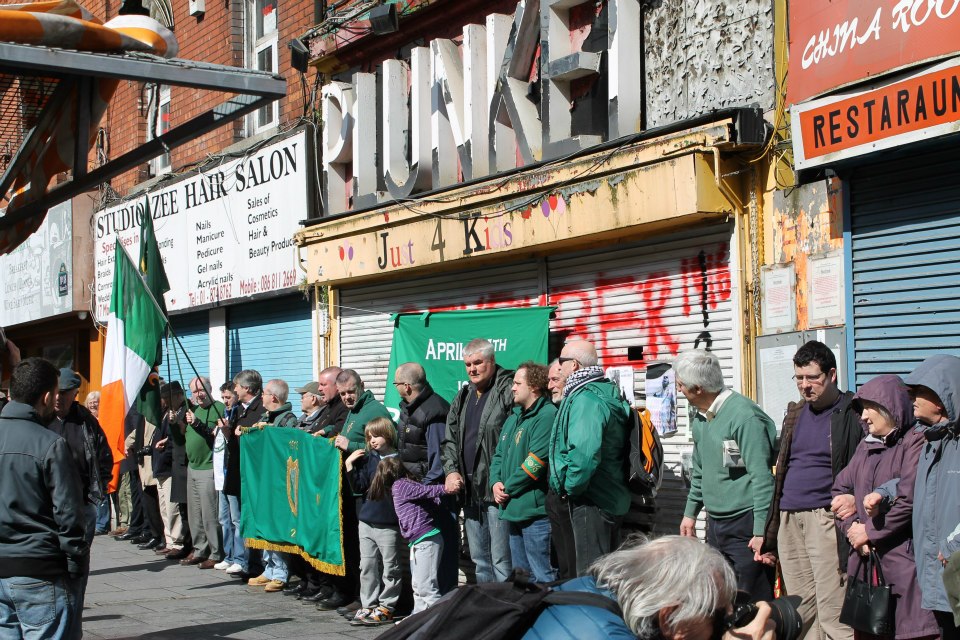
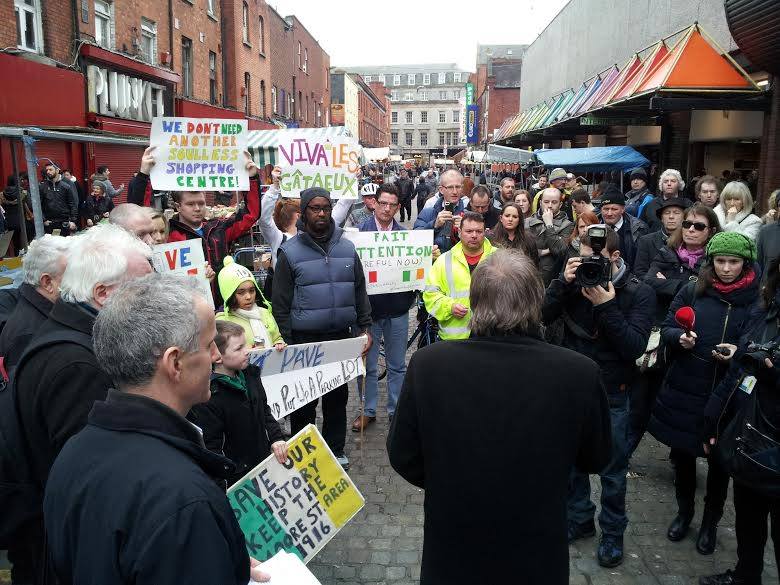
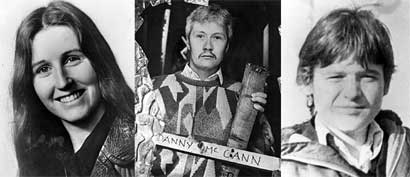




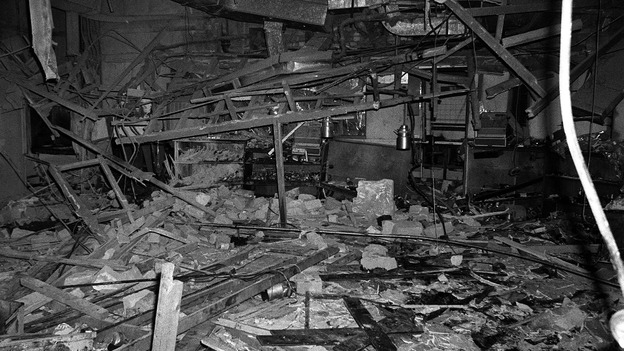
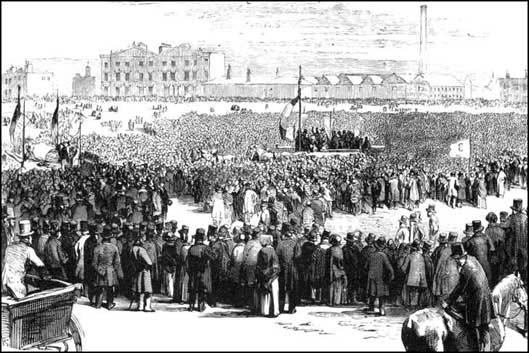




 rebelbreeze