If one read and believed the international press, one would conclude that the only vessel to sink in the Mediterranean in recent times was the super-yacht, Bayesian, belonging to the magnate Mike Lynch.
The sinking of the yacht was not only international front-page news, but dominated the headlines in the major media outlines since going down on the 19th of August.
From the comments of those who have little to do in life except talk inanely about yachts, it seems to have been an impressive yacht in all senses of the word, and it is surprising that it sank so quickly, as just like the Titanic, it was considered unsinkable and could list up to 75 degrees without capsizing.1
But the super-yacht wasn’t a news item due to its technical characteristics, nor its value, estimated in the region of $40 million dollars, although both aspects were mentioned in the press, but rather for the characteristics and value of those who died (excluding crew of course).
Late tycoon Mike Lynch photographed at home (Source photo: Internet)
Mike Lynch was a software magnate, compared by some media to Bill Gates. He sold his software company Autonomy to Hewlett Packard for eleven billion dollars.2 Without this favourable bank balance his death in the African cemetery that the Mediterranean now is, would go unremarked.
It is not the first time the press went into overdrive on the sinking of a vessel belonging to a rich person.
In June 2023, the submersible Titan imploded near the wreck of the Titanic killing five people, all of them rich and the press dedicated extensive columns to the tragedy for some time, even enquiring about the details of life onboard the Titan.3
On both occasions large-scale and long search and rescue operations were deployed, something the Italian government has tried to criminalise in the case of Africans trying to reach Europe.
In April this year, a court in Sicily acquitted the crew of the Iuventa, who were brought to trial for rescuing migrants (officially for “human trafficking”, i.e. the survivors of a shipwreck).
The crew of the Iuventa rescue ship were on trial for saving lives (Photo sourced: Internet)
The Iuventa boat had by 2017, when Italian authorities impounded it, rescued not less than 14,000 people without favourable bank balances.4 It is not the only attempt to criminalise rescuing shipwrecked people in the Mediterranean. The contrast with Mike Lynch is noteworthy.
Many ships sink each year. The insurance industry reports that between 2013 and 2022, 807 ships with a gross tonnage in excess of 100 tonnes sank around the world, 32 of them in the Mediterranean, almost all of them commercial vessels of different sorts.5
However, according to the IOM, in 2023, 3,041 people died crossing the Mediterranean and 100 alone in the month of January 2024.6 Nobody rescued them, the press did not give over daily columns to their lives. Unlike Mike Lynch, they were not rich.
When the rich die, just like the poor they don’t take their bank balance with them. However, that balance is important.
When the press talk of the value of the person, eleven billion dollars buys words like ‘tragedy, disaster,’ obituaries in major media outlets and it buys a rescue attempt without any fear of those who do the rescuing being charged.
Now that all the survivors and bodies have been rescued, there comes another judicial persecution. The Italian authorities are going to investigate the crew for the accident, but not the deceased Lynch, as if it were possible for the crew to say no to a man with eleven billion in the bank.7
People that rich are all like Donald Trump, they do not take ‘no’ for an answer. Their wish is a command, that must be obeyed. So once again the Italian authorities are going after those who are least to blame for a shipwreck.
A boat carrying over 500 migrant people capsizing off the Libyan coast in 2013 (Photo cred: Italian Navy via AFP)
If they are African migrants, they were asking for it and do not deserve our sympathy or empathy. If they are billionaires, they are victims of the indolence of their employees and we should all mourn them. The world turned upside down.
The Palestinian Authority had a small protest against it in Dublin on the afternoon of Friday 23rd August 2024. This seems to be the first protest that has taken place outside the Palestinian Embassy at 66 Lower Leeson Street.
It would perhaps have been the first protest against the PA in Ireland, were it not for the Palestinian solidarity activists who attempted to convey the Palestinian reality in contrast to the Ambassador’s speech at a public meeting in Belfast in February, before being evicted by Sinn Féin supporters.
Palestinian solidarity activists protesting the Palestinian Authority and Embassy?
At first sight that seems bizarre but as some solidarity activists and most people of Middle Eastern origin know, the PA is not only widely considered unrepresentative and corrupt – and in fact has not held elections since 2006 – but also represses protests in the West Bank against ‘Israel’.
However, the Ireland Anti-Internment Campaign says that its main purpose in calling the protest was to raise awareness of the harm the PA is doing to the Palestinian Resistance, in arresting Resistance fighters and disrupting resistance defence against ‘Israeli’ army incursions.
Photo of placard being displayed outside the Palestine Embassy today. (Photo: R.Breeze)
The IAIC’s leaflet handed out at the event points out that the PA’s security force shot and wounded and even killed Resistance fighters, also attempting to enter hospital in force to arrest fighters on two occasions recently, their attempts being frustrated by large mobilisations.
Could a picket on the Palestinian Authority and its Embassy be considered divisive? “Not with justification,” replied an IAIC spokesperson. “It’s the actions of the PA that are divisive. We are supporting the broad resistance there, not one faction or another.”
He points out – as did their leaflet – that 14 Resistance factions including Fatah met in Beijing recently and agreed that the Palestinians have a right to resist, including with weapons and called for unity of all the resistance organisations. “The PA is acting against that unity”, he said.
But why is it that the IAIC called this protest and not one of the Palestinian solidarity organisations? “You’d need to ask them that,” says the spokesperson. “We regularly fly a Palestinian flag on our anti-internment in Ireland pickets; the PA was overdue to be done but nobody else was doing it.”
(Photo: R.Breeze)
The IAIC was founded a decade ago to raise awareness about ongoing internment of Irish Republican activists by revoking ex-prisoners’ licence and through refusal of bail by special no-jury courts. In those cases it can take two years for a case to come to trial.
However the IAIC has organised or participated in other events also, such as those around framed prisoners like the Craigavon Two in the Six Counties and the Munir family in England. It has also called two of its pickets since October 2024 to specifically highlight Palestinian prisoners.
Will the group be regularly picketing the Palestinian Authority now? “Probably not. It’s not what we were set up for but we felt the ice needed breaking on this. Others need to step forward now,” replied their spokesperson, though signalling that they would support others in doing it.
Photo of copy of the leaflet being distributed outside the Palestine Embassy today. (Photo: R.Breeze)
It is probable that a representative of the PA will be welcomed soon by the Irish Government as part of its recognition of the ‘Palestinian State’. One wonders how this reception of a corrupt and Occupation-collusive organisation will be mediated in the Palestinian solidarity sector in Ireland.
The Governments of the EU, including Ireland’s, formally recognise the PA but not only that – so does Sinn Féin in Ireland, EH Bildu in the Basque Country and Esquerra Republicana in Catalonia. This corresponds across the board also to support for ‘the Two-State Solution’ (sic).
What that entails is allocating the Palestinians less than 20% of their homeland weaving around illegal zionist settlements, with least water and some of the worst land, under the permanent watchtowers and guns of their genocidal neighbour.
Organisations and individuals within the broad Palestinian solidarity movement will need to decide exactly what their solidarity with Palestine actually means, especially for the Palestinians themselves.
Most people in the Western world will have experienced being stopped at a checkpoint, usually feeling irritated at the delay to their journey, commonly afraid only if driving under the influence of alcohol or drugs.
Or curious perhaps – what is this stop about? In many parts of the world however, apprehension or fear are the normal emotions for drivers approaching a checkpoint. The mind wonders: Might I be arrested, beaten, robbed, raped, killed?
For people in a country invaded and occupied, those are rational fears; the people staffing the checkpoints are occupying soldiers or police; or perhaps auxiliaries, locals working for the occupation, perhaps from a different ethnic group. Which can sometimes be worse.
Many Palestinians have been arrested at checkpoints and certainly some have been killed there, while arrest does not mean one will not be killed anyway, or not be used as a human shield under threat of death, or even killed despite doing what their captors asked.
In those situations there are other negative experiences not necessarily including physical harm: humiliation, harassment, the display of power imbalance in how people are treated, delayed, mocked, insulted. An everyday experience for Palestinians passing through IOF checkpoints.
A busy checkpoint, the Palestinians packed worse than cattle. (Photo source: Internet)
It was so also for many people going through British Army and colonial police checkpoints in the occupied Six Counties of Ireland. Cars with Irish registration plates might be held up for half an hour or longer. Or people who answered that their destination was Derry, instead of “Londonderry” (sic).
People have had their children upset by searches, cuddly toys ripped open, intimate adult clothing in luggage inspected, been body-searched, intimidated by loaded weapons pointed at them and, if known as activists, or even related to activists, been threatened with murder.
All of this happens to Palestinians at checkpoints where Israelis can pass through, hardly stopping. And there are LOTS of checkpoints throughout the West Bank or on the way into “Israel” (i.e. the lands seized and occupied by the Zionists since 1948).
Map of established Occupation checkpoints in the West Bank, illegally occupied according to the UN. Temporary checkpoints in addition are often established. (Source: Internet)
The guards on checkpoints are often bored or irritated and take out their feelings on those trying to pass through. But the oppressing power wants that to happen: the checkpoints are part of the control structure, physical and mental in effect.
The structural effects and attitudes of the checkpoint guards affect Palestinians travelling to and from their jobs inside ‘Israel’ in addition to Palestinians travelling between one place and another in the occupied lands outside official ‘Israel’.
Those journeys can be for medical treatment (including emergencies), to work or apply for work, to school or university, shopping, to visit friends or relatives, to attend weddings, births, funerals, to support the elderly or disabled, to assist in community work, to take a break, attend festivals …
Apart from anything else, for the Palestinians queuing it may mean a long time in stifling heat in close proximity to other bodies, without water or with a limited supply, no access to a toilet, possibly in direct sun or, in winter, exposed to cold wind and rain …
An Occupation soldier at a pedestrian checkpoint examines the IDs of Palestinian children accompanied by an adult for their protection. (Source: Internet)
VULNERABLE
Temporary checkpoints however are also vulnerable. A soldier or policeman approaching a vehicle or even pedestrians on foot has only his body armour and firearm standing between him and attack, even if having done this four hours a day for weeks without a single misadventure.
Because one day, just that once, it might be different.
In the past, a Palestinian might blow himself up at a checkpoint. More recently another who’d had enough drove his car through a checkpoint at speed, fatally wounding one of the guards and then shot another. On another occasion, a Palestinian seriously injured two guards by stabbing them.
A long line of Palestinian vehicles await clearance to proceed through IOF checkpoint (Photo sourced: ARU)
Now, more and more frequently, IOF checkpoints are coming under fire. An incident might last no more than a minutes or two but how long does it take a bullet to travel and enter a body? And even without killing or wounding the body, what is the affect on the mind to feel like a stationary target?
These might seem easy operations but no armed action against the Zionist state is free from danger, especially with IOF drones to record or even fire at Palestinian fighters, to say nothing of artillery shells, bombs and missiles. Success rate in killed or injured IOF in such operations tends to be low.
But their psychological effects are quite significant and wars are not fought just by and on bodies; they are fought by and on minds too. The checkpoints, instruments and symbols of power and oppression have become vulnerable and targets … like the repressive forces staffing them.
End.
A Palestinian youth being arrested by Occupation soldiers at a checkpoint. (Photo cred: Zain JAAFAR / AFP)
Over recent months threats have been exchanged between ‘Israeli’ leaders and Hezbollah in Lebanon and also between leaders of Yemen and Saudi Arabia. The former reached its hottest pitch recently and seemed to be heralding open war.
Hezbollah and ‘Israel’
Hezbollah is an Islamist anti-imperialist resistance organisation of an estimated 50-100,000 trained fighters1 and has been characterised, in numbers and equipment, as “a medium-sized army”. Its artillery units have been firing into ‘Israeli’-occupied territory since October 8th last year.
The resistance organisation has taken action in solidarity with the Palestinians facing genocide and daily massacres and has vowed to continue it until the ‘Israeli’ Occupation Force ceases its attacks on the Palestinians.
Vast areas of Israeli settlements have been temporarily abandoned by settlers (or permanently by at least 60) as a result,2 the genocidal state accommodating former residents in camps and hotels, while the IOF occupies some buildings in the regions, enduring constant Hezbollah bombardments.
IOF base hit by Hezbollah strike during during the current conflict. (Photo source: Internet)
As the genocidal assault continues, Hezbolah has begun to shell settlements which it had previously excluded from its regular bombardment. In addition, the organisation has been repeatedly hitting IOF surveillance equipment and parts of the ‘Iron Dome’ air defence system.
One might say that the ‘Israeli’ army was responsible for the creation of Hezbollah; the organisation came into existence fighting the IOF’s occupation of Lebanon and its facilitation of the massacre at Sabra and Shatila Palestinian refugee camp by its Christian Phalangist allies.3
Hezbollah fought the IOF occupation of Lebanon in 2000 and the re-invasion in 2006, forcing the settler state to recall its army with substantial losses. They were the first campaign defeats inflicted on the IOF since its creation.
Hezbollah stages a military parade in Beirut, Lebanon in April 2024 (Image credit: AP Photo/Hussein Malla/Alamy)
Threats
Recently Yoav Gallant, the Occupation’s Minister of Defence (sic) threatened Hezbollah with war and claimed that it would be “quick, surprising and decisive”, also that they could shift the focus of their war from Gaza to Hezbollah in an instant.
Yoav Gallant, ‘Israeli’ Minister for Defence (sic), meeting some IOF personnel. The Purple beret is one of the signature uniforms of the Givati Brigade (84th), one of the five infantry brigades of the IOF and is one of the two infantry brigades under the Southern Command. (Photo sourced: Internet)
Certainly the most nazi part of Netanyahu’s fascist coalition threatens to resign unless the IOF attacks Hezbollah; it’s been speculated for some time that ‘Bibi’ himself would like that to draw the USA into it and as a distraction from his failed war against the Palestinian resistance.4
But it was almost certainly empty bluster from Gallant, to which Hezbollah replied, in case he were serious, that while the IOF could of course cause damage in Lebanon, that Hezbollah’s damage to the ‘Israeli’ state’s military bases and civilian infrastructure would be much greater.
Had Gallant been talking about aerial bombardment only there could have been some reality in his threat — but a land invasion? Having to cross the buffer zone they themselves created,5 meanwhile under fire from Hezbollah’s missiles? And how many undamaged tanks does the IOF have left?6
And then fighting Hezbollah on the ground? Gallant’s words might also have been bravado in the face of the shock settler society received with Hezbollah’s publication the day previously of the photographs of ‘Israeli’ military and civilian infrastructure taken by undetected drone.
Last Saturday evening, Hezbollah published more photos from a new undetected “flight of the hoopoe”7 which must have given the Israeli ruling class even more pause, this one picking out military targets including its “secure” air force base and naming commanding officers.
Indeed, Shin Bet8 was recently reported shocked to find that Hamas has an extensive database of IOF personnel at all ranks, including combat history and current addresses; they tracked the IOF commander of the Al Shifa Hospital massacre,9 field-executing him two months later.
Hezbollah published the material as a warning (and also to coincide with butcher Netanyahu’s visit to address the USA’s Congress in the Capitol, Washington DC). “If we can photograph it, we can hit it” Hezbollah said and it is known that their missiles can reach any part of the ‘Israeli’ state.
As this goes to publication we read that two Hezbollah M90 missiles were targeted at ‘Tel Aviv’. Though apparently intercepted it will be unsettling for the regime to say the least to learn that the missiles were launched from an area of proximity to a concentration of IOF vehicles invading the Gaza strip.
Recently, ‘Israeli’ threats escalated following an explosion which killed 12 children playing football in the ‘Israeli’-occupied Syrian Golan. In shocking hypocrisy considering the massacres of thousands of Palestinian children, Israeli and US representatives went into paroxysms of rage.
Aside from patently untrue claims that the victims were “Israeli children”,10 Hezbollah has also denied responsibility; it’s much more likely that the explosion was an accidental IOF Iron Dome missile strike, given the haste with which the missile remains were rushed off-site (and out of sight) by the IOF.11
But with the ‘casus belli’ established, real or not, on Tuesday the IOF sent an explosive drone on an apparently assassination attempt to a southern part of the Lebanese capital, Beirut, killing a woman and two children, injuring 68 and perhaps more inside the collapsed building.
The strike also killed Fuad Shukr, leader of Hezbollah military wing, veteran of the resistance in Lebanon to the IOF invasions and until now, sole survivor of the leadership of those days, all killed in battle or in assassination.
Hezbollah at the very least will continue its bombardment and may feel it necessary to hit some part of “Tel Aviv”. Then the USA and the UK may step in. Meanwhile the Islamist Resistance in Iraq has recommenced its attacks on US bases there, Yemen’s return serve is awaited …
And Iran is in the game, inevitably bound to respond after ‘Israel’s’ assassination in Tehran of Ismail Haniyeh, political leader of Hamas and chief ceasefire/ peace negotiator for the Palestinians, who was in Tehran to speak at the inauguration of the new President of Iran..
End.
FOOTNOTES
1Many with battle experience rather than killing civilians, like most of the IOF. Hezbollah’s leader claimed 100,000 fighters in Lebanon three years ago while a western agency puts the figure at 50,000. However the genocide in Palestine and the response of Hezbollah, combined with punitive ‘Israeli’ bombing and assassinations, is likely to have brought many more recruits to the organisation. It can also call on its fighters who are in Syria helping to defending the country from ISIS and US proxies.
3 16–18 September 1982, killing of between 1,300 and 3,500 civilians—mostly Palestinians and Lebanese Shias.
4Netanyahu has his personal reasons too; the minute the war is over he will face his postponed trial for corruption.
5By pulling back from their borders to make it more difficult for Hezbollah to hit them, ironically.
6From Israeli analysis sources it seems that not only does the IOF not have the necessary tanks (admitted to 500 damaged) or soldiers but even the munitions for a real war against an opposing army (see short discussion on this and the source in Electronic Intifada recently https://www.youtube.com/watch?v=loHMeAfmnxY)
7The name Hezbollah gave the drone – the hoopoe is the national bird of Palestine.
10All of the children were of Syrian Druze families in a community in which around 90% have refused to accept citizenship in the state of their armed occupiers, holding on instead to Druze and Arab Syrian identity.
11Israeli Ministers were denounced on their visits to the site with cries translating as “child-killers” and demands they “Get out! Leave!”, Netanyahu having to leave within 15 minutes of his arrival.
Prominent among the many words quoted from Theobald Wolfe Tone, ‘the father of Irish Republicanism’, are that ‘Our Strength shall come from that great and respectable class, the men of no property’.
The interpretation of those words has led to some confusion between socialism and republicanism.
Wolfe Tone, as he is normally known historically, co-founded the Society of United Irishmen in 1791, which led a mass armed uprising in 1798 against British Rule in Ireland, as a speaker said at the Anti-Imperialist Action’s oration at their annual commemoration at Tone’s grave last month.1
Tone himself was arrested on a French ship captured by the British Navy and despite his French Army officer rank, tried on treason charges and sentenced to death upon the gallows … but died instead in prison of a wound to his throat.
Wolfe Tone Monument, Stephens Green, Dublin (Photo cred: National Built Heritage Service)
An important part of the leadership of the United Irishmen, most of the Leinster Directorate was arrested in Dublin but the Rising went ahead in other parts of Ireland, notably Antrim, Wexford and Wicklow, and another with French troop reinforcements, too few and too late, in Mayo.
The Rising was crushed, the leaders executed or exiled, along with many of their followers. A large body of Irish traditional and folk song, mostly in English and much of it composed in its centenary, commemorates the struggle and sacrifice of the United Irishmen.
The AIA speaker: “Tone’s most important belief was that we must ‘break the connection with England’ by any means necessary – one of the most important teachings for the Revolutionary Republican Movement today,” to work “for National Liberation by any means we decide necessary”.
No-one who has even the most cursory acquaintance with the historic figure of Wolfe Tone can deny that he was determined to break away from English colonial rule and, once he became convinced there was no peaceful way to do so, was determined to do it by force or arms.
“Tone was also clear that the revolutionary struggle could only be successful,” continued the speaker, “if it was based on the masses of the Irish People, stating that, ‘Our Strength shall come from that great and respectable class, the men of no property’.”
From that, the speaker went on to claim that “we learn from Tone that the fight for our Republic is a class struggle and that the driving force of that struggle will be the working class fighting for their own liberation.”
I do not believe that the writings or recorded words of Wolfe Tone justify that interpretation. Indeed, it would have been strange if they had; the 1798 Rising was what Marxists describe as a “bourgeois revolution”, i.e. one led by a section of the capitalist class in its own class interests.2
Such also were the Revolutions in England of 1649 and 1688, of the French in 1789 and the American in 1765-1783, the Italian of 1848, the Chinese of the early Kuo Min Tang and the Latin American revolutions against the Spanish Empire, along with the Mexican 1910-1920.
Yes, the capitalist class, which is always telling us to employ only constitutional means to get what we need or want, tries to conceal that they themselves came to power by revolution.
Colorised illustration by unknown artist of the storming of the Bastille in July 1789 (Source: Wikipedia)
The leadership of the United Irishmen was almost totally of the established Anglican church or of Protestant sects – “Protestant and Dissenter”, in Tone’s words. They were descendants of settlers from Britain and they were of bourgeois social strata.
This section of the bourgeoisie and petit-bourgeoisie were fed up with restraints imposed from England on developing the colony’s potential, on a taxation system they considered unfair, on corruption in the Irish Parliament and in management by the Monarch’s representative in Ireland.
Being only a very small minority of the Irish population3 they were aware that they needed the mass behind them in order to build an independent national economy, for which they tried to gain Catholics admission to the Irish Parliament, which at the time only admitted Anglicans as MPs.
When Henry Grattan, who had earlier led quite a rebellious Irish Parliament,4 failed in the attempt to make Parliament more representative, Tone and many others became convinced that only revolution could progress society in Ireland and from then on he strove to bring that about.
Grattan
Statue of Henry Grattan, failed reformer of the Irish Parliament, situated in Dame Street junction with Grafton Street and facing Trinity College. (Photo cred: Trip Advisor)
A revolution against England, a great European naval power, even with the help of revolutionary France, would require mass participation and support, as the AIA speaker remarked at the commemoration. So Tone aspired to the unity of “Catholic, Protestant and Dissenter.”
The section of the religions that most fell into the category of the “men of no property” were of course the Catholics, dispossessed of their lands and under Penal Laws of the Occupation. Without the support of the Catholic majority there was no chance of a successful revolution.
Tone may well have been a most democratic Republican in favour of all kinds of progressive social reform but nowhere in his writing does he advocate the overthrow of the bourgeoisie, seizure of private property and the setting up of a socialist system to be run by the working class.
united men
Reenactment of the United Irishmen in battle, depicting the “men (and women) of no property. (Photo sourced: Internet)
Theobald Wolfe Tone was a courageous democratic revolutionary, anti-colonial and a martyred patriot but was not nor could have been a socialist leader. That which he was, was the best of his time and among the best we had to offer and there is no need to try to make him something else.
The United Irishmen represented a section of the Irish bourgeoisie that was truly Republican and revolutionary. That section of society was mostly of settler descent since the mass of the native and Catholic population had been ground down and oppressed.
Thereafter most of the native Irish bourgeoisie developed as a subservient client class, “Castle Catholics” ag sodar i ndiaidh na n-uaisle,5 up to whatever “cute hoor”6 and gombeen7 tricks they could get up to but without a fraction of the spine necessary to fight for real independence.
A successful Irish national revolution does indeed need to be led by the Irish working class as demonstrated by what James Connolly – rather than Wolfe Tone – observed: “Only the Irish working class remain as the incorruptible inheritors of the fight for freedom in Ireland.”
The reason for that, as outlined by Connolly, is quite simple: the working class is the only social class of any size that has nothing to gain from compromise and betrayal of the revolution.
Some other key points laid down by Tone, continued the speaker, include that Republicanism is Anti Imperialist and it is Internationalist. Our struggle in Ireland is part of a wider international struggle of oppressed people against occupation, colonialism and imperialism.
Tone understood this when he looked to Revolutionary France to support the 1798 uprising.
This was well understood by Irish Republicans of Tone’s time who celebrated the fall of the Bastille in 1789 and the defeat of the English by the settlers in America. The United Irishmen also helped the creation of the United Englishmen and led two of the British Navy’s most serious mutinies.8
Today, continued the speaker, Republicans must fight our struggle while also supporting Liberation struggles around the world in the belief that every blow struck against imperialism brings our victory closer.
So from Palestine to the Philippines and from India to the Basque Country, and everywhere people take a stand against NATO, the Revolutionary Republican movement must raise our cries in solidarity.
End.
Footnotes
1The event was organised by Anti-Imperialist Action, a socialist republican organisation, with the oration being given on behalf of the organisation. A pilgrimage to Wolfe Tone’s grave in Bodenstown is a fixture on the calendars of most Irish Republican organisations.
2This should not be taken as a criticism since Marxists agree that many bourgeois revolutions were progressive in their time.
3Tiny, in the case of the Anglicans in particular; the Presbyterians were much more numerous.
6An admiring description in Ireland for one who manages to benefit by dubious means.
7Corruption of an Irish language term for the ‘carpet bagger’ types who benefited amidst the disaster of the Great Hunger in the mid 19 Century, snapping up land in particular at the lowest of prices.
The Irish Tricolour has been in the news recently in an unhappy circumstance. The flag was featured borne in a group of anti-immigration racists carrying a banner declaring Coolock Says No,1 next to Union Jacks2 and Loyalist flags at a Belfast riot.
This was a bizarre juxtaposition given that Loyalists are hostile to any signs of Irish Republicanism, of which the Tricolour is chief among its historical symbols. Furthermore, the Unionist state banned its public display in most situations between 1954 and 1987 leading to resistance and arrests.3
In the sectarian society created by the British in its occupied Six County colony, the Tricolour is burned annually on British Loyalist bonfires and is reviled by Unionism and its more extreme progeny, Loyalism, which in turn is associated with state-sanctioned sectarian murder gangs.4
The strange juxtaposition was remarked upon in mass media not only in Ireland (both sides of the Border) but even in Britain — and Irish State Taoiseach (prime minister) Simon Harris remarked that he found the flag in association with racism to be “repugnant”.5
But does Harris have the moral right to make that comment?
Origin and History of the Irish Tricolour
The Tricolour as we know it and its use dates from its sewing in silk by revolutionary women in Paris in 1848 and presentation to a delegation of the Young Irelanders, a revolutionary Irish Republican group of that period and its subsequent unfurling in Ireland by Thomas Meagher.
Thomas Francis Meagher as captain in the Union Army (Source: Drawing in Library of Congress, USA)
Irish revolutionary Thomas Francis Meagher was convicted by the English Occupation of sedition during trials around the planning and carrying out of the Irish Rising of 1848 and, with death sentence commuted, transported to Australia as a felon, from which he escaped to the USA in 1852.
As the American Civil War approached, Meagher, along with most of the Irish in the USA took the side of the Union, leaving only a rump following Mitchell, formerly a comrade of the Young Irelanders, to side with the slave-owning Confederacy in the conflict.
Meagher not only fought in the Union Army in the American Civil War against the slave-owning Confederacy, gaining the rank of Brigadier but he and his wife raised a regiment, the 69th New York Infantry, unofficially called The Irish Brigade or even Mrs. Meagher’s Own.
Plaque in Lower Abbey Street (opp. side of Abbey Theatre) to the first unveiling of the Irish Tricolour in Dublin, 1848. (Source: Internet)
The Young Irelanders were Republicans and the Tricolour was always seen not only as embodying the unity of all in Ireland, regardless of origin, against the British occupation but also for national liberation, against Monarchy and for complete separation of Church and State.
In addition, it had a strong internationalist element in that it was associated with revolution throughout Europe, presented to us in solidarity by French revolutionary women and flown alongside French Tricolours in Ireland at celebrations of the French revolution of 1848.
It was the principal flag of Irish anti-fascism too in the 1930s when Irish Republicans fought the fascist Blueshirts on Irish streets and a number of them went to fight in defence of the Spanish Republic against the fascist military coup of Franco and his Nazi German and Italian Fascist allies.
More recently when Irish Republicans and socialists mobilised against the attempts of the Irish ruling class to promote NATO and to ease cooperation with that alliance of Western imperialism, Harris also ranted against supporters of Anti-Imperialist Action flying of the Irish Tricolour.
The Tricolour among Loyalists was of course newsworthy and was covered by Irish mainstream media and Unionist mouthpiece The Belfast Telegraph along with photos by The Guardian on line. But all without comment on its presence in Palestine solidarity events in London.
Irish Tricolours have been flown at every current Palestine solidarity march in London (ten of them at the most recent London march) and, along with Saoirse Don Phalaistín printed on the Palastinian flag, have been seen also at university solidarity encampments and at events to free Julian Assange.
Section of Palestine solidarity protest at Barclays Bank, Tottenham Road, London on 24th April this year, showing Irish Tricolour and Saoirse Don Phalaistín flags. Zionists and British fascists are united in opposition to them across the road. (Photo cred: Northern Times)
The Tricolour Flown by Racists and Fascists?
Given its origins and history, why is the Tricolour being flown by fascists?
In recent years it seemed that whenever one saw a crowd with Tricolours among them, it was most likely a fascist or at least racist-led event. One reason for this is that the fascists historically try to portray themselves as nationalists, i.e organising ‘for the nation’.
In all cases historically, the “nation” represented by the fascists turned out to be that of the ruling class, the financial and industrial elite – never that of the working people, not even of those sections of the lower middle class that supported the rise of fascist movements.
Fascists however have also frequently colluded with the invader of their nation, for example with the Nazis in Europe, particularly in France, Greece, Yugoslavia, Ukraine.6 The fascists in Ireland today represent the neo-colonial,7 colonial and imperialist financial-industrial interests in Ireland.
Racist group from Dublin suburb finds common cause with British Loyalists in Belfast anti-immigration demonstration and riots 3 August 2024 (Photo cred: Irish News)
In that context, the unity of fascists from the Twenty-Six Counties with Loyalists from the Six Counties is not surprising, nor even with notorious English fascist Tommy Robinson. Prominent Irish fascists have had friendly interactions with Loyalist Jim Dowson and British fascist Farrage.
Portraying themselves as saviours of the nation, as moral guardians etc., just as the German Nazis did in the 1930s is hypocritical but absolutely necessary for them. If they revealed the class interests they represent and the kind of regime they really want, where would they get supporters?
The fascists are few and need those supporters, their easily-led mobs and stormtroopers. It is among sections of the down-trodden in society that they will find them, the ignorant, marginalised, abandoned by the capitalist system but all too often by the liberals and the Left also.
Substance addiction, mental illness, crime and cultural poverty is rife in these communities and it is sections of those who are presented with false enemies – migrants, LGBT people, muslims – by false saviours masquerading as patriots. Many in those communities are ripe for manipulation.
But the attempted takeover of the Tricolour and subversion has not occurred by Fascist manipulation and through historical and political ignorance alone.
When antifascists mobilise, rarely is the Tricolour seen amongst them, assisting the impression that it is the racists and fascists that are representing the nation. Understandably, Anarchists may not wish to fly the flag of a state and socialists may feel that the flag is representing a capitalist state.
Often too in the past, Republicans have been absent from antifascist mobilisations but on occasion too went to them ready for physical confrontation and therefore without flags. But what message do antifascists think is presented by Palestinian flags among them and Tricolours on the other side?8
Invited to speak at a conference on anti-fascism in Dublin some years ago, I raised the question of the appropriation of the Tricolour by fascists and how it was necessary for the antifascists to show it among themselves also but my recommendation did not win approval9.
It is depressing to see that the situation has not noticeably improved in this regard some years later.
A welcome recent exception to the rule: a number of Irish flags including the Tricolour among antifascists outnumbering fascists and racists in Dundalk, Co. Louth on 4 August 2024 (the day following the Belfast racist riots). The fascists and racists had to be escorted out of town by the Public Order Unit of the Gardaí (Source photo: Anti-Imperialist Action FB site)
The Irish state and the Tricolour
It took some time for the Tricolour to be adopted as the national flag in the Republican movement until its fluttering above the GPO at the Henry Street Corner during the 1916 Rising.10 Thereafter it represented the forces of national liberation in the War of Independence (1991-’21).
The Irish Tricolour (Photo cred.: Getty Images)
Facing treason and counter-revolution in 1922, it was the flag of the Anti-Treaty forces, the neo-colonial traitors only flying it in order to deny it to the Irish Republicans. Despite that fact it has remained the flag of Irish Republicanism, irreconcilable with neo-colonialism, racism or fascism.
Republican women activists of Cumann na mBan designed ‘Easter Lilly’ paper lapel pins to raise funds for dependants of Republicans imprisoned or killed during the Civil War and they did so in the colours of the Irish Tricolour: Green, White and Orange. The emblem is worn to this day.
The counter-revolutionary faction that spawned the fascist Blueshhirts11 did not formally adopt the Tricolour as the State flag in law, that was done by the next wave of counter-revolution, Fianna Fáil,12 while in government, situating it in the 1937 Constitution.
The Tricolour is in a sense the flag of everyone in Ireland who does not reject it or defile it but evidently too, in its origins and among those who bore it forward, it is anathema to racism.
Furthermore, it is symbolically anathema to colonialism, loyalism, neo-colonialism and monarchy. Clearly the Tricolour is not legitimately the flag of racists and fascists but neither is it of the gombeen regime that flies it; Harris and the neo-colonial State claiming it is also repugnant.
Effigy of Simon Harris showing the bloody hands of collusion in the ‘Israeli’ genocide against Palestinians at a Palestine solidarity protest last weekend (organised by Mothers Against Genocide, North Wicklow Against Genocide, Arklow Against Zionism) at the annual Bray Air Show which features UK Military fliers. (Photo cred: Aisling Hudson)
End.
FOOTNOTES
1Coolock (from the Irish place-name An Chúlóg) is a Dublin city suburban district that has seen riots and arson recently against plans to house refugees in a disused factory building there.
2Common name for the flag of the United Kingdom, more derogatorily known as ‘The Butcher’s Apron’, featuring heraldic cross and salterres of the nations of England, Scotland and Ireland (Wales had already been conquered and incorporated into the Kingdom of England).
4Such as the Ulster Defence Association and the Ulster Volunteer Force (see also ‘the Glennane Gang’) which targeted most of their victims on the assumption of their being of the Catholic faith but also occasionally those from the Protestant community they considered disloyal (see ‘the Shankill Butchers’) or with which they were in competition around gang crime. All operated with colonial police and British Army assistance.
6These fascist groups supplied police and auxiliary units to the Nazi occupation, collecting information on the antifascist Resistance and on fugitive Jews and Roma. In some cases, as in Ukraine, they also acted as prison and concentration camp guards (but their chief leader, Stepan Bandera, was nominated as a national hero by the current Kiyv regime).
7Sometimes called ‘comprador capitalist’ or ‘client regime’, a term describing a state that is nominally independent but is under the actual domination of an external state or states. The Irish state has been in turn dominated by Britain, the USA and the EU imperialists.
8This is an issue on Palestine solidarity marches and pickets upon which I have also commented before.
9A speaker from a very sectarian migrant group ridiculed the idea but no-one else spoke up in support.
10Incidentally, at the other corner of the GPO above Princes Street in 1916 flew the green flag with the words “Irish Republic” inscribed upon it in white and gold letters, which had been created for the occasion in the home of Constance Markievicz, socialist revolutionary of a settler landowning family and born in London. And the man who erected it was Argentinian-born-and-raised Eamon Bulfin. It is ironical in the extreme that this flag also is sometimes brandished by Irish racists opposing immigration.
11Irish fascist organisation officially called the Army Comrades Association (later The National Guard), led by former Gárda Commissioner Eoin O’ Duffy which later joined with two conservative parties to form the current Fine Gael, currently in the Coalition Government with its erstwhile opposition Fianna Fáil and the Green Party.
12A major split from Sinn Féin in the early 1930s, currently in the Coalition Government with its erstwhile opposition Fine Gael and the Green Party.
A number of great leaders of Arab resistance to imperialism and zionism have fallen in the last few days. “Those who live by the sword …”, the wise will comment. But they did not die by the sword but rather by long-range missile assassination.
Still, we can take the comment as a metaphor, that those who live by violence die by violence. But do they? Has Genocide Joe Biden died by violence? Sunak? Von der Leyen? Scholz and Merkel? Macron? Netanyahu, Gallant, Smotrich? No, it is clearly not a general rule.
But revolutionary fighters, commanders and leaders – they are killed, again and again. Fighters who become commanders are particularly targeted and, in the Middle East for sure, so are their spouses, their children, their parents … This is the way of Mossad and the IOF but also of the US and UK.
The SAS and MRF units of the British Army did that in the 30 Years’ War in the occupied Six Counties too. Assassinations of leaders are intended to disrupt the revolutionary organisation and demoralise the Resistance.
Sometimes, the intention is to have a revolutionary leader replaced by a traitor or someone who is ideologically pliable but often too the fallen are replaced by others as dedicated and competent, if not more so.
The IOF are accomplished assassins of individuals, also killers of civilians, just not very good at combating armed resistance, particularly in the absence of air cover..
But why shouldn’t revolutionary leaders be felled – don’t they send others out to kill or be killed? Certainly they do and all Arab resistance movement commanders know that they risk assassination, many of the commanders and fighters writing their wills while in active service.
However, visit imperialist war memorials listing the names and ranks of the fallen in war and see how many names of their armies’ generals can be found there. Not many, that’s for sure.
Haniyeh was the chief Resistance representative in the Gaza ceasefire/ peace talks. Prime Minister Mohammed bin Abdulrahman al-Thani of Qatar, which is mediating the talks, tweeted: “How can mediation succeed when one party assassinates the negotiator on other side?”1
Two revolutionary leaders who fell to assassination so recently were Sayyed Fouad Shukr of Hezbollah in a suburb of Beirut and Ismail Haniye of Hamas in the Iranian capital, Tehran. Each organisation has issued statements that they will not be stopped and that they will claim revenge.
In another assassination strike on Tuesday in Iraq, admitted by the USA, Khateb Hezbollah suffered the loss of martyred leader Abu Hassan Al-Maliki and martyred fighters Ali Al-Moussawi, Hassan Al-Saadi and Hussein Karim Al-Daraji,2 bringing huge crowds out in protest there.
The Iraqi Islamic resistance had begun shelling US Army bases there recently, partly in frustration at the lack of any move to leave the country despite having indicated they would but partly also no doubt in frustration at not contributing to the united effort in solidarity with the Palestinians.
Iran declared furthermore that since the assassination of Ismail Haniyeh took place on their national territory that the obligation of response falls upon them. One imagines that another strike on somewhere in Israel will be considered necessary though the precise target is unknown.
Declarations of condolence, defiance and continuity were also issued by resistance factions in Palestine, Lebanon and Iraq, as well as by the leaderships of Yemen and Tunisia. A general strike was called in the West Bank and marches of defiance and solidarity held in a number of countries.
Confrontations with settlers and with the Occupation army have been taking place in towns across the West Bank and the war in Gaza continues, more or less as normal: daily massacres by the IOF, actions by the Resistance.
‘Collateral damage’
The strikes on the leaders also claimed other lives: six people including three women and two children, along with Iranian Revolutionary Guard Corps member Milad Bedi were killed in the Beirut assassination of Fuad Shukr and 78 injured in the collapsed building.3
Along with Haniyeh in Iran died his bodyguard and veteran Palestinian resistance fighter, Wassim Shabu, with no details of other ‘collateral damage’ from there or from Iraq so far.
According to the rules of war agreed among the imperialists, assassination of commanders, even civilian ones in times of war, is justified. ‘Collateral damage’ to a certain degree is also permitted by those rules but how can the bombing of journalists and killing two in Gaza be justified?
They were at the rubble site of Haniyeh’s former home, perhaps reporting on some kind of event marking the assassination, since they cannot attend the equivalent of a wake or a laying out of the body, the funeral to be held in Iran. How was their killing justifiable by any stretch of rules?
Ismail Al-Ghoul and Ramy Al-Reef were the two press men martyred there. Those two deaths bring the number of journalists killed in Palestine (always by the IOF), to 165, the highest number of journalists killed in any conflict since data began to be collected by the CPJ in 1992.4
Life of revolutionary leaders
The life stories of the martyred leaders are instructive in themselves. Ismail Haniyeh grew up in a refugee camp in Al-Shati in Gaza, son of a community driven out of their home in Jura in Askelan5 in 1948. He graduated with a degree in Arabic Literature from the Gaza University in 1981.
It was in university Haniyeh became politically active, joining the student section of Islamic Bloc (forerunner of Hamas), becoming arrested and detained three times, the final one for three years, after which he was deported to southern Lebanon with other leaders.
Ismail Haniye survived at least four assassination attempts, including in 2003 and in 2006.
Haniyeh led Hamas to victory in the 2006 elections for the legislature of the Palestinian Authority. The Fatah leadership refusing to hand over the administration in Gaza, Hamas removed them in a short struggle,6 then Abbas7 refused to recognise the election results there or in the West Bank.
The Zionist State followed, as did the Western powers and the siege of Gaza began.
Haniyeh’s granddaughter was killed last November in a bombing on a school. Three of his sons and three grandsons were assassinated in an IOF strike on their car in April and last month, 10 of his family, including his sister, were killed in an IOF bombing.
Sayeed Fuad Shukr 62, also known as Al-Hajj Mohsen, was born in the city of Nabatieh in Baalbek in eastern Lebanon, according to the US government’s Rewards for Justice website, which offered up to $5 million for information on Shukr.
He came to political struggle in the resistance to the IOF invasion and occupation of Lebanon which was the spur to the creation of Hezbollah. Fuad Shukr as a fighter rose through the political and military ranks to the Jihad Council fighting the IOF and its Lebanese proxy.
Sayeed also would have been party to the decision to send Hezbollah fighters to assist the Syrian state resist attacks by NATO forces and their proxies and probably also Turkish.
He was married with children; his daughter wrote pieces in particular about martyrs under a pseudonym but just published a piece about her father under her own name on Resistance News Network (on Telegram).
Dying Gaul statue, 1st Century CE, probably Roman sculpture. By his neck ornament, the Gaul appears to be a warrior of high rank. The Gauls were a Celtic culture inhabiting most of modern-day France, Switzerland and parts of Italy; after many wars they were crushed by the Roman Empire. (Source image: Internet)
Great leaders
I commented that they were great leaders. By all accounts they were. They were Muslim revolutionaries and I am an atheist but more to the point their religious belief was an important part of their politico-social ideology, to which my own secular revolutionary ideology is opposed.
But they were revolutionaries non the less, courageously leading their people in struggle against their oppressors, who are very powerful enemies. They had emotion, which they let out in speech. In planning and in response to events however, they thought things through before acting.
Ismail Haniye probably underestimated the extent – in length of time and numbers of dead, in starvation and destruction of all infrastructure — of the ‘Israeli’ genocidal war after October 7th.8 That does not mean however that the breakout and attack was not necessary.
But the resistance was led, day after day, using the tunnels that had been dug through the years of preparation and the weapons researched, developed and produced over that time. In the truce/ ceasefire negotiations, the leadership stuck to the necessary minimum, which must’ve been hard.
Great fighters of the rank and file fall and are constantly being replaced and multiplied. Thousands of civilians have been killed, disabled and traumatised, yet the Palestinian population will recover and rebuild. Great leaders have fallen – let us hope their replacements will be great too.
End.
Footnotes
1https://www.axios.com/2024/07/31/hamas-ismail-haniyeh-killed-iran Just one more proof, in addition to going back on agreements, adding new requirements etc showing that Netanyahu never had any intention of negotiating a genuine ceasefire, exchange of prisoners and withdrawal from Gaza and the Rafah Gate to allow humanitarian aid to enter. Indeed he often said that his chief aim was wiping out Hamas and would not permit self-governance in Gaza – it was only a few of his officials and the US administration which kept pretending otherwise.
6This is the reality usually disguised in the western mass media by phrases like “Hamas seized power in Gaza” or “Hamas took control in Gaza”.
7Mahmoud, Fatah’s boss of the PA, widely known for personal corruption and nepotism and also for collusion with the Zionist Occupation.
8Even the most pessimistic could hardly have expected the extent of the genocide or the extent of the collusion or forbearance of the West and most of the Arab states.
The ability of enemy drones to evade detection and even attack, reaching into the heart of the ‘Israeli’ state’s territory, both to photograph and, in the case of the Jaffa (‘Haifa’) town and ‘Eilat’ port to strike, have shocked the state’s military.
They have shocked settler society too. Hadashot Bazman1 reported: “Hezbollah’s drones do not need a visa, and they are controlled remotely via cameras with an operator in the control room. What you do not know will not kill you now …2
“they are telling us: ‘We are here, inside you, planning, and capable of delivering harsh strikes’.” ‘Israeli’ daily newspaper Maariv added: “The Air Force has been asleep at the wheel for years.” 3
‘The sarcasm reached the point where one person wrote: “I lost a black leather wallet at Haifa (sic) Port; we hope Hezbollah will locate it accurately and professionally.”4
The hit in Jaffa was by Ansar Allah, exploding a drone near what was the former main US Embassy building (before its internationally illegal relocation to Jerusalem)5; the other was claimed by the Islamic Resistance in Iraq. But the drones hitting them almost daily are from Hezbollah.
Why the shock? It’s because they have come to believe in their security, their own racist European settler propaganda of innate superiority, instead of recognising the real source of their domination over the indigenous: the financial, military and political support of the Western powers.
With constant propaganda through western mass media, that image of the westernised (‘civilised’) ‘Israelis’ has permeated throughout the west, even infecting many who detest the Occupation’s genocidal actions.
Imagine the reaction as we explain years of Hezbollah’s drone development, testing, production, more testing … “We thought they got their weapons from Iran.6 Wait a minute! You’re talking engineers, designers, labs, test crews … Actual factories, assembly lines! In an Arab insurgency army?!”
We have been trained to see the ordinary people of the Middle East as underdeveloped industrially and (therefore!) socially, their fighters as religious fanatics. This image is not compatible with decades devoted to research development and production of sophisticated modern weaponry.
And yet, that is the ‘secret’ of the Yemeni success: determination, years of R&D, testing their ability, testing the enemy’s, redesign, more testing, tight security and deceiving the enemy … until the cat is out of the bag, spitting, claws fully extended.7
Hezbollah’s Karar drone. (Source: Yemen’s Air Force PDF)
And yet … and yet … Hezbollah is still showing restraint. Yes, they are targeting the IOF in the occupied lands and, in response to genocidal attacks on Palestinians, also some of the colonial settlements until recently untouched.
They are also hitting and destroying parts of the genocidal state’s surveillance and defence infrastructure, practically on a weekly basis. The “Iron Dome” depends on launching interception missiles and the launchers are being periodically hit by Hezbollah too.
‘Iron Dome’ launcher of interception missiles with members of the IOF in attendance (Source: Yemen’s Air Force PDF)
And they will continue doing this, they say, until the genocidal attacks on Palestinians cease and international humanitarian aid returns unimpeded (Yemen’s attacks on certain shipping will continue until the same point, as made clear by Ansar Allah).
Hezbollah, like most anti-imperialists, Arab or otherwise, want to see the demise of the genocidal state. But they clearly don’t want all-out war with it at present, with attendant wide-scale destruction of Lebanon by the air forces of the imperialist alliance.
So they have published the results of their surveillance drones flyovers, including most recently of the IOF’s high-security military airport, noting the identity of its commanding officer and also exploded a warning in the centre of the state’s third-largest city.
Published results from the earlier ‘Flight of the Hoopoe’ in June.
THE SHORT, MEDIUM AND LONGER-TERM SIGNIFICANCE
In the short term, the significance of this development is that the settler state is very vulnerable. It must endure Hezbollah’s attacks on its military and its defence systems, knowing that its vulnerability increases steadily.
Scenes from and commentary on the most recent published results of Hezbollah’s undetected drone flight containing detailed aerial film of the IOF’s airbase.
Or attack the source, which Gallant has threatened and Netanyahu desires — for which, as this was being written, they tried to find an excuse in a deadly explosion on children playing football in the occupied Golan, blamed on Hezbollah but for which they’ve denied responsibility.8
But it is extremely doubtful that their armed forces now have the necessary numbers of armour or troops to attack Lebanon, having suffered so many damaged or destroyed of the first and dead or severely injured of the second, inflicted by the lower-tech fighters of the Palestinian Resistance.
In the short-to-medium term, all the allies of the Palestinians in the Middle East draw encouragement in their own contention with the ‘Israeli’ state and with its imperialist supporters and suppliers, while some other states reconsider their alliance with what looks increasingly like a loser.
There is no question but that in recent decades the role of drones in wars between states has been significant but also in asymmetrical conflicts against resistance fighters, such as that of the ‘Israeli’ state against the Palestinians, both against fighters and more commonly against unarmed civilians.
(Source: Yemen’s Air Force PDF)
From now on, insurgency movements will have to organise not only to neutralise the adverse effects of drones in their adversaries’ hands but also to maximise the numbers and efficiency of their own against their enemies’ troops, armaments and battle HQs, production and administrative centres.
The term “drone” is used to describe UACVs (unmanned aerial combat vehicle) but versions operating on the ground, on and under sea have also been developed.
Sea versions like an unmanned boat exploding on contact or from radio signal have been used by Yemen recently. In the NATO proxy Ukraine war, the latter has also deployed them against Russian assets. The development of multi-environment military drones cannot be far away.
Drones can also observe, record, hunt and attack through detection of infra-red imaging, attacking human fighters of either side at night or in heavy fog, rain or snow – as long as the drones can fly.
In future, killer combat drones may hunt not only by detecting infra-red light and carbon dioxide emission,9 gun oil odour, presence of ammonia etc but even of pheromones, able to distinguish between sexually active males and females.
Of course, the development of drones could focus on means to find survivors (or recover bodies) in collapsed mines or buildings (something the Palestinians could make great use of due to IOF bombing), locate missing persons etc, instead of for observing people in order to kill them.
5Under Trump’s previous Presidency but not withdrawn under Biden’s.
6Well Iran might be viewed as ‘mad Arabs’ (they’re not even Arabs, for the most part) but at least it’s a state, not an insurgent army. In fact, it appears to be the case that Hezbollah have not only developed their own drone-building capacity but contributed to Iran’s.
7Or one of the cats, anyway; Hezbollah says it has more surprises in store and it’s hard not to believe them.
8The western mass media has recorded Hezbollah’s denial of responsibility for the explosion perfunctorily while giving much space to ‘Israeli’ and US accusations against the organisation. This should be bizarre, given Hezbollah’s record of accuracy in missile firing and in statements, compared with an ‘Israeli’ history of blatant and monstrous lies (as recently as by Netanyahu in his address to the US Congress in Washington) … but has sadly become routine.
9One of the ways in which female mosquitoes locate their prey from which to suck blood.
Conflict with security forces of the Palestinian Authority broke out in Tulkarm city in the West Bank today as they tried to seize Palestinian Resistance commander Abu Sujaa (Mohamed Jaber), who was receiving treatment in Thabet Thabet Hospital.
According to reports the PA fired tear gas and used pepper spray inside the Hospital grounds, also striking with batons at protesters including women. Shots were fired at the PA’s HQ and protesters are calling the PA “traitors” and “collaborators”.
After a tense stand-off the PA forces eventually had to leave empty-handed.
Abu Sujaa is a commander of the Tulkarm Brigade, Soraya Al-Quds (Islamic Jihad), one of the main organisations of the Resistance. It is reported that he was injured while handling explosives and taken to hospital; when the PA learned of his presence there they sent forces to capture him.
The arrest attempt by the PA and treatment of protesters has been condemned Soraya Al-Quds and by a number of other Palestinian Resistance organisations including the Al Aqsa Martyrs Brigade coalition, Mujahadeen Movement, PFLP, Hamas and Popular Resistance Committees.
A statement also condemning the PA’s action by students at Birzeit University was signed off by the student movements of Hamas, PFLP, DFLP, PPSF, and PPP.
The point was also made that Abdul Nasser, one of the own PA’s employees, a security officer in uniform, was filmed executed by the IOF recently in cold blood in front of their headquarters in Tubas “without any action, condemnation, or denunciation” by the PA’s leaders.
Abu Sujaa is far from being the first Palestinian Resistance fighter targeted by the PA which holds many prisoners but has also killed fighters, including Ahmed Abu Al-Ful in early May1 and Motasim Al-Arif a month later, on that occasion also while trying to capture Abu Shujaa.2
Two Palestinian civil society activists recently went on hunger strike in protest at their detention by the PA, Fakri Jaradat being released after a week of hunger strike (but 16 days detention) but Ghassan Al-Saadi was transferred to Al-Razi Hospital in Jenin in deteriorated health condition.
This evening, according to local sources quoted on Resistance News Network, PA Security Forces stormed the city of Tubas, apparently in order to assassinate the resistance fighter Omar Meselmani who is wanted by the Occupation, since they shot at him directly.
Palestinian unity?
The Palestinian representative bodies recognised internationally are the PA and the PLO,3 both dominated by the Fatah leadership. The latter were represented at the Beijing Palestinian Unity conference last weekend at which all 14 factions agreed on the need for a unity government.
The PLO excludes Islamist organisations from membership, though both the PFLP and the DFLP delegates stated at the conference that they wished to admit those resistance organisations to the PLO, no such decision was recorded (presumably blocked by Fatah) in the conference decisions.
One might have thought that in the circumstances of the Beijing Agreement, the PA would be keeping a low profile or at least certainly steering clear of conflict with Resistance organisations. On the contrary however, the PA seems to be intent on exacerbating divisions.
Islamic Jihad, possibly divining the PA’s intentions, has declared it will not be drawn into a civil war with the organisation, despite its actions and collusion with the Occupation. But can that posture be maintained if the PA continues persecuting and even shooting its fighters?
Perhaps the PA is doing its best, in order to avoid its being sidelined and as an aid to the beleaguered Israeli occupation, to ensure that civil war breaks out among the Palestinians.
Earlier this month there was an oration delivered at the grave of Wolfe Tone1 which contained some important elements which deserve inspection and discussion.
– The path to rebuild our struggle is the development of an Anti Imperialist Broad Front – said the speaker. – A United Front of Revolutionary republicans, working in cooperation to advance our common republican objectives and to achieve a common republican programme.
Looking around us at the parties and groups in the socialist and republican spectrum, the ostensibly revolutionary varieties, we see that for many of them, building up their own organisation takes precedence over anything else, including revolution – for them the revolution IS their party.
Speaker giving oration at Wolfe Tone’s grave in front of the monument, faced by colour party. (Photo: RSM)
The call given in this oration runs counter to that kind of thinking. “But we’ve heard all that about ‘unity’ before,” a reader might say. Yes we have and often “unity” meant only “unity” around that particular party or, even more often, around this or that leadership.
There is nothing of that to be found in this address “recognising and respectful of the autonomy and independence of the groups and independents involved”. “Hmmm,” the reader might say “but is it a genuine intention?” Given our experience, it’s a valid and important question.
The most dependable test is in the practice. The speaker of the oration at its annual Wolfe Town Commemoration2 was representing the Socialist Republican Movement organisation (more often manifested publicy in recent years in the form of the Anti-Imperialist Action broad group3)
As an independent revolutionary activist for many years I have often participated in AIA’s actions and at times they have supported actions of which I had been part of organising. I have found that their practice matches their words and there is no truer test.
The speaker followed with practical suggestions for the implementation of the broad front: Trust and co-operation must be developed … through activism and the development of National Republican Campaigns that can be taken up by all Republican groups and independents …
There are many campaigns that could be developed from support for POWs to opposing internment and extradition, environmental campaigns such as (overcoming) the unacceptable situation at Lough Neagh, to campaigns thatoppose the British and NATO presence in Ireland.
One of the banners in the crowd at the event in Bodenstown. (Photo: RSM)
Such a Republican Broad Front would be a fitting tribute to our Patriot Dead, the speaker added, to martyrs like Cathal Brugha,4 who gave his all in fighting for the sovereign, Independent Irish Republic and gave his life on this day in 1922 as a hero in the war in defence of the Republic.
In many of the pleas for unity of the fragmented resistance in Ireland, individuals have called for a conference to form a united front, others called for a unity document of principles around which to unite while in at least one case, two distinct organisations merged.
I have for years spoken out against such endeavours and advocated as a first step unity in practice. If organisations and individuals are not capable of that step, what kind of unity can they achieve around discussion of documents? Unity in practice also helps to break down distrust.
The speaker at the Wolfe Tone commemoration takes the same line, presumably speaking for the SRM when he does so and one supposes that this will continue to be the approach of the AIA in campaigns such as against internment, in solidarity with political prisoners5 or with Palestine.6
The above piece discussed two elements of the oration given by the SRM earlier this month which I believe to be of great revolutionary importance and in need of application in Ireland, one in advocating a principle and the other in suggesting avenues for practical application.
Later I will be taking a look at some other elements in that talk (the text of which, as published by the SRM, I attach as an appendix).
Beirimís bua.
(Image sourced: Internet)
End.
FOOTNOTES
1Wolfe Tone, born into settler stock and of the Establishment Anglican congregation, was a leading figure in the formation of the revolutionary republican organisation The Society of United Irishmen, seeking “to unite Catholic, Protestant (i.e Anglican) and Dissenter” (i.e the other sects, Presbyterian, Methodist, Unitarian, Quaker etc.) to “break the connection with England. In 1798, the year of the Unitedmen uprising, the first of many Irish Republican uprisings and campaigns, Tone was captured by the British Navy on a French warship and, despite his French officer rank, tried and sentenced to death.
Tone died in jail some months before his brother Matthew was taken prisoner during the surrender at Ballinamuck (Baile na Muc) in Co. Longford of another French expedition to Ireland, late and too small, at the tail end of the Rising that year. Also ignoring his officer POW status, he was hanged in Dublin and his body reputedly thrown into the mass grave at Croppies’ Acre in Dublin city.
2Since even earlier than Thomas Davis’ (1814-1845) song In Bodenstown Churchyard, Irish Republican organisations and individuals have been making the pilgrimage to that grave in County Meath, at times with thousands in attendance.
3Also for an intense time as the Revolutionary Housing League in its attempt to spark a movement of occupation of empty properties to overcome the widely-acknowledged housing crisis in Ireland.
4Cathal Brugha (nee Burgess), son of a mixed Catholic-Protestant marriage, was a leading figure in Irish nationalist movement and in Republican rebellion in the last decades of the 19th and early decades of the 20th Centuries, learned Irish as a member of the Gaelic League, member of the Irish Republican Brotherhood (which he later left, considering it undemocratic), officer in the Irish Volunteer, 2nd in command in the South Dublin Union in 1916 served as Minister for Defence in the revolutionary government from 1919 to 1922, Ceann Comhairle of Dáil Éireann in January 1919 and its first president from January 1to April 1919, Chief of Staff of the IRAfrom 1917 to 1918. He served as a TD (electe parliamentary representative) from 1918 to 1922. He was mortally wounded by Irish Government troops in the early days of the Irish Civil War.
5Both on their own and for example in support of the Ireland Anti-Internment Campaign.
6Both on their own and for example as part of the Saoirse Don Phalaistín broad front.
APPENDIX
The following is the text of the main oration of which some sections are discussed in the preceding article and more to be discussed anon. It was delivered at the annual Wolfe Tone Commemoration at Bodenstown, organised by the Revolutionary Irish Socialist Republican Movement on Sunday July 7, 2024 and published on its Telegram page.
A Chairde is a chomrádaithe,
Táimid anseo i relig bodenstown ag uaimh ár n-athair, Wolfe Tone agus táimid ag rá go bhfuil an gluaisteacht a bhunaigh sé fós beo, agus tá sé ag fás arís.
Wolfe Tone is the father of Irish Republicanism. We come here each year not just for commemoration, but like Pearse, Connolly, Mellows and Costello before us, we come because we believe that the ideas and the vision that Tone put forward of a free independent Ireland is as relevant today as they were in the 1790s and because we believe that by remaining true to the teachings of Wolfe Tone we can build a revolutionary movement that will successfully free our country. Maybe not today, but our freedom is inevitable.
Tone’s most important belief was that we must ‘break the connection with England’ by any means necessary. It is for this reason that he established revolutionary military-political organisation the United Irishmen in 1791 and led a mass armed uprising in 1798 against British Rule in Ireland.
Tone was also clear that the revolutionary struggle could only be successful if it was based on the masses of the Irish People, stating that, ‘Our Strength shall come from that great and respectable class, the men of no property’.
And in these two simple quotes from Wolfe Tone, we have two of the most important teachings for the Revolutionary Republican Movement today. Firstly, that Republicans must work as a priority for National Liberation by any means we decide necessary.
That we must break the connection with England and defeat all forms of Imperialism in Ireland to establish a sovereign, Independent, Irish Republic.
And secondly, we learn from Tone that the fight for our Republic is a class struggle and that the driving force of that struggle will be the working class fighting for their own liberation.
These are two key teachings that when deviated from lead to compromise and the selling out of our revolution.
It is the duty of all of us here today and of all Republicans across Ireland, to ensure that the struggle for national liberation is kept at the fore of our revolutionary republican objectives and that we work tirelessly to achieve it and to ensure that our movement remains centred on and driven by the working class.
Some other key points laid down by Tone include that Republicanism is Anti Imperialist and it is Internationalist. Our struggle in Ireland is part of a wider international struggle of oppressed people against occupation, colonialism and imperialism.
Tone understood this when he looked to Revolutionary France to support the 1798 uprising. Today, Republicans must fight our struggle while also supporting Liberation struggles around the world in the belief that every blow struck against imperialism brings our victory closer.
So from Palestine to the Philippines and from India to the Basque Country, and everywhere people take a stand against NATO, the Revolutionary Republican movement must raise our cries in solidarity. The tide of revolution is rising in the world and there is much to be optimistic about.
But as revolutionaries we also have to be realistic. Since the time of Wolfe Tone the tide of revolutionary Republicanism has ebbed and flowed.
After the days of Tone and Emmet and the final defeat of the United Irishmen in 1805, Republicanism was reduced to an ember, spoken about in quiet corners until the birth of Young Ireland and the uprisings of 1848 and 1849 when revolutionaries such as Thomas Davis, Fintan Lalor, James Stephens and John O’Mahony would carry forward the vision of Tone, take up the hard work of rebuilding the Republican Movement and become the spark that would renew the Revolutionary fire, giving birth to Fenianism and the struggle that has carried us until today.
And today, we are 26 years on from the surrender of 1998, a surrender that had a devastating effect on the movement. Later this month it will be 19 years since the Provisionals ended their armed campaign.
These two great betrayals have led to the situation where the movement is fractured and split.
The revolutionary forces, though active, are scattered and there is mistrust between Republicans, whether in different groups or independents across Ireland, and this mistrust and division is exploited by our enemies.
It is a situation that all Republicans want to reverse and one of the revolutionary priorities in this phase of our struggle to overcome.
Comrades, like the revolutionary republicans after the defeat of the United Irishmen and Young Ireland, we find ourselves with the hard and gruelling task of rebuilding and reasserting the revolutionary republican struggle.
And the path to rebuild our struggle is the development of an Anti Imperialist Broad Front. A United Front of Revolutionary republicans, recognising and respectful of the autonomy and independence of the groups and independents involved, working in cooperation to advance our common republican objectives and to achieve a common republican programme. This is what our enemies most fear.
But again, this will not just happen overnight.
Trust and co-operation must be developed and we assert that this will be best achieved through activism and the development of National Republican Campaigns that can be taken up by all Republican groups and independents in a unity of purpose, that shows the real and forgotten strength of the Republican Movement.
There are many campaigns that could be developed from support for POWs to opposing internment and extradition, environmental campaigns such as the unacceptable situation at Lough Neagh, to campaigns that oppose the British and NATO presence in Ireland.
Such a Republican Broad Front would be a fitting tribute to our Patriot Dead, to martyrs like Cathal Brugha, who gave his all in fighting for the sovereign, Independent Irish Republic and gave his life on this day in 1922 as a hero in the war in defence of the Republic.
Over the last seven years we have put down a solid foundation as a movement. We have reasserted Irish Socialist Republicanism as the driving force of Revolution in Ireland.
We have recruited a new generation of republicans not damaged by the 1998 surrender who are now working with more experienced republicans to drive the struggle on.
While we can be happy with these achievements, the Republic needs more from each and every one of us and we all need to ask what we as individuals can do to carry the struggle forward.
Now is the time to move to the next phase of development in our revolutionary struggle, unsurprisingly by taking it back to Tone. Now is the time to strengthen and embed ourselves in the people of no property and to engage in systematic Republican Community work across the country.
In doing so, we would do well to return to Seamus Costello and the oration that he delivered from this spot in 1966, signalling the rise of Socialist Republicanism within the Movement. Costello outlined how it was the duty of all republicans to be active in our community.
How we should be involved in community groups, trade unions, tenants and residents associations, sporting, cultural and educational organisations and how we must take and assert our revolutionary republican position within them.
This is a task for all revolutionary republicans. Look at the groups in your area and see which ones your involvement in would advance the strengthening of Socialist Republicanism in your community.
Where no such groups exist, establish them. Where help is needed reach out to us as we have experienced comrades who excel in this area that would be happy to help in this work.
To conclude the comrades, this is a brief outline of our tasks in the time ahead.
While these plans will be deepened with discussion and debate within the movement, no one should leave this graveyard thinking there is no work for them to do, and the responsibility is on you to come forward and volunteer instead of waiting for others to come and ask you.
Our work is to free Ireland and our people by any means necessary to establish the 32 county All Ireland Socialist Republic, sovereign, independent, Gaelic and free, and we will not be stopped.
Redouble your efforts comrades, onwards to the Republic of 1916.




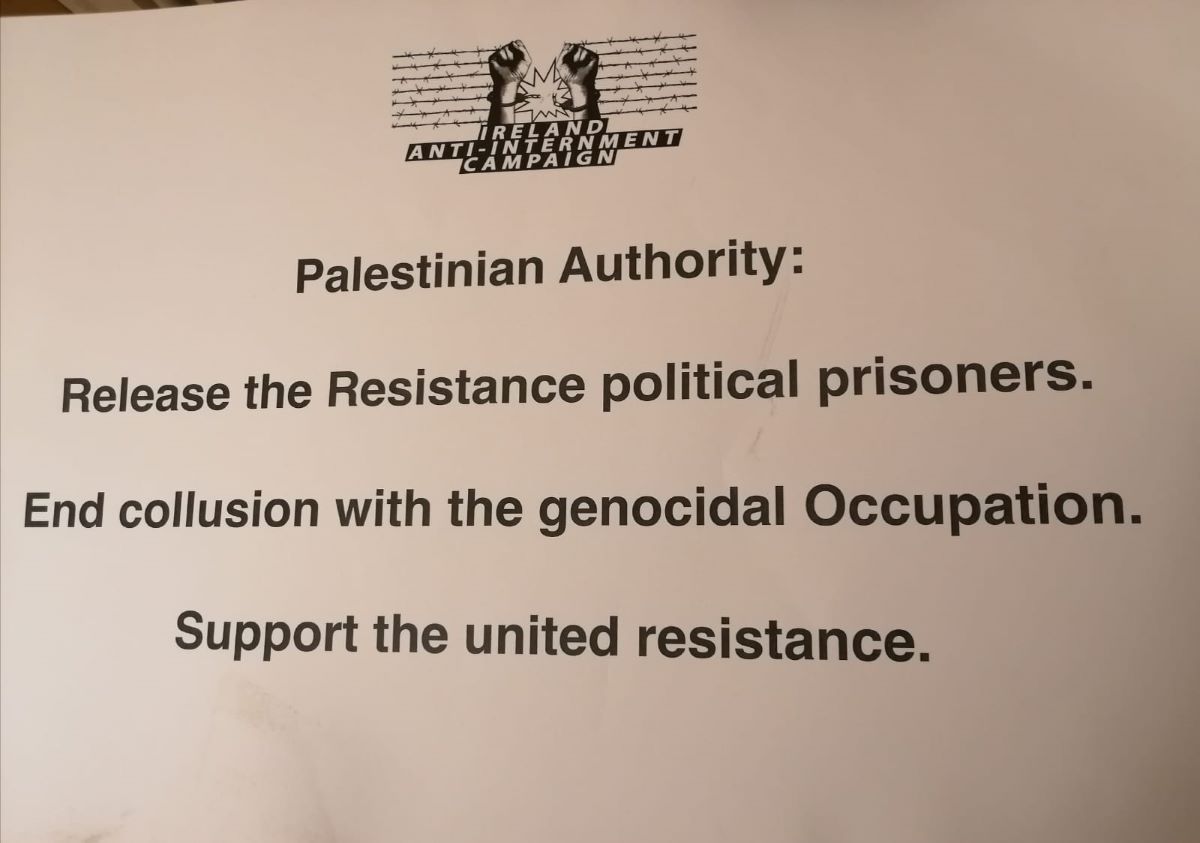

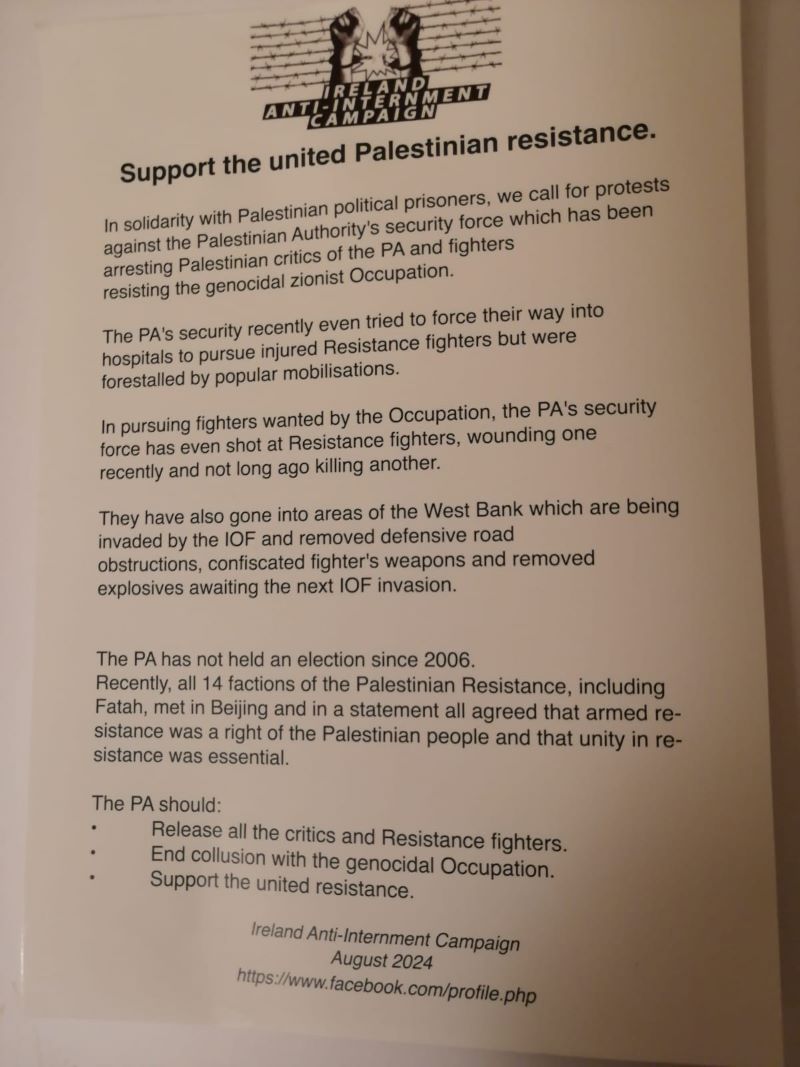
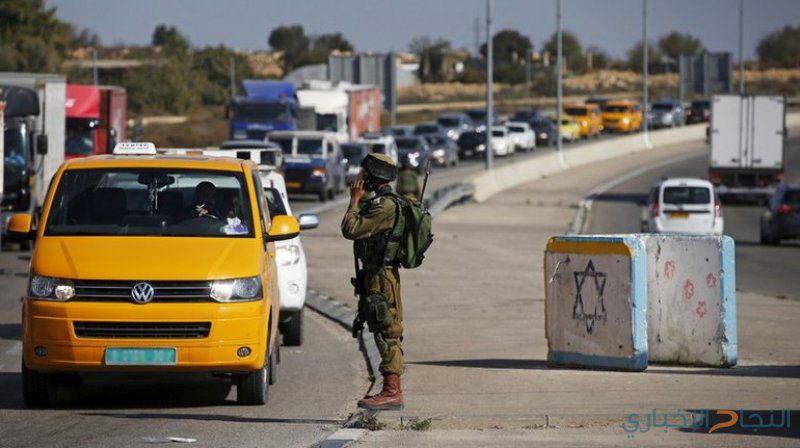

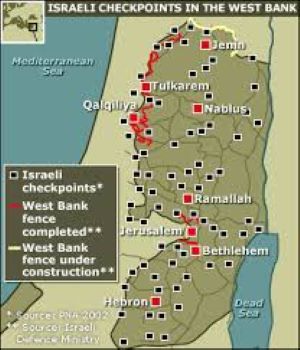

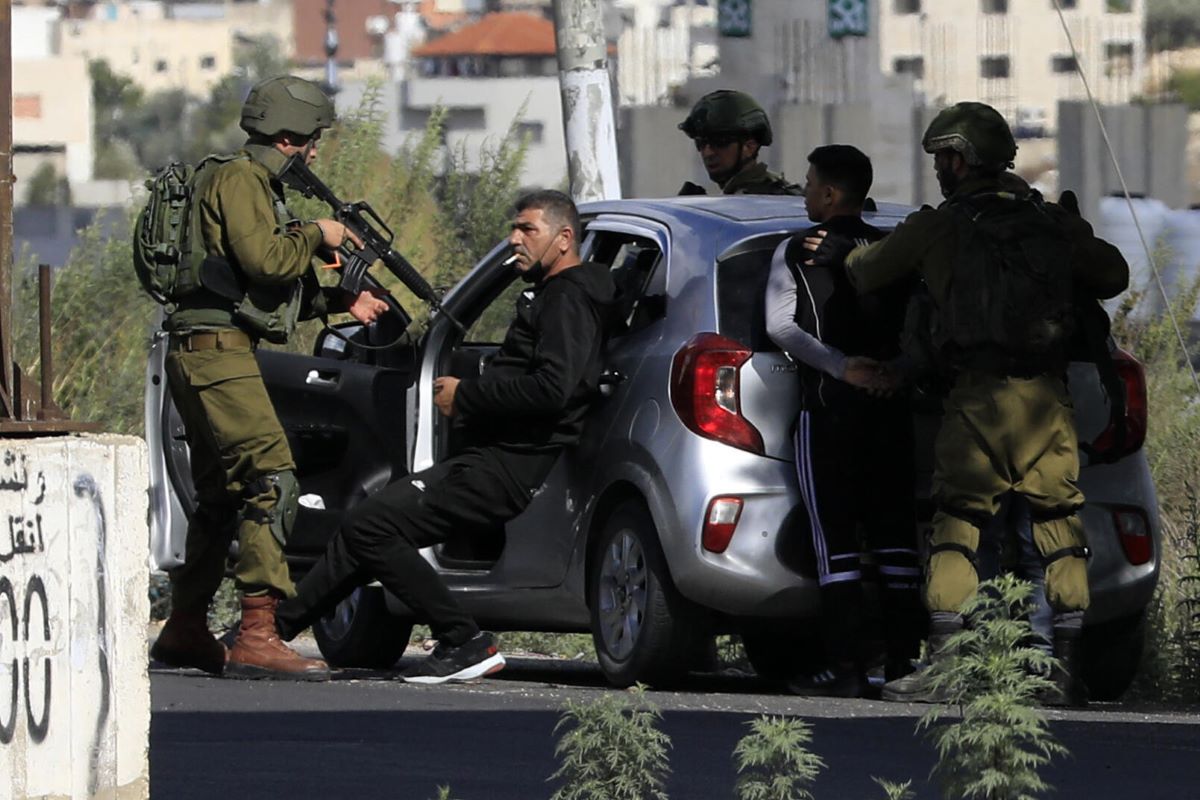
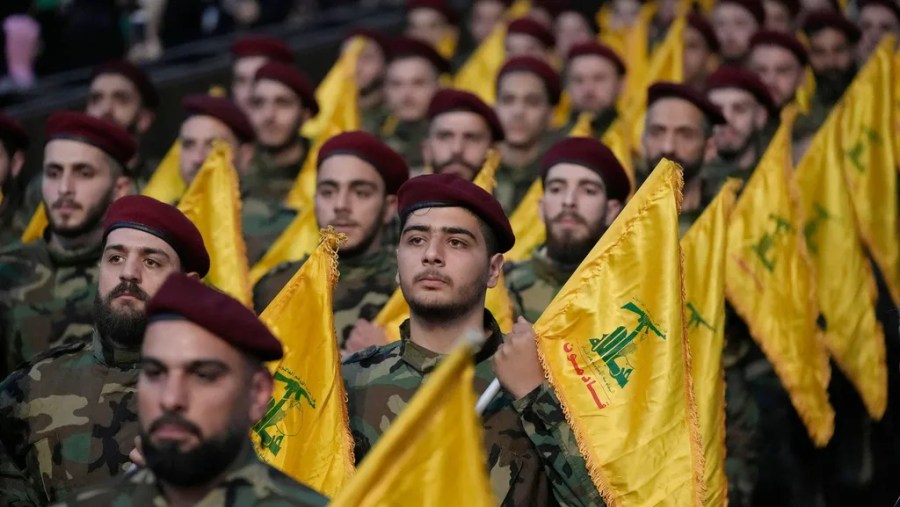


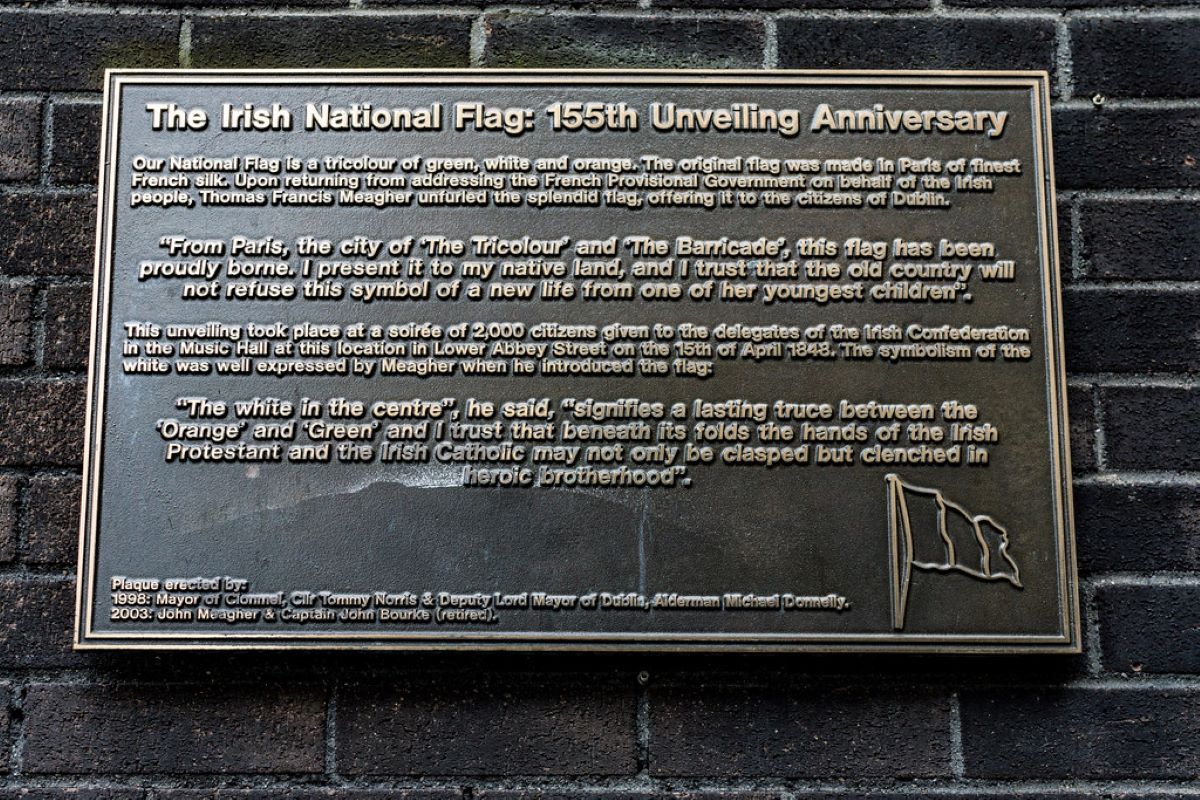


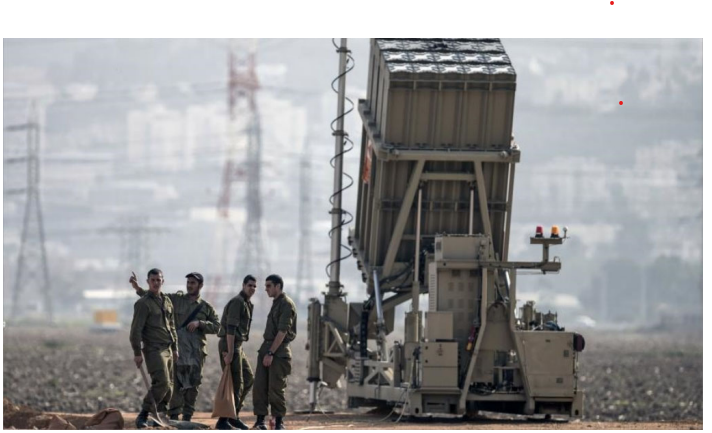

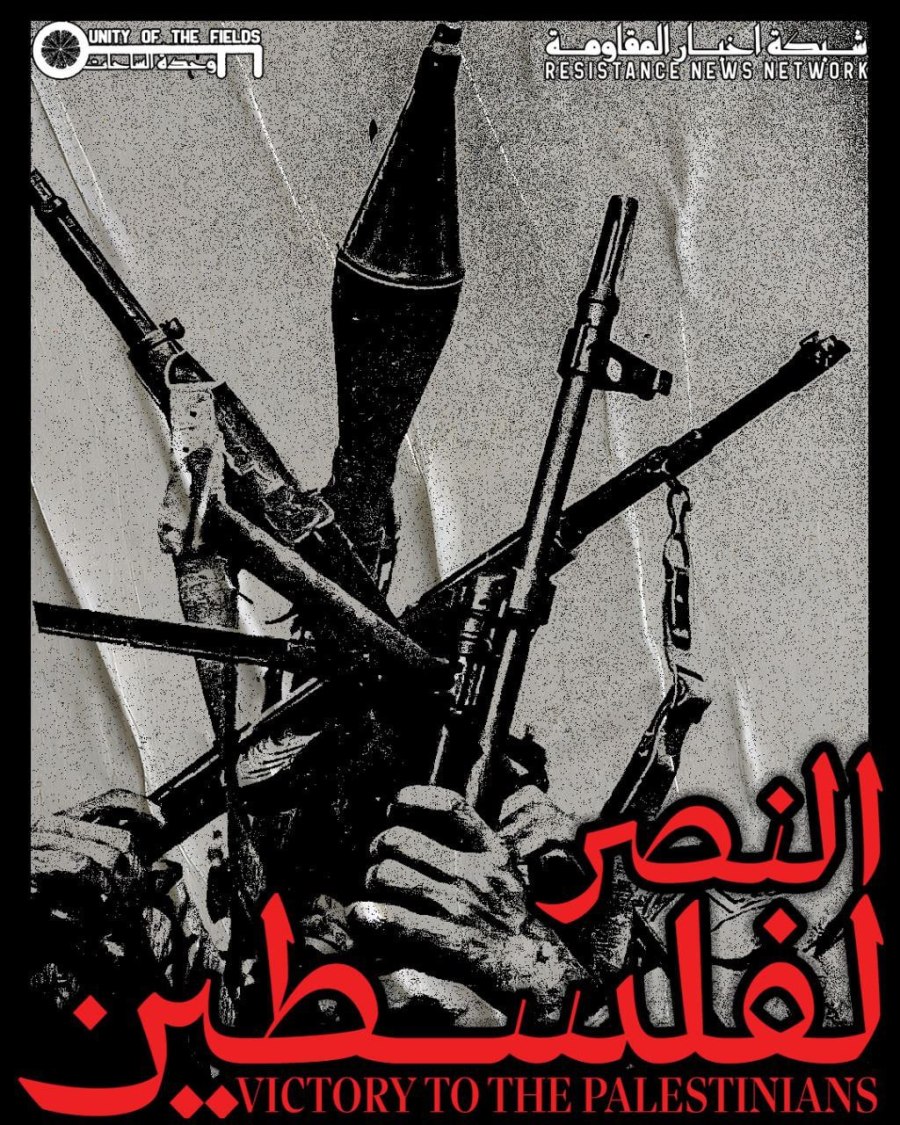
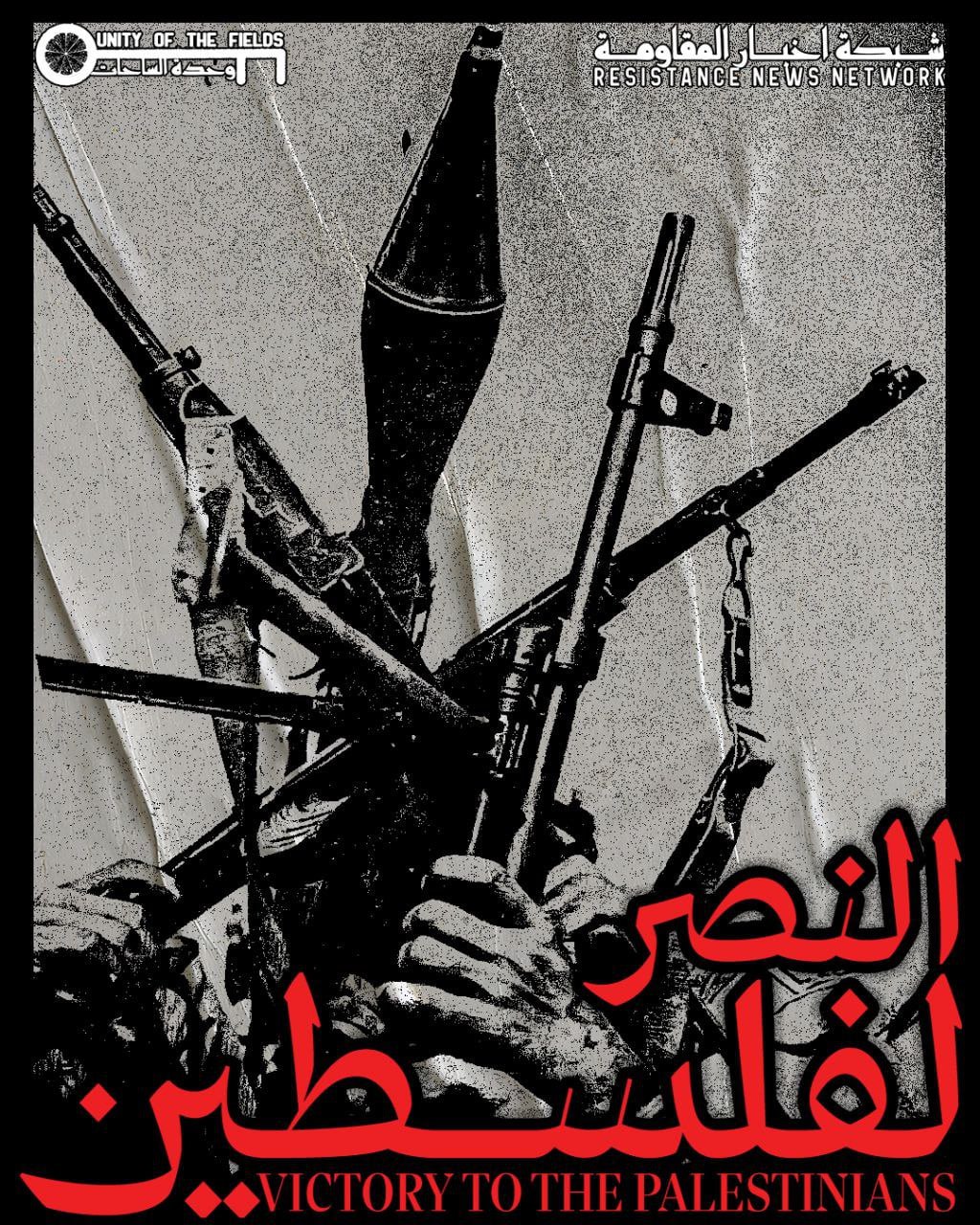


 rebelbreeze