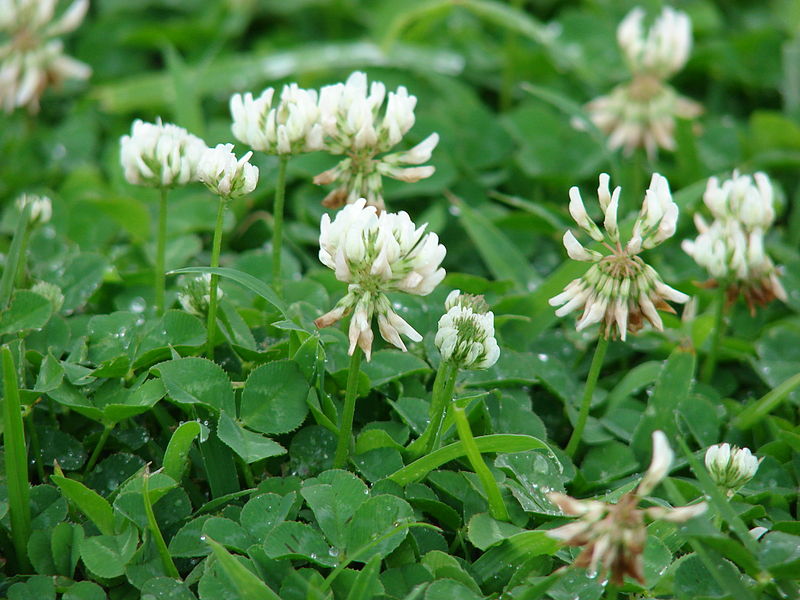
The Shamrock, contrary to expectations, cannot be said to be a specific plant. It is of course a kind of clover but which one? People writing about it frequently state that it is generally accepted that the most likely candidates are the species Trifolium dubium (variously called Lesser Trefoil, Suckling Clover, Little Hop Clover and Lesser Hop Trefoil; Irish: Seamair bhuí), with yellow flowers or the white-flowered Trifolium repens (White Clover; Irish: Seamair bhán). But which one? Well, excuse the pun but take your pick.
Trifolium dubium, the lesser clover, an seamair bhuí, top of the candidate list for the “shamrock” title. (Photo: Internet)
Generally accepted by whom? One supposes by botanists and Irish folklorists but those sites rarely supply a reference. However, amateur botanist and zoologist Nathaniel Colgan (1851-1919) askedpeople from around Ireland send him specimens of what they believed to be an Irish shamrock and identified the five most common plant species, of which the two most common were the yellow clover followed by the white.A hundred years later, Dr Charles Nelson repeated the experiment in 1988 and found that yellow clover was still the most commonly chosen. According to Wikipeida, yellow clover is also the species cultivated for sale in Ireland on Saint Patrick’s Day and is the one nominated by the Department of Agriculture as the “official” shamrock of Ireland.
The word “shamrock” is an Anglic corruption of the Irish seamróg, itself a contraction of seamair óg, meaning a sprig of young clover. The Irish shamrock is usually the species Trifolium dubium (lesser clover; Irish: seamair bhuí), with yellow flowers or the white-flowered Trifolium repens (white clover; Irish: seamair bhán).
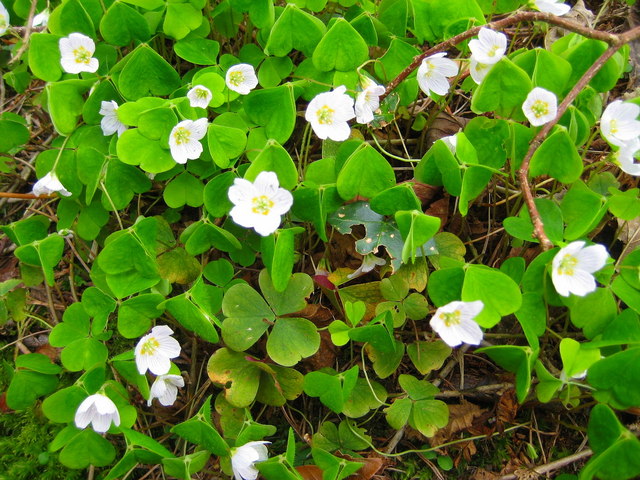
A trawl through the internet looking for images of shamrock plants throws up a bewildering multiplicity of images of trefoil plants, the only thing they have in common being that they are (mostly) green. It soon becomes apparent that many of the images are taken from a different genus, that of oxalis, usually the one named wood-sorrel (Oxalis acetosella) in English-speaking Europe1.
People today should know better. Edmund Spenser, an anti-Irish colonist and commentator on Irish culture, also poet and ancestor of the late Princess Diana, reported the Irish eating shamrock and so have some other colonial observers but almost certainly what they observed was the Irish eating the wood-sorrel – in Ireland it has some common names associated with eating. Spenser and other colonists can be blamed for many things but not that confusion – they were not botanists and did not have access to the Internet. Also, seamsóg, the Irish name for wood-sorrel, does sound a bit like seamróg, especially if one is not listening carefully. The confusion can be continued in English, where the common sorrel (Rumex acetosa) is a completely different plant and a common enough culinary one.
Many species of the genus oxalis close their leave sand flowers at night – a handy trick which the trifolii do not have; indeed, try as they may, trifolii could not possibly close their flowers since each one is in the form of a cluster, while those of oxalis tend to be trumpet-shaped.
Wood Sorrel — defintely not the shamrock, despite numerous claims since Edmund Spenser, the Elizabethan poet. (Photo: Internet)
The wood-sorrel grows typically in woods which are shady but not too dark and is characterised, as with many other oxalis, by an acidic taste in the stems. As children in the area in which I grew up in south Co. Dublin we chewed the stems of a cultivated species with large green leaves and pink flowers,commonly grown in window-boxes and gardens and known to us by the name of “Sour Sallies”.
The shamrock (both varieties of trifulium) grows best in meadows receiving a fair amount of sunlight, in among grasses. It belongs to the clovers, a different family completely from oxalis, belongingin turn to a very large group of plants as different in appearance from one another as peas and beans on the one hand and furze (also known as gorse) on the other (but many bearing fruit pods). They are the legume group, plants that concentrate nitrogen in nodules around their roots, making many of them good crops with which to precede plants that require a lot of nitrogen, such as the cabbage family or cereals.
The expression “in the clover” as an idiom for being successful or having a good time alludes to the alleged fondness of grazing animals for the plants but this is much more likely to be the white clover, Trifolium repens (Irish: seamair bhán) than dubium, as the former grows bigger and thicker. Clovers are important plants not only for grazing animals and nitrogen-fixing but also for bee-keepers, being rich in nectar and pollen.
We are long accustomed to the association of these two symbols with Irish ethnicity and nationalism, the shamrock and the colour green — but historically can they be shown to be authentically Irish?
Shamrock closeup (Photo sourced at Internet)
The shamrock symbol has been used by a number of products and services, including Aer Lingus, formerly the Irish national airline and now a subsidiary of the International Airways Group1. Both as a plant and a living symbol it is now being sold on the streets and in shops in preparation for the celebration of the male patron saint of Ireland, St. Patrick on March 17th.
St. Patrick himself was a foreign import, albeit one seized unwillingly by Irish raiders. The son of a Romanised Celt it seems and probably from Wales, Patricius was kept as slave labour herding sheep until his escape but he returned as a Christian missionary and became one of the founders of the Celtic Christian Church in Ireland.
We may view this as an amazing feat in itself – Ireland was one of the few European countries which went from the old multi-gods religion to the monotheism of Judeo-Christianity in a largely peaceful transition. However the Celtic Church at least tolerated and many would say condoned many of the laws and customs of the old culture, including marriage of priests, the right to divorce by men or women and a higher status for women than was common in an increasingly feudal Europe.
The word “shamrock” is an Anglic corruption of the Irish seamróg, itself a contraction of seamair óg, meaning a sprig of young — or more likely small –clover. The Irish shamrock is usually the species Trifolium dubium (lesser clover; Irish: seamair bhuí), with yellow flowers or the white-flowered Trifolium repens (white clover; Irish: seamair bhán) with the bias towards the yellow-flowered.
Children at schools influenced by the Catholic clergy in Ireland (which was and still is in control of the vast majority of the schools within the Irish state) were taught that St. Patrick used the shamrock to illustrate the existence of the Christian Holy Trinity of the Father, Jesus Christ and the Holy Ghost, i.e. explaining how there may be three different aspects in one entity, as in the three leaves on the one stem of the shamrock.
A charming story but clearly without any foundation whatsoever – not only is it not mentioned in what is believed by historians to be Patrick’s autobiography but the story only emerged much later. However, the crucial case against the veracity of the story is that neither the Gaels nor the Celts in general2 had any need to be convinced of the existence of trinities of gods: in Ireland we already had the Morrigan, a female trinity of Badhb, Macha and Anand and of course the Celts had the ubiquitous triskele symbol (surviving as the national symbol of Manx) to illustrate a trinity, religious or otherwise.
The first clear association of the shamrock with St. Patrick in Ireland comes in an account by an English traveller to occupied Ireland, Thomas Dineley, who described in 1681 Irish people on St. Patrick’s Day wearing green on their clothes, including the shamrock. But the first account of St. Patrick’s use of the shamrock is not seen until 1726, when it appears in a work by Caleb Threlkeld, a botanist.
But what of the colour green? Surely that at least is authentically Irish? Well, it certainly has a longer pedigree. Dineley’s account in 1681 associates wearing green with the celebration of the feast day of St. Patrick’s, one of the three patron saints of Ireland3 (yet another trinity?). But the Catholic Confederacy of 1642-1652, an alliance of Gaelic chieftains with Norman-Irish aristocracy against the Reformation being imposed upon them, also flew a green flag, with a gold harp upon it.
The symbol of Ulster was the Red Hand from an ancient Irish myth of arrival but what was the background? Both the O’Neills and O’Donnells, dominant clans of Ulster, have designs in red and blue against a white background. Only Leinster province has a design in green and yellow.
BLUE?
The colour of an old design for Meath is blue. There is an old heraldic design for Ireland of three crowns on a blue background and although this was the arms granted by Richard II of England to Robert de Vere as Lord of Ireland in 13864, over two centuries after the Norman invasion, it may have drawn on the colour of an existing Irish flag or design.
The Wikipedia page on the Coat of arms of Ireland, although commenting that heraldry is a feudal practice suggests an older inspiration:
“The colour of the field is sometimes called ‘St. Patrick’s blue’, a name applied to shades of blue associated with Ireland. In current designs, used by the UK and Irish states (sic), the field is invariably a deep blue. The use of blue in the arms has been associated with Gormfhlaith, a Gaelic mythological personification of Ireland. The word Gormfhlaith is a compound of the Irish words gorm (“blue”) and flaith (“sovereign”); it is noted in early Irish texts as the name of several queens closely connected with dynastic politics in the 10th and 11th century Ireland. The National Library of Ireland, in describing the blue background of the arms, notes that in early Irish mythology the sovereignty of Ireland (Irish: Flaitheas Éireann) was represented by a woman often dressed in a blue robe.”
The designers of the Cumann na mBan flag may have been aware of the ancient claim of the colour blue when they made that the background colour of their own flag. Markievicz and Hobson would even more likely have been aware of it as well as the blue with an orange, golden or silver sunburst, alleged flag of the legendary band of warriors na Fianna, when they made that the flag of the Republican youth organisation they founded, Na Fianna Éireann.
THE GREEN FLAG
But what about the United Irishmen’s flag of green, with a golden harp? When talking about the United Irishmen we need to remember from where they received their ideological influences. These were mostly from radical and republican thinkers and agitators in Britain, the USA and France. The United Irishmen organisation was founded by Anglicans and Presbyterians, mostly colonists and settlers or their descendants and most of their leadership in the uprisings of 1798 and 18035 came from from among that section of Irish society. That goes a long way to explaining why most of the revolutionary texts of the time are in the English language, in a country where the majority even then still spoke Irish and with a rich literary and oral tradition in the Irish language.
United Irishmen harp motif with motto. (Photo sourced at Internet)
There is a historical trend among colonists to feel disadvantaged with regard to their compatriots back in “the mother country”, to resent levels of taxation, to complain of inadequate representation and of corrupt or inefficient government. This occurred in English-speaking America and led to the American Revolution and the creation of the United States. It also occurred in the other America, where the Spanish-speaking colones developed conflicts with the Spanish Kingdom and eventually rose in rebellion against it across South and Central America, eventually gaining independence for a number of states.
A similar process was taking place in Ireland, where the disaffected who belonged to the established church, the Anglican or Church of Ireland, understood that to create a strong autonomous nation, even as part of the English-ruled unity of nations, they would need to bring into government the greater majority, the Presbyterians 6 and even the overwhelming majority, the Catholics (i.e the native Irish).
Henry Grattan attempted this by trying to get the excluded denominations admitted to the Irish Parliament but Crown bribery, sectarianism or fear of having to return lands grabbed by their grandparents or others, combined to have a majority vote the proposals down. That ensured that the organisers of the United Irishmen would realise that no progress to their objectives was possible without revolution.
Irish nationalists among the descendants of colonists often adopted Irish symbols and some other Irish identifiers as a sign of difference from the English. There was some interest in the Irish language but it does not appear to have been widely studied by most Irish Republicans of the time as witnessed by the incorrect appellation of “Erin” for Ireland – any Irish-speaker would know that Éire is the nominative form for the country and ‘Éireann’ is employed in the genitive and dative cases. United Irishmen were involved in organising the Belfast Harp Festival of 1792, while folk-song collectors and antiquarians dug among the people and archives for survivals of an older Irish culture.
The Harp, an ancient Irish musical instrument employed also to accompany poetry recitation was employed as a symbol by the Unitedmen — often with the motto “ ‘Tis new-strung and shall be heard”. In addition, the English had long recognised the instrument as a symbol for Ireland, albeit under the Crown.
THE COLOUR GREEN
But where did the colour green come from to be associated with Irish nationalism? This question could do with more research than I have the time or other facilities to devote to it but one may comment what green is not: it is neither the Red of Royal England nor the Blue of Royal France. Nor is it the red with a white saltire of the Order of St. Patrick, another colonial creation and clearly of Royal and colonial origin and patronage, created at the time of a bubbling of the nationalist pot in Ireland and only sixteen years before the 1798 Uprising.
Interestingly, the Irish Brigade (1688–1791) of the French Army did include the colour green in its flag design, four quarters alternately green and red, with a crown in each. And the standard of Napoleon’s La Légion Irlandaise in 1841 is described as of “emerald green”.
Regimental colours of one of the irish Regiments of the French Royal Amy, De Berwick, until 1791. (Photo sourced at Flags of Ireland — see Further Reading for link)
William Drennan (1754–5 February 1820), United Irishman, is credited with first use of the description “Emerald Isle” in his poem When Erin First Rose and it was much later re-used in the ballad Bold Robert Emmet. John Sheils, a Drogheda Presbyterian and United Irishman, employed the harp, the colour green, St. Patrick, Erin (sic) and the shamrock all in his song The Rights of Man, which he composed some years prior to the 1798 Rising. The “three-leaved plant” which is “three in one” is used in Sheils’ song:
“to prove its unity in that community
that holds with impunity to the Rights of Man”
The trinity there is clearly the political one desired by the Unitedmen of Protestant (Anglican), Catholic and Dissenter (Presbyterian and other sects).
Green was widely worn by people with United Irish sympathies and particularly during repression by Orange militia, people wearing green were targeted. However, if one wanted to wear a suspect nationalist colour, how safer than to do so than on the feast day of the alleged founder of Christianity in Ireland and acknowledged by Protestant, Sects and Catholics alike?
From the United Irishmen onwards, green has been unarguably associated with Irish nationalism and Irish Republicanism, in the flags of the Fenians, the Irish Volunteers and even of the Irish Citizen Army, also part of the tricolour flag awarded by Parisian revolutionary women to the Young Irelanders which is now the national flag of the Irish state. Green was also the colour of the flag of the St. Patrick’s Battalion that fought for Mexico against the invasion by the USA (1846-’48) and of ceremonial uniforms of some Irish formations during the American Civil War along with the main colour of some of their regimental flags, also of the flags of the Fenian veterans of that war invading Canada in 1866.
Flag of the Irish Brigade (later the Fighting 69th) in the Union Army, American Civil War. (Photo sourced at Internet)
Does it matter whether green is authentically an ancient Irish colour or not? Would Irish Republicanism or nationalism be de-legitimised if it could be proven the colour they are using was of dubious origin or of comparatively recent political significance for Ireland? I don’t think so. But it is good to be aware of the different origins of symbols and to question and even challenge what is handed to us as unquestionably authentic.
However, enough people have now fought under the green in eight uprisings in Ireland and struggles abroad; enough people have laid down their lives under the colour and indeed, once it became a symbol of Irishness, enough Irish have been persecuted, prosecuted and even executed for wearing it, to ensure that “wherever green is worn” can be Irish. And in that representation, the shamrock too, which of course happens to be green, and could be passed off as a devotional symbol to suspicious authorities and murderously insecure and sectarian minorities of colonial origin, has its place.
Painting depicting the Battle of Ridgeway, Fenian invasion of Canada, 1866. (Photo sourced at Wikipedia)
The Wearing o’ the Green
(by John Keegan “Leo” Casey (1846 – March 17, 1870). Keegan, known as the Poet of the Fenians, was an Irish poet, orator and republican who was famous for authorship of this song, apparently written when he was 15 and also as the writer of the song “The Rising of the Moon” (to the same air), also as one of the central figures in the Fenian Rising of 1867. He was imprisoned by the English and by a huge irony died on St. Patrick’s Day in 1870 at the age of 24).
O Paddy dear, and did ye hear the news that’s goin’ round?
The shamrock is by law forbid to grow on Irish ground!
No more Saint Patrick’s Day we’ll keep, his colour can’t be seen
For there’s a cruel law ag’in the Wearin’ o’ the Green.”
I met with Napper Tandy7, and he took me by the hand
And he said, “How’s poor old Ireland, and how does she stand?”
“She’s the most distressful country that ever yet was seen
For they’re hanging men and women there for the Wearin’ o’ the Green.”
So if the colour we must wear be England’s cruel red
Let it remind us of the blood that Irishmen have shed
And pull the shamrock from your hat, and throw it on the sod
But never fear, ’twill take root there, though underfoot ’tis trod.
When laws can stop the blades of grass from growin’ as they grow
And when the leaves in summer-time their colour dare not show
Then I will change the colour too I wear in my caubeen
But till that day, please God, I’ll stick to the Wearin’ o’ the Green.
But if, at last, her colours should be torn from Ireland’s heart
Her sons, with shame and sorrow, from the dear old soil will part;
I’ve heard whispers of a Country that lies far beyond the sea,
Where rich and poor stand equal, in the light of Freedom’s day!
O Erin! must we leave you driven by the tyrant’s hand!
Must we ask a Mother’s blessing, in a strange but happy land,
Where the cruel Cross of England’s thralldom’s never to be seen:
But where, thank God! we’ll live and die, still Wearing of the Green!
End.
John ‘Leo’ Keegan Casey monument, Glasnevin Cemetery, Dublin (Photo sourced at Wikipedia)
5 And even many of the leaders, journalists and poets of the Young Irelanders and of the Fenians.
6And other “Dissenters” such as Unitarians, Methodists, Society of Friends (Quakers) etc.
7Napper Tandy was a United Irishman who lived in Dublin; his home is mentioned in the most common versions of the well-known Dublin song, TheSpanish Lady.
Cycling through Griffith Park off the Mobhi Road, after a walk in the nearby Botanic Gardens, a flurry of wings and a flash of colours attracted my attention. Three birds came down with a splash into the Tolka.
Rival males and female on a rock in the Tolka. (Photo: D.Breatnach)
You don’t need to be any kind of expert to identify the Mandarin Duck, especially the males and that’s what two of those birds were. The dowdier third one was the female.
I have often noted two male mallard ducks peacefully accompanying one female and wondered whether they had a menage-a-trois going or what the arrangement was. But there was nothing like that going on with the Mandarins as the males made clear quite quickly. After briefly circling around one another they were quickly into fisticuffs (or beak-and-wing-cuffs), scuffle-splashing, clucking insult or challenge, until the rival to the established male would take to the wing either for a break or to get next to the female. In the latter case, the male would take to the air also, in pursuit.
The female? She swam demurely apart waiting for the victor.
The female Mandarin Duck in the Tolka. (Photo: D.Breatnach)
There was clearly one established male who for the moment was the dominant one but the rival kept coming back while I was watching and they were still at it when I left. The established one has the psychological dominance factor on his side, which is a strong advantage but it is by no means a guarantee of success. The rival might wear him down. Or the established one might become injured. Being a male and keeping one’s bird is not easy.
Rivals circling briefly in mid-water prior to another scuffle on the river. (Photo: D.Breatnach)
According to Charles Darwin, genders of many species but many birds in particular have become colour-differentiated through part of the evolutionary process described as sexual selection (The Descent of Man and Selection in Relation to Sex, 1871). This has reached amazing and one might say even bizarre though beautiful extremes with such birds as the peacock and the bird of paradise.
Darwin’s ideas make more sense than other explanations being proposed but it is nevertheless hard to credit that a female’s appreciation of colour, shape and behaviour would so impress upon the male the need to flaunt gaudy colour and shape in direct contravention of the need to survive predators by NOT calling such attention to himself. Still, there is no other viable contender explanation around (as distinct from the Mandarin contender, who may still be biding his time or pressing his suit, which if the established male has anything to say about it, is all he is going to press).
Established male with female on rock and the rival that won’t give up. (Photo: D.Breatnach)
Aix galericulata is the Latin species name and the only other species in the Aix genus is the North American Wood duck. A chromosome in the Mandarin makes hybridisation between the two impossible.
Mandarin Ducks originate in East Asia but have been kept in Europe in aviaries and in ponds and lakes. Stephens Green used to have some, along with many other kinds of wildfowl, until the OPW allowed the Herring Gulls to take over to the extent that they have. I have not seen them do it but would not be in the least surprised if the gulls ate the chicks of many of the waterfowl species until they died out or took off somewhere else.
However, there have been feral Mandarin populations in Ireland for some time, notably in Co. Down and in Wexford and pairs may be establishing themselves in other places, including in the Glasnevin/ Drumcondra area, based around the Tolka (and perhaps the Royal Canal).
The Mandarin is a perching duck and this kind have feet capable of grasping a branch. They build their nests in hollows in trees which is good for the safety of the nesting female and the eggs. But what of the chicks or ducklings? As we know, ducklings take to the water long before they can fly. So what can these ducklings in tree hollows, many feet from the ground, do? They simply jump. A veritable leap into the unknown.
When they hit the ground, which at first sight seems to ensure they have broken practically every bone in their little bodies or a least concussed themselves and messed up their insides, they bounce a little, get up and waddle to their mother. Yes, she called them out, which is why they came.
One needs to see the process to believe and I have included some Youtube links. It would seem at first that they need soft leaf litter or water in which to land but one of the links I have posted shows Mandarin ducklings jumping from a nestbox on to bare stone — and getting up, apparently unhurt. It is difficult to understand, even with accounting for the relationship of weight to surviving a fall. We probably know that we can drop lots of insect species on to the ground and they don’t get hurt but the principle goes farther — apparently a mouse can survive a fall from a great height (unless a hawk gets it on the way down, or a cat is waiting below); conversely a fall of four foot on to its feet can kill an elephant (so it is said — I have not actually tried this with elephants but I have inadvertently confirmed the mouse theory).
Often invasive species should not be welcomed as they upset the natural ecological balance. The grey squirrel in the nearby Botanic Gardens, originally from the USA, may be cute but it is helping to wipe out the native red species. And that’s just one of the invasive species of animal and plant that are causing problems in Ireland (see https://rebelbreeze.wordpress.com/2014/07/01/the-scent-of-intruders/). On the other hand, the widely-distributed Red Valerian (also with white and pink varieties) does not seem to be causing any problems and it is difficult to see how the Mandarin can become a serious problem either. But of course, one does not know for sure. It can be stated that the populations so far established in Britain and in Ireland do not seem to have caused any ecological problems. And it is true that we don’t have many dense woods in Ireland anywhere (thanks to certain human invaders in our history), least of all close to slow-flowing water, although some species have shown remarkable adaptability, witness in these climes the rat, fox, pigeon, herring gull and, of course, homo sapiens.
One of the curious things about the Mandarin is the name we have for it. Apparently, it is a Portuguese word for the Chinese government bureaucrats in existence when the Portuguese first began to trade with them (before they and other Europeans decided to invade China and confiscate areas, in particular ports and islands). How they became associated with the duck was not revealed in my short internet search.
However, in China and in Korea the mandarin duck is associated with fertility, good fortune and constancy in monogamy, so that it is often presented as a wedding gift, either as living pairs or symbolically in an ornament. It is not currently considered an extermination-threatened species.
End.
Video links (second one is of merganser ducklings and is even more impressive):
While eastbound drivers in Thomas Street on Friday 3rd March gawped, traffic slowed in the westbound lane to allow az small procession pushing a gallows, trundling along on wheels. There were surprisingly few witty comments, even the notoriously quick Dubliners too surprised to come up with a witty bon mot (or even a focal maith).
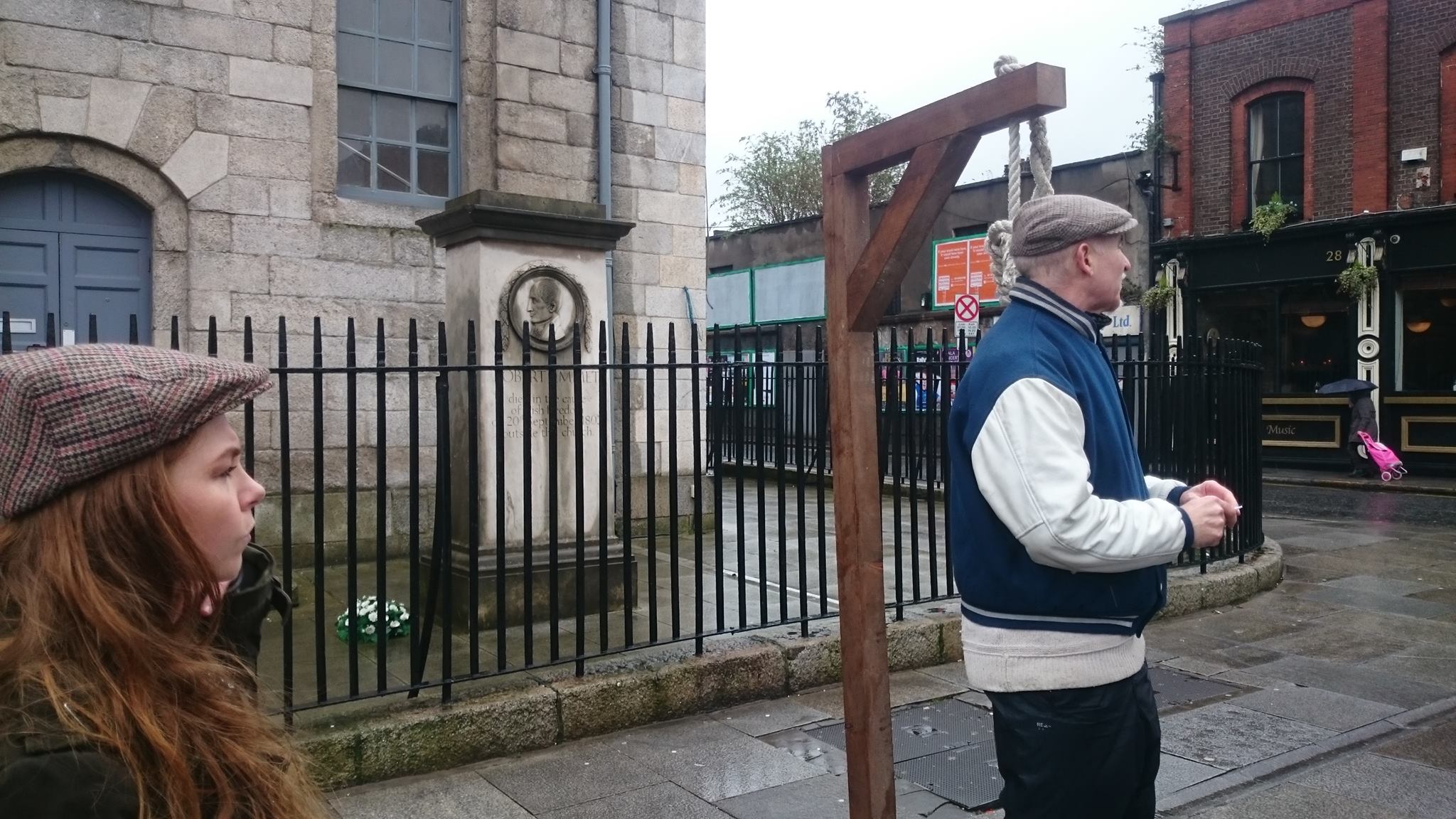
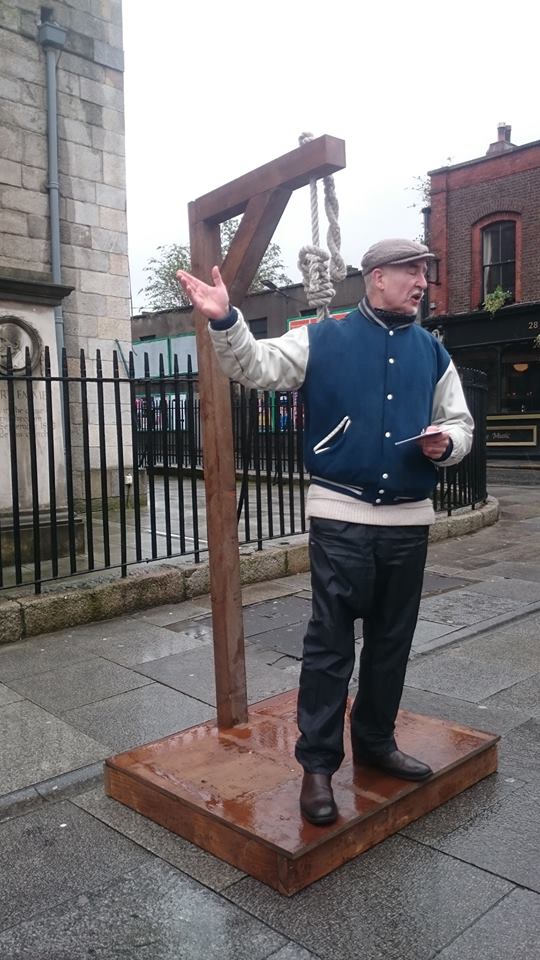
Diarmuid Breatnach outside St. Catherine’s Church, Thomas Street. (Photo: /////)
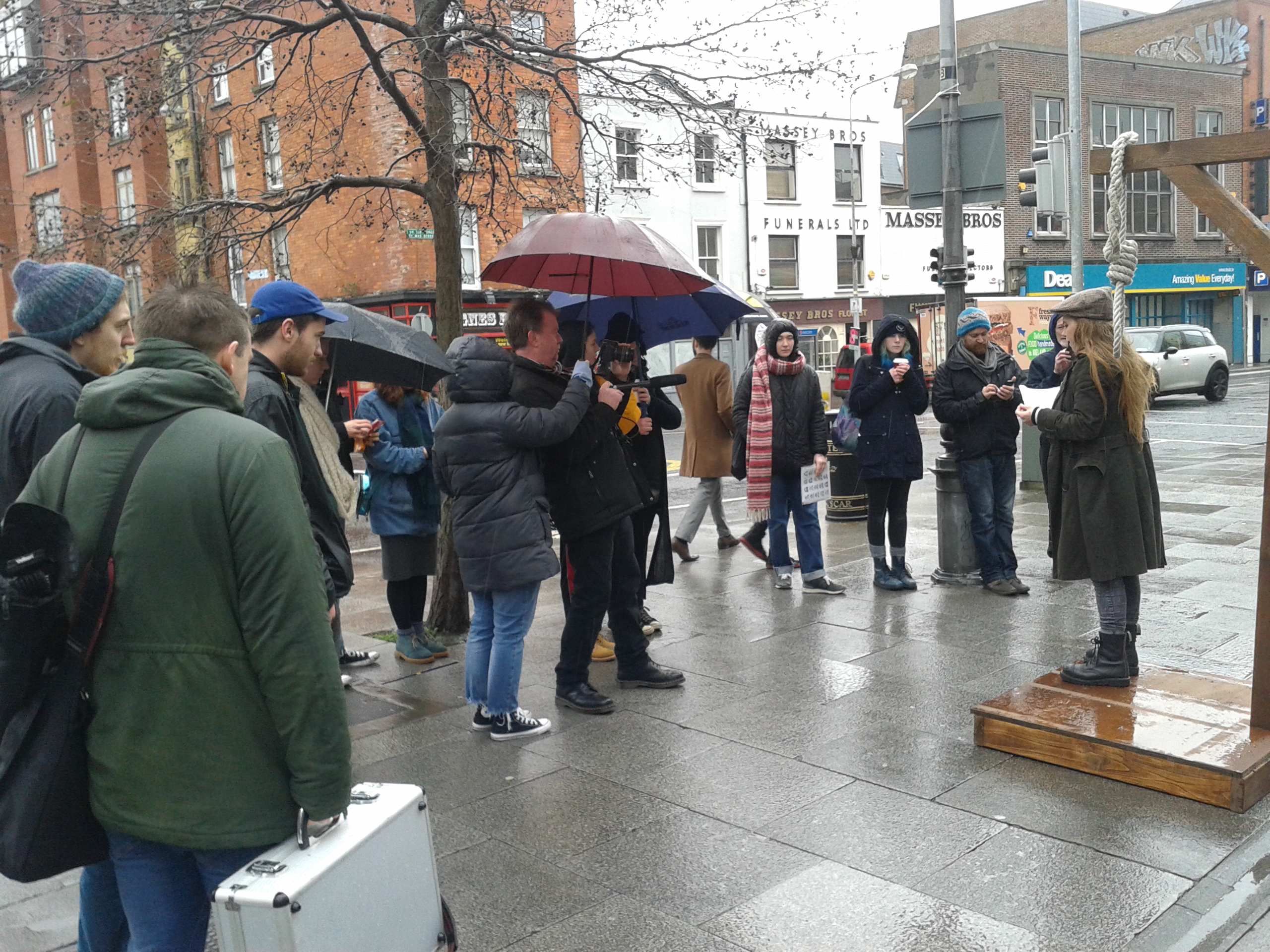
The procession stopped at the Robert Emmet plaque, in the railing wall of the former Protestant St. Catherine’s Church, approximate place of execution of Robert Emmet on 20th December 1803.
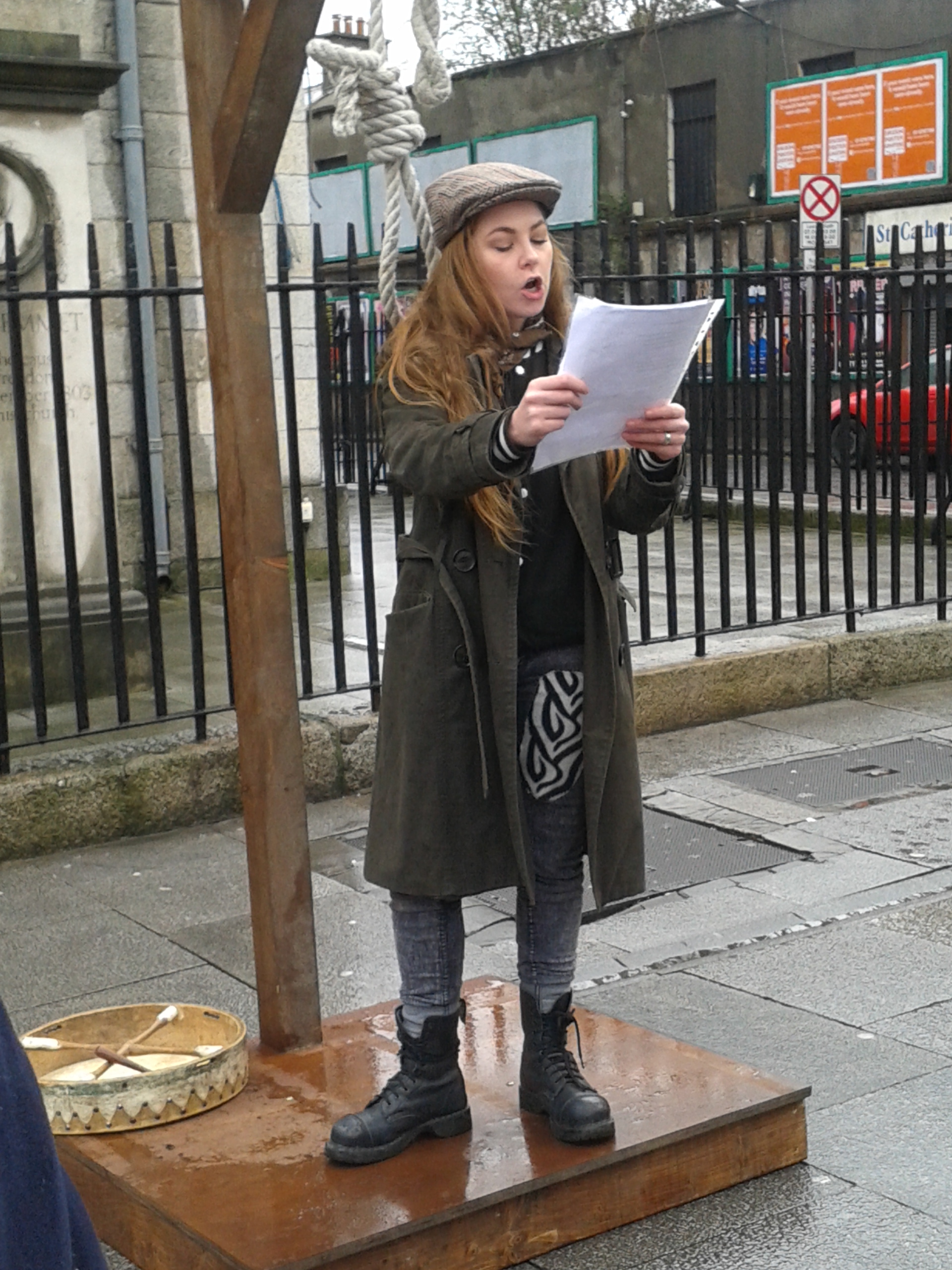
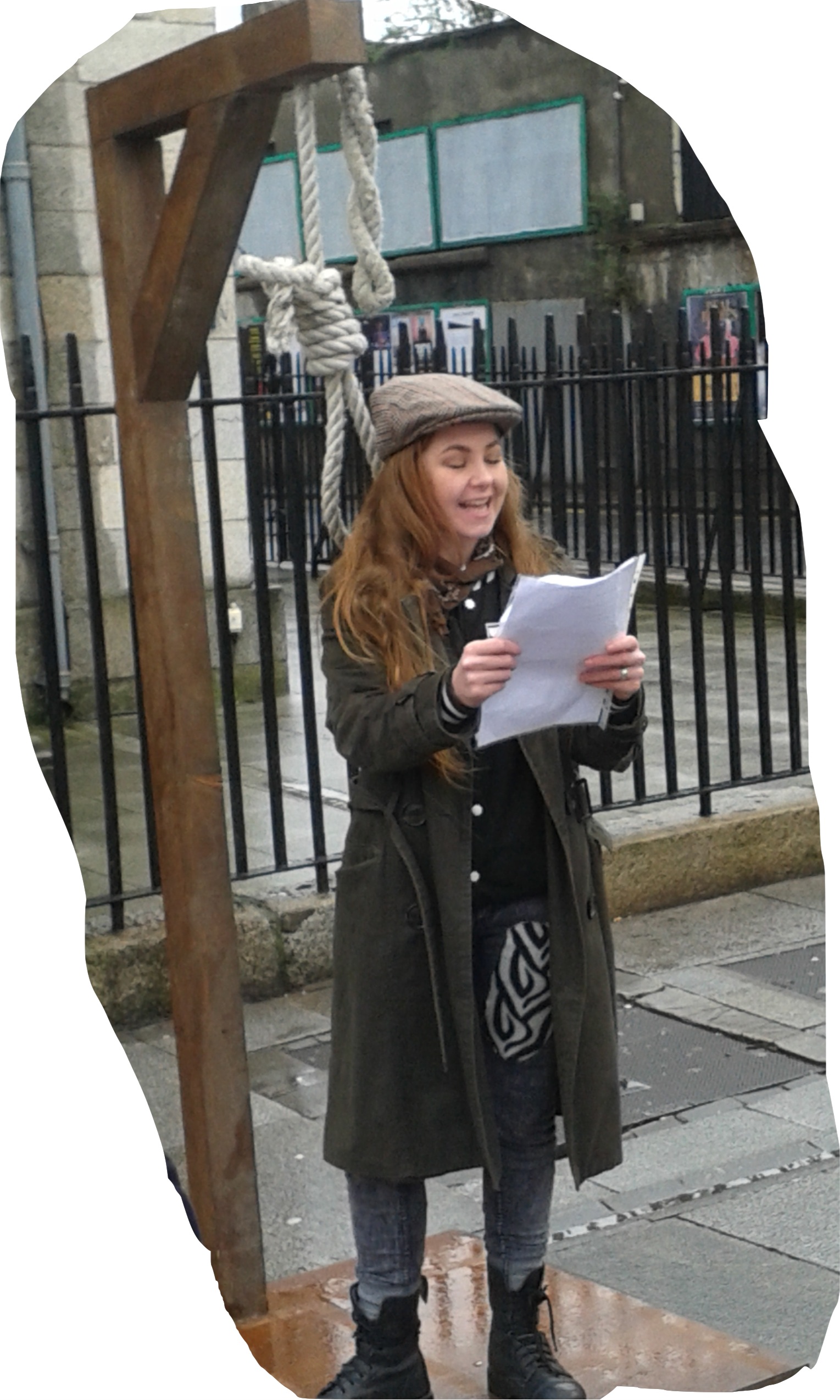
Elayne Harrington, aka Temperamental MiscElaynous performing her piece outside St. Catherine’s Church, Thomas Street. (Photo: D.Breatnach)
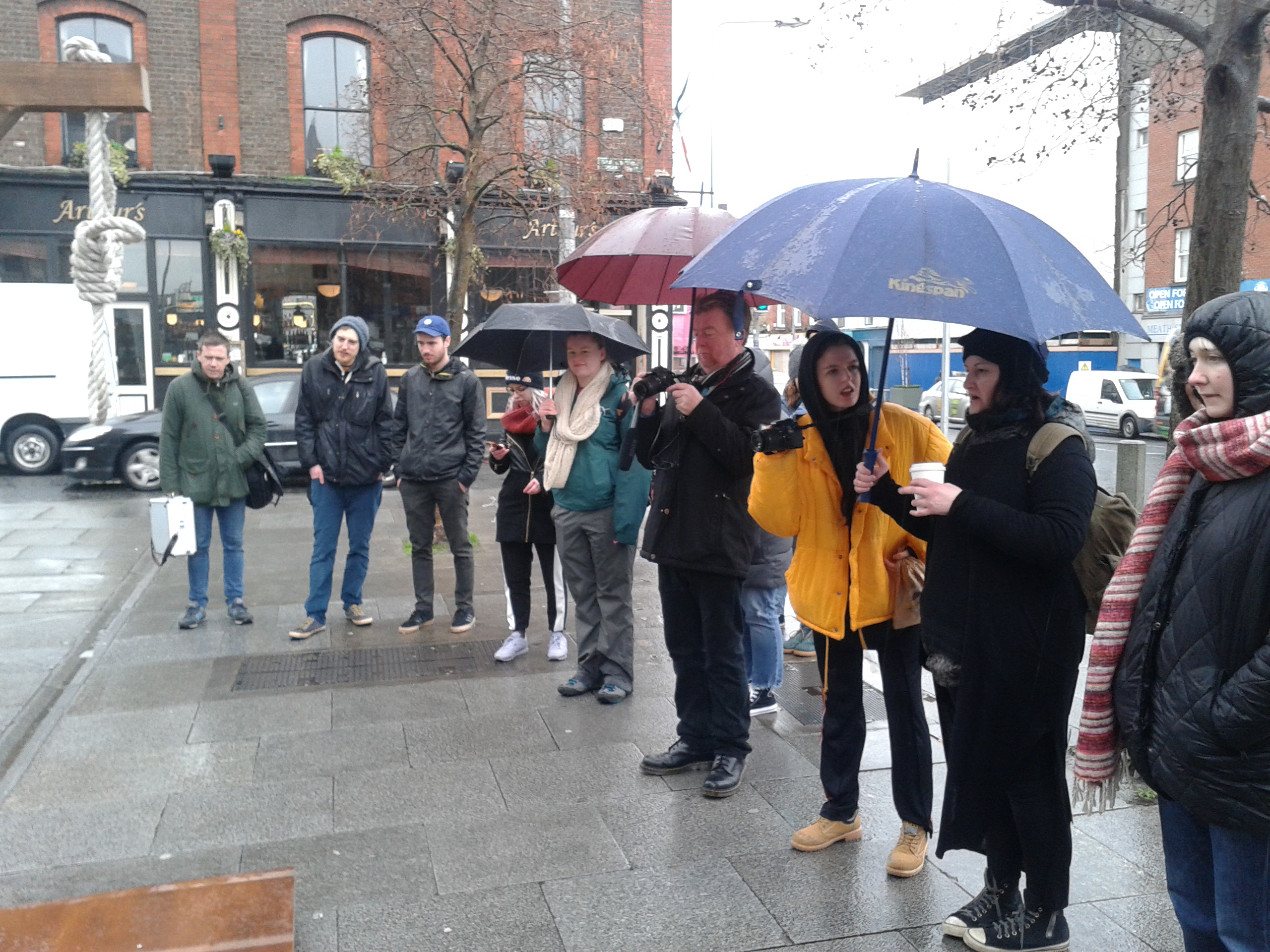
Despite continuous rain a small crowd had gathered on the pavement in front of the monument and the gallows, with a small platform less than a foot high, was placed facing them. Dublin artist Elayne Harrington, also known as the well-established street poet/ rapper artist from Finglas, Temperamental MiscElayneous, stood on the platform to announce that the event was to honour Robert Emmet and was a project as part of the Liberties Street Project, a continuation of the IPIP (In Public In Particular) program at the National College of Art and Design, Thomas Street, Dublin 8.
Harrington thanked people for attending despite the weather and, after outlining the program for the event, announced Diarmuid Breatnach, who took up position with the gallows and hanging noose just behind him.
Breatnach is best known as a co-founder of the Save Moore Street From Demolition campaign, maintaining a campaign table with a petition and leaflets on the market street for a few hours every Saturday but is also known as an acapella singer, particularly in Dublin traditional-folk circles.
Section of the crowd at the event outside St. Catherine’s Church, Thomas Street. (Photo: D.Breatnach)
After thanking MiscElayneous for the invitation and the crowd for attendance, Breatnach proceeded to reiterate that the event was taking place very near the spot where, at the age of 25, Robert Emmet had been hung and then decapitated by the British colonial administration in 1803.
Harrington reminded him to stand on the low platform which Breatnach did, drawing a laugh from the crowd when he indicated the hanging noose and commented: “Me Ma always said I’d end up like this.”
Breatnach asked the audience to imagine the scene of the execution in 1803 and referred them to a painting of the scene available on the Internet, showing a huge crowd, with people looking out of windows in nearby buildings and mounted redcoats keeping the crowd back from the gallows. Many of in the crowd would have been supporters but the better-known would not have been there – they were in jail or in hiding.
The execution was carried out there, Breatnach said, because the whole Thomas Street and Liberties was known as a revolutionary area, which Breatnach went on to describe (see video below).
Elayne Harrington, aka Temperamental MiscElaynous performing her piece outside Stl Catherine’s Church, Thomas Street. (Photo: D.Breatnach)
Executions, said Breatnach, have been carried out down through the ages on Irish people resisting invasion, colonialism and imperialism and fighting for social justice. The gallows have become an enduring image in Irish history and a number of songs (Breatnach mentioned ten from the 19th century up to the present) refer to it.
The state we have now, said Breatnach, set up in 1922, preferred shooting, which was the method by which it eliminated its opponents at the time, 81 of them in official executions. Hanging remained however in this state but the last execution was in 1954.
Breatnach stated that we are often taught history as a dead subject, something in the past to which we are largely unrelated but he believed history to be a living thing, in the stones of walls and streets, in the air and in the words people have left us. And in our songs.
Breatnach selected three songs that mentioned Robert Emmet: The Three Flowers, written early last Century by Norman G. Reddin (two verses); Bold Robert Emmet perhaps by Tom Maguire around 1916 but certainly published in 1934; and Anne Devlin in recent decades by Pete St. John. Breatnach sang the three songs one after the other with MiscElayneous accompanying on her bodhrán.
Diarmuid Breatnach outside St. Catherine’s Church, Thomas Street, talking about the radical revolutionary history of the area. (Photo: ////)
During the applause which greeted the end of Breatnach’s performance, Elayne Harrington replaced him on the stage, thanked him and introduced herself as Temperamental Miscellaneous and spoke about her contribution, which was to be an extract of Emmet’s famous speech from the dock in the Green Street Courthouse, but re-worked into more modern Dublin idiom. Harrington then launched into a spirited rendition of her piece (see video below for the full performance).
No matter what words I utter, it’ll fail to change your mind and I wouldn’t have it any other way. You’ve made me a bed and I’ll lie in it. ………….
There’s plenty I could tell why my reputation should be kept clean from the utter lies and slander which’ve been lashed upon it. ……………
I wouldn’t dream that I could impress upon a court as trapped in its own self and corrupted, a fair impression of my character. …………………….
If merely dying was the case, after being deemed in the wrong and you in the right I’d take it on the chin and I wouldn’t breathe a word but that same law that not only wants to get rid of me also aims at filthying my name and sullying the memory of me. ……………..
In the hope that my memory won’t fade and that it might retain its honour among my brothers and sisters, I’ll stand up for myself and my integrity and weaken those charges against me. ……………
…. our cloths are entwined, mine and the martyred heroes of the gallows and battlefield, consecrated by sacrifice … for protection and guardianship of their homestead and their righteousness. ………..
This is what I hope: for my memory and name to serve those who live on by it being a source of empowerment …. witness the malignant malicious government that gains its false riches through sin alone, that treats a people as wolves to be domesticated and blooded to the taste of their fellows, to dance to their tune and to the death knell ……………..
Concluding the event, Harrington thanked the attendance and invited them to place small pots of growing flowers she had provided in front of the monument, which they did.
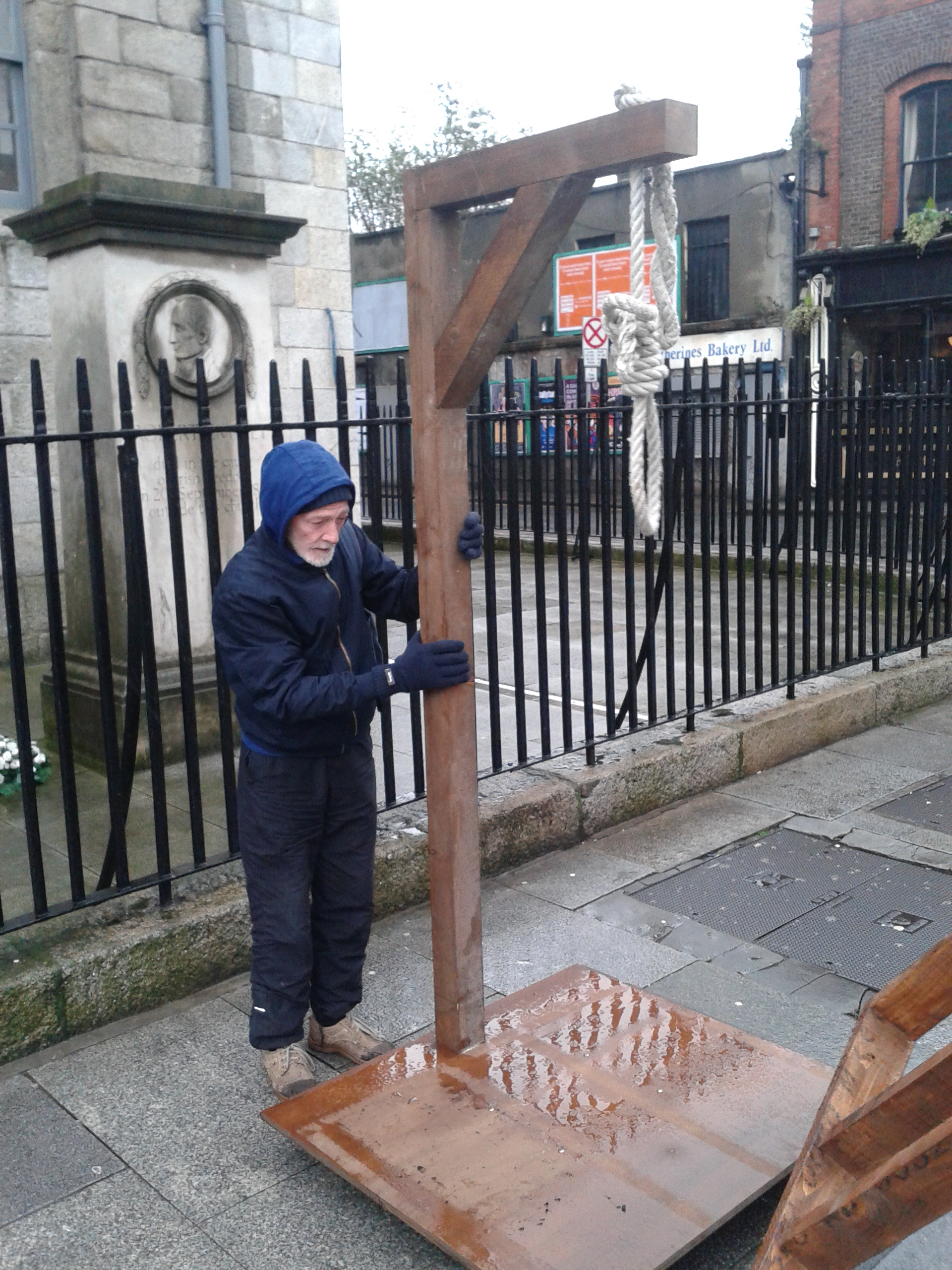
Stablising the scaffold outside St. Catherine’s Church, Thomas Street. (Photo: D.Breatnach)
WHY THE EVENT?
What had led Elayne Harrington to choose this act as part of her course?
“I was interested in Robert Emmet and his uprising ever since I heard a Dublin tour guide dismiss Robert Emmet while briefly mentioning his uprising”, explained the rapper from Finglas.
“I came to think that although Emmet failed in his objective, he had attempted a brave and good thing and his speech was really impressive. His uprising attempt took place in the area where my college is and he was executed just down the road, so that’s how I came to think of this event.
“I’m thankful to my course tutor and fellow students for supporting me in this act and to another tutor who helped me with the construction of the gallows. I am grateful to Diarmuid Breatnach also, who has been very supportive and contributed to the performance and I was really glad that my Da was able to be here and help today too.”
Why did Harrington call this “the first of the verbal execution series”?
“I see this as an event that can be brought to other places – like the gallows I built, it is transportable” she says with a grin but then turns serious. “The performances can be adapted also to other occasions of which Irish history is full.”
We’ll be watching this space!
Elayne Harrington and section of audience outside St. Catherine’s Church, Thomas Street, looking eastward (in the direction of Dublin Castle, ten minute’s walk away). (Photo: D.Breatnach)
DUBLIN FIRE BRIGADE AMBULANCE SERVICE WORKERS PROTEST AT CITY HALL — hundreds of workers protest Dublin City Council Executive Officer’s plan to “outsource” their service.
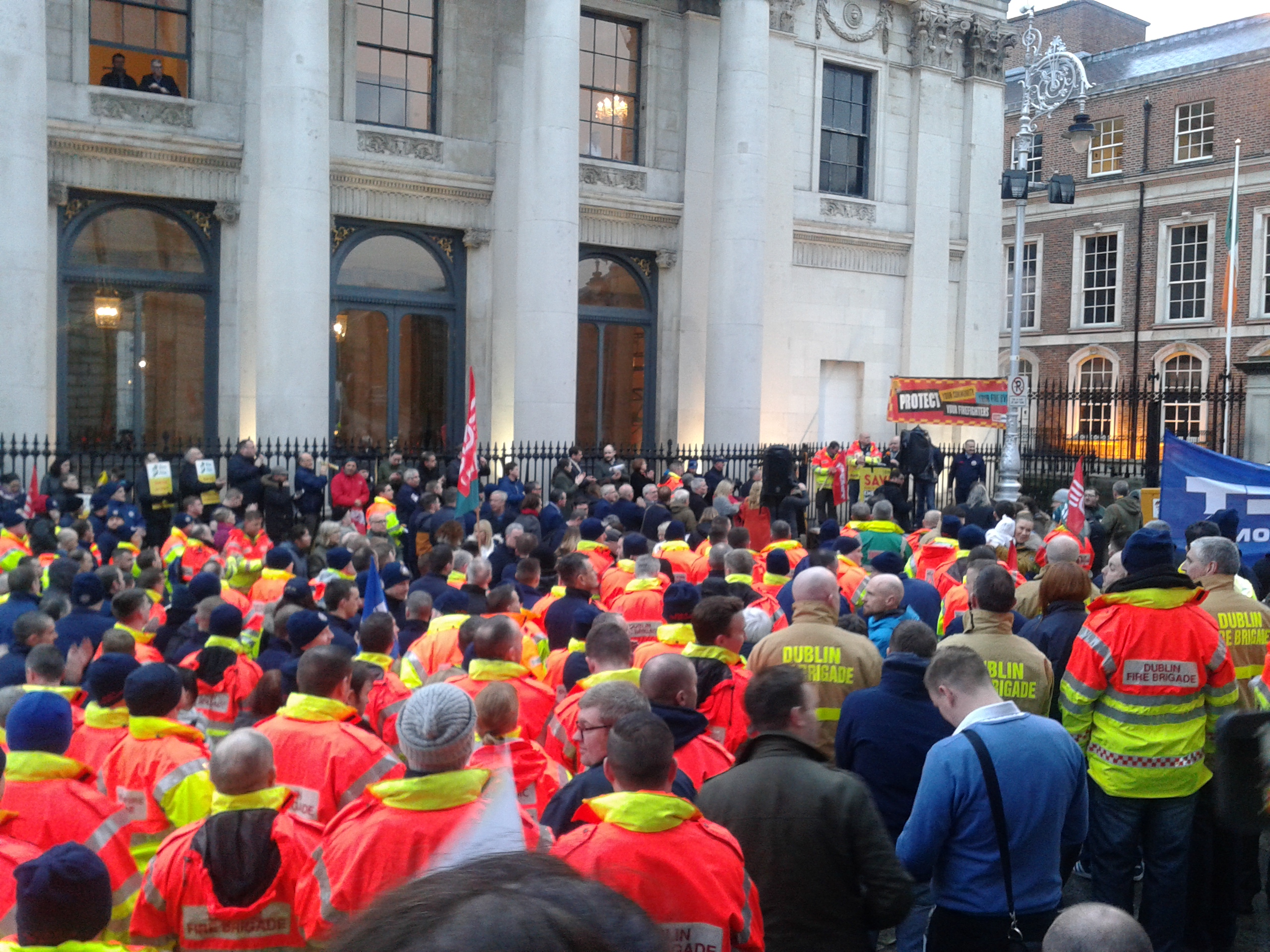
Gathering to hear the speakers on Cork Hill, outside the side entrance of Dublin City Hall (left of photo). (Photo: DBreatnach)
The monthly meeting of the elected representatives of Dublin City Council is often an occasion for protest, with placards and banners, of a number of campaigns protesting measures of the Council’s administrators or for calling on City Councillors for support ffor the campaigners’ objectives.
The March meeting of the Council on Monday night this week was no different in that respect but on this occasion, unusually, there were hundreds of protesters outside, the majority of them in uniform, filling the Cork Hill space in front of City Hall’s side entrance, up to the ceremonial entrance gates of Dublin Castle.
Several hundred thronged the area, most of them in either the dark blue of the Dublin Fire Brigade or in red-and-yellow or tan-and-yellow jackets, also bearing the legend “Dublin Fire Brigade”. Dotted among the crowd too were others in ordinary street clothes, presumably members of the public and a few with young children, probably relations to fire fighters or paramedics.
A young supporter of the fire-fighters’ struggle (Photo: D.Breatnach)
The protest meeting was seeking the support of elected Dublin City Councillors in their dispute with the Chief Executive of the Council, Owen Keegan. The highest officer in the Council does not want the local authority responsible for funding the Dublin Fire Brigade’s ambulance service call-and-dispatch service and announced two years ago that it would be transferred from the Tara Street centre and put under the control of the HSE at their national control centre in Tallaght.
However, his plan ran into trouble not only with the fire-fighters themselves but with a large number of the elected public representatives and as a result a consultative forum was set up. Its eventual recommendations were not however what Keegan wished for, proposing instead a technological linkup between the HSE’s and the DFB ambulance services and as a result Keegan and other DCC senior management pulled out of the consultative forum in January. Brendan Kenny, second-in-command at DCC said that there was no point in continuing with the forum since it did not carry out the task it was set up to do but came up with different recommendations.
STRIKE NOTICE
View from the steps of City Hall (State Entrance gates to Dublin Castle to the extreme left of photo). (photo: D.Breatnach)
Since the intention of the City’s management was clearly to proceed with their plan, both the main trade unions affected, SIPTU and IMPACT, balloted their members for strike action and obtained an overwhelming majority in February: 93% to 7% in favour of strike action and 97% to 3% in favour of industrial action. On Monday SIPTU served strike notice on Dublin City Council management and IMPACT did likewise the following day.
The strikes are due to take place from 9am on Saturday, March 18th and Monday, March 27th.
The demonstration on Monday night was addressed by a number of speakers, including many elected Councillors. However, first to address them was SIPTU’s Brendan O’Brien who expressed regret that “SIPTU members in Dublin Fire Brigade have been forced into conducting these work stoppages” which he said was aresult of his “members’ total commitment to providing the best emergency services possible to the residents of Dublin” and the intransigence of DCC management, headed by Owen Keegan.
Speaking to the press, he said that “These firefighters are withdrawing their labour to indicate, in the strongest manner open to them, their complete opposition to an attempt by senior management in Dublin City Council to break up the DFB Emergency Medical Service by removing its ambulance call and dispatch function.”
Before speakers addressed the crowd: top section of the crowd, approaching the State Entrance gates of Dublin City Castle (photo: D.Breatnach)
Addressing the demonstration on Monday evening, O’Brien said that if the strikes were not sufficient to make DCC management see reason, “make no mistake, this fight will become a national one.”
A number of Councillors addressed the crowd, representing most of the political groupings on the Council. Christy Burke, ex-Lord Mayor (2015), representing a group of Independent councillors, stated that DCC management had refused to let them use the power in the nearby building for amplification for speakers. Burke drew cheers when he quipped that what the Management did not realise was that “the power is not in there, it is out here on the street.”
Burke also stated that the DFB Ambulance Service was working well and asked rhetorically “why fix something that isn’t broken”, a theme taken up by a number of other speakers. The Sinn Féin speaker made the point that she was representing the largest political party in the Council, totally supported the Fire Fighters and would be seeking legal advice on Keegan’s plan and the other speakers likewise promised support to the fire-fighters.
OTHER UNDERLYING ISSUES IN THE DUBLIN FIRE-BRIGADE AMBULANCE SERVICE PROTEST
Although speakers for the fire-fighters a number of times expressed support for the colleagues employed by the Health Servive Executive, their members must be concerned at the prospect of coming under the management of an organisation so under-funded and reportedly often mismanaged as has been the HSE for decades now.
Another element playing itself out here is the recurring conflict between many elected City Councillors and the unelected City Management. The political colouring of the public representation in the Council changed considerably with the local elections in 2014, when Sinn Féin with 16 seats and Independents with 12 became the groups most represented. Next in numbers of Councillors is Fianna Fáil with 9 seats, while Fine Gael and Labour each have 8 each and People Before Profit have 5. The remaining 5 are divided between the Greens, Anti-Austerity Alliance and United Left.
This struggle between many of the elected and the appointed few has broken out on a number of issues previously, most notably perhaps on the Moore Street Quarter issue, with Keegan and Jim Keoghan, formerly second-in-command and head of the Planning Department, proposing a deal with a property developer for a ‘land swap’ involving Council buildings on Moore Street, a plan which mobilised significant campaigning opposition and which was defeated by a large majority of Councillors voting in November 2014. The Councillors were however unable to prevent Keoghan’s “executive action” in agreeing a number of property speculator planning applications and the most controversial extension of the ‘giant shopping mall’ permission towards the end of last year.
This level of conflict between the elected Dublin public representatives and the appointed senior officials has perhaps not been seen since the War of Independence (1919-1921), when an Irish Republican and Labour majority on the Council, after the 1920 Local Government elections, found itself in recurring confrontation with officials appointed under a colonial administration.
BACKGROUND
“According to Dublin Council’s website, “The Fire Brigade has provided the citizens of Dublin City and County with a fire and rescue service since 1862. This service was enhanced in1898 by the addition of an emergency ambulance service. In 2007 with 12 emergency ambulances DFB responded to 78,864 ambulance incidents, with the figure growing each year.
“Dublin Fire Brigade provides an emergency ambulance service to the citizens and visitors of Dublin. Dublin Fire Brigade is the only Brigade in the country to provide an Emergency Ambulance Service. Dublin Fire Brigade operates 12 emergency ambulances with one ambulance operating from each full time station with the exception of Dun Laoghaire.
“DFB’s Firefighters are trained to Paramedic level and are registered as practitioners with the pre-hospital Emergency Care Council (PHECC), meaning there are over 100 Paramedics available on a 24/7 basis in the event of a major emergency. All operational firefighters rotate between Fire and Rescue to Emergency Ambulance duties. Dublin Fire Brigade Ambulance Service has achieved accreditation under the ISO 9001/2000 Quality Management System.”
Lively ladies active in the Campaign for social housing Irish Glass Bottle site, Ringsend. (photo: D.Breatnach)Banner of campaign for social housing Irish Glass Bottle site, Ringsend. (photo: D.Breatnach)
OTHER CITY HALL PROTESTS
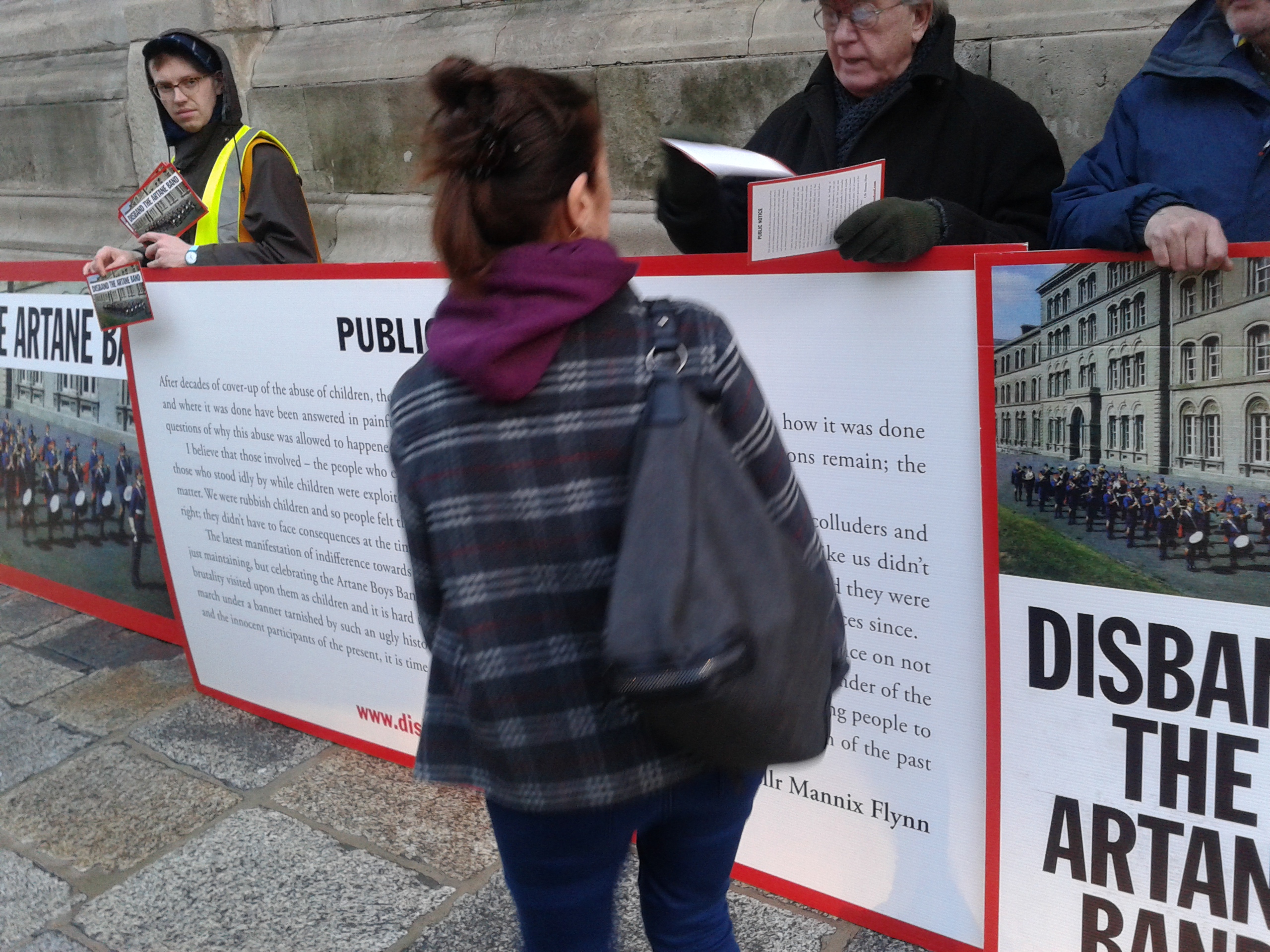
Also protesting outside City Hall (see photos) were lively and good-humoured campaigners for social housing on the former Glass Bottle company site in Ringsend and others calling for the renaming of the Artane Band (it is hoped to cover these campaigns in a little more detail in future reports).
Campaigners to rename the Artane Band because of the abuse that went on in the Artane Industrial School, which formed the original Artane Boys’ Band. (photo: D.Breatnach)
The following is a part of the personal submission on the future of Moore Street which I made to the Minister’s Consultative Group on Moore Street; another section, 0n the Moore Street Market, has already been published.
The 1916 Rising historical aspect of Moore Street has been most commented upon, understandably and rightly so; however because of that I do not feel it is necessary for me to do aught than to outline the bare bones of the historical case.
The Easter Rising began on Easter Monday April 24th — it was a momentous occasion in Irish and in world history (see 1916 RISING – OF GREAT SIGNIFICANCE IN IRISH AND INTERNATIONAL HISTORY to be published separately) and of unparalleled significance in making possible the present national and international status of Ireland (whether it or subsequent events resulted in true independence or lived up to the dreams and vision of the Rising’s participants is another matter).
April 24th was not only the day the “Republic was asserted in arms” but also the day it was declared by written and spoken word, to Ireland and to the world. That was done through the Proclamation, signed earlier in the week at No.21 Henry Street and then read out by Patrick Pearse outside the GPO on behalf of the Irish Republic, copies being also distributed through the city.
Why read out at the GPO? Because the HQ of the Rising was there, the Provisional Government of the Irish Republic. And on Friday 28th, when that building was no longer habitable due to shell-fire and flames, the Government and those remaining of the GPO garrison evacuated the building.
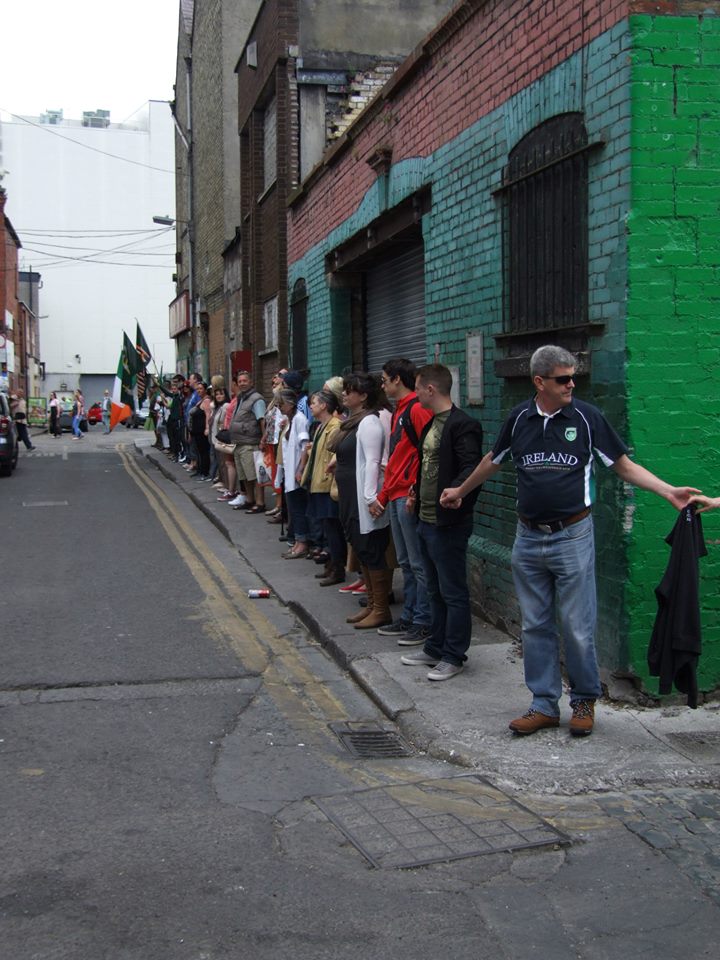
Corner of Henry Place (centre) and Moore Lane (right) looking westward towards Moore Street (photo taken by supporter during “Arms Around Moore Street” event in June 2015)
Leaving by a side door that no longer exists, the evacuees crossed a smoke-covered and bullet-live Henry Street and entered Henry Place. There they made their way to the corner of Moore Lane and two men died on that journey. They entered houses seeking British soldiers, ready for hand-to-hand fighting and found none – the British soldiers were at distant remove and armed with machine-guns and rifles on the roof of the Rotunda and at a barricade on Parnell Street.
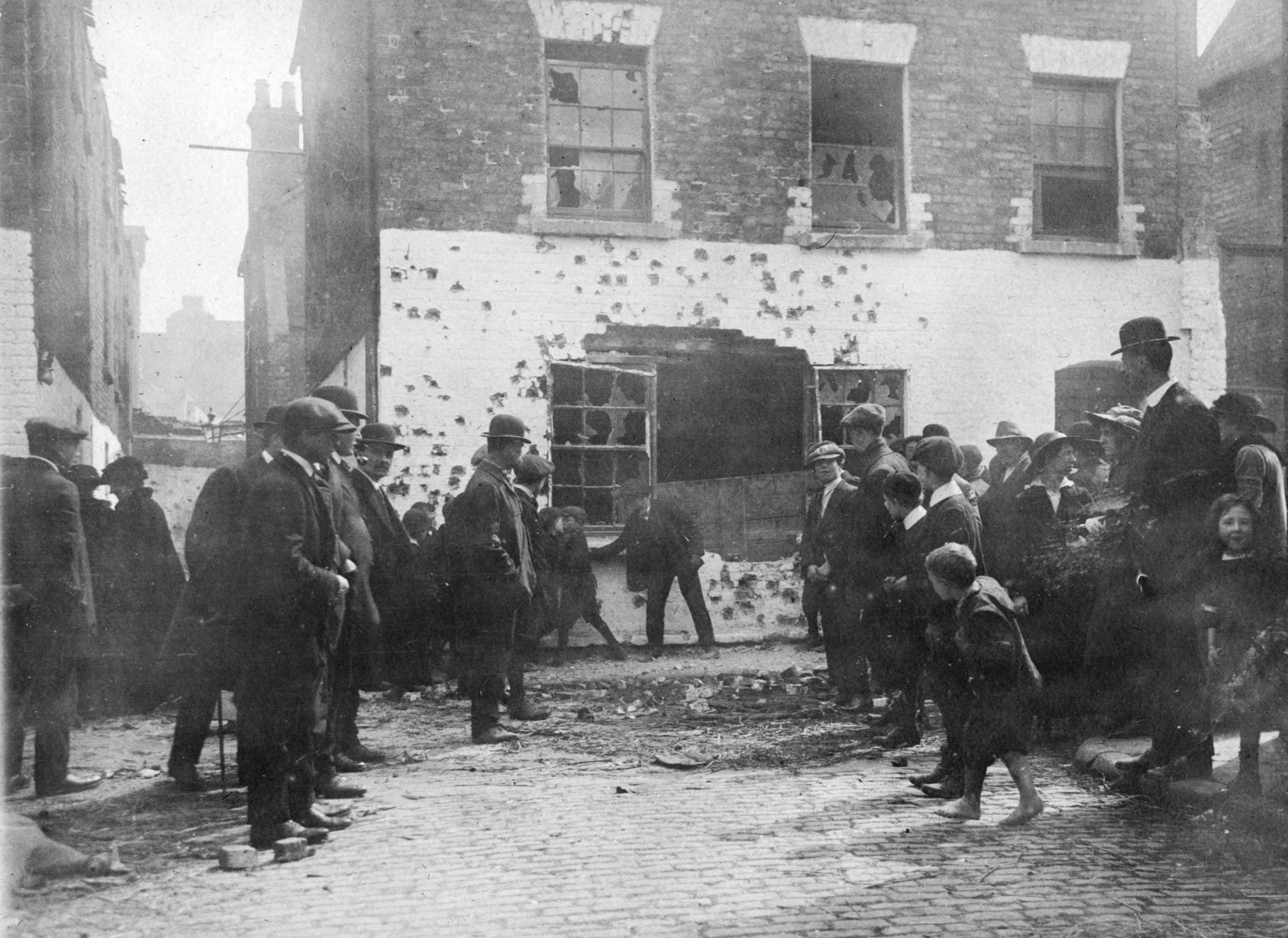
The “white house” in Henry Lane (photographer standing in Moore Lane), showing the British Army machine-gun and rifle bullet damage from Parnell Street and from the Rotunda tower. The GPO Garrison had to cross this opening to proceed onwards to Moore St (to the right). Note also the little lane-way or “turning” to the left of the building which is now enclosed and built on).
Building a temporary barricade for cover, the evacuees made their way across this gap – indeed a bearna baoil — and continued on towards Moore Street. Here again the main body came to a halt, as another British barricade was firing down this street too.
Possibly one Volunteer died trying to cross here; certainly the majority instead decided to enter No.10 Moore Street (junction with Henry Place) and some houses in the southern terrace (that whole terrace and a part of No.10 were later destroyed by shelling and flames). Some volunteers also occupied the furthest house south but were forced by flames and heat to evacuate it later.
Nos.10, 14, the End of the Terrace and O’Rahilly Parade
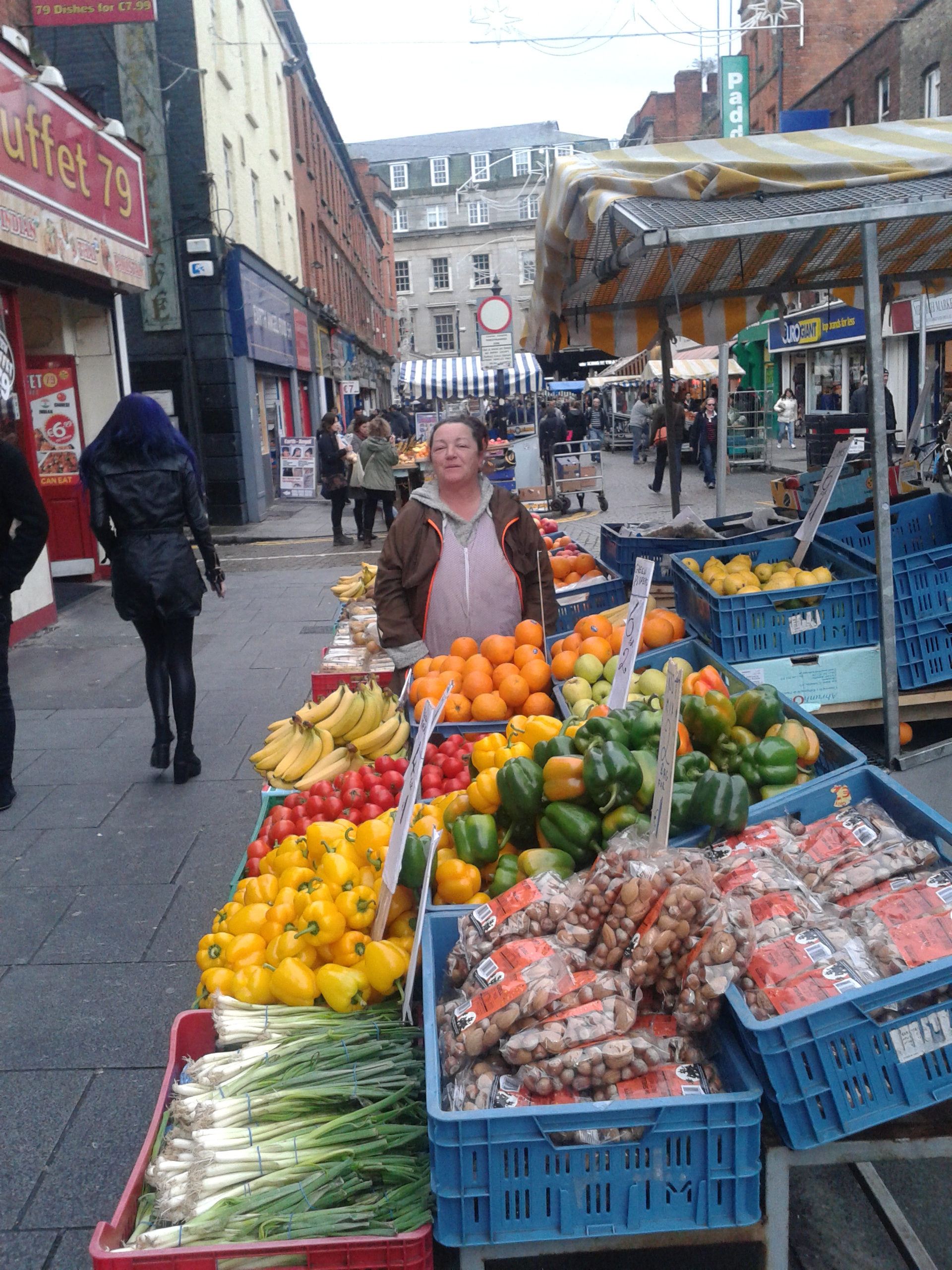
Moore Street market trader and stall. Past her to the left is the junction with Henry Lane and No.10, first HQ of the Rising after the GPO and field hospital of the GPO Garrison. In 1916, a storm of British bullets came down this street from Parnell Street (behind the photographer). (Photo D.Breatnach)
In No.10, Volunteer Nurse O’Farrell set up the field hospital, treating up to 20 wounded men, including a wounded British soldier picked up under British fire by George Plunkett from near a Volunteer barricade at the Moore St./ Salmons Lane junction and brought inside to be cared for.
Such details would make No.10 of great historical importance but it is trumped by another – this was also where the Provisional Government met on the evening of Friday 28th, the last night of the Rising. And it was here that the decision was taken to tunnel through the rest of the houses.
Through the rest of that night tunneling continued to the last house in the terrace, which is to say at the lane now named O’Rahilly Parade. And the Government relocated to nearer the centre of the terrace, almost certainly No.16. Those facts alone make the whole terrace of important historical significance.
Yet there is more. Just prior to the evacuation, The O’Rahilly led a detachment of volunteers (in both senses) in a charge along Moore Street at the barricade. Of those who remained in the street only one somehow appears not to have been wounded but his luck was about to run out: as he ran across the road to the laneway which now bears his name, The O’Rahilly was hit by five bullets and lay, dying, in the lane. Here he composed and wrote that prosaic and yet heart-rending simple letter of farewell to his wife and children, the script and content of which is reproduced in the monument currently on the wall in this laneway, near the junction known for generations locally as “Dead Man’s Corner”.
O’Rahilly monument in Parade now bearing his name (photo: D.Breatnach)
ANOTHER SUICIDE ASSAULT PLAN AND SURRENDER
In this laneway the next day, Saturday 29th, there gathered another barricade suicide attack party mobilised by Seán McLoughlin, to provide at least a diversion for the rest of the Garrison to escape and proceed westward to continue the resistance. Included in this group was Oscar Traynor, subsequently serving at different times as Minister for Post & Telegraphs, Defence and Justice (also President of the Football Association of Ireland) (but also later instrumental in denying McLoughlin a pension at commanding officer level).
Impressed by McLoughlin’s conduct earlier and during the evacuation, Connolly had appointed him to replace himself as head of the GPO Garrison now in Moore Street: yet another great historical importance of Moore Street – McLoughlin went on to become an IRA organiser in Limerick and also Commandant of a Flying Brigade in Limerick during the Civil War (by which time he had become a communist).
McLoughlin’s group were pulled back from their attack almost at the last moment as Pearse was now contemplating surrender. A number of civilians, including women, had been shot dead by the British in Moore Street (the Volunteers had shot one civilian, a teenage girl, with an accidental discharge upon entering No.10 – incredibly almost, the father pleaded the Volunteer be not punished and the mother cooked for the soldiers).
In pursuance of the decision to surrender, Elizabeth O’Farrell left the terrace (perhaps from No.14) under an improvised white flag of truce (despite a civilian man lying dead in the street under another such improvised flag), climbed over the British barricade and met with General Lowe, then returned to Moore Street and eventually emerged again with Pearse, whereupon the Surrender was formally agreed and Pearse’s order and Connolly’s co-signing was also decided.
All those events make the whole Moore Street quarter of huge national historical significance but there is yet one more – McLoughlin marched the garrison out under arms, in defiance of the orders of the British and they retraced their evacuation route, saluting the GPO as they passed it on their way up to the Gresham and captivity.
Apart from the civilians and Volunteers wounded and killed in that quarter, five of the Signatories of the Proclamation, including the Commander-in-Chief of the Rising and with his brother Willie, six of the fourteen executed in Dublin spent their last days of freedom in Moore Street.
During the Easter Rising Volunteers and their supporters or anxious relatives came and went to and from the GPO and other buildings in the area, some of them taking side streets to do so, many passing through the Moore Street quarter (including parts of it now buried under the ILAC). From the GPO to the Moore Street quarter is clearly the site of a historical urban (and WWI) battlefield, most of it intact.
Judge Barrett rightly pointed out that the issue is not how many of the houses are of pre-1916 construction (despite the State’s defence team making much of this issue) but rather of the historical footprint. In other words, Max Barrett took an archaelogical historical view rather than a historical architectural one.
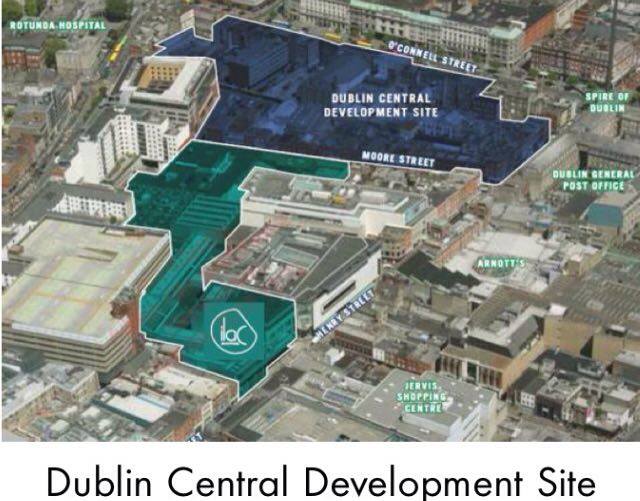
Map developed by Save Moore Street From Demolition superimposed on an old map of the area. The area taken by the ILAC is shown in green and points of historic interest are numbered.
Without being unmoved by architecture, I would concur with this viewpoint and emphasise it in stressing the historical importance of the street, laneways and buildings (including the eastern side of the southern terrace of Moore Street, included in the threat from the giant shopping mall plan). Nevertheless, it is a fact that some of the buildings are of pre-1916 vintage and that virtually all contain some of the original building, or cellars or courtelage. On the northwest side, bullet marks may be found on houses including parts of the wings of the ‘grotesque’ (on the roof of a fine “Dutch”-style house) which were shot off by British Army soldiers during the Rising.
CONCRETE CONSERVATION, RESTORATION AND DEVELOPMENT RECOMMENDATIONS
In consultation with campaigners, street traders, the public, small shopkeepers, local residents, historians, architects and elected representatives: Save, Restore, Rebuild, Improve.
The whole area should be pedestrianised with the usual access exemptions for deliveries within certain hours, emergency services etc.
Buildings of the 1916 period in the Quarter should be preserved
All other buildings in the quarter should be preserved, renovated or reconstructed as necessary to appearance appropriate to the period and area (and appropriate to their current use – I am not advocating the building of outside toilets for public use or slaughterhouses)
The upper floor of the 1916 Terrace should be developed into a 1916 history experience, integrated with the GPO and the Evacuation Route, with disabled access
and the history being ‘social’ (i.e. showing how the people lived) as well as a ‘political’, i.e. aspects of the Rising (see A MOORE STREET HISTORY TOUR — A VISITOR’S EXPERIENCE IN THE FUTURE, article soon to be published)
The Evacuation Route should be conserved and appropriately renovated where necessary, with important events marked by plaques, panels and murals along its route
The Evacuation Route should be brought back to the period cobbles and kept clear of rubbish or graffiti with disabled access
Moore Lane and O’Rahilly Parade should be brought back to original cobbles with disabled access
The development should take place in the context of upgrading the area as a history, culture and leisure area, most of it accessible by day and night
The part of Moore Street not currently part of the Barrett judgement should be included in the overall plan
The State should investigate the potential of applying for World Heritage Status, consulting widely and publishing its recommendations
Also for conservation within a European framework (some aspects of Horizon 2020 may be useful in this respect)
In order to do all this, a first priority is to formally urge the Minister to drop the appeal and I submit that the Consultative Group should do exactly that.
Develop a democratic, open and transparent partnership process to oversee the development, with representation for all stakeholders, including street traders and local small businesses, nearby residents, historians, campaigners (including activists currently excluded from the Consultative Group), historians ….
I once knew a cat but, what is more to the point, the cat knew me.
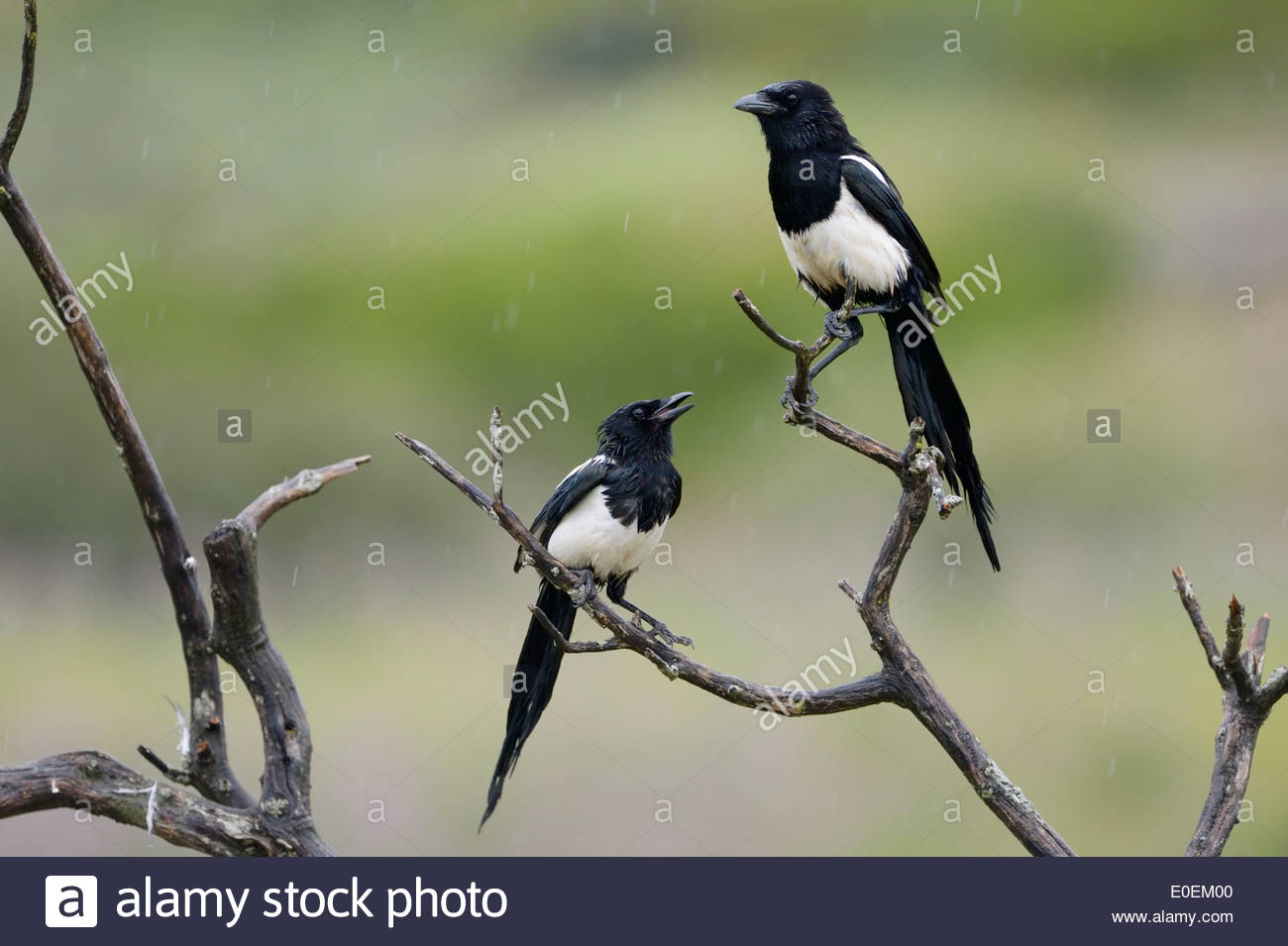
A pair of European Magpies on branches
I knew the cat not well, but as a kind of nearby resident I had helped a little once and made friendly overtures to. He or she (I suspect she and will refer to it so from now on) first came into contact with me when a racket of magpies not far from my home attracted my attention. I found magpies harassing a marmalade (orange tabby) cat in a tree and the cat seemed trapped there.
Since there was no nest in the tree for the magpies to be protecting, I chased them off some distance with the aid of shouts and stones, then tried to persuade the cat to come down but she just looked at me – afraid of me too, I thought. Some days later, I came across a marmalade cat outside some nearby houses and called to her and, when she came, stroked her and then went on my way. She made as if to follow me but then gave up.
A few weeks later, I was coming up the road when I saw a marmalade cat about 50 yards away and wondered if it was her. She however looked up, saw me and hurried over, then began rubbing her body against my leg.
So how did she recognise me? Cats have very good hearing but I very much doubt she could identify my footsteps on a concrete footpath amidst all the traffic noise from so far away. Cats also have a good sense of smell but I don’t think it’s good over distance. They are not good at recognising human faces, according to tests. So, she probably recognised my shape and gait (like those recognition software programmes the secret services have developed and with which they monitor a lot of CCTV coverage — reassuring, huh? Not so much!).
(Photo source: Internet)
It is true I have a somewhat identifiable gait, so I am told – a swagger learned as protective colouring in my teens but about which I am nearly always unconscious and when I am, try to control. Once doing that in New Cross in SE London, a black youth I knew from my work in a local youth club shouted from across the street: “Walk like a white man!” Apparently my attempt to control the Dublin swagger was resulting in the kind of walk adopted by many Afro-Caribbean youth.
But, back to the cat. Anyway, it was an amazing feat of recognition of an individual of a different species and of minimal acquaintance and I think she would have recognised me no matter how subdued my usual type of walk. I wonder how many individuals considered friendly or otherwise a cat can identify by sight at a distance – just how big is their database?
Another time I came upon this cat, she was stretched out on a warm sunny pavement but being persecuted by a pair of magpies (probably the same ones as before). The cat saw me and so did the magpies but I stopped at a distance to observe what was happening.
One magpie distracted her attention by strutting up and down in front of her head, but out of reach of swipe or sudden rush, while the other waited its chance and pecked at the cat’s tail. She lay there suffering this persecution, only twitching her tail from time to time in a futile attempt to keep it away from the bird or perhaps out of tension.
“But why don’t you move, Cat?” I asked her, half in amusement and half in sympathy.
She looked at me and seemed to say:
“Why should I? This is MY pavement and I am harming no-one! I am not going to let two BIRDS chase me off!”
“Well, you could spring at them …”
“What’s the point? They keep just out of range and I’d miss, giving them a reason to mock me.”
The Magpies, in turn, might have been saying:
“This has nothing to do with you, Mister. This is a Cat, ancestral predator on birds and fair game for us at any time. Keep out of it!”
“Yeah, we remember you butting in before!”
And magpies probably can identify human faces – at least tests with their close relatives, crows and jackdaws, show that they can. And magpies are the only bird so far shown able to identify themselves in a mirror.
I did keep out of it. I had things to do and left them to it – the cat after all had the option to leave and even were I to chase them off, the birds would only fly a little distance and then come back. I’ve seen magpies do this “torment-the-cat” thing before. And cats will kill a magpie, if they can.
The cat’s refusal to move or to make a lunge she knew the birds would easily evade, the provocative tormenting by the magpies and the way they worked in unison, all seemed to me so very human, even allowing for anthropomorphism.
But thinking about it later, I came to a different conclusion: it is not the animal behaviour that is human-like – it is OUR behaviour that is animal-like! After all, are we not descended from a common ancestor, albeit nearly 300 million years ago?
In total, I saw that Marmalade Miss maybe four or five times and then no more. Perhaps her owner(s) moved – I hope so and that she was not killed by traffic.
I had nothing I could gain from the cat, other than a kind of feeling of kinship perhaps. Other than a stroke now and again, she had nothing to gain from me. It was an uncomplicated friendship and not, like with some dogs, a dependency by either of us. I know she is gone but years later, as I pass near that street, sometimes still look out for her.
Diarmuid Breatnach — part of Submission to the Minister’s Moore Street Consultative Group
I have had input to a number of submissions to the Minister’s Moore Street Consultative Group and recently sent in my own personal one. The submission is divided into sections and this is the one dealing with the market (the others will be published at intervals).
DUBLIN’S HISTORIC STREET MARKET
Historically, the Moore Street quarter deserves preserving in its own right and should have been so. Instead, it has been both neglected and preyed upon. But so has the street market.
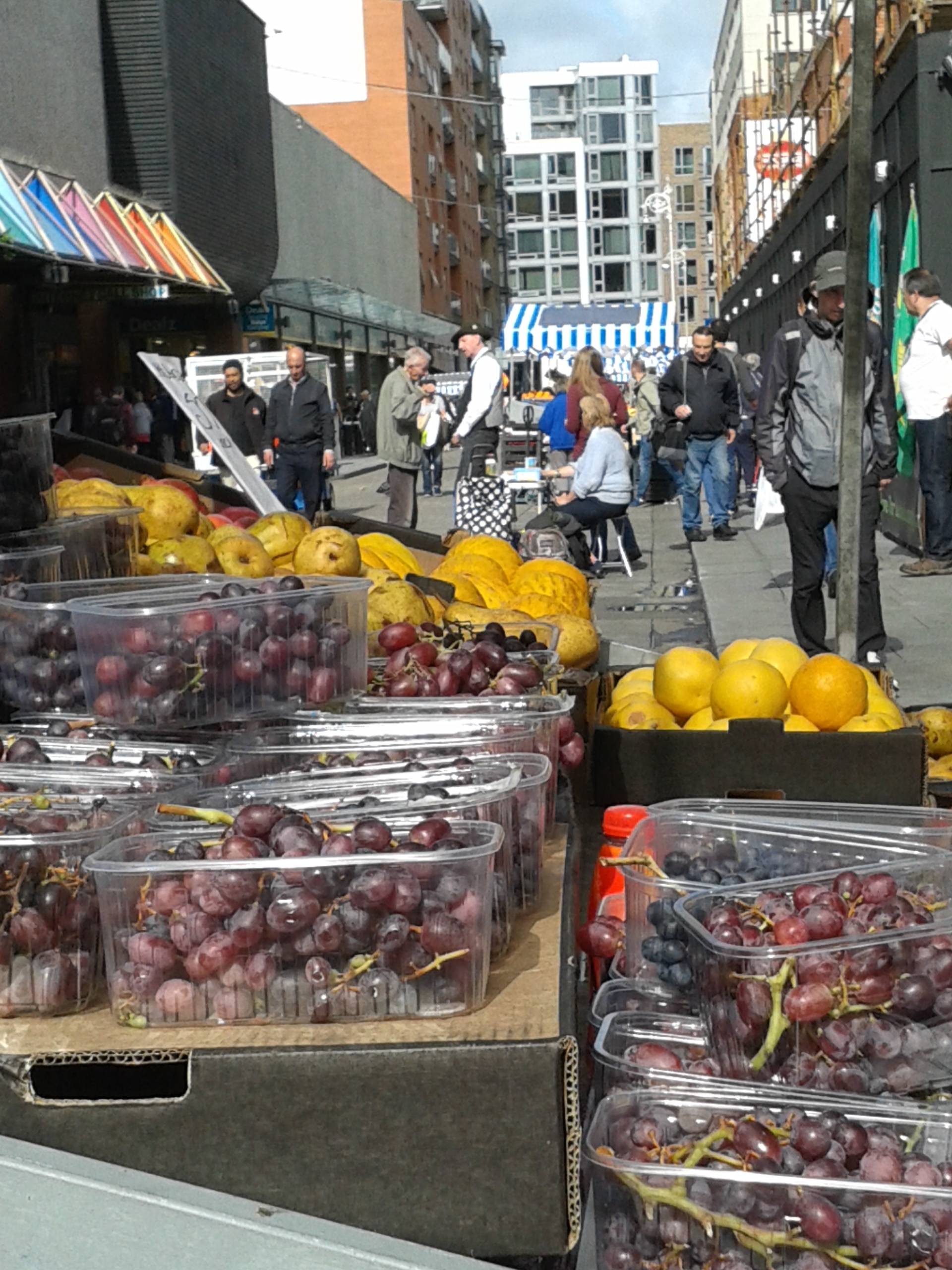
View across fruit stall showing hoarding on the right (In August, before hoarding also erected on the left) and SMSFD campaign stall in the distance. (source: D.Breatnach)Moore Street, perhaps 1960s or 1970s, from perhaps the roof or upper floor of the GPO building (Source: Internet)
As the only traditional food street market of antiquity remaining in Dublin, considering also its iconic status to not only Dubliners but migrants through the centuries and to visitors from the countryside, the street market should also have been saved. Such features in cities abroad are promoted for tourists, and indeed both Fáilte Ireland and Tourism Ireland do promote the market to visitors to Dublin. One can see the bemusement of the faces on many as they wander through in groups and imagine their thoughts (or overhear their expression):
“This is the famous street market? Are we sure we haven’t taken a wrong turning?”
It is easy to understand their confusion. Had they come a half-century ago, before the ILAC was built, they would have seen a bustling street, with stalls and shops both sides of the road along its length, and some businesses in side streets. Two decades ago, they would have found no difficulty in imagining the market’s former glory, for much of it remained still. Even a decade ago, perhaps, enough remained to imagine it.
People signing the Save Moore Street From Demolition campaign petition in Moore Street with the new hoarding for the ILAC’s latest extension in the background. (Photo: D.Breatnach)
But now? With shops closed and ugly hoardings squeezing the street? With big business shops pushing out in Moore Street? With independent shopkeepers offered only one-year leases at a time and pushed out willy-nilly? With only 15 street trading licences in operation and only some of those on the street at any one time?
The street market is not beyond saving and I will devote some space to that issue but first let us examine how it has come to this, for overcoming those causes is part of the solution.
THE GUILTY
In a Rogues’ Gallery of those guilty for bringing about this state of affairs, first in line must stand the Planning Department of Dublin City Council, which has made the decisions about what could be built and what demolished.
I know not how much money was placed into how many brown envelopes nor the names of all those who received them (though I have a fair idea of the identities of some of the recipients), nor what other favours were dispensed. But what is clear is that there was massive favour given to big business and speculators, the legendary Gombeen Men, and massive disfavour to street traders, small independent businesses, workers and working class residents. This of course has happened in many other areas of Dublin City and County and indeed elsewhere in Ireland. But one of the most concentrated areas of abuse has been the Moore Street area. And it continues to suffer that abuse.
Part view of LIDL supermarket and junction of O’Rahilly Parade and Moore St. Most of the market stalls begin from just past the dark blue hoarding at the right of photo. (source: Trip Advisor)
Who, wanting to conserve a street market, would allow a giant supermarket chain outlet at one end of the street and another next door, in a city centre already abundantly served (if that is the word) by supermarkets? Who, wanting to conserve such a street market, would grant planning permission to huge shopping centre buildings to cover the entire area on each side of that remaining street market? Who, in good stewardship of our city centre, would grant a huge extension on a bad planning permission when the original one of a decade was running out with no work of any significance having been done on it to that point? And what public servants would so callously and nonchalantly ignore the wishes expressed by its citizens and, indeed of late, by the majority of their elected representatives?
Roques map of the Moore Street quarter showing the streets lost under the present ILAC (source: Internet)
Since no other motivations are apparent, one is entitled to assume either idiocy or rapacious greed; since the men involved on both sides of those arrangements are not idiots in the normal sense, that leaves an intelligent observer with only one alternative. And ask most ordinary people in Dublin and they will freely name the alternative, the real motivation.
One of the Asian exotic fruit and vegetable shops in the street (one was evicted recently to make way for the ILAC extension). (source: D.Breatnach)
Next into that rogues’ gallery must step the Department of Dublin City Council responsible for Street Trading – it is they that issue the street trading licenses to the street traders, lay down conditions and enforce restrictions, and in conjunction with other departments, provide their facilities.
Yes, well – facilities? One covered stall, open on all sides. No heating. No lighting other than the dim amount in the street. No water supply near to stalls. No toilets or changing rooms for the traders. Year after year, despite promises to the contrary, these disgraceful conditions continue. Some of the current traders are the fourth generation of their family in such work but is it any wonder that few stall-holders believe their children or grandchildren will follow them into the work?
As if that were not enough, around the time the Moore Street campaign was heating up further, when Chartered Land was gearing up to make its ‘land-swap’ offer, a deal promoted by the head of the Planning Department and lauded by Minister for Heritage Heather Humphreys, Dublin City Council put not one but two permanent Market Inspectors on the street (at that time I think there were only 16 street licenses in operation there). Previously, one inspector would tour the market perhaps once or twice a day, for an hour at most.
What was the practical need for bumping up to this relatively high level of inspection? These inspectors have no powers other than instructing the shops and traders about street and pavement regulations and fining them for non-compliance. They do not attend to any other matters. They do not even claim to monitor the quality of the produce sold in the street.
There is no reasonable answer to this question, unless the purpose is to harass the small shopkeepers and traders further, in the way that unscrupulous landlords harass their tenants when they want to get rid of them but find it difficult to do so legally.
I do not accuse the individual inspectors of having that intention – only those who conceived of the idea and put them on that street. But employ two men on a street which they can clearly see often contains only ten stalls, tell them they have to enforce the street trading rules or their jobs will be in jeopardy — and what will they do? Urged by employment insecurity and sheer boredom, they will go up and down the street, criticising traders and even shopkeepers for extending some inches outside their allotted space (though there are many empty metres to each side and their neighbours are not complaining), or for continuing to sell some minutes after official closing time, threatening and even fining those trying to make a living with legitimate businesses and stalls on that street.
One might almost suspect that between speculators, big chain businesses and certain Dublin City Council officials, there is a conspiracy to run the street market into the ground, in order to make the whole a rasa tabula, a board wiped clean, upon which powerful financial interests can write their plans. Or an eyesore that few will bother to defend. And I say that such a conspiracy exists. Generally in this world, what looks like, feels like and smells like is indeed the substance one suspects.
Drawing showing how the proposed shopping centre (dark blue) and the current ILAC light green are taking over the quarter and squeezing the Moore St. market. (source: Internet)
The Moore Street Market should be cherished, nurtured and supported. Perhaps it is too late to do anything about those already in existence around it but no more supermarkets should be permitted in its near proximity.
The street traders should be given decent working conditions of shelter, heating and light and free from unnecessary official interference (not to say harassment). Small independent businesses should be encouraged in the street and in its surroundings (more on this later). The objective should be to promote a healthy, vigorous, colourful street food market on the spot where such has stood for centuries, with attractive working and earning-a-living conditions for those who work and shop there.
CONCRETE RECOMMENDATIONS
I am not a street trader but I have sold and promoted items publicly on many occasions and I also know something of the conditions in Moore Street, which I attend at least once week and usually a number of other days too.
When the weather is fine it is pleasant to have an open-air market but when it rains, snows or cold winds blow, shelter is desirable. The only way to be able to benefit from good weather and shelter from the bad is to provide a removable cover over the whole. I am sure that our present level of technology can provide a retractable, transparent roof.
Because the winds can be biting and also to conserve heat in winter, I suggest that sliding doors at each end to of the market should be provided – these can be left open or partially drawn as required.
Each stall should have adequate lighting and heating at hand (or foot!). A water supply should be available nearby no more than a few feet distance from every stall.
Toilets should be provided for traders.
There should be more flexibility in what the traders can sell, without losing the focus on a food market. During the 1916 Centenary year, traders were prevented by market inspectors from selling simple 1916 memorabilia – scarves, copies of the proclamation, flags etc. Such a prohibition in Moore Street was particularly ironic and unfortunate.
The refuse collected in the street should be verifiably recycled, the vegetable and fruit refuse in particular making excellent compost for city gardeners (and perhaps for a garden in the quarter itself).
The market traders do not work on Sundays and this seems an excellent opportunity to provide a farmers’ market in the street and lanes, bringing more value to the area.
The part of Moore Street largely omitted from the Barrett judgement, i.e from the Henry Place/ Moore St. junction to Henry Street, should be included in the overall plan
All of the above should be done in consultation with representation from workers, traders, small shopkeepers, shoppers of Moore Street and with local residents and the process should be transparent and publicly accountable
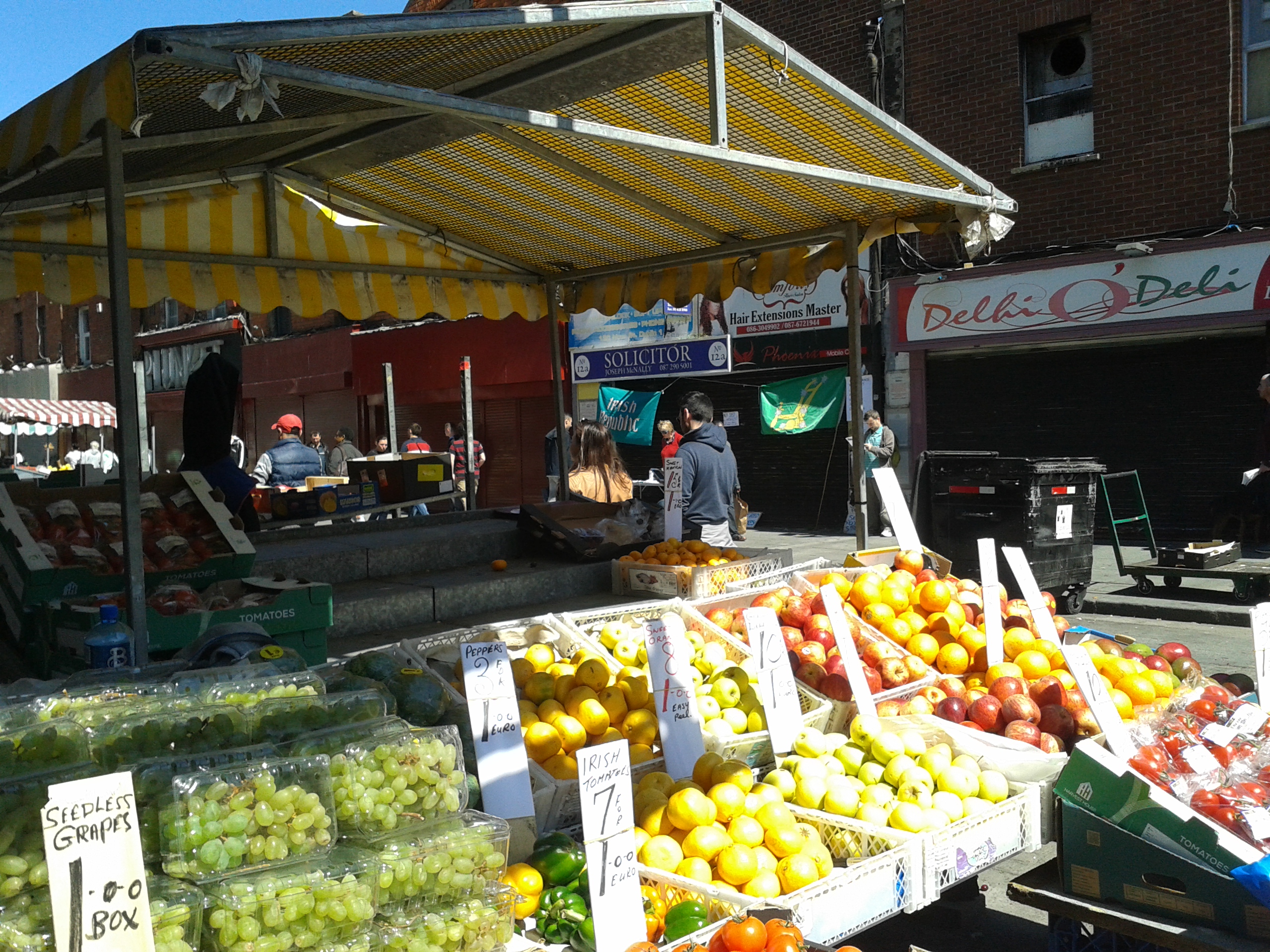
Some of the few surviving fruit stalls on Moore Street, half-way down the main stall street, east side, looking northwards; standing by, Angela, one of the long-time street traders. (source: D.Breatnach)
Flower stalls at the north end of Moore Street (source: D.Breatnach)














 rebelbreeze