JIMMY CLIFF, VIETNAM AND CARIBBEAN MIGRANTS

Diarmuid Breatnach

(Reading time: 4 mins.)

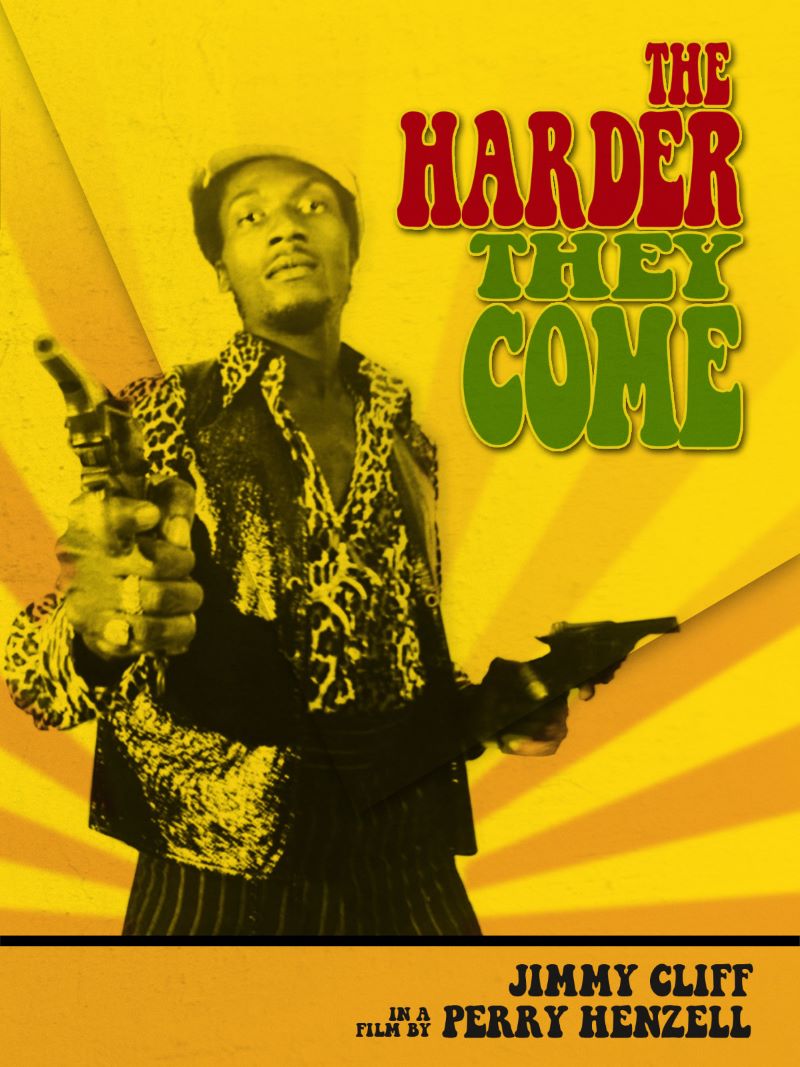
The death is announced on mass media today at 81 year of age of Jamaican reggae singer, songwriter and author Jimmy Cliff,1 famous for songs such as The Harder They Come and for his role in a film of the same title.
As is usual in such cases, tributes have been posted on social media and quoted in the western mass media, including by Ali Campbell of the UB 40 band who was reported to be ‘so sad’2 (which to be honest, seems a little strange as Jimmy Cliff lived to a good 81 years of age before he died).

I first heard a few of Jimmy Cliff’s nearly 30 recordings among the Caribbean community of SE London.

Jimmy Cliff grew up James Chambers in a family of nine in St. James in Jamaica, often mistakenly thought of as the largest Caribbean island (which it is not – that is in fact Cuba). Jamaica, like Trinidad & Tobago, another larger island and Barbados, were among the British colonies in the Caribbean.

The Caribbean islands and coastline3 were first European-colonised by the Spanish, then by the French, Dutch and British Empires, often in armed conflict against its indigenous people but also among themselves, also against slave uprisings and later against local struggles for independence.4

Since WWII the dominant imperialist power in the Caribbean is undoubtedly the United States of America, though France retains some colonial possessions and a few remain part of the British Commonwealth.

Today the Caribbean is in the news through a large force of US Naval forces posted there, along with nearby posting of bombers, along with the murder of over 80 small boat sailors, allegedly drug smugglers (without evidence and as though drug smuggling gets the death sentence).5

According to threats of President of the USA Trump, he intends to target Venezuela and its President Nicolás Maduro, whom he claims – without a shred of evidence — to be the leader of a drug cartel.

Migrant communities and the spread of Reggae

During the decades I spent in London I had a fair amount of contact with parts of the Caribbean immigrant and diaspora community, partly through working alongside some of its members, partly through socialising in SE London and through activity in resistance to fascism and racism.

I first came across Reggae music while living as a migrant in the SE London areas of Lewisham, New Cross and Peckham. There were large Irish and Caribbean communities there with some but not a great deal of interaction between both communities but little hostility between them either.

Both communities were subject to institutional racism and politicised communal racism as organised by the fascist National Front and British Movement, both of which had connections to British Loyalist paramilitary organisations in Scotland and in the Six Counties in Ireland.

I recall reading in a British 1950s sociological study on ‘deviant behaviour’ that ‘Teddy Boy’ gangs would target the post-War newly-arrived Caribbean immigrants (but also the ‘Micks’, i.e the Irish) and a Jamaican workmate told me about the gangs waiting for them on Childeric Rise.6

How he went out armed with a home-made knuckle-duster and how the police would come to the fighting, arresting mostly the Caribbean victims. “Them turn me away when dem see me,” a Caribbean migrant discussing racism told me, “but dem turn you away when dem hear you.”

In Caribbean shebeens7 or illegal ‘clubs’ in that SE London area, one could buy for a modest sum a plate of goat curry and rice, or a can of pale ale or Guinness, while listening to vinyl records of Bluebeat, Ska, Rock Steady, Reggae and, to a lesser extent, Calypso.8 And dance, perhaps.9

Jimmy Cliff composed songs and rode the rising Reggae tide, for a short while rivalling Bob Marley for most popular position. What launched him and the Reggae ship into wider seas was the film The Harder They Come based on the novel of the same name featuring Cliff’s own song.

The Harder They Come novel by Ekwueme Michael Thelwell charting the fictionalised career of a Jamaican who fails to succeed as a reggae singer and becomes a gangster is based on the real life of Jamaican folk hero and reggae star Rhygin.10

But the film’s hero was performed by Jimmy Cliff and his music played as soundtrack.

In Peckham I watched the film years later and enjoyed it but I also read the novel. The latter gives an interesting background of the hero growing up in his grandmother’s care in rural Jamaica, before he goes to Kingston, while the film opens only with the hero’s arrival in the city by bus.

Famous folk singer Bob Dylan is reported to have said that Jimmy Cliff’s 1969 song Vietnam was the best protest song he had ever heard. It is hard to credit that as a true statement; Pete Seeger, Dylan’s contemporary, many others and Dylan himself had composed many better.

Jimmy Cliff’s Vietnam song takes as its theme a US soldier in Vietnam writing about his impending return home at the end of his tour of military service in Vietnam and his desire for his girlfriend, followed by another missive to the soldier’s mother announcing her son’s death in Vietnam.

The tragic juxtaposition of youth, romantic love, violent death and parental bereavement is an inherent theme of war and of course works on our emotions. But the song says nothing about who sent the soldier there nor the reasons for the Vietnam War, though one line calls for its end.

The lyrics tell us nothing about the devastation of the US war upon the peoples of Vietnam, Laos and Cambodia, nor about the heroism of the people’s resistance.11 Not even about the huge protests of many people in the USA — particularly youth — and in much of the western world.

Jimmy Cliff in performance (Photo credit Alastair Wison/ PA)

However, Jimmy Cliff’s performance of the song 20 years ago in Jamaica brings the point of the anti-war movement much more into context as in his introduction to the song on stage he castigates Tony Blair and George Bush and names a number of other imperialist wars.

It was a great performance of Cliff’s at the end of his sixth decade of life and I hope you enjoy it here on video.

https://www.youtube.com/watch?v=jCc5jSw0bSQ

End.

Note: If you found this article of interest, why not register with Rebel Breeze for free, so that you will be notified by email of subsequent articles. You can de-register any time you wish.

FOOTNOTES

1https://www.independent.co.uk/arts-entertainment/music/news/jimmy-cliff-dead-age-cause-songs-reggae-b2871220.html and https://en.wikipedia.org/wiki/Jimmy_Cliff

2Facebook · UB40 Featuring Ali Campbell So sad James chambers has left a void in reggae music, his voice and influence was exemplary. He was a reggae pioneer, RlP Jimmy cliff.

3https://en.wikipedia.org/wiki/Caribbean

4https://en.wikipedia.org/wiki/History_of_the_Caribbean

5https://www.nbcnews.com/politics/national-security/top-military-lawyer-raised-legal-concerns-boat-strikes-rcna243694

6This rise gave on to the New Cross Road from terraced housing down below where a number of Caribbean families lived, in one house of which I shared a double room with another Irish migrant. Almost at the top of Childeric Rise itself was the entrance to The Harp Club Irish dance hall with an Irish pub on an opposite corner and another across the road.

7From the acknowledged Irish language word ‘síbín’, etymology uncertain but adopted as far away as the Caribbean and South Africa.

8Music mostly of Trinidad and Tobago, often accompanied by steel band instruments, based on folk dance music from a part of West Africa. https://en.wikipedia.org/wiki/Calypso_music

9Not very well to those rhythms, in my case.

10https://groveatlantic.com/book/the-harder-they-come/

11Estimates of Vietnamese soldiers and civilians killed range from 970,000 to 3 million. Some 275,000–310,000 Cambodians, 20,000–62,000 Laotians, and 58,220 US service members died. https://en.wikipedia.org/wiki/Vietnam_War#:~:text=The%20war%20exacted%20an%20enormous

SOURCES

https://www.independent.co.uk/arts-entertainment/music/news/jimmy-cliff-dead-age-cause-songs-reggae-b2871220.html and https://en.wikipedia.org/wiki/Jimmy_Cliff

https://en.wikipedia.org/wiki/Caribbean

OASIS, MANCHESTER & THE FENIANS

Diarmuid Breatnach

(Reading time: 4 mins.)


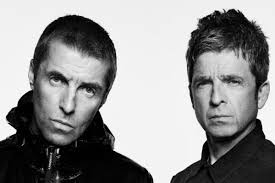
The Oasis rock band are performing on 16 and 17 August in Croke Park, the Gaelic sports stadium in Dublin, to a sold out capacity of 82,300. Brothers Liam and Noel Gallagher are the two leading members of the band.

Oasis-marked t-shirts and caps are being sold from stalls in the city and posters announcing the forthcoming concerts adorned shop windows and lampposts but how many fans know the Gallaghers’ background?

Liam and Noel Gallagher of Oasis (Source imag: Internet)

Liam and Noel were born in Manchester to Irish migrant parents but their mother Peggy split from her abusive husband and moved elsewhere in Manchester, taking the kids with her. Liam dedicated Stand by Me to her on Saturday night and gave a shout-out to her her birthplace in Co. Mayo.1

Ireland fed the British ‘industrial revolution’ and the Irish have a long association with Manchester. In 1845 the city’s factories were already attracting Irish workers and its farms probably also agricultural workers to replace English labourers deserting the farms for the factories.

Friedrich Engels wrote The Condition of the Working Class in England,2 published in 1845 (the first year of the Great Hunger) and mentioned the Irish migrants not too favourably. He was writing mostly about Salford, the subject of Ewan McColl’s Dirty Old Town,3 just outside the city then.

By the time Engels’ book was published, the Great Starvation was gearing up. Uncomplimentary references to the Jews can also be found in that work but whatever about that ethnic minority,4 Engels changed his mind radically about the Irish in Britain and came to admire them greatly.

Instrumental in learning about the Irish for Engels were two Irish sisters living in Manchester, Lizzie and Mary Burns, illiterate but intelligent and militant mill workers. Mary and Friedrich became life partners and, after her death, Friedrich became Lizzie’s partner thereafter.

The Irish, as the natives and diaspora of what is often referred to as “England’s first colony” were of considerable interest to the revolutionary partnership of Engels and Karl Marx and more so still as the Fenian movement, the Irish Republican Brotherhood, spread throughout Britain.5

Karl Marx and Frederick Engels, leading theoreticians and activists of the revolutionary socialist movement. (Source: Workers Liberty)

A largely proletarian movement, the Fenians were admitted to the First International Workingmen’s Association6; no doubt the Irish struggle against British domination greatly influenced the political opinions of Marx and Engels in relation to nations under colonialist rule by capitalist states.

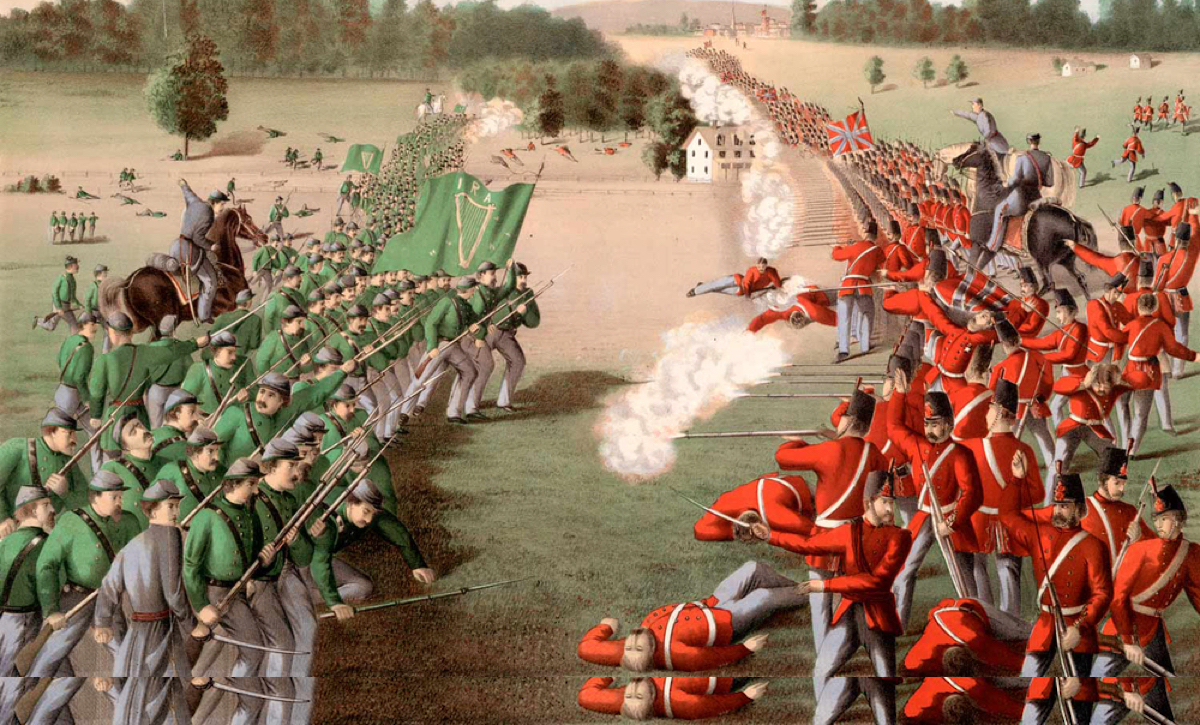
The struggle spilled over from Ireland into the Irish diaspora, particularly that in North America, Australia and Britain. In Australia the Fenians’ role seems to have been mostly in facilitating and escaping British jails there7 while in America, they invaded the British colony of Canada.8

The charge of the Fenians (wearing green uniforms) under Colonel John O’Neill at the Battle of Ridgeway, near Niagara, Canada West, on June 2, 1866. In reality, the Fenians had their own green flags but wore a very mixed bag of Union and Confederate uniforms (if they still had them, or parts of them left over from the Civil War), or civilian garb, with strips of green as arm or hat bands to distinguish themselves. (library and archives canada, c-18737)

In Britain itself, the Fenians went to war against the ruling class with dynamite. To spy on them, Scotland Yard created the Irish Special Branch which evolved into the Special Branch, the political police in Britain and in any colony the British had since then.9

The activities of the US Fenians intersected with those of Britain-based Fenians when two of the former, Thomas J. Kelly and Timothy Deasy, American Civil War veterans, were arrested in England. On their prison van’s journey to jail it was ambushed10 and both officers spirited away.

Artists’ impression of the rescue of the Fenian prisoners.
(Image source: Internet)

Unfortunately and entirely unintentionally, Constable Brett was killed during the breakout. Refusing to hand over the keys from inside the wagon, he was bending to look through the keyhole when in order to release the prisoners one of the Fenians fired at the lock, the bullet entering Brett’s brain.11

The British police swept vengefully through the Irish quarters of Manchester and Salford arresting at least 28 people but eventually sending five for trial on ‘murder’ charges. Three were hanged, all innocent of intentional killing and at least two probably not even present at the scene.

As sentence of death was passed upon them, all five cried “God save Ireland!” Although the sentences on two were commuted, Timothy Sullivan used those words for his ballad about The Manchester Martyrs, as the executed three became known among the Irish at home and abroad.

The song travelled quickly and became an unofficial national anthem of Ireland and the Irish until it was decisively supplantedafter the 1916 Rising by Peadar Kearney’s The Soldiers Song (latertranslated: Amhrán na bhFiann).12 A memorial to the three was erected in Mostyn Cemetery.

Artist’s impression of the trial of the five convicted including the three Manchester Martyrs.
(Image source: Internet)

Manchester continued to be a destination for Irish migrants, for factories still, including motor car production but also post-WW2 reconstruction and motorway building.

Manchester United FC, along with a number of other British soccer teams, recruited Irish players and Irishman Liam Whelan was one of the eight players killed in the Munich air crash of 1958. Another 30 Irish have played for the club at one time or another, some quite famous.13

The city is one of a number of British cities that has a name in the Irish language; Mancunians would probably be delighted to know that their city’s name in Irish is Manchuin.

From the late 1960s to late 1990s the city was host to an active branch of the Troops Out Movement in solidarity with Ireland, also from 1980s to an active branch of the Irish in Britain Representation Group; the Special Branch was active in monitoring and, from time to time, harassing their activists.

The Provisional IRA bombed the city in 1996 as part of its campaign against the British State and — despite a 90-minute warning — 212 were injured.

Today Manchester, alongside South Asian ethnic influences, continues its Irish ethnic presence with Irish traditional cultural activities14 and no doubt the sons and daughters of Manchester’s Irish diaspora will continue to contribute to other sport and artistic culture in Britain and in the world.

Footnotes

1https://www.breakingnews.ie/ireland/oasis-review-the-band-were-great-the-service-was-not-1793012.html

2https://en.wikipedia.org/wiki/The_Condition_of_the_Working_Class_in_England

3https://www.youtube.com/watch?v=s11BuatTuXk here performed by The Pogues

4Given that Marx, a German Jew, became his closest political comrade and writing partner, it’s likely he changed his bias against Jews also.

5https://www.marxists.org/history/international/iwma/documents/1867/fenians.htm and Introduction to https://journals.sagepub.com/doi/10.1177/030639688202400204

6https://en.wikipedia.org/wiki/International_Workingmen%27s_Association

7For example, the escape on board The Catalpa https://www.irishtimes.com/opinion/an-irish-diary/2023/11/01/the-greatest-escape-frank-mcnally-on-one-mans-mission-to-make-a-movie-about-the-catalpa-rescue/

8https://www.irishcentral.com/roots/history/irish-fenian-invasion-canada Unlike many other accounts easily available this one gives a reasonable assessment of the rationale for the invasion, including its potential and the reasons of its ultimate failure, the interests of the ruling class of the USA, which the Irish Republican movement should have learned from forever afterwards – but failed to do.

9Often referred to simply as ‘the Branch’ or ‘Branchmen’ (though the organisation of course also recruits women).

10The location, by an arch under a railway bridge, is still unofficially known as “Fenian Arch.”

11https://en.wikipedia.org/wiki/God_Save_Ireland

12https://en.wikipedia.org/wiki/God_Save_Ireland

13For example, George Best and Roy Keane.

14Manchester has a Comhaltas Ceoltóirí Éireann club (for Irish traditional music) and informal music sessions, also an Irish dancing school https://www.facebook.com/profile.php; Gaelic Athletic Association clubs  including St Brendan’s, St Peter’s, Oisín, and St. Lawrence’s.

Sources

The Fenian Ambush: https://ballymacoda.ie

The ballad: https://en.wikipedia.org/wiki/God_Save_Ireland

The First International and Fenians: https://www.marxists.org/history/international/iwma/documents/1867/fenians.htm

The Saturday concert in Croke Park: https://www.breakingnews.ie/ireland/oasis-review-the-band-were-great-the-service-was-not-1793012.html

THE TRICOLOUR IN LONDON RECENTLY

Pat Reynolds & Diarmuid Breatnach

(Reading time main report: 3 mins.)

The photo of the massive antifascist rally in London on 28th July following a march from Russel Square shows the recapture of Trafalgar Square from Tommy Robinson and his sea of Union Jacks. Not for the first time, the Irish made their mark upon the place.

There the only two high flying flags were the Irish Tricolours and the Palestinian flags, the Irish contingent being one of the few on the day to see the fight in Britain against the fascists as part of the same fight against the fascist Zionist regime.

Irish and Palestinian flags in Trafalgar Square rally against racism, end July 2024 (Photo cred: PA)

We are mindful of the history of our occupied territories and our 1930s fight against the anti-Semitic Blackshirts1 in London (e.g. standing with the Jewish community at the Battle of Cable Street, 1936) and against the Bridgeton Billy Boys in Glasgow in the 1930s.2

On 28th July our flags sent out a message: We stand against all fascists, at home or abroad. That day we could not but remember all our brave men and women who marched past here from 1971 to 1998 carrying our fight to the heart of government3 in harder times.

We also know that the anti-racist movement now takes its new life from the strength of the Palestinian solidarity movement in Britain and needs to recognise this.

It was strange being in Trafalgar Square again with Tricolours given that we were barred from being there during the ‘Troubles’. Irish solidarity events were banned from using the Square under any circumstances from 1972 to 2001, well after the Good Friday Agreement.

The ban was lifted only once for an Irish event during that period and that was for the Peace Women4 (sic) calling for an ‘end to violence’ (mainly that of the Resistance) and famous US folk singer/ political activist Joan Baez displayed her ignorance of the Irish situation by speaking there.

It was interesting that a reporter for GB News of the British mass media was aware that a picket had been held in Dublin in protest against the assassinations of Palestinian and other Arab resistance leaders. He tried to link the Irish contingent in Trafalgar Square with ‘support for Hamas’.

The linkage was hinted in his broadcast report though he was careful enough not to report a direct link as the Irish group in Trafalgar Square had in fact no connection with the Dublin group. The reporter asked how to pronounce ‘Saoirse Don Phalaistín’ — but still got it wrong in his report.

One of the Irish contingent spoke to the young GB News journalist: He had the stuff from Dublin on his phone and wanted to say that the Irish in the Square were part of the Dublin group.

“Next thing you’d know the Zionists would call for a ban on the Irish for ‘supporting Hamas’”,5 commented one of the veteran Irish activists. “We also get targeted because of the flag and our placards.”

The UK State and the police are all pro-Zionist and the Zionist press tries to trap the Irish into dangerous statements but “We know our history and are well able for them; we just say we support Palestinian resistance to Israeli occupation just as we did with the British in Ireland.”

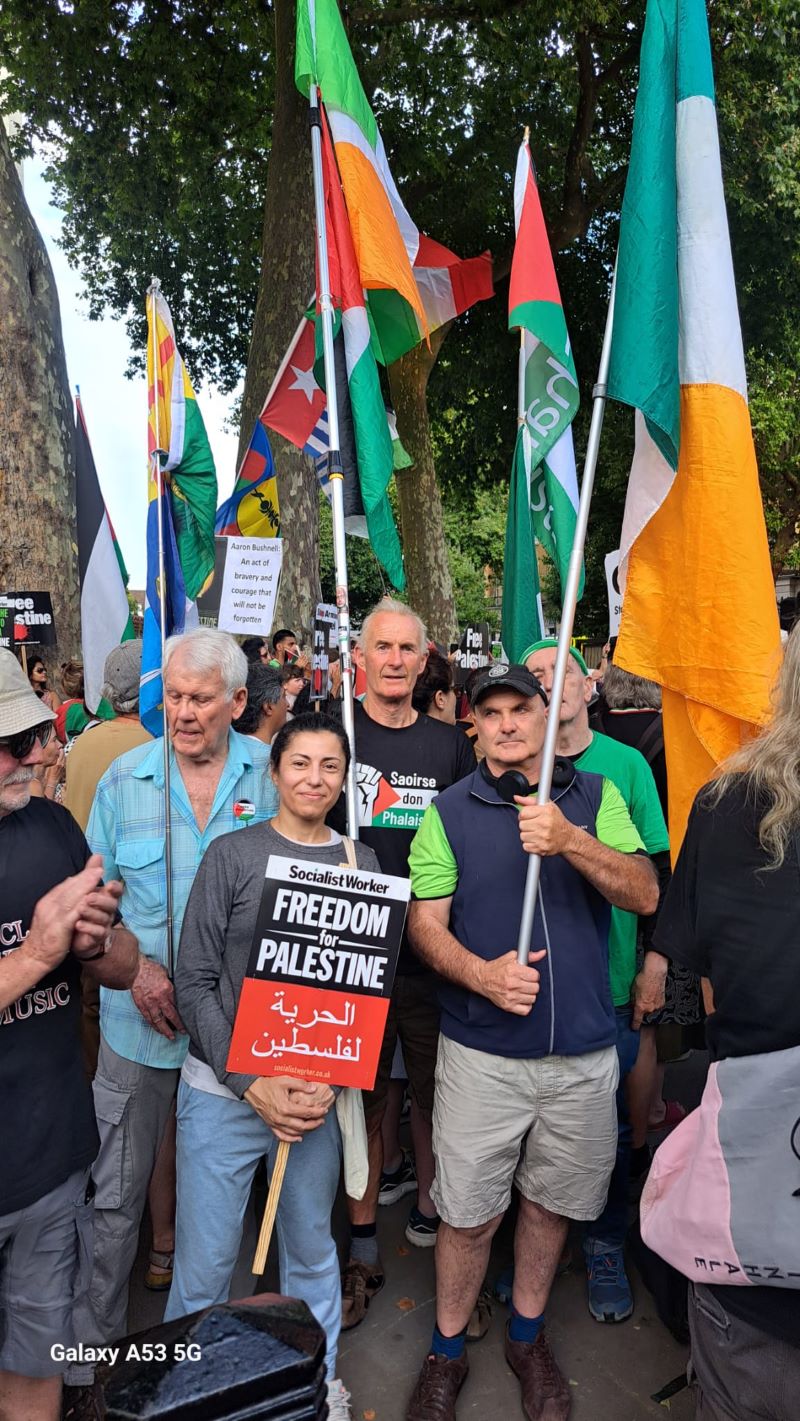
Irish contingent with flags on Palestine solidarity march to Downing Street very recently (not sure whether the SW person is part of it). (Photo sourced from participant).

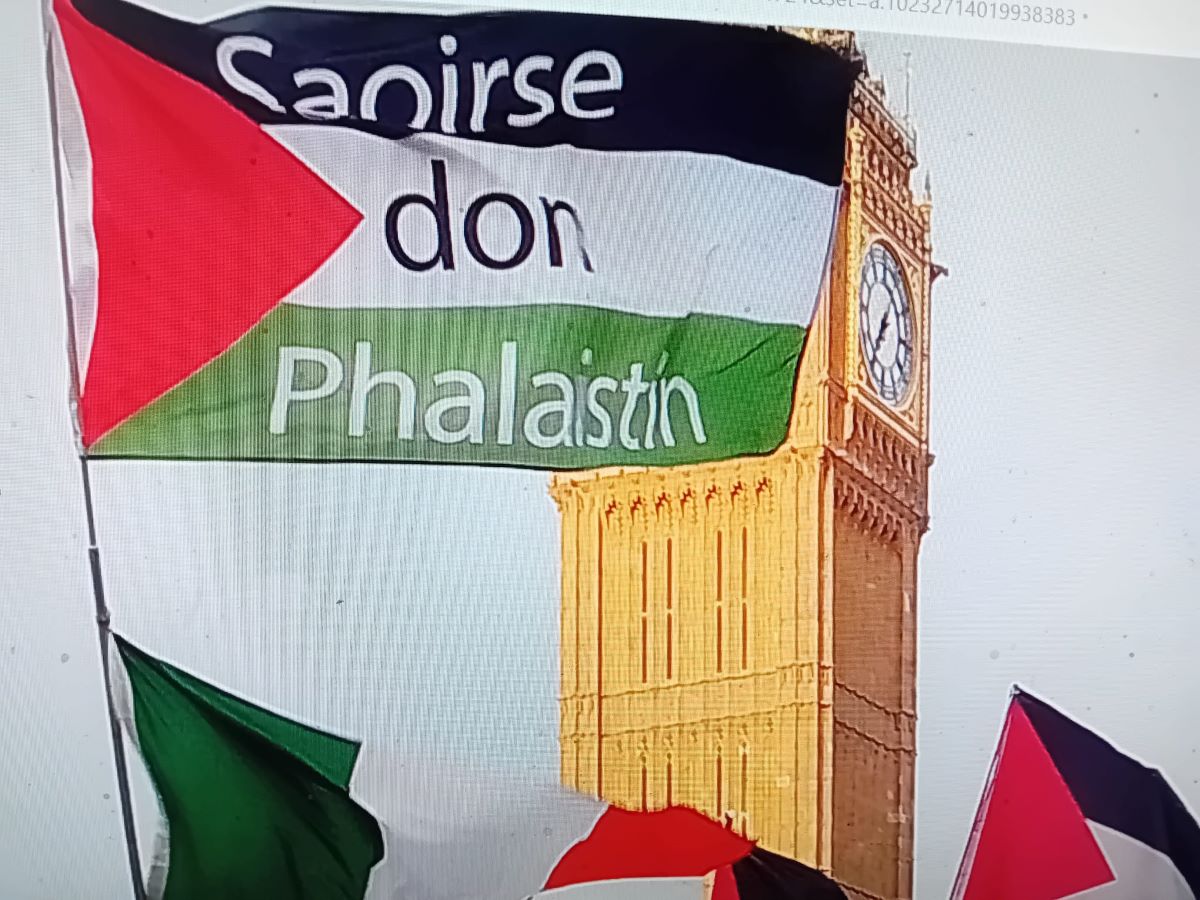
The Irish Tricolours, often in the company of the Palestinian national flag with Saoirse Don Phalaistín printed on it have been seen on Palestine solidarity marches in London since the current Zionist genocide began but also on anti-fascist rallies and in support of Julian Assange.

This is in keeping with the history and tradition of the Irish in Britain who helped found the republican United Englishmen6, the Chartists,7 many trade unions, a section of the First International8 and also gave the British working class their anthem9 and their classic novel.10

Classic novel of the working class in Britain was written by Robert Noonan, aka Robert Tressell, from Dublin. (Image sourced: Internet)

In later times they were prominent in organising solidarity with Vietnam and of course Ireland, against repressive legislation and fascist organisations, solidarity with Nicaragua, Palestine etc. and in struggles against state repression, including within the jails.

The Prevention of Terrorism Act (1974), forerunner of the current Terrorism Act (2000) specifically targeted the Irish community in Britain with suspension of habeas corpus for a period of up to five days, refusal of access to solicitor, as did also the framing of a score of people.

In the midst of the Irish Hunger Strikes of 1981, the Irish community broke out of the State terror stranglehold and formed the Irish in Britain Representation Group, among its objectives being the abolition of the Labour Government-introduced Prevention of Terrorism Act.

End.

Saoirse don Phalaistín and Irish Tricolour flags on Palestine solidarity march this year photographed against Westminster’s ‘Big Ben’. (Photo cred: being investigated)

NOTE ON AUTHORS

Pat Reynolds is a former trade unionist, social worker, a veteran anti-racist, anti-fascist activist, also for Irish independence and for rights for the Irish community in Britain. He was PRO for the Irish in Britain Representation Group for two decades, founding the Haringey Branch and the Green Ink Bookshop. Reynolds is from Granard in Co. Longford and lives in London.

Diarmuid Breatnach is a former trade unionist, worker with homeless/ substance misusers (manual worker before that), also a veteran anti-racist, anti-fascist activist and campaigner for Irish independence. For a decade he was on the Ard-Choiste of the IBRG, founder of the Lewisham Branch and of the Lewisham Irish Centre. Breatnach is from Dublin to which he has returned to settle.

FOOTNOTES

1The British Union of Fascists led by Sir Oswald Moseley which had substantial support in the British elite, including the publisher of the The Daily Mail with police attacks on anti-fascists.

2The Billy Boys were founded and led by Billy Fullerton, a former member of the British Fascists. Fullerton also later became a member of the British Union of Fascists in the 1930s. The Billy Boys adopted a militaristic style of behaviour, marching on parades, forming their own bands, composing their own songs and music, and all dressed in a similar manner.[3] The Billy Boys also formed a junior group whose members were teenagers called the Derry Boys. (Wikipedia)

3From Trafalgar Square to the Houses of Parliament in Westminster runs a broad thoroughfare, in the centre of which is the Cenotaph and a little further, the entrance to Downing Street.

4The organisation/ campaign was founded by Betty Williams and Mairead Corrigan in 1976 after a car driven by an IRA fighter mortally wounded by British soldiers in Belfast crashed into pedestrians and mortally wounded three children of Anne Maguire, sister of Mairead. Branding itself as against all violence the Peace Women in fact targeted primarily the Republican movement, secondarily the Loyalist paramilitaries and hardly ever the Occupation Army. Williams accused the IRA unit of having fired on the Army unit that killed the driver which was untrue (but is repeated on her Wikipedia entry). Both founders received the Nobel Peace Prize in 1976 and a substantial cash prize. Williams resigned from the group in 1980 and disappeared from Irish-related activities though prominent externally. Corrigan however remained politically active in Ireland and elsewhere against war and has campaigned among other things for the end of the ‘Israeli’ siege on Gaza, being arrested with crew and passengers on the Spirit of Humanity aid ship in 2009 by by the Zionist navy, taken to ‘Israel’ and subsequently deported.

5Hamas is proscribed organisation in the UK since March 2001 and a person promoting it would be liable to prosecution under the Terrorism Act.

6A spin-off from the United Irishmen in Ireland; the English chapter led the Spithead and Nore naval mutinies. The Irish also reformed the United Scotsmen when it was faltering.

7Karl Marx called the Chartists “the true mass movement of the working class” – two of its principal leaders, Bronterre O’Brien and Fergus O’Connor were Irish, as their surnames would suggest.

8The Fenians were accepted into the First International Workingmen’s Association.

9The lyrics of The Red Flag were composed by Jim Connell from near Kells, Co. Meath and set to the brisk air of The White Cockade, later changed to the mournful air of Tannebaum.

10The Ragged-Trousered Philanthropists was written by Robert Tressell (real name Robert Noonan) from Dublin.

SOURCES & FURTHER READING

https://libcom.org/history/bloody-sunday-trafalgar-square