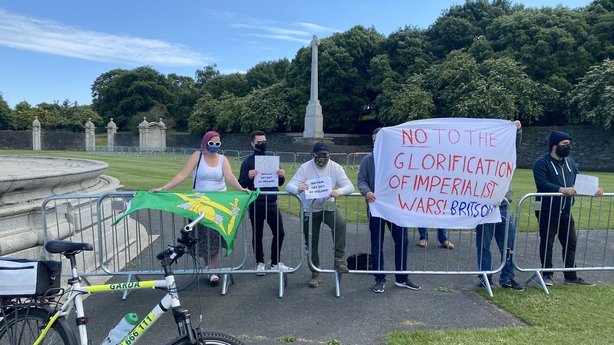
INVASION – RIGHT OR WRONG?

Diarmuid Breatnach

(Reading time: 7 mins.)

We are a people – or nation – that has been invaded; we have resisted and suffered in that resistance. Naturally we tend to sympathise with other countries who have been – or are being – invaded too. Many other peoples have been invaded more often than has Ireland; the Book of Invasions and Occupations of some of those would run to many pages. Few however have been occupied for nearing a millenium by what has been essentially the same invader – as has our little nation. So the question as to whether invasions are always wrong is bound to arouse an emotional feeling of rejection in us, of hostility to the questioner, even. Still, I ask the question and turn to history for the answer, our own history and that of other places.

INVASIONS OF IRELAND

The Vikings invaded Ireland (a sovereign state or collection of states) in successive waves from Norway and Denmark areas, took people to be sold as slaves, pillaged and looted and in time occupied parts of our land. They were hardly welcome but after their defeat at the Battle of Clontarf (sic) in 1014, left little permanent damage.

The Normans, invading in 1169, were a different matter, with less pillaging but wreaking far-reaching adverse changes, especially as they became the English ruling class, a mixing of Norman and Anglo-Saxon elites. Our land was turned into a colony, competing industries destroyed, the majority population turned into second-class subjects, our produce used to fuel the British industrial revolution, followed by famine here, mass emigration, our resistance repressed ……

In our strivings to be free from the English Occupation, we invited an invasion from the Spanish Kingdom to Ireland and one arrived in 1601, which was followed by the Siege and Battle of Kinsale (2nd October 1601-3rd January 1602) between Irish clans and their Spanish allies against the English. The latter’s victory resulted in English conquest over the whole island and the destruction of the remains of the Gaelic social and legal order in Ireland.

Battle of Kinsale map (Image sourced: Internet)

During the Jacobite War (1689-1691), the Irish and Anglo-Irish clans invited Royal French forces to invade Ireland in order to assist them in supporting King James II his bid to regain the English Crown1 and that too ended badly for the Irish with the Limerick Treaty, the flight of the Wild Geese and the religious Penal Laws.

In the late 1790s, the United Irishmen once again invited the French forces — but this time Republican – to assist them in overthrowing English rule in Ireland in what was a semi-sovereign state. The planned French invasion failed due to adverse weather conditions in 1796 and a smaller force successfully landed in Mayo in the closing weeks of the 1798 Rising, joined with Irish insurgents and defeated English military units but was soon surrounded and, massively outnumbered, surrendered.

DURING WWI

During WWI sovereign states in large areas of the world, in particular in Europe and in the Middle East, were invaded by the armies of many states, comprising those of the Central Powers of Germany, Austro-Hungary and Turkey on one side and those of the Entente — UK, France, USA, Turkey, Russia, Italy and Japan – on the other. The cause of the war was contention between imperial powers and no side could be said to have been justified in the alliance they joined or in invasions carried out as a result. One revealing example of the gap between justication propaganda and reality was that the UK claimed that it was waging war with Germany in defence of the little nation of Belgium, while it repressed a rising of the little nation of Ireland. Likewise, the USA, which claimed to want a post-war world of peace and security for small nations, refused to receive the delegations of a number of small or weaker nations, including that of Ireland, to the Paris Peace Conference2.

AND WWII

In the runup to WWII and during it, parts of Africa, Asia and most of Europe, including many sovereign states3, were invaded by the Nazis and Fascist powers of Germany, Italy or Japan4, with horrific consequences for the people who lived in the invaded lands.

German motorised Nazi troops invading the USSR during WWII(Image sourced: Internet)

Would we have countenanced an invasion of Nazi Germany to prevent what it was going to do? In any case, during the War, the counter-attack of the Allies also invaded huge parts of the world, including sovereign states that had colluded with the Nazis, as well countries totally dominated by them: the USSR invaded Eastern Europe beyond the USSR’s earlier borders, also sovereign Germany and sovereign Austria; the USA and UK invaded France (part-sovereign, part-occupied) and Italy (part-liberated by popular revolt) and all three invaded sovereign Germany and Austria too, but also North Africa; the USA invaded the Phillippines and Indo-China. Had we been alive then, most of us would have cheered those invasions – they brought down the terrible Axis forces, liberated death camps, freed people from fascist rule.

Soviet infantry follow Soviet tanks in counterattack on Nazi forces during WWII. (Image sourced: Internet)
US troops invading France in the Normandy Landings during WWII (Image sourced: Internet)

But the UK and France retook their colonies, where they had been suppressing and repressing the people for generations.5 The UK and USA prevented the Greeks from stopping the return of their monarch (their sovereign) and, combining former fascist police with their own armed forces, suppressed the Greek rising. And the USA installed themselves in the Phillippines, making them their neo-colonies. The USA also began to cultivate elites as clients in Indo-China, particularly in Korea and Vietnam.

The reoccupations of colonies and transfer of control to new masters were the cause of a wave of anti-colonial struggles and wars of repression in India and Malaya with the UK; in North Africa with the French; in Korea with the USA; in Vietnam with the French first and then with the USA; in the Middle East and West Africa with the UK and France. They also facilitated the creation of the Zionist state of Israel with horrific consequences (including invasions by it) that continue to be played out to this day.

The struggles of people resulted in the eventual national liberation of areas of the world, including part of Korea and later, Vietnam, creating states. Cambodia and Laos, having been bombed by the USA in its war with the Vietnamese people, came under new national regimes. But the new rulers of Cambodia’s sovereign state, under the Pol Pot regime, developed a new kind of horrific rule resulting in the distinction of becoming the country with most mass graves in the world6. That sovereign regime was toppled by an intervention of Vietnamese forces and those of us alive then cheered that invasion.

The Portuguese colonies in Angola and Mozambique were freed by liberation struggles but in Mozambique were assisted by Cuban troops, which also helped them resist invasion by South African troops and proxies.7

Much closer to our own time, the UK and USA/NATO, leading coalitions of other states, invaded Afghanistan, Iraq and Libya, destabilising them and destroying for years the development potential of those countries8. They attempted the same with Syria and that conflict is ongoing. The excuse given was always along the lines of countering a threat to the world (Iraq: “Weapons of mass destruction”, “Al Khaeda”) or liberating their populations (Afghanistan, Iraq, Libya, Syria).

US tanks and soldiers in Iraq, six days after the fall of Baghdad (Photo credit: John Moore/ AP)

INVASIONS GENERALLY — AND WHAT ABOUT UKRAINE?

So, reviewing the historical record, very few would say that invading another region — even a sovereign state — is wrong on every occasion. Most would say, I think, that it would depend on the motivation for the invasion, how it is conducted and what the invaders do afterwards.

Hopefully this can help us to mediate the automatic Irish sympathetic reaction to the war in the Ukraine and with regard to the Western-dominated discourse that Russia is automatically wrong – purely because its troops invaded the Ukrainian sovereign state. Russia may indeed be wrong – but not purely on the fact that it invaded.

Which then moves the evaluation on to a more productive and rational basis. Was the reason for the invasion justified? How did Russian troops conduct themselves during the invasion? What is intended as the longer-term outcome of the invasion?

Here, unfortunately we are in a marsh of propaganda, fake news, partial accounts, censorship9 ….. and the war has not yet concluded. But we can try to navigate our way across this marsh relying on the fairly firm patches we can find and hopefully avoiding getting stuck or even sucked down.

Justification for the invasion?

Russia says it invaded because it was being encircled and threatened by NATO, while the latter denies this. The evidence is however on the side of Russia in this disagreement10.

Putin also says that he did so to “de-nazify” the Ukraine. Considering the number of active fascists in Russia, this does not ring true, though the presence of nazi militia in the Azov Battalion is undeniable and the the Ukrainian regime is certainly glorifying Nazis in its past.

Conduct during the invasion

When Russia invaded it says that it fought to confront military units and to keep civilian casualties to a minimum. In the early days of the war this does seem to have been the case. As the fighting grew fiercer around Kyiv and Mariupol, it was harder to ascertain the truth, with Ukranian claim the Russians were targeting civilian structures and Russian counter-claim that, in Mariupol in particular, the Ukrainian forces were firing from civilian structures, which naturally attracted Russian return fire. And of course, bombardment of any large area is going to result, whether intended or not, in damage to civilian structures.

Another Ukrainian accusation, widely covered in the western media, is that the Russians were kidnapping civilians and transporting them back to Russia. The latter responded that they were facilitating the evacuation of civilians from danger areas. A similar Ukranian removal of civilians, on the face of it, is represented as a humanitarian action. Humanitarian evacuation or kidnapping? By one or the other, or by both?

There have been Ukranian accusations that the Russians executed captured Ukrainian soldiers and civilians and the Western media and political leaders have repeated those accusations. What appears to be bodies of civilians have been photographed in the streets of Bucha and Irpin after the Russians forces retreated, some of which appeared to have their hands tied behind their backs.

The Russians have rejected the whole story as fake news, pointing out that the Mayor of Bucha had smilingly recorded a video message after the Russian military evacuation of his town, during which he had made no mention at all of any such executions. Also that the reports of the alleged executions did not emerge until four days after they had evacuated the town.

However the Ukrainians also say that a mass grave containing 410 bodies has been uncovered outside Kyiv. Russia has said it wants the issue discussed at the UN Security Council11 but so far have been blocked by another permanent member, the UK (the latter holds the Presidency of the Security Council at the moment)12.

We must await some kind of even semi-independent investigation but if any of these allegations turn out to be true it will certainly be a powerful indictment of Russia’s conduct during the invasion.

Post-invasion actions

We do not know for certain what the situtation will look like post-conflict but it looks likely that Russia will withdraw from most of the Ukraine, which will remain outside NATO and with much-reduced armament, which was part of what Russia was seeking even years before the conflict. But it also looks as though Russia will retain the Crimea and the Donbas area.

Simple neutral map showing the Ukraine in yellow with Donetsk and Luhansk areas in brown (together known as Donbas) and the Crimea (lined pattern) with the western shore of the Sea of Azov running between the two enclaves. East of that Sea and of Donbas is Russia (shown in grey). Kiyv is far to the north-west in Ukraine. (Image sourced: Internet)

To judge whether that retention is just or not, one has to choose between two narratives (or some synthesis of both).

The Russian narrative is that after the change of government in 2014 there was a campaign against ethnic and linguistic minorities, in particular Russian-speakers, by the Ukrainian authorities, aided by fascist forces. These attacked the Russian-speaking areas, the latter mobilised to defend themselves and asked Russia to come to their defence.

The Western narrative is that Russia egged on Russian speakers to fight the Ukrainians and to secede and that the whole thing was just a Russian land grab.

But one way or another, the bare fact of Russian invasion is not sufficient to decide against them, much less to agree with what is essentially the dominant US/NATO discourse of the western media – the bigger and longer picture needs to be examined.

End.

FOOTNOTES

1Both Irish and Anglo-Irish sought an end to religious oppression of Catholics and retention of their lands; the Irish clans may have also sought recovery of some of their ancestral lands.

2More about the division of the world between victorious powers and punishing the losers, than about peace.

3The Austrian state was subverted under threat by the Nazis, as was also the Norwegian, followed quickly by invasion.

4Nazi Germany also recruited fascist units from Spain, Ukraine and Romania into their army and Japan recruited Koreans; in addition an Indian natiolal liberation army fought the English occupation in coalition with the Japanese.

5The Japanese were asked to hold on to their conquered territory in parts of SE Asia until the French could move back in, for example in Vietnam.

6Spain is the second, dating from its Civil War/ Anti-fascist War, a sovereign monarchical state evolving from a successful fascist-military coup against an elected Republican government.

7A highly simplified description, as there were civil war elements also with fighting for control between different factions of the former liberation movement.

8The UK holds the record for countries invaded, while the USA holds the record for involvement in military conflicts since WWII.

9Twitter has taken down an archive of six years of Chris Hedges’ Contact programs, Netflix has removed the Oliver Stone documentary “Ukraine Is Burning”, the US and UK has banned RT and Russia then banned BBC, China has banned BBC and Facebook, the latter has unbanned the fascist Ukrainian Azov Battallion …. And the Western Left is ignoring Naom Chomsky.

10Just Google “Map NATO states in Eastern Europe”.

11The United Nations is a body containing essentially two general decision-making bodies, the General Assemby of every full member nation — currently 193 – and the 15-member Security Council, which makes the only binding decisions. However, the decisions of the rest can be vetoed by any of the five Permanent Members of the Security Council: USA, UK, France, Russia and China.

12Any entering of the words “Russia” combined with “war-crimes” or “executions” into a search engine will bring an avalanche of western reporting of the allegations but scant treatment of the Russian response. As balance I have included only two rare more balanced western reports in the Sources section.

SOURCES

Rare balanced western media coverage of Russian response to allegations of war-crimes: https://www.reuters.com/world/europe/kremlin-denies-ukrainian-allegations-its-forces-killed-civilians-near-kyiv-2022-04-04/

https://www.reuters.com/world/europe/russia-ask-un-security-council-again-discuss-bucha-provocations-2022-04-04/

Not Russia-friendly Al Jazeera: https://www.aljazeera.com/news/2022/4/6/ukraine-as-russia-faces-genocide-charge-experts-urge-caution

IRRATIONAL CRITICISM OF ZELENZKY BY PALESTINIAN ANALYST

Diarmuid Breatnach

(Reading time: 2 mins.)

The online publication Middle East Eye published on March 22nd an open letter from Palestinian political analyst As’ad Ghanem sharply criticising the Ukrainian President, Volodomir Zelensky, for the latter’s March 20th speech by Zoom before the Knesset, the Israeli parliament. The Palestinian academic’s criticism was, at base, entirely irrational.

As’ad Ghanem is a senior lecturer at the School of Political Sciences, University of Haifa. Ghanem’s theoretical work has explored the legal, institutional and political conditions in ethnic states. He has covered issues such as Palestinian political orientations, the establishment and political structure of the Palestinian Authority, and majority-minority politics in a comparative perspective. His books include Palestinian Politics after Arafat: A Failed National Movement (Indiana Series in Middle East Studies). Ghanem has initiated several empowerment programs for Palestinians in Israel.

As’ad Ghanem at a speaking engagement (Photo sourced: Internet)

Ghanem’s opening paragraph, though a denunciation of Zelensky’s speech, seemed to display a misapprehension of the conflict in the Ukraine and of Zelensky’s role there: Your recent speech before the Israeli Knesset was a disgrace when it comes to global struggles for freedom and liberation, particularly of the Palestinian people. You reversed the roles of occupier and occupied. You missed another opportunity to demonstrate the justice of your cause and the broader cause of freedom.

Any hope that Ghanem’s words were some kind of subtle attack on imperialism in Eastern Europe, an exposure of its false defence of national sovereignty, democracy and freedom, were swiftly expelled in reading the third and fourth paragraphs of his letter:

I am angry and sad that Russia is seeking to occupy your country and to crush the rights of the Ukrainian people to self-determination and freedom, and I believe that every possible support must be given to Ukrainians as they resist this barbaric aggression……

And while I admire your success in building a large international coalition to support your struggle against Russian aggression, I wish we as Palestinians could persuade the world to mobilise in a similar fashion, and force Israel to abide by international resolutions.

But Ghanem wants to show that although he may be a liberal, he is also an anti-imperialist. So he adds the following line to his third paragraph: At the same time, I reject the policies of the US and its Nato allies around the globe.

What an irrational position to hold! “The policies of the US and its Nato allies around the world” being enacted are precisely what is causing the current conflict in the Ukraine and it is those forces that are backing Zelensky and employing him in their contention with Russia.

Asad Ghanem’s plaintive criticism and appeal to Zelensky and — by implication — to imperialism exposes the ideological bankruptsy of the liberal critics of imperialism1. He is disappointed by Zelensky’s support for the murderous and racist rule of Israeli Zionism and sees it as somehow in contradiction with his position in the Ukrainian state’s conflict with Russia.

TO GAIN UNDERSTANDING, ASK BASIC QUESTIONS

The answers to a few simple questions would have disabused Ghanem and other pro-Palestinian liberal critics of imperialism of any confusion or illusion about the situation:
Which major imperialist military bloc is supporting the Ukraine in the current conflict? NATO.
Which imperialist state controls NATO at least since 1951? The USA.
Which power fundamentally props up and defends the Zionist state? US imperialism.

Even without any consideration of the reported Zionist state’s training and arming of the Ukrainian Azov, Zelensky’s stance towards Israeli Zionism is entirely in line with his alliances and Ghanem’s criticism completely irrational. If Zelensky is to be criticised politically for anything, it is for perhaps making his alliances so clear.

RATIONAL STANCE TOWARDS IMPERIALISM

Ghanem concludes his letter thus:

I know that most Palestinians are watching your stubborn struggle and wishing you victory over Russia’s brutal aggression. (Really? I sincerely doubt it – DB2). I also know that a Russian victory would be a great gift to Israel’s aggressive posture – a victory for its “Iron Wall” concept, which regulates its dealings with us until our complete defeat.

On the other hand, the struggle and victory of your people, even with the destruction of much of your country and the displacement of scores of Ukrainians, would give hope to other peoples struggling against oppression and erasure, rekindling our hopes for return and liberation. To this end, I urge you to stop supporting our oppressors.

The only rational stands towards imperialism are outright support or outright opposition — and the latter is the revolutionary position. Liberals want to criticise imperialism without being revolutionary, presumably because they feel more comfortable in the imperialist world than fear they would in a revolutionary one. They ask imperialism (which is what they usually mean by “the international community”) to remedy a situation here and there, a situation that usually only exists directly or indirectly because of imperialism.

Of course, imperialism regularly disappoints them but, like besotted lovers in an abusive relationship, they never learn, they never abandon their relationship but instead keep returning, asking their partner to behave better this time.

End.


FOOTNOTES

1Which is certainly no worse than that of the appalling stance of a major part of the Western Left

2“The two Arab Israeli (this is Zionist apartheid code for Palestinians – DB) parties chose to snub Ukrainian President Volodymyr Zelensky’s speech to the Knesset on Sunday night, with only one Arab lawmaker out of their 10 MPs showing up. Joint List chief Ayman Odeh skipped the speech, as did the two other lawmakers from his Hadash faction, party officials said. A spokesperson for Odeh did not respond to a request for comment. “Our position is that NATO and its leader America imposed this war,” said Mansour Dahamsheh, the Hadash party’s secretary-general, in a phone call with The Times of Israel. https://www.timesofisrael.com/arab-israeli-mks-skip-zelenskys-knesset-speech-nato-imposed-this-war/

SOURCES

Text of As’ad Ghanem’s letter: https://www.middleeasteye.net/opinion/russia-ukraine-war-israel-palestine-zelensky-support-disgrace?utm_source=Twitter&utm_medium=Social&utm_campaign&utm_content=ap_qf0gnh7kqc

Zelensky’s speech to the Knesset: https://www.timesofisrael.com/full-text-ukraine-president-zelenskys-speech-to-israeli-lawmakers/

Palestinian Knesset MP’s attitude to Zelensky: https://www.timesofisrael.com/arab-israeli-mks-skip-zelenskys-knesset-speech-nato-imposed-this-war/

Israeli Zionist Government Minister’s reaction to Zelensky’s speech: “The war is terrible but the comparison to the horrors of the Holocaust and the final solution is outrageous” — https://www.jpost.com/israel-news/politics-and-diplomacy/article-701850

https://www.al-monitor.com/podcasts/ambassador-liel-zelenskyys-knesset-speech-exposes-gaps-perception-over-conflict

NAVIGATING PROPAGANDA TO ARRIVE AT TRUTH

Diarmuid Breatnach

(Reading time main text: 9 mins.)

We are surrounded by propaganda: to favour this or that political and economic system, those products, accept this way of life and to reject that other, to emulate or aspire to be like those people or to reject others …. The propaganda is constant but perhaps most evident in times of conflict: social conflict and wars in particular. We cannot be free of it but we can attempt to navigate it, to reach that fabled destination, the port of Truth.

Political propaganda by Cartoon: Left, Chancellor of the Exchequer Sunak shown as superhero, saving the economy and Right, former Leader of the Opposition Jeremy Corbyn shown as a Russian, suggesting he is a communist. (Images sourced: Internet)

OUR OWN PERSONAL BIAS

Firstly, we need to be aware of our own personal bias. Are we for reasons of culture, position, location or habit likely to incline to one side rather than to the other? Of course, that might be the right (or least bad) side but ….. are we being blinded by our own bias?

Our own personal biases are formed through our familial group, our schooling, training and experiences but some are engendered through the wider society, our culture.

Our cultural bias in the western world and, in particular in the English-speaking one, is towards the USA. We watch films in which the admired characters have UStater accents and even employ UStater turns of phrase and idioms1; their life-styles are recogniseably western. These cultural products cover a range from comedy to thriller or tragedy, their situations varying from urban to rural life, their genres from romance to crime to war to science fiction. In fact, both latter genres tend to present us with war-heroes who not only speak like UStaters but evoke the armed forces of the United States, whether in past real armed conflicts or in imagined ones to come. Earlier Irish generations were familiar with the dramatised plight of European settlers in the western regions of the USA being attacked by Indigenous people, only to be saved by the arrival of the US military – in that genre, the US Cavalry.2

Another major cultural influence on the English-speaking world is the UK and, to a lesser extent3, Australia. Although in Ireland there is a certain residual historical resistance to UK acculturation, some UK cultural products gained a large enough following, particularly the Coronation Street and EastEnders series4.

In comics the characters and often their environments are identifiably Western — usually of the USA5 — and even the popular Asian-based ones tend to have their facial features shaded towards European ones. Many of the electronic games also have a Western cultural bias.

And of course, we speak English. A high proportion of the Irish population is English-monoglot and even among Irish/English bilinguals, either the English is dominant or at least easily-accessible. From childhood to adulthood we see signs in English, hear it on the street, use it daily in most places, read it, are educated and instructed through it, access the Internet through it – in fact, we mostly think in English. All of which makes the pathways for accessing US and UK cultural products easy and our acceptance of the dominant discourse more probable.

Dominant discourse is of course a fact of life, some aspects of which are necessary for our social existence but other aspects of which are laden with unhelpful cultural and even political bias. We need to be alert to those aspects and prepared to investigate and analyse them.

Sometimes it looks like just about everyone is in agreement with a particular opinion and it is also the one that accords with our own inbuilt bias. Now we need to be REALLY careful, because those are two factors working together to put us at our ease on one side of a conflict and making it very difficult for us to even investigate the fact that the dominant discourse, on at least this occasion, might be mistaken. And clearly at times in history widely-accepted views HAVE been wrong – the literal seven-day creation belief, the sun going around the earth, the divine right of monarchs, the unsuitability of women for equality, the unnatural inclination of gay and lesbian people ……

OUR SOURCES

In conjunction with being aware of and taking into account our own bias and prejudices, we need to the same with our sources of information, which in industrial and post-industrial cultures – apart from educational establishments — is mostly the mass media: television, newspapers and the Internet (in particular social media).

All the owners of non-State-owned mass media that we access (and that in turn accesses us) are capitalists and not only that but monopoly capitalist. Although he has recently exited his media empire6, this was the situation six years ago: “Denis O’Brien, reputedly Ireland’s richest man, is the largest shareholder in the country’s largest newspaper publisher, Independent News & Media (INM). That company has now agreed a deal to add seven more newspaper titles to its stable by acquiring the Celtic Media Group (CMG). They include the Anglo-Celt in Cavan, the Meath Chronicle and the Connaught Telegraph in Mayo. In all, it extends INM’s footprint to five more counties.

“INM is already the major player at national level. It publishes Ireland’s two largest-selling titles, the Irish Independent and Sunday Independent, plus the Sunday World and the Dublin Herald. It also has 50% of the Irish Daily Star. O’Brien’s other media company, Communicorp, owns Ireland’s two leading commercial radio talk stations: Newstalk and Today FM. In addition, it owns Dublin’s 98FM, SPIN 1038, TXFM and SPIN South West.”7

Media companies in the USA went from 50 1984 only six conglomerates controlling 90% of the United States’s in 2011: GE/Comcast (NBC, Universal), News Corp (Fox News, Wall Street Journal, New York Post), Disney (ABC, ESPN, Pixar), Viacom (MTV, BET, Paramount Pictures), Time Warner (CNN, HBO, Warner Bros.), and CBS (Showtime, NFL.com).8

“Take the UK’s newspaper industry: in a national market of 20 daily and Sunday newspaper titles, just three companies control 90 percent of newspaper circulation. Lord Rothermere’s DMG Media—publishers of the Daily Mail, the Mail on Sunday, the Metro, and the i—accounts for almost 40 percent of all national newspapers sold each week in the UK, while Rupert Murdoch’s News UK and Reach (which publishes the Mirror and Express titles) command one-third and one-fifth of the market, respectively.

“When online readers are included, the same companies control a four-fifths market share among the major newspaper groups, giving these publishers an unparalleled influence for setting the agenda across the rest of the news media.”9

“Most of the social media we use on our laptops, Iphones or tablets is owned by five conglomerates in the USA: Meta Platforms, Inc., doing business as Meta and formerly known as Facebook, Inc., …..is the parent organization of Faecebook, Instragram and WhatsApp among other subsidiaries. Meta is one of the world’s most valuable companies. It is one of the Big Five American companies, alongside Google, Amazon, Apple and Microsoft.”10

It should not surprise us if that media exhibits a strong bias towards capitalism, for example in praising businessmen (capitalists) and businesses (exploitation operations) and in criticising or slanted reporting on strikes (workers’ resistance) or on what they might term ‘terrorism’ (but is often oppressed people’s resistance).

The State-owned media, in the UK the BBC and RTÉ in Ireland, are not of course the property of capitalists, however the states in question are capitalist states. It would be surprising therefore if such media were to take a stance in opposition to that of their state and their dominant classes and, by an large they do not. If, in times of conflict elements within the program-making sections of the State-owned media veer significantly away from the State’s line, official reprimands, cuts in funding, sackings and outright censorship may follow.11

This mass media, as well as being orientated in defence of monopoly capitalism, is also orientated towards the expansion of monopoly capitalism beyond its origins, i.e imperialism. And imperialists have their alliances, by far the largest of which is the North Atlantic Treaty Organisation, or NATO in acronym. That alliance is led by what is still the largest imperialist superpower in the world, the USA.

We may note that the antithesis of capitalism is socialism but a capitalist or imperialist system of one state may be in contention with that of another such state which in fact often happens, even occasionally breaking out in war, as was the case with WWI, when the then-dominant imperialist alliance led by the UK and France was challenged by the weaker one of Germany and Turkey.

And mentioning socialism brings to a consideration of alternative media, including that of the Socialist and Irish Republican movements. Briefly we can note that just because they declare their opposition to the status quo does not mean necessarily a) that they are indeed so opposed, or b) that they have examined and challenged their own bias or c) therefore that their analysis is correct. Indeed both the Irish Socialist and Republican movements have made huge mistakes over the last hundred years or more and, in addition, during the height of the Covid19 pandemic we saw a plethora of misinformation ranging from the fascist and racist to the fantasticaly paranoid from sources opposed to the status quo12.

NAVIGATION

With the preparations and precautions entailed in the above completed, we are ready to sail, to navigate the propaganda ocean on board the MV Investigator. Let us take the stormy propaganda seas around the Ukraine conflict for our voyage.

According to the Russian Government, ethnic Russians were under attack in parts of the Ukraine after a coup overthrew the Ukrainian Government in 2014. Furthermore, it claims that US/NATO supported that coup and, in addition, has been gathering up states to its military alliance to encircle Russia, which it sees as a threat to the existence of the Russian state. In addition, Russia claims the Ukrainian government has fascist elements in its polity including a nazi battalion incorporated into its national military. Therefore it has invaded Ukraine in order to protect its own state and to “de-nazify” the Ukraine.

According to the Ukrainian Government and the USA, along with most Western governments, all of Russia’s claims are lies and just an excuse for it to grab land in the Ukraine, in order to extend its dominion further.

The Western media supports the Ukrainian Government and USA discourse on these issues and, on the rare occasion when it quotes the Russian one, negates it or casts doubt upon it.

So, to the navigation. The first thing is that we cannot trust the Western discourse but on the other hand can we totally discount it? We cannot trust it because it is part of a capitalist and imperialist bloc centred around the USA and NATO. On the other hand, Russia might be lying and the Western media might be correct on this occasion. After all, Russian troops HAVE invaded the sovereign state (something we usually see from the USA or NATO) of Ukraine.

Map showing Nato states in Europe (Image sourced: Internet)

So, let’s investigate! A look at the map will in fact show a large number of states in East Europe that have progressively become part of NATO and Ukraine, which shares a border with Russia, was heading that way, according to even non-Russian analysis.13 And Russia has been complaining about this for years. In addition, the elected neutral Ukrainian government WAS overthrown by a violent coup in 2014, one which was welcomed by western media. And fascists WERE active in that coup and the Azov Battalion IS full of fascists and nazis (even according to US and Canadian government circles along with human rights groups, including in Israel, only a few years ago).

But the Russian regime anti-fascist? That is something else. Far-Right groups including openly Nazi ones have proliferated across Russia since the collapse of the USSR and there is little evidence that the Russian regime has been trying to eliminate them. De-nazification should start in your own territory first, right?

So a reasonable conclusion on the available evidence is that Putin’s statement about de-nazification is mere propaganda for international and domestic consumption but his real and primary motive for the invasion is the security of Russia and the withdrawal of NATO from its borders.

Might there be an element of acquiring some more Ukrainian territory and stragic locations there? Of course there might. So how to test that? What about if NATO agrees to withdraw, Ukraine declares its neutrality but demands withdrawal from its recently-conquered territory? Russia would have to comply or to expose its supposed territorial ambitions.

However, NATO is currently refusing to withdraw from Russia’s borders and the Western media is supporting it ideologically as well as pouring arms into Ukraine; NATO denies Russia’s declared motivation but declines to put it to the test.

Mentioning “land-grabbing” also raises the issues of the Crimea, Donetsk and Luhansk regions. Those regions had a high proportion of ethnic Russians — the Crimea in particular nearly totally Russian-speaking — and according to numerous sources, came under attack from Ukrainian nationalist forces from 2014. The Western media says that Russia “annexed” the Crimea; however Crimea had an autonomous parliament and voted to secede from the Ukraine – it was not overthrown in a violent coup as was the neutral Ukrainian one. Subsequently Crimea asked for Russian protection from attack by the Ukrainian military (including in particular those Azov fascist fighters). Donetsk and Luhansk regions also asked for protection, according to the Russians while, according to the West, they were also annexed by Russia.

Ethnic map of the region (however not including Gypsies, Jews and Poles). The brown peninsula bottom centre is the Crimea; two top right regions are Donestk and Luhansk. (Image sourced: Internet)

CONTINUING THE NAVIGATION

Those are the fundamental points to think about during the conflict but we will be presented with reports of “kidnapping” of thousands of civilians by the Russians from the battle-zones on the one hand, with the “rescue” of thousands by the Ukrainian military on the other. Of course, any war impacts severely upon civilians in the war zones, as we have seen in conflicts from Vietnam to ireland to the Balkans, from Palestine to Yemen. What is happening in the Ukraine is a war, with bullets and missiles being fired by both sides and, furthermore, most of the fighting is taking place in and around heavily-populated areas. But are civilians and civilian buildings really being targeted by the Russians? They may or may not be but certainly the damage and casualties would be much higher if, as a matter of course, that were the case. Are civilians being used as hostages and shields by the Ukrainian military as some have alleged? They may be but it is difficult to prove or disprove that when the battle is taking place in an urban area.

We have to seek the actual causes of the war, rather than its features, to seek a workable and hopefully long-lasting solution.

WHAT ABOUT CENSORSHIP?

The fact is that all sides are practicing censorship. While the western media was quick to tell us that Russia had banned the BBC’s news service, it took a bit of searching to find out that had occurred after the UK banned RT, the Russian broadcasting service. We now learn that China has also banned Facebook and the BBC – the latter perhaps in response to the banning of RT but Facebook perhaps for lifting its ban and Tier 1 classification14 of Azov, the neo-nazi fighters incorporated into the Ukrainian military.

Currently, as an example of Western censorship, the Oliver Stone documentary Ukraine On Fire (2016) has been taken down off Youtube and according to users, rarely lasts more than a day if posted up anew.

And Naom Chomsky, veteran US-based anti-imperialist, who would normally be widely quoted in the Socialist media, is hardly ever heard or seen. Oh, he’s talking and writing alright but his discourse does not match the dominant one in the West — nor currently in the Western Left — and therefore he is excluded from their media.

Naom Chomsky, linguist and critic of imperialism often quoted by the Western Left but mostly silenced by them during the Ukrainian conflict. (Photo sourced: Internet)

CAN WE MOVE, PROCEED, ACT?

Obviously we cannot proceed through life in a permanent doubt – that would paralyse us, make us incapable of movement in any direction. We must come to a decision, at least for the time being, to allow us to act. But while we proceed on the basis of our certainties or at least assumptions, we need to be able to keep a part of our mind alert, questioning, challenging and – at some point – ready to dissent from the ideological environment in which we find ourselves and ready to consider taking a different – even oppositional – opinion and path.

This is the way we can navigate through the sea and storms of propaganda to a the desired landing on Truth. However, we need to remember that “truth” is an approximation, that it changes shape and what was true yesterday may not be true tomorrow. It is a floating land, not necessarily where it was when last charted, even when the most recent cartographers were not dishonest. Nevertheless, we are required to act, to act in the real world and therefore must reject paralysis. We find the nearest we can to the truth, test it and act upon it – but ready to amend our understanding if necessary.

We set sail.

End.

Chart for navigating the Propaganda Seas (Image: D.Breatnach)

FOOTNOTES

1The interjection of irrelevant “like” in conversations (e.g “I was like just leaving …”), the grammatically incorrect “I’m good” response to query-greetings, ‘hip’ interjections such as “dude” and even the “OK” for positive confirmation (in our lexicon since the 1950s), have all reached us from the USA.

2That film trope has led to a popular saying regarding last-minute deliveration, probably even employed by people who are unaware of its origin: “Saved by the Cavalry”. Of course, the Indigenous, who are having their lands stolen, their way of life and other parts of their culture destroyed and their resistance massacred, never have a last-minute salvation, neither in fiction nor in reality.

3Though we still hear “No worries” in reassurance, a phrase introduced by Australian soap-operas such as “Neighbours” screened on UK television channels in the 1980s and ‘90s.

4These two in particular propagated a very biased view of working class and lower-middle class people in Britain. The Coronation Street (note the monarchical tone of even the title) series, based on the Salford area near Birmingham, despite being an area settled by successive waves of migrants such as Irish (Engels even referred to them in his 1845 Condition of the Working Class in England), Caribbean and South Asian, did not include characters of migrant background for decades and it was not until 2019 that it introduced its first Black family characters. When the British soaps first provided characters of Irish background, both Coronation Street and EastEnders produced negative types without positive Irish characters to balance them.

5In the 1950s, ‘60s and ‘70s the majority of the comics bought in Ireland were English, from the younger age-orientated Dandy, Beano to the older-orientated range of Bunty, Judy and June for girls and, for boys, Eagle, Hotspur, Victor and the exclusively military Commando and War Picture Library series along with the Amazing Fantasy series. The US contributed super-hero series Marvel Comics and a range of both cartoon and realistic characters in Dell Comics. There was no competition from any Irish-focused publisher (nor is there yet to any real degree).

6https://www.irishtimes.com/business/media-and-marketing/o-brien-exits-irish-media-after-30-years-of-mixed-fortunes-1.4495046

7See News & Current Affairs Monopolies in Sources at the end of this article

8Ibid.

9https://tribunemag.co.uk/2021/04/britains-media-monopoly-is-a-threat-to-democracy

10https://en.wikipedia.org/wiki/Meta_Platforms#:~:text=Throughout%20its%20existence%2C%20Facebook%2C%20Inc,billion%20in%20cash%20and%20stock.

11Perhaps the most extreme (or the most pulblic) such cases were the UK Prime Minister Margaret Thatcher criticism of the BBC for the content of its drama and current affairs programming, going so far as to ban interviewing of prominent Irish Republicans from 1988 to 1994 https://en.wikipedia.org/wiki/BBC_controversies#1988%E2%80%931994:_Sinn_F%C3%A9in_broadcast_ban, a ban also promulgated by Irish Governments on RTÉ in 1971 and again during the 1976-1994 period https://www.rte.ie/brainstorm/2021/0507/1217560-section-31-broadcasting-ban-censorshop-troubles/

12It is also worth noting that censorship, misrepresentation of different views and verbal abuse towards those who challenge the views of the alternative media make using them to arrive at the truth more than problematic and this has been nowhere more evident than in the coverage and discussion of the conflict in Ukraine.

13In fact we can see a similar US-led encirclement of Russia in the Middle East too.

14 A classification that included ISIS and bars users from engaging in “praise, support, or representation” of blacklisted entities across the company’s platforms.

SOURCES

“Saved by the Cavalry”: https://tvtropes.org/pmwiki/pmwiki.php/Main/TheCavalry

Comics in 1950s and ‘60s Ireland: 1https://www.independent.ie/entertainment/books/just-dandy-26629681.html

https://www.irishtimes.com/life-and-style/the-joys-jolts-and-jingoism-of-old-children-s-books-1.1877172

News & Current Affairs Monopolies

Ireland: https://www.theguardian.com/media/greenslade/2016/sep/07/should-ireland-allow-denis-obriens-media-empire-larger

https://www.irishtimes.com/business/media-and-marketing/o-brien-exits-irish-media-after-30-years-of-mixed-fortunes-1.4495046

USA: https://en.wikipedia.org/wiki/Media_conglomerate#:~:text=By%202011%2C%2090%25%20of%20the,Showtime%2C%20NFL.com).

UK: https://tribunemag.co.uk/2021/04/britains-media-monopoly-is-a-threat-to-democracy

Social Media: https://en.wikipedia.org/wiki/Meta_Platforms#:~:text=Throughout%20its%20existence%2C%20Facebook%2C%20Inc,billion%20in%20cash%20and%20stock.

News & Current Affairs Censorship

In the UK: https://en.wikipedia.org/wiki/BBC_controversies#1988%E2%80%931994:_Sinn_F%C3%A9in_broadcast_ban

In the Irish state: https://www.rte.ie/brainstorm/2021/0507/1217560-section-31-broadcasting-ban-censorshop-troubles/

From the USA, over the world: Oliver Stone documentary trailer: https://www.imdb.com/video/vi4058495257?playlistId=tt5724358&ref_=vp_rv_ap_0

Facebook lifting its ban on Azov Batallion: https://theintercept.com/2022/02/24/ukraine-facebook-azov-battalion-russia/

FASCIST PARAMILITARIES TRAINED & SUPPLIED BY ZIONISTS

Diarmuid Breatnach

(Reading time: 7 mins.)

No doubt the Russian ruling class had other motives than “de-nazification” for the invasion of the Ukraine – beating back NATO encirclement, according to some and land-grabbing according to others – but it cannot be said that the smoke is entirely without fire. Not when nine hundred paramilitary nazis are part of the official Ukranian Army and prominent boulevards of Kyiv are named after Ukrainian nazis.

The Azov Battalion is a far-Right paramilitary organisation that was incorporated into the Ukrainian military in 2015. The number of the unit’s fighters is generally estimated at 900 and the mildest description of their ideology is “far Right”. They are in fact nazi, homophobic, white supremacist, anti-Roma and anti-semitic – and they are an integral part of the Ukrainian Armed Forces.

Azov Battalion giving military instruction to civilians in Kyiv 30 Jan 2022 (Photo: Gleb Garanch/ Reuter)

Founded from far-Right Ukrainian nationalist groups in March 2014 as Azov, they were from the beginning engaged in actions against ethnic minorities including the Russian-speaking people of the Donbas region and Roma, as well as against socialists and LBGT groups. Then-President Petro Poroshenko said at an awards ceremony in 2014: “These are our best warriors …. Our best volunteers.”1

In 2014 Azov were active in overthrowing the elected Ukrainian government of President Yanukovych. That government was characterised as friendly towards Russia and for that reason unpopular with the West; however it was trying to negotiate with both Russia and the EU, with the latter for its agricultural sector and with the former for its industrial sector but the EU insisted on an exclusive agreement in total. When it did not get what it wished the EU, under its Irish President at the time, and the USA supported the overthrow of the government in a coup d’etat.

In that coup, Azoz also carried out attacks on socialists and communists and, despite a highly-politicised debate around the facts there is no doubt that 43 people who took refuge in a trade union building from anti-Russian elements were killed when the building was set on fire.

From November 2015 to February 2016, according to a 2016 Report by the Office of the Human Rights Commissioner of the UN, Azov was responsible for incidents in which they had embedded their weapons and forces in civilian-occupied buildings, displaced residents and looted civilian properties. The report also accused the battalion of raping and torturing detainees in the Donbas region.2

Also in 2015 the Simon Wiesenthal Center and the World Jewish Congress condemned the decision to name central boulevards in Kiev after Nazi collaborators and attempts to re-write the history of Nazi collaborators in Ukraine during WWII.34

Azoz Battalion celebration of new monument to medieval Ukrainian hero Svyatosla in Mariupul, Ukraine in 2015 (Photo credit: Pierre Crom, Getty Images)

In January 2018, Azov rolled out its street patrol unit called National Druzhyna to “restore” order in the capital, Kyiv. Instead, the unit carried out pogroms against the Roma community and attacked members of the LGBTQ community. In April of that year there was a march honoring Ukrainian Waffen SS units which massacred thousands of Jews during World War II.5 In May, Azov marched through Odessa claiming that the Ukraine belongs to Ukrainians, not to Jews and that they would be ridding the country of the latter.6 In June, Ukraine’s chief military prosecutor Anatoli Matios said in an interview that Jews want “to drown Slavs in blood.”7

Ukrainian International soccer player Roman Vyacheslavovych Zozulya had to be let go from Rayo Vallecano FC in 2017 because the anti-fascist and left-wing fan base of the team objected so strenuously to his being on contract. The reason for the uproar was because Zozulya has been on record as supporting Azov.

“In December 2019, a match between the Spanish teams Rayo Vallecano and Albacete (Roman Zozulya’s then-current club) was suspended, when his former club’s fans loudly accused the player of being a sympathizer of Nazi ideology, due to his known support of the Azov Battalion as well as other images he had posted on his Twitter account, which contained references to Nazi symbolism or organizations claimed to support Nazism.”8 Rayo Vallecano was fined and suspended for two games by the Spanish League (La Liga), a decision of at least questionable justice.9

WHITE RULER”, FUNDED BY OLIGARCHS

The Azov unit was led by Andriy Biletsky, who served as the leader of both the “Patriot of Ukraine” organisation (founded in 2005) and of the Social Nationalist Assembly, a nazi organisation founded in 200810. The SNA is known to have carried out attacks on minority groups in Ukraine.

In 2010, Biletsky declared that the national purpose of the Ukraine was to “lead the white races of the world in a final crusade … against Semite-led Untermenschen” [German Nazi term for ‘inferior races’].

Biletsky left Azov formally in order to stand for election to the Ukrainian Parliament, as elected officials must not be members of the military or police force. He was elected to parliament in 2014 and remained an MP until 2019; his nickname among his supporters is “Bely Vozd” (“White Ruler”). In October 2016 Biletsky founded the far-right National Corps party, the core base of which is Azov veterans.

It is not only Russia that has oligarchs but of course it is they alone the Western media is focusing upon. However the Ukrainian fascist forces were privately funded by oligarchs – the best-known being Igor Kolomoisky, an energy magnate billionaire and then-governor of the Dnipropetrovska region. In addition to Azov, Kolomoisky also funded other volunteer battalions such as the Dnipro 1 and Dnipro 2, Aidar and Donbas units11.

Azov also received early funding and assistance from another oligarch: Serhiy Taruta, the billionaire governor of Donetsk region12.

The presence of these nazis in the Ukrainian military is not as in many countries where individual right-wingers and fascists are attracted into the military and police but rather that an already far-Right paramilitary organisation led by nazis has been incorporated into the national armed forces. That argues for a high level of acceptance of fascism among the country’s ruling circles and indeed one finds other examples in certain statements by officials and in historical revisionism of past anti-semitism and nazi collaboration in the country’s history.13

CHANGING ATTITUDES OF THE WEST

In June 2015, both Canada and the United States announced that their own forces will not support or train the Azov regiment, citing its neo-Nazi connections and white supremacist ideology.

However the following year, under pressure from the Pentagon, Congress lifted the ban. In October 2019, 40 members of the US Congress led by Representative Max Rose signed a letter unsuccessfully calling for the US State Department to designate Azov as a “foreign terrorist organisation” (FTO). Last April, Representative Elissa Slotkin repeated the request – which included other white supremacist groups – to the Biden administration.

Azov Battalion members (Photo sourced: Internet)

Facebook About-Face

In 2016, Facebook first designated the Azov regiment a “dangerous organisation” and placed it under its Tier 1 designation, one which includes the Ku Klux Klan and ISIL (ISIS). Facebook users praising or otherwise supporting Tier 1 groups are also banned by the social media company.

However, on February 24 this year, the day Russia launched its invasion, Facebook reversed its ban, saying it would allow praise for Azov. “While Facebook users may now praise any future battlefield action by Azov soldiers against Russia, the new policy notes that ‘any praise of violence’ committed by the group is still forbidden; it’s unclear what sort of nonviolent warfare the company anticipates,” the social media and information technology magazine The Intercept commented14.

THE UKRAINE REGIME “FASCIST”?

Opponents of the Ukraine regime (not all supporters of Putin by any means) have called the regime itself fascist, a claim which its defenders (and some others) have dismissed, citing its President and its Prime Minister being Jewish as evidence to counter the accusation. Ukraine now has the world’s third- or fourth-largest Jewish community, but estimates of its size vary wildly, ranging from 120,000 to 400,000 people, depending on who is counting15.

That the President and Prime Minister are Jewish is far from being the conclusive rebuttal that it might seem, since Zionists are known to have colluded with the Nazis in the 1930s in order to gain settlers for Palestine16. As far back as 2018, the Israeli newspaper Haaretz reported that more than 40 human rights organisations had filed a case with Israel’s High Court of Justice to stop the Zionist state supplying the Ukrainian military because of the latter’s incorporation of anti-semitic fascists.

Azov Battalion on parade (Photo sourced: Internet)

The article also pointed out that past anti-semitic regimes had been supplied by Israel, quoting the Argentinian Generals and the Bolivian regime that included Klaus Barbie; also Israeli instructors are known to be supplying the Azov with training17.

There is certainly some fire beneath all the smoke.

Putin is no anti-fascist and, apart from the failure to tackle the growth of fascist anti-semitic groups in Russia, the Putin regime’s suppression of Muslim resistance in Chechnya contains most features of fascist repression of a population18. The irony now is that, if a video is to be believed, Azoz are dipping bullets in pig fat and telling Chechens who are part of the Russian Army that they will be barred from Muslim heaven when shot. Another irony is that Azov is attracting white fascists and militant right-wing Christians from other countries to swell its ranks, much like Muslim jihadist organisations have been attracting radical muslims from other parts of the world.

Putin has his own reasons for the invasion of the Ukraine which are to do with the interests of the Russian ruling class, whether defensive or aggressive, rather than “de-nazification” but the evidence of fascist elements in the Ukrainian military and ruling circles cannot legitimately be dismissed as supporters of the Ukrainian regime have been doing.

End.

FOOTNOTES

1https://www.aljazeera.com/news/2022/3/1/who-are-the-azov-regiment

2Quoted in https://www.aljazeera.com/news/2022/3/1/who-are-the-azov-regiment

3Ibid.

4Active collusion with the Nazi occupation to the extent of whole Ukrainian units fighting alongside the occupiers and wiping out Jews and civilian socialists was notable among Ukrainian nationalists of the time. However, there was also significant anti-Nazi activism, both in partisan activity and in membership of the Red Army. https://en.wikipedia.org/wiki/Collaboration_in_German-occupied_Ukraine

5Ibid

6Ibid

7Ibid

8https://en.wikipedia.org/wiki/Roman_Zozulya#Rayo_Vallecano

9https://www.football-espana.net/2020/01/16/explained-rayo-vallecano-roman-zozulya-and-nazi-chants-2

10https://en.wikipedia.org/wiki/Social-National_Assembly

11https://www.aljazeera.com/news/2022/3/1/who-are-the-azov-regiment

12Ibid

13https://www.haaretz.com/israel-news/rights-groups-demand-israel-stop-arming-neo-nazis-in-the-ukraine-1.6248727

14https://theintercept.com/2022/02/24/ukraine-facebook-azov-battalion-russia/

15https://www.nytimes.com/2019/04/24/world/europe/volodomyr-zelensky-ukraine-jewish-president.html

16And at times also to undermine left-wing Jewish activists.

17https://www.haaretz.com/israel-news/rights-groups-demand-israel-stop-arming-neo-nazis-in-the-ukraine-1.6248727

18First Chechen War (1994-1996) and Second Chechen War (1999-2009) https://en.wikipedia.org/wiki/First_Chechen_War

https://en.wikipedia.org/wiki/Second_Chechen_War

SOURCES

Azov: https://en.wikipedia.org/wiki/Azov_Battalion

https://www.publico.es/internacional/batallon-azov-grupo-paramilitar-nazi-integrado-ejercito-ucrania.html?

https://www.aljazeera.com/news/2022/3/1/who-are-the-azov-regiment

Social National Assembly: https://en.wikipedia.org/wiki/Social-National_Assembly

https://www.aljazeera.com/news/2022/2/28/ukrainian-fighters-grease-bullets-against-chechens-with-pig-fat

Maiden massacre allegation: https://www.europarl.europa.eu/doceo/document//E-8-2017-007088_EN.html

https://khpg.org/en/1407453894

Expulsion of Zozulya from club with antifascist ethos: https://www.publico.es/deportes/zozulya-no-jugara-rayo-evitar-le-recuerden-vallekas-no-lugar-nazis.html

Facebook about-face on Azov: https://theintercept.com/2022/02/24/ukraine-facebook-azov-battalion-russia/

Jewishness of Ukrainian President and Prime Minister and anti-semitism: https://www.nytimes.com/2019/04/24/world/europe/volodomyr-zelensky-ukraine-jewish-president.html

Israeli supplies to anti-semitic organisations and regimes: https://www.haaretz.com/israel-news/rights-groups-demand-israel-stop-arming-neo-nazis-in-the-ukraine-1.6248727

USA’s ambitions bring danger of war

Diarmuid Breatnach

(Reading time: 13 mins.)

“Wars and rumours of wars …”1 The sabres are rattling around Eastern Europe. The mass media in our latitudes largely takes the position of the USA under the guise of democracy; however with some text and the use of a few maps I hope to show that Russia’s position is essentially defensive in this regard and that the USA is the main aggressor. I hope to do that without expressing any support for the Russian regime.

WHAT IS ACTUALLY HAPPENING?

The USA sees Russia as its main opponent or competitor in Europe and has been working since the post-WWII decades to neutralise it, earlier under the guise of stopping the spread of “communism” and defending “democracy”. Since the fall of the USSR system the talk is no longer about defeating “communism” but “defending democracy” continues to used in anti-Russian rhetoric. Russia is no democracy but the notion that the US, the world superpower, the biggest imperialist power on the planet since WWII, cares about democracy should make us laugh. It would perhaps, except that the mass media keeps feeding us the USA’s rhetoric and shaping us to support it in war.

The USA is actually squeezing Russia from two directions — from Europe and from the Middle East. NATO, the North Atlantic Treaty Organisation is a US-led military alliance which now has the membership of most states in the EU, along with the UK and nearly every state of the former USSR to the west of Russia. A look at the map of NATO states will demonstrate that2. Nearly every state in the Middle East is also formally or informally in the sphere of influence of US imperialism3.

“Russia says it wants Western guarantees that Nato will not allow Ukraine and other former Soviet countries to join as members. Moscow has also demanded the alliance halt weapons deployments to Ukraine and roll back its forces from eastern Europe – demands flatly rejected by the West.4

Map NATO & non-NATO countries in Europe, showing also periodic expansion (Source: The Economist)

So the Russian ruling class is naturally worried and feeling besieged. On or near their European borders they only have Sweden, Finland, Moldova, Belarus and Ukraine which are not formally part of NATO and Ukraine has clearly indicated an interest in that direction. Beyond those last three aforementioned, all the states through central Europe are NATO members right through to the UK: Poland, Slovakia, Hungary and Romania actually bordering on Russia, with – heading generally westward and south-westward– Czech Republic, Croatia, Slovenia, Bulgaria, Albania, Greece, Germany, Netherlands, Belgium, Italy, Spain, Portugal, France and UK. In addition, some of those states have highly-developed military power such as Germany and two of them have nuclear armament of their own — UK and France – while the US has ready-to-launch nuclear missiles on the lands of many of the NATO states — Belgium, Germany, Italy, the Netherlands and Turkey5.

Sweden, Austria and Switzerland may remain nominally neutral but are in general politically aligned with the EU and the USA rather than with Russia, while non-NATO Finland is definitely, for historical and geographical reasons, extremely wary of its Russian neighbour.

The smaller non-NATO states of the former Yugoslavia – Bosnia & Herzegovina, Serbia, Montenegro, Montenegro and Kosovo are in some cases friendly towards Russia (or not overly-friendly towards NATO) but they are completely surrounded by NATO states.

On its borders with the Middle East, Russia is also being squeezed. Turkey has long been a major NATO state in the region and only Georgia is located between it an Russia to the latter’s south-west, with Armenia and Azerbaijan to its south-east. Nearly all of the states in the Middle East are in formal or informal alliance with the West and therefore with the US: Cyprus, Lebanon, Iraq, Israel, Jordan, Egypt, Sudan, Libya, Saudi Arabia, Kuwait, Oman, Bahrain, Qatar and United Arab Emirates. Yemen is embroiled in its own Saudi and West-proxy war, while Syria is threatened by Israel, Turkey and NATO. Only Iran is fairly safe for the moment on that part of Russia’s border, which is why Russia will take its side in any conflict with the West, despite the Russian ruling class’ dislike of and vulnerability in some regions, as in Chechnya, to militant fundamentalist Islam.

Middle East states and Russia (Source: Internet)

Syria is next to Iran which is also why Russia has been supporting the Assad regime and why, during the past week, it has warned Israel about its bombing raids into Syria as the latter attacks Hizbollah bases there. In fact we may see the invasions by western alliances of Iraq and Libya as part of huge US/NATO ‘domino’ plan to attack Syria with Iran next; then the pressure on Azerbaijan and Georgia on Russia’s doorstep. While on the eastern side of Iran, Afghanistan and Pakistan are also allies of the West ….

Further east, there is India which has long been friendly to Russia and in tussles with Pakistan — and China, which is not openly hostile to Russia as a rule but which is not a real friend either, though its competition and contention with the US keeps it friendly enough towards Russia for the moment.

What the Russian ruling class is doing is attempting to bring a halt to its encirclement by NATO at the point of Ukraine. And the US-NATO and EU are issuing a counter-threat – an open one of sanctions and a more veiled one, in the case of US-NATO, of armed action.

This week it appears that some parts of Ukraine have sought to break away from the main part, probably instigated by Russia or at least promised support if they did – which has materialised in Russian diplomatic recognition and in troop movements. This may amount to an annexation or may not but what is clear is that Russia, in the face of what it considers a threat to its existence and NATO intransigence, has decided to take some decisive action.

WHAT IS REPORTED

The western mass media reports the situation painting a picture of big powerful Russia threatening its much smaller neighbour, by threat of invasion seeking to force it into submission to Russia’s regime, in denial of the small nation’s democratic rights. And the democratic West, through NATO, is moving troops to support the Ukraine, warning Russia of consequences.

Russian Tanks and Troops Reportedly entering part of Ukraine (Photo source: The Telegraph)

The picture contains much truth but overall it is a lie. Russia is much bigger than the Ukraine and it is threatening it with troop movements. And NATO is moving troops up to counter-threaten. But to evaluate a situation properly, we need to know its antecedents, what led up to it. We also need to see the situation through the eyes of the participants, whether we agree with them or not. The mass media, apart from a couple of honest analysts tucked away inside a newspaper, far from the headlines, does not supply us with that information.

The Irish Times, one of Ireland’s main daily newspapers, on 12 February reported that “Russia’s military build-up near Ukraine and a surge of Russia’s military activity has fueled fears that Russia could invade the country. Russia denies having any such plans. However a US official has said that the US had picked up intelligence that Russia is looking at Wednesday as a target date for an incursion.”

So on the basis of the quoted paragraph, we were to draw the conclusion that Russia was threatening to invade Ukraine. OK, Russia denied it but then why the military buildup near Ukraine? Finally, the authority voice of the USA, quoting what we are supposed to see as excellent intelligence sources (which we cannot of course question), predicting a probable Russian invasion four days away. So which state are most people in this part of the world likely to believe, the Russians or the US?

Some weeks earlier, on 25th January, another Irish daily newspaper, the Examiner, reported on reactions to a Russian naval fleet exercise in the Atlantic. The Irish Government told the Russians the exercise was not welcome although not illegal6, because the area of the exercise is regarded as international waters. This from the same government that facilitates US military flights via Shannon airport, i.e on its own national territory. And NATO carries out at least one major exercise in European waters annualy, with the UK doing so twice yearly without complaint from the Irish Government.7

The Ukrainian Ambassador to Ireland, Ms Gerasko moved to take advantage of the situation “A plan to hold a major exercise by the Russian navy and air force in the Atlantic off the southwest coast of Ireland is yet another demonstration of the threat that Russia poses for the world,” she said, in a statement to the Irish Examiner.” 8

Attempts were made at the same time to whip up Irish offshore fishermen against the Russians and to whip up the Irish public in defence of “our fishermen”. The latter project failed miserably since the Russian Ambassador to Ireland met and negotiated with the fishermen, leading one of their leaders to comment that the Russians had treated his members better than their own (Irish) government.

We might expect an alternative discourse about the Ukraine crisis from Al Jazeera but its report on the 24th of January, although emphasising US military movements in the area, attached a number of articles which were generally relaying the western line. The Irish Independent carried a much more in-depth explanation, though based on the position of the UK through its premier, Boris Johnson; however it did list the Russian demand that NATO cease pushing towards them and that Russia considered Ukraine joining NATO “an existential threat” while in general still following the general anti-Russian pattern9.

Closing ceremony of Sea Breeze, NATO-Ukraine joint naval exercises in the Black Sea 12 July 2019 (Photo by US Naval Officer)

POSITION OF THE IRISH STATE

An analysis piece in its business section by the Irish State’s national broadcaster, RTÉ, concentrated on the possible economic impact of loss or drastic reduction in gas and oil exports from Russia, either as a direct consequence of conflict or through imposition of sanctions by the West. “Russia produces 11% of global oil supplies and according to David Horgan, managing director of Petrel Resources, any significant loss of Russian energy exports would result in a further spike in prices.”10

Russia is the biggest supplier of gas in the world and the largest to Europe with a third of of its gas pipeline supply to Europe crossing Ukraine. Ireland’s electricity supply is highly dependent on gas for its generating stations so any disruption will impact heavily of prices which “have already gone from $2 to about $30 per million BTU”, according to the Petrel managing director.11

It is clear that while the USA is driving the agenda through its dominance of NATO and the the threat of sanctions on Russia, which the USA regularly insists upon when teaching other countries a lesson, its own economy would suffer little as a result. However, it is a different question for the European states, which would be obliged to bear the weight of economic impact. Mícheál Martin, the Taoiseach (Prime Minister) of the Irish State felt obliged to comment on this possibility but, rather than criticise the USA and NATO’s expansionism, spoke about the need to break from their dependence on Russian energy supplies.

Micheál Martin said the EU is unified in responding “very strongly” to any Russian invasion of Ukraine and stated that in Europe’s view the huge build-up of troops by Russia on the Ukraine border is “not justifiable” in any circumstances. While calling for “diplomacy and de-escalation” he clearly sided with the USA in the conflict as both the Irish ruling class and the EU’s would expect of him.12

Despite many criticisms to the contrary, the policy of the Irish state during WWII was essentially one of neutrality in favour of the Allied forces while the government of the Six Counties was of course wholly aligned with the UK. Nevertheless Irish commercial shipping was sunk by Nazi German action and cost many Irish seamen their lives.

So far the Irish state has remained outside NATO but over the past decade there has been discussion envisaging the creation of an EU rapid deployment force made up of personnel contributed from all member states. It would hardly be surprising if such a move appealed to some within the career personnel in the Irish armed forces, envisaging taking part in wider military action, alongside varied forces, employing advanced weapons and systems and with possibly better promotion prospects. Additionally in recent weeks there has been media discussion of greater funding for those forces.

Ireland – and not only the UK’s colony here – can be dragged into war more easily than we perhaps imagine and also into being targeted for retaliatory action. Indeed, the facilitation of US military personnel and materiel through Ireland’s airport at Shannon, along with CIA transport of secret prisoners (“rendition”) has already exposed the State (and succeeding governments) to accusations of military partisanship.

Contrary to popular belief, the Irish State’s ‘neutrality’ is in general a matter of government policy rather than a requirement of the Constitution or Statute law.13 

The principal statute governing the Irish Defence Forces is the Defence Act 1954, which did not oblige members of the Irish Army to serve outside the state (members of the Air Corps and Naval Service are not so excused). A 1960 amendment intended to allow deployment in United Nations Peacekeeping missions requires three forms of authorisation, since the 1990s often described as the “triple lock”:

  1. A UN Security Council Resolution or UN General Assembly Resolution;
  2. A formal decision by the Irish government;
  3. Approval by a resolution of Dáil Éireann (the lower house of the Oireachtas, to which the government is responsible).

From those last two it is clear that the 26 Counties can be put on a war footing by a decision of the Irish Government or even a majority vote in favour in the Dáil. Anyone who believes that the party with most TDs would necessarily vote against such a motion is fooling themselves since the SF party has been at pains to portray itself as a safe pair of hands for Irish capitalism and recently called for greater funding for the armed forces of the Irish state; in addition it has long had an uncritically friendly relationship with the USA, in particular – though not only – with its Democratic Party.

A resolution from the UN Security Council obliging the Irish state to go to war against Russia is impossible and though such from the General Council might be possible, albeit unlikely.14

These provisions were modified in 1993 to allow for UN Chapter VII missions and again in 2006 to allow for regionally organised UN missions.

Joint NATO-Ukraine military exercise September 2021 (Photo sourced: Internet)

WHAT WE CAN DO

There seems no middle way — either NATO will back down or Russia will. No doubt the Western powers think it reasonable that Russia be the one to blink but as commented earlier, for the latter NATO creep to their borders is seen as a threat to their very existence. The same people who thought it reasonable for John Kennedy as President of the US to threaten war on the Soviet Union for the location of some missiles on the Caribbean island of Cuba think Russia should accept the advance of NATO to its borders.

In practical terms there seems little we can do in Ireland except struggle to resist the state and colony in which we live being dragged into war – for which we need to mobilise the opposition we can on the street. Sadly the anti-imperialist war movement in Ireland of years ago was allowed to deteriorate — but we should work to rebuild it.

In order to assist in this it is essential that we expose the reality of what is going on in the world. Some will say that because the USA is the main aggressor in this case and the biggest bully, we should support Russia but to do so would be a big mistake. Not long ago, while joining others in anti-fascist solidarity with people in the Donbas region in SE Ukraine, I found us being increasingly nudged towards support for Russia which I did not view as being the same thing at all.

Russia has its own crimes against people and workers and calling for support for it now will cause confusion when in future we will need to condemn it. Our position should be that while neither the USA’s regime or Russia’s is to be supported, the biggest danger of war comes from the USA and therefore it will be the main target of our hostility – besides which it is the power with which the ruling classes of Ireland and the UK are aligned. It is the biggest imperialist power in the world by far along with being the biggest military power in most of the world.

Most Irish people have no wish to be dragged into an armed conflict anywhere where they do not feel threatened. On the other hand our society is conditioned not only by decades of strong cultural influences from the USA, in particular through film but also by media reporting that is biased towards the dominant western European view and that of the USA. In that paradigm, the Russians are the bad guys, the gunfighters in the black hats, while the US and the West in general are on the side of the angels.

With the 1916 Rising in the middle of WWI, Ireland became the first country to carry out an uprising against world war15, against the dominant trend throughout Europe at the time — a tradition worth upholding. As long as imperialism exists, the world will continue to suffer smaller wars and the danger of another major war. It is necessary to overthrow imperialism and we can best contribute towards that aim by coordinating our struggles with the aim of carrying out a revolution in Ireland, thereby depriving imperialism of one of its supporters in Europe.

End.

FOOTNOTES
1
“And you will begin to hear of wars and rumors of wars. Behold, do not be alarmed; for it is necessary to take place, but the end is not yet” — Christian New Testament Bible, Matthew, Chapter 24:6.

2See map NATO states

3See appropriate map for this also

4https://www.breakingnews.ie/world/white-house-calls-russian-moves-on-ukraine-an-invasion-1262219.html

5https://armscontrolcenter.org/fact-sheet-u-s-nuclear-weapons-in-europe/

6https://www.irishexaminer.com/news/arid-40792923.html

7https://www.royalnavy.mod.uk/news-and-latest-activity/operations/united-kingdom/exercise-joint-warrior

8Ibid.

9https://www.independent.ie/world-news/europe/ukraine-crisis-why-russia-might-invade-and-what-could-happen-next-41279592.html

10https://www.rte.ie/news/business/2022/0128/1276522-ukraine-ireland-analysis/

11Ibid.

12https://www.irishexaminer.com/news/arid-40811598.html

13According to Wikipedia: “One exception is Article 29, section 4, subsection 9° of the Irish constitution:

The State shall not adopt a decision taken by the European Council to establish a common defence pursuant to Article 42 of the Treaty on European Union where that common defence would include the State.

This was originally inserted by the 2002 amendment ratifying the Treaty of Nice,and updated by the 2009 amendment ratifying the Treaty of Lisbon. An earlier bill intended to ratify the Treaty of Nice did not include a common defence opt-out, and was rejected in the first Nice referendum, in 2001.”

14Resolutions of the UN Security Council, the only ones binding on all member states, require unanimous agreement by all five Permanent Members: UK, France, USA, Russia and China. Forcing a vote such as this in the UN General Assembly would likely lead to the fracture of the organisation.

15The following year there were two in Russia and in 1918 another in Germany.

SOURCES

Matthew 24:6 https://biblehub.com › matthew

https://www.dw.com/en/thousands-of-russian-troops-leave-ukraine-border/a-60257452

https://www.breakingnews.ie/world/putin-orders-forces-to-maintain-peace-in-eastern-ukraine-1261744.html

https://www.breakingnews.ie/world/emergency-meeting-called-by-un-security-council-over-ukraine-crisis-1261794.html

Map Middle-East towards Russia: https://www.pinterest.com/pin/291678513336896419/

European states holding US nuclear weapons: https://armscontrolcenter.org/fact-sheet-u-s-nuclear-weapons-in-europe/

Map NATO states towards Russia: https://www.businessinsider.com/map-europe-divided-nato-russia-2016-7?r=US&IR=T

UK bi-annual military including naval exercises: https://www.royalnavy.mod.uk/news-and-latest-activity/operations/united-kingdom/exercise-joint-warrior

NATO exercise 2021: https://mc.nato.int/media-centre/news/2021/nato-exercise-dynamic-mariner-and-joint-warrior-begins-in-the-atlantic#:~:text=It%20runs%20between%2018%20and,Kingdom%20and%20the%20United%20States.

Mass media:

Ireland, on Russian Naval fleet in the Atlantic and Ukraine Ambassador: https://www.irishexaminer.com/news/arid-40792923.html

Al Jazeera on the Ukraine confrontation: https://www.aljazeera.com/news/2022/1/24/uk-pulls-staff-from-ukraine-as-fears-of-war-rise-liveblog

Much more in-depth coverage with emphasis on the UK position: https://www.independent.ie/world-news/europe/ukraine-crisis-why-russia-might-invade-and-what-could-happen-next-41279592.html

Irish Government position: https://www.irishexaminer.com/news/arid-40811598.html

Irish neutrality — facts: https://en.wikipedia.org/wiki/Irish_neutrality

Calls for a joint EU countries armed force: https://www.france24.com/en/europe/20210902-proposals-for-an-eu-army-re-emerge-after-afghan-pullout-%E2%80%93-but-many-remain-hard-to-convince

BRITISH QUEEN’S LONG SERVICE TO COLONIAL & IMPERIALIST WAR

Diarmuid Breatnach

(Reading time main text: 5 mins)

Recently the Queen of the UK and Commonwealth regions reached the 70th year of her reign, called by convention the “platinum jubilee” and has received congratulations from the heads of imperialist, colonial and neo-colonial states around the world. In Ireland, she has also received the congratulations of the head of a formerly Republican party now aspiring to neo-colonial government. When Mary Lou MacDonald, President of Sinn Féin praised Elizabeth II for her “long service” we should ask: service to whom and to what? We are also entitled to compare her words to those of James Connolly, Irish revolutionary socialist and republican, in reference to the British Monarchy.

WHAT THE PRESIDENT OF SINN FÉIN SAID

Mary Lou McDonald, President of Sinn Féin was widely reported reacting to the news that a tree is to be planted in the grounds of Parliament Buildings at Stormont to mark the anniversary.

“I think it is important that we are respectful of the identity of our citizens who are British,” she said on Thursday.

“I think that is entirely appropriate and I welcome that decision.

She was reported wishing well to those who will celebrate the jubilee, and said she believes those who won’t “are now big enough, bold enough, generous enough to acknowledge the identity of others.”

“Can I also extend to the British Queen a word of congratulations because 70 years is quite some record,” she added.

“That is what you call a lifetime of service.”

Any logical consideration of those words should quickly find some problems with them. What does “respecting the identity of our (Irish) citizens who are British” or “acknowledging the identity of others” actually mean? One would imagine that respecting the identity of others would involve primarily not subjecting them to discrimination, racism or religious sectarianism. Does respecting the national identity of any people give them the right to seize with armed force and occupy a part of the nation? Because that is what constitutes the basis for the British colony of the Six Counties in Ireland and the administration of that colony is the purpose of the Stormont Parliament and Executive. Furthermore, discrimination and sectarianism is precisely what is suffered by a huge part of the population of that colony – from the very institutions being upheld by SF and by its President.

Stripped down to its essentials, we are only “big enough, bold enough, generous enough” if we accept the partition of our small nation, the forcible retention of a colony and pay our respects to the Head of that state and the Commander-in-Chief of its armed forces.

This is a monarch who has presided over her armed forces’ participation in at least 24 wars or interventions since her inauguration, two of them in our national territory. Her armed forces invaded foreign lands, bombed and shot down those who resisted, carried out massacres, tortured prisoners and she has personally decorated the leaders of those armed forces, including those who murdered Irish people. The very least one could expect from an Irish politician with any dignity would have been silence or “no comment” on the occasion.

A poster calling for retired Army officer General Sir Mike Jackson to be jailed and advertising a march commemorating Bloody Sunday, on display in the Bogside area of Derry, Six Counties. Jackson was one of many military murderers to be decorated by the British Queen. (Photo by Niall Carson/PA Images via Getty Images).

This is far from the worst thing that the Sinn Féin leadership has done with regard to the British Monarch, for in May 2011 they called for no protests against her while she desecrated the Garden of Remembrance in Dublin and while the Gardaí attacked “dissident” Republican protesters nearby and outside her state reception in Dublin Castle, the old seat of her royal enforcers in Ireland. The following year, Martin McGuinness, prominent in the leaderships of both the IRA and Sinn Féin, welcomed her to her colony and shook her hand.

Martin McGuinness, in leadership of Sinn Féin and the IRA, welcomes the British Queen to visit her colony in 2012 (Photo sourced: Internet)

WHAT JAMES CONNOLLY SAID

James Connolly on occasions too referred to contemporary British monarchs – but in markedly different terms to those from the leadership of Sinn Féin in recent decades.

“What is monarchy? From whence does it derive its sanction? What has been its gift to humanity? Monarchy is a survival of the tyranny imposed by the hand of greed and treachery upon the human race in the darkest and most ignorant days of our history. It derives its only sanction from the sword of the marauder, and the helplessness of the producer, and its gifts to humanity are unknown, save as they can be measured in the pernicious examples of triumphant and shameless iniquities.

“Every class in society save royalty, and especially British royalty, has through some of its members contributed something to the elevation of the race. But neither in science, nor in art, nor in literature, nor in exploration, nor in mechanical invention, nor in humanising of laws, nor in any sphere of human activity has a representative of British royalty helped forward the moral, intellectual or material improvement of mankind. But that royal family has opposed every forward move, fought every reform, persecuted every patriot, and intrigued against every good cause. Slandering every friend of the people, it has befriended every oppressor. Eulogised today by misguided clerics, it has been notorious in history for the revolting nature of its crimes. Murder, treachery, adultery, incest, theft, perjury – every crime known to man has been committed by some one or other of the race of monarchs from whom King George is proud to trace his descent.

…………………….

Two completely opposite attitudes to British Monarchy: Mary Lou McDonald (L) and James Connolly (R)

“Fellow-workers, stand by the dignity of your class. All these parading royalties, all this insolent aristocracy, all these grovelling, dirt-eating capitalist traitors, all these are but signs of disease in any social state – diseases which a royal visit brings to a head and spews in all its nastiness before our horrified eyes. But as the recognition of the disease is the first stage towards its cure, so that we may rid our social state of its political and social diseases, we must recognise the elements of corruption. Hence, in bringing them all together and exposing their unity, even a royal visit may help us to understand and understanding, help us to know how to destroy the royal, aristocratic and capitalistic classes who live upon our labour. Their workshops, their lands, their mills, their factories, their ships, their railways must be voted into our hands who alone use them, public ownership must take the place of capitalist ownership, social democracy1 replace political and social inequality, the sovereignty of labour must supersede and destroy the sovereignty of birth and the monarchy of capitalism.

“Ours be the task to enlighten the ignorant among our class, to dissipate and destroy the political and social superstitions of the enslaved masses and to hasten the coming day when, in the words of Joseph Brenan, the fearless patriot of ’48, all the world will maintain

The Right Divine of Labour
To be first of earthly things;
That the Thinker and the Worker
Are Manhood’s only Kings.”2

SUPPORT FOR SINN FÉIN

Most followers of the Sinn Féin party, who are by long tradition anti-monarchist and desire a reunified and independent Ireland, tend to regard those kinds of heretical statements by the party leaders as no more than some kind of camouflage to get them into power. Once there, they imagine, their party will lead them to the hallowed objectives of Irish independence and unity. In fact, the same kind of attitude that was that of the early followers of Fianna Fáil, “the Republican party”3.

The blindness, or more accurately the ability of self-deception exhibited by these followers is amazing. The majority continued to believe the leadership when it publicly abandoned armed struggle against British colonialism and declared it would never return to that (believing that to be a fake position) and even when it had most of its arms decommissioned. Then the party not only fielded candidates in elections in the partitioned Irish state but also in the colonial one and, in arguably its greatest betrayal of its previous position, participated in the running of the colonial state which it continues to do. Since then its leaders have sought support for and even assisted in recruitment for the sectarian and colonial gendarmerie4 and, more recently, declared its acceptance of non-jury special courts, a clear reference in particular to the no-jury Special Criminal Courts of the Irish state5, condemned by a number of civil rights organisations6 and of which the party’s own supporters have been frequent victims.

The attitude of the larger mass of instinctively pro-independence people, mostly working-class or lower middle-class is that they might as well give Sinn Féin a turn in government – after all they can hardly treat them worse than the other gombeen7 parties that have been in government since the creation of the Irish State. Such attitudes account for the rapid growth in the party’s electoral base in recent years when it became the first party in terms of elected representatives so that two other neo-colonial parties, with a long history of hatred for one another, were obliged to join and form a coalition with a third8 in order to form a government excluding the new kid on the block.

General Jackson with Prince Charles, heir apparent to the throne of England and Commander-in-Chief of the Paratroop Regiment (Photo sourced: Internet)

The attitude expressed by the President of the SF party runs not only completely contrary to the traditions of Irish Republicanism but even to its own history. It is more than that, it is an expression of the lack of dignity and craven forelock-tugging attitude of the neo-colonial Gombeen class that has ruled the Irish state since its inception.

While socialists and republicans rightly condemn that mentality and its practical applications, we should place our hopes in another outlook, as outlined by Connolly over a century earlier, and in the practical expression of that outlook today and in the near future. It is surely appropriate then to end this commentary with Connolly’s own words on another British royal jubilee, Queen Victoria’s in 1897:

“….. It is time then that some organised party in Ireland — other than those in whose mouths Patriotism means Compromise, and Freedom, High Dividends — should speak out bravely and honestly the sentiments awakened in the breast of every lover of freedom by this ghastly farce now being played out before our eyes. Hence the Irish Socialist Republican Party — which, from its inception, has never hesitated to proclaim its unswerving hostility to the British Crown, and to the political and social order of which in these islands that Crown is but the symbol — takes this opportunity of hurling at the heads of all the courtly mummers who grovel at the shrine of royalty the contempt and hatred of the Irish Revolutionary Democracy. We, at least, are not loyal men; we confess to having more respect and honour for the raggedest child of the poorest labourer in Ireland to-day than for any, even the most virtuous, descendant of the long array of murderers, adulterers and madmen who have sat upon the throne of England ….

“The working class alone have nothing to hope for save in a revolutionary reconstruction of society; they, and they alone, are capable of that revolutionary initiative which, with all the political and economic development of the time to aid it, can carry us forward into the promised land of perfect Freedom, the reward of the age-long travail of the people.”9

End.

APPENDIX:

List of armed interventions and wars by British Armed forces under Queen Elizabeth II:

Mau Mau Uprising(1952–1960)

Jebel Akhdar War
(1954–1959)

Cyprus Emergency
(1955–1959)

Suez Crisis(1956–1957)

Border Campaign
(1956–1962)

First Cod War
(1958–1961)

Upper Yafa disturbances[22](1959)

Dhofar Rebellion
(1962–1975)

Indonesia–Malaysia confrontation
(1963–1966)

Aden Emergency(1963–1967)

The Troubles(1968–1998)

Invasion of Anguila, Caribbean
(1969)

Second Cod War
(1972–1973)

Third Cod War
(1975–1976)

Falklands War
(1982)

Multinational Force in Lebanon
(1982–1984)

Gulf War
(1990–1991)

Bosnian War
(1992–1995)

Operation Desert Fox
(1998)

Kosovo War
(1998–1999)

Sierra Leone Civil War(2000–2002)

War in Afghanistan
(2001–2021)

Iraq War
(2003–2009)

First Libyan Civil War(2011)

2019–2021 Persian Gulf crisis(2019–present)

FOOTNOTES:

1In Connolly’s time, the term “social democrats” covered most revolutionaries in Europe in addition to reformists whereas today it is confined to describing only the latter.

2Commenting in 1910 on the announced visit of King George V to Ireland https://www.marxists.org/archive/connolly/1911/xx/visitkng.htm

3Fianna Fáil was a 1926 split from Sinn Féin led be De Valera, based on participating in elections within the Irish State, initially supported by many Irish Republicans in elections and when voted into Government in 1932 released Republican political prisoners jailed by the Government of pro-Treaty forces. Subsequently however a FF Government banned the IRA and jailed and even executed some Republicans.

4A gendarmerie is an armed state-wide military-like police force, such as for example the ones in the Spanish, Italian and Turkish states, typical of a State endeavouring to impose central rule on subject nations or regions where recurrent resistance may be expected. In Ireland the English occupation had the Royal Irish Constabulary which after 1922 in the colonial statelet became the Royal Ulster Constabulary, later changing its name to the Police Force of Northern Ireland. It has always been a sectarian (anti-Catholic) and repressive force.

5Both the Irish State and the colonial statelet have no-jury courts to jail political dissidents on low evidential requirements and under emergency legislation. The position SF’s elected representatives since 1972 has been to vote against the existence of the Special Criminal Court until two years ago, when it began to abstain and finally this year at its Ard-Fheis (annual general meeting), after an extremely poor debate, the party voted to accept such a court.

6Including the Irish Council for Civil Liberties and Amnesty International.

7A term of contempt dating from the years of the Great Hunger to describe capitalists who are happy to use the colonial system to amass personal wealth at the expense of their compatriots; its source is in the Irish language (an gaimbín/ gaimbíneachas — https://www.dictionary.com/browse/gombeen)

8Fianna Fáil, Fine Gael and the Green Party. The first two have been the major parties of the State almost since its inception, with the Greens being a smaller and more recent phenomenon. Fine Gael are the political representatives of the neo-colonial class that supported the partition of the country in the Anglo-Irish Agreement of 1921 for which they fought a Civil War (1922-1923) against the Irish Republicans (chiefly the IRA and Sinn Féin). Fianna Fáil led a major split in the Republican movement to form an Irish Government and soon attracted support (and later domination) by a section of native capitalists, soon becoming the favoured choice of the neo-colonial Irish capitalist class, alternating in government from time to time with Fine Gael (the latter in coalition, several times with the social-democratic Labour Party). However, since 1981 no Irish political party has commanded an absolute majority in elected representatives and all governments of the State since then have been coalitions of one kind or another.

9https://www.marxists.org/archive/connolly/1897/xx/qundimnd.htm Queen Victoria’s Jubilee Day, 22 June 1897, was marked by Connolly and Maud Gonne with protests on the streets of Dublin. Connolly dumped a symbolic coffin into the River Liffey and shouted “to hell with the British Empire”, for which ‘crime’ he spent the night in jail.

SOURCES:

James Connolly on visit of King George in 1911: https://www.marxists.org/archive/connolly/1911/xx/visitkng.htm

and on Queen Victoria’s Diamond Jubilee: https://www.marxists.org/archive/connolly/1897/xx/qundimnd.htm

For list of armed conflicts in which the UK has led or participated since coronation date of Elizabeth Windsor in 1953: https://en.wikipedia.org/wiki/List_of_wars_involving_the_United_Kingdom

Invasion of Anguila (missing from above list): https://en.wikipedia.org/wiki/Operation_Sheepskin#:~:text=Operation%20Sheepskin%20was%20a%20British,itself%20as%20an%20independent%20Republic.

UK Armed forces officially recorded in the Middle East: https://commonslibrary.parliament.uk/research-briefings/cbp-8794/

British military bases around the world: https://en.wikipedia.org/wiki/Overseas_military_bases_of_the_United_Kingdom

The Queen’s Service To ….

Gearóid Ó Loingsigh

(Reading time: one minute)


Queen Elizabeth II / Sinn Fein president Mary Lou McDonald

Mary Lou McDonald, the current president of Sinn Féin, surprised a few, just a few, with her recent comments thanking the English queen, Elizabeth, for her service.  She stated that “Can I also extend to the British Queen a word of congratulations because 70 years is quite some record.  That is what you call a lifetime of service.”(1)

Why someone who describes herself as a republican would want to heap praise on a monarch and refer to the reign of the monarch as service is bewildering.  However, it is not that strange in the context of the Irish peace process.  It is part of the long road of Sinn Féin’s accommodation to the British state that was laid out in the Good Friday Agreement.  Sinn Féin at that time abandoned any pretence of having a critique of imperialism and capitalism.

The agreement signed basically stated that the British had no selfish interest in Ireland and the conflict was a communal one.  Putting it in blunt terms, two savage tribes agreed to settle their differences, the British state was not one of those savage agents in the conflict.(2)

Exactly what service has the English queen given and to whom?  As a monarch she has blessed every British military adventure since her coronation in 1953, including the savagery of the British repression of the Mau Mau rebellion in Kenya, various other colonial wars, not to mention her awarding of an OBE to Lt. Colonel Derek Wilford the man responsible for Bloody Sunday in Derry in 1972.  In 2019 she stood over her behaviour when she stated that the British government would “bring forward proposals to tackle vexatious claims that undermine our armed forces, and will continue to seek better ways of dealing with legacy issues that provide better outcomes for victims and survivors”.(3)  The massacre of Bloody Sunday was placed in the category of vexatious claims.

Part of the service that McDonald now lauds includes this and many more such incidents.  Though it is not unexpected.  It can only surprise those who pay no attention to the outcomes of peace processes around the world.  Yasser Arafat spent more time repressing Palestinians than he did fighting the Israelis after the Oslo Accords.  In South Africa, the former mining trade union leader Cyril Ramphosa became a mining magnate, whose company was involved in the massacre of 34 striking miners at Marikana in 2012.(4)  He and the ANC made their peace with white capitalists and obtained a share of the wealth, in Ramphosa’s case a very substantial amount which some estimates place around $780 million dollars.  In El Salvador, the FMLN eventually gained power, but did not implement a single thing they had ever fought for and their former commander Joaquín Villalobos is now a consultant to right wing forces on how to defeat left wing movements and contributes to the right-wing think tank The Inter-American Dialogue, which includes such illustrious figures as Violetta Chamorro from Nicaragua and former head of the World Bank, Robert Zoellick, to name just two unsavoury characters.(5)  In Colombia, the ink hadn’t even dried on the agreement and the FARC commander Timochenko declared that the Colombian armed forces would be allies of the FARC in building a new country.  The murder of just over 300 members of the FARC since the signing of the peace agreement has not caused him to change his evaluation of the Colombian armed forces, in fact he has doubled down on his position.

It is in the nature of the beast.  In every peace process that has happened, the former enemies of the state reconciled themselves to the regime and the system, without exception.  McDonald’s declarations are just a confirmation of that and also a sign that it is a bottomless pit and there is no level of political depravity that Sinn Féin will not sink to.

Notes

(1)  Belfast Telegraph (10/02/2022) Sinn Féin leader congratulates Queen on ‘lifetime of service’ https://www.belfasttelegraph.co.uk/news/northern-ireland/sinn-fein-leader-congratulates-queen-on-lifetime-of-service-41334673.html

(2)  The agreement can be consulted at https://www.dfa.ie/media/dfa/alldfawebsitemedia/ourrolesandpolicies/northernireland/good-friday-agreement.pdf

(3)  The Irish Post (20/12/2019) Anger as Queen’s speech appears to dismiss fight for justice for Bloody Sunday victim’s as ‘vexatious claims’ https://www.irishpost.com/news/anger-queens-speech-appears-dismiss-fight-justice-bloody-sunday-victims-vexatious-claims-175999

(4)  The Guardian (19/05/2015) Marikana massacre: the untold story of the strike leader who died for workers’ rights https://www.theguardian.com/world/2015/may/19/marikana-massacre-untold-story-strike-leader-died-workers-rights
 
(5) See https://www.thedialogue.org

Bombing children at play

(from The Treason Felony Blog le buíochas: The Weaver Street Bombing and not dealing with the past)

(Reading time: 3 mins.)

In Belfast, on 13th February 1922, some children playing in Milewater Street, at the corner of Weaver Street, off the York Road, were approached by two Special Constables and told to go and “play with their own” (Special Constables invariably being Protestant, the children were Catholics in a largely Protestant district). They joined other children in the mainly Catholic-occupied Weaver Street and played on a swing attached to a lamp-post. Ten minutes later, two men came to the North Derby Street end of Weaver Street (one eye witness claimed one Special Constable had just spoken to the same two men). They were about 20 metres away from where the children were playing. One of the men then threw a bomb into the middle of the children. As the bomb exploded, gunfire directed into Weaver Street from North Derby Street, covered the two men’s retreat.

Weaver St map
Map showing Weaver Street running from North Derby Street to Milewater Street (which isn’t named on the map)

The explosion killed or injured Mary Johnson (13), Catherine Kennedy (14), W.J. Dempsey (13), Annie Pimley (16), John O’Hanlon (16), Elizabeth O’Hanlon (11), Murtie O’Hanlon (16), Barney Kennedy (10), John McCluskey (12), Rose Ann McNeill (13), Mary McClinton (18), Mary Kerr (6), Susanne Lavery (14), George O’Connor (16), Joseph Conway (12), Patrick Maguire (14), Kate O’Neill (14), Robert McBirney (16) and William Connolly (13). All lived in Weaver Street. Adults standing in their doorways were also badly injured.

The force of the blast threw the children up into the air and caused catastrophic injuries, maiming many of those who survived. Mary Johnson and Catherine Kennedy died immediately. Eliza O’Hanlon died the next day. Statements made in the press and in Westminster indicate that three of those injured had died by the next day, the third being O’Hanlon. By the time the inquest was held on 3rd March, a fourth girl had died from the blast. Two adults were to succumb to their injuries. Margaret Smith died on the 23rd March, while Mary Owens (who lived in nearby Shore Street) died from injuries sustained in the blast on the 6th April.

This was not the first bombing of its kind. On September 25th the previous year, a bomb had been thrown into a group of Catholic children on Milewater Street, injuring nine, including four under six years of age. One man, George Barry, died from injuries he received. The bomb had such force that two houses were wrecked. A bomb had also been thrown by loyalists into a group of school children in Herbert Street on 12th January, injuring six (the Belfast Telegraph erroneously reported it as an IRA attack). The same month, a bomb had been thrown into Weaver Street from a passing taxi.

The Belfast Telegraph claimed the 13th February bomb was one of the largest ever used in the city. It also implausibly offered justification for the bomb attack, saying shots had earlier been fired at an armoured car in Weaver Street. In retrospect, the Belfast Telegraph’s link to an attack of an armoured car merely ties the Special Constabulary closer to the bombing (the ‘Specials’, created at roughly the same time, performed the Black and Tans roles in repression and reprisals in the north).

James Craig also included a reference to the bomb in a report sent to the Colonial Secretary, Winston Churchill and read in Westminster the next day. It stated that there had been…

..the indiscriminate throwing of bombs over a wall into Weaver Street, a Sinn Fein area, which resulted in the death of two children and the wounding of fourteen others. These outrages are greatly deplored by my Government, especially the latter dastardly deed, involving the lives of children.

Craig was more concerned about a gun battle in Clones between republican forces and Special Constables travelling to Enniskillen the day before the Weaver Street bombing. Joe Devlin fumed that Craigs wording was deliberately vague and that some international press had been led to believe that the bomb was thrown by republicans.

As sectarian attacks continued through 1921 and 1922, and even after the 13th February bomb, the (relatively) safe places for Catholic families to live in that part of the York Road had shrank to the area around Weaver Street. The attacks continued to intensify in early summer. On 18th May Thomas McCaffrey from Shore Street was killed. On the night of 20th May, Thomas McShane from Jennymount Street was killed. That same night the remaining Catholic residents of Weaver Street, Milewater Street, North Derby Street, Shore Street and Jennymount Street, some one hundred and forty-eight families, were forced from their homes at gunpoint. By the 21st May 1922 the Catholic community that had established itself around Weaver Street had fled. The 1924 street directory only shows one household remaining from the 1918 directory (in comparison, nearby Seaview Street had two thirds of the same households). Houses in Weaver Street remained occupied until the 1960s as Unilever and the Associated Feed Mills bought up property around Shore Street, Weaver Street and Milewater Street eventually enclosing all but the York Road end of Milewater Street.

The view today of where Weaver Street met North Derby Street. This is more or less where the bomb was thrown from.

Today, Shore Street and Weaver Street are gone, no longer visible on the streetscape of Belfast. Patiently neglected over the decades after 1922, their former occupants were dispersed around other districts of the city. Similarly, the detail of its own particular sadness, sectarianism and savagery are now, largely, long forgotten. The memory of the violence of 1920-22, mostly unarticulated, was indelibly etched into the psyche of the Catholic residents of Belfast.

Some 20-25% of those killed in the 1920-22 conflict died in Belfast but, with few notable exceptions, little was written or said about it over the decades that followed (even today only a handful of books have been written about it). So despite what has happened since 1969, few have considered how the memory of 1920-22 influenced communities. Even fewer have considered the role an absence of public discourse around the violence of 1920-22 may have had in later outbreaks of sectarian violence in the 1930s and 1960s.

Today, the very obliteration of Weaver Street from the streetscape of Belfast, somehow elevates it as an appropriate metaphor for the eclipse of public discourse on the violence of 1920-22.

end.

FURTHER READING

https://www.irishtimes.com/culture/heritage/why-don-t-we-remember-the-weaver-street-massacre-in-belfast-1.4797959?fbclid=IwAR2rDtvRV9j1bM8p9SnIxfAEl5ejHHAutwFJG7-U3XtKGiaYPbfwRsiMa38

ANTI-MASKERS NOT GOING FAR ENOUGH

Diarmuid Breatnach

(Reading time: 3 minutes)

For quite some time now certain people have been protesting inside shops and other spaces, along with marching up and down streets insisting on their right to enter places and to travel without wearing a mask or without displaying proof that they have been vaccinated. Those anti-maskers have been quite proud of what they see as their stand for personal freedom and against authoritarian rules. I on the other hand think they have been very tame and don’t go nearly far enough. So I’ve listed some other rules and regulations they should be rebelling against.

ADDITIONAL UTHORITARIAN RULES AND REGULATIONS TO REBEL AGAINST

Driving

  • Being obliged to have a driving licence
  • Being obliged to have motor insurance
  • Having to drive on one side of the road
  • Having to obey traffic lights and signs
  • Being obliged to have working lights on one’s vehicle and using them in dark conditions

Domestic(ated) animals

  • Having to clean up your dog’s excreta in a public place
  • Not importing pets without their vaccinations
  • Not importing wild animals without a licence
  • Not being allowed to keep animals in whatever condition one feels like

Children

  • Having to send children to school
  • Not being permitted to have children working full time
  • Not being permitted to serve underage children alcohol
  • Not being permitted to sell underage children tobacco and cigarettes
  • Having to take action in cases of bullying
  • Not being permitted to beat children in school

General social

  • Having to wear clothing covering sexual parts in public
  • Not being allowed to excrete in the street
  • Not being permitted to smoke in some areas
  • Not being permitted to drop trash wherever and whenever one feels like it
  • Being forbidden from playing loud music, operating power tools or creating noise in general in communities between certain hours
  • Being forbidden from emitting large amounts of smoke or other noxious gasses in a community
  • Not being able to say whatever one likes about anyone else without being subject to libel or slander laws (or a smack in the mouth)
  • Having to adhere to fire prevention and control regulations in communal or community living
  • Having to adhere to published standards in construction

Food hygiene

  • Not serving food past its advertised sell-by date
  • Food-preparation staff being required to be qualified in the practice
  • Food-serving premises being obliged to store food according to regulations
  • Food preparation and processing having to adhere to published standards
  • Being required to advertise the contents of products
  • Being required to advertise a safe “sell by” date on food products

Working Health & Safety

  • Workplaces having to adhere to Health & Safety regulations
  • Being required to wear safety helmet on construction sites
  • Being required to wear goggles or industrial spectacles and/or ear protectors for certain operations
  • Being required to clip on a safety line on boats in rough conditions
  • Being required to wear a flotation jacket on board boats
  • Not being permitted to smoke in some areas
  • Having to adhere to fire prevention and control regulations

Environmental

  • Having to avoid or control pollution from any procedures
  • Not being allowed to dump whatever material one wants to wherever one feels like it
  • Not being allowed to light open fires in certain areas at certain times of the year
  • Not being permitted to trim hedgerows during the bird nesting period
  • Being restricted in hunting or fishing during certain periods of the year

Hospital

  • Having to adhere to anti-contamination procedures in ICU and generally in hospital

DOWN WITH AUTHORITARIAN CONTROLS!

A WORKERS’ UNION IS ITS DEMONSTRATED STRENGTH

Diarmuid Breatnach

(Reading time: 13 mins.)

Arising out of a recent discussion, I was thinking about what makes a workers’ union – when is an organisation a union and when is it not. And what does it have to do to prove that it is a union, as well as can what once was a union become defunct as a union while still not being defunct as an organisation. In the present time of low union activity as well as in higher activity periods, there are some fundamentals worth considering.

Picketers in the 2019 Stop & Shop strike (USA) in the rain in Natucket after their management forced them off company property. The workers won a victory in 11 days. (Photo credit NickleenF)

DEFINITIONS

Searching for definitions on line as to what constitutes a trade union, I came across the following:

Oxford on-line English Dictionary: an organized association of workers in a trade, group of trades, or profession, formed to protect and further their rights and interests.

Citizens Information: A trade union is an organisation that protects the rights and interests of its members. Members are employees in a particular sector or job, for example, teaching or nursing.

A trade union can:

  • Be an important source of information for employees
  • Provide employees with protection on employment issues
  • Negotiate with the employer for better pay and conditions

A trade union must have a negotiating licence in order to negotiate on employee wages and other conditions of employment.

The Irish Congress of Trade Unions (ICTU) is the single umbrella organisation for trade unions, representing a range of interests of ICTU members, both in Ireland and in Northern Ireland. ICTU also run the website unionconnect.ie to facilitate people to join a union.

Companies Registration Office (registration as a Friendly Society1): Trade unions are registered under the Trade Union Acts 1871-1990. Trade unions are established to represent workers in their relations with employers or to act as representative bodies for particular interest groupings.

In order to register a trade union, the grouping involved, which must consist of at least seven people, must draw up a set of rules governing the operation of the union. The rules must as a minimum contain the matters required to be provided for by the First Schedule of the Trade Union Act 1871. The rules, together with the prescribed application form and fee are submitted to the Registrar for examination and, once the rules are found to be in accordance with statute, the union is registered.

Registration as a trade union does not guarantee that a union will receive a negotiation licence; this is a matter for the Minister for Enterprise, Trade and Employment in which the Registrar of Friendly Societies has no function. Application form is available by emailing rfs@enterprise.gov.ie.

Wikipedia: A trade union (or a labor union in American English), often simply referred to as a union, is an organization of workers who have come together to achieve common goals, such as protecting the integrity of their trade, improving safety standards, and attaining better wages, benefits (such as vacation, health care, and retirement), and working conditions through the increased bargaining power wielded by solidarity among workers. Trade unions typically fund the formal organization, head office, and legal team functions of the trade union through regular fees or union dues. The delegate staff of the trade union representation in the workforce are made up of workplace volunteers who are appointed by members in democratic elections.

The trade union, through an elected leadership and bargaining committee, bargains with the employer on behalf of union members (rank and file members) and negotiates labour contracts (collective bargaining) with employers. The most common purpose of these associations or unions is “maintaining or improving the conditions of their  employment“.[1] This may include the negotiation of wages, work rules, occupational health and safety standards, complaint procedures, rules governing status of employees including promotions, just cause conditions for termination, and employment benefits.

Unions may organize a particular section of skilled workers (craft unionism),[2] a cross-section of workers from various trades (general unionism), or attempt to organize all workers within a particular industry (industrial unionism). The agreements negotiated by a union are binding on the rank and file members and the employer and in some cases on other non-member workers. Trade unions traditionally have a constitution which details the governance of their bargaining unit and also have governance at various levels of government depending on the industry that binds them legally to their negotiations and functioning. ……………………………

A modern definition by the Australian Bureau of Statistics states that a trade union is “an organization consisting predominantly of employees, the principal activities of which include the negotiation of rates of pay and conditions of employment for its members.”[6]

Yet historian R.A. Lesson, in United we Stand (1971), said:

Two conflicting views of the trade-union movement strove for ascendancy in the nineteenth century: one the defensive-restrictive guild-craft tradition passed down through journeymen’s clubs and friendly societies, … the other the aggressive-expansionist drive to unite all ‘labouring men and women’ for a ‘different order of things’.

Karl Marx described trade unions thus: “The value of labour-power constitutes the conscious and explicit foundation of the trade unions, whose importance for the … working class can scarcely be overestimated. The trade unions aim at nothing less than to prevent the reduction of wages below the level that is traditionally maintained in the various branches of industry. That is to say, they wish to prevent the price of labour-power from falling below its value” (Capital V1, 1867, p.1069).

We can note, across these definition from different sources, some constants: Trade unions (henceforth referred to by me as “unions” or “workers’ unions”) are

  • representative associations
  • of workers
  • that represent them in negotiations with employers

So, they have to be representative of workers (employers have their own formal associations) and they must, in general represent their worker-members. Well, few would debate the first condition and for the moment we can accept the second (though we will return to discuss this further).

I would argue however that there is another essential qualification which has not been mentioned even though for some it may be taken for granted: A union must be able to call a significant number of workers in a significant workplace, company or industry into industrial action and does so when necessary (whether that be strike, sit-down, go-slow, ban on certain kinds of work, etc.). In stating that I can quote for the moment no authority or source and yet I am adamant that if the association is not able to do so, it is not a union. I base my definition on experience and logic.

THREAT AND NEGOTIATION

We note that the “negotiation” with employers is mentioned in most if not all definitions. Present in every successful negotiation of workers with employers is a threat, that of action by the workers which will reduce or postpone the profits of the employers. This in turn is mediated by the threat of the employer to dismiss or otherwise penalise workers, to starve them into submission or to unleash private or State violence upon them2. The main reason for non-State employers to be in business of whatever kind is to make a profit and a substantial one at that and, in the case of an employer failing to avail of opportunities to do so, other employers, i.e other capitalists, will move in, outcompete and even take over the company3.

State companies have a responsibility to the ruling class to keep systems going, e.g public transport to deliver employees to work for private businesses, power supply to run the private enterprises, water and refuse collection to manage sanitation of working areas and reduce infections of the workforce, etc. So in successful negotiation with a State employer, the threat of workers’ action must be present also.

The threat may be implicit only but cannot remain effective if unrealised forever and every once in a while, employers will test it by a refusal (or procrastination) to accede to the demands of a union. In such a situation, the “negotiation” is ended or at least halted while both sides test the ability to resist of the other. If the employers are resolute and have enough resources but the workers are either not resolute or their resources are insufficient, the employers will win.

If the workers are resolute enough and are well-resourced and their action costs the employers enough so that the latter consider it better in the long run to accede to the demands, the workers will win. However, even when the workers are defeated in one battle, the action may have hurt the employers and next time there is a confrontation, they may be prepared to concede more. Even in failure in some cases, the threat of action has been shown to be a real one.

Picketers in the successful 2019 strike at the Stop & Shop chain by the United Food & Commercial Workers (USA & Canada). The Teamsters’ union instructed their members to respect the picket lines. After protracted negotiations failed, the strike began on 11 April 2019 and ended on April 21, 2019, after the company and the striking workers reached a tentative agreement, which preserved health and pension benefits and raised employee pay. The 11-day strike cost the company $224 million in lost sales and $90–100 million in lost profits. The tentative agreement was viewed by the union as a “powerful victory”.
In August 2019, Ahold Delhaize reported the 11-day strike resulted in a $345 million loss in sales, with an estimated 1 in 10 customers not coming back to the store as a regular customer after the strike. (Photo sourced: Internet) https://en.wikipedia.org/wiki/2019_Stop_%26_Shop_strike

If however over a number of years the unions do not exercise their muscle while at the same time enduring reductions in the working conditions and living standards of their members, the workers, they become more and more unions in form but not in content and the employers will pay less and less attention to their demands. Indeed, the only threat perceived by the employers in such situations is that the ineffective unions may be replaced by another or others more effective or lose control of their members to “unofficial” or “wildcat” action. Better the devil that they not only know but can manage, than the one they don’t.

I repeat: A union must be able to call a significant number of workers in a significant workplace, company or industry into industrial action and does so when necessary (whether that be strike, sit-down, go-slow, ban on certain kinds of work, etc.). In that respect, the crucial condition is not whether the organisation is more or less democratic, or socialist, or egalitarian, more or less environmentalist etc, though of course all those attributes are desirable. It must be effective, able to threaten and make good its threat.

Therefore calling an organisation a “union” does not of itself make it one and indeed an organisation may conversely be a workers’4 union without calling itself one, providing it is able to call a significant number of workers in a significant workplace, company or industry into industrial action and does so when necessary.

So I have extended the definition of a union: an organisation consisting predominantly of employees to defend the interests of its members and improve their remuneration and conditions of work and that is able to call a significant number of workers in a workplace, company or industry into industrial action and which does so when necessary.

Workers of the United Auto Workers on strike picket the John Deere Harvester Works facility on Oct. 14, 2021, in East Moline, Illinois.
 Photo: Scott Olson/Getty Images

But what is a “significant number of workers in a significant workplace, company or industry”? Though this is more open to interpretation, it is nevertheless determined by two things, one of which is its ability to call an effective number of workers in the designated workplace into industrial action and the other is the relative size of the workplace, company or industry concerned. Of course, the workplace may be a shop or small garage or small farm, employing say around 50 people, in which all the workers are able to strike and do so, forcing the employer to accede to their demands or at least a significant (yes, that word again) number of them. The workers’ organisation in that case I would submit qualifies as a union on all grounds except one: the workplace is not a significant one in terms of industry or agriculture. It may go on from that initial success to extend to other workplaces but until it does so, it is a union only in the specific sense of that particular workplace.

However, if the organisation were to represent the majority of workers in one necessary part of a company’s production, willing to exercise its power and able to adversely affect the company’s output and profits, then that organisation would qualify as a union, according to my definition, even though it might represent only a small fraction of the total workforce.

Or if the one workplace in which the workers’ organisation is active is an extended one, for example a chain of stores or a major utility company. Or, as is sometimes the case, the workers’ organisation were to represent workers across an entire industry (“industrial unionism”), or groups of them in a number of different industries ( “general unionism”) or seeking to recruit all workers (“syndicalism”).

WHEN IS A UNION NOT A UNION?

It is important (and I would contend, crucial) also to define what a union is not. It is not

  • an organisation set up by a State and controlled by it
  • an organisation set up by employers
  • or the worker organisation’s offices, officers and other employees

Unions” set up by the State

States have set up “unions”, for example in the case of corporate states, i.e fascism and when they have done so, have banned real workers’ unions.

In Nazi Germany, workers’ unions were abolished. On 2nd May 1933, (after the large annual May Day marches), their leaders were arrested, their funds confiscated and strikes declared illegal. Workers lost the right to negotiate wage increases and improvements in working conditions and all workers had to join the German Labour Front (DAF) run by Dr. Robert Ley. Within two years, under various pressures, 20 million workers had joined DAF but they had no independent rights.5

Italian fascists waged war on the unions between 1920 and 1922 when Mussolini took power, burning trade union offices, and beating and torturing trade unionists. In Turin, the key industrial centre, fascist squads celebrated Mussolini coming to power by attacking trade union offices and killing 22 trade unionists”6.

“The Pact of Vidoni Palace in 1925 brought the fascist trade unions and major industries together, creating an agreement for the industrialists to only recognise certain unions and so marginalise the non-fascist and socialist trade unions. The Syndical Laws of 1926 (sometimes called the Rocco Laws after Alfredo Rocco) took this agreement a step further as in each industrial sector there could be only one trade union and employers organisation. Labour had previously been united under Edmondo Rossoni and his General Confederation of Fascist Syndical Corporations, giving him a substantial amount of power even after the syndical laws, causing both the industrialists and Mussolini himself to resent him. Thereby, he was dismissed in 1928 and Mussolini took over his position as well.

“Only these syndicates could negotiate agreements, with the government acting as an “umpire”. The laws made both strikes and lock-outs illegal and took the final step of outlawing non-fascist trade unions. Despite strict regimentation, the labour syndicates had the power to negotiate collective contracts (uniform wages and benefits for all firms within an entire economic sector).”7

In Spain the communists, anarchists and social democrats had organised trade unions which supported the Popular Front Government and mobilised against the military-fascist coup in 1936. Following the victory of the military and fascists the State, under General Franco, jailed or executed many of the trade union leaders and members and declared their unions illegal.

The Franco regime set up the “vertical union” (i.e controlled from above) officially known as the Organización Sindical Obrera (OSE); industrial resistance was illegal and in any case extremely difficult to organise, due to the defeat of the republican and socialist forces and the massive repression of all democratic and socialist trends.8

Union resistance under fascism

However, when workers of various kinds of socialist thinking joined these state unions either through being forced to do so or in conscious infiltration, many maintained their old allegiances and worked to subvert fascist rule and control of the workers.

“On 5 March 1943, workers at the giant FIAT Mirafiori car plant in Turin walked out on strike. As it became clear the dictatorship could not repress the strike it spread within Northern Italy, involving one hundred thousand workers. Mussolini was forced to grant pay rises and better rations, but in conceding he struck the death knell for the regime.”9

In 1947, eight years after the victory of the military-fascists, metal workers in the Basque province of Bizkaia went on strike in spite of repression by the authorities and a clandestine trade union movement began to organise. “Another historic year in the incipient union movement was 1951, when there were strikes and demonstrations in Barcelona, Madrid and the Basque Country in the early part of the year. These were mainly spontaneous, although the clandestine unions which had grown up since 1947 did support and take part in them. An important role was also played by the Spanish Communist Party PCE, and Roman Catholic workers’ groups.” “In a context of socio-economic change in Spain in the late 1950s, as industrialisation accelerated …. there was a significant growth in the Spanish working class. In 1962 miners and industrial workers began to hold strikes all over the country.”10
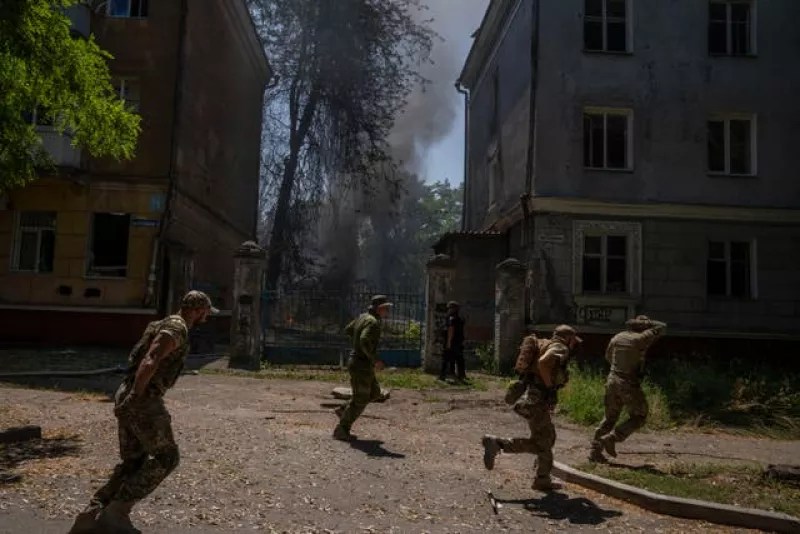
The two main trade unions in the Spanish state today, the CCOO (Comisiones Obreras) and the UGT (Unión General de Trabajadores), the first originally under Communist Party direction and the smaller second under the social democratic PSOE (Partido Socialista Obrero de España) grew out of that resistance (although the UGT had been in existence prior to the military-fascist uprising). Activists had infiltrated the vertical union and workers began to elect militants to represent them in demands to the employers – this in particular was the origin of the Comisiones Obreras.

Employer-led ‘unions’:

Employers have also set up “unions” in order to undermine an existing union or in order to prevent a real union from organising workers in their enterprises.

These have been called “company unions”11 or “yellow unions”, the latter possibly after the French Fédération nationale des Jaunes de France (“National Federation of the Yellows of France”) which was created by Pierre Biétry in 1902.12

Up to the mid 1930s, ‘company’ or ‘yellow’ unions were quite common in the USA and after the Ludlow Massacre13, John D. Rockefeller had one created to improve his company’s image and to resist the struggles of mineworkers and of the United Mineworkers’ Union in Colorado; he called it the Employee Representation Plan.14

“In 1935, the National Labor Relations Act (also known as the Wagner Act) was passed, dramatically changing labour law in the United States. Section 8(a)(2) of the NLRA makes it illegal for an employer “to dominate or interfere with the formation or administration of any labor organization or contribute financial or other support to it.” Company unions were considered illegal under this code, despite the efforts of some businesses to carry on under the guise of an ‘Employee Representation Organization.’”15

Japan has company unions that are not in the RENGO federation of independent unions and the company ones appeal to an ideology of loyalty towards one’s paternalistic employer.16

In the 1930s, unions in Mexico organized the Confederation of Mexican Workers (Confederación de Trabajadores de México, CTM). The state of Nuevo Leon, however, coordinated its workers into sindicatos blancos (“white unions”), company unions controlled by corporations in the industrialised region.

Naturally a “union” of this type is unwilling and indeed unable to call a significant number of workers in a workplace, company or industry into industrial action to defend the interests of its members and improve their remuneration conditions of work (my definition of a workers’ union). Therefore I contend that they are not workers’ unions.

UNIONS INACTIVE IN STRUGGLE TODAY

But there are unions that have built themselves up in membership (and incidentally by union dues revenue) by proving themselves willing and able to call their members out in action to enforce their demands of the employers – but who have not been doing so for some time. We are increasingly seeing these in Western Europe at least and often the reason quoted is that state legislation is making it harder for the unions to organise, or to take action effectively. And rather than jail for union activists as in the past, the threat of the State is sequestration of union funds. The union leaders, officers and clerical support staff view such threats as extremely serious, evoking the possibility of the demise of the trade union or at the very least its inability to maintain its functions and payment for its superstructure of staffing, buildings and equipment.

Those are of course real threats with some states proving their ability to carry them out in the past and consequently union leaders draw back from struggles that might result in such an eventuality – or even attempt to smother them. The union leadership become, in effect, the firefighters of the employers. When they reach that position, they are not really the union any more. The union is not the organisation’s offices, officers and other employees. Its leaders are forgetting that back in the history of this or of many other unions, its organisers and members maintained only a rudimentary bureaucracy while they fought for the gains to be wrenched from the employers — organisers and even ordinary members faced sacking, police baton charges, strike-breaker violence, deportation, transportation, jail, torture and even death. When safeguarding the superstructure of the union outweighs defending and advancing the members’ interests, it is time for the union leadership to retrace its steps – or vacate the spot.

A union may fail to be recognised as such by the employers and/ or the State but (based on my definition) that does not affect its status as a union, so long as it is an organisation consisting predominantly of employees to defend the interests of its members and improve their remuneration and conditions of work and able to call a significant number of workers in a workplace, company or industry into industrial action and does so when necessary.

To be sure, an employer refusing to recognise the right of the union to represent its employees and to negotiate on their behalves does represent an additional challenge. But we should not forget that all workers’ unions once faced that initial obduracy but nevertheless in time became accepted by the employers. And it required a long process for some of those unions, with unsuccessful industrial action and many sacrifices as part of it.

The opposition of the State, acting in the first place for the capitalist class it represents and secondly in its own interests as an employer, is another serious obstacle for unions. Currently in most of Europe and certainly in Ireland, the State does not outlaw unions but it does place many restrictions around them and, in some cases, removes their protections.

The protection received by a union that is recognised by the State exists mostly in exemption from some legal procedures such as being sued for causing loss of profits for a company and exemption from arrest for picketing (“loitering”, “obstruction”, etc). However, the laws of none of the European states exempt workers from arrest for persistently obstructing the entry of strike-breakers or goods to a workplace where the workers are on strike. In most European countries, picketing, boycott and blockade in solidarity by “non-involved” unions – i.e “secondary picketing” etc — is against the law to a greater or lesser degree. Well, such laws are made by the capitalist class to protect themselves and then processed through a parliament where most of the elected public representatives are supporters of that same class. To receive legal protection from capitalist laws the union must be recognised by the capitalist State which entails meeting the necessary requirements in order to be registered as “a friendly association” and receiving “a negotiation licence”.

However, while these provisions affect very deeply the ease or otherwise of the organisation, they do not in my opinion have anything to do with whether it is or is not a workers’ union.

Another hurdle to get over for “recognition” is that of acceptance by the Irish Trade Union Congress. A union not recognised by the ITUC will receive no support from that body in application to the State for a “negotiation licence” and members of other “recognised” unions will be encouraged to cross any picket line of an “unrecognised” union. That is obviously a serious situation for a young union that is “unrecognised” but again, it does not define whether or not it is a union.

Say what the State, employers or the ITUC leadership may say, the reality remains that a union is an organisation consisting predominantly of employees to defend the interests of its members and improve their remuneration and conditions of work and that is able to call a significant number of workers in a workplace, company or industry into industrial action and which does so when necessary. Not whether it is — or is not — recognised or facilitated by those other bodies.

Funeral of James Byrne, shop steward of the Irish Transport & General Workers’ Union, who died as a result of his hunger strike in protest at imprisonment during the 1913 Lockout (Photo sourced: Internet). The workers were defeated in an 8-month struggle but the union recovered and bounced back. The ITGWU has gone through a number of changes resulting in the largest union in Ireland today, SIPTU. But is it carrying out its responsibilities as a union today, to say nothing of living up to its inheritance?

As the unions in many states have become more and more passive (in the Irish state particularly through the years of “social partnership”17) they have lost much of their accreditation in reality. As they fail further to justify their existence they will be replaced and for example the British-based union Unite is moving into the Irish arena. But the new union, despite its local leaders speaking militantly at rallies of some campaigns and investing some of its effort into building support in the community, is demonstrating the same reluctance to take determined action against the employers, whether private or State. Should that state of affairs continue then that too will fall and be replaced.

But by what and when?

End.

FOOTNOTES

1A friendly society has nothing necessarily to do with being friendly but is is a mutual association for the purposes of insurance, pensions, savings or cooperative banking. It is a mutual organisation or benefit society composed of a body of people who join together for a common financial or social purpose.

2While some readers may be surprised or even dismissive of reference to “private or State violence”, there can hardly be a state which does not at least on occasion – some more often than others — employ police or judicial violence against striking workers. In the past in many countries and perhaps in particular in the USA, companies employed private security staff or company police to act against worker disobedience, in addition to agencies such as the Pinkerton not only to gather intelligence on union organisers but to attack them physically or to prepare cases for their conviction of law-breaking in court. In some parts of the world companies – often with their HQs in the “West” — continue to employ their own security staff against union organising, sometimes with fatal results for the union organisers.

3This applies even if the company should still be making a profit but is not maximising it. The company’s shareholders and investors, including institutions such as banks, trust funds, pension funds etc will begin to desert the company to a competitor offering a higher return on investments and said company may even engage in a “hostile takeover” bid, by bringing sufficient numbers of shareholders to vote in favour of its takeover. This is one of the laws of the operation of capitalism and one reason why it there is little point in appealing to the individual consciences of capitalists.

4Sometimes workers’ unions have called themselves by other names, including “society” and “association” in order to circumvent anti-trade union legislation for example.

5https://www.bbc.co.uk/bitesize/guides/zxs2pbk/revision/8#:~:text=Trade%20unions%20were%20abolished.,which%20was%20run%20by%20Dr.

6https://www.counterfire.org/articles/opinion/19778-why-fascists-hate-trade-unions

7https://en.wikipedia.org/wiki/Economy_of_Fascist_Italy

8https://en.wikipedia.org/wiki/Spanish_Syndical_Organization

9https://www.counterfire.org/articles/opinion/19778-why-fascists-hate-trade-unions

10https://www.surinenglish.com/lifestyle/201809/14/september-1964-birth-what-20180914090919-v.html

11To be confused with a genuine employee’s union built up within a particular company, for example in a power-generating monopoly or state service company, whether privatised or not.

12https://en.wikipedia.org/wiki/Company_unions (“Yellow” in opposition to the “Red” of socialism; however “yellow” also exists as a pejorative description of cowardice)

13Massacre by company guards and the National Guard of strikers and their children on 20 April 1914 during the Great Colorado Coal Strike, after which the workers took up arms. It was the subject of a song composed and sung by Woody Guthrie and others, e.g Jason Boland and Andy Irvine.

14Ibid.

15 Ibid,

16Despite this and generally not recruiting part-time workers, membership of workers’ unions in Japan stood at 18.5% in 2010 https://en.wikipedia.org/wiki/Labor_unions_in_Japan

171983-???? In 2010: “Following 23 years of social partnership the Irish trades unions (ICTU) entered the new decade seriously weakened and with union employee density down to 31% compared to a density highpoint of 62% in the early 1980s preceding the series of seven corporatist social pacts.[2] Union penetration is highly imbalanced with a density approaching 80% in the public sector and around 20% in the larger private sector.”

SOURCES AND REFERENCES

Definitions of workers’ union:

https://www.citizensinformation.ie/en/employment/employment_rights_and_conditions/industrial_relations_and_trade_unions/trade_unions.html

https://www.cro.ie/Society-Union/RFS-Trade-Unions

Unions under fascism:

https://www.bbc.co.uk/bitesize/guides/zxs2pbk/revision/8#:~:text=Trade%20unions%20were%20abolished.,which%20was%20run%20by%20Dr.

https://en.wikipedia.org/wiki/Spanish_Syndical_Organization

https://en.wikipedia.org/wiki/Economy_of_Fascist_Italy

https://www.counterfire.org/articles/opinion/19778-why-fascists-hate-trade-unions

Yellow unions:

https://en.wikipedia.org/wiki/Company_union

https://www.theguardian.com/commentisfree/2013/feb/18/boots-defeat-meek-unions

Social Partnership: https://en.wikipedia.org/wiki/Social_Partnership