The whisper is that a new movement is to be created, called Right to Change and that it will publish an on-line mass left-wing newspaper, which will be the first mass left-wing paper in this country since 1913 and even then, that newspaper’s distribution was mostly confined to Dublin.
In fact, a movement based on the right to change already exists, taking in not only the right to water but to housing, to social provisions, to health, to education, to natural resources – the many things that have been removed or cut or are under threat in order to pay the bankers and speculators. One supposes that this new organisation is intended to build on that movement, coordinate it etc. And no doubt put up a slate of candidates at local government and at general elections.
It is Right to Water that has given rise to this idea and no doubt a number who were prominent in it will be likewise in the new organisation.
Right to Water was not a movement, rather a kind of coordinating organisation for national demonstrations, chiefly in Dublin, against the water charges and the expected privatisation of water. In that work it has been highly successful.
The demonstrations built on the actions and mobilisation of hundreds of community groups across the country, protesting locally, encouraging people not to register or pay the charges, blocking Sierra and others from installing water meters and so on.
Many people will think that building Right to Change is the logical next move and will be enthused by it. And why not? Sure wouldn’t it be great to have a large number of TDs standing up to the System, denouncing its plans and their actions? The kind of thing done today by a few Independent TDs and others representing parties with small representation in the Dáil. Well, it would be useful but would it really make a difference?
Recently a Dáil committee set up to review the water charges and so on published its recommendations. Only 13 of the committee’s 20 members agreed with all of the recommendations but all of the recommendations stand nevertheless. Of course some of the objectors were right-wingers but many were of the Left – the System will always have a majority in the sub-systems it sets up. And if a time should come when it cannot achieve that …. well, that’s when you’ll hear the tanks clanking down the street.
Ok, granted perhaps, but it can’t hurt, can it? To have more Left TDs harassing the Government? No, of course not. Not unless we expect too much of this new organisation. Not unless we come to depend on it. And scale down our own independent activities. Hand over power to them.
That wouldn’t happen, would it? Unfortunately it has been a historical trend for popular movements to do exactly that. And social democracy always betrays the mass upon which it has erected itself. The Liberals in the further past and our ‘own’ Fianna Fáil in more recent history often promised the workers many things to win their votes. And even helped the workers push some things through from time to time. But they never promised to abolish the System, never promised socialism.
Social democracy does promise to deliver a fair and just society. It is a promise that it has been making for well over a century but on which it never delivers. It’s not just about jobbery and corruption, of which there is plenty in the corridors of power and to which many social democrats gravitate; it’s more that the Councillors and TDs elected never had any intention of abolishing the System. And in fact, will come out to defend the System whenever it is in danger. When it comes down to it, the System is THEIR system.
From time to time one hears social democrats bewailing “the unacceptable face of capitalism”, as though there exists an “acceptable” face of that system. They may talk at times about the “evils” of capitalism but will bear in mind the “good things” of capitalism too, the benefits they draw or hope to draw from the System. So criticism must be “balanced”, one mustn’t “throw the baby out with bathwater” and so on.
“The law must be obeyed”, they agree, as though “the law” is something divorced from class and politics, some immutable thing that just somehow exists. And yet just about every major social and political advance — including the right to organise a trade union at work, the right to strike and the right to universal suffrage — was won by people breaking “the law”. “The law” and its enforcers are part of the System.
If (heaven forbid) the action of the System’s police should be criticised, then we will hear phrases like “the police have a hard job to do”, the action of the ‘bad’ police is “bringing the force into disrepute”, “there are a few bad apples”, “better training is needed”, a “change in management is necessary”, etc etc. Anything but admit that the police force in a capitalist country exists in order to serve that System.
SOCIAL DEMOCRACY BETRAYS
At the beginning of May 1926, with a coal miners’ strike as a catalyst, Britain was heading towards a real possibility of revolution. The social democratic Trades Union Congress called a General Strike. In many areas of the country and in cities, no transport moved unless it had authorisation from the local Trades Council (a committee of local trade union representatives) or it had armed police and soldier escort. In less than two weeks, the TUC, at the behest of the British Labour Party, called off the strike, leaving the miners to fight on alone to their defeat in less than eight months. “By the end of November, most miners were back at work. However, many remained unemployed for many years. Those still employed were forced to accept longer hours, lower wages and district wage agreements” (Wikipedia).
Banner of a Labour Party branch of Crewe (West England) with a Marxist revolutionary slogan at a General Strike rally. Yet the leadership of the Labour Party convinced the TUC to call off the General Strike. (Image source: Internet)
There had been more workers coming out at that time but also some of the union leaders were beginning to crack, as the struggle was shaping up to be a real showdown between the System and the workers. The TUC didn’t even set up a system to guarantee no retaliations by bosses against activist workers in non-mining unions and many lost their jobs.
The Chilean Salvador Allende is often seen as a hero, a radical social democrat who stood up against internal military fascism and external CIA-led destabilisation. Workers and peasants and some sections of the middle class got Allende elected President in 1970 but right wingers and officers in the military, working with the CIA, were conspiring against him. Everybody knew this and sections of the workers asked for Allende to arm them against the coup they knew was coming. Allende tried instead to compromise and find senior officers he could work with to use against the plotters. When the military carried out the coup, there was some armed resistance but most workers were unarmed. The coup left “3,000 dead or missing, tortured ten thousands of prisoners and drove an estimated 200,000 Chileans into exile” (Wikipedia). In addition, the children of many murdered left-wingers and union activists were given to childless right-wingers and military and police couples to raise as their own.
Social democracy always betrays or ends up hung by its own illusions. Unfortunately the workers end up hanging with it also.
Moments of terror during the 1973 military coup in Chile — some of those pictured may well have been tortured and/ or murdered soon afterwards. (Image source: Internet)
In 2010, in response to Government budget cuts of between 5% and 10% on public servants, along with a levy on pensions, along with a breakdown in the “partnership” system of business and state employers negotiating with trade unions, the social-democratic Irish Trades Union Congress called a major demonstration in Dublin. Perhaps 70,000 marched down O’Connell Street and the ITUC was threatening a general strike. Despite escalating strike action in a number of sectors and the growing unpopularity of the Government, the ITUC abandoned the idea of a strike and instead went in to do a deal with the Government, in which they actually agreed to pay cuts and the pension levy, in exchange for some guarantees around public sector jobs. The social democratic trade union leaders didn’t have the stomach (or backbone) to take on the Government, to test the level of support for resistance.
Section of the ICTU protest march in November 2010 — the ICTU threatened a General Strike within days but instead crawled into Croke Park Agreement. (Image source: Internet)
Why all this talk about social democracy? Well, because Right to Water is essentially a social democratic alliance. It contains Sinn Féin, the biggest minority party in the Dáil, with 23 elected representatives, third in numberof TDs. Right to Water is also supported by Unite, “Britain’s biggest union with 1.42 million members across every type of workplace” according to their website – it is pretty big in Ireland too, which is a “region” for the union, with 100,000 members across the land.These are forces that, while opposing the water charge, did not support civil disobedience on water meter installation nor refusing to pay the charge (although a number of their members fought along with the rest). Refusing to register and pay were the most effective ways of resisting the water charges and it is the high level of civil disobedience behind the giant demonstrations that has made the ruling class think again and promoted divisions between FG and Labour on the one hand and Fianna Fáil on the other.
But these elements did not support that policy. They want to be not only law-abiding but be seen to be law-abiding. Seen by who? Well, by the ruling class of course. SF in particular is champing at the bit to get into a coalition government but needs to show the ruling class that it is a safe pair of hands, i.e that the System will remain intact if managed by them. As indeed they have done in joint managing the regime in the Six Counties.
Of course there are many occasions when social democrats and revolutionaries can cooperate – but never by ceding leadership to the social democrats nor by depending on them, always instead by relying on their own forces and striving to educate the masses that the system cannot be reformed but needs to be overthrown …. and that the ordinary people are perfectly capable of achieving that.
AN ON-LINE MASS LEFT-WING NEWSPAPER
What about the left-wing newspaper though? Now that might be something, true enough. A source of rebuttal to the lies we are constantly getting from the media and a source of information and news which media censorship ensures most of us don’t get to read, see or hear.
If it seeks to be a truly mass paper it will need to cover not only foreign and domestic news but also sport, with sections on history, culture, nature, gardening ….. Rudolfo Walsh, who founded and with others ran the important ANCLA news agency during the dictatorship and the earlier extremely popular CGTA weekly in Argentina, until he was assassinated by the police, has been credited with two important sources of the weekly’s success: his informants within the police and army and an excellent horse racing tipster!
Rudolfo Walsh, Argentinian writer and journalist of Irish descent, his image superimposed on another of the military dictatorship that murdered him. (Image source: Internet)
It is a big undertaking and a very interesting one.
But will the new paper practice censorship? Will it confine its discourse to the social democratic or instead allow revolutionary voices in it? Will it allow criticism of trade union leaderships, including Unite’s? Will it cover the repression of Republicans on both sides of the Border but particularly in the Six Counties? One would certainly hope so. Well, the proof of the pudding is in the eating – and of the newspaper, in the reading.
The 1916 Rising, to which Moore Street is so closely linked, represented some very important events for the people of the world and it impacted on people in all populated continents of the globe.
FOR DEMOCRACY, EQUALITY
The 1916 Proclamation, printed in Liberty Hall and signed in No.21 Henry Street, just around the corner from Moore Street, is a document not only of clear patriotic and anti-colonial expression but also a democratic and inclusive one. At a time when hardly a state anywhere in the world permitted women to vote in elections, the document specifically addressed “Irishmen and Irish women”. It also clearly expressed the wish of the insurgents to overcome the religious sectarianism which had played such an important part in securing continued colonial rule: “ … religious and civil liberty … oblivious of the differences carefully fostered by an alien Government, which have divided a minority from the majority in the past.”
Site of signing of 1916 Proclamation, 21 Henry St, almost opposite end of Moore Street. At the time the business premises and cafe of Jennie Wyse Power of Cumann na mBan was there (plaque erected in 1919 by the 1916-1921 Club).
The Rising had expressed the gender equality intentions of the insurgents in more than the words of its address: women fought in the Rising and, in two garrison areas, commanded for awhile. The British colonial authorities recognised the role of some of those women by sentencing one to death, albeit a sentence later commuted, and keeping a number of them in prison even after many men had been released.
Headline of 1916 Proclamation and specific mention address to Irish women (sourced oh Internet)
FOR GENDER EQUALITY
Irish women organised for and acted in the Rising in two separate organisations: Cumann na mBan and the Irish Citizen Army.
The women founded as an auxiliary force to the Irish Volunteers, Cumann na mBan, later to assert considerable organisational independence, wore their own uniforms and had their own female officers. Women had participated in many insurrections and resistance movements across the world but no insurrectionary force in history ever before had such a consciously women-organised force.
The women in the Irish Citizen Army had formally equal status with men and a number carried arms in the Rising and fired them at the enemy. Men acted on orders from women officers in at least two garrison areas and, in medical matters, also in at least a third.
Such a situation was of great significance in the struggle for women’s rights and gender equality, not only in Ireland but in the world.
FOR WORKERS AND SOCIALISM
Captain White & Irish Citizen Army on parade on their grounds at Croydon House, Fairview, N. Dublin City. (Sourced on Internet)
The Irish Citizen Army was founded in 1913 as a workers’ defence force by trade unionists and socialists and later as a workers’ army and, despite its strongly anti-colonial stance, until the 1916 Rising, maintained a strict separation from the nationalist republican organisations of the Irish Volunteers and Cumann na mBan. As detailed earlier, it formally recognised women within the organisation as of equal status with men.
Workers’ organisations had existed before, including armed ones but nowhere had such an armed organisation existed outside of armed conflict for so long (1913-1916), led by socialists and with equal status for men and women. In the history of socialist organisation and particularly of a revolutionary and insurgent kind, this was a development of enormous importance.
AGAINST WAR
The 1916 Rising took place in the middle of the first of two huge international conflicts that were later called World Wars. WW1 was a struggle for markets, resources and strategic positions and bases between a number of states ruled by capitalists and those states recruited heavily from among the nations they had colonised; in Britain’s case, that included Ireland.
To many nationalist Republicans, the War represented an opportunity, expressed in the maxim that “England’s difficulty is Ireland’s opportunity”. But to many socialists around the world, the War represented a disastrous pitting of the working people under one Power against the working people of another, as well as an excuse for the suppression of demands to fulfill the needs of their workers while the capitalists gathered huge profits. James Connolly was one of those socialists.
“WE SERVE NEITHER KING NOR KAISER banner on Liberty Hall (prior wartime repressive legislation), HQ of the IT&GWU, the WUI and of the ICA. (Sourced on Internet)
Connolly, Edinburgh-born Irish revolutionary socialist, formerly Acting General Secretary of the Irish Transport & General Worker’s Union, had joined the International Workers of the Word, the hugely influential in the USA syndicalist organisation. As well as being an energetic organiser, Connolly was a historian and revolutionary theoretician. Connolly took to heart the resolution formally adopted by representatives of the vast majority of European socialists to oppose war and, should it come, to turn it into class war against their rulers. In the event, Connolly was one of the few European socialist leaders to live up to that resolution: as Commandant of the Irish Citizen Army, GPO Garrison commander in a rising against Ireland’s British colonial masters, James Connolly was also striking a blow against imperial and colonial war.
That aspect of the Rising, of being consciously or unconsciously against War, predated the February Russian Revolution of 1917, also in part an anti-war uprising, by ten months. And of course, predated the October Socialist Revolution in Russia by seventeen months and the nearest uprising geographically to Ireland, also in part an anti-war one, the German socialist uprising in November 1918, by two-and-a-half years. For all these reasons, the 1916 Rising, the Headquarters of which were in the GPO and later removed to Moore Street, was and remains of enormous significance in the world-wide history of people’s movements against war.
AGAINST COLONIALISM IN THE WORLD
The 1916 Rising reverberated around the world. It took place in what had a century earlier been widely regarded as the second city of the British Empire and, when it erupted, did so against the largest empire, in terms of directly-controlled areas and population numbers ruled, that the world has ever known. How can such an event be of other than huge interest, not only to other peoples under British colonial rule but also to those under the colonial rule of France, Belgium, Germany, Holland, Portugal, Spain, Russia and the United States? How could it not have been of considerable interest to socialist revolutionaries everywhere?
Lenin speaking in Red Square in October 1918. He was among Russian revolutionaries who commented on the 1916 Rising. (Sourced on Internet)Map of world empires, colonies and territories in 1914 (Sourced on Internet)
Socialists around the world discussed the Rising, at first often criticising it, while Lenin, of huge importance in the socialist movement at that time and some others commented favourably upon it. Consequently, the Rising and the War of Independence was to play an important part in the development of a revolutionary theory around the world that advocated the linking of the struggles of worker, peasant and small farmer, of anti-imperialism and anti-colonialism with struggle for a socialist republic.
August 4, 1916: From left: Irish American labor leaders Timothy Healy, William B. Fitzgerald, William D. Mahon, Hugh Frayne (general organizer in New York for the American Federation of Labor), and Louis Fridiger. Fitzgerald, Mahon, and Fridiger represented the Amalgamated Association of Street Railway Employees of America. (Source http://irishamerica.com/2016/02/hand-in-hand-for-freedom-u-s-labor-and-irish-rebels/
The Rising was a topic of great discussion in the United States and in Australia, and in the USA of financial and other support, as is well known. Connolly had been active there and had published his songbook in New York in 1910; Larkin was actually there in 1916. For a number of reasons, including the sentencing to death of Eamon Bulfin for his role in the GPO and in Moore Street, a sentence later commuted and Bulfin deported to Buenos Aires, the Rising was discussed in Argentina and in other Latin American countries (where, at that time, the British were the main imperialist power).
Eamon Bulfin, born in Argentina and exiled there after 1916, his photo in Australian paper the Southern Cross that year. (Sourced on Internet)Members of 1st Battalion Connaught Rangers including the leader of the 1920 mutiny in the Punjab, James Daly. (Sourced on Internet)
It was certainly discussed in the huge country of India (which at that time included what is now the states of Pakistan and Bangladesh), whose revolutionary nationalists had contact with Fenian revolutionaries from decades earlier. The Connaught Ranger mutiny in the British Army was a direct result of the Rising and the War of Independence and, before the mutiny was crushed, the soldiers and oppressed Indians had begun to make movement towards reciprocal solidarity. And we know, from history and the writings of Indian nationalists and socialists, that the Rising and the War of Independence which organically followed the Rising influenced the struggles against colonialism and imperialism in India right up to the Second World War. We are also aware of correspondence between the Nehru and Ghandi families and the McSwineys.
A young Ho Chi Minh (not his name then) at Marseilles conference in 1919 (Sourced on Internet)
We know also that the War of Independence influenced African uprisings and Ho Chi Minh, later leader of successful wars against Japanese invasion and French colonialism. In South Africa, the Rising must have been a subject of discussion too, at least among the whites. John McBride, sentenced to death ostensibly for his role in Rising was probably in reality being shot for having organised and led an Irish Brigade to fight the British in the Second Boer War, which had ended but fourteen years earlier.
In Britain itself, the Rising influenced the huge Irish diaspora in England, Scotland and Wales and a significant proportion of the insurgent forces in Dublin had actually come from there. The Rising and especially the War of Independence caused a crises of a kind in British socialist thinking, threatening an irrevocable rupture between revolutionary socialists and even sections of radical social democrats on the one hand and pro-imperial social democracy on the other.
This is not the place to discuss this further but that situation, allied to anti-colonial struggles around the world, huge dissatisfaction and mutinies in the British armed forces and a growing strike movement in Britain, provided great opportunities for an Irish revolutionary movement to influence the history of the world in a direction other than that which it has taken.
For all the reasons outlined above, the Moore Street quarter should be of recognised World Heritage Status.
UNESCO WORLD HERITAGE AND OTHER CONSERVATION STATUS
The Irish State ratified the World Heritage Convention in 1991, which qualifies Ireland to apply for that status for the Moore Street quarter. Up to US$1 million is available from the World Heritage fund for the saving and development of a World Heritage site and funds are also available for urgent works to save it. World Heritage status attracts considerable tourist interest and substantial revenue is of course also available to the State and businesses surrounding the area from such tourist interest.
Currently Ireland has only two sites which have been accorded full World Heritage status (one of archaelogical and the other or natural, mainly geological, importance). However, another seven sites are under “Tentative” categorisation since 2010 and Dublin City is one of those. The Moore Street battleground could be afforded that full World Heritage status in its own right, which I believe its history deserves but it can also be used to strengthen the case for full such status for Dublin City.
The ten grounds on which UNESCO currently relies in order to examine the “the unique importance” of a site is admittedly rather restricted in the category of historical importance, particularly in the development of social movements. However, even under the existing list, I would submit that the Moore Street battleground meets four of the criteria: 2, 4, 6 and 8. The USA has the Statue of Liberty and Independence Hall building as World Heritage sites.
Registering under EU programs may also be possible, in particular Horizon 2020.
Yes we do – or at least most of us do. There are a few who do not.
Some people think that those few who do not want change are our rulers, the big capitalists — but they are mistaken. The capitalist class forced change to overthrow the feudal system, which was hampering their growth and the development of industry and commerce. And capitalists know that change is inevitable, so it is better to go with it than to try to stop it. That is why they set up courses such as those called “Change Management” — if change is inevitable, then manage it, the thinking goes. Manage it so that it comes out to capitalist advantage, naturally.
(Source Internet, using “change management” as search words)
Change Management courses, particularly those dealing with personnel, emphasise managing change as smoothly as possible, making it non-traumatic. In that way, it is assumed, there will be less reaction against the change, less opposition.
But in fact, sometimes capitalism wants the exact opposite – it wants change to be as traumatic as possible. These are the situations described under the title “Shock Doctrine” by economic/ environmental activist and theorist Naomi Klein (2007). This has two mechanisms: in the first, the shocking change taking place disarms people from the psychological ability to organise resistance; in the second, the speed of the shock (or shocks) of the economic and political manoeuvres of the capitalists moves faster than the opposition can organise, achieving their goals before opposition can coordinate an effective resistance.
Klein has described how huge natural disasters such as earthquake (Haiti), tsunami (Thailand, Indonesia) and flood (New Orleans, USA) are used to force foreign or native private takeovers of sectors of the national economy while the people and the regime in power are reeling under the impact of the disaster.
Political and economic disasters are also used in this model, such as the military coup in Chile and the collapse of the USSR (in the case of Poland), the economic collapse in Bolivia, the invasion of Iraq, the financial collapse of the “Tiger economies” of SE Asia. Even a potentially beneficial change of great magnitude may be used, such as the collapse of white minority rule in South Africa, during which the black majority won formal equality and citizenship but lost control of most of the economy (and lost a lot more which I do not intend to discuss here).
There is in fact a military precursor to this which has been called, in the context of US military strategy, “Shock and Awe”. This doctrine was described by its authors, Harlan K. Ullman and James P. Wade (1996), as “attempting to impose this overwhelming level of Shock and Awe against an adversary on an immediate or sufficiently timely basis to paralyze its will to carry on … [to] seize control of the environment and paralyze or so overload an adversary’s perceptions and understanding of events that the enemy would be incapable of resistance at the tactical and strategic levels”.
Of course there were many elements of this in the Blitzkrieg of the Nazi German army in its invasions of other countries and even the medieval invasions by the Huns and of the Mongols. Cromwell employed elements of it in Ireland in his army’s massacres at Wexford and Drogheda.
Aside from needing change to overcome feudalism, managing change to its advantage and use of shock doctrine to facilitate changes it wants, the capitalist system itself promotes change as part of its system. Small capitalists combine and form conglomerates, in which big capitalists come to power and, in turn, eat up smaller capitalists in order to dominate their sphere of economic activity. We have seen the growth of supermarkets and the decline of small shops, the rise of chain stores killing independent clothes shops, chain cafes and eateries driving indpendent cafes and restaurants out of business.
Capitalists also promote inventions and discoveries so as to increase their wealth but also in order to stay in front of the competition – a capitalist concern that stays at its original level will be taken over or driven out of business by its competitors. Our grandparents hardly knew about the possibility of mobile phones and computers, let alone small hand-held audio-visual connections to the Internet; our children today play with visual electronic games, films and music before they learn to talk. To be sure, monopolies also suppress inventions but they can only do so to an extent as some capitalist somewhere will break the embargo or consensus (if the discovery can be used to make sufficient profits making the attempt worth the risk).
OK, but we want change too and, we think, what we want is not the capitalist kind of change we’ve been talking about until now, although innovations and discoveries should continue and in fact accelerate – but for the benefit of the people, not the capitalists. Technological advances and innovations that do not make big profits may nevertheless be very valuable to us for all kinds of reasons.
So, yes, we want change. But what kind of change? Change to what? Change how? There a vast panorama opens.
We want to eliminate homelessness; have an efficient universally affordable health service; not to have to struggle for a decent standard of living in food, housing and small luxuries; to enjoy universal and affordable access to education at all levels; not to harm the environment; to have the positive aspects of our cultural inheritance, including history, valued and promoted. We want equal rights and respect between people regardless of race or ethnicity, gender, sexuality, ability … and freedom of choice.
In 1930s Germany, people wanted those things too, except that a lot of people were convinced that the contents of the last sentence above were harmful and not what they wanted. But there were many, many people who did want those contents too. The issue was in doubt for awhile.
In the 1928 elections the Nazi Party achieved just 12 seats (2.6% of the vote) in the Reichstag (German Parliament) and in three areas the Nazi Party failed to gain even 1% of the vote. In the Presidential elections of March 1929, the Nazi candidate Erich Ludendorff gained only 1.1% of votes cast, and was the only candidate to poll fewer than a million votes.
We know that elections are not everything – but still.
Five years later, the Nazis were in power — but even after the Communist Party was declared illegal their candidates polled a million votes.
The people definitely wanted change and the established ‘democratic’ parties were unable or unwilling to deliver it. The change the people ended up with was not probably what most had imagined and for some time it spelt disaster for Germany – and unbelievable suffering for large parts of the rest of the world … and also for millions of German citizens.
To look closer to home, people wanted change here too and from 1917 onwards they showed that electorally by voting for the newly-reorganised Sinn Féin party. From 1919 a significant section of the populace took to arms to pursue change and had the active or tacit support of a huge part of the population. But in 1921 the movement and the people split about what kind of change they wanted. A civil war followed with a heavy level of brutality against civilians and combatants, particularly by the State side, which won the contest — and we ended up with the State we now have.
Bombardment of Republican-held Four Courts in Dublin by Free State forces from the bottom of Winetavern Street (with British artillery on loan) starts the Civil War on 28 June 1922 (Source image: Internet)
It is well to be fairly clear about the change we want and what we do not want. There was no such general clarity in the ranks of those fighting for change from 1916 to 1921. It turned out that many who were fighting for change were fighting for different things.
Differences must have come up over the years of struggle and we know from some evidence that they did. We also must assume from the political nature of prominent people in the struggle that there were differences. Even within the IRB itself, only one of the organisations involved, there were differences that surfaced in attitude to the 1913 Lockout, the control of the Volunteers in 1914 and the Treaty of 1922.
Of course, we need maximum unity against the principal enemy. But that is unity in action only. If we put unity in thought, principles or political or social program first, as some organisations have and some others claim to do, we end up with small organisations unable to effectively counter the resistance of the ruling class to the change we want and, in the end, unable to overcome that resistance. On the other hand, if we sacrifice everything to unity against the enemy, we leave ourselves hostages to events in the future and to what kind of society will emerge from the struggle.
Somewhere between those two is where we need to be, preserving the freedom to discuss, explore and proclaim differences of opinion and social program, while avoiding unnecessary squabbles and maintaining unity in action. It is a difficult balance to strike but it needs to be done. In the midst of fighting the common enemy and striving for unity in action against it, we must fight for that freedom also inside the resistance movement, the freedom to discuss, explore and yes, also to criticise.
You will not question the Leadership of the Organisation. That is disrespectful. Besides, they know better than you. They are more intelligent and/ or better educated or have been at it longer than you.
The Leadership are incorruptible and have suffered much along the way. That makes it disloyal to question them.
You don’t want to be disrespectful and disloyal, do you?
Let the Leadership do the thinking. Is that not easier?
You must not listen to those who challenge or criticise the Leadership. Those people are disloyal and disrespectful. Besides, some of the things they point out will make you uncomfortable. Put your trust and faith in the Leadership and be comfortable and at ease.
Those who challenge the Leadership are troublemakers. They seek to upset things. It is right that they be expelled and then things will return to the state with which we can be comfortable. If remaining inside the Organisation, they will create disorder. If they are outside the Organisation, their words should not be reported or their criticism printed. Their activities should not be publicised.
You know and your comrades know that you are not a troublemaker, or disrespectful or disloyal. But if you associate with those critics, the ones from outside or that left or were expelled, people will begin to suspect that you too are like them. You want the Leadership and comrades to trust you, to be at ease with you, don’t you? Best ignore the critics, not have anything to do with them.
Besides, what can they possibly have to offer, outside the Organisation?
Solidarity against the attacks of the enemy is a good thing, but not with the critics. They have forfeited any right to solidarity when they broke from or criticised the Leadership and the Organisation. They have brought all this down upon themselves.
Concentrate upon the path pointed out by the Leadership. Concentrate upon the tasks of the moment. All will be well. You are in good hands. The Organisation is in good hands. Everything is fine.
Information picket (with table across the road) organized by Anti-Internment Group of Ireland in September 2014 at Thomas St./ Meath St. junction, Dublin.Palestinian and Kurdish flags at a Kobane solidarity rally in Trafalgar Square, London in 2014. (Photo: D.Breatnach)
The flag of the ICA, flown over Murphy’s Imperial Hotel in 1916
I’m no shade of green,
though neath such flags I’ve oft times been,
and ‘neath the Plough in Gold on Green,
and some years back
Also the black,
aye and the red-and-black;
or Palestinian red and black and white and green,
Cumann na mBan, “Irish Republic” and Tricolour flags displayed at Dublin’s GPO by Moore Street campaign supporters. (Phoro: D. Breatnach?)
Or the Basque crosses white and green upon red …..
In solidarity I have flown all those flags I’ve said
But when all’s said and done —
though hard to choose just one —
from my heart and from my head:
I choose the workers’ Red.
Sept 2016
A number of the Basque flag, the Ikurrina, flying in Dublin during a solidarity protest. (Photo: D.Breatnach)
Anarcho-Sindicalist and Anarchist black flags (Photo source: Internet)Bangladeshis on Mayday demonstration. (Photo source: Internet)
On Sunday 8th May a working-class hero was commemorated in the East Wall area in which he lived. Walter Carpenter was a native of Kent, in SE England and came to Ireland to help found the Socialist Party of Ireland 1 with James Connolly in 1909 in Dublin. Among other activities a campaigner around housing issues for the Dublin working class, he reared his sons in socialist belief so that it was no surprise that both Wally (Walter jnr) and Peter joined the Irish Citizen Army and fought in the 1916 Rising. As a result of the repression of the Rising, one son ended up in Frongoch concentration camp in Wales, while the other was in hiding. Later, both brothers also fought against the Free State in the Irish Civil War; Wally was interned and went on hunger strike.
Assembling to march outside the Sean O’Casey Community Centre
Jailed for opposing British Royal visit to Dublin
Rising to be Secretary of the Dublin Branch of the SPI in 1911, Walter Carpenter was jailed for a month for the production while speaking on a public platform of Connolly’s leaflet attacking the Royal visit that same year. Soon afterwards he was an organiser for the newly-formed Irish & Transport Workers’ Union. During the Lockout, he was sent by Connolly to Britain to rally the support of trade unionists for the struggle of the Dublin workers and was apparently an effective speaker there. That same year Walter Carpenter was elected General Secretary of the Tailors, Machinists and Pressers’ trade union, generally known as “the Jewish Union” due to the preponderance of its members being from that background.
United in purpose but fragmented in marching
Walter also became active in municipal politics, striving to make Dublin City Council meet its housing regulation responsibilities in the terrible housing conditions of the city of that time. There were many other sides to this campaigner too, which a read of Ellen Galvin’s pamphlet will reveal.
The East Wall History Group had earlier had a plaque erected on the wall of the house where he had lived, No.8 Caledon Road and organised an event around its unveiling on Sunday. The event began with a gathering at the Sean O’Casey Community Centre in East Wall, where an introduction to the event and to Walter Carpenter’s importance in the revolutionary and radical social history of Ireland was given by Joe Mooney, one of the organisers of the event. As well as local historians, socialists and Republicans, the event was attended by his surviving grandson, great-grandchildren and partners and their children. Also present was Ellen Galvin, who wrote a booklet on his life which was launched after the unveiling, back in the Sean O’Casey Centre.
Joe Mooney with a few preliminary words about Walter Carpenter and the history of the area
Misfortune struck the event before it had even begun, with the news that Christy O’Brien, the piper who was to lead a march to the unveiling, had his pipes stolen from his car that very morning. Christy gives his service as a piper to many commemorative events, funerals etc. and, with the announcement of the misfortune, Joe Mooney also called for the spreading of the news in order to aid the recovery of the instrument. A set of bagpipes will cost thousands to buy or have made but it would be a rare musician or pawnshop that would negotiate for a stolen set (one which furthermore might be recognised at a musical event in the future).
(see also https://www.facebook.com/eastwallhistory/photos/a.593335330735681.1073741828.580261572043057/1042532349149308/?type=3&theater)
March to plaque past previous addresses of Irish resistance fighters
The march set off from the Sean O’Casey Centre without the piper, led by supporters carrying the banner of the East Wall History Group, a Tricolour and a Starry Plough (original green and gold version). Walking alongside were two Gárdaí and one wit commented that not only were descendants of the Irish Citizen Army present but also of the Dublin Metropolitan Police! 2
Caitríona Ní Casaidthe presiding over the plaque unveilingDeputy Dublin Mayor Cieran Perry in the march — he also spoke at the unveiling.
Joe Mooney had told the crowd before the march began that they would pass a number of locations where fighters for Irish and working-class freedom had lived. These were: St Marys Road, Tim O’Neill at No.8 and father and daughter Patrick Kavanagh and May Kavanagh at No.24. Christy Byrne lived at No.45 and his brother Joseph Byrne was from Boland’s Cottages off Church Road, where also Christopher Carberry lived on Myrtle Terrace on Church Rd. All these were Irish Volunteers, while May was in Cumann na mBan. In Northcourt Avenue (now demolished, roughly where the Catholic Church stands), Patrick & William Chaney were in the Irish Citizen Army and in Hawthorn Terrace lived James Fox (Irish Volunteer) and Willie Halpin (ICA).
Joe added that at the junction of St. Mary’s Road and Church Street, the local Irish Volunteers had mustered to participate in the Rising, 100 years ago and also reminded the gathering that that very day, the 8th of May, was the centenary of the executions by British firing squad of Michael Mallin of the Irish Citizen Army and of Irish Volunteers Eamonn Ceannt, Sean Heuston and Con Colbert.
Eamon Carpenter, 94, grandson of Walter Carpenter (Photo D.Breatnach)
Upon reaching No. 8 Caledon Road, the former home of Walter Carpenter, Caitríona Ní Chasaide of the East Wall History Group introduced Eamon Carpenter, 94 years of age and a grandson of Walter Carpenter, who addressed the crowd in thanks and also about the life of his grandfather.
“The struggles of the past are not merely for commemoration”
Next Caitríona introduced the Deputy Mayor of Dublin, Cieran Perry, who pointed out the parallels between the dire housing situation in the early part of the last century, which Walter Carpenter had campaigned against, and the housing crisis in Dublin today. He castigated the officials of Dublin City Council who, despite the votes of elected Left Councillors, refused to use all the land available to them on a number of sites to build social housing and were instead preparing it for private development with a only fraction for social housing. For as little as 5% of the €4 billion of Minister Kelly’s oft-repeated proposed finance for social housing. i.e. €200 million, Dublin City Council could build over 1,300 homes. The struggles of the past are not merely for commemoration, Cieran went on to say, but are for celebration and for continuation, as he concluded to applause.
Caitríona then called on James Carpenter to unveil the plaque, which he did, to loud applause.
After relatives and others had taken photos and been photographed in turn by the plaque and/or beside James Carpenter, Joe Mooney called on Diarmuid Breatnach to sing The Felons Of Our Land. Joe explained that Walter Carpenter had been fond of singing that son, that in the course of their participation in the struggle he and his son had also been felons, as had Larkin and many others. Joe also informed the gathering that Sean O’Casey related that during his childhood, there had been a tram conductor who had been fond of singing patriotic songs, including the Felons Of Our Land, of which Casey’s mother had disapproved. It had been an revelation for O’Casey that one could be a Protestant and an Irish patriot too.
Diarmuid, dressed in approximation of period clothing, stepped forward and sang the four verses, of which the final lines are:
Diarmuid Breatnach singing “Felons of Our Land” outside former home of Walter Carpenter. (Photo East Wall History Group)
Let cowards sneer and tyrants frown O! little do we care– A felon’s cap’s the noblest crown An Irish head can wear. And every Gael in Innisfail (Who scorns the serf’s vile brand) From Lee to Boyne would gladly join The felons of our land.
The crowd then marched back to the Sean O’Casey Centre to attend the launch of the booklet on Carpenter’s life.
Launch of book on Walter Carpenter by his granddaughter and grandson of his comrade
On the stage in the Centre’s theatre, were seated the author of the booklet, Ellen Galvin, alongside Michael O’Brien of O’Brien Press.
Ellen Galvin on stage at the Sean O’Casey Community Centre theatre and Michael O’Brien launching the book about Walter Carpenter. (Photo D.Breatnach)
Michael O’Brien, addressing the audience, said he had wondered what qualification he might have to launch the book but on investigation discovered that he had not a few connections. His own grandfather, who was Jewish, had been a founder member of the Tailors, Machinists and Pressers’ Union, of which Carpenter had been the General Secretary until his retirement and so they must have known one another at least fairly well.
Also, Bill O’Brien’s father, Thomas, had been a communistand was active with Walter Carpenter in the Republican Congress in the 1930s. Walter Carpenter and Thomas O’Brien had both also been active in the Bacon Shops’ Strike of the early 1930s. Thomas O’Brien had been jailed during that strike along with Jack Nalty and Dinny Coady, both of whom had East Wall connections; subsequently Thomas went to fight Franco and fascism in Spain, where Nalty and Coady were both killed.
Tommy Seery singing “The Bold Labour Men” about the 1913 Lockout (Photo D.Breatnach)
Ellen Galvin spoke about Walter Carpenter’s life and his dedication to the advance of the working class and the struggle for justice. Walter had been a supporter of equality for all, including gender, a man who read much and widely, who apparently learned Irish and campaigned for allotments for rent on Council-owned land while it was unused for housing. He was against the consumption of alcohol but sympathised with people driven to its use by terrible housing conditions.
Joe then called on Diarmuid Breatnach to sing Be Moderate, written by James Connolly, to illustrate what it was that people like Connolly and those of the Irish Citizen Army fought for and for which some had given their lives. Diarmuid took the stage and explained that the song had been published in New York in 1910, the same year that he had returned to Ireland from the USA. There had been no indication of an air to accompany the lyrics, as a result of which it has been sung to a number of airs. Diarmuid heard it sung in London by an English communist to the air of a Nation Once Again 3 and at least one good thing about this is that it provides a chorus, with which he encouraged the audience to join in. He then sang the song, of which the final lines are:
For workers long, with sighs and tears, To their oppressors knelt. But never yet, to aught save fears, Did heart of tyrant melt. We need not kneel, our cause is high Of true hearts 4 there’s no dearth And our victorious rallying cry Shall be “We want the Earth!”
Many in the audience joined in on the chorus: We only want the Earth, We only want the Earth, And our demands most moderate are: We only want the Earth!
Eamon Carpenter delivered an impromptu tribute to Ellen Galvin, who he told the audience had lost her mother at the age of 13 years of age, from which time she had taken over the mother’s role for her younger siblings, ensuring the were fed, dressed and cared for. This tribute was warmly applauded while Ellen seemed embarrassed but also pleased.
This was another successful commemoration of the revolutionary history and, in particular, of the working class history of their area by the East Wall History Group. It is of great importance that the working class be appraised of their own history as distinct from the dominant historical narratives and that their revolutionary traditions be remembered, not as something dead and in the past but as part of a continuum of struggle for the emancipation of the class.
If there is a weakness in a number of such commemorations it is the lack of participation by local adolescent youth in these events – which may also imply a lack of engagement by this age-group. Nevertheless, should they go searching at some future date for the information and their connection to the history of place and class, they will find a treasure trove waiting for them in the work of this History Group.
1 There exists today an organisation called the Socialist Party of Ireland (which often organises under the banner of the Anti-Austerity Alliance) but it is not directly descended from the party founded in Ireland in 1909; rather it is closer to being an offshoot of the Socialist Party of England and Wales, with which it has close fraternal relations.
2 The Dublin Metropolitan Police gained particular notoriety for the violence against organised workers on behalf of Dublin employers, especially during the 1913 Lockout, during which they killed a number of workers with their truncheons. In later years, the force became a Dublin police force under the Free State, which was later subsumed into the Garda Síochána, a fact not generally known.
3 Written by Thomas Davis, first published in The Nation, Dublin, 1844.
British Embassy Dublin petrol bombed in rage at Bloody Sunday, Derry 1972Some of the wonderful children’s artistic impressions of the Rising on display at the launch of “Our Rising”.
As the votes in the General Election in the Spanish state result in huge gains for the Podemos party and the most fragmented Parliament since before the Spanish Civil War, the Abertzale Left’s party in the elections also loses massively to the newcomer. This occurs in the context of wide discontent within the Abertzale Left, especially among the youth, with a potential split emerging around the issue of political prisoners.
The Spanish state includes within its borders most of the Basque Country and the Catalan Countries, which have their distinct cultures and languages. Also with a significantly different culture are Asturias and Galicia, both of them considering themselves Celtic rather than Latin-Hispanic and also having their own languages. There are in fact small movements seeking independence or greater autonomy in all other regions of the state, including in the political centre itself, Castille.
Four of the Basque Country’s seven provinces are currently inside the Spanish state and they were included in the Spanish state’s General Election on 20th December. A number of financial scandals affecting the ruling Spanish right-wing Partido Popular in recent years no doubt made their leaders reluctant to go to the polls but holding off longer might have resulted in even worse outcomes.
On the other hand, the PP’s main parliamentary opposition, the social-democratic Partido Socialista Obrero Espaňol (PSOE) were also embroiled in some financial scandals during the same period, though not as many.
In the event, both main parties achieved disastrous results and neither can form a majority government. The new party of the social-democratic Left, Podemos (“We Can”), which did not even exist two years ago, has leapt into third place and a new party of the Right, Ciudadanos (“Citizens”), is in a poor fourth place. No two of the aforementioned parties can form a coalition government except in the case of a PP-PSOE coalition; however that would cause massive problems for each party and also dispel the political myth of a democratic choice between “Left and Right” in the Spanish state.
The Spanish state has long been the most unstable in the core European Union. Collusion between fascists, alleged social democrats and alleged communists internally, along with the support of the USA and the tolerance of its European partners has kept it afloat. Nevertheless, it represents the part of the EU most vulnerable to revolution, with immediate impact should that happen on the French and Portuguese states and further ripples throughout the EU. However the revolutionary and potentially revolutionary forces are weak, divided and riddled with opportunism. (see separate article focussing on the elections and the Spanish state in )
Despite the weaknesses in the Spanish state, the Basque Abertzale Left has made little headway against it and has been slipping electorally badly this year.
Election Results in the Basque Country
EH Bildu, party of the Abertzale Left in coalition with social-democratic Basque parties, presenting their program in Nafarroa in 2012 and seeking broader alliances
EH Bildu (“Basque Country Unite”), the social-democratic coalition party under the direction of the Basque Abertzale (Patriotic) Left, came out of the Spanish state-wide elections badly (as it did in the regional elections earlier this year in the Basque Country also, with the exception of in Nafarroa). With a drop of nearly two-thirds of its previous percentage of the vote, it lost five seats and now has only two in the Spanish Parliament (the Cortes). The christian-democrat PNV (Basque Nationalist Party), traditionally the dominant in the three southern provinces of Euskadi (i.e. excluding Nafarroa, the fourth), also took a drop in its percentage but a much smaller one and despite that, increased its numbers of seats from five to six. The Basque nationalist coalition in Nafarroa, Geroa Bai (“Yes to the Future”), lost its only seat.
The winner that swept up the ‘missing’ votes in the Basque Country was Podemos, a party that did not even exist until last year. Although gaining one seat less than the PNV in the “Euskadi” or CAV (three provinces region), Podemos actually won more votes and its share was 25.97%, against the PNV’s 24.75%. Shockingly, at 15.72%, EH Bildu has now been reduced to fourth place after the other two and the PSOE, with only the PP worse off but with the same amount of seats. Even in Gipuzkoa, the province most loyal to the Abertzale Left, their share fell to 20.89% and their coalition party EH Bildu lost two seats. In the same province Podemos topped the poll in votes and gained two seats.In the fourth province, Nafarroa, EH Bildu lost their only seat and took a 9.90% share against UPN-PP’s 28.93%, Podemos’s 22.9%, and PSOE’s 15.53%.
Podemos leader Pablo Iglesias after results of Spanish Election results December 2015
It seems clear that in the Basque Country, Podemos took votes both from the PSOE and from the Abertzale Left’s coalition party, EH Bildu and even some from the PNV. For the PSOE, a party in Government in the past and implicated in the GAL murders, also involved in a number of recent financial scandals across the state, to lose votes in the Basque Country to a radical-left coalition, would have come as no surprise to most people. It is a different matter altogether for EH Bildu, with a strongly patriotic Left following, never tainted with a financial scandal and never yet in Government, to lose votes to a newcomer like Podemos — and that needs some explanation.
The fact is that the AL leadership flirted with Podemos – even proposing a joint electoral platform — and thereby sent the message that voting for them would not be such a bad thing. But there were sufficient reasons for the AL to have done otherwise, even without the objective of safeguarding their own vote. It has been clear for some time that the leadership of Podemos is hostile to aspirations towards independence of nations within the State. Their leader recently criticised the decision of a Catalan pro-independence coalition to use the regional elections as a quasi-referendum on Catalunya’s independence. Also one of their ideologues, in the midst of an intervention in discussions within Colombia, likened ETA to Columbia’s fascist assassination squads (who murder trade unionists, human rights workers, socialists, even street children). In addition, Podemos has never come out against the repression in the Basque Country.
There were enough reasons for the AL leadership to draw a deep line between themselves and Podemos. But they did the opposite. This contrasts with the left-republican Catalan nationalists (Esquerra Republicana de Catalunya-Catalunya Sí) who engaged in a public battle with Podemos’ leadership. Incidentally, they increased their share of the vote by 1.33% and their representation from three seats to nine.
Another vulnerability of the AL movement to a party like Podemos is precisely the road of conciliation with and concession to the Spanish state taken by the AL over the recent five years and longer. If that road is seen to be OK then, some might say, why not vote for a radical reformist left party and one which, crucially, has a large following throughout the State? Such thinking combines a perception that revolution is not possible, implicit in the approach of the AL leadership, with a view that a solution can only be found outside the Basque Country, which although contrary to most of AL’s propaganda, does seem in part to be the case, based on population statistics alone (see discussion on this further on).
This view was seemingly endorsed by the post-election statement of Barrena, spokesperson for the Abertzale Left’s party Sortu, who characterised the vote for Podemos as “the right to decide” and held out his hand for electoral coalitions with them in the future. The irony — that precisely Podemos does not support “the right to decide” of nations within the Spanish state – was apparently lost on Barrena.
Around September there were whispers of the intention to hold a review of their trajectory within the Abertzale Left. This seemed an acceptance that their chosen path had, if not failed completely, then certainly fallen far short of their own expectations. I wondered how they would contain severe criticisms within such a review, a much more difficult process now than some years ago, when confusion combined with illusions and the soothing words of long-standing leaders.
Further confirmation of this review has since come out: called ABIAN (“Launch”), it’s a debate being organised by Sortu (“Create”), a social-democratic party of the AL. A recent article in a Gipuzkoa news media stated clearly that the review was a response to criticisms of Sortu, “for the first time within the Abertzale Left” (i.e. not only outside of it). The article went on to list a number of organisations within the AL who had published criticisms, including “Boltxe” and the revived “Eusko Ekintza” (http://m.noticiasdegipuzkoa.com/2015/09/01/politica/las-duras-criticas-internas-empujan-a-sortu-a-revisar-su-estrategia-politica-y-organizativa). This contradicts Barrena’s public statement in September that those who criticise the current path of the Abertzale Left and their policy on the prisoners could no longer be counted as within the movement.
Given the electoral showing of the AL’s coalition party EH Bildu and other issues, such a review may be a way of “managing” the dissent but must also hold much danger for the leadership’s line, despite the party positions of the Otegi/ Permach/ Barrena leadership seeming reasonably secure at the moment (Otegi is due for release very soon).
Aside from all this and going back for a moment to Podemos, it does seem unlikely that this party has a long-term future but its development will be interesting to observe.
The political prisoners – a fracture point for the movement?
Annual Basque political prisoner demonstration January 2014 in Bilbao
Whereas the Provisional Republican movement suffered a number of small splits and some defections as a result of its embarkation on the pacification road, it is a fact that they had something pretty significant to deliver – the release of political prisoners affiliated to them. Nearly every single one walked out of jail and their release was not only a result to “sell” the GFA to the movement but some of the prisoners themselves were used as advocates of the process. Although it is true the prisoners were only released “on licence” and a that number were sent back to jail without a trial again later, including new prisoners, that only happened to “dissidents”. For the moment that could be seen as helping the continuation of the Good Friday Agreement and hampering the mobilisation of Republican opposition to Sinn Féin and their chosen path.
The Abertzale Left has had no such gain and a split in the movement seems to be forming precisely around that issue.
There are 410 Basque political prisoners officially recognised by the Abertzale Left (there are some dissidents too outside that, apparently) and they, like their counterparts in the Irish Republican movement, have always been an important element in the struggle. Political prisoners are dispersed all over the Spanish state and the Basques are by far the most numerous component of these. Some are also serving very long sentences, as are their comrades who are jailed by the French and also dispersed throughout their state.
Around a dozen are suffering with very serious illnesses and the Spanish prison administration has admitted that it does not have appropriate treatment facilities for a number of them. However, mostly there they remain and a number have died in captivity in recent years. Twelve people have also died in automobile crashes on the long journeys to visit prisoners dispersed to hundreds or even a thousand kilometres from their homes and an average of one serious traffic accident a month for visitors was recorded last year.
Dispersal is a serious issue and for many years has been one of those upon which the movement concentrated, in particular Etxerat, the prisoners’ relatives’ and friends’ group, and the short-lived Herrira, a prisoners’ political campaigning group banned by the Spanish state and their leading organisers arrested. But that demand also stood alongside the demand for amnesty, the freeing of the prisoners as part of a political settlement.
Joseba Azkarraga, spokesperson for Sare and lawyer Asun Landa, at a press conference
More recently, however, the Abertzale Left’s leadership has been placing the emphasis on combating the dispersal and, according to some of their critics within the movement, abandoning the demand for amnesty. Perhaps the leadership felt that dispersal was an issue they had the capacity to change (though it is difficult to see how), whereas without an armed struggle to use as a bargaining chip, a prisoners’ amnesty may have seemed out of reach.
Meanwhile, last year, Sare (“Network”) was created by the AL leadership to pick up the threads dropped by Herrira but little has been heard or seen of it. The organisation’s spokesperson is Joseba Azkarraga, who has a somewhat radically fragmented track record. During the 1960s and 1970s a member of ETA (a fact missing from his Wikipedia entry in Spanish), he left them and joined the christian democrat PNV (Basque Nationalist Party). Azkarra was elected to be member of the Alava province local government for the PNV in 1979, a role he fulfilled later for Bizkaia province 1982-1986 and in the latter year also for the province of Guipuzkoa — representing the PNV throughout.
In 1987 he was part of a split from the PNV that led to the formation of Eusko Alkartasuna (EA), for which party he was elected a member of local government for Bizkaia in 1989. He was a member of EA’s National Executive 1987-1993 and 1999-March 2009, in between which periods he had withdrawn to concentrate on his business in the banking sector. From September 2001 to May 2009, he had the responsibility of Councillor for Justice, Employment and Social Security for the Basque Government. He has been quoted as saying that the more prosecutions of Abertzale Left activists the better – this from a man with a law degree in a State where prosecutions of Basques are more often than not ensured by “confessions” extracted by torture and where the standard of “evidence” required to convict is derisory.
Grumbling, particularly among younger activists about the emphasis on the institutions and the “abandonment of the street”, has been growing over the years. “Our movement’s spokespersons no longer speak of ‘freedom’ and ‘socialism’ but use more ambiguous words like ‘right to decide’ and social justice’ ” is a growing complaint.
Recently an organisation called Amnistia Ta Askatasuna (“Amnesty and Freedom”) was launched to campaign not only against dispersal but for amnesty for the prisoners too. The movement also goes by the name of Amnistiaren Aldeko Mugimendua (“Amnesty Movement”). In August of this year ATA/AAM held a small but significant demonstration in Bilbao associated with the annual alternative festival there which is strongly patronised by youth. At the end of November they held another in the same city, this time attended by an estimated 9,000.
New solidarity campaign for for political prisoners raising demand of amnesty takes to the streets Bilbao 28 November 2015
In a Basque alternative radio station interview in August, some of ATA/AAM’s spokespersons complained of attempts to malign and isolate them but said they were overcoming these tactics and gaining support. The AL’s bilingual daily newspaper, GARA, did not publicise their demonstration in advance and their estimate of the attendance afterwards was about half of the real figure. The report also neglected to mention the messages of support from a number of political prisoners to the rally.
In December, the six alleged ETA prisoners awaiting trial in Paris on charges involving kidnapping, car and weapons theft and, for two of them, murder of a police officer, made a press statement denouncing the ATA/AAM group and claiming that they were using the prisoners as a Trojan horse in order to attack the whole recent direction of the Abertzale Left. They also accused them of trying to get Basque prisoners to leave the prisoners’ collective, the EEPK. No evidence was produced of this and the ATA/AAM were not asked to comment. GARA published the Paris statement under a headline containing the allegations without even putting them in quotation marks. It is rumoured that GARA lost many subscribers after that reporting.
It seems likely that this controversy will sharpen over the coming months with people, including prisoners, being obliged to take sides and it may be that it will be characterised by a similar bitterness to that which exists in the Republican movement in Ireland. But unlike the case of Ireland, the numbers of Basque prisoners in the jails remains very high. In addition, the Spanish state continues to jail people who are clearly political activists which adds to the political prisoner population. Without a change in that situation, the likelihood of very serious contention within the movement is high and on a much larger scale than has been the case in Ireland.
The recent dismal electoral showing of EH Bildu can only increase unhappiness within the movement and lead to judgements critical of the AL leadership and, inevitably, to one degree or another, of the path they openly set out upon a little over five years ago.
Background – the origins and trajectory of the Abertzale Left
Born during the Franco dictatorship, the Abertzale Left (Basque: Ezker Abertzalea; Spanish: Izquierda Abertzale) is a broad alliance of patriotic and Left elements with many aspects situated on the social, cultural-linguistic, trade union, media and of course political fronts. The movement was subject to heavy repression from the outset and after nearly a decade a section responded by taking up arms. The Basque Nationalists had done that against Franco in the Civil War – however, the Abertzale Left was doing so in a country occupied by the victors of that war.
Not many outside the Basque Country realise that ETA (“Basque Country and Freedom”) is more than “the armed wing of the Basque patriotic movement” — it is the origin of the Abertzale Left, operating solely politically and culturally (albeit clandestinely) for nine years, its activists spied upon, arrested, tortured, jailed. Eventually ETA took up the gun.
It was one of the main ideologues and organisers of ETA, José Miguel Beñaran Ordeñana (alias “Argala”, 1949 – murdered by GAL 21st December 1978) who pushed for the legal and semi-legal aspects of the work to form themselves into separate organisations from ETA while the parent organisation kept a relationship with them.
Although the old Basque Nationalist Party was legalised under the new form of the state after the death of Franco, repression of the Abertzale Left continued. Nevertheless the movement continued to grow, in particular its many non-military aspects, although they too were and are subjected to heavy repression.
Despite the adaptability of the movement and its significantly wide base (between 12%-20% on past electoral showings, despite banning and disqualifications of electoral platforms), it was difficult to see the validity of its strategy of combining armed struggle and popular political movement within the Basque Country, with regard to its long-term objectives of national independence and socialism.
The ruling classes of both the Spanish and French states have a long imperial history along with a strong traditional insistence on the unity of their “home” states, on which they have never shown a willingness to compromise. That is reflected not only within their main right-wing parties but also within the main social-democratic parties and the remains of the old Moscow-orientated Communist parties. In the Spanish state the situation is even more problematic, since the Basque Country and Catalunya are two of the most economically successful within the state, outperforming nearly every other region by a significant margin. Why would the Spanish ruling class wish to give those regions up?
The total Basque population is only around 3.5 million, some of which is within the borders of the French state. The Spanish state has a population of around 45 million outside the Basque Country and even with the subtraction of that of Catalunya (7.5 + million) and the Balearic Islands (just over one million), that still leaves a population of 36.5 million from which to draw soldiers and police.
According to Wikipedia, “the Spanish armed forces are a professional force with a strength in 2012 of 123,300 active personnel and 16,400 reserve personnel. The country also has the 80,000 strong Guardia Civil which falls under the control of the Ministry of Defence in times of a national emergency. The Spanish defence budget is 5.71 billion euros (7.2 Billion USD) a 1% increase for 2015.” The Wikipedia paragraph ends with the ominous sentence that “The increase comes due to security concerns in the country.”
Those figures of course do not include the other police forces, such as the National (Cuerpo de Policía Nacional or “los Grises”)), with a strength of nearly 88,000. This armed force, along with the Guardia Civíl (“los Verdes”), has been traditionally repressive of the Abertzale Left, a task now mostly left to their respective forces in the Basque Country, the Ertzaintza and Policía Forál, forces which, like their counterparts in Catalunya, the Mossos d’Escuadra, have been viciously engaged in repression of the patriotic movements. Then of course there are the municipal police forces inside the Basque Country and elsewhere which can be mobilised as backups to military operations.
Add to that the fact that Nafarroa (the fourth southern Basque province) contains significant Spanish unionist and right-wing elements (it has voted a PP majority for decades) and that much of the Basque Nationalist Party’s following is hostile to the Abertzale Left and it is difficult to see how the AL ever expected to win a straight contest of strength with either state.
Perhaps, like the Irish Republican Movement, with which it has traditionally had fraternal relations, the Abertzale Left thought to make itself such a nuisance to the power occupying it that the latter would get fed up and leave them to it. In both cases but even more obviously so in the case of the Basques, that would have been a serious misreading of the situation and an underestimation of the importance to the power in question of remaining in possession.
It seems clear that the only scenario in which the Basque Country could set up a truly independent state would be one in which the Spanish state at the very least (and probably the French one too) would be unable to send repressive forces in to deal with such an attempt. And what would be the nature of such a scenario? Why, nothing less than that the ruling class of the Spanish state (probably of the French state also) were facing a revolutionary situation across the rest of its territory. Not only would such a situation tie down much of its armed forces but it would have the potential for soldiers refusing to fire on workers, mutinies and defections to revolutionary forces.
Working from such an analysis, activists of the Abertzale Left, as well as organising their movement within the Basque Country, would have been busily building relationships with the revolutionary movements and organisations across the Spanish state. But apart from the electoral alliance for the European Parliamentary elections of 2009 (the creation of the Iniciativa Internacionalista platform, which was the victim of massive electoral fraud by the State), the Abertzale Left has never seriously set about such a project. On the other hand, the formerly-Moscow orientated communist party and left-social democrats across the state, as noted earlier, have also kept at a distance from the Abertzale Left and from their aims. The left coalition of mostly Trotskists, Communists and radical social democrats of Izquierda Unida has done likewise.
There are however small formations of revolutionary communists, anarchists and left-independentists, along with anti-centralist movements with revolutionary potential, as well as a number of anti-unionist and independent trade unions throughout the state. To be sure, the immediate prospects are not glowing – but what other option is there? And how else can one be placed to take advantage of a revolutionary upsurge across the state should one occur?
A significant deviation from the original route
During the 1980s, during an ETA truce, there were peace talks held between ETA and the Spanish Government which came to nothing. Similar overtures during the early 1990s had similar results.
It appears that at some point in the late 1990s, perhaps attracted by the development and apparent gains of the Irish pacification process, the leadership of the Abertzale Left began to look for a different way out of their difficulty. Arnaldo Otegi is widely seen as the architect of this trajectory.
Part of this new approach involved seeking alliances with the PNV and with social-democratic parties within the Basque Country. The PNV is the party of the Basque nationalist bourgeoisie, no longer prepared to fight the Spanish ruling class as it was in 1936. It has its capitalist interests and has a record of jobbery and corruption including its involvement in the TAV, the High-Speed Rail project. It even asked the Spanish state to make militant opposition to this project a terrorist offence. The PNV manages its police allocation, the Ertzaintza, a vicious force active against the Abertzale Left and against striking workers and responsible for the serious injury and death of several. The PNV also manages the Basque TV station EITB and therefore controls both the arms of repression and of propaganda. Although the AL criticises the PNV from time to time this is mostly for the lack of support for a broad front against the Spanish state – AL spokespersons rarely attack it for its capitalist exploitation or jobbery.
Otegi was apparently active with ETA in the French state for around ten years and served three years in a Spanish jail for an ETA kidnapping in 1987, after which he involved himself in political activism. Ten years later the jailing for seven years of senior members of Herri Batasuna left a vacuum in the leadership of the organisation which Otegi filled along with Joseba Permach (sentenced to three years jail in August 2014 – but halved on appeal — in the “social centres trial” which confiscated the assets of the centres) and Pernando Barrena.
Arnaldo Otegi, leading figure in the Abertzale Left and seen as architect of recent path of the movement, addressing a rally some years ago.Joseba Permach and Pernando Barrena giving the clenched fist salute at a political rally some years ago. Both have been close colleagues of Otegi’s in the Abertzale Left’s leadership and shift in strategy some years ago
Otegi led a number of initiatives for the Abertzale Left to embark on a different path, which combined ETA ceasefires, talks with other parties, and militant rhetoric. The latter landed him with a 15-month sentence of which he eventually served one year. Subsequently he has been arrested a number of times, convicted twice and exonerated twice. In 2011 he was charged with trying to rebuild Batasuna, the AL party banned by the Spanish state and was sentenced to ten years; this was reduced on appeal to 6.5 years so that he is due out soon. In 2013 he was elected General Secretary of the AL social-democratic political party Sortu.
Despite the relatively short prison sentence (compared to many other Basque prisoners) and the fact that he appears to be in good health, a campaign was started for Otegi’s release and a petition circulated around and outside the movement. This broke a long-standing rule in the movement that there would be no campaigning for individual Basque political prisoners, from which an exception was previously made only in the cases of seriously-ill prisoners. Nevertheless the campaign petition and Facebook page has been circulated through the movement without any official condemnation — or even distancing from — by the AL leadership. However the campaign has attracted some muted criticism across the movement.
The AL leadership proposed a “peace process” but the problem was that, unlike the case with the British, the Spanish ruling class had no interest in developing anything like that. Their aim was to crush the movement with an iron glove, not to “choke it with butter” as their British counterparts had done.
So the Abertzale Left took the road of unilateral ceasefire. This seemed to many of their friends a doomed tactic since it left the Basques with nothing to bargain. In September 2010, ETA announced a ceasefire, saying it wished to use “peaceful, democratic means” to realise the aspirations of the Basque people. The Spanish state’s reaction was not encouraging but nevertheless on 20th October the following year, the organisation announced a “cessation of armed activity”. This followed the conclusion of the “International Peace Conference” held in Donostia/San Sebastián.
The composition of the conference was clear indication of the AL leadership’s projected route and in particular the type of allies it sought internationally: former UN Secretary-General Kofi Annan, former Taoiseach of Ireland Bertie Ahern, former Prime Minister of Norway Gro Harlem Brundtland, former Interior Minister of France Pierre Joxe, President of Sinn Féin Gerry Adams and British diplomat Jonathan Powell, who had served as the first Downing Street Chief of Staff. To summarise, a collection of servants and executives of imperialism, colonialism, capitalism and even executives of repression and one exposed in a financial corruption scandal.
The declaration at the conclusion of the conference was also supported by former UK Prime Minister Tony Blair, former US President Jimmy Carter and the former US Senator and former US Special Envoy for Middle East Peace George J. Mitchell. In other words, former leaders of US and British Imperialism and one of their agents.
Despite the abandonment of armed struggle by the Abertzale Left leadership, the meeting did not include Spanish or French government representatives and the ruling classes of both states remained unreceptive to the overtures of the AL leadership. Not only that, but the Spanish state continues to arrest the movement’s activists, to torture and to jail them. No amount of criticism by committees for the prevention of torture working for the UN or for the EU, nor condemnation by Amnesty International and many human rights associations within the Spanish state, have had any visible impact on the operations of the Spanish state in recent years. And “confessions” obtained by torture continue to be used as admissible ‘evidence’ for the Prosecution even when withdrawn by the victim and the torturers denounced in court.
The ETA ceasefire continues to date and a number of other statements have been made by ETA including one in which they announced the destruction of a number of weapons, verified by a decommissioning expert. A number of “international conferences” have been held with further calls on the Spanish state to cooperate, also without significant result.
As we enter the New Year, be prepared for attempts to engage us with a whipped-up excitement of elections and “new” ways of doing things. A diversion — something like a cross between those periodic shows like the Eurovision Song Context and the Lottery. And like the lottery, there will be a winner but it won’t be us. Whichever party or combination of parties succeeds, it will be the ruling class that wins. A diversion in the other sense too, in that it seeks to divert us from our path.
There is no third way, there are no alternative routes, short cuts, slip roads. There is the revolutionary road and the other. The other leads to the continuation of capitalism. But the other road is often represented as a number of different roads, and the only difference between them is in the degrees of exploitation and repression it will deliver. The non-revolutionary road can NEVER lead to social justice.
To be sure, there are many slip roads and byways on the non-revolutionary road but none of them lead to revolution; therefore they do not lead to socialism and therefore nor do they lead to overcoming the capitalist attacks on the working people and the continuing penetration of imperialism into our way of governing ourselves and our social provision, into our natural resources and into our labour power.
Every now and again, a “new” road is proposed, in which “new alliances” are sought, projects to “build a broader front” away from “clichés” and “slogans of the past”. And it turns out that there is nothing new in these roads except the words being used and sometimes not even those. There is talk of accumulation or summation of forces, for which some objectives must be dropped, for which descriptions must be toned down, for which slogans that mean many different things to different people have to be adopted. Well, either they are heading (and wanting us to follow) for capitalism or they are heading for socialism – there are no other destinations. And if they are heading for socialism, why do they not say so? Why do they not reveal their full program?
There are those who say we can reach socialism by building this wide movement with deliberately unclear slogans and program, building on the hostility towards the present state of things and the dominant political parties. How can that be, if there are basically only two roads? How can this wide movement of discontent displace the ruling class and their system, if it is not consciously heading up the road of revolution? It seems that at some point the curtain will be whipped aside by the socialists in these wide movements and the masses will be shown the monster of capitalism and will realise it is so horrible that it must be killed. And of course they will do it. How? Ah, that’s a step too far, comrade, stick with us, trust us, we’ll tell you when the moment comes.
One can see the fates of Syriza in government in Greece and of Podemos in opposition in the Spanish state to see the enormous expectations that are raised and then cruelly dashed. We have seen the like before in our history in Ireland and we will see that again. As we go into 2016 we will have such illusions of a possible electoral socialist future dangled before us, though on a smaller scale.
Elect Sinn Féin and we’ll have a really different situation, a real change – or so we are told. Nonsense – a party that has never seriously confronted capitalism, a party in fact whose President says publicly (and without correction by his party) that it does not have a problem with Capitalism. A party tried in government of a kind already, albeit in a colonial statelet, that has demonstrated itself unwilling to make a determined stand for social justice in welfare and education and which has maintained a colonial repressive police force. This is also a party which has openly welcomed leaders of US and British imperialism and signaled its acceptance of the treason of the ANC leadership to the South African masses. In the 26-Counties this party showed its eagerness to impress the ruling class with how “responsible” and “law-abiding” it is, so much so that they are not even willing to endorse the civil disobedience tactics of refusal to register for the Water Charge and refusal to pay the charge.
Perhaps, once in the Dáil they might become a revolutionary socialist party? One can of course hope (or pray) for miracles but one has no right to expect them.
Another illusion being dangled before us is the election of some kind of “Left-wing coalition”, whether it would include SF or not. We have a Dáil of 166 seats so it would be necessary to elect no less than 84 to have an absolute majority – a coalition of 84 independents, TDs from small socialist parties and whoever! And what program will this “Left-wing coalition” have that all 84 can be expected to adhere to? We don’t know and we have no revolutionary mass movement which has put forward the demands to incorporate into such a program. There is no need to even consider what measures the ruling capitalist class would take should there ever be a Dáil majority with a revolutionary program – we are not within an ass’ bray of such a moment.
Yes, I said we have no revolutionary mass movement — but I was not dismissing (nor “dissing”) the movement of resistance. For two years we have had a wide and numerous movement of resistance to the Water Charge or Tax, carrying on from the previous movements against the Household Tax and the Property Charge. With regards to the latter two, the first was successful but the second was successfully bypassed by the State by changing the law, enabling the State to collect the charge directly from our income. Whether this was illegal or not is beside the point – they did it and anyway, to whom does the law belong if not to them? Certainly not to us!
With regard to the remaining one, the movement of popular resistance to the Water Charge continues, even without much central leadership, without the practical support of the trade union movement. Those absences may have prevented it being completely taken over by opportunists and careerists and state agents but it has also prevented it from waging a campaign of sustained resistance, of presenting an agreed slate of demands of sponsors and of candidates for election, of putting real pressure on the trade union leaderships and of regular mobilisation of numbers to defend resisters being hounded through the courts and threatened with imprisonment. Nevertheless, the resistance continues.
But we should not fool ourselves that the campaign is revolutionary – it does not have as an objective the overthrow of the capitalist system. To be sure, some and even many of its supporters may wish for that – but it is not an objective of the campaign. In fact, even the demand of the abolition of the Water Charge is not a revolutionary demand — that can be achieved without overthrowing the system.
For revolutionaries, reforms and partial gains are not things to be ignored. We take our stand on them with regard to a number of criteria. In the case of the Water Charge, the great thing is that it was and is being resisted by civil disobedience and if this tax should be eventually defeated through this tactic we should celebrate the victory. We should proclaim that resistance does work, that breaking the law of the State is necessary when it impedes our progress. And that the campaign has exposed the role of the State – legislature, police and courts in repression and service of capitalism. But we should be clear with the movement that it is, however great, a temporary victory – the system remains and while that is so we are open to many, many other attacks which we can safely predict will follow.
The victory of the movement of civil resistance can be put to use for revolution – in terms of tactical and strategic lessons learned by individuals, communities and organisations. The pool of revolutionary activists can be enlarged. This can best be done in the context of a revolutionary movement which is not something we have but which it is not beyond our capabilities to build. But it will not be built by elections nor by electoral campaigns.
As the elections approach we will be gabbled at from nearly every quarter: Vote for Us! Vote Against Them! Vote for Me! Then there will be the shrill “You Must Vote!” and “You Have No Right to Criticise If You Don’t Vote!” And even the fewer but also shrill voices that shout “Don’t Vote!” and “You’re Supporting the System If You Vote!” Really, what a lot of nonsense all of that is. The system will neither be changed by us voting in its elections nor will it overthrown by us not voting in them. Nor will voting in them strengthen it significantly, except in the case of a popular boycott which is not even on the political horizon.
There is an Irish Republican tradition of standing in elections and not taking seats in the Dáil and whether one is a genuine revolutionary or Republican (choose whichever label you prefer) is judged by whether one takes that seat or not if elected. This seems to me to be a false test. There have been revolutionaries who took seats in parliaments on the one hand and on the other, reformists within revolutionary and resistance movements who worked away without taking parliamentary seats. While it is true that opportunists and careerists often wish to enter parliaments in order to further their careers and to pay off their senior party supporters, there is no guarantee that not doing so will prevent activists from being corrupted and co-opted. There are so many other rewards the system has to offer – a secure job, seat on a company board, status and recognition, special awards, publication of writings, career advancement, jobs in various institutions and civil service, funding of one’s project as a non-government organisation, paid expenses, paid travel ….. along with safety from the danger of arrest, the dawn raid, the assassin’s bullet, torture, years in prison.
We can of course vote for individuals in order to keep other individuals out or to put someone we like in or to maintain a useful few voices in the Dáil. But let us not fool ourselves that is really making a difference to the system as such. Only revolution can do that. Of course the revolutionary road is not without its switchbacks, potholes and blind turnings. Nevertheless, it is the only viable road and if we are not heading up it then we are not going to bring about any real or lasting change.
Vote or don’t but the crucial thing is to organise resistance, to contribute to it practically and ideologically. And the latter does mean not spreading illusions.
This is a timely and interesting article by Liam Ó Ruairc about the significance of the Easter Rising beyond our little parish.
Apart from that, it would seem to suffer a little from a terminology problem with regard to “imperialism”. In the world today this is not an insignificant issue. At the time of the 1916 Rising it was common for commentators to conflate the words “colonialism” and “imperialism” — and why not, since we had the British Empire, the French Empire etc. However, that same year, VI Lenin completed his work “Imperialism — the final stage of capitalism” which he published the following year but exchanging, for the censor, the word “highest” for “final”. Lenin described imperialism as the merging of finance with industrial capital and its export to the underdeveloped world and also explained how its colonialism was undermining British industrial capacity and competitiveness by starving it of capital which was instead being invested in the colonies for quick return of superprofits.
He showed that imperialism could be practiced where the developed state did NOT have colonies but instead had influence.
Decolonisation was indeed one of the big processes of the early to mid-21st Century, as quoted in the article, but it was accompanied by an increase in imperialist expansion, with the USA becoming the world leader and displacing the former colonial powers of Britain and France. By and large this was achieved without occupying countries and setting up colonies of UStaters within them.
Lenin also showed that imperialism leads to war; colonialism did too but not on the scale that imperialism has. Colonial wars were largely limited by the amount of people available to occupy colonies whereas imperialism fights most of its wars through proxies (with some notable exceptions such as Vietnam, Ireland, Iraq and Afghanistan, involving large committal of its troops but even there, proxies have been/are also used).
Those regimes that imperialism cultivates were later classified by national liberationists as “comprador (buyer) capitalists” or “neo-colonials”. Such an analysis of Ireland today would have to conclude that the Six Counties are a remaining British colony and the Twenty-Six a neo-colony.
In the “comment” section of the article there is a reference to another article on the same theme of international importance which is also of interest.
In less than six months, the one hundredth anniversary of the 24-29 April 1916 Easter Rising will be commemorated throughout Ireland. What is striking about the so-called ‘Decade of Commemorations’ is how insular its outlook is: the 1912 Ulster Covenant, the 1916 Rising or the setting up of Northern Ireland are seen as a purely Irish phenomenon, divorced from global trends. As Edward W. Said once noted, while the Irish struggle was a ‘model of twentieth-century wars of liberation’, “it is an amazing thing that the problem of Irish liberation not only has continued longer than other comparable struggles, but is so often not regarded as being an imperial or nationalist issue; instead it is comprehended as aberration within the British dominions. Yet the facts conclusively reveal otherwise.”[1] This article will argue that the significance of the 1916 Easter Rising lies less in its


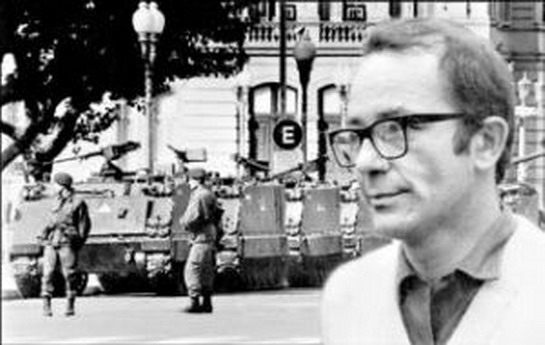


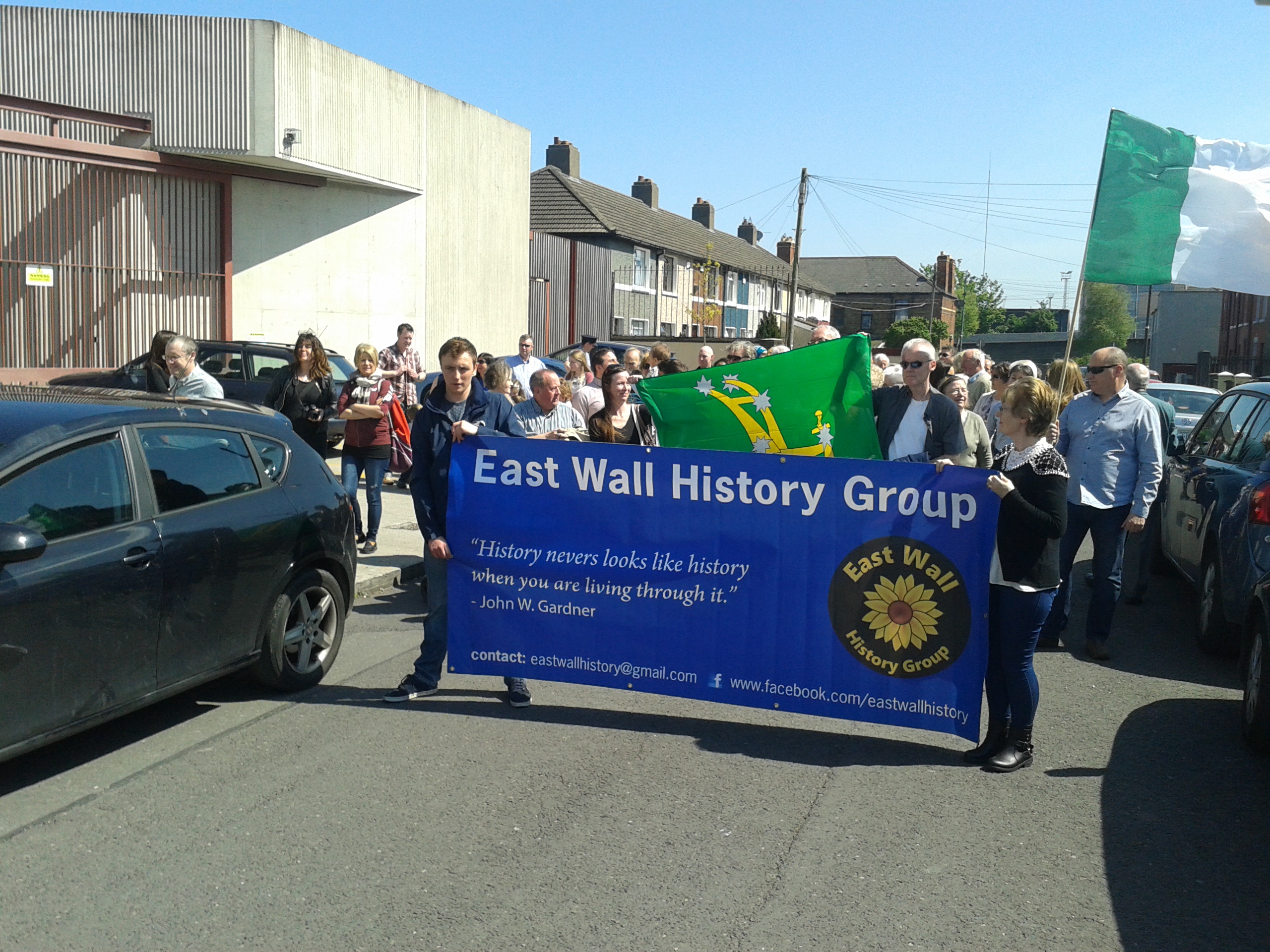

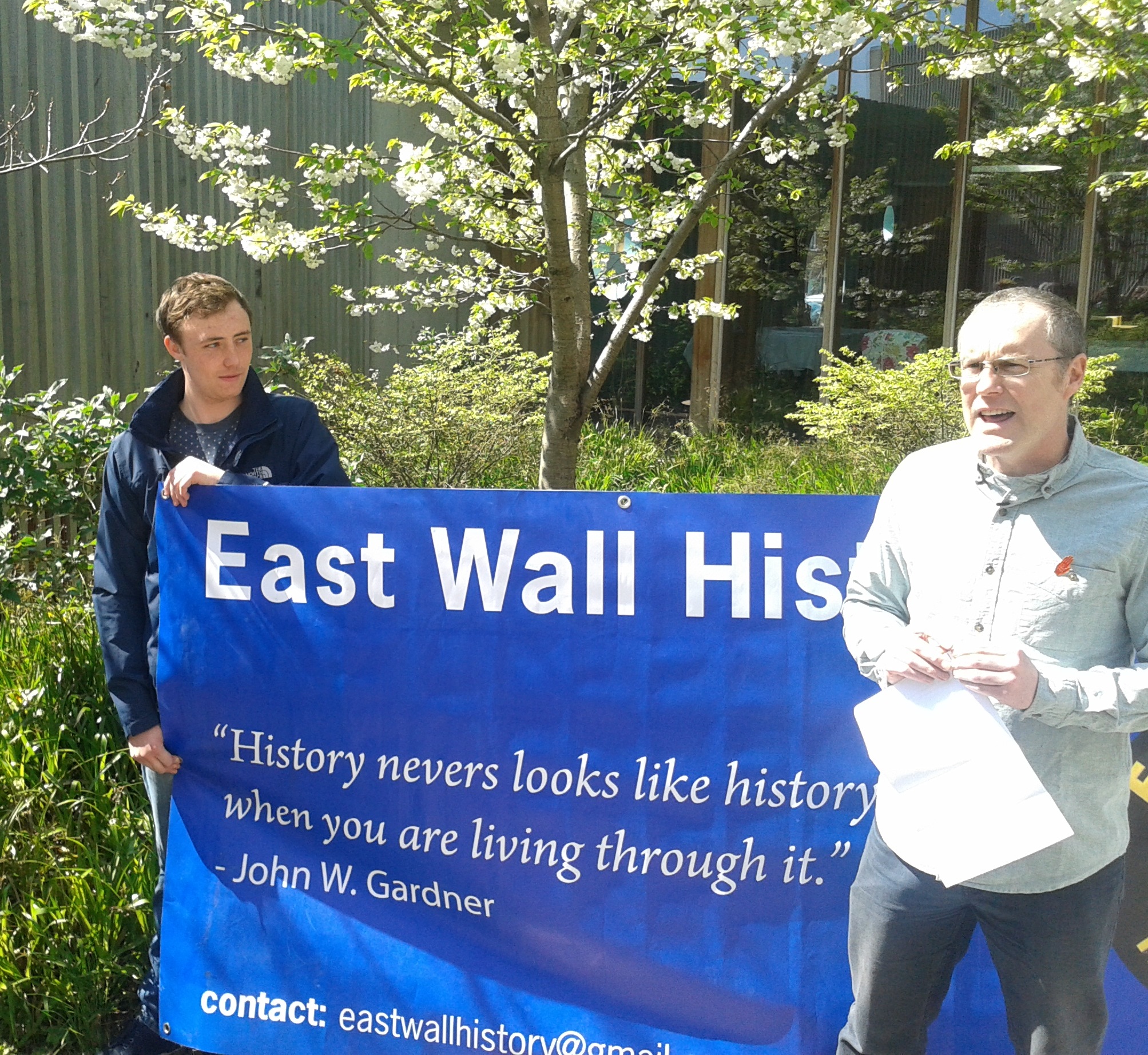
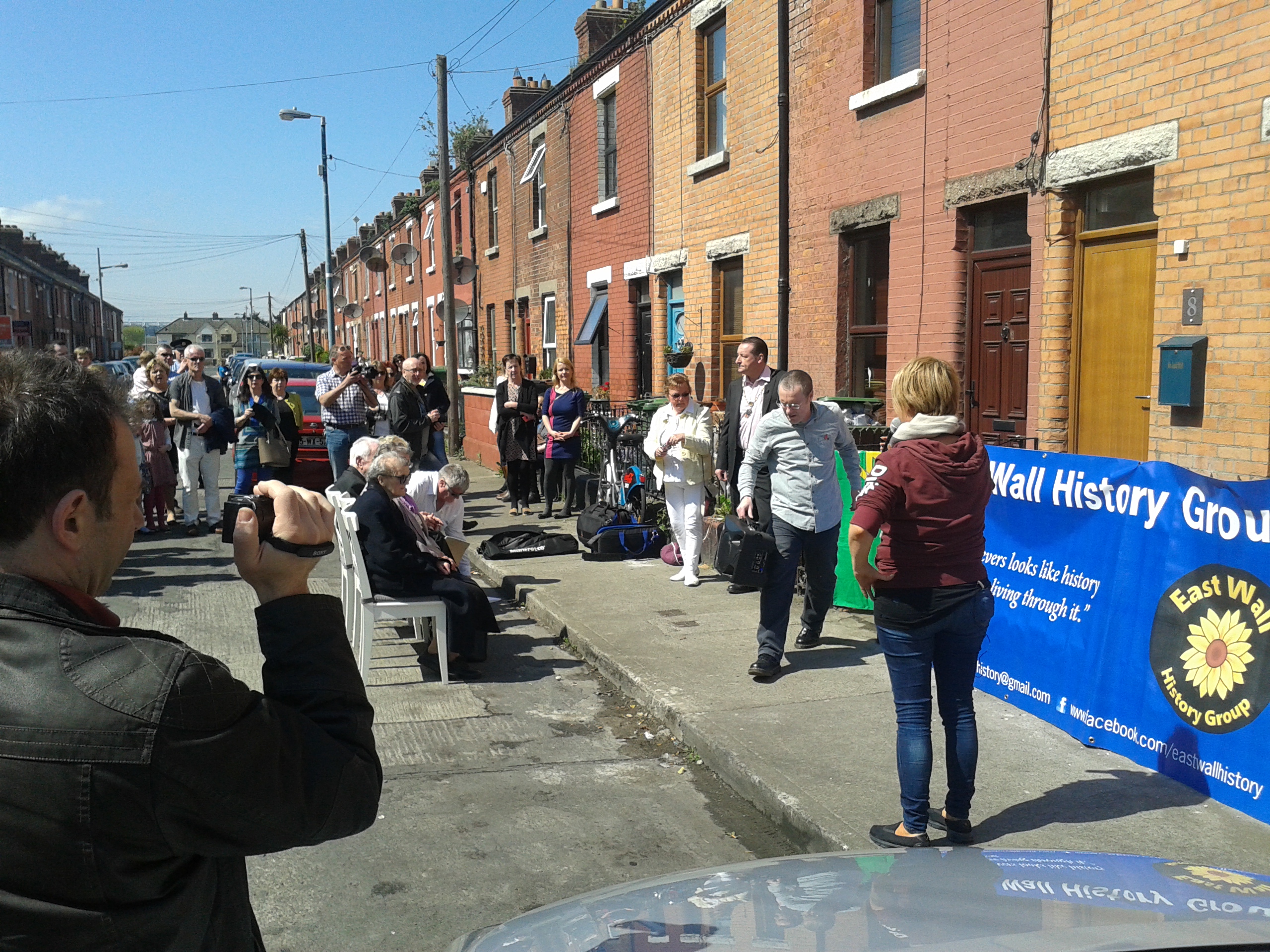
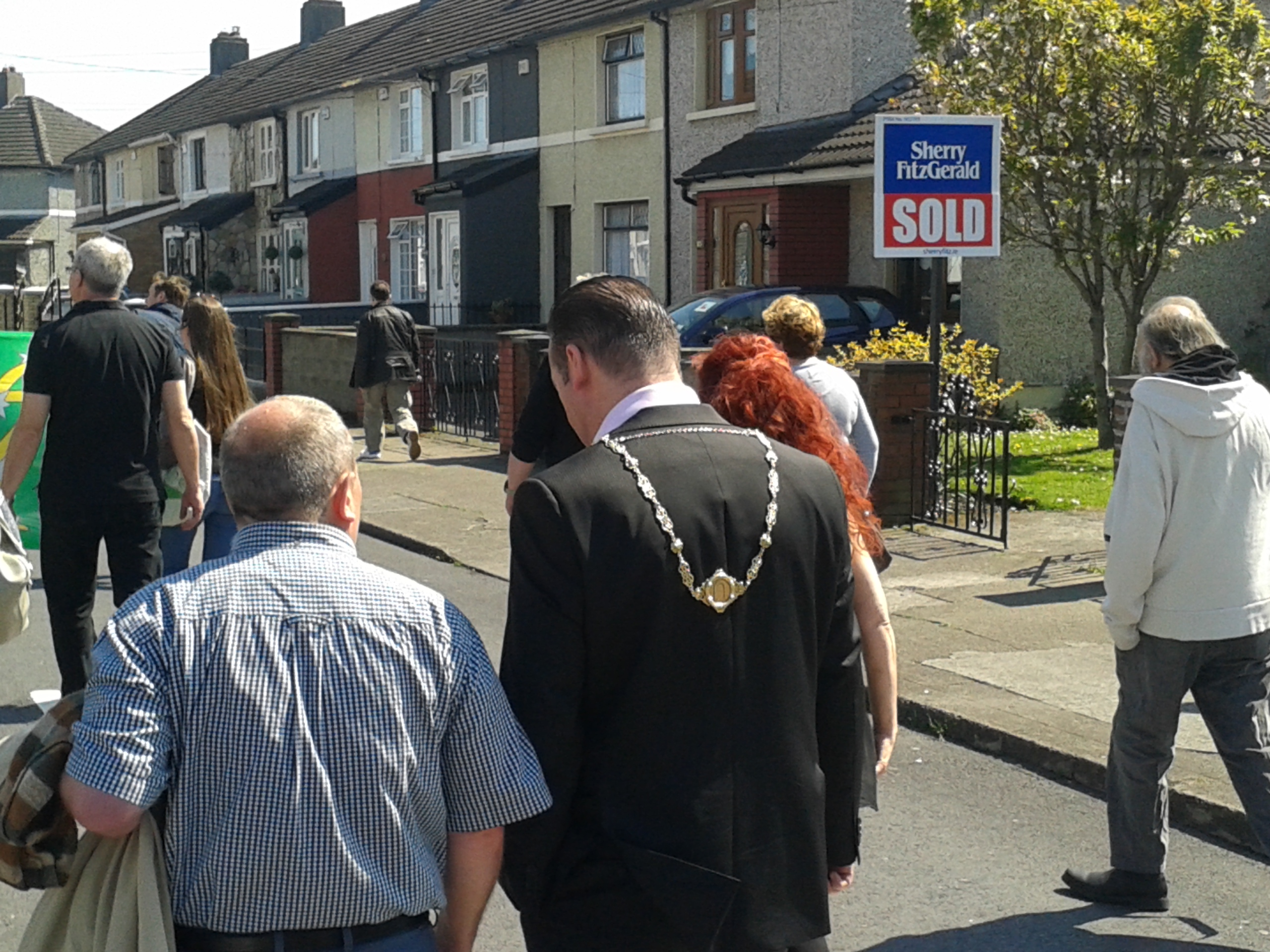


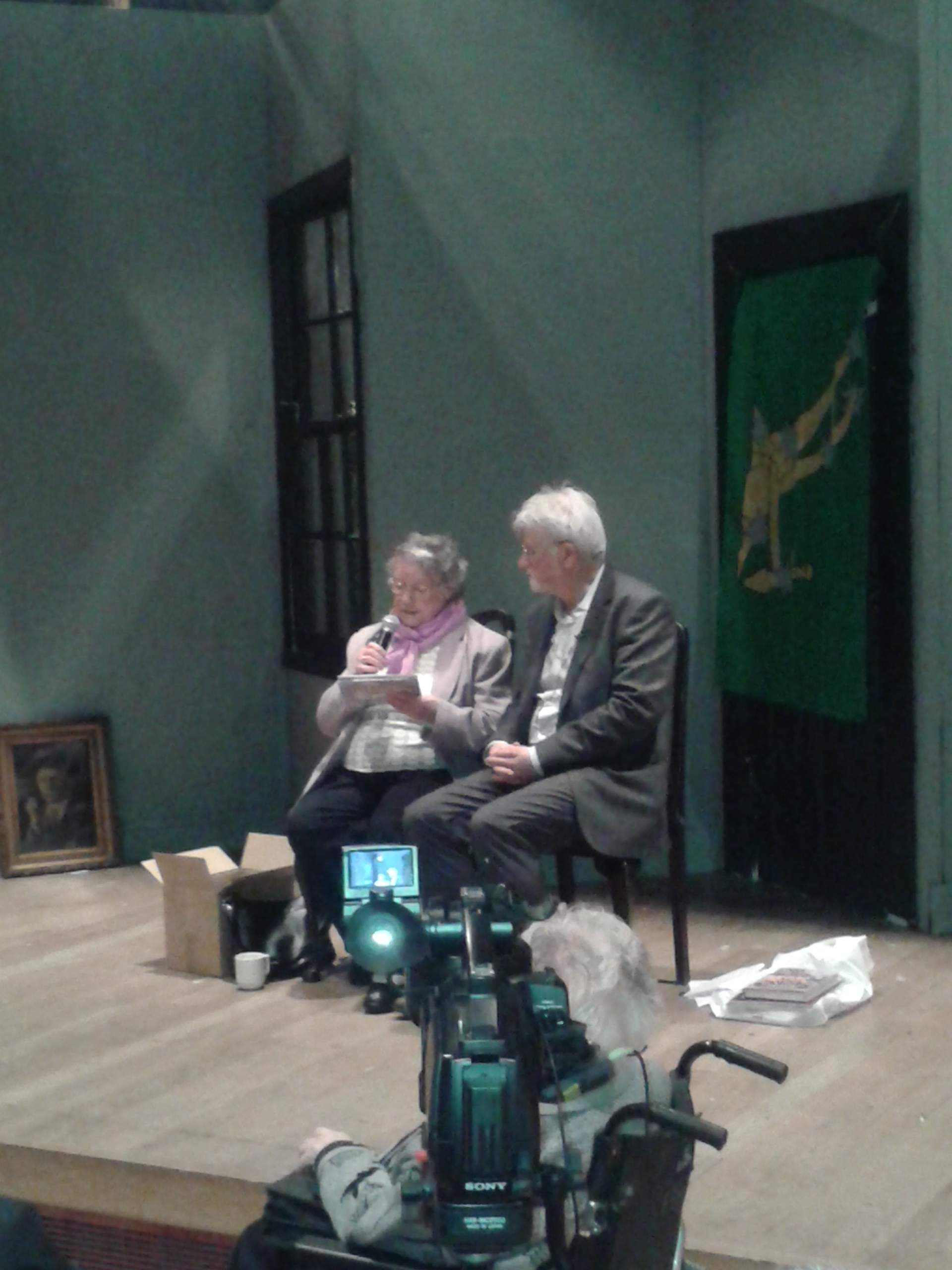
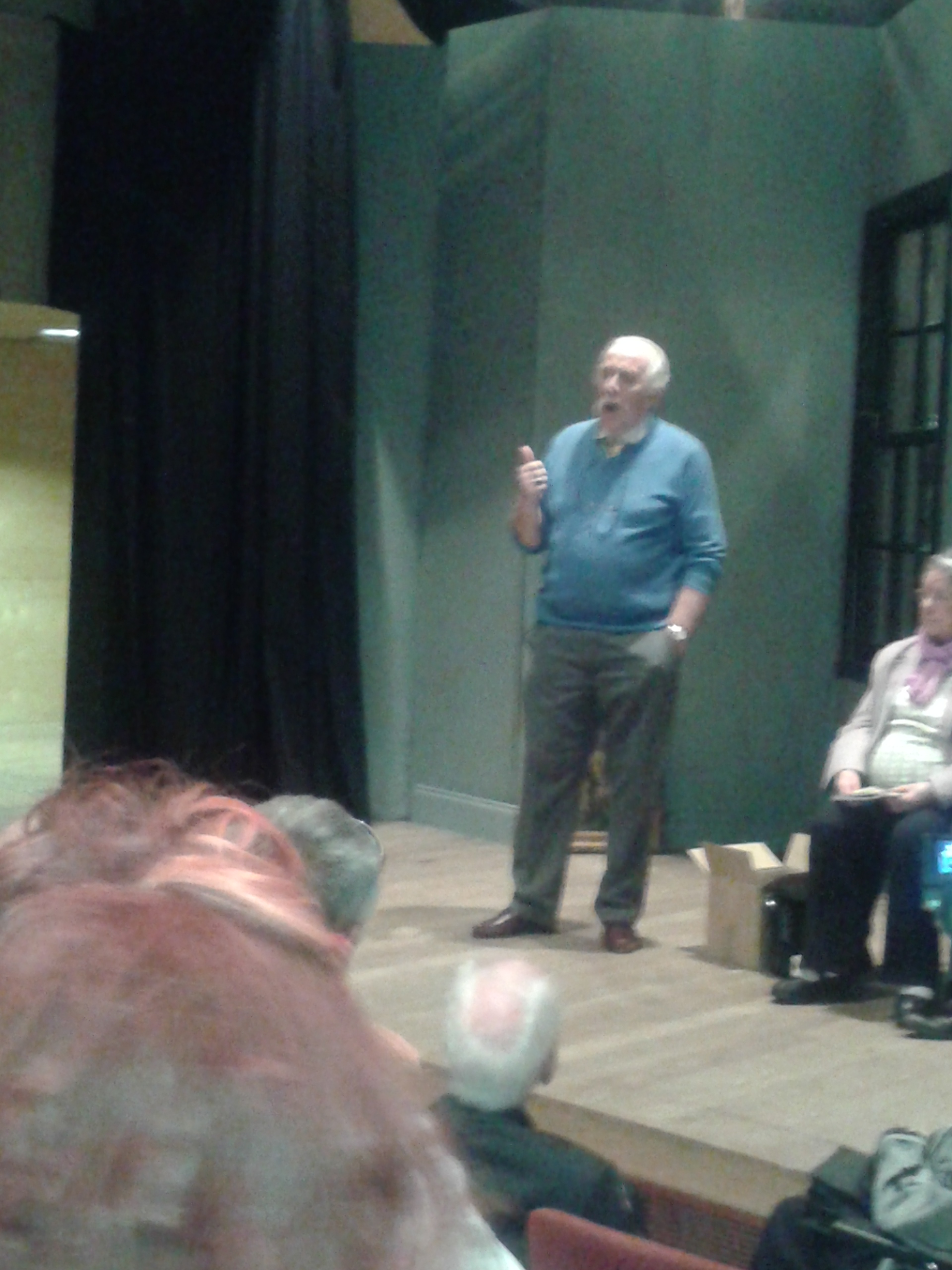


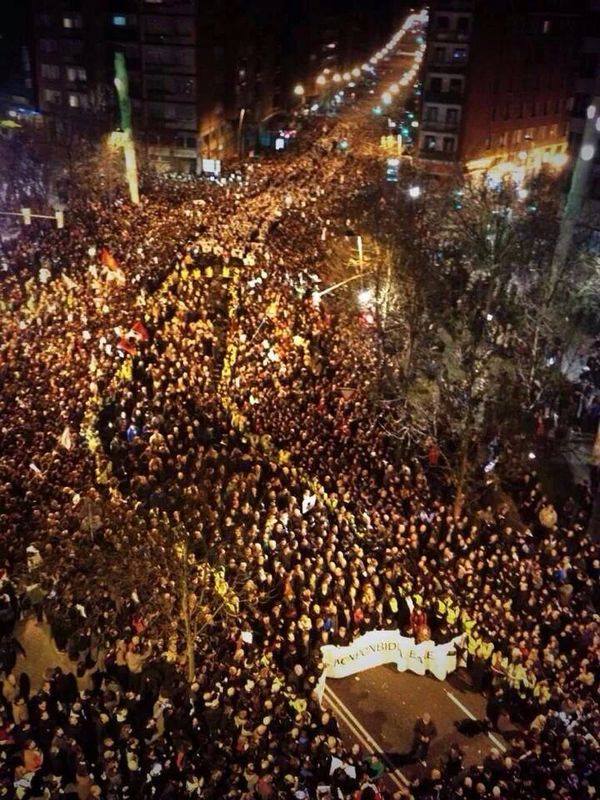
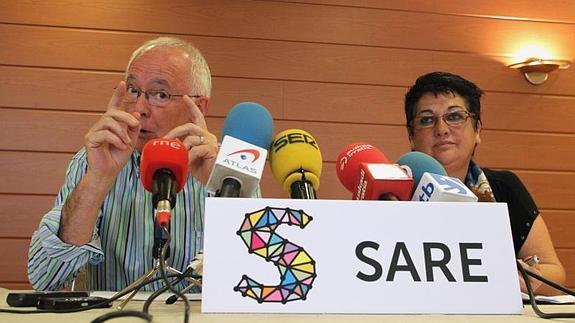
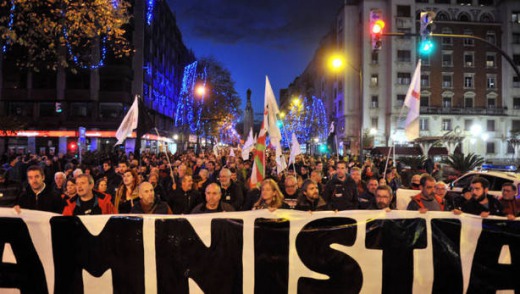


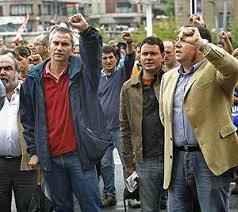


 rebelbreeze