A Derry schoolboy has been subjected to emotional blackmail and pressure by his school to sign a “peace scroll” and, arising out of an altercation over his refusal in which it was alleged he was being “sectarian”, was sentenced to two after-school detentions. Why is he being treated in this way, what is this “peace scroll” about and who is promoting it?
According to Pauline Mellon, writing about it in her blog, a boy in her Derry community in September last year was pressured by a teacher in his school to sign a “Peace scroll” with which a Reverend David Latimer is trying to create a world record with the number of signatures. “The child was told by a teacher that he would be ‘the only child in the North not to have signed’ and was further questioned as to whether his refusal was sectarian in nature.” Not surprisingly, the child reacted to this suggestion and used a word for which the school seeks to discipline him.
“The school has a policy (on “abusive language”) which makes no provision for contributing factors,” says Pauline Mellon. However, although the school Board is sticking to the letter of their policy in this regard, they seem not quite so rigorous in upholding their own procedures in other respects.
“When the parents questioned the School Principal over his decision to impose two detentions and what circumstances if any he had taken into consideration, the Principal immediately cut off communication with them and escalated the issue to stage 4 of the school’s complaints procedure. Stage 4 of the school’s complaints procedure requires a written submission to the Chair of the school board from parents.”
Although the parents at this stage had made no such written submission, a sub-committee of the School Board declared that they had investigated the complaint (from whom?!) and upheld the Principal’s decision.The sub-committee had decided to use as “a written submission” some letters written by the parents to the Principal after he refused meet them, thereby violating the parents’ rights to prepare their own submission if they wished to go to Stage 4 of the Complaints Procedure and, indeed, violating the terms of the Procedure itself.
As if to underline their casual attitude to their own procedures, the School Board wrote to the parents to outline their “findings” without even using the school’s headed paper. When this was pointed out to them, the Board apologised for sending the decision on plain paper and said it would not happen again. However, there was a much more significant breach of their procedures, in that the sub-committee had kept no minutes of their meeting, about which the parents have learned only recently. Then when the parents did actually submit a level 4 submission, it was totally ignored.
As Pauline Mellon observed, the Chairman of the Board was in breach of his duties according to “Department of Education guidelines which state that the chairperson has responsibility for all meetings and must ensure that minutes of ALL meetings are retained.”
One can imagine the impact of a comparable chain of events on any individual, let alone a child studying for his GCEs. The parents took him to a counsellor, after which they wished to discuss the counsellors’ report with the boy’s form teacher. The Board prevented this meeting, confusing the counsellors’ report with the parents’ “ongoing issues with the Board”.
Nine months after the first incident in this chain of events, the Board invited the parents to meet with them. The parents brought along an observer and the Board refused to allow the meeting to go ahead with the observer present and when the parents protested, they were escorted off the premises, witnessed by an Independent local authority councillor. The Board in this case is the authority and has the power and the school is also their territory. There are a number of people on the Board. In summary, they held the advantages of power, territory and numbers – yet they refused to allow two parents to be accompanied by an observer to support them (and at a later date to bear witness to what went on, should that become necessary). One must wonder what they had to fear in allowing this one additional person …. and why.
The School Board has a Parent’s Representative on it – the parents of the child sought a meeting with this person, not once but a number of times, but the person concerned has so far failed to meet with them. This is indeed extraordinary – how can anybodfy discharge their duties as a Parents’ Representative to the Board if they refuse to meet with parents who are in dispute with the Board?
There is a body which governs Catholic schools, of which the school in question is one – the Catholic Council for Maintained Schools (CCMS). This is an organisation of the Catholic Church but receives public funding through the Northern Ireland Executive. The parents took the issue to that Council. The CCMS admitted that headed paper should have been used in writing to the parents and commented that the school’s Board had not fulfilled their role; they also noted the parents’ attempt to discuss their child’s counsellor’s report with his form teacher but would not comment on whether the refusal would be normal practice. All in all, the CCMS considered that the Board’s actions of using a letter to the Principal as a submission and refusing the parents the right to submit their own Level 4 submission were “reasonable” and “in accordance with School policy”.
Presumably in their deliberations, the CCMS had discovered that the Board’s sub-committee had failed to keep any minutes but left the parents to discover this through other means at a later date. At a later complaint to the CCMS, the Council refused to acknowledge the failure of the School Board’s Chairperson in ensuring minutes were kept, as laid out in the Department of Education’s guidelines. Finally, the CCMS denied that any breach of the child’s rights took place.
The Chairperson of the CCMS is Bishop John McAreavey, who according to Pauline Mellon, has not even had the decency to acknowledge or respond to two separate letters the parents of the child in question sent to him. This was in contrast to the Bishop of Derry, Rev. McKeown who replied to the parents after they wrote to him. “Bishop McKeown who has knowledge in these matters agreed with the parents that a common sense approach should have been taken and expressed concern that such a small matter had used up so much time and energy.”
Pauline Mellon takes a similar line in concluding her article: “… a matter that should have never made it outside of the school assembly hall from the outset has exposed the School Board in question as being ineffective, unprofessional, non-transparent and unaccountable. It has exposed CCMS, a group acting under the wing of the Catholic Church, as not having learned from previous incidents when the Church has closed ranks and has attempted to silence people.”
As to the Rev. Latimer himself, the promoter of the “Scroll” signatures, although he promised the parents to look into the matter, they have heard nothing from him since.
Who is the Rev. David Latimer?
According to the Department of Education of Northern Ireland, Rev. Latimer is “a visionary”, for which term they offer no explanation apart from his Guinness Book of Records bid for “most signatures on a scroll” and his promotion of it in the schools. http://www.welbni.org/index.cfm/go/news/date/0/key/922:1 Indeed, it is amazing that 84 schools have signed up to the project, as the article says on their website – even more so if none of those saw any wording to endorse and to which to encourage their children to subscribe (see further below).
The Rev. David Latimer, photographed in church
David Latimer was a systems analyst with the Northern Ireland Electricity Board and married before he decided to become a cleric. He did so in 1988 and is now Minister of two churches, the First Presbyterian in Derry’s Magazine Street and the Monreagh Presbyterian, established in 1644 across what is now the British Border in Donegal.
In 2011, David Latimer was invited to address Sinn Féin’s Ard-Fheis and did so. On that occasion he said, referring to Martin McGuinness, that they had “… been journeying together for the last five years and during that time we have become very firm friends, able to easily relax in each other’s company.”
Rev. Latimer went on to say that “The seeds of division and enmity that have long characterised Catholic and Protestant relations were neither sown in 1968 or 1921 but during the 1609 Settlement of Ulster. Mistrust and bad feelings resulting from the colonisation of Ireland by Protestant settlers were followed by centuries of political and social segregation. Partitioning Ireland did little to ease sectarian mistrust and separateness between Protestants and Catholics left in the 6 counties as each community continued to be defined by its particular religious affiliation with little mixture between the two groups.”
The impression given there is of some peaceful colony of Protestants arriving in Ireland around 1609 which led to “bad feelings” and “mistrust”. No mention of the seizure of land from the Irish and their expulsion to the hills or abroad. No mention of the suppression of the religious faith of the majority and the imposition of that of the minority, centuries of discrimination, theft of land, genocide. One can see that this might quite rationally give rise to “bad feelings” and “mistrust”. No mention of the actual promotion by the British of sectarianism and the creation of the Orange order, with the intention of breaking up the unity between “Protestant, Catholic and Dissenter” of the United Irishmen at the end of the 18th Century.
It was again reasons of “little mixture between the two groups” which Rev. Latimer went on to blame for the recent 30 Years War:
“Little wonder this part of Ireland descended into a spiral of communal disorder and violence that was to last for decades. Victims of differences, extending back across trackless centuries that have isolated us from one another it is, with the benefit of historical hindsight, not surprising that our two communities should view each other with suspicion and regard one another as ‘the enemy.’”
Dr David Latimer, First Derry Presbyterian Church, conducts a redediication ceremony on the City’s fortifications, “Derry’s Walls”. Photo: Stephen Latimer
Did the Catholics and Protestants go to war with one another in the late 1960s or at any time during the 30 Years War? No, what happened was that Catholics demanded civil and human rights of which they had been denied in that British colony-statelet since 1921; the state forces tried to suppress their peaceful campaign with batons, tear gas and bullets; right wing and sectarian forces among the Loyalists were mobilised and burned Catholics out of their homes and murdered some. The British Army were sent in to support the “Northern Ireland” sectarian police and the IRA came into limited action to counter them, after which hundreds of “nationalists” were interned without trial, followed by escalation of IRA action, the Paratroopers’ massacres in Derry and in Ballymurphy, and so on.
In fact, Latimer’s false account of history has been the standard British ruling class’ version to justify their war in Ireland for foreign consumption and to the British population throughout those years: the reasonable British with the thankless task of keeping the two tribes apart.
I found the content of the Latimer’s speech on SF’s website without an account of the audience’s reaction but according to the Irish Echo, an Australian on-line newspaper, it “received a rapturous reception from the republican audience”.
Reverend David Latimer and the British Army
Pauline Mellon says that according to the parents, “the child based his decision not to sign the scroll on Rev Latimer’s service in the British Army and with him being stationed in Afghanistan. The child also raised concerns over what he views as Reverend Latimer’s “selective” approach to local human rights issues.”
Surely the boy is mistaken? At least about him having served with the British Army? Well, actually no. In June 2008 Rev. Latimer gave an interview to the Derry Journal to explain why he felt justified in going with the British Army to Afghanistan although he had to “wrestle with his conscience”. Presumably he is an accomplished conscience-wrestler by now since he also admitted to having participated in other British Army missions for more than 20 years.
“It would be against my nature to be part of something that is creating destruction or generating pain or grief within any community”, he was quoted as saying. “The only way I can reassure myself in being part of this is that I am involved with a unit that is going out to provide resources to people who have no choice but to be there because they are under orders.”
Who are they “who have no choice …. because they are under orders”? Ah, yes, the soldiers, pilots and drone technicians who have invaded another country, killing those who resist and generally intimidating the population. Leaving aside the spurious question of “choice”, does one help justice by administering spiritual comfort to an invading army? To whom does one have a greater moral duty? The answer is clear I think and if one lacks the courage to stand up for the population the least one could do is not to offer comfort to their invaders.
Put perhaps Rev. Latimer intends to be some kind of Camillo Torres, preaching for the poor and castigating the wrongdoer? No, of course not. Well then, perhaps subtly undermining Army propaganda? He invites us to think so: “In the quieter times, I will be around for people who will have questions about what they are doing there and about God. I might not have all the answers but I am there to give a view different to the Army view.”
In what way his view might be different to that of the Army he once again fails to explain, or to inform us whether his views were also different on the other more than twenty occasions in which he served with the British Army previously. Surely if he were intending to undermine Army propaganda, he’d hardly be telling us and the Army in a newspaper interview!
He tells us the hospital he’ll be working in over there will be treating Afghanis as well as British servicemen. Hopefully, they will be treating Afghani victims of torture in British and US Army prisons as well as children given a beating in the barracks. He won’t be trying to convert the Muslims to Christianity, he tells us. And I think we can believe that, since abusing people’s religion, their culture, customs, raiding their houses and generally intimidating them is hardly likely to incline them towards one’s religion.
Going on to discuss the possible dangers he would face, Rev. Latimer informs the readers of the Derry Journal that “We know the (military) base is likely to be attacked and we will undergo training in how to deal with chemical, biological and nuclear attacks.” He need not worry, the Afghans don’t have any of those weapons. However, he should exercise caution should he ever have cause to pass through the special arms stores of the British or US military, who do indeed have precisely those weapons and, furthermore, have used most of them in warfare at some point.
“I will receive some weapons training, although this will be limited on how to disable a gun and make it safe.” Useful, just in case any member of the Afghani resistance accidentally drops a gun …. perhaps when calling on the Reverend to make enquiries about the philosophy of the Christian religion.
“Peace” and “Peace” Treaties and Agreements
The vast majority of people would say that Peace is a good thing; despite that, “peace” remains a problematic concept and not one upon everyone can agree. And “peace” is also frequently being promoted in some part of the world by some of the most warlike states with the most horrifying armaments. For those in power, the invoking of the word “Peace” can be a powerful way of invalidating resistance, silencing dissent and of justifying the status quo which has been achieved through vanquishing the enemy in battle or by the recruitment of collaborators in the enemy’s leadership.
During WWI, the British and the French concluded the secret Asia Minor Agreement (also known as the Sykes-Picot Agreement), with the endorsement of Imperial Russia; the Agreement divided the Arab world between the French and the British should they succeed in beating the Ottoman Empire. To the shock and embarrassment of the imperialists, the Bolsheviks published the terms when they took power in 1917. Although this Agreement was intended to bring “peace” between the competing British, French and Russians, it has been in part the source of many wars with others, as well as coups and uprisings in the Middle East since then.
“Peace” does not mean the same to all: many of the British and French public during WWI would have said that “peace” meant defeating the Germans and Turks, conversely many Germans and Turks would have thought the direct opposite. The Russians mostly wanted an end to the War so “Peace” was one of the most popular of the Bolsheviks’ slogans for their October Revolution, after which they pulled Russian troops out of the War; it was one of the reasons so many soldiers and sailors sided with them.
The end of the First World War brought “peace” and “peace treaties”; among these was the Treaty of Versailles between Britain and France on one side and Germany on the other. In effect, the principal victors screwed Germany for war reparations, occupying the industrial Ruhr Valley. Many historians agree that the Versailles Treaty was a contributory factor to the later rise of the National Socialist Party (the “Nazis”) in Germany and also to the Second World War.
After WWII, the “peace” treaties divided the world largely between the USA, the British, the French and the USSR. Some aspects of that division led to two big wars — the Korean and Vietnam Wars – and a host of smaller ones. The USA has fought 20 military engagements since WWII; the British have fought 28 and the French have been directly involved in 15 military actions or wars (these figures do not of course include the wars and coups fought by the many proxies of these powers). Furthermore, not one of those wars was fought on the territories of those states and, in most cases, took place far from them.
To look for a moment further than the three world powers above, Sri Lanka had a war going on inside it since 1983 and had peace talks a number of times. The origin of the war was the communal differences and inequalities promoted by the British when they ruled Ceylon as a colony and continued by the Sinhalese majority Government afterwards. In 2008, the ruling Sinhalese Government decided on all-out war and, abandoning the mutually-agreed ceasefire, surrounded the Tamil Tigers’ “liberated areas” with a ring of steel through which no-one could pass. They then subjected the areas to indiscriminate continuous shelling and air bombardment before sending in their troops, wiping out most of the opposing guerrillas but also thousands of civilians. According to UN estimates, 6,500 civilians were killed and another 14,000 injured between mid-January 2009. The Times, the British daily, estimates the death toll for the final four months of the war (from mid-January to mid-May) at 20,000.
There’s peace in Sri Lanka now, all right — the peace of the grave.
Sri Lanka’s “peace” is similar to the one that followed the 1798 Rebellion in Ireland – that was “peace” after a defeat of the Irish Republican forces by bloody suppression and rabid sectarianism. Of course that “peace” was temporary only (as Sri Lanka’s will no doubt prove to be too) and was followed by other brief uprisings in 1803, 1848, 1867, the Land War 1879-’82, 1916 Rising, the War of Independence 1919-1921, the Civil War 1922-’23, the IRA campaign during WWII …. The partition of Ireland as part of the 1921 Agreement was supposed to bring peace to both parts of the country but again it proved to be a temporary one.
Despite the sectarian riots burning Catholics out of their homes and the wave of terror and repression by the Six Counties statelet in the early 1920s, conflict broke out again with the IRA’s Border Campaign of 1956-’62. In 1967 the Civil Rights campaign in the Six Counties began; the repression with which it was met by State and Loyalists caused the uprising of the Catholic ghettoes of Derry and Belfast afterwards. Then more repression, more resistance, then troops, then 30 years of war with the British Army and colonial police against the Republican guerrilla forces. The Good Friday Agreement claims to be bringing peace but history – and the ongoing repression of dissent by the statelet’s forces — indicates otherwise.
One of the reasons that peace is not necessarily brought by treaties and agreements is that they are themselves intended as temporary measures: by both parties, as in agreements between competing imperialist and colonialist powers, or by one of the parties, for example by the US Government in the case of the Native American Indians. Or they are violated by succeeding governments, as in the case of William of Orange’s promises in the Treaty of Limerick. Or they don’t deal comprehensively with the underlying causes of conflict, as with treaties and agreements between Britain and Ireland in general.
In fact, when a colonial or imperialist power seeks an agreement or treaty with a people or a weaker nation, what it is seeking is not usually peace but pacification – it wants an absence of conflict, or of resistance, so that it can continue extracting the benefits which it was doing before the people began to resist.
Or sometimes, the stronger power wants merely to delay things, to “buy time” until it is expects to be in a better position (and its opponent perhaps in a weaker one) than that which it was at the time. In 1925 the British Government intervened in a conflict between the mine-owners and the miners in Britain, paying a subsidy for nine months to prevent the miners’ pay from dropping. During that period, the Government laid in stocks of coal and bought up newsprint to prepare for a big battle with the miners’ union in particular. In 1926 they took on the British trade union movement and succeeded in forcing the TUC to call it off the General Strike within nine days of its beginning, leaving the miners to fight on alone for eight months until they were defeated.
So what kind of “peace” is being promoted by the Reverend Latimer? Some detailed plan, or some wishy-washy generalisation? That is not an easy question to answer. It is known to be an attempt to get into the Guinness Book of Records by having the most schoolchildren sign it which many have done, including in Donegal and Derry. Is it just a publicity stunt, where people sign up to some vague notion of “peace” which can mean one thing to one person and something completely different to another? What is the context for this “scroll”? “Peace” between whom and on what terms? Or is there a political agenda, as there was in the campaign around the Good Friday Agreement?
The Scroll’s FB page does not explain and the parents have not managed to find out; in addition a number of Google searches of mine failed to turn it up either. What is known about its origins, perhaps the only thing apart from it aiming at a world record, is that it is being energetically promoted by Rev. David Latimer. And as we have seen, he goes on British Army missions and his role in all this is far from clear.
Schools in our society
Coming back to where we began, the pressure and attempted intimidation of a schoolboy is wrong and should not have been inflicted on this boy (and on who knows on how many others). It should not have been but it was and, when the parents objected, the agents of that blackmail, intimidation and repression should have backed down. And if they refused to back down, the managing agents, the School Board should have upheld the parents’ objections. And if they did not, the Catholic Council for Maintained Schools should have done so. All of them failed to do what was right.
As adults, we tend to see schools as neutral institutions, some with good standards, some not so good, with a continuum of teachers ranging from great to abysmal. Schools however do play a role in socialising children to accept authority and discipline outside the home and also into accepting ideas dominant in the society in which the school is located. Seen in that light, we should perhaps be less shocked at this treatment of a boy and his parents.
However this Guinness Book of Records project is not even part of the school’s official program nor of the State’s curriculum and it was the boy’s resistance to the undue pressure brought to bear on him that sparked the verbal response for which he is now being ‘disciplined’ and which he and his parents are resisting.
If the school were an institution dedicated to real learning, it would encourage questioning, even though its teachers and managers might find that uncomfortable at times. It would value courage and principle and instead of persecuting this boy, would encourage him and value his principled stand, his courage and his persistence. But instead it does the opposite and because the boy’s parents do value their child’s principles and courage and want to support him, they also find themselves in conflict with the school.
Such small-scale battles go on constantly everywhere in our society, in institutes of education, in workplaces, in other organisations and associations, in communities. People fight those battles, often on their own or in little groups, or they fail to resist; whichever they do will affect their individual character and their social and political attitudes thereafter, one way or the other. Drawing on those lessons can lead to understanding more general truths about society and can also help to develop the strength of character to withstand psychological and other bullying and pressure at other times in life. Fair play to the boy for his principles and the courage to stand up for them against authority figures and fair play too to his parents who are supporting him.
99 YEARS AGO ON 26th APRIL, THE BLOODIEST BATTLE OF THE EASTER RISING WAS FOUGHT IN A DUBLIN SUBURB
At a little past 6amon 26th April 1916, the SS Tynwald and SS Patriotic, two British troop-ships, had berthed in Dun Laoghaire harbour. The harbour and town had been renamed Kingstown by Unionist elements when King George IV came to visit the new port under construction in 1821. Although the town returned to its former name in 1920, it was known as “Kingstown” by most people in 1916, whatever their allegiance.
The troopships had been requested by General Maxwell, who had been given the responsibility for suppression of the Easter Rising, which was now in its third day. Several British thousand troops from the 59th Midland division began to disembark on a bright sunny morning. Hundreds of civilians went down to see them despite the early hour. Many in that town, especially around the seafront and some of the big houses, would have been sympathetic to the British – but by no means all and no doubt some eyes were noting the arrivals in order to report to the insurgents.
Around 9am, disembarkation completed, the soldiers were formed up and inspected, equipment checked and the Sherwood Foresters set off marching towards Dublin city centre, seven miles away, to be followed by Nottingham and Derby regiments around 10.30hrs. Their forces appear to have split up, with two Battalions marching to the city along the coast road and another two heading inland.
To reach the city centre from Dun Laoghaire, the most direct route is to proceed northward along the coast to Mount Merrion. Once there, the coast road goes through the railway level crossing to the right and continues along the seafront, into Ringsend and then along what is now Pearse Street to Trinity College. The British officers did not lead their men in that direction, perhaps because they had received intelligence of the Boland’s Mill strongpoint along their route. There would be no going past that without first taking it, which might prove a lengthy and difficult battle.
But one could avoid that by not turning right at Mount Merrion and instead continuing on what has become the main road, through Ballsbridge and Northumberland Road, across the Grand Union Canal at Mount Street Bridge, past the fashionable Merrion Square and into Nasseau Street and the city centre. That seemed the obvious choice, not just because of the Jacob’s garrison but also because at Mount Street Bridge was located Beggars’ Bush Barracks, one of the many such of the British Army in Dublin city.
Northumberland Road looking southwards. The Irish insurgents first saw the British troops coming up this road. The Parochial Hall and Schoolhouse are to the left but out of the photo. The canal is behind the photographer. (Photo D.Breatnach)
Before the British troops arrived in the area, a female courier, probably Cumann na mBan, had brought news of the troops landed in Dún Laoghaire and that they were heading towards them to the insurgents waiting in the Mount Street Bridge area.
At around noon a burst of fire hit the forward sections of the British troops marching in from Dun Laoghaire. When fired upon, in order to find effective cover, it is important to know from where the firing is coming but the soldiers were unsure. No. 25 Northumberland Road, a house at the junction with Haddington Road, seemed to some to be the source of the firing but by how many was unknown.
Screams from wounded men filled the air in the quiet suburban upper-middle class and largely Loyalist residential street.
Soldiers began to maneouver to outflank No.25 Northumberland Road and a detachment reached Baggot Street Bridge, further west, which was apparently undefended. From there it is a straight road into Stephens Green and the southside city centre. The rest of the soldiers were not led by their officers in that direction, a decision which was to cost them dearly. Instead, shortly after being fired upon, at least two British platoonsattacked 25 Northumberland Road but were driven back in disarray by fire from the building’s upper floors; yet as they turned they were also shot down in droves.
Perhaps under cover of that assault, at around 1pm some of the 2/7th Battalion Sherwood Foresters got past the corner house and made their way on to Percy Place, which runs along the south side of the canal between Mount Street and Baggot Street bridges. Now they came under fire from in front and from their left. They huddled for cover along the Canal.
The fire from the left of the British at this point was coming at long distance from the towers of Jacob’s Factory in Bishop Street, one of the insurgent strongpoints. A defensive line with insufficient mobilised insurgent numbers to hold it for very long stretched from Jacob’s down to the railway connecting Dublin and Dun Laoghaire and to Boland’s Mill beside it, overlooking the south bank of the Liffey. Roughly in the middle of this chain or defensive line were the Irish Volunteers in the Mount Street Bridge area, an outpost of the Boland’s Mill garrison. The total strength of the insurgent force defending that area had been 17 Volunteers but two had been sent home, being thought too young.
New Clanwilliam House, Mount Street, north side of the Royal Canal, looking eastward. The Bridge and Canal are to the right but out of shot. (Photo D.Breatnach)The Schoolhouse, Northumberland Road, today (a snack-cafe nowadays). The Bridge is to the right; the British troops were advancing along the road from the right.
Incredible as it seemed to the British when they learned of it later, there were only two Volunteers in No.25 Northumberland Road: 27 year-old Volunteer Lieutenant Michael Malone, a carpenter by trade,and Section Commander James Grace. In the Schoolhouse on the right-hand side just before the Bridge, there were two Volunteers. Next to that building was the Parochial Hall,held by four men: P.J. Doyle in command, Joe Clarke, William Christian and J. McGrath.Clanwilliam House, across the canal on the right-hand corner with the junction with Mount Street Lower, was occupied by seven Volunteers; the frontal fire hitting the British wascoming from there.
The British were scattered around gardens and behind the granite steps leading up the to front doors of the elegant houses in the street. Their officers called them out and they launched an attack on the Schoolhouse in Northumberland Road. As they charged up the road they came under fire from across the Canal from Clanwilliam House; about a dozen reached the Schoolhouse but they left many bodies behind. And they were still coming under fire from across the Canal too.
The officers now attempted to outflank Mount Street Bridge and Northumberland Road by advancing along Shelbourne Road to the east but were stopped as they came under fire from Volunteers along the railway line and from positions in and around Horan’s Shop nearby.
The column advancing from Dun Laoghaire had set up a temporary HQ in Ballsbridge Town Hall. Incredibly, the officers there, receiving regular dispatches reporting their troops being slaughtered around Mount Street Bridge and, presumably, knowing that other troops had found Baggot Street Bridge undefended, continued to press for an advance across the killing field.
But at least the officers on the battlefield for the time being seem to have had enough of death-or-glory charges, which were bringing plenty of death and no glory. The soldiers are now crawling along the road but whenever any are visible, which is often, they are being fired at. Clanwilliam House is wreathed in smoke.
The Mauser Mark 71
The weapon the Volunteers were using was almost certainly the Mauser Model 71, the weapon of most Volunteers and Irish Citizen Army during the Rising; 1,500 had been been delivered in two landings in July 1914, first at Howth, north Dublin and then at Kilcoole, Wicklow. It had been the first cartridge rifle adopted by the Prussian Army in 1872 which by 1914had gone on to another more advanced model, presumably the reason that the rifle was being sold cheaply. The Model 71 fired a larger bullet than the British Army standard-issue Lee Enfield .303 but did not have a magazine, each cartridge having to be ejected and anew one inserted before firing again; its rate of fire was only four or five rounds a minute. The Lee Enfield took a ten-bullet magazine and the British Army were trained to fire fifteen rounds a minute. Despite this, the occupants in Clanwillian House and in No.25 in particular were able to lay down a tremendous rate of fire. Their guns grew so hot they burned to the touch and they had to cool them with wet rags. Down below, British officers blew their whistles and soldiers carried out more charges, only to be cut down by the Volunteers’ rifle fire.
During the late afternoon, a nurse ran on to the road and began treating the wounded British soldiers. The Volunteers agreed to a ceasefire as doctors and nurses from Sir Patrick Dunne’s hospital nearby went into Northumberland Road. But after a while the British attempted to use the ceasefire to advance their positions and the Volunteers ended it. Those wounded still to be tended lay where they were. This had been very different situation to what was to be seen in other areas of Dublin during the Rising, when British troops refused to allow wounded to be taken out unless the insurgents surrendered and when they accused Nurse Elizabeth Farrell of being a spy and tore her Red Cross bib–front off her.
The British got a machine gun up to the bell-tower of the church on Haddington Road so that they could fire over the roofs of the houses at Clanwilliam House, the bullets knocking chips off the outer walls and zipping through windows. They were also being backed by rifle snipers.
British soldiers recommenced attacking No.25, now with hand grenades as well as rifle fire. Finally they got close enough to blow the door in with explosives but incredibly were fired upon from inside as they tried to gain entry, injuring a number of them. Theyhurled grenades in and after they exploded, dashed in again. Coming down the stairs to meet them was Volunteer Lieutenant Michael Malone, his pipe in his mouth and was shot dead.
Section Commander James Grace had been downstairsusing a cooker as cover from bullets and shrapnel and such was the bomb damage to the room that the British assumed anyone in there had to be dead. There was still plenty of fighting to do – they had not even crossed the Canal yet.
If they believed that two men alone had held out against repeated assaults for four hours and had inflicted such damage upon them, they must have been very fearful leaving No.25. But perhaps they thought there had been others who must have escaped in the last minutes. James Grace did escape to get out of the area after lying low for some hours; however he was arrested some days later.
With No.25 taken, the Sherwood Foresters are soon able to take the Parochial Hall but they find it empty.The garrison of four Volunteers had run out of rifle ammunition and evacuated into Percy Place, where British troops, who were now all around the area, captured them.
An officer takes Volunteer Joe Clarke‘s loaded pistol off him, puts him with his back to a door and fires at him. Missing Joe, the bullet goes through the door to where a doctor is attending to injured British soldiers. He storms out in rage, berating the officer and Joe Clarke’s life is saved (he continued active in the IRA and in Republican politics nearly until his death in 1976 at the age of 94).
British soldiers are occupying nearby houses for cover and for firing positions and they are also crouched behind the low wall along Percy Place. They are still being hit. Now, they attack the Schoolhouse from its front, running across enfilading fire from Clanwilliam House to their left as they attack and from other positions to their front. When they enter, they find the Schoolhouse unoccupied by any Volunteer, alive or dead. However, their storm of bullets during the attack has riddled the bodies of its caretaker and his wife.
The cost to the British has been enormous but they have at last taken the southern side of the Canal around Mount Street Bridge. Across it, waiting for them, is Clanwilliam House. And to the east, their right-hand side, snipers at Boland’s Mill and nearby positions are also firing at them.
Now the officers order forward their reserves who had been sheltering in St Mary’s Road. The soldiers charge for the Bridge, answering to their discipline and their officers as they and many like them will do across the WWI battlefields of Europe, Greece, Turkey and Russia for another three years. It is partly against this slaughter that James Connolly led the men and women of the Irish Citizen Army out this week. One of the ICA’s detachments is not far away, under the command of Michael Malin and Constance Markievicz, in the College of Surgeons on the side of Stephens Green and they have already taken casualties.
Despite the covering fire from the Vickers Machine Gun firing incendiary bullets from St Mary’s Church, this charge too is driven back, their casualties adding to the pile of khaki-clad bodies and wounded on Northumberland Road, the Canal banks and the Bridge.
Around 8pm,the British are finally across Mount Street Bridge. An officer was in the charge, one of their few unwounded, and is at Clanwilliam House’s outer walls. Firing continues from the windows of this last insurgent bastion and from the east, a hail of Mauser death is still hitting the Bridge and the northern side of the Canal.
The British are now close enough to throwgrenades but one, thrown by a British NCO, bounced back from a second floor window and exploded next to his head, killing him. The British begin to make their way into the now-burning Clanwilliam House but are forced to retreat by the flames, leaving the fire to consume the bodies of the presumed dead Volunteers inside. They will not know now how many there were. In fact,there were only seven Volunteers, three are dead and the remaining four have escaped out the back.
Clanwilliam House after the RisingThe four survivors of the Clanwilliam House garrison.
Ninety-nine years ago in the Battle of Mount Street Bridge, despite having only single-shot rifles and some pistols, the Volunteers held off two British Battalions, numbering approximately1,600 between them, for five hours. Approximately 234 men (including 18 officers)of the British Army had become casualties at the hands of fifteen insurgents.
Mount Street Battle Monument on the BridgePart of the memorial on the south side of the canal. (Photo D.Breatnach)
(Primero publicado (y editado por el editor, gracias) en el blog nortedeirlanda.blogspot.ie el martes, 20 de enero de 2015).
Diarmuid Breatnach
El callejero mercado de Moore Street en mejores anos, mirando des de la calle Henry Street hacia el norte y la calle Parnell. El hilero ocupado en 1916 comienza justo después del primer callejón a la derecha.
Actualmente se está haciendo una fuerte campaňa para defender Moore Street (Sráid an Mhúraigh), el mercado callejero bien conocido de Dublín. No es solamente que esa calle es la única que sobrevive de un casco de mercado callejero con existencia desde el Siglo XVI y que hasta la mitad del siglo pasado consistía de tres calles paralelas conectadas por callejuelas. Es más que eso, pues una hilera de casas fue ocupada por entre 200 y 300 insurrectos durante el Alzamiento de Pascua en 1916 y fue desde ahí que se hizo la rendición. La hilera y el mercado callejero están amenazados por un plan del especulador Joe O’Reilly de construir otro centro comercial desde la Calle O’Connell a Moore Street.
Breve resumen de la historia de Dublín
Los vikingos construyeron la ciudad de Dublín alrededor del 841 en el lugar Dubh Linn (el Pozo Negro), al lado sur del río, antes ocupado por una colonia cristiana y ahí construyeron su puerto fortificado, sobre todo como base para su comercio de esclavos. El lugar del Pozo Negro se cree que estaba en una parte del Castillo de Dublin, pero con el río que lo alimentaba ahora bajo la tierra. Los indígenas tenían un pueblo ya cerca donde las grandes vías al oeste y al sureste cruzaban el rio por un vado, su nombre era Baile Átha Cliath.
En el 1014, en una gran batalla por las orillas del rio Tulcha, al norte de la ciudad de entonces y ahora dentro de ella, el rey indígena Brian Boróimhe (Brian Boru en inglés) venció a una fuerza militar mixta de Vikingos de Dublín, de la Isla Man, de las Islas Orca y del rey indígena de Laighean (“Leinster” en el inglés). Dublín permanecería después bajo mando vikingo pero el peligro de la dominación vikinga de Irlanda no surgió nunca mas.
Los Normandos, que ya habían vencido a los Vikingos y a los Sajones en 1066 en los reinos donde actualmente está Inglaterra, invadieron Irlanda en 1169, vencieron la resistencia indígena y se apropiaron de mucha parte del país. Estos vencieron a los vikingos de Dublín en 1170 y les expulsaron a las afueras, a un lugar que hoy en día es un distrito en el norte de la ciudad. En el mismo lugar del Pozo Negro, los Normandos construyeron su fortaleza, rodeada de su terreno con muro y empalizada y desde entonces hasta la creación del Estado Irlandés en 1922, el castillo en ese sitio ha sido el cuartel general de la ocupación británica en Irlanda. El este y sur de Bretaňa, bajo dominación Normanda pero mas tarde con alianzas con jefes sajones, se convirtió en el poder inglés que unos siglos después se puede conocer como el de Gran Bretaña y por eso se cuenta la ocupación británica de Irlanda desde el aňo 1169.
El Alzamiento de Pascua de 1916 y Moore Street
Un mapa del centro de Dublín entre el GPO y el Rotunda, con edificios ocupados por los insurrectos (y otros relevantes edificios) en el 1916 marcados en rojo.
Pues aunque la ciudad de Dublín era una creación extraňa y permanecía bajo mando ocupante, y pese a que a veces se les prohibió entrada a indígenas bajo pena de muerte, y pese también a que en el siglo XIX se pensaba en la ciudad como la segunda del Imperio, a través de los aňos la resistencia a la ocupación contaba con apoyo en muchas partes de Dublín. Y en 1916, durante la Primera Guerra Mundial, 1,200 hombres y mujeres salieron a la calle en alzamiento contra el poder imperialista y colonial mas grande del mundo, con “un imperio donde el sol nunca se pone”.
La mayor parte de la insurrección fue llevada por la organización republicana y nacionalista The Irish Volunteers (Voluntarios de Irlanda), además de su grupo auxiliar femenino Cumann na mBan y el grupo juvenil Na Fianna Éireann. La fuerza era la tercera parte de lo que habían contado los líderes del alzamiento, por razón del sabotaje por una parte del liderazgo de los Voluntarios.
Una parte de la fuerza militar insurrecta con orígenes diferentes era el Irish Citizen Army (el Ejercito Ciudadano), milicia sindical formada para defender a los sindicalistas contra ataques policiales durante el Cierre Patronal de 1913.
Por razón del sabotaje, la insurrección no comenzó el Domingo Santo, pues el jefe de los Voluntarios lo había cancelado, pero comenzó el día siguiente, el Lunes. Duró seis días y fue derrotada a través del bombardeo de la artillería británica que destruyó la mayor parte del centro de Dublín.
Destrucción por bombardeo británico en el 1916 a la calle Henry y la esquina del Moore Street. La columna es la de Nelson (ahora reemplazado por el “Spire”) en la calle O’Connell. La ruina del GPO está a la derecha, cerca a la columna.
Los insurrectos construyeron barricadas en calles y trincheras en Stephens Green pero los mayores lugares de resistencia fueron varios edificios ocupados y fortificados a los dos lados del rio Life (Liffey) y el cuartel general de la insurrección estaba localizado en el GPO (Sala Principal de Correos) en O’Connell Street (la calle principal de la ciudad).
Por razón del bombardeo y quizás del saqueo, ya el jueves, edificios en O’Connell Street estaban en llamas y por viernes el techo del GPO estaba en peligro de caer y con el plomo derritiendose. Los ocupantes lo evacuaron, llevando al herido James Connolly en camilla, con Elizabeth O’Farrell interponiendo su cuerpo entre él y la dirección de las balas que silbaban por la calle.
Los insurrectos en Moore Street
Cruzando Henry Street, entraron en el callejón Henry Lane y entraron en la primera casa de una hilera en Moore Street. De ahí hicieron un túnel de casa a casa, hasta ocupar la hilera entera. Lo hicieron así porque del extremo norte de Moore Street, conjunto con la calle Parnell, ya tenían los británicos una barricada con ametralladoras y habían ya rechazado un asalto irlandés, matando a media docena.
El líder de ese asalto era Michael O’Rahilly. O’Rahilly era uno de los que cancelaron el Alzamiento para el domingo pero sin embargo al ver que procedió, se presentó para luchar. Fue gravemente herido por un balazo y cayó en el callejón que actualmente lleva su nombre, O’Rahilly Parade, y ahí escribió una nota a su mujer: “Escribo después de que me dispararon. Querida Nancy, recibí un disparo mientras encabezaba una carga en Moore Street y tomé refugió en un portal. Mientras estuve allí, oí los hombres señalando dónde estaba e hice un perno para la calleja donde ahora estoy. He recibido más que una bala, pienso. Toneladas y toneladas de amor querida, para ti, los chicos y Nell y Anna. Fue una buena lucha de todos modos”.
“Por favor entregar esto a Nancy O ‘ Rahilly , 40 Herbert Park, Dublín.
“Adiós querida.”
Ese viernes, en la hilera en Moore Street, con una fuerza británica a un extremo de la calle y con otras apretando cada hora mas a la linea insurrecta, y con algunos de sus edificios ya aislados, el liderazgo de la guarnición del GPO, que incluía al comandante general Patrick Pearse, debatieron que pasos futuros tomar. Los proyectiles de artillería seguían cayendo y las explosiones de materiales quemandose en tiendas y en fabricas se oían en una sinfonía con disparos de ametralladoras (los insurrectos no tenían ni una), y fusiles. De vez en cuando parte de un edificio colapsaba. Aún los insurrectos en la hilera en Moore Street habían preparado una diversión con posterior asalto (suicida, casi seguro) a la barricada al extremo de la calle, con la mayor parte escapando por el callejón de Sampson Lane (ahora bloqueada, no lo estaba entonces).
Otra foto de la destrucción del centro de Dublín por el bombardeo británico en 1916.
Por fin, se dice que debido a la enorme cantidad de víctimas civiles, Patrick Pearse decidió no seguir con ese plan y en vez de ello, procedió a rendirse. Llevando bandera blanca, la enfermera y miembro de Cumann na mBan, Elizabeth O’Farrell, salió a negociar con el comandante de los británicos, lo cual era acto de gran coraje, pues los británicos ya habían matado cerca a una pareja civil con su niňo, pese a estar bajo bandera blanca. El General Lowe se negó a llevar a cabo negociaciones y demandó un rendimiento total, dandoles solamente una hora para decidir. Una hora después de volver con su ultimatum, Elizabeth O’Farrell salió por segunda vez bajo bandera blanca, acompañando esta vez a Patrick Pearse.
En la calle Parnell, cerca de Moore Street, Pearse rindió formalmente sus fuerzas insurrectas y firmó las órdenes para los Voluntarios en otros edificios para rendirse también. James Connolly firmó ordenes iguales al Ejercito Ciudadano. La desafortunada Elizabeth O’Farrell tuvo el amargo y peligroso deber de entregar esas ordenes a los varios edificios todavía ocupados por los insurrectos en una ciudad todavía en guerra.
Elizabeth O’Farrell, republicana irlandesa, fue una de los ocupantes de la hilera de Moore Street en los últimos días del Alzamiento y salió bajo bandera blanca dos veces para negociar con los militares británicos.
Los ocupantes revolucionarios de la hilera en Moore Street cumplieron parte de sus instrucciones de rendimiento pero no con otras. En vez de dejar sus armas en las casas, salieron con ellas al hombro, en marcha militar, en conjunto con Henry Street y ahí dieron vuelta a la izquierda hasta llegar a O’Connell Street. Ignoraron los gritos de los oficiales británicos y la furia del General Lowe. De ahí, a la izquierda otra vez, se fueron en marcha por O’Connell Street hasta llegar a la columna de Parnell, unos cien metros de distancia del extremo norte de Moore Street, y ahí depositaron sus armas.
Al otro lado de la misma columna existe un lugar que lleva el nombre en inglés “The Rotunda”. Por ironía, fue ahí donde se fundaron los Voluntarios originalmente en 1913, como respuesta a los “Voluntarios de Ulster”, lealistas Británicos que se movilizaban contra autonomía para Irlanda dentro del Imperio. En el jardín del Rotunda les mantuvieron bajo guardia a la mayoría de la guarnición del GPO/ Moore Street, menos los heridos que fueron llevaron al hospital, así estuvieron el resto del sábado y la mayor parte del domingo sin comida ni agua. A las mujeres que trataron de llevarles agua las arrestaron.
En los juicios militares siguientes, se condenó a pena de muerte a un centenar de hombres (Constance Markievicz, al enterarse de que ella no había recibido pena de muerte, supuestamente por ser mujer, demandó que la tratasen igualmente que a los hombres). Mas tarde, las sentencias de todos fueron conmutadas menos a trece a los cuales les fusilaron y a uno mas al cual le condenaron mas tarde en juicio en Londres a muerte por la horca. A los firmantes de la Proclamación de la Independencia (imprimido en la sala del sindicato ITGWU, “La Sala de la Libertad”, pero firmado en una tienda y café alternativo en Henry Street) les fusilaron. De los siete firmantes, cinco habían sido ocupantes de la hilera en Moore Street – Thomas Clarke, Patrick Pearse, Joseph Plunkett, Seán Mac Diarmada, y James Connolly. El hermano de Patrick, Willie Pearse, estuvo en Moore Street y a el le fusilaron también.
El patio de la Cárcel de Kilmainham (ahora un museo) donde fusilaron a los siete firmantes de la Proclamación de la Independencia y además a otros siete.
Diferente a los otros, James Connolly era socialista revolucionario, organizador del sindicato ITGWU, comandante del Ejercito Ciudadano y de la guarnición del GPO. Además era teórico, periodista, historiador, escritor de libros, artículos y de canciones. Igual que Thomas Clarke y Éamonn De Valera, Connolly no había nacido en Irlanda, y pese a pertenecer a la diáspora irlandesa en Edimburgo, de hecho su primera visita a Irlanda ocurrió cuando estaba en las filas del Ejercito Británico. Pronto salió del Ejercito y se casó con una irlandesa. Llevaron a Connolly del hospital a la Cárcel de Kilmainham y ahí, el 12 de Mayo, el último de los 12 ejecutados en 1916, fue atado a una silla por no poder ponerse de pie por razón de la gangrena en su tobillo, y le fusilaron.
La memoria histórica y la campaňa para conservar Moore Street
Muchos irlandeses y muchos turistas de otros países opinan que en cualquier otro país en Europa se hubiera hecho un monumento de la hilera y hasta distrito histórico de los alrededores. Sin embargo la mayoría de la población ni sabían hasta hace pocos años que la guarnición del GPO terminó la resistencia en Moore Street (y en la película Michael Collins, se le ve rindiendo desde el GPO, contrario a la historia de la guarnición y de Michael Collins mismo). En 2002 la National Graves Association (Asociación para las Tumbas Nacionales), una organización voluntaria e independiente de partido, empezó a hacer campaňa para guardar parte de la calle y en 2007 se hizo monumento nacional de las casas 14-17 Moore Street.
Poco después, familiares de los que lucharon en el Alzamiento y, especialmente, de los ejecutados empezaron a hacer campaňa para guardar la hilera entera. Mientras tanto en una historia complicada y sucia, el especulador Joe O’Reilly con su empresa CChartered Land, había comprado la mayor parte de las casas en Moore Street. Además, el centro comercial ILAC se había construido para 1981 encima del resto del casco del mercado callejero y perteneciente a Chartered Land y a Irish Life (compañía de seguros). Las cuatro casas del “monumento nacional” también le pertenecían a Chartered Land y por reglas del estado la compañía tenía obligación y responsabilidad de mantener los edificios en buen estado.
El número 16 Moore Street, uno de las solamente cuatro casas de la hilera hecho monumento nacional por el Estado.La placa en número 16, lo único que indica la historia de la hilera en Moore Street
A los que entienden las costumbres y trucos de los especuladores no les sorprenderá nada que Chartered Land no mantuviera en buen estado los cuatro edificios ni nada parecido y como evidencia existen fotos que demuestran agujeros en el techo, pinturas en las paredes, etc. Hace unos años, Chartered Land propuso un plan de construcción de un centro comercial enorme, con entrada en O’Connell Street y pasando por Moore Street. El plan preveía un Parking subterráneo, y un jardín en el techo. Por no poder demoler las cuatro casas del “monumento”, se proponía incorporarlas dentro del centro comercial, poniendo café, servicios y un pequeño museo.
El plan del Parking atraería más trafico a la ciudad y no se aceptó pero mucho de lo otro si lo aceptó el Estado, pero bajo cierta condiciones. Aunque el especulador ya le debía €2.8 billones al Estado, le prometieron un subvención de €5 millones para renovar las cuatro casas. Pero aparte de dinero, otro problema al que se enfrentaba a Chartered Land era que no todas las casas en la hilera le pertenecían a él. Dos a la esquina con O’Rahilly Parade le pertenecen al municipio de Dublín.
Aunque el especulador dice que los puestos de mercado no van a estar afectados, y llevó a varios comerciantes de los puestos a los EEUU para enseñarles un centro comercial ahí, poca gente le cree. Los comerciantes no están seguros — la caída del mercado debido a la incertidumbre que pesa sobre la calle les hace parecer a algunos que mejor que se construya el centro. Sin embargo, varios también han firmado la petición (abajo).
En el otoño de 2014, el Chartered Land les ofreció al Municipio tres casas en el sur de Moore Street a cambio de sus dos casas en la hilera. Esa oferta fue recomendada por el Director del Municipio y, sorprendiendo a muchos, por el director de la comisión consultiva sobre Moore Street, el concejal Niall Ring.
Concentración en el octubre 2014 presionando al Ayuntamiento de Dublín no acordar con el plan del especulador. Estrechan los participantes paginas de la petición para guardar la memoria histórica del Moore Street.
La campaňa para guardar Moore Street lo resistió y surgió una nueva iniciativa, Save Moore Street from Demolition (Guardar la Calle Moore de la Demolición), pasando unas horas cada sábado con mesa de información en la calle, pidiendo firmas con petición a los concejales del Municipio y distribuyendo panfletos. La mesa rápidamente ganó mucho interés y apoyo con gente haciendo compras en la calle y con algunos turistas que pasaban por ahí. Actualmente, después de 15 sábados, tienen 3,500 firmas en papel. Es indudable que la campaňa cuenta con muchísimo mas apoyo de que lo tiene el plan de Chartered Land.
El voto fue reprogramado y Chartered Land entonces ofrecía cuatro casas a cambio frente a las dos pero por fin hicieron el voto y el intercambio fue derrotado. Al mismo tiempo se empezó una campaňa de “urgencia”, diciendo que “es muy importante tener esto arreglado para el centenario del Alzamiento”. También hicieron unas concentraciones frente a la sala del municipio. Cuando ya no se podía retrasarlo, se votó. Los concejales del Fianna Fáil votaron en contra, igual que los del Sinn Féin y algunos del Partido Laborista, además de muchos independientes socialistas y republicanos. Los concejales a favor fueron los del partido conservador de derechas Fine Gael (ahora en el gobierno en coalición con el Partido Laborista), algunos del Laborista y algunos independientes – pero estaban en minoría.
Aunque era una victoria temporal para la campaňa, fue muy importante. Si lo hubiera ganado Chartered Land, hubiera inmediatamente demolido las dos casas y la destrucción de la hilera hubiera comenzado. Además del resto de su historia, la última de esas casas, número 18, había tenido la primera clínica de la piel del Reino Unido (en el cual estaba Irlanda en ese aňo).
Gente firmando la petición presentado cada sábado por el grupo Save Moore Street from Demolition
(This is reprinted with minimal editing from a section of a much longer piece of mine published in English and in Spanish a year ago https://rebelbreeze.wordpress.com/2014/01/30/how-can-a-people-defeat-a-stronger-invader-or-occupying-power-2/)
Diarmuid Breatnach
The War of Independence 1919-1921 and retreat from stated objectives
Three years later (after the 1916 Rising), the nationalist revolutionaries returned to the armed struggle, this time without a workers’ militia or an effective socialist leadership as allies, and began a political struggle which was combined a little later with a rural guerilla war which soon spread into some urban areas (particularly the cities of Dublin and Cork). The political struggle mobilised thousands and also resulted in the majority of those elected in Ireland during the General Election (in the United Kingdom, of which Ireland was part) being of their party.
The struggle in Ireland and the British response to it was generating much interest and critical comment around the world and even in political and intellectual and artistic circles within Britain itself. In addition, many nationalist and socialist revolutionaries around the world were drawing inspiration from that fierce anti-colonial struggle so near to England, within the United Kingdom itself.
The dismantling by the nationalist forces, by threats and by armed action, of much of the control network of the colonial police force, which consequently dismantled much of their counter-insurgency intelligence service, led the British to set up two new special armed police forces to counter the Irish insurgency. Both these forces gained a very bad reputation not only among the nationalists but also among many British loyalists. The special paramilitary police forces resorted more and more to torture, murder and arson but nevertheless, in some areas of Ireland such as Dublin, Kerry and Cork, they had to be reinforced by British soldiers as they were largely not able to deal effectively with the insurgents, who were growing more resolute, experienced and confident with each passing week.
However, two-and-a-half years after the beginning of the guerrilla war, a majority of the Irish political leadership of the nationalist revolutionary movement settled for the partition of their country with Irish independence for one part of it within the British Commonwealth.
Much discussion has taken part around the events that led to this development. We are told that British Prime Minister Lloyd George blackmailed the negotiating delegation with threats of “immediate and terrible war” if they did not agree to the terms. The delegation were forced to answer without being allowed to consult their comrades at home. Some say that the President of the nationalist political party, De Valera, sent an allegedly inexperienced politically Michael Collins to the negotiations, knowing that he would end up accepting a bad deal from which De Valera could then distance himself. Michael Collins, in charge of supplying the guerrillas with arms, stated afterwards that he had only a few rounds of ammunition left to supply each fighter and that the IRA, the guerrilla army, could not fight the war Lloyd George threatened. He also said that the deal would be a stepping stone towards the full independence of a united Ireland in the near future. None of those reasons appear convincing to me.
How could the leadership of a movement at the height of their successes cave in like that? Of course, the British were threatening a worse war, but they had made threats before and the Irish had met them without fear. If the IRA were truly in a difficult situation with regard to ammunition (and I’m not sure that there is any evidence for that apart from Collins’ own statement), that would be a valid reason for a reduction in their military operations, not for accepting a deal far short of what they had fought for. The IRA was, after all, a volunteer guerrilla army, much of it of a part-time nature. It could be withdrawn from offensive operations and most of the fighters could melt back into the population or, if necessary, go “on the run”.
If the military supply situation of the Irish nationalists was indeed dire in the face of the superior arms and military experience of Britain, was that the only factor to be taken into account? An army needs more than arms and experience in order to wage war – there are other factors which affect its ability and effectiveness.
The precariousness of the British situation
In 1919, at the end of the War, the British, although on the victorious side, were in a precarious position. During the war itself there had been a serious mutiny in the army (during which NCOs and officers had been killed by privates) and as the soldiers were demobbed into civilian life and into their old social conditions there was widespread dissatisfaction. Industrial strikes had been forbidden during the War (although some had taken place nonetheless) and a virtual strike movement was now under way.
In 1918 and again in 1919, police went on strike in Britain. Also during 1919, the railway workers went on strike and so did others in a wave that had been building up since the previous year. In 1918 strikes had already cost 6 million working days. This increased to nearly 35 million in 1919, with a daily average of 100,000 workers on strike. Glasgow in 1921 saw a strike with a picket of 60,000 and pitched battles with the police. The local unit of the British Army was detained in barracks by its officers and units from further away were sent in with machine guns, a howitzer and tanks.
Workers pass an overturned tram in London during the 1926 British General Strike. In much of the country no transport operated unless authorised by the local trade union council or under police and army escort.
4.2 The Army Mutinies of January/February 1919
4.3 The Val de Lievre Mutiny
4.4 Three Royal Air Force Mutinies January 1919
4.5 Mutiny in the Royal Marines – Russia,
February to June 1919
4.6 Naval Mutinies of 1919
4.7 Demobilization Riots 1918/1919
4.8 The Kinmel Park Camp Riots 1919
4.9 No “Land Fit For Heroes” – the Ex-servicemen’s Riot in Luton
4 4.10 Ongoing Unrest – Mid-1919 to Year’s End
The British Government feared their police force would be insufficient against the British workers and was concerned about the reliability of their army if used in this way. There had already been demonstrations, riots and mutinies in the armed forces about delays in demobilisation (and also in being used against the Russian Bolshevik Revolution).
Elsewhere in the British Empire things were unstable too. The Arabs were outraged at Britain’s reneging on their promise to give them their freedom in exchange for fighting the Turks and rebellions were breaking out which would continue over the next few years. The British were also facing unrest in Palestine as they began to settle Jewish immigrants who were buying up Arab land there. An uprising took place in Mesopotamia (Iraq) against the British in 1918 and again in 1919. The Third Afghan War took place in 1919; Ghandi and his followers began their campaign of civil disobedience in 1920 while in 1921 the Malabar region of India rose up in armed revolt against British rule. Secret communiques (but now accessible) between such as Winston Churchill, Lloyd George and the Chief of Staff of the British armed forces reveal concerns about the reliability of their soldiers in the future against insurrections and industrial action in Britain and even whether, as servicemen demanded demobilisation, they would have enough soldiers left for the tasks facing them throughout the Empire.
The Irish nationalist revolutionaries in 1921were in a very strong position to continue their struggle until they had won independence and quite possibly even to be the catalyst for socialist revolution in Britain and the death of the British Empire. But they backed down and gave the Empire the breathing space it needed to deal with the various hotspots of rebellion elsewhere and to prepare for the showdown with British militant trade unionists that came with the General Strike of 1926. Instead, the Treatyites turned their guns on their erstwhile comrades in the vicious Civil War that broke out in 1922. The new state executed IRA prisoners (often without recourse to a trial) and repression continued even after it had defeated the IRA in the Civil War.
If the revolutionary Irish nationalist leaders were not aware of all the problems confronting the British Empire, they were certainly aware of many of them. The 1920 hunger strike and death of McSwiney, Lord Mayor of Cork, had caught international attention and Indian nationalists had made contact with the McSwiney family. The presence of large Irish working class communities in Britain, from London to GlaSgow, provided ample opportunity for keeping abreast of industrial disputes, even if the Irish nationalists did not care to open links with British militant trade unionists. Sylvia Pankhurst, member of the famous English suffragette family and a revolutionary communist, had letters published in The Irish Worker, newspaper of the IT&GWU. The presence of large numbers of Irish still in the British Army was another source of ready information.
Anti-Treaty cartoon, 1921, depicts Ireland being coerced by Michael Collins, representing the Free State Army, along with the Catholic Church, in the service of British Imperialism
The revolutionary Irish nationalist leaders were mostly of petite bourgeois background and had no programme of the expropriation of the large landowners and industrialists. They did not seek to represent the interests of the Irish workers—indeed at times sections of them demonstrated a hostility to workers, preventing landless Irish rural poor seizing large estates and to divide them among themselves. Historically the petite bourgeoisie has shown itself incapable of sustaining a revolution in its own class interests and in Ireland it was inevitable that the Irish nationalists would come to follow the interests of the Irish national bourgeoisie. The Irish socialists were too few and weak to offer another pole of attraction to the petite bourgeoisie. The Irish national bourgeoisie had not been a revolutionary class since their defeat in 1798 and were not to be so now. Originally, along with the Catholic Church with which they shared many interests in common, they had declined to support the revolutionary nationalists but decided to join with them when they saw an opportunity to improve their position and also what appeared to be an imminent defeat of the British.
In the face of the evident possibilities it is difficult to avoid the conclusion that the section of revolutionary Irish nationalists who opted for the deal offered by Lloyd George did so because they preferred it to the alternatives. They preferred to settle for a slice rather than fight for the whole cake. And the Irish bourgeoisie would do well out of the deal, even if the majority of the population did not. The words of James Connolly that the working class were “the incorruptible heirs” of Ireland’s fight had a corollary – that the Irish bourgeoisie would always compromise the struggle. It is also possible that the alternative the nationalists feared was not so much “immediate and terrible war” but rather a possible Irish social revolution in which they would lose their privileges.
Start of the Irish Civil War 1922: Irish Free State bombardment, with cannon on loan from the British Army, of the Republican HQ at the Four Courts, Dublin.
Another serious challenge to the Empire from Irish nationalist revolutionaries would not take place until nearly fifty years later, and it would be largely confined to the colony of the Six Counties.
In the lands under the direct dominion of England, i.e. the “United Kingdom”, and in some others that are part of the British Commonwealth, the dominant class has called the people to join in a cultural festival in November which they call “Remembrance”. In this year of 2014, the centenary of the beginning of World War I, there is a particular focus in the Festival on that war.
The organisation fronting this festival in the ‘UK’ is the Royal British Legion and their symbol for it (and registered trademark) is the Red Poppy, paper or fabric representations of which people are encouraged to buy and wear – and in some places, such as the BBC for personnel in front of the camera,forced to wear. In many schools and churches throughout the ‘UK’, Poppies are sold and wreaths are laid at monuments to the dead soldiers in many different places. Prominent individuals, politicians and the media take part in a campaign to encourage the wearing of the Poppy and the festival of remembrance generally and of late, to extend the Festival for a longer period.
High points in the ‘The Festival of Remembrance’ are the Royal Albert Hall concerts on the Saturday and the military and veteran’s parades to the Cenotaph memorial in Whitehall, London, on “Remembrance Sunday”. According to the British Legion’s website, “The concert culminates with Servicemen and Women, with representatives from youth uniformed organizations and uniformed public security services of the City of London, parading down the aisles and on to the floor of the hall. There is a release of poppy petals from the roof of the hall.
“The evening event on the Saturday is the more prestigious; tickets are only available to members of the Legion and their families, and senior members of the British Royal Family (the Queen, Prince Phillip, the Prince of Wales, the Duke of York and the Earl of Wessex) and starts and ends with the British national anthem, God Save the Queen. The event is televised.
“Musical accompaniment for the event is provided by a military band from the Household Division together with The Countess of Wessex’s String Orchestra.”
The money raised from the sale of the “Poppies” and associated merchandise is to be used to support former military service people in need and the families of those killed in conflict. On the face of it, military and royal pomp apart, the Festival may seem a worthy charitable endeavour and also one which commemorates very significant historical events — therefore a festival which at the very least should not be opposed by right-thinking and charitable people.
Yet the main purpose of this festival and the symbol is neither remembrance nor charity but rather the exact opposite: to gloss over the realities of organised violence on a massive scale, to make us forget the experience of the world’s people of war and to prepare the ground for recruitment of more people for the next war or armed imperialist venture – and of course more premature deaths and injuries, including those of soldiers taking part.
Video and song On Remembrance Day from Veterans for Peace lists British conflicts (including Ireland) and condemns the Church of England for supporting the wars, calling also on people to wear the White Poppy
Partial Remembrance – obscuring the perpetrators and the realities of war
The Royal British Legion is the overall organiser of the Festival of Remembrance and has the sole legal ‘UK’ rights to use the Poppy trademark and to distribute the fabric or paper poppies in the ‘UK’. According to the organisation’s website, “As Custodian of Remembrance” one of the Legion’s two main purposes is to “ensure the memories of those who have fought and sacrificed in the British Armed Forces live on through the generations.”
By their own admission, the Legion’s “remembrance”is only to perpetuate the memories of those who fought and sacrificed in the British Armed Forces – it is therefore only a very partial (in both senses of the word) remembrance. It is left to others to commemorate the dead in the armies of the British Empire and colonies which Britain called to its support; in WWI, over 230,500 non-‘UK’ dead soldiers from the Empire and, of course, the ‘UK’ figure of 888,246 includes the 27,400 Irish dead.
Cossack soldier volunteers WWI. Imperial Russia was an ally of Britain and France; the war was one of the causes of the Russian Socialist Revolution 1917. The following year, the war ended.
The Festival of Remembrance excludes not only the dead soldiers of the British Empire and of its colonies (not to mention thousands of Chinese, African, Arab and Indian labourers employed by the army) but also those of Britain’s allies: France, Belgium, Imperial Russia, Japan, USA and their colonies.
German soldiers playing cards during WWI. Photos of Germans in WWI more readily available show them wearing masks and looking like monsters.
No question seems to arise of the Festival of Remembrance commemorating the fallen of the “enemy” but if the festival were really about full “remembrance”, it would commemorate the dead on each side of conflicts. That would particularly be appropriate in WWI, an imperialist war in every aspect. But of course they don’t do that; if we feel equally sorry for the people of other nations, it will be difficult to get us to kill them in some future conflict.
A real festival of remembrance would commemorate too those civilians killed in war (seven million in WWI), the percentage of which in overall war casualty statistics has been steadily rising through the century with increasingly long-range means of warfare.
Civilian war refugees in Salonika, NW Greece, WWI
Civilians in the First World War died prematurely in epidemics and munitions factory explosions as well as in artillery and air bombardments, also in sunk shipping and killed in auxiliary logistical labour complements in battle areas and through hunger as feeding the military became the priority and farmhands became soldiers.
In WWII 85,000,000 civilians died in extermination camps or forced labour units, targeting of ethnic and social groups, air bombardments, as well as in hunger and disease arising from the destruction of harvests and infrastructure. Air bombardments, landmines, ethnic targeting and destruction of infrastructures continue to exact a high casualty rate among civilians in war areas: one admittedly low estimate up to 2009 gave figures of 3,500 dead in Iraq during the war and aftermath and another 100,000 dead from western trade sanctions, along with 32,000 dead civilians in Afghanistan. Another review up to 2011 gave a figure of 133,000 civilians killed directly as a result of violence in Iraq and “probably double that figure due to sanctions”. (1)
The number of civilians injured, many of them permanently disabled, is of course higher than the numbers killed. Most of those will bring an additional cost to health and social services where these are provided by the state and of course to families, whether state provision exists or not.
Real and impartial “remembrance” would include civilians but not even British civilians killed and injured are included in the Festival of Remembrance, revealing that the real purpose of the Festival is to support the existence of the armed forces and their activities (“shoulder to shoulder with our armed forces”) (2) contributing at the same time to a certain militarisation of society and of the dominant culture.
If the Festival were really about “remembrance”, they would commemorate the numbers of injuries and detail the various types of weapons that caused them. But that might reflect unfavourably on the armaments manufacturers, who run a multi-billion industry in whatever currency one cares to name, so of course they don’t.
Australian soldiers who survived gas attack but injured by it awaiting hospitalisation, Northern France, WWI 1916.
And if really concerned about death and injury in war, they would campaign to end such conflict – for an end to imperial war. But then how else would the various imperial states sort out among themselves which one could extract which resources from which countries in the world and upon the markets of which country each imperial state could dump its produce? So of course the Royal British Legion doesn’t campaign against war.
Partial remembrance is indeed embodied in the song chosen by the British Legion to promote its Festival. No Man’s Land, sung by Joss Stone, is actually a truncated version of the song of the same title (better known in Ireland as the Furey’s The Green Fields of France), composed by Scottish-raised and Australian-based singer-songwriter Eric Bogle. The Joss Stone version contains the lyrics of the chorus as well as of one verse and one-half of another, omitting two and-a-half verses of Bogle’s song.
Some of the British media created a kind of controversy, at the behest of who knows whom, to have the British Legion’s song included top of BBC’s Radio One playlist. The song is reproduced in entirety below, with the lines sung by Joss Stone in italics and those she omitted in normal type.
Well, how do you do, young Willie McBride?
Do you mind if I sit here down by your graveside?
And rest for a while in the warm summer sun,
I’ve been walking all day, and I’m nearly done.
I see by your gravestone you were only 19
When you joined the great fallen in 1916,
I hope you died well and I hope you died clean
Or, Willie McBride, was it slow and obscene?
(Chorus)
Did they beat the drum slowly, did they play the fife lowly?
Did they sound the death march as they lowered you down?
Did the band play The Last Post in chorus?
And did the pipes play the Flowers of the Forest?
Did you leave a wife or a sweetheart behind
In some faithful heart is your memory enshrined?
Although, you died back in 1916,
In that faithful heart are you forever 19?
Or are you a stranger without even a name,
Enclosed forever behind the glass frame,
In an old photograph, torn, battered and stained,
And faded to yellow in a brown leather frame?
(Chorus)
The sun now it shines on the green fields of France;
There’s a warm summer breeze that makes the red poppies dance.
And look how the sun shines from under the clouds
There’s no gas, no barbed wire, there’s no guns firing now.
But here in this graveyard it’s still No Man’s Land
The countless white crosses stand mute in the sand
To man’s blind indifference to his fellow man.
To a whole generation that were butchered and damned.
(Chorus)
Ah young Willie McBride, I can’t help wonder why,
Do those that lie here know why did they die?
And did they believe when they answered the cause,
Did they really believe that this war would end wars?
Well the sorrow, the suffering, the glory, the pain,
The killing and dying, were all done in vain.
For Willie McBride, it all happened again,
And again, and again, and again, and again.
(Chorus)
It’s easy to see why the Royal British Legion might shy away from the omitted lyrics, which would hardly encourage recruitment or support for war. Interviewed on video, Joss Stone herself said how important it was to be “true to the lyrics” and that “the last thing one would want to do would be to disrespect the lyric”; incredibly, she and John Cohen, the record producer, both separately claimed that they had captured the essence of the song lyrics in the British Legion’s version.(3)
Although Bogle stated that he did not think the Joss Stone version glorifies war, he also said that it did not condemn it and was ultimately a sentimentalised version.
“Believe it or not I wrote the song intending for the four verses of the original song to gradually build up to what I hoped would be a climactic and strong anti-war statement,” Bogle said. “Missing out two and a half verses from the original four verses very much negates that intention.” (apparently in a reply from Bogle to a blogger’s email and quoted in a number of newspaper reports).
The truncation of the song and the removal in particular of the anti-war lyrics epitomises partial “remembrance” and stands as a metaphor for it, the production of a lie by omission and obscuration.
If the main objective were really to care for soldiers and veterans and their families ….…
If the festival were really about caring for veterans and their families, would it not seek to allocate that responsibility completely to the State? It is the capitalist state (and prior to that, the feudal state) which sent people to fight for it, so it should be that state which cares for the military personnel and for their families. According to histories of the British Legion, one reason for its formation was the callous disregard of the British state and low level of provision for its military injured in the First World War and for the dependents of the dead. Taking that principle further, the State could impose a War Tax or Veterans’ Dependent’ Tax, say, on the big capitalists, on whose behalf the State has sent its armed forces off to fight. After all, it is those capitalists who will benefit from the plunder of resources and opening of markets for their produce, the very reasons the wars are being fought.
Millions of artillery shell casings, each designed to kill and mutilate, each produced at a profit to Capitalists.
Not only that, the capitalists directly profit from war itself; war is not merely a means of settling territorial disputes among capitalist nations – war itself is very big business. Every bullet, shell, bomb, rocket, mine was produced at a profit and when exploded, will be replaced by another, again at profit and so on, in huge production batches. Every gun, tank, armoured car, lorry, jeep, ship, plane, helicopter built … huge production, huge profits. Then uniforms, equipment, food production and packaging, deliveries …. it will be indeed a rare capitalist who does not profit from war while it is being fought.
The Royal British Legion does in fact do some campaigning around State support for armed forces personnel and their dependents. On the Legion’s website, under the section on “Campaigning”, the following appears:
“In no particular order, our top five recommendations for the next Government are to:
Enable all Armed Forces widows to retain their pension should they decide to later cohabit or remarry
Ensure that all veterans with Service-induced hearing problems can have their MOD-issued hearing aids serviced and replaced at no cost, and that working-age veterans can access higher grade hearing aids, including ‘in-the-ear’ aids
Protect the lifetime income of injured veterans by uprating their military compensation by the higher of earnings, inflation or 2.5% (the ‘triple lock’)
Offer veterans evidence-based treatment for mental health problems within a maximum of 18 weeks from referral, provided by practitioners with an understanding of veterans’ needs, in line with the Government’s commitment to parity of esteem between physical and mental health
Include spouses and Early Service Leavers in the resettlement support provided by the Career Transition Partnership”
As one can see, these are pretty minimal demands of the State and in no way impede its engagement in war and may actually assist in recruitment.
Shhhh! Suicide and PTSD among military personnell
While campaigning for mental health provision for referrals of veterans and serving personnel may help reduce suicides among this group, nowhere in the official Festival of Remembrance is the existence of this component of mortality even alluded to. It is known in the USA that statistics of suicides in their armed forces since 2003 actually exceed their numbers killed in combat.
Evidence is now emerging of suicide statistics among veterans of recent British armed conflicts too — and the statistics are rising. According to aBBC Panorama documentary last year, more British soldiers committed suicide in 2012 than were killed in action in Afghanistan (the British Army does not publish records of suicide death but Panorama’s researchers dug up the statistics from various sources).
The Ministry of Defence does keep some records of diagnoses of post-traumatic stress disorder (PTSD) among its serving personnell and says the incidence is lower than in the general population but many suspect that the figures do not reflect the full reality. Also, the same statistics show that male military under 20 years of age “had a 46% statistically significant increased risk of suicide than the rest of the general population”.(4)
PTSD was not recognised by the beligerents in World War One and many of those who were shot by firing squad for “cowardice”, “desertion” or “refusing an order” “in the face of the enemy”, were sufferers of that syndrome. Their dependents were left without a war pension too.
Talking about PTSD and suicide among soldiers is hardly likely to encourage recruitment to the armed forces and so, despite its pledge to “support all members of the British Armed Forces past and present, and their families”(5), the British Legion draws a veil of silence over those aspects, particularly during the Festival.
Getting the public behind the armed services and war
Far from campaigning against war or even assigning financial and moral responsibility to the capitalists who cause war and also profit from it, the British Legion, through the promotion of the Poppy and “Remembrance”, strives to keep the public in support of militarism (6) and in readiness to support future wars.
It does this in a number of ways: it maintains a separation from the reality of war for the public, as well as a separation between the victims of the State-sponsored wars and the cause of their victimhood. It avoids mention of the causes of war and of those who profit by it. And it promotes the armed services and the conflicts in which they have participated uncritically, a promotion embodied in the Legion’s slogan in use until this year, “Shoulder to shoulder with all who Serve” (which it intends to replace with “Live On – To the memory of the fallen and the future of the living”).
War is presented in the mass media during the Festival and at other times as unfortunate but also as giving rise to uplifting heroic action and to comradeship. Feeling of comradeship is a real phenomenon among people suffering equal or similar conditions and, in the military, is most commonly seen among the lower ranks. When the British Legion was an organisation limited to veteran membership, presenting it as providing comradeship was understandable. However, the British Legion has now extended its membership not only to families but to all kinds of supporters, whether active as volunteers (for example, selling “Poppies”) or completely passive (just paying an annual membership subscription). It now promotes a different kind of “comradeship” and, under that very heading, invites members of the public to “Become part of a network of people who care about the Armed Forces family”.(7)
The British Legion is actively seeking a different kind of ‘comradeship’ or solidarity to that existing among the military or veterans. But this is not an alternative such as the comradeship of humanity nor of the working class, which would lead the workers of the opposing armies to rise up against their masters, but of “the nation”.
This of course would be a misnomer anyway since there are a number of nations in the ‘UK’, for example. But even if the comradeship were for “England”, or “Australia”, these territorial-political units are by no means homogenous. All of them are divided into classes and in each, one class rules – the monopoly capitalist class. It is that class that decides on war and it is that class that profits from it, along with smaller profits for smaller capitalists. But it is not they who will be blowing up, shooting and stabbing one another in the wars they instigate – it is the working and lower middle classes.
The military casualties in war are presented as heroic sacrifices for “the nation”, a mythical concept often represented by neighbourhood and family. Family and neighbourhoods in all the countries in the conflict will suffer but it is neither the families nor the neighbourhoods which instigated the war, nor will they profit from it. In fact, their representatives will be sent to kill one another on the battlefields, leaving desolation and loss among their families and neighbourhoods.
However, as was pointed out by speakers at the recent launch of a book against militarism in a London bookshop recently(8) the fact that the British monopoly capitalist class is having, through the British Legion and its Festival, to exert itself to seek identification with its armed forces and support for war, is a sign that public opinion is not all going the way it would like.
Left and liberal support for the Red Poppy
People enlist in imperial and colonial armed forces for a variety of reasons. Excitement and adventure of course appeal to many but there is also the push of unemployment, the pull of education and training (however doubtful the usefulness of that training may be in later life although in the USA, serving and ex-armed forces people qualify for educational funding http://www.collegescholarships.org/grants/military.htm).
Then of course there is the propaganda about the atrocities committed by enemy forces (whether real or not) and the alleged threat they pose to the population of the state doing the recruiting. The alleged threat is the propaganda reason most aggressive imperialist powers name their war ministries the Department or Ministry of Defence and that some even incorporate the concept into the title of their armed forces, viz. the “Israel Defence Force”).
British soldiers move up through a trench to begin attack at the Somme battle, Northern France, WWI
And, quite often, people are conscripted by force, as they were in Britain during both World Wars as well as for “National Service” up to 1960, as well as in other European countries (and in the USA in the draft for WWII, Korea, Vietnam). The standard punishment for refusing to join up when conscripted was a jail sentence but some conscientious objectors in WWI were shipped by the British Army to France, so that they could be shot for “desertion in the face of the enemy”. The penalty for certain acts in a war area, such as desertion, refusal to obey orders or striking an officer, could be death – during WWI, 306 British and Commonwealth soldiers were shot by firing squad, while others were executed in the armies of Britain’s allies, as well as in those of Germany, Austria and Turkey.
As an aside from the purpose of this article, it is noteworthy that the only area of the ‘UK’ where conscription was not introduced was Ireland, where opposition to it ran right across a spectrum from the IT&GWU and some other trade unions, through the Irish nationalist and republican movements to the Catholic Church hierarchy. The only area of the European-settler Commonwealth where it was not introduced, being defeated in two consecutive referenda, was Australia – where 40% of the population is said to be of Irish descent and where the Irish diaspora, with some justification, was blamed by supporters of conscription for the failure to introduce it. However, thousands of Irish and Australians did volunteer, especially in the earlier days of the war.
The issue of why and how people join the imperialist armed forces is often raised by Left and liberal advocates of wearing the Poppy or of similar commemoration festivals (e.g. Armed Forces Week in the USA, second Saturday to third Sunday of May). Another group contend that the real or original purpose of these commemorations and festivals is to commemorate the great human loss of their country or to support veterans and their families.
These commemorative events, these Left or liberal advocates often contend, have been hijacked by militarists and, in the case of the ‘UK’, by the Royals and they should not be allowed to get away with it. Accordingly, one may find socialists and anti-war people and even activists wearing the Poppy, as is the case for example with a few of the activists of the British-based group Veterans for Peace, although most of them do not wear the Red Poppy and many promote the White Poppy.
Personally, I do not believe that Left and liberal advocates of wearing the Red Poppy have correctly analysed the original purpose of those who created it. But even if they should be correct, clearly serious cognizance should be taken of how the Red Poppy symbol is being used today and what its main thrust is. It is pretty clear that this symbol and the commemorations in imperialist countries in general are being used to recruit personnel for the armed forces of those states and, above all, to swing public opinion behind not only those armed forces but also in support of their state’s armed actions against other states and in wars of conquest in other lands.
The White Poppy – in Britain, Australia, Canada and in Ireland
To counter the propaganda offensive surrounding the Red Poppy, some in the ‘UK’ and in some Commonwealth countries advocate the wearing of a white poppy symbol. The idea of an alternative and anti-war symbol was apparently first proposed in 1926 and the White Poppy was first sold by the Women’s Cooperative Movement in Britain in 1933. The following year, the major anti-war organisation in Britain, the Peace Pledge Union, began its annual sale of the White Poppy symbol. Although tolerance of the White Poppy has been pronounced by the Royal British Legion, the wearing of it has been attacked by a number of public figures in Australia and in Britain, including Margaret Thatcher during Question Time in the House of Commons.
The White Poppy Emblem, worn as an alternative to the Red Poppy but also sometimes alongside it
In 2006 the Royal Canadian Legion initiated legal action against the main Canadian distributor of the White Poppy symbol and against the Peace Pledge Union. This action gained considerable publicity in the Canadian media and, according to the PPU, “resulted in widespread support and a substantial increased sale of white poppies in Canada”(9). The PPU site also carries accounts of orchestrated hostility by the media, in church groups and schools, although some schools also provide the White alongside the Red Poppy symbol.
Reviewing the principle behind it and the history of its existence as a symbol, also not ignoring its pacifist associations (which are unwelcome to me), it does seem a progressive act for people in Britain and Australia, New Zealand and Canada to wear the White Poppy. The act of wearing that symbol is statement that the wearer dissents from the wearing of the Red Poppy and is opposed to imperialist and colonialist war.
I have no strong feeling about whether people should wear it in Ireland or not but nor do I see any reason to promote it (with the exception of within the “Unionist community”, where discussion around it could be useful, although the practice would almost certainly be dangerous). Although our whole nation was a part of the ‘UK’ during World War I, twenty-six of its 32 counties have since ceased to be so. The thrust that led to that current status was embodied in the 1916 Rising (itself an action against WWI)and the War of Independence 1919-1921, events of much greater historic national significance for us, despite their much smaller loss of Irish lives, than is the First World War. The symbol covering that period and in particular the 1916 Rising is the “Easter Lilly” (the Arum Lilly or Calla. Z. aethiopica), paper and metal badge representations of which are worn around that time, both in Ireland and in some cases abroad.
There has been a growing attempt in Ireland in recent years to have a national honouring of the Irish who died serving in the British Army and at the moment this is concentrating on the First World War period. This is far from unproblematic: they were soldiers in the armed forces of a state that was occupying our country, then a colony, and actively engaged in repression of our people – a repression which at that time had been going on for 700 years. The 1916 Rising had taken place right in the middle of WWI and had been suppressed by British troops – including units recruited in Ireland. Almost immediately after the end of World War One, the IRA had begun the War of Independence, during which its principal opponents in armed action were the British Army, the Royal Irish Constabulary and the special auxilliary forces of the latter (“’Tans” and “Auxies”).
As if that were not problematic enough, that same colonial power remains to this day in occupation of a part of our national territory. And that colonial occupation and its colonial police force is backed up by that same British Army, an army which only recently fought a 30-year war against Irish guerrilla forces in the colony. During that war, the British Army daily harassed civilians in ‘nationalist’ areas and at times gassed, arrested and beat them up or shot them dead. That same Army also colluded with sectarian assassination squads and carried out unofficial executions, i.e. murders, of guerrilla fighters and of political activists.
Given this history and current situation, it is curious that some determined efforts to commemorate Irish dead in the British Army during WWI continue. Some of its advocates may be motivated by nothing more than a genuine historical commemorative interest and some by some kind of sense of justice. But undoubtedly there exists in Ireland, as well as the unionist mentality in parts of the Six Counties, a nostalgia for the British among some in the Irish state. This is the “West Britain” mentality that never ceased to wish Ireland to be a part of the British Empire, reinforced by the desire of some other elements to see Ireland part of the British Commonwealth. For these elements, celebration of the Irish who fought in the British Army is a way of stating their claim to the past they like and the future to which they aspire. These tiny sections of the Irish population have some representation in Irish academic and public life and, one suspects, among the Irish capitalist class, a class with no sense of history but a strong sense of the quick Sterling, Punt, or Euro – whichever seems best at the time.
Uncritical commemoration of Irish soldiers who died in the British Army and particularly in WWI is not only problematic but plays into the agenda of “West British” and Commonwealth enthusiasts and for those reasons the broad Irish Republican movement is right to oppose such commemorations. But the issue goes far beyond that of “Brits Out!” — for socialists, these commemorations screen the real purpose of imperialist wars and the ways in which working people are pulled into them, to fight their corresponding working people in other countries, for the profits and strategic interests of a tiny, parasitic minority.
Certainly the Irish who fell in WWI in British military units should be remembered, as should all those working class and lower-middle class people of all countries who were sent to butcher their class brothers and be butchered in turn, along with the civilian casualties, in a dispute over territories, resources and markets between a small number of capitalists who would never fight one another in person and indeed who often wined and dined together and, not infrequently, intermarried. Those dead should be remembered as casualties of capitalism, imperialism and colonialism and their remembrance serve as part of a drive to overthrow those evils and to eliminate imperialist war forever.
End main article
Video Veterans for Peace at the Cenotaph, Remembrance Sunday 2014
1) See “Civilian war dead” links at end of article
2) Quotation from the Royal British Legion’s website (see link at end of article)
3) She may be seen and heard saying those things and a number of other inane (or dishonest) things in a number of videos entitled Behind the Scenes of the Official Poppy single with Joss Stone and John Cohen can be seen and heard saying his piece on one of those too (see video links at end of article).
4) From the British Legion’s website (see link at end of article)
5) From The Female Front Line blog (see link at end of article)
6) Members of the armed forces are recruited and maintained by successive Armed Forces Acts every five years as a specific, albeit continuing, derogation from the Bill of Rights 1689, which otherwise prohibits the Crown from maintaining a standing army. http://en.wikipedia.org/wiki/Bill_of_Rights_1689
7) Quotation from the Royal British Legion’s website (see link at end of article)
8) Confronting a Culture of Militarism by David Gee, in Housmans Radical Bookshop
9) Referred to, without detail, on Peace Pledge Union site, about The White Poppy (see link at end of article)
Appendices: Historical Background, Natural History, Cultural Usage, Uses.
Historical background of the Poppy symbol
(Most of this section is taken from The Story Behind the Remembrance Poppy
The symbol of the Poppy was chosen, it is widely believed, because of the prevalence of this flower on battlefields in WWI. Although it grows reasonably well in meadows, the plant grows best of all on recently disturbed ground, so that rural battlefields, where bombs and shells have cratered the land and heavy vehicles and the tramp of human feet have flattened other vegetation and churned up the earth, suit it well. It has been seen as symbolic of some kind of rebirth and of course, the colour is that of blood.
In 1855, British historian Lord Macaulay, writing about the site of the Battle of Landen (in modern Belgium, not far from Ypres) in 1693, wrote “The next summer the soil, fertilised by twenty thousand corpses (apparently more like 28,000 human and many horse corpses – DB), broke forth into millions of poppies. The traveller who, on the road from Saint Tron to Tirlemont, saw that vast sheet of rich scarlet spreading from Landen to Neerwinden, could hardly help fancying that the figurative prediction of the Hebrew prophet (Isaiah – DB) was literally accomplished, that the earth was disclosing her blood and refusing to cover the slain.”
Moina Michael: “The Poppy Lady”
The origin of the red Flanders poppy as a modern-day symbol of Remembrance was the inspiration of an United States woman, Miss Moina Michael. According to her memoirs, while working in Overseas War HQ of the religious charitable organisation the YMCA, she was inspired by the poem “We Shall Not Sleep” (also known as In Flanders Fields) by Canadian Liutenant-Colonel John McCrae, which she read in The Ladies Home Journal, where it was illustrated by a vivid field of red poppies. Lieutenant-Colonel John McCrae had died of pneumonia several months earlier on 28th January 1918. Part of his poem reads:
Take up our quarrel with the foe:
To you from failing hands we throw
The torch; be yours to hold it high.
If ye break faith with us who die
We shall not sleep, though poppies grow
In Flanders fields.
In her autobiography, entitled “The Miracle Flower”, Moina describes this experience as deeply spiritual. She felt as though she was actually being called in person by the voices which had been silenced by death and vowed always to wear a red poppy of Flanders Fields as a sign of remembrance. She jotted down a poem in response, which she entitled “We Shall Keep the Faith”, of which the first verse read:
Oh! you who sleep in Flanders Fields,
Sleep sweet — to rise anew! We caught the torch you threw
And holding high, we keep the Faith
With All who died.
The First Poppies Worn in Remembrance
Later that day Moina found one large and 24 small artificial red silk poppies in Wanamaker’s department store. When she returned to duty at the YMCA HQ later that evening, the delegates from the conference being held there enthused about the symbols and she handed out all but one of them, which she kept for herself. The inspirations for the Poppy as a symbol then, by its creator, can be said to be religious but also nationalistic and warlike: “Take up our struggle with the foe.”
Campaign for the Poppy as a National Memorial Symbol
Thereafter Moina Michael campaigned to get the Poppy emblem adopted in the United States as a national memorial symbol, in which she was encouraged by the press.
Originally she intended to use the simple red, four petalled field poppy of Flanders as the Memorial Poppy emblem. Mr. Lee Keedick was contracted to design a national emblem and in December 1918 he produced a final design, which was accepted. This emblem consisted of a border of blue on a white background with the Torch of Liberty and a Poppy entwined in the centre, containing the colours of the Allied flags: red, white, blue, black, green and yellow.
The Torch and the Poppy Emblem
The “Torch and Poppy” emblem was first used officially on 14th February, 1919 in Carnegie Hall, New York City. The event was a lecture given by the Canadian ace pilot, Colonel William Avery “Billy” Bishop, VC, CB, DSO & Bar, MC DFC, ED. His lecture was titled “Air Fighting in Flanders Fields”. As the lecture ended a large flag with the new torch and poppy emblem on it was unfurled at the back of the stage.
However, in spite of the interest raised by the appearance of the new emblem at the time, and Moina’s continued efforts to publicize the campaign, this emblem was not taken up by any group or individual to help establish it as a national symbol.
There was so little public interest in the enterprise that eventually the emblem’s designer, Mr Keedick, abandoned his interest in pursuing Moina’s campaign.
The Poppy and Help for Wounded Ex-Servicemen
During the winter of 1918/1919 Moina Michael continued working for the Staff of the Overseas YMCA Secretaries, including doing charitable work such as visiting wounded and sick men from her home state of Georgia in nine of the debarkation hospitals in and around New York City.
During the summer months of 1919 Moina taught a class of disabled servicemen. There were several hundred ex-servicemen in rehabilitation at the University of Georgia. Learning about their needs at first hand gave her the impetus to widen the scope of the Memorial Poppy idea so that it could be used to help all servicemen and their dependants.
Official Recognition of the Memorial Poppy
In the early 1920s a number of organizations did adopt the red poppy as a result of Moina’s dedicated campaign.
1920: The American Legion Adopts the Memorial Poppy
In 1919 the American Legion was founded as an organization by veterans of the United States armed forces to support those who had served in wartime in Europe during the First World War.
In August 1920 the Navy representative promised to present her case for the Memorial Poppy to the convention. The Georgia Convention subsequently adopted the Memorial Poppy but omitted the Torch symbol. The Convention also agreed to endorse the movement to have the Poppy adopted by the National American Legion and resolved to urge each member of the American Legion in Georgia to wear a red poppy annually on 11th November.
One month later, on 29th September 1920, the National American Legion convened in Cleveland. The Convention agreed on the use of the Flanders Fields Memorial Poppy as the United States’ national emblem of Remembrance.
Anna Guérin: “The French Poppy Lady”
Fund Raising for France with Poppies
A French woman by the name of Madame Anna E Guérin was present at the same American Legion convention as a representative of the French YMCA Secretariat. She considered that artificial poppies could be made and sold as a way of raising money for the benefit of the French people, especially the orphaned children, who were suffering as a result of the war.
Anna Guérin returned to France after the convention. She was the founder of the “American and French Children’s League” through which she organized French women, children and war veterans to make artificial poppies out of cloth. Her intention was that these poppies would be sold and the proceeds could be used to help fund the restoration of the war-torn regions of France.
Anna was determined to introduce the idea of the memorial poppy to the nations which had been Allied with France during the First World War. During 1921 she made visits or sent representatives to America, Australia, Britain, Canada and New Zealand.
Spreading the Message of the Memorial Poppy
1921: French Poppies Sold in America
In 1921 Madame Guérin made arrangements for the first nationwide distribution across America of poppies made in France by the American and French Childrens’ League. The funds raised from this venture went directly to the League to help with rehabilitation and resettlement of the areas of France devastated by the First World War. Millions of these French-made artificial poppies were sold in America between 1920 and 1924.
5th July 1921: Canada adopts the Flower of Remembrance
Madame Anna Guérin travelled to Canada, where she met with representatives of the Great War Veterans Association of Canada. This organization later became the Royal Canadian Legion. The Great War Veterans Association adopted the poppy as its national flower of Remembrance on 5th July 1921.
11th November 1921: The First British Legion Poppy Day Appeal
In 1921 Anna Guérin sent some French women to London to sell their artificial red poppies. This was the first introduction to the British people of Moina Michael’s idea of the Memorial Poppy. Madame Guérin went in person to visit Field Marshal Earl Douglas Haig, founder and President of The British Legion. She persuaded him to adopt the Flanders Poppy as an emblem for The Legion. This was formalized in the autumn of 1921.
The first British Poppy Day Appeal was launched that year, in the run up to 11th November 1921. It was the third anniversary of the Armistice to end the Great War. Proceeds from the sale of artificial French-made poppies were given to ex-servicemen in need of welfare and financial support.
Since that time the red poppy has been sold each year by The British Legion.
11th November 1921: Armistice Day Remembrance in Australia
A resolution was passed in Australia that from 11th November 1921 the red Memorial Poppy was to be worn on Armistice Day in Australia.
The American and French Childrens’ League sent a million artificial poppies to Australia for the 1921 Armistice Day commemoration. The Returned Soldiers and Sailors Imperial League sold poppies before 11th November. A poppy was sold for one shilling each. Of this, five pennies were donated to a French childrens’ charity, six pennies were donated to the Returned Soldiers and Sailors Imperial League and one penny was received by the government.
Since that time red poppies have been worn on the anniversary of Armistice in Australia, officially named Remembrance Day since 1977. Poppy wreaths are also laid in Australia on the day of national commemoration called ANZAC DAY on 25th April. This is the day when the ANZAC Force landed on the beaches of the Gallipoli penninsular at the start of that campaign on 25th April 1915.
24th April 1922: The First Poppy Day in New Zealand
In September 1921 a representative from Madame Guérin visited the New Zealand veterans’ association, called the New Zealand Returned Soldiers’ Association (NZRSA) at that time. This organization had been established in 1916 by returning wounded veterans.
With the aim of distributing poppies in advance of the anniversary of Armistice Day on 11th November that year, the NZRSA placed an order for 350,000 small and 16,000 large French-made poppies from the French and American Childrens’ League. Unfortunately the delivery of the poppies did not arrive in time to organize and publicize the first nationwide poppy campaign, the Association decided to hold the first Poppy Day on 24th April, the day before ANZAC Day, in the following year.
The first Poppy Day in New Zealand in 1922 raised funds of over £13,000. A proportion of this was sent to the French and American Childrens’ League and the remainder was used by the Association for support and welfare of returned soldiers in New Zealand.
May 1922: French-made Poppies Sold in the United States
In 1922 the organization of the American and French Childrens’ League was disbanded. Madam Guérin was still keen to raise funds for the French people who had suffered the destruction of their communities. She asked the American organization called Veterans of Foreign Wars (VFW) to help her with the distribution of her French-made poppies throughout the United States.
That year the VFW assisted with the sale of the poppies in America to help keep up the much needed funds for the battle-scarred areas of France. The poppies were sold before Memorial Day which was observed at that time on 30th May. This was the first time that a United States war veterans’ organization took on the task of selling the red poppy as a symbol of Remembrance and as a means of fund raising. The VFW decided to adopt the poppy as its own official memorial flower.
1923: The American Legion Sells Poppies in the United States
In 1923 the American Legion sold poppies in the United States which were made by a French company.
Remembrance Poppies Made by War Veterans
American Legion Auxiliary Pays for Poppies
The Auxiliary to the American Legion was an organization founded in 1919 to support The American Legion. It was for women who wanted to devote their voluntary services to veterans and young people. The first convention of the Auxiliary took place in September 1921 and delegates agreed to adopt the red poppy as the memorial flower for the organization.
The delegates at the convention also agreed that disabled American war veterans could make their own poppies to be sold within the United States. The Auxiliary believed that US veterans making their own poppies could generate much needed income for disabled and unemployed veterans who had no other means of earning money. The Auxiliary provided all the material for the artificial poppies and had it pre-cut to form easily into individual flowers. The Auxiliary paid a penny for each poppy that was made.
The American Legion Auxiliary continues its work to support veterans and promotes the wearing of a red poppy on the annual Memorial Day observed in May in the United States. Paper poppies are handmade by veterans who are paid for them.
The Buddy Poppy Factory, U.S.A.
Following the distribution of the red French-made poppies for Madame Guérin in 1922, the Veterans of Foreign Wars (VFW) organization formally agreed in 1923 that American veterans of the Great War could also benefit from making and selling the red Memorial Poppy.
From 1924 disabled ex-servicemen started making poppies at the “Buddy Poppy” factory in Pittsburgh. The name “Buddy Poppy” was registered as a U.S. Patent in February 1924. In the following May a certificate was issued to grant trademark rights to the VWF for the manufacture of genuine “Buddy Poppies”.
Since the 1920s there are now 11 locations where the “Buddy Poppies” are made by disabled and needy veterans. Some 14 million “Buddy Poppies” are distributed each year in the United States.
Natural history and biologyof the Red Poppy
(Taken in entirety from Wikipedia)
Papaver rhoeas (common names include common poppy, corn poppy, corn rose, field poppy, Flanders poppy, red poppy, red weed, coquelicot, and, due to its odour, which is said to cause them, as headache and headwark) is a herbaceous species of flowering plant in the poppy family, Papaveraceae. This poppy is notable as an agricultural weed (hence the “corn” and “field”).
Before the advent of herbicides, P. rhoeas sometimes was so abundant in agricultural fields that it could be mistaken for a crop. However the only species of Papaveraceae grown as a field crop on a large scale is Papaver somniferum, the opium poppy.
The origin of the Red Poppy plant is not known for certain. As with many such plants, the area of origin is often ascribed by Americans to Europe, and by northern Europeans to southern Europe. Its native range includes West Asia, North Africa and Europe. It is known to have been associated with agriculture in the Old World since early times and has had an old symbolism and association with agricultural fertility. It has most of the characteristics of a successful weed of agriculture. These include an annual lifecycle that fits into that of most cereals, a tolerance of simple weed control methods, the ability to flower and seed itself before the crop is harvested, and the ability to form a long-lived seed bank. The leaves and latex have an acrid taste and are mildly poisonous to grazing animals.
A sterile hybrid with Papaver dubium is known, P. x hungaricum, that is intermediate in all characters with P. rhoeas.
Cultural usage of the Red Poppy
(Taken in entirety from Wikipedia with addition of two asterisked sentences)
United States commemorative stamp depicting Moina Michael and corn poppies
Due to the extent of ground disturbance in warfare during World War I, corn poppies bloomed in between the trench lines and in no man’s lands on the Western Front. Poppies are a prominent feature of “In Flanders Fields” by Canadian Lieutenant Colonel John McCrae, one of the most frequently quoted English-language poems composed during the First World War. It is also mentioned in one of Eric Bogle’s excellent anti-war songs, In No-Man’s Land (also known as The Green Fields of France), which has become a standard in the Irish folk-singing repertoire and part of which is being employed to opposite effect by the Royal Legion through the singing of Joss Stone.* 1
During the 20th century, the wearing of a poppy at and before Remembrance Day each year became an established custom in most western countries. It is also used at some other dates in some countries, such as at appeals for Anzac Day in Australia and New Zealand.
This poppy appears on a number of postage stamps, coins, banknotes, and national flags, including:
The common or corn poppy was voted the county flower of Essex and Norfolk in 2002 following a poll by the wild plant conservation charity Plantlife.
By what seems a strange coincidence, the red poppy has been a symbol of martyrdom and/or love in a number of older cultures.*
In Persian literature, red poppies, especially red corn poppy flowers, are considered the flower of love. They are often called the eternal lover flower. In classic and modern Persian poems, the poppy is a symbol of people who died for love (Persian: راه عشق).
Many poems interchange ‘poppy’ and ‘tulip’ (Persian: لاله).
[I] was asking the wind in the field of tulips during the sunrise: whose martyrs are these bloody shrouded?
[The wind] replied: Hafez, you and I are not capable of this secret, sing about red wine and sweet lips.
In Urdu literature, red poppies, or “Gul-e-Lalah”, are often a symbol of martyrdom, and sometimes of love.
Uses:
Red Poppy: The commonly-grown decorative Shirley Poppy is a cultivar of this plant.
P. rhoeas contains the alkaloid rhoeadine which is a mild sedative.
Videos containing quotations from Joss Stone and John Cohen about how they have stayed “true to the song” or “lyric” of No Man’s Land by Eric Bogle https://www.youtube.com/watch?v=ez1WBJaZZ7U#t=10and

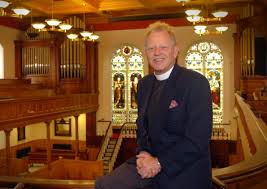
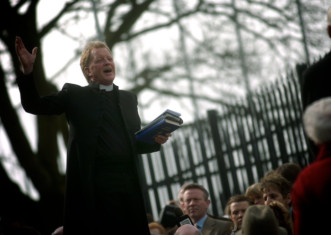


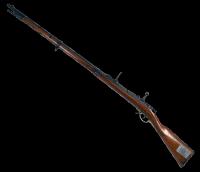
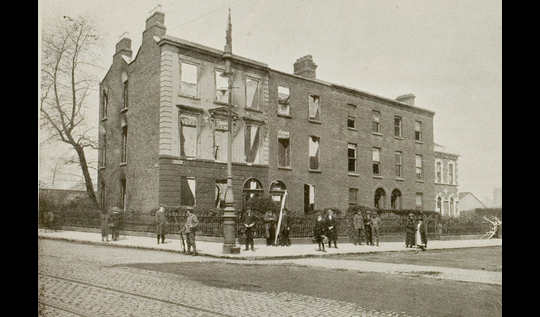
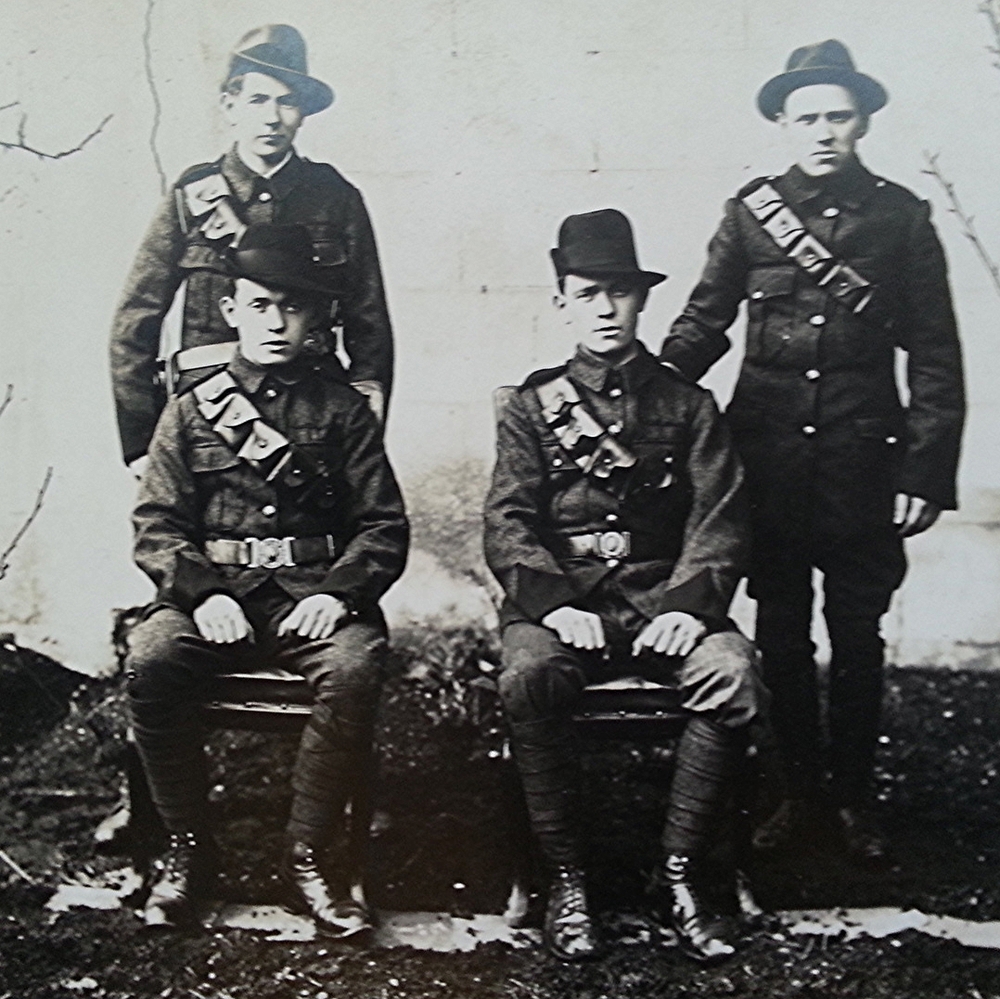
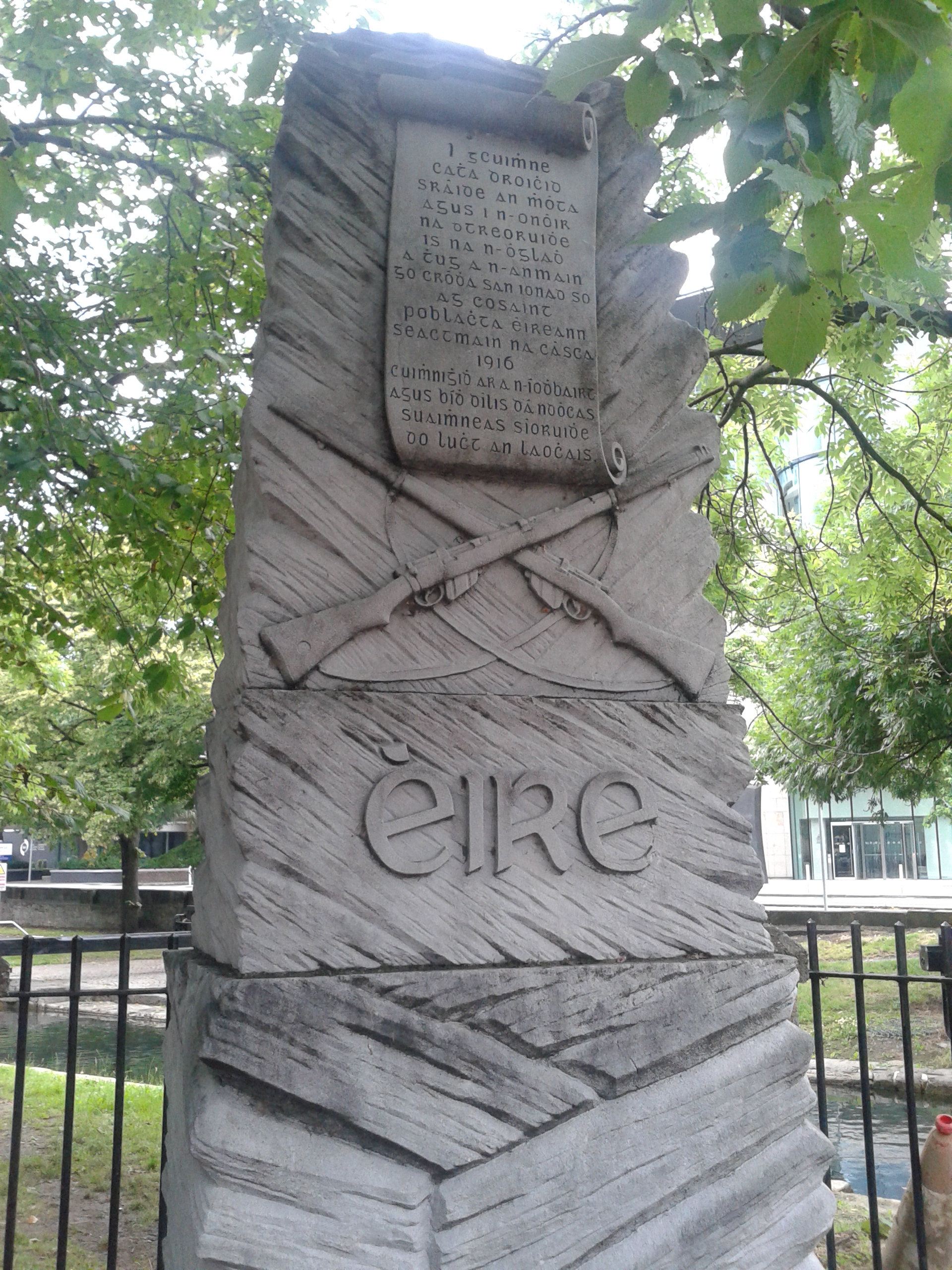
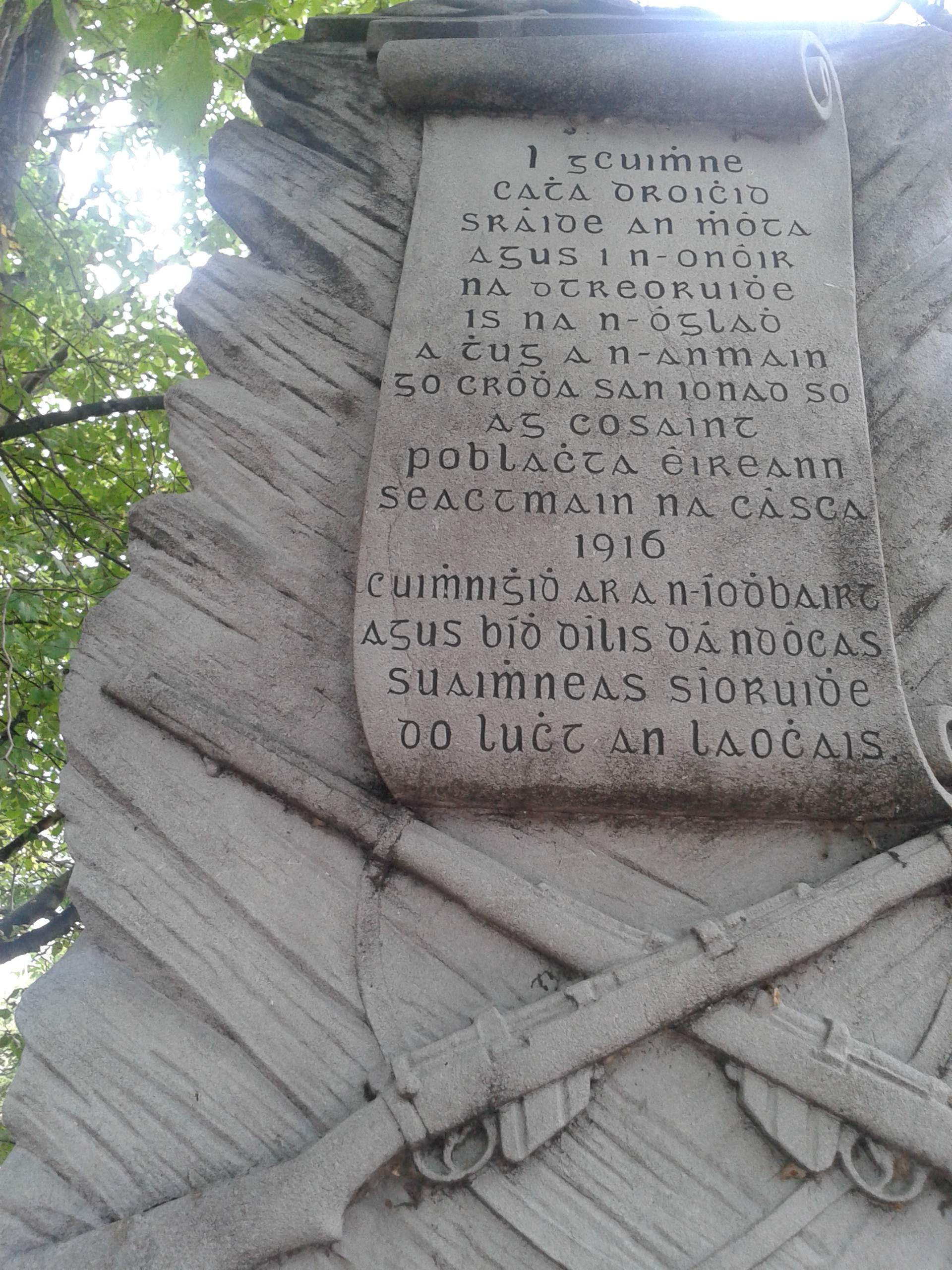


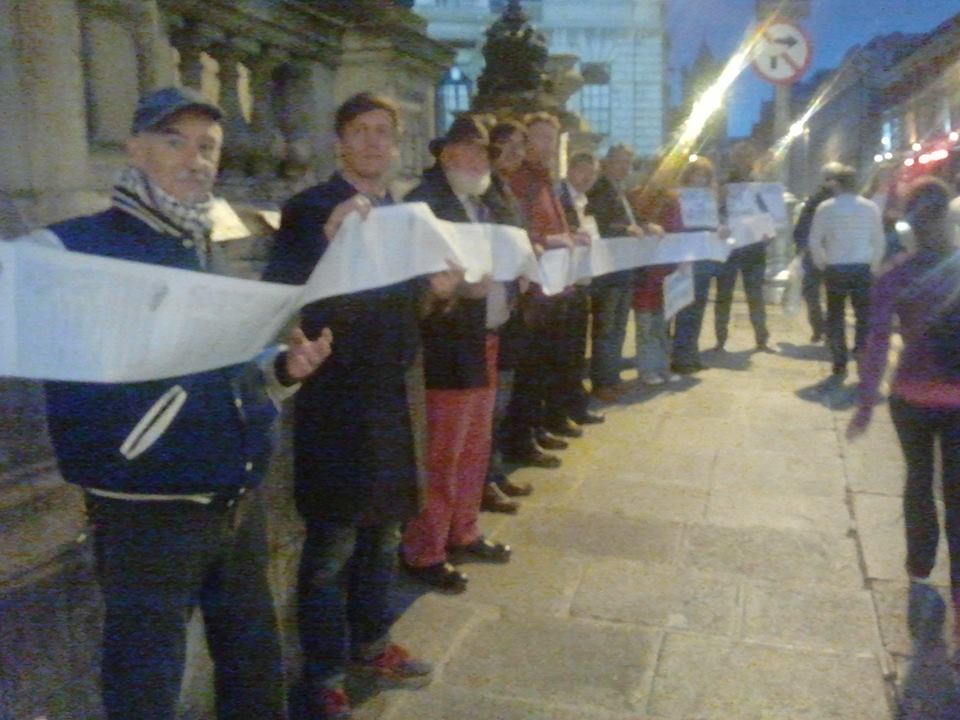




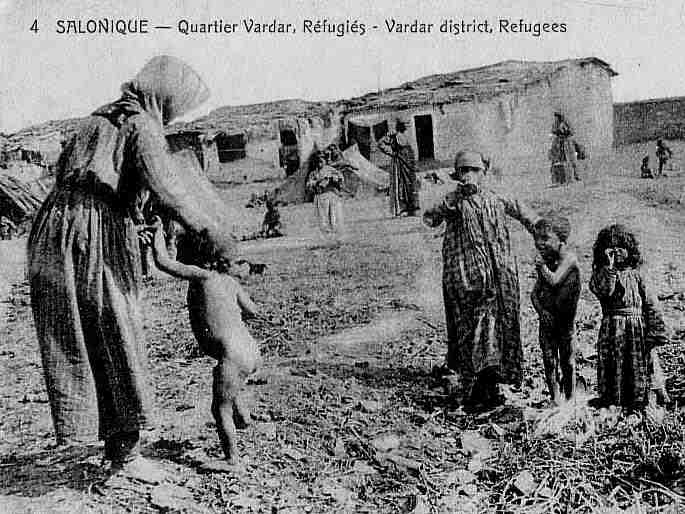
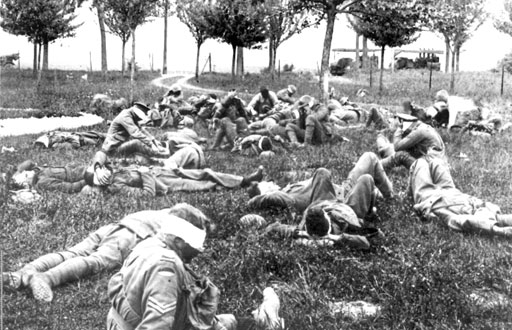
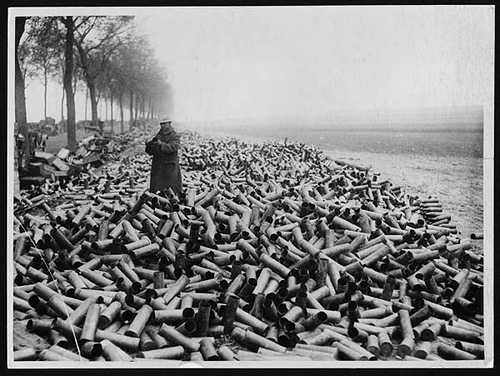

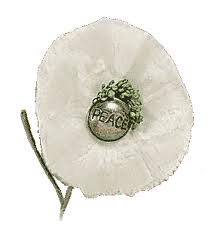

 rebelbreeze