Revolutionary socialist & anti-imperialist; Rebel Breeze publishes material within this spectrum and may or may not agree with all or part of any particular contribution. Writing English, Irish and Spanish, about politics, culture, nature.
Claiming to be ‘Irish nationalists’, denouncing refugee accommodation, calling LGBT people “paedophiles”, promoting “Christian values” and attacking Muslims, calling people “traitors” for expressing solidarity with Palestinians.
What kind of ‘Irish nationalism’ is this?
In recent years far-Right elements in Irish society have been pushing an ideology composed of the elements listed above, while claiming to represent the Irish people and the Irish nation. In their justifications they sometimes refer to struggles in Irish history and to Irish culture.
They do this not only in words but also in debasing flags of the Irish struggle, such as the Tricolour and the ‘Irish Republic’ flag, by waving them at their public events and even, on occasion by playing Irish Republican ballads on their PA machines.
Plenty of Irish Tricolour flags brandished on this anti-immigration march in Dublin in May (2024).Flags of the fascist National Party can also be seen. (Photo sourced: Internet)
Yet with a tiny unrepresentative exception, these elements have not been involved in the promotion or creation of Irish music or dance. They have not struggled for the promotion of the Irish language nor do they themselves speak the Irish language.
As to the history of Irish struggle, again with the exception of a miniscule minority, the far-Right elements have not fought against the British occupation, not picketed British Occupation buildings, not confronted the colonial police nor agitated in solidarity with Republican prisoners.
Again, I ask, what kind of ‘Irish nationalism’ is this?
Palestine solidarity ‘treason’?!
As Ireland experienced a wave of solidarity with the Palestinian people facing a campaign of genocide by the Zionist regime and its Western powers allies, these far-Right elements not only disdained that solidarity but harassed and labelled those who expressed it as “traitors”.
Again, I ask, what kind of ‘Irish nationalism’ is this?
How is opposition to genocide or solidarity with another colonised and oppressed people the activity of ‘traitors’? Surely it is the natural reaction of people with our history? Doesn’t the term ‘traitors’ mean that the accused have aligned themselves with enemies of the Irish people?
In fact, that is precisely what these far-Right elements are doing themselves. They are aligning themselves with a number of Western imperialist powers but in particular, in the case of Ireland, aligning themselves with the rulers of the UK, invader and occupiers of the Irish nation.
That connection was amply demonstrated when the colonial police savagely attacked people attempting to set up a Palestine solidarity camp in the grounds of Queen’s, the colonial university in Belfast. As it is also by burning Palestinian flags alongside the Tricolour on Loyalist bonfires.
A sectarian July bonfire with the Irish Tricolour, ‘Irish Republic’ and Palestinian national flags on top awaiting burning. (Photo sourced: Internet)
Or by English fascist and Loyalist flags accompanying Zionist flags on demonstrations in England. And by far-Right posters and activists who called for friendship with English fascist Tommy many-names Robinson, notorious for supporting the Paratroopers’ 1972 massacre of protesters in Derry.
Love Irish history?
Recently a far-Right person posting on social media, while claiming to “love Irish historical sites”, denounced efforts to save the Moore Street market and 1916 Battleground because “it’s not Irish any more” and called for it to be torn down “to get them1 out”.
She called for the destruction of the oldest street market in Ireland and the site of the last stand of the GPO Garrison, the 1916 Battleground where at least four Volunteers were killed and the last place of freedom for hundreds, including five of the Seven Signatories of the 1916 Proclamation.
Again, I ask, what kind of ‘Irish nationalism’ is this? It is in fact aiding the property speculator who wants to demolish and obliterate Irish history and heritage, a speculator currently based in Britain, though actively assisted by Dublin City Managers and successive Irish governments.
Another poster on social media calling itself “Christian Wisdom” asked people to vote for “Irish nationalist candidates” in the forthcoming elections within the Irish state, the sub-text being against migrants or Left-wing candidates and presumably for religious sectarianism.
What kind of ‘Irish nationalism’ is this?
It aligns itself with the western imperialist powers, including the invader that has been in occupation of some part of our country for 800 years and still is.
It denies people the democratic rights to express their sexuality.
In promoting Christianity as ‘Irish’ and in opposition to free expression of sexuality, it seeks to put us back under religious social control and also opposes the 1916 Proclamation, which guaranteed “religious and civil liberty and equal opportunities… for all.”
In blaming migrants and refugees for homelessness, it is covering up for the actual people who cause that crisis: the bankers, property speculators and big landlords who keep making huge profits out of people’s needs and misery.
Who are they really? They are certainly not ‘Irish nationalists’ in the sense of the many who fought and sacrificed all in the struggle to free the Irish nation through 800 years of Irish history.
Fascists and racists based in Coolock, North Dublin city photographed in joint rally with loyalists in Belfast in 2024. (Photo sourced: Internet)
What it really is and what they really are
What they are disseminating is not at all Irish nationalism.
On rational examination of the evidence, I must conclude that these people are not Irish nationalists at all. But since they claim very stridently that’s what they are indeed, I must conclude that they are using that label to cover their real identity.
What they are really is simply nothing more nor less than Irish fascists, serving property speculators, corporate landlords, bankers, the native Gombeens and foreign imperialists. Or the ignorant manipulated tools of those fascists.
In total, enemies of the Irish nation, of working people and of all democratic freedoms.
End.
1Presumably meaning people born abroad (as were James Connolly, Tom Clarke, Constance Markievicz, Eamonn De Valera, Eamon Bulfin, the father of the Pearses and mother of Thomas Mac Donagh, father of Thomas Davis … and hundreds of other Irish patriots).
The Palestinian Authority repressive forces has just murdered its 11th Palestinian since the Al Aqsa Flood operation.
An occupation force cannot control the people by its own brutal force alone – it needs partners in collusion, to spy, to give an appearance of representation, of due process but ultimately it needs that partner to exercise brutal force on its behalf.
On Monday (9th) the PA forces in Jenin (West Bank) murdered Rahbi Shalabi, 19, also seriously injuring his cousin, leading to protests, Resistance gunfire and explosions as a result. Shalabi was the 11th fatal victim of the PA, though many other Palestinians have been injured and jailed.1
Section of protest in West Bank Palestine against the PA’s murder of Rahbi Shalabi (Photo sourced: The Cradle)
A statement by the PA’s police, General Anwar Rajab, appears to attribute Shalabi’s death to firing by the Resistance or even a crossfire.2 Last Thursday Resistance fighters in Jenin confiscated two vehicles of the PA police in protest at the latter’s injuring and arrest of one of their members.
The PA has been repressing resistance in the areas it controls since its inception but repression has stepped up during the current accelerated genocide campaign of the IOF. A month after the latter commenced, the PA shot dead 12-year-old Razan Nazrallah during solidarity with Gaza protests.3
Razan Nassrallah, shot dead by the Palestinian Authority during solidarity with Gaza protest in the West Bank October 2023 (Photo sourced: Mahran Nassrallah)
During this whole period the PA has pursued Resistance fighters on behalf of the ‘Israeli’ Occupation, even entering hospitals in force in attempts to detain injured fighters.4 On at least two occasions popular mobilisations have prevented the PA forces achieving their aim.
The PA has killed known Resistance fighters5 and also removed defensive obstruction and exploded bombs planted in defence against IOF invasions.
A HISTORY OF CORRUPTION, COLLUSION AND REPRESSION
The Palestinian Authority was created in May 1994 as a 5-year interim body as part of the ‘Palestinian peace process’ (sic) through the Oslo Accords (1993-’95), signed up for the Palestine Liberation Organisation by the Al Fatah party,which won the 1996 Palestinian elections.
The Oslo Accords were rejected in the popular uprising of the Second Intifada (2000-2005). So corrupt, repressive and collusive had the PA and Fatah become that Hamas won the 2006 legislative elections throughout the West Bank and Gaza.
However it was only in Gaza that they forced the corrupt Fatah officials out when the latter refused to relinquish their posts in line with the elections.6 As a result, the PA central offices remained in the West Bank under Abbas, a Fatah nominee, continuing to receive EU and USA funding.
The PA under Mahmoud Abbas and Fatah control have continued in power (and funding) long past their allocated elected period and decline to hold new elections, for fear that Hamas would win once again.
President of the Palestinian Authority Mahmoud Abbas in Ramallah, West Bank, October 24, 2023. (Photo cred: Christophe Ena/Pool via REUTERS)
The PA does not deploy its militarised police force of 80,000 complete with armoured cars against the ‘Israeli’ Occupation, needless to say perhaps but nor does it send them to defend Palestinian farmers and villages being attacked by Zionist settlers.
The PA feeds intelligence on the Palestinians to the Zionist Occupation authorities and arrests people sought by the latter or on the PA’s own account, for speaking or writing criticisms of the PA or for mobilising in support of the Resistance.
People jailed by the PA are, after release, often re-arrested by the IOF and vice versa. The PA is, as admitted by most western and pro-Israeli media, widely detested by Palestinians who consider it a proxy agency for the ‘Israeli’ occupation.
COLLUSIVE REGIMES IN EUROPE
The Nazi occupation of Western Europe established collusive client regimes to administer civilian affairs and the civilian population in every state it occupied. In the first place these regimes acted as buffers between the Occupation and the Occupied but also collected intelligence.
Many became active in repression, hunting down Jews and Resistance operatives. After the liberation of Europe, many of those collaborators were jailed and some were executed by the Allies or by the authorities of the liberated states.
In Ireland the Free State carried out repression against the Resistance forces which had forced the British occupation to withdraw their armed forces from 26 of the Irish counties. Armed, transported and even clothed by the British, the Free State Army fought a vicious Civil War against the IRA.
SUPPORTING THE PA, COLLUDING WITH ZIONISM
The PA is officially recognised by many governments including that of the Irish state, where it has an Embassy. “Recognition of the State of Palestine” in most cases entails accepting the unrepresentative and detested PA as a legitimate representative of the Palestinian people.
Such official recognition usually also entails acceptance of “the Two-State solution” (sic), agreeing to a fragmented Palestinian ‘state’ on less than 40% of Palestinian land, with the least fresh water, under the constant surveillance and guns of the Zionist Occupation.7
This is also what is entailed in ‘recognition of the Palestinian State’ by political parties and organisations who claim that they are doing so in solidarity with the Palestinian people or at least for the sake of ‘a just peace’.
It is absolutely necessary, both for their own integrity and out of solidarity with the Palestinian people, not only for revolutionary forces but also for all anti-colonial, anti-imperialist and basic democratic organisations to denounce the PA and its repression.
Those who feel they cannot support revolution should at least refrain from Zionist collusion. Remaining silent on the role and activities of the PA or, even worse, promoting the PA and its Embassies, is to become part of the repression and a tool of ‘Israeli’ Zionism.
End.
West Bank mass protest at death of activist Nizar Banat in PA custody Ramallah 24 June 2021 (Photo cred: Flash90)
2Ibid. People familiar with other conflict spots, for example the occupied Six Counties of Ireland, will be familiar with this ploy by the authorities.
6Hence the frequent references in western mass media to when “Hamas seized power in Gaza”!
7Despite the continued support of the western imperialist states, every realistic assessment has judged the Two-State option to be no longer possible (if it ever was) due to the extent of Zionist settlements and private settler roads. The alternative then must be what many democratic anti-colonial people have been advocating for decades: one democratic secular state with equal rights and opportunities for people of all ethnic backgrounds.
Republishing this now as we approach again the festival called Christmas. A Christian festival, apparently, celebrating the birth of Christ, the baby Jesus. But are there darker aspects in its references?
Away in a manger No crib for His bed The little Lord Jesus Lay down His sweet head
The stars in the sky Look down where He lay The little Lord Jesus Asleep on the hay
Such a sweet, holy image.
But actually, when we look around us, it seems more like a festival of the pagan gods: of Bacchus, the god of alcohol and of Mammon, the god of wealth. Bacchus, because in non-Moslem countries, drinking of alcohol will be for most a big component of the festival.
Whiskey, brandy, wine and beer will be bought to stock up the house. Alcohol will be drunk at Christmas parties (including office parties, where for months afterwards some people will regret what they did or said – or even what they didn’t do or say).
Alcohol will be not just drunk but also put into some of the traditional food and even poured over it.
Then Mammon. Well, you can see the retail businesses stocking up for weeks or even months ahead of the festival which, after all, was only supposed to be a one or at most a two-day event.
Giving and receiving gifts has now become part of the festival and in most cases, gifts have to be bought. Which is a really big gift to the retail businesses and thence, really a sacrifice to Mammon.
In the Christian gospels of both Matthew and Luke, it is written that one “cannot serve both Mammon and God” — which goes to show how little they understood capitalism, where Mammon IS God.
A theologian of the Fourth Century saw Mammon as a personification of Beelzebub, which in his time was another name for Satan or the Devil.
Interestingly, Protestant Christianity, which some credit as having invented capitalism, at the same time regarded Mammon, or said they did, as “one of the Seven Princes of Hell”.
Cartoon depiction of Mammon, God of Wealth (Image sourced: Internet)
Sculpture representation of Bacchus, God of Alcohol, in California winery, USA (Image sourced: Internet)
SANTA
Now, Santa Claus is also a big part of the Christmas festival, especially in western countries, a much more acceptable face than that of greedy Mammon and alcoholic Bacchus, right?
But originally, the Christians saw him as a representation of St. Nicholas, 4th Century Bishop of the Greek city of Myra, a location now in Turkey. He was the patron saint of archers, repentant thieves, sailors and prostitutes. The prostitutes probably had to be repentant ones too, of course!
The sailors, who probably had at least as much recourse to prostitutes as had any other calling, were apparently not required to be repentant – to be in danger on the sea was deemed enough.
But St. Nicholas was also the patron saint of children, pawnbrokers and brewers, so we can see how close he was getting there to the modern spirit of Christmas.
GERMAN TRAPPINGS
Now, the Christmas Tree, der tannenbaum, so much a part of the symbolism of modern western Christmas, came to us from Germany, as did the sled and the reindeer.
The reindeer are not autochthonous or endemic in historic times to Germany, so they must have been brought in their myths from Scandinavia from where originally, the Germanic tribes came.
In turn, the Christmas Tree, Yule Log, reindeer and sled were exported from Germany to England in the reign of Queen Victoria, by her consort Prince Albert, who was German.
And since the English ruled all of us in Victoria and Albert’s time, the Christmas Tree came to us too, to the cities first and then slowly spreading through the rural areas.
A representation of St. Nicholas (before he got the red suit makeover) looking more like a pagan god of the woods. (Image sourced: Internet)
***
When you think about it, this German-English worship of the tree was a bit ironic, since the English had wiped out most of our forests already and were still cutting down our remaining trees in Queen Victoria’s time.
***
And Victoria, through Albert, gave us the Santa Clause we know and love today. A jolly man, well fed, white beard, twinkly eyes, dressed all in red with white trim ….
IN RED?
Now, wait a minute! It turns out he wasn’t always dressed in red. Originally, he was dressed in a brown, or green cloak. He was, originally among the Germanic people, a god of the forests – hence the evergreen Christmas tree.
And like any sensible woodsman, he dressed in appropriate colours, brown or green. Neither Albert nor Victoria ever represented him as dressed in red. So how did it become so that we are incapable of seeing him today in any other colour than red?
Well, it turns out that Coca Cola is the responsible party.
Yes, although it was the cartoonist Thomas Nast in 1870s United States who first portrayed Santa in a red suit with a belt but it was Coca Cola, in their advertising campaign of 1931 and onwards who made his clothes red world-wide.
Coca Cola is a drink served cold and almost undrinkable when warm but who needs a cold drink in cold weather? I guess Coca Cola needed a warm image to make it still attractive in winter. So therefore the warm, jolly man dressed in red, with a bottle of Coca Cola in his hand.
1931, Santa Clause first appears in red, in Coca Cola advertisement, USA. (Image source: Internet)
Coca Cola brand is worth about $106.1 billion dollars today,1 far ahead of any other cold drinks product. Which I guess brings us back to …. yes, Mammon.
You can mix the drink with a number of alcoholic beverages too, so tipping a nod – and a glass – to Bacchus.
Now, the German Santa Claus, this originally woodland god, is also thought to have been something like Thor, a god of fire and lightning. So can it be any coincidence that two of his reindeer are called Donner und Blitzen, i.e “Thunder” and “Lightning”? Nein – of course not!
A starry night over desert hills, like the Nativity scene but without the Guiding Star. (Photo source: Internet)
INVISIBLE
Although we see the image of Santa Claus everywhere and even pretend Santa Clauses all over our city streets, everyone knows that nobody sees the real Santa Claus. Children have to be asleep when he arrives to distribute his presents and somehow adults don’t see him either.
Which I suppose is a good thing ….
I mean if you found an adult intruder in your house at night, not to mention near your children, you’d be liable to whack him with a hurley (that’s an Irish cultural reference) …. or a baseball bat (that’s a U S cultural reference) …. or stab him with a sharp kitchen knife (that’s an international cultural reference).
It was bad enough when somehow that portly – not to say fat – man could somehow come down your chimney and go up again, without waking anyone … but now he can get in your house or flat even when you don’t have a chimney.
Which is at least creepy, if not downright scary …
Oh, let’s lighten the mood and sing together:
You better watch out You better not cry You better not pout I’m telling you why
Santa Claus is comin’ to town Santa Claus is comin’ to town
He’s making a list He’s checking it twice He’s gonna find out Who’s naughty or nice
Santa Claus is comin’ to town Santa Claus is comin’ to town
He sees you when you’re sleeping He knows when you’re awake He knows if you’ve been bad or good So be good for goodness sake
Yes, lovely but wait …
“You better watch out, you better not cry …” — Is it just me, or is that not downright threatening? And he knows when we’re sleeping or awake? He has our children under surveillance? In some kind of list?
HO! HO! HO! IN MORALITY PLAYS
Morality Plays were a genre of theatrical performances of the medieval and Tudor eras in which a character was tempted by a personification of Vice.
Now Vice (not unlike a lot of police Vice Squads), was often seen as the epitome of evil, corruption and greed – in other words, the Devil. The playwrights tended to portray the Devil as somewhat of a comical character, perhaps to keep their audiences entertained (or to disarm them).
So the character who played the Devil would announce his arrival with a stage laugh: “Ho, Ho, Ho!”
You can probably see where I’m going with this.
Nowadays, we tend to see the Devil portrayed in black but in earlier times, he was more often seen as coloured in red. The colour in which Coca Cola just happens to have dressed Santa too.
The German or Nordic Santa was originally a god of fire also, while even the modern Santa drives a magical chariot pulled by horned beasts and he is portrayed all in red. Traditionally, the Devil is seen as horned and residing in Hell, a supposed place of eternal flames below ground.
What does Santa Claus give to children who have not been good? A lump of coal! In other words, a mineral from underground that can burn to make fire.
A Victorian England representation of St. Nicholas (Image sourced: Internet)
NICHOLAS
Santa Claus is supposed to be modelled on St. Nicholas …. and what is the popular abbreviated version of Nicholas, i.e the nickname? Yes, Nick.
And the common name for the Devil, Mammon, Beelzebub, Satan is ….. Old Nick!
The elections in the Irish state are over and nothing much has changed — or looks likely to change — with regard to parties in power or with government policy. Crises will continue in housing, health care and the environment.
The state will continue its slide towards full EU/US/NATO militarisation. And of course, with the colonial one-sixth of Ireland continuing under direct UK occupation and control, administered by a Unionist/ Sinn Féin administration.
Since no party won the magic 88 overall majority number of seats, a coalition government will be formed (as has been every government since 1981).
It was overall quite a boring election which is a bit disappointing. Given that we’re not being given much bread, the least we are entitled to expect is a good circus. And aren’t elections the high point of our wonderful democratic state and processes?
Over 40% of those eligible to vote didn’t seem to think so and didn’t attend the show – even though tickets were free — a continuing fall in the circus-going public and lowest since 1923, a great worry to the authorities. New acts might awaken more interest but the prospect looks slim.
RUNNING ‘BANK ROBBER’
The one real piece of entertainment was the entering the ring at the Big Top of alleged bank robber (and other things) Gerrard Hutch, currently on 100,000 bail on charges in Lanzarote, Spanish state, of money laundering for criminal purposes. He ran out of it on polling day too.
Gerard Hutch jogging from the counting station, media frenzied shoal following.
Gerrard’s family has been engaged in a literally murderous competition with another inner-city family, the Kinehans, with deaths on both sides.
Hutch failed election due only to insufficient transferable votes in Ireland’s electoral system of proportional representation – but he received 3,098 first preference votes — one in ten in the constituency, in competition with outgoing Government party candidates and the SF President.
What does it mean that so many people voted for an alleged bank robber and gangster? That the voters are gang members too? Or that they consider those in government to be thieves or representing thieves, speculators and robber-bankers versus a less disguised bank robber?
OTHER RESULTS
Sinn Féin continued to be one of the top three parties, exceeding government party Fine Gael by one elected Deputy but was in turn trumped by also Government party Fianna Fáil with an excess of nine TDs (Teachta Dála, Irish Parliamentary representative, also known as “Deputies”).
Fianna Fáil, we may remember, was founded out of a split in the anti-Anglo-Irish Treaty Sinn Féin led by De Valera, which went on to have the longest track record in representing the Irish Gombeen capitalist class in government, an objective on which the current Sinn Féin has set its sights.
The Green Party retained only one of its 12 seats, which was disappointing – I mean, disappointing that they kept any. Every time they’ve been in coalition Government they have disappointed their voters and got kicked out at the next election, only to try the same again at a later date.
Another party that has played the same game – and suffered the same subsequent electoral consequences — has been the Irish Labour Party. A question of some but limited interest is whether they’ll join the Government coalition again now or remain in opposition.
Conservative Aontú and (far?) right-wing Independent Ireland got more votes than seems healthy for the country. The electoral Left lost Joan Collins of Right to Change and PBP Solidarity lost Gino Kelly and Mick Barry, though Ruth Coppinger got back in for them after a 4-year break.
Gino Kelly of PBP Solidarity who lost his seat.
The only government composition likely on the numbers if Sinn Féin is to be excluded, as seems certain despite Eoin Ó Broin talking to others, is a repeat coalition of Fine Gael-Fianna Fáil with another three or so TDs and the old firm might go for independents rather than a junior party’s TDs.
Are there any independent TDs so low in self-respect and principles as to accept such an offer? For a Ministerial salary? What do you think?
For decades FG and FF have each been in opposition when the other was in government but will be in government together again for the second term running. This undermines the whole illusion of choice and of democratic representation but what can one do?
People who voted for SF, largely working class and younger people according to profiling by opinion polls, will be disappointed that the party did not a) get an absolute majority (but that was never likely) and b) that it will not be considered for coalition government with FF or FG.
Sad though that reality is, they would have been predictably sadder and more disappointed had SF actually got into coalition government, when their crumpled and discarded principles would have been under merciless public view. On the other hand, perhaps that’s what is needed.
Just as it’s business as usual for the ruling class and its board of management – i.e. government – so it is for the revolutionaries, in terms of the task to build a broad anti-imperialist, anti-racist alliance under socialist (i.e anti-capitalist) principles and with consequent objectives.
Hopefully not the business as usual of separating socialism from national liberation and upholding sectarian principles and methods of organisation. We can hope. And work.
“HEZBOLLAH FIRES AT ISRAEL IN FIRST STRIKE SINCE THE CEASEFIRE” reads the headline so it tells us all we need to know.
Of course those horrible Islamic terrorists are violating the ceasefire with those poor Israelis, which the good old democratic USA and France worked so hard to broker.
Ach ní mar a shíltear a bhítear, or at least not as the media headline would have us believing.
Further down, in the text, it actually gives a much fairer and accurate report and it turns out that this was the first
warning shot by Hezbollah after over 50 violations by the ‘Israeli’ Occupation Forces, which neither the ceasefire arrangers nor UNIFIL have done anything to stop.
But if you’ve only read the headline, as many do, it’s the message that remains in your head.
Even though the main text is fairly accurate, an important additional piece of information is missing. A Zionist source admitted that they are not acting in accordance with the actual text but rather in accordance with a “side document” of an agreement they have with the USA.
They still claim that they’re not violating the negotiated ceasefire agreement, however, even though the document upon which they’re relying was not part of the official ceasefire agreement, was not agreed with the Lebanese side or even disclosed to them at the time of signing!
You’d have to wonder whether Baron Munchausen, Charles Ponzi and Richard Nixon would be relied upon so uncritically by the western mass media today as are the ‘Israeli’ Zionist spokespersons who have been exposed time and time again in lying accusations and denials.
I suppose the answer is that a) it would depend on whether the lies in question suited their purposes or b) how long they thought they could get away with it.
After the some might say overdue missile response by Hezbollah, an official ‘Israeli’ source was quoted as saying that their artillery firing at Lebanon had come to an end. Well – for how long? And the airstrikes, drone flying, destruction of buildings and facilities?
By the way, this admission of “the side document” by ‘Israeli’ sources is not the first known reference to its existence; it was reported referred to in ‘Israeli’ media as soon as the ceasefire agreement was signed.
Over 54 IOF violations of the ceasefire agreement at time of writing, including:
○ Airstrikes on 11 different locations
○ Artillery shelling of four different locations
○ Raids from drones on five different locations.
Since the ceasefire agreement the IOF have injured and killed a number of civilians in shelling etc and drone-murdered a state employee on a motorbike, wrecked dwellings and a mosque, also a football pitch … and also advanced to occupy locations they were never able to during the war itself.
The agreement should have stipulated total Israeli withdrawal within a week – three months was unreasonable and asking for trouble.
Clare Daly stood for election in the 2024 elections of the Irish State, in the Dublin Central parliamentary constituency, one with a tradition of independent representation going back to Maureen O’Sullivan and Tony Gregory before her.
Daly was standing as one of the loose Left coalition of Independents for Change in a heavy competition for the four-seat constituency.
Clare Daly has a track record as elected public representative and socialist political activist, also as a prominent Socialist Party activist, with which organisation she partedcompany in August 2012.
She was elected MEP for the Dublin constituency from July 2019 to July 2024, TD1 for Fingal from Feb. 2016-July 1999 and TD Dublin North Feb. 2011-2019; in recent years Daly has been better known outside Ireland due to her public interventions in the European Parliament.
Daly and her partner Wallace were both vilified by pro-imperialist liberals and ‘Left’ for publicly opposing US/NATO/ EU imperialist campaigns against Islamic regimes and the Russian Federation, being subjected to a host of unfounded allegations contrary to their actual record.
Tik Tok clips of Daly’s biting attacks on the EU’s complicity in the US-backed ‘Israeli’ genocide provided relief for many around the world from the Zionist sycophancy and insincere and ineffective concern for the victims of that daily genocide prevalent in the EU Parliament.
And who can forget Daly’s calling German politician and EU Commission President Ursula Van Der Leyen out as ‘Frau Genocide’ in the European Parliament in December last year!2
While an MEP, Daly also intervened in the discussion around the Irish Gombeen3 class’ attempt to push us towards NATO, further undermining a quite tattered Irish neutrality. And while a TD, she and her partner Mick Wallace TD were arrested protesting the foreign militarisation of Shannon.
To their credit both risked jail by refusing to pay the fines imposed but the Gombeen ruling class decided to restrict the damage of its exposure of collusion with US imperialism by also reducing the punishment of both to a few hours in captivity.
Daly has been one of the few TDs prepared to speak in public against the repression of Irish Republicans and to visit some of the consequent victims in jail.
In the EU Parliament, Daly also denounced the Spanish State’s police invasion of Barcelona and violence against voters there on 1st October 2017 during the referendum on Catalunya’s independence.
2024 Dublin Central election poster for Clare Daly.
In Ireland today
In her election flyer here Daly highlighted representation independent of political party for her electoral area, housing, health service, cost of living, Palestine, the endangered climate and Irish neutrality without any indication of how these issues might be effectively addressed.
Daly’s election flyer did not mention capitalism or imperialism, nor did she campaign on a platform of overthrowing the current neo-colonial and neo-liberal capitalist system in force, instead indicating her wish to “hold to account the people who’ve got us into this mess.”
“Holding to account” is something to which Daly is accustomed doing and does it well, eloquently, with passion and fluently, scarcely having to refer to her notes while doing so. But like ‘speaking truth to power’, it has little effect on those who are in control of the political-social system.
It can indeed have an effect on the victims of the system but we are left with the question of what to do about the situation. Refreshing as it may be to hear her again in Leinster House, neither voting Daly in — nor fifty Dalys — is going to change any of the conditions under which we suffer.
BY THE WAY,
in case anyone’s interested, I gave my first preference vote to Daly and hope she does get elected.
End.
1Teachta Dála, the title of a public representative elected to the parliament of the Irish State.
2Imperialist politician and proven plagiarist in her doctoral thesis.
3Vernacular term in Ireland for huckster, carpet-bagger-type capitalists, derived from the Irish language gaimbíneachas, profiteering, nowadays used to describe the neo-colonial Irish capitalist class.
NB: Edited by RB from original article for formatting purposes
Sinn Féin has said that it would ask for a review of the national broadcaster RTE’s biased coverage of Palestine and other international conflicts. They were criticised by almost all and sundry for doing so.
They were accused of censorship and their own use of lawsuits to silence critics was raised once again.[1]
The National Union of Journalists (NUJ) came out with guns blazing, claiming it would be in breach “of the principles of the European Media Freedom Act and would set a dangerous precedent in terms of direct and indirect State interference in the remit of the existing regulatory body.”[2]
The NUJ has rarely challenged what it sees as state or private interference in the media before and less still at RTE. RTE’s board is made up of cronies and business interests, people whose interest is served by limited coverage of financial and other issues.
Many of them come from the financial sector. Six of the eleven board members are appointed by the Minister for Communications, so there is already government interference in RTE.
The NUJ itself would not come out well of such a review, if the review were honest. For decades it implemented Section 31 of the Broadcasting Act, censoring Sinn Féin, even when the party was standing in elections.
A brave RTE journalist Jenny McGeever was sacked because she broadcast one sentence from Martin McGuinness, “If that is ok with the Police, that is ok with us”, in reference to arrangements for the transport of three IRA volunteers’ bodies back to Belfast.[3]
It was an innocuous statement. The NUJ did next to nothing to defend her. They did not defend her just as they meekly accepted the sacking of the RTE Authority in 1972. Colum Kenny commenting on his time at RTE remarked that:
During my years at RTÉ, I became for a period what is known as ‘The Father’, or chairman, of the Programmes Chapel of the National Union of Journalists. I found no great appetite among its members, or indeed among the membership of another union representing many producers, for industrial action aimed at drawing public attention to the existence of the gagging Order known as Section 31.[4]
In other words, neither the union nor the members did anything about it. They either agreed with it or decided the truth was not that important, not as important as their careers.
The union will not look well, if coverage on Palestine is looked at, nor will it come out shining if coverage of Ukraine is also included, as on this issue, the union itself intervened directly in helping to shape a narrative at odds with reality.
It is as clear as day that on Palestine, Irish coverage has been very biased, in terms of who it gave interviews to, the issues it refers to and the kid gloves that apologists for genocide such as the Israeli Ambassador have been treated with.
It is clear even in the language used. The word ‘genocide’ is never used in reporting, unless quoting someone and even then, sparingly. It is referred to as ‘the war’, ‘the conflict’ etc.
It has mainly used the term when reporting on the case taken to the International Court of Justice and gave a succinct but incorrectly limited definition of what genocide is.
It stated “In short, genocide is the intentional destruction of a people in whole or in part.”[5] The definition is actually a lot broader than that and Gaza fits the bill on various counts.[6]
When reporting on the murder of civilians in Palestine, it never uses such terms. It says ‘killed’ and the casualty figures are always referred to as “According to the Hamas-run Ministry of Health”.
The message is clear, that these figures come from an organisation that is considered to be a terrorist group and therefore the figures are not reliable. But it is actually the elected government.
The last time there was an election in Palestine, Hamas won, both in Gaza and in the West Bank, though it only assumed power in Gaza with the Vichy Palestine Authority appointed by Mahmoud Abbas undemocratically taking control of the West Bank.
So, of course the Ministry of Health is run by the elected government. This language is never used in relation to Israel, we are never told “according to the Likud-run Ministry of Defence”. In fact, such caveats are almost never used, not even when quoting the most vile dictatorships in the world.
At best, they state “according to an official government communiqué”, which is technically correct and does not have the same moral =laden judgement contained within it.
In Lebanon, they engage in a similar sleight of hand, referring to attacks on “Hezbollah strongholds”, which is the type of language they hope will give some justification to the bombings. But what are Hezbollah strongholds? They are areas in which the organisation has mass support.
You would be hard pressed to find in the media, in general, and RTE in particular any significant explanation of what Hezbollah is.
Many viewers hearing about strongholds being bombed would not know and are never informed that what this means is areas in which the organisation has a support base, which is also electoral.
We know which areas are Hezbollah strongholds because they are the areas where people voted for them. It is an electoral and military force, increasing its number of parliamentary seats in the 2022 elections from 13 to 15, though its allies in parliament lost seats.
But the point is, it is a force with a huge popular base.
Likewise, when Israel told Irish UN soldiers to leave, the President of Ireland described it as a threat — but the media was more hesitant.
When Israel then used UN compounds as shields in their attacks, the resulting damage was described as damage caused by the exchange of fire between the two. You would never guess that one of the sides deliberately used them as protective shields.
In terms of RTE bias and coverage, whilst it has reported on Palestine over the years, once October 7th happened, the official discourse emanating from RTE and most other media outlets was that history began on October 7th.
No attempt was made to look at the history of the region, nor the context of Israeli aggression and crimes against humanity prior to October 7th. Previous Israeli attacks and crimes were rarely if ever mentioned.
It made one attempt at explaining what Hezbollah was in an article published on its site.[7]
The article recognises that it has political support, but constantly refers to the fact that it is designated as a terrorist organisation by the US and that other bastion of democracy, Saudi Arabia, whose leaders have never been elected.
Saudi Arabia, despite having a nominal parliament is led by a bunch of royal head-chopping kleptocrats. Though RTE quotes them favourably as a source of analysis on the nature of Hezbollah.
The organisation is according to RTE nothing more than a group that “…has risen from a shadowy faction to a heavily armed force with major sway over the Lebanese state. The United States, some Western governments and others deem it a terrorist organisation.”
The headline on the piece reduces Hezbollah to just being a group that supports Hamas. And that was about it from RTE on the nature of the organisation.
Likewise in Ukraine, though RTE had reported on the country previously, once again history started on a particular date, this time February 22nd 2022.
They ignored the 2014 Maidan Coup, the breaking of the Minsk Accords by Ukraine, the repression of non-Ukrainian cultures, which included not just Russians but also gypsies and others.
The promotion of WWII fascist Stepan Bandera, the fascist nature of the Azov Battalion were all ignored to favour a simplistic account. Previous acts such as the burning to death of trade unionists in Odessa by fascists in 2014 were never mentioned again.
RTE presenters even questioned why NATO wasn’t pushing for all-out war with Russia, and they included in that the possibility of going to the brink of nuclear war.
The Irish Times has recently doubled down on this, basically resurrecting the “Russia will invade and attack everyone scenario” so common when the war began.
It argued in a piece written by Kier Gillespie from the right-wing think tank Chatham House that Ireland should abandon its “neutrality” and Europe should get ready for all-out war with Russia.[8] Incidentally, a sentiment echoed to some degree by the “pro NATO left” in the Irish parliament.
The NUJ for its part, whose members push the narrative on Palestine and Ukraine were not content with the complicity of its members in a particular narrative but organised a protest to skew the debate altogether.
Shortly after the war started the NUJ organised a protest at the Russian Embassy to protest the lack of press freedom and attacks on journalists by the Russian state. The Russian state has a dreadful record on the matter, but so does Ukraine.
Moreover, in its attempt to portray the Russians as the only threat to freedom of the press the NUJ invited ambassadors from other countries to join in with it at the protest.
Fine, except with one exception, those ambassadors represented countries with a poor record in the matter, such as Georgia, Poland and Ukraine coming in 89th, 66th and 106th respectively in Reporters Without Borders Press Freedom Index for the year 2022.
By doing this the NUJ set a narrative that the only threat to press freedom was Putin and whitewashed a number of regimes with dubious records themselves.
Whilst it has condemned the deaths of journalists in Gaza it did not protest at the Israeli Embassy but held a vigil instead at an art gallery.[9] You couldn’t make such cowardice up.
So, an investigation of bias in the coverage of conflicts would be welcome. Neither Sinn Féin, RTE, nor the NUJ would come out of it well. But the problem is political.
The reason why RTE does that, is that it gets away with it because there is no challenge to its bias. Sinn Féin and the Irish left represented by such stalwarts of mediocrity like People Before Profit, applauded and egged on the push for war and bias about Ukraine.
They now find the media supporting those same reactionary forces (NATO, US, EU) in their assault on Palestine. The penny has almost dropped for them, but not quite. RTE was biased on Ukraine and they agreed with it, now it is biased on Palestine and it is too late.
But RTE and the Irish media in general represent the interests of the Irish state and so it should come as no surprise that it is biased.
This does not mean we should accept it lying down, but you can’t call for bias on one issue in favour of a NATO proxy (Ukraine) and against bias in favour of another proxy, Israel. The two are linked.
In the case of Palestine, the NUJ is passive, passing resolutions and issuing communiqués.
As with the Irish censorship law Section 31, the union is content to not take any industrial action on the issue and let its members lie, downplay the seriousness of it all, treat the Israelis with kid gloves and use language that deliberately distorts what is happening.
Their role in echoing Their Master’s Voice should be exposed, though Sinn Féin is not the best -placed organisation to do so, given its prioritising of its relations with Washington and its own attempts to censor Palestinians in Ireland who did not follow the Palestine Authority line.
The elections for a government in the 26-County state are only days away now and, while many are advocating a vote for this or that party or candidate, some are opposed to voting at all.
ARGUMENTS AGAINST VOTING
An amusing take on abstention advises: Don’t vote – it only encourages them! Anarchists have long been opposed to voting in national elections and I recall a poster in Britain exhorting people to Vote for Guy Fawkes – the only man ever to enter Parliament with honest intentions. 1
Revolutionary marxists have also often called for a boycott of elections.
The position that they hold in common is that changing this or that party in government does not change the system and that it is that which is in need of change; as Connolly2 famously declared capitalist governments to be “committees of the rich to manage the affairs of the capitalist class.”
However, it is possible to hold that opinion but yet to vote – and even to advocate voting – in some circumstances. However among some Irish Republican circles there has been a trend maintaining that voting in these elections is a recognition or acceptance of their alleged legitimacy.
A massive spoiling of ballot papers is often advocated by those who wish to ensure that the boycott may not be interpreted as apathy among the electorate. The number of spoiled ballot papers is supposed to be recorded and the papers available for inspection.
ARGUMENTS FOR
Those arguing in favour of voting in elections come at the question from a variety of points, including that voting is a democratic right for which our ancestors fought; that if we fail to vote we have no right to complain about government actions (or inaction).
They may maintain that not voting for some parties is equivalent to voting in favour of their opponents; or that voting a particular party into power can be used to overturn undesired legislation or conversely to promote desired legislation or to put them in power so that they may be exposed.3
The reformists and social democrats (often presenting themselves as revolutionaries) advocate for reforming or at least controlling capitalism under a Left Government. Despite the impracticability of the latter in many historical experiments, the hopeful and deluded keep advocating it.
Then of course, there is the ‘Lesser Evil’ argument, which is probably the most seductive; we witnessed that during the Harris-Trump USA Presidency competition. The Greens in Europe even appealed to Stein of the USA Greens, running against Harris on an anti-Genocide ticket, to desist.4
The claim that we might as well use our votes to elect a ‘lesser evil’ government is seductive precisely when we feel that no other option is available, combined with fear of worse economic and social conditions to be imposed upon us by the ‘worse evil’ party or candidate.
To follow the ‘lesser evil’ road is not only to perpetuate the system in one form or another but also fail to recognise our potential strength as the producers of all wealth; to fail to strengthen our energies to break firstly the mental chains, then the physical ones; to make fundamental choices.
THE TACTICAL VARIANT
Some argue that although in general national elections don’t change the system, they can be used at times to effect a tactical change: show rejection of a specific government position or individual.
They sometimes argue in favour of voting to put a specific individual or group of individuals into parliament for tactical reasons.
Can it be of use to have a few individuals in the Irish parliament who will attack the government and ruling class in speeches? Or to put specific issues forward on which to expose the ruling elite? Or to ask questions to gather government information? I am sure that it can and has been at times.
Can it be useful to have a handful of individuals elected to the Irish parliament who are prepared to seek entry to prisons to talk to political prisoners? Or who will head an investigation into some kinds of abuses and publish the results? Such can be and has been of use at times.
The important thing is to ensure that the message we give is that useful though such people and positions may be at times, they are not the solution, which can only be the overthrow of the system and the establishment of a socialist system with power in the hands of the working people.
ELECTIONS IN A CAPITALIST DEMOCRACY
What are known as ‘democracies’ are states concentrated across ‘Western’ regions, i.e western Europe and its former colonies of the USA, Canada, Australia and New Zealand, with varying degrees of effect upon states on the African and Asian continents, along with ‘Latin America’.5
These are without exception, regardless of variety, systems of governing their working people without having to resort to wide-scale constant repression and suppression. For that project, the illusion of choice is essential, hence the regular elections and different political parties.
But the illusion of any fundamental choice is failing. Increasingly, governments in many European ‘democracies’ are becoming coalitions between a number of political parties and in Ireland, the main Government-Opposition parties for decades have exposed the reality by governing together.6
The effect of such exposure of the lack of real choice is impacting upon the consciousness of the populations concerned so that progressively less of them are willing to participate in the charade. In Ireland now more than one-third of the population do not vote.
This situation is of great concern to the ruling classes and to their intellectuals who are busy trying to devise schemes to offset the drift such as advocating voting from home, spectacles such as televised confrontations between competitors and ‘Citizenship’ programs in schools.
Clearly revolutionaries should not assist in any attempt to justify the system or to perpetuate the illusion of elections in capitalist ‘democracy’ being anything else than a periodic choice for slaves between the overseers employed by their masters.
DOES IT MATTER ANYWAY?
The nub of the question as to whether to vote boils down to what we hope to achieve and its prospects. If there were a massive abstention from the polls then of course that would be seen as a huge vote of no confidence in the parties standing and perhaps in the system itself – but from what perspective?
From the Right? From the Left? From apathy? In any case at the moment that looks like a moot question since there’s a likelihood of a turnout of around 60% of the registered voters.7
Will abstention make people more politically aware or conversely will participation in the elections turn people away from the possibilities of organising on the ground and ultimately of revolution? Perhaps for some – but overall, I think not many in either case, not on a longer-term basis.
From a revolutionary point of view, does it matter whether people vote or not? Or even sometimes who they vote for? Surely what matters is organising and supporting the movement for fundamental progressive change? Can that be done by people who vote as well as by those who don’t?
I’d say that is at least as likely.
During capitalist state elections the best we can do, I think, is to point out the inadequacy of the choices presented to us and to advocate stronger and more militant organisation as an alternative to the calls to vote for one party or another.
Whatever party or individual gets elected to Leinster House, the principal struggles remain: for a free united independent Ireland, for a socialist system, against the imperialist world system, against environmental destruction. It is on that we need to concentrate.
The newly-elected management committee of the capitalist class should be savaged mercilessly for its inevitably broken promises and its continuing attacks upon the economic and social conditions of the working people, and on Irish national neutrality.
Most of all, we need to improve our organising, strengthen our ranks and find ways to strike blows against the system to win victories in our march towards the overthrow of the neo-liberal and neo-colonial Gombeen ruling class and its foreign masters.
End.
1While amusing as a caption, given that Guido Fawkes plotted to blow up the English Parliament on 5th November 1605, upholding Guido Fawkes as some kind of historical hero is problematic, as he was a militant Catholic and the date of capture, Guy Fawkes’ Day, was a regular occasion for the exhibition of anti-Catholic prejudice even into the 20th Century in Protestant Britain, which more often than not, manifested itself as anti-Irish racism.
2James Connolly (1868-1916), revolutionary socialist activist, theoretician, journalist, writer and trade unionist, leading participant in the 1916 Irish Rising for which he was sentenced to death and shot by British firing squad.
3Lenin famously advocated voting the British Labour Party into government for the first time to ensure their exposure, supporting them “as a rope supports a hanging man”, advice misused by social democrats and others on the electoral Left and about which revolutionaries have argued ever since.
6Throughout the existence of the Irish State, the Fianna Fáil party has been the longest in government, with Fine Gael second, both socially conservative parties with strong loyal electoral bases. However now they are governing in coalition, along with the Greens. It is worth noting that there has not been a government of absolute majority by any party in the Irish state since 1981, when Irish Republicans stood as H-Block (e.g. hunger strike) candidates and two were elected with another having a near miss.
7Despite a trend of dropping percentages of the potential voters actually participating, in 2020 the turnout was a little over 62%.
Kit Klarenberg (republished with author’s kind permission from Al Mayadeen)
(Reading time: 6 mins.)
On November 15th, The Times published a remarkable report, revealing serious “questions” are being asked about the viability of Britain’s two flagship aircraft carriers, at the highest levels of London’s defence establishment.
Such perspectives would have been unreportable mere months ago. Yet, subsequent reporting seemingly confirms the vessels are for the chop.
Should that come to pass, it will represent an absolutely crushing, historic defeat for the Royal Navy – and the US Empire in turn – without a single shot fired.
The HMS Queen Elizabeth and HMS Prince of Wales first set sail in 2017 and 2019 respectively, after 20 years in development.
HMS Queen Elizabeth and HMS Prince of Wales in dock and at anchor.
The former arrived at the Royal Navy’s historic Portsmouth base with considerable fanfare, a Ministry of Defence press release boasting that the carrier would be deployed “in every ocean around the world over the next five decades.”
The pair were and remain the biggest and most expensive ships built in British history, costing close to $8 billion combined. Ongoing operational costs are likewise vast.
Fast forward to today however, and British ministers and military chiefs are, per The Times, “under immense pressure to make billions of pounds’ worth of savings,” with major “casualties” certain.
Resultantly, senior Ministry of Defence and Treasury officials are considering scrapping at least one of the carriers, if not both.
The reason is simple – “in most war games, the carriers get sunk,” and are “particularly vulnerable to missiles.” As such, the pair are now widely perceived as the “Royal Navy’s weak link.”
Matthew Savill of British state-tied Royal United Services Institute told The Times that missile technology is developing “at such a pace” that carriers are rapidly becoming easy for Britain’s adversaries to “locate and track”, then neutralise.
“In particular,” he cautioned, China is increasing the range of its ballistic and supersonic anti-ship missiles.
Meanwhile, Beijing’s “hypersonic glide vehicle”, the DF-17, “can evade existing missile defence systems,” its “range, speed and manoeuvrability” making it a “formidable weapon” neither Britain nor the US can adequately counter.
Savill advocated “cutting one or both of the carriers,” as this “would free up people and running costs and those could be reinvested in the running costs of the rest of the fleet and easing the stresses on personnel”.
Nonetheless, he warned that scrapping the carriers would be a “big deal for a navy that has designed itself around those carriers…and that the £6.2 billion paid for them would be a sunk cost.”
That the Royal Navy has “designed itself” around the two carriers is an understatement.
For just one to set sail, it must be supported by a strike group consisting of two Type 45 destroyers for air defence, two Type 23 frigates for anti-submarine warfare, a submarine, a fleet tanker and a support ship.
British aircraft carrier as part of allegedly “strike force” but in reality sailing with its necessary escorts. (Photo sourced: Internet)
This “full-fat protective approach”, Savill lamented, means “most of the deployable Royal Navy” must accompany a single carrier at any given time:
‘You can protect the carriers, but then the Navy has put all of its eggs in a particularly large and expensive basket.’ ‘National Embarrassment’
March 2021 saw the publication of a long-awaited report, Global Britain in a Competitive Age – “a comprehensive articulation” of London’s “national security and international policy,” intended to “[shape] the open international order of the future.”
The two aircraft carriers loomed large in its contents. One passage referred to how HMS Queen Elizabeth would soon lead Britain’s “most ambitious global deployment for two decades, visiting the Mediterranean, the Middle East and the Indo-Pacific”:
“She will demonstrate our interoperability with allies and partners – in particular the US – and our ability to project cutting-edge military power in support of NATO and international maritime security.
Her deployment will also help the government to deepen our diplomatic and prosperity links with allies and partners worldwide.”
Such bombast directly echoed the bold wording of a July 1998 strategic defence review, initiated a year earlier by then-prime minister Tony Blair.
As world naval policeman: HMS Queen Elizabeth aircraft carrier docked in Cyprus (where the UK has two military bases)
Its findings kickstarted London’s quest to acquire world-leading aircraft carriers, which culminated with the birth of HMS Queen Elizabeth and HMS Prince of Wales.
Britain’s explicit objective, directly inspired by the US Empire’s dependence on carriers to belligerently project its diplomatic, economic, military and political interests abroad, was to recover London’s role as world police officer, and audaciously assert herself overseas:
“In the post-Cold War world, we must be prepared to go to the crisis, rather than have the crisis come to us. So we plan to buy two new larger aircraft carriers to project power more flexibly around the world…
This will give us a fully independent ability to deploy a powerful combat force to potential trouble spots without waiting for basing agreements on other countries’ territory. We will…be poised in international waters and most effectively back up diplomacy with the threat of force.”
Blair’s reverie appeared to finally come to pass in May 2021, when HMS Queen Elizabeth set off on a grand tour of the world’s oceans, escorted by a vast carrier strike group.
Over the next six months, the vessel engaged in a large number of widely-publicised exercises with foreign navies, including NATO allies, and docked in dozens of countries. Press coverage was universally fawning.
Yet, in November, as the excursion was nearing its end, an F-35 fighter launched from the carrier unceremoniously crashed.
The F-35’s myriad issues were by that point well-established. The jet, which has cost US taxpayers close to $2 trillion, entered into active service in 2006 while still under development. It quickly gained a reputation for hazardous unreliability.
In 2015, a Pentagon report acknowledged its severe structural issues, limited service life and low flight-time capacity.
Two years later, the Department of Defense quietly admitted the US Joint Program Office had been secretly recategorising F-35 failure incidents to make the plane appear safe to fly.
Despite this, the HMS Queen Elizabeth and HMS Prince of Wales were specifically designed to transport the F-35, to the exclusion of all other fighter jets.
However, Britain has all along struggled to source usable F-35s, which produces the ludicrous situation of the two carriers almost invariably patrolling seas with few if any fighters aboard at all, therefore invalidating their entire raison d’être.
In November 2023, the Daily Telegraphdubbed these regular “jet-less” forays a “national embarrassment”.
‘Carrier Gap’
An even graver embarrassment, rarely discussed with any seriousness by the British media, is that the two aircraft carriers have been plagued with endless technical and mechanical issues as long as they’ve been in service.
Flooding, mid-operation breakdowns, onboard fires, and engine leaks are routine. Both vessels have spent considerably more time docked and under repair than at sea over their brief lifetimes. In 2020, an entire HMS Prince of Wales crew accommodation block collapsed, for reasons unclear.
As the elite US foreign policy journal National Interest acknowledged in March 2024, “the Royal Navy remains unable to adequately defend or operate” its two carriers “independently” – code for the Empire being consistently compelled to deploy its own naval and air assets to support the pair.
This is quite some failure, given British officials originally intended for the vessels to not only lead NATO exercises and deployments, but “slot into” US navy operations wherever and whenever necessary.
The Empire’s inability to outsource its hegemonic duties to Britain has created a critical “carrier gap”.
Despite maintaining an 11-strong fleet, Washington cannot deploy the vessels to every global flashpoint at once, grievously undermining her power and influence at a time of tremendous upheaval worldwide.
In a bitter irony, by encouraging and facilitating London’s emulation of its own flawed and outdated reliance on aircraft carriers, the US has inadvertently birthed yet another needy imperial dependent, further draining its already fatally overstretched military resources.
Frame 2 of a DB cartoon depicting US Navy aircraft carrier sailing to teach Ansar Allah (‘Houthis’) a lesson but instead getting chased out of the Arabian Sea by Yemeni missiles in June this year. (Image source: DB cartoons)
Several Royal Navy destroyers were originally part of abortive US-led Operation Prosperity Guardian, launched in late 2023 to smash Ansar Allah’s righteous anti-genocide Red Sea blockade.
Almost immediately, it became apparent the British lacked any ability to fire on land targets, therefore rendering their participation completely useless.
Subsequently, photos emerged of areas on Britain’s ships where land attack cruise missiles should’ve been situated. Instead, the spaces were occupied by humble treadmills, for use as on-board gyms.
It transpired that the appropriate weapons hadn’t been purchased, due to a lack of funds – the money having of course been spent instead on constructing barely operable aircraft carriers, which now face summary defenestration.
By investing incalculable time, energy, and money in pursuing the mythological greatness associated with carrier capability, Britain – just like the US Empire – now finds itself unable to meet modern warfare’s most basic challenges.
Meanwhile, its adversaries near and far have remorselessly innovated, equipping themselves for 21st century battle.
Days after The Timesportended the impending death of London’s aircraft carriers, mainstream media became awash with reports of savage cutbacks in Britain’s military capabilities, in advance of a new strategic defence review.
Potentially a huge pile of scrap or to be dumped on an ally …
Five Royal Navy warships, all of which had lain disused due to staffing issues and structural decay for some time, were among the first announced “casualties”. What if anything will replace these losses isn’t certain, although it likely won’t be an aircraft carrier.
Large numbers attending a rally Sunday afternoon were addressed by a number of speakers from a platform in the centre of the 1916 Terrace organised by the Moore Street Preservation Trust on part of the very site they wished to preserve.
Fintan Warfield, a Sinn Féin Senator (and cousin of Derek and Brian Warfield of the Wolfe Tones) came on stage to perform Come Out Yez Black ‘n Tans followed by Grace, about Grace Gifford’s wedding to Vol. Joseph Plunkett hours before his execution by British firing squad.
Fintan Warfield performing at the event, behind him the portraits of two of the Moore Street Garrison in 1916 may be seen. (Photo: R. Breeze)
Warfield performed in front of a number of large board posters bearing the images of a number of leaders of the 1916 Rising who had occupied Moore Street in 1916 and Vols. Elizabeth O’Farrell and Winifred Carney, two of the three women Volunteers who had been part of the garrison.
The start of the rally however was delayed, apparently awaiting the arrival of Mary Lou Mac Donald, billed as the principal speaker on the Moore Street Preservation Trust’s pre-rally publicity.
Eventually Mícheál Mac Donncha, Secretary of the Trust and a Sinn Féin Dublin City councillor came on the stage to promote some MSPT merchandise (some of it for free) and to introduce the MC for the event, Christina McLoughlin, a relative of Comdt. Seán McLoughlin.
Christina McLoughline, MC of the event. (Photo: R. Breeze)
Vol. Seán McLoughlin had been appointed Dublin Commandant General by James Connolly during the GPO evacuation and was about to lead a charge on the British Army barricade in Parnell Street when the decision was taken to cancel after which he organised the surrender.
He later became a communist and was never acknowledged at Commandant level by the War Pensions Dept. of the State under De Valera, despite his rank in Moore Street and later also in the Civil War in Cork.
Sean’s relative Christina McLoughlin welcomed Mary Lou Mac Donald on to the stage.
Mac Donald’s appearance on the stage received strong applause. In fairness, many present, if not most, were of the party faithful. Despite the presence of some younger people, the general age profile was decidedly from the 40s upwards, indeed many being clearly in the later third.
Mary Lou Mac Donald, President of the Sinn Fein party, speaking at the event. (Photo: R. Breeze)
Mac Donald, who is not an Irish speaker, read the beginning of the address well in Irish before going on to talk in English about the importance of Moore Street site in the history of the 1916 Rising and in Irish history generally and how her party in government would save it.
After the applause for Mac Donald, the MC called Proinnsias Ó Rathaille, a relative of Vol. Michael The O’Rahilly, who was mortally wounded leading a charge up Moore Street against a British Army barricade in Parnell Street and who died in the nearby lane that now bears his name.
Ó Rathaille’s address was heavy in the promotion of the Sinn Féin party and, in truth rather wandering so that he had to return to the microphone after he’d concluded, to announce Evelyn Campell to perform a song she had composed: The O’Rahilly Parade (the lane where he died).
Evelyn Campbell performing her composition O’Rahilly’s Parade at the event. (Photo: R. Breeze)
Campell is a singer-songwriter and has performed in Moore Street on previous occasions, the first being at the invitation of the Save Moore Street From Demolition group who were the only group to campaign to have the O’Rahilly monument finally signposted by Dublin City Council.
McLoughlin announced Deputy Mayor Donna Cooney to speak, a relative of Vol. Elizabeth O’Farrell, one of the three women who were part of the insurrectionary forces occupying Moore Street. Cooney is a Green Party Councillor and a long-standing campaigner for the conservation of Moore Street.
Deputy Dublin Lord Mayor and Green Party councillor Donna Cooney speaking at the event. (Photo: R. Breeze)
While speaking about the importance of Moore Street conservation for its history and street market, Cooney also alluded to its deserving UNESCO World Heritage status, adding that the approval of the Hammerson plan for the street was in violation of actual planning regulations.
Next to speak was Diarmuid Breatnach, also a long-time campaigner, representing the Save Moore Street From Demolition campaign group which, as he pointed out has been on the street every Saturday for over a ten years and is independent of any political party or organisation.
Diarmuid Breatnach speaking at event on behalf of the independent Save Moore Street From Demolition campaign group. (Photo: R. Breeze)
Breatnach also raised the UNESCO world heritage importance, as the SMSFD group were first to point out and have been doing for some years, based on a number of historical “firsts” in world history, including the 1916 Rising having been the first anti-colonial uprising of that century.
The Rising was also the first ever against world war, Breatnach said. He told his audience that the Irish State has applied for UNESCO heritage status for Dublin City, but only because of its Victorian architecture and that it had once been considered “the second city of the British Empire”.
Stephen Troy, a traditional family butcher on the street, was next to speak. He described the no-notice-for-termination arrangements which many phone shops in the street had from their landlord and how Dublin City Planning Department had ignored the many sub-divisions of those shops.
Stephen Troy, owner of family butcher shop on the street and campaigner, speaking at the rally. (Photo: R. Breeze)
Troy’s speech was probably the longest of all as he covered official attempts to bribe the street traders to vote in favour of the Hammerson plan and what he alleged was the subversion of the Moore Street Advisory Group which had been set up by the Minister for Heritage.
It began to rain as Troy was drawing to a close but fortunately did not last long.
Jim Connolly Heron, a descendant of James Connolly and also a long-time campaigner for Moore Street preservation was then called. Speaking on behalf of the Trust, Connolly began by reading out a list of people who had supported the conservation but had died along the way.
Connolly Heron went on to promote the Trust’s Plan for the street which had been promoted by a number of speakers and to announce the intention of the Trust to take a case to the High Court for a review of the process of An Bord Pleanála’s rejection of appeals against planning permission.
Jim Connolly Heron, great-grandson of James Connolly and prominent member of the Moore Street Preservation Trust, speaking at the event. (Photo: R. Breeze)
The MC acknowledged the presence in the crowd of SF Councillor Janice Boylan, with relatives among the street traders and standing for election as TD and Clare Daly, also standing for election but as an Independent TD in the Dublin Central electoral area.
MOORE STREET, PAST AND PRESENT
Moore Street is older than O’Connell Street and the market is the oldest open-air street market in Ireland (perhaps in Europe). It became a battleground in 1916 as the GPO Garrison occupied a 16-house terrace in the street after evacuating the burning General Post Office.
At one time there were around 70 street stalls in the Moore Street area selling fresh fruit, vegetables and fish and there were always butchers’ shops there too. But clothes, shoes, furniture, crockery and vinyl discs were sold there too, among pubs, bakeries and cafés.
Dublin City Planning Department permitted the development of the ILAC shopping centre on the western side of the street centre and the Lidl supermarket at the north-east end of the street, along with a Dealz as the ILAC extended to take over the space on its eastern side.
While many Irish families turned to supermarkets, people with backgrounds in other countries kept the remaining street traders in business; but the property speculators ran down the street in terms of closing down restaurants and neglecting the upkeep of buildings.
The authorities seem to have colluded in this as antisocial behaviour that would not be tolerated for a minute in nearby Henry Street is frequently seen in Moore Street.
The new craft and hot food stalls Monday-Saturday run counter to this but are managed by the private Temple Bar company which can pull out in a minute. On Sunday, the street is empty of stalls and hot food or drinks are only available in places that are part of the ILAC shopping centre.
The O’Reilly plan was for a giant ‘shopping mall’ extending to O’Connell Street and was paralysed by an objectors’ occupation of a week followed by a six-week blockade of the site, after which a High Court judgment in 2016 declared the whole area to be a National Historical Monument.
A judge’s power to make such a determination was successfully challenged by then-Minister of Heritage Heather Humphries in February of 2017. NAMA permitted O’Reilly to transfer his assets to Hammerson who abandoned the ‘shopping mall’ plan as not profitable enough.
The Hammerson plan, approved by DCC and by ABP is for a shopping district no doubt of chain stores like Henry Street or Grafton Street, also an hotel and a number of new streets, including one cutting through the 1916 central terrace out to O’Connell Street from the ILAC.
In the past dramatist Frank Allen organised human chains in at least three ‘Arms Around Moore Street’ events and the Save Moore Street 2016 coalition organised demonstrations, re-enactments, pickets and mock funerals of Irish history (i.e under Minister Humphries).
The preservation campaigning bodies still remaining in the field are the SF-backed Moore St. Preservation Trust and the independent Save Moore St. From Demolition group. The former is only a couple of years in existence and the latter longer than ten years.
However, both groups contain individuals who have been campaigning for years before that. The MSPT tends to hold large events sporadically; the SMSFD group has a campaign stall on the street every Saturday from 11.30am-1.30pm. Both have social media pages.
Fully in view, four prominent members of the Moore Street Garrison (L-R): Patrick Pearse, Commander-in-Chief; Vol. Elizabth O’Farrell, of Cumann na mBan; Vol. Joseph Plunkett, one of the planners of the insurrection; Vol. Willie Pearse, Adjutant to his brother Patrick. All but O’Farrell were tried by British court martial, sentenced to death and shot by British firing squad in Kilmainham Jail. (Photo: R. Breeze)
LEGISLATION & COURT CASES
2007 Nos. 14-17 Moore Street declared a National Historical Monument (but still owned by property developer Joe O’Reilly of Chartered Land)
2015 Darragh O’Brian TD (FF) – Bill Moore Street Area Development and Renewal Bill – Passed First Reading but failed Second in Seanad on 10th June 2015 by 22 votes against 16.
2015 – Colm Moore application — 18th March 2016: High Court judgement that the whole of the Moore Street area is a national historical monument.
2017 – February – Minister of Heritage application to Court of Appeal – judgement that High Court Judge cannot decide what is a national monument.
2021 — Aengus Ó Snodaigh TD (SF) – 1916 Cultural Quarter Bill – reached 3rd Stage of process; Government did not timetable its progress to Committee Stage and therefore no progress.
2024 – Property Developer Hammerson application to High Court Vs. Dublin City Council in objection to decision of elected Councillors that five buildings in the Moore Street area should receive Protected Structure status as of National Historical Heritage. Hammerson states that the decision is interfering with their Planning Permission. Case awaits hearing.
Five prominent members of the Moore Street Garrison (L-R): Vol. Winifred Carney of Irish Citizen Army and Cumann na mBan; Vol. Sean Mac Diarmada, one of the planners of the insurrection; Vol. Tom Clarke, one of the insurrection’s planners; revolutionary socialist James Connolly, Irish Citzen Army and Commandant General of the Rising (especially of Dublin); Patrick Pearse, Commander-in-Chie. All but Carney were tried by British court martial, sentenced to death and shot by British firing squad in Kilmainham Jail. (Photo: R. Breeze)
POSTSCRIPT
Someone commented later that in general the rally, from the content of most of the speeches, had been at least as much (if not more) of a Sinn Féin election rally as one for the conservation of Moore Street.
That should have been no surprise to anyone who knows that any position taken by Sinn Féin activists tends to be for the party first, second and third. And with the Irish general elections only weeks away, well …
And while Mac Donald spoke in Dublin of the importance of Ireland’s insurrectionary history and the need to conserve such sites, her second-in-command Michelle O’Neil was laying a wreath in Belfast in commemoration of the British who were killed in the First imperialist World War.

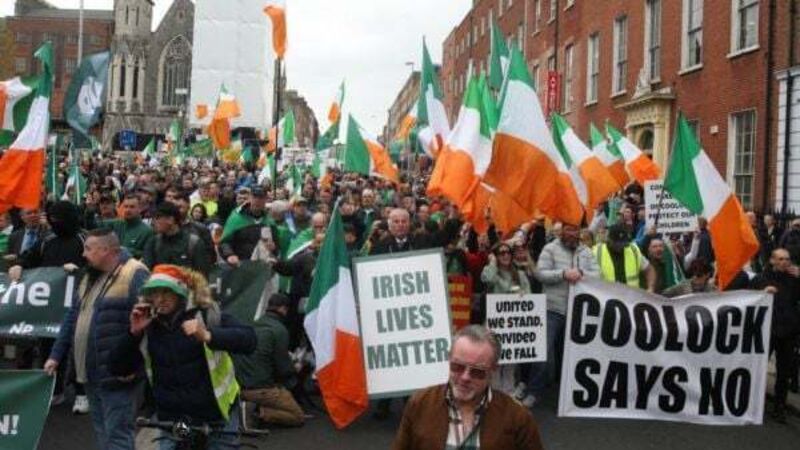


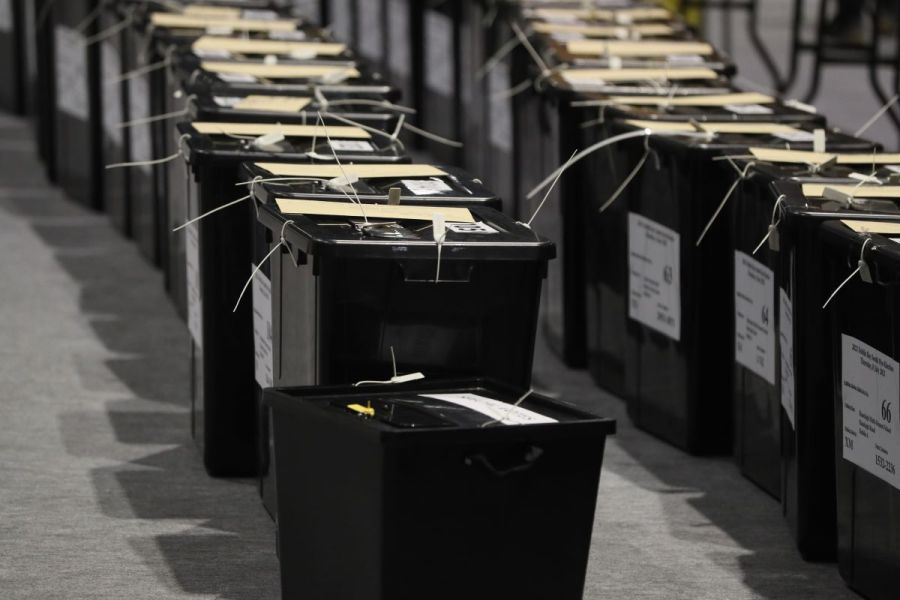
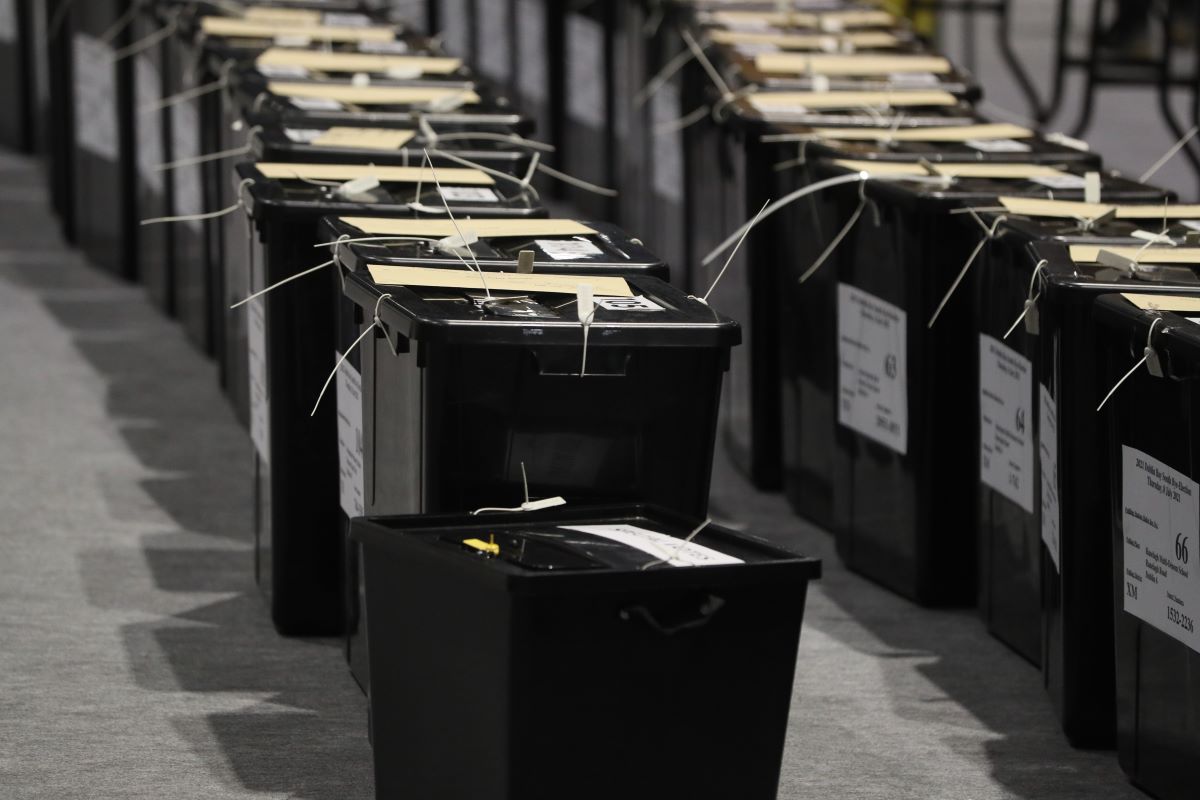

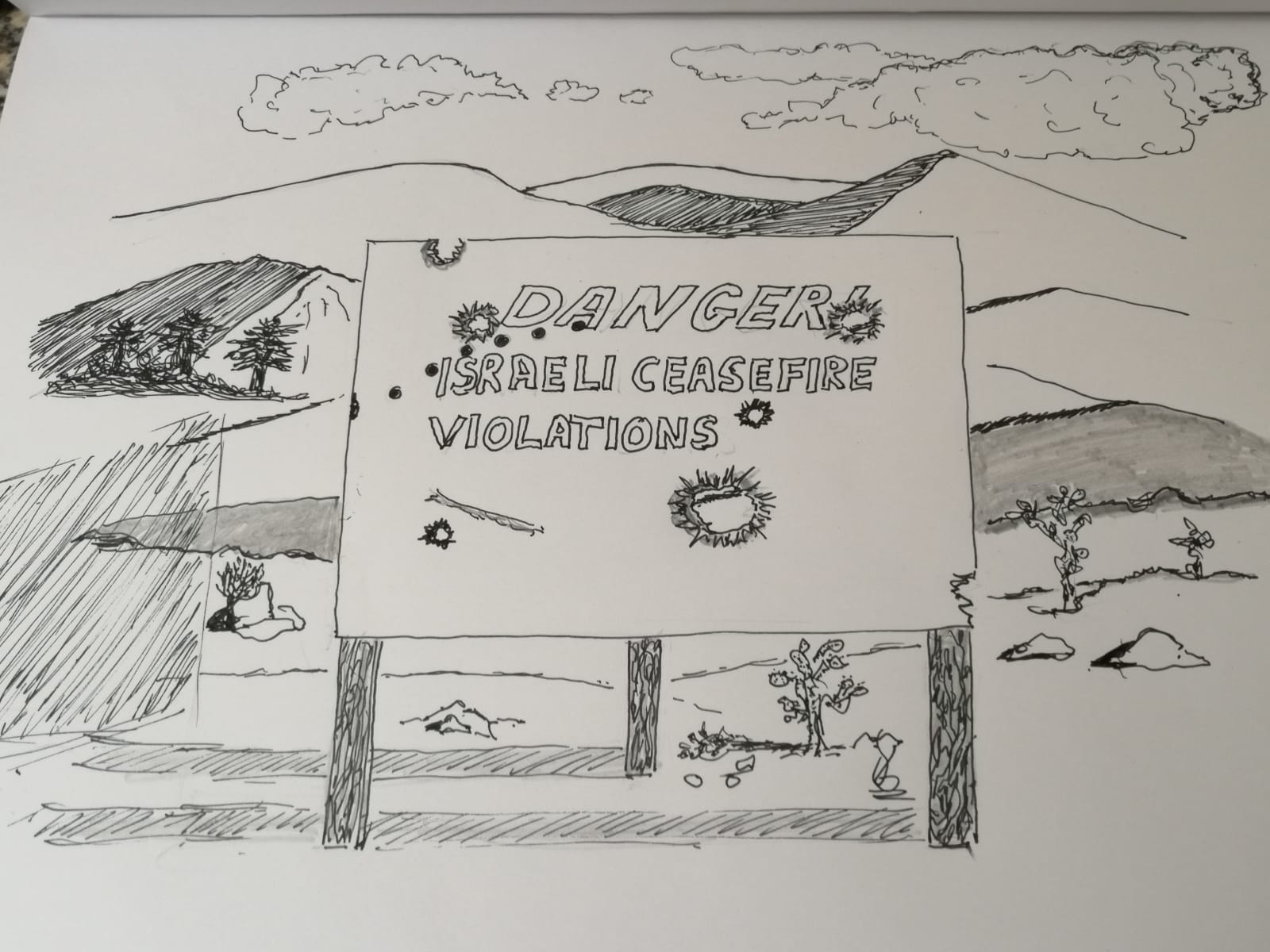


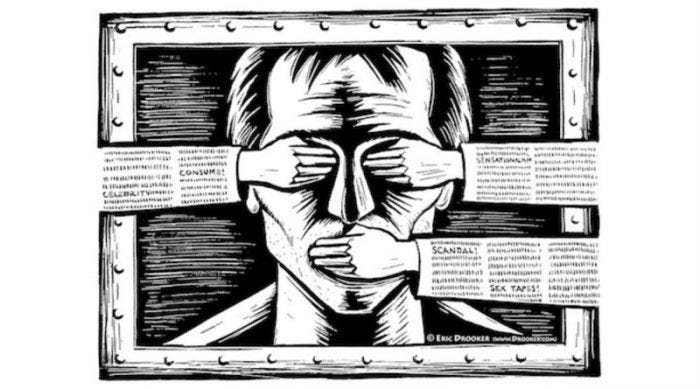
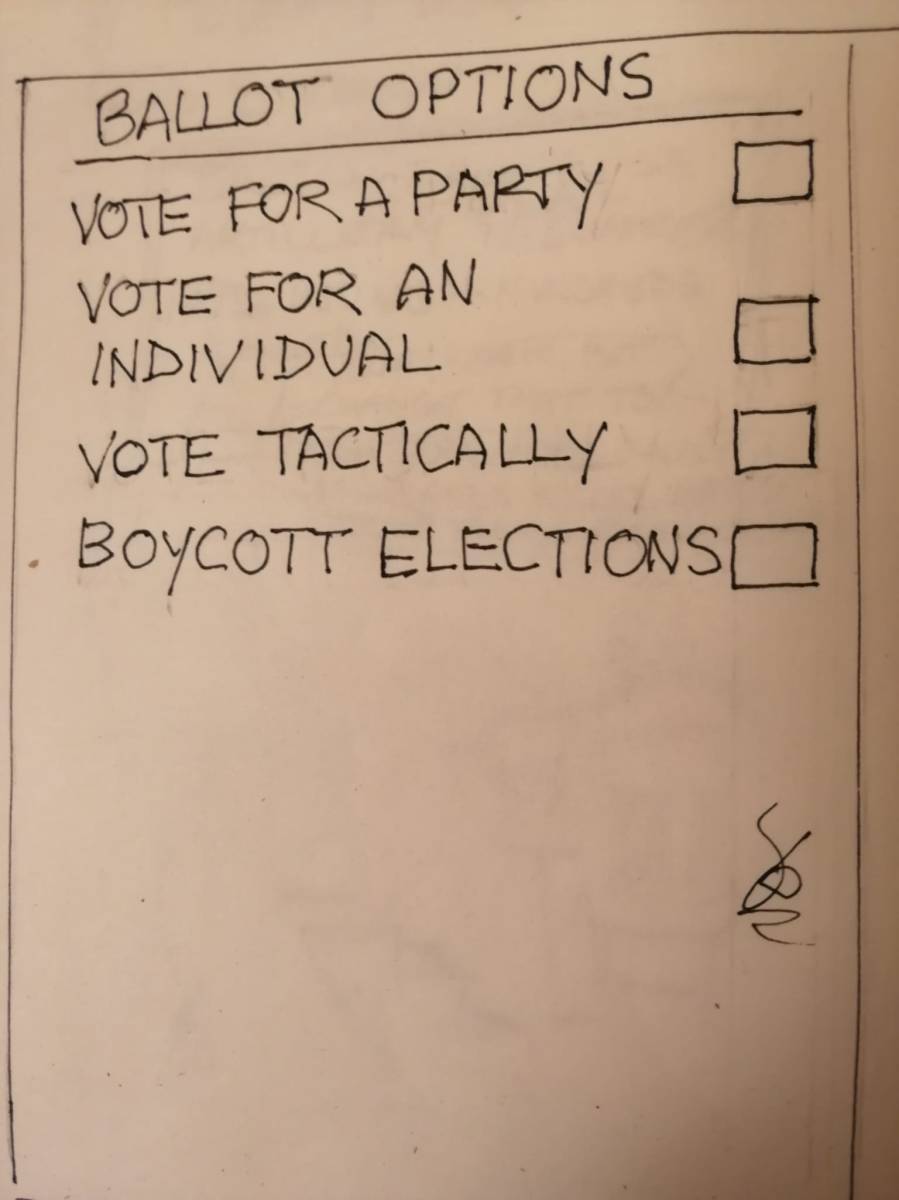
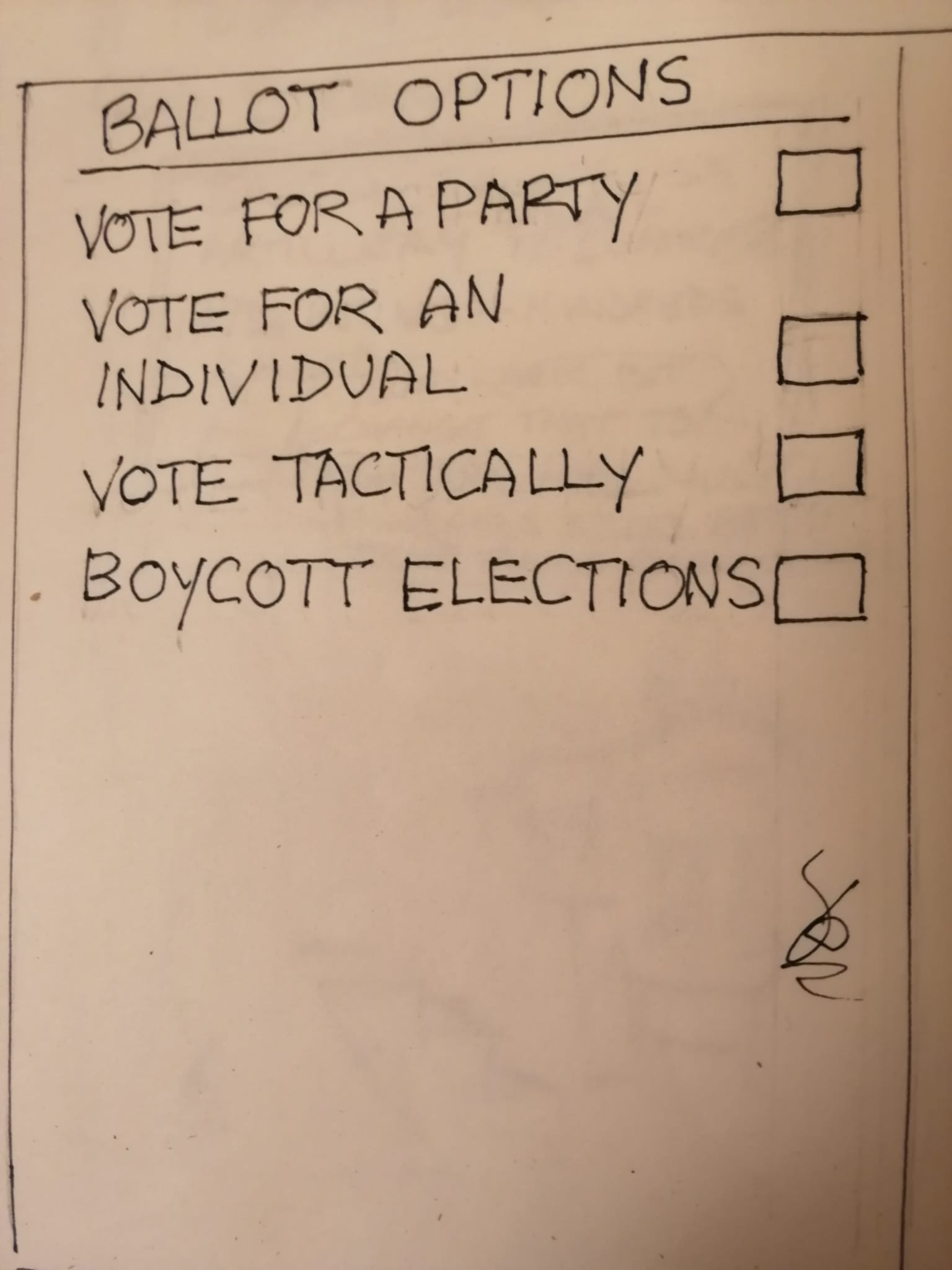


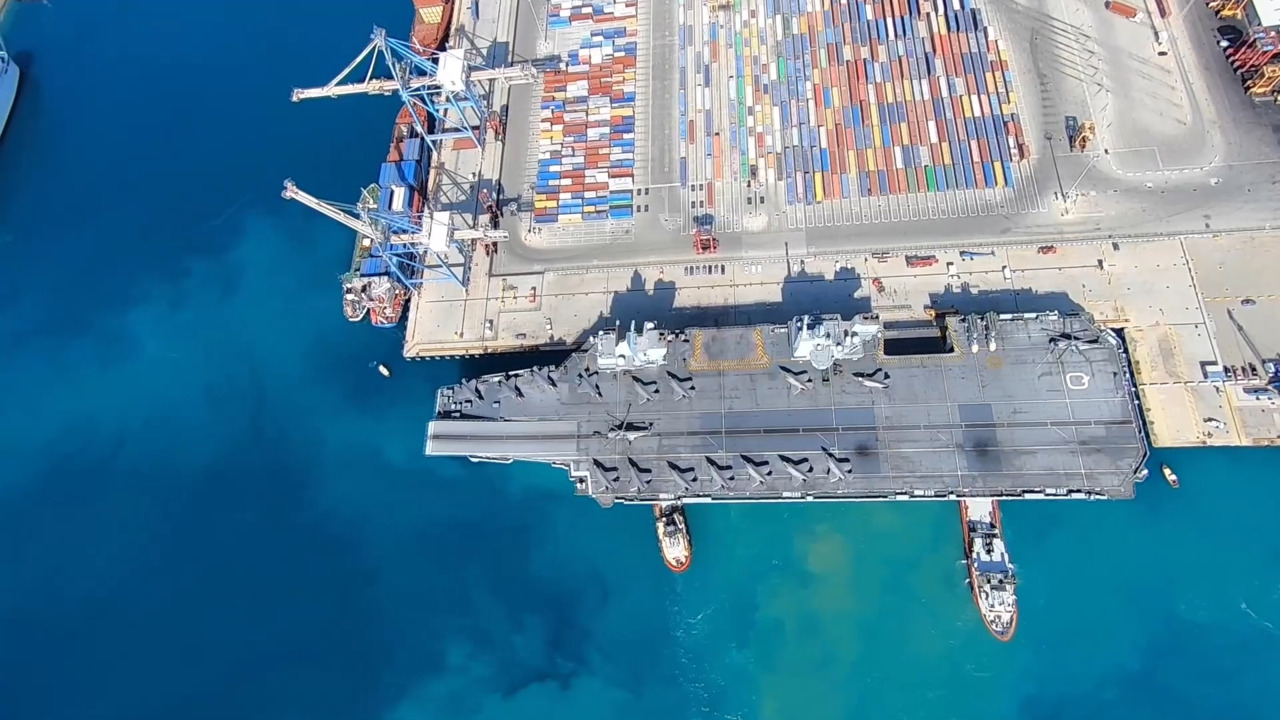
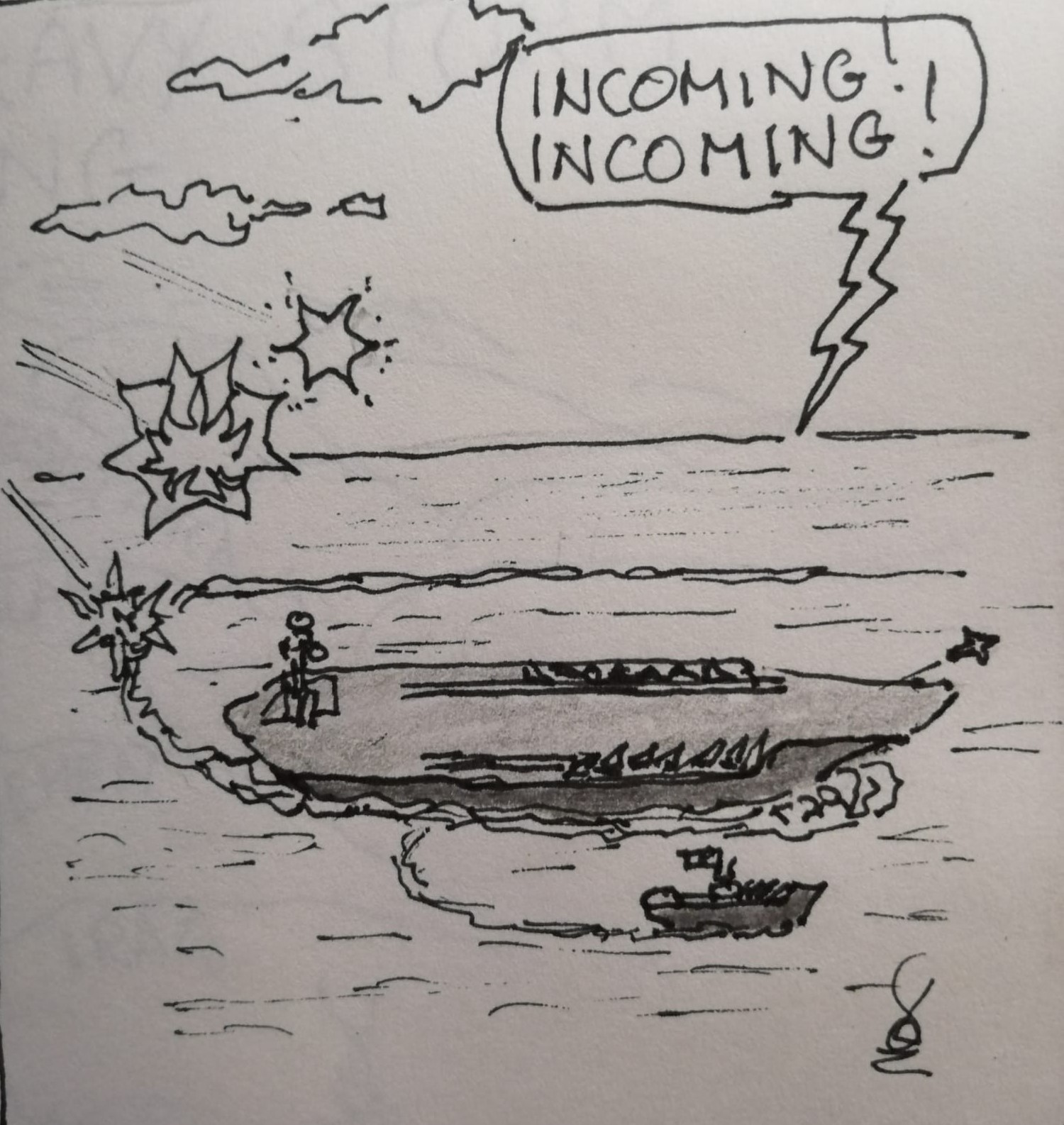

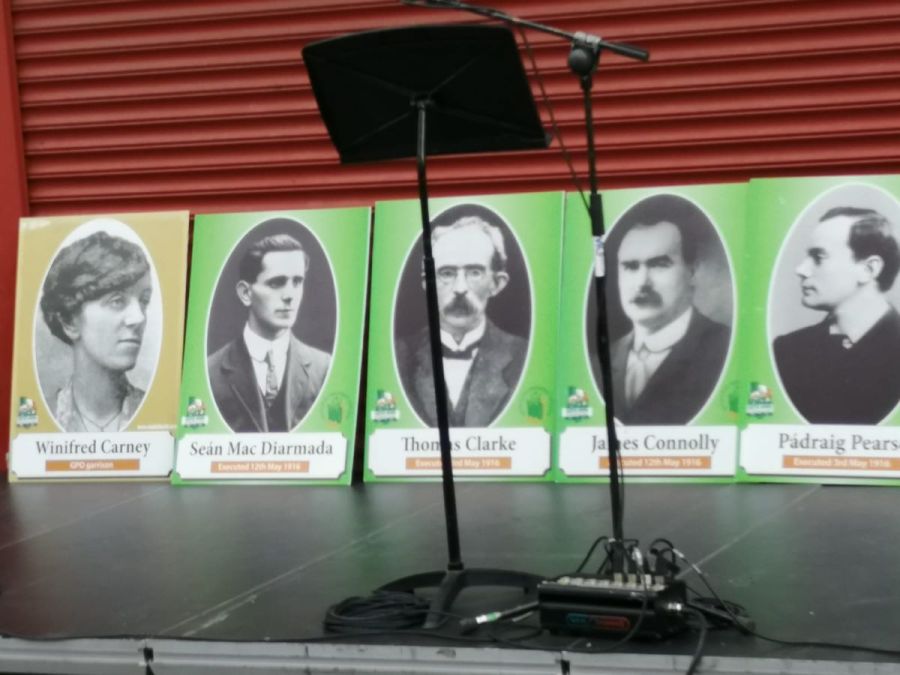


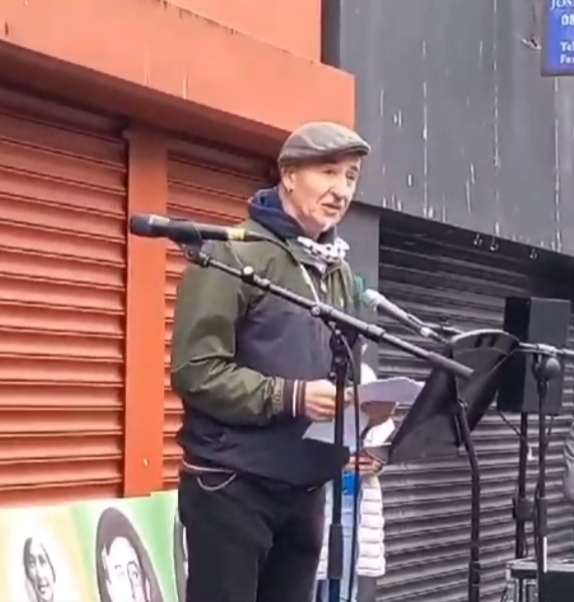


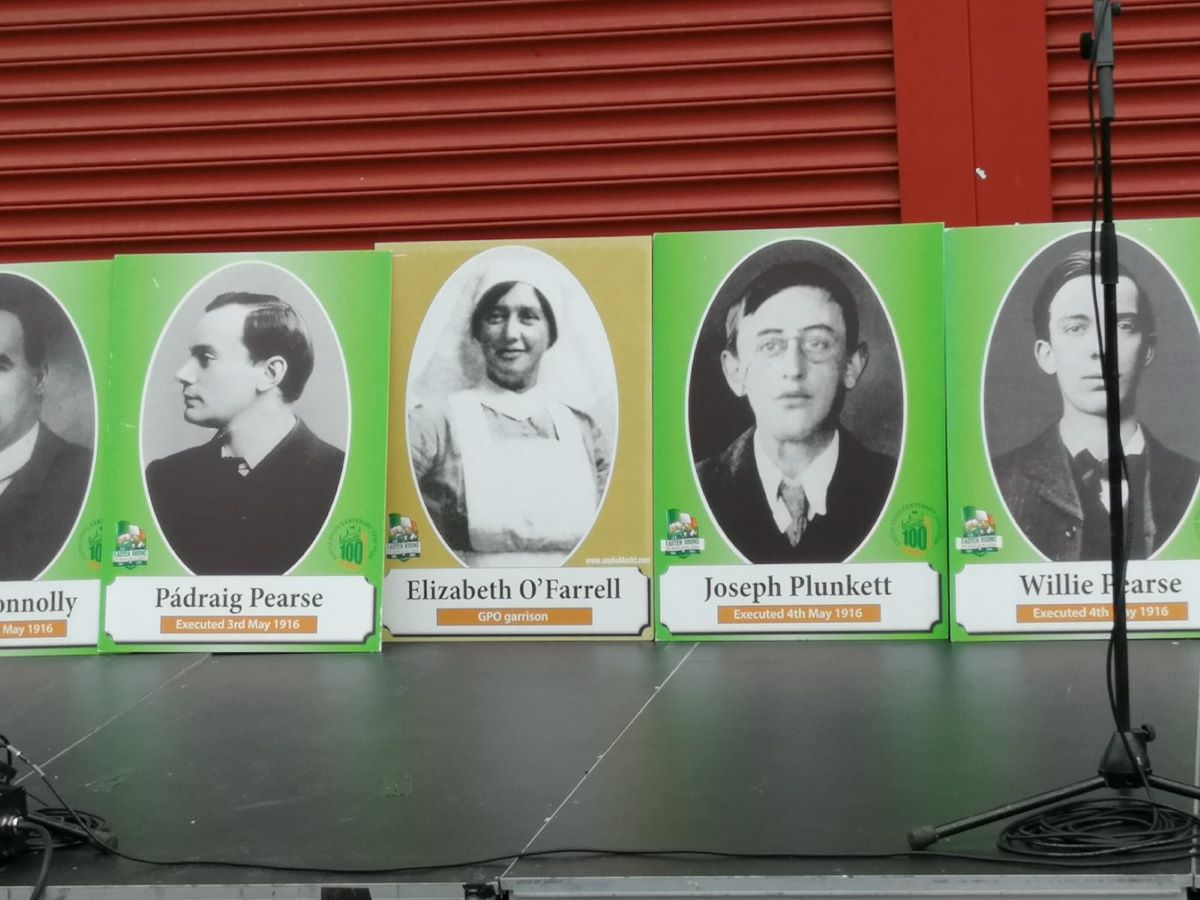

 rebelbreeze